

Airport at a Glance
| Field | Detail |
|---|---|
| Airport | Kenneth Kaunda International Airport |
| IATA Code | LUN |
| Country | Zambia |
| City | Lusaka |
| Annual Passengers | ~2 million+ (2023/24, surpassed pre-pandemic levels; Q1 2024: 482,400, +20% YoY; Q2 2024: 569,658, +15% YoY) |
| Primary Audience | Mining and resource sector executives, diplomatic and NGO professionals, premium safari tourists, regional business travellers, Chinese and Indian investment communities |
| Peak Advertising Season | June to October (dry season safari peak), December to January (holiday and Christmas travel) |
| Audience Tier | Tier 2 |
| Best Fit Categories | Premium safari and luxury travel, mining and resource sector B2B, financial services, international real estate, NGO and development sector services |
Kenneth Kaunda International Airport is Zambia's singular international gateway — an airport whose passenger profile is defined by the extraordinary economic and natural forces that converge on Lusaka. Africa's second-largest copper producer, with 72% of its export earnings and 44% of its government revenues dependent on mining, runs its executive and investor class through this terminal. The world's most sophisticated safari operators route their high-net-worth guests through LUN before onward domestic flights to South Luangwa, Kafue, and the Lower Zambezi. The SADC region's diplomatic and development community — spanning the World Bank, UNDP, the African Development Bank, and dozens of bilateral missions — maintain their southern African operations from Lusaka.
Terminal 2, opened in August 2021 following a $360 million Chinese-funded expansion, is one of Africa's most architecturally distinctive airport facilities — its iconic bird's nest design, sweeping glass façades, and wood accents communicating Zambia's bold national ambitions in physical form. The terminal achieved something no amount of marketing could accomplish alone: it signals to every arriving international executive, investor, and tourist that this is a country that takes its international gateway seriously. Passenger traffic surpassed pre-pandemic levels in 2023 and has continued growing at double-digit rates — Q1 2024 saw 20% year-on-year growth and Q2 2024 a further 15% — reflecting Zambia's structural position as Southern Africa's most strategically positioned transit, trade, and tourism hub.
With copper output rising 11% in 2024, a national target of three million tonnes annual production by 2031, a completed debt restructuring agreement secured in March 2024, and the IMF programme restoring investor confidence, the professional and executive travel through LUN is entering a sustained growth cycle. For advertisers, this is an airport whose audience quality — in terms of commercial authority, spending capacity, and decision-making power — significantly exceeds what its raw passenger volumes suggest.


Advertising Value Snapshot
- Passenger scale: Approximately 2 million+ annual passengers (2023/24), accounting for 75% of all passenger airport traffic in Zambia, growing at 15-20% year-on-year in 2024, with airport capacity expanded to 6 million under the $360 million Chinese investment
- Traveller type: Copper and mining sector executives, international investors and corporate professionals, premium safari and wildlife tourists, diplomatic corps and NGO professionals, Chinese and Indian business communities, regional SADC government officials
- Airport classification: Tier 2 — Zambia's sole commercial international gateway, serving as the SADC region's emerging transit hub for Southern and Eastern Africa with a commercially concentrated, high-authority audience
- Commercial positioning: The only international airport in Lusaka, connecting Zambia to the Gulf, East Africa, Southern Africa, and long-haul markets via premium hub connections — serving as the operational base for all senior business, government, diplomatic, and tourism activity in Zambia
- Wealth corridor signal: LUN sits at the crossroads of the Sub-Saharan Africa copper and critical minerals investment corridor, the East Africa-Southern Africa regional business network, and the global premium safari tourism pipeline that routes the world's highest-spending wildlife travellers through Zambia
- Advertising opportunity: Masscom Global provides brands with early-mover access to LUN's growing commercial advertising environment. The airport's new Terminal 2 facility creates a premium advertising context that did not exist before 2021, and the sustained passenger growth trajectory means current inventory placements are being activated ahead of the competitive advertising intensity that this market will attract as Zambia's economy continues its recovery and expansion. For mining sector B2B brands, premium safari and hospitality categories, financial services, and diplomatic-facing services, LUN represents Southern Africa's most commercially underutilised premium audience gateway.
Airport Advertising is Complex to Get Right
We help you execute faster, with proven results and local insight most planners lack starting now.
Talk to an ExpertCatchment Area and Economic Drivers
Top 10 Cities and Communities within 150 km — Marketer Intelligence
- Lusaka (city proper): Zambia's capital and commercial heart, with a population of approximately 3 million in the greater metropolitan area — home to all federal government ministries, the Bank of Zambia, the major commercial banks, international NGO headquarters for southern Africa, mining company regional offices, and the country's most active retail and hospitality market. The highest concentration of executive consumer spending in Zambia.
- Kafue (~50 km south): A growing industrial town on the Kafue River — home to Zambia's largest industrial estate, fertiliser plants, textile manufacturing, and chemical production. Kafue also serves as the access hub for Kafue National Park, Africa's second-largest national park, making it a key transit point for safari tourism operators and their high-spending guests.
- Chongwe (~30 km east): A peri-urban district immediately adjacent to the airport on the Great East Road — growing rapidly as a residential and agricultural zone for Lusaka's expanding population, with a farming and small business economy producing regular commercial and administrative travel through LUN.
- Siavonga (~140 km south on Lake Kariba): The Zambian shore town on Africa's largest man-made lake — a leisure destination for Lusaka's middle and upper class weekend visitors, growing as an eco-tourism and fishing destination with boat safari and houseboat operators catering to both domestic and regional leisure tourists.
- Mazabuka (~140 km south): Zambia's sugar production capital, home to Zambia Sugar (a subsidiary of AB InBev) and extensive commercial agriculture — producing a senior agri-business and food processing executive audience that travels regularly through Lusaka.
- Chirundu (~150 km south): Zambia's primary road border crossing with Zimbabwe on the Zambezi River — one of Africa's busiest inland trade corridors, generating a logistics, trucking, and cross-border commerce professional audience.
- Mkushi (~150 km north): A major commercial farming district producing tobacco, maize, and horticulture for export — home to large-scale commercial farmers and agribusiness operators who travel through LUN for regional and international trade.
- Kafue National Park Corridor (~100-150 km west): The approach corridor to Africa's second-largest national park — where premium safari lodge operators, wildlife conservancy managers, and high-net-worth visitors on safari transitions use Lusaka as their hub before charter flights or road transfers into the park.
- Chilanga (~25 km south): An industrial suburb of Lusaka hosting cement factories, construction material suppliers, and logistics operations — generating a manufacturing and construction executive audience connected to Zambia's infrastructure development pipeline.
- Kabwe (~130 km north): Zambia's former colonial mining capital, currently home to a significant zinc and lead mining legacy and growing as an industrial service hub — producing a resource sector professional audience that connects through LUN for regional and international business.
NRI and Diaspora Intelligence
Lusaka hosts one of Sub-Saharan Africa's most significant internationally mobile professional communities. The Chinese investment and business community — driven by decades of Sino-Zambian bilateral engagement and accelerated by the Belt and Road-affiliated infrastructure projects including the airport's own $360 million expansion — represents a substantial and commercially active permanent business presence in Lusaka. Chinese executives in construction, mining services, retail, and manufacturing transit regularly through LUN. The Indian business community, long established in Lusaka's retail, pharmaceutical distribution, and manufacturing sectors, maintains active family and commercial connections to Mumbai, Ahmedabad, and Nairobi. Zimbabwean professionals, who form a significant component of Lusaka's skilled workforce in healthcare, education, and business, maintain strong bilateral travel patterns through LUN. South African corporate executives managing regional operations across SADC use LUN as a regular destination. The global NGO and development sector contributes a rotating population of international professionals — from the United States, United Kingdom, Europe, and Australia — on two-to-four-year assignments in Lusaka.
Economic Importance
Zambia's economy centres on copper — a mineral whose strategic importance has never been higher as the world's electric vehicle and renewable energy transition accelerates demand for copper in battery technology, electrical infrastructure, and charging networks. Zambia holds the world's sixth-largest copper reserves and is Africa's second-largest producer. The government's Three Million Tonnes Copper Production Strategy targeting 2031 — combined with the reopening of previously closed mines, new investment in deep-level extraction technology, and a favourable IMF-stabilised economic environment — is generating a sustained wave of international mining investment and executive travel through LUN. The airport's corporate passenger profile reflects this trajectory: every major copper mining company, every equipment supplier, every commodities trader with a Zambian book, and every institutional investor with a copper thesis travels through LUN to assess, manage, or grow their Zambian position.
Business and Industrial Ecosystem
- Copper and base metals mining (First Quantum Minerals, Vedanta Resources, ZCCM Investment Holdings, Barrick Gold): Zambia's dominant private sector employers — generating a sustained, high-frequency flow of mining engineers, geologists, procurement officers, and corporate executives connecting to London, Doha, Dubai, Johannesburg, and Nairobi for corporate governance, financing, and supply chain operations
- Critical minerals and energy transition sector (cobalt, manganese, emeralds): Zambia is one of the world's top three emerald producers and holds significant cobalt and manganese reserves — creating an active gemstone trading and industrial minerals executive audience connecting through LUN to Antwerp, Dubai, and New York
- Diplomatic and international development sector (World Bank, UNDP, ADB, bilateral missions): Lusaka hosts a substantial UN and multilateral agency presence for Southern Africa, generating a high-education, globally mobile professional audience with above-average purchasing authority and international brand awareness
- Chinese investment and construction sector: Chinese state-owned enterprises and private investors active in infrastructure, housing, retail, and mining services constitute one of the most commercially active international communities at LUN, with regular connections to Beijing, Guangzhou, and Shanghai
- Regional trade and logistics (SADC transit, Dar es Salaam corridor, North-South corridor): Lusaka sits at the intersection of Africa's major North-South and East-West trade corridors — generating a logistics, freight forwarding, and trade finance executive audience that connects through LUN to Nairobi, Dar es Salaam, Johannesburg, and Dubai
Passenger Intent — Business Segment: The business traveller at LUN is engaging with an economy that is at a genuine strategic inflection point — a post-debt-restructuring Zambia attracting record copper investment against a backdrop of global critical minerals demand. The mining executive arriving to assess a new shaft development has authorised capital expenditure. The international banker flying in to close a financing round carries institutional decision-making authority. The Chinese construction firm executive has a procurement mandate. The development bank officer is structuring a multi-year infrastructure commitment. For B2B advertisers in equipment, financial services, legal and advisory, telecommunications, and executive hospitality, this audience carries the highest commercial authority of any traveller segment in Sub-Saharan Africa relative to the airport's passenger volume.
Strategic Insight: What makes LUN commercially exceptional is the concentration of commercial decision-making authority per passenger. With approximately 2 million annual passengers — a fraction of Nairobi, Johannesburg, or Dubai — LUN's corporate audience carries executive authority that most comparable-volume airports cannot match. Every flight that connects a Zambian copper executive to London, every Emirates connection routing an investor to Dubai, and every Ethiopian Airlines flight bringing an international NGO director to Lusaka carries disproportionate commercial significance. For premium B2B brands, the cost-per-executive-reached metric at LUN is among the most attractive in Africa.
Tourism and Premium Travel Drivers
- South Luangwa National Park: Widely regarded as Africa's finest wildlife sanctuary for walking safaris, leopard sightings, and authentic wilderness immersion — accessed via domestic Proflight connections from LUN to Mfuwe Airport. International visitors begin and end their South Luangwa experience at LUN, making the terminal the first and last premium brand impression of their Zambia safari
- Kafue National Park: Africa's second-largest national park at 22,400 km² — home to the highest diversity of antelope species in the world, significant cheetah populations, the spectacular Busanga Plains, and one of the continent's least-visited yet most rewarding wilderness environments. A growing luxury lodge circuit has elevated Kafue to premier safari status among discerning wildlife travellers
- Lower Zambezi National Park: A canoeing and game-viewing wilderness along the Zambian bank of the Zambezi River — offering unique water-based safari experiences including canoe safaris with elephants wading past the bow and tiger fishing on the world's most productive river for the species. Accessed via LUN with charter flights to airstrips within the park
- Victoria Falls (Mosi-oa-Tunya): One of the Seven Natural Wonders of the World and a UNESCO World Heritage Site — accessible via domestic connections from LUN to Livingstone. The Zambian side is increasingly preferred by discerning travellers for its superior viewpoints and less commercialised environment than the Zimbabwe side
- Kasanka National Park and the Bat Migration (October-December): One of the world's most remarkable wildlife spectacles — the annual migration of approximately ten million straw-coloured fruit bats into Kasanka's mushitu forest creates a wildlife viewing event that generates premium specialist tourism traffic through LUN during the October-December window
Passenger Intent — Tourism Segment: The safari tourist arriving at LUN has made one of the most premium leisure investment decisions available in global travel. A South Luangwa or Lower Zambezi safari package with a reputable operator typically costs $5,000-$25,000 per person. Walking safari specialists accessing private camps in Luangwa Valley can pay upwards of $1,000 per night for their accommodation alone. These are not casual leisure travellers. They are purpose-driven, well-researched, often repeat visitors with decades of safari experience and the financial capacity to choose the finest operators in the market. By the time they arrive at LUN, their safari spend is committed. What the terminal captures is the before and after: the final equipment and retail purchase before departure to camp, and the luxury brand purchase opportunity on the return journey that marks the emotional peak of an extraordinary wildlife experience.
Travel Patterns and Seasonality
Peak seasons:
- June to October (Dry Season Safari Peak): Zambia's definitive tourism season — vegetation is low, wildlife concentrates around shrinking water sources, and road conditions allow access to remote wilderness areas. July and August represent peak safari camp occupancy across all major parks. This window delivers the single highest concentration of premium international safari tourists transiting through LUN.
- September to October (Extreme Dry and Bat Migration Season): The most dramatic wildlife viewing conditions of the year — extreme heat concentrates wildlife at waterholes in spectacular numbers in the Lower Zambezi and South Luangwa valleys. October also marks the beginning of the Kasanka bat migration, drawing specialist wildlife tourism. LUN sees its highest premium tour operator traffic in this window.
- December to January (Holiday Travel and Emerald Season): Zambia's Christmas and New Year period generates its most active domestic and regional leisure travel cycle. The emerald season, when the first rains transform the landscape green, draws specialist nature tourism. International NGO and diplomatic staff return from home leave in January, generating a concentrated professional arrival surge.
- April to May (Inter-Season Transition): The post-rains transition period — many southern camps close for wet season maintenance, but Kafue's northern Busanga Plains sees extraordinary wetland wildlife concentrations. A quieter but increasingly valued specialist safari window for discerning travellers seeking exclusive access.
Event-Driven Movement
- Zambia International Trade Fair (June/July, Ndola — with Lusaka satellite events): Zambia's largest annual business exhibition — drawing regional and international commercial delegations, government ministers, and investment promotion professionals through LUN in the peak safari season window
- SADC Summit (variable, hosted rotationally across member states, including Lusaka): The Southern African Development Community's annual Heads of State summit, when hosted in Lusaka, generates the single highest-concentration diplomatic and political travel event at LUN — with heads of state, ministers, international media, and diplomatic delegations arriving and departing through the airport
- Zambia Mining and Investment Conference (Lusaka, variable dates): Annual conferences including the Mining Indaba satellite events and Zambia-specific mining investment gatherings draw copper, cobalt, and critical minerals executives and investors to Lusaka — creating peak B2B professional travel concentrations at LUN
- Kasanka Bat Migration (October to December): The annual arrival of ten million fruit bats to Kasanka National Park generates increasing specialist wildlife tourism through LUN — with a growing community of wildlife photographers, naturalists, and expedition travellers using Lusaka as their base
- Kuomboka Ceremony (March-May, Barotseland/Western Province): Zambia's most spectacular traditional ceremony — the Lozi king's annual barge procession marking the retreat from floodplains — draws cultural tourism through LUN with domestic connections to Mongu in the Western Province
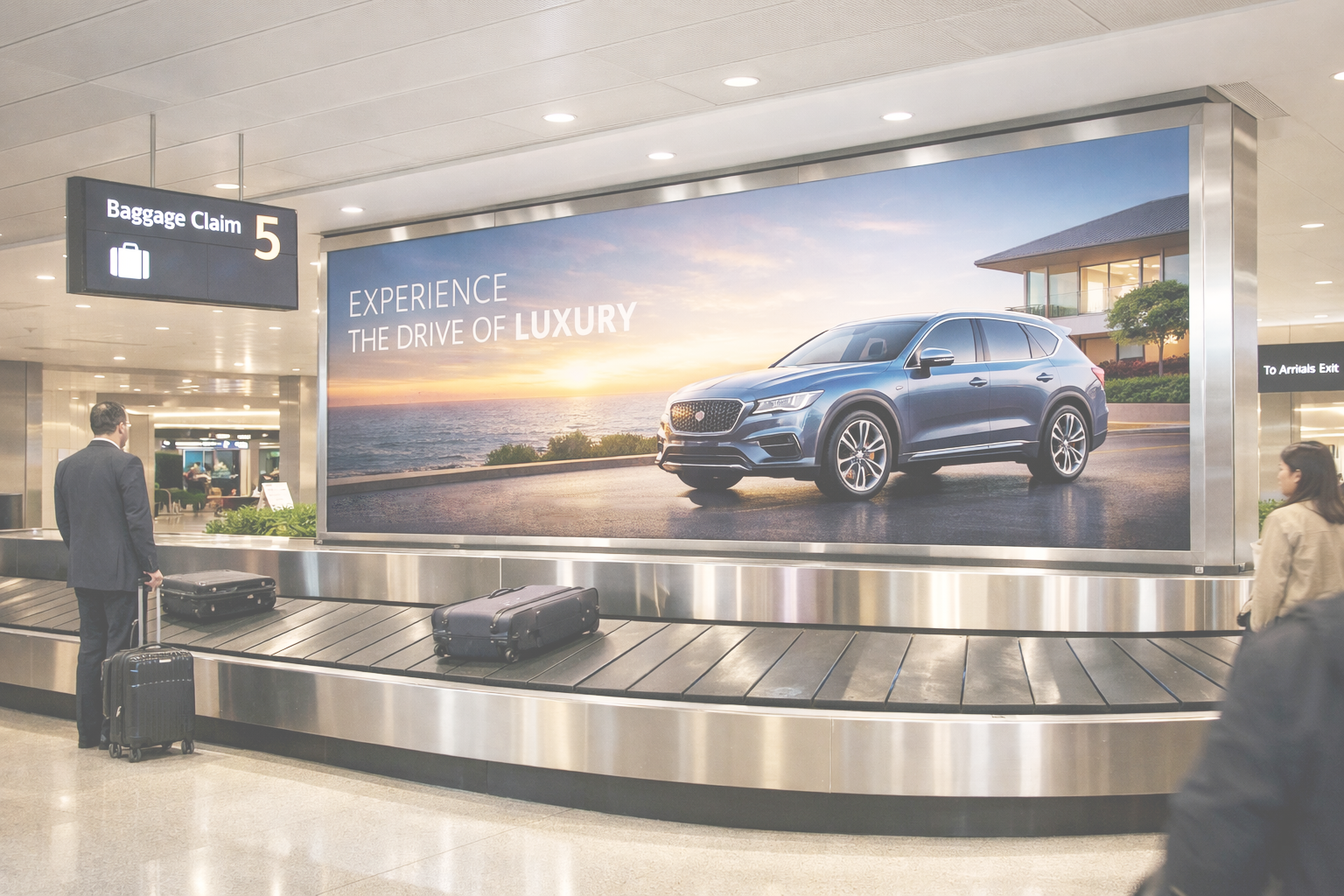
It’s Not Just Where You Advertise - It’s How Fast You Execute
We combine local insight with fast rollout to deliver results for you, now.
Talk to an ExpertAudience and Cultural Intelligence
Top 2 Languages
- English: Zambia's official language and the exclusive language of all commercial, governmental, and professional communication in Lusaka — essential for all advertising at LUN. The entire corporate, diplomatic, NGO, and tourism professional audience operates in English, making LUN one of the most linguistically accessible advertising environments in Sub-Saharan Africa for international brands.
- Nyanja/Chichewa: The dominant spoken language of Lusaka and the Eastern Province — the most widely understood vernacular language among Lusaka's urban population, including the domestic service, transport, and hospitality workforce that interfaces with all travellers. Advertising that incorporates Nyanja cultural awareness — even in English — signals genuine market knowledge and builds authentic brand credibility with the local professional community.
Major Traveller Nationalities
Zambian nationals form the dominant traveller group at LUN, connecting domestically and regionally for business, government, and family travel. South African business and tourism travellers are the largest single foreign national group — using OR Tambo connections for regional corporate meetings and leisure. Zimbabwean professionals and families, connected by the daily Harare corridor, represent a substantial bilateral movement. Kenyan and Ethiopian travellers transiting through Nairobi and Addis Ababa connections form the East African business corridor. Chinese business and construction professionals — working on Zambia's extensive infrastructure pipeline — generate consistent bilateral travel to Beijing, Guangzhou, and Doha. European and North American premium safari tourists arrive via Emirates, Qatar Airways, Kenya Airways, and Turkish Airlines connections. Indian business professionals, active in Lusaka's pharmaceutical distribution, manufacturing, and retail sectors, maintain active Mumbai and Nairobi connections.
Religion — Advertiser Intelligence
- Christianity (approx. 90%): Zambia is constitutionally declared a Christian nation — the most comprehensive faith profile of any country in Southern Africa. Christmas is Zambia's most commercially active consumer spending period, generating the year's sharpest domestic travel, gifting, and hospitality surge. Easter drives significant family and leisure travel. The depth of Christian cultural identity in Zambia shapes consumer behaviour around festivals, family values, and social aspiration in ways that make seasonal religious calendar alignment extremely commercially effective for consumer brands.
- Islam (approx. 3%): A small but commercially present Muslim community — primarily among the Indian business community and a smaller African Muslim population concentrated in Eastern Province. Eid celebrations create modest secondary spending peaks relevant to the Indian business community's retail and gifting patterns.
Behavioral Insight
The Lusaka professional audience combines the pragmatic commercial orientation of a resource-economy capital with the long-term relationship values of southern African business culture. Business decisions in Lusaka are built on trusted relationships — the corporate executive at LUN is not a transactional consumer but a relationship investor. They return to the same airlines, hotels, and professional service firms they know. They recommend brands to peers within the tightly networked Lusaka business community. They hold brand memory across years rather than weeks. Advertising at LUN that demonstrates genuine understanding of Zambia's economic context — copper, conservation, SADC connectivity, post-debt recovery — creates more lasting commercial impression than generic premium brand messaging. For international brands entering the Zambia and Southern Africa market, LUN provides an exceptionally efficient first impression environment.
Outbound Wealth and Investment Intelligence
The outbound passenger at Kenneth Kaunda Airport carries a commercially varied but consistently high-authority financial profile. Mining executives travelling to London, Frankfurt, or Toronto carry investment mandates and procurement authorities measured in tens of millions of dollars. Senior government officials travelling to Doha or Dubai carry diplomatic and trade relationships that define Zambia's commercial future. Premium safari operators and their international guests returning to London, New York, or Sydney carry the emotional and financial satisfaction of exceptional experience — and the referral networks that drive the next season's bookings.
Outbound Real Estate Investment:
Zambia's executive and upper-middle class maintains active real estate investment patterns in Lusaka's rapidly growing premium residential market — with Kabulonga, Ibex Hill, Woodlands, and Thornpark commanding South African and East African comparable premiums among the diplomatic and mining sector professional class. Outbound investment in South Africa's Western Cape, Mozambique coastal properties, and increasingly UAE residential property reflects the SADC professional class's growing global real estate diversification. For regional real estate developers, the outbound Johannesburg and Dubai routes from LUN carry buyers with active property acquisition mandates.
Outbound Education Investment:
Zambia's professional class prioritises international education for children — with South Africa (University of Cape Town, Stellenbosch, WITS), the United Kingdom, and the United States being the primary destinations for higher education. The September-October outbound academic travel surge through LUN represents a concentrated, high-spending family investment decision audience. International school advertising, university recruitment, and student services brands find a financially capable, aspirationally motivated parent audience departing on the Johannesburg, Nairobi, and Dubai connections.
Outbound Wealth Migration and Residency:
A growing segment of Zambia's professional class is exploring South African permanent residency, Portuguese Golden Visa, and UAE residency as both lifestyle optionality and capital protection strategies. Zambia's currency depreciation history — the kwacha lost significant value against major currencies in 2024 — has accelerated interest in USD and EUR-denominated investment vehicles, foreign property, and international banking relationships among the executive class. Financial planning, international banking, and residency advisory brands find an increasingly receptive audience among the outbound professional segment at LUN.
Strategic Implication for Advertisers:
For premium lifestyle brands, mining sector B2B categories, international financial services, South African and international real estate developers, and education services targeting Southern Africa's professional class, LUN delivers a high-authority, commercially engaged audience at a fraction of the cost of comparable audiences in Johannesburg, Nairobi, or Dubai. Masscom Global's ability to activate LUN's advertising inventory with regional Southern Africa expertise ensures brands intercept this audience at the precise commercial decision moments embedded in every departure and arrival.
Airport Infrastructure and Premium Indicators
Terminals
- Kenneth Kaunda International Airport operates two terminals: Terminal 2, the internationally acclaimed bird's nest-designed international facility opened in August 2021 — featuring six gates, a sweeping glass and wood exterior, six security lanes, 22 check-in counters, and 12 border channels — which handles all international flights; and Terminal 1, the domestic facility currently undergoing renovation to match the international terminal's standards.
- The airport's 6 million annual passenger capacity, established through the $360 million Chinese Exim Bank-funded expansion, positions Lusaka with infrastructure substantially ahead of its current passenger volumes — creating an investment-ready environment that demonstrates Zambia's confidence in its long-term aviation growth trajectory.
Premium Indicators
- Architectural landmark status: Terminal 2's iconic bird's nest design is recognised as one of the most distinctive airport buildings in Africa — its visual impact and modern interior create a premium first-impression environment that elevates brand association for all advertising placements within the terminal
- Presidential terminal: The airport includes a dedicated presidential terminal, reflecting LUN's role as Zambia's national diplomatic gateway and the venue for all state visits and high-level governmental arrivals — a clear signal of the premium diplomatic and political audience that transits through the facility
- Emirates and Qatar Airways premium cabin service: The presence of both Emirates and Qatar Airways at LUN — two of the world's most premium-positioned carriers — confirms that Zambia's high-value passenger market justifies Gulf hub connectivity, and introduces the expectations of premium cabin travellers into the terminal's advertising context
- Turkish Airlines direct service: Istanbul connectivity provides European and Middle Eastern reach beyond the Gulf hubs — and Turkish Airlines' presence reflects the airport's growing ambition as a trans-continental connector
- Avis and Europcar car rental: The presence of both international car rental brands at the airport reflects the corporate travel infrastructure supporting Lusaka's executive business community
Forward-Looking Signal
Kenneth Kaunda Airport is positioned at the intersection of Africa's two most commercially significant macro-trends of the coming decade. The first is the global critical minerals boom — copper demand driven by EVs and renewable energy infrastructure is projected to grow 50% by 2030, with Zambia's government-backed Three Million Tonnes Strategy targeting more than trebling current production by 2031. Every tonne of new copper production requires international investment, engineering expertise, and executive travel through LUN. The second is the sustained growth of premium safari tourism in Southern Africa, where Zambia's conservation reputation, uncrowded parks, and walking safari culture are converting an increasing share of premium leisure travellers from the established East African circuit. Masscom advises brands to establish advertising presence at LUN now — at the early stage of this dual-engine growth cycle, before the airport's trajectory generates the level of competitive advertising attention that Nairobi and Johannesburg command.
Airline and Route Intelligence
Top Airlines
- Ethiopian Airlines (leading connectivity to East Africa and beyond)
- Emirates (direct Dubai — premium Gulf hub connection)
- Qatar Airways (direct Doha — Gulf hub connection to global network)
- Kenya Airways (Nairobi — East Africa hub connection)
- Turkish Airlines (Istanbul — Europe and Middle East connection)
- Proflight Zambia (primary domestic carrier — Ndola, Livingstone, Mfuwe, Solwezi)
- RwandAir (Kigali — East and Central Africa connection)
- South African Airways (Johannesburg — Southern Africa hub)
- FlySafair (Johannesburg — low-cost option)
- Zambia Airways (relaunched national carrier)
- Air Tanzania (Dar es Salaam)
- Malawian Airlines (Lilongwe)
- KLM (Amsterdam — via Nairobi connection)
- Virgin Atlantic
Key International Routes
- LUN — Johannesburg (SAA, FlySafair — Southern Africa primary business and tourism corridor)
- LUN — Dubai (Emirates — Gulf hub connecting to Europe, South Asia, East Asia)
- LUN — Doha (Qatar Airways — Gulf hub global connectivity)
- LUN — Nairobi (Kenya Airways, Ethiopian Airlines — East African hub)
- LUN — Addis Ababa (Ethiopian Airlines — African hub with global connections)
- LUN — Istanbul (Turkish Airlines — Europe and Middle East)
- LUN — Kigali (RwandAir — East and Central Africa)
- LUN — Harare (multiple carriers — Zimbabwe corridor)
- LUN — Dar es Salaam (Air Tanzania — Tanzania corridor)
- LUN — Lilongwe (Malawian Airlines — Malawi corridor)
Domestic Connectivity
- LUN — Ndola (Copperbelt capital — mining industry hub)
- LUN — Livingstone (Victoria Falls gateway)
- LUN — Mfuwe (South Luangwa National Park gateway)
- LUN — Solwezi (North-Western copper belt — First Quantum Minerals Kansanshi Mine)
Wealth Corridor Signal
The Emirates and Qatar Airways routes are LUN's most commercially significant corridors for premium audience concentration — carrying mining executives to London, New York, and Toronto via Dubai and Doha, routing institutional investors and commodity traders between Lusaka and the Gulf's financial centres, and delivering premium safari tourists from Europe and North America through the world's finest aviation hubs. The Johannesburg route is the highest-frequency business corridor — connecting Lusaka's corporate community to South Africa's financial markets, legal and advisory services, and the Randburg business district where most Southern African subsidiaries are headquartered. The Ethiopian Airlines Addis Ababa route is Lusaka's most strategically significant African connection — linking to one of Africa's most comprehensive pan-continental networks and providing the routing for development institution professionals connecting from global capitals.
Media Environment at the Airport
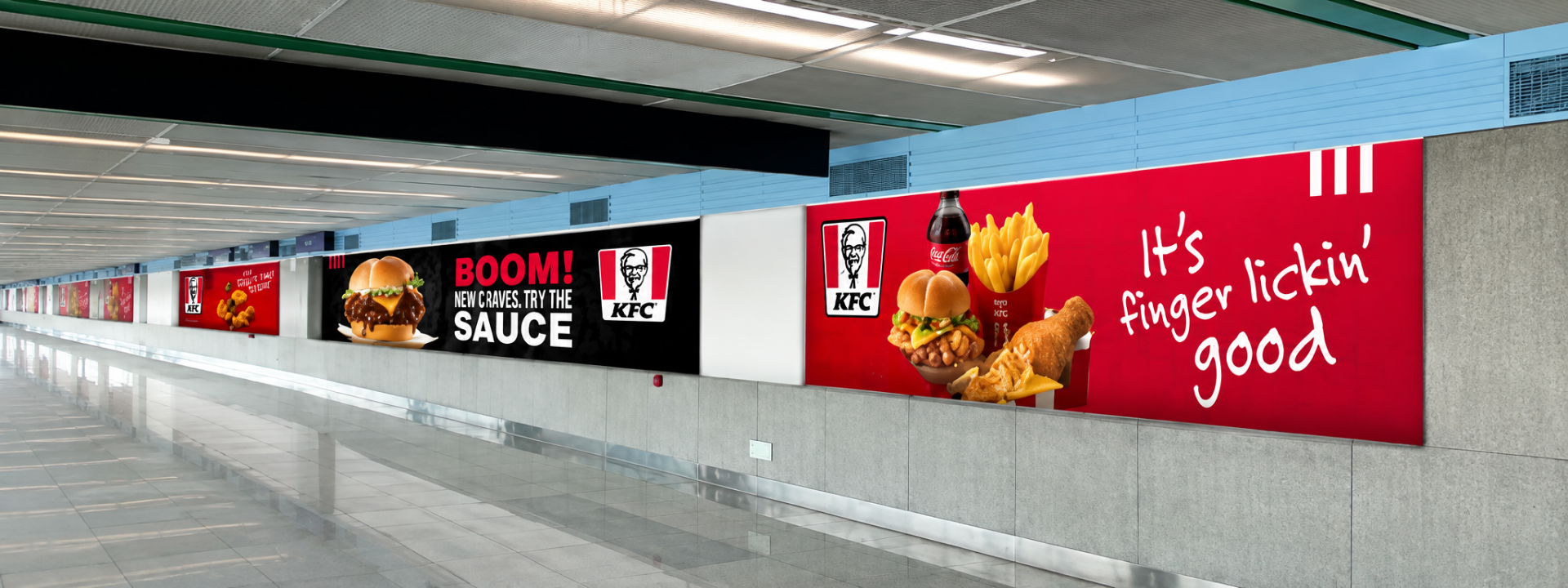
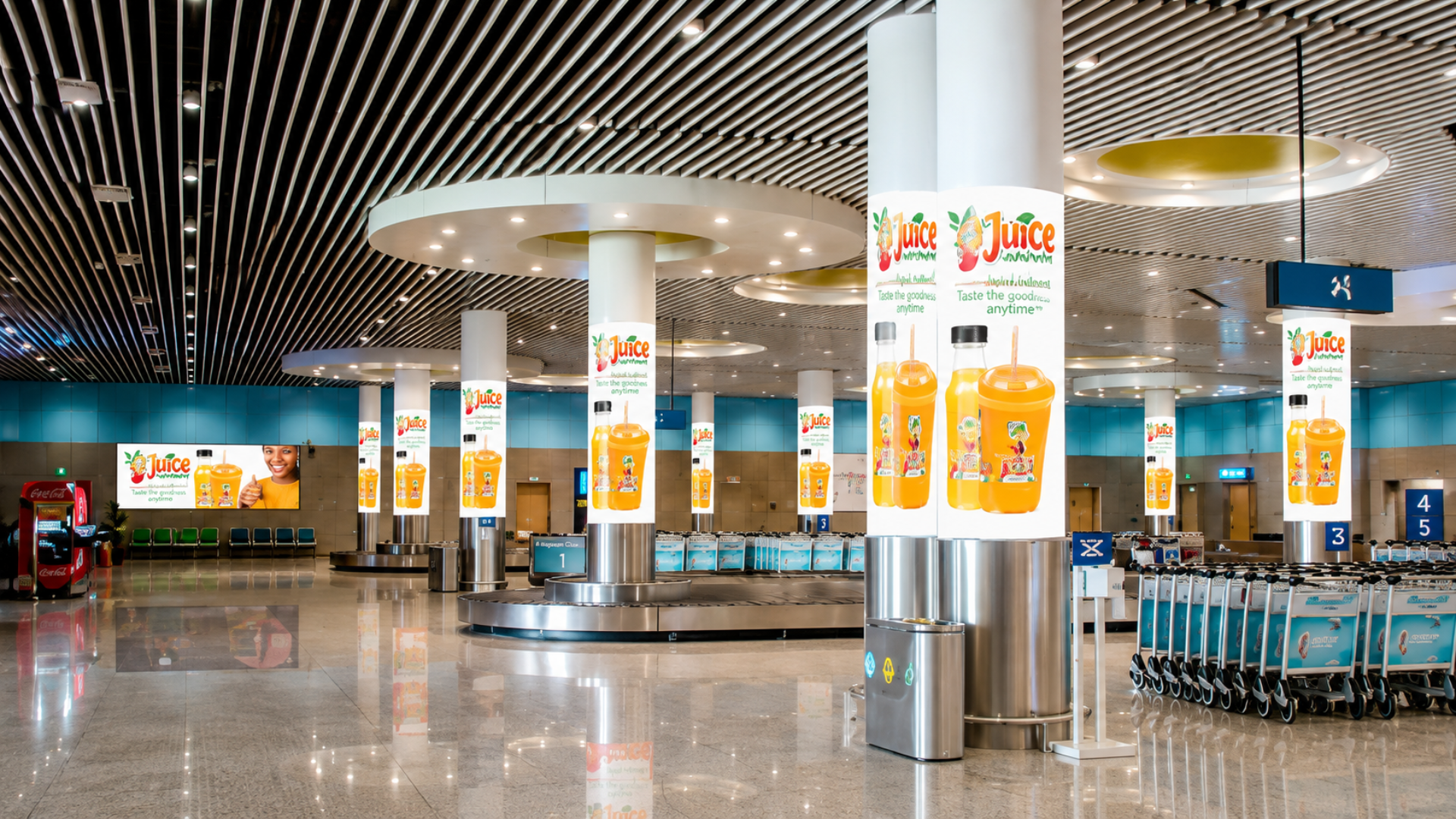
- Terminal 2's bird's nest architecture creates one of the most visually immersive advertising environments in African aviation — the interior sweep of the terminal, with its elevation, light, and design quality, provides a natural dwell and engagement context that static, outdated terminal environments cannot replicate. Brand placements at LUN benefit from the association with one of Africa's most celebrated new airport buildings
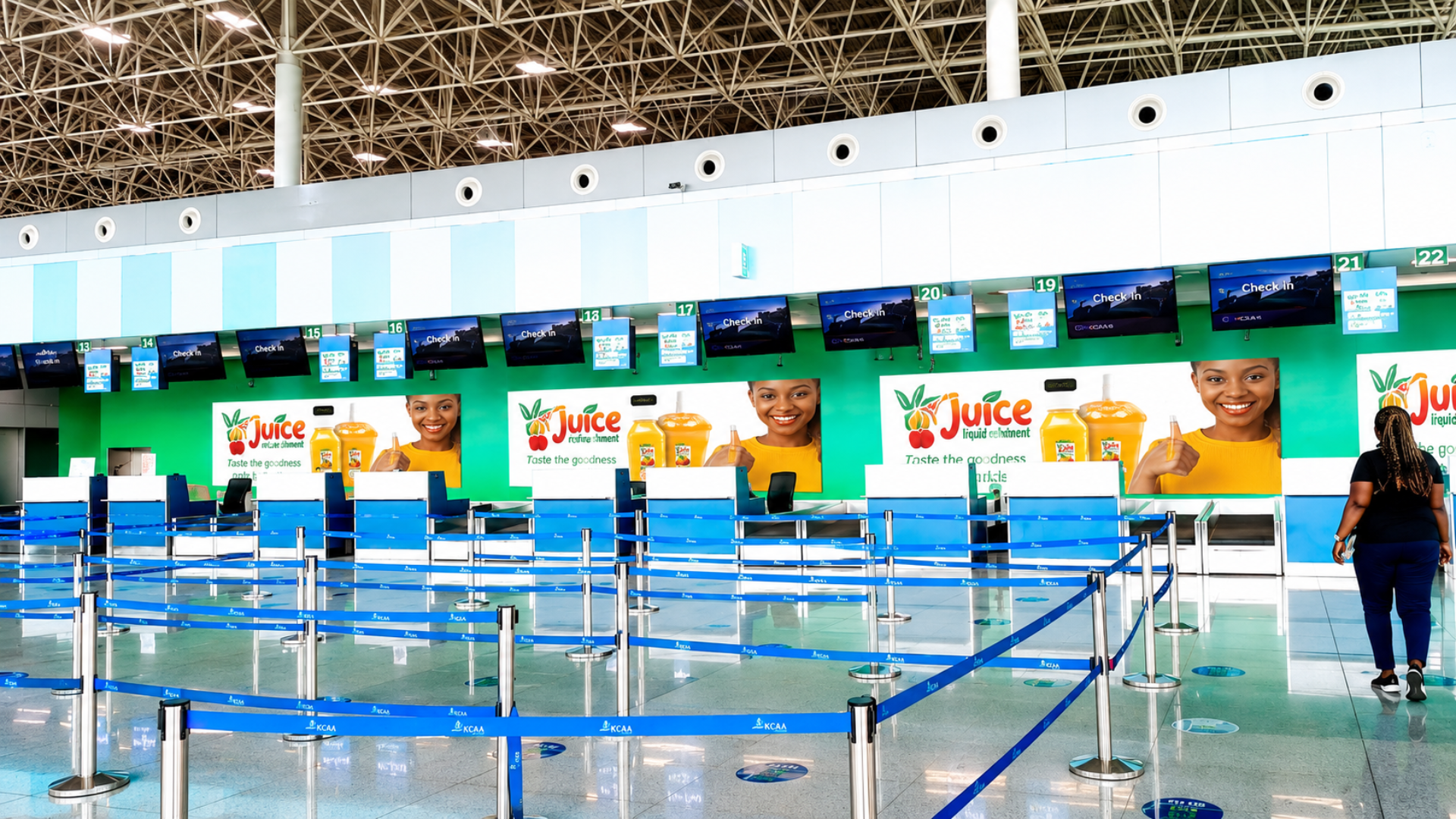
- The terminal's compact international design relative to its passenger ambition creates high advertising exposure concentration — there are no sprawling satellite terminals, no alternative departure zones, and no competing commercial environments. Every international passenger shares the same check-in hall, departure lounge, and gate corridor
- LUN's 90-minute average check-in-to-boarding window — reflecting the efficient but not rushed pace of a growing regional hub — creates a structural dwell environment where passengers engage actively with the terminal advertising and retail environment before departure
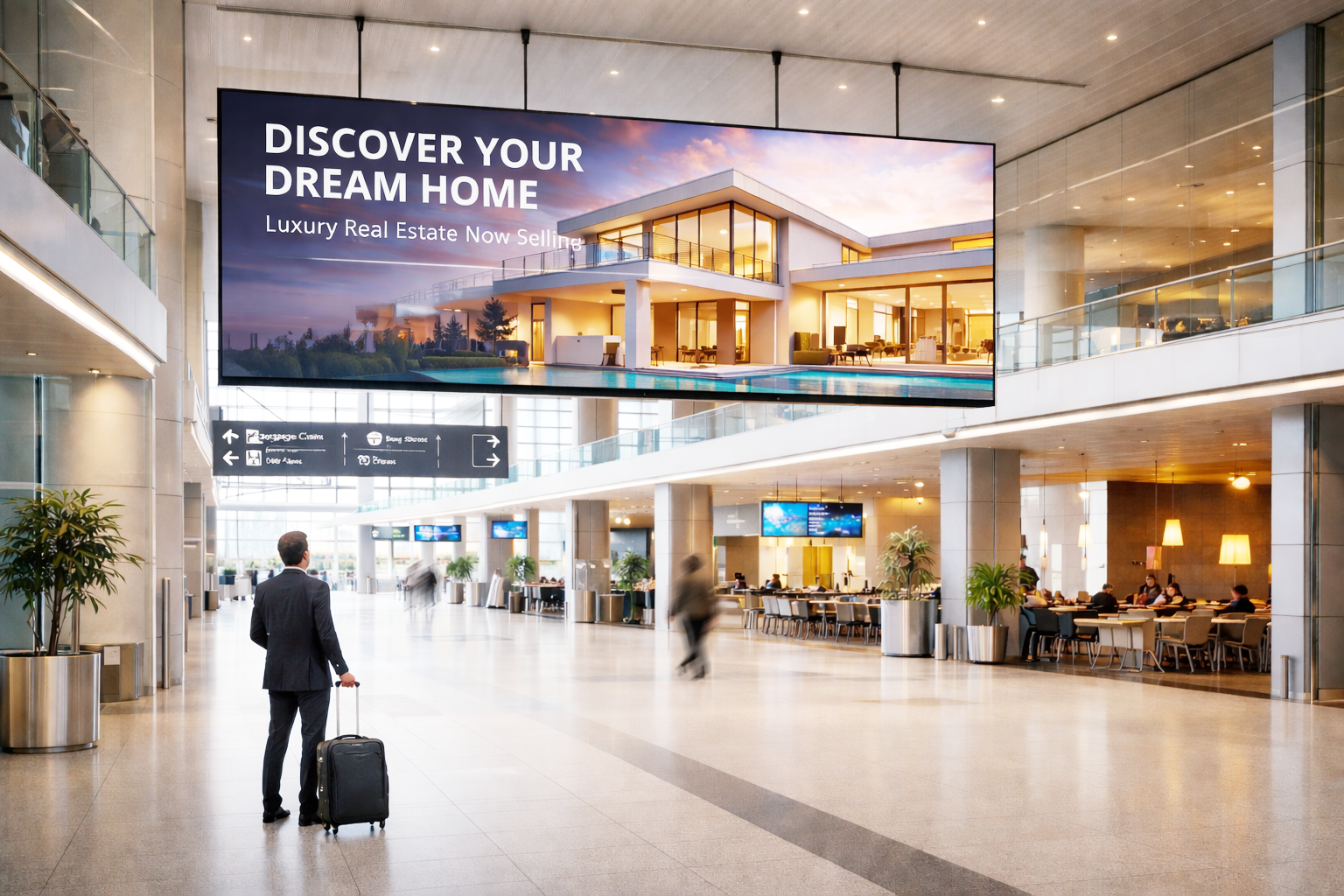
- Masscom Global's access to LUN's advertising inventory and understanding of Zambia's commercial calendar allows brands to activate campaigns with the contextual precision that the airport's bifurcated mining-tourism-diplomatic audience demands — ensuring creative executions speak to the right audience at the right moment in their commercial journey
Strategic Advertising Fit
Best Fit
- Mining and resource sector B2B: Equipment manufacturers, engineering software providers, mining services companies, and industrial product brands find at LUN the highest single-point concentration of copper industry decision-makers in Zambia — an audience that carries procurement authority measured in tens of millions per executive
- Premium financial services and private banking: Mining executives, international investors, and the diplomatic professional class represent one of Sub-Saharan Africa's most commercially qualified private banking audiences — active in FX management, international investment, corporate finance, and wealth management
- Luxury safari and premium travel brands: Safari operators, luxury lodge groups, premium travel accessories, and high-end outdoor equipment brands find an inbound audience at LUN that has already committed to premium spending in Zambia's wilderness — receptive to repeat visit, upgrade, and referral messaging
- International real estate (South Africa, UAE, Portugal): The outbound professional class connecting to Johannesburg, Dubai, and Istanbul represents an active premium property investment audience with demonstrated cross-border real estate appetite
- Telecommunications and connectivity brands: Zambia's relatively underdeveloped telecoms infrastructure and the professional community's need for reliable international connectivity create active demand for international SIM, roaming, and satellite internet products among the executive audience
- Development sector and institutional services: Legal advisory, consulting, audit, and professional services firms serving the international development community, government, and mining sector find a concentrated institutional professional audience that makes purchasing decisions on multi-year service contracts
Brand Alignment at a Glance
| Category | Fit |
|---|---|
| Mining and resource sector B2B | Exceptional |
| Premium financial services | Exceptional |
| Luxury safari and travel | Exceptional |
| International real estate | Strong |
| Telecommunications | Strong |
| Development sector services | Strong |
| Mass consumer FMCG | Poor fit |
Who Should Not Advertise Here
- Mass consumer FMCG brands without Zambia retail distribution: Consumer categories reliant on high-frequency mass-market purchase behaviour will not convert airport brand exposure into commercial return in an airport without a corresponding Zambia retail footprint
- Volume-dependent digital platforms without African market localisation: App-based consumer services without Zambia-specific offerings or payment system integration will not convert the executive audience's awareness into active product usage
- Categories misaligned with Southern Africa's business and conservation culture: Urban mass entertainment, highly Western lifestyle brands without African cultural resonance, and categories with no relevance to the professional, mining, diplomatic, or safari tourism audience will not achieve meaningful engagement at LUN
Event and Seasonality Analysis
- Event Strength: High
- Seasonality Strength: High
- Traffic Pattern: Dual-Peak (May-October dry season safari and mining conference peak; December-January holiday and returning professional travel peak)
Strategic Implication: The June to October dry season window is the dominant commercial opportunity at LUN — delivering simultaneously the highest concentration of premium international safari tourists, the peak corporate travel intensity of the mining and investment sector's second half business cycle, and the busiest regional SADC commercial travel period. The September-October window is specifically exceptional: Kafue and Lower Zambezi wildlife concentrations peak, the Kasanka bat migration begins, and mining sector Q3 reporting drives a surge of executive travel between Lusaka and London, Dubai, and Toronto. December delivers the year's highest domestic consumer spending peak and a concentrated return-of-professional-staff arrival surge in January. Masscom structures LUN campaigns to align creative executions with the specific audience profiles that dominate each of these seasonal windows — ensuring mining sector messaging peaks in the investment conference season and premium safari creative leads during the wildlife viewing calendar's most spectacular months.
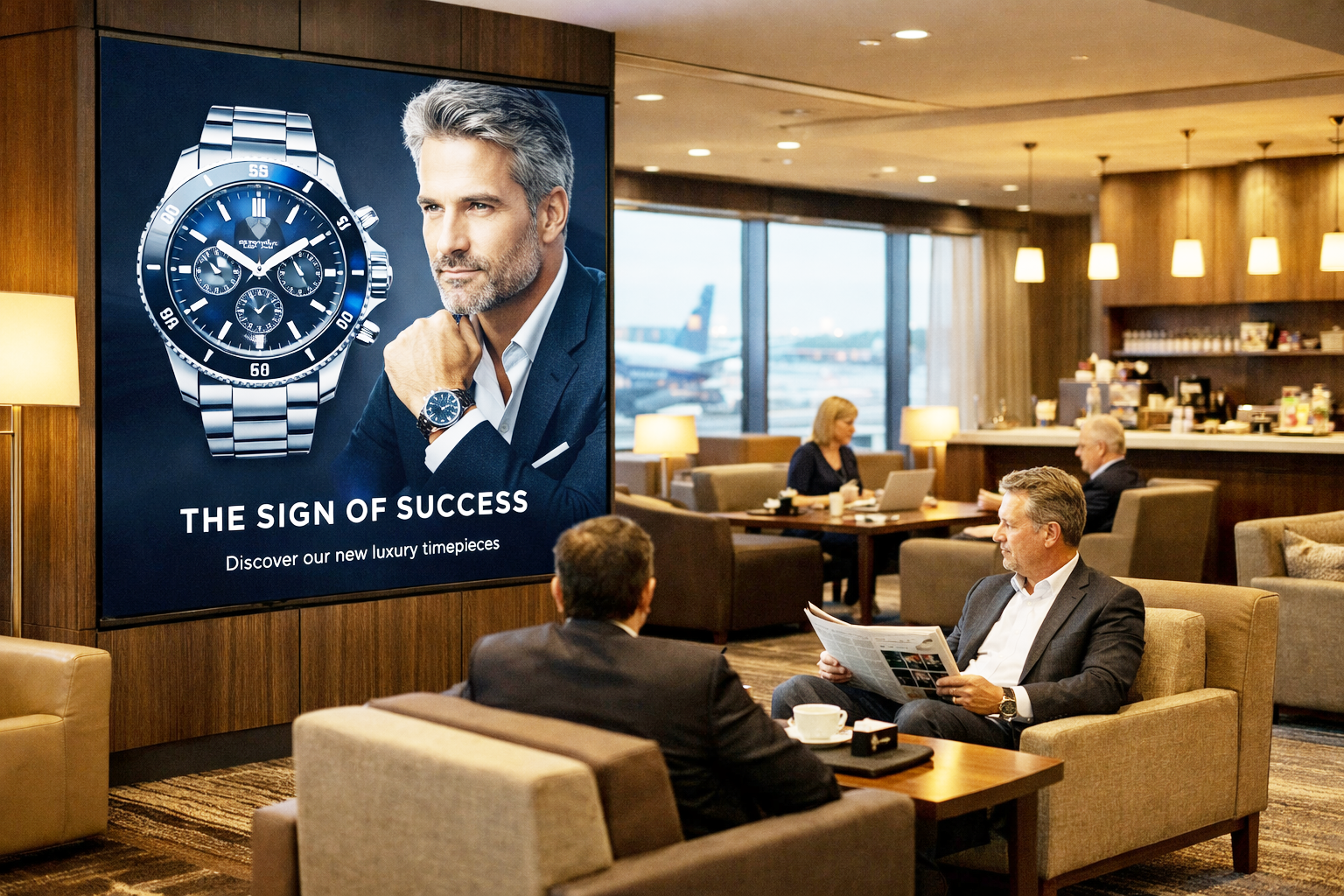
Poor Placement and Delays Affect Airport Campaigns
We help you move faster, access better inventory, and get it right now.
Talk to an ExpertFinal Strategic Verdict
Kenneth Kaunda International Airport is Southern Africa's most commercially compelling emerging hub — and its most strategically timed advertising opportunity. The airport has a new world-class terminal building, a growing roster of premium international carriers, sustained double-digit passenger growth, and a catchment economy at the precise early stage of a copper and critical minerals boom that will drive executive travel growth for at least a decade. Every major copper mining decision, every institutional investment into Zambia's resource future, every premium safari booking into one of Africa's finest wilderness circuits, and every diplomatic and development sector professional operating across Southern Africa passes through a single architecturally distinguished terminal that currently has more advertising capacity than commercial demand. For mining sector B2B brands, premium financial services, luxury travel and safari categories, and international real estate targeting Southern Africa's professional class, LUN represents the continent's highest-quality underpriced premium audience gateway. The window to establish brand presence ahead of the competitive attention this market will attract is open now, and Masscom Global is the partner to activate it.
About Masscom Global
Masscom Global is a premium international airport advertising and media buying agency operating across 140 countries. With deep expertise in airport OOH, premium publications, and high-net-worth audience targeting, Masscom helps brands reach the world's most valuable travellers at the moments that matter most. For advertising packages, media rates, and campaign planning at Kenneth Kaunda International Airport and airports across the globe, contact Masscom Global today.
Frequently Asked Questions
How much does airport advertising cost at Kenneth Kaunda International Airport? Advertising costs at LUN vary based on format, placement zone within Terminal 2, campaign duration, and seasonal demand — with the June-October safari and mining conference peak season commanding the highest rates. As an airport in active commercial development with a premium new international terminal, LUN's advertising inventory offers strong value relative to the quality and authority of its audience. Contact Masscom Global for current availability, format recommendations, and a campaign proposal tailored to your brand objectives and target audience.
Who are the passengers at Kenneth Kaunda International Airport? LUN serves three primary commercially distinct audience groups. The first and highest-authority group is the mining, investment, and corporate professional community — executives from the global copper and critical minerals sector, international investors assessing Zambia's opportunity, and development institution professionals managing southern African programmes. The second is premium safari and wildlife tourism travellers — high-spending international guests from Europe, North America, and East Asia who use LUN as their gateway to South Luangwa, Kafue, Lower Zambezi, and Victoria Falls. The third is the regional diplomatic, government, and NGO professional community connecting across the SADC network. Emirates, Qatar Airways, and Ethiopian Airlines are among the leading international carriers, connecting LUN to the global premium business and tourism network.
Is Kenneth Kaunda International Airport good for luxury brand advertising? LUN is an excellent environment for targeted luxury brand advertising in categories that align with the airport's specific audience — mining and corporate executives, premium safari tourists, and SADC diplomatic professionals. Terminal 2's award-winning design creates a premium visual context that supports luxury brand positioning. The caution is on category alignment: luxury automotive, fine watches, premium travel accessories, and high-end outdoor and safari equipment are strongly aligned; mass-market luxury fashion and European lifestyle brands without explicit southern African market relevance will find less receptive audiences. Masscom can advise on the specific luxury formats and seasonal windows that deliver optimal return at LUN.
What is the best airport in Southern Africa to reach copper and mining industry executives? For brands specifically targeting the copper sector, Kenneth Kaunda Airport LUN offers the single highest concentration of Zambian copper industry executives in aviation — exceeding even OR Tambo Johannesburg for Zambia-specific copper audience density. The domestic connection to Ndola — the Copperbelt capital — and to Solwezi — home to Kansanshi Mine, one of Africa's largest copper operations — makes LUN the apex of the Zambian mining executive travel network. For brands targeting the broader African mining and critical minerals sector, a combined LUN and Johannesburg media buy covers the full southern African mining executive audience.
What is the best time to advertise at Kenneth Kaunda International Airport? June to October delivers the year's strongest combined audience — peak premium safari tourism, mining sector mid-year conference activity, and SADC regional business momentum. September and October specifically combine the finest wildlife viewing conditions in Zambia's major parks with mining sector Q3 reporting travel and the beginning of the Kasanka specialist tourism season. The December-January holiday window captures the domestic consumer spending peak and the returning international professional arrival surge. For mining B2B and financial services brands, the annual Zambia Mining and Investment conference calendar — typically held during the dry season — creates specific high-value event-driven audience concentrations.
Can international real estate developers advertise at Kenneth Kaunda International Airport? Yes — with clear category-specific audience alignment. South African residential and commercial property developers find a natural audience among LUN's outbound Johannesburg route travellers — Zambian corporate executives and professionals making lifestyle and investment property decisions in the Cape, Gauteng, and KwaZulu-Natal markets. UAE property developers find a receptive audience among the Emirates and Qatar Airways passenger segments — affluent Zambian professionals considering Dubai and Abu Dhabi investment property. Zambia's own growing premium residential market in Lusaka also creates domestic developer opportunity targeting the returning diaspora and expatriate professional community. Masscom can advise on creative and timing strategy for real estate advertising at LUN.
Which brands should not advertise at Kenneth Kaunda International Airport? Mass consumer FMCG brands without Zambia retail distribution, volume-dependent digital platforms without localised African market offerings, and categories dependent on high passenger volume for campaign economics are poor matches for LUN's current scale. Brands whose category has no meaningful connection to mining, diplomacy, safari tourism, or the professional corporate sector will not convert airport advertising awareness into commercial return within this audience. Masscom can advise on the right Southern and Eastern African airport portfolio match for any campaign objective across the broader regional network.
How does Masscom Global help brands advertise at Kenneth Kaunda International Airport? Masscom Global provides complete campaign management at LUN — from audience intelligence, competitive landscape review, and seasonal strategy through to media buying, creative compliance review for Zambia's regulatory context, local operational coordination, and campaign performance reporting. Our understanding of Lusaka's business community, the airport's specific audience segments and their seasonal concentrations, and the commercial calendar of Zambia's mining, safari, and diplomatic sectors ensures that campaigns are planned, placed, and delivered with contextual precision. We manage every element from brief to live placement, eliminating the operational complexity that makes first-time advertising buyers in Southern Africa's secondary markets particularly vulnerable to delays and misaligned placements. Contact Masscom Global today to plan your campaign at Kenneth Kaunda International Airport.