Airport at a Glance
| Field | Detail |
|---|---|
| Airport | Karlstad Airport |
| IATA Code | KSD |
| Country | Sweden |
| City | Karlstad, Värmland County |
| Annual Passengers | 26,664 total passengers in 2024, with the airport citing a normalised run rate of around 50,000 per year following the return of scheduled service in March 2025. Domestic and international split for 2024: Data not available. |
| Primary Audience | Regional industrial and defence executives, Nordic package holiday travellers, business owners and entrepreneurs |
| Peak Advertising Season | November to March, June to August |
| Audience Tier | Tier 2 by audience value, Tier 3 by passenger volume |
| Best Fit Categories | Industrial and forestry B2B, defence and engineering suppliers, sun destination travel and resort property, regional banking and business services |
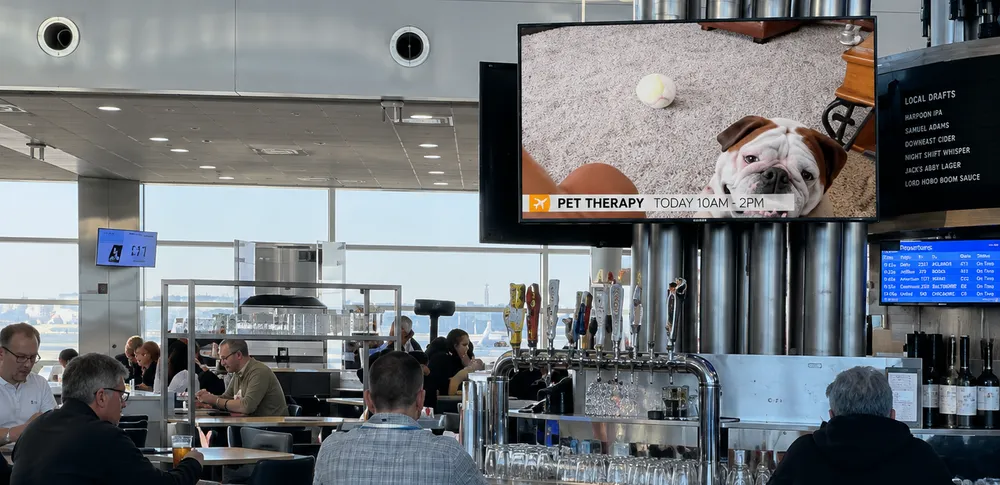
A recovering regional gateway whose value lies entirely in the industrial and entrepreneurial wealth of the county behind it.
Karlstad Airport handled 26,664 passengers in 2024 through a 4,500 square metre terminal, and any advertiser evaluating this airport on reach alone should stop reading here. What changed the commercial case is that scheduled service returned in March 2025, with a locally founded carrier launching direct routes to Stockholm Arlanda and Copenhagen Kastrup after five years without a scheduled Stockholm link. The airport itself now projects a run rate closer to 50,000 passengers a year, and the Copenhagen route in particular opens genuine international connectivity that Värmland's business community had lobbied for over a long period.
The reason this matters is the catchment. Värmland is one of the most industrially concentrated counties in Sweden, anchoring the country's forest bioeconomy cluster, hosting globally significant paperboard and speciality steel production, and sitting adjacent to a defence manufacturing centre that is expanding under European rearmament. Karlstad has also become an unlikely centre of Nordic entrepreneurial wealth through its gaming and technology sector. The passenger count is small, but the density of business ownership and industrial procurement authority behind each passenger is unusually high.
Advertising Value Snapshot
- Passenger scale: 26,664 passengers in 2024, with scheduled service restored in March 2025 to Stockholm Arlanda and Copenhagen Kastrup, plus a rebuilt seasonal charter programme. The direction of travel is upward from a low base after several years of decline.
- Traveller type: Regional industrial and defence sector executives, business owners and entrepreneurs, and Nordic package holiday travellers on winter sun and ski charters.
- Airport classification: Tier 2 by audience value, Tier 3 by passenger volume. This is a precision regional buy for advertisers who need Värmland, not a scale buy.
- Commercial positioning: Värmland's only commercial airport, the county's air link to Stockholm and Copenhagen, and a designated preparedness airport with a permanent air ambulance base.
- Wealth corridor signal: The airport sits on the Oslo to Stockholm industrial corridor and on the Nordic outbound sun and residency corridor toward Spain, the Canary Islands, and Andorra.
- Advertising opportunity: A single 4,500 square metre terminal with one security checkpoint means one brand can own the entire passenger journey rather than compete for fragmented attention. Masscom Global secures placement across check-in, security, and gate areas where charter passengers in particular spend extended pre-departure time. For regional B2B and destination advertisers, this is the most efficient way to reach Värmland's decision makers repeatedly.
Airport Advertising is Complex to Get Right
We help you execute faster, with proven results and local insight most planners lack starting now.
Talk to an Expert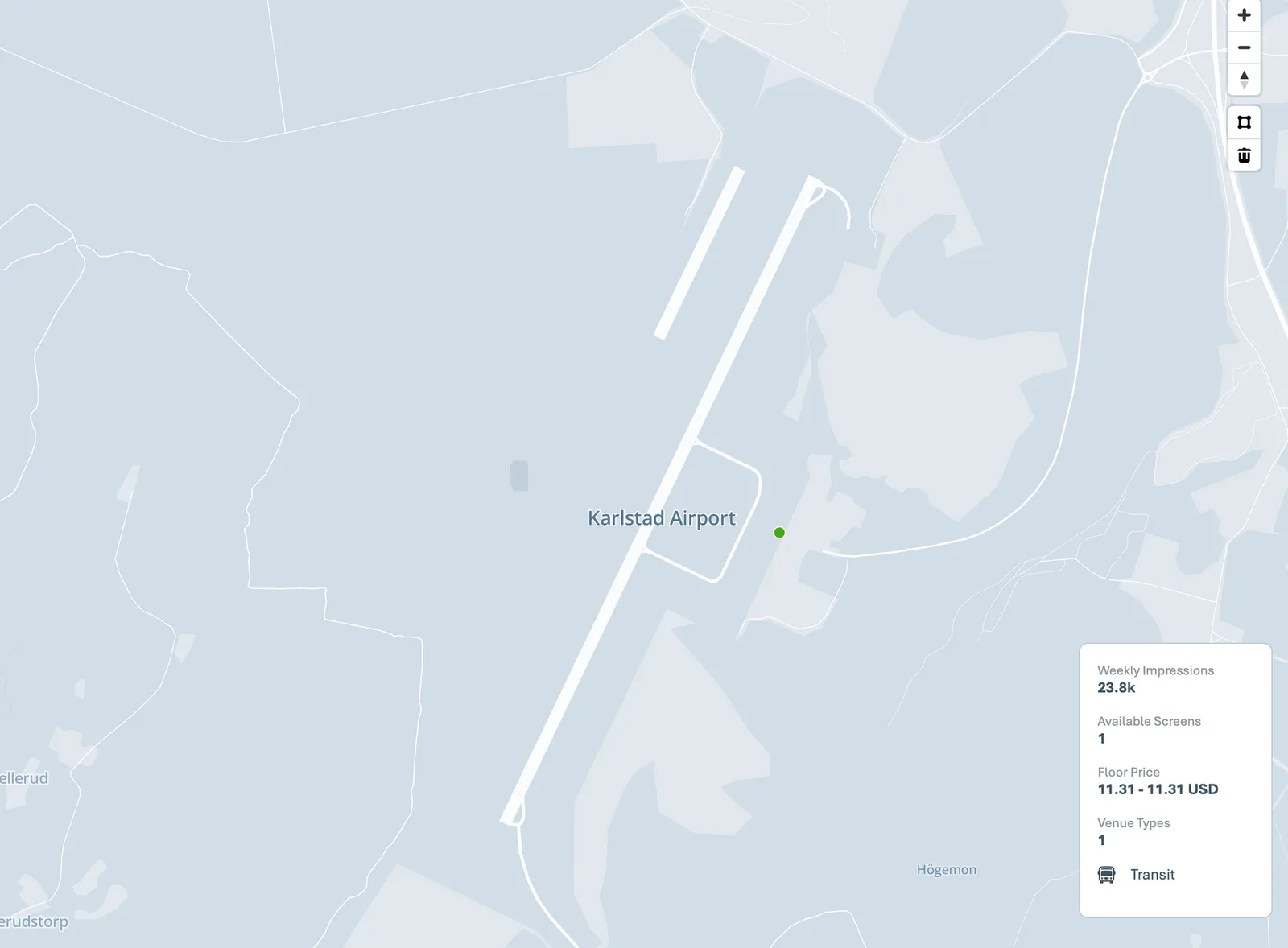
Catchment Area and Economic Drivers
Top 10 Cities within 150 km, Marketer Intelligence:
- Karlstad: The county capital and commercial core, with a population approaching 98,000. Concentrates regional headquarters, university-linked technology and gaming wealth, professional services, and retail. Produces both executive and affluent consumer audiences.
- Karlskoga: A defence manufacturing centre of national significance producing advanced munitions and missile systems. Under European rearmament spending, this town generates high-value defence procurement, engineering, and supply chain audiences with expanding budgets.
- Hammarö and Skoghall: Home to one of the world's largest liquid packaging board operations. Produces process industry management and industrial procurement decision makers on continuous capital cycles.
- Grums: Anchored by a major pulp and paperboard mill. Produces plant leadership and technical purchasing audiences tied to long-horizon investment programmes.
- Kristinehamn: Engineering and marine manufacturing base on Lake Vänern with an established industrial ownership class. Relevant to equipment, logistics, and commercial finance advertisers.
- Arvika: Construction equipment manufacturing and engineering town close to the Norwegian border. Produces manufacturing management plus cross-border commercial activity.
- Säffle: Manufacturing and logistics centre on the Vänern corridor. Produces owner-operator business audiences with fleet and industrial services requirements.
- Filipstad: Home to one of the largest crispbread production operations in the world. A concentrated food manufacturing and FMCG supply chain audience.
- Charlottenberg and Eda: The Norwegian border trade corridor, where large-format retail draws sustained cross-border shopping volume from Oslo and eastern Norway. Produces a high-spending Norwegian consumer audience that is otherwise hard to reach on Swedish media.
- Örebro: The nearest large regional centre and a major Nordic logistics and distribution hub, with a substantial university and public sector employer base. Supplies overflow business travel and supply chain decision makers.
NRI and Diaspora Intelligence:
There is no large diaspora community driving traffic here and advertisers should not plan for one. The dominant high-value audience movement is domestic Swedish, split between a business layer travelling to Stockholm and Copenhagen for meetings and onward connections, and a leisure layer flying seasonal charters to Mediterranean and Canary Island sun destinations. Layered on top is the Norwegian border effect: eastern Norwegian consumers cross into Värmland in large numbers for retail and leisure, and a meaningful subset use Swedish regional airports and services. For advertisers, the commercially relevant migration story here is outbound Swedish capital heading to southern Europe rather than inbound diaspora capital.
Economic Importance:
Three engines drive this catchment. The first is forest bioeconomy and paper, with Värmland hosting Sweden's leading forest industry cluster and several globally significant mills, producing a dense technical and procurement audience. The second is advanced manufacturing and defence, centred on Karlskoga and speciality steel production in the northern county, currently the fastest-growing segment given European defence budgets. The third is technology, gaming, and university-linked enterprise in Karlstad itself, which has generated genuine entrepreneurial wealth and is the reason a privately backed airline was launched from this city in 2025. Masscom Global maps creative to the engine an advertiser is selling into rather than treating the terminal as one undifferentiated audience.
Business and Industrial Ecosystem
- Forest bioeconomy, pulp, and packaging board: Värmland anchors Sweden's forest industry cluster with several mills of global scale. Produces process engineering, plant management, and industrial procurement audiences with multi-year capital programmes.
- Defence and advanced munitions manufacturing: The Karlskoga cluster is expanding sharply under NATO-aligned European rearmament. Produces defence procurement, engineering, and specialist supply chain decision makers with rapidly growing budgets.
- Speciality steel and industrial tooling: Northern Värmland hosts internationally recognised tool steel production. Produces metallurgical and industrial buying audiences with global customer relationships.
- Gaming, technology, and university-linked enterprise: Karlstad has become a Nordic gaming and technology centre, generating founder and investor wealth and a young, high-earning professional workforce. This is the newest and least-served audience layer at this airport.
Passenger Intent, Business Segment:
Business travellers here fly because Värmland is genuinely awkward to reach by other means for international connections, so the profile skews senior. They are plant and project managers, defence and engineering leadership, company owners, and founders travelling to Stockholm or Copenhagen for meetings and onward long-haul connections. Industrial equipment and technical services, defence supply chain, commercial banking and business finance, professional services, and business travel and accommodation brands intercept them most effectively.
Strategic Insight:
The commercial value of this airport is that it is the only place in Värmland where the county's industrial and entrepreneurial leadership passes through a single controlled environment repeatedly. There is no competing commercial airport in the county, and the regional business community treats this airport as its own infrastructure, which creates a level of local goodwill and attention that a large hub cannot replicate. For a supplier selling into Värmland's mills, defence plants, and engineering firms, sustained presence here reads as commitment to the region, and Masscom Global builds it as a long-duration account-based buy rather than a short reach burst.
Tourism and Premium Travel Drivers
- Lake Vänern and the Värmland lake district: The largest lake in the European Union plus the Fryken chain supports summer leisure, boating, and second-home activity. Relevant to marine, outdoor equipment, vehicle, and hospitality advertisers.
- Northern Värmland ski and winter resorts: Established alpine and cross-country destinations in the Torsby and Sysslebäck corridor draw Nordic and Dutch winter visitors. Relevant to winter sports, equipment, and travel advertisers.
- Literary and cultural heritage tourism: The Sunne and Fryken area carries strong national literary heritage that reliably draws domestic cultural tourism through the summer season.
- Wilderness, moose safari, and canoeing tourism: A well-established draw for Dutch, German, and Danish visitors, delivering a specific inbound European leisure audience through summer months.
Passenger Intent, Tourism Segment:
The dominant leisure passenger at this airport is a Swedish package holiday traveller on a seasonal charter to the Canary Islands, Mallorca, Rhodes, or the Andorran ski corridor. They have already paid for the trip and are in a committed, relaxed pre-departure state with extended terminal dwell, which is the single most receptive moment in their journey. Sun destination property developers, resort operators, travel insurance, currency and payment services, duty free and travel retail, and destination tourism boards benefit most from this audience.
Travel Patterns and Seasonality
Peak seasons:
- November to March: The strongest charter window. Winter sun departures to the Canary Islands plus the Andorran ski programme concentrate leisure volume into the darkest months, which is when Nordic travellers commit most readily to southern travel and property.
- June to August: Summer charter and inbound European wilderness tourism peak, alongside domestic holiday movement. Business travel drops sharply during the Swedish July holiday period.
- March to May and September to November: The business travel peaks, driven by the Stockholm and Copenhagen scheduled routes and the Swedish corporate calendar either side of summer.
- Late December to early January: Short holiday family travel spike with business movement effectively at zero.
Granular monthly passenger data for this airport is not published in current public form. Data not available.
Event-Driven Movement:
- Winter sun charter departures (November to March): The most commercially valuable recurring window. Concentrated volumes of committed leisure travellers with long dwell and high receptivity to destination property, travel finance, and resort advertising.
- Andorra ski programme (winter 2025 and 2026 season): A direct seasonal link introduced by a Swedish tour operator. Brings an affluent ski audience and, notably, exposure to a low-tax European jurisdiction with genuine relevance to Swedish entrepreneurs.
- Swedish midsummer and industrial holiday shutdown (late June to July): Business travel collapses while leisure movement peaks. Advertisers should switch category focus rather than reduce spend.
- Regional cultural and literary festival season (summer): Draws domestic tourism into the Sunne and Fryken corridor and supports hospitality and consumer advertisers.
- Military and air force exercise activity: The airport periodically hosts Swedish Air Force dispersed operations training, reflecting its designated preparedness status and reinforcing the defence sector relationship in this catchment.

It’s Not Just Where You Advertise - It’s How Fast You Execute
We combine local insight with fast rollout to deliver results for you, now.
Talk to an ExpertAudience and Cultural Intelligence
Top 2 Languages:
- Swedish: The default language for all local and regional creative. Värmland has a strong regional identity and a distinctive dialect, and locally rooted Swedish creative earns credibility that national or translated campaigns do not.
- English: Universally understood among the professional and younger population and the correct language for international B2B, technology, defence supply chain, and destination advertising. Swedish English fluency is among the highest in Europe, so English creative carries no comprehension penalty with the business audience.
Norwegian is commercially relevant given the border trade corridor immediately west, and mutual intelligibility with Swedish means separate translation is rarely necessary. Masscom Global recommends using it as a targeting signal rather than a language decision.
Major Traveller Nationalities:
The traveller base is overwhelmingly Swedish, drawn from Värmland and adjacent parts of Örebro and Dalsland. Norwegian travellers form the most significant foreign group, using Värmland for retail, leisure, and occasionally as an alternative departure region. Inbound Dutch, German, and Danish visitors arrive for wilderness, canoeing, and fishing tourism, largely in summer. There is no significant long-haul inbound flow. Creative should be built for a Nordic audience with high English fluency, high digital literacy, and strong scepticism toward overstated claims.
Religion, Advertiser Intelligence:
- Church of Sweden Lutheranism (roughly half the national population by membership, higher in rural Värmland): Membership is largely cultural rather than devotional, and Sweden ranks among the most secular societies in the world. Its commercial relevance is the calendar it governs, with Christmas, Easter, and All Saints driving family travel, gifting, and hospitality spending. Advertisers should plan against the calendar, not against belief.
- Non-religious and unaffiliated population (a large and growing share): The dominant worldview in this catchment. Purchase decisions are driven by sustainability credentials, product function, and social consensus rather than tradition. Environmental and ethical positioning outperforms heritage or status messaging with this group.
- Islam and other faiths (a small but established minority, concentrated in Karlstad): Adds Ramadan and Eid travel and spending patterns and supports food, remittance, and family travel advertisers in defined windows.
Alongside all of this, secular Midsummer is the single most powerful cultural moment in the Swedish calendar and drives more domestic travel and consumption than any religious observance. It should anchor any summer campaign here.
Behavioral Insight:
This audience is consensus-driven, environmentally literate, and deeply resistant to hard-sell messaging. Swedish buyers research thoroughly, value transparency on price and sourcing, and treat overstated claims as disqualifying rather than persuasive. Värmland adds a layer of regional pragmatism and understatement: this is an industrial county where wealth is built through manufacturing and ownership rather than display, and conspicuous luxury positioning tends to alienate rather than attract. Effective creative here is calm, factual, sustainability-credible, and specific, and treats the reader as someone who will verify the claim.
Outbound Wealth and Investment Intelligence
The outbound passenger at KSD is commercially distinctive because Sweden has one of the strongest second-home-abroad cultures in Europe relative to its population, and Värmland's industrial ownership class participates in it fully. Capital here is not being deployed into speculative global assets. It is being deployed into southern European property, tax-efficient residency, and lifestyle relocation, and the charter route map at this airport points directly at where. For international property developers and residency advisers, the winter charter passenger is a pre-qualified prospect sitting in a terminal with nothing else to look at.
Outbound Real Estate Investment:
Spain dominates, with the Costa del Sol, Alicante and Costa Blanca, Mallorca, and above all the Canary Islands absorbing the majority of Swedish second-home capital. The Canary Islands are especially relevant here because they are the primary charter destination from this airport, meaning the audience is already flying there and already familiar. Portugal's Algarve retains a substantial Swedish community, France and Italy attract the upper tier, and Thailand holds a long-established Swedish expatriate and retirement presence around Hua Hin and Phuket. Developers in these markets are addressing a buyer who visits annually and converts over a two to three season cycle.
Outbound Education Investment:
Swedish families send children abroad for undergraduate and postgraduate study at high rates given the population, with the United Kingdom, the Netherlands, and Denmark leading, followed by the United States for specialist and sporting scholarships. Copenhagen's direct connection from this airport makes Danish institutions particularly accessible to Värmland families. Spending is moderate by global standards because domestic higher education is free, so the relevant proposition is programme quality, English-taught delivery, and international career outcomes rather than prestige pricing.
Outbound Wealth Migration and Residency:
This is the most underrated opportunity at this airport. Swedish entrepreneurs, technology founders, and business owners have moved in growing numbers toward low-tax European jurisdictions, and Andorra has emerged as a leading destination for exactly this profile. A direct seasonal air link from Karlstad to Andorra now exists, which places a residency-relevant jurisdiction one flight from a city with genuine founder wealth. Portugal, Spain's Beckham regime, Switzerland, Malta, and the UAE also attract Swedish relocation interest. Residency advisers, international tax firms, and private banks have a rare and specific audience here.
Strategic Implication for Advertisers:
The corridor at this airport runs from a cold, high-tax, high-income industrial county to warm, lower-tax southern European destinations, and the passengers travelling it are exactly the people making property and residency decisions. Canary Island and Spanish developers, Andorran and Portuguese residency advisers, and international tax and private banking firms should treat the winter charter window as a priority buy. Masscom Global can activate at KSD and simultaneously at the destination airports these passengers land at, reaching the same buyer at both ends of the decision.
Airport Infrastructure and Premium Indicators
Terminals:
- A single 4,500 square metre terminal opened in 1997, compact and modern, with one security checkpoint, a bistro, and a gate-side bar inside security. Every departing passenger follows an identical path, so placement coverage is effectively complete from a small number of positions.
- A runway of approximately 2.5 kilometres built to accommodate Boeing 737 and Airbus A320 class aircraft, which is what makes the full-size charter programme to the Mediterranean and Canary Islands possible from a city of this size.
Premium Indicators:
- A permanent air ambulance base operated for Värmland and Dalarna, including the national technical maintenance base servicing helicopters from across the operator's Swedish operations. This is a significant year-round aviation employment and traffic anchor.
- Designation as a temporary preparedness airport pending formal confirmation, which places the facility within Sweden's national resilience infrastructure and underwrites its long-term viability.
- Public ownership at 95 percent by Karlstad Municipality and 5 percent by Region Värmland, signalling political commitment to the airport as regional infrastructure rather than a marginal commercial asset.
- Periodic Swedish Air Force dispersed operations exercises using the field, reflecting both its strategic role and its relationship with the defence sector concentrated in this catchment.
Forward-Looking Signal:
The trajectory here is one of deliberate recovery. Scheduled service returned in March 2025 with new routes to Stockholm Arlanda and Copenhagen Kastrup after a five-year absence, backed by locally generated entrepreneurial capital rather than subsidy alone. The charter programme has been rebuilt with Canary Island, Mallorca, and Rhodes departures and a new Andorra winter link, and a major international leisure carrier is adding Gran Canaria service from November 2026. Defence manufacturing expansion in the catchment and continued forest industry investment both point to rising business travel demand. Inventory in a single-terminal airport is finite by definition, and rates set against 2024 volumes will not survive a sustained recovery. Masscom Global is advising clients to secure position now, while pricing still reflects the trough rather than the trend.
Airline and Route Intelligence
Top Airlines:
Scheduled service is operated by a Karlstad-based carrier launched in 2025 with backing from a local technology entrepreneur. Seasonal charter service is operated by Nordic leisure carriers, with a major international leisure airline adding capacity from November 2026. The airport also hosts permanent air ambulance operations and periodic military activity.
Key International Routes:
Copenhagen Kastrup is the principal scheduled international route and the airport's gateway to the global network, a link the regional business community had sought for years. Seasonal charter routes serve Gran Canaria, Palma de Mallorca, Rhodes, and Andorra. Weekly frequency data by route is not published in current public form. Data not available.
Domestic Connectivity:
Stockholm Arlanda is the primary domestic route, restored in March 2025 after the previous Stockholm service ended in 2020. The route competes directly with a 258 kilometre road and rail corridor, which means the passengers who choose to fly are typically those connecting onward internationally or those for whom time carries a genuine commercial cost. That self-selection raises the quality of the domestic passenger considerably.
Wealth Corridor Signal:
The route map divides cleanly into two corridors with two different audiences. Stockholm and Copenhagen carry business travellers connecting to the global network, a corridor of commerce and procurement authority. The Canary Islands, Mallorca, Rhodes, and Andorra carry leisure travellers on a corridor that leads directly to Swedish second-home and residency markets. Very few airports of this size offer two such cleanly separated and independently monetisable audiences, and Masscom Global builds campaigns that address each corridor with its own creative and timing.
Media Environment at the Airport
- A single 4,500 square metre terminal with one security checkpoint and minimal existing visual competition, so a well-placed brand can own the entire departure and arrival journey rather than fight for share against dozens of adjacent messages.
- Charter passengers arrive early and wait long, and the terminal has a bistro and a bar inside security that hold them in place, which converts a modest impression count into genuinely extended attentive exposure rather than glanced impressions.
- The business audience is repetitive rather than transient, with the same regional industrial and defence leadership passing through on a recurring Stockholm and Copenhagen rotation, delivering deep frequency against a defined account list.
- Masscom Global holds the access and execution capability to secure precision placement across check-in, security, and gate touchpoints, and structures campaigns around the two distinct corridors this airport serves rather than as a single generic reach buy.
Strategic Advertising Fit
Best Fit:
- Canary Islands and Spanish resort property developers: Reaches a pre-qualified buyer already flying to the destination, in a long-dwell environment, during the winter decision window.
- Residency, relocation, and international tax advisory: A catchment with real entrepreneurial wealth and a direct air link to a low-tax European jurisdiction.
- Industrial equipment, process technology, and forestry machinery: Reaches plant and project leadership across one of Sweden's densest mill and manufacturing clusters.
- Defence supply chain and engineering services: Karlskoga's expansion under European rearmament makes this the fastest-growing procurement audience in the catchment.
- Commercial banking, business finance, and insurance: Reaches regional company owners and industrial management at a moment of active capital planning.
- Travel insurance, currency, and payment services: Directly relevant to the charter passenger at the exact point of departure.
- Destination tourism boards for Nordic sun and ski markets: A concentrated, self-selected outbound leisure audience with proven booking behaviour.
- Regional business services, recruitment, and higher education: Supported by a university city and a manufacturing economy with persistent skills demand.
Brand Alignment at a Glance:
| Category | Fit |
|---|---|
| Spanish and Canary Islands resort property | Exceptional |
| Residency, relocation, and international tax advisory | Exceptional |
| Industrial, forestry, and process technology B2B | Strong |
| Defence supply chain and engineering services | Strong |
| Travel insurance, currency, and payment services | Strong |
| Commercial banking and business finance | Moderate |
| Destination tourism boards | Moderate |