




Airport at a Glance
| Field | Detail |
|---|---|
| Airport | Hat Yai International Airport |
| IATA Code | HDY |
| Country | Thailand |
| City | Hat Yai, Songkhla Province, southern Thailand |
| Annual Passengers | Over 3 million (2023/2024, recovering toward 4.5 million pre-pandemic peak) |
| Primary Audience | Malaysian cross-border leisure shoppers, domestic Thai business and leisure travellers, regional ASEAN tourism visitors |
| Peak Advertising Season | Chinese New Year (January to February), Malaysian school holidays (June, November to December), Malaysia Day long weekend (September) |
| Audience Tier | Tier 3 |
| Best Fit Categories | FMCG, halal food and beverages, consumer retail, telecom (cross-border), fashion, financial services, regional tourism |
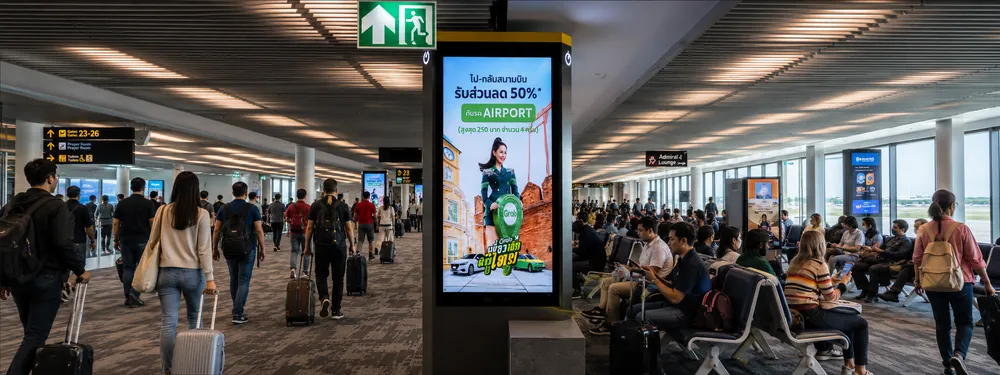
Hat Yai International Airport is the fifth busiest airport in Thailand, the primary air gateway to southern Thailand's most commercially dense city, and the pivotal commercial node for one of Southeast Asia's most reliable and measurable cross-border tourism flows. Malaysia is Thailand's largest source of tourists by nationality, and for a significant proportion of those millions of Malaysian visitors, Hat Yai is the primary destination — a city where food, shopping, accommodation, entertainment, and wellness deliver at Thai prices to Malaysian wallets that find the value proposition irresistible. During the Malaysia Day long weekend alone, an estimated 150,000 Malaysian tourists cross into Hat Yai and inject tens of millions of Malaysian Ringgit into the local economy within a single holiday period.
This is not a premium HNWI airport. Its commercial value is built on volume, cultural specificity, and the extraordinary predictability of a cross-border tourism corridor that operates like clockwork across Malaysian public holidays, school break calendars, Chinese New Year, and Eid. For FMCG brands, halal food companies, consumer retail, telecom operators, and financial services brands targeting the Malaysian middle-class and the Thai domestic consumer simultaneously, HDY is one of Southeast Asia's most commercially efficient regional airport advertising environments — a captive audience in a moment of maximum leisure spend intent, arriving at and departing from one of the region's most culture-rich shopping and dining destinations.


Advertising Value Snapshot
- Passenger scale: Over 3 million annually (recovering toward the 4.5 million pre-pandemic peak recorded in 2018); fifth busiest airport in Thailand; operated by Airports of Thailand (AOT) — the state enterprise managing Thailand's six major international gateways
- Traveller type: Malaysian cross-border leisure and shopping tourists (dominant international segment), domestic Thai business and leisure travellers on Bangkok, Phuket, and Chiang Mai routes, regional ASEAN visitors, rubber and palm oil agribusiness professionals
- Airport classification: Tier 3 — a high-volume regional gateway serving one of Southeast Asia's most consistent and commercially measurable bilateral tourism corridors, embedded within Thailand's most economically productive southern province
- Commercial positioning: Southern Thailand's primary air entry point for the Malaysian leisure market and the domestic commercial hub for a catchment spanning rubber, palm oil, and border trade industries across Songkhla Province and the broader deep south
- Wealth corridor signal: HDY sits at the apex of the Thailand-Malaysia bilateral tourism corridor where Malaysia's 4.52 million annual Thailand visitors — the country's largest source market in 2025 — concentrate their southern Thailand activity. The airport's catchment sits 45 kilometres from the Sadao border crossing, making Hat Yai the first major Thai city that millions of Malaysian road and rail travellers reach after crossing the frontier
- Advertising opportunity: Masscom Global activates at HDY with creative intelligence calibrated to the Malaysian cross-border consumer, the Thai domestic leisure traveller, and the multicultural audience whose Chinese, Malay, and Thai identities make this one of Southeast Asia's most culturally layered airport advertising environments
Airport Advertising is Complex to Get Right
We help you execute faster, with proven results and local insight most planners lack starting now.
Talk to an ExpertCatchment Area and Economic Drivers
Top 10 Cities within 150 km — Marketer Intelligence
- Songkhla (43 km east): The official provincial capital of Songkhla Province and a historic coastal city whose fishing port, Tang Kuan Hill, and the iconic Samila Beach mermaid statue draw domestic Thai tourists and Malaysian day-trippers through HDY — its administrative and cultural significance makes it a consistent professional and leisure travel origin for airport business
- Alor Setar, Kedah, Malaysia (~80 km southeast via border): The capital of Malaysia's Kedah state and the nearest major Malaysian urban centre to Hat Yai — its population of Malaysian professionals, students, and middle-class families drives a significant portion of the repeat cross-border HDY arrivals who treat Hat Yai as a regular weekend leisure destination rather than an occasional international trip
- Kangar, Perlis, Malaysia (~100 km southeast): The capital of Malaysia's smallest state, whose compact size and proximity to the Thai border have made Hat Yai effectively a commercial extension of the local economy — Perlis residents are among the most frequent Malaysian users of the Hat Yai tourism corridor, travelling for food, shopping, and entertainment at a frequency that approaches domestic travel patterns
- Satun (60 km southwest): A Muslim-majority Thai coastal province and the gateway to Koh Lipe — one of Thailand's most celebrated premium island destinations, accessible via boat transfer from the Satun coast. Satun's position as an island tourism staging point makes it a significant contributor to HDY's premium leisure transit audience during the Koh Lipe high season
- Yala (80 km east): A southern Thai city at the centre of the region's rubber producing corridor — its agribusiness and agricultural professional population generates consistent commercial and business travel through HDY, adding a B2B layer to the airport's dominant consumer leisure profile
- Phatthalung (90 km north): A province renowned for the Thale Noi waterbird sanctuary, limestone cave attractions, and a rich agri-tourism ecosystem — its domestic Thai tourism audience uses HDY as the nearest commercial airport for both arrival and departure, contributing to the airport's domestic leisure traffic base
- Pattani (120 km east): A historically and culturally significant Muslim-majority city in the deep south — its Islamic heritage, academic institutions, and cultural tourism identity add a specialist domestic Thai and Malaysian Muslim traveller audience to HDY's catchment that is distinct from the dominant Chinese Malaysian shopping tourist profile
- Trang (150 km northwest): A province celebrated for its pristine offshore islands, caves, and Andaman sea access — its premium coastal tourism profile brings a higher-spending leisure audience to HDY's catchment than the dominant cross-border budget shopping segment, adding commercial diversity to the airport's passenger composition
- Sadao District (45 km south, bordering Malaysia): The Sadao border crossing is the primary land entry point between Thailand and Peninsular Malaysia on the western road corridor — its role as the physical gateway for millions of Malaysian road travellers entering Hat Yai amplifies HDY's airport audience with the broader cross-border commercial context that defines the city's entire tourism identity
- Hat Yai District commercial core (adjacent): The broader Hat Yai urban commercial district — Kim Yong Market, Santisuk Market, Central Festival Hat Yai mall, Lee Gardens Plaza, and the dense nightlife and dining corridor — constitutes the primary commercial destination for the airport's dominant inbound audience and the reference point against which all arriving Malaysian tourists calibrate their spending intent
NRI and Diaspora Intelligence
The commercially defining "diaspora" flow at HDY is the Malaysian Chinese and Malaysian Malay visitor community — a cross-border leisure audience that is not technically a diaspora in the remittance sense but whose regularity, cultural familiarity, and spending behaviour function like a diaspora return pattern. Malaysian Chinese visitors constitute a significant share of Hat Yai's Malaysian tourism market, drawn by shared culinary heritage, Chinese New Year celebrations of extraordinary scale, and a Sino-Thai cultural comfort that makes Hat Yai feel simultaneously familiar and excitingly different. Malaysian Malay and Muslim visitors represent a rapidly growing segment enabled by Hat Yai's expanding halal food ecosystem — five years ago this market was minimal; today the balance of Malay, Chinese, and Indian Malaysian visitors has shifted materially toward multi-ethnic composition. For FMCG, halal food, fashion, and consumer services brands targeting the Malaysian market, this cross-border leisure audience at HDY represents one of Southeast Asia's most concentrated and commercially legible buyer communities outside of a shopping mall.
Economic Importance
Songkhla Province's economy is anchored by three commercially complementary sectors that together define HDY's year-round passenger profile. The rubber and palm oil agricultural export economy — southern Thailand produces the majority of the country's rubber and palm oil output — generates a consistent agribusiness professional and logistics executive travel base through HDY. The border trade economy — Hat Yai's proximity to Malaysia generates significant wholesale trade, goods arbitrage, and commercial cross-border business activity — produces a merchant and trader professional audience whose travel through HDY reflects the province's role as Thailand's primary southern trading corridor. And the tourism economy — driven overwhelmingly by Malaysian arrivals and supported by domestic Thai travel — delivers the airport's dominant peak commercial audience during the holiday periods that define HDY's advertising calendar.
Business and Industrial Ecosystem
- Rubber and palm oil commodity sector: Southern Thailand's rubber and palm oil industries — with Songkhla Province at the centre of the national production corridor — generate plantation managers, commodity traders, and export logistics professionals who travel regularly through HDY for domestic business connections and international commodity market engagement
- Border trade and cross-border commerce: The Thailand-Malaysia border economy concentrated around Hat Yai generates a diverse merchant and trading professional class — wholesale traders, import-export operators, customs logistics specialists, and commercial agents whose business travel through HDY reflects the city's fundamental commercial identity as a cross-border trade hub
- Retail and hospitality sector: Hat Yai's tourism-driven retail and hospitality economy — its markets, hotels, restaurants, massage centres, and entertainment venues — constitutes one of the largest private sector employment bases in the region, generating a consistent professional service class whose domestic travel through HDY is year-round and commercially predictable
- Education and healthcare tourism: Hat Yai is a regional hub for both education and medical services, drawing patients and students from rural southern Thailand and from Malaysia for higher-quality or more affordable services than available locally — both audiences generate consistent inbound domestic travel through HDY
Passenger Intent — Business Segment
HDY's business traveller segment is primarily a domestic Thai professional — a Songkhla Province executive or professional connecting to Bangkok or Phuket for national business, or a regional agribusiness operator attending commodity markets and trade fairs. The Malaysian business traveller at HDY is typically a merchant, trader, or SME operator with Hat Yai commercial connections — their purchasing behaviour in the airport is aligned with practical professional needs: telecom services, payment and financial products, and premium food and beverage. For B2B brands with agribusiness, logistics, or trade finance relevance to Thailand's southern commodity corridor, the professional audience at HDY represents an accessible regional market that is under-served by national advertising campaigns focused on Bangkok.
Strategic Insight
The most commercially significant insight about HDY's business environment is the price arbitrage dynamic that drives its entire economy. Hat Yai's commercial identity is built on the fact that Thai prices are structurally lower than Malaysian prices for food, accommodation, entertainment, and consumer goods — a differential that creates an entirely self-sustaining cross-border demand engine that operates across every Malaysian holiday calendar with mechanical regularity. For advertisers, this means the inbound Malaysian consumer at HDY is not merely on holiday — they are executing a deliberate consumer purchasing mission, arriving with spending budgets specifically allocated to the categories where Thai prices deliver meaningful value. They are, in the fullest commercial sense, pre-qualified buyers in active purchase mode at the moment they arrive in the terminal.
Tourism and Premium Travel Drivers
- Shopping tourism — Kim Yong Market, Santisuk Market, and CentralFestival Hat Yai: Southern Thailand's most famous shopping destination for Malaysian consumers — wholesale and retail markets offering imported goods, Thai products, and cross-border bargains at prices that consistently undercut Malaysian retail by 15 to 30 percent across food, fashion, and consumer goods. For brand advertisers targeting the Malaysian shopping tourist, the HDY terminal is the first and last brand exposure opportunity before and after the shopping mission
- Food and gastronomic tourism: Hat Yai's multi-ethnic food scene — Sino-Thai hawker stalls, Malay Muslim halal restaurants, fresh seafood at Patong and Nimitz streets, and the famous Tom Yum and local curry culture — is the primary non-shopping driver of Malaysian repeat visitation. The city's food reputation has expanded its appeal from Chinese Malaysian visitors to the rapidly growing Malay Muslim segment as halal certification has spread across the restaurant economy
- Koh Lipe and Andaman island transit: Hat Yai functions as the primary transit hub for travellers accessing Koh Lipe — Satun Province's most celebrated island destination — making HDY the airport of choice for premium island tourism visitors who cannot access Koh Lipe directly and who use Hat Yai as their mainland staging point. This transit audience has a meaningfully higher average spend profile than the dominant cross-border shopping tourist
- Songkhla's historic coastal culture: The provincial capital of Songkhla — 43 km from the airport — offers a culturally distinct Southern Thai heritage experience including Tang Kuan Hill, the Samila Beach mermaid statue, and the Songkhla Old Town's Sino-Portuguese architecture. This cultural tourism layer attracts a more educated, premium-oriented domestic Thai audience that supplements the commercially dominant Malaysian leisure segment
- Phatthalung ecotourism and bird sanctuary: The Thale Noi Waterbird Sanctuary in neighbouring Phatthalung — a globally significant wetland hosting over 200 bird species — is a growing destination for premium ecotourism visitors from Bangkok and from Malaysia, accessible exclusively through HDY as the nearest commercial airport
Passenger Intent — Tourism Segment
The inbound tourism traveller at HDY — predominantly Malaysian — arrives in one of the most commercially specific purchase intent states available in Southeast Asian tourism. They have budgeted specifically for Hat Yai's price advantages, they know exactly where they want to eat, shop, and sleep, and their wallet is explicitly allocated for the categories where Thai prices deliver maximum value. At departure, they are laden with consumer goods, fresh and processed food products, and the accumulated receipts of a deliberate shopping mission. The terminal departure environment is the last commercial interaction point of a trip defined entirely by purchasing activity — making the outbound HDY passenger one of Southeast Asia's most predictably activated brand engagement audiences at the exact moment they are reviewing their spending and mentally categorising their brand experiences.
Travel Patterns and Seasonality
Peak seasons:
- Chinese New Year (January to February): The single most commercially intense window at HDY — Hat Yai hosts one of Thailand's most celebrated Chinese New Year festivals, drawing Malaysian Chinese visitors in exceptional concentrations. Hotels are booked months in advance, the city's markets operate at peak capacity, and the airport handles its highest Malaysian passenger density of the year. Thailand's Tourism Authority specifically designates a major Chinese New Year event in Hat Yai's Songkhla Province as a flagship initiative to attract Malaysian tourists
- Malaysian school holidays (June, and November to December): Three distinct Malaysian school holiday periods drive predictable traffic surges — the June mid-year break and the November to December year-end break are the two largest, each producing a multi-week sustained peak as Malaysian families cross for budget leisure breaks
- Malaysia Day long weekend (September 16): An annual national holiday producing approximately 150,000 Malaysian visitor arrivals into southern Thailand, injecting tens of millions of Ringgit into Hat Yai's economy within a four-day window — the most commercially intense single-event weekend at HDY outside of Chinese New Year
- Year-round Malaysian weekend leisure traffic: The proximity of Hat Yai to northern Malaysian population centres makes weekend cross-border leisure travel a normalised behaviour rather than an occasional event — Malaysian visitors from Kedah, Perlis, and Penang State use Hat Yai for regular Friday to Sunday breaks, producing a consistent moderate-volume weekend passenger layer that sustains HDY's commercial environment between peak holiday periods
Event-Driven Movement
Chinese New Year festival Hat Yai (January to February, annual): Thailand's Tourism Authority has designated a major CNY celebration in Hat Yai District as a flagship event to attract Malaysian Chinese tourists — the festival anchors the year's highest-volume Malaysian arrival period and produces an airport environment saturated with celebration-mode purchasing intent. For FMCG, food, fashion, and consumer retail brands targeting Malaysian Chinese consumers, this is the most commercially valuable advertising window of the year
Malaysia Day long weekend (September 16, annual): A nationally observed Malaysian public holiday that consistently delivers 100,000 to 150,000 cross-border arrivals into southern Thailand — 150,000 Malaysians generating RM39 million in a single weekend represents one of the most commercially predictable and measurable regional tourism events in Southeast Asia, offering advertisers a window of near-certain audience concentration
Eid al-Fitr and Malaysian Muslim holiday travel (variable, annually): Hat Yai's expanding halal food ecosystem has transformed the Malay Muslim component of its Malaysian visitor market — Eid al-Fitr and other Islamic calendar events now drive a growing Malay Muslim cross-border leisure surge that was minimal five years ago and is now commercially significant and brand-opportunity-rich for halal category advertisers
Songkran (April): Thailand's national water festival drives domestic Thai travel peaks through HDY as residents and visitors from the broader region participate in the country's most festive national celebration — producing a domestic leisure audience surge that supplements the dominant Malaysian international flow and creates a fully Thai-identity-oriented purchasing moment

It’s Not Just Where You Advertise - It’s How Fast You Execute
We combine local insight with fast rollout to deliver results for you, now.
Talk to an ExpertAudience and Cultural Intelligence
Top 2 Languages
- Thai: The primary language of the dominant domestic passenger base and the official language of all airport operations — Thai-language advertising reaches the full domestic traveller population and signals cultural respect to the local business and tourism community that makes HDY commercially functional
- Malay/Malaysian: The most commercially essential secondary language at HDY, reflecting the dominant international audience and the cultural overlap between the Malay-speaking Thai Muslim population of southern Thailand and the Malaysian visitors whose presence defines the airport's commercial identity. Campaigns in Malay — or that incorporate Bahasa Malaysia elements — achieve significantly higher engagement with the Malaysian visitor audience than Thai-only or English-only creative
Major Traveller Nationalities
Malaysian nationals constitute the overwhelming majority of HDY's international passenger base — Malaysia is Thailand's largest tourist source market and Hat Yai is its most accessible major destination. The Malaysian audience at HDY is itself ethnically diverse: Malaysian Chinese visitors historically dominated the cross-border leisure market and remain a large share, drawn by Chinese New Year celebrations, Sino-Thai food culture, and retail bargains; Malaysian Malay and Muslim visitors are the fastest-growing segment, enabled by halal certification expansion and the city's evolution from a Chinese-majority entertainment destination to a multicultural leisure hub; Malaysian Indian visitors add further demographic breadth. Domestic Thai travellers form the secondary audience — professionals, government employees, students, and families from Songkhla Province and surrounding regions on Bangkok and Phuket connections. The international layer beyond Malaysia includes Singapore, Indonesia, and inbound ASEAN regional tourists.
Religion — Advertiser Intelligence
- Buddhism (approximately 60 to 65% of Thai domestic travellers): Thailand's dominant religious tradition shapes the domestic Thai traveller's cultural calendar — Buddhist holidays including Songkran, Loy Krathong, and the Buddhist Lent period produce domestic leisure travel peaks that create secondary advertising windows alongside the dominant Malaysian international holiday calendar
- Islam (approximately 25 to 35% of the combined Thai-Malaysian audience): The Malay Muslim population of southern Thailand and the rapidly growing Malaysian Muslim visitor market collectively constitute a commercially significant Islamic consumer segment at HDY — halal food brands, Islamic finance, modest fashion, and spiritually aligned lifestyle products all have documented traction with an audience that is expanding at a measurable pace as Hat Yai's halal infrastructure grows
- Chinese folk religion, Taoism, and Buddhism (significant minority): The Malaysian Chinese visitor community and Hat Yai's own ethnic Chinese population maintain strong Chinese traditional religious observance — Chinese New Year and the associated celebration spending are the most commercially significant expression of this community's religious and cultural calendar, and the festival's advertising window is the highest-value activation moment for consumer brands targeting Malaysian Chinese shoppers
Behavioral Insight
The Malaysian cross-border tourist at HDY operates with a spending psychology that is commercially distinct from most leisure travellers — they have come specifically to spend, they know what they want to buy, and they are in a price-comparison mode that has already concluded in favour of Hat Yai before they boarded the flight. This makes them highly receptive to brand messaging that confirms their value judgement, extends their shopping itinerary, or introduces product categories they had not yet considered purchasing at Thai prices. The domestic Thai traveller at HDY is in a more neutral commercial state — connecting between cities for professional or leisure purposes — but their airport dwell time within HDY's single terminal creates the same captive engagement opportunity. For both audiences, the combination of multicultural identity, food-first cultural orientation, and value-conscious but quality-receptive purchase behaviour makes HDY a genuinely specific advertising environment that rewards culturally intelligent creative over generic mass-market messaging.
Outbound Wealth and Investment Intelligence
HDY's outbound commercial profile reflects the bilateral character of its dominant passenger flow. The Malaysian visitor departing HDY after a Hat Yai trip is carrying physical consumer goods, food products, and the lived experience of a leisure break that cost them 20 to 30 percent less than equivalent experiences in Malaysia — their psychological assessment of brand value and price-quality relationships has been calibrated by days of Thai market-rate consumption. This recalibration is commercially important: a Malaysian returning from Hat Yai is more likely to engage with value-conscious premium brand positioning than with purely aspirational advertising, making the departure lounge a validated channel for brands that can credibly bridge affordability and quality in their messaging.
Outbound Cross-Border Consumer Spending
The outbound Malaysian passenger at HDY is the most reliably committed cross-border consumer in Southeast Asian aviation. Research and commercial reporting consistently document per-trip spend figures that collectively inject tens of millions of Ringgit into the southern Thailand economy across every major Malaysian holiday period. Consumer goods purchased in Hat Yai — packaged foods, clothing, cosmetics, electronics accessories, dried goods — are carried home as physical evidence of the trip's commercial success. Brands that establish awareness at HDY's departure terminal reinforce their association with the Hat Yai shopping identity that Malaysian consumers will discuss, share on social media, and repeat on their next visit.
Outbound Financial Services and Telecom
The cross-border nature of HDY's dominant passenger flow creates a structural demand for financial products and telecom services that address the Thailand-Malaysia bilateral economic relationship. Money exchange, cross-border payment apps, multi-currency wallets, and travel insurance products targeting Malaysian users of the Thai tourism corridor have a large, repeat-travelling, and highly motivated audience at HDY. Thai and Malaysian telecom brands offering cross-border data packages or eSIM solutions have a captive, need-aware audience at this specific airport whose travel is defined by the challenge of maintaining connectivity across two national telecommunications systems.
Strategic Implication for Advertisers
HDY's outbound commercial opportunity is most efficiently captured by brands that acknowledge the Malaysian cross-border consumer's specific travel psychology — they came for value, they got it, and they are open to products and services that serve their regular cross-border lifestyle. Masscom Global structures HDY campaigns with creative that speaks to this repeat-visitor, value-intelligent consumer identity, positioning brands as natural parts of the Hat Yai experience rather than interruptions to it.
Airport Infrastructure and Premium Indicators
Terminals
Hat Yai International Airport operates a single terminal building serving both domestic and international passengers, with an apron area of 56,461 m². The runway measures 3,050 metres by 45 metres, capable of handling 30 flights per hour with durability rated at PCN 60. The facility operates from 06:00 to 24:00 daily — not a 24-hour airport, reflecting the dominant domestic Thai and Malaysian leisure passenger profile whose travel patterns do not extend into overnight operations. The airport is currently under active expansion planning — the original design capacity of 2.5 million passengers was already exceeded by the 4.5 million recorded in 2018, and the Bangkok Post reported an expansion project aimed at addressing the chronic overcrowding that characterised the pre-pandemic peak.
Premium Indicators
- AOT state management: As one of six airports managed by Airports of Thailand Public Company Limited — the state enterprise managing the majority of Thailand's air traffic — HDY benefits from national infrastructure investment standards and AOT's active expansion planning programme, signalling long-term commercial growth confidence in the Hat Yai market
- International passenger facility: Despite its predominantly domestic traffic profile (90.62 percent domestic in 2023), HDY maintains fully equipped international passenger processing — customs, immigration, and international check-in infrastructure — reflecting the permanent and commercially significant nature of the Malaysian visitor market that gives the airport its bilateral commercial identity
- Fifth busiest in Thailand: HDY's national ranking as the fifth busiest airport confirms its commercial significance within Thailand's aviation hierarchy — above any of the country's secondary regional airports and well established within AOT's core infrastructure portfolio
Forward-Looking Signal
HDY is entering a commercially transitional phase. Expansion planning is underway at an airport that was chronically overcapacity in 2018 and is now recovering toward those pre-pandemic passenger volumes. Malaysia's tourism recovery to Thailand has been robust — Malaysia was Thailand's number one source market in 2025 with 4.52 million arrivals — and the specific Hat Yai corridor's growth is being amplified by the KTM MySawasdee train service from Kuala Lumpur (reactivated 2022, expanded 2024) and the expanding halal food infrastructure that is broadening Hat Yai's appeal from Chinese Malaysian to Malay Muslim visitors for the first time at scale. Thailand's Tourism Authority is actively designating Chinese New Year Hat Yai as a flagship event in its Malaysia market strategy for 2026, further concentrating the Malaysian visitor surplus at HDY. For advertisers, the combination of terminal expansion plans, growing Malaysian market breadth, and Thailand's government-backed promotional push at Hat Yai creates a commercial trajectory that favours establishing presence now at current rates, before expansion completion drives proportional increases in media demand.
Airline and Route Intelligence
Top Airlines
Thai AirAsia (dominant domestic and KL international routes), AirAsia (cross-border Malaysia services), Bangkok Airways (Bangkok BKK), Nok Air (domestic), Thai Lion Air (domestic and regional)
Key International Routes
Kuala Lumpur (KUL) — the dominant international route and the primary commercial corridor for the Malaysian cross-border leisure market; Singapore (SIN) — secondary regional connection; periodic and charter services to other regional Malaysian cities during peak Malaysian holiday periods
Domestic Connectivity
Bangkok Suvarnabhumi (BKK) and Don Mueang (DMK) — approximately 30 daily flights, the dominant domestic corridor connecting Songkhla Province to Thailand's national commercial and administrative capital; Phuket (HKT) — regional leisure connection linking southern Thailand's two major tourism provinces; Chiang Mai (CNX) — domestic connection serving the northbound student and professional travel market
Wealth Corridor Signal
HDY's route network is a precise map of its commercial identity. The Bangkok dominance reflects the national professional and administrative connection that makes HDY function as a regional economic hub rather than a purely tourism-dependent gateway. The Kuala Lumpur international route concentration reflects the single most important commercial relationship this airport has — the Malaysian tourism corridor that drives its peak traffic, its premium advertising windows, and its most commercially specific audience composition. The absence of long-haul international routes confirms that HDY's commercial value is entirely built on its bilateral ASEAN regional identity rather than on outbound wealth or premium international connectivity.
Media Environment at the Airport
- Single terminal — complete audience capture: HDY's unified terminal for all domestic and international passengers means every arriving and departing traveller passes through the same commercial environment — zero audience fragmentation, zero competing concourse, and maximum brand standout for any placement that reaches the full passenger population
- Departure-lounge activation after the shopping mission: The outbound Malaysian consumer at HDY has just completed a Hat Yai shopping trip and is now in the airport — they are surrounded by the goods they purchased, their spending budget is largely committed, but their brand receptivity is at its post-trip highest as they review their experience and plan their next visit. This is a commercially unusual moment: an audience whose active spending has concluded but whose purchase intent for the next trip is already forming
- Multicultural terminal — creative relevance is commercial necessity: HDY's Thai, Chinese, Malay, and Muslim audience layers make it one of Southeast Asia's most culturally complex single-terminal advertising environments — campaigns that respect and speak to multiple cultural identities simultaneously achieve engagement that mono-cultural creative cannot deliver in this specific terminal context
- Masscom Global execution capability: Masscom activates at HDY with cultural intelligence spanning the Malaysian Chinese, Malaysian Malay, and Thai Buddhist audience segments — structuring creative, timing, and format selection around the specific holiday calendar windows that define HDY's commercial peaks and matching brand messaging to the cross-border leisure consumer psychology that makes this airport commercially distinctive in the Southeast Asian regional aviation landscape
Strategic Advertising Fit
Best Fit
- FMCG and consumer packaged goods (Malaysian market relevance): HDY's Malaysian cross-border consumer audience is one of Southeast Asia's most concentrated single-airport FMCG buyer cohorts — arriving to shop at Thai prices and departing with purchases that include a high proportion of food, personal care, and household goods. Brands in these categories that are relevant to Malaysian consumers have a captive, purchase-active audience at every Malaysian holiday window
- Halal food and beverages: The fastest-growing commercial opportunity at HDY — Hat Yai's expanding halal food ecosystem has unlocked the Malay Muslim Malaysian visitor market at scale for the first time, creating a rapidly growing audience for halal certified food, beverage, and consumer goods brands targeting both Malaysian Muslim tourists and the significant Thai Muslim population of southern Thailand
- Consumer fashion and retail (mid-market to accessible premium): Malaysian visitors to Hat Yai are active clothing and accessories buyers — the retail market at Kim Yong and CentralFestival Hat Yai is a primary destination. Fashion brands operating in the mid-market to accessible premium space find a pre-qualified buyer audience at HDY whose shopping orientation is already active at the moment of airport transit
- Telecom and cross-border connectivity services: Every Malaysian passenger at HDY has a cross-border connectivity need — from roaming data and calls to eSIM activation, money exchange apps, and cross-border payment platforms. Telecom brands offering Thailand-Malaysia bilateral service packages have a documented, need-aware, and conversion-ready audience at this airport that is structurally absent at any other Thai airport
- Financial services — money exchange, travel fintech, insurance: The cross-border financial flow generated by millions of Malaysian Hat Yai tourists creates a validated audience for money exchange services, multi-currency travel wallets, and travel insurance products at HDY. The bilateral nature of the passenger flow makes this airport one of Thailand's best-performing environments for these categories
- Tourism and hospitality services — hotels, transport, tour packages: Every inbound Malaysian tourist at HDY is making or has made hotel, transport, and activity bookings — the airport is a validated channel for accommodation platforms, transportation apps, and tour operator services targeting the Malaysian visitor market specifically
Brand Alignment at a Glance
| Category | Fit |
|---|---|
| FMCG (Malaysian consumer market) | Exceptional |
| Halal food and beverages | Exceptional |
| Telecom and cross-border connectivity | Strong |
| Consumer fashion and retail | Strong |
| Financial services and travel fintech | Strong |
| Tourism and hospitality services | Strong |
| Ultra-luxury goods | Poor fit |
Who Should Not Advertise Here
- Ultra-luxury goods and premium international brands without regional relevance: HDY's audience is a middle-income to upper-middle-income cross-border leisure market — European luxury goods, ultra-premium automotive, and UHNWI financial services have no audience alignment with the dominant Malaysian budget and mid-market leisure consumer at this airport
- Long-haul international destination advertising: HDY has no long-haul international routes and its dominant audience is not planning intercontinental leisure — long-haul airline, cruise, and international luxury tourism brands should prioritise Bangkok's Suvarnabhumi for Thai outbound markets
- Industrial B2B without agribusiness relevance: The airport's non-tourism professional traffic is concentrated in rubber, palm oil, and border trade sectors — generic industrial B2B advertising without southern Thai agribusiness relevance has no meaningful audience at HDY
Event and Seasonality Analysis
- Event Strength: Very High
- Seasonality Strength: Very High
- Traffic Pattern: Strongly Event-Driven — Malaysian Holiday Calendar Dominant with Chinese New Year as Annual Peak
Strategic Implication
HDY's advertising calendar is defined by the Malaysian public holiday and school break cycle to a degree unmatched by any other major Thai airport. The Chinese New Year window in January to February is the single highest-value activation period of the year — Thailand's Tourism Authority has specifically designated Hat Yai's CNY festival as a flagship event to drive Malaysian arrivals, concentrating Malaysia's largest Thailand-bound demographic into the HDY terminal at maximum holiday spending intensity. Masscom Global structures HDY campaigns with the CNY window as the primary investment and the September Malaysia Day weekend, the June school holiday, and the November to December year-end break as secondary activations. Year-round placements are appropriate for telecom, money exchange, and FMCG brands whose relevance to the Malaysian cross-border consumer is not seasonally dependent. The single most important campaign timing principle at HDY is simple: be live when Malaysia takes a holiday, and be specific about which Malaysian audience you are speaking to.

Poor Placement and Delays Affect Airport Campaigns
We help you move faster, access better inventory, and get it right now.
Talk to an ExpertFinal Strategic Verdict
Hat Yai International Airport is defined by a commercial truth that makes it unique among Southeast Asian regional airports: its dominant audience arrives with a deliberate spending mission rather than a leisure intention that may or may not convert to consumption. The Malaysian cross-border tourist at HDY has budgeted specifically for the price arbitrage that makes Hat Yai irresistible — cheaper food, cheaper accommodation, cheaper shopping — and has chosen this destination with exactly that commercial purpose. For FMCG brands, halal food companies, consumer retail, telecom operators, and financial services brands whose audience includes Malaysia's middle and upper-middle class or Thailand's domestic professional and leisure traveller, HDY is not a difficult advertising case. It is a commercially precise, culturally specific, and demonstrably high-conversion environment where the audience's purchase intent is not merely inferred from travel patterns but confirmed by the very nature of the destination they have chosen. Add the Chinese New Year festival designation, the KTM MySawasdee train expansion, Thailand's Tourism Authority investment in the Malaysia-Hat Yai corridor, and the ongoing terminal expansion that will give this airport capacity proportionate to its audience quality, and the case for establishing advertising presence at HDY before commercial media demand catches up to its audience commercial density becomes straightforward. Masscom Global provides the regional intelligence, the cultural creative precision, and the execution speed to activate this opportunity effectively.
About Masscom Global
Masscom Global is a premium international airport advertising and media buying agency operating across 140 countries. With deep expertise in airport OOH, premium publications, and high-net-worth audience targeting, Masscom helps brands reach the world's most valuable travellers at the moments that matter most. For advertising packages, media rates, and campaign planning at Hat Yai International Airport and airports across the globe, contact Masscom Global today.
Frequently Asked Questions
How much does airport advertising cost at Hat Yai International Airport? Advertising costs at HDY vary by format, placement zone, campaign duration, and seasonal demand — the Chinese New Year window in January and February, the Malaysia Day weekend in September, and the June and November to December Malaysian school holiday periods all command premium rates given the exceptional Malaysian visitor concentration. HDY's single-terminal format means all placements reach the complete passenger population with maximum standout in a commercially straightforward environment. Masscom Global provides current rate cards and campaign recommendations tailored to your brand objectives and the HDY audience profile. Contact the Masscom team for a personalised media plan.
Who are the passengers at Hat Yai International Airport? HDY's dominant audience is the Malaysian cross-border leisure and shopping tourist — a middle to upper-middle-income consumer from Kedah, Perlis, Penang, Kuala Lumpur, and broader Peninsular Malaysia who uses Hat Yai as a budget-friendly alternative to domestic Malaysian leisure destinations. This audience is ethnically diverse within its Malaysian composition: Malaysian Chinese, Malaysian Malay Muslim, and Malaysian Indian communities all travel to Hat Yai, with the halal food expansion having significantly broadened the Malay Muslim segment in recent years. The secondary audience is the domestic Thai traveller — professionals, students, and leisure travellers connecting between southern Thailand and Bangkok, Phuket, or Chiang Mai.
Is Hat Yai Airport good for reaching the Malaysian consumer market? HDY is one of the most commercially validated single airports in Southeast Asia for reaching the Malaysian consumer market. Malaysia is Thailand's largest tourist source market, Hat Yai is Malaysia's primary southern Thailand destination, and the cross-border tourism flow through HDY is one of the most predictable and commercially measurable bilateral travel patterns in the ASEAN region. FMCG, halal food, telecom, fashion, and financial services brands targeting Malaysian consumers find a pre-qualified, purchase-active, and culturally engaged audience at HDY that cannot be replicated at any other single Thai airport.
What is the best airport in Thailand for reaching Malaysian tourists? For the mass Malaysian cross-border leisure and shopping tourist market, HDY is the most commercially specific access point in Thailand. Bangkok's Suvarnabhumi receives higher absolute Malaysian volumes but within a vastly larger and more diverse passenger mix where Malaysian visitors are diluted across 60+ million annual passengers. HDY's passenger base is structurally concentrated around the Malaysian cross-border leisure identity in a way that makes brand messaging targeting this audience both more efficient and more culturally resonant than at any other Thai airport.
What is the best time to advertise at Hat Yai International Airport? The Chinese New Year window in late January to mid-February is the non-negotiable primary activation moment — Hat Yai's official CNY festival designation by Thailand's Tourism Authority and the extraordinary concentration of Malaysian Chinese visitors during this period make it the single highest-value advertising window of the year. The Malaysia Day long weekend in September and the June and November to December Malaysian school holiday periods are the priority secondary windows. Year-round placements are appropriate for telecom, money exchange, and FMCG brands.
Can halal food and beverage brands advertise at Hat Yai International Airport? HDY is one of the most commercially aligned airports in Thailand for halal food and beverage brand advertising. The combination of the growing Malaysian Malay Muslim visitor market, the Thai Muslim-majority southern Thailand catchment, and Hat Yai's strategic expansion of halal food certification across its restaurant economy creates a validated, rapidly growing, and commercially engaged audience for halal category brands. The Eid al-Fitr travel window and the year-round Malay Muslim cross-border flow both provide consistent activation opportunities for halal brands with Malaysian or southern Thai market relevance.
Which brands should not advertise at Hat Yai International Airport? Ultra-luxury European goods, UHNWI financial services, long-haul airline brands, and high-end international real estate developers are all structurally misaligned with HDY's middle-income to upper-middle-income cross-border consumer audience. The airport's commercial identity is built on value-driven leisure shopping rather than premium aspiration — brands whose positioning depends on exclusivity and premium price signals will find no commercially viable audience alignment at HDY.
How does Masscom Global help brands advertise at Hat Yai International Airport? Masscom Global delivers end-to-end advertising activation at HDY — from audience intelligence and Malaysian holiday calendar timing strategy through to inventory access, culturally precise creative guidance spanning Thai, Malay, and Chinese audience segments, placement positioning, and campaign performance measurement. Our team understands the cross-border consumer psychology of the Malaysian Hat Yai tourist, the halal market's rapidly expanding share of the visitor mix, and the cultural nuances that determine whether brand messaging resonates or falls flat across HDY's multicultural passenger base. We structure campaigns around the Chinese New Year peak, the Malaysian holiday calendar, and the year-round cross-border consumer flow to deliver maximum commercial return from one of Southeast Asia's most commercially specific bilateral tourism corridors. Contact Masscom Global to begin your HDY campaign planning today.







