


Airport at a Glance
| Field | Detail |
|---|---|
| Airport | Addis Ababa Bole International Airport |
| IATA Code | ADD |
| Country | Ethiopia |
| City | Addis Ababa |
| Annual Passengers | 12.3 million international (2023–24) |
| Primary Audience | Pan-African executives in transit, Ethiopian HNWI business travellers, diplomatic and development sector leadership |
| Peak Advertising Season | October–January, June–August |
| Audience Tier | Tier 1 |
| Best Fit Categories | B2B financial services, international real estate, premium technology, development sector brands, luxury travel |
Addis Ababa Bole International Airport is the most commercially unique gateway on the African continent. It is simultaneously Ethiopia's primary international hub, Africa's diplomatic capital air corridor, and the transit spine of Ethiopian Airlines — the continent's largest, most profitable, and most globally connected carrier. No other airport in Africa concentrates a cross-continental executive audience from as many countries, industries, and wealth brackets in a single terminal. When an advertiser buys ADD, they are not buying access to one city's travellers — they are buying access to Africa's mobile business class in motion.
The structural advantage of ADD as an advertising environment is its transit function. Ethiopian Airlines operates the most extensive intra-African and Africa-to-world route network on the continent, meaning senior executives from Nigeria, Kenya, Ghana, Tanzania, Côte d'Ivoire, and South Africa routinely pass through ADD on their way to Beijing, London, Washington, and Dubai. This creates a pan-African premium audience that no individual country's airport can replicate, concentrated into dwell periods that consistently exceed two hours per transit passenger.


 Prathish Cherian
Advertising Value Snapshot
- Passenger scale: 12.3 million international passengers annually, making ADD the busiest international airport in East Africa and among the top five in Africa by international passenger volume
- Traveller type: Pan-African corporate executives and government officials in transit, Ethiopian business and HNWI travellers, international diplomatic and development sector leadership, Chinese infrastructure and trade executives, Ethiopian diaspora returnees
- Airport classification: Tier 1 — Africa's dominant transit hub and the operational home of the continent's most strategically routed airline network
- Commercial positioning: The only airport in Africa that assembles a genuinely pan-continental executive audience under one roof, from over 60 African nations, across a sustained daily dwell window
- Wealth corridor signal: ADD sits at the convergence of the Africa–Asia infrastructure investment corridor, the Africa–Europe trade route, and the rapidly expanding intra-African business travel network — three of the most commercially consequential aviation flows in the global economy
- Advertising opportunity: Masscom Global provides premium placement access at ADD's international terminal, with campaign strategy built around the transit dwell window, the Ethiopian Airlines business class corridor, and the diplomatic-season traffic peaks that define this airport's commercial calendar

Airport Advertising is Complex to Get Right
We help you execute faster, with proven results and local insight most planners lack starting now.
Talk to an ExpertCatchment Area and Economic Drivers
Top 10 Cities within 150 km — Marketer Intelligence
- Addis Ababa: Africa's diplomatic capital and Ethiopia's commercial engine — home to the African Union headquarters, the United Nations Economic Commission for Africa, and the resident diplomatic missions of over 100 nations, generating a political and institutional elite that travels internationally at a rate and frequency comparable to the corporate executive class of much larger economies
- Bishoftu (Debre Zeit): A peri-urban city 45 km from the capital hosting Ethiopian Air Force infrastructure and a growing residential population of Addis Ababa professionals — its lakeside resorts serve the capital's wealthiest leisure consumers and its residents represent a high-spending commuter-belt audience that regularly uses ADD for international travel
- Adama (Nazret): The commercial gateway to Ethiopia's Oromia region and home to the country's largest industrial park outside Addis Ababa — its manufacturing executives, agricultural commodity traders, and logistics operators transit through ADD for trade routes to Asia and the Gulf, representing a first-generation business wealth segment with growing international financial product appetite
- Sebeta: An industrial satellite city west of Addis housing food processing, brewery, and light manufacturing operations — its business owners and plant directors represent a middle-tier HNWI audience beginning to engage with international banking, insurance, and investment products through ADD
- Sendafa: A highland peri-urban node northeast of Addis Ababa with growing residential investment from the capital's professional class — its residents include government officials, university academics, and health sector professionals whose international travel through ADD connects to academic and development corridors in Europe and North America
- Ambo: A university city and agricultural processing hub 115 km west of Addis, home to mineral water production and a state university — its business and academic travellers represent a secondary catchment audience for educational and financial service brands operating at ADD
- Woliso: A market town in the Gurage Zone known for its trading community — the Gurage business diaspora is one of Ethiopia's most commercially active ethnic entrepreneurial segments and their accumulated wealth has historically concentrated in Addis Ababa before flowing outward through ADD to Dubai, China, and Europe
- Mojo: A logistics and export processing town on the Addis-Djibouti rail corridor, hosting Ethiopia's primary inland container depot — its freight logistics and export business owners are regular international travellers through ADD whose routes connect to Chinese manufacturing centres and European commodity buyers
- Debre Birhan: A highland city 130 km northeast of Addis known for woollen textile production and a growing university sector — its business community and academic class represent a catchment audience for international education and professional development advertising at ADD
- Holeta: A small city west of Addis hosting Ethiopia's national police and defence training academies alongside growing light industry — its institutional professional class represents a distinct government-sector travel audience whose international movement through ADD connects to bilateral training and security cooperation corridors
NRI and Diaspora Intelligence
Ethiopia's diaspora is one of the most influential in sub-Saharan Africa, with a large community concentrated in the Washington DC metropolitan area — the largest Ethiopian community outside Africa — alongside significant populations in Minneapolis, Toronto, London, the UAE, and Saudi Arabia. The Washington DC corridor is commercially unique: Ethiopian-Americans in that city include a disproportionate share of professionals in international development, policy, medicine, and business, whose remittances and investment activity are increasingly directed at Addis Ababa real estate and Ethiopian commercial ventures. The Dubai-based Ethiopian community spans logistics operators, hospitality workers, and small business owners who collectively remit hundreds of millions of dollars annually. At ADD, the diaspora returnee arrives with purchasing intent for real estate, vehicles, electronics, and luxury goods — shaped by years of spending in American, European, and Gulf premium markets — making this returning segment a high-conversion audience for brand advertising in the arrivals and departures halls.
Economic Importance
Addis Ababa accounts for an estimated 40 percent of Ethiopia's GDP despite being home to less than 6 percent of its population — a concentration ratio that signals the extraordinary density of commercial activity in this single city. Ethiopia's economy is driven by floriculture (the country is Africa's largest and the world's second-largest flower exporter), coffee (Ethiopia is the birthplace of arabica coffee and among the world's top exporters), textiles and garments, construction, and a rapidly expanding aviation and logistics sector anchored by Ethiopian Airlines. For advertisers, this translates into a resident audience of agricultural commodity magnates, garment industry owners, aviation executives, construction entrepreneurs, and the diplomatic community — all routing international travel through a single terminal, with dwell time shaped by Ethiopian Airlines' hub scheduling.
Business and Industrial Ecosystem
- Ethiopian Airlines and aviation sector: The airline employs tens of thousands and generates a management and technical professional class whose international travel connects Addis Ababa to every major commercial city on earth — this captive aviation-sector audience represents one of the most frequent-flyer, brand-exposed business travel segments in Africa
- Floriculture and agricultural export: Ethiopia's flower farms and coffee exporters are run by a business class that travels extensively to Amsterdam, Dubai, and Tokyo for trade events and buyer relationships — a commodity-industry HNWI segment with strong appetite for financial management, logistics technology, and premium travel brand advertising
- African Union and multilateral organisations: The AU Commission, UNECA, and their affiliated agencies house thousands of senior international civil servants and African government ministers who transit ADD constantly — a policy and government elite whose organisational spending power and personal wealth profile makes them a precise target for premium technology, financial services, and executive hospitality brands
- Chinese infrastructure and investment community: Ethiopia has received more Chinese infrastructure investment than almost any other African country — Belt and Road-linked construction firms, telecom operators, and manufacturing investors have created a permanent community of Chinese executives transiting ADD for Beijing, Guangzhou, and Shanghai routes, representing a commercially significant B2B audience for industrial, technology, and financial brands
Passenger Intent — Business Segment
The business traveller at ADD is executing one of three commercially distinct missions: managing pan-African operations from a regional hub, attending multilateral policy forums or bilateral government meetings, or connecting through Addis on Ethiopian Airlines' network between their home country and an intercontinental destination. All three profiles produce a dwell period of two hours or more, a receptive and alert mental state typical of transit passengers managing itineraries, and above-average disposable income. Financial technology, B2B software platforms, premium hospitality brands, and international real estate developers will find an unusually well-educated and commercially literate audience with dwell time to engage substantively with advertising at ADD.
Strategic Insight
What makes ADD's business audience commercially unusual is its geographic diversity. A campaign running at ADD simultaneously reaches Nigerian oil executives connecting to London, Kenyan banking professionals connecting to Hong Kong, South African mining executives connecting to New York, and Ghanaian government officials connecting to Brussels — within the same 24-hour window, in the same terminal. No single-country African airport can replicate this. For B2B brands seeking pan-African reach in a single placement, ADD offers an efficiency that cannot be assembled by buying multiple individual country airports at comparable cost.
Tourism and Premium Travel Drivers
- African Union and United Nations summits: Addis Ababa hosts dozens of major continental and international conferences annually — each bringing delegations of African heads of state, ministers, and senior multilateral officials whose protocol-level travel generates high-security, premium-service airport traffic that is unlike any other audience segment in frequency of travel and institutional spending authority
- Lucy and the National Museum of Ethiopia: Addis Ababa's position as the site of one of the world's most significant paleoanthropological finds draws academic and cultural tourists from global universities and research institutions — a niche but high-income inbound segment that combines intellectual tourism with premium hospitality spending
- Entoto Natural Park and Addis Ababa's mountain terrain: A growing eco-tourism and wellness tourism segment is developing around Addis Ababa's highland landscape — attracting European and American adventure tourists whose entry and exit through ADD creates a premium leisure audience alongside the dominant business traffic
- Ethiopia as gateway to East African safari circuit: Addis Ababa functions as a staging point for Kenya, Tanzania, and Rwanda-bound safari travellers who overnight in the city before connecting — this transit leisure audience carries substantial pre-committed luxury spending on accommodation, equipment, and experiences
Passenger Intent — Tourism Segment
Inbound tourists connecting through ADD are predominantly high-commitment leisure travellers — East African safari bookers, Lalibela heritage pilgrimage visitors, and wildlife conservation tourists — whose trip spending has already been committed at premium levels before they arrive. At ADD's transit and arrivals zones, they are receptive to luxury travel accessories, concierge and upgrade services, premium insurance products, and African luxury brand advertising. The Ethiopian diaspora returnee, arriving for family visits, religious festivals, and property investment inspections, carries a distinct consumer intent shaped by Gulf and American retail market exposure — making them receptive to real estate, automotive, and lifestyle brand messaging.
Travel Patterns and Seasonality
Peak seasons:
- October–January: Ethiopia's dry season and the peak period for inbound premium tourism, combined with the Ethiopian Orthodox Christmas (Genna, January 7) and Timkat (Ethiopian Epiphany, January 19–20) — a concentrated window of faith-motivated domestic and diaspora travel layered over the international safari tourism peak
- June–August: The Ethiopian summer coincides with diaspora return travel from the USA, UK, and UAE, when Ethiopian-Americans and UK-based Ethiopians return home for visits, property investment, and family events — a high-purchasing-intent window for real estate, automotive, and luxury consumer brands
- African Union Summit periods (January–February, June–July): Biannual AU Heads of State summits in Addis bring the highest concentration of African political and institutional leadership through ADD in a single two-week window — a diplomatically elite audience with unparalleled governmental and organisational spending authority
- Christmas and New Year transit peak (December): International transiting passengers using Ethiopian Airlines for connecting flights peak significantly in December as the airline's network drives holiday travel from across Africa to Europe, North America, and Asia
Event-Driven Movement
- African Union Summit (January–February, June–July): Biannual heads of state summits draw every African head of government, foreign minister, and AU Commission leadership through ADD — the single highest political and institutional seniority audience window at any African airport in the year
- Ethiopian Christmas — Genna (January 7): Orthodox diaspora returnees from North America and Europe converge on Addis in large numbers for this national celebration — a culturally rooted, high-emotion travel window with strong household, fashion, and gifting brand relevance
- Timkat — Ethiopian Epiphany (January 19–20): One of the country's most significant Orthodox Christian festivals, driving domestic pilgrimage travel and inbound cultural tourism from the global Ethiopian diaspora — a peak period for community-oriented and lifestyle brand advertising
- Enkutatash — Ethiopian New Year (September 11): Ethiopia's New Year celebration drives one of the year's most significant diaspora return windows, with Ethiopian communities in the USA, UK, and UAE returning home — a commercially valuable window for real estate, retail, and financial product advertising
- Africa CEO Forum participation (variable, April–May): African business leaders and international investors attending this pan-African corporate summit transit through ADD in high concentration — a pure B2B premium audience window for financial services, technology, and luxury brands

It’s Not Just Where You Advertise - It’s How Fast You Execute
We combine local insight with fast rollout to deliver results for you, now.
Talk to an ExpertAudience and Cultural Intelligence
Top 2 Languages
- Amharic: Ethiopia's national working language and the primary language of Addis Ababa's professional and institutional class — creative in Amharic signals cultural respect and community alignment to the Ethiopian resident audience and diaspora returnees, particularly for financial, real estate, and consumer brand advertising
- English: The operational language of Ethiopian Airlines, the African Union, UNECA, and all international NGO and diplomatic activity in Addis Ababa — the transit and pan-African executive audience at ADD is overwhelmingly English-operating, making English the default language for reaching the airport's commercially dominant transit segment
Major Traveller Nationalities
ADD's international passenger profile is among the most geographically diverse of any airport in the world, reflecting Ethiopian Airlines' connectivity across 60+ African nations and intercontinental routes to five continents. Ethiopian nationals are the largest single group, but are joined by Kenyan, Nigerian, South African, Ghanaian, Tanzanian, and Ugandan executives transiting to Europe and Asia; Chinese professionals managing infrastructure and manufacturing operations across Ethiopia and the continent; international diplomatic and development sector personnel stationed at or visiting the AU and UNECA; and American, British, and European tourists heading to East African safari destinations. This nationality diversity is the defining commercial characteristic of ADD — and it makes the airport's advertising environment uniquely suited to pan-African and multinational brand campaigns.
Religion — Advertiser Intelligence
- Ethiopian Orthodox Christianity (approximately 44%): Ethiopia's historically dominant faith produces a liturgical calendar with commercially significant travel peaks — Ethiopian Christmas (Genna, January 7), Timkat (January 19), and Enkutatash (New Year, September 11) each drive diaspora return spikes and domestic pilgrimage travel. The Orthodox diaspora community, particularly in Washington DC and London, is a high-income, community-bonded segment whose homecoming travel creates concentrated premium audience windows. Brands that align to family reunion, gifting, and community celebration themes within these festival windows achieve meaningfully stronger recall.
- Islam (approximately 34%): Ethiopia's Muslim community is largest in the Oromia and Somali regional states, and the Addis Ababa Muslim professional class is a commercially significant segment of the airport's resident audience. Eid ul Fitr and Eid ul Adha generate travel spikes for this segment, and Hajj pilgrim departures through ADD to Jeddah and Madinah create a sustained faith-motivated travel stream from March through June. Halal financial products, household goods, and Islamic lifestyle brands will find a receptive and brand-engaged Muslim professional audience at ADD.
- Protestant Christianity (approximately 19%): A growing and increasingly prosperous urban evangelical community whose prosperity theology orientation aligns with wealth-building, investment, and educational aspiration — a segment increasingly responsive to premium financial services, international education, and real estate advertising at ADD.
Behavioral Insight
The ADD premium traveller combines the commercial pragmatism of a frequent international business traveller with a values system deeply rooted in community identity, educational aspiration, and long-term wealth building. Ethiopian business culture prizes relationship continuity and institutional credibility — brands that demonstrate sector expertise and long-term commitment to the African market outperform those that position themselves as generic international options. The pan-African transit executive who passes through ADD has developed brand preferences across multiple African capitals and is commercially sophisticated enough to distinguish between brands that genuinely understand the African business environment and those that treat it as a secondary market.
Outbound Wealth and Investment Intelligence
The outbound HNWI traveller at ADD is deploying capital with a distinctly African strategic logic — seeking assets that combine yield, stability, and mobility in markets accessible from a continent where domestic financial infrastructure is still maturing. Their investment decisions span real estate in Dubai and the USA, education in North America and Europe, and residency programmes in Portugal and Canada. For international brands marketing to wealth in formation, ADD concentrates the early-adopter African HNWI segment whose capital allocation decisions today will define the continent's private wealth flows for the next decade.
Outbound Real Estate Investment
Dubai has become the dominant outbound real estate market for Addis Ababa's wealthy class, driven by accessible entry price points, rental yield superiority over European alternatives, and the Gulf city's established Ethiopian and pan-African professional community. Business Bay, JVC, and the Dubai suburbs have active Ethiopian buyer communities. The United States — particularly Washington DC, Minneapolis, and Houston, where Ethiopian diaspora communities are largest — attracts second-generation Ethiopian-American investment in residential property, often funded by successful business income accumulated locally. Nairobi's premium residential market draws Addis Ababa's business elite for cross-border real estate investment given Kenya's more developed financial and legal property infrastructure. Portugal and Lisbon have attracted growing interest from Addis Ababa professionals seeking EU residency pathways, and the tourism potential of the Portuguese market aligns with the lifestyle investment priorities of Ethiopia's newly wealthy professional class.
Outbound Education Investment
The United States is the dominant international education destination for Addis Ababa's affluent families — American universities, particularly in Washington DC, Boston, and New York, have established pipeline relationships with Ethiopia's elite secondary school system and absorb a significant share of HNWI family education spending every year. Canada has grown strongly as a destination, combining bilingual education access with immigration pathway opportunities that make the tuition investment doubly strategic. The United Kingdom — particularly London-based institutions — draws the British-oriented segment of Addis Ababa's diplomatic and NGO professional class whose children have been educated in English-medium schools. The spending commitment for an Ethiopian family sending a student to North America or the UK is substantial, and the airport departure window in September is one of ADD's most commercially concentrated family travel moments.
Outbound Wealth Migration and Residency
Second-residency demand among Addis Ababa's HNWI class is accelerating, driven by a combination of political risk diversification, education access requirements, and currency exposure management. Portugal's Golden Visa fund investment route continues to attract Ethiopian applicants seeking an EU foothold. Canada's Start-Up Visa and Investor programmes are the aspirational ceiling for business owners with the required asset threshold. The UAE's Golden Visa, accessible through property investment, is the most practically executed programme for ADD's outbound HNWI travellers given Dubai's existing Ethiopian community infrastructure and the city's operational proximity to Addis through daily Ethiopian Airlines flights. For immigration advisories, international law practices, and cross-border financial planners, ADD's departures hall concentrates more motivated and financially capable residency programme prospects per square metre than any other East African airport.
Strategic Implication for Advertisers
Addis Ababa's outbound HNWI traveller represents a wealth formation story that is still in its early chapters — which means brands that establish presence at ADD now are building relationships with the African premium consumer class at the point of maximum loyalty formation. The same individual who today is buying a first investment property in Dubai or sending a first child to a Canadian university will, within five to ten years, be deploying significantly more capital across multiple international markets. Masscom Global's ability to activate ADD campaigns in coordination with placements in Dubai, Nairobi, London, and Toronto — the four primary destination corridors of ADD's HNW outbound traffic — means brands can intercept this audience at every decision point simultaneously.
Airport Infrastructure and Premium Indicators
Terminals
Addis Ababa Bole International Airport operates a primary international terminal — Terminal 2 — which opened in 2019 as a major purpose-built facility designed to handle 22 million passengers annually at full capacity. At approximately 55,000 square metres, it is one of the largest terminal buildings in Africa, with wide concourses, extended dwell zones, and a multi-level retail and food and beverage environment that provides multiple brand touchpoints across the passenger journey. The older Terminal 1 continues to handle some domestic and regional traffic. The scale and modern fit-out of Terminal 2 creates an advertising environment significantly superior to the older infrastructure it replaced.
Premium Indicators
- Ethiopian Airlines' dedicated premium terminal experience for Business Class passengers — the Sheba Miles Cloud Nine lounge is one of Africa's better-regarded airport lounges — confirms a well-served, high-dwell premium traveller segment that occupies the highest-value zones of the terminal
- The African Union and diplomatic community generate a protocol-class traveller segment at ADD whose VIP handling requirements create a distinct high-net-worth footprint within the terminal's premium access zones, making adjacent advertising placements commercially valuable for institutional and luxury brand categories
- The terminal's international arrivals hall sees a particularly diverse inbound flow — safari tourists, diaspora returnees, and AU delegates — creating a multi-audience advertising environment at arrivals that is commercially distinct from the more homogenous arrivals flow at single-market airports
- ADD's Bolt and ride-share integration and the expanding Addis Ababa Light Rail Transit connection to the city centre have improved pre- and post-airport transit, extending the commercial catchment of the terminal into the city's premium hotel corridor and business districts
Forward-Looking Signal
Ethiopian Airlines has announced an ambitious fleet and route expansion programme — including the acquisition of new-generation wide-body aircraft — that will materially increase passenger throughput at ADD over the next five years. A major new terminal expansion is planned to increase total capacity to over 30 million passengers annually, reflecting both Ethiopian Airlines' growth trajectory and Ethiopia's stated ambition to become Africa's principal aviation hub. The African Continental Free Trade Area (AfCFTA), headquartered in Accra but operationally reliant on Addis Ababa's connectivity, will intensify intra-African business travel through ADD as cross-border trade volumes grow. Masscom Global is advising clients to secure ADD placements now, ahead of infrastructure expansion that will drive premium inventory demand and rate increases in line with the terminal's growing capacity and commercial sophistication.
Airline and Route Intelligence
Top Airlines
Ethiopian Airlines (hub carrier), Kenya Airways, RwandAir, Emirates, Qatar Airways, Turkish Airlines, Lufthansa, British Airways, Air France, EgyptAir, Flydubai, Saudi Arabian Airlines, South African Airways, China Eastern Airlines, Air China
Key International Routes
- Dubai (multiple daily — highest frequency international route)
- London Heathrow (multiple weekly)
- Paris Charles de Gaulle (multiple weekly)
- Frankfurt (multiple weekly)
- Washington Dulles (multiple weekly)
- New York JFK (multiple weekly)
- Beijing and Guangzhou (multiple weekly — Belt and Road corridor)
- Nairobi (multiple daily — highest frequency intra-African route)
- Lagos (multiple daily)
- Johannesburg (multiple daily)
- Cairo (multiple weekly)
- Kigali (multiple weekly)
- Dar es Salaam (multiple weekly)
- Bangkok and Singapore (multiple weekly — Southeast Asia corridor)
- Tokyo and Seoul (multiple weekly — East Asia corridor)
Domestic Connectivity
Dire Dawa, Bahir Dar, Gondar, Axum, Lalibela, Mekelle, Hawassa, Jijiga, and Gambela form the principal domestic network, connecting ADD to Ethiopia's regional capitals, heritage tourism destinations, and provincial business hubs.
Wealth Corridor Signal
Ethiopian Airlines' route map is not simply a commercial aviation network — it is a map of Africa's capital flows and power relationships. The London, Paris, Frankfurt, and Washington routes carry the diplomatic, development, and institutional finance corridors that shape Africa's policy environment and investment climate. The Dubai and Gulf routes carry the remittance and real estate investment flows of the Horn of Africa diaspora. The Beijing and Guangzhou routes carry the infrastructure finance and manufacturing investment corridors of China's African engagement. The intra-African routes to Nairobi, Lagos, and Johannesburg carry the pan-continental executive traffic whose boarding passes at ADD represent simultaneous access to the boardrooms of five economic blocs. For advertisers, this route network is not a backdrop — it is the audience targeting architecture.
Media Environment at the Airport
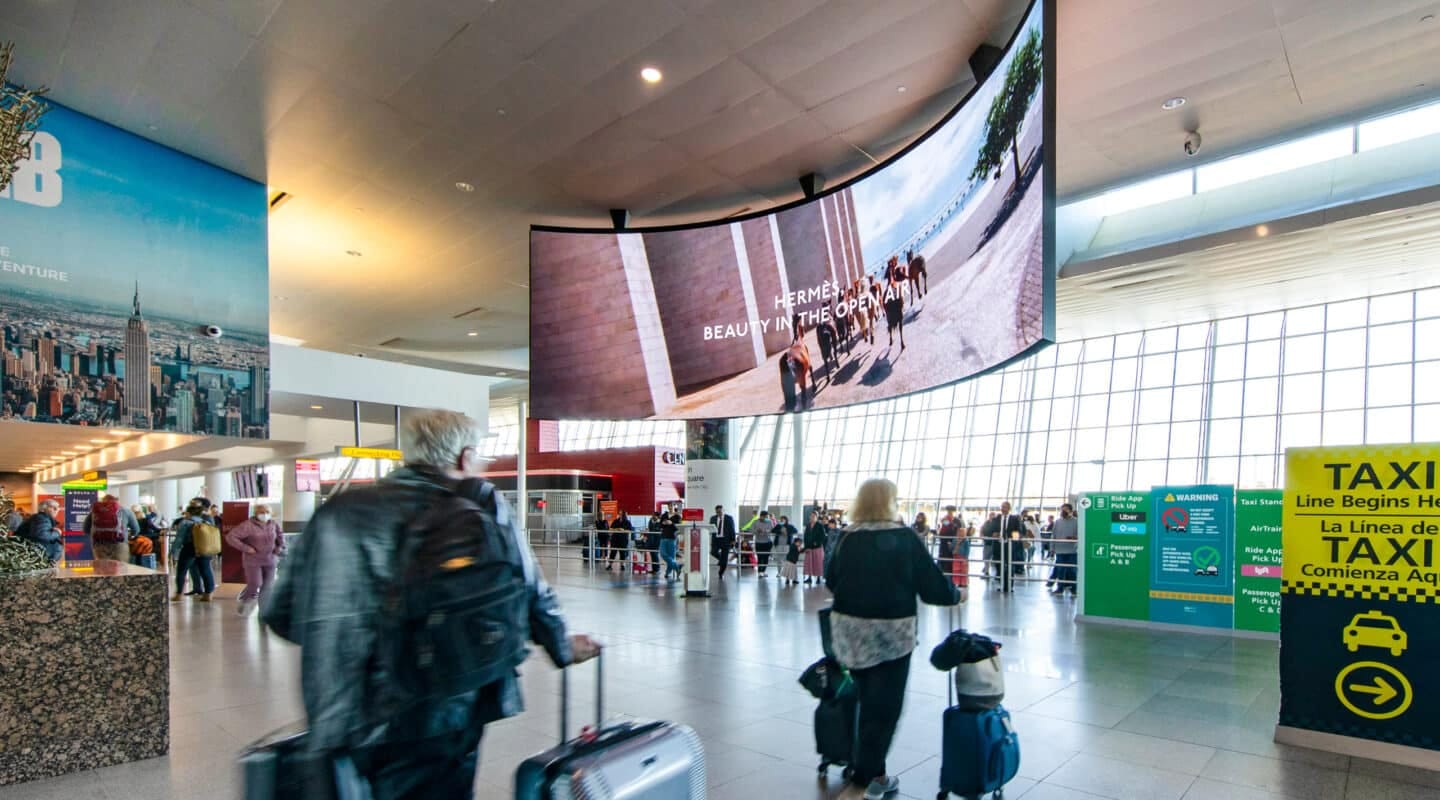
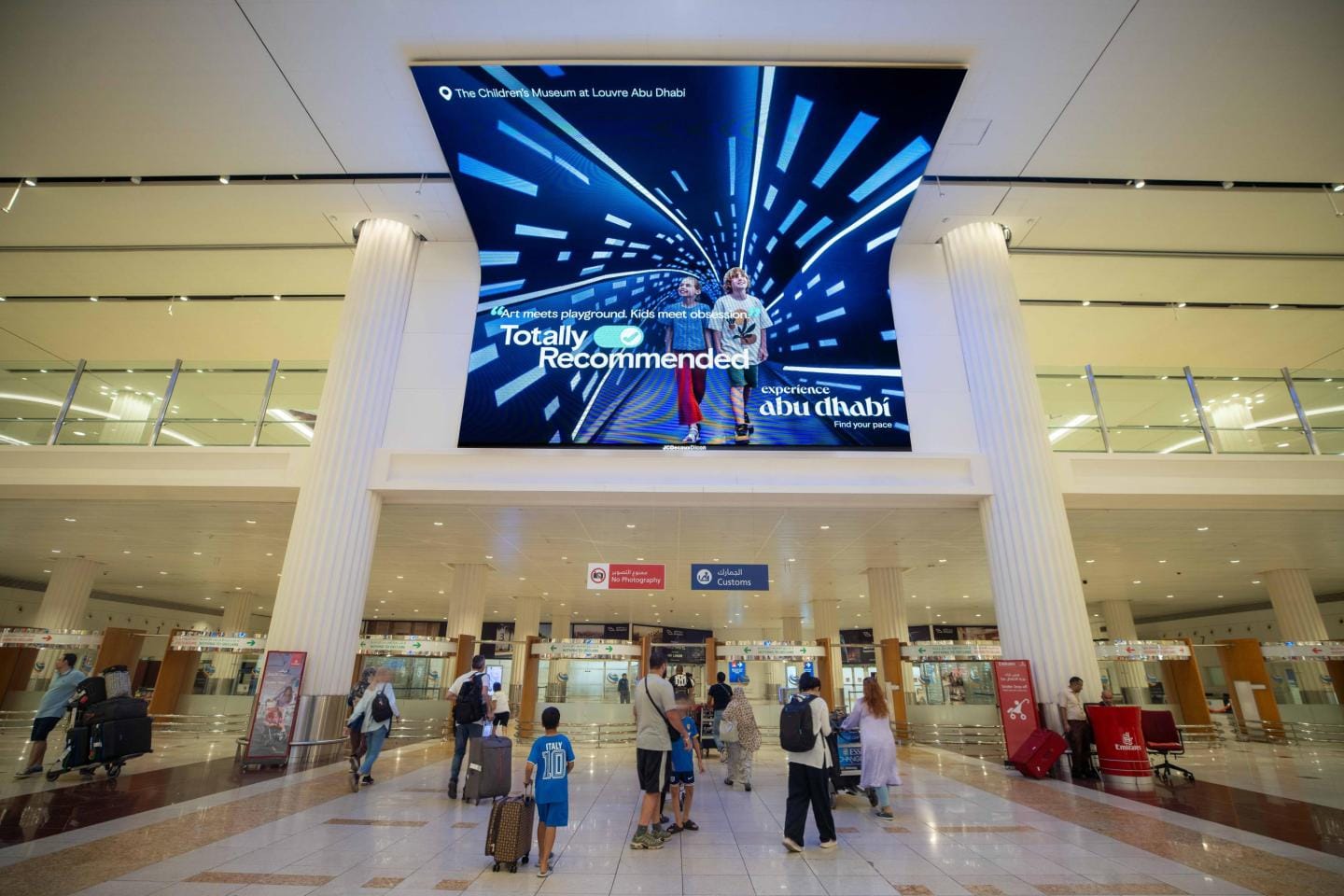
- Terminal 2's scale and modern design deliver a significantly lower advertising clutter environment than the older pan-African airport facilities it competes with — standout potential for category-exclusive placements is high, and the terminal's broad concourses create physical dwell zones where brand exposure is sustained rather than incidental
- Transit dwell time at ADD is among the highest of any African airport — Ethiopian Airlines' hub scheduling creates layovers of two to four hours for a significant proportion of its connecting passengers, producing a captive, alert, and engagement-ready audience whose dwell period exceeds that of most origin-destination airports in the region
- The diplomatic and AU community at ADD creates a protocol-environment context that elevates the overall brand perception of advertising placed within the terminal — categories that benefit from institutional association will find ADD's environment particularly effective for positioning credibility
- Masscom Global holds inventory access across ADD's key placement zones within Terminal 2, with campaign planning capability aligned to Ethiopian Airlines' scheduling patterns, AU summit windows, and the diaspora-return calendar that drives ADD's highest-traffic seasonal peaks
Strategic Advertising Fit
Best Fit
- Pan-African B2B financial services and banking: No African airport concentrates more senior financial executives from more countries simultaneously — banks, insurers, asset managers, and fintech platforms seeking continental reach will find ADD uniquely efficient
- International real estate developers (UAE, Portugal, USA, Kenya): ADD's HNW resident and transit audience includes Africa's most active cross-border property investors — developers in Dubai, Lisbon, Nairobi, and Washington DC should treat this terminal as a primary acquisition channel
- International universities and education consultancies (USA, Canada, UK): September departures for Ethiopian students heading to North American and European universities, combined with diaspora families making education investment decisions, create a high-commitment family spending audience that converts at above-average rates
- Premium technology and enterprise B2B platforms: The AU institutional community, Ethiopian Airlines' management class, and pan-African executives transiting to tech hubs in Nairobi, Lagos, and Johannesburg represent one of Africa's most sophisticated and decision-ready enterprise technology audiences
- Luxury automotive brands: Addis Ababa's HNWI resident class is an active premium vehicle market, and diaspora returnees arriving from Dubai and the USA carry vehicle purchase intent shaped by Gulf and American showroom exposure — ADD's arrivals hall is a high-conversion channel for automotive advertising
- Immigration and residency advisory firms (UAE, Portugal, Canada): Second-residency demand is accelerating among ADD's HNWI travellers, and the terminal concentrates motivated, financially capable prospects whose outbound routes to Dubai, Lisbon, and Toronto confirm active residency programme evaluation
- NGO, development sector, and multilateral institutional brands: Technology, logistics, healthcare, and financial infrastructure brands serving Africa's development sector will find ADD's concentration of senior NGO and multilateral personnel a uniquely direct channel for institutional B2B advertising
- Premium hospitality and airline loyalty programmes: The pan-African executive who transits ADD regularly is one of the world's most frequent international travellers — hotel loyalty and premium airline programme advertising reaches a segment whose annual flight and accommodation spend is among the highest globally per person
Brand Alignment at a Glance
| Category | Fit |
|---|---|
| Pan-African B2B Financial Services | Exceptional |
| International Real Estate | Exceptional |
| International Education | Exceptional |
| Immigration and Residency Advisory | Strong |
| Premium Technology and Enterprise Software | Strong |
| Luxury Automotive | Strong |
| NGO and Development Sector Brands | Strong |
| Premium Hospitality and Loyalty Programmes | Exceptional |
| Mass FMCG | Moderate |
| Budget Retail | Poor fit |
Who Should Not Advertise Here
- Hyper-local domestic consumer brands: ADD's terminal audience is internationally oriented by definition — advertising products that operate only within the Ethiopian domestic market reaches a proportion of travellers whose commercial attention is directionally outward and returns low conversion
- Budget travel and low-cost accommodation platforms: The transit executive and Ethiopian HNWI audience at ADD have already committed to premium travel decisions — discount travel propositions are category misalignments in a terminal whose dominant audience is Ethiopian Airlines Business Class and pan-African corporate travellers
- Luxury categories with no Africa market entry: International luxury brands with no distribution, service infrastructure, or brand presence in East Africa should not lead with acquisition advertising at ADD — the audience requires a credible local or regional touchpoint before airport advertising converts awareness into purchase
Event and Seasonality Analysis
| Metric | Rating |
|---|---|
| Event Strength | High |
| Seasonality Strength | High |
| Traffic Pattern | Dual-Peak |
Strategic Implication
ADD operates on two intersecting cycles — a diplomatic and institutional events calendar anchored by AU summits and UNECA conferences, and a diaspora and religious calendar driven by Ethiopian Orthodox festivals and the American and European school year. These two cycles generate year-round premium audience concentration with four identifiable peak windows: January (Genna, Timkat, AU Summit), June–July (summer diaspora return, AU Extraordinary Summit), September (Enkutatash diaspora return), and October–November (trade mission and academic travel peak). Masscom Global structures ADD campaigns across both cycles simultaneously, ensuring advertisers capture the institutional B2B audience during summit windows and the diaspora consumer audience during festival and school holiday peaks. The January window — combining Genna, Timkat, and AU Summit traffic — delivers the single highest concentration of HNWI and premium institutional audience in one compressed fortnight that any African airport produces in the calendar year.

Poor Placement and Delays Affect Airport Campaigns
We help you move faster, access better inventory, and get it right now.
Talk to an ExpertFinal Strategic Verdict
Addis Ababa Bole International Airport is the only airport in Africa where a single campaign placement reaches senior executives from over 60 nations, the leadership of the world's second-largest continental governance body, and the outbound capital of one of the world's fastest-growing economies — simultaneously, daily, and within a terminal designed to hold them for two hours or more. The combination of Ethiopian Airlines' unrivalled pan-African network, Addis Ababa's status as the continent's diplomatic capital, and Ethiopia's rapidly expanding HNWI class makes ADD an advertising environment with no direct equivalent on the continent. For B2B financial technology brands seeking pan-African boardroom reach, international real estate developers targeting Africa's outbound investors, international universities recruiting from the continent's most aspirational families, and luxury brands entering East Africa's premium consumer market, ADD is not a supporting buy in a multi-market plan — it is the single most efficient access point to Africa's mobile commercial elite. Masscom Global's inventory access, transit-dwell campaign architecture, and pan-African corridor planning capability make this the partner of choice for brands serious about connecting with the continent's wealth at its most concentrated and most commercially receptive.
About Masscom Global
Masscom Global is a premium international airport advertising and media buying agency operating across 140 countries. With deep expertise in airport OOH, premium publications, and high-net-worth audience targeting, Masscom helps brands reach the world's most valuable travellers at the moments that matter most. For advertising packages, media rates, and campaign planning at Addis Ababa Bole International Airport and airports across the globe, contact Masscom Global today.
Frequently Asked Questions
How much does airport advertising cost at Addis Ababa Bole International Airport? Advertising costs at Addis Ababa ADD vary by format type, placement zone, campaign duration, and seasonal demand — with AU Summit periods and the Ethiopian Christmas and New Year window commanding premium rates due to concentrated high-value audience traffic. Digital large-format, static concourse placements, and transit corridor formats each carry separate pricing structures tied to audience flow and dwell-zone positioning. Contact Masscom Global for current rate cards and available inventory across all formats at ADD.
Who are the passengers at Addis Ababa Bole International Airport? ADD operates a three-layer audience: Ethiopian HNWI resident travellers — business owners, executives, and diplomats — departing and arriving on international routes; a pan-African transit executive segment from 60+ African nations using Ethiopian Airlines' hub to connect to Europe, Asia, and the Americas; and international institutional travellers — AU delegates, UN officials, NGO leadership, and bilateral government representatives — whose Addis Ababa visits are driven by Africa's diplomatic calendar. The airport carries very low budget or leisure-only traveller volumes relative to its total passenger count.
Is Addis Ababa Bole International Airport good for luxury brand advertising? ADD is a strong luxury brand environment for categories with African market relevance — particularly automotive, watches, premium hospitality, and fashion — where the Ethiopian HNWI resident audience and returning diaspora represent a documented premium consumer base. For pan-African B2B luxury positioning, ADD is exceptional — no other African terminal concentrates more senior corporate and institutional decision-makers across more nationalities in a single dwell environment. Brands entering East Africa's premium consumer market will find ADD an efficient launch channel with both resident and transit audience reach.
What is the best airport in Africa to reach a pan-African executive audience? ADD is the only airport in Africa that structurally assembles a pan-African executive audience as a function of its hub role. Ethiopian Airlines' 60+ African route network means executives from every major African economy pass through ADD on connecting itineraries. For brands seeking simultaneous reach across multiple African markets from a single placement, ADD has no continental equivalent. For regional campaigns targeting specific sub-markets, Masscom Global can build multi-airport strategies across Nairobi, Lagos, Johannesburg, and Casablanca in coordination with ADD.
What is the best time to advertise at Addis Ababa Bole International Airport? ADD's four highest-value advertising windows are: January (Ethiopian Christmas, Timkat, and AU Summit combined peak), June–July (summer diaspora return and AU Extraordinary Summit), September (Enkutatash Ethiopian New Year diaspora return), and October–November (corporate trade mission and academic travel season). The January window delivers the single highest concentration of premium institutional and diaspora audience of the year — brands with one annual campaign window should prioritise this fortnight above all others.
Can international real estate developers advertise at Addis Ababa Bole International Airport? ADD is a commercially viable real estate advertising channel for developers targeting the African outbound investment market. Ethiopian and pan-African HNWI travellers at ADD are active buyers in Dubai, Nairobi, Lisbon, and Washington DC — driven by residency pathway requirements, rental yield seeking, and diaspora community proximity. The September and January diaspora return windows are the highest-intent moments for real estate brand messaging at this terminal. Masscom Global has structured real estate campaigns for developers operating across all of these corridor markets.
Which brands should not advertise at Addis Ababa Bole International Airport? Hyper-local domestic service brands, budget travel platforms, and luxury categories with no East African distribution or service infrastructure are poor fits for ADD. The terminal's dominant audience is outward-facing and internationally calibrated — domestic-only propositions receive minimal engagement. Luxury brands without a local market touchpoint will achieve awareness without conversion, as the audience requires a credible East African brand presence before airport advertising translates into purchase behaviour.
How does Masscom Global help brands advertise at Addis Ababa Bole International Airport? Masscom Global provides full-service airport advertising execution at ADD — from pan-African audience intelligence and campaign architecture through to inventory access across Terminal 2's key placement zones, creative adaptation for Amharic and English-speaking audiences, and performance reporting. Masscom's unique ability to activate ADD campaigns in coordination with placements in Dubai, Nairobi, London, Lisbon, and Washington DC means brands can intercept the same African HNWI traveller at departure from Addis and at arrival in their investment or education destination. Contact Masscom Global to discuss media rates, format availability, and campaign strategy at Addis Ababa Bole International Airport.