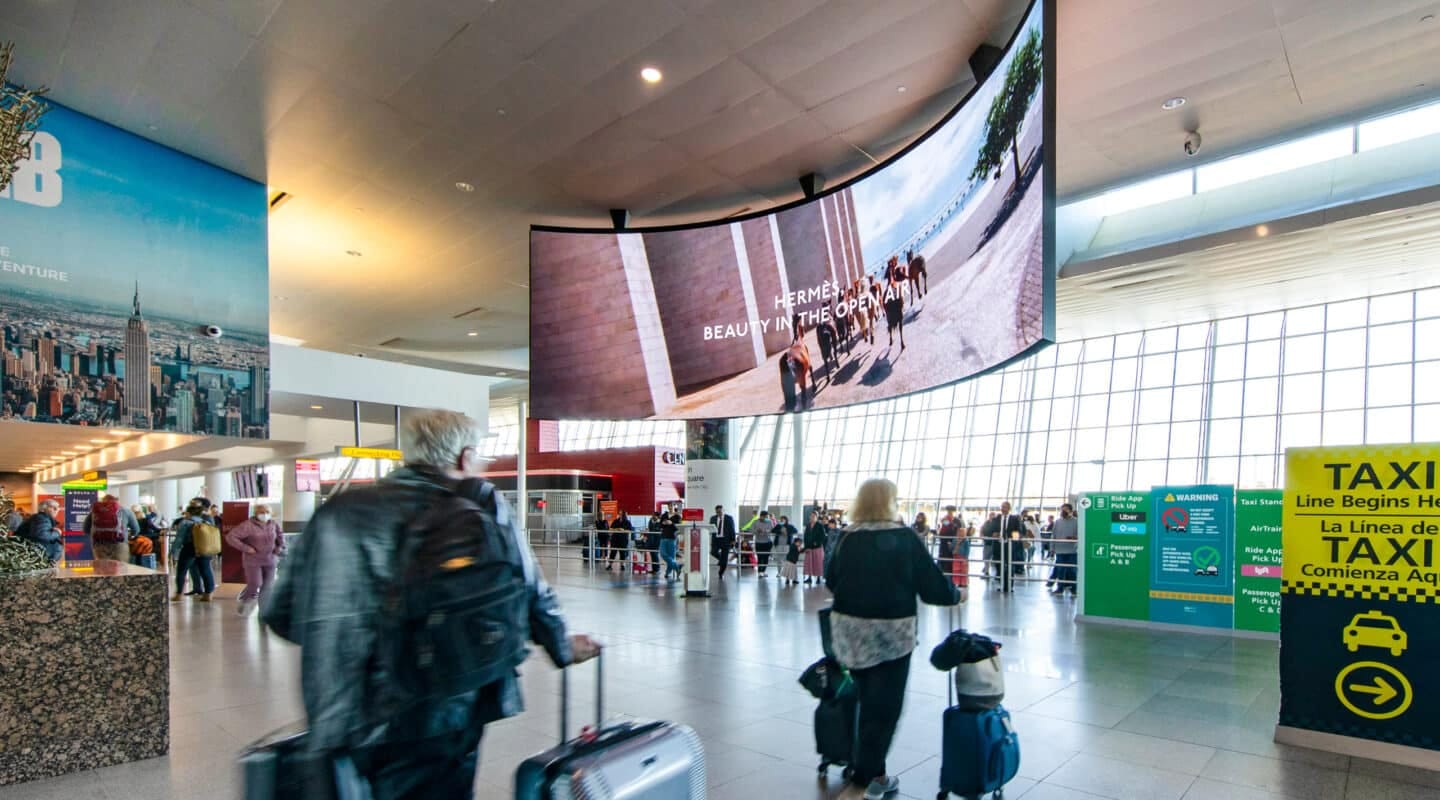
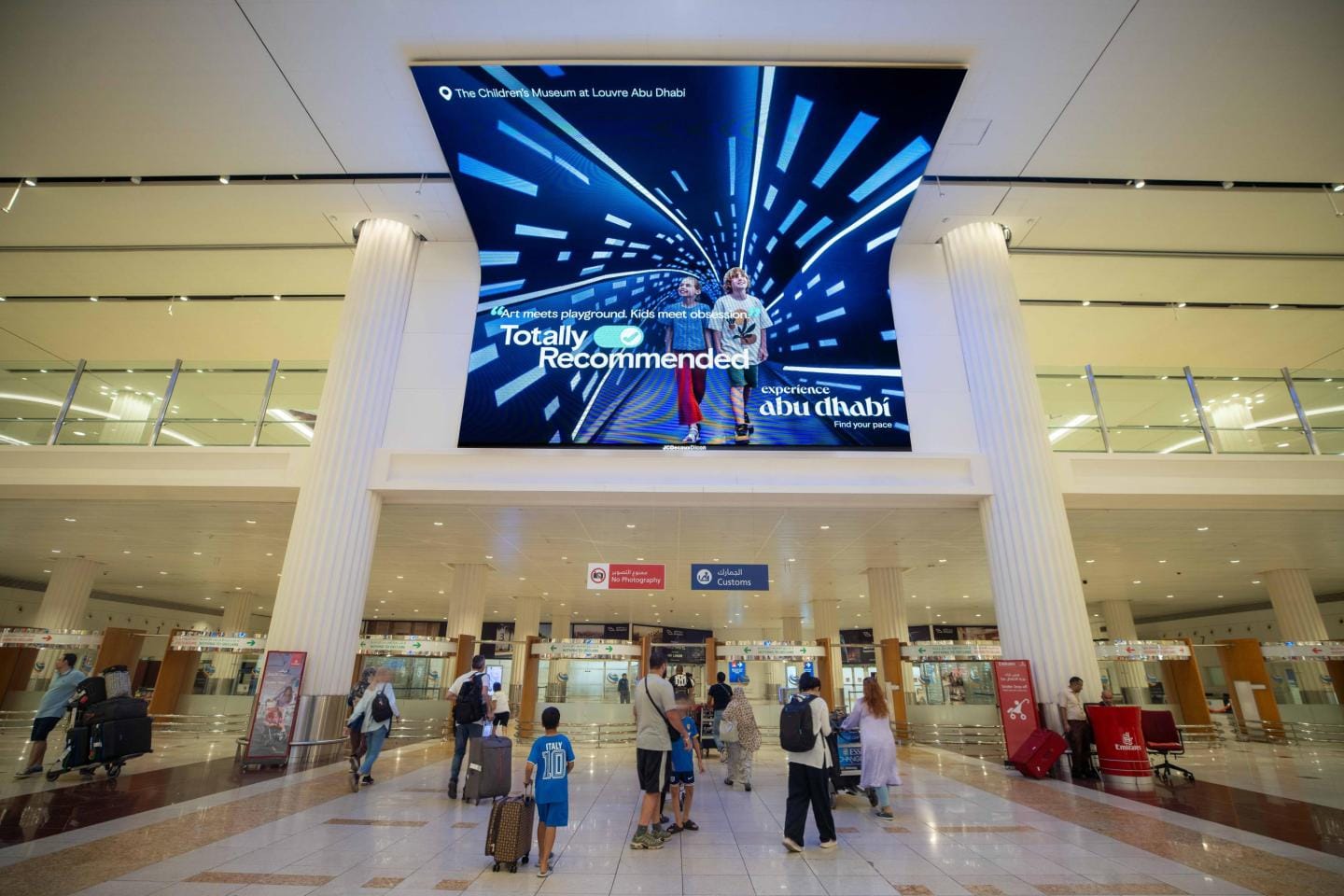
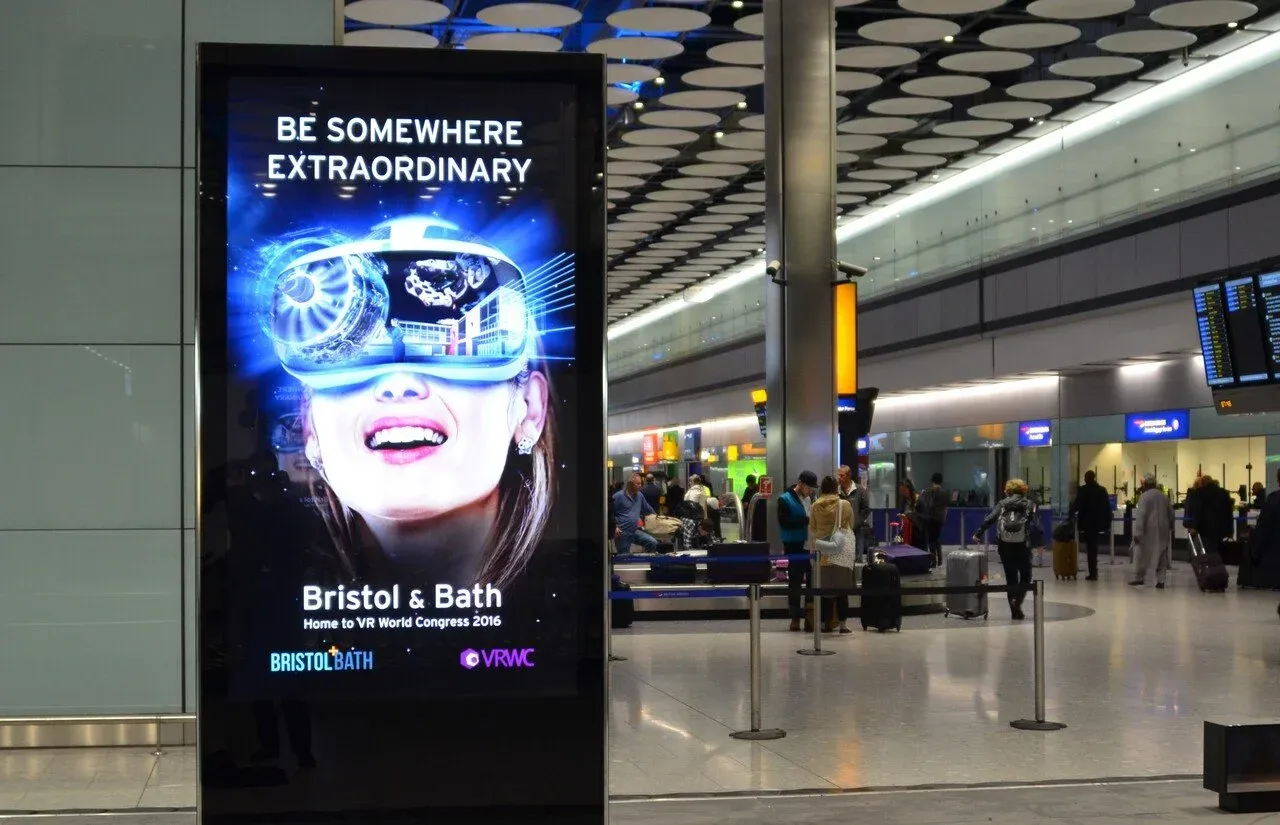


Airport at a Glance
| Field | Detail |
|---|---|
| Airport | Harbin Taiping International Airport |
| IATA Code | HRB |
| Country | China |
| City | Harbin, Heilongjiang Province |
| Annual Passengers | 8.4 million (2023) |
| Primary Audience | Northeast China HNWIs (oil, agricultural, manufacturing), winter tourism visitors, Russia-China trade professionals, Korean-Chinese business community |
| Peak Advertising Season | January to February (Ice and Snow Festival, Spring Festival), July to August (summer tourism, Beer Festival), October (Golden Week) |
| Audience Tier | Tier 1 |
| Best Fit Categories | Winter tourism and lifestyle, premium spirits and luxury outerwear, Russia-China cross-border trade B2B, oil sector B2B, premium food and agricultural brands |
Harbin Taiping International Airport serves a city and province whose commercial identity is as distinctive as any in China. At 8.4 million passengers and a HNWI Score of High, HRB processes the passenger traffic of China's Ice City: a northern metropolis that draws millions of visitors for the world's largest ice and snow festival each January, commands China's closest major urban connection to the Russian commercial corridor, sits within commercial reach of Daqing Oilfield whose petroleum wealth has enriched Heilongjiang's professional class for decades, and governs China's largest grain-producing province whose agricultural HNWI economy is both underappreciated nationally and commercially significant regionally. The audience flowing through HRB is not the standard coastal Chinese consumer upgrading through aspirational brand exposure. It is the Dongbei professional: direct, generous, seasonally defined, and commercially productive in ways that demand an understanding of Northeast China's specific economic character rather than a transplant of strategies designed for Shanghai or Beijing.
Harbin's distinctiveness begins with its origins. Built by Russian engineers constructing the Chinese Eastern Railway in 1898, the city accumulated European architectural character, Russian commercial networks, and a cosmopolitan cultural identity that generations of subsequent history have not erased. The onion domes of St. Sophia Cathedral, the European-styled facades of Zhongyang Dajie's Central Street, and the city's internationally recognised Beer and Ice culture reflect a Northern Chinese identity that is simultaneously proudly Chinese and uniquely open to Russian and European brand aesthetics. This cultural foundation creates an airport audience whose international brand reception is shaped not only by coastal Chinese consumption trends but by a century of direct European cultural influence that advertisers who understand it can exploit with precision.
Advertising Value Snapshot
- Passenger scale: 8.4 million passengers (2023), with Harbin's aviation market supported by its dual role as a national winter tourism destination and the commercial aviation hub for Heilongjiang Province's agricultural, oil, and manufacturing economy
- Traveller type: Northeast China HNWI executives from oil, agriculture, and manufacturing sectors, inbound domestic winter and summer tourism visitors from Beijing, Shanghai, and across China, Russia-China cross-border trade and logistics professionals, and the Korean-Chinese community maintaining bilateral business and family connections to South Korea
- Airport classification: Tier 1 within Northeast China — Heilongjiang Province's primary international gateway and the commercial aviation anchor for the Harbin-Changchun-Shenyang Northeast corridor's northernmost major hub
- Commercial positioning: Northeast China's most commercially distinctive aviation gateway, combining the world's most commercially concentrated winter tourism passenger surge with a year-round B2B industrial audience whose oil, agricultural, and manufacturing wealth represents the deepest concentration of Dongbei HNWI capital accessible through a single airport
- Wealth corridor signal: HRB sits where China's most productive agricultural economy, its largest onshore oil field catchment, a century-old Russia trade corridor, and the world's most famous winter tourism economy all converge in a single provincial capital whose commercial character is definitively Northeast Chinese in its generosity, directness, and consumption intensity
- Advertising opportunity: Masscom Global provides inventory access and campaign execution capability at Harbin Taiping International Airport, enabling brands to intercept China's premium winter tourism audience at maximum intent, reach the oil and agricultural HNWI class of a commercially underserved major Chinese province, and access the Russia-China commercial corridor's most commercially active Chinese gateway through a single, strategically positioned terminal environment.
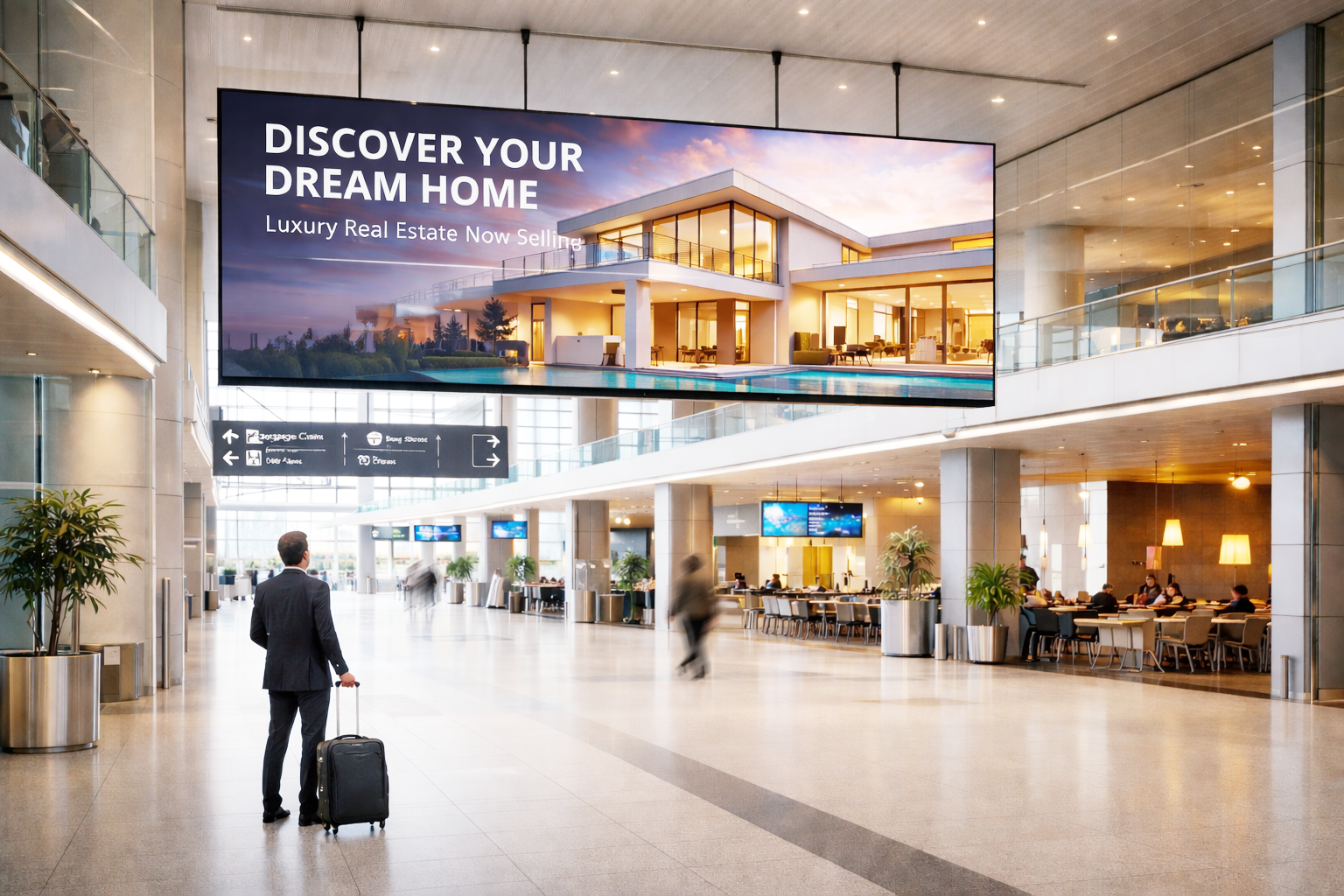
Airport Advertising is Complex to Get Right
We help you execute faster, with proven results and local insight most planners lack starting now.
Talk to an ExpertCatchment Area and Economic Drivers
Top 10 Cities within 150 km — Marketer Intelligence
- Harbin City (urban districts): Heilongjiang's capital and Northeast China's most culturally distinctive metropolis; home to the province's highest concentration of oil industry management, agricultural enterprise executives, equipment manufacturing professionals, and the administrative class managing China's most agriculturally productive region; Harbin's consumer identity combines the Dongbei generosity ethos with European aesthetic influence from its Russian-era architecture, creating a premium spending culture particularly active in food, spirits, entertainment, and seasonal lifestyle categories.
- Shuangcheng District (Harbin): Approximately 20 km south of the airport; home of one of Asia's most significant dairy processing operations, anchoring a premium food manufacturing economy that produces agricultural products distributed across China and internationally; the food industry management class has strong B2B procurement relationships with global dairy technology, packaging, and ingredients companies; Shuangcheng's rapid development as part of Harbin's southern metropolitan expansion is creating a growing professional residential class whose consumer standards are converging with central Harbin.
- Acheng District (Harbin): Approximately 50 km east; the historical capital of the Jurchen Jin Dynasty and a significant cultural heritage tourism zone; a growing organic agriculture and specialty food economy is developing alongside traditional grain production; the area's proximity to Harbin's expanding metropolitan boundary is driving premium residential development and aspirational consumer market growth.
- Wuchang City (Harbin): Approximately 80 km south; one of China's most important premium rice production regions, whose Wuchang rice brand commands the highest premium of any Chinese domestic rice variety; the agricultural entrepreneurs and state farm managers of Wuchang's rice economy represent a commercially active B2B and premium FMCG audience with strong brand consciousness around agricultural heritage and product quality credentials.
- Shangzhi City (Harbin): Approximately 100 km east and the gateway community to the Yabuli International Ski Resort corridor; the forestry, lumber, and agricultural economy creates a working professional class; the growing winter sports tourism infrastructure servicing Yabuli creates hospitality, equipment rental, and luxury leisure brand commercial activity whose operators and investors travel through HRB regularly.
- Bayan County (Harbin): Approximately 90 km north; a significant grain and sunflower production zone within Harbin's extended agricultural catchment; state farm management, grain trading executives, and agricultural machinery operators form a stable professional commercial audience; growing logistics infrastructure servicing Bayan's grain export corridor creates B2B supply chain commercial activity connected to HRB's cargo operations.
- Suihua City: Approximately 130 km north; Heilongjiang's fourth-largest city and a major agricultural processing and grain trading hub; the city's grain, corn, and soybean processing economy creates a significant agribusiness professional class with B2B procurement authority for agricultural technology, logistics, and industrial equipment; Suihua's growing commercial economy is developing a consumer middle class whose aspirational purchasing behaviour tracks toward Harbin's urban standards.
- Zhaodong City (Suihua): Approximately 90 km west; a significant pharmaceutical manufacturing city and chemical industrial zone; one of China's most important traditional Chinese medicine and western pharmaceutical production centres; the pharmaceutical management and chemistry professional class creates a specialised B2B audience with international pharmaceutical technology and chemical procurement relationships that generate regular business travel through HRB.
- Anda City: Approximately 110 km west; positioned at the southeastern periphery of the Daqing Oilfield economic zone; home of the Daqing Sarlux Chemical Plant and oil-related service industries; the petroleum service workforce and agricultural community creates a mixed B2B and consumer audience whose income levels are elevated by proximity to the oil economy's commercial spillover.
- Daqing City: Approximately 145 km west and the most commercially significant city in HRB's catchment beyond Harbin itself; home of China's largest onshore oilfield and the headquarters of CNPC (PetroChina) Daqing operations whose oil production history has created one of Northeast China's most concentrated HNWI wealth pools; the oil industry executive class, petroleum engineering management, and oilfield services professional community represents a high-income, internationally connected B2B and premium consumer audience whose access to HRB for domestic and international travel makes this catchment commercially indispensable to any brand targeting Northeast China's petroleum sector wealth.
Dongbei Diaspora and Russia-China Commercial Community Intelligence
Harbin's external commercial audience reflects two commercially distinct but geographically convergent forces. The first is the Dongbei diaspora, which has created one of China's most significant domestic-to-international migration patterns through the Korean-Chinese (Joseonjok/Chaoxianzu) community whose members maintain dual commercial lives between Northeast China and South Korea. Estimates suggest hundreds of thousands of Korean-Chinese from Heilongjiang, Jilin, and the broader Northeast have established commercial, educational, and residential presences in South Korea, creating a bilateral travel corridor through HRB whose returnee commercial audience arrives carrying Korean consumer standards and Samsung-calibrated brand expectations. The second is Harbin's Russia-China cross-border commercial community, which has sustained trading relationships across Heilongjiang's long border with Russia for over a century. The Russian-facing commercial entrepreneur class in Harbin — import-export operators, border trade logistics professionals, and bilateral business investors — uses HRB as their operational gateway in a commercial relationship whose bilateral trade volumes have made Heilongjiang Province one of China's most Russia-engaged provincial economies. Both communities create commercially productive advertising audiences at HRB that no other Chinese provincial capital airport generates at equivalent density.
Economic Importance
Heilongjiang Province's economy is anchored by agriculture, petroleum, and an industrial heritage undergoing revitalisation under the national Northeast Development Strategy. The province produces approximately 10 to 12 percent of China's total grain output annually from its black-soil chernozem farmland, the most agriculturally productive in China, creating a state farm management and agribusiness entrepreneur class whose accumulated agricultural wealth is commercially significant at the regional scale. Daqing Oilfield, operational for over 60 years and still producing, has created a petroleum industry HNWI concentration in the catchment whose executive class combines high incomes with international energy sector commercial exposure. The Northeast Revitalisation Strategy, backed by central government investment, is progressively addressing the structural economic challenges of Heilongjiang's legacy heavy industry base through technology upgrading, new energy development, and agricultural value-chain investment that are creating new commercial sectors and a renewed professional class whose consumption trajectory is upward.
Business and Industrial Ecosystem
- Petroleum and energy sector: Daqing Oilfield's CNPC operations anchor a petroleum industry professional community within HRB's commercial catchment whose executive management, engineering specialists, and oilfield services contractors represent one of Northeast China's most concentrated B2B industrial procurement audiences; the oil industry's multinational technology partnerships with American, European, and Japanese energy equipment companies generate regular international business travel through HRB
- Agricultural industry and state farm management: Heilongjiang's Beidahuang Group, the world's largest agricultural enterprise by cultivated land area, and dozens of provincial state farms create a management and agribusiness professional class with significant B2B procurement authority for agricultural machinery, seed technology, precision farming systems, and cold chain logistics; the state farm system's commercial scale is frequently underestimated nationally but generates commercially productive B2B demand at a level few provincial airports can match
- Equipment manufacturing: Harbin Electric Group, Harbin Boiler Company, and AVIC-related aerospace and defence manufacturing facilities in Harbin create an industrial engineering professional class with global supply chain relationships and B2B purchasing authority for heavy industrial equipment, power generation technology, and aerospace components
- Russia-China cross-border trade: Harbin's role as China's primary commercial gateway to Russia through the Heilongjiang border crossings at Heihe, Suifenhe, and the rail corridors creates a trading and logistics professional community whose commercial expertise in China-Russia bilateral trade is unmatched by any other Chinese city; import-export operators, logistics companies, and bilateral investment professionals form a commercially active B2B audience with purchasing authority across customs technology, freight services, financial products, and commercial property
- Pharmaceutical and biotechnology: Zhaodong's pharmaceutical manufacturing cluster and Harbin's growing biotech sector, supported by Harbin Medical University's research infrastructure, create a life sciences professional class with international technology procurement relationships and a consumer profile reflecting the health-conscious, quality-oriented characteristics of China's educated medical professional community
Passenger Intent — Business Segment
The business traveller at HRB carries three commercially distinct professional profiles. The Daqing petroleum executive is managing energy production operations and international technology procurement for China's most storied oilfield, traveling to Beijing, Shanghai, and international energy markets with purchasing mandates that span capital equipment, precision engineering services, and offshore financial management. The agricultural enterprise manager is connecting Heilongjiang's grain economy to the national distribution network and international commodity markets, with B2B procurement decisions covering agricultural machinery, storage technology, and logistics infrastructure. The Russia-China trade entrepreneur is navigating the bilateral commercial relationship between China's most Russia-proximate major city and the Russian consumer and industrial markets that Harbin has been supplying and trading with for over a century. All three bring to HRB's terminal a commercial seriousness and purchasing authority that makes the airport's departure environment one of Northeast China's most commercially underserved B2B advertising placements.
Strategic Insight
HRB's business audience is commercially valuable precisely because it is so systematically overlooked by national and international advertising strategies that concentrate investment on coastal Chinese hubs. The oil executive class of Daqing, the state farm management of Beidahuang, and the Russia trade corridor entrepreneur are all commercially active, internationally connected, and HNWI-wealthy in ways that do not appear in standard Chinese tier-city classifications but are commercially real and accessible at HRB. Brands that deploy locally calibrated campaigns at HRB with genuine understanding of Northeast China's commercial identity consistently find audiences whose combination of loyalty, spending capacity, and brand receptiveness rewards earlier than expected. Masscom's intelligence on this audience's specific motivations and the seasonal rhythms that concentrate them at HRB is designed to help brands extract commercial returns that the airport's modest passenger numbers would significantly underpredict.
Tourism and Premium Travel Drivers
- Harbin International Ice and Snow Sculpture Festival: The world's largest and most commercially spectacular winter festival, held every January and February, drawing between 1.5 and 2 million visitors from across China and internationally to Harbin's Ice and Snow World and Zhaolin Park ice lantern displays; the premium domestic tourist attending the festival is typically a HNWI family from Beijing, Shanghai, or southern China for whom the Harbin winter experience is an annual aspirational lifestyle commitment; international visitors from South Korea, Japan, Russia, and Western markets attend as cultural tourism with above-average per-day expenditure; the festival creates HRB's most commercially intense advertising window of the year
- Yabuli International Ski Resort: China's most historic and internationally recognised ski resort, located approximately 150 km east of Harbin and accessible through HRB as the primary gateway; Yabuli hosted the 1996 Asian Winter Games and is progressively developing premium ski lodge and luxury resort infrastructure; the domestic HNWI ski tourism audience accessing Yabuli through HRB represents China's most premium winter sports leisure consumer segment
- Russian Heritage Architecture and Cultural Tourism: Harbin's Central Street, St. Sophia Cathedral, and the European-styled concession architecture create China's most distinctive Russian cultural tourism circuit, drawing domestic tourists from across China who find Harbin's European aesthetic an accessible international cultural experience; the premium cultural tourist visiting Harbin's Russian heritage district is an above-average-income, culturally sophisticated domestic traveller whose airport retail behaviour includes specialty food, premium spirits, and cultural heritage product purchasing
- Harbin International Beer Festival: Held every July and August, this nationally prominent summer cultural and entertainment event transforms Harbin into China's beer capital for six weeks of premium F&B, international brand showcasing, and entertainment tourism; the summer tourism audience is the commercial complement to the winter festival market, creating a dual-peak seasonal commercial structure at HRB that keeps the airport commercially productive across both the coldest and warmest periods of the Chinese tourism calendar
- Siberian Tiger Park and Ecological Tourism: One of China's most distinctive wildlife tourism assets, the Siberian Tiger Breeding and Research Centre in Harbin draws nature tourism visitors whose ecological consciousness and premium animal welfare brand alignment creates a specialist but commercially active audience for premium outdoor, wildlife, and environmental lifestyle brands
Passenger Intent — Tourism Segment
The premium domestic tourist arriving at HRB for the Ice and Snow Festival has committed to one of China's most aspirational winter leisure experiences. Unlike beach resort or cultural heritage tourism, the Harbin winter festival tourist has specifically selected an extreme environment as their leisure destination, signalling a consumer psychology of adventure aspiration, premium experience seeking, and the social prestige of having attended the world's largest winter spectacle. Their airport spending on arrival and departure reflects this premium intent: luxury outerwear and accessories for the cold environment, premium spirits for the Russian-influenced hospitality culture, specialty Harbin food gifts, and the kind of destination-specific premium purchases that signal social credibility on return to warmer home cities. The departing festival tourist carries the maximum gift purchase intent of any Chinese domestic airport's seasonal tourism peak.
Travel Patterns and Seasonality
Peak seasons:
- Ice and Snow Festival and Spring Festival (January to February): HRB's signature commercial period and the most commercially distinctive seasonal tourism peak of any Chinese domestic airport; the convergence of the world's most internationally celebrated winter festival with China's most commercially intense holiday creates a January-February window whose per-passenger premium spending intensity is the highest of any window in Harbin's aviation calendar; luxury outerwear, premium spirits, specialty food, winter sports brands, and premium hospitality all achieve maximum conversion during this period
- Summer tourism and Beer Festival (July to August): The commercial complement to winter; Harbin's summer temperatures, often considered among the most pleasant in China's Northeast, draw domestic tourists escaping the oppressive heat of Beijing and Shanghai; the Beer Festival attracts hundreds of thousands of visitors for a premium F&B and entertainment experience that creates strong hospitality, beverage, and lifestyle brand commercial activity at HRB
- National Day Golden Week (October 1 to 7): The autumn holiday generates HRB's most geographically diverse domestic passenger influx outside the two primary peaks; the early October timing catches the beginning of Harbin's foliage season and the anticipation of the approaching winter tourism season, creating a combined leisure and advance winter travel planning audience
- Year-round B2B agricultural and oil sector baseline: The petroleum and agricultural professional communities of Daqing and Heilongjiang's state farm system generate consistent year-round business travel through HRB that is independent of the tourism calendar and provides a continuous premium B2B commercial audience for brands targeting the oil and agricultural executive class
Event-Driven Movement
- Harbin International Ice and Snow Sculpture Festival (January to February): The year's defining commercial event; the festival creates HRB's highest single sustained advertising return window as millions of premium domestic tourists and a significant international visitor contingent pass through the terminal in maximum experience-seeking and gift-purchasing commitment; luxury brands, premium spirits, winter lifestyle brands, and cultural tourism products achieve the highest conversion rates of the year during this window
- Spring Festival (overlapping January to February): China's most commercially intense holiday amplifies the Ice Festival window with the additional gift-purchasing, family reunion, and premium consumer spending that defines the national New Year period; at HRB, the Spring Festival and the Ice Festival create the longest sustained premium commercial window of any seasonal airport in China
- Harbin International Beer Festival (July): China's largest beer cultural event draws domestic and international visitors in a summer commercial window whose premium F&B, entertainment, and lifestyle brand commercial activity creates the airport's second most commercially productive seasonal peak for consumer brands
- Korean National Holidays (Chuseok and Seollal): The Korean-Chinese community's bilateral travel pattern around Korean national holidays creates concentrated TSN-Seoul equivalent traffic surges through HRB whose Korean consumer standard audience generates strong duty-free, premium FMCG, and Korean brand purchasing intent during departure
- Agricultural Industry Events and Grain Trading Season (September to October): The post-harvest grain trading season generates concentrated agribusiness and state farm management travel through HRB as Heilongjiang's agricultural professional class connects with national grain distributors, commodity traders, and agricultural technology companies for annual procurement and sales planning

It’s Not Just Where You Advertise - It’s How Fast You Execute
We combine local insight with fast rollout to deliver results for you, now.
Talk to an ExpertAudience and Cultural Intelligence
Top 2 Languages
- Mandarin Chinese (Putonghua): The commercial and administrative language of HRB's entire domestic passenger base; campaigns at Harbin require a Mandarin creative strategy that is specifically calibrated to Northeast Chinese cultural values — directness, generosity, winter lifestyle identity, and the local pride in Harbin's distinctive Russian-influenced heritage; creative that references the "Ice City" identity, the Dongbei cultural warmth ethos, or the Northeast's agricultural and petroleum heritage earns a contextual resonance that generic national campaign templates cannot generate in this market
- Russian: Commercially distinctive at HRB in a way found at no other Chinese airport; Harbin's cross-border trading community, Russian-origin historical population, and the city's current role as China's primary Russia-facing commercial gateway have created a functional Russian commercial communication capability across the airport's business traveller community; Russian-language brand elements within campaigns signal the specific commercial credibility that China-Russia bilateral business professionals value in the brands they select as commercial partners; even for brands not primarily targeting the Russia corridor, Russian aesthetic and cultural references carry a premium brand association in Harbin that reflects the city's European heritage prestige
Major Traveller Nationalities
Domestic Chinese nationals from Harbin and Heilongjiang Province form the dominant passenger base, with significant inbound domestic tourism from Beijing, Shanghai, Guangzhou, and every major Chinese city whose residents make the annual pilgrimage to the Ice and Snow Festival. The international passenger profile reflects Harbin's specific bilateral relationships: Korean nationals, including both South Korean leisure tourists and the Korean-Chinese community maintaining bilateral family and business connections, form the largest international segment through the consistently operated HRB-Seoul corridor. Japanese tourists, historically drawn by Harbin's winter tourism appeal and summer cultural attractions, form a consistent secondary international leisure segment. Russian nationals, traveling on commercial business and cross-border trade purposes, form a commercially distinctive international segment unique to Harbin's geographic position as China's most Russia-proximate major city.
Religion — Advertiser Intelligence
- Buddhism and Taoism (approximately 40 to 50%, cultural practice): The Chinese folk religious tradition defines the commercial calendar peaks for domestic brand campaigns at HRB; Spring Festival remains the dominant commercial timing signal, amplified at Harbin by the Ice Festival's simultaneous commercial intensity; Qingming, Dragon Boat, and Mid-Autumn festivals create secondary consumer purchasing peaks whose gift and premium food categories are commercially standard across Chinese domestic airports
- Korean Protestant Christianity (Korean-Chinese community, approximately 5 to 8%): The Korean-Chinese community of Heilongjiang maintains strong Protestant Christian traditions with origins in the Korean missionary history of Manchuria; the community's religious calendar creates Christmas and Easter commercial spending peaks that are more commercially significant at HRB than at any comparable Chinese airport outside the formal Korean-minority concentration zones; Western brand familiarity and the Korean consumer standard that this community brings to HRB's passenger profile creates premium brand receptiveness in categories aligned with Korean consumer aesthetics
- Russian Orthodox Christianity (historically present, culturally significant): While the active Russian Orthodox community in Harbin is small today, St. Sophia Cathedral's prominence as the city's most photographed landmark and the Russian Christmas aesthetic's commercial resonance in Harbin's winter tourism economy create a European cultural premium that brands can reference authentically at HRB; winter holiday European brand aesthetics find uniquely favourable reception in a Chinese city whose physical heritage includes Orthodox Christian architecture
Behavioral Insight
The Dongbei consumer, and the Harbin professional specifically, represents a Chinese commercial audience whose spending psychology is fundamentally shaped by the extreme seasonal contrast of their environment. Living in a city where temperatures reach minus 30 Celsius in January and 38 Celsius in July creates a consumer who experiences the world in intense seasonal phases and spends accordingly: lavishly during the warmth and celebration of festival periods, practically and with premium quality-focus during the long productive months. The Dongbei cultural character, described by the Chinese concept of "Da Fang" (generous, unrestrained), creates a consumer who spends more freely on food, hospitality, and social display than comparable income brackets in coastal Chinese cities, and who responds to premium brand positioning that projects strength, abundance, and communal celebration rather than aspirational individual achievement. The Russian cultural influence that permeates Harbin's commercial identity creates specifically higher receptiveness to European brand aesthetics, premium spirits, artisan food products, and the cold-climate luxury goods categories where Russian commercial culture and Chinese consumer upgrading meet at a commercially productive intersection.
Outbound Wealth and Investment Intelligence
The outbound HNWI passenger at Harbin Taiping International Airport is managing capital whose sources and destinations reflect Northeast China's specific industrial and agricultural economy. The Daqing petroleum executive is deploying energy sector wealth into international financial services, offshore private banking, and the premium education and real estate markets of South Korea, Australia, and Singapore. The state farm and agribusiness entrepreneur is investing in agricultural technology partnerships, international grain trade relationships, and the lifestyle real estate markets of Southeast Asia where Northeast China's professional class is progressively establishing second-home and leisure property positions. The Russian-facing commercial entrepreneur is managing bilateral trade positions whose capital flows across the China-Russia boundary require international financial services, legal advisory, and cross-border payment infrastructure.
Outbound Real Estate Investment
South Korea, specifically Seoul and the Jeju Island resort market, represents the single most Harbin-specific international real estate destination, driven by the Korean-Chinese community's deep cultural and family ties to Korea and the proximity of the HRB-Seoul air corridor; the Joseonjok community's residential and commercial property investment in Seoul and its satellite cities creates a bilateral real estate flow unique to Northeast China's Korean-Chinese airports. Japan's Hokkaido region attracts Harbin HNWI investment with a cultural and climatic resonance that no other international property market matches: Hokkaido's winters, snow culture, ski resorts, and dairy tourism economy mirror Harbin's own seasonal and agricultural identity, creating a natural lifestyle investment alignment for the Harbin HNWI whose own city lives the same seasonal experience. Australia, particularly Melbourne and Sydney, represents the dominant Western education-linked property market for Harbin's petroleum and state farm HNWI families investing in real estate concurrent with children's international university placement. Thailand's Phuket and Chiang Mai markets attract Harbin HNWI buyers for a reason unique to this airport's audience: the desire to own a warm-climate second home is proportionally stronger among Harbin's professional class than any other Chinese city, making resort property in Thailand a commercially motivated purchase driven directly by the desire to escape one of China's most extreme winter climates.
Outbound Education Investment
South Korea's universities and international schools represent the dominant near-shore education destination for Harbin's Korean-Chinese community, whose children's education choices are shaped by dual cultural identity and the bilateral career opportunities that Korean academic credentials create across the Korean-Chinese professional ecosystem. Australia's Group of Eight universities receive the largest volume of Harbin HNWI family higher education investment among Western destinations, with the Daqing petroleum and Harbin manufacturing executive class directing children toward engineering, medicine, and commerce programmes whose credentials are valued in Northeast China's transitioning economy. The United Kingdom's engineering and business schools attract Harbin's most internationally oriented academic families. Japan's universities, particularly in Hokkaido and Tokyo, receive a small but culturally meaningful Harbin student flow reflecting the geographic and aesthetic connection between the two cold-climate Northeast Asian centres.
Outbound Wealth Migration and Residency
South Korea's investor and long-term residency visa programmes are most actively pursued by Harbin's Korean-Chinese community whose members frequently maintain dual-city professional lives requiring formalised Korean residency infrastructure. Australia's skilled and business investor visa categories attract Harbin's manufacturing and agricultural entrepreneurs seeking to establish international operational infrastructure for supply chain and export business development. Japan's business manager visa and long-term resident category are relevant for the small but commercially motivated Harbin professional community whose Japanese industry partnerships in the machinery and food technology sectors create operational Japan residency requirements. Thailand's Elite Visa and long-term resident programme attract the Harbin HNWI class specifically because of the warm-climate lifestyle motivations that make Thailand the most purchased second-home destination for Northeast China's wealthy professionals escaping the region's extreme winters.
Strategic Implication for Advertisers
International brands serving the outbound education, real estate, and lifestyle investment market should treat HRB as Northeast China's most commercially specific single-airport channel for reaching the petroleum, agricultural, and manufacturing HNWI class whose investment motivations are distinctively shaped by the unique characteristics of Heilongjiang's economy. The Korean real estate and lifestyle investment corridor, the Hokkaido and Thailand warm-climate escape market, and the Australian education investment pipeline are all commercially specific to HRB's audience in ways that no generic China market strategy would naturally target. Masscom Global structures HRB campaigns to exploit these Harbin-specific investment motivations, placing international brands in front of outbound investors whose purchasing decisions are more predictable, more location-specific, and more commercially accessible than the diversified national advertising strategies of China's coastal hub airports would suggest.
Airport Infrastructure and Premium Indicators
Terminals
- Harbin Taiping International Airport operates a modern T2 terminal complex opened in 2017, one of Northeast China's most contemporary airport facilities, designed for annual capacity significantly above current passenger volumes and offering a well-appointed commercial retail, F&B, and business services infrastructure whose quality is calibrated to the HNWI and corporate executive travel demand of Heilongjiang's petroleum, agricultural, and manufacturing economy
- The terminal's spatial design and commercial zone architecture reflect the airport management's awareness of HRB's premium tourism mandate during the Ice Festival peak, when the terminal must process an extraordinary density of HNWI domestic tourists from across China within a concentrated two-month window
Premium Indicators
- Airline lounge facilities, including Air China's premium passenger lounge and partner carrier business class facilities, confirm a consistent premium cabin concentration supported by the Daqing oil executive class and the agricultural enterprise management community whose corporate travel standards are calibrated to national HNWI professional norms
- The airport's duty-free retail zone includes premium spirits, luxury goods, and specialty Heilongjiang food products whose brand selection reflects management calibration to both the HNWI leisure tourist and the returning Korean-Chinese professional community's premium purchasing preferences; the winter tourism arrival season creates unusually high per-passenger luxury outerwear and winter accessories retail intensity relative to any other Chinese regional airport
- HRB's position as the aviation gateway to the Yabuli International Ski Resort corridor provides a premium lifestyle adjacency that no other Chinese airport outside high-altitude Yunnan airports can claim; the ski resort connection adds a winter sports luxury brand commercial layer to the airport's identity
- Harbin's designation as a key node within the Northeast China Revitalisation Strategy's infrastructure investment programme is creating sustained government commitment to HRB's commercial development, confirming the airport's strategic institutional position within the national framework for Northeast China's economic transformation
Forward-Looking Signal
The Northeast China Revitalisation Strategy is directing substantial central government investment into Heilongjiang's infrastructure, industry upgrading, and commercial ecosystem development, with Harbin identified as the regional hub for the strategy's northern implementation. The Ice and Snow Festival's growing international profile, progressively attracting higher-value international visitor segments from Japan, Korea, Russia, and Western markets, is creating demand for new direct international routes that will progressively expand HRB's international passenger base beyond its current South Korea and Japan corridor anchors. Daqing's energy transition investment, shifting from conventional oil production toward new energy technology and the digital economy, is creating a new generation of technology-focused petroleum sector professionals whose commercial and consumer profiles represent an upgrading of the oil industry HNWI audience at HRB. The Northeast agricultural economy's value chain development, moving from bulk commodity production toward premium branded food products with national and international market reach, is creating agricultural HNWI wealth at a more sophisticated commercial level than the traditional state farm management model. Masscom advises clients to establish advertising presence at HRB now, capturing premium inventory at rates that reflect the market's current recovery phase rather than its forward commercial trajectory.
Airline and Route Intelligence
Top Airlines
Air China, China Eastern Airlines, China Southern Airlines, Hainan Airlines, Shenzhen Airlines, Shandong Airlines, Lucky Air, China United Airlines, Korean Air, Japan Airlines, Asiana Airlines, China Express Airlines
Key International Routes
- Seoul (ICN): HRB's highest-frequency and most commercially significant international corridor, reflecting the Korean-Chinese community's bilateral travel and the growing South Korean leisure tourism to Harbin's seasonal festivals; the Seoul route carries a consistently premium bilateral commercial audience whose Korean consumer standards and above-average per-passenger spending make it the airport's most commercially productive single international corridor
- Tokyo (NRT) and Osaka (KIX): Regular and seasonal services connecting Harbin to Japan's premier cultural and commercial tourism market and to the Japanese agricultural technology and machinery supply chain relationships that Heilongjiang's farming economy maintains
- Bangkok (BKK): Growing leisure corridor serving Harbin's premium domestic HNWI class accessing Thailand's warm-climate resort markets during the Northeast's most extreme winter months; the Harbin-Bangkok route carries a disproportionately high premium cabin load driven by HNWI travellers seeking warm-climate lifestyle tourism
- Hong Kong (HKG): Regular services connecting HRB to China's primary offshore financial gateway and the Daqing oil industry's private banking and capital management connections
- Russia connections (Vladivostok and historically Moscow): Services reflecting the bilateral China-Russia commercial relationship that gives Harbin its unique commercial identity among Chinese airports
Domestic Connectivity
HRB operates extensive domestic routes connecting Harbin to Beijing (PEK/PKX), Shanghai (PVG/SHA), Guangzhou (CAN), Shenzhen (SZX), Hainan (HAK/SYX), and major secondary Chinese cities. The Hainan routes are commercially distinctive for HRB in a way specific to the Northeast: Harbin's extreme winters create disproportionately strong outbound leisure demand for Hainan's tropical climate relative to any other Chinese northern city, making the HRB-HAK corridor one of the most climatically motivated domestic aviation routes in China. Domestic connectivity also serves the petroleum sector's national corporate travel requirements, connecting Daqing's oil industry management class to Beijing headquarters and Shanghai financial centres through HRB as the most convenient regional gateway.
Wealth Corridor Signal
HRB's route network encodes the commercial geography of Northeast China's most important bilateral relationships with clarity that rewards careful analysis. The Seoul corridor carries the deepest bilateral commercial relationship of any Northeast Chinese airport, reflecting decades of Korean-Chinese community bilateral investment, the growing South Korean leisure tourism industry's engagement with Harbin's festivals, and the commercial partnership between Korean agricultural technology companies and Heilongjiang's farm modernisation programme. The Japan corridor carries both leisure tourism and the agricultural machinery and food technology supply chain relationships that make Japan one of Heilongjiang's most important international B2B partners. The Hainan domestic corridor carries a uniquely climate-motivated HNWI leisure flow that generates consistently high premium cabin loadings. For advertisers, HRB's route map is a commercial atlas of the specific bilateral relationships that make Northeast China's aviation economy commercially distinctive, and each corridor's passenger profile is precisely targeted advertising information.
Media Environment at the Airport
- HRB's T2 terminal creates a focused media environment whose modern design and commercial retail zone architecture generates structured dwell time in the commercial zones that most productively intersect with the winter tourism audience's premium purchasing intent; during the Ice Festival peak, the terminal's arrivals and departures halls become uniquely commercially charged spaces where every passenger is in an elevated leisure experience mindset and maximum gift and specialty product purchasing intent
- The airport's current passenger density relative to its designed capacity creates an uncrowded media environment with strong visual dominance potential for well-positioned brand campaigns; the lower competitive noise level of a regional airport operating below its design capacity paradoxically increases the attention economy value of each advertising placement, as passengers in less crowded spaces engage more attentively with brand messaging
- The seasonal intensity contrast at HRB — from the extraordinary January-February Ice Festival peak to the quieter shoulder months — creates an advertising environment where brands that maintain year-round presence achieve significantly deeper recall with the oil and agricultural professional class than seasonal burst campaigns alone can establish; the Daqing executive flying through HRB twelve times per year is a frequency audience whose brand relationship builds with every cumulative airport encounter
- Masscom Global has established inventory access and campaign execution capability at Harbin Taiping International Airport, with local market intelligence on the specific commercial dynamics of the Ice Festival traffic surge, the seasonal audience intensity variations of Heilongjiang's agricultural and petroleum economy, and the Korean-Chinese community's bilateral travel patterns that define the international terminal's highest-value commercial windows
Strategic Advertising Fit
Best Fit
- Premium winter tourism brands and luxury outerwear: The Harbin Ice Festival tourism audience is the most pre-committed premium winter lifestyle consumer of any Chinese domestic airport; luxury fur coats, premium cold-weather technical outerwear, high-end winter accessories, and winter sports equipment brands find a captive, intent-committed audience at HRB whose willingness to purchase premium winter lifestyle products is structurally motivated by the extreme climate and the social prestige of the Harbin festival experience
- Premium spirits, vodka, and luxury beverages: Harbin's Russian cultural heritage and the cold-climate hospitality culture of Northeast China create the highest natural demand for premium spirits of any Chinese regional airport; the Russian-influenced consumer palette that Harbin's century of European exposure has created, combined with the Beer Festival's F&B tourism economy, gives premium spirits brands a contextual resonance at HRB that is unique in the Chinese domestic airport landscape
- Russia-China cross-border trade B2B and logistics technology: The China-Russia bilateral commercial corridor's most commercially active Chinese gateway creates a specific B2B audience for customs technology, freight management, trade finance, cross-border payment platforms, and bilateral commercial advisory services that cannot be accessed at equivalent density through any other Chinese airport
- Agricultural technology, precision farming, and agribusiness B2B: China's most productive agricultural province's enterprise management and state farm professional class creates a concentrated B2B procurement audience for precision agriculture technology, seed biotechnology, agricultural equipment, cold chain logistics, and food processing technology whose purchasing authority serves billions of RMB in annual agricultural infrastructure investment
- Oil and energy sector B2B services and technology: The Daqing Oilfield's CNPC executive community within HRB's commercial catchment creates a petroleum industry B2B audience for energy equipment, oilfield technology, energy management software, and petroleum financial services whose concentration is unique to Northeastern China's airport network
- Korean consumer brands and lifestyle products: The Korean-Chinese community's bilateral cultural identity and the growing South Korean leisure tourism to Harbin's festivals create a Korean consumer brand receptiveness at HRB that is sustained year-round and peaks during the Korean national holiday travel windows; Korean beauty, fashion, F&B, and lifestyle brands find an existing brand familiarity and cultural alignment at HRB that requires less awareness investment than in typical Chinese domestic airport environments
- Premium warm-climate travel and resort brands: The structural motivation of Harbin's HNWI professional class to escape China's most extreme winter climate creates exceptional receptiveness for Thailand, Hainan, and Southeast Asian resort property and travel brand advertising at HRB; no Chinese airport audience is more climatically motivated to purchase warm-destination leisure products than the professional class of one of China's coldest cities
- Specialty food and premium agricultural products: The premium brand identity of Heilongjiang's agricultural heritage, including Wuchang premium rice, Daqing specialty beef, and the broader Northeast Chinese gastronomy tradition, creates a strong premium food and specialty ingredient brand audience whose purchasing extends to national and international premium food products through the airport's retail environment
Brand Alignment at a Glance
| Category | Fit |
|---|---|
| Premium Winter Tourism and Outerwear | Exceptional |
| Premium Spirits and Luxury Beverages | Exceptional |
| Russia-China Trade B2B | Exceptional |
| Agricultural Technology B2B | Strong |
| Oil and Energy Sector B2B | Strong |
| Korean Consumer Brands | Strong |
| Warm-Climate Travel and Resort | Strong |
| Premium Food and Specialty Agricultural | Strong |
| Mass-Market Budget Retail | Poor fit |
Who Should Not Advertise Here
- Budget and price-led consumer brands: The Dongbei consumer's "Da Fang" generosity culture creates a premium spending preference that is contrary to budget positioning; the HNWI oil and agricultural professional class that defines HRB's commercial audience evaluates brands by quality credibility and social prestige signals rather than price accessibility, making budget messaging not merely ineffective but culturally dissonant
- Brands with no Northeast China, Korea, Russia, or Japan commercial relevance: Services and products whose market distribution, cultural alignment, or commercial relevance has no connection to the specific bilateral and regional relationships that define HRB's passenger community will find no viable conversion audience among travellers whose commercial horizons are defined by Northeast China's distinctive industrial and international partnerships
- Products conflicting with Chinese advertising regulatory standards: Regulatory compliance is a non-negotiable baseline condition for all Chinese airport advertising; Masscom ensures all campaign materials meet domestic advertising regulatory requirements as standard operational practice for every HRB campaign placement
Event and Seasonality Analysis
| Factor | Rating |
|---|---|
| Event Strength | High |
| Seasonality Strength | High |
| Traffic Pattern | Dual-Peak Seasonal with Year-Round B2B Oil and Agricultural Baseline |
Strategic Implication
Advertisers at HRB should structure campaigns around three investment windows calibrated to the airport's unique dual-season commercial character. The January to February Ice Festival and Spring Festival window delivers China's most commercially distinctive premium tourism consumer surge, with luxury outerwear, premium spirits, specialty food, and warm-climate escape travel brands achieving the year's maximum conversion rates with a pre-committed, experience-seeking audience; this window should receive the primary annual budget allocation for consumer-facing brands. The July to August summer tourism and Beer Festival window delivers HRB's second-largest leisure consumer peak and the year's strongest premium F&B and entertainment brand commercial alignment. The year-round oil and agricultural B2B professional baseline justifies continuous industrial technology, financial services, and energy sector brand presence throughout the calendar year. Masscom structures HRB campaigns to exploit the winter and summer consumer peaks with tactically intense seasonal activations while maintaining a continuous B2B presence that builds brand trust with the Daqing and agricultural HNWI audience across every month of the year.

Poor Placement and Delays Affect Airport Campaigns
We help you move faster, access better inventory, and get it right now.
Talk to an ExpertFinal Strategic Verdict
Harbin Taiping International Airport is the most commercially distinctive regional aviation hub in Northeast China and the only Chinese airport whose combination of world-class winter tourism, a century-old Russia commercial corridor, Daqing oilfield HNWI wealth, and China's most productively agricultural provincial economy creates a passenger audience with no equivalent in the national aviation network. With 8.4 million passengers, a HNWI Score of High, and a seasonal commercial character that generates the most intense single-event premium consumer spending surge of any Chinese regional airport during the Ice and Snow Festival window, HRB offers brands access to a Dongbei consumer and B2B audience that national advertising strategies consistently underestimate and underserve. The petroleum executive class of Daqing, the agricultural enterprise wealth of Heilongjiang's state farm system, the Korean-Chinese bilateral commercial community, and the millions of premium domestic tourists who annually make the journey to the world's most celebrated winter spectacle all converge through a single terminal at specifically predictable commercial moments. The brand that positions itself correctly at HRB during the Ice Festival window is speaking to China's most experience-committed and winter-lifestyle-receptive premium audience at the moment of maximum commercial receptiveness. Masscom Global provides the local intelligence, seasonal calendar expertise, and campaign execution precision to make that positioning commercially productive for your brand, starting immediately.
About Masscom Global
Masscom Global is a premium international airport advertising and media buying agency operating across 140 countries. With deep expertise in airport OOH, premium publications, and high-net-worth audience targeting, Masscom helps brands reach the world's most valuable travellers at the moments that matter most. For advertising packages, media rates, and campaign planning at Harbin Taiping International Airport and airports across the globe, contact Masscom Global today.
Frequently Asked Questions
How much does airport advertising cost at Harbin Taiping International Airport? Advertising costs at Harbin Taiping International Airport vary based on format type, placement zone within the terminal, campaign duration, and seasonal demand. The January to February Ice Festival and Spring Festival window represents the year's highest premium inventory demand and should be planned six to twelve months in advance. Large-format digital placements in the departures and arrivals corridors, duty-free retail zone adjacencies, and check-in area formats each carry distinct rate structures whose Ice Festival premium reflects the extraordinary per-passenger commercial value of the winter tourism surge. Contact Masscom Global for current rate cards, available inventory, and campaign packages calibrated to your budget and the specific HRB seasonal and audience objectives your brand is targeting.
Who are the passengers at Harbin Taiping International Airport? HRB's 8.4 million annual passengers include a commercially distinctive mix found at no other Chinese regional airport. The domestic passenger base spans the premium leisure tourists who make the annual Ice and Snow Festival pilgrimage from Beijing, Shanghai, and southern China, the oil and agricultural HNWI professional class of Heilongjiang's Daqing and state farm economy, and the Northeast Chinese manufacturing and equipment industry management whose B2B commercial travel defines the airport's year-round professional baseline. International passengers include South Korean travellers from the Korean-Chinese community and growing Korean leisure tourism market, Japanese winter and summer cultural tourists, and the Russia-China bilateral commercial professional community whose cross-border trade activities make Harbin their primary Chinese aviation gateway.
Is Harbin Taiping International Airport good for luxury brand advertising? Yes, with seasonal precision and category calibration. The Ice and Snow Festival audience is one of China's most pre-committed luxury purchasing segments — HNWI families who have specifically allocated budget to the Harbin luxury winter experience, including premium outerwear, spirits, and specialty food, before departure. The Daqing oil industry HNWI class represents a year-round luxury consumer audience whose petroleum wealth is calibrated to premium brand standards in vehicles, lifestyle goods, and financial services. The Russian cultural aesthetic influence creates a specific luxury appreciation framework aligned with European brand heritage in spirits, fur, and cold-climate luxury goods that is unique to a Chinese city. Brands that understand these three luxury pathways and calibrate their HRB creative accordingly achieve strong returns.
What is the best airport in Northeast China to reach winter tourism and oil industry HNWIs? Harbin Taiping International Airport is the definitive answer. The Harbin Ice and Snow Festival creates the most commercially concentrated winter tourism premium consumer audience of any airport in the Chinese domestic network during January and February. The Daqing Oilfield's CNPC executive community within HRB's commercial catchment provides the deepest oil industry HNWI concentration of any Northeast Chinese airport. Shenyang Taoxian and Changchun Longjia serve larger combined Northeast populations but lack both HRB's unique winter tourism commercial peak and the Daqing oilfield HNWI catchment. For brands specifically targeting China's winter lifestyle premium consumer and the Northeast petroleum professional HNWI class, HRB delivers unmatched commercial specificity.
What is the best time to advertise at Harbin Taiping International Airport? The January to February window combining the Ice and Snow Sculpture Festival with Spring Festival is the single most commercially productive advertising window at HRB, delivering China's most concentrated premium winter tourism consumer alongside the national gift-purchasing peak, and should receive the largest share of any brand's annual HRB advertising investment. The July to August Beer Festival window delivers the year's strongest premium F&B and leisure brand commercial alignment. For B2B oil, agricultural, and industrial technology brands, year-round presence with intensification during the October post-harvest agricultural planning season is recommended. Masscom designs HRB campaigns to capture all three commercial windows within an integrated annual strategy.
Can international real estate developers advertise at Harbin Taiping International Airport? International real estate advertising at HRB is highly effective for specific markets whose alignment with Harbin's HNWI audience motivations is commercially precise. South Korean residential developers targeting the Korean-Chinese community find pre-qualified buyers whose Korean market familiarity eliminates the educational barrier. Thailand resort property developers find the most climatically motivated second-home buyer audience in China at HRB, where the extreme winter creates structural demand for warm-climate escape property that no other Chinese airport matches. Hokkaido, Japan developers find a natural cultural and climatic resonance audience. Australian university-adjacent property developers reach the petroleum and state farm HNWI education investment audience at HRB during the summer academic departure season.
Which brands should not advertise at Harbin Taiping International Airport? Mass market and price-led consumer brands face fundamental misalignment with the Dongbei HNWI professional and premium tourism consumer class at HRB whose spending culture rewards generosity and premium quality rather than value efficiency. Brands with no Northeast China, Korean, Japanese, or Russia-facing commercial relevance will find no viable conversion among HRB's audience whose commercial horizons are defined by the specific bilateral and regional relationships of Heilongjiang's economy. Advertising content conflicting with Chinese regulatory standards must achieve compliance before deployment; Masscom handles regulatory compliance verification for all campaigns as standard practice.
How does Masscom Global help brands advertise at Harbin Taiping International Airport? Masscom Global provides the Northeast China market intelligence, Ice Festival commercial calendar expertise, Korean-Chinese bilateral community knowledge, and campaign execution capability that brands need to perform effectively at one of China's most seasonally intense and commercially distinctive regional airport environments. We understand the three-peak commercial calendar of the Ice Festival, the summer Beer Festival, and the agricultural industry autumn season, the Daqing oil industry's B2B purchasing rhythm, and the Korean-Chinese community's bilateral travel and purchasing patterns. We execute campaigns with local precision and cultural calibration that generic national campaign approaches cannot deliver in Northeast China's commercially specific environment. Contact Masscom Global today to begin planning your campaign at Harbin Taiping International Airport.