


Airport at a Glance
| Field | Detail |
|---|---|
| Airport | Cataratas International Airport |
| IATA Code | IGU |
| Country | Brazil |
| City | Foz do Iguaçu, Paraná |
| Annual Passengers | ~1.3 million (2023 estimate) |
| Primary Audience | Brazilian HNWI leisure travellers, international eco-luxury tourists, Triple Frontier commercial visitors |
| Peak Advertising Season | December to January, June to July, April (Easter) |
| Audience Tier | Tier 2 (volume and wealth combined) |
| Best Fit Categories | Luxury travel and hospitality, eco-luxury and sustainability brands, premium automotive, duty-free retail, financial services |
Foz do Iguaçu Airport is the single point of air access to one of the most powerful natural spectacles on earth. Iguazu Falls — a UNESCO World Heritage Site and recognised as one of the Seven Natural Wonders of the World — draws visitors from every continent, and the overwhelming majority of international arrivals reach the Brazilian side through IGU. This is not a regional commuter airport or a secondary hub. It is a dedicated gateway to a destination of global cultural and natural significance, which means every passenger moving through the terminal has made a deliberate, high-value decision to experience something extraordinary. That intentionality, combined with the significant financial commitment a journey to Foz do Iguaçu requires for most travellers, produces an audience whose spending power and receptivity to premium advertising are both substantially above the Brazilian regional airport average.
The airport's commercial context is further amplified by its unique geopolitical position. Foz do Iguaçu sits at the Triple Frontier — the tripoint of Brazil, Argentina, and Paraguay — one of South America's most commercially active border zones, where the duty-free economy of Ciudad del Este generates billions of dollars in cross-border commerce annually. This convergence of world-class nature tourism, an internationally recognised luxury hospitality ecosystem anchored by the Belmond Hotel das Cataratas, and one of the most commercially intense trade corridors in the southern hemisphere gives Cataratas International Airport an advertiser value proposition that is unlike any other airport in Brazil outside the primary São Paulo and Rio de Janeiro hubs.
Advertising Value Snapshot
- Passenger scale: Approximately 1.3 million annual passengers, with sustained year-on-year growth driven by the global expansion of eco-luxury tourism and increasing domestic Brazilian leisure travel to UNESCO-classified destinations
- Traveller type: Brazilian HNWI leisure families from São Paulo and Rio de Janeiro, international eco-luxury tourists from Europe, North America, and East Asia, Argentine and Paraguayan commercial and leisure visitors, corporate groups visiting Itaipu Dam
- Airport classification: Tier 2 — a nationally significant tourism gateway airport with a passenger profile that skews premium, driven by the high cost of Iguazu Falls destination travel and the international visibility of the UNESCO designation
- Commercial positioning: The Brazilian gateway to one of the Seven Natural Wonders of the World, handling all air traffic to the world's most visited waterfall destination alongside the Triple Frontier's cross-border commerce economy
- Wealth corridor signal: IGU sits at the junction of Brazil's domestic HNWI leisure travel corridor and the international eco-luxury tourism route, intercepting South America's most concentrated flow of premium nature tourism spend
- Advertising opportunity: Masscom Global activates the full advertising environment at Cataratas International Airport, positioning brands in front of a pre-committed, high-spending, emotionally engaged audience at the arrival point of one of the most anticipated journeys in South American travel
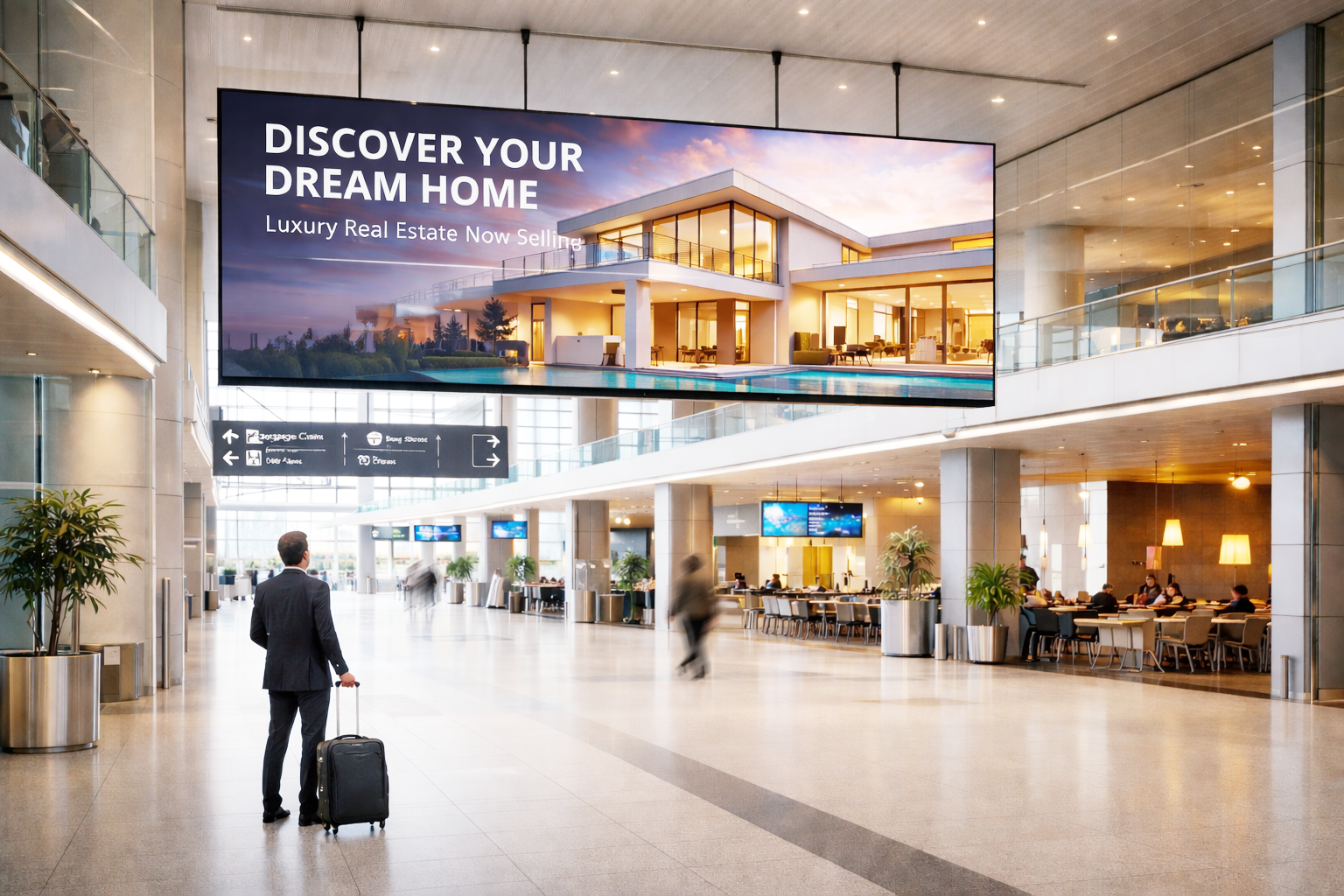
Airport Advertising is Complex to Get Right
We help you execute faster, with proven results and local insight most planners lack starting now.
Talk to an ExpertCatchment Area and Economic Drivers
Top 10 Cities within 150 km — Marketer Intelligence:
- Ciudad del Este, Paraguay: One of the largest duty-free commercial centres in South America, generating billions of dollars in annual cross-border retail trade in electronics, perfumes, apparel, and imported goods. The commercial merchant community here — dominated by Lebanese, Syrian, Chinese, and South Korean business families — represents one of the most intense concentrations of informal and formal trade wealth in the southern hemisphere, with high relevance for financial services, luxury goods, and B2B commercial brands.
- Puerto Iguazú, Argentina: The Argentine twin city to Foz do Iguaçu, positioned 25 kilometres across the Iguazu River and serving as the alternative arrival point for the Argentine side of the Falls. Its tourism economy mirrors Foz but at smaller scale, producing a sustained flow of Argentine and broader South American HNWI visitors through the IGU corridor when Argentine domestic connections are less convenient.
- Presidente Franco, Paraguay: Directly adjacent to Ciudad del Este, Presidente Franco is an overflow commercial and residential zone for the Triple Frontier trade economy. Its commercial class represents the working infrastructure of the duty-free sector and is relevant for financial services, logistics, and business service brands operating in the cross-border economy.
- Hernandarias, Paraguay: Home to the Paraguayan infrastructure zone of the Itaipu Dam, Hernandarias houses the technical and administrative workforce of one of the world's largest hydroelectric facilities — an educated, institutionally employed professional segment with stable income and strong demand for financial planning and professional services brands.
- Santa Terezinha de Itaipu, Brazil: A Brazilian municipality immediately north of Foz do Iguaçu, positioned along the Itaipu reservoir and housing a significant portion of the dam's Brazilian technical and support workforce. This community's employment stability and infrastructure connection to Itaipu make it relevant for financial planning, automotive, and home improvement brands targeting the salaried professional segment.
- Medianeira, Brazil: A western Paraná agribusiness hub approximately 55 kilometres east of Foz do Iguaçu, with a prosperous soy, corn, and poultry farming economy generating landowner and agribusiness wealth that flows toward the Foz do Iguaçu airport corridor for both domestic and international travel.
- Toledo, Brazil: One of western Paraná's most commercially significant mid-sized cities, anchored by the food processing and agribusiness sectors. Toledo's industrial and agricultural wealth class uses Foz do Iguaçu Airport as its primary air access point, generating a business traveller segment with premium automotive, real estate, and financial services spending profiles.
- Matelândia, Brazil: A small Paraná municipality positioned at the eastern gateway to Iguazu Falls National Park, serving the ground transport and accommodation supply chain for the Falls tourism economy. Its economic activity is entirely oriented around supporting the premium tourism experience, making it relevant for hospitality and tourism sector B2B brands.
- Santa Helena, Brazil: A western Paraná agricultural municipality along the Itaipu reservoir's Brazilian shore, producing a mix of farming wealth and hydroelectric infrastructure employment. The community's growing middle and upper-middle-class profile makes it relevant for automotive, financial services, and home lifestyle brands entering the western Paraná regional consumer market.
- Cascavel, Brazil: The largest city in western Paraná at approximately 300,000 people and located at the eastern boundary of the 150-kilometre catchment, Cascavel is the region's primary financial, commercial, and medical hub. Its concentration of agribusiness executives, healthcare professionals, and regional trade wealth makes it the most commercially significant secondary city in the IGU catchment for premium brand advertisers seeking to reach the western Paraná HNWI tier.
NRI and Diaspora Intelligence:
The Triple Frontier is home to one of the most commercially significant diaspora communities in South America — a substantial Lebanese, Syrian, and broader Arab-origin merchant class concentrated in Ciudad del Este and Foz do Iguaçu. This community, established across multiple generations of cross-border trade, has built extraordinary commercial wealth through the Triple Frontier's duty-free and import economy and is now diversifying into real estate, financial services, and regional business investment. The remittance and capital flows connecting this community to Lebanon, Syria, and the broader Arab world are significant, and the outbound travel patterns — to Beirut, Dubai, São Paulo, and Miami — generate a consistent premium passenger segment at IGU whose commercial profile is highly relevant for international real estate, luxury retail, financial services, and premium automotive brands. A secondary Japanese-Brazilian community concentrated in the agricultural towns of western Paraná contributes a structured, high-savings, precision-spending consumer segment to the catchment, with strong brand loyalty to quality-led and heritage-driven premium brands.
Economic Importance:
Foz do Iguaçu's economy rests on three structural pillars of unusual commercial power. Tourism anchored by Iguazu Falls generates enormous year-round spending on accommodation, experiences, ground transport, and food and beverage — the Belmond Hotel das Cataratas alone commands nightly rates that confirm the ultra-premium positioning of the destination's hospitality ceiling. The Itaipu Binacional Dam, a Brazil-Paraguay shared infrastructure project generating approximately 14 percent of Brazil's electricity, employs thousands of engineers, administrators, and support workers in a stable, well-compensated professional workforce. The Triple Frontier commercial economy — centred on Ciudad del Este's duty-free sector — generates an annual goods trade estimated in the tens of billions of dollars, producing one of the most concentrated cross-border commercial wealth flows in Latin America. For advertisers, these three pillars produce three complementary audience types in a single airport: the leisure premium tourist, the technical professional, and the commercial trade wealth holder — a combination that broadens the viable advertiser category set well beyond what a single-sector regional airport can offer.
Business and Industrial Ecosystem
- The Itaipu Binacional operation employs over 3,000 direct and thousands of indirect workers across Brazil and Paraguay in technical, engineering, administrative, and executive roles — a professional workforce with above-average income, strong pension and benefit structures, and consistent demand for financial planning, automotive, and professional development brand categories
- The Triple Frontier cross-border trade economy, centred on Ciudad del Este, generates a merchant and logistics professional class whose capital accumulation is among the most rapid in South America, producing an audience with high demand for financial services, private banking, real estate investment, and luxury goods across the duty-free and open commercial marketplace
- Western Paraná's agribusiness sector — producing soy, corn, wheat, and poultry at industrial scale across some of the most productive farmland in Brazil — generates a landowner and agri-executive wealth class that travels through IGU for business connections to São Paulo, Rio de Janeiro, and international destinations, with premium automotive, agribusiness technology, and real estate investment spending profiles
- A growing tourism and hospitality industry anchored by the Falls creates a professional class of hotel managers, tour operators, conservation park administrators, and F&B executives whose career mobility generates consistent professional travel through the airport
Passenger Intent — Business Segment:
Business travellers at Cataratas International Airport divide into three commercially distinct segments. Itaipu Dam executives and administrators travel on institutional budgets between Foz and Brazil's major cities, carrying procurement authority for professional and technical service brands. Triple Frontier commercial operators travel regionally and internationally for sourcing, finance, and trade logistics — a high-frequency travel segment with strong demand for private banking, international trade services, and luxury goods accessible at destination airports. Western Paraná agribusiness owners and executives travel to São Paulo and internationally for commodity trade, farm input procurement, and investment management — a segment with concentrated, durable wealth and strong receptivity to premium financial, automotive, and real estate advertising.
Strategic Insight:
The business environment at Foz do Iguaçu Airport is commercially underestimated by most national advertisers who associate the airport exclusively with leisure tourism. The reality is a three-sector business economy — energy, trade, and agribusiness — generating sustained, year-round professional travel through a terminal that also handles premium leisure passengers. This overlap between business wealth and leisure premium context means that a brand advertising at IGU reaches the Triple Frontier merchant at the same moment it reaches the São Paulo family arriving for a Falls experience — a dual commercial signal that few airports of comparable size outside Brazil's primary hubs can match.
Tourism and Premium Travel Drivers
- Iguazu Falls — a UNESCO World Heritage Site and one of the Seven Natural Wonders of the World — is the most visited natural attraction in South America and the defining commercial driver of the entire airport catchment, drawing over 1.5 million visitors to the Brazilian side annually and generating the sustained, demographically diverse, but consistently high-spending tourism flow that defines IGU's advertiser value
- The Belmond Hotel das Cataratas, the only hotel located inside Iguazu National Park and rated consistently among the top luxury hotels in South America, anchors the ultra-premium accommodation tier and confirms the presence of a five-star resort guest audience at the airport whose daily rate commitment signals spending power well above the regional average
- Itaipu Dam, the world's most powerful operational hydroelectric facility by energy generation, is the second-most-visited tourist attraction in Brazil and draws international delegations, engineering professionals, sustainability researchers, and school and corporate groups on curated infrastructure tourism programmes — a high-education, high-income, institutionally supported audience
- Parque das Aves (Bird Park), adjacent to Iguazu National Park and housing over 1,000 species of birds including 150 Atlantic Forest endemics, is a globally recognised conservation attraction drawing birdwatchers, nature photographers, and eco-tourism specialists from Europe, North America, and East Asia with above-average per-trip spend on guides, photography equipment, and premium accommodation
Passenger Intent — Tourism Segment:
The tourists arriving at IGU are not casual leisure travellers — they are destination seekers who have invested significantly in planning a journey to one of the world's most iconic natural experiences. The international segment in particular arrives with full accommodation pre-booked, day tours reserved, and a per-trip budget that is among the highest of any Brazilian destination outside the Pantanal and Amazonian eco-luxury circuit. This pre-commitment profile makes them highly receptive to premium brand messaging at the point of arrival — they are in a state of elevated anticipation and experiential openness that is commercially ideal for luxury hospitality, premium nature photography, conservation philanthropy, fine spirits, and high-end travel accessory brands. The domestic Brazilian segment from São Paulo and Rio de Janeiro adds a layer of affluent family leisure spend on top of the international eco-luxury base.
Travel Patterns and Seasonality
Peak seasons:
- December to January (Brazilian summer school holidays): The highest-volume domestic travel peak, driven by wealthy Brazilian families from São Paulo, Curitiba, and Rio de Janeiro flying to Foz do Iguaçu for the summer school holiday. Hotel occupancy reaches annual peaks, and premium accommodation and leisure spend is at its maximum.
- June to July (Brazilian winter school break): Brazil's mid-year Recesso Escolar drives the second major domestic family travel surge through IGU, with July in particular generating near-peak passenger volumes. The cooler, drier winter season is actually considered the best time to experience the Falls, attracting a quality-over-quantity leisure audience.
- Easter Week (March to April): One of the most significant Catholic holiday travel windows in Brazil, generating a sharp passenger volume spike at IGU as wealthy Brazilian families take extended holiday breaks. Easter is also a peak period for Argentine and Uruguayan domestic tourism to Iguazu, adding cross-border volume to the terminal.
- April to October (International high season): The Northern Hemisphere travel calendar aligns with the dry season in southern Brazil, making April through October the primary window for European, North American, and East Asian international arrivals at IGU. This is the period when the international eco-luxury audience is most concentrated and when the Belmond and premium resort occupancy is driven by overseas guests.
Event-Driven Movement:
- Carnival (February/March): While Foz do Iguaçu is not among Brazil's most famous Carnival destinations, the period generates significant outbound movement through IGU as residents travel to major celebrations in Rio de Janeiro, Recife, and Salvador — creating an outbound premium passenger surge that advertisers can intercept with travel, hospitality, and retail brand messages.
- Itaipu Tourism Events (Year-round): Itaipu Binacional hosts recurring institutional and corporate tourism events, international sustainability conferences, and engineering delegation visits throughout the year — each generating short-burst professional and institutional travel through the airport with strong B2B brand relevance.
- Foz do Iguaçu International Week (June/July): A civic, cultural, and tourism promotion event celebrating the city's multicultural identity — drawing attendance from across the Triple Frontier's Brazilian, Argentine, and Paraguayan communities and generating the most concentrated local HNWI and professional audience movement of the domestic calendar.
- High Season Argentine and Uruguayan Tourism (July): Argentine and Uruguayan school holidays in July create a significant inbound cross-border tourism surge to the Brazilian side of the Falls, supplementing the Brazilian domestic peak with a Southern Cone leisure audience that carries strong purchasing power for duty-free retail, fine dining, and premium experience categories.
- Religious Pilgrimage and New Year Events (December to January): Beyond school holidays, the December-January period in Catholic Brazil includes Christmas family gatherings and New Year celebrations that combine with the summer leisure peak to make the airport's commercial environment exceptionally intense in the final and first months of the calendar year.

It’s Not Just Where You Advertise - It’s How Fast You Execute
We combine local insight with fast rollout to deliver results for you, now.
Talk to an ExpertAudience and Cultural Intelligence
Top 2 Languages:
- Portuguese: The primary language of the dominant domestic Brazilian audience at IGU, spoken by the São Paulo, Curitiba, and Rio de Janeiro leisure families, the western Paraná agribusiness professional class, and the Itaipu institutional workforce. Portuguese-language creative is essential for any brand targeting the domestic Brazilian segment and should reflect the warmth, family-orientation, and experiential values that characterise premium Brazilian consumer culture.
- Spanish: The critical secondary language, spoken by the substantial Argentine and Paraguayan visitor community and by the broader Hispanic commercial network of the Triple Frontier. Spanish-language creative is not optional at IGU — it is commercially necessary for any brand seeking to capture the Argentine tourist, the Paraguayan commercial class, and the southern South American HNWI audience that uses Foz do Iguaçu as its primary Brazilian air gateway.
Major Traveller Nationalities:
The dominant nationality at Cataratas International Airport is Brazilian, with the primary domestic originating flows from São Paulo (the largest single feeder market), Curitiba, Rio de Janeiro, Brasília, and Belo Horizonte. Argentine tourists represent the largest single international nationality, driven by the Falls' dual-side nature, the proximity of Buenos Aires via Aeroparque connections, and the longstanding cross-border leisure relationship between Argentina and the Iguazu corridor. International tourists from the United States, Germany, the United Kingdom, France, Italy, and Japan are the primary intercontinental audience segments, drawn by the UNESCO designation and the global marketing reach of the Belmond Hotel brand. Chinese and South Korean travellers are a rapidly growing segment, driven by East Asia's expanding eco-luxury and natural wonder tourism appetite. The Arab-origin merchant community of the Triple Frontier generates a consistent regional travel segment through IGU to São Paulo, Dubai, Beirut, and Miami.
Religion — Advertiser Intelligence:
- Catholic (~65%): Brazil and Argentina are among the world's most intensely Catholic nations, and the Foz do Iguaçu catchment reflects this strongly. Christmas and Easter are the two most commercially powerful travel and spending windows in the calendar, generating peak passenger volumes, maximum retail spend, gifting behaviour, and family hospitality investment. Brands in luxury travel, fine dining, premium gifting, and family entertainment align most powerfully with the Catholic holiday calendar at this airport.
- Protestant and Evangelical (~22%): Brazil's rapidly growing Evangelical Christian community is now a major demographic force in southern Brazil, including western Paraná. This segment drives strong travel peaks around its own religious calendar and is a significant consumer of premium Brazilian domestic tourism. The Evangelical audience responds strongly to brands that reflect family values, financial stewardship, and quality-of-life investment messaging.
- Muslim and Arab Christian (~5%): The Triple Frontier Arab diaspora community — predominantly Lebanese and Syrian, with both Muslim and Maronite Christian members — maintains a distinct religious calendar that includes Ramadan, Eid al-Fitr, and Eid al-Adha, as well as the Orthodox Christmas and Easter calendars of the Maronite community. During Ramadan, the Arab commercial community increases outbound travel to Lebanon, Dubai, and Arab-world destinations, generating a concentrated premium passenger surge that is commercially highly relevant for international real estate, luxury goods, and financial services brands with Arab-world positioning.
- Buddhist and Shinto (~2%): The Japanese-Brazilian community concentrated in western Paraná's agricultural towns represents a small but commercially notable segment with high savings rates, strong brand loyalty, and above-average educational and professional achievement. This community's outbound travel to Japan and its domestic travel through IGU is commercially relevant for premium Japanese and Asian lifestyle brands.
Behavioral Insight:
The Brazilian HNWI consumer at Foz do Iguaçu Airport is a premium experiential spender whose purchasing decisions are deeply shaped by family, social status, and the aspiration to access the best that Brazil and the world have to offer. The Brazilian luxury market is characterised by high brand sensitivity, strong responsiveness to premium visual identity, and a willingness to pay significantly above global average prices for goods and services that signal quality and social distinction. International travellers at IGU tend to be highly pre-researched and experience-oriented, spending heavily before and during their trip with strong receptivity to on-site luxury upgrades, premium dining, guided experiences, and branded nature tourism merchandise. The Triple Frontier commercial audience is the most price-sophisticated segment — experienced negotiators who nonetheless spend freely on categories they value, particularly financial services, real estate, and prestige vehicles.
Outbound Wealth and Investment Intelligence
The outbound passenger at Cataratas International Airport represents three distinct but commercially complementary wealth profiles. Brazilian HNWI families from the southern states travel with leisure and investment intent, deploying capital into international real estate and education simultaneously. Triple Frontier commercial wealth — concentrated in the Arab and Asian merchant communities — flows toward Dubai, Miami, and Latin American financial centres on a high-frequency basis. And the Itaipu and agribusiness professional class travels for business connection and international exposure, with growing openness to premium financial and lifestyle products encountered at major connecting hubs. Masscom Global's positioning of advertisers at IGU intercepts all three profiles at the origin point of their outbound journey.
Outbound Real Estate Investment:
Brazilian HNWI real estate investment from the southern states — including Paraná, Santa Catarina, and Rio Grande do Sul — flows most heavily into the United States (particularly Miami, Orlando, and the South Florida coastal corridor), where the Brazilian community maintains one of the largest foreign national property ownership concentrations in the country. Portugal remains a historically significant destination, with the Algarve coast and Lisbon continuing to attract Brazilian buyers for lifestyle properties and long-stay investment. Uruguay's Punta del Este has emerged as the primary regional luxury real estate market for southern Brazilian HNWI, offering proximity, cultural alignment, and a tax-advantaged property environment. The Triple Frontier Arab community directs its international real estate investment primarily toward Dubai, Lebanon (despite geopolitical complexity, driven by family heritage properties), and Brazil's own São Paulo luxury apartment market. International developers active in Miami, Lisbon, Punta del Este, and Dubai should treat IGU as a viable and underutilised acquisition channel for South American HNWI buyer pipelines.
Outbound Education Investment:
Southern Brazil's HNWI community sends its students to secondary and university programmes in the United States, the United Kingdom, and increasingly Canada and Portugal. The United States remains the dominant destination, with Florida (University of Miami, Florida International University) and Boston-area universities drawing significant Brazilian student enrolment. The UK's Russell Group universities, particularly London institutions, are highly valued by the Brazilian HNWI family for the combination of global network, language acquisition, and prestige. Canada's University of British Columbia and University of Toronto are rising alternatives, valued for safety, quality of life, and immigration pathway options. Portuguese-language university programmes in Lisbon and Porto attract a secondary segment seeking European education with linguistic accessibility. International boarding schools and university preparation programmes targeting Brazilian families should consider IGU's domestic HNWI passenger flow as a viable and largely uncontested acquisition channel.
Outbound Wealth Migration and Residency:
Brazil's HNWI community is among the most active in Latin America in pursuing international residency and citizenship, driven by currency risk management, tax planning, physical security concerns, and lifestyle diversification. Portugal's Golden Visa programme — even post-2023 restructuring — retains the highest demand among Brazilian HNWI, driven by linguistic alignment, EU access, and cultural familiarity. The United States EB-5 investor visa programme continues to attract Brazilian capital, particularly from the agribusiness and commercial real estate wealth segments. Uruguay's tax residency programme is the most practical near-term option for high-net-worth southern Brazilians seeking a functioning alternative tax base within the South American lifestyle corridor. The UAE's zero-tax residency in Dubai is growing rapidly in relevance for the Triple Frontier Arab business community, combining tax efficiency with geographic proximity to the Arab world. Firms offering residency advisory, international tax planning, and citizenship-by-investment services will find a commercially motivated and financially sophisticated audience at this airport across all three of the catchment's primary wealth segments.
Strategic Implication for Advertisers:
International luxury real estate developers, private banking institutions, and residency advisory firms should position IGU as a South American gateway micro-channel where three distinct HNWI wealth profiles converge in a single terminal. The Brazilian leisure family, the Triple Frontier commercial wealth holder, and the agribusiness professional represent three separate but commercially complementary acquisition targets. Masscom Global activates all three simultaneously, with the cultural and linguistic intelligence to ensure each audience receives messaging calibrated to its specific commercial mindset and investment priorities.
Airport Infrastructure and Premium Indicators
Terminals:
Cataratas International Airport operates a single modern terminal building, renovated as part of the infrastructure upgrade cycle preceding Brazil's major tourism investment period. The terminal handles both domestic and international arrivals and departures through a unified facility that is manageable in scale, allowing advertisers to achieve strong coverage without the placement complexity and cost of multi-terminal hub environments. The international arrivals hall is a particularly high-value advertising zone, intercepting overseas eco-luxury tourists at their most receptive moment — stepping onto Brazilian soil at the gateway to one of the world's most celebrated natural destinations.
Premium Indicators:
- The Belmond Hotel das Cataratas, operating as the world's only hotel located inside a World Heritage-listed waterfall national park, functions as the ultimate premium signal for the catchment — its room rates and clientele profile establish the ceiling of the luxury tier at this destination and confirm the presence of an ultra-premium hospitality audience moving through IGU
- The airport's direct ground transfer connection to both Iguazu National Park and the Belmond property means that premium leisure guests transit from arrival gate to five-star rainforest accommodation in under 20 minutes, creating a condensed but high-attention advertising window between touchdown and luxury immersion
- International lounge facilities at the terminal provide a premium dwell environment for business and first-class passengers from São Paulo and international connections, offering a captive, distraction-reduced audience for premium brand placements
- The airport's position as the sole air gateway to both the Brazilian Falls and the Triple Frontier's commercial zone means that every significant commercial, institutional, or luxury leisure movement in the region passes through a single terminal — a consolidation of audience that amplifies the per-placement advertising value significantly
Forward-Looking Signal:
Brazil's federal and Paraná state governments continue to invest in Foz do Iguaçu's tourism infrastructure, with ongoing expansion of the national park visitor capacity, conservation investment in the Atlantic Forest buffer zone, and planned improvements to the airport's international terminal facilities. The global eco-luxury tourism market is one of the fastest-growing segments in international travel, and Iguazu Falls is positioned at the absolute apex of that category. New air route development between IGU and Santiago, Buenos Aires, and Miami is creating new layers of international high-spend arrivals. The Belmond brand's continued investment in the property signals sustained confidence in the ultra-premium accommodation tier. Masscom advises clients to establish presence at IGU now, as international brand competition for this terminal's inventory has historically been well below its audience quality level — a gap that is narrowing as global eco-luxury travel brands increasingly recognise the commercial value of the Iguazu corridor.
Airline and Route Intelligence
Top Airlines:
- LATAM Airlines
- Gol Linhas Aéreas
- Azul Brazilian Airlines
- Copa Airlines (Panama City hub connection)
Key Domestic Routes:
- Foz do Iguaçu (IGU) to São Paulo Guarulhos (GRU): Primary route — São Paulo is the largest single feeder market for both the leisure and business audience at IGU
- Foz do Iguaçu (IGU) to São Paulo Congonhas (CGH): Secondary São Paulo connection serving the business class domestic frequent flyer
- Foz do Iguaçu (IGU) to Curitiba (CWB): Paraná state capital connection — the primary regional business travel route
- Foz do Iguaçu (IGU) to Brasília (BSB): Federal capital connection serving government, institutional, and diplomatic travel to the Itaipu and Triple Frontier zone
- Foz do Iguaçu (IGU) to Rio de Janeiro (GIG/SDU): Second-largest leisure tourism feeder market, connecting Carioca HNWI families to the Falls
Key International Routes:
- Foz do Iguaçu (IGU) to Panama City (PTY) via Copa Airlines: Primary international gateway connecting IGU to North America, the Caribbean, and Central America
- Charter and seasonal connections to Buenos Aires, Santiago, and Asunción serve the Southern Cone leisure and commercial corridors
Wealth Corridor Signal:
The route network at IGU reveals a domestically-anchored but internationally aspirational audience. São Paulo — Brazil's financial capital and the origin of its most concentrated private wealth — is the overwhelming primary feeder, confirming that the leisure audience at IGU is sourced from Brazil's highest-income city. The Copa Airlines Panama hub connection is the primary pipeline for Northern Hemisphere international arrivals, linking IGU to the global eco-luxury travel network through one of Latin America's most strategically positioned connecting hubs. The domestic route dominance of LATAM and Gol confirms a full-spectrum Brazilian leisure market from economy through first class — but the destination's premium pricing filters the arriving audience toward the upper-middle and HNWI tiers by the time they reach the terminal.
Media Environment at the Airport
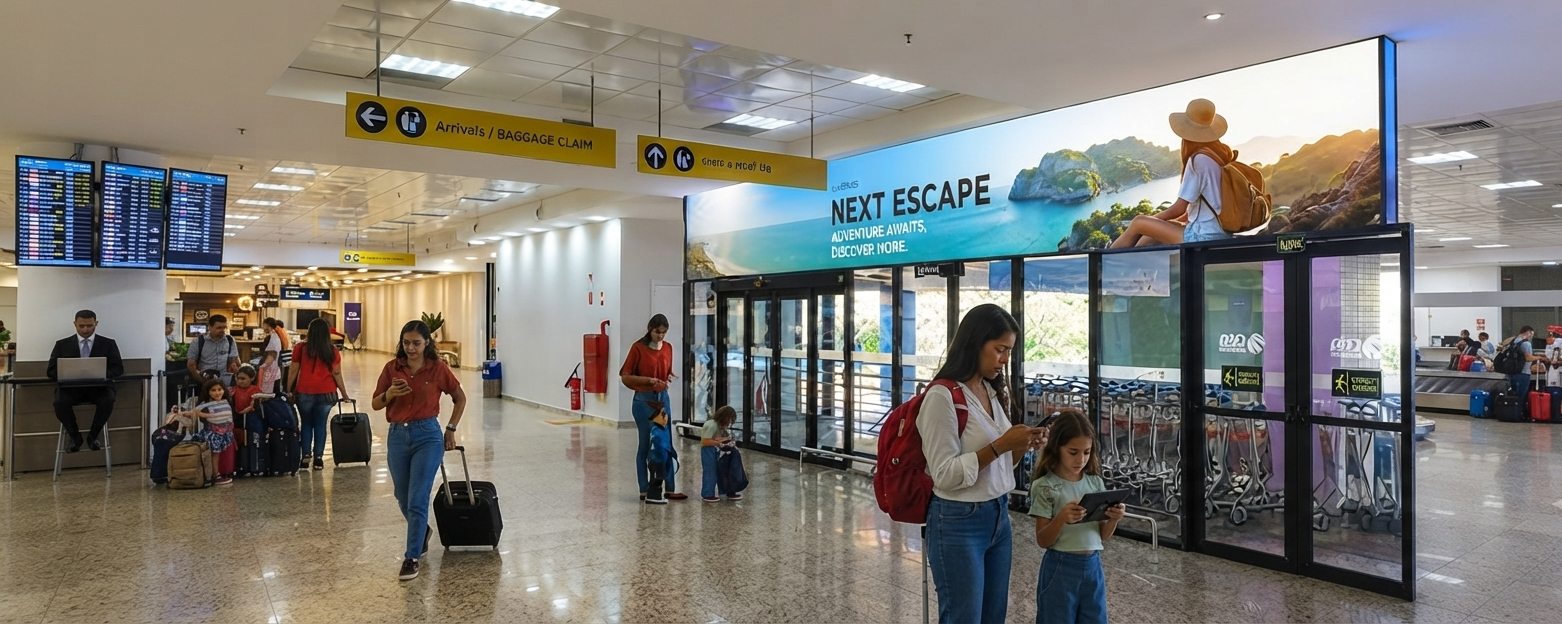
- Cataratas International Airport's single terminal provides clean, consolidated advertising inventory without the fragmentation and audience dilution of multi-terminal hub environments — brands present at IGU achieve strong audience penetration across all passenger categories with a manageable and cost-efficient placement footprint
- Dwell time is elevated by the international terminal processing requirements for customs and immigration, creating 30 to 60-minute captive windows for international arrivals that reward premium, content-rich creative executions targeting the eco-luxury tourist in their first moments on Brazilian soil
- The airport's role as the sole air gateway to a UNESCO World Heritage Site creates a naturally aspirational brand environment — being present at IGU associates a brand with one of the world's most celebrated natural and cultural destinations, an association value that amplifies campaign perception beyond the direct audience contact
- Masscom Global delivers precision inventory access across the full terminal environment at Cataratas International Airport, including the international arrivals hall, domestic departure lounges, ground transportation areas, and ground transfer vehicle networks connecting the airport to the Falls parks and resort properties — ensuring continuous brand presence across the complete arrival experience
Strategic Advertising Fit
Best Fit:
- Luxury travel, hospitality, and eco-resort brands: The Iguazu Falls audience has already committed to a premium travel experience and arrives in a state of maximum receptivity to brand messages that enhance or extend that experience. Five-star hotel brands, luxury eco-resort developers, premium cruise lines, and high-end travel experience companies will find a perfectly aligned audience at IGU.
- Premium automotive: Brazilian HNWI families and western Paraná agribusiness executives travelling through IGU are among the most consistent premium and luxury automotive buyers in southern Brazil. European marques, Japanese prestige brands, and premium Brazilian-market SUV and sedan categories all align powerfully with this audience's purchase behaviour.
- Duty-free and premium retail: The Triple Frontier's commercial culture creates a catchment audience with higher-than-average openness to duty-free purchases, luxury accessories, fine spirits, and premium fragrances at the airport retail level. IGU's duty-free environment benefits from the same commercial appetite that drives billions of dollars of cross-border trade in Ciudad del Este.
- International real estate: Brazilian HNWI investment into Miami, Lisbon, Punta del Este, and Dubai represents one of the most active outbound property flows in South America. International developers in these corridors will find a concentrated, pre-qualified buyer audience at IGU whose investment intent is already formed before they board their connecting flight.
- Financial services and private banking: The convergence of agribusiness landowner wealth, Triple Frontier commercial capital, and Itaipu institutional income at one airport makes IGU a strong channel for private banking, investment advisory, and wealth management brands targeting southern Brazil's HNWI professional and entrepreneurial class.
- Conservation and sustainability brands: Iguazu Falls is a conservation icon, and the audience visiting it is disproportionately committed to environmental values. Brands in sustainable luxury, conservation technology, eco-certification, and green investment will find at IGU an audience whose destination choice itself signals the brand values they are seeking to activate.
- Premium food, wine, and spirits: Brazilian and Argentine fine wine, premium cachaça and spirits brands, and gourmet food producers aligned with the premium leisure and hospitality context of the Falls destination will find a receptive and celebratory audience at this airport.
Brand Alignment at a Glance:
| Category | Fit |
|---|---|
| Luxury travel and eco-resort brands | Exceptional |
| International real estate | Exceptional |
| Premium automotive | Strong |
| Duty-free and premium retail | Strong |
| Financial services and private banking | Strong |
| Conservation and sustainability brands | Strong |
| Premium food, wine, and spirits | Strong |
| Mass-market fast food and discount retail | Poor fit |
Who Should Not Advertise Here:
- Ultra-budget and low-cost consumer brands: The destination premium of Iguazu Falls filters the audience toward mid-to-upper income tiers. Mass-market budget brands will find limited audience alignment and active brand context mismatch in a terminal whose surroundings are defined by five-star resorts and a UNESCO World Heritage Site.
- Urban-only lifestyle brands without nature or experience alignment: City-centric fashion, nightlife, and entertainment brands without any connection to nature, family, or experiential travel values will find their messaging contextually incongruous with an audience entirely oriented around natural wonder and eco-luxury experience.
- Highly complex financial products requiring long buyer journeys: The short dwell time of domestic Brazilian passengers on point-to-point leisure flights limits the depth of engagement available for highly technical or complex financial product advertising that requires sustained reading. Brand awareness campaigns and simple, strong visual executions will outperform text-heavy or data-dense financial product formats at this airport.
Event and Seasonality Analysis
- Event Strength: Medium
- Seasonality Strength: Very High
- Traffic Pattern: Dual-Peak (December to January and June to July) with sustained international shoulder season
Strategic Implication:
Advertisers at IGU should structure their investment around two domestic peak windows — December to January and June to July — and a sustained international presence campaign running from April through October. The domestic peaks deliver the highest volume of Brazilian HNWI family leisure travellers and generate the strongest retail and hospitality brand environment. The international shoulder season delivers the highest-quality eco-luxury tourist audience, with European, North American, and East Asian arrivals at their annual maximum. Masscom Global structures IGU campaigns around both rhythms simultaneously — ensuring Brazilian domestic brands capture the family holiday surge while international brands maintain visibility across the full international high season.

Poor Placement and Delays Affect Airport Campaigns
We help you move faster, access better inventory, and get it right now.
Talk to an ExpertFinal Strategic Verdict
Cataratas International Airport is South America's most commercially distinctive tourism gateway airport, combining the audience pull of a UNESCO World Heritage natural wonder with the economic intensity of the Triple Frontier's cross-border commercial corridor and the sustained institutional wealth of the Itaipu hydroelectric zone. The 1.3 million annual passengers moving through IGU represent a uniquely layered advertiser opportunity — Brazilian HNWI leisure families, international eco-luxury tourists, Triple Frontier commercial wealth, and agribusiness executives from western Paraná's most productive farmland, all converging in a single terminal at the threshold of one of the most anticipated travel experiences in South America. For luxury hospitality, international real estate, premium automotive, financial services, and conservation-aligned brands seeking to establish a presence in the southern Brazilian and South American HNWI market, there is no more commercially compelling regional airport in Brazil outside the São Paulo and Rio de Janeiro hub airports — and Masscom Global provides the intelligence, inventory access, and execution capability to ensure that every campaign at IGU performs at the level this extraordinary audience commands.
About Masscom Global
Masscom Global is a premium international airport advertising and media buying agency operating across 140 countries. With deep expertise in airport OOH, premium publications, and high-net-worth audience targeting, Masscom helps brands reach the world's most valuable travellers at the moments that matter most. For advertising packages, media rates, and campaign planning at Cataratas International Airport and airports across the globe, contact Masscom Global today.
Frequently Asked Questions
How much does airport advertising cost at Foz do Iguaçu Airport?
Advertising costs at Cataratas International Airport vary based on format, terminal placement position, creative specifications, campaign duration, and seasonal demand. Peak windows during December to January, June to July, and the international high season from April to October attract the highest inventory demand. Masscom Global provides current rate cards, format recommendations, seasonal availability assessments, and bespoke media packages tailored to both domestic Brazilian and international brand objectives. Contact Masscom Global directly for a detailed proposal and current pricing.
Who are the passengers at Foz do Iguaçu Airport?
Cataratas International Airport serves a commercially layered audience across three primary segments. Brazilian HNWI leisure families from São Paulo, Rio de Janeiro, Curitiba, and Brasília represent the largest domestic volume, travelling during school holiday peaks for the Iguazu Falls experience. International eco-luxury tourists from Europe, North America, the United States, and East Asia represent the highest average trip spend per visitor, arriving primarily during the April to October international high season. Triple Frontier commercial operators from Foz do Iguaçu's Arab and Asian merchant communities, as well as Itaipu institutional travellers and western Paraná agribusiness executives, generate the year-round professional and commercial passenger layer. Together these three segments produce a passenger profile that is consistently above the Brazilian regional airport average in income, educational attainment, and premium spending capacity.
Is Foz do Iguaçu Airport good for luxury brand advertising?
Foz do Iguaçu Airport is a strong channel for luxury brand advertising in specific categories aligned with the destination's identity. Eco-luxury hospitality, premium travel, conservation brands, fine wine and spirits, and international real estate developers targeting Brazilian HNWI buyers will find at IGU an audience whose destination choice and accommodation spending already confirm their luxury tier commitment. The Belmond Hotel das Cataratas presence in the catchment establishes the premium ceiling and signals the five-star hospitality guest in the terminal audience. For luxury brands with nature, family, or experiential alignment, IGU is a high-performing placement within the Brazilian regional airport network.
What is the best airport in Brazil to reach HNWI audiences for eco-luxury tourism brands?
Guarulhos and Congonhas in São Paulo are Brazil's highest-volume HNWI airports. However, for precision targeting of the Brazilian eco-luxury tourist at the exact moment of commitment to a premium nature experience — and for reaching international eco-tourism audiences arriving specifically for a UNESCO World Heritage destination — Cataratas International Airport delivers an audience quality and intent alignment that no São Paulo hub can replicate. IGU should be deployed as the specialist eco-luxury and nature tourism precision channel within any Brazil-wide HNWI advertising strategy.
What is the best time to advertise at Foz do Iguaçu Airport?
The two highest-performance domestic advertising windows at IGU are December to January and June to July, corresponding to Brazil's summer and winter school holidays. For international brand campaigns targeting the European, North American, and East Asian eco-luxury audience, the sustained window from April through October delivers the highest-quality international passenger concentration. Easter week in March to April generates a sharp premium domestic travel spike. Year-round campaigns are viable and recommended for brands targeting the Triple Frontier commercial audience and Itaipu institutional travel segment.
Can international real estate developers advertise at Foz do Iguaçu Airport?
Foz do Iguaçu Airport is a viable and underutilised channel for international real estate developers targeting Brazilian HNWI buyers. The airport's domestic passenger base is sourced primarily from São Paulo and Rio de Janeiro — Brazil's two most active cities for international property investment, particularly in Miami, Lisbon, Punta del Este, and Dubai. Developers offering luxury properties in any of these markets will find a pre-qualified, financially motivated audience at IGU whose trip investment already signals the spending capacity and lifestyle orientation that drives international property acquisition decisions.
Which brands should not advertise at Foz do Iguaçu Airport?
Ultra-budget consumer brands, mass-market fast food and discount retail, and city-centric urban lifestyle brands without nature or family experience alignment are misaligned with the Foz do Iguaçu Airport audience and destination context. Highly complex B2B industrial or technical products requiring lengthy consideration cycles will also underperform in a leisure-dominant terminal environment. Brands that require the absolute largest metropolitan passenger volumes for campaign viability should prioritise São Paulo and Rio de Janeiro hub airports before considering IGU.
How does Masscom Global help brands advertise at Foz do Iguaçu Airport?
Masscom Global provides complete end-to-end advertising capability at Cataratas International Airport — from audience intelligence, seasonal planning, and market positioning through inventory access, Portuguese and Spanish creative specification, placement execution, and campaign performance reporting. Our team brings deep knowledge of the Brazilian HNWI consumer, the Triple Frontier commercial culture, the international eco-luxury tourism audience, and the specific seasonal and event rhythms that define commercial performance at IGU. We deliver faster execution, more precise placement, and better audience intelligence than any domestic or international planning team operating without dedicated South American airport expertise. Contact Masscom Global today to begin building your brand presence at one of South America's most commercially distinctive airport advertising environments.