

Dubai International Airport (DXB) Airport at a Glance
| Field | Detail |
|---|---|
| Airport | Dubai International Airport |
| IATA Code | DXB |
| Country | United Arab Emirates |
| City | Dubai |
| Annual Passengers | 86.9 million (2023) |
| Primary Audience | HNWIs, Business Executives, Premium Leisure Travellers |
| Peak Advertising Season | October to April |
| Audience Tier | Tier 1 |
| Best Fit Categories | Luxury Goods, International Real Estate, Financial Services, Premium Automotive |
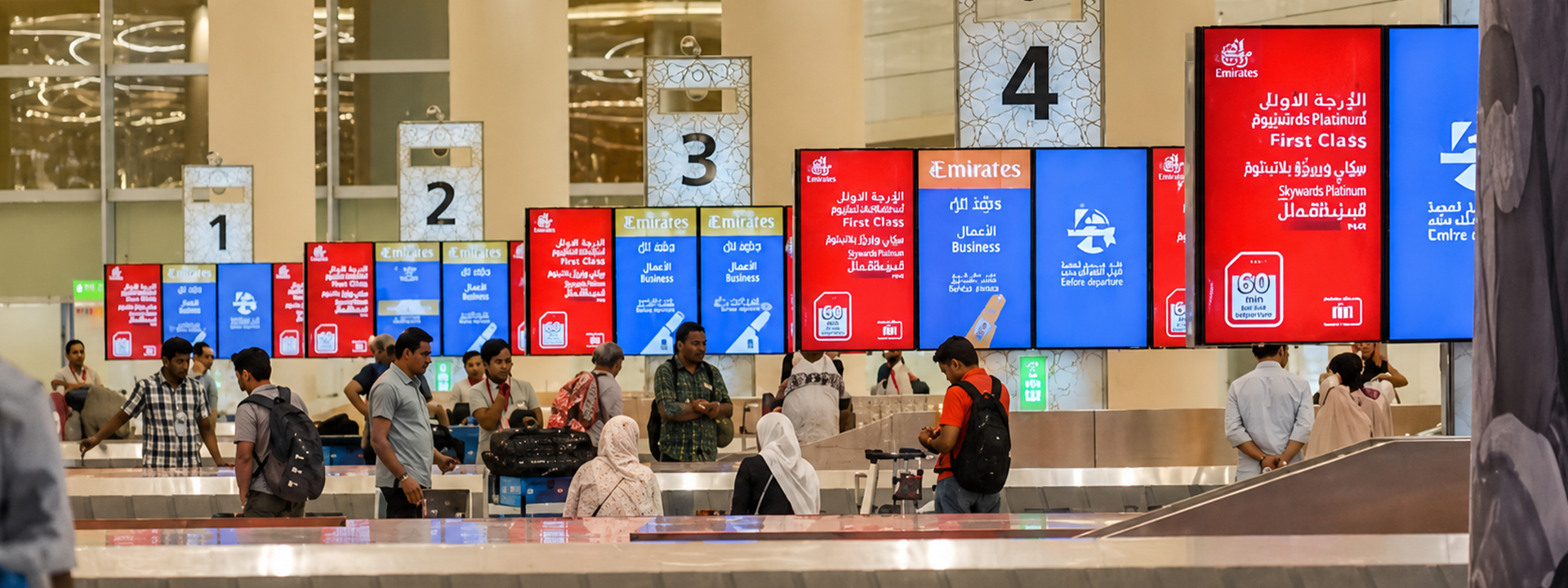
Dubai International Airport is not a regional hub. It is the axis of global wealth movement, connecting over 240 destinations across six continents and processing more international passengers than any airport in the world. For advertisers targeting affluent decision-makers, DXB offers something no other airport can replicate: the simultaneous convergence of travellers from South Asia, the GCC, Sub-Saharan Africa, Europe, and Southeast Asia, all moving through a single, commercially sophisticated terminal environment. The audience here is not aspirational. It is transactional, mobile, and already primed to spend.
Dubai's position as a zero-tax financial hub, a global real estate destination, a luxury retail capital, and the headquarters of major international trade operations means the airport does not merely reflect wealth. It actively concentrates it. Every departure gate at DXB is surrounded by individuals who have already made decisions to invest, acquire, relocate, or deploy capital. Advertising here does not reach people on the way to a holiday. It reaches people on the way to close deals.


Dubai International Airport (DXB) Advertising Value Snapshot
- Passenger scale: 86.9 million passengers in 2023, recovering to pre-pandemic peaks and projected to exceed 100 million by 2030
- Traveller type: Ultra-HNWIs and HNWIs, C-suite business executives, premium leisure travellers, high-value diaspora communities
- Airport classification: Tier 1 — one of fewer than five airports globally that commands a genuine premium advertising environment without audience dilution
- Commercial positioning: The global benchmark for airport luxury advertising, used as a reference point for HNWI targeting strategies worldwide
- Wealth corridor signal: DXB sits at the crossroads of South Asia-GCC remittance and investment flows, Africa-UAE trade corridors, and Europe-Asia wealth transfer routes
- Advertising opportunity: Masscom Global provides access to premium inventory across DXB's terminal environment, structuring campaigns for brands that require precision placement within the world's most commercially active airport
 Prathish Cherian
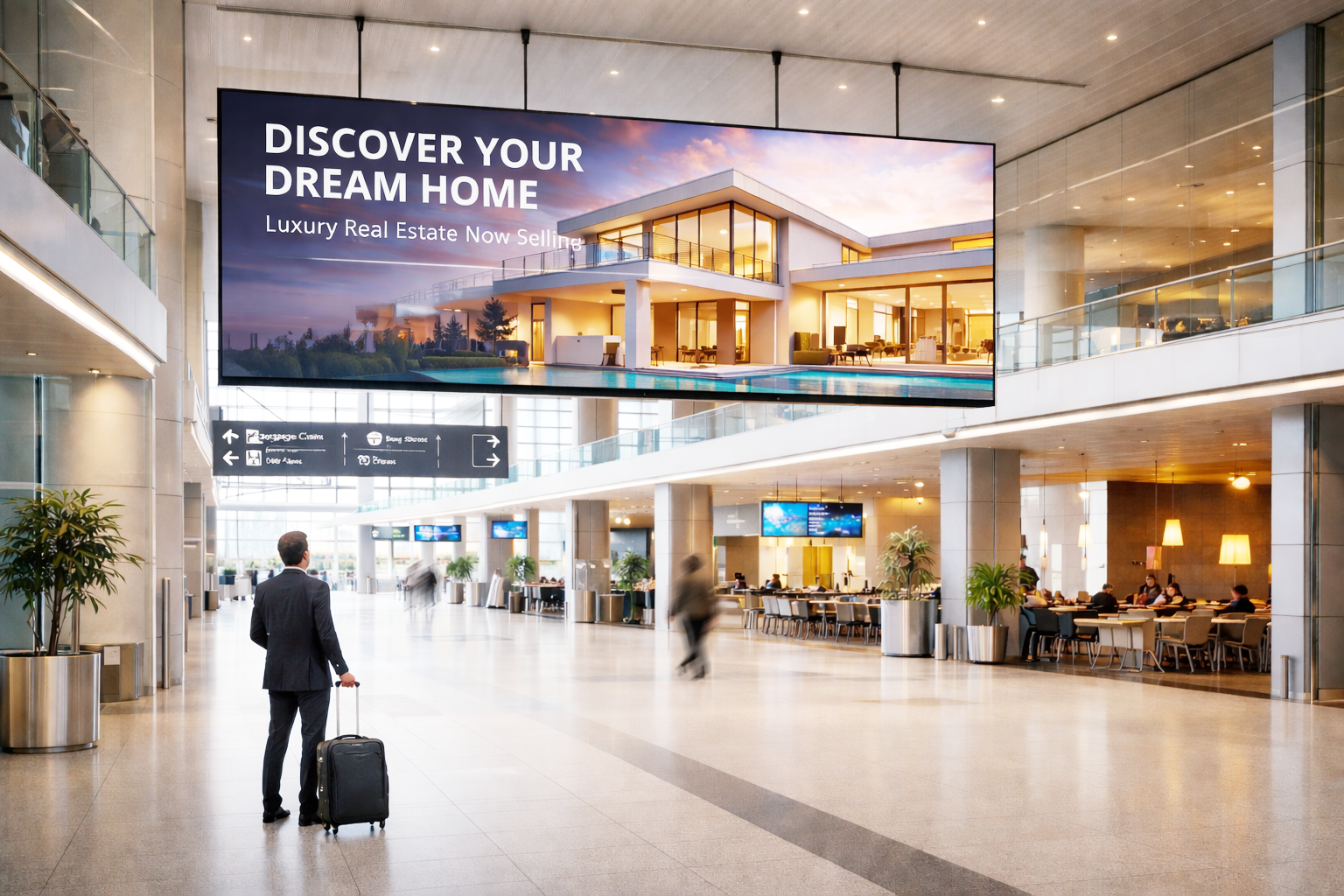
Airport Advertising is Complex to Get Right
We help you execute faster, with proven results and local insight most planners lack starting now.
Talk to an ExpertDubai International Airport (DXB) Catchment Area and Economic Drivers
Top 10 Cities within 150 km — Marketer Intelligence:
- Dubai: The primary market — home to over 200,000 millionaires, the largest concentration of ultra-HNWIs in the Middle East, and a resident base that skews heavily toward senior professionals, investors, and entrepreneurs across every major nationality
- Abu Dhabi: The UAE capital and seat of sovereign wealth, generating C-suite government and corporate travellers with significant investment mandates and premium lifestyle expenditure
- Sharjah: A densely populated working-professional market with strong South Asian consumer spending, particularly relevant for financial services, telecom, and education advertisers
- Ajman: A cost-conscious residential catchment with significant Indian and Pakistani middle-market professional households, valuable for brands targeting aspirational family spending
- Ras Al Khaimah: An emerging luxury tourism and free zone economy producing a growing cohort of international investors and hospitality-oriented travellers
- Fujairah: A key maritime and industrial trade hub generating logistics professionals and regional traders who transit through DXB for international routes
- Umm Al Quwain: A smaller emirate with a concentrated manufacturing and trade base, contributing primarily industrial and SME business travellers
- Al Ain: A significant educational and government centre, producing family travel, education-linked spending, and medical tourism movements into and out of the airport
- Muscat (Oman): Within the commercial orbit of DXB through Emirates and budget carrier connectivity, generating Omani HNWIs and Gulf Cooperation Council executives who frequently use DXB as their international gateway
- Doha (Qatar): Though a competitor hub in aviation terms, Doha-based professionals and investors regularly transit through or position campaigns targeting DXB's overlapping GCC audience demographic
NRI and Diaspora Intelligence: The Indian expatriate community, estimated at over 3.5 million across the UAE, is the single most commercially significant diaspora travelling through DXB. This community controls enormous remittance flows back to India — the UAE consistently ranks as one of India's top two remittance sources globally — and simultaneously deploys investment capital into Indian real estate, equity markets, and family businesses. Beyond India, the Pakistani, Filipino, Egyptian, and British expatriate communities all use DXB as their primary international gateway. These are not budget travellers. The upper decile of DXB's expatriate traveller base includes senior finance professionals, medical specialists, legal practitioners, and technology executives whose household incomes and investable assets place them firmly within the HNWI targeting zone.
Economic Importance: Dubai's economy rests on six commercially powerful pillars: financial services and wealth management, luxury real estate, trade and logistics, tourism and hospitality, technology and digital infrastructure, and professional services. Each of these sectors produces a distinct advertiser audience at DXB. The financial services professional is en route to London, Geneva, or Singapore. The real estate investor is returning from viewing property in Portugal or Cyprus. The logistics executive is transiting between Dubai's Jebel Ali Free Zone and manufacturing hubs in Asia. The catchment economy does not produce a homogeneous traveller. It produces a mosaic of high-value audience segments, all of which are commercially accessible within the same terminal environment.
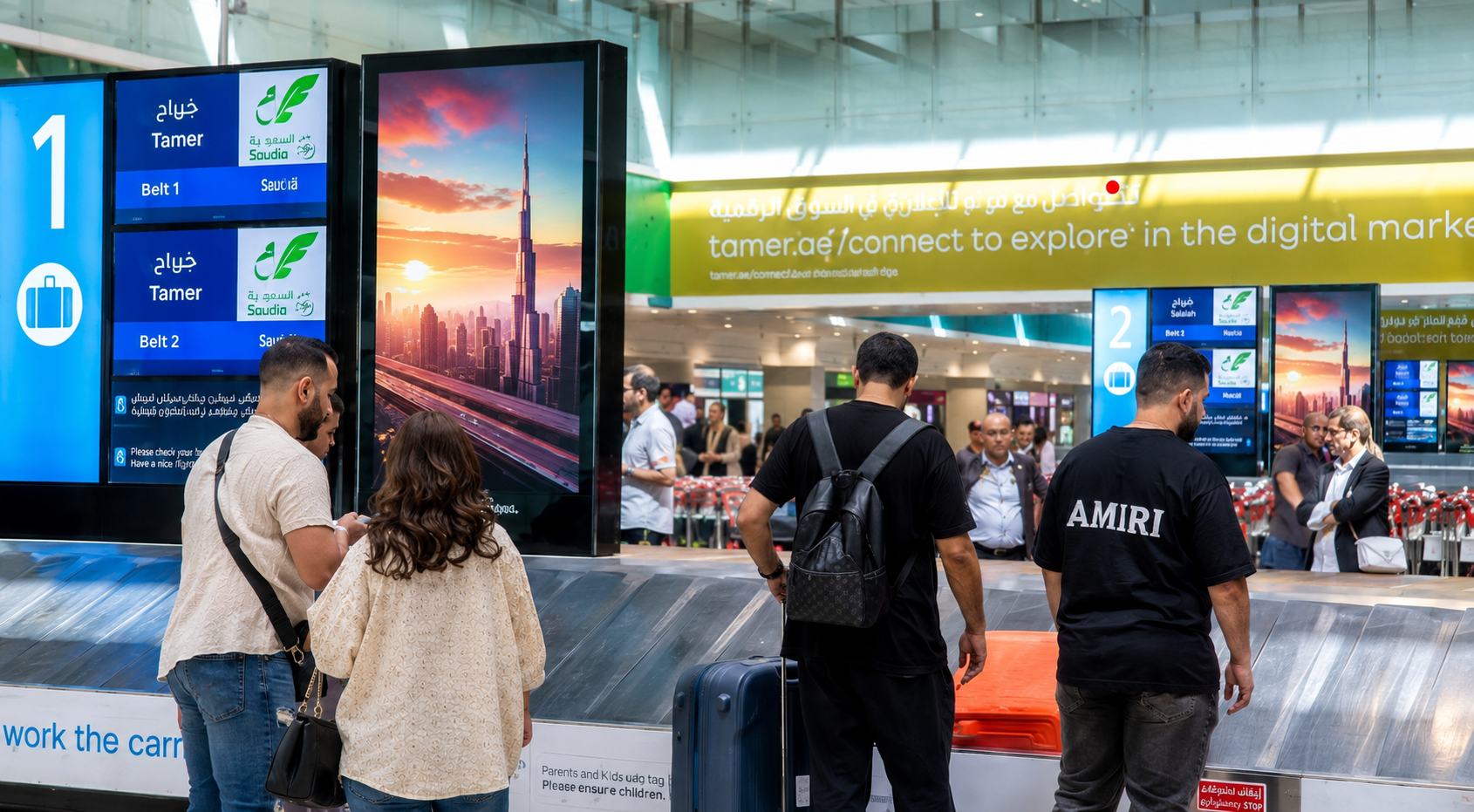
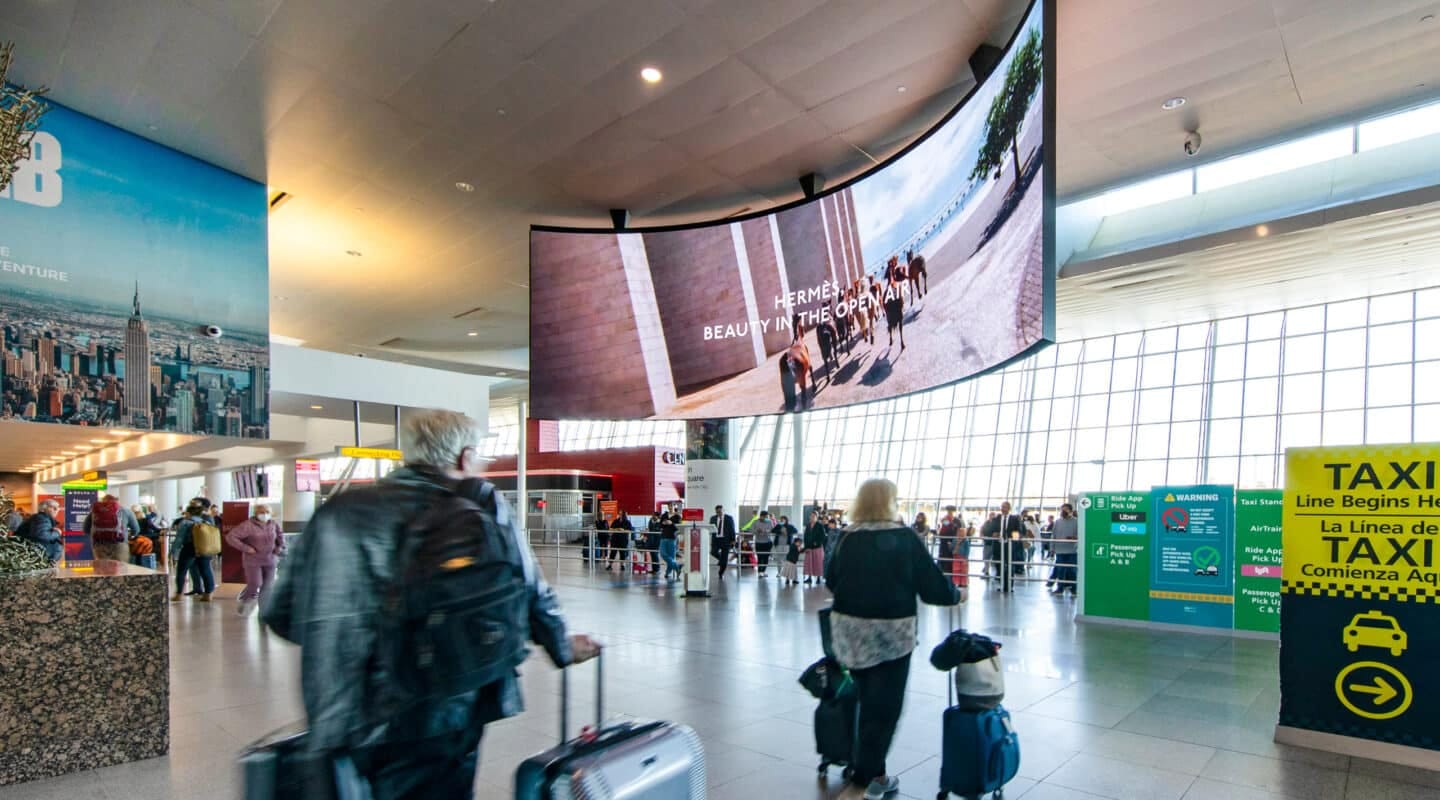
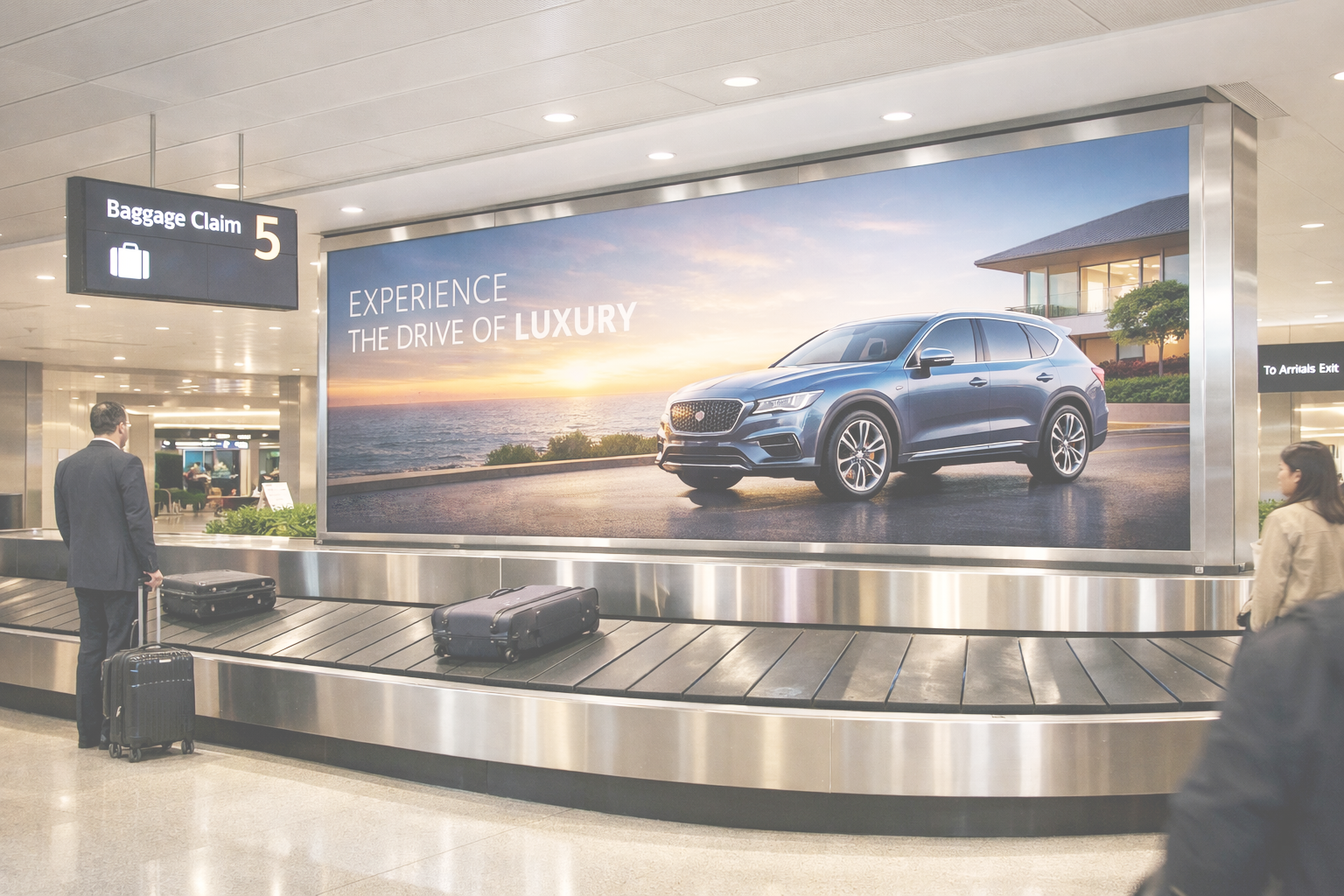
DXB Airport Advertising - Baggage Claim Digital Screen Ads Dubai
Dubai International Airport (DXB)
Business and Industrial Ecosystem
- Financial services and private banking: Dubai hosts regional headquarters of HSBC, Standard Chartered, Citibank, JPMorgan, and over 200 licensed financial institutions — generating a constant flow of senior banking and investment professionals through DXB
- Real estate and development: Major developers including Emaar, DAMAC, and Nakheel operate at scale, producing investors and professionals with active capital deployment mandates across international property markets
- Trade, logistics, and free zones: Jebel Ali Free Zone, Dubai Airport Free Zone, and Dubai Multi Commodities Centre collectively house over 9,000 companies, creating one of the world's largest concentrations of trade-oriented business travellers in a single catchment
- Technology and digital economy: Dubai Internet City and Dubai Silicon Oasis are home to regional offices of Google, Microsoft, Amazon, LinkedIn, and hundreds of scale-up technology companies, generating a premium tech-professional traveller cohort
- Healthcare and medical tourism: Dubai Healthcare City attracts patients and specialists from across South Asia, Africa, and the GCC, producing healthcare-linked travel with significant out-of-pocket spending capacity
Passenger Intent — Business Segment: DXB's business travellers are not passing through. They are the deal-makers, portfolio managers, regional directors, and institutional investors who use Dubai as a base of operations and DXB as their working runway. They travel to close, to sign, to inspect, and to report. The categories that intercept this audience most effectively are premium financial products, luxury automotive, international real estate, professional services, high-end technology, and wealth management platforms. These travellers have long dwell times in premium lounges, elevated receptivity to aspirational messaging, and purchasing authority that extends well beyond the individual transaction.
Strategic Insight: The business audience at DXB is unique because it is simultaneously local and globally mobile. These individuals are not based in Dubai for a short assignment. Many are ten-year residents who have rebuilt their financial lives around the emirate's tax advantages, lifestyle quality, and geographic centrality. They are making decisions that span multiple jurisdictions simultaneously, which means campaigns at DXB reach a decision-maker who is thinking about London, Mumbai, Nairobi, and Dubai at the same time. No other airport in the world offers that simultaneous multi-jurisdiction commercial reach within a single audience cohort.
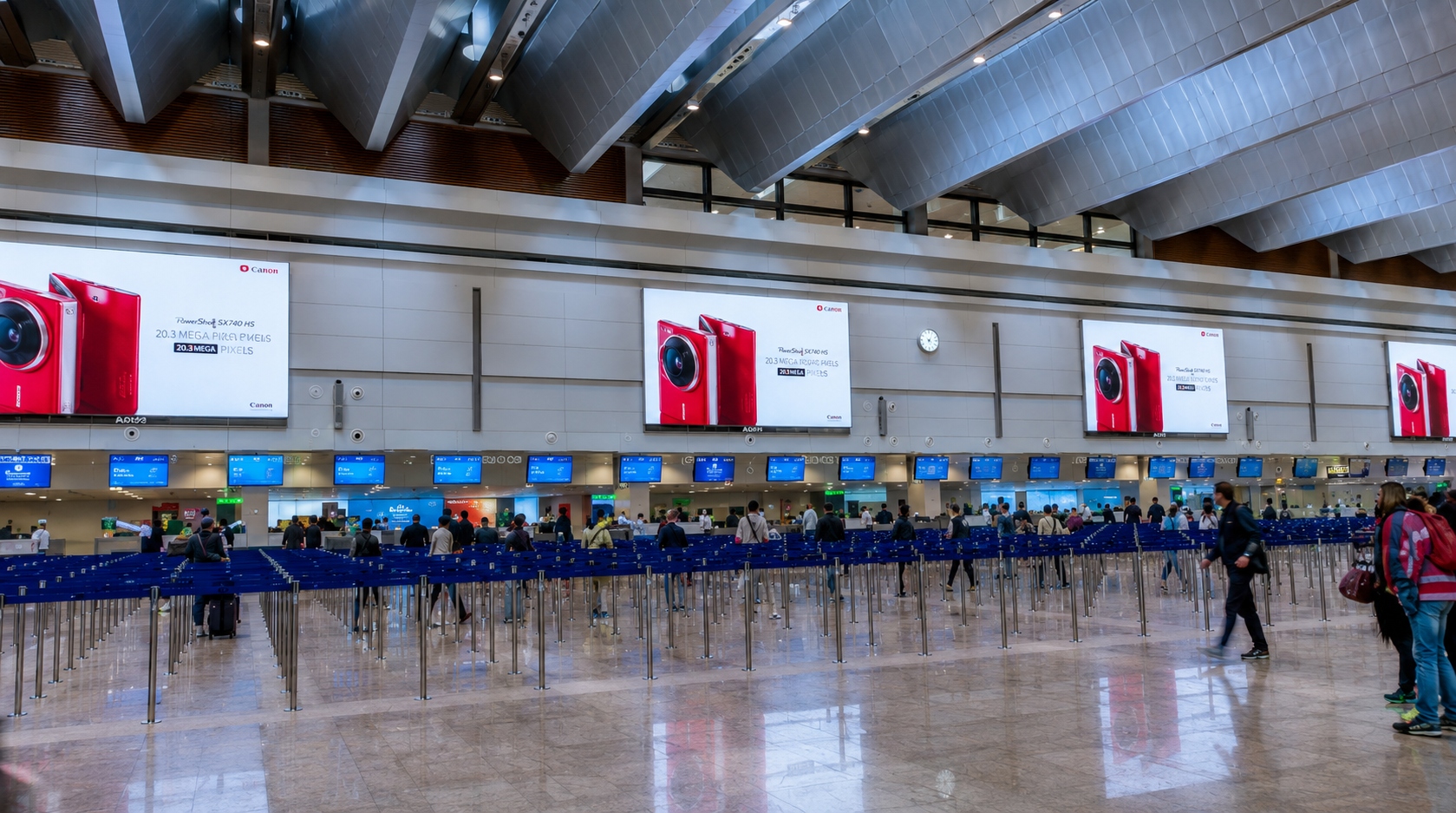
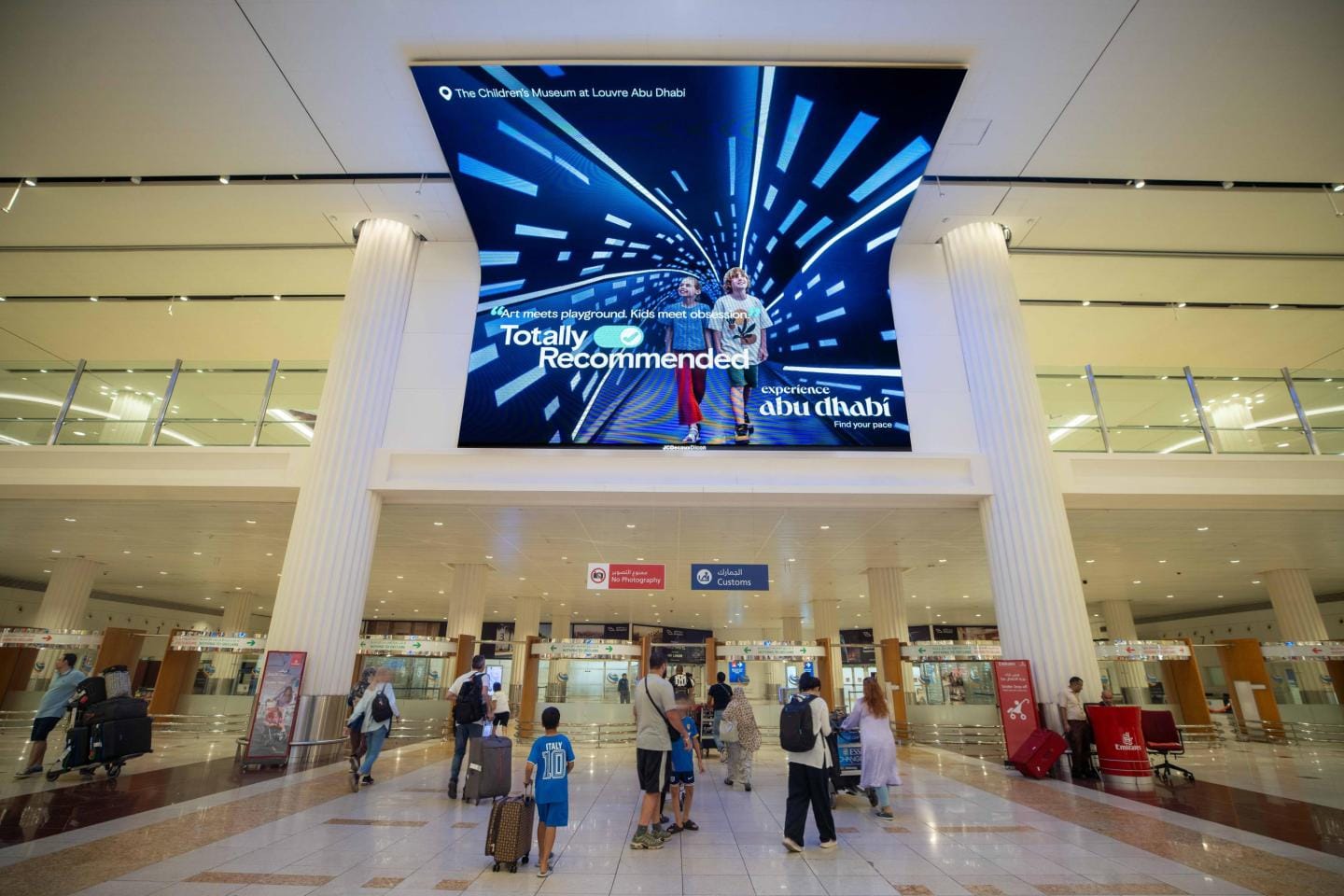
Dubai Airport Advertising DXB - Check-in Area Digital Billboards
Dubai International Airport (DXB)
Tourism and Premium Travel Drivers
- Downtown Dubai and Burj Khalifa: The world's most photographed urban destination, attracting 15+ million visitors annually and generating premium leisure travellers with significant shopping, dining, and experiential spending capacity
- Palm Jumeirah and luxury beach resorts: Home to Atlantis, One&Only, and Waldorf Astoria properties, attracting ultra-HNWI leisure travellers from Europe, Russia, China, and the GCC who spend at the highest tier of hospitality and retail
- Dubai Mall and luxury retail district: The world's most visited shopping mall complex, producing inbound luxury retail tourists from South Asia and the GCC who use DXB as their primary entry point for dedicated shopping trips
- Dubai Expo City and MICE infrastructure: The permanent legacy of Expo 2020 continues to generate large-scale international conferences and trade events, producing waves of business-tourism hybrid travellers throughout the year
Passenger Intent — Tourism Segment: The premium tourist arriving or departing through DXB has already committed to above-average spending before reaching the terminal. They have pre-booked luxury hotels, reserved restaurant tables with multi-course tasting menus, and budgeted for retail purchases across Dubai Mall and the Gold Souk. At the airport, they are in a receptive, reward-oriented mindset. Advertiser categories that benefit most include international luxury brands, premium jewellery, fine watches, high-end skincare, travel accessories, and aspirational financial products targeting returning visitors who are already planning their next Dubai visit.
Dubai International Airport (DXB) Travel Patterns and Seasonality
Peak seasons:
- October to April: The core advertising window. Dubai's winter season drives the highest passenger volumes from Europe, Russia, South Asia, and the GCC leisure market, combined with peak business travel as Q4 closes and Q1 planning begins. This is the primary campaign window for premium brands.
- June to August: Despite heat reducing inbound tourism, outbound traffic from UAE residents travelling to Europe, North America, and the UK for summer holidays peaks sharply. This window is particularly valuable for international real estate, education, and luxury destination advertisers targeting outbound HNWIs.
- Ramadan and Eid periods: Travel surges to and from the GCC and South Asia, with significant gift-purchasing, family travel, and luxury hospitality spending concentrated into a compressed window. Brands in jewellery, fashion, hospitality, and financial gifting products benefit significantly.
Traffic volume data: DXB handled 86.9 million passengers in 2023 with monthly peaks exceeding 8 million passengers in January and December. The airport operates 24 hours across both terminals, maintaining consistent dwell-time and exposure windows across all hours.
Event-Driven Movement:
- Dubai Shopping Festival (January to February): Generates significant inbound travellers from South Asia and the GCC specifically for retail, creating a concentrated audience of high-intent shoppers in transit through DXB. Retail, jewellery, and fashion advertisers should lock campaigns to this window.
- Dubai World Cup (March): The world's richest horse race attracts ultra-HNWIs, royalty, and global sports elites, creating a compressed window of exceptional wealth concentration at DXB in both directions.
- GITEX Global Technology Week (October): The Middle East's largest technology conference brings 180,000+ attendees through Dubai, generating a concentrated B2B technology and enterprise audience that peaks at DXB across the event week.
- Cityscape Global (October): The region's dominant real estate investment exhibition concentrates international property buyers and developers at DXB, creating one of the highest-density moments for real estate advertising ROI across the year.
- UAE National Day (December 2-3): A peak outbound travel moment for UAE residents, with heavy leisure and family travel surging through DXB toward South Asia, Europe, and the GCC.
It’s Not Just Where You Advertise - It’s How Fast You Execute
We combine local insight with fast rollout to deliver results for you, now.
Talk to an ExpertDubai International Airport (DXB) Audience and Cultural Intelligence
Top 2 Languages:
- English: The dominant commercial language of DXB's terminal environment, used across signage, announcements, and business communication. English-language campaigns reach the broadest cross-section of the airport's international and expatriate traveller base, including the British, American, Australian, South Asian, and African professional communities who all transact in English.
- Arabic: The language of the GCC elite, government officials, and the high-spending Saudi, Kuwaiti, and Emirati traveller cohort. Arabic-language creative signals cultural respect and brand seriousness to a community whose per-trip spending regularly exceeds that of other nationality groups at DXB.
Major Traveller Nationalities: Indians constitute the largest single nationality group at DXB, followed by British, Pakistani, American, Saudi, and Filipino travellers. Chinese visitors have grown significantly post-2023. The Russian-speaking traveller community remains significant year-round due to Dubai's established position as a preferred destination for Russian HNWIs. Emirati nationals, though a smaller percentage of total volume, travel in business and first class at a rate that is disproportionately high relative to their absolute numbers, making them a commercially valuable target segment for ultra-premium advertisers despite the audience size.
Religion — Advertiser Intelligence:
- Islam (approximately 76%): The dominant religion of the GCC resident and visitor population. Ramadan and both Eid periods create two of the most commercially significant advertising windows of the year. During Eid, gift-giving, luxury retail, and hospitality spending spike sharply. Advertisers in jewellery, fragrance, fashion, and premium food brands should treat Eid campaigns as non-negotiable priority windows at DXB.
- Hinduism (approximately 10%): Primarily within the South Asian expatriate community. Diwali generates elevated gifting and retail spending from October to November, while travel around Dussehra and Holi creates secondary traffic peaks. Financial products, jewellery, and luxury consumer goods perform well within this segment during festival windows.
- Christianity (approximately 9%): Primarily within the European, Filipino, and African expatriate communities. Christmas and Easter drive significant outbound leisure travel surges, making December and March key windows for travel accessories, hospitality, and destination advertising.
Behavioral Insight: The DXB traveller is one of the most commercially sophisticated audiences in global airport advertising. Years of exposure to premium brand environments, both at the airport and across Dubai's retail landscape, have created an audience that reads advertising as social currency rather than intrusion. This is an audience that aspires upward continuously, that benchmarks personal success against global standards, and that makes purchasing and investment decisions with access to information, professional advisors, and genuine capital. Campaigns that lead with exclusivity, global credibility, and aspirational identity consistently outperform generic product advertising in this environment.
Dubai International Airport (DXB)
Outbound Wealth and Investment Intelligence
The outbound passenger at Dubai International Airport is among the most commercially powerful figures in global advertising. This is not an audience browsing for options. It is an audience actively deploying capital across multiple geographies simultaneously, with the financial literacy, professional networks, and liquid wealth to execute. The question for advertisers is not whether this audience has money. The question is which advertiser reaches them at the moment the decision crystallises.
Outbound Real Estate Investment: DXB's HNWI outbound audience is among the most active cross-border real estate investor bases in the world. Key destination markets include the United Kingdom (London prime property and student accommodation), Portugal (Golden Visa properties and Algarve luxury coastal), Spain (Costa del Sol, Madrid, and Barcelona premium residential), Canada (Toronto and Vancouver landed property for family migration), Australia (Sydney and Melbourne investment properties tied to student visa programmes), Cyprus (residency-by-investment and holiday home acquisitions), and Greece (Golden Visa residential with sub-250,000 euro entry thresholds). Within the South Asian segment, investments into Mumbai, Pune, Hyderabad, and Bengaluru premium residential remain consistent, particularly among NRIs returning capital to India.
Outbound Education Investment: The UAE's South Asian and Arab HNWI families are among the world's highest per-household education spenders. Students from this catchment migrate primarily to the United Kingdom (Russell Group universities), the United States (Ivy League and major state universities), Canada (University of Toronto, UBC, McGill), and Australia (Group of Eight universities). Families at DXB are not just purchasing a degree. They are purchasing a pathway to international residency, global professional networks, and long-term wealth mobility for the next generation. International university admissions offices, education consultancies, and student accommodation developers should treat DXB as a primary advertising channel, particularly in the March to May and July to September booking windows.
Outbound Wealth Migration and Residency: Second-residency and citizenship-by-investment demand among DXB's outbound HNWI audience is among the highest globally. Most active programmes include Portugal's Golden Visa (despite recent modifications, Algarve and real estate fund routes remain active), Greece's Golden Visa (fastest-growing programme among South Asian investors at DXB), Malta's citizenship-by-investment (favoured by European-aspirant Arab and South Asian professionals), Caribbean citizenship programmes (Saint Kitts, Grenada, and Dominica for visa-free travel expansion), and the UAE's own Golden Visa (creating inbound demand among international HNWIs), and Vanuatu citizenship (valued for rapid processing and travel document strength). The demand signal is unmistakable: the outbound HNWI at DXB is simultaneously the world's most mobile and the world's most residency-seeking traveller.
Strategic Implication for Advertisers: International brands on both the originating and destination side of wealth flows should treat DXB as a non-negotiable advertising channel. The same passenger departing to London for a real estate viewing is returning with a financial product decision pending, a residency application in progress, and an education shortlist for their child. Masscom Global structures campaigns at DXB that capture this multi-stage decision journey, activating inventory on both sides of the corridor to maximise brand exposure across the full investment cycle.
Dubai International Airport (DXB)
Airport Infrastructure and Premium Indicators
Terminals:
- Terminal 1: Serves select international airlines including flydubai for certain routes and handles significant charter traffic. Commercially active and well-positioned for brand exposure across its international departure halls.
- Terminal 2: Primarily serves budget and regional carriers, producing a volume-driven mid-market audience that complements the HNWI focus of Terminal 3.
- Terminal 3: Exclusively operated by Emirates, the world's largest long-haul airline. This terminal is the commercial heart of DXB and the primary advertising environment for premium brands. With Emirates' global route network and first and business class passenger volumes, Terminal 3 houses the most commercially valuable airport advertising real estate in the world.
Premium Indicators:
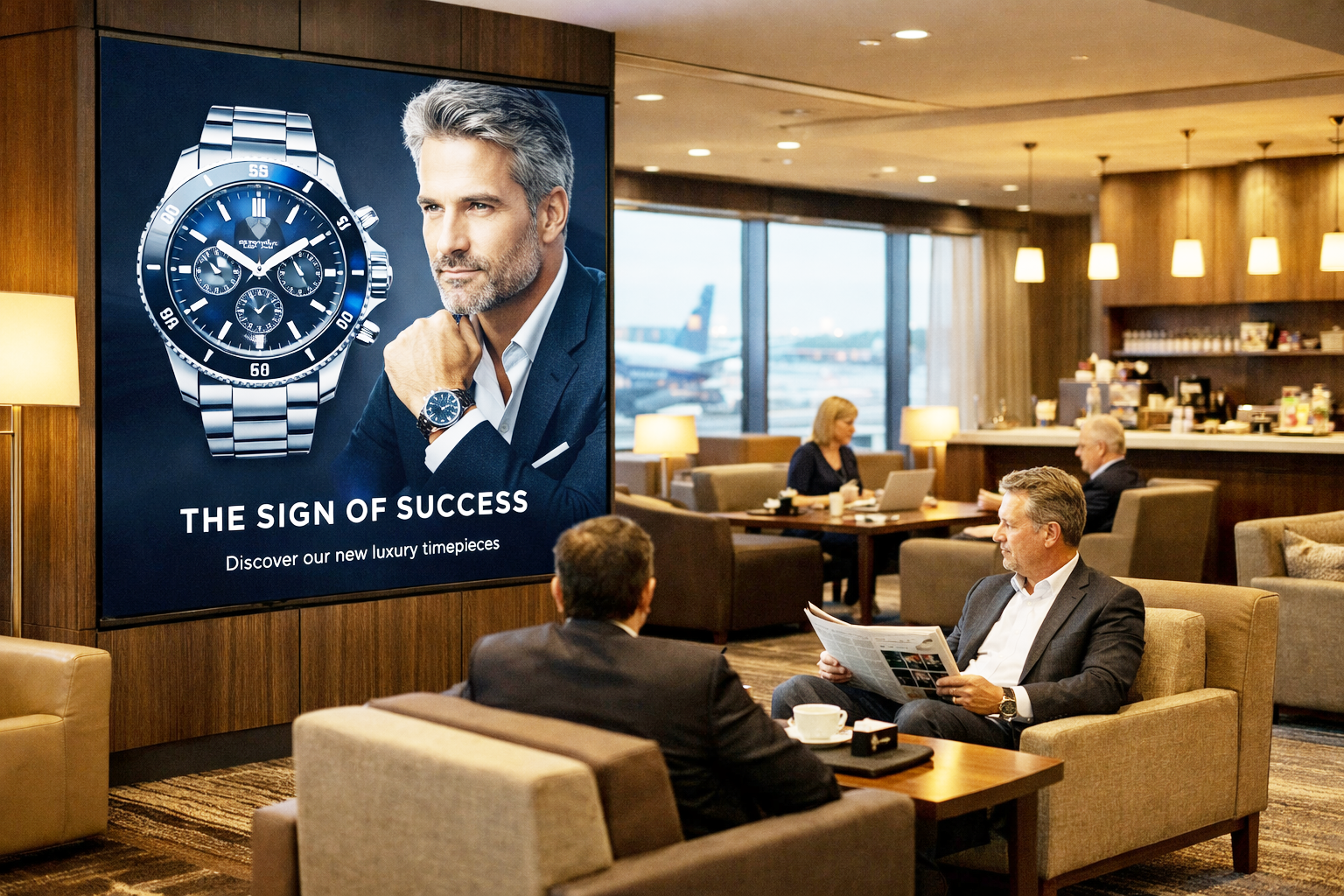
- DXB's lounge infrastructure is among the most extensive of any airport globally, including Emirates' flagship First Class lounge and spa, over 40 lounge facilities across terminals, and dedicated business class lounges for 50+ airlines. The density of lounge usage signals the proportion of the audience travelling at the upper cabin tiers.
- Dubai hosts a dedicated private aviation terminal operated through Al Maktoum International, and private jet usage through DXB's VIP facilities serves an ultra-HNWI cohort that includes royalty, corporate principals, and international investors.
- The Dubai International Hotel, located within Terminal 3, provides immediate luxury hospitality access for transit and arriving guests, reinforcing the premium environment signal for international luxury brands.
- DXB has received multiple Skytrax awards including recognition as the busiest international airport in the world, and the terminal infrastructure has been purpose-designed for retail dwell time, with luxury retail concessions spanning over 10,000 square metres across all terminals.
Forward-Looking Signal: Dubai's aviation infrastructure investment signals sustained growth in premium passenger volumes through the next decade. Al Maktoum International Airport (DWC) is undergoing a multi-phase expansion that will eventually make it the world's largest airport by capacity. Emirates continues to expand its fleet with A380 and Boeing 777X deliveries, adding new ultra-long-haul routes that deepen DXB's reach into premium markets. Brands that invest in DXB advertising now secure positioning at the world's premier HNWI gateway before the next capacity and passenger surge accelerates competition for premium inventory. Masscom Global advises clients to plan forward campaigns now to lock in current placement rates ahead of projected volume growth.
Dubai International Airport (DXB) Airline and Route Intelligence
Top Airlines: Emirates, flydubai, Air India, British Airways, Lufthansa, Singapore Airlines, Etihad Airways, Qatar Airways, Air Arabia, SpiceJet, IndiGo, Turkish Airlines, Swiss International Air Lines
Key International Routes:
- Dubai to London Heathrow (multiple daily frequencies, one of the world's highest-volume premium cabin routes)
- Dubai to Mumbai (10+ daily frequencies, the busiest single international air route in the world by seat capacity)
- Dubai to New York JFK (daily, ultra-long-haul premium route)
- Dubai to Singapore (daily, key Asia wealth corridor)
- Dubai to Nairobi (multiple weekly, primary Africa-UAE trade corridor)
- Dubai to Frankfurt (multiple daily, European business hub connection)
- Dubai to Sydney (daily, key Australasia connection)
- Dubai to Toronto (multiple weekly, Canada immigration and education corridor)
- Dubai to Johannesburg (multiple weekly, Sub-Saharan Africa premium corridor)
- Dubai to Riyadh and Jeddah (multiple daily, primary GCC intra-regional routes)
Domestic Connectivity: DXB connects to Abu Dhabi, Ras Al Khaimah, and serves as the departure point for domestic UAE routes operated by flydubai and Air Arabia, though UAE's compact geography makes domestic air travel a secondary category.
Wealth Corridor Signal: The route network at DXB does not reflect leisure demand alone. The London, Singapore, Frankfurt, New York, and Toronto routes are wealth-transfer corridors where premium cabin passengers move capital, manage international portfolios, and execute cross-border investment decisions. The Mumbai and South Asian routes carry the world's largest diaspora investor flows. The Nairobi, Johannesburg, and Lagos routes connect Africa's emerging HNWI class to Dubai's financial and real estate services. Advertisers who understand the route network understand that DXB is not just a travel hub. It is a wealth corridor intersect, and advertising there means speaking to capital in motion.
Dubai International Airport (DXB) Media Environment at the Airport
- DXB's terminal scale is without comparison in the Middle East, with Terminal 3 alone spanning over 1.7 million square metres, creating an extended dwell time environment where passengers spend an average of 60 to 90 minutes post-security before boarding. The scale reduces advertising clutter concentration per impression while maintaining brand dominance through strategic placement.
- Dwell time at DXB is enhanced by the airport's deliberate retail-first design. The duty-free retail corridor in Terminal 3 is one of the busiest in the world, and passengers who enter the retail zone consistently demonstrate elevated purchase intent and brand receptivity. Advertising adjacent to or within the retail environment captures audiences in active spending mode.
- The premium environment at DXB elevates brand association by default. Any brand present at Terminal 3 benefits from the halo of the Emirates brand, the luxury retail tenant mix, and the physical quality of the terminal architecture. Brands that could not conventionally afford a luxury brand positioning in their home market can acquire it through DXB placement.
- Masscom Global holds relationships across the DXB media environment that enable precise placement by terminal, zone, passenger flow segment, and campaign objective. Whether a brand requires pre-security impact, post-security dwell engagement, lounge-adjacent targeting, or gate-specific dominance, Masscom structures the placement to match the audience moment.
Dubai International Airport (DXB) Strategic Advertising Fit
Best Fit:
- Ultra-luxury goods and fashion: Chanel, Louis Vuitton, Cartier, and comparable brands find at DXB an audience that not only recognises luxury codes but actively purchases. The terminal retail adjacency means brand advertising translates directly to same-trip purchase conversion.
- International real estate: Developers marketing properties in the UK, Portugal, Greece, Canada, Australia, and UAE itself reach at DXB the exact investor profile that drives their sales — mobile, liquid, internationally oriented, and actively looking.
- Private banking and wealth management: The concentration of HNWI travellers makes DXB one of the few airports in the world where private banking advertising reaches a statistically significant portion of its actual target market within a single environment.
- Premium automotive: BMW, Mercedes-Benz, Porsche, Lamborghini, and Rolls-Royce all have the audience they need at DXB. Purchase decisions for premium vehicles are made by individuals who make up a disproportionately high share of DXB's daily passenger count.
- Residency and citizenship-by-investment programmes: No other advertising environment in the world concentrates this many qualified second-residency applicants in a single location. The outbound investment profile of DXB's HNWI audience makes it the natural home for Golden Visa, CBI, and residency marketing.
- International education: Universities and education consultancies targeting South Asian and Arab families find at DXB an audience that has already committed intellectually and financially to international education pathways. The airport is the physical embodiment of their international mobility.
- Premium hospitality and destination brands: Hotels, resorts, and destination tourism brands marketing to a global HNWI audience have access at DXB to travellers from 240 destinations simultaneously, making it one of the most geographically efficient premium hospitality advertising buys available.
- Financial technology and investment platforms: A digitally sophisticated, internationally mobile, multi-currency audience that manages global portfolios is highly receptive to fintech platforms offering cross-border investment, wealth management, and currency solutions.
Dubai International Airport (DXB) Brand Alignment at a Glance:
| Category | Fit |
|---|---|
| Ultra-luxury goods and fashion | Exceptional |
| International real estate | Exceptional |
| Private banking and wealth management | Exceptional |
| Premium automotive | Exceptional |
| Residency and citizenship-by-investment | Exceptional |
| International education | Strong |
| Premium hospitality and destinations | Strong |
| Financial technology and platforms | Strong |
| Mid-market FMCG | Poor fit |
| Value retail and discount services | Poor fit |
Dubai International Airport (DXB) Who Should Not Advertise Here:
- Value retail and discount consumer brands: DXB's audience profile does not include the price-sensitive consumer segment. Advertising a discount proposition in one of the world's most premium airport environments creates brand dissonance and delivers negligible ROI.
- Domestic-only services without international reach: Services that are geographically restricted to a single market and lack international utility are structurally misaligned with DXB's predominantly international and expatriate audience.
- Mass-market fast food and quick-service restaurant brands: While these categories operate concessions within the airport, they are not appropriate as brand advertising buys in DXB's premium inventory, where cost-per-impression is calibrated for HNWI reach.
Dubai International Airport (DXB) Event and Seasonality Analysis
- Event Strength: High
- Seasonality Strength: High
- Traffic Pattern: Dual-Peak (October to April primary season; June to August outbound surge)
Strategic Implication: Advertisers should structure DXB campaigns around two distinct windows: the winter season buy from October through April, which captures the highest inbound luxury and business traveller volumes; and the summer outbound window from June through August, which is purpose-built for international real estate, education, and residency advertisers targeting UAE-resident HNWIs planning investments abroad. Masscom Global builds campaign calendars around these rhythms, ensuring that inventory is secured before peak-period competition reduces availability, and that creative rotations align with the audience mindset in each window.
Poor Placement and Delays Affect Airport Campaigns
We help you move faster, access better inventory, and get it right now.
Talk to an ExpertDubai International Airport (DXB) Final Strategic Verdict
Dubai International Airport is the most commercially powerful airport advertising environment in the world for brands targeting ultra-high-net-worth audiences. No other airport combines the volume (86.9 million annual passengers), the wealth density (the UAE hosts over 200,000 millionaires), the geographic centrality (the world's busiest international hub), and the commercial sophistication of the audience in a single terminal environment. DXB is not a complementary buy within a regional media plan. It is the anchor. For luxury goods brands, international real estate developers, private banks, premium automotive groups, and residency investment programmes, DXB represents the single highest-return airport advertising investment available globally. Masscom Global provides the inventory access, local execution capability, and strategic campaign architecture to activate this environment with the precision it demands.
About Masscom Global
Masscom Global is a premium international airport advertising and media buying agency operating across 140 countries. With deep expertise in airport OOH, premium publications, and high-net-worth audience targeting, Masscom helps brands reach the world's most valuable travellers at the moments that matter most. For advertising packages, media rates, and campaign planning at Dubai International Airport and airports across the globe, contact Masscom Global today.
Frequently Asked Questions
How much does airport advertising cost at Dubai International Airport?
Advertising costs at Dubai International Airport vary significantly based on format, location within the terminal, campaign duration, and seasonal demand. Terminal 3 premium positions command the highest rates in the Middle East, and peak-season inventory is frequently oversubscribed. Masscom Global provides transparent rate access, format recommendations, and negotiated placements based on campaign objectives. Contact Masscom for a tailored rate card.
Who are the passengers at Dubai International Airport?
DXB's passenger base is among the most financially diverse yet consistently affluent in global aviation. The largest traveller groups include Indian expatriate professionals and investors, GCC nationals travelling in premium cabins, European leisure and business travellers, British and American corporate executives, South Asian families investing in international education, and African HNWI travellers using Dubai as a financial and commercial gateway. The common denominator is above-average disposable income and cross-border spending behaviour.
Is Dubai International Airport good for luxury brand advertising?
DXB is the global benchmark for luxury brand airport advertising. Terminal 3 hosts the world's largest concentration of premium cabin passengers on a single-terminal basis, a lounge environment that signals ultra-HNWI dwell time, and a retail adjacency that connects brand advertising directly to same-trip purchase conversion. For luxury brands, DXB is not merely a viable channel. It is the definitive channel.
What is the best airport in the Middle East to reach HNWI audiences?
Dubai International Airport stands alone as the premier HNWI targeting environment in the Middle East and is competitive with the top five airports globally for this audience. Its combination of passenger volume, route network wealth corridors, and premium terminal infrastructure gives it a structural advantage over all regional competitors. Brands looking to reach GCC elites, South Asian HNWIs, and international investors in a single buy should treat DXB as their primary regional commitment.
What is the best time to advertise at Dubai International Airport?
The October to April winter season is the primary campaign window, capturing peak business travel, inbound luxury tourism, and major event surges including Dubai Shopping Festival and Dubai World Cup. The June to August outbound window is the secondary priority for brands targeting UAE-resident HNWIs travelling to invest, study, or relocate internationally. Ramadan and Eid periods in between offer concentrated windows for gifting, lifestyle, and hospitality campaigns.
Can international real estate developers advertise at Dubai International Airport?
DXB is one of the most effective channels in the world for international real estate developers. The airport's outbound HNWI audience is actively purchasing property in the UK, Portugal, Greece, Cyprus, Canada, and Australia, among other markets. Golden Visa programme properties in particular align tightly with the travel and investment intent of DXB's outbound passenger base. Masscom Global has structured campaigns for real estate developers at DXB with measurable lead generation results across multiple property markets.
Which brands should not advertise at Dubai International Airport?
Brands operating in the value, discount, or mass-market consumer segment are misaligned with DXB's audience profile and premium advertising environment. Domestically restricted services without international product relevance will also find limited traction. The cost of premium inventory at DXB requires an audience match that delivers ROI, and categories without a clear HNWI or internationally mobile consumer will not achieve it.
How does Masscom Global help brands advertise at Dubai International Airport?
Masscom Global provides end-to-end campaign management at DXB, from strategic planning and format selection through to inventory negotiation, creative compliance, and campaign performance monitoring. With established relationships across the DXB media environment and deep knowledge of the terminal audience segmentation, Masscom delivers placement precision that generic media buyers cannot replicate. To begin planning your campaign at Dubai International Airport, contact Masscom Global today.