


Airport at a Glance
| Field | Detail |
|---|---|
| Airport | The Eastern Iowa Airport |
| IATA Code | CID |
| Country | United States |
| City | Cedar Rapids, serving the Cedar Rapids and Iowa City Corridor |
| Annual Passengers | Over 1.6 million (2025), a third consecutive record, up 6 percent |
| Primary Audience | Avionics and aerospace engineering professionals, grain processing and agribusiness decision-makers, academic medicine and university travellers, farmland-owning families |
| Peak Advertising Season | March, May to August, September to November |
| Audience Tier | Tier 2 |
| Best Fit Categories | Aerospace and industrial B2B, agricultural land and succession advisory, academic medicine and higher education, insurance and equipment finance |
The Eastern Iowa Airport handled over 1.6 million passengers in 2025, a 6 percent increase and its third consecutive annual record, following 1.5 million in 2024 and 1.4 million in 2023. The airport announced twelve consecutive record-breaking months in January 2026, and recorded 128,641 passengers in January of that year alone, up 5 percent and marking a twenty-third straight month of record traffic. For context, CID first passed one million passengers in 2008, reached 1,143,335 in 2017 and 1,342,496 in 2019, which makes the current position roughly 20 percent above the pre-pandemic peak rather than merely recovered.
The commercial case rests on the quality of the catchment rather than the size of the terminal. CID uses Cedar Rapids and Iowa City jointly in its own communications because it serves the Corridor: Cedar Rapids contributes a globally significant avionics and aerospace electronics cluster, one of the largest concentrations of corn wet-milling and cereal processing anywhere in the world, and a substantial life insurance and equipment finance sector. Iowa City contributes a major public research university, the state's only comprehensive academic medical centre serving a multi-state referral area, a globally important educational assessment industry and a biotechnology manufacturing operation of international standing. Surrounding both is farmland among the most valuable agricultural real estate on earth, held by families now in the middle of a generational transfer. Aircraft have upgauged significantly, with the 50-seat regional jets that once defined the market now largely gone. Masscom Global treats CID as a high-quality B2B and institutional intercept operating at modest volume.
Advertising Value Snapshot
- Passenger scale: Over 1.6 million passengers in 2025, up 6 percent, a third consecutive record, following 1.5 million in 2024 and 1.4 million in 2023. Twelve consecutive record months announced in January 2026, with January itself at 128,641 passengers and a twenty-third straight record month.
- Traveller type: Avionics and aerospace engineering professionals, grain processing and agribusiness decision-makers, academic medicine and university travellers, and farmland-owning families.
- Airport classification: Tier 2. Consumer luxury demand is modest and there is no international service, but B2B decision-maker density and agricultural asset wealth are genuinely high.
- Commercial positioning: The primary airport for the Cedar Rapids and Iowa City Corridor and the busiest in eastern Iowa, with a newly completed 13-gate terminal.
- Wealth corridor signal: The Iowa farmland asset-transfer corridor, alongside outbound Florida and Arizona retirement and second-home migration.
Advertising opportunity: The audience here is disproportionately technical, institutional and asset-rich relative to passenger count. Aerospace engineering leadership, food and agricultural processing procurement, academic medical executives and farmland-owning families all pass through one 13-gate terminal with message competition far below Chicago, Minneapolis or Denver levels. Masscom Global provides inventory access and placement precision mapped to the hub and leisure route flows separately.
Airport Advertising is Complex to Get Right
We help you execute faster, with proven results and local insight most planners lack starting now.
Talk to an ExpertCatchment Area and Economic Drivers
Top 10 Cities within 150 km, Marketer Intelligence:
- Cedar Rapids: The industrial and corporate core roughly 11 kilometres from the terminal, home to a globally significant avionics and aerospace electronics operation employing thousands of engineers, one of the world's largest concentrations of corn wet-milling and cereal processing, and a substantial life insurance and equipment finance sector. Produces engineering, procurement and financial services audiences of unusual technical depth.
- Iowa City: A major public research university and the state's only comprehensive academic medical centre roughly 30 kilometres south, alongside a globally important educational assessment industry. Produces physician, faculty, research and executive travellers with high category literacy and substantial inbound parent, patient and conference travel.
- Coralville and North Liberty: The Corridor's fastest-growing and most affluent suburban belt, anchored by a biotechnology manufacturing operation of international standing in molecular biology reagents. Delivers high-income scientific and professional households in expansion mode.
- Marion and Hiawatha: Established affluent Cedar Rapids suburbs housing much of the region's engineering and management population. Relevant to premium automotive, private education, insurance and home services advertisers.
- Waterloo and Cedar Falls: Agricultural equipment manufacturing centre roughly 90 kilometres northwest, producing tractors and engines at very large scale, plus a regional university. Produces manufacturing engineering and industrial procurement audiences.
- Dubuque: Mississippi river city approximately 110 kilometres northeast with construction equipment manufacturing, technology services, healthcare and a strongly Catholic institutional presence. Produces manufacturing, healthcare and professional audiences.
- The Quad Cities, Davenport and Bettendorf: Mississippi river metropolitan area roughly 130 kilometres southeast, adjacent to global agricultural equipment headquarters and a federal arsenal. Produces senior agricultural machinery, defence and logistics decision-makers, some of whom choose CID over their local airport for network reasons.
- Amana Colonies and the Amana corridor: Historic communal settlement villages roughly 30 kilometres west, combining heritage tourism with long-established appliance manufacturing. Delivers a heritage visitor audience alongside industrial employment.
- Muscatine and the Mississippi industrial corridor: River city with grain processing, office furniture manufacturing and food ingredient production, plus surrounding communities with very large Hispanic workforces tied to food processing. Produces industrial procurement audiences and a substantial Spanish-speaking consumer segment.
- Grinnell, Vinton and the eastern Iowa farm belt: Row-crop and livestock agriculture across a wide surrounding area, plus a nationally selective liberal arts college. Produces landowner and agribusiness principals whose asset wealth substantially exceeds visible income, and a distinct academic and parent travel flow.
NRI and Diaspora Intelligence:
This catchment is more internationally connected than its Midwestern location suggests, and three flows are commercially meaningful. The largest by volume is Hispanic, principally Mexican and Central American, concentrated in the food and meat processing communities around Muscatine, West Liberty and Columbus Junction and increasingly in Cedar Rapids itself. This community generates consistent cross-border family travel, remittance flow and heavy prepaid telecom usage, and is best addressed through Spanish-language value creative.
The second is academic and professional, driven by the Iowa City university and the Cedar Rapids engineering base, which together sustain established Indian, Chinese, Korean and other international professional and student populations. The Indian professional community in particular is prosperous, medically and technically weighted, and active in cross-border property, remittance and education products, with genuine demand for NRI financial services, Indian real estate and India travel routed through Chicago and Minneapolis.
The third is historic and distinctive. Cedar Rapids has one of the oldest continuous Muslim communities in the United States, tracing to Lebanese and Syrian settlement from the 1880s and home to the oldest standing purpose-built mosque in North America, completed in 1934. Alongside this, Cedar Rapids and Iowa City host substantial resettled Sudanese, Congolese, Burmese, Bosnian and Afghan populations. Together these communities support remittance, telecom, halal food and family travel categories. Precise remittance volumes for this catchment are not available.
Economic Importance:
Five engines drive this catchment. Avionics and aerospace electronics, centred on Cedar Rapids, form a globally significant cluster in flight deck systems, communications and cabin technology, employing several thousand engineers. Grain and food processing makes Cedar Rapids one of the world's largest corn wet-milling and cereal manufacturing centres, with sweeteners, starches, ethanol and packaged foods produced at very large scale. Academic medicine, higher education and educational assessment anchor Iowa City with a comprehensive academic medical centre, a research university and a globally important testing industry. Insurance, retirement services and equipment finance concentrate in Cedar Rapids. Agriculture underpins everything, with Iowa a leading global producer of corn, soybeans and pork, and eastern Iowa farmland among the most valuable agricultural real estate anywhere.
Business and Industrial Ecosystem
- Avionics, aerospace electronics and defence systems: A globally significant flight deck, communications and cabin systems operation headquartered historically in Cedar Rapids, employing thousands of engineers alongside a supplier and contractor network. Produces engineering leadership, programme managers and technical procurement decision-makers with long-cycle authority in commercial aerospace and defence.
- Corn wet-milling, sweeteners, ethanol and cereal manufacturing: One of the densest concentrations of grain processing in the world, including a cereal mill of global scale, with sweetener, starch, ethanol and ingredient production across the city. Produces plant management, engineering and commodity procurement audiences.
- Academic medicine, research and educational assessment: A comprehensive academic medical centre serving a multi-state referral area, a major research university, and a globally important educational testing and assessment industry. Produces physician, faculty, executive and research travellers, plus substantial conference and patient-family travel.
- Life insurance, retirement services and equipment finance: Substantial insurance and retirement services operations in Cedar Rapids alongside commercial equipment leasing and brokerage. Produces salaried professional travellers with stable high incomes and sophisticated financial literacy.
- Agricultural equipment manufacturing and biotechnology: Very large-scale tractor, engine and construction equipment manufacturing across Waterloo, Dubuque and the Quad Cities, alongside internationally significant molecular biology reagent manufacturing at Coralville. Produces manufacturing engineering and scientific procurement audiences.
Passenger Intent, Business Segment:
Business travellers at CID move to Chicago, Minneapolis, Denver, Dallas, Atlanta and Detroit for corporate, engineering, supplier and healthcare business, and to Washington Reagan National for aerospace programme, regulatory and federal affairs purposes. That Washington route, added in 2023, is unusually valuable for an airport this size given the aerospace and defence content of the local economy. Categories that intercept these travellers effectively are aerospace and industrial technology, engineering and testing services, process equipment and automation, commercial banking and equipment finance, insurance and risk, and enterprise technology.
Strategic Insight:
The commercial value at CID is technical seniority per impression. A single terminal serves the engineering leadership of a global avionics business, the plant and procurement leadership of world-scale food processing operations, and the executive layer of a nationally ranked academic medical centre. Combined with message competition far below Chicago or Minneapolis levels, this produces one of the better qualified-impression ratios available in the American Midwest for aerospace, industrial and healthcare advertisers. Masscom Global builds B2B campaigns here around the aerospace programme calendar, the agricultural harvest and planting cycles and the academic and medical conference seasons.
Tourism and Premium Travel Drivers
- University athletics: The Iowa City football stadium seats close to 70,000, and the university's wrestling and basketball programmes carry national standing, with the women's basketball programme having drawn unprecedented national attention in recent years. Autumn and winter home events generate the largest recurring inbound travel surges at this airport.
- University academic, medical and parent travel: Roughly 30,000 students plus a comprehensive academic medical centre create year-round inbound travel for parents, patients, families, conference delegates and visiting researchers, skewing older and more affluent than typical leisure traffic.
- Amana Colonies and eastern Iowa heritage tourism: Historic communal villages, a nationally significant Czech and Slovak museum in Cedar Rapids, and river towns along the Mississippi support a heritage and cultural visitor base that is older, higher-income and culturally motivated.
- Cycling, river and outdoor recreation: Iowa's long-established cross-state cycling event draws tens of thousands of participants annually on a route that frequently passes through eastern Iowa, alongside Mississippi river recreation and extensive trail networks.
Passenger Intent, Tourism Segment:
Inbound leisure at CID is dominated by university-related travel and visiting friends and relatives rather than by destination tourism, and those passengers arrive with accommodation committed and remaining budget in dining, retail, vehicle rental and event spending. Outbound leisure is the larger and more commercially interesting flow: Corridor residents departing for Florida, Arizona, Las Vegas and the Caribbean, many of them to properties they own or rent seasonally, with Miami and Fort Lauderdale service also feeding cruise departures. Advertisers should treat CID as a leisure origin market and place travel, insurance, financial and property creative on departures.
Travel Patterns and Seasonality
Peak seasons:
- March: Spring break produces the airport's single busiest travel days, with roughly 3,000 departing passengers against a typical day of around 2,400.
- May to August: Graduation, summer family leisure, the cross-state cycling event and sustained business travel, with the strongest weather-driven reliability of the year.
- September to November: University football season, harvest-period agricultural business travel and fiscal-year-start corporate activity. The densest business and event overlap of the year.
- Late November to early January: Thanksgiving and Christmas visiting-friends-and-relatives travel plus the start of the Florida and Arizona winter escape flow.
Traffic volume data:
Total passengers exceeded 1.6 million in 2025, up 6 percent on 1.5 million in 2024, which was itself 9 percent above 1.4 million in 2023. January 2026 recorded 128,641 passengers, up 5 percent and marking the twenty-third consecutive record month. Prior benchmarks were 1,342,496 in 2019 and 1,143,335 in 2017, with the airport first exceeding one million passengers in 2008. Busiest single days approach 3,000 departing passengers.
Event-Driven Movement:
- University football season (September to November): Home weekends at a stadium seating close to 70,000 generate the airport's largest recurring inbound surges, drawing alumni, corporate hospitality groups and visiting supporters from across the Big Ten footprint. Prime for automotive, beverage, telecom, insurance and financial services advertisers.
- University wrestling and basketball seasons (November to March): Nationally prominent programmes, including a women's basketball programme that has drawn exceptional national attention, extending event-driven travel through winter.
- Iowa presidential caucuses (January of presidential election years): Iowa's first-in-the-nation Republican caucuses concentrate national campaign staff, political media, donors and consultants into the state for weeks on a four-year cycle. A distinctive window with no equivalent at most comparable airports, and one worth planning for well in advance.
- Spring break (March): The airport's peak volume period, with the busiest single days of the year and a broad consumer audience heading to Florida, Arizona, Las Vegas and the Caribbean.
- Cross-state cycling event (late July): Iowa's long-running mass-participation bicycle ride draws tens of thousands of riders, including substantial out-of-state and international participation, on a route that frequently passes through eastern Iowa. Strong for premium sportswear, wellness, automotive, insurance and beverage categories.
- Harvest and planting seasons (April to May and September to November): Agricultural business travel concentrates around the crop calendar, and this is when farmland-owning principals and agribusiness decision-makers travel most.
- Amana Colonies heritage calendar and autumn festivals: Long-established seasonal events drawing an older, affluent regional and out-of-state visitor base, relevant to heritage, hospitality, automotive and financial services advertisers.
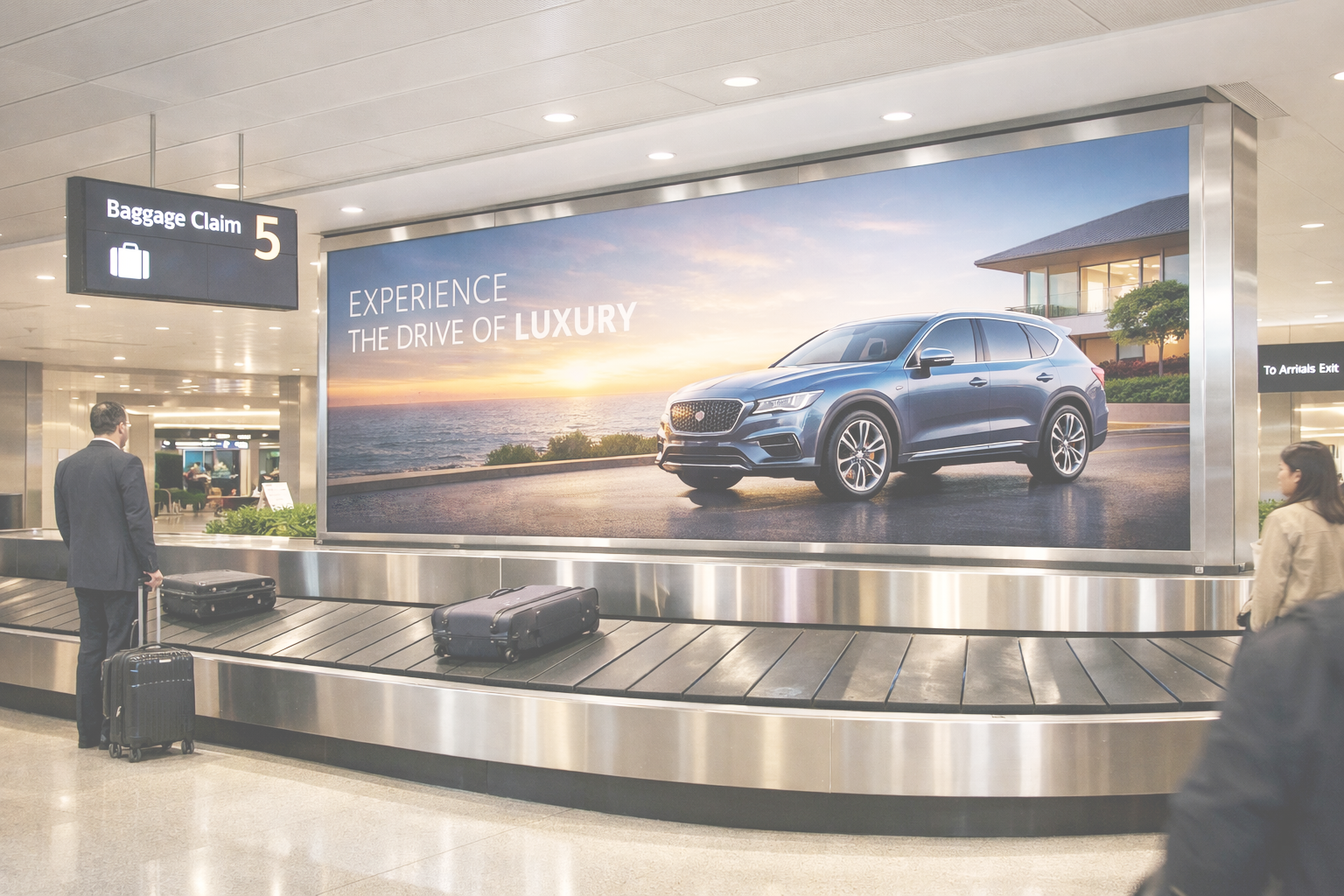
It’s Not Just Where You Advertise - It’s How Fast You Execute
We combine local insight with fast rollout to deliver results for you, now.
Talk to an ExpertAudience and Cultural Intelligence
Top 2 Languages:
- English: Dominant across business, engineering, academic, medical and leisure audiences. Iowa commercial culture is understated, practical and evidence-driven, and this catchment is unusually technically literate given its engineering, scientific and academic composition. Creative can and should be more substantive and data-forward here than in most markets, and promotional inflation reads poorly.
- Spanish: The clear second language, concentrated in the food and meat processing communities around Muscatine, West Liberty and Columbus Junction and increasingly in Cedar Rapids. Spanish-language creative is commercially warranted for automotive, telecom, remittance, insurance, retail and value travel categories.
Arabic, Hindi, Mandarin, Korean and several African and Southeast Asian languages are present at commercially meaningful levels through the university, the historic Lebanese and Syrian community and substantial resettled populations, and support remittance, telecom, halal food and international travel categories.
Major Traveller Nationalities:
The passenger base is predominantly domestic American, drawn from the Cedar Rapids and Iowa City Corridor and eastern Iowa. International travel from this catchment connects through Chicago, Minneapolis, Detroit, Dallas and Atlanta, giving worldwide access via three global alliances. The commercially important international ties run to Mexico and Central America through resettled and processing-industry communities, to India, China and Korea through the university and engineering base, to Lebanon and Syria through the historic community, and to Germany, the Czech Republic, Slovakia, Norway, Sweden and Ireland through heritage connections that sustain recurring premium tour and river cruise travel. Campaign creative should be built for a technically literate domestic American audience with Spanish-language and international academic layers.
Religion, Advertiser Intelligence:
Figures below are directional approximations for eastern Iowa rather than airport-level survey data.
- Mainline and evangelical Protestant traditions (approximately 45 to 50 percent combined): Lutheran, Methodist, Presbyterian and non-denominational congregations across the region, reflecting German, Scandinavian and British settlement heritage. Drives Christmas and Easter family travel, confirmation and graduation gifting cycles, church-organised group and mission travel, and charitable giving. Relevant to gifting, travel, insurance and legacy advertisers.
- Roman Catholicism (approximately 18 to 22 percent, considerably higher toward Dubuque): Strong across the Dubuque area and among Czech, Irish, German and Hispanic communities. Drives Christmas, Easter and family gathering travel, first communion and confirmation gifting, and pilgrimage and heritage travel to Central Europe and Ireland.
- Religiously unaffiliated (approximately 25 to 30 percent, notably higher in Iowa City): Concentrated in the university and professional population. Higher receptivity to experience, technology, sustainability and evidence-led positioning than to tradition-anchored messaging.
- Islam, Judaism and other faiths (small combined share but institutionally significant): Cedar Rapids holds one of the oldest continuous Muslim communities in the United States, and Iowa City has an established Jewish community centred on the university. Ramadan, Eid and the Jewish holiday calendar generate concentrated travel and gifting, and both communities support halal and kosher food, family travel and cultural categories with a depth disproportionate to their size.
Behavioral Insight:
Two characteristics should shape creative here. First, this is an unusually technical audience. Between the avionics engineering base, the academic medical centre, the research university and the process engineering of large-scale grain milling, a high proportion of passengers evaluate claims professionally for a living. Specifications, data, methodology and third-party validation persuade here in a way that aspirational language does not, and advertisers can safely be more detailed than airport convention suggests, provided the message still lands quickly. Second, wealth is agricultural and quiet. Eastern Iowa farmland is among the world's most valuable agricultural real estate, but the families who own it are conservative, discreet and deeply resistant to status signalling. Propositions built on prestige will underperform against those built on durability, service continuity and generational stewardship. Purchase decisions on high-value items are researched slowly and consulted within the family, then executed decisively, which rewards campaign duration over burst intensity.
Outbound Wealth and Investment Intelligence
The outbound passenger at CID is commercially distinctive because the dominant wealth structure in this catchment is land. Eastern Iowa farmland ranks among the most valuable agricultural real estate on earth, and a very large share of it is held by families in which the principal owner is now past retirement age. This produces a sustained, high-value and time-sensitive transfer of assets running through the region right now. Alongside it sit engineering and professional incomes, insurance and equipment finance compensation, and physician earnings from a large academic medical system. Capital deployment runs into additional farmland, into warm-climate second homes, and into portfolio and structuring decisions around succession.
Outbound Real Estate Investment:
The dominant destinations for property capital are Florida, principally Naples, Fort Myers, Sarasota, Marco Island and Tampa, and Arizona, principally the greater Phoenix, Scottsdale and Tucson markets. Texas and Nevada draw secondary interest, and closer to home the Minnesota and Wisconsin lake districts, Door County and the Missouri Ozarks attract substantial second-home activity. Within the region, capital rotates persistently into additional farmland, which functions as both an operating asset and a long-term store of value. Internationally, interest is modest and clusters on heritage-linked European travel and river cruising rather than on property. For international developers, the realistic proposition here is North American resort and retirement inventory rather than offshore product.
Outbound Education Investment:
Families here fund the Iowa public universities heavily, alongside Big Ten and selective private institutions across the Midwest and East. A nationally selective liberal arts college within the catchment adds a distinct high-income parent travel flow. Far more commercially interesting is the inbound direction: the Iowa City research university and academic medical centre draw substantial international student, faculty and patient travel, and the region's globally important educational assessment industry gives it a professional connection to education systems worldwide. Institutions marketing graduate, medical and professional programmes will find genuine demand in the May and August windows.
Outbound Wealth Migration and Residency:
The picture here has changed and advertisers should note it. Iowa has moved to a flat personal income tax rate of 3.8 percent as of 2025 and has phased out its inheritance tax, which materially weakens the historic tax rationale for retirees leaving the state. Outbound migration to Florida, Arizona and Texas continues, but it is now driven principally by climate and lifestyle rather than by taxation, and a meaningful share of households are choosing to retain Iowa domicile while wintering elsewhere. Demand for citizenship-by-investment, golden visa and international residency programmes is minimal and should not be a planning assumption. What matters instead is farm succession structuring, trust and estate planning, and the tax treatment of land transfer, which is immediate and substantial.
Strategic Implication for Advertisers:
Farm succession and estate specialists, farmland investment and management firms, trust and private banking providers, agricultural lenders, and Florida and Arizona resort and retirement developers are addressing an audience here at the exact convergence of land transfer, retirement and climate decisions. Masscom Global can activate simultaneously at CID and at the Florida, Arizona and Nevada airports where these households winter and buy, reaching the same family at both ends of the corridor.
Airport Infrastructure and Premium Indicators
Terminals:
- A single consolidated passenger terminal that completed a four-phase modernisation programme in autumn 2025, begun in 2014. The final phase opened on 3 March 2025, adding approximately 30,000 to 32,000 square feet and four additional gates with jet bridges, taking the terminal from nine to 13 gates. Single-terminal configuration means every passenger passes through the same circulation spine, delivering near-complete coverage from one footprint.
- The programme was originally estimated at 55 million dollars across all four phases and ultimately cost approximately 120 million dollars, with the final phase alone at around 68 million dollars, attributed to inflation, pandemic construction delays and upward revisions to passenger forecasts.
- The site covers approximately 3,300 acres with two runways, the primary at 8,600 feet of concrete and the secondary at 6,200 feet, located roughly seven miles southwest of downtown Cedar Rapids.
Premium Indicators:
- The new concourse extension was designed with genuine environmental quality in mind, including a second circular oculus admitting natural light with park-like seating and planting beneath it, expanded seating and power provision, a larger outdoor patio licensed for alcohol service, a sensory room for travellers who find airports overstimulating, and a pet relief area. This is a materially better-considered environment than passenger volume alone would predict, and it lifts the standing of brand messaging placed within it.
- Aircraft upgauging is a significant quality signal. The airport has noted that the 50-seat regional jets which once dominated the market are now largely absent, replaced by larger regional and mainline aircraft, which changes both passenger comfort expectations and the premium cabin availability on many departures.
- A new fixed base operator facility opened at the airport, supporting business and general aviation serving the Corridor's corporate, agricultural and academic medical audiences.
- An aviation workforce development campus launched in 2025 in partnership with two local colleges, delivering certified flight training and aviation management education. This gives the airport an institutional role beyond passenger handling and connects it to a national aviation labour shortage.
Forward-Looking Signal:
CID is in the strongest position in its history and the evidence is consistent rather than episodic. Passengers rose for a third consecutive year to over 1.6 million in 2025, roughly 20 percent above the pre-pandemic 2019 peak, with twelve consecutive record months announced in January 2026 and a twenty-third straight record month recorded that same month. Five carriers now serve 17 to 18 nonstop destinations, with Washington Reagan National, Miami and Fort Lauderdale added in 2023. A decade-long, 120 million dollar terminal modernisation completed in autumn 2025 with 13 gates, described by airport leadership as future-proofing the facility for the next thirty years. That combination, of confirmed capacity ahead of confirmed demand, means inventory value is set to rise against a fixed footprint. Masscom Global advises advertisers to secure position and multi-year rates now, while pricing still reflects the airport before the expansion was absorbed.
Airline and Route Intelligence
Top Airlines:
American Airlines, Delta Air Lines and United Airlines forming the legacy hub-feed core, with Allegiant Air and Frontier Airlines providing low-cost leisure service. Delta and United are the principal users of the four gates added in 2025.
Key International Routes:
CID operates no scheduled international passenger service. International travel from this catchment connects through Chicago, Minneapolis, Detroit, Dallas and Atlanta, giving access to destinations worldwide via three global alliances. Advertisers targeting internationally bound travellers, including the university's international academic community and the region's heritage travel market, reach them here at origin before hub-level competition begins.
Domestic Connectivity:
Nonstop service to 17 to 18 domestic destinations. Core hub markets include Chicago, Minneapolis, Denver, Dallas, Atlanta, Detroit and Charlotte, alongside Washington Reagan National added in 2023. Leisure markets include Orlando, Tampa, Fort Myers, Phoenix, Las Vegas, Miami and Fort Lauderdale, the latter two added in 2023 and also serving cruise connections. Verified current frequencies by route are not available.
Wealth Corridor Signal:
The route map splits into three clear commercial functions. Chicago, Minneapolis, Denver, Dallas, Atlanta, Detroit and Charlotte are the corporate, engineering and connection corridors carrying avionics, processing, insurance and academic medical travellers plus internationally bound passengers, and they are where aerospace, industrial and financial B2B spend belongs. Washington Reagan National is the aerospace programme, regulatory and federal affairs corridor, unusually valuable given the local defence and avionics content. Florida, Arizona and Nevada are second-home, retirement and cruise corridors carrying households in the middle of climate and succession decisions, and they are where property, wealth advisory and premium consumer spend belongs. The 2023 addition of Miami and Fort Lauderdale alongside Washington is the clearest indication of how deliberately this network has been built around both the region's industrial and its retirement economies.
Media Environment at the Airport
- Single-terminal configuration means full-journey coverage across over 1.6 million passengers is achievable from one 13-gate footprint, at a fraction of Chicago or Minneapolis pricing while reaching a more technically senior and more asset-rich audience per impression.
- Advertising clutter is materially lower than at the Midwestern hub airports. A well-placed campaign at CID achieves standout and recall that would demand premium spectacular positioning at O'Hare.
- Dwell time benefits from the newly completed concourse, which was designed with natural light, expanded seating, power provision and a licensed patio precisely to encourage passengers to arrive early and remain in the departures environment. Peak spring break and football weekends concentrate volume sharply against that fixed space.
- Masscom Global provides advertisers with inventory access, placement precision mapped to individual route flows, and execution capability at an airport where local relationship depth determines availability as growth outpaces inventory. We separate the hub and Washington business corridors from the Florida, Arizona and Nevada leisure and retirement flows, so aerospace, industrial, wealth advisory and consumer creative each reach their intended audience.
Strategic Advertising Fit
Best Fit:
- Aerospace, avionics and defence electronics B2B: The most contextually aligned category at this airport, addressing engineering leadership and technical procurement in a globally significant cluster.
- Food, grain and agricultural processing equipment and technology: One of the world's densest concentrations of corn wet-milling and cereal manufacturing, with plant and procurement authority in this terminal.
- Farm succession, estate planning and farmland investment advisory: Eastern Iowa farmland is among the most valuable agricultural real estate on earth and is in the middle of a generational transfer.
- Academic medicine, healthcare systems and medical technology: A comprehensive academic medical centre serving a multi-state referral area, with executive, clinical and research travellers and substantial patient-family travel.
- Higher education, graduate and professional programmes: A major research university, a nationally selective liberal arts college and a globally important educational assessment industry.
- Commercial insurance, retirement services and equipment finance: A substantial local sector plus capital-intensive agricultural and industrial businesses with continuous financing needs.
- Florida and Arizona resort, retirement and second-home real estate: Well-documented outbound buying behaviour, confirmed directly by the airport's own route network.
- Premium automotive, pickup trucks and agricultural equipment: High ownership and replacement rates across engineering, professional and farming households.
Brand Alignment at a Glance:
| Category | Fit |
|---|---|
| Aerospace, avionics and defence B2B | Exceptional |
| Food, grain and processing technology | Exceptional |
| Farm succession, estate and farmland advisory | Strong |
| Academic medicine and medical technology | Strong |
| Higher education and professional programmes | Strong |
| Florida and Arizona resort and retirement property | Strong |
| Premium automotive and agricultural equipment | Moderate |
| Ultra-luxury fashion, haute joaillerie and yachting | Poor fit |
Who Should Not Advertise Here:
- Ultra-luxury fashion, haute joaillerie and yachting: The catchment holds genuine asset wealth but expresses it through land, equipment and quiet accumulation rather than through luxury consumption, and there is no international luxury transit flow. These budgets belong at Chicago O'Hare, which the dataset rates Ultra.
- International residency and citizenship-by-investment programmes: Iowa's move to a flat 3.8 percent income tax and the elimination of its inheritance tax have weakened even the domestic tax-migration case, and demand for international residency products is close to absent.
- Status-led creative in any premium category: The categories frequently fit but the execution does not. Iowa farm and engineering wealth is deliberately discreet, and campaigns built on prestige signalling underperform against those built on durability, data and generational continuity.
Event and Seasonality Analysis
- Event Strength: High
- Seasonality Strength: Medium
- Traffic Pattern: Stable business base with spring break and autumn event peaks
Strategic Implication:
This airport supports genuine annual campaigns, because the avionics, processing, insurance and academic medical base sustains meaningful traffic in every month, which most airports of this size cannot claim. Advertisers should commit to twelve-month positions to build frequency against a repeat-travelling professional audience, then add weight in three windows. March delivers the airport's peak volume around spring break, favouring consumer, travel, financial and property categories. September to November combines football season, harvest-period agricultural travel and fiscal-year-start corporate activity, the densest business and event overlap of the year. May to August carries graduation, summer leisure and the cross-state cycling event. In presidential election years, January adds the Iowa caucuses and a national campaign and media audience unavailable at most comparable airports. Masscom structures campaigns around exactly that rhythm.

Poor Placement and Delays Affect Airport Campaigns
We help you move faster, access better inventory, and get it right now.
Talk to an ExpertFinal Strategic Verdict
The Eastern Iowa Airport delivers more technical and institutional seniority per impression than almost any airport of its size in the United States. It carried over 1.6 million passengers in 2025, a third consecutive record and roughly 20 percent above its pre-pandemic peak, with twelve consecutive record months and a newly completed 13-gate terminal delivered through a decade-long, 120 million dollar modernisation. Behind that modest volume sits a globally significant avionics and aerospace electronics cluster, one of the world's largest concentrations of corn wet-milling and cereal manufacturing, the state's only comprehensive academic medical centre, a globally important educational assessment industry, and farmland among the most valuable on earth now moving between generations. Aerospace and industrial technology suppliers, processing equipment and automation providers, farm succession and estate specialists, farmland investment managers, academic medical and medical technology brands, universities, insurers and equipment lenders, and Florida and Arizona resort developers will all find their audience here at a fraction of O'Hare pricing. Ultra-luxury consumer categories and status-led creative should look elsewhere. With confirmed capacity now ahead of confirmed demand, current pricing reflects the airport before the expansion was absorbed, and Masscom Global is the partner positioned to secure inventory, timing and placement precision before that gap closes.
About Masscom Global
Masscom Global is a premium international airport advertising and media buying agency operating across 140 countries. With deep expertise in airport OOH, premium publications, and high-net-worth audience targeting, Masscom helps brands reach the world's most valuable travellers at the moments that matter most. For advertising packages, media rates, and campaign planning at The Eastern Iowa Airport and airports across the globe, contact Masscom Global today.
Frequently Asked Questions
How much does airport advertising cost at The Eastern Iowa Airport?
Cost at CID varies by format, terminal position, campaign duration and seasonal demand. Positions covering the new concourse and gate environment command premiums during the March spring break peak and the September to November football and harvest overlap. Because the airport has now recorded twelve consecutive record months against a newly fixed 13-gate footprint, availability is tightening and annual commitments increasingly secure both better rates and better position. Contact Masscom Global for current rates and availability.
Who are the passengers at The Eastern Iowa Airport?
Four principal groups. Avionics and aerospace engineering professionals from the Cedar Rapids cluster, travelling to Chicago, Denver, Dallas and Washington on programme and supplier business. Grain processing, food manufacturing and agricultural equipment decision-makers. Academic medical, university faculty, research and educational assessment travellers from Iowa City, plus substantial inbound parent, patient and conference travel. And farmland-owning families and retirees departing for Florida, Arizona and Nevada.
Is The Eastern Iowa Airport good for luxury brand advertising?
For premium categories aligned to this audience, yes. Premium automotive, private wealth advisory, private education, business aviation and high-value agricultural equipment all convert well with an asset-rich, technically literate population. For ultra-luxury fashion, fine jewellery and yachting, no. Iowa farm and engineering wealth is deliberately discreet, there is no international luxury transit flow, and status-led creative actively underperforms here. Category and creative register matter more than budget.
What is the best airport in Iowa to reach HNWI audiences?
Des Moines is the state's largest airport and its insurance and financial services capital, making it the anchor for a statewide consumer or financial campaign. Cedar Rapids delivers the highest concentration of aerospace engineering, food processing and academic medical decision-makers, plus the eastern Iowa farmland asset base. For broader Midwest wealth reach, Chicago O'Hare sits at the top tier. Masscom recommends Chicago for reach, Des Moines for statewide financial audiences and CID for technical and agricultural precision.
What is the best time to advertise at The Eastern Iowa Airport?
Because the business base sustains traffic year-round, annual campaigns outperform short bursts. Within that, March delivers peak volume around spring break, with the airport's busiest single days of the year. September to November combines football season, harvest-period agricultural business travel and fiscal-year-start corporate activity. May to August carries graduation and summer leisure. In presidential election years, January brings the Iowa caucuses and a concentrated national campaign and media audience.
Can international real estate developers advertise at The Eastern Iowa Airport?
The stronger proposition is North American rather than offshore. This audience buys in Naples, Fort Myers, Sarasota, Marco Island and Tampa, in the greater Phoenix, Scottsdale and Tucson markets, in Texas and Nevada, and closer to home in the Minnesota and Wisconsin lake districts and the Missouri Ozarks. Within the region, capital rotates persistently into additional farmland. Developers with Florida, Arizona or resort inventory will find real intent, while long-haul offshore product will not.
Which brands should not advertise at The Eastern Iowa Airport?
Ultra-luxury fashion, haute joaillerie and yachting, because wealth here is expressed through land and equipment rather than luxury consumption. International residency and citizenship-by-investment programmes, given Iowa's flat 3.8 percent income tax and eliminated inheritance tax leave little for them to solve. And status-led creative in any premium category, which underperforms against durability, data and stewardship framing with this audience.
How does Masscom Global help brands advertise at The Eastern Iowa Airport?
Masscom Global delivers the full sequence: audience and catchment intelligence specific to the Corridor's avionics, grain processing, academic medical and farmland economies, inventory access and placement precision mapped to individual route flows, campaign timing structured around the spring break peak, the autumn football and harvest overlap and the four-year caucus cycle, and execution management through to performance reporting. Operating across 140 countries, we can activate CID alongside Chicago, Minneapolis and the Florida, Arizona and Nevada markets where this audience winters and buys, reaching the same family and the same decision-maker at both ends of the corridor. Book a fifteen-minute planning call to review current availability and rates.