


Airport at a Glance
| Field | Detail |
|---|---|
| Airport | Campo Grande International Airport |
| IATA Code | CGR |
| Country | Brazil |
| City | Campo Grande, Mato Grosso do Sul State |
| Annual Passengers | Approximately 900,000 |
| Primary Audience | Agribusiness executives, cattle and soy landowners, Pantanal eco-tourists, food processing professionals |
| Peak Advertising Season | April to July, November to January |
| Audience Tier | Medium-High |
| Best Fit Categories | Agribusiness B2B, financial services, real estate, Pantanal eco-tourism, consumer goods |
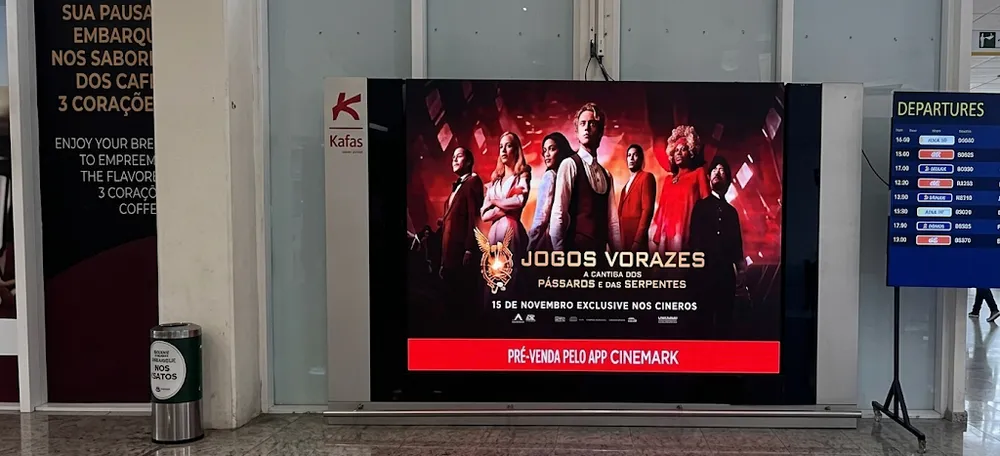
Campo Grande International Airport serves the capital of Mato Grosso do Sul, a state whose agricultural output, livestock wealth, and Pantanal eco-tourism credentials make it one of Brazil's most commercially significant yet systematically underserved advertising markets. The airport's 900,000 annual passengers are not defined by urban consumer demographics; they are defined by the extraordinary concentration of landowners, agribusiness executives, food processing professionals, and eco-tourism operators whose economic activity shapes one of the most productive agricultural landscapes on the planet. For advertisers who understand that Brazil's wealth does not end at São Paulo's ring road, CGR offers concentrated access to a purchasing-capable audience that national campaigns routinely fail to reach.
The structural commercial case for Campo Grande rests on Mato Grosso do Sul's role as one of Brazil's premier beef and grain exporting states. JBS, Minerva Foods, and Marfrig, three of the world's largest protein processing companies, have major operations in the state, anchoring a professional executive and management class whose income levels, corporate travel frequency, and purchasing sophistication are globally calibrated. The fazendeiro class, the large-scale landowners managing thousands of hectares of cattle pasture and soy plantations, represents a land-asset wealth base whose consumer spending, real estate investment, and financial product purchasing patterns are consistent with a premium advertising audience even when their metropolitan visibility is low. At CGR, these two segments share the terminal with Pantanal eco-tourists from Europe, North America, and Japan whose bucket-list wildlife travel commitments place them at the upper end of leisure spending globally.
Advertising Value Snapshot
- Passenger scale: Approximately 900,000 annual passengers, underpinned by consistent agribusiness professional travel, government and institutional connectivity, and seasonal Pantanal eco-tourism peaks
- Traveller type: Agribusiness executives and rural landowners, food processing industry professionals, Pantanal eco-tourists, government officials, Japanese-Brazilian commercial professionals
- Airport classification: Tier 2, the dominant commercial gateway for Brazil's central-west cattle and soy production corridor
- Commercial positioning: The primary air access point for one of South America's most productive agricultural states and the world's largest tropical wetland destination
- Wealth corridor signal: CGR anchors the Mato Grosso do Sul agricultural export corridor connecting Brazil's central-west farming heartland to São Paulo's financial markets and international protein commodity networks
- Advertising opportunity: Masscom Global provides brands with direct access to CGR's inventory in an environment where agricultural wealth and eco-tourism premium converge, and where premium brand advertising competes against minimal commercial clutter for a high-value and underserved audience.
Airport Advertising is Complex to Get Right
We help you execute faster, with proven results and local insight most planners lack starting now.
Talk to an ExpertCatchment Area and Economic Drivers
Top 10 Cities within 150 km — Marketer Intelligence
- Terenos, MS: An agricultural municipality immediately west of Campo Grande whose cattle ranching and grain farming families form part of the Greater Campo Grande agribusiness ownership class; rural financial products, agricultural equipment, and insurance brands find asset-holding landowners with consistent travel to the capital for commercial services.
- Sidrolândia, MS: A significant soy and cattle municipality south of Campo Grande whose agribusiness entrepreneurs manage operations at commercial scale; agribusiness technology, crop insurance, and rural credit brands find commercially active producers whose purchasing decisions affect multi-million real operations.
- Ribas do Rio Pardo, MS: A eucalyptus plantation and cattle municipality east of Campo Grande with a growing cellulose and timber sector whose business owners travel to the capital for financial and market services; forestry investment, agri-finance, and B2B logistics brands find relevant commercial professionals here.
- Dois Irmãos do Buriti, MS: A livestock and small-scale agriculture municipality west of Campo Grande whose rural business owners travel regularly for government services and financial access; rural banking, insurance, and consumer goods brands find an agricultural family audience with consistent commercial needs.
- Bandeirantes, MS: A commercial and livestock municipality north of Campo Grande whose ranching families and agricultural service businesses travel to the capital for procurement and financial engagement; practical B2B agricultural services and financial products find relevant business-owning professionals here.
- Rochedo, MS: A small ranching municipality in the Campo Grande catchment whose land-owning families represent the conservative agricultural wealth base of Mato Grosso do Sul's interior; rural financial and insurance products serving the traditional fazendeiro class find authentic audience access among Rochedo travellers.
- Maracaju, MS: One of Mato Grosso do Sul's most productive soy and corn municipalities, with an agribusiness ownership class managing grain operations of national commercial significance; agribusiness technology, commodity finance, and rural real estate brands find high-value landowner professionals traveling through CGR.
- Aquidauana, MS: The principal entry point to the southern Pantanal, anchoring both a ranching economy and a growing eco-tourism infrastructure whose operators connect to Campo Grande for logistics and professional services; Pantanal eco-lodge brands, outdoor lifestyle products, and agricultural finance brands find a dual business and tourism audience here.
- Nioaque, MS: A traditional cattle ranching municipality in the Pantanal border zone whose landowners manage properties straddling commercial agriculture and Pantanal wetland environments; sustainable agriculture and rural real estate brands find land-asset-rich professionals with growing eco-economy awareness among Nioaque travellers.
- Rio Verde de Mato Grosso, MS: A livestock and commercial municipality north of Campo Grande whose ranching and small commercial business owners access state capital services through CGR; rural financial products, insurance, and consumer goods brands find consistent audience alignment with the Rio Verde professional agricultural community.
NRI and Diaspora Intelligence
Campo Grande carries one of the most commercially distinctive diaspora profiles of any Brazilian regional airport. The Japanese-Brazilian community in Campo Grande is one of the largest concentrations outside São Paulo and Paraná, with families descended from early to mid twentieth-century agricultural immigration maintaining strong cultural, commercial, and familial connections to Japan. This community generates regular outbound travel to Japan for family visits, cultural events, and commercial partnerships, and its members are professionally educated, community-oriented, and deeply brand-loyal to products that demonstrate quality and cultural sensitivity. For advertisers, the Japanese-Brazilian professional and business-owning community in Campo Grande represents a premium audience segment whose spending behaviour, educational investment patterns, and financial planning habits are aligned with the most commercially valuable advertiser categories. The community's combination of Japanese quality standards and Brazilian entrepreneurial energy creates a distinctive purchasing personality that rewards brands demonstrating genuine cultural awareness.
Economic Importance
Mato Grosso do Sul's economy is defined by agricultural production at industrial scale, and that production defines the commercial profile of CGR's passenger base in ways that urban-focused advertising planners consistently underestimate. The state is one of Brazil's top producers of soybeans, corn, sugarcane, and beef, contributing to export chains that connect Brazilian farmland to China, Japan, the European Union, and the United States. The food processing operations of JBS, Minerva Foods, and Marfrig in Mato Grosso do Sul generate an executive and professional management class whose income levels, corporate travel patterns, and purchasing authority are governed by global commodity market dynamics rather than regional consumer economics. Alongside this industrial agriculture base, the Pantanal's growing international profile as a world-class eco-tourism destination is generating a hospitality and eco-tourism entrepreneurship class whose commercial sophistication and international connectivity are increasing year on year. For advertisers, this combination produces a CGR audience whose purchasing decisions span agricultural equipment, corporate financial services, international education, and premium eco-tourism lifestyle categories simultaneously.
Business and Industrial Ecosystem
- Livestock and beef processing (JBS, Minerva Foods, Marfrig): Mato Grosso do Sul is one of Brazil's top beef exporting states, and the executives managing its major protein processing plants travel regularly through CGR for corporate headquarters engagement in São Paulo and Brasília; agribusiness technology, cold chain logistics, and B2B enterprise services brands find procurement-level decision-makers with global commercial authority at CGR.
- Soybean and grain agribusiness: Large-scale soy and corn producers managing thousands of hectares of cultivated farmland are among the most financially active members of the CGR traveller base; agribusiness input suppliers, commodity trading platforms, rural credit institutions, and agricultural insurance brands find high-value landowners whose purchasing decisions affect multi-million real operations each planting season.
- Sugar and ethanol production: A growing sugarcane and bioenergy sector in Mato Grosso do Sul is generating industrial plant executives and energy sector professionals whose travel through CGR reflects the state's diversification beyond traditional beef and grain; bioenergy technology, industrial finance, and sustainability-aligned energy brands find a growing executive audience.
- Pantanal eco-tourism and hospitality: A burgeoning premium eco-tourism sector operating across the world's largest tropical wetland, employing hospitality professionals and lodge operators who travel nationally and internationally for procurement, training, and tourism partnership development; eco-tourism technology platforms, premium hospitality brands, and sustainability services find natural alignment with the Pantanal operator community.
- Border trade and logistics (Bolivia and Paraguay corridors): Campo Grande's proximity to Bolivia and Paraguay creates a commercial border trade ecosystem whose logistics, customs, and import-export professionals travel regularly through CGR for business engagement; trade finance, logistics technology, and customs services brands serving the Brazil-Bolivia-Paraguay corridor find commercially active professionals among CGR's business traveller base.
Passenger Intent — Business Segment
The business traveller at CGR is primarily an agribusiness operator or food processing executive making regular corporate journeys between Mato Grosso do Sul and São Paulo, Brasília, or international headquarters of multinational protein companies. Their in-airport behaviour is time-conscious and commercially focused, making them receptive to credibility-first messaging that demonstrates understanding of their industry environment. Agribusiness technology platforms, rural financial institutions, enterprise logistics services, and premium executive lifestyle brands that signal sector familiarity achieve the strongest response from this professionally purposeful traveller.
Strategic Insight
The CGR business audience is commercially significant not primarily because of its corporate scale but because of its land asset concentration. Mato Grosso do Sul's fazendeiro class manages some of Brazil's most productive farmland, and their accumulated land wealth creates a financial planning, real estate investment, and succession management audience whose purchasing authority over premium financial products, real estate platforms, and estate planning services is substantial. For financial institutions, agribusiness technology companies, and wealth management platforms targeting Brazil's agricultural landowner class, CGR provides concentrated access that no São Paulo or Rio de Janeiro airport campaign can replicate, because this audience is only physically captive in the terminal when they are traveling, and their primary travel gateway is Campo Grande.
Tourism and Premium Travel Drivers
- Pantanal, Mato Grosso do Sul (accessible from Campo Grande via Aquidauana and Miranda corridors): The world's largest tropical wetland, spanning approximately 150,000 square kilometres, is the single most important eco-tourism draw connected to CGR; jaguar tracking, giant river otter observation, caiman watching, and bird photography tourism from Europe, North America, and Japan generate inbound premium travellers whose per-trip expenditure on eco-lodges, guides, and experiences places them among the highest-spending leisure visitors of any Brazilian destination.
- Bonito, Mato Grosso do Sul (approximately 290 km south, accessible via CGR): Brazil's most celebrated eco-tourism destination for crystal-clear river snorkelling, cave diving, and transparent natural pool swimming; Bonito's premium domestic and international eco-tourism audience accesses the region through CGR, and their above-average discretionary leisure budgets make them receptive to premium lifestyle and travel brand messaging in the terminal.
- Piraputanga, MS (approximately 120 km west): A scenic river tourism area near Aquidauana whose growing eco-adventure tourism infrastructure draws domestic leisure visitors whose outdoor recreation spending patterns align with lifestyle, outdoor equipment, and travel accessory brands.
- Campo Grande's Japanese-Brazilian Cultural Heritage: The city's Japanese-Brazilian community has created a distinctive cultural tourism draw, including the Liberdade neighbourhood equivalent of Oriental markets, Japanese cultural festivals, and authentic Japanese-Brazilian cuisine that draws cultural tourism visitors from across Brazil with spending patterns oriented toward premium food, cultural experiences, and artisan goods.
Passenger Intent — Tourism Segment
The inbound eco-tourist arriving at CGR for the Pantanal or Bonito has made a high-commitment experiential purchase, typically booking premium eco-lodges at daily rates that exceed those of five-star urban hotels in Brazil. This traveller has researched their destination extensively and arrives with both financial commitment and heightened experience-readiness that makes them exceptionally receptive to premium lifestyle, outdoor, and sustainability brand messaging in the terminal. Departing eco-tourists carry the transformational impact of jaguar sightings, river snorkelling, and wetland immersion, creating a post-experience emotional state where aspirational brand association is at its peak. For advertisers, the Pantanal eco-tourist at CGR is one of the highest-quality leisure audience contacts available at any Brazilian regional airport.
Travel Patterns and Seasonality
Peak seasons:
- April to July: The dry season transition and Pantanal peak wildlife season, when water levels drop to concentrate wildlife and eco-tourism demand is at its highest; this is the primary window for eco-tourism, outdoor lifestyle, and premium travel brand advertising targeting the international and domestic eco-tourist at their moment of maximum Amazon excitement.
- November to January: The Brazilian summer holiday and school vacation period drives domestic leisure travel, and the festive season generates interprovincial family travel; consumer goods, family finance, and domestic travel brands find their broadest domestic leisure audience concentration during this window.
- March (Carnival): A national holiday producing strong leisure travel departures from CGR; lifestyle, entertainment, and consumer brand advertisers find a celebratory-spending audience in the pre-Carnival departure window.
Event-Driven Movement
- Pantanal Peak Wildlife Season (May to September): The annual Pantanal dry season concentrates jaguars, giant otters, tapirs, and over 650 bird species along accessible riverbanks and lodge corridors, driving peak international eco-tourism arrivals through CGR; premium eco-lodge operators, wildlife tour companies, and international outdoor lifestyle brands find their most commercially motivated audience during this window.
- Festa das Nações, Campo Grande (November): One of Brazil's largest multicultural food and culture festivals, celebrating Campo Grande's extraordinary ethnic diversity including its Japanese, Lebanese, Arab, Italian, and indigenous communities; the festival draws domestic cultural tourism from across Brazil and produces an inbound leisure audience with strong food, culture, and lifestyle spending orientation.
- Japanese Cultural Festival, Campo Grande (June to July): One of Brazil's most significant Japanese cultural celebrations outside São Paulo, drawing Japanese-Brazilian visitors from across the country and reflecting the deep Japanese cultural investment in Campo Grande's identity; Japanese-Brazilian family travellers with strong brand loyalty to quality and cultural authenticity are concentrated at CGR during this period.
- Pantanal Fashion Week and Agronegócio Events (year-round, seasonal): Campo Grande hosts a calendar of agribusiness trade events, rural technology fairs, and sector conferences that generate consistent B2B professional travel through CGR; agricultural technology, financial services, and enterprise platform brands find conference-motivated procurement professionals in the terminal during these event windows.
- New Year and Summer Holidays (December to January): Brazil's school summer holiday period produces the domestic consumer surge at CGR, when families from São Paulo and other major centres travel to Mato Grosso do Sul for Pantanal experiences and family visits; consumer electronics, family financial products, and domestic travel brands find peak family audience access.
It’s Not Just Where You Advertise - It’s How Fast You Execute
We combine local insight with fast rollout to deliver results for you, now.
Talk to an ExpertAudience and Cultural Intelligence
Top 2 Languages
- Portuguese: The working language of all commercial, agricultural, and government activity in the CGR catchment; professional Brazilian Portuguese campaigns are non-negotiable for any brand targeting the agribusiness professional, the government sector, and the domestic tourism audience that collectively define CGR's passenger base.
- Japanese: Commercially significant at CGR in a way that is unique among Brazilian regional airports; Campo Grande's large Japanese-Brazilian community maintains active Japanese language media, business, and cultural networks whose members respond to Japanese language brand signals as markers of quality and cultural respect, making Japanese language elements in campaign creative a powerful trust-building signal for brands targeting this community.
Major Traveller Nationalities
The dominant traveller nationality at CGR is Brazilian, with a regional composition that includes Mato Grosso do Sul's agricultural landowners, food processing professionals, government officials, and service sector professionals. The Japanese-Brazilian community contributes a distinct and commercially premium sub-group with above-average educational attainment and strong international travel patterns toward Japan for family visits, cultural engagement, and business connections. International eco-tourists from Germany, the Netherlands, France, the United Kingdom, Japan, and the United States represent the premium inbound international segment, arriving for Pantanal wildlife tourism and Bonito eco-adventures with committed high per-trip expenditure. A Bolivian and Paraguayan commercial traveller segment reflects the border trade dynamics that make Campo Grande a regional hub for central South American commerce.
Religion — Advertiser Intelligence
- Roman Catholic (approximately 52%): The dominant religious community of Mato Grosso do Sul drives Christmas, Easter, and patron saint festival travel patterns that create predictable consumer spending surges; family-oriented consumer goods, home brands, and financial products aligned with family protection and community values find consistent seasonal audience alignment at CGR.
- Evangelical Protestant (approximately 35%): A large and commercially active Evangelical community whose aspiration-driven spending patterns and family-focused consumer behaviour produce strong alignment for financial services, consumer technology, health, and education brands; the Evangelical professional class in Campo Grande is a growing segment of CGR's business traveller base.
- Buddhist and Shinto traditions (approximately 5%, concentrated in the Japanese-Brazilian community): A culturally significant religious minority whose festival calendar, including Obon in August and New Year observances, generates identifiable travel patterns; premium Japanese-origin consumer brands, quality lifestyle products, and cultural experience advertisers find authentic audience access through this community.
Behavioral Insight
The CGR audience reflects the behavioural intersection of Brazilian agribusiness conservatism and Japanese-Brazilian quality orientation. The fazendeiro class makes brand decisions through a lens of proven performance, community validation, and generational reliability; they do not respond to flashy aspirational positioning but are deeply loyal to brands that have demonstrated value within their sector community over time. The Japanese-Brazilian professional is brand-precise and quality-driven, evaluating products against standards of craftsmanship and reliability that reflect the cultural values of their heritage community. The international eco-tourist is globally sophisticated, sustainability-aware, and oriented toward authentic premium experiences. For advertisers, the most effective creative at CGR combines quality-first messaging with sector-specific credibility, delivered in professional Portuguese with cultural sensitivity to the Japanese-Brazilian and rural agricultural identity that makes Campo Grande unique among Brazilian cities.
Outbound Wealth and Investment Intelligence
The outbound passenger at CGR is deploying capital shaped by agricultural land wealth, food processing corporate income, and border trade entrepreneurship. Mato Grosso do Sul's fazendeiro class manages generational land assets whose value has appreciated dramatically with Brazilian agricultural commodity cycles, and they are actively deploying that appreciation into urban real estate diversification, premium private education for their children, and financial products that protect multi-generational family wealth. The Japanese-Brazilian community generates consistent outbound investment toward Japan for family asset management, cultural tourism, and educational placements. Food processing executives at JBS and Minerva subsidiaries travel to São Paulo and internationally for corporate headquarters engagement and financial planning at income levels that produce consistent premium financial product and real estate purchasing behaviour.
Outbound Real Estate Investment
The primary outbound real estate markets for CGR's HNI audience are São Paulo and Campo Grande itself, where agricultural landowners purchase urban investment properties as diversification against commodity cycle volatility. Brasília is a secondary market for government professionals seeking capital city investment properties. A growing segment of Campo Grande's Japanese-Brazilian professional class is investing in real estate in Japan, particularly in Tokyo's residential and mixed-use markets, leveraging cultural familiarity and Japan's currency dynamics to build cross-border asset portfolios. São Paulo residential and commercial property developers, Campo Grande urban developers, and Japanese real estate investment platforms serving Brazilian buyers will find a commercially motivated buyer audience at CGR that is substantially underserved by competing property advertising.
Outbound Education Investment
Mato Grosso do Sul's professional class is investing significantly in tertiary education, with the Universidade Federal de Mato Grosso do Sul serving the domestic foundation and the Universidade de São Paulo, Fundação Getulio Vargas, and Universidade Estadual de Campinas attracting the children of wealthier families for postgraduate and professional education. The Japanese-Brazilian community has a strong tradition of investment in Japanese university education, with placements at Japanese institutions serving as both academic and cultural heritage investment for families maintaining dual cultural identity. US and European university placements are a growing category for the most internationally connected segment of Campo Grande's agricultural and commercial professional class. Education consultancies, Japanese and US universities with Brazilian recruitment programmes, and student financial services providers find a commercially motivated family audience at CGR whose educational investment ambitions are above the Brazilian regional average.
Outbound Wealth Migration and Residency
Portugal's residency programmes are relevant to Campo Grande's wealthier professional class, driven by cultural and linguistic alignment and EU access. Japan's residency frameworks are uniquely relevant to Campo Grande's Japanese-Brazilian community, a segment that is more likely to pursue Japanese residency or dual citizenship than any comparable community at another Brazilian regional airport. For wealth management platforms and residency programme operators, CGR represents a commercially underserved access point for two distinct but premium residency-seeking audience profiles simultaneously.
Strategic Implication for Advertisers
International brands serving real estate investment, Japanese cultural and financial products, higher education, and wealth diversification markets should treat CGR as a strategic access point for Brazil's agribusiness landowner class and Japanese-Brazilian professional community simultaneously. No other Brazilian regional airport combines these two commercially distinctive audience profiles in a single terminal environment. Masscom Global activates campaigns at CGR and at the São Paulo airports that Campo Grande professionals travel to, enabling brands to intercept the same high-value agricultural and Japanese-Brazilian audience across the full arc of their commercial and investment journeys.
Airport Infrastructure and Premium Indicators
Terminals
Campo Grande International Airport operates a single terminal building handling both domestic and international operations, serving the full scope of CGR's passenger base within a compact, well-defined commercial environment. The terminal has undergone infrastructure improvements consistent with the airport's status as the primary gateway for one of Brazil's most commercially productive agricultural states. Domestic operations to São Paulo, Brasília, Curitiba, and regional Mato Grosso do Sul destinations carry the majority of passenger volume, while international operations serve the seasonal eco-tourism connectivity needs of foreign visitors accessing the Pantanal and Bonito.
Premium Indicators
- The terminal's compact single-facility format concentrates all passenger dwell time in a defined advertising environment, ensuring that placements achieve repeated exposure across the full passenger journey without the fragmentation that characterises multi-terminal Brazilian hub airports.
- The presence of JBS, Minerva Foods, and Marfrig subsidiary executives in CGR's regular business traveller base elevates the per-passenger income and corporate authority profile significantly above what the city's population size alone would imply.
- The international eco-tourism audience accessing the Pantanal through CGR brings per-trip spending commitments that place individual visitors among the highest-spending leisure travellers of any Brazilian regional airport catchment, elevating the commercial value of every impression delivered in the terminal during peak eco-tourism season.
- Campo Grande's growing status as Brazil's agribusiness technology and rural innovation conference hub generates regular professional event travel that concentrates procurement-capable executives in the terminal during event windows throughout the year.
Forward-Looking Signal
Mato Grosso do Sul's agricultural and eco-tourism trajectories are both pointing upward in ways that will compound the commercial value of CGR over the next decade. Brazil's agricultural export growth, driven by Chinese and Asian demand for protein and grain, continues to generate new wealth in the state's farming and processing sectors, producing a growing professional class whose airport travel frequency and purchasing power are increasing with commodity cycle tailwinds. The Pantanal's international profile as a biodiversity conservation priority has been elevated by global climate awareness, driving sustained growth in premium eco-tourism arrivals from Europe, North America, and Japan that were not present at current volumes five years ago. Advertisers who establish brand presence at CGR now, while competitive advertising inventory costs remain at pre-growth levels, are investing in a compounding growth trajectory that is being driven by global agricultural commodity dynamics and worldwide eco-tourism demand rather than local economic conditions alone. Masscom Global advises clients to prioritise CGR within their Brazil regional portfolio ahead of the competitive recognition that these growth signals will eventually attract.
Airline and Route Intelligence
Top Airlines
- LATAM Brasil
- Gol Linhas Aéreas
- Azul Brazilian Airlines
Key International Routes
- International connectivity at CGR operates primarily through connections at São Paulo's Guarulhos (GRU) and Viracopos (VCP) airports, reflecting the airport's role as a domestic-first gateway whose international audience accesses global routes through Brazil's hub network rather than through direct international services from Campo Grande
Domestic Connectivity
- São Paulo (GRU and CGH/VCP): The dominant domestic artery carrying agribusiness executives, food processing professionals, and government officials between Campo Grande and Brazil's financial and commercial capital on multiple daily services
- Brasília (BSB): Government and regulatory connectivity for federal officials and institutional professionals managing Mato Grosso do Sul's policy and agricultural regulatory environment
- Curitiba (CWB): A southern Brazil commercial connection serving agricultural supply chain, food processing, and commercial professionals with business relationships in Paraná's agribusiness and industrial economy
- Bonito (BYO) and Corumbá (CMG): Regional Mato Grosso do Sul connections serving the Pantanal eco-tourism corridor and linking Campo Grande to the state's key eco-tourism and border trade destinations
Wealth Corridor Signal
The São Paulo corridor is the definitive wealth signal at CGR. It carries the agricultural landowner class between Brazil's most productive cattle and soy state and the financial infrastructure of South America's largest commercial city on a daily basis. For advertisers, this corridor confirms that CGR's most commercially valuable outbound passenger is moving capital between agricultural land wealth and São Paulo's financial markets, real estate, and premium education sector on a consistent and predictable schedule. The Brasília corridor adds a government and institutional professional signal that complements the agricultural commercial base with a stable, well-compensated, and professionally aspirational audience segment.
Media Environment at the Airport
- CGR's single-terminal format concentrates the full 900,000 annual passenger volume within one defined commercial environment, delivering repeated placement exposure across the complete passenger journey and ensuring that advertising investments reach the full daily passenger population without audience fragmentation.
- The agricultural landowner and food processing executive audience at CGR operates on a business travel rhythm shaped by commodity seasons and corporate planning cycles, creating predictable windows of maximum business traveller concentration that Masscom Global's campaign timing intelligence can exploit precisely.
- The Pantanal eco-tourism peak season creates a qualitatively distinct terminal atmosphere during the May to September dry season window, when internationally connected, environmentally motivated, and premium leisure-spending visitors fill the terminal with a brand receptivity profile that is unique to eco-gateway airports globally.
- Masscom Global's access to CGR inventory enables precise placement at check-in zones, security corridors, and departure gates, with campaign creative and timing managed in alignment with the agribusiness calendar, the Pantanal eco-tourism season, and the Japanese-Brazilian cultural festival calendar for maximum audience relevance across all three commercially distinct segments.
Strategic Advertising Fit
Best Fit
- Agribusiness B2B technology and rural finance: The soy, cattle, and food processing professional base at CGR is the defining commercial audience; agribusiness input brands, crop insurance, rural credit institutions, and agricultural technology platforms find a concentrated and commercially active landowner and executive audience with direct procurement authority.
- Financial services and wealth management: A landed and corporate agricultural wealth class making active investment, succession planning, and financial product decisions; Brazilian and international financial institutions find an underserved and commercially motivated professional audience at CGR.
- Pantanal eco-tourism and outdoor lifestyle brands: The world-class eco-tourism destination status of the Pantanal creates a premium international and domestic eco-tourist audience whose spending on outdoor equipment, eco-experiences, and sustainable lifestyle products is structurally high; eco-lodge operators, outdoor brands, and wildlife tourism services find their most concentrated Brazilian regional access point here.
- International real estate (São Paulo, Japan, Portugal): An agricultural landowner class diversifying into urban and international real estate, and a Japanese-Brazilian community with Japan property investment patterns; developers on both corridors find motivated buyers.
- Japanese-origin consumer and quality brands: CGR's Japanese-Brazilian community creates a uniquely receptive audience for Japanese-brand products and quality-positioned lifestyle goods whose cultural resonance in this community delivers brand loyalty returns that generic Brazilian advertising cannot match.
- Education and university placement services: A professional class investing in São Paulo and international university placements, with a Japanese-Brazilian segment actively considering Japanese university options; education consultancies and universities find a commercially motivated and above-average-income family audience.
- Premium automotive (practical agricultural and executive segment): Pickup trucks, SUVs, and commercial vehicles whose utility and status signals align with the agricultural professional identity of Campo Grande's business-owning class find a strong and consistent audience at CGR.
Brand Alignment at a Glance
| Category | Fit |
|---|---|
| Agribusiness B2B and rural finance | Exceptional |
| Pantanal eco-tourism and outdoor lifestyle | Exceptional |
| Financial services and wealth management | Strong |
| Japanese-origin consumer brands | Strong |
| International real estate | Strong |
| Premium automotive | Strong |
| Ultra-luxury fashion (flagship tier) | Poor fit |
Who Should Not Advertise Here
- Ultra-luxury fashion at flagship pricing: CGR's audience has agricultural and corporate purchasing power but not the ultra-high-net-worth international transit density that justifies flagship luxury fashion advertising; São Paulo remains the appropriate Brazilian access point for that category tier.
- Mass-market urban consumer brands with no agricultural or eco-tourism relevance: Brands whose proposition is inseparable from metropolitan lifestyle contexts will find poor creative resonance in an airport whose audience identity is anchored in land, nature, and community rather than urban consumer culture.
- Large enterprise B2B software targeting metropolitan Fortune 500 procurement: The CGR business audience is primarily agricultural and regional rather than metropolitan corporate; enterprise platform brands targeting large-city corporate procurement executives will find limited audience alignment relative to São Paulo or Rio de Janeiro hub airports.
Event and Seasonality Analysis
- Event Strength: Medium-High
- Seasonality Strength: High
- Traffic Pattern: Dual-Peak (Pantanal dry season eco-tourism and Brazilian summer holiday domestic surge)
Strategic Implication
Advertisers at CGR should structure campaigns around two peaks with distinct audience compositions. The April to July Pantanal dry season window is the priority period for eco-luxury travel, outdoor lifestyle, sustainability-aligned, and premium international consumer brands targeting the eco-tourist whose wildlife experience commitment creates peak brand receptivity; this window also coincides with the Japanese cultural festival season in June and July, adding a culturally concentrated Japanese-Brazilian audience to the premium eco-tourist mix. The November to January summer holiday and festive season window is the priority period for consumer goods, family finance, real estate, and domestic travel brands targeting the Brazilian leisure and holiday family audience at maximum spending intent. Masscom Global structures CGR campaigns to rotate creative between these two audience profiles with seasonal precision, ensuring that every advertising placement delivers against the specific traveller motivation profile that occupies the terminal in each window.

Poor Placement and Delays Affect Airport Campaigns
We help you move faster, access better inventory, and get it right now.
Talk to an ExpertFinal Strategic Verdict
Campo Grande International Airport is one of Brazil's most commercially undervalued regional advertising environments, combining the concentrated land wealth of one of South America's most productive agricultural states with the premium eco-tourism gateway status of the Pantanal and the unique cultural and commercial identity of Brazil's most significant Japanese-Brazilian community outside São Paulo. The 900,000 annual passengers at CGR include cattle and soy landowners managing billions of reais in farm assets, JBS and Minerva Foods executives whose purchasing authority operates at global commodity scale, international eco-tourists from Europe and Japan whose Pantanal wildlife commitments place them among Brazil's highest per-trip leisure spenders, and a Japanese-Brazilian professional class whose brand loyalty and quality orientation make them one of the most commercially valuable community audiences at any Brazilian regional airport. The airport's single-terminal concentration, minimal competitive advertising clutter, and dual seasonal peaks aligned with the agricultural cycle and the eco-tourism calendar create a media environment where brands achieve both reach efficiency and audience quality simultaneously. For agribusiness B2B brands, financial institutions, eco-luxury travel operators, Japanese consumer goods companies, real estate developers, and education platforms seeking access to Brazil's central-west agricultural and eco-tourism wealth class, CGR is a priority placement, and Masscom Global is the partner with the regional intelligence and execution capability to make that investment deliver.
About Masscom Global
Masscom Global is a premium international airport advertising and media buying agency operating across 140 countries. With deep expertise in airport OOH, premium publications, and high-net-worth audience targeting, Masscom helps brands reach the world's most valuable travellers at the moments that matter most. For advertising packages, media rates, and campaign planning at Campo Grande International Airport and airports across the globe, contact Masscom Global today.
Frequently Asked Questions
How much does airport advertising cost at Campo Grande International Airport? Advertising costs at CGR vary depending on format, placement zone, campaign duration, and seasonal demand windows. The Pantanal dry season from April to July, when premium international eco-tourism arrivals peak, and the November to January domestic holiday surge both carry elevated inventory rates reflecting concentrated commercial audience quality in the terminal. Masscom Global provides current rate cards, placement recommendations, and fully managed campaign packages tailored to your category and target audience. Contact Masscom for specific pricing and availability.
Who are the passengers at Campo Grande International Airport? CGR's passenger profile spans three commercially distinct groups: agricultural landowners and food processing executives from Brazil's cattle, soy, and grain sectors managing operations at national and global commercial scale; international eco-tourists from Europe, North America, and Japan accessing the Pantanal and Bonito for premium wildlife and eco-adventure experiences; and a Japanese-Brazilian professional and business-owning community whose cultural heritage, brand loyalty, and international connectivity make them one of the most commercially distinctive audience segments at any Brazilian regional airport. Government professionals, healthcare sector leaders, and university academics complete the passenger profile.
Is Campo Grande Airport good for luxury brand advertising? CGR is well-suited to accessible premium, eco-luxury, and quality-oriented brands whose positioning aligns with the agricultural, environmental, and Japanese-Brazilian cultural identity of the catchment. The Pantanal eco-tourist audience delivers premium leisure spending comparable to that seen at international eco-tourism gateway airports globally. The agribusiness landowner class has significant asset wealth that responds to quality-first premium product positioning. Ultra-luxury fashion at flagship pricing requires ultra-high-net-worth international transit density that CGR does not currently deliver at the required scale.
What is the best airport in Brazil's central-west to reach agribusiness audiences? Campo Grande CGR and Cuiabá Marechal Rondon (CGB) are the two primary access points for Brazil's central-west agribusiness professional class. CGR is the preferred choice for brands targeting the cattle, beef processing, and Pantanal eco-tourism audience in Mato Grosso do Sul, while CGB serves the soy and cotton agribusiness corridor of Mato Grosso. For brands specifically targeting the protein processing sector through JBS, Minerva, and Marfrig operations, CGR delivers the most concentrated access in the region.
What is the best time to advertise at Campo Grande Airport? The April to July window is the highest-value period for eco-luxury travel, outdoor lifestyle, and premium international brand advertisers, aligning with the Pantanal dry season eco-tourism peak and the Japanese cultural festival season. The November to January window is the priority period for consumer goods, financial services, and domestic travel brands targeting the Brazilian summer holiday leisure and family travel surge. Year-round, agribusiness B2B and financial services brands find consistent audience access among the professional traveller base that moves through CGR irrespective of tourism seasonality.
Can international real estate developers advertise at Campo Grande Airport? CGR is a commercially viable channel for international real estate developers targeting both Brazil's agricultural landowner class and the Japanese-Brazilian community. São Paulo property developers targeting Mato Grosso do Sul landowners diversifying into urban investment properties will find a financially capable and actively investing buyer audience. Japanese real estate investment platforms targeting the Japanese-Brazilian community at CGR will find a uniquely receptive and qualified audience with cultural and financial ties to the Japanese property market that are unmatched at any other Brazilian regional airport. Portuguese and European developers targeting Brazilian Golden Visa seekers will also find a motivated professional audience.
Which brands should not advertise at Campo Grande Airport? Ultra-luxury fashion houses at flagship pricing requiring ultra-high-net-worth international transit density will find CGR's audience profile insufficient for that investment tier. Mass-market metropolitan consumer brands with no agricultural, environmental, or Japanese-Brazilian cultural relevance will find creative resonance significantly lower than in urban Brazilian markets where their proposition has established familiarity. Large enterprise B2B software platforms targeting Fortune 500-scale corporate procurement will find that the relevant decision-making class at CGR sits primarily in São Paulo rather than Campo Grande.
How does Masscom Global help brands advertise at Campo Grande Airport? Masscom Global provides comprehensive airport advertising management at CGR, encompassing Mato Grosso do Sul agribusiness market intelligence, Pantanal eco-tourism season campaign timing, Japanese-Brazilian cultural calendar sensitivity, format selection, creative placement, and performance reporting. Our understanding of the agricultural landowner travel cycle, the Pantanal wildlife season, and the Japanese-Brazilian cultural identity that makes Campo Grande unique in Brazil's regional airport landscape enables us to design campaigns that deliver maximum audience relevance at every commercial peak in CGR's annual calendar. Contact Masscom Global to discuss your CGR campaign strategy today.