

Airport at a Glance
| Field | Detail |
|---|---|
| Airport | Budapest Ferenc Liszt International Airport |
| IATA Code | BUD |
| Country | Hungary |
| City | Budapest |
| Annual Passengers | 19.6 million (2025, record high) |
| Primary Audience | Business travellers, premium leisure tourists, outbound HNI travellers |
| Peak Advertising Season | June to September, December |
| Audience Tier | Tier 1 |
| Best Fit Categories | Luxury real estate, financial services, premium automotive, hospitality and wellness, international education, luxury retail |
Budapest Ferenc Liszt International Airport has delivered back-to-back record-breaking passenger years, handling 19.6 million passengers in 2025, an 11.7 percent increase over the already record-setting 17.6 million achieved in 2024. This is not recovery from pandemic disruption — this is a market in structural acceleration, driven by Budapest's rise as a global city, an expanding route network, and Hungary's growing appeal as both a tourism and investment destination. For advertisers seeking access to a wealthy, mobile, globally connected audience across Central and Eastern Europe, BUD is the defining media environment.
The airport sits at the intersection of westward aspiration and eastward capital flow. Hungarian HNI travellers are moving capital into Western European real estate, international education, and second-residency programmes, while inbound investors and business visitors from across Europe, the Middle East, and China are transiting through BUD to access Hungary's surging economy and its position as the industrial gateway to the Pannonian Basin. No other airport in the region concentrates this wealth dynamic in a single terminal environment.
Advertising Value Snapshot
- Passenger scale: 19.6 million in 2025, 11.7% year-on-year growth; 2024 itself was a 19% increase over 2023, both years setting all-time records
- Traveller type: Outbound HNI and business travellers, inbound premium leisure tourists, regional business commuters across CEE
- Airport classification: Tier 1 — the busiest point-to-point airport in Central and Eastern Europe, 12-time consecutive Skytrax Best Airport in Eastern Europe winner
- Commercial positioning: CEE's dominant aviation hub, headquarters of Wizz Air, base for Ryanair, and a rapidly diversifying long-haul network
- Wealth corridor signal: Budapest sits on the principal corridor linking Western European capital markets with the emerging economies of Central, Eastern, and Southeastern Europe
- Advertising opportunity: Masscom Global offers access to high-dwell environments across both Schengen and non-Schengen terminals at BUD, with placement precision targeting premium departure zones, long-haul gate areas, and the SkyCourt commercial hub. With passenger volumes growing at near double-digit rates annually and Terminal 3 under construction, campaign planning with Masscom now secures inventory before capacity constraints tighten the market.
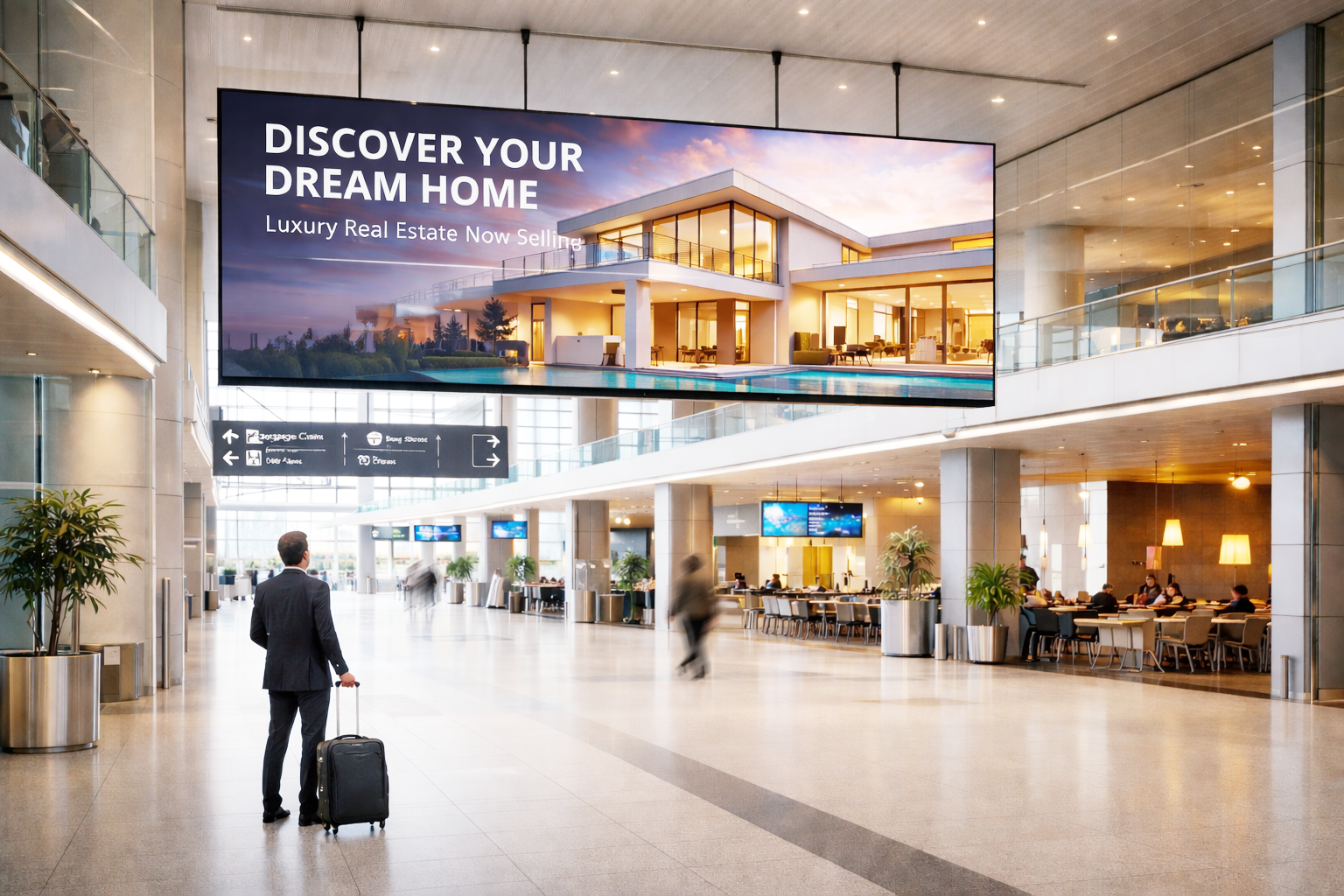
Airport Advertising is Complex to Get Right
We help you execute faster, with proven results and local insight most planners lack starting now.
Talk to an ExpertCatchment Area and Economic Drivers
Top 10 Cities within 150 km — Marketer Intelligence:
- Budapest: Hungary's primate capital with 1.7 million residents and a metro area producing over 40% of national GDP. The dominant traveller base at BUD — urban professionals, tech and pharma executives, entrepreneurs, and HNI families — makes this the core audience for luxury, financial services, and international lifestyle brands.
- Győr: Located 125 km west, Győr is Hungary's automotive heartland — home to the Audi Hungary manufacturing complex, one of the world's largest engine plants. The workforce and executive community here is internationally connected, technically sophisticated, and actively travelling for business across Europe, making them highly receptive to premium automotive, B2B tech, and financial product advertising.
- Székesfehérvár: 65 km southwest, this multi-sector manufacturing hub hosts global names in electronics, automotive components, and retail logistics. Its population of 100,000-plus includes a significant cohort of internationally mobile middle and senior management — an audience responsive to financial planning, insurance, and lifestyle brand messaging.
- Kecskemét: 85 km south, Kecskemét is Hungary's Mercedes-Benz manufacturing centre and a significant agri-business economy. Outbound travellers from this city combine premium factory employment with a strong appetite for European lifestyle and leisure travel — an audience that over-indexes on automotive, hospitality, and real estate.
- Esztergom: 60 km north on the Slovak border, home to the Suzuki Hungary factory and Hungary's historic religious capital. The city produces a steady flow of upper-income manufacturing professionals and border-corridor business travellers well-positioned for premium product and real estate advertising.
- Tatabánya: 65 km west, a regional industrial and administrative hub with a growing business class commuting through Budapest for international travel. This audience responds well to financial services, investment, and technology brand messaging.
- Veszprém: 115 km southwest, a UNESCO-designated European Capital of Culture 2023 and university city serving as the tourism gateway to Lake Balaton. Travellers here combine academic, cultural, and premium leisure profiles — making them an attractive audience for international hospitality, wellness, and travel brands.
- Szolnok: 100 km east, a regional logistics and trade hub sitting on the principal corridor between Budapest and Eastern Hungary. Its business traveller base is active in cross-border commerce and receptive to financial, insurance, and B2B services advertising.
- Dunaújváros: 70 km south, Hungary's steel and industrial city, home to Arcelor Mittal's Hungarian operations. Senior industrial management here is internationally mobile and represents an audience for B2B services, premium business travel, and financial product campaigns.
- Bratislava (Slovakia): The Slovak capital lies within the BUD catchment corridor — approximately 165 km as the crow flies — and its business and HNI community regularly uses Budapest Airport for long-haul connectivity that Bratislava's airport cannot provide. Slovak travellers represent a secondary but commercially valuable cross-border audience for luxury, real estate, and international investment brands.
NRI and Diaspora Intelligence:
Hungary does not generate a significant outbound diaspora in the traditional NRI model, but Budapest Airport's HNI audience represents a distinctly high-value wealth-migration profile. An estimated 600,000 Hungarians live abroad across Western Europe — predominantly in Germany, Austria, the United Kingdom, and Switzerland — and a significant portion of these are economically active professionals and entrepreneurs who return through BUD for business and family visits. Their spending patterns are elevated compared to domestic Hungarian travellers, and their exposure to premium Western European brand standards makes them a receptive audience for luxury goods, financial services, and high-end real estate advertising. Additionally, Budapest's growing role as a hub for Middle Eastern and Chinese business visitors creates a secondary wealth corridor audience with distinct spending triggers around hospitality, real estate, and investment products.
Economic Importance:
Hungary's nominal GDP reached USD 219 billion in 2024, with Budapest alone accounting for approximately 40% of national output. The economy is driven by automotive manufacturing (Audi, Mercedes, Suzuki), electronics and battery production, pharmaceuticals (Richter Gedeon, one of Europe's top pharma companies), financial services, and a surging tourism sector that contributed nearly 13% of GDP in 2024 and welcomed a record 18 million visitors. Hungary's strategic position as the regional corridor between Western European capital markets and the growth economies of Southeast Europe makes its HNI and business traveller population particularly valuable for brands on both sides of that corridor.
Business and Industrial Ecosystem
- Automotive manufacturing: Hungary hosts Audi (Győr), Mercedes-Benz (Kecskemét), and Suzuki (Esztergom) production facilities, generating a large cohort of senior engineering, management, and executive travellers who are internationally mobile and brand-aware
- Pharmaceuticals and life sciences: Richter Gedeon and a cluster of global pharma companies with Hungarian operations produce a professional traveller audience that over-indexes on premium health, financial planning, and business travel services
- IT and technology: Budapest has emerged as a significant Central European tech hub, with offices for ExxonMobil IT, IBM, T-Systems, and hundreds of tech startups — generating a young, high-earning, internationally connected professional audience
- Battery and clean energy manufacturing: Samsung SDI, SK Innovation, and CATL have made Hungary Europe's top battery manufacturing destination, producing a wave of Korean and Chinese corporate travellers alongside Hungarian senior management
Passenger Intent — Business Segment:
The business traveller at BUD is primarily flying to Western European capitals, the Middle East, and increasingly to China and South Korea, driven by Hungary's growing role as Asia's European manufacturing gateway. They are senior professionals and executives with corporate travel budgets, elevated dwell times in business-class zones, and high receptivity to financial services, technology, luxury hotel, and premium automotive advertising. B2B technology providers, ERP and enterprise software platforms, corporate insurance, and premium hospitality brands find the BUD business traveller environment highly effective.
Strategic Insight:
Budapest is not merely an emerging market airport — it is a classified Alpha-world city gateway, ranked consistently among the top 50 most important cities globally by the Globalization and World Cities Research Network. The business audience at BUD interacts daily with Western European capital markets, Asian manufacturing supply chains, and Middle Eastern investment corridors. This is an audience whose commercial decisions have global reach, and advertisers targeting C-suite, senior management, and specialist professional segments across Central and Eastern Europe cannot bypass BUD as their primary intercept environment.
Tourism and Premium Travel Drivers
- Budapest UNESCO heritage district: The Danube riverside spanning the Hungarian Parliament, Buda Castle, Chain Bridge, and Fisherman's Bastion constitutes one of Europe's most visited World Heritage Sites — drawing premium tourists with already-committed luxury accommodation budgets and high discretionary retail spend
- Thermal spa tourism: Budapest is Europe's undisputed spa capital with over 100 geothermal springs and iconic facilities including Széchenyi, Gellért, and Rudas — driving a wellness tourism segment that is affluent, experiential, and actively responsive to luxury beauty, health, and hospitality advertising
- Cultural and gastronomic tourism: Budapest ranks among the top 50 global food cities and hosts multiple Michelin-starred restaurants alongside a celebrated ruin-bar culture — attracting an internationally sophisticated leisure traveller who spends above the European average
- Lake Balaton and wine tourism: Central Europe's largest lake, 120 km from Budapest, draws premium domestic and European leisure travellers to its wine regions, boutique resorts, and summer sailing season — generating a secondary affluent audience that transits BUD for onward connection
Passenger Intent — Tourism Segment:
Inbound tourists arriving at BUD have pre-committed to Budapest as a premium European destination, typically choosing it over Prague or Vienna for its perceived value-luxury positioning. They arrive with pre-booked four and five-star accommodation, experience budgets for thermal spas, gastronomy, and cultural entertainment, and an elevated receptivity to luxury retail, jewellery, watches, and experiential brand advertising in the terminal environment. International real estate developers advertising at BUD reach these visitors precisely when their positive perception of Budapest is highest — making airport advertising one of the most effective channels for converting property interest into investment action.
Travel Patterns and Seasonality
Peak seasons:
- June to September (Summer Peak): The dominant traffic season, driven by European leisure tourism inbound and outbound Hungarian holiday travel. June 2024 alone exceeded 1.5 million passengers in a single month. The summer schedule for 2025 comprised a record 136 destinations and 13.8 million seats.
- December (Holiday Peak): Christmas and New Year travel drives a secondary spike, with both outbound Hungarian leisure travel and inbound European visitors creating sustained above-average traffic throughout the month.
- March to May (Spring Shoulder): Growing rapidly, driven by European city-break tourism and early business travel recovery after the winter. Q1 2025 handled over 4 million passengers — a 15.5% increase over Q1 2024.
Event-Driven Movement:
- Budapest Spring Festival (March–April): Hungary's premier cultural event, drawing classical music, opera, and art audiences from across Europe — premium cultural tourism with high per-capita spend
- Formula E Budapest and Motorsport Weekends (June–July): Attracting a premium automotive and entertainment audience from across the region, highly receptive to luxury automotive, hospitality, and experience brands
- Budapest Wine Festival (September): A flagship wine and gastronomy event drawing affluent European food and lifestyle travellers to the Buda Castle district — an audience responsive to luxury lifestyle and hospitality advertising
- Sziget Festival (August): One of Europe's largest music festivals, drawing 100,000-plus international attendees annually and generating substantial non-Schengen and inbound European traffic through BUD across the festival week
- Christmas Markets (December): Budapest's Vörösmarty Square Christmas market consistently ranks among Europe's top five, drawing a premium inbound European tourist audience actively spending on gifts, luxury goods, and hospitality
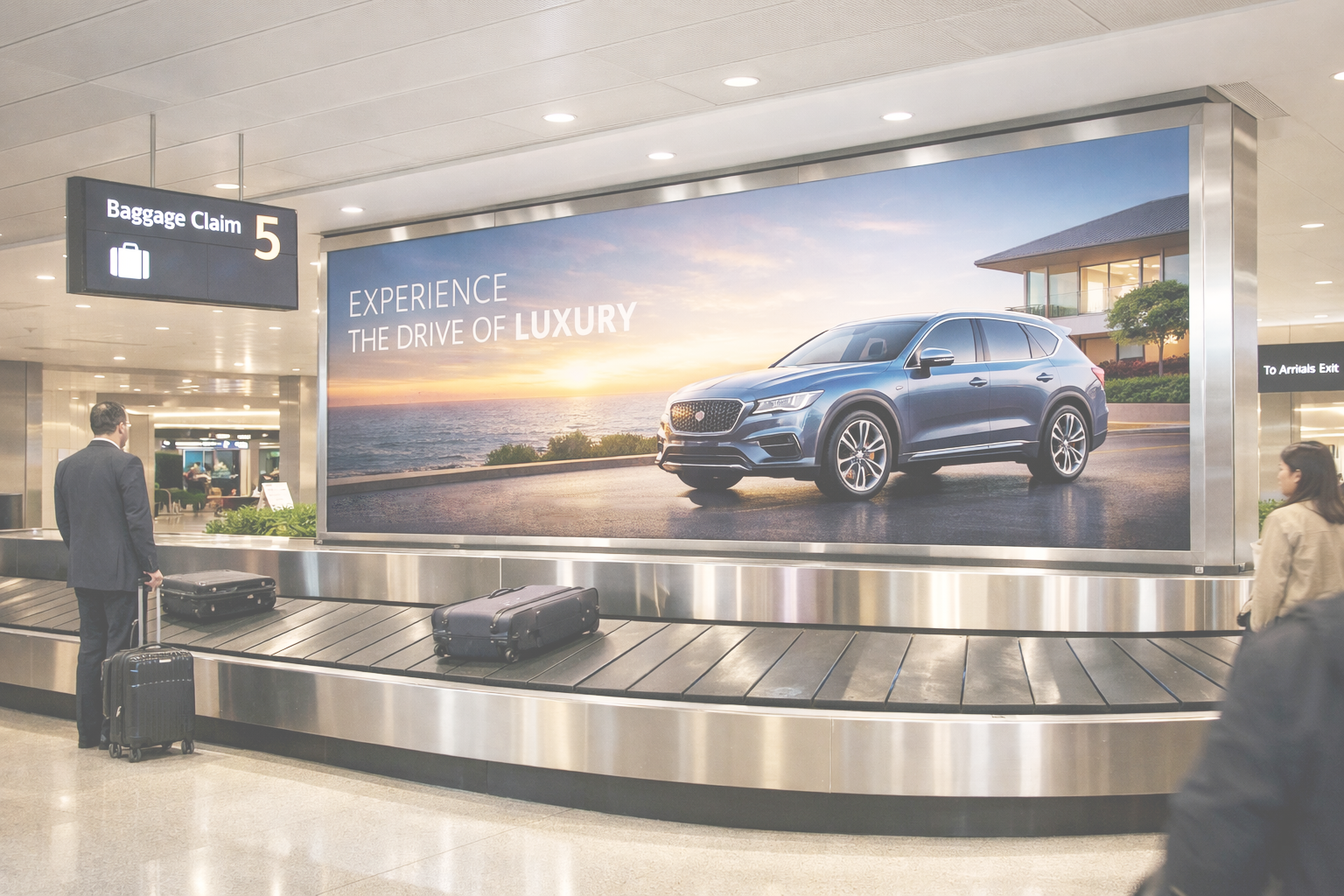
It’s Not Just Where You Advertise - It’s How Fast You Execute
We combine local insight with fast rollout to deliver results for you, now.
Talk to an ExpertAudience and Cultural Intelligence
Top 2 Languages:
- Hungarian (Magyar): The native language of 98% of Hungary's 9.7 million population and the primary language of all domestic travellers at BUD. Hungarian is a linguistically isolated language in Central Europe, which means domestic audiences are highly attuned to Hungarian-language creative — and international brands that invest in Hungarian-language creative at BUD signal cultural respect that materially improves engagement and recall.
- German: The dominant business language across Austria, Germany, and Switzerland — all of which are high-frequency route markets from BUD. German-language advertising at Budapest Airport intercepts both inbound German-speaking travellers and the significant Hungarian business community that operates commercially across the German-speaking corridor, making it the primary secondary language for B2B and luxury brand campaigns.
Major Traveller Nationalities:
BUD's top international traffic originates from the United Kingdom, Germany, Israel, France, Italy, the Netherlands, and a growing cohort from the UAE and Gulf states. Israeli travellers represent one of the airport's highest-frequency non-European audiences, with five direct airlines serving the Tel Aviv route and a community with well-documented premium consumption habits. The German-speaking corridor (Germany, Austria, Switzerland) collectively represents the single largest foreign audience block, spanning both premium leisure and corporate business segments. Increasingly, Korean and Chinese travellers transiting through Budapest for factory visits and business travel add an East Asian corporate audience to the terminal mix — one that responds strongly to luxury brand and international real estate messaging.
Religion — Advertiser Intelligence:
- Roman Catholic (approximately 37% of population): The dominant religious tradition in Hungary, with Easter, Christmas, and the Feast of St. Stephen (August 20 — Hungary's national holiday) generating distinct travel and spending spikes. The August 20 weekend is one of BUD's highest outbound traffic periods, as Hungarian families combine the national holiday with international leisure travel. Luxury lifestyle, hospitality, and gift brands benefit most from this concentrated high-spend window.
- Hungarian Reformed (Calvinist, approximately 12%): A historically significant Protestant tradition concentrated in Eastern Hungary and with strong representation among Hungary's business and intellectual class. Key holidays align with the broader Christian calendar. Brands targeting professional and entrepreneurial audiences — financial services, premium tech, real estate — find this community responsive to achievement-oriented, aspirational messaging.
- Jewish community (significant historical presence, Budapest): Budapest hosts the largest Jewish community in Central Europe, including the second-largest synagogue in the world. The community is historically concentrated in Budapest's 7th district and has strong diaspora connections to Israel, New York, and London, making El Al and Arkia route travellers a commercially valuable sub-segment for luxury, real estate, and international lifestyle brands with English and Hebrew creative.
Behavioral Insight:
Hungarian HNI travellers combine a strong aspiration toward Western European luxury standards with an acute value-consciousness rooted in the country's post-socialist economic history. They respond best to advertising that leads with quality credentials and international prestige rather than price — but they are highly informed buyers who research extensively before committing. Brands that use BUD to establish premium positioning with this audience benefit from a halo effect that extends beyond the airport: the Hungarian HNI who sees a luxury real estate or wealth management campaign at BUD carries that brand impression into their purchase decision cycle over weeks and months. This makes airport advertising at BUD an investment in long-cycle purchase conversion, not just awareness.
Outbound Wealth and Investment Intelligence
The outbound HNI passenger at Budapest Ferenc Liszt Airport is one of the most commercially dynamic wealth audiences in Central and Eastern Europe. Hungarian high-net-worth individuals have been accelerating capital deployment outward since 2014, driven by domestic currency risk, EU accession benefits, and a strong professional base in automotive, pharma, and technology sectors. The BUD HNI traveller is not merely on holiday — they are actively diversifying assets, placing children in international education systems, and acquiring property in markets with greater liquidity and yield stability than Budapest's residential market, which has itself surged 240% since 2014.
Outbound Real Estate Investment:
Hungarian HNI investors favour the Iberian Peninsula — Portugal, Spain (particularly Barcelona and the Canary Islands) — for both lifestyle value and the yield premium over Budapest's own compressed residential market. The United Arab Emirates, specifically Dubai and Abu Dhabi, have seen accelerating Hungarian HNI interest driven by tax-efficient property structures and direct flight connectivity from BUD via Emirates and flydubai. Austria (Vienna) and Germany (Munich, Frankfurt, Berlin) attract HNI capital from Hungary's western business corridor for commercial and residential diversification. The United Kingdom, despite post-Brexit complexity, remains a preferred destination for Hungarian HNI families with established diaspora ties, particularly in London's Zone 2 and outer prime market. International real estate developers and investment marketers advertising at BUD are targeting a buyer who is informed, motivated, and already pre-qualified by their willingness to commit to the outbound travel experience.
Outbound Education Investment:
Hungarian families at the HNI tier are active exporters of students to universities in the United Kingdom (London, Edinburgh, Manchester), Austria (Vienna), the Netherlands (Delft, Amsterdam), and Germany (Munich, Berlin). The UK continues to dominate Hungarian student outflow at the postgraduate level, while the Netherlands has gained ground at the undergraduate level due to English-language programme availability and competitive tuition relative to the UK. International schools in Vienna and other Western European capitals capture the secondary school pipeline, and BUD is the physical gateway through which these educational journeys begin. International universities, language schools, and education consultancies advertising at BUD intercept precisely the decision-making family unit — parents travelling with adolescent children, or independent students moving to their study destination — at the highest-intent moment in the enrollment consideration cycle.
Outbound Wealth Migration and Residency:
The Hungarian Golden Visa programme, launched in 2024 under the Guest Investor Residence Permit, enables non-EU nationals to obtain a 10-year Hungarian residence permit through a EUR 250,000 fund investment or EUR 1 million public trust donation — creating an inbound investment audience at BUD that includes Middle Eastern, Asian, and Russian-speaking travellers actively pursuing EU residency. This inbound Golden Visa traffic is commercially valuable to international real estate developers, immigration law firms, wealth management companies, and financial services brands advertising in BUD's non-Schengen zones. In parallel, Hungarian HNI individuals themselves are exploring second-residency options in Portugal, Malta, and the UAE — making BUD a two-directional wealth migration intercept environment that Masscom activates simultaneously for clients operating on both sides.
Strategic Implication for Advertisers:
Budapest Airport BUD presents a rare dual-flow commercial opportunity: outbound Hungarian HNI capital deploying into Western European and Middle Eastern real estate, education, and lifestyle investment; and inbound international capital — from the Gulf, China, and Korea — transiting through Hungary in search of EU access and CEE manufacturing exposure. Brands that can address both flows with targeted creative at BUD, across Schengen and non-Schengen zones, have access to a concentrated wealth corridor audience that no other single airport in Central and Eastern Europe replicates. Masscom structures such dual-corridor campaigns with the inventory access and placement precision required to reach both audience streams without duplication.
Airport Infrastructure and Premium Indicators
Terminals:
- Terminal 2A: The Schengen departures terminal handling the majority of inbound European leisure and business traffic, serving gates A1 through A14. The terminal has been fully modernised and connects directly to the SkyCourt commercial hub, creating a high-dwell, high-commercial-exposure departure environment.
- Terminal 2B: The non-Schengen departures terminal, serving long-haul, Middle Eastern, African, and extra-EU routes at gates B1 through B19. This terminal concentrates the highest-value audience segments — long-haul business class and premium economy travellers, Gulf state visitors, and outbound HNI passengers — and carries disproportionate advertising ROI relative to passenger volume.
- SkyCourt: The state-of-the-art five-level connector building linking Terminals 2A and 2B, housing the airport's central security zone, commercial food market, retail, and multiple lounges. SkyCourt is the primary commercial dwell environment at BUD and the highest-traffic advertising surface in the terminal complex.
Premium Indicators:
- Lounge infrastructure: BUD operates four passenger lounges — bud:vip (premium private, T2A), Plaza Premium (non-Schengen, T2B), SkyCourt Lounge (the airport's largest, connecting level), and the Platinum Lounge across both Schengen and non-Schengen zones — signalling a premium-capable environment that attracts and sustains HNI and business-class dwell time
- bud:vip private service: An exclusive on-demand VIP airport experience including private security screening, immigration assistance, and limousine aircraft transfer — confirming the presence of a high-net-worth traveller tier at BUD that expects and responds to premium brand environments
- On-site airport hotel: A dedicated hotel directly connected to Terminal 2B provides premium accommodation for overnight travellers and corporate layovers, extending the airport's commercial environment beyond the departure zone
- International recognition: 12 consecutive Skytrax Best Airport in Eastern Europe awards, and ACI Best Airport in Europe in the 15-to-25-million passenger category — both awarded on the basis of direct passenger feedback, confirming a high-quality, premium-perception environment that elevates brand association for advertisers
Forward-Looking Signal:
Budapest Airport is in active preparation for Terminal 3 construction, a development that will dramatically expand capacity, introduce new premium zones, and establish BUD as a formal long-haul hub rather than a point-to-point airport. Air Canada has announced the resumption of direct Budapest-Toronto service from June 2026, and American Airlines continues seasonal Philadelphia service — confirming the trajectory toward a fully intercontinental network. A government-backed rapid rail link between BUD and Budapest city centre is advancing through concession planning, which will accelerate passenger volumes and increase terminal dwell time significantly. Masscom advises clients to plan campaigns at BUD now, while Terminal 3 groundwork establishes a new commercial environment — current inventory access and rates will not be replicated once expansion is complete and competitive demand intensifies.
Airline and Route Intelligence
Top Airlines:
Wizz Air (headquarters and largest hub), Ryanair (base carrier), British Airways, Lufthansa, KLM, Air France, Austrian Airlines, Turkish Airlines, Emirates, Qatar Airways, EgyptAir, LOT Polish Airlines, easyJet, Finnair, Air China, China Southern, Hainan Airlines, Korean Air, Asiana Airlines, American Airlines, Air Canada, flydubai, SunExpress, and SWISS
Key International Routes:
London Heathrow and Gatwick, Frankfurt, Amsterdam, Paris, Vienna, Tel Aviv, Istanbul, Dubai, Abu Dhabi, Milan, Madrid, Rome, Brussels, Warsaw, Prague, Zurich, Copenhagen, Berlin, Stockholm, Barcelona, Cairo, Shanghai, Beijing, Hong Kong, Seoul, Philadelphia (seasonal), Toronto (resuming June 2026)
Domestic Connectivity:
No domestic flights operate at Budapest Ferenc Liszt Airport. BUD serves exclusively as an international gateway, which means every passenger in the terminal is an international traveller — a commercially significant distinction that concentrates globally mobile, internationally minded, and financially capable audiences with no dilution from domestic short-haul traffic.
Wealth Corridor Signal:
The route network at BUD reveals a bifurcated audience structure. The high-frequency Wizz Air and Ryanair routes to London, Rome, Milan, Berlin, and Amsterdam serve a large outbound leisure and diaspora segment — budget-conscious but volume-significant. The premium carrier routes — Emirates to Dubai, Qatar Airways to Doha, Turkish Airlines to Istanbul, British Airways, Lufthansa, and KLM to their respective hubs — define the wealth corridor audience: outbound HNI and senior business travellers, inbound Gulf-state visitors, and corporate executives transiting through European hub connections. The long-haul Chinese and Korean routes (Air China, China Southern, Hainan Airlines, Korean Air, Asiana) add a distinct inbound corporate wealth tier, reflecting Hungary's role as the most active Asian manufacturing investment destination in Europe. Advertisers operating in luxury, real estate, wealth management, and international education should weight their BUD campaigns toward the non-Schengen zone, where this premium long-haul audience concentrates.
Media Environment at the Airport
- Terminal 2B's non-Schengen departures zone presents one of the lowest advertising clutter environments relative to passenger volume among major European airports of comparable scale — offering brands standout presence and category exclusivity that is significantly harder to achieve at Frankfurt, Amsterdam, or Paris
- Dwell time at BUD is structurally elevated: security, passport control, and the absence of domestic transit connections mean that international passengers spend a minimum of 60 to 90 minutes post-security, concentrated in the SkyCourt commercial zone — delivering extended, undistracted brand exposure across all available formats
- The airport's 12-time Skytrax award status and ACI European recognition create a premium halo effect for advertising brands — BUD's environment actively enhances brand association, particularly for luxury, financial, and international lifestyle categories whose audience perceives quality environments as validation of brand credibility
- Masscom Global accesses BUD's full inventory spectrum — from high-impact digital screens across SkyCourt and both terminals to format-specific placements in lounge corridors, gate zones, and premium departure areas — with campaign execution designed around the non-Schengen wealth corridor, seasonal peak windows, and long-haul boarding zone concentration for maximum ROI
Strategic Advertising Fit
Best Fit:
- International luxury real estate: Hungarian HNI outbound investors actively researching Dubai, Lisbon, Vienna, and London properties are intercepted at maximum intent at BUD — the decision-making moment occurs in the departure zone, and airport advertising turns passive interest into active inquiry
- Wealth management and private banking: BUD's senior executive, entrepreneur, and HNI traveller base is a primary audience for private banking platforms, asset management, and multi-currency investment services — particularly in the non-Schengen zone where long-haul wealth-corridor travellers concentrate
- Premium automotive: With Audi, Mercedes, and BMW all operating major facilities within the BUD catchment, and the Hungarian executive class demonstrating strong brand affinity with European premium vehicles, automotive OEMs and luxury marques find a uniquely receptive audience here
- International education and student recruitment: Hungarian families at the HNI tier are actively placing children in British, Dutch, and German university systems — airport advertising intercepts the decision-making household at the precise moment of educational travel
- Luxury hospitality and wellness brands: Budapest's global reputation as Europe's spa and cultural tourism capital creates an inbound premium traveller receptive to hotel chains, spa memberships, and experiential hospitality brands at the point of arrival and departure
- Financial technology and enterprise B2B: Hungary's growing tech hub status and the concentration of senior IT, pharma, and manufacturing executives in the BUD catchment makes the airport an effective channel for SaaS, fintech, and enterprise services targeting regional decision-makers
- Golden Visa and residency programme providers: BUD's non-Schengen zone concentrates incoming investors from the Gulf, China, and broader non-EU markets actively seeking EU residency options — making immigration investment advisors and second-residency programme marketers highly relevant advertisers here
Brand Alignment at a Glance:
| Category | Fit |
|---|---|
| International luxury real estate | Exceptional |
| Wealth management and private banking | Exceptional |
| Premium automotive | Exceptional |
| International education | Strong |
| Luxury hospitality and wellness | Strong |
| Enterprise B2B and technology | Strong |
| Mass market FMCG | Poor fit |
Who Should Not Advertise Here:
- Budget FMCG brands: The BUD audience is defined by above-average income, educational attainment, and premium brand aspiration — mass-market grocery, budget retail, or low-margin consumer packaged goods brands will not find an efficient audience match in this environment
- Domestic-only service brands: With zero domestic flights, BUD carries only internationally mobile travellers; brands with no international footprint or cross-border utility have no structural relevance at this airport
- Highly price-competitive retail: While BUD carries some value-oriented leisure travellers on LCC routes, the terminal's premium positioning and HNI concentration makes deeply price-led advertising creatively dissonant and strategically misaligned
Event and Seasonality Analysis
Event Strength: High Seasonality Strength: High Traffic Pattern: Dual-Peak (Summer leisure and December holiday peaks, with strong March-May spring shoulder)
Strategic Implication:
The BUD advertiser calendar has two clear budget concentration windows: June through August for the summer leisure peak, where luxury hospitality, real estate, and lifestyle brands achieve maximum reach among inbound premium tourists and outbound HNI travellers; and November through December for the holiday peak, where luxury retail, gift, and hospitality brands intercept elevated spending intention across both domestic and international audiences. Masscom structures BUD campaigns around these rhythms, combining always-on premium placements in the non-Schengen wealth corridor with burst investment in the SkyCourt main commercial zone during peak traffic windows. The spring shoulder period from March to May has grown by over 15% year-on-year and now represents a strategically underpriced advertising window for brands seeking efficient reach at below-peak inventory costs.
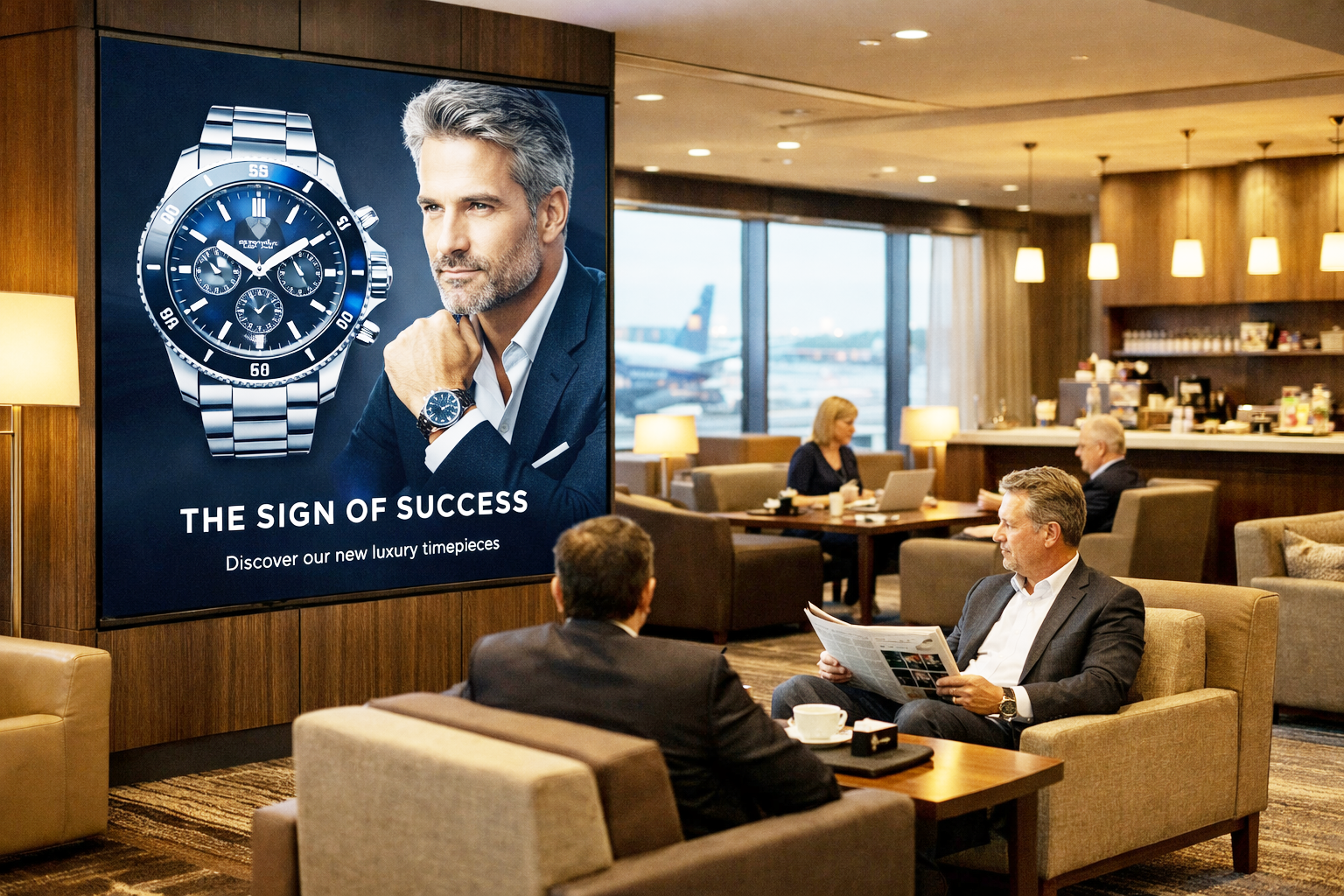
Poor Placement and Delays Affect Airport Campaigns
We help you move faster, access better inventory, and get it right now.
Talk to an ExpertFinal Strategic Verdict
Budapest Ferenc Liszt International Airport is the single most commercially dynamic airport environment in Central and Eastern Europe and, for brands targeting the wealth corridor between Western European capital markets and the emerging economies of the Pannonian Basin, it is a tier-one media buy without qualification. With 19.6 million passengers in 2025, an uninterrupted record-growth trajectory, 12 consecutive regional airport of the year awards, a route network spanning 156 destinations across 50 countries, and an audience that is internationally mobile, financially active, and brand-aspirational, BUD delivers the scale, audience quality, and commercial environment that premium advertisers require. The structural absence of domestic flights means that every single passenger at this airport is an international traveller — a commercial purity that major hub airports with large domestic transit volumes cannot replicate. Terminal 3 is coming, Air Canada is returning, and a rapid rail link is advancing — this is a market moving upward on every measurable indicator. Brands that partner with Masscom Global now establish visibility and positioning at BUD's current commercial rates, ahead of the inevitable competition that accelerating growth will attract.
About Masscom Global
Masscom Global is a premium international airport advertising and media buying agency operating across 140 countries. With deep expertise in airport OOH, premium publications, and high-net-worth audience targeting, Masscom helps brands reach the world's most valuable travellers at the moments that matter most. For advertising packages, media rates, and campaign planning at Budapest Ferenc Liszt International Airport and airports across the globe, contact Masscom Global today.
Frequently Asked Questions
How much does airport advertising cost at Budapest Ferenc Liszt International Airport? Advertising costs at Budapest Airport vary based on format, placement zone (Schengen vs. non-Schengen), campaign duration, and seasonal demand — with summer and December peak windows carrying higher inventory premiums than shoulder periods. High-impact digital placements in the SkyCourt and gate zones carry different pricing structures from static formats in terminal corridors. Masscom Global provides current rate cards, placement recommendations, and campaign planning specific to BUD — contact us directly for a tailored package.
Who are the passengers at Budapest Ferenc Liszt International Airport? BUD carries a commercially diverse but predominantly premium international audience: outbound Hungarian HNI and business travellers flying to Western Europe, the Gulf, and East Asia; inbound European leisure and cultural tourists arriving for Budapest's heritage, spa, and gastronomy offering; long-haul business travellers from China, Korea, and the Middle East transiting through Hungary on industrial and investment purposes; and Israeli and Gulf-state visitors representing high-spending audience segments with documented luxury brand affinity. The complete absence of domestic flights means the entire terminal audience is internationally mobile.
Is Budapest Ferenc Liszt International Airport good for luxury brand advertising? Yes — BUD is one of Europe's most effective luxury brand environments in the 15-to-25-million passenger category. The airport's award-winning passenger experience, VIP service infrastructure, Plaza Premium and SkyCourt lounges, and concentration of HNI outbound travellers in the non-Schengen zone create a premium-ready environment. Luxury real estate, watches, jewellery, premium automotive, private banking, and high-end hospitality brands find a highly receptive, pre-qualified audience at BUD with dwell times and purchase-consideration dynamics that outperform equivalent investment in digital channels for these categories.
What is the best airport in Central and Eastern Europe to reach HNWI audiences? Budapest Ferenc Liszt Airport is the undisputed first choice. It is the busiest point-to-point airport in Central and Eastern Europe, the 12-time consecutive Skytrax regional winner, and the hub for Hungary's rapidly internationalising HNI class — a wealth segment that is actively deploying capital into Western European real estate, international education, and second-residency programmes. No other CEE airport combines BUD's passenger volume, route network diversity, infrastructure quality, and HNI audience concentration in a single commercial environment.
What is the best time to advertise at Budapest Ferenc Liszt International Airport? The June-to-August summer peak delivers maximum reach across both inbound premium tourism and outbound Hungarian leisure and HNI travel. The December holiday window captures elevated spending intention for luxury retail, hospitality, and gift brands. For international real estate and financial services advertisers, the March-to-May spring shoulder period represents a strategically underpriced window — traffic is growing faster than advertising demand is absorbing, making it an efficient entry point for brands building BUD presence ahead of peak competition.
Can international real estate developers advertise at Budapest Ferenc Liszt International Airport? Absolutely — BUD is one of Europe's most compelling airport channels for international real estate marketing. Hungarian HNI outbound investors are actively purchasing property in Dubai, Lisbon, Barcelona, Vienna, and London. The non-Schengen departures zone captures this audience at the moment of highest purchase intent — as they prepare to travel to the very markets where they are considering investment. For developers in Dubai, Portugal, and Spain in particular, BUD advertising places the brand in front of a pre-qualified buyer audience with direct route connectivity to the developer's market. Masscom structures turnkey international real estate campaigns at BUD with creative, placement, and timing aligned to the outbound HNI travel calendar.
Which brands should not advertise at Budapest Ferenc Liszt International Airport? Domestic-only service brands without any international footprint have no structural audience match at BUD, as 100% of passengers are international travellers. Budget retail and mass-market FMCG brands will find the audience economics inefficient — BUD's traveller base skews toward above-average income and premium brand aspiration. Highly localised Hungarian-only promotions — retail offers, domestic bank products limited to Hungarian residents, or services without international utility — are similarly misaligned with a terminal that serves exclusively cross-border traffic.
How does Masscom Global help brands advertise at Budapest Ferenc Liszt International Airport? Masscom Global provides end-to-end airport advertising capability at BUD — from strategic audience intelligence and campaign planning, through inventory access and placement negotiation across Schengen and non-Schengen zones, to creative execution and performance reporting. Our team understands the structural differences in audience quality between BUD's terminal zones, the seasonal traffic rhythms that determine optimal campaign windows, and the specific wealth corridor dynamics that make BUD a priority buy for luxury real estate, financial services, premium automotive, and international education advertisers. We execute faster, with deeper placement precision and local market insight than generalist media buyers can deliver. To plan your campaign at Budapest Airport, contact Masscom Global today.