

Airport at a Glance
| Field | Detail |
|---|---|
| Airport | Beirut Rafic Hariri International Airport |
| IATA Code | BEY |
| Country | Lebanon |
| City | Beirut |
| Annual Passengers | ~3.2 million |
| Primary Audience | Lebanese diaspora returnees, Levant HNWI, regional business travellers, medical and education tourism visitors |
| Peak Advertising Season | June to September, December to January |
| Audience Tier | Tier 1 (diaspora wealth and cultural intensity-led) |
| Best Fit Categories | Luxury real estate, premium hospitality, financial services, luxury retail, international education, automotive |
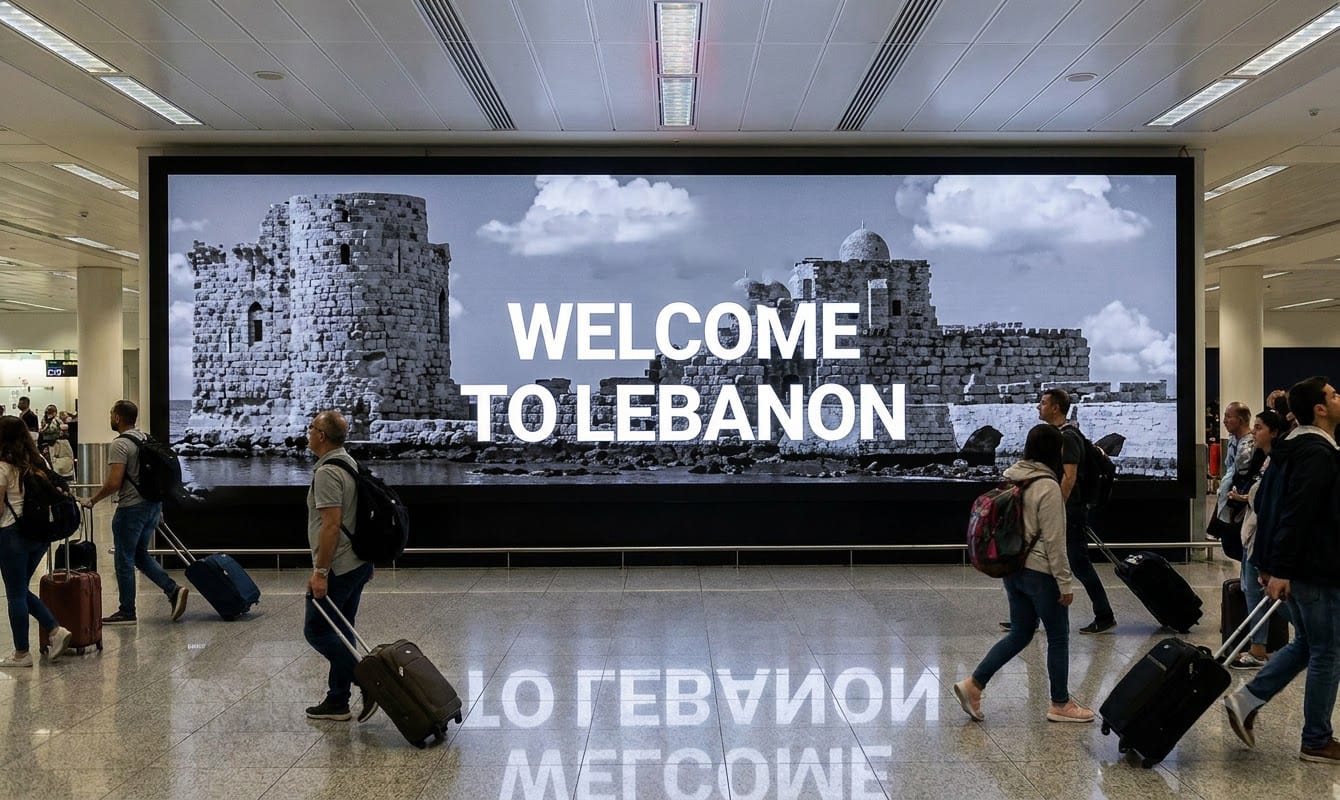
Beirut Rafic Hariri International Airport occupies a position in global airport advertising with no direct equivalent in the Middle East or Arab world. As Lebanon's sole international airport, BEY is the single physical gateway through which an estimated 15 million Lebanese diaspora members worldwide maintain their connection to the homeland — and the moment of arrival at BEY carries an emotional and commercial charge that distinguishes it from every other airport in the Levant. The Lebanese who return here are not typical leisure tourists. They are diaspora wealth holders from São Paulo, Paris, Lagos, Sydney, Montreal, Dubai, and Detroit who arrive with accumulated foreign-currency earnings, an intense desire to experience and spend in Lebanon, and a purchasing behaviour pattern defined by celebration, generosity, and the social performance of success in the city where their families watch. That combination of emotional intensity, disposable foreign-currency wealth, and social spending pressure produces one of the most commercially potent arrival audiences in the Arab world, concentrated into peak summer and holiday windows that no advertiser in the Levant luxury market can afford to ignore.
Lebanon has historically functioned as the Arab world's cultural, financial, and gastronomic capital — a role that the Lebanese identity has carried into every diaspora community on six continents. The travellers moving through BEY carry that identity with them, and the brands that meet them at the airport enter a relationship defined not by anonymous consumer browsing but by the intensely personal experience of Lebanese homecoming. Beirut's luxury hotels, its internationally celebrated restaurant scene, its beach clubs, its nightlife, and its fashion retail ecosystem are all downstream beneficiaries of the commercial energy that begins at this terminal. For advertisers, BEY is the valve through which that energy enters the Lebanese economy — and being present at the point of arrival is the most efficient way to direct it.


Advertising Value Snapshot
- Passenger scale: Approximately 3.2 million annual passengers. Lebanon's only international airport, handling 100 percent of the country's air traffic across all commercial, private, and charter operations
- Traveller type: Lebanese diaspora returnees carrying foreign-currency wealth from global financial and commercial centres, Levant HNWI regional business and leisure travellers, medical tourism patients from across the Arab world, and international visitors drawn by Beirut's unmatched cultural and hospitality reputation
- Airport classification: Tier 1 by diaspora commercial intensity — the Arab world's most emotionally charged homecoming airport, where cultural loyalty converts directly into premium spending across luxury, hospitality, real estate, and retail categories
- Commercial positioning: Lebanon's sole international gateway and the Levant's most culturally distinct aviation hub, historically functioning as the Arab world's bridge between East and West, and maintaining that identity through one of the most globally connected diaspora networks of any nation on earth
- Wealth corridor signal: BEY sits at the convergence of the global Lebanese diaspora wealth corridor and the Levant's premium hospitality and real estate economy, intercepting capital flowing from Brazilian, African, European, North American, and Gulf Lebanese communities back into the destination where they invest most emotionally
- Advertising opportunity: Masscom Global activates the full advertising environment at Beirut Rafic Hariri International Airport, positioning brands at the moment of maximum diaspora emotional engagement — arrival in Lebanon — where spending intent is at its annual peak and receptivity to premium brand messages is higher than at any comparable Arab world airport
Airport Advertising is Complex to Get Right
We help you execute faster, with proven results and local insight most planners lack starting now.
Talk to an ExpertCatchment Area and Economic Drivers
Top 10 Cities within 150 km — Marketer Intelligence:
- Jounieh, Lebanon: The affluent coastal city 20 kilometres north of Beirut and home to Casino du Liban, Jounieh anchors the northern Beirut luxury leisure corridor. Its Maronite Christian community represents one of Lebanon's most commercially active and internationally connected wealth segments, with strong spending across premium real estate, luxury hospitality, and private wealth services.
- Sidon (Saida), Lebanon: The historic southern city and ancestral home of the Hariri family, Sidon generates a commercially active Sunni business and trading class with deep Gulf and Saudi connections. Its traditional market economy has evolved to include modern retail, construction, and services wealth that is commercially relevant for financial planning, premium automotive, and real estate brands.
- Byblos (Jbeil), Lebanon: One of the world's oldest continuously inhabited cities and a UNESCO Heritage Site, Byblos is Beirut's premier weekend heritage and cultural tourism destination, drawing an educated, culturally sophisticated, and above-average income domestic and international leisure audience receptive to premium lifestyle and cultural brand messaging.
- Batroun, Lebanon: A fast-growing beach, wine, and craft beer tourism destination on the northern coast, Batroun has become the preferred weekend escape for Beirut's young professional and creative class — an aspirational, brand-aware, and digitally engaged consumer segment with growing premium lifestyle spend on food, wine, and experiential brands.
- Tripoli, Lebanon: Lebanon's second-largest city with a population exceeding 700,000, Tripoli is the commercial hub of northern Lebanon with a significant trading and light manufacturing base. Its commercial class generates consistent B2B travel through BEY and represents the northern Lebanon consumer market relevant for financial services, telecommunications, and commercial real estate brands.
- Tyre (Sour), Lebanon: A southern Lebanese coastal city and UNESCO Heritage Site whose economy is anchored by fishing, tourism, and the cross-border trade economy of South Lebanon. Its professional and commercial class travels regularly through BEY for business connections to Beirut and international destinations, creating a consistent non-HNWI but commercially active secondary audience.
- Zahle, Lebanon: The capital of the Bekaa Valley and Lebanon's wine country capital, Zahle hosts an established Christian commercial community known for its arak production, outdoor dining culture, and agricultural trade wealth. The Bekaa Valley's wine estates — including internationally acclaimed producers — generate a premium agritourism and food culture audience relevant for fine wine, spirits, and premium hospitality brands.
- Baalbek, Lebanon: Home to one of the ancient world's most spectacular Roman temple complexes and a UNESCO Heritage Site, Baalbek draws cultural and heritage tourism from across the Arab world and internationally. Its position in the northern Bekaa Valley places it within the wine and cultural tourism corridor, and its Summer Festival is one of the Arab world's most celebrated performing arts events, generating significant HNWI cultural travel.
- Chouf District, Lebanon: The heartland of Lebanon's Druze community, the Chouf is home to the Chouf Cedars Nature Reserve, Beiteddine Palace (one of the finest examples of 19th-century Levant architecture), and a cohesive, internally loyal commercial community with significant agricultural and construction wealth. The Chouf's elite families are active participants in Lebanon's political and business economy and travel regularly through BEY.
- Damascus, Syria: Located approximately 90 kilometres east of Beirut across the Lebanese-Syrian border, Damascus has historically contributed a significant professional, business, and tourism flow to BEY as Lebanon's nearest international gateway. Syrian business families with capital deployed internationally, Lebanese-Syrian commercial relationships, and cross-border tourism represent a historically important catchment layer whose relevance remains subject to the evolution of the regional security environment.
NRI and Diaspora Intelligence:
The Lebanese diaspora is one of the most commercially significant in the world, estimated at between 10 and 15 million people globally against a domestic Lebanese population of approximately 5 to 6 million. This extraordinary ratio — where the diaspora is two to three times larger than the resident population — produces a relationship between BEY and global Lebanese wealth that is structurally without parallel in the Arab world. The most commercially relevant diaspora communities for BEY are the Brazilian-Lebanese community, estimated at 7 to 10 million people and representing the largest Lebanese diaspora globally, with generational wealth accumulated across commerce, industry, and politics in São Paulo, Belo Horizonte, and Curitiba. The West African Lebanese community — concentrated in Ivory Coast, Senegal, Nigeria, Sierra Leone, and Cameroon — represents one of the most commercially active business diaspora networks on the African continent, with billions of dollars in annual trade and real estate wealth flowing back through BEY. The French Lebanese community, concentrated in Paris, Lyon, and Marseille and estimated at over 200,000 people, represents the most educationally credentialed and culturally refined diaspora segment, with strong demand for premium cultural, financial, and luxury lifestyle products. The Gulf Lebanese — spanning the UAE, Saudi Arabia, Kuwait, and Qatar — form the most geographically proximate and highest-frequency travelling diaspora segment, arriving through BEY multiple times annually. Each of these communities spends in Lebanon in proportion to the emotional intensity of their connection — and that intensity, at the moment of BEY arrival, is commercially off the scale.
Economic Importance:
Lebanon's economy is driven by services, trade, and the diaspora remittance flow that has historically represented one of the highest remittance-to-GDP ratios in the world. Beirut functioned for decades as the Arab world's financial capital — banking, insurance, and capital markets generating extraordinary private wealth. Tourism, before 2019, was a USD 8 billion annual industry. The hospitality sector — anchored by internationally acclaimed hotels, a globally celebrated restaurant scene, and a nightlife and beach club culture with no peer in the Arab world — remains the primary commercial expression of Beirut's irreplaceable soft power in the region. For advertisers, the economic context of Lebanon requires a specific framing: the brands that perform at BEY are not marketing to the domestic Lebanese economy. They are marketing to the returning diaspora, whose purchasing power is denominated in US dollars, euros, Brazilian reais, West African CFA francs, and Gulf dirhams — currencies that are structurally more powerful than the domestic context. Diaspora visitors to Lebanon spend at a rate that multiple studies have shown significantly exceeds that of international tourists to comparable Arab destinations, making BEY's advertiser value independent of — and resilient to — Lebanon's domestic economic cycles.
Business and Industrial Ecosystem
- Lebanon's banking and financial services sector, historically one of the most sophisticated in the Arab world and still home to several regionally significant financial institutions, generates a professional class of bankers, lawyers, accountants, and investment advisors who travel internationally through BEY with consistent premium spend on financial services, real estate, and professional development categories
- The Lebanese construction and real estate sector, driven by persistent diaspora demand for Beirut and Mount Lebanon property investment, generates a builder, developer, and contractor professional class whose business travel through BEY connects them to supply chains in Europe, Turkey, and the Gulf — a segment relevant for construction materials, professional services, and B2B financial brands
- Lebanon's internationally recognised healthcare sector, anchored by world-class hospitals including the American University of Beirut Medical Center and the Hotel-Dieu de France, positions Beirut as the Levant's premier medical tourism destination, drawing patients from across the Arab world, West Africa, and the broader MENA region through BEY for specialist medical procedures not available in their home countries
- The technology and creative economy sector — historically centred in Beirut but now significantly dispersed through the diaspora following the 2019 economic crisis — generates a return movement of Lebanese tech founders, creative directors, and digital entrepreneurs who travel back to Beirut from Silicon Valley, London, Dubai, and Toronto, carrying international technology wealth and strong demand for premium services and lifestyle brands
Passenger Intent — Business Segment:
Business travellers at Beirut Airport operate at the intersection of Lebanese domestic commercial relationships and the global diaspora business network. Their travel intent is frequently multi-purpose — combining regional business meetings with real estate investment reviews, family visits, and the social obligations of Lebanese homecoming. The Lebanese business class is among the most commercially sophisticated in the Arab world, operating across multiple languages, cultures, and legal systems simultaneously. Advertiser categories that intercept this audience most effectively include private banking and wealth management, international real estate, luxury automotive, premium legal and financial advisory services, and premium business class hospitality brands whose quality standard matches the internationally calibrated expectations of a globally experienced Lebanese professional class.
Strategic Insight:
The business environment at BEY is defined by the Lebanese commercial diaspora's use of Beirut as both origin and destination simultaneously — a phenomenon where the traveller is simultaneously a local consumer, an international investor, and a foreign-currency wealth holder entering a domestic market. This dual identity creates a commercial profile that is almost impossible to replicate at any other airport in the Levant. A brand advertising at BEY reaches the Lebanese financial professional returning from a Geneva bank meeting and the Brazilian-Lebanese entrepreneur flying home to São Paulo in the same terminal dwell — two audiences whose combined commercial value, properly activated, exceeds the sum of their individual profiles. Masscom Global understands this duality and structures BEY campaigns to work across both directions of the wealth corridor simultaneously.
Tourism and Premium Travel Drivers
- Beirut's food, restaurant, and hospitality scene is among the most internationally acclaimed in the Arab world, with Michelin-pedigree chefs, regionally celebrated restaurants, internationally ranked beach clubs, and a nightlife culture that draws visitors from the Gulf, Europe, and the broader diaspora specifically for experiences unavailable anywhere else in the Levant — an audience pre-committed to premium leisure spend at rates that exceed typical Middle Eastern tourism profiles
- Baalbek's Roman temples — among the largest and best-preserved Roman religious structures in the world and a UNESCO World Heritage Site — draw cultural heritage tourists from across Europe, the Americas, and the Arab world, generating an educated, high-income, culturally engaged audience with strong affinity for premium travel, history, and experiential brand categories
- Jeita Grotto, one of the most spectacular natural cave systems in the world and a candidate for the Seven Natural Wonders, anchors a domestic and regional nature tourism circuit in the mountains above Beirut and draws international visitors seeking a uniquely Lebanese natural experience in combination with the urban luxury of the capital
- Lebanon's mountain ski resorts — including The Cedars, Faraya Mzaar, and Laqlouq — operate within 60 to 90 minutes of Beirut Airport and attract a skiing and winter sports audience from the Arab Gulf states whose domestic ski culture is entirely absent, creating seasonal demand for winter sports-adjacent lifestyle, equipment, and hospitality brands that few other Arab airports can generate
Passenger Intent — Tourism Segment:
The visitors arriving at BEY for leisure are, in the overwhelming majority, arriving for the Lebanese experience specifically — Beirut's food, culture, nightlife, and the unique emotional quality of a city that has rebuilt itself repeatedly and retains an intellectual and creative energy without parallel in the Arab world. This is not a generic tourist audience that could be redirected to another destination. It is a destination-committed audience whose trip investment — often involving long-haul flights from Brazil, Ivory Coast, Australia, or France — confirms extraordinary spending intent before they clear customs. The brands that resonate most powerfully at BEY arrivals are those that mirror the values of the Beirut experience: sophisticated, authentic, emotionally intelligent, culturally literate, and completely at ease with premium pricing.
Travel Patterns and Seasonality
Peak seasons:
- Summer (June to September): The dominant commercial peak and the most commercially intense airport advertising window in Lebanon's annual calendar. The global Lebanese diaspora converges on Beirut in summer — families from Europe arriving in June, Gulf Lebanese in July and August, African and American diaspora through August. Beirut's hotels, beach clubs, restaurants, and nightlife operate at capacity. The spending behaviour of returning diaspora during this window is defined by celebrating their homecoming with maximum generosity — premium dining, luxury accommodation, designer retail, and real estate investment visits are all concentrated in this 12-week window.
- December to January (Christmas and New Year): The second major diaspora return peak, driven by the Christmas holiday calendar and Beirut's extraordinary December and New Year social calendar. Lebanese of all religious backgrounds — Christian, Muslim, and Druze — participate in the social season, and the Gulf Lebanese community in particular arrives for New Year celebrations. Luxury retail, gifting, fine dining, and premium hospitality brands experience their second-highest seasonal performance of the year.
- Easter (March to April): A significant religious and social holiday for Lebanon's large Christian communities — Maronite, Greek Orthodox, Greek Catholic, and Armenian — Easter drives a diaspora mini-return from France, the Americas, and Australia. The Easter week audience at BEY is concentrated in the Christian Lebanese diaspora's most educationally and financially elevated segment.
- Spring (April to May): A shoulder season of growing commercial importance, driven by Europe-based diaspora families who travel ahead of the summer peak for quieter visits. The spring travel audience at BEY carries the same wealth profile as summer but with lower volume and higher average individual spend on premium accommodation and cultural experiences.
Event-Driven Movement:
- Baalbek International Festival (July to August): One of the Arab world's most prestigious performing arts events, held against the backdrop of the Roman temple ruins and drawing internationally renowned classical, jazz, and Arabic music performers. The festival generates a culturally engaged, premium-spending HNWI audience from across the Arab world, Europe, and the global Lebanese diaspora — one of the most sophisticated cultural event audiences in the Middle East for luxury lifestyle, fine jewellery, and prestige brand advertising.
- Beirut Art Week and Design Events (Various): Beirut's internationally recognised contemporary arts scene generates a cluster of gallery openings, design fairs, and cultural events that draw collectors, curators, and arts patrons from across the Arab world, Europe, and New York — a concentrated creative-class audience with strong premium art, design, and luxury lifestyle spend.
- Eid al-Fitr (Varies — lunar calendar): The conclusion of Ramadan generates one of the Arab world's most intense luxury retail and gifting purchase windows. Lebanese Muslim diaspora from the Gulf, West Africa, and Europe travel to Beirut for Eid family gatherings, bringing Gulf-accumulated luxury spending behaviour to a Lebanese retail ecosystem that includes internationally competitive boutique luxury options.
- Christmas Season (December): Beirut is the only Arab capital where Christmas is a national holiday and a citywide public celebration across all religious communities. The Christmas atmosphere — with Beirut's famous street decorations and cross-community celebration culture — draws Gulf Arab tourists specifically for the experience of a Christian-influenced Christmas they cannot access at home, creating a unique inbound tourism surge with strong luxury retail, hospitality, and gifting brand relevance.
- Beirut Marathon (November): The annual Beirut Marathon is one of the Arab world's largest running events and a symbol of Lebanese civic resilience, drawing participants from across the Lebanese diaspora and international running communities. The marathon audience is health-conscious, internationally mobile, and represents Lebanon's educated professional class — a segment relevant for premium athletic, wellness, and lifestyle brands.
It’s Not Just Where You Advertise - It’s How Fast You Execute
We combine local insight with fast rollout to deliver results for you, now.
Talk to an ExpertAudience and Cultural Intelligence
Top 2 Languages:
- Arabic: The primary language of the overwhelming majority of BEY's passengers — Lebanese Arabic specifically, which carries distinct cultural codes, humour, and social registers that differ meaningfully from Gulf, Egyptian, or Levantine varieties in ways that matter commercially. Lebanese Arabic-language creative must be tonally calibrated for the Lebanese cultural register — sophisticated, witty, emotionally resonant, and culturally literate — to earn genuine engagement from an audience that is both proud of its cultural distinctiveness and highly sophisticated in its media and advertising literacy.
- French: The most commercially significant secondary language at BEY, deeply embedded in Lebanese cultural identity through the French Mandate legacy and the strong educational tradition of Lebanese private schools and universities. French-language creative is not optional for campaigns targeting the Lebanese diaspora from France, the Francophone African Lebanese community, or Lebanon's own Francophone professional and cultural class. The French-speaking Lebanese consumer reads French at a level of cultural fluency, not just linguistic accessibility — brand messaging in French must be calibrated for a genuinely Francophone sensibility.
Major Traveller Nationalities:
The dominant nationality at Beirut Airport is Lebanese — both resident and diaspora — making BEY one of the most mono-nationally concentrated major airports in the Arab world in terms of cultural identity. Within that Lebanese audience, the diaspora segments carry distinct commercial profiles: Brazilian-Lebanese arrivals carry the highest individual purchasing power of any single diaspora group, with generational commerce wealth that has produced some of Brazil's most prominent business and political families. West African Lebanese arrivals, particularly from Ivory Coast, Senegal, Nigeria, and Cameroon, carry commercial trade wealth accumulated across the African continent's fastest-growing economies. Gulf Lebanese arrivals carry high-frequency travel patterns and Gulf-calibrated luxury spending behaviour. French and European Lebanese arrivals carry a Francophone HNWI profile with strong real estate and cultural investment intent. Beyond the Lebanese national audience, BEY serves a secondary community of Arab world visitors — Egyptian, Jordanian, Saudi, Emirati, and Iraqi — who travel to Beirut for medical treatment, education, and the cultural experiences that their own capitals cannot provide.
Religion — Advertiser Intelligence:
- Maronite Catholic (~20%): Lebanon's most politically and commercially influential Christian community, concentrated in Mount Lebanon, East Beirut, Jounieh, and Byblos. The Maronite diaspora — strongest in Brazil, France, Australia, and the United States — represents the Lebanese community with the highest per-capita accumulated wealth globally. Christmas, Easter, and the Maronite religious calendar drive the two strongest diaspora return windows. Premium real estate, luxury vehicles, fine jewellery, private banking, and premium French lifestyle brands align most powerfully with this community's spending profile and cultural aspirations.
- Sunni Muslim (~20%): Concentrated in West Beirut, Tripoli, and Sidon, with the Gulf, West Africa, and Brazil as primary diaspora territories. The Sunni Lebanese commercial class has historically been the most internationally trade-oriented segment, with the Hariri family's global business network representing the apex of its commercial reach. Ramadan and Eid drive significant inbound diaspora movement, creating concentrated luxury retail, gifting, and premium hospitality spend windows. Halal premium food, luxury lifestyle, real estate, and financial services brands align strongly with this segment's commercial profile.
- Shia Muslim (~20%): Concentrated in South Lebanon, the Bekaa Valley, and South Beirut's southern suburbs. The Shia diaspora — particularly strong in West Africa, particularly Senegal and Sierra Leone — has produced significant commercial wealth through cross-continental trading networks. The Shia business community's commercial culture emphasises trade, construction, and real estate investment, creating an audience relevant for construction materials, real estate, and financial services brands active in the West African corridor.
- Greek Orthodox and Greek Catholic (~13% combined): Lebanon's Greek Orthodox and Greek Catholic communities are heavily represented in Beirut's intellectual, media, and cultural professions and carry a distinctly cosmopolitan, internationally educated identity. Their diaspora is concentrated in the Americas, Australia, and Europe, and their commercial profile skews strongly toward education, arts, media, and professional services investment. Premium cultural, educational, and lifestyle brands that reflect cosmopolitan values will resonate most powerfully with this segment.
- Druze (~5%): Concentrated in the Chouf and the Aley district, Lebanon's Druze community is defined by intense internal loyalty, commercial pragmatism, and a long history of political adaptability that has produced some of Lebanon's most enduring business dynasties. The Druze diaspora's commercial character — conservative, quality-oriented, and multigenerational in its investment approach — makes it most receptive to brands in real estate, agriculture, premium construction, and long-term financial planning categories.
Behavioral Insight:
The Lebanese consumer at Beirut Airport is among the most marketing-sophisticated audiences in the Arab world. Lebanon produced the Arab world's advertising and creative industry for decades, and the Lebanese traveller has been exposed to, and has themselves produced, more high-quality brand communications per capita than any comparable Arab audience. This means that generic, transactional, or aesthetically undistinguished advertising will be actively dismissed. The Lebanese audience rewards intelligence, wit, cultural resonance, and emotional authenticity in brand communications — and punishes lazy, formulaic, or culturally inappropriate messaging with visible disdain. At the same time, the emotional intensity of the BEY homecoming experience creates a window of extraordinary brand receptivity for messages that understand and honour the Lebanese experience of return, belonging, and pride. The brands that get this right at BEY earn not just purchases but genuine cultural affiliation — a form of commercial loyalty that the Lebanese diaspora carries back to their communities around the world.
Outbound Wealth and Investment Intelligence
The outbound passenger at Beirut Airport is a global capital allocator whose investment decisions span four continents simultaneously. Lebanese HNWI manage real estate in Paris and São Paulo, business interests in Abidjan and Lagos, bank accounts in Geneva and Dubai, and family properties in Beirut and the Lebanese mountains — all from a Lebanese identity base that treats the country not as a single economy but as an emotional anchor for a globally diversified wealth portfolio. The commercial significance of this profile for international advertisers is extraordinary: a brand advertising at BEY reaches the decision-maker for all of these investment flows at once, in the single physical location where all of their competing priorities and loyalties converge.
Outbound Real Estate Investment:
Lebanese HNWI outbound real estate investment flows through more geographies than almost any comparable national wealth community in the world. France — particularly Paris's 16th and 17th arrondissements and the Côte d'Azur — is the dominant international property market for Lebanese HNWI of all religious backgrounds, driven by the French cultural alignment built through Lebanese private education and the existing Lebanese community infrastructure in major French cities. The United Arab Emirates, particularly Dubai's Palm Jumeirah, Downtown, and Business Bay districts, represents the most active current investment corridor, driven by proximity, zero property tax, and the massive Gulf Lebanese professional and business community already resident in the emirate. Cyprus has historically been the primary European financial safe haven for Lebanese capital, and despite changes to its investor visa programme, remains an active Lebanese-owned property market in Limassol and Nicosia. Greece's Golden Visa programme, accessible through Athens, Thessaloniki, and the Greek islands, is a rapidly growing alternative for Lebanese investors seeking EU residency and Mediterranean lifestyle access. Brazil's São Paulo luxury apartment market attracts investment from the Brazilian-Lebanese community seeking to maintain homeland investment alongside their diaspora assets. International real estate developers active in Paris, Dubai, Nicosia, Athens, and São Paulo should treat BEY as a primary acquisition channel for Lebanese HNWI buyer pipelines — an opportunity that remains structurally underutilised relative to the documented investment flows it serves.
Outbound Education Investment:
Lebanon has one of the highest educational attainment rates in the Arab world, and the Lebanese family's investment in international education is among the most consistent and highest-spending in the Middle East. The American University of Beirut and the Lebanese American University both feed outbound graduate education demand toward US universities, with Boston, New York, Washington DC, and California institutions receiving the largest Lebanese student flows. UK universities — particularly LSE, UCL, King's College, and the Russell Group — attract significant Lebanese investment through strong pre-existing community networks in London and a perceived quality-value advantage over the US system. French grandes écoles and Parisian universities draw the Francophone Lebanese segment, particularly from Maronite and Greek Catholic families with deep French educational traditions. Canadian universities, particularly McGill in Montreal and the University of Toronto, are growing alternatives driven by immigration pathway options. International boarding schools in Switzerland, the UK, and France represent the apex investment for ultra-HNWI Lebanese families preparing children for international academic and professional careers. Providers active in any of these corridors will find at BEY a parent audience whose educational investment philosophy is both highly ambitious and commercially proven.
Outbound Wealth Migration and Residency:
Lebanon's economic challenges since 2019 have accelerated the already active Lebanese HNWI interest in international residency and citizenship programmes, converting what was a lifestyle diversification exercise into a more urgent wealth protection strategy for a significant proportion of the BEY outbound audience. The UAE's zero-tax residency structure in Dubai is the most rapidly growing pathway, offering proximity to Lebanon, an Arabic-language environment, and a tax-free wealth management base. Portugal's Golden Visa fund investment route remains highly active among Lebanese applicants, offering EU residency, Atlantic lifestyle access, and Portuguese property market exposure. Greece's Golden Visa — accessible at a lower investment threshold than Portugal's previous programme — is gaining significant traction among Lebanese investors who combine residency acquisition with Aegean and Athens property investment. Malta's citizenship-by-investment programme attracts the segment seeking full EU citizenship with a Mediterranean cultural alignment. The United States EB-5 investor visa programme is pursued by the most US-aligned segment, particularly those with existing educational and commercial connections to American cities. Residency advisory firms, international tax planning specialists, and citizenship programme facilitators will find at BEY an audience whose motivation, financial qualification, and decision timeline are all at advanced stages — making this one of the most commercially efficient acquisition channels available for wealth migration advisory services anywhere in the Arab world.
Strategic Implication for Advertisers:
International luxury real estate developers, private banking institutions, residency advisory firms, and international education providers should treat Beirut Airport as the Arab world's most concentrated and commercially underutilised access point to a globally dispersed wealth network whose capital flows touch every major real estate and financial market on earth. The Lebanese diaspora does not make investment decisions from digital advertising alone — they make them through community networks, family conversations, and the social occasions of homecoming. BEY is where all of those networks, conversations, and occasions physically begin and end. Masscom Global activates this environment with the cultural intelligence, Lebanese market knowledge, and execution capability to ensure that every campaign captures the maximum commercial return from the diaspora moment of arrival.
Airport Infrastructure and Premium Indicators
Terminals:
Beirut Rafic Hariri International Airport operates two terminals — Terminal 1 for international arrivals and departures, and a secondary terminal for select operations. The primary Terminal 1 is a significant infrastructure investment, designed to handle substantially higher passenger volumes than current traffic levels, meaning the terminal's physical quality and the brand environment it creates are calibrated for a premium, international-standard experience. The international arrivals hall is one of the most commercially strategic advertising zones in the Arab world — it is the physical threshold through which millions of diaspora members pass in a state of maximum emotional intensity, and it is the first domestic brand communication environment they encounter after months or years abroad.
Premium Indicators:
- Beirut's five-star hotel ecosystem — including the Four Seasons, Le Bristol, the Phoenicia, Le Royal, and the Movenpick — establishes a luxury accommodation tier competitive with the best hotels in the Arab world and signals the presence of ultra-premium hospitality guests moving through BEY
- The airport's ground transfer network connects arriving passengers directly to Beirut's internationally celebrated luxury retail corridor on Verdun Street and in the Achrafieh district, where international luxury brands including Louis Vuitton, Cartier, and Rolex maintain long-established boutiques — an adjacency that confirms the premium retail spending behaviour of the BEY audience
- Lebanon's established private aviation FBO operation at BEY serves the Gulf and international ultra-HNWI segment travelling by private jet, confirming the presence of an ultra-premium aviation tier above the commercial passenger base
- Beirut's medical tourism infrastructure — American University of Beirut Medical Center, Hotel-Dieu de France, and Clemenceau Medical Center — positions BEY as the entry point for Arab world and diaspora medical tourism patients, a segment characterised by high dwell time, high emotional significance, and strong receptivity to premium health, wellness, and recovery brand messaging
Forward-Looking Signal:
Lebanon's tourism and hospitality sector has demonstrated extraordinary resilience and an ability to recover commercial momentum with remarkable speed when conditions allow — a pattern consistent with the Lebanese national character and the diaspora's enduring emotional and financial commitment to the country. The structural commercial case for BEY — based on the scale and global distribution of the Lebanese diaspora, not on domestic economic conditions — remains intact and, on a long-term horizon, is arguably stronger than it has been at any point in the airport's recent history, as diaspora wealth accumulation in Brazil, West Africa, the Gulf, and Europe continues to grow. Masscom Global advises clients with Lebanese diaspora, Arab HNWI, or Levant market objectives to establish their BEY presence now, positioning their brands in the airport advertising environment ahead of the traffic volume recovery that Lebanon's diaspora economic engine will inevitably produce.
Airline and Route Intelligence
Top Airlines:
- Middle East Airlines (MEA) — Lebanese flag carrier, Star Alliance member, primary operator across all key BEY corridors
- Air France — primary European carrier with high-frequency Paris service
- Emirates — Dubai hub connection with onward global reach
- Turkish Airlines — Istanbul hub connecting BEY to global network via one of the world's largest route systems
- Qatar Airways — Doha hub connection
- Etihad Airways — Abu Dhabi connection
- Royal Jordanian — Amman hub, Levant regional connectivity
- Lufthansa — Frankfurt hub, Central and Northern Europe access
- British Airways — London Heathrow connection
- Gulf Air — Bahrain connection, Gulf Lebanese corridor
- Kuwait Airways, Saudi Arabian Airlines — Gulf diaspora routes
Key International Routes:
- Beirut (BEY) to Paris Charles de Gaulle (CDG): The highest-frequency European route, connecting BEY's largest European diaspora market and confirming Paris as the primary European gateway for Lebanese HNWI outbound capital
- Beirut (BEY) to Dubai (DXB): The highest-frequency Gulf route, serving the largest and most commercially active Gulf Lebanese diaspora community
- Beirut (BEY) to Istanbul (IST): Turkish Airlines connectivity to the full global Turkish hub network, providing BEY with indirect access to North America, Asia, and Africa
- Beirut (BEY) to London Heathrow (LHR): UK diaspora, education, and financial services connection
- Beirut (BEY) to Abidjan (ABJ) and Lagos (LOS): West African Lebanese diaspora corridors — among the most commercially intense diaspora routes in the BEY network
- Beirut (BEY) to São Paulo (GRU) via connections: Brazilian-Lebanese diaspora corridor — the world's largest Lebanese community
- Beirut (BEY) to Montreal and Toronto via connections: Canadian Lebanese diaspora, growing post-2019 with significant emigration
- Beirut (BEY) to Larnaca (LCA): Cyprus connection, historical Lebanese capital management and residency corridor
Wealth Corridor Signal:
The BEY route network is a precise commercial atlas of global Lebanese wealth distribution. Paris and London confirm the Francophone European HNWI corridor. Dubai and Gulf routes confirm the Gulf professional and business community. West African routes to Abidjan and Lagos confirm the commercial trade diaspora corridor. The São Paulo and Canadian connections represent the generational wealth communities. Every route in the BEY network connects the airport to a Lebanese diaspora wealth concentration, which means that the advertiser at BEY is effectively placing their brand at the origin and destination points of every significant Lebanese capital flow simultaneously — an impossible-to-replicate multi-directional wealth interception that no digital channel can match.
Media Environment at the Airport
- Beirut Rafic Hariri International Airport's terminal infrastructure was designed for significantly higher passenger volumes than current levels, meaning that available inventory is underutilised relative to terminal quality — a condition that creates exceptional value for advertisers able to establish premium placements at current rates ahead of traffic volume recovery
- Dwell time at BEY is elevated by international terminal processing — passport control, customs, and baggage claim create 30 to 60-minute captive windows for arriving international passengers, precisely the diaspora homecoming audience whose emotional state at this moment makes them most receptive to premium brand advertising
- The terminal's cultural role as the physical threshold of Lebanon — the literal doorway through which diaspora members re-enter their homeland — gives advertising placements at BEY an emotional context and brand association power that no other Lebanese media channel can provide. Being present in this environment positions a brand as a participant in the Lebanese homecoming experience, not merely an advertiser in a transit space
- Masscom Global delivers full-service inventory access across the BEY terminal environment, including international arrivals, duty-free, departure lounges, and ground transportation areas, combined with the Arabic and French creative intelligence and Lebanese market expertise to ensure that campaigns are calibrated for the BEY audience's exceptional cultural sophistication
Strategic Advertising Fit
Best Fit:
- International luxury real estate: The Lebanese diaspora is one of the world's most active cross-border property buying communities, with documented investment in Paris, Dubai, Cyprus, Greece, Brazil, and the United States. International real estate developers in any of these corridors will find at BEY a captive, motivated, financially qualified audience whose investment intent is already formed before they reach the arrivals hall.
- Private banking and wealth management: A global diaspora community managing assets across four continents simultaneously requires sophisticated, internationally capable private banking and wealth structuring services. Swiss, British, UAE, and Lebanese private banking institutions, along with family office advisors and wealth management platforms, will find at BEY one of the most concentrated HNWI financial services audiences in the Arab world.
- Luxury retail, jewellery, and fashion: Lebanese consumers are among the Arab world's most fashion-forward and luxury-brand-literate, and the diaspora's accumulated foreign-currency purchasing power makes premium retail advertising at BEY a high-conversion opportunity. Fine jewellery, Swiss watches, French fashion, and premium leather goods brands align strongly with a returning diaspora audience whose homecoming spending includes significant retail investment.
- Premium automotive: Lebanese HNWI and the returning diaspora are consistent purchasers of European luxury and premium vehicles. German marques, Italian sports cars, and Japanese premium brands all find strong audience alignment at BEY, where the social performance of the homecoming experience includes visible automotive prestige.
- International education and boarding schools: The Lebanese family's investment in international education is among the most consistent in the Arab world. UK independent schools, French grandes écoles, Swiss boarding schools, and North American universities should treat BEY as a primary Levant acquisition channel for their most high-spending per-student family segment.
- Luxury hospitality and premium travel: Beirut's returning diaspora books Lebanon's five-star hotels, beach club packages, and premium resort experiences before they land. International hotel brands operating in Lebanon and outbound premium travel brands targeting Lebanese departures will find an audience at BEY whose hospitality spend is pre-committed and premium-tier.
- Residency and citizenship advisory: The Lebanese HNWI community's active pursuit of international residency and citizenship programmes — Portuguese, Greek, Maltese, UAE, and American — makes BEY one of the highest-converting airports in the Arab world for this category.
- Premium health, wellness, and longevity brands: Lebanon's medical tourism tradition and the diaspora's health-consciousness create strong alignment for premium healthcare, wellness technology, preventive medicine, and luxury spa brands that reflect the internationally educated Lebanese consumer's approach to health investment.
Brand Alignment at a Glance:
| Category | Fit |
|---|---|
| International luxury real estate | Exceptional |
| Private banking and wealth management | Exceptional |
| Luxury retail, jewellery, and fashion | Exceptional |
| Residency and citizenship advisory | Exceptional |
| Premium automotive | Strong |
| International education | Strong |
| Luxury hospitality and travel | Strong |
| Mass-market FMCG retail | Poor fit |
Who Should Not Advertise Here:
- Mass-market consumer goods and budget retail brands: The Lebanese audience at BEY has one of the highest advertising literacy levels in the Arab world and actively dismisses mass-market or budget brand communications as beneath their commercial and cultural register. Budget messaging in this terminal will generate active negative brand association with an audience that takes genuine pride in its discerning consumer identity.
- Politically or religiously insensitive campaigns: Lebanon's sectarian diversity is its defining social complexity, and campaigns that inadvertently privilege one religious or political community over others will generate swift backlash from a population whose social media sophistication and public commentary culture are among the most active in the Arab world. Campaigns must be cross-community in their cultural positioning.
- Brands without Arabic or French communication capability: Campaigns deployed at BEY exclusively in English will significantly underperform. The Lebanese audience engages most deeply with brands that honour its bilingual — Arabic and French — identity, and English-only creative signals a lack of cultural investment that the Lebanese consumer will notice and judge negatively.
Event and Seasonality Analysis
- Event Strength: High
- Seasonality Strength: Very High
- Traffic Pattern: Dual-Peak (Summer June to September and Winter December to January)
Strategic Implication:
Advertisers at BEY should anchor their primary investment in the summer window — June through September — when the diaspora homecoming creates the most commercially intense audience concentration of the year and spending intent peaks across every relevant category simultaneously. The December to January window provides a second high-performance burst opportunity, with luxury retail, gifting, and premium hospitality categories performing at their second annual peak. Masscom Global structures BEY campaigns around both peak windows, ensuring brands are positioned during the maximum diaspora dwell periods and that creative is calibrated to the specific emotional and commercial register of each return season — celebration and summer luxury in July and August, family warmth and gifting generosity in December and January.

Poor Placement and Delays Affect Airport Campaigns
We help you move faster, access better inventory, and get it right now.
Talk to an ExpertFinal Strategic Verdict
Beirut Rafic Hariri International Airport is the Arab world's most commercially distinctive diaspora gateway — a terminal whose advertising value is not determined by domestic economic conditions but by the extraordinary scale, global distribution, and emotional intensity of the Lebanese diaspora network it serves. The 10 to 15 million Lebanese scattered across Brazil, West Africa, France, the Gulf, and the Americas maintain a commercial relationship with Beirut that is unlike any other diaspora-homeland connection in the Middle East, and the summer and winter homecoming seasons create advertising windows whose spending concentration per passenger rivals the most premium airports in the Gulf at a fraction of the competitive pressure. For international luxury real estate developers targeting diaspora buyers, private banking institutions managing globally dispersed Lebanese wealth, premium automotive brands serving Lebanon's homecoming elite, and residency advisory firms addressing the Lebanese HNWI community's urgent diversification priorities, BEY is not a supplementary placement — it is the primary acquisition channel for one of the world's most commercially sophisticated and globally active diaspora wealth communities. Masscom Global brings the Lebanese market intelligence, Arabic and French creative capability, and airport inventory access to ensure that every campaign at BEY captures the full commercial potential of the moment when the Lebanese world comes home.
About Masscom Global
Masscom Global is a premium international airport advertising and media buying agency operating across 140 countries. With deep expertise in airport OOH, premium publications, and high-net-worth audience targeting, Masscom helps brands reach the world's most valuable travellers at the moments that matter most. For advertising packages, media rates, and campaign planning at Beirut Rafic Hariri International Airport and airports across the globe, contact Masscom Global today.
Frequently Asked Questions
How much does airport advertising cost at Beirut Rafic Hariri International Airport?
Advertising costs at Beirut Airport vary based on format, terminal position, creative specifications, campaign duration, and seasonal demand. Summer inventory — particularly July and August during the peak diaspora homecoming window — attracts the highest demand and should be planned well in advance. Masscom Global provides current rate cards, format recommendations, bilingual creative specification guidance, and bespoke media packages calibrated for both the Lebanese domestic and diaspora audience profiles. Contact Masscom Global directly for current pricing and availability.
Who are the passengers at Beirut Rafic Hariri International Airport?
BEY serves a commercially layered but culturally unified Lebanese audience. The largest segment is the returning Lebanese diaspora — arriving from Brazil, France, West Africa, the Gulf, Australia, Canada, and the United States for summer homecoming and the December holiday season. This diaspora audience carries foreign-currency wealth accumulated in some of the world's most productive commercial environments and arrives with maximum spending intent across luxury hospitality, retail, real estate visits, and family entertainment. A secondary segment consists of Arab world visitors — primarily from the Gulf, Egypt, Jordan, and Iraq — arriving for Beirut's internationally celebrated medical, educational, and cultural offerings. A third professional segment includes Levant regional business travellers using BEY's hub connectivity for broader Middle East commercial movement.
Is Beirut Rafic Hariri Airport good for luxury brand advertising?
Beirut Airport is exceptional for luxury brand advertising in categories with direct relevance to the Lebanese diaspora's commercial priorities and cultural identity. Lebanese consumers are among the Arab world's most brand-sophisticated, and the returning diaspora's accumulated foreign-currency purchasing power makes BEY one of the highest-converting airport advertising environments in the Arab world for luxury real estate, fine jewellery, premium automotive, luxury fashion, private banking, and premium hospitality brands. The key condition for performance is cultural calibration — advertising at BEY must honour the Lebanese consumer's extraordinary advertising literacy and cultural intelligence to earn genuine engagement.
What is the best airport in the Levant to reach HNWI audiences?
Beirut Rafic Hariri International Airport is the Levant's only internationally significant hub airport and the single gateway for one of the world's most commercially active diaspora communities. For brands targeting Lebanese HNWI specifically — whether for domestic Lebanese consumption, outbound investment decisions, or diaspora community engagement — BEY has no competitor in the Levant region. For broader Arab world HNWI reach, BEY should be combined with Dubai International, Riyadh, and Abu Dhabi in a multi-market Gulf and Levant strategy, with Masscom Global coordinating placements across all corridors simultaneously.
What is the best time to advertise at Beirut Airport?
The highest-performance advertising window at BEY is the summer diaspora season — June through September — when passenger volumes peak and spending intensity is at its annual maximum. July and August are the critical months, when the full global Lebanese diaspora converges on Beirut and commercial activity in hospitality, retail, real estate, and automotive reaches its annual peak simultaneously. The December to January holiday window is the second high-performance burst period, with luxury gifting, premium hospitality, and retail categories performing strongly. Ramadan and Eid, whose calendar shifts annually, create a third significant spending window for brands targeting Lebanon's Muslim communities.
Can international real estate developers advertise at Beirut Airport?
Beirut Airport is one of the most effective channels available to international real estate developers targeting Lebanese HNWI buyers. The Lebanese diaspora is among the world's most active cross-border property buying communities, with documented investment in Paris, Dubai, Cyprus, Greece, São Paulo, and the United States. Developers active in any of these markets will find at BEY a captive, motivated, and financially qualified audience — arriving in a state of maximum homeland engagement — whose investment decisions are frequently made or confirmed during the homecoming visit. Masscom Global structures real estate campaigns at BEY to capture both the arriving diaspora's investment review intent and the departing visitor's post-visit investment commitment momentum.
Which brands should not advertise at Beirut Airport?
Mass-market budget brands, politically or religiously divisive campaigns, and English-only creative executions without Arabic or French language adaptation are structurally misaligned with the BEY audience and cultural environment. Brands requiring high-volume passive audience reach will find BEY's current passenger volumes modest relative to Gulf hub airports. Categories that depend on impulse purchasing by travellers without prior category interest will also underperform — the BEY audience is too sophisticated and purposeful in its decision-making to be moved by generic impulse-based airport advertising.
How does Masscom Global help brands advertise at Beirut Rafic Hariri International Airport?
Masscom Global provides complete end-to-end advertising capability at Beirut Airport — from Lebanese diaspora audience intelligence and bilingual campaign strategy through inventory access, Arabic and French creative specification, placement execution, and campaign performance reporting. Our team brings deep knowledge of the Lebanese consumer's cultural complexity, the diaspora homecoming commercial dynamic, the summer and winter seasonal peaks, and the specific brand values that earn genuine engagement from one of the Arab world's most advertising-literate audiences. We deliver faster execution, more precise placement, and deeper cultural intelligence than any planning team approaching BEY without dedicated Levant market expertise. Contact Masscom Global today to begin building your brand presence at the Arab world's most commercially powerful diaspora gateway.