

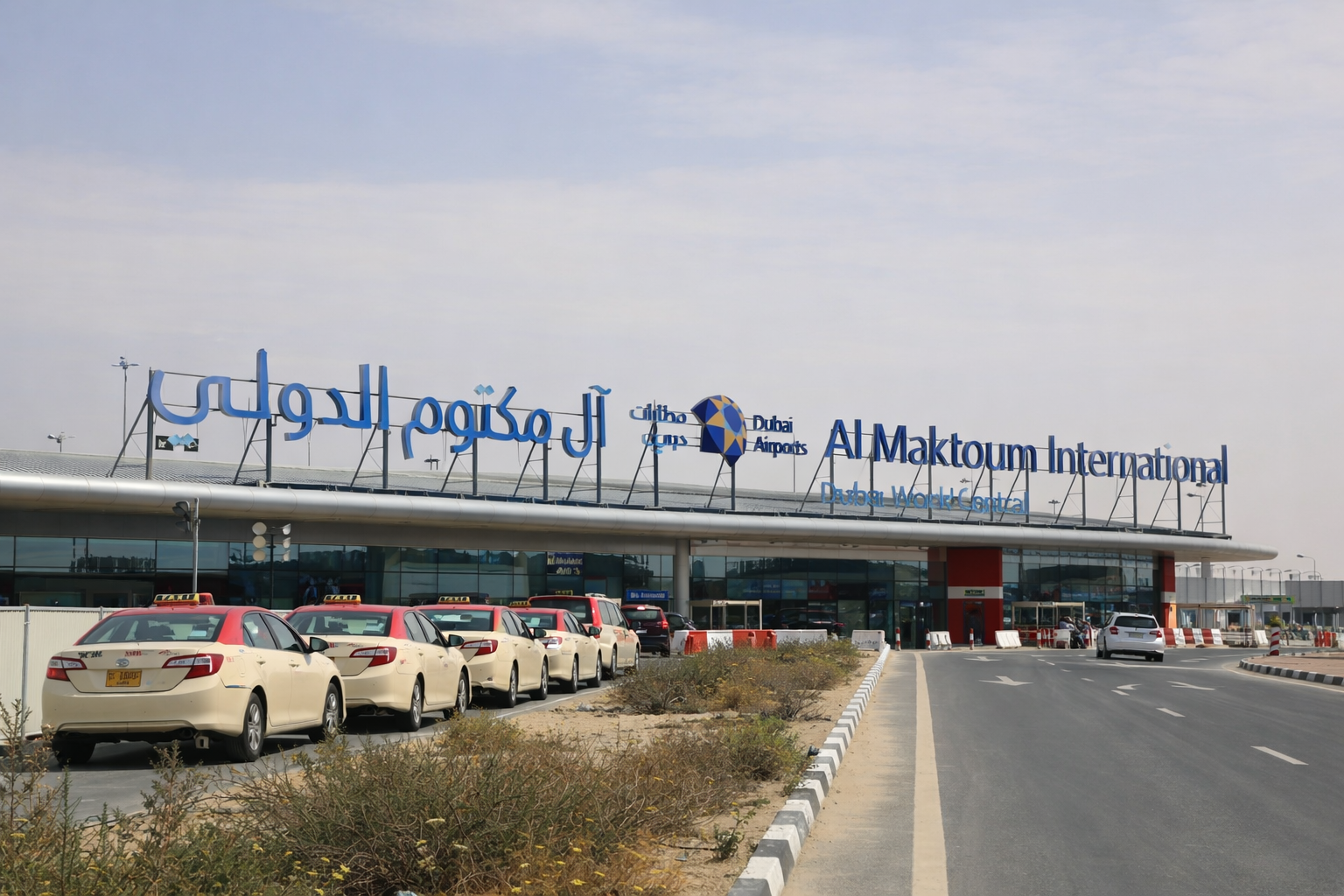
Al Maktoum International Airport (DWC) is a developing international aviation gateway designed to become Dubai’s primary airport hub. The airport currently supports a passenger terminal capacity of 26 million annually, with long-term expansion plans targeting up to 260 million passengers, positioning it to become the largest airport globally.
While current passenger throughput remains relatively low at approximately 2.1 million passengers in recent operational cycles, the airport supports a growing mix of scheduled and charter traffic.
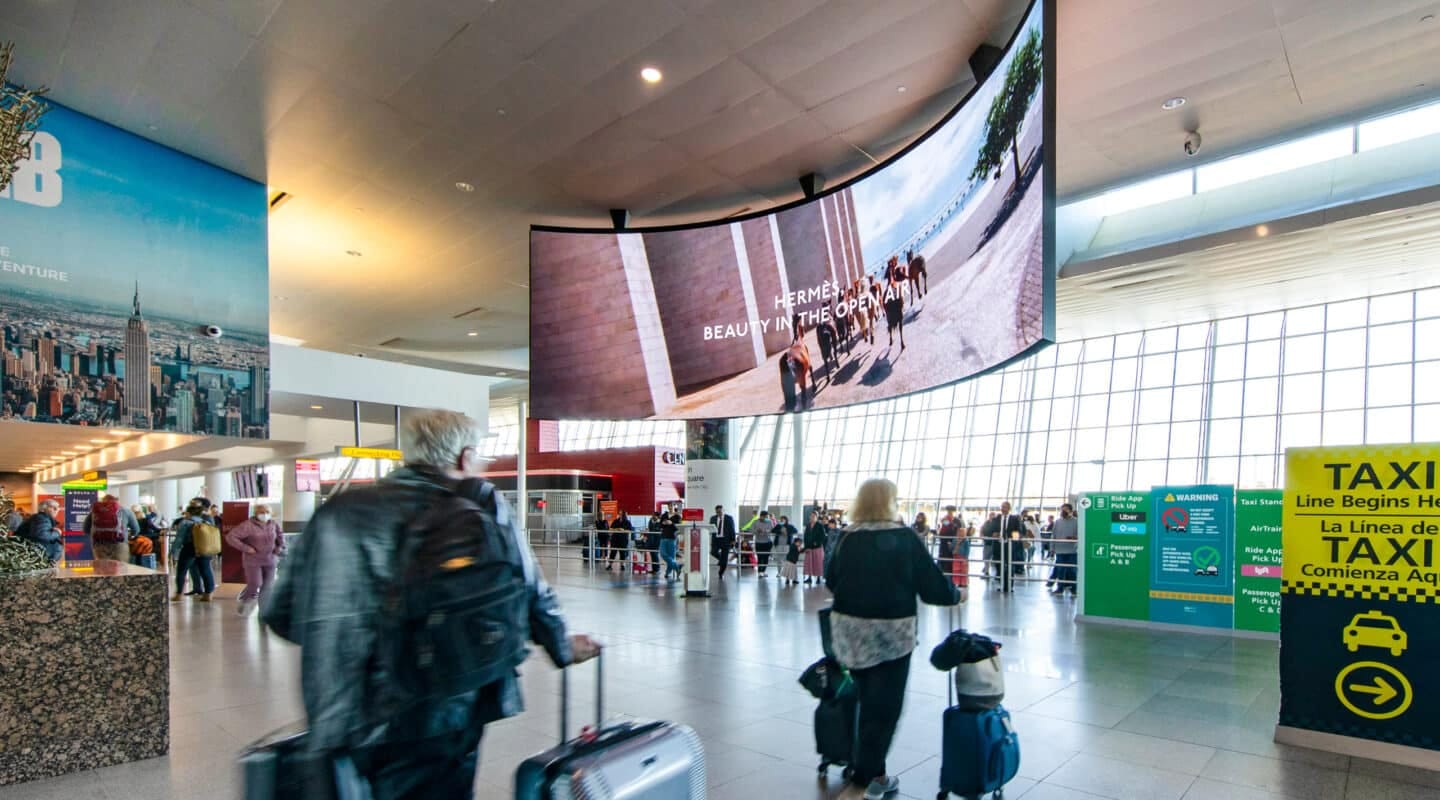
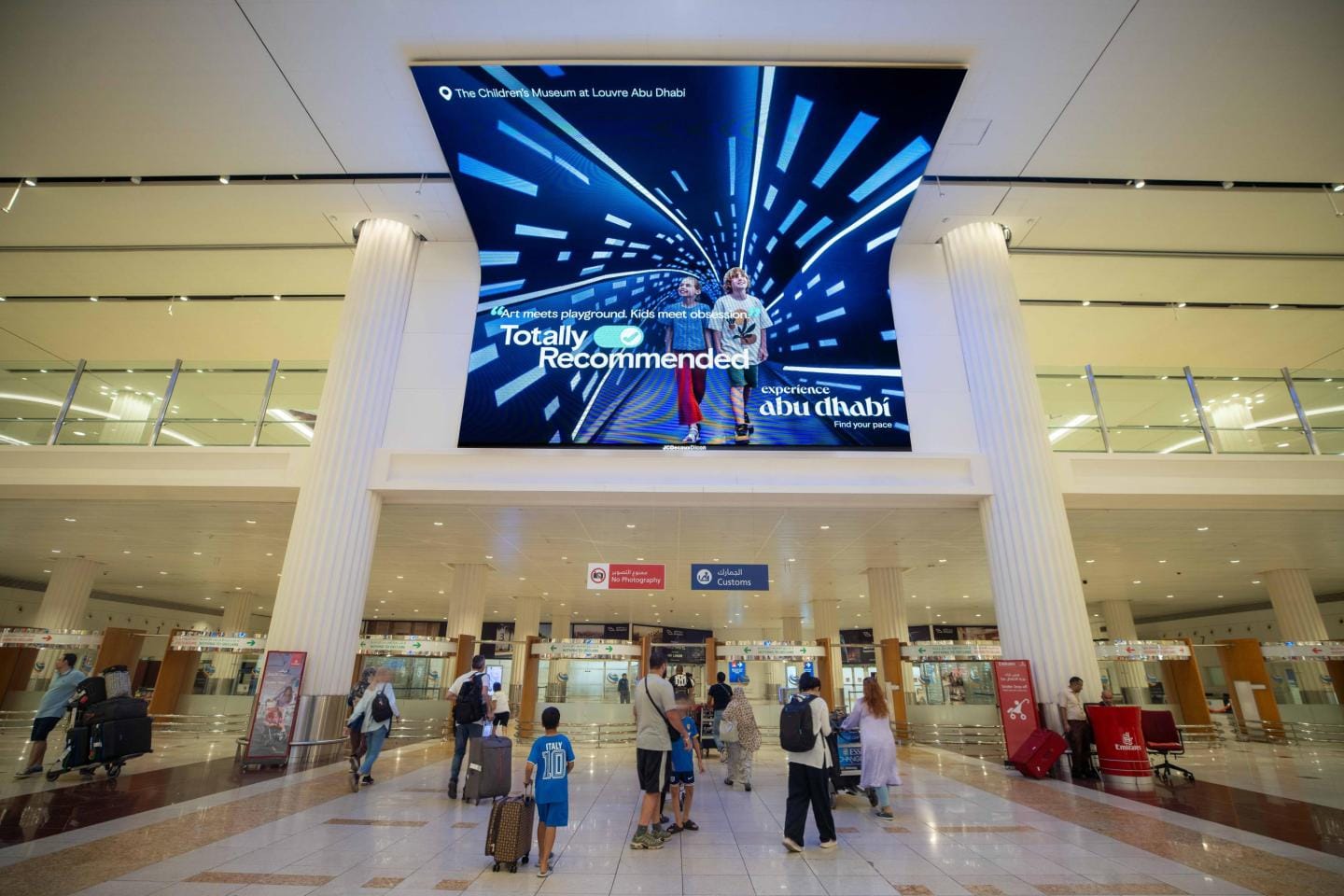
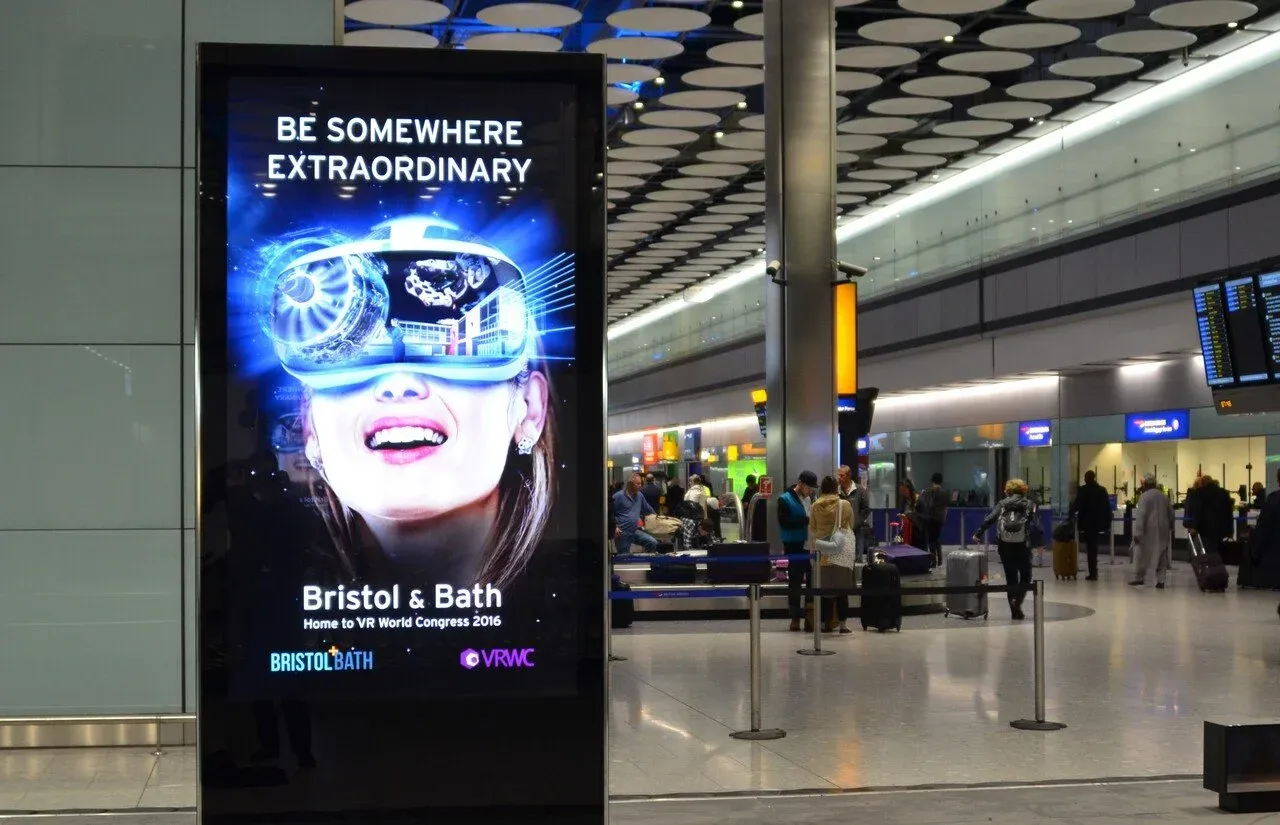
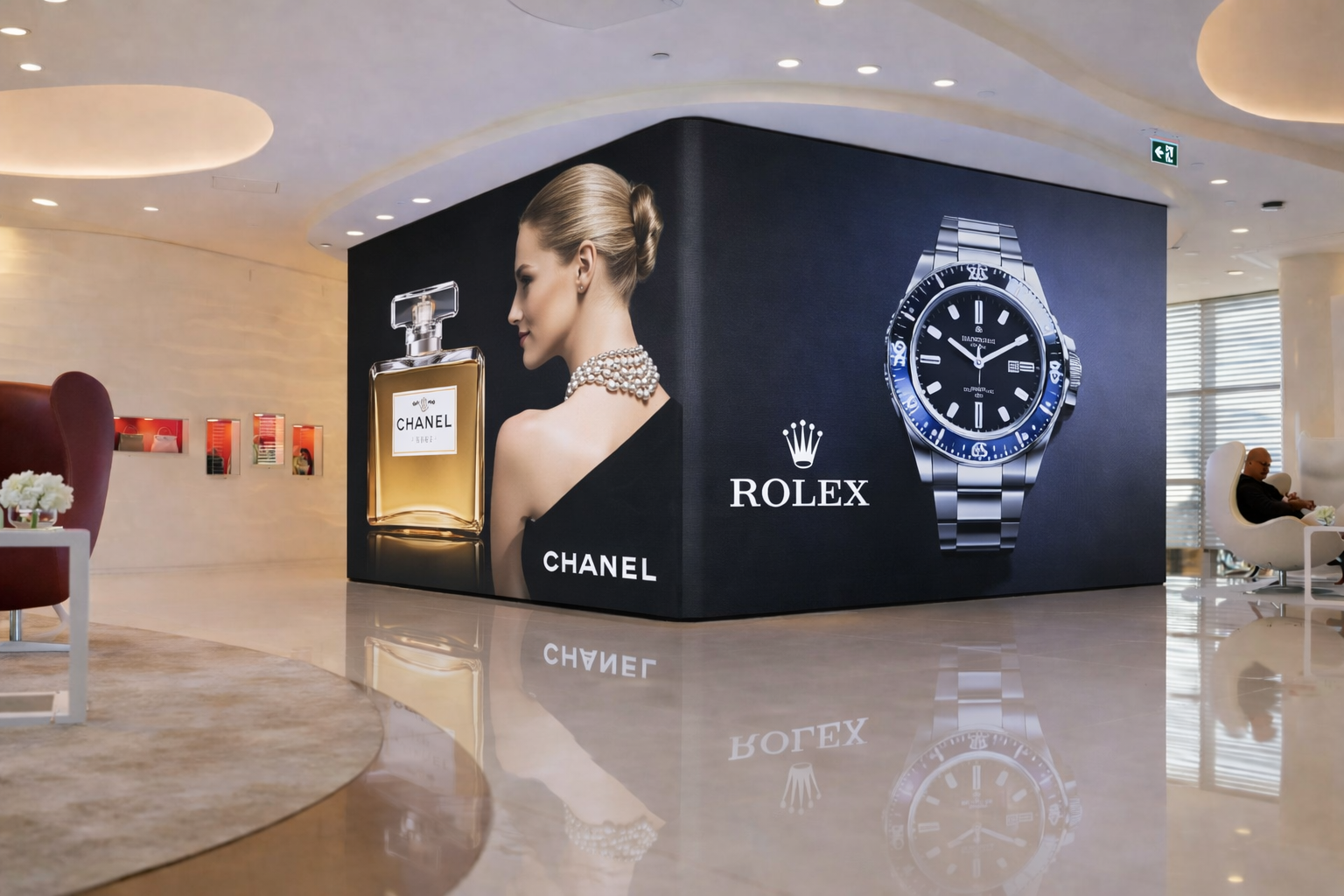
Unlike high-density airports, DWC delivers a more controlled passenger environment, where visibility is not diluted by multiple terminals or excessive advertising clutter. This creates a high-impact setting for campaigns focused on clarity, repetition, and audience concentration.
Optimize Your Journey Through Al Maktoum Airport
Book your free expert consultation today
Book Now ✈Terminal-Level Strategy Matters
DWC operates through a single passenger terminal, rather than multiple segmented terminals.
Placement decisions are not interchangeable.
Because all passenger movement is concentrated within one terminal:
- exposure is repeated across the same journey
- visibility is not fragmented across multiple zones
- dominant placements capture a larger share of total passenger attention
This creates a unified media environment, where fewer screens compete and each placement carries more weight.
This terminal represents the core advertising environment within DWC.
Airline and Route Concentration
DWC operates with 16 airlines in scheduled passenger traffic, with Flynas being the largest operator by frequency.
Airlines operating at the airport include:
- Flynas
- Aeroflot
- Ural Airlines
- Eurowings
- Norwegian Air Sweden
- Luxair
- SmartWings
- Scandinavian Airlines
The route network connects DWC to key international corridors including:
- Germany, Switzerland, Italy, and Scandinavia
- Russia and CIS markets
- GCC destinations such as Saudi Arabia and Kuwait
This creates a defined passenger profile:
- European leisure and outbound travelers
- regional GCC passengers
- repeat seasonal travel flows
- charter and group travel segments
For advertisers, this is a route-driven audience environment, where targeting is based on travel corridors rather than mass passenger volume.
Premium Lounges: High-Value Micro-Environments
DWC includes:
- VIP services
- priority passenger handling
- premium waiting areas
Unlike large airports where premium audiences are isolated, DWC’s lower passenger density means:
- premium travelers remain within visible passenger flow
- exposure is not restricted to lounge-only environments
- engagement happens across the broader terminal
This creates:
- higher attention per impression
- reduced visual clutter
- stronger message retention
For luxury real estate, financial services, and premium consumer brands, this provides a more efficient premium exposure environment.
Seasonal Traffic Intelligence
DWC follows consistent annual travel cycles aligned with Dubai’s international demand.
Summer (June–August)
Strong outbound travel from UAE residents, particularly across European routes.
Winter (November–March)
Peak inbound international travel into Dubai, driven by tourism and long-haul demand.
Eid travel periods
Recurring regional spikes across GCC and South Asia corridors.
These cycles create predictable audience movement, allowing campaigns to be aligned with high-intent travel periods rather than relying on irregular spikes.
Holiday Surge Windows
DWC experiences repeatable travel surges tied to global and regional behavior.
Christmas and New Year
Increased international arrivals, particularly from European markets.
Eid periods
High-frequency regional travel across GCC routes.
These windows enhance:
- passenger concentration
- travel intent
- campaign visibility within a shorter timeframe
Optimize Your Journey Through Al Maktoum Airport
Book your free expert consultation today
Book Now ✈Geographic Advantage
DWC is located in Jebel Ali, approximately 37 km from central Dubai, within the Dubai South corridor.
Key connected locations include:
- Expo City Dubai
A major business and exhibition hub - Dubai Marina and JBR
High-density residential and tourism zones - Palm Jumeirah
Premium real estate and hospitality destination - Jebel Ali Free Zone (JAFZA)
One of the largest commercial and business zones in the region - Sheikh Zayed Road corridor
Direct connectivity to Downtown Dubai and DIFC
This creates a combined audience environment of:
- international tourists
- high-income expatriates
- regional business travelers
For brands planning targeted international campaigns, regional visibility, or premium positioning within Dubai, DWC provides a focused and efficient airport advertising environment.
Inventory within dominant placements remains limited due to the airport’s compact structure.
Is DWC suitable despite lower passenger volume?
Yes. It offers higher visibility per impression due to a single-terminal structure and reduced clutter.
What type of airlines operate here?
16 airlines including Flynas, Aeroflot, Eurowings, and Scandinavian Airlines.
What type of audience can brands reach?
European travelers, GCC passengers, and repeat outbound UAE travelers.
What is the most strategic advertising advantage?
Single-terminal concentration ensures repeated exposure across all passenger journeys.
When are the best times to advertise?
Summer outbound travel, winter inbound travel, and Eid periods.
Guaranteed Results, Free Services & Expert Planning
As your global media planning partner, we ensure:
✅ Free media planning with our global experts
✅ Fastest campaign execution in the industry
✅ 100% campaign delivery success rate
✅ Free reporting and performance monitoring
Book a free expert consultation now