



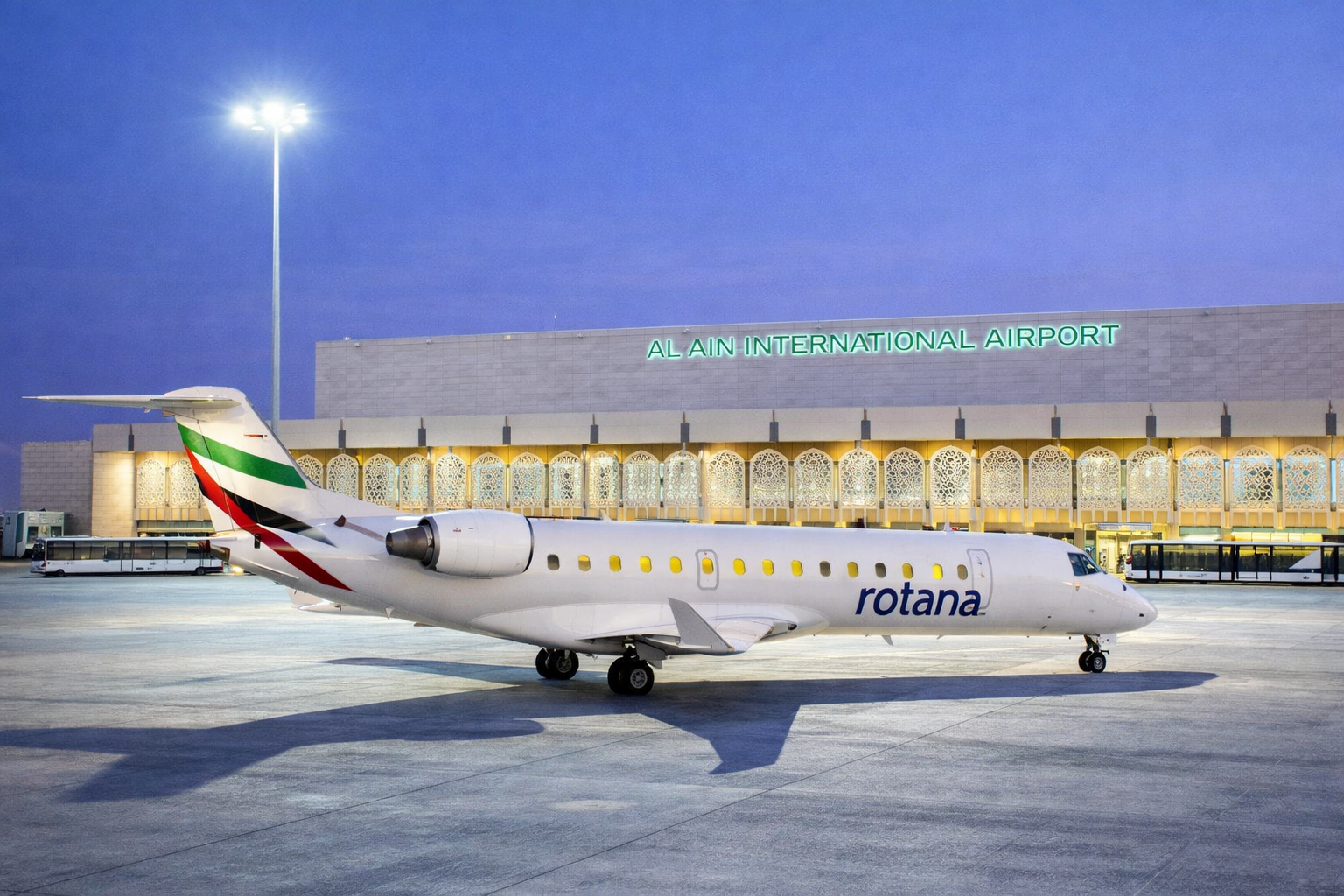
Al Ain International Airport is Abu Dhabi’s second international airport, located 18 km northwest of Al Ain city centre. The airport currently operates a small scheduled network with about 4 to 6 direct destinations across regional South Asia and Middle East corridors, depending on seasonal service patterns. Its strategic value lies not in scale, but in controlled passenger flow, repeat travel behaviour, and minimal media fragmentation.
Traffic composition is highly concentrated around South Asia and regional GCC corridors, with routes to India, Pakistan, Egypt, and Kuwait forming the core of passenger movement.
Unlike large hub airports, Al Ain does not operate on scale. Its strategic value comes from controlled passenger flow, repeat travel behavior, and minimal media fragmentation. This creates a high-clarity environment where campaigns benefit from repeated exposure across a simplified journey.
Optimize Your Journey Through(AAN) Airport
Book your free expert consultation today
Book Now ✈Terminal-Level Strategy Matters
Al Ain International Airport operates through a single passenger terminal handling all commercial flights, creating a unified passenger movement structure.
Placement decisions are not interchangeable.
Because of this structure:
- Passenger Flow Is Centralized
- Movement Is Linear And Predictable
- Exposure Is Repeated Across Key Touchpoints
This creates a single dominant advertising environment, where fewer placements can deliver full terminal coverage.
Airline and Route Concentration
Al Ain Airport operates with a focused airline mix including:
- Air India Express
- Pakistan International Airlines
- Nile Air
- Jazeera Airways
- Etihad Airways
The route network includes:
- India
- Pakistan
- Egypt
- Kuwait
This creates a clearly defined passenger profile:
- South Asian Expatriate Travel
- Family And Visiting Travel
- Government And Institutional Movement
Passenger flows are highly repeat-driven, making this a frequency-based exposure environment.
Premium Lounges: High-Value Micro-Environments
Al Ain Airport includes:
- VIP Passenger Services
- Dedicated Premium Waiting Areas
- Controlled Passenger Handling Zones
Due to lower passenger density:
- Premium Travelers Remain Within Visible Flow
- Exposure Extends Beyond Lounge Areas
- Engagement Happens Across The Terminal
Seasonal Traffic Intelligence
Al Ain Airport follows consistent regional travel cycles.
Summer (June–August)
Strong outbound travel driven by expatriate movement across India and Pakistan routes.
Winter (November–March)
Increased inbound tourism driven by Al Ain’s cultural and heritage positioning.
Eid Travel Periods
Consistent spikes in GCC and South Asia passenger movement.
These cycles provide predictable campaign timing aligned with high-intent travel behavior.
Holiday Surge Windows
Al Ain Airport experiences recurring travel peaks tied to regional patterns.
Eid Periods
High-frequency travel across GCC and South Asia corridors.
Christmas And New Year
Moderate increase in inbound tourism and international travel.
These windows enhance:
- Passenger Concentration
- Travel Intent
- Campaign Visibility
Geographic Advantage
Al Ain International Airport is located approximately 15–18 km from Al Ain city center, serving one of the UAE’s largest inland population clusters.
Key connected locations include:
- Al Ain City Center
- Jebel Hafeet
- Al Ain Oasis
- Al Ain Industrial Area
- UAE–Oman Border Crossing
These locations represent:
- Government And Administrative Activity
- Tourism And Heritage Destinations
- Residential And Expat Population
- Cross-Border Travel Movement
Optimize Your Journey Through(AAN) Airport
Book your free expert consultation today
Book Now ✈Strategic Perspective
Al Ain International Airport delivers a controlled, low-clutter advertising environment defined by:
- 6 Direct International Routes
- 5 Core Airline Operators
- 10–30 Daily Passenger Flights
- Single-Terminal Passenger Flow
Terminal-level placement decisions directly influence campaign visibility, audience quality, and brand impact.
For brands targeting regional travel corridors, expatriate audiences, and institutional movement, Al Ain Airport provides a focused and efficient advertising platform.
Is Al Ain Airport suitable despite smaller passenger volume?
Yes. It offers higher visibility per impression due to centralized passenger flow.
What type of airlines operate here?
Air India Express, PIA, Nile Air, Jazeera Airways, and Etihad Airways.
What type of audience can brands reach?
South Asian expatriates, GCC travelers, and institutional audiences.
What is the main advertising advantage?
Single-terminal structure ensures repeated exposure across the journey.
When are the best times to advertise?
Eid periods, summer outbound travel, and winter tourism cycles.
Guaranteed Results, Free Services & Expert Planning
As your global media planning partner, we ensure:
✅ Free media planning with our global experts
✅ Fastest campaign execution in the industry
✅ 100% campaign delivery success rate
✅ Free reporting and performance monitoring
Book a free expert consultation now