


Airport at a Glance
| Field | Detail |
|---|---|
| Airport | Ashgabat International Airport |
| IATA Code | ASB |
| Country | Turkmenistan |
| City | Ashgabat |
| Annual Passengers | Approx. 700,000+ (2023, most recent available) |
| Primary Audience | State enterprise executives, energy sector decision-makers, inbound B2B investors |
| Peak Advertising Season | April to June, September to November |
| Audience Tier | Tier 2 |
| Best Fit Categories | Energy and Industrial Services, Financial Services, Construction, Luxury Automotive, International Real Estate |
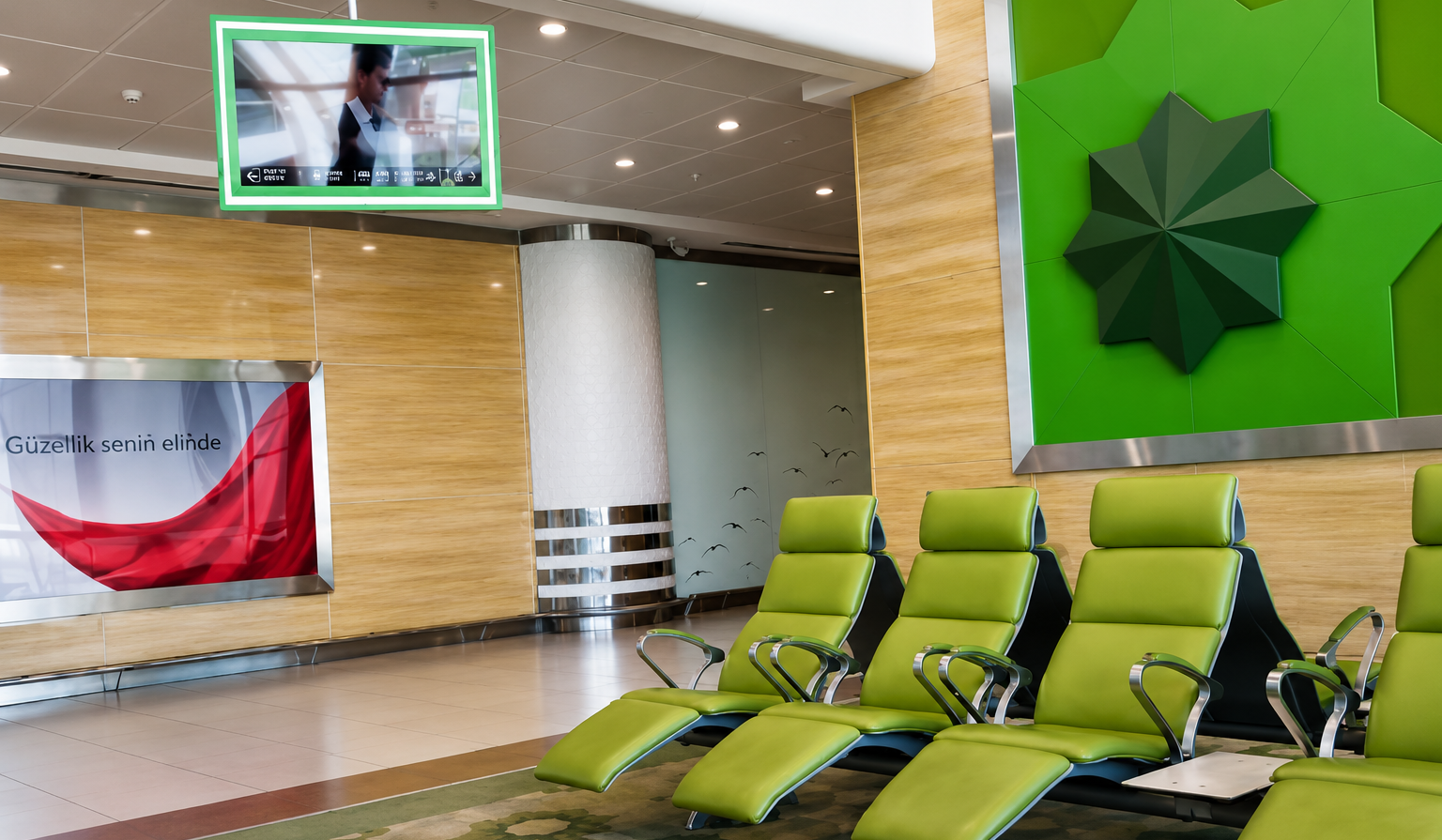
Ashgabat International Airport is the single international gateway into and out of Turkmenistan, a country sitting atop the world's fourth-largest natural gas reserves at 19.5 trillion cubic metres. The 2016 terminal — a USD 2.3 billion architectural landmark built in the form of a falcon — was designed for 14 million annual passengers and holds Class A designation. Current passenger volumes are far below that design capacity, creating an extraordinarily low-clutter, high-impact advertising environment for every brand that enters. At ASB, every impression reaches a traveller who has had to actively choose to visit a country that is one of the most tightly controlled and least-accessible in the world — which means the audience self-selects for business intent, institutional authority, or committed tourism motivation.
What makes ASB strategically important for a narrow but commercially powerful category of advertisers is the nature of Turkmenistan's economy. Hydrocarbon exports represent over 84% of the country's total export value. The state controls all major enterprise. Foreign business visitors arriving at ASB are almost exclusively engaged in energy contracts, large-scale construction, logistics infrastructure, or high-level government liaison. No other airport in the world concentrates this specific audience profile in such a contained, premium, low-distraction environment.


Advertising Value Snapshot
- Passenger scale: Approximately 700,000 passengers per year (2023), operating within a 14-million-capacity terminal — producing one of the lowest-clutter advertising environments in Central Asia
- Traveller type: State enterprise executives, energy and construction sector contractors, inbound B2B investors from Turkey, China, UAE, Russia and Germany, niche adventure and Silk Road tourists
- Airport classification: Tier 2 — the sole international gateway of a sovereign petro-state with a USD 62 billion GDP and concentrated institutional wealth
- Commercial positioning: Ashgabat is one of the most architecturally extraordinary capitals in the world and the nerve centre of a government committing billions annually to infrastructure, urban development, and energy diversification
- Wealth corridor signal: ASB sits on the intersection of European, Middle Eastern, Russian, and East Asian energy investment flows into Turkmenistan's hydrocarbons sector
- Advertising opportunity: Masscom Global provides direct access to the ASB terminal environment, reaching the precise audience of B2B decision-makers, energy executives, and state enterprise officers who move through this airport in a uniquely distraction-free setting. Inventory at ASB is a specialist buy that few global media planners have activated — that gap is the opportunity.
Airport Advertising is Complex to Get Right
We help you execute faster, with proven results and local insight most planners lack starting now.
Talk to an ExpertCatchment Area and Economic Drivers
Top 10 Cities within 150 km — Marketer Intelligence
- Ashgabat (city proper): Home to approximately one million people and all organs of Turkmenistan's centralised state — every major contract, procurement decision, and capital deployment in the country flows through this city, making its travel audience uniquely concentrated with senior institutional authority
- Änew (Anau, ~12 km east): An ancient archaeological city immediately adjacent to the capital, functioning as Ashgabat's satellite residential zone — its educated professional class commutes into the capital and shares the same travel behaviour as Ashgabat's upper-tier government and enterprise employees
- Arkadag (~30 km north): Turkmenistan's brand-new USD 4.8 billion satellite city, purpose-built as the capital of Ahal province and currently under accelerated development — its incoming population of state officials and professionals represents a growing feeder audience for ASB
- Ovadandepe (~20 km north): An industrial zone on the Ashgabat-Dashoguz highway hosting glass production, steel processing, and state construction supply facilities — it produces a working technical and logistics management audience that transits through ASB for procurement and business travel
- Geok-Tepe (~45 km northwest): A strategically located town near Turkmenistan's north-south highway corridor, with historical and agricultural significance — its proximity to Ashgabat makes it a dormitory zone for capital-based professionals and state administration employees
- Baharden/Bäherden (~60 km northwest): An emerging industrial town hosting the Ceramic Products Plant opened in 2025 with a capacity of 3.3 million square metres of tiles annually — construction sector suppliers and international equipment providers targeting this facility are part of the ASB inbound audience
- Gypjak (~10 km west of centre): Home to the grand Türkmenbaşy Ruhy Mosque, one of the most visited religious sites in Turkmenistan — pilgrimage and religious tourism organisers, as well as residents of this upper-tier residential zone, use ASB as their primary gateway
- Nisa (~12 km west): The UNESCO-listed ruins of the ancient Parthian capital, generating international archaeologist, historian, and cultural tourism inflows through ASB — heritage tourism operators find a niche but high-value audience here
- Kaka (~110 km east): An agricultural and processing town in the Tejen corridor producing cotton and wheat for export — its enterprise management class uses ASB for regional and international business travel, particularly for connections to Moscow and Istanbul
- Serdar (Gyzylarbat, ~150 km northwest): The largest industrial town in the western Balkan province, with textile and energy logistics infrastructure feeding into the Caspian trade corridor — its business leadership class relies on ASB as the sole viable international departure point
NRI and Diaspora Intelligence
Turkmenistan does not have a traditional large-scale labour diaspora in the same sense as its Central Asian neighbours. The country's state-managed economy and restricted emigration historically limited outbound movement. However, a Turkmen professional and student diaspora has developed in Turkey, Russia, Germany, and increasingly in the Gulf states, supported by direct flight connectivity. Returning Turkmen professionals, students finishing degrees abroad, and government scholarship recipients returning from education in Russia, Turkey, and Western Europe represent the primary returning diaspora flow through ASB. This audience carries exposure to international consumer standards and aspirations, making them receptive to premium product advertising, financial services, and international education brands at the point of return. In addition, a growing community of Turkmen nationals working in Gulf energy and construction sectors returns periodically through ASB via Dubai and Abu Dhabi connections.
Economic Importance
Turkmenistan's economy is defined, almost entirely, by one resource: natural gas. With the world's fourth-largest reserves and annual production of approximately 80 billion cubic metres, the country generates the majority of its state revenue from hydrocarbon exports primarily directed to China. This concentrated energy wealth funds a state apparatus that spends at extraordinary scale on urban infrastructure, monument construction, and strategic industrial development — with the government acknowledging over USD 37 billion in large-scale construction projects at various stages of completion. For advertisers, this means the decision-makers controlling procurement, logistics contracts, and investment approvals for one of the world's most active state-directed construction economies pass through a single airport. The audience is small in number but enormous in the scale of capital they direct.
Business and Industrial Ecosystem
- Natural gas and hydrocarbons: The dominant sector producing a concentrated executive audience of energy company directors, Chinese and Russian energy engineers, and international financial advisors who transit through ASB on long-term contract cycles
- Large-scale state construction: The government's commitment to billion-dollar infrastructure projects from Arkadag city to the Ashgabat-Turkmenabat motorway generates a steady inflow of Turkish, Chinese, European, and Korean construction contractors and engineering firms transiting through ASB
- Polymer and chemical manufacturing: The Kiyanly Polymer Factory and associated petrochemical infrastructure represent Turkmenistan's most significant industrial diversification effort, drawing international chemical engineering expertise through Ashgabat
- Glass, ceramics, and building materials: New production facilities opened between 2018 and 2025 have positioned Ashgabat's industrial hinterland as a growing manufacturer of construction materials for export — their supply chains and technical management teams are an ASB audience
Passenger Intent — Business Segment: Business travellers at ASB are almost exclusively in Turkmenistan because of the state — to win contracts, manage existing energy or construction operations, or conduct bilateral diplomatic and commercial engagement. They are a highly qualified, high-authority, decision-making audience travelling on Istanbul, Frankfurt, Moscow, Dubai, and Beijing corridors. Brands in B2B financial services, engineering equipment, industrial logistics, premium hospitality, and professional services find a contained and receptive audience here with essentially no competing messaging noise.
Strategic Insight: ASB's business advertising environment is arguably the purest form of B2B airport advertising available in Central Asia. The volume is low, but the authority level of each individual passing through is extraordinary. A senior executive from a Turkish construction company who has just won a USD 500 million government contract, a Chinese energy engineer on his quarterly Ashgabat rotation, a Frankfurt-based commodities banker meeting the state gas company — these are the passengers that pass through ASB's minimal-clutter terminal daily. For the right advertiser, this is not a mass market; it is a precision instrument.
Tourism and Premium Travel Drivers
- Darvaza Gas Crater ("Door to Hell"): The crater located 260 km north of Ashgabat — a permanently burning natural gas pit in the Karakum Desert created by Soviet drilling in 1971 — is Turkmenistan's most internationally recognised attraction and one of the most shared travel images in the world, drawing adventure tourists from Europe, Asia, and North America through ASB
- Ashgabat "City of White Marble": Holding four Guinness World Records including the world's highest concentration of white marble buildings, Ashgabat's futuristic capital cityscape — with its gold-tipped monuments, giant indoor Ferris wheel, and grandiose presidential infrastructure — is a globally unique architectural tourism destination generating specialist cultural and curiosity-driven inbound visitors
- Old Nisa (UNESCO World Heritage Site): The ruins of the ancient Parthian capital, located 18 km from central Ashgabat, are a significant stop on the Central Asian Silk Road circuit and draw heritage tourists visiting Turkmenistan alongside Uzbekistan and Iran
- Kunya-Urgench and Ancient Merv (UNESCO sites): Two additional UNESCO World Heritage Sites — Kunya-Urgench with its towering minarets and mausoleums, and Ancient Merv, one of the great Silk Road city ruins — extend inbound tourists beyond Ashgabat and deepen tour package value
Passenger Intent — Tourism Segment: Tourism to Turkmenistan is by definition committed and high-intent. The country requires pre-arranged visa invitations, mandatory tour operator involvement, and active forward planning — there are no casual arrivals. Visitors to ASB have researched their trip extensively, allocated a dedicated travel budget, and are specifically motivated by the country's extreme uniqueness. They are predisposed to purchasing premium experiences, photography equipment, adventure gear, and travel insurance. International hospitality and experience brands, niche travel insurers, photography and adventure equipment companies, and Silk Road heritage tour operators all find a small but fully activated audience at this airport.
Travel Patterns and Seasonality
Peak seasons:
- Spring (April to June): The optimal weather window for Turkmenistan travel, coinciding with Navruz in late March and comfortable desert temperatures — this is when inbound tourism, pilgrim travel to Saudi Arabia (Eid), and construction season business travel peak simultaneously
- Autumn (September to November): A strong second peak as energy sector contract cycles resume after summer, business travel from European and Gulf markets intensifies, and the weather again becomes suitable for desert and outdoor tourism
- Hajj and Umrah season (variable): Turkmenistan's predominantly Muslim population generates structured outbound pilgrimage travel to Jeddah and Medina through ASB, with direct seasonal flights operated accordingly — this window drives high consumer spending on religious travel goods, gifting, and personal care products
Event-Driven Movement
- Navruz (March 21): Turkmenistan's most significant national celebration creates a multi-day domestic and diaspora travel surge — returning students and professionals from Turkey, Russia, and Germany generate the highest inbound traffic concentration of the spring period, arriving with internationally sourced disposable income
- Akhal-Teke Horse Festival (April): The celebrated Turkmen national horse, the Akhal-Teke — a golden-coated breed considered one of the oldest domesticated horse breeds in the world — is honoured in an annual national celebration that draws specialist equestrian tourism and international media attention through ASB
- Independence Day (September 27): Turkmenistan's independence anniversary is marked with major state ceremony and infrastructure unveilings, generating concentrated inbound diplomatic and protocol travel — a period when state enterprise executives, government officials, and international delegates move through ASB in high volumes
- Hajj travel window (variable): Seasonal direct flights to Jeddah and Medina carry outbound pilgrims with elevated consumer spending profiles — their departure and return windows represent strong targeting periods for religious goods, gifting, premium FMCG, and financial products
- State project handovers (ongoing): Turkmenistan's government regularly schedules major project inaugurations — new city districts, industrial facilities, public monuments — to coincide with national holidays, consistently generating business travel surges around these events
It’s Not Just Where You Advertise - It’s How Fast You Execute
We combine local insight with fast rollout to deliver results for you, now.
Talk to an ExpertAudience and Cultural Intelligence
Top 2 Languages
- Turkmen: The official state language and marker of national identity since independence in 1991 — advertising in Turkmen carries a signal of cultural respect and institutional alignment that is commercially meaningful in a country where the state and its employees represent the dominant consumer class
- Russian: The dominant language of professional, technical, and inter-ethnic communication in Ashgabat, widely used across business, engineering, and diplomatic contexts — essential for reaching the educated professional class, inbound CIS business visitors, and the technically trained workforce of Turkmenistan's energy and construction sectors
Major Traveller Nationalities
Turkmen nationals are the overwhelming majority of ASB passengers, comprising both outbound travellers to Turkey, Russia, the UAE, and Germany, and returning residents from education and work abroad. Turkish nationals form the single largest foreign business traveller community, driven by the deep and long-standing presence of Turkish construction and contracting firms executing state mega-projects in Ashgabat since the 1990s. Chinese nationals represent a critical and growing segment, reflecting China's position as Turkmenistan's dominant natural gas buyer and the extensive presence of Chinese energy engineers and project managers in-country. Russian nationals use the Moscow route for both business and cultural connectivity. German and European business travellers are a smaller but increasing presence on the Frankfurt corridor, reflecting European corporate interest in Turkmenistan's industrial modernisation.
Religion — Advertiser Intelligence
- Islam, Sunni (approximately 89%): Turkmenistan's state officially promotes a nationalist interpretation of Islam that is deeply embedded in cultural identity. Navruz, Eid al-Fitr, Eid al-Adha, and the Hajj pilgrimage season are all commercially active periods at ASB. Outbound pilgrimage flights to Jeddah and Medina are operated on a seasonal basis, generating defined windows of high consumer spend on religious goods, gifting, premium dates, fragrances, prayer accessories, and personal care products. Halal financial products, Islamic travel services, and Gulf real estate brands find a directly relevant audience in these windows.
- Russian Orthodox Christianity (approximately 9%): Concentrated among the ethnic Russian and Slavic professional community in Ashgabat — an economically productive segment that drives the Christmas, Easter, and Russian New Year travel windows on the Moscow corridor, particularly relevant for consumer electronics, appliances, and seasonal gifting brands.
Behavioral Insight: The Ashgabat traveller is shaped by one of the world's most distinctive national contexts — a state-provided welfare model, concentrated hydrocarbon wealth, and a culture of institutional loyalty and collective identity. Consumer behaviour tends toward considered, status-informed purchasing rather than impulsive spending. For business travellers, the purchasing mindset is procurement-oriented and relationship-driven. For the emerging professional class, aspirational consumption tied to international exposure — brands encountered in Istanbul, Dubai, and Frankfurt — creates a clear appetite for premium goods that represent global standards. Advertising that speaks to quality, reliability, and international prestige resonates most powerfully at ASB.
Outbound Wealth and Investment Intelligence
The outbound passenger at Ashgabat is navigating a unique financial landscape. Turkmenistan's state-managed economy means that the wealthiest individuals are, almost without exception, either senior government officials, state enterprise executives, or the small but growing class of private entrepreneurs operating in sectors adjacent to state contracts. These individuals travel primarily to Istanbul, Dubai, Frankfurt, London, and Moscow, and they are active buyers of international real estate, international education, and residency products that offer both lifestyle access and financial optionality outside Turkmenistan's closed economy.
Outbound Real Estate Investment: Istanbul is the primary real estate destination for Ashgabat's outbound HNI audience, driven by direct daily connectivity, Turkey's citizenship-by-investment programme at USD 400,000, and the established Turkmen community in Istanbul that acts as both a social and professional reference network. Dubai is the second key market — the UAE's Golden Visa programme, zero-tax property environment, and direct flight access make it an attractive destination for Turkmen capital deployment. Both Istanbul and Dubai offer the combination of lifestyle access, alternative residency, and capital preservation that is highly relevant to a Turkmen professional class seeking asset protection in internationally recognised legal frameworks.
Outbound Education Investment: Turkey hosts the largest concentration of Turkmen university students outside the country, supported by government scholarship programmes and cultural affinity. Russian universities remain significant in technical disciplines, particularly in energy engineering, geology, and petroleum science. Germany is an emerging destination for Turkmen professionals on skills-based visas, aligned with the German government's active engagement in Central Asian technical education. International universities with Turkmen student cohorts, and education consultancies placing students in Turkish, German, and UK institutions, find a directly relevant and financially capable audience at ASB.
Outbound Wealth Migration and Residency: Turkish citizenship by investment is the most accessible and actively pursued residency programme for Turkmenistan's upper-tier outward-looking class. UAE Golden Visa programmes are equally relevant for those deploying capital into Gulf real estate. Given the opaque nature of Turkmenistan's domestic financial environment, second-residency options that provide banking access, travel freedom, and asset portability are a commercially compelling proposition for the professional class transiting through ASB. Residency advisory firms and wealth management services targeting this niche find few competitors and a self-qualifying, motivated audience at this airport.
Strategic Implication for Advertisers: ASB represents a rare intersection of sovereign energy wealth and a commercial advertising environment that virtually no international brand has yet activated with precision. The outbound Turkmen professional class is spending — on Istanbul property, Turkish citizenship, Dubai real estate, and European education — and they are doing so through an airport that currently carries almost no advertising directed at those exact intentions. International brands on the Turkey, UAE, and European side of these transactions should view ASB as an underpriced, undercontested access point to a commercially motivated niche audience. Masscom Global can activate both sides of this corridor simultaneously with campaigns that reach the Ashgabat outbound traveller and the international destination market equally.
Airport Infrastructure and Premium Indicators
Terminal:
- The single terminal, opened September 2016, was constructed at a cost of USD 2.3 billion and designed in the iconic form of a soaring falcon — a deliberate architectural statement of national identity and aspiration. The terminal holds Class A designation, operates at 1,600 passengers per hour, and has design capacity for 14 million annual passengers. Current utilisation is a fraction of capacity, creating a spacious, unhurried passenger environment with exceptional visibility for advertising formats. The terminal houses duty-free retail, CIP and VIP lounges, restaurants and cafes, a transit hotel (the Laçyn Hotel for crew and transit passengers), currency exchange, and a dedicated cargo terminal of 17,174 square metres.
Premium Indicators:
- The terminal's CIP and VIP lounge infrastructure serves a passenger mix that skews heavily toward senior government, diplomatic, and corporate travellers — making it a premium advertising environment by audience profile rather than volume
- The Laçyn Hotel, located in the transit zone, provides overnight accommodation for connecting passengers — a signal of long-haul connectivity ambitions and the presence of passengers with extended dwell time
- The falcon-shaped terminal is one of the most visually distinctive airport structures in the world, creating a premium brand association environment by architectural context alone
- The airport's two parallel 3,800-metre runways support the full range of wide-body aircraft including Boeing 777 series, Airbus A330, and A380-capable configurations — supporting both the long-haul capacity of Turkmenistan Airlines and future route expansion ambitions
Forward-Looking Signal: The Turkmen government's ongoing commitment to mega-infrastructure investment — with over USD 37 billion in active construction projects and the brand-new USD 4.8 billion Arkadag city under development — will continue to drive inbound business travel through ASB for years ahead. Turkmenistan's March 2025 launch of gas swaps through Iran to Turkey, with a target of 1.3 billion cubic metres by year end, signals a serious push to diversify gas export routes beyond China, which if successful would significantly accelerate European and Turkish corporate engagement with Ashgabat. Masscom Global advises clients to establish ASB advertising positions now, while the market is operationally quiet and before the route network and passenger volumes reflect the commercial ambitions clearly visible in the infrastructure.
Airline and Route Intelligence
Top Airlines: Turkmenistan Airlines (national carrier, hub operator), Turkish Airlines, flydubai, S7 Airlines, China Southern — five airlines in total serving ASB across scheduled passenger routes.
Key International Routes: Istanbul (most frequent route, approximately 26 weekly flights operated by Turkish Airlines and Turkmenistan Airlines), Dubai (flydubai and Turkmenistan Airlines, daily), Moscow (Turkmenistan Airlines and S7), Frankfurt (seasonal, Turkmenistan Airlines), London Gatwick (Turkmenistan Airlines), Beijing (seasonal, Turkmenistan Airlines), Urumqi (China Southern), New Delhi (seasonal, Turkmenistan Airlines), Kuala Lumpur (seasonal, Turkmenistan Airlines), Bangkok (seasonal, Turkmenistan Airlines), Ho Chi Minh City (seasonal, Turkmenistan Airlines), Seoul (seasonal, Turkmenistan Airlines), Jeddah and Medina (Turkmenistan Airlines, seasonal pilgrimage), Abu Dhabi (Turkmenistan Airlines), Milan (seasonal, Turkmenistan Airlines).
Domestic Connectivity: Dashoguz, Turkmenabat (Charjew), Mary, Turkmenabat, and Turkmenbashi — five domestic destinations served by Turkmenistan Airlines, providing internal connectivity across the country's regional centres and making Ashgabat the mandatory transit point for any Turkmen citizen travelling internationally.
Wealth Corridor Signal: The Istanbul route is by far the most commercially consequential at ASB — it carries Turkish construction executives, Turkmen students and professionals in Turkey, outbound investors and property buyers in Istanbul, and returning diaspora. The Dubai corridor carries Gulf-based Turkmen professionals and inbound UAE investors. The Frankfurt and London routes carry the highest-income European business delegation segment, engaged in energy deals, engineering contracts, and diplomatic financial liaison. The Beijing corridor is the most strategically significant for Turkmenistan's gas economy, carrying Chinese energy company personnel who manage the country's dominant export relationship. Together, these corridors paint a clear picture: ASB's route map is a map of Turkmenistan's energy revenue and capital flows.
Media Environment at the Airport
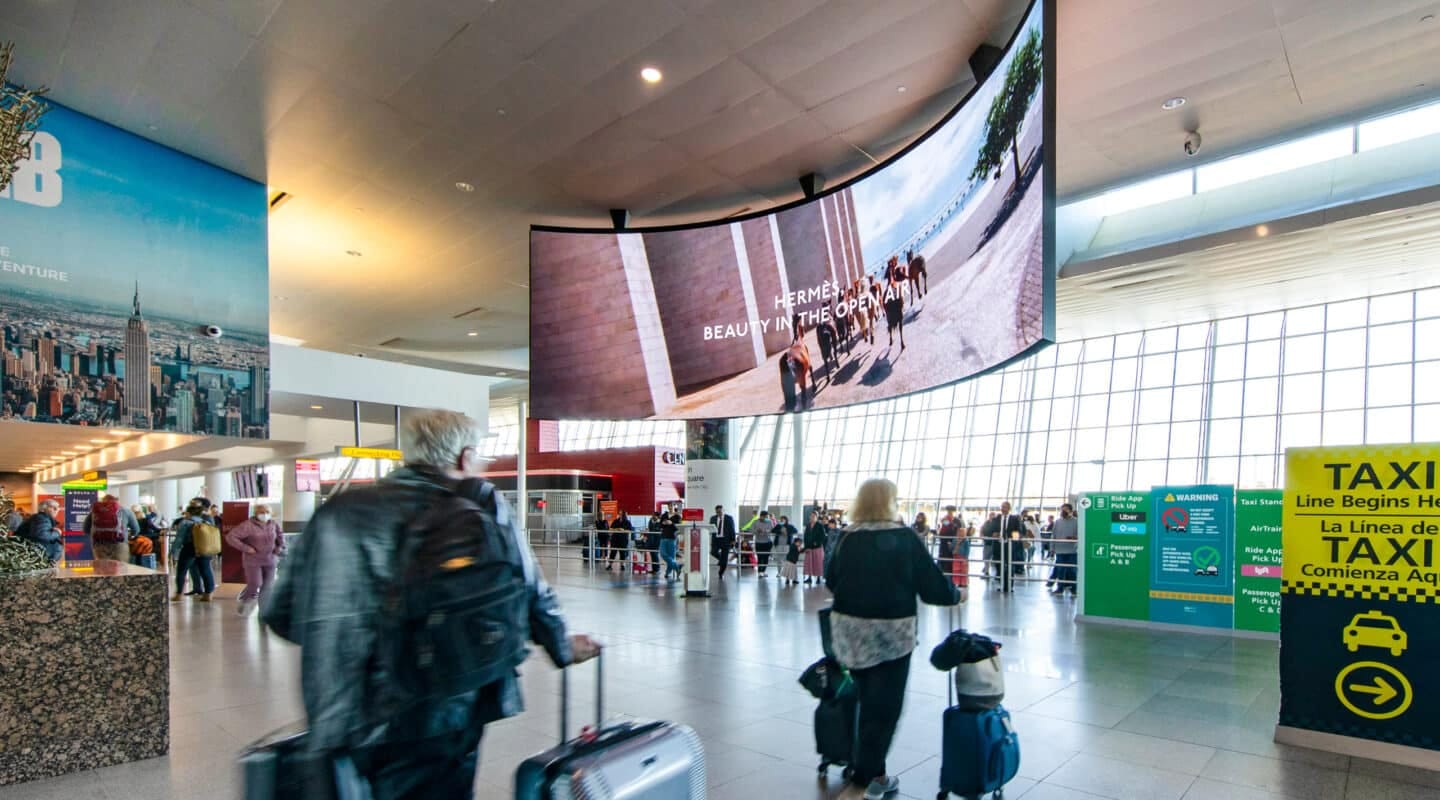
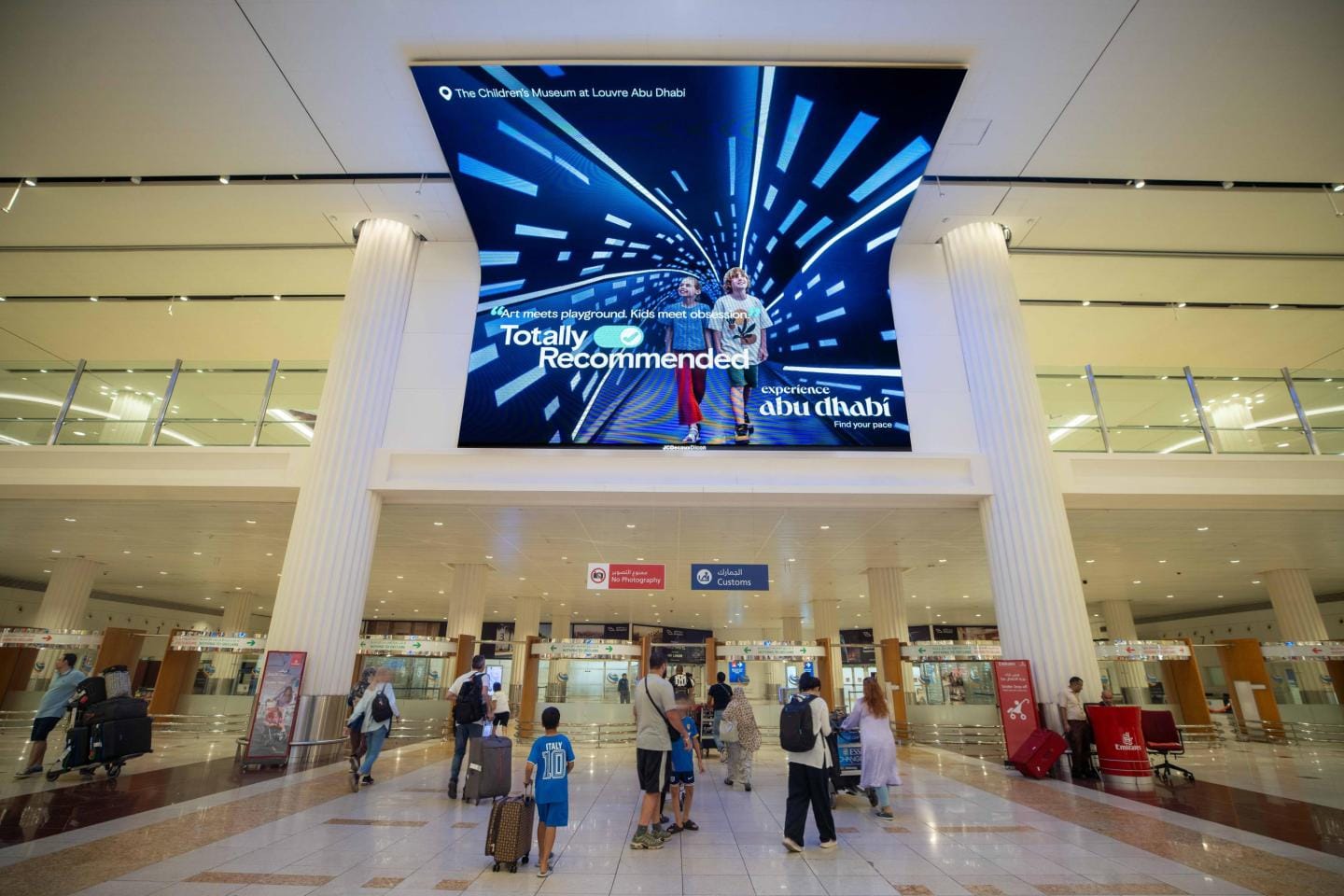
- The terminal operates at a fraction of its 14-million-person design capacity, producing one of the lowest passenger-to-advertising-surface ratios of any international airport in the region — every format achieves exceptional share of vision with near-zero competitive clutter
- Dwell time at ASB is extended by the airport's distance from the city, standard government-era processing procedures, and the absence of dense commercial entertainment to compete with brand messaging — passengers are available and attentive in the terminal for significantly longer than comparable volume airports
- The terminal's architectural prestige — a USD 2.3 billion falcon-shaped structure that is among the world's most recognisable airport buildings — elevates brand association for any advertiser willing to place in this environment: the setting alone communicates ambition and scale
- Masscom Global brings the relationships, local market intelligence, and execution capability needed to navigate the unique operating environment of a state-managed country's aviation infrastructure, ensuring campaign delivery is achieved efficiently and accurately in a market that requires specialist access
Strategic Advertising Fit
Best Fit:
- Energy Services and Industrial Equipment: Engineering firms, drilling technology providers, LNG equipment brands, pipeline infrastructure companies, and energy sector consultancies find their most concentrated global audience at ASB — the people who commission and manage Turkmenistan's hydrocarbons sector all pass through this terminal
- Large-Scale Construction and Engineering: Turkish, Chinese, Korean, and European construction contractors executing state projects worth hundreds of millions of dollars transit through ASB — building materials suppliers, heavy equipment brands, and project management software firms find a directly relevant audience
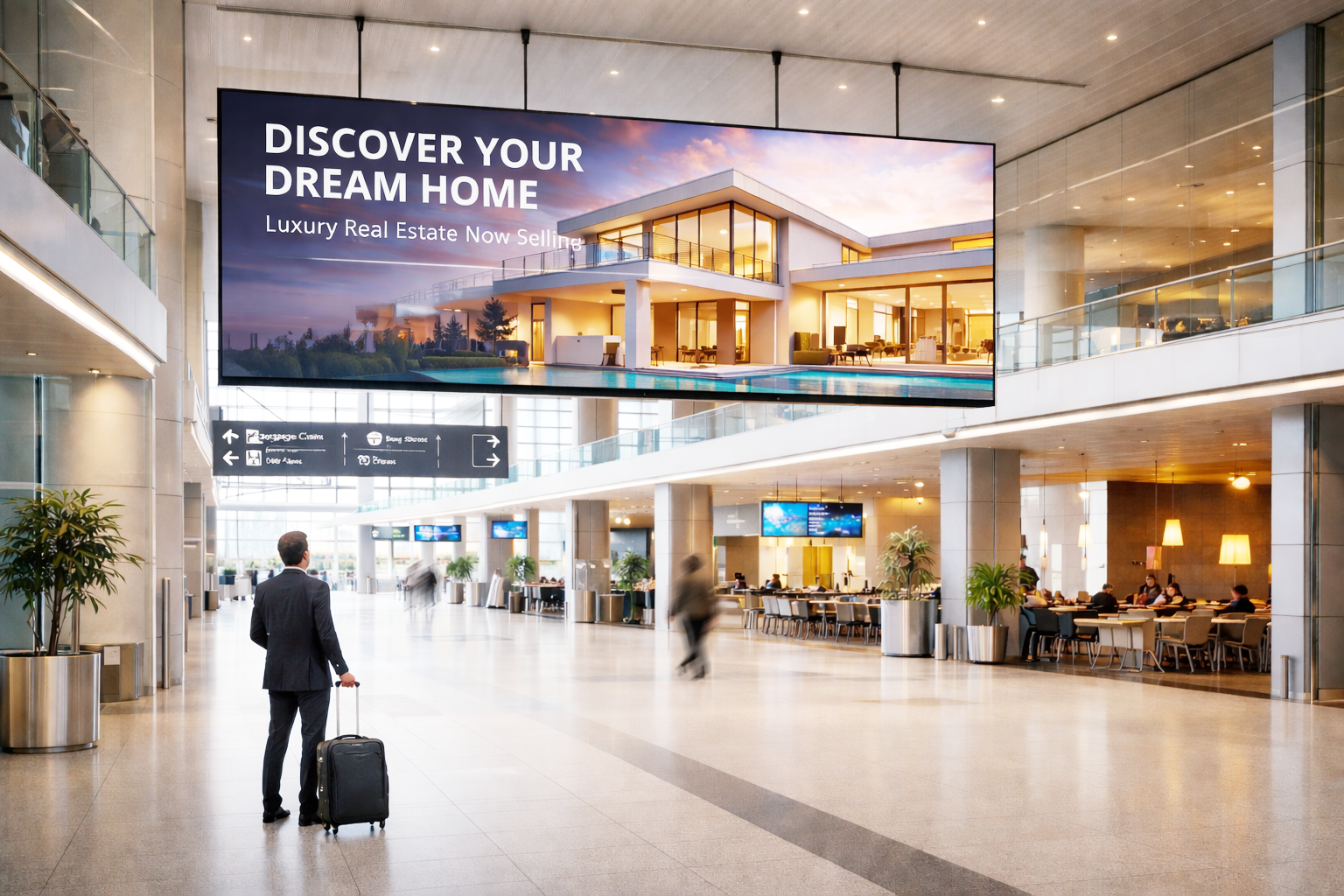
- International Real Estate (Istanbul and Dubai): The Turkmen executive class actively purchases in Istanbul and Dubai — property developers from both markets have a highly self-qualified, motivated audience at ASB with minimal competing advertising noise
- Financial Services and Wealth Management: Private banking, international money transfer, and cross-border investment advisory services are acutely relevant to a professional class managing income and assets across Turkmenistan's partially open financial borders
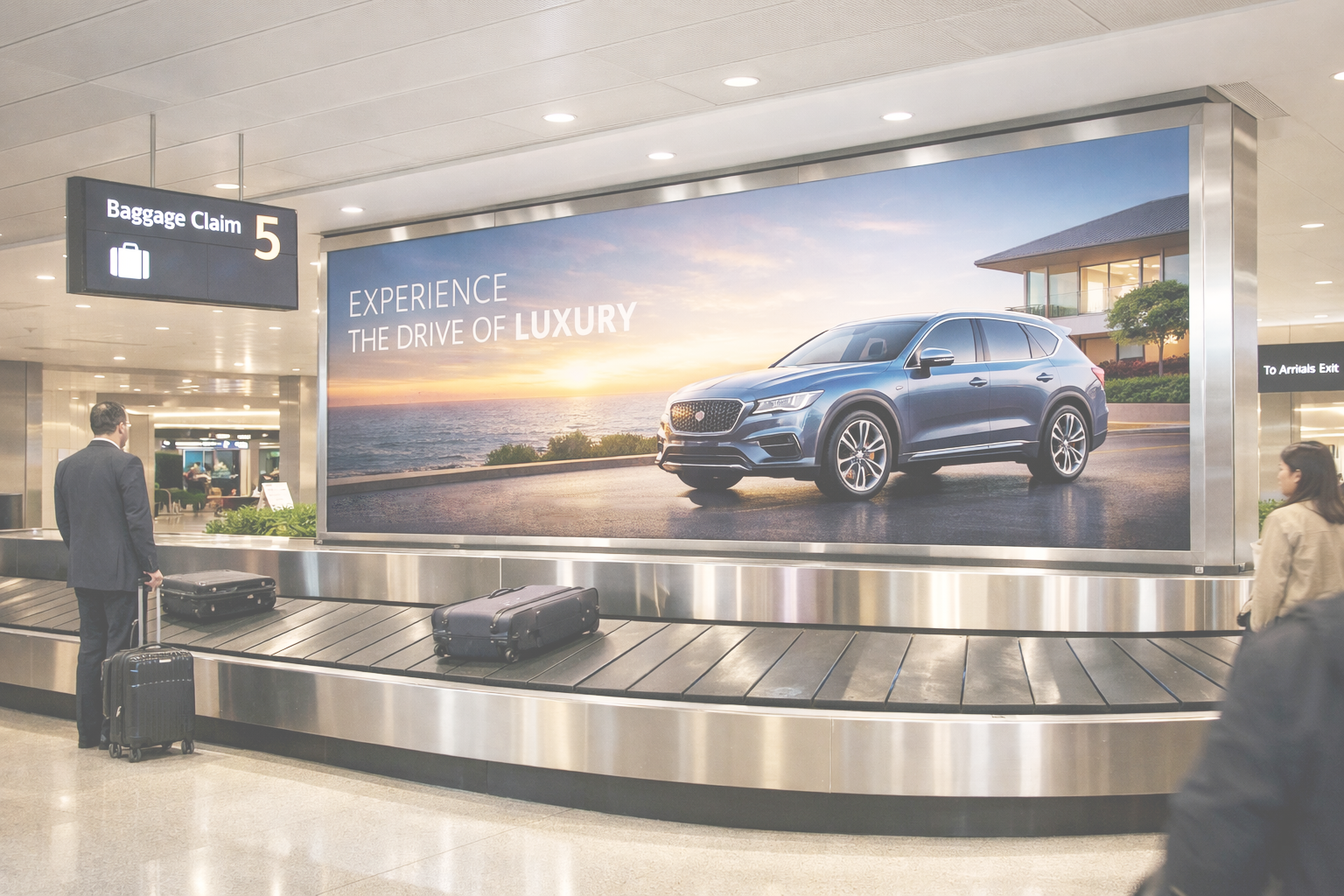
- Luxury Automotive: State enterprise executives, senior government officials, and the connected business class represent a concentrated luxury vehicle audience — German and Japanese premium automotive brands find a receptive and purchasing-capable audience in the VIP and CIP lounges
- International Education: Turkish, German, Russian, and UK universities and education consultancies targeting Turkmen students find a captive family and student audience at the airport across peak departure seasons
- Travel Insurance and Assistance Services: Turkmenistan's visa complexity, travel restrictions, and the long-haul nature of its connections make travel protection products highly relevant to departing passengers
Brand Alignment at a Glance:
| Category | Fit |
|---|---|
| Energy and Industrial Services | Exceptional |
| Construction and Engineering | Exceptional |
| International Real Estate | Exceptional |
| Financial Services | Strong |
| Luxury Automotive | Strong |
| International Education | Strong |
| Luxury Fashion and Accessories | Moderate |
| Mass Market Consumer Goods | Poor fit |
Who Should Not Advertise Here:
- Mass-market FMCG and everyday consumer brands: The volume of passengers is too low and the audience profile too specialist for brands requiring mass reach to generate sufficient impressions or conversions at ASB
- Budget travel, low-cost airlines, and price-sensitive tourism brands: The audience at ASB is not motivated by price — its travel is either state-funded, corporate-expensed, or committed-specialist, making cost-focused messaging structurally misaligned
- High-volume retail and e-commerce brands without Central Asian market presence: Turkmenistan's heavily state-managed retail environment and restricted internet access limit the conversion pathway for international e-commerce brands without a direct physical or partner presence in-country
Event and Seasonality Analysis
- Event Strength: Medium
- Seasonality Strength: High
- Traffic Pattern: Dual-Peak
Strategic Implication: Ashgabat's advertising calendar should be structured around two primary windows: the spring peak from April through June, when construction season resumes and energy contract cycles drive peak inbound business travel, and the autumn window from September through November, when the post-summer executive travel recovery coincides with the approach to year-end capital deployment decisions. The Navruz holiday window in late March and the shifting Eid pilgrimage windows are the highest consumer-spending moments in the Turkmen annual calendar. Masscom Global structures campaign timing at ASB around these rhythms, ensuring that specialist B2B budgets are concentrated in the periods when the senior executive and decision-maker audience is most densely present, and that consumer product campaigns are timed to the specific cultural spending windows that activate the highest receptivity.

Poor Placement and Delays Affect Airport Campaigns
We help you move faster, access better inventory, and get it right now.
Talk to an ExpertFinal Strategic Verdict
Ashgabat International Airport is not a high-volume buy — and that is precisely its value. ASB sits at the centre of one of the world's most concentrated and least-accessible pools of sovereign industrial capital: a country with the world's fourth-largest natural gas reserves, a USD 62 billion economy entirely state-directed, and a network of Turkish, Chinese, Russian, German, and Korean contractors executing billions in active projects within its borders. Every senior executive managing those relationships passes through a USD 2.3 billion falcon-shaped terminal that currently carries near-zero advertising from international brands, because most planners have not yet identified what it represents. For energy service companies, construction firms, luxury automotive brands, international real estate developers targeting Istanbul and Dubai, and financial institutions serving the Turkmen professional class, ASB is a precision instrument delivering an authority-level audience in an environment with no noise. Partnering with Masscom Global means gaining access to that environment with the intelligence and local capability to navigate a market that requires it.
About Masscom Global
Masscom Global is a premium international airport advertising and media buying agency operating across 140 countries. With deep expertise in airport OOH, premium publications, and high-net-worth audience targeting, Masscom helps brands reach the world's most valuable travellers at the moments that matter most. For advertising packages, media rates, and campaign planning at Ashgabat International Airport and airports across the globe, contact Masscom Global today.
Frequently Asked Questions
How much does airport advertising cost at Ashgabat International Airport? Advertising costs at ASB vary based on format type, terminal placement zone, campaign duration, and seasonal periods. Given the airport's low-volume, high-premium operating profile, rates reflect the quality of audience concentration rather than raw passenger volume. Masscom Global provides current rate cards and full campaign proposals tailored to objectives, ensuring clients invest at the level appropriate to ASB's specialist audience profile. Contact us directly for a detailed package.
Who are the passengers at Ashgabat International Airport? ASB serves a highly concentrated, authority-level audience: senior Turkmen government officials, state energy company executives, Turkish and Chinese construction contractors, European energy sector investors, a small but committed adventure and cultural tourism segment, outbound Turkmen students and professionals travelling to Turkey and Germany, and returning diaspora from the Gulf and Russia. Volume is low; authority and purchasing power are high.
Is Ashgabat International Airport good for luxury brand advertising? ASB is well-suited for accessible luxury and premium professional brands rather than ultra-high-net-worth flagship campaigns. The CIP and VIP lounge infrastructure, the terminal's extraordinary architectural prestige, and the dominance of senior executive and government-linked travellers create a premium brand association environment. Luxury automotive, premium financial services, international real estate, and professional services brands all find a directly appropriate audience at ASB.
What is the best airport in Central Asia to reach energy sector decision-makers? For pure concentration of energy industry authority — state gas executives, Chinese energy firm personnel, European commodities bankers, and Turkish and Korean construction directors — ASB is unmatched in Central Asia. The airport is the single gateway into and out of a country whose entire economy revolves around hydrocarbon production and state-directed capital deployment. No other regional airport concentrates this specific audience in such a contained environment.
What is the best time to advertise at Ashgabat International Airport? The two optimal windows are April to June (spring business travel peak, construction season restart, Navruz holiday period) and September to November (autumn executive travel recovery, year-end contract and procurement cycles). The Eid pilgrimage windows — which vary annually — represent the highest consumer-spending moments of the Islamic calendar and align with Turkmenistan Airlines' seasonal Jeddah and Medina routes. Masscom Global advises clients on timing based on campaign objectives and audience targeting priorities.
Can international real estate developers advertise at Ashgabat International Airport? Yes — and this is one of the most commercially compelling use cases at ASB. The Turkmen professional and executive class is actively purchasing real estate in Istanbul and Dubai, driven by direct daily flight connectivity to both markets and the appeal of Turkish citizenship by investment and UAE Golden Visa programmes. Property developers from Istanbul and Dubai find a pre-qualified, financially capable, investment-intent audience at ASB, with no competing real estate advertising currently present. Masscom Global can structure campaigns targeting this audience at both ends of the corridor.
Which brands should not advertise at Ashgabat International Airport? Mass-market FMCG brands requiring high impression volumes will not find sufficient scale at ASB's current passenger levels. Budget travel and price-sensitive tourism brands are structurally misaligned with an audience that travels on institutional or executive budgets. International e-commerce brands without physical market presence in Turkmenistan will find the conversion pathway too indirect. ASB is a precision B2B and premium consumer instrument — not a mass reach vehicle.
How does Masscom Global help brands advertise at Ashgabat International Airport? Masscom Global provides end-to-end airport advertising services at ASB, from audience analysis and format selection through to placement confirmation, creative guidance, and campaign performance review. Turkmenistan's state-managed operating environment requires specialist knowledge and established relationships that most global media agencies do not possess. Masscom Global brings both — along with the ability to coordinate ASB campaigns with complementary buys on the Istanbul, Dubai, Frankfurt, and Moscow corridors to create a full wealth-corridor strategy across the routes that define ASB's audience. Contact us to begin.