

Sphinx International Airport serves as one of Egypt’s emerging aviation gateways positioned to support the growing passenger demand in the Greater Cairo region. The airport handles approximately 1 million passengers annually and is strategically located near major tourism landmarks and expanding urban developments west of Cairo.
Traffic composition reveals strong strategic value. The airport was developed to complement Cairo International Airport by supporting tourism traffic, charter operations, and regional international flights while also providing an alternative gateway for travelers visiting western Cairo and the Giza plateau.
As the closest airport to the Pyramids of Giza and major tourism corridors, Sphinx International Airport delivers exposure to international tourists, regional travelers, and high-value visitors arriving to explore Egypt’s historic landmarks and cultural destinations.
Terminal Level Strategy
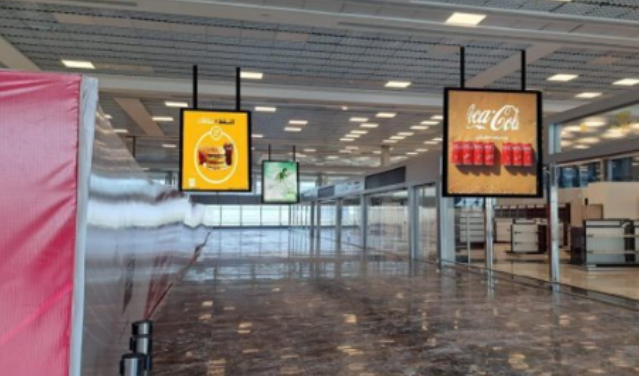
Sphinx International Airport operates a modern passenger terminal designed to handle international and domestic operations while maintaining efficient passenger circulation across arrival and departure zones.
Although the airport currently operates a single passenger terminal, passenger flows segment naturally by airline operations, tourism travel patterns, and international departure processing areas.
Placement decisions across the terminal environment influence audience quality, dwell time, and campaign visibility.
Main Passenger Terminal
The terminal serves as the primary processing facility for all passenger arrivals and departures.
Airlines operating at Sphinx International Airport include carriers such as Air Arabia, flydubai, Jazeera Airways, Pegasus Airlines, Flynas, easyJet, Wizz Air, and Edelweiss Air, alongside seasonal charter operators connecting Egypt with regional and European markets.
These airlines connect the airport with destinations across key travel markets including Saudi Arabia, Kuwait, the United Arab Emirates, Turkey, Oman, Italy, the United Kingdom, and Switzerland, alongside limited domestic connectivity.
Key characteristics include:
• Strong concentration of tourism travelers visiting Giza and Cairo
• Passenger waves aligned with charter and leisure travel schedules
• Centralized passenger circulation through shared check-in and security areas
• High visibility within the terminal departure hall
Book Your Free Expert Consultation Today
Book NowInternational Departure Zone
The international section of the terminal supports flights connecting Egypt with regional Middle Eastern markets and European tourism routes.
Key characteristics include:
• Strong outbound travel flows to Gulf countries
• Significant inbound tourism arriving to visit Egypt’s historic attractions
• Longer dwell times created by international security and passport control procedures
• Concentration of international passenger groups prior to boarding
Campaign placements in this zone benefit from longer passenger engagement windows and exposure to international travelers entering or departing Egypt.
Premium Lounges: High Value Micro Environments
Although Sphinx International Airport operates on a smaller scale than major international hubs, it includes VIP and premium passenger areas designed to accommodate select travelers and official delegations.
These environments typically serve:
• Business travelers
• Premium ticket passengers
• Government officials and diplomats
• High-spending international tourists
Campaign placements adjacent to premium passenger areas provide targeted exposure to higher-income travelers moving through the airport.
For financial institutions, luxury tourism operators, high-end hospitality brands, and international property developers targeting Egypt’s tourism sector, premium passenger areas offer a refined advertising environment.
Book Your Free Expert Consultation Today
Book NowSeasonal Traffic Intelligence
Passenger movement at Sphinx International Airport is strongly influenced by Egypt’s tourism cycles and international travel demand.
Summer Travel Season
Summer travel generates increased passenger movement as international tourists travel to Egypt to explore Cairo’s historic landmarks and nearby destinations.
Higher passenger density can be observed across:
• arrival halls receiving international tourism groups
• departure areas for outbound regional travel
• security screening corridors handling tour group movements
Winter Travel Season
Winter represents one of Egypt’s strongest tourism periods as international travelers seek warmer destinations.
International visitors arriving to explore the Pyramids of Giza, the Grand Egyptian Museum, and historic Cairo districts significantly increase arrival passenger volumes during this period.
Elite Event Driven Travel Spikes
Beyond seasonal tourism cycles, Cairo experiences additional international visitor inflows linked to cultural and art events attracting global collectors, diplomats, and cultural professionals.
Key event windows include:
Cairo International Film Festival
Typically held in November, this globally recognized festival attracts filmmakers, producers, cultural leaders, and international media executives traveling to Cairo from across Europe, the Middle East, and North America.
Art Cairo
A major contemporary art exhibition drawing international collectors, gallery owners, curators, and cultural investors from across the Middle East and Europe.
Campaigns aligned with these event windows benefit from exposure to internationally connected cultural leaders and high-value visitors traveling to the Cairo region.
Holiday Surge Windows
Eid Travel Periods
Passenger traffic increases significantly during major Eid holidays as regional travelers move between Egypt and Gulf countries.
This surge creates concentrated passenger movement across departure halls, security checkpoints, and boarding areas.
Summer Holiday Period
During peak summer travel weeks, passenger throughput increases as tourism travel and regional outbound movement intensify.
These periods produce elevated exposure across the airport’s key passenger circulation zones.
Geographic Advantage
Sphinx International Airport provides direct access to some of Egypt’s most globally recognized landmarks and expanding urban districts.
The airport connects travelers to:
• The Pyramids of Giza
• The Grand Egyptian Museum
• Western Cairo developments including Sheikh Zayed City
• Major tourism corridors across Giza and Greater Cairo
Located west of Cairo on the Cairo-Alexandria desert road, the airport serves as a convenient gateway for travelers visiting Egypt’s most iconic cultural destinations.
For brands targeting international tourists, cultural travelers, luxury hospitality guests, and global visitors exploring Egypt, this geographic positioning significantly enhances campaign relevance.

Book Your Free Expert Consultation Today
Book NowStrategic Perspective
Sphinx International Airport offers a unique advertising environment positioned at the intersection of global tourism and regional travel flows.
Although smaller than major international hubs, the airport provides highly concentrated exposure to international tourists visiting Egypt’s most famous landmarks.
Placement decisions across terminal circulation zones directly influence campaign visibility and audience engagement.
For brands targeting international tourism audiences, luxury hospitality travelers, cultural visitors, and regional Middle Eastern passengers, Sphinx International Airport offers a strategically positioned gateway within Egypt’s tourism economy.
What’s Included in Every Airport Advertising Campaign
✅ 100% Campaign Execution Guarantee
✅ Free Campaign Strategy Consultation
✅ 48-Hour Turnaround Post-Creative Approval
✅ Real-Time Reporting & Performance Dashboards
Launch Your Sphinx Airport Campaign Today