


By Prathish Cherian | March 2026 | Reading time: 12 minutes
There is a moment in every conflict — not at the beginning, not at the end, but somewhere in the middle — when the smartest businesses stop watching the news and start watching the data.
That moment is now.
The UAE's post-COVID recovery between 2020 and 2025 is the most detailed real-time experiment ever conducted into how different nationalities respond to crisis — and how fast they rebound when stability returns. The numbers are not historical footnotes. They are a prediction model. They tell you exactly which markets to target, in which order, and through which media channels.
This is not a playbook for the future. It is a playbook built on what already happened — and what will happen again.
What Post-COVID Dubai Actually Proved
When COVID hit in 2020, Dubai's tourism collapsed from 16.73 million visitors to 5.5 million. The world predicted a slow, painful recovery over five to seven years.
Instead, this happened:
• 2021: 7.28 million visitors — a 32% rebound in a single year, with most global travel still severely restricted
• 2022: 14.36 million visitors — a 97% year-on-year surge, returning to 86% of pre-pandemic levels
• 2023: 17.15 million visitors — a new all-time record, surpassing the best year in Dubai's history
• 2024: 18.72 million visitors, with Dubai International Airport handling 92.3 million passengers — a world record
• 2025: 19.59 million visitors — the highest annual total ever recorded
This was not a recovery. It was a transformation. And behind those headline numbers is a story about which nationalities drove each phase of the rebound — intelligence that predicts precisely what post-war markets will look like.
The brands that stayed visible during the crisis captured an asymmetric share of the boom that followed. Going silent is not caution — it is a market share transfer to whoever stays on.
The Five Markets That Bounced Back — And What They Teach Us
India: The Fastest and Most Reliable Rebound
India demonstrates what immediate recovery looks like. Indian arrivals to Dubai moved from approximately 600,000 in 2020 to 910,000 in 2021, to 1.8 million in 2022, to 2.1 million in 2023, and to 2.5 million in 2024 — surpassing the pre-COVID peak of 1.97 million by 2023.
More significantly: by 2023, Indian buyers had become the single largest nationality purchasing Dubai real estate, representing 22% of all foreign property transactions. They had not just returned — they had significantly exceeded their pre-crisis investment levels.
The lesson for post-war markets: When a market with strong cultural and economic ties to the UAE emerges from crisis with a policy signal — the way India's UAE CEPA did in May 2022 — investment surges within 60 to 90 days. Not six months. Not a year. Ninety days.
The brands that had been visible in Indian business media during the crisis, and that had airport OOH live at Mumbai and Delhi the week CEPA was signed, captured an asymmetric share of that surge. Those that waited until the surge was confirmed paid 40–60% more for the same media inventory.
Russia: The Surge Rebound — Crisis as Accelerant
Russia rewrote every assumption about post-crisis recovery. When the Ukraine conflict erupted in February 2022, Russian arrivals to Dubai did not decline. They surged. By Q3 2022, non-resident Russian buyers were purchasing 11% more Dubai properties per quarter than before the conflict. Russians went from the fourth-largest buyer nationality in Dubai to the largest — in under eight months.
This was not recovery. It was displacement-driven investment at a scale Dubai had never seen. Capital that could not stay in Russia was looking for a home, and Dubai — with no capital gains tax, full foreign ownership, and a ten-year Golden Visa — was the destination of choice.
The lesson for post-war markets: Conflict does not merely interrupt capital flows. In some cases, it dramatically accelerates them. The HNWI class that flees a conflict market to the UAE does not stop investing — they concentrate their investment. When stability returns to their home market, they will deploy that capital again, at scale, in a compressed window.
China: The Delayed Rebound — Compressed Demand Unleashed
China's COVID border closure held back what would have been a natural rebound from 2020 to 2022. When China finally reopened in early 2023, the effect was immediate: Chinese visitor arrivals to Dubai grew by 300% year-on-year in the first half of 2023 alone.
By 2024, Chinese arrivals had reached approximately 900,000 — but remained around 48% below the 2019 peak. This means the China rebound is not over. It is still the largest remaining recovery upside of any source market, and the trajectory is steep.
In real estate: Chinese buyers went from essentially absent in Dubai's property market in 2020 to representing 14% of all off-plan purchases by 2025 — a category that barely existed three years earlier.
The lesson for post-war markets: Markets held back by their own crisis produce compressed demand events when the constraint is removed. Every year of suppressed intent releases in a dramatically accelerated window. Brands maintaining presence with the diaspora in UAE during the suppression period arrive at that window with trust already established.
Turkey: The Breakout Market No One Predicted
Turkey was not on most strategic radars as a recovery opportunity. Then came 2024: Turkish arrivals to Dubai grew 43% year-on-year — making Turkey the fastest-growing European source market by far. Simultaneously, Turkish buyers entered Dubai's real estate market at scale, concentrating in Business Bay, Dubai Marina, and luxury off-plan developments.
The driver was not tourism enthusiasm. It was economic crisis at home — lira volatility and inflation driving Turkish HNWIs to seek asset diversification in a dollar-pegged, tax-free jurisdiction. The same displacement dynamic that drove Russian investment in 2022 was driving Turkish investment in 2024.
The lesson for post-war markets: The distinction between tourism rebound and investment displacement matters enormously for media strategy. Turkish buyers are capital allocators responding to home-market risk — they respond to business press, financial media, and investment-oriented airport OOH, not leisure travel advertising.
Saudi Arabia: The Market That Never Really Stopped
Saudi Arabia provides the final data point: the market that barely paused. Saudi visitors to Dubai went from approximately 320,000 in 2020 to 491,000 in 2021 (+22%), to 1.45 million in 2022, to 1.6 million in 2023 and 2024 — exceeding pre-COVID levels by 2022 and sustaining that growth.
The lesson for post-war markets: Some markets do not need a recovery narrative. They need a dominance strategy. Saudi Arabia is already in Phase 3. The question for UAE businesses targeting Saudi capital is not how to activate — it is how to own the category permanently before competitors build the same position.
The Three Rebound Profiles: A Framework for Post-War Prediction
Studying five years of post-COVID rebound data across nine markets reveals three distinct patterns. Understanding which profile applies to a specific post-war market determines the entire media timing strategy.
Profile 1: Immediate Rebounders
India, Saudi Arabia, and the wider GCC. Back at 80%+ of pre-crisis levels within 12 months of restrictions lifting. They respond to policy signals — a CEPA ratification, a visa expansion, a diplomatic normalisation — rather than waiting for comprehensive stability.
Post-war equivalent: Markets with pre-existing UAE economic ties, where a ceasefire or peace agreement functions as the trigger rather than a prerequisite. Brands must be ready to activate within 90 days.
Profile 2: Surge Rebounders
Russia in 2022, Turkey in 2024. These markets do not merely recover — they substantially exceed pre-crisis investment levels, driven by displacement capital. The surge is concentrated in a 6–18 month window.
Post-war equivalent: Any market where HNWI capital has been accumulating in UAE safe havens during the conflict. When the trigger arrives, the compressed capital moves fast and at scale. Phase 2 media must be ready before the trigger, not after it.
Profile 3: Delayed Rebounders
China from 2023 to present. Ukraine in its eventual future. These markets are held back by the crisis itself — not by choice but by constraint. When the constraint is removed, the rebound is dramatic and rapid.
Post-war equivalent: Markets with significant diaspora communities in UAE, whose return investment will be proportional to the accumulated suppression. Media strategy during the delay determines brand position when the surge arrives.
The Displacement Premium: Why Post-War Beats Pre-War
The most important and least discussed finding from the post-COVID data is what we call the displacement premium.
Markets emerging from crisis do not return to their previous investment levels. They significantly exceed them — often by 50% to 200% in the first two years — driven by three forces:
Accumulated intent: HNWIs who wanted to invest but couldn't during the crisis compress multiple years of investment decisions into a short window.
Capital concentration: Capital that was preserved during the crisis (by wealthy individuals who have options) becomes available for deployment at scale the moment confidence returns.
Risk reassessment: A period of crisis recalibrates what safety looks like. Dubai's value proposition — no capital gains tax, full foreign ownership, Golden Visa, world-class infrastructure — becomes more compelling, not less, in a post-crisis world.
The post-war market is not the pre-war market restored. It is a new market, with compressed demand, elevated investment intent, and a premium on brands that were present during the difficulty.
The Media Strategy: Engage → Stabilise → Dominate
The rebound data defines three distinct activation phases, each requiring a different media approach.
Phase 1 — Engage (During Active Conflict)
The diaspora from any conflict market is already in Dubai. They transit through Dubai International Airport multiple times per year. They read Arabic business press and home-country publications. They are making financial decisions — about where to park capital, which brands to trust with their wealth — during the crisis, not after it.
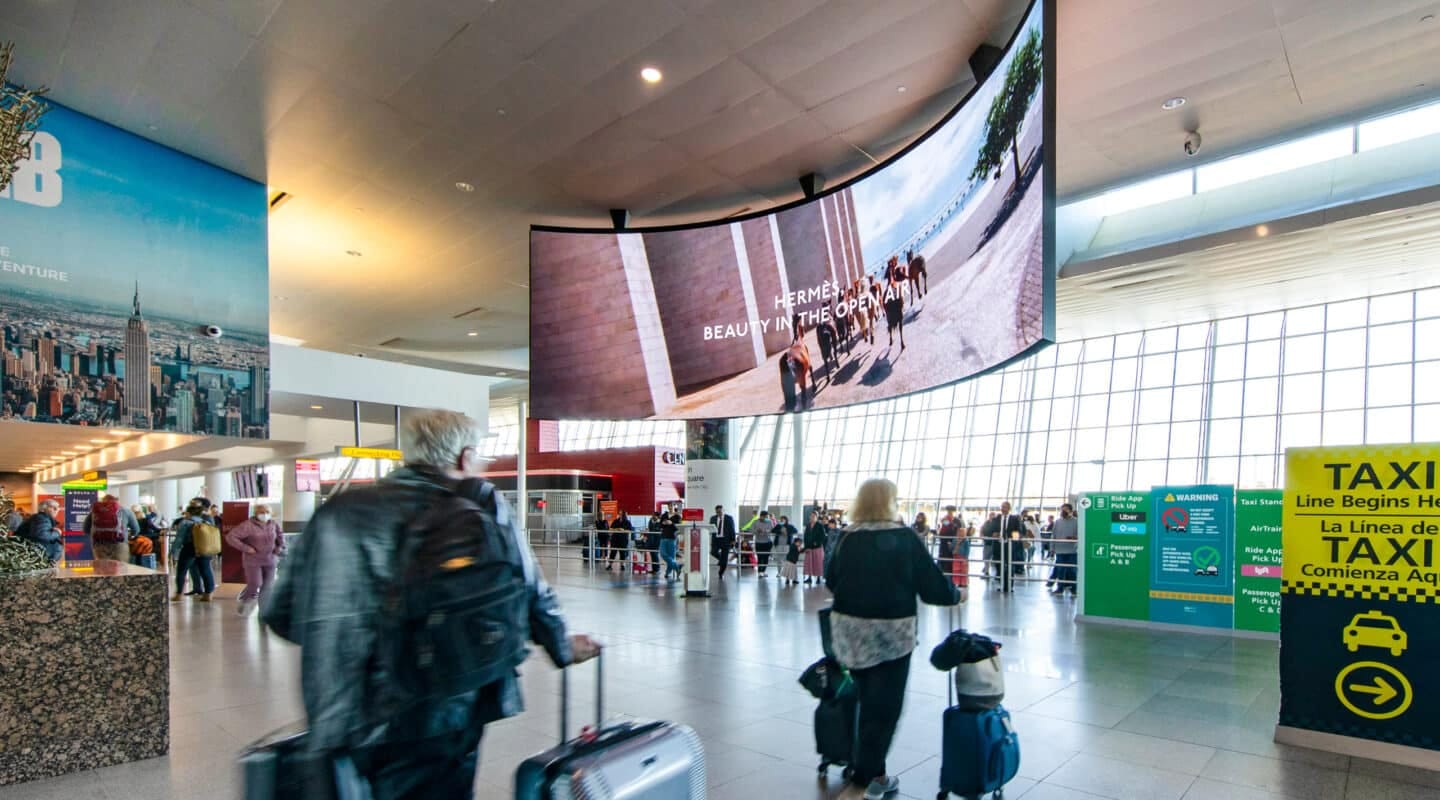
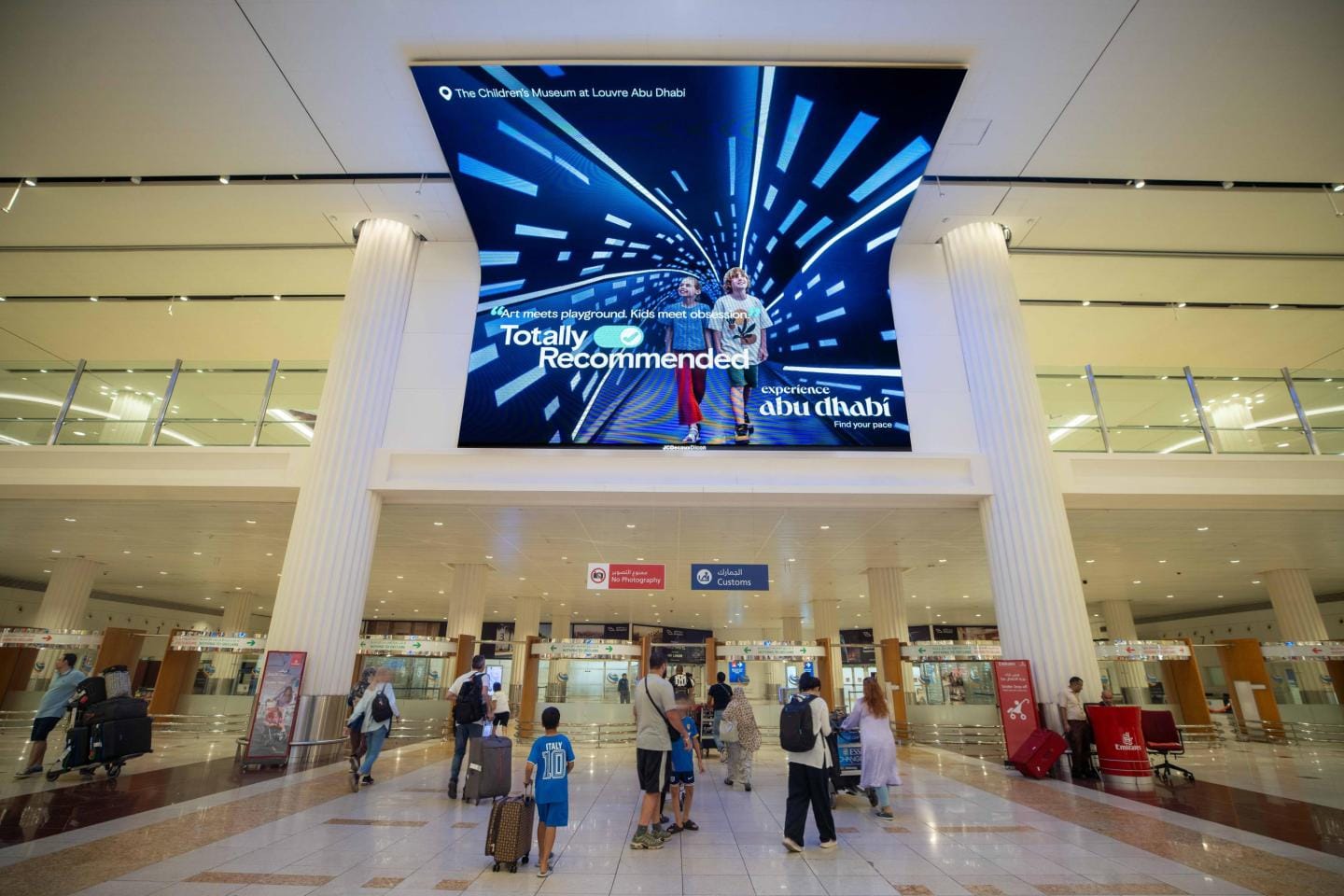
The brands that maintain visibility in UAE airport OOH, Arabic financial media, and diaspora-targeted publications during Phase 1 are building brand equity at the lowest cost point in the entire cycle. Airport OOH in DXB's Business and First Class lounges reaches the exact HNWI audience that will drive Phase 2 and Phase 3 investment — at a cost that will be 60–100% higher by the time peace is declared.
Phase 2 — Stabilise (Ceasefire to Early Recovery)
The stabilisation signal — ceasefire announcement, first commercial flight resumption, currency stabilisation — is the starting gun, not the finish line. Brands that treat the stabilisation signal as the moment to begin planning will be 60 to 90 days behind brands that were already prepared.
Airport OOH at the destination market must be live before the first commercial flight lands. The returning investor sees your brand as they exit baggage claim. That is the most expensive moment in Phase 2 to be invisible — and the most important moment to be present.
Phase 3 — Dominate (Full Reconstruction)
Phase 3 is when competitors begin paying attention. It is the most expensive phase to enter from a standing start. The brands that activated in Phases 1 and 2 arrive at Phase 3 with established recall, earned trust, and existing relationships. They set the category's reference point on pricing, on quality, on presence.
The brands that enter in Phase 3 spend more, earn less, and never quite catch up to the first movers.
Where to Focus Now: The Priority Markets
Based on post-COVID rebound data and current conflict dynamics, these are the markets where UAE businesses should be building their activation strategy today:
Russia and CIS — Phase 1 preparation, Phase 2 imminent. The displacement dynamic that made Russians Dubai's top real estate buyers in 2022 will apply when peace arrives. Key media: Kommersant, Vedomosti, RBC, Forbes Russia, Telegram business channels. Airport OOH at Sheremetyevo and Pulkovo must be ready to activate within 72 hours of any ceasefire announcement.
China — Active Phase 2–3. Still 48% below pre-COVID peak. The largest remaining recovery upside of any source market. WeChat, Caixin Global, Forbes China, and Juwai IQI property portal are the media infrastructure. Chinese buyers are growing 31% year-on-year in Dubai real estate.
Turkey — Active Phase 2–3 now. The fastest-growing European source market, still accelerating. Bloomberg HT, Hürriyet Emlak, Forbes Turkey, and Istanbul airport OOH are the activation priorities.
Egypt — Cyclical crisis model. Each EGP depreciation cycle produces a predictable elevated buying window. Enterprise Egypt's newsletter reaches 50,000 English-speaking Egyptian business leaders daily. Maintain Phase 1 presence permanently so Phase 2 activates automatically on the next cycle.
The Defining Question
Every UAE-based business with ambitions in post-conflict markets faces the same strategic decision:
Do you wait until the recovery is confirmed, visible, and fully priced into media costs? Or do you prepare now, when the diaspora is in Dubai, the inventory is cheap, and the brand equity being built is compounding?
The post-COVID data answers this unambiguously. The brands that activated early captured a disproportionate share of the rebound. The brands that waited paid more and arrived at a market where the loyalties were already established.
The war ends. The capital moves. The first mover wins.
Which of your target markets has the most significant UAE diaspora community right now — and what would it mean for your business to be the brand that community associates with their home market's recovery?
Dominate Global Markets Before Your Competitors Do
The biggest mistake brands make is waiting. The data is clear: those who activate early win market share, investor attention, and long-term dominance.
Book Your Campaign Today → Get Free Expert Assistance Now