

Airport at a Glance
| Field | Detail |
|---|---|
| Airport | Zhangjiajie Hehua Airport |
| IATA Code | DYG |
| Country | China |
| City | Zhangjiajie, Hunan Province |
| Annual Passengers | 4.2 million |
| Primary Audience | Affluent domestic tourists, international experience-seekers, premium leisure travelers |
| Peak Advertising Season | April to May, July to August, October (National Day Golden Week) |
| Audience Tier | Tier 2 |
| Best Fit Categories | Premium eco-luxury and nature brands, travel and hospitality, international real estate, education, luxury lifestyle |
Zhangjiajie Hehua Airport is the sole air gateway into one of China's most commercially distinctive tourism regions. Every passenger arriving or departing through DYG has made a deliberate, high-commitment travel choice — they have researched, planned, and invested to reach a destination famous worldwide for its dramatic sandstone pillar landscapes. This is not incidental traffic. This is an audience of motivated, experience-first travelers whose purchasing mindset is already activated before they land. Advertisers looking to reach China's growing premium leisure class, affluent domestic tourists, and international experience-seekers will find DYG a concentrated and commercially viable environment.
Zhangjiajie's global reputation accelerated exponentially following the international recognition of its Tianzi Mountain and Wulingyuan pillar formations as the visual inspiration for Pandora in the Avatar franchise. That cultural moment transformed a regional tourism asset into a globally recognised destination brand. The audience flowing through DYG now includes high-spending domestic Chinese travelers from Tier 1 and Tier 2 cities, inbound tourists from South Korea, Japan, Southeast Asia, and increasingly from Europe and North America — all of whom represent premium consumer segments with strong brand receptivity. Masscom Global's access to DYG positions brands directly within this concentrated premium flow.
Advertising Value Snapshot
- Passenger scale: 4.2 million annual passengers, with sustained growth driven by increased domestic air connectivity and rising international tourism routes
- Traveller type: Affluent domestic leisure travelers, inbound international eco-tourism visitors, premium experience-driven millennials and high-net-worth families
- Airport classification: Tier 2 — a nationally significant tourism gateway with a captive, high-dwell, destination-committed audience
- Commercial positioning: China's Avatar gateway — a globally recognised natural tourism brand that elevates the perceived environment for premium advertisers
- Wealth corridor signal: DYG sits at the intersection of China's growing domestic affluent tourism market and the outbound international inbound flow into Central China's expanding premium leisure corridor
- Advertising opportunity: Masscom Global provides brands with full access to DYG's advertising inventory, structured around the airport's dominant peak windows and audience composition. With a captive, non-distracted, experientially committed audience and lower media clutter than China's major hub airports, DYG offers brands impact quality that raw footfall numbers alone do not reveal.
Airport Advertising is Complex to Get Right
We help you execute faster, with proven results and local insight most planners lack starting now.
Talk to an ExpertCatchment Area and Economic Drivers
Top 10 Cities within 150 km — Marketer Intelligence
- Yongding District, Zhangjiajie: The urban commercial core of the city — home to the managerial and entrepreneurial class that drives local purchasing power; the primary origin point for outbound education and property investment inquiries.
- Wulingyuan District, Zhangjiajie: The immediate gateway to the national forest park; a high-velocity transit zone where affluent domestic and international visitors are in peak experiential spending mode — highly receptive to premium lifestyle and travel brand messaging.
- Sangzhi County: A gateway community to the Tianmen Mountain corridor, serving travelers who extend their Zhangjiajie itinerary; audiences here are leisure-committed and have already approved significant discretionary expenditure for this trip.
- Cili County: An agricultural-industrial county contributing working-professional and small-business-owner travelers whose airport usage signals above-average income relative to regional norms — a productive mid-market audience segment.
- Jishou: Capital of Xiangxi Tujia and Miao Autonomous Prefecture, approximately 110 km from DYG; a regional administrative and educational hub producing government officials, teachers, and university-affiliated professionals — an audience that over-indexes on financial services and insurance products.
- Fenghuang (Phoenix Ancient Town region): One of China's most visited ancient towns, approximately 140 km from Zhangjiajie; travelers from this corridor arrive airport-bound with high cultural spending already activated, making them strongly receptive to heritage, lifestyle, and luxury brand messaging.
- Yongshun County: A county-level catchment with a growing middle-class professional base connected to tourism economy employment; airport travelers from this area represent aspirational consumer segments with appetite for premium positioning.
- Longshan County: A border county connecting Hunan to Chongqing municipality; catchment travelers from this zone often combine Zhangjiajie with broader Southwest China itineraries, producing multi-destination, high-spend travel behavior.
- Guzhang County: A tea-producing and agricultural county whose local entrepreneur class uses DYG for business connectivity to Changsha, Beijing, and Shanghai — a small but commercially active professional audience.
- Baojing County: A county known for gold and mineral resources; local mining and resource industry professionals represent a niche but above-average-income audience segment with spending capacity disproportionate to the area's urban profile.
NRI and Diaspora Intelligence
Zhangjiajie does not generate a significant overseas diaspora flow in the traditional remittance sense. However, DYG's international relevance comes from a different direction: the airport serves as the arrival point for Hunan-origin Chinese nationals returning from abroad — particularly from South Korea, Japan, Australia, Canada, and the United States — who combine family visits with tourism. These returning overseas Chinese represent a high-value segment with dual-market purchasing behaviour, international brand familiarity, and an appetite for premium goods acquired during transit. For advertisers targeting Chinese consumers with overseas purchasing exposure, this is a precision audience concentration worth activating.
Economic Importance
Zhangjiajie's economy is overwhelmingly driven by tourism, making DYG one of China's rare airports where virtually every passenger — domestic or international — is in a leisure, discretionary, experience-oriented mindset. The region generates limited heavy industry traffic, which means the audience skews heavily toward consumers rather than procurement-focused corporate travelers. This is commercially significant: passengers at DYG have made a deliberate, high-cost, leisure investment and are in an active spending state. The natural beauty economy is supplemented by local government investment in hospitality infrastructure, adventure tourism, and eco-luxury development — all of which signal a sustained upward trajectory in the quality of the arriving audience.
Business and Industrial Ecosystem
- Tourism and hospitality infrastructure: The dominant economic sector, producing hotel owners, travel agency operators, tour operators, and hospitality management professionals who are active airport users and high-frequency domestic flyers
- Cultural tourism development: State investment in Tujia and Miao cultural preservation has attracted cultural entrepreneurs, media professionals, and documentary production teams — a creative-class segment with urban spending behaviour
- Government and administrative sector: Zhangjiajie's municipal government and tourism authority generate a consistent base of official travel — government professionals who are receptive to financial services, insurance, and professional services advertising
- Eco-luxury real estate development: The emergence of premium resort, boutique hotel, and nature retreat projects in the Zhangjiajie region is attracting developers, investors, and high-net-worth leisure property buyers — a niche but commercially precise audience segment
Passenger Intent — Business Segment: The business traveler cohort at DYG is primarily drawn from tourism industry operators, construction and real estate developers active in the region, government officials attending meetings in Changsha or Beijing, and procurement professionals servicing the hospitality sector. These travelers fly frequently enough to carry loyalty status, respond to financial services and technology advertising, and make purchasing decisions independently. B2B advertisers in the hospitality technology, financial advisory, and professional services categories will find DYG's business segment small but commercially targeted.
Strategic Insight: What makes DYG's business environment distinctive is the near-complete absence of heavy industry corporate travel — the audience is instead drawn from sectors with creative, entrepreneurial, and government profiles. This creates a media environment where messaging around premium lifestyle, investment, and personal financial management lands without the cognitive competition present at industrial gateway airports. Masscom Global structures DYG campaigns to isolate and engage this business cohort through precise placement and peak-week timing that aligns with their travel rhythms.
Tourism and Premium Travel Drivers
- Zhangjiajie National Forest Park (Wulingyuan Scenic Area): A UNESCO World Heritage Site and the world-famous landscape made globally iconic through its association with the Avatar franchise; this is the primary driver of international inbound tourism and commands the highest advertiser attention for nature, luxury, and travel brands
- Tianmen Mountain and Tianmen Cave: One of China's most dramatic cable car and skywalk experiences, drawing adrenaline-seekers, premium adventure tourists, and photography-driven travelers whose spending on experiences, equipment, and lifestyle products is above average
- Zhangjiajie Grand Canyon Glass Bridge: The world's longest and highest glass bridge at the time of its opening, a globally viral attraction that draws high-spending domestic and international visitors motivated by bucket-list exclusivity — an audience deeply aligned with premium and luxury brand messaging
- Yellow Dragon Cave and Baofeng Lake: Major secondary attractions extending visitor dwell time in the region by two to four days, which directly increases the airport dwell window and exposure value for brands advertising at DYG
Passenger Intent — Tourism Segment: The tourism audience at DYG is among the most commercially valuable of any regional Chinese airport. These are not budget travelers — the combination of flight costs, hotel rates, park entry fees, glass skywalk tickets, and multi-day itineraries positions the typical Zhangjiajie visitor as a medium-to-high discretionary spender who has pre-committed significant budget to this trip. At the airport, they are in post-experience mode — satisfied, brand-positive, and receptive to aspirational purchases, souvenir upgrades, and premium lifestyle messaging. Travel accessories, outdoor and adventure gear, premium spirits, skincare, and luxury fashion brands perform strongly in this environment. Masscom Global targets this window with precision placement that intercepts the audience at peak receptivity.
Travel Patterns and Seasonality
Peak seasons:
- April to May (Spring Peak): Cherry blossoms, clear skies, and moderate temperatures make this the aesthetic ideal for visiting Zhangjiajie — domestic affluent tourists, photography enthusiasts, and nature-travel influencers converge; this is the highest-quality audience window of the year
- July to August (Summer Peak): School holiday travel drives family groups and young affluent travelers, with higher international tourist concentration during this window; total passenger volumes peak
- October 1 to 7 (National Day Golden Week): China's largest domestic travel window; Zhangjiajie is consistently among the top-visited National Day destinations nationally, producing the highest single-week footfall of the year
- May 1 to 7 (Labor Day Golden Week): A secondary but significant peak closely mirroring National Day behavior; affluent short-haul domestic travelers dominate this window
Low season: November to February sees reduced traffic, cold temperatures, and frequent mountain fog that reduces park visibility — a period of dramatically lower audience volume that advertisers should factor into annual budget allocation.
Event-Driven Movement
- Zhangjiajie International Forest Festival (September/October): An eco-tourism and nature photography celebration that draws both domestic and international visitors specifically interested in natural heritage and sustainability — a precision audience for eco-luxury, outdoor, and premium nature brands
- National Day Golden Week (October 1 to 7): The single highest-footfall week at DYG annually; advertisers investing in this window access the full year's peak audience concentration at competitive rates secured through Masscom Global's advance booking capability
- Labor Day Golden Week (May 1 to 7): A dual-peak window combining spring aesthetics with domestic leisure spending; family-group and couple travel dominates, with spending on hospitality, lifestyle, and experience products peaking
- Chinese New Year / Spring Festival (January to February): Family reunification travel produces a warm, emotionally positive airport atmosphere; consumer-facing brands benefit from the gift-giving and celebration spending trigger of the festival period
- International Sky-Walking Events and Adventure Tourism Competitions (periodic): DYG periodically hosts globally broadcast adventure and sky-walking events that generate international media coverage and inbound visitor spikes — creating short but high-intensity advertising windows for adventure, outdoor, and premium lifestyle brands
It’s Not Just Where You Advertise - It’s How Fast You Execute
We combine local insight with fast rollout to deliver results for you, now.
Talk to an ExpertAudience and Cultural Intelligence
Top 2 Languages
- Mandarin (Putonghua): The dominant language of the airport environment and the primary communication channel for DYG's domestic audience; all advertising creative must anchor in Mandarin to achieve full coverage, and brand messaging in simplified Chinese is non-negotiable for this catchment
- English: The working language of the international tourism segment — South Korean, Japanese, Southeast Asian, European, and North American visitors are meaningfully present, particularly during summer and Golden Week peaks; bilingual English-Mandarin creative significantly expands advertiser reach at DYG
Major Traveller Nationalities
The dominant traveler nationality at DYG is domestic Chinese — representing the vast majority of all traffic, with origin cities concentrated in Guangdong, Shanghai, Beijing, Chengdu, Chongqing, and Hangzhou. International traveler nationalities follow the pattern of Zhangjiajie's global tourism promotion, led by South Korean visitors (historically the largest single international group), Japanese tourists, travelers from Thailand, Malaysia, and Singapore, and a growing cohort from Australia, the United Kingdom, Germany, and the United States following the Avatar-driven media cycle. Each of these international segments brings distinct brand expectations: Korean visitors index strongly toward skincare, K-beauty crossover, and travel lifestyle brands; Japanese visitors respond to precision, quality, and craftsmanship narratives; Western visitors are strongly receptive to eco-luxury, sustainability, and premium nature-experience brand messaging.
Religion — Advertiser Intelligence
- Chinese Folk Religion, Buddhism, and Taoism (approximately 65–70%): The dominant belief framework among domestic Han Chinese and local Tujia travelers; key religious observances include Chinese New Year, Qingming Festival (April), Dragon Boat Festival (June), and Mid-Autumn Festival (September-October) — each driving distinct travel spikes and gift-giving spending triggers that benefit FMCG, premium food, and gifting brands
- Christianity (approximately 15–20%): A notably higher-than-national-average Christian presence due to the historically strong missionary activity among the Tujia and Miao minority communities of western Hunan; Christmas and Easter observances produce consumer spending patterns recognisable to international advertisers
- Traditional Tujia and Miao Indigenous Beliefs (approximately 10–15%): The indigenous spiritual traditions of Zhangjiajie's ethnic minorities generate unique local festivals, including the Tujia New Year (Tujia Nian) and Miao festivals that drive regional tourism from cultural travelers — a niche audience for heritage, craft, and cultural experience brands
Behavioral Insight
The DYG audience is defined by what might be called the premium experience commitment mindset. A traveler who has chosen Zhangjiajie over a competing domestic destination — Guilin, Jiuzhaigu, Yunnan — has made an informed, culturally motivated decision based on aspiration rather than convenience or price. This audience researches before they travel, shares extensively on social platforms during their visit, and makes purchasing decisions based on quality and brand story rather than price alone. Financial services advertising that emphasises wealth growth and lifestyle milestone framing performs well here. Real estate and investment messaging that connects to the aspiration of a second home or premium lifestyle upgrade will find this audience in a receptive and aspirational state. Masscom Global deploys these behavioral insights to structure campaign creative guidance that helps brands speak to this audience in the right register.
Outbound Wealth and Investment Intelligence
The outbound passenger at Zhangjiajie Hehua Airport represents a specific and commercially actionable wealth profile. These are not the ultra-high-net-worth individuals of Shanghai or Beijing — they are the affluent upper-middle and high-net-worth professionals, business owners, and entrepreneurs drawn from Hunan's growing regional wealth class, as well as returning overseas Chinese from higher-income countries. They are active capital deployers with clear investment preferences shaped by China's domestic economic environment — currency diversification, property ownership security, children's education, and lifestyle migration are the four principal outbound investment themes that define this audience's financial behaviour.
Outbound Real Estate Investment: Hunan Province's affluent class has demonstrated a strong appetite for international property investment, with Australia (Sydney and Melbourne), the United Kingdom (London and Manchester), Canada (Vancouver and Toronto), and Portugal leading in terms of active transaction volume and buyer interest. Dubai has emerged as a high-growth destination for Hunan-based investors attracted by zero income tax, high rental yields, and the lack of foreign ownership restrictions. For international real estate developers, DYG offers a relatively uncrowded advertising environment to reach this qualified buyer cohort at a moment of high aspiration — they are already in a premium experience mindset and receptive to lifestyle investment messaging.
Outbound Education Investment: Western Hunan produces a significant flow of students seeking international higher education, with the United Kingdom, Australia, Canada, and the United States as the dominant destination markets. Family spending on international education from this catchment is substantial — parents of outbound students are typically middle-to-high-income professionals whose airport usage tracks the academic calendar, with peaks in August-September (departure) and December-January (return). Universities, international schools, education consultancies, and student accommodation developers will find a precise and motivated audience at DYG during these windows.
Outbound Wealth Migration and Residency: Golden Visa and residency-by-investment programmes have significant uptake among Hunan's business-owner class. Portugal's Golden Visa programme, Greece's residency programme, and the UAE's long-term visa offerings are actively researched and pursued by this audience. Caribbean citizenship-by-investment programmes — particularly Grenada, St Kitts and Nevis, and Dominica — are also on the radar of Hunan's higher-net-worth business families, particularly those seeking visa-free travel to the United States. Masscom Global can position financial advisory, immigration consultancy, and wealth management brands directly in front of this audience at DYG.
Strategic Implication for Advertisers: International brands targeting China's regional affluent class — on the outbound capital deployment side as much as the inbound luxury tourism side — should treat DYG as a priority activation point that is systematically undervalued relative to its audience quality. Masscom Global's ability to activate on both sides of this wealth corridor simultaneously, combining DYG placements with airport advertising in destination markets including Australia, the UK, Dubai, and Portugal, creates a coordinated audience journey that no single-market media buy can replicate.
Airport Infrastructure and Premium Indicators
Terminals
- Single terminal building: Zhangjiajie Hehua Airport operates a single terminal handling all domestic and international traffic, creating an undivided advertising environment where brands achieve full audience coverage without the fragmentation risk present at multi-terminal hub airports
- Terminal capacity: Designed to handle approximately 5 million passengers annually, the terminal operates at a scale that balances meaningful footfall with a manageable clutter level — providing standout potential above what equivalent-sized Chinese airports in generic commercial cities offer
Premium Indicators
- VIP and business class lounges: Airline lounge facilities for premium-class passengers on major carriers including Air China, China Southern, and China Eastern signal the presence of business-class ticket holders and frequent-flyer elite members within the terminal — a reliable proxy for above-average income
- Premium retail and dining presence: The terminal hosts a curated selection of branded retail and hospitality outlets oriented toward the premium leisure traveler, confirming the commercial operator's understanding of the audience profile
- Destination premium signal: Zhangjiajie's status as one of China's most photographically distinctive and internationally marketed destinations creates a halo effect on the airport environment — brands advertising at DYG benefit from positive audience association with the grandeur and exclusivity of the destination itself
- Award-recognition: The airport's role as the exclusive gateway to a UNESCO World Heritage Site and multiple AAAAA-rated national scenic areas positions DYG within China's elite natural heritage airport category — a commercially distinctive group
Forward-Looking Signal
Zhangjiajie is the beneficiary of sustained Chinese government investment in tourism infrastructure, with ongoing development of new five-star resort properties, expanded national park management, and enhanced transport links connecting the city to the broader Hunan high-speed rail network. New international route development — particularly connecting DYG to additional Southeast Asian cities and expanding South Korean frequency — is actively progressing as part of Hunan Province's inbound tourism growth strategy. The expansion of the Avatar brand through sequels continues to drive global awareness of Zhangjiajie as a destination, generating cyclical spikes in inbound interest that translate directly into passenger volume surges at DYG. Masscom Global advises brands to secure DYG inventory now, before increased international route capacity brings greater advertiser competition into this currently undervalued environment.
Airline and Route Intelligence
Top Airlines: Air China, China Southern Airlines, China Eastern Airlines, Hainan Airlines, Sichuan Airlines, Shenzhen Airlines, Xiamen Air, Chengdu Airlines, Lucky Air, Tibet Airlines
Key International Routes: Seoul Incheon (multiple weekly frequencies, South Korea's primary K-tourism corridor into Zhangjiajie), Tokyo Narita (seasonal charters and scheduled services), Bangkok Suvarnabhumi (seasonal leisure routes), Singapore Changi (seasonal operations), Kuala Lumpur (seasonal charter operations)
Domestic Connectivity: Beijing Capital and Daxing, Shanghai Pudong and Hongqiao, Guangzhou Baiyun, Shenzhen Baoan, Chengdu Tianfu, Chongqing Jiangbei, Xi'an Xianyang, Kunming Changshui, Hangzhou Xiaoshan, Nanjing Lukou, Wuhan Tianhe, Changsha Huanghua
Wealth Corridor Signal: The domestic route network connecting DYG to China's four major Tier 1 cities — Beijing, Shanghai, Guangzhou, and Shenzhen — is the most commercially significant signal in the airport's route intelligence. These routes import the highest-value domestic consumers from China's wealthiest urban centres directly into a single-terminal, high-dwell environment. The Seoul and Tokyo international routes layer in East Asian premium tourists with strong brand loyalty and high per-trip spending. The overall network profile confirms that DYG's audience quality derives not from local population wealth but from the economic profile of the originating cities that feed it — a critical distinction that makes this airport a more powerful advertising channel than its regional classification initially suggests.
Media Environment at the Airport
- Single-terminal concentration: All passengers — domestic and international, arrivals and departures — move through the same physical advertising environment, giving brands 100% audience coverage without segmentation complexity; standout potential is significantly higher than at multi-terminal hubs where inventory is fragmented across buildings
- Elevated dwell time: The distance from city hotels to the airport, combined with recommended arrival times for flights, produces above-average pre-flight dwell — typically 90 minutes to 2 hours — during which passengers are screen-fatigued from transit and highly receptive to physical format advertising
- Premium destination halo: The psychological state of a traveler departing Zhangjiajie after a multi-day premium nature experience is markedly different from a commuter airport environment — brand exposure here carries a positive emotional charge from the experience just completed, increasing message receptivity and brand recall
- Masscom Global's inventory access and execution: Masscom Global provides brands with direct access to DYG's advertising formats, covering digital screens, static large-format placements, and branded environment opportunities across both the departure and arrival flows; campaigns are structured around peak season timing, with Masscom handling local compliance, production logistics, and performance verification
Strategic Advertising Fit
Best Fit
- Premium eco-luxury and nature brands: Outdoor, nature, and eco-lifestyle brands find their most precise Chinese audience concentration at DYG — every traveler has self-selected into a nature-premium experience and is actively aligned with messaging around the natural world, sustainability, and quality
- Luxury travel and hospitality: Hotel groups, premium cruise lines, and aspirational destination brands benefit from an audience that is already in active travel spending mode and is planning their next high-commitment trip while transiting through the airport
- International real estate developers: Targeting Hunan's growing affluent class with property investment messaging across Australia, the UK, Dubai, Portugal, and Canada — DYG provides a concentrated, motivated buyer audience in a low-competition advertising environment
- Education and study abroad consultancies: The catchment's strong outbound education demand from families investing in international higher education makes DYG a high-converting channel for universities, language schools, and education planning services
- Premium skincare and beauty brands: The South Korean, Japanese, and affluent Chinese domestic segments at DYG are among the highest-indexing audiences for premium skincare globally; duty-free adjacency amplifies purchase conversion
- Financial services and wealth management: Investment products, insurance, private banking, and wealth planning services targeting Hunan's business-owner and professional class will find a psychologically receptive audience at DYG — aspirational, financially active, and in a lifestyle-positive mindset
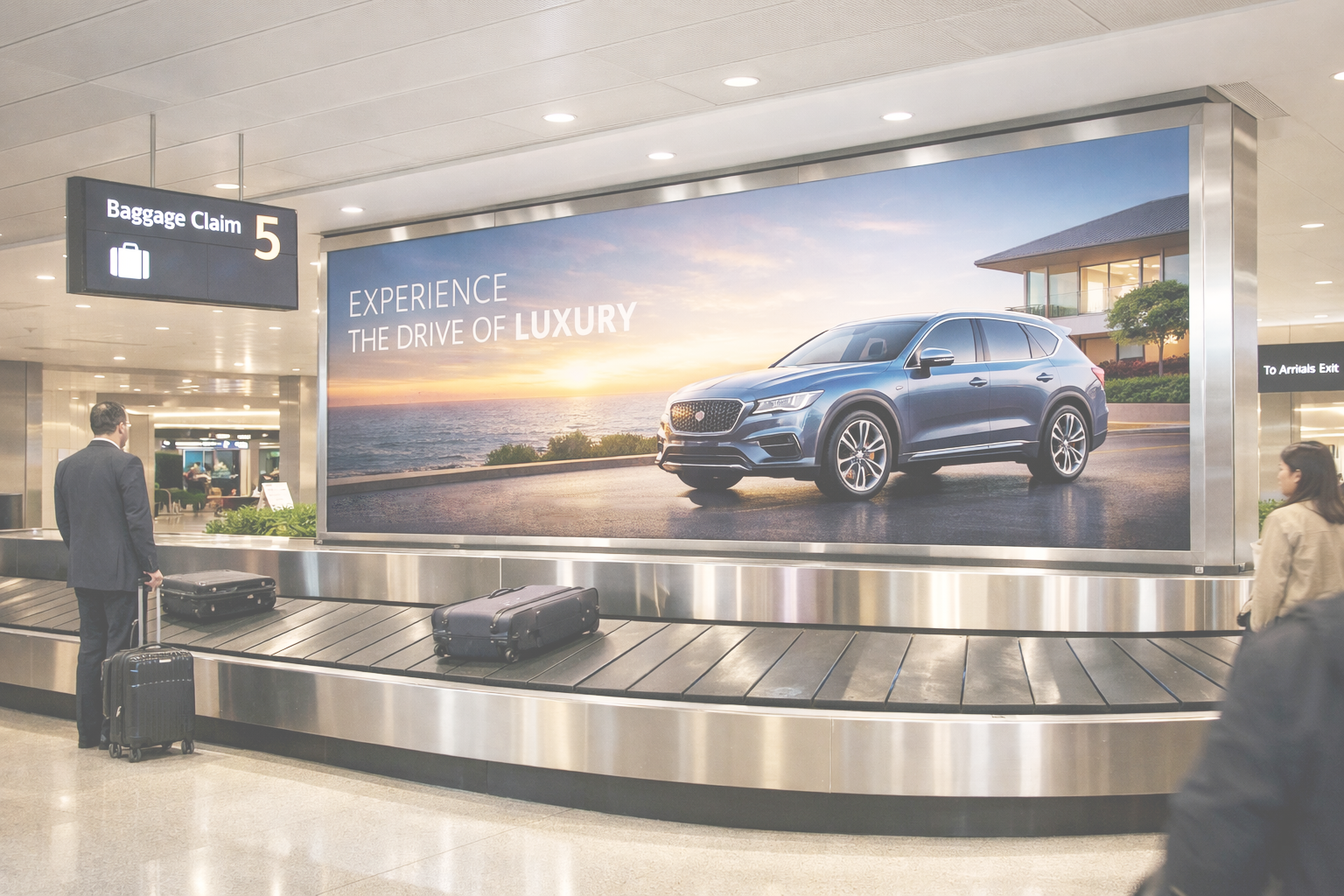
- Luxury automotive: Premium and luxury vehicle brands targeting China's upper-middle class find a captive, brand-receptive audience whose demographic profile closely mirrors the aspirational premium car buyer cohort
- Adventure and premium outdoor gear brands: Zhangjiajie's association with glass bridges, skywalk experiences, and extreme natural environments creates a natural extension audience for performance outdoor gear, adventure cameras, and premium equipment brands
Brand Alignment at a Glance
| Category | Fit |
|---|---|
| Premium eco-luxury and nature brands | Exceptional |
| Luxury travel and hospitality | Exceptional |
| Premium skincare and beauty | Exceptional |
| International real estate | Strong |
| Education and study abroad | Strong |
| Financial services and wealth management | Strong |
| Luxury automotive | Moderate |
| Mass-market FMCG | Poor fit |
Who Should Not Advertise Here
- Mass-market retail and value brands: DYG's audience is in premium experiential mode; budget retail, discount services, and value-positioned products lack the brand alignment to generate meaningful conversion in this environment
- Heavy industry and B2B industrial procurement: The airport's near-total absence of industrial corporate traffic makes manufacturing, logistics, and industrial procurement advertising a poor match for DYG's audience composition
- Domestic Chinese telecom and utility brands: The high proportion of inbound international tourists and outbound affluent domestic travelers limits the addressable audience for services tied to local Chinese residency and infrastructure — these categories are better served at origin airports than at Zhangjiajie
Event and Seasonality Analysis
- Event Strength: High
- Seasonality Strength: High
- Traffic Pattern: Dual-Peak with strong event-driven spikes
Strategic Implication: Advertisers at DYG should build a campaign rhythm around the two golden windows — Labor Day Golden Week in May and National Day Golden Week in October — which together represent the highest audience concentration and the greatest premium brand receptivity of the year. The spring nature window in April and the summer school-holiday peak in July-August provide secondary activation opportunities for brands targeting family groups and international tourism audiences. Masscom Global structures DYG campaigns to secure inventory across these peak windows in advance, ensuring brands are not displaced by last-minute rate pressure during the highest-demand periods. Year-round holding campaigns in low season maintain brand presence at lower cost while preserving placement position for peak surges.

Poor Placement and Delays Affect Airport Campaigns
We help you move faster, access better inventory, and get it right now.
Talk to an ExpertFinal Strategic Verdict
Zhangjiajie Hehua Airport is one of China's most commercially undervalued advertising environments. Its audience is not defined by the local population but by the profile of who chooses to come here — affluent domestic travelers from China's wealthiest cities, high-spending international tourists from South Korea, Japan, and Southeast Asia, and a growing global audience drawn by one of the most recognisable natural landscapes on the planet. The single-terminal concentration, high dwell times, destination premium halo, and dual-peak seasonality create a campaign environment where brand impact far exceeds what raw passenger numbers suggest. For eco-luxury brands, premium travel and hospitality groups, international real estate developers, and wealth management firms targeting China's regional affluent class, DYG represents a precision buy that most media planners have systematically overlooked. Masscom Global provides the inventory access, local market intelligence, and execution capability to activate at DYG ahead of the competition — before increasing international route development and rising advertiser awareness push rates to the levels this audience quality deserves.
About Masscom Global
Masscom Global is a premium international airport advertising and media buying agency operating across 140 countries. With deep expertise in airport OOH, premium publications, and high-net-worth audience targeting, Masscom helps brands reach the world's most valuable travellers at the moments that matter most. For advertising packages, media rates, and campaign planning at Zhangjiajie Hehua Airport and airports across the globe, contact Masscom Global today.
Frequently Asked Questions
How much does airport advertising cost at Zhangjiajie Hehua Airport? Advertising costs at Zhangjiajie Hehua Airport vary based on format type, placement zone, campaign duration, and seasonal demand — with Golden Week and spring peak periods commanding premium rates reflecting the significant uplift in audience volume and quality. Static large-format, digital screen networks, and branded environment executions each carry different investment thresholds. Masscom Global provides current rate intelligence and format recommendations based on your target audience and campaign objectives — contact us directly for a tailored media investment proposal.
Who are the passengers at Zhangjiajie Hehua Airport? The DYG passenger base is a high-quality mix of affluent domestic Chinese tourists from Tier 1 cities including Beijing, Shanghai, Guangzhou, Shenzhen, and Chengdu; inbound international visitors led by South Korean, Japanese, and Southeast Asian travelers; returning overseas Chinese from Australia, the UK, Canada, and the United States; and a growing cohort of European and North American premium nature-tourism visitors drawn by Zhangjiajie's global Avatar-linked destination brand. These passengers share a common profile: they are deliberate, research-driven, experience-committed travelers with above-average discretionary spending capacity.
Is Zhangjiajie Hehua Airport good for luxury brand advertising? Yes, with important nuance. DYG carries a HNWI Score of High in Masscom Global's airport intelligence database, driven not by the local population but by the premium profile of the audiences flying in from China's wealthiest cities and from high-income international tourism markets. Luxury brands in the skincare, travel, hospitality, and lifestyle categories perform strongly. Ultra-premium watch, jewellery, and haute couture categories will find DYG a viable secondary placement alongside Tier 1 Chinese hub airports, particularly during peak Golden Week and spring windows.
What is the best airport in Central China to reach premium tourism and HNWI audiences? For premium tourism audience concentration and eco-luxury brand alignment, Zhangjiajie Hehua Airport (DYG) is the standout option in Central China — no other airport in the Hunan-Xiangxi region commands an internationally recognised destination brand of this scale. For broader Central China HNWI coverage including business travelers, Changsha Huanghua International Airport (CSX) provides complementary reach as the provincial hub. Masscom Global can structure a dual-airport campaign covering both environments for brands seeking comprehensive Hunan province coverage.
What is the best time to advertise at Zhangjiajie Hehua Airport? The two highest-value windows are National Day Golden Week (October 1 to 7) and Labor Day Golden Week (May 1 to 7), which produce the year's peak passenger volumes and highest premium audience concentration. The spring nature window from April through mid-May delivers the highest-quality eco-tourism and photography-motivated audience. The summer period from July to August is the primary international tourist peak. Masscom Global recommends securing inventory for Golden Week periods at least three months in advance to ensure placement in high-impact positions.
Can international real estate developers advertise at Zhangjiajie Hehua Airport? Absolutely. Zhangjiajie Hehua Airport serves a catchment with strong and growing outbound property investment demand, with affluent Hunan-based buyers active in Australia, the United Kingdom, Dubai, Portugal, and Canada. The airport's audience includes both local business owners and professionals making capital deployment decisions, as well as returning overseas Chinese who are actively exploring cross-border property options. The low-competition advertising environment at DYG makes it a high-conversion channel for international real estate developers targeting China's regional affluent class. Masscom Global can pair DYG placements with advertising at destination market airports for a coordinated campaign that engages the same buyer at both ends of the investment decision journey.
Which brands should not advertise at Zhangjiajie Hehua Airport? Mass-market retail, value-positioned consumer goods, and domestic utility services are poorly aligned with the DYG audience's premium experience mindset and demographic composition. Heavy industry B2B and industrial procurement brands will find no meaningful audience concentration at this tourism-oriented airport. Domestic Chinese mobile and telecom providers targeting local residents will achieve limited returns given the high proportion of inbound international visitors and outbound travelers whose local service needs are already established.
How does Masscom Global help brands advertise at Zhangjiajie Hehua Airport? Masscom Global provides end-to-end airport advertising capability at DYG — from strategic audience intelligence and format selection through to local compliance management, production logistics, placement execution, and campaign performance verification. Our intelligence-first approach means clients receive a campaign structured around DYG's specific seasonal peaks, audience composition by nationality and traveler type, and competitive inventory positioning — not a generic media buy. For brands targeting China's premium tourism and regional affluent class, Masscom's access to DYG and ability to coordinate with airports across 140 countries makes us the only partner capable of activating this opportunity at full scale.