




Airport at a Glance
| Field | Detail |
|---|---|
| Airport | Wuhan Tianhe International Airport |
| IATA Code | WUH |
| Country | China |
| City | Wuhan, Hubei Province |
| Annual Passengers | ~18.7 million |
| Primary Audience | Central China technology and industrial HNWI, Wuhan Optics Valley innovation economy professionals, domestic Chinese business travellers, automotive and manufacturing sector executives |
| Peak Advertising Season | March to April (cherry blossom and university season), May Golden Week, October National Day Golden Week |
| Audience Tier | Tier 1 (central China industrial and technology HNWI combined with domestic business travel volume) |
| Best Fit Categories | Technology B2B and enterprise services, real estate, premium automotive, domestic Chinese consumer luxury, financial services, international education |
Wuhan Tianhe International Airport is the single most geographically central major international airport in China. Wuhan sits at the exact confluence of the Yangtze and Han Rivers in the heart of the Chinese mainland — equidistant from Beijing, Shanghai, Guangzhou, and Chengdu — a geographic positioning that the Chinese government formalised in the ancient description of the city as the thoroughfare of nine provinces. That centrality is not merely cartographic. It is the structural commercial fact that has made Wuhan one of China's most important aviation, rail, and logistics hubs, and it is the reason that WUH handles the movement of business, academic, industrial, and leisure travel from the most diverse catchment of any Chinese city below the tier-one designation. The passengers moving through this terminal are not a geographically limited regional audience. They are the executives, engineers, entrepreneurs, students, and professionals of a city that China's national development strategy has identified as the lynchpin of its central economic zone — a city of 12 million people whose East Lake Optics Valley technology district has been designated as one of China's most strategically important innovation economies and whose universities produce more graduates per year than any other Chinese city outside Beijing.
Wuhan is not a city that global advertisers have historically prioritised — its international profile has been shaped more by geopolitical events than by commercial recognition of its extraordinary economic depth. That gap between Wuhan's actual commercial scale and its international brand investment level is precisely the opportunity that Masscom Global recognises and that forward-looking advertisers should act on now. A city with China's largest urban lake, one of its most celebrated universities, the country's most important optoelectronics and semiconductor manufacturing base, a major automotive production hub anchored by Dongfeng Motor, and a domestic real estate market that has been among China's most actively traded — all concentrated in a single airport terminal that serves as the sole international gateway for a catchment of over 60 million people across Hubei Province — is a commercial environment of extraordinary value that the global advertising community has chronically underinvested in relative to its demonstrated audience quality.
Advertising Value Snapshot
- Passenger scale: Approximately 18.7 million annual passengers, reflecting the ongoing recovery of Wuhan's aviation economy toward its pre-pandemic peak of approximately 30 million. Pre-pandemic, WUH ranked consistently among China's top ten airports by total passenger volume and is expected to return to and exceed that level as Chinese domestic aviation completes its recovery trajectory
- Traveller type: Wuhan Optics Valley technology executives and entrepreneurs, central China automotive and manufacturing industry management, domestic Chinese business travellers accessing China's geographic centre, university academic and research community, central China real estate and financial services wealth holders
- Airport classification: Tier 1 — one of China's twelve designated key hub airports under the national civil aviation development plan, serving as the primary international and domestic aviation gateway for Hubei Province and as a significant transit hub for central China's 60-plus million-person catchment
- Commercial positioning: Central China's strategic aviation command centre and the primary air gateway to China's most ambitious technology development zone, serving an economy that the Chinese central government has identified as a national strategic priority for the country's technology independence and central development policy
- Wealth corridor signal: WUH sits at the convergence of China's central industrial wealth corridor — automotive, steel, chemicals, optoelectronics — and the innovation economy capital flow of the Optics Valley, whose semiconductor and photonics companies are positioned at the centre of China's most strategically significant technology independence programme
- Advertising opportunity: Masscom Global activates the full advertising environment at Wuhan Tianhe International Airport, positioning brands at the gateway of central China's most commercially dynamic and nationally strategic technology and industrial economy, with access to a professional and entrepreneurial class whose commercial sophistication and purchasing power are consistently underestimated by international advertisers relative to coastal Chinese city peers
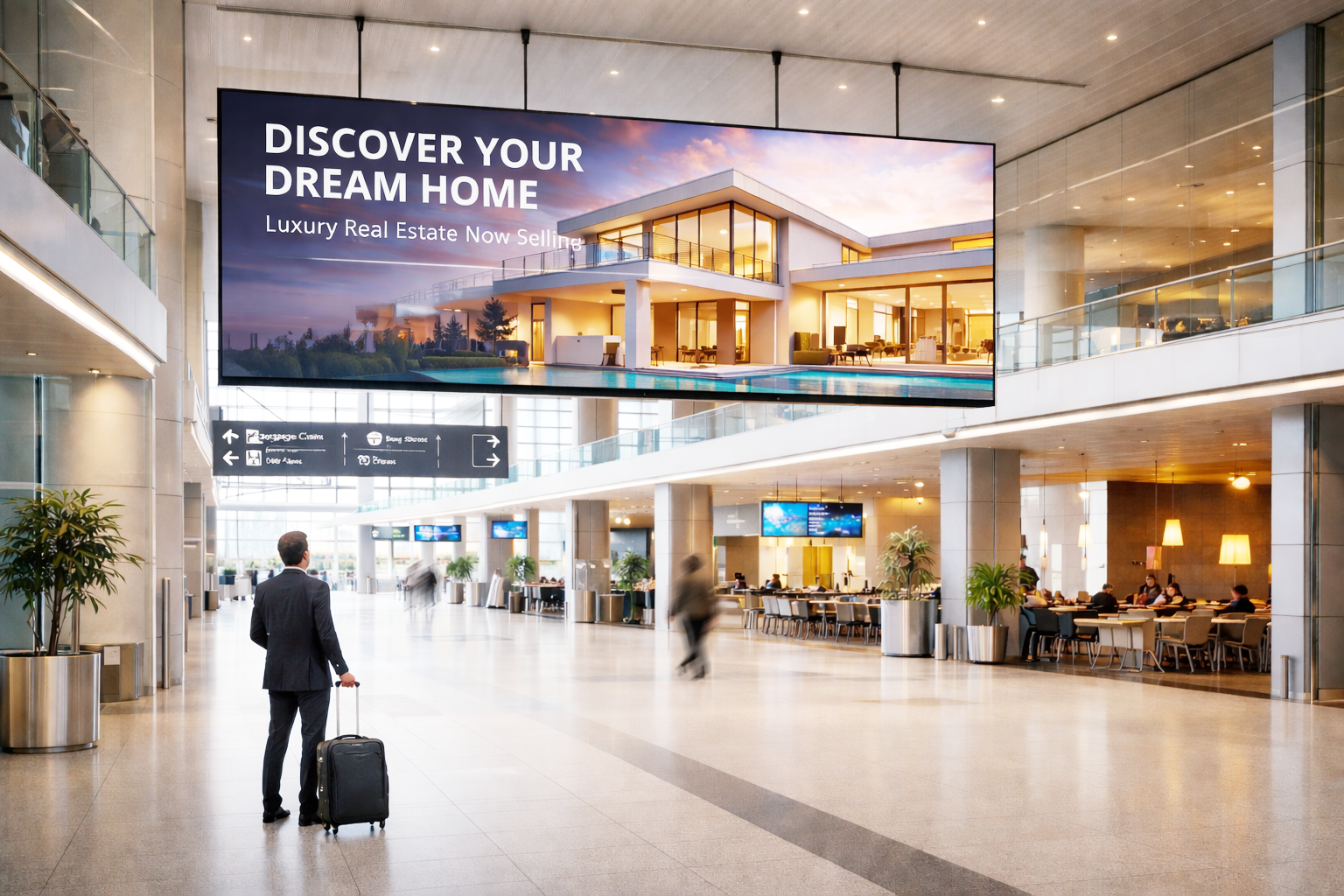
Airport Advertising is Complex to Get Right
We help you execute faster, with proven results and local insight most planners lack starting now.
Talk to an ExpertCatchment Area and Economic Drivers
Top 10 Cities within 150 km — Marketer Intelligence:
- Xiaogan: A city of over 5 million people 60 kilometres northwest of Wuhan, Xiaogan is one of Hubei's most industrially productive secondary cities, anchoring electronics manufacturing, textile production, and a growing logistics economy that directly benefits from Wuhan's central transport position. Its manufacturing management class uses WUH regularly for domestic business travel, generating a consistent B2B and mid-market premium consumer audience relevant for automotive, financial services, and professional technology brands.
- Ezhou: Located 70 kilometres east of Wuhan, Ezhou is the site of China's most significant new aviation infrastructure investment — the Ezhou Huahu Airport, being developed as a dedicated express cargo hub anchored by SF Express (China's DHL equivalent) and positioned to become Asia's largest cargo airport. The industrial and logistics management community developing and operating this new aviation economy through WUH represents a commercially forward-looking, technology-oriented professional audience directly relevant for logistics technology, enterprise software, and financial services brands active in China's e-commerce and express delivery economy.
- Huanggang: A city of over 7 million people 80 kilometres east, Huanggang is Hubei's most agriculturally productive corridor alongside significant light manufacturing. Its commercial and agricultural business class generates a consistent regional professional travel audience through WUH, and its strong secondary school academic culture — Huanggang is famous across China for producing high-scoring college entrance examination students — creates a commercially distinctive education-investment household profile relevant for international and domestic education brand advertisers.
- Huangshi: An 80-kilometre southeast industrial city whose economy is anchored by mining, metallurgy, and materials production — including significant copper, iron ore, and cement operations. Huangshi's industrial executive and engineering professional class generates a regular WUH business travel audience with above-average income and strong demand for automotive, professional services, and B2B technology brands targeting central China's materials and industrial sector.
- Xiantao: A sub-provincial city 80 kilometres southwest whose economy spans non-woven fabric manufacturing — making it China's most significant production base for medical protective materials — alongside agricultural and light industrial operations. Xiantao's manufacturing entrepreneur class has benefited significantly from pandemic-era export demand and represents a growing premium consumer segment for financial planning, premium FMCG, and real estate brands entering central China's manufacturing wealth market.
- Xianning: A hot springs resort and eco-tourism city 90 kilometres south of Wuhan, Xianning anchors Hubei's most developed domestic leisure tourism circuit for Wuhan's urban professional class. Its bamboo forests, hot spring resorts, and Nanzhan Mountain scenic area draw weekend leisure visitors from across the Wuhan metropolitan area, generating a premium domestic nature tourism audience whose spending on accommodation, wellness, and food experiences is growing rapidly with Wuhan's rising disposable income levels.
- Tianmen: A city 100 kilometres northwest known as the birthplace of the Chinese tea ceremony — hometown of Lu Yu, the Tang Dynasty author of the Classic of Tea — and a significant cotton and pharmaceutical manufacturing centre. Tianmen's dual identity as a cultural heritage origin point and industrial producer creates a commercially distinctive audience combining cultural brand affinity with manufacturing sector professional wealth.
- Jingmen: A chemical and oil refinery city 120 kilometres northwest anchored by Sinopec Jingmen Petrochemical and a significant phosphorus chemical production sector. Jingmen's state enterprise and private industrial wealth class generates a stable, above-average-income professional travel audience through WUH with strong demand for automotive, financial services, and premium consumer brands.
- Suizhou: A city 130 kilometres north renowned as the origin of Chinese civilisation's legendary Yellow Emperor and as the site of the Marquis Yi of Zeng's 2,400-year-old tomb — whose extraordinary bronze musical instruments, housed in the Hubei Provincial Museum in Wuhan, represent one of China's most significant archaeological discoveries. Suizhou's blend of ancient cultural heritage and modern special vehicle manufacturing (it is China's largest producer of special purpose vehicles) creates an unusual commercial profile combining cultural tourism and industrial wealth relevance.
- Qianjiang: A 130-kilometre southwest city whose economy is anchored by salt chemical production, petroleum refining, and a growing aquaculture sector — Qianjiang's crayfish (小龙虾) has become one of China's most celebrated regional food brands and a key driver of Wuhan's summer street food culture. Its industrial and food production entrepreneurial class represents a growing premium consumer and investment audience for financial services and premium food brand advertisers in the WUH corridor.
NRI and Diaspora Intelligence:
Wuhan does not generate a significant traditional overseas NRI diaspora, but it operates as the origin city for one of China's largest and most commercially significant domestic diaspora movements — the annual return of Wuhan University alumni and graduate students from across China who maintain profound emotional and investment loyalty to the city. Wuhan's 80-plus universities produce approximately 1.3 million students at any given time, and the cohort of Wuhan graduates who have dispersed to Beijing, Shanghai, Shenzhen, and Guangzhou over the past three decades constitutes a commercially extraordinary alumni network whose return visits to Wuhan — for university reunions, family visits, and investment inspection — generate a distinct, high-income, educationally elite inbound travel segment through WUH that is commercially relevant for premium hospitality, cultural experience, and real estate brands. Internationally, Wuhan produces one of China's largest outbound student flows to the United States, the United Kingdom, and Australia — particularly in science, engineering, and medical disciplines from Huazhong University of Science and Technology and Wuhan University — creating a consistent international education corridor through WUH whose returning international-educated professionals carry globally calibrated consumption standards and above-average premium brand engagement.
Economic Importance:
Wuhan's economy is anchored by a industrial and technology base of national strategic significance. The automotive sector — centred on Dongfeng Motor Corporation, one of China's four state-owned automotive giants, alongside joint ventures with PSA, Renault, Honda, and Nissan — employs hundreds of thousands of people directly and generates a management and engineering professional class whose income and consumption profile is among the highest in central China. The East Lake Optics Valley, formally the East Lake High-tech Development Zone and designated by the Chinese central government as a national demonstration zone for innovation, houses over 30,000 enterprises including Yangtze Memory Technologies (YMTC), Fiberhome Technologies, Huawei's central China R&D centre, and hundreds of photonics, semiconductor, and information technology companies whose combined output has made the Optics Valley the primary Chinese alternative to Shenzhen and Hangzhou as a technology wealth generation centre. The financial services sector — with Wuhan serving as central China's primary banking, insurance, and capital markets hub — generates a financial professional class whose commercial profile is directly comparable to comparable-scale Chinese tier-two city finance communities in Chengdu, Nanjing, and Hangzhou.
Business and Industrial Ecosystem
- The East Lake Optics Valley's semiconductor and optoelectronics industry — centred on YMTC's massive NAND flash memory chip manufacturing operation, China's strategic answer to Samsung and Micron — generates a technically elite, strategically significant, and nationally celebrated engineering and management workforce whose professional income and consumption profile reflects the premium compensation packages that Chinese national strategic technology projects command, creating a concentrated HNWI technology professional audience at WUH whose domestic and international brand consumption is calibrated to global rather than regional standards
- Dongfeng Motor Corporation and its multinational joint ventures with Honda, Nissan, PSA, and Renault employ tens of thousands of automotive engineers, commercial managers, and production executives in Wuhan's automotive corridor whose regular domestic and international business travel through WUH creates a sustained, commercially qualified B2B and premium consumer audience for automotive, financial services, technology, and premium lifestyle brands
- Wuhan's financial services sector — comprising the Wuhan branches of China's major state banks, a significant insurance industry cluster, and the central operations of several nationally listed financial institutions — generates a financial executive and investment management professional class whose consumption profile consistently outperforms the Hubei provincial average and whose international travel patterns connect Wuhan's financial economy to Hong Kong, Singapore, and global capital market centres
- The pharmaceutical and biomedical industry, anchored by the Wuhan National Biosafety Laboratory, Sinopharm Wuhan Institute of Biological Products, and a growing cluster of biotech startups in the Optics Valley, generates a highly educated scientific and management professional audience with strong demand for premium healthcare, international travel, and technology lifestyle brand categories
Passenger Intent — Business Segment:
The business travellers at Wuhan Tianhe Airport are overwhelmingly operating at the intersection of China's national technology strategy and its central industrial economy — a combination that produces a professional class whose individual commercial profile rivals coastal city equivalents while carrying a distinctly central China character defined by pragmatism, engineering excellence, and a preference for substance over surface in brand communications. The Optics Valley technology executive travelling internationally for semiconductor supply chain negotiations, the Dongfeng Motor manager connecting to European automotive partners via Frankfurt, and the Wuhan financial professional travelling to Hong Kong and Singapore for capital market meetings all move through WUH with a commercial intent that is simultaneously domestic and global — making them receptive to both Chinese market brand communications and to international brand messages that reflect their globally calibrated professional expectations.
Strategic Insight:
The commercial case for advertising at Wuhan Airport rests on an insight that distinguishes the WUH opportunity from every other major Chinese regional airport: Wuhan is simultaneously a city of national strategic technology importance, a domestic business hub of extraordinary geographic centrality, and the host to China's most concentrated university ecosystem — three commercial audience generators that create a rare and underexplored combination of technology wealth, business travel volume, and educated consumer sophistication that few Chinese cities outside the tier-one triumvirate of Beijing, Shanghai, and Guangzhou can match. The gap between this commercial reality and Wuhan's international brand advertising investment level is the opportunity, and Masscom Global is the partner to close it.
Tourism and Premium Travel Drivers
- Wuhan University's cherry blossom season — the most nationally celebrated campus cherry blossom viewing in China, drawing millions of visitors each spring to the university's iconic hillside campus where hundreds of Japanese cherry trees create a landscape whose beauty has been documented in Chinese art and poetry for decades — generates the single most Instagram-and-Xiaohongshu-documented seasonal travel moment in Wuhan's annual calendar, producing an enormous inbound domestic leisure tourism surge in late March and early April that makes this window one of the most commercially concentrated domestic tourism peaks at WUH
- The Yellow Crane Tower, one of China's Three Great Towers and a nationally iconic landmark on the south bank of the Yangtze River whose Tang Dynasty origins and repeated reconstructions embody the Chinese cultural narrative of resilience and renewal, anchors Wuhan's heritage tourism identity as a must-visit destination in the Chinese domestic cultural tourism circuit, drawing premium leisure visitors from across the country year-round
- East Lake, the largest urban lake in China at 88 square kilometres within the city limits — larger than the entire West Lake district of Hangzhou — provides Wuhan's most significant premium domestic leisure infrastructure, including high-end lakeside restaurants, boutique resort hotels, celebrity chef dining establishments, and the East Lake Greenway cycling and running circuit that has become one of China's most celebrated urban outdoor lifestyle destinations
- The Hubei Provincial Museum's world-class collection of the Marquis Yi of Zeng bronzes — a 2,400-year-old set of 65 bronze bells whose musical precision has astonished archaeologists and musicians globally and which represent the apex of Chinese Bronze Age metallurgical and musical achievement — anchors a cultural heritage tourism circuit whose premium audience of culturally engaged domestic Chinese tourists and international cultural visitors generates consistent year-round inbound premium leisure traffic through WUH
Passenger Intent — Tourism Segment:
The tourists arriving at Wuhan Airport divide between two commercially productive segments whose combined value positions WUH as a more commercially significant leisure tourism gateway than most international advertisers have recognised. The domestic Chinese cultural and cherry blossom leisure tourist — arriving from Beijing, Shanghai, Guangzhou, and Chengdu for the Wuhan University campus experience, the Yellow Crane Tower, and East Lake — is a premium domestic traveller whose per-visit spend on accommodation, dining, and cultural experiences reflects the consumption standards of China's coastal city middle and upper-middle class. The university alumni return visitor — the Wuhan graduate returning from a coastal city career for a reunion, a real estate inspection, or a family visit — is simultaneously a high-income consumer and an emotionally invested participant in Wuhan's economic story, whose spending patterns combine personal nostalgia with investment intent in commercially distinctive ways.
Travel Patterns and Seasonality
Peak seasons:
- Cherry blossom and spring (late March to early April): Wuhan's most nationally famous seasonal event, drawing domestic Chinese tourists from across the country specifically for the Wuhan University cherry blossom experience and the spring emergence of East Lake's greenway landscape. This window generates WUH's most concentrated domestic premium leisure inbound surge of the year, with Wuhan's five-star hotels and premium dining establishments reaching annual peak occupancy simultaneously.
- Labour Day Golden Week (late April to early May): China's spring holiday week generates both a peak domestic inbound tourism surge and the year's first major outbound travel window, as Wuhan's technology and professional class departs for international destinations via WUH's international route network.
- University graduation season (June): Wuhan's extraordinary concentration of universities — with over 80 institutions producing hundreds of thousands of graduates annually — generates a graduation season travel surge that is unique in scale among Chinese cities. Families travelling from across China to attend graduation ceremonies at Wuhan University, HUST, Wuhan University of Technology, and dozens of other institutions create a concentrated family group travel window with strong premium accommodation, dining, and gifting spend.
- National Day Golden Week (October): China's most commercially intense holiday week, generating peak domestic tourism inbound and outbound simultaneously. The Wuhan cherry blossom's autumn counterpart — the city's ginkgo tree golden season in October and November — has been growing as a secondary visual tourism driver that enhances the National Day window's cultural appeal.
- Chinese New Year (January to February): The Lunar New Year generates the most emotionally charged family homecoming travel event of the Chinese calendar. Wuhan's central location makes it a natural reunion destination for Chinese families dispersed across the country, and the city's distinctive New Year street food culture — hot dry noodles, duck neck, and river fish — draws premium domestic culinary tourism alongside the standard family return movement.
Event-Driven Movement:
- Wuhan University Cherry Blossom Season (late March to early April): The most nationally viral domestic tourism moment of Wuhan's annual calendar, requiring advance reservation for campus entry and generating spillover premium accommodation demand across the entire city for the two-week peak. Brands in luxury hospitality, premium Chinese cultural experience, and lifestyle categories should treat the pre-cherry blossom advertising window as their highest-ROI annual investment at WUH — reaching the domestic premium leisure tourist at maximum anticipation before their Wuhan arrival.
- National Day Golden Week (October 1 to 7): The single highest-passenger-volume week in WUH's annual calendar, combining domestic tourism inbound with outbound family holiday travel and generating the most commercially intense combined retail, hospitality, and gifting spend window of the year. Every brand category from luxury hospitality through premium FMCG to automotive and real estate achieves peak commercial audience concentration simultaneously in this window.
- Wuhan International Music Festival (October): A nationally significant classical and contemporary music event reflecting Wuhan's deep cultural connection to the Marquis Yi of Zeng bronze bells — a 2,400-year-old musical heritage — drawing classical music patrons, cultural tourists, and international arts community visitors through WUH with a concentrated premium cultural and lifestyle brand audience.
- China Optics Valley Innovation Summit (variable): The flagship annual technology and innovation conference anchored by the East Lake Optics Valley Authority and drawing national and international technology executives, venture capital investors, and government officials to Wuhan's semiconductor and photonics economy. This event generates WUH's most concentrated B2B technology professional audience of the year, with premium business hospitality, enterprise technology, and financial services brands achieving their highest annual qualified contact efficiency at this event window.
- University Graduation Ceremonies (June): The combined graduation season of Wuhan's 80-plus universities creates a multi-week family travel event that is commercially unique in the Chinese aviation calendar — a sustained, two to three-week window of family group premium travel through WUH with above-average hospitality, dining, and gifting spend driven by the celebratory and socially performative character of Chinese university graduation culture.
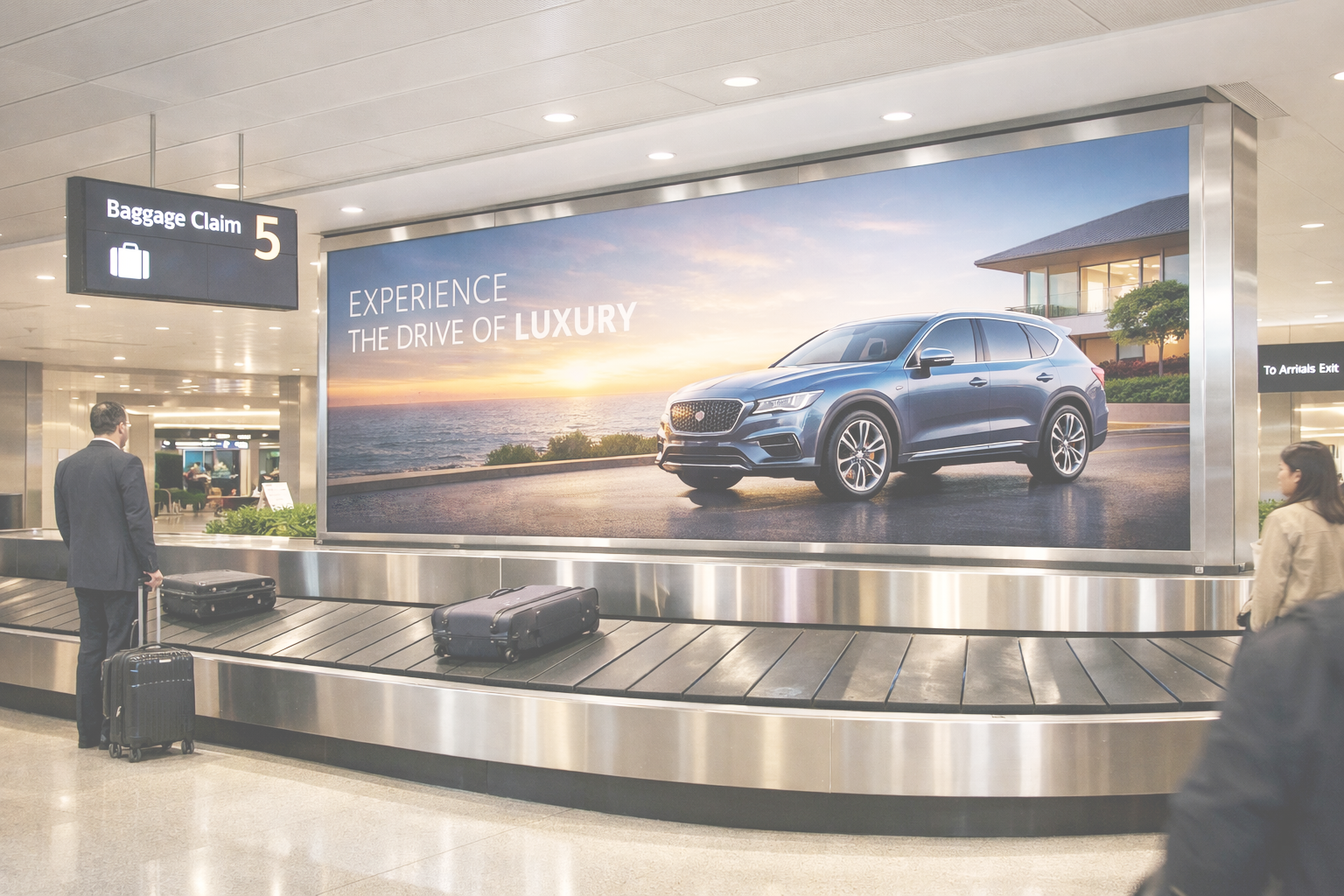
It’s Not Just Where You Advertise - It’s How Fast You Execute
We combine local insight with fast rollout to deliver results for you, now.
Talk to an ExpertAudience and Cultural Intelligence
Top 2 Languages:
- Mandarin Chinese (Putonghua): The universal primary language of the entire passenger base at WUH. Wuhan's Mandarin carries a distinctive local accent — the Wuhan dialect (武汉话) is one of China's most recognisable regional vernaculars — but standard Putonghua is the commercial communication standard for all brand advertising. Mandarin creative at WUH must reflect the specific cultural character of central China's industrial and academic professional identity — direct, substantive, technically credible, and free of the coastal city premium brand affectation that Wuhan's engineering-culture audience will identify and dismiss as inauthentic.
- English: The most commercially significant secondary language at WUH, serving the international business community, the Optics Valley's internationally oriented technology professionals, the overseas Chinese student community returning through Wuhan for home visits, and the inbound international tourist audience arriving for the Yellow Crane Tower, East Lake, and Hubei Provincial Museum. English creative at WUH will be encountered primarily by the technology professional audience whose international business relationships give them the highest per-individual commercial value of any English-literate segment at the airport.
Major Traveller Nationalities:
The dominant nationality at Wuhan Tianhe Airport is overwhelmingly Chinese domestic, with inbound tourism flows from Beijing, Shanghai, Guangzhou, Shenzhen, and Chengdu representing the commercial backbone of WUH's leisure passenger base. Within the domestic Chinese audience, the cherry blossom season demographic — young professional and student-age domestic tourists from coastal cities — is one of the most social-media-active and brand-conscious audience segments in Chinese leisure aviation. The Optics Valley and Dongfeng Motor professional class represents the most commercially qualified domestic business segment. International passengers — South Korean tourists (reflecting WUH's direct Seoul connection), Japanese visitors, Southeast Asian leisure tourists, and Western European and North American business and academic visitors — add a foreign currency tourism dimension whose per-visit spend significantly exceeds domestic Chinese averages. The international academic and research community visiting Wuhan's world-class universities adds a niche but commercially valuable international professional layer with strong premium hospitality and cultural experience spend.
Religion — Advertiser Intelligence:
- Buddhism (culturally practised — majority with secular overlay): The majority of Wuhan's domestic Chinese visitors maintain syncretic Buddhist cultural practice, expressed most commercially through temple visits to Guiyuan Buddhist Temple and Baotong Temple — two of Wuhan's most historically significant and most visited religious sites. The Buddhist cultural calendar, particularly the spring festival season and the key temple visit dates, drives domestic leisure travel patterns and premium gifting behaviour relevant for cultural experience, artisan food, and premium craft brands advertising at WUH.
- Christianity (~5% — above national average): Hubei Province historically had significant Protestant and Catholic missionary activity from the 19th century onward, resulting in one of China's higher-than-average Christian population concentrations. Wuhan's Christian community — concentrated among university faculty, healthcare professionals, and the internationally educated returnee class — represents a Western cultural brand affinity segment whose consumer behaviour is shaped by global consumption norms more strongly than the broader Wuhan population. Christmas retail season functions as a commercially significant gifting and luxury purchase window for this segment.
- Secular and no formal religious affiliation (~70%): The dominant character of Wuhan's urban professional and technology sector audience, particularly the Optics Valley engineering class and university community, is secular and experience-driven. This audience responds to brand communications that lead with technical quality, innovation credentials, and substantive value rather than cultural or heritage emotional appeals — a brand communication register that distinguishes WUH's technology professional segment from the heritage tourism audiences at airports like Xi'an.
Behavioral Insight:
The Wuhan professional consumer is one of the most technically literate and substantively demanding audiences in Chinese domestic advertising. A city built on engineering excellence — from the Yangtze River Bridge, the first fixed crossing of the Yangtze and an engineering landmark of national pride when it opened in 1957, through the Optics Valley's semiconductor fabrication plants and the Dongfeng Motor assembly lines — has produced a consumer culture that values quality, precision, and demonstrated performance above lifestyle aspiration and status signalling. Brands that earn Wuhan's technology and industrial professional class through credible technical claims and genuine product quality will build customer loyalty that is more durable and community-amplified than the trend-driven consumption patterns of coastal city audiences. The university student and young professional audience adds a social media-native, experience-economy-oriented layer whose brand engagement through Xiaohongshu, Douyin, and WeChat is among the most actively documented of any Chinese city's leisure audience — Wuhan University's cherry blossom season is the most replicated campus tourism content category in Chinese social media, and the brands that appear authentically in that visual vocabulary achieve earned media amplification at national scale.
Outbound Wealth and Investment Intelligence
The outbound passenger at Wuhan Tianhe Airport is a central China wealth holder whose international investment priorities reflect the specific characteristics of Wuhan's technology-industrial economy — an audience that is investing internationally for family security, educational advancement, and wealth diversification rather than lifestyle trophy acquisition, and whose investment decisions are more deliberate, more technically researched, and more value-oriented than the coastal Chinese HNWI whose behaviour has historically dominated Chinese outbound wealth narratives.
Outbound Real Estate Investment:
Wuhan HNWI outbound real estate investment flows follow the established Chinese HNWI corridor with specific central China characteristics. Australia represents the single largest international property investment destination for Wuhan's HNWI class — Brisbane and the Gold Coast attract Wuhan families seeking Pacific lifestyle access with university proximity, while Sydney attracts the premium investment tier. Canada's British Columbia and Ontario markets are the second most active outbound corridor, driven by education-pathway property investment from families whose children are entering Canadian universities. The United Kingdom's London market attracts Wuhan's most internationally credentialed professional and academic class, particularly HUST and Wuhan University alumni whose international academic careers have created London property familiarity. Singapore attracts Wuhan's financial services and trading company wealth as both an investment and a financial hub residency option. Domestically, Wuhan's own real estate market has been one of China's most extensively discussed property investment destinations — Wuhan HNWI are simultaneously active domestic investors in Hainan Island resort properties, Shenzhen technology corridor apartments, and national tourism destination real estate.
Outbound Education Investment:
Wuhan is one of China's most significant sources of internationally outbound students, driven by the extraordinary academic preparation culture of Hubei Province — whose students consistently outperform national averages in college entrance examinations — and by the international orientation of its flagship universities. The United States attracts the largest volume of Wuhan students for STEM graduate and undergraduate programmes, with MIT, Stanford, Carnegie Mellon, and the University of Michigan among the most frequently targeted institutions for Wuhan's engineering family educational investment. The United Kingdom's Imperial College London, Cambridge, and Edinburgh attract the engineering and technology-focused premium academic track. Australia's University of Melbourne, ANU, and University of Sydney attract the most education-pathway-immigration-aligned Wuhan family investment. Canada's University of British Columbia, University of Toronto, and University of Waterloo — the last known for the world's largest co-operative education engineering programme — are increasingly prominent destinations for Wuhan's technology professional family. International STEM universities and boarding schools with strong science and engineering curricula will find at WUH a parent audience whose per-student investment commitment and academic subject preference map precisely onto their enrolment pipeline needs.
Outbound Wealth Migration and Residency:
Wuhan's HNWI class is an active participant in the Chinese outbound residency market, with investment motivations shaped specifically by the technology sector's awareness of geopolitical technology supply chain risks and by the education-driven family planning patterns of the Optics Valley professional community. Canada's Express Entry and provincial nominee programmes remain the most actively pursued pathway, offering university-town proximity and technology sector immigration options in British Columbia and Ontario. Australia's Global Talent visa programme and significant investor visa attract the senior technology executive segment. Portugal's Golden Visa fund investment pathway is growing among the Wuhan technology HNWI seeking European lifestyle access alongside asset diversification. Singapore's Global Investor Programme is the most strategically valued option for the Optics Valley entrepreneur seeking Asian Pacific financial system access and Chinese cultural proximity simultaneously. Greece's Golden Visa at a lower investment threshold is gaining traction among the broader professional class seeking European mobility as a family security hedge.
Strategic Implication for Advertisers:
International STEM universities, Australian and Canadian real estate developers, private banking institutions managing Chinese technology wealth, and residency advisory firms serving China's national strategic technology professional class should treat Wuhan Tianhe Airport as a primary central China HNWI acquisition channel whose per-qualified-contact efficiency is significantly higher than comparable investment at Beijing, Shanghai, or Guangzhou airports due to the lower competitive intensity and the highly pre-qualified professional profile of the Optics Valley and automotive industry audience. Masscom Global coordinates outbound wealth corridor campaigns with domestic Chinese premium consumer brand campaigns at WUH simultaneously, ensuring full commercial capture across both directions of Wuhan's wealth movement.
Airport Infrastructure and Premium Indicators
Terminals:
Wuhan Tianhe International Airport operates three terminal buildings — Terminal 2 and Terminal 3 as the primary operational facilities — following a phased expansion that reflects the Chinese government's sustained investment in WUH as a national civil aviation hub. Terminal 3, the newest and largest facility, is an international-standard terminal designed for the passenger volumes associated with a top-ten Chinese airport, offering premium retail, duty-free, airline lounge facilities, and food and beverage operations calibrated for the Wuhan technology and industrial professional class's internationally benchmarked expectations. Terminal 2 handles a significant share of domestic operations. The multi-terminal configuration requires strategic placement planning, and Masscom Global's WUH inventory access and terminal traffic intelligence ensure that campaign placements are allocated to the zones with the highest commercial audience concentration for each specific brand category.
Premium Indicators:
- Wuhan's luxury hotel ecosystem — including the Wanda Reign Wuhan, Marriott Wuhan, InterContinental Wuhan, Hilton Wuhan Riverside, and the Sofitel Wuhan Wuchang — establishes a five-star accommodation tier with properties of genuine international quality that confirm the presence of a premium hospitality guest audience cycling through WUH whose room rate and F&B spend signals substantial discretionary purchasing power
- The East Lake Optics Valley's national strategic technology status — reinforced by state investment in YMTC's NAND flash fabrication at a scale that represents one of the largest technology capital investments in Chinese history — creates a brand association halo for companies present at WUH that positions them as participants in China's most strategically important technology independence narrative, an association value that is commercially significant for enterprise technology, industrial equipment, and professional services brands seeking central China market credibility
- Wuhan's status as a national high-speed rail hub — with more high-speed rail lines converging on Wuhan than any other Chinese city outside Beijing and Shanghai — means that WUH's premium business travellers are the most geographically mobile professional class in central China, regularly accessing multiple cities' commercial environments and carrying consumption standards shaped by exposure to the full tier-one Chinese city spectrum
- The Ezhou Huahu cargo airport development 70 kilometres east — which when fully operational will serve as Asia's largest express cargo hub, processing packages from across central China through SF Express, DHL, and other express carriers — signals the logistics and e-commerce economy investment at the heart of Wuhan's central China commercial positioning, confirming the commercial sophistication of the business community that WUH serves
Forward-Looking Signal:
Wuhan Tianhe Airport's planned expansion to a four-runway, four-terminal facility is designed to restore and substantially exceed the pre-pandemic capacity of 30 million passengers per year, with the long-term target of 80 million annual passengers positioning WUH as one of China's five largest aviation hubs. New international routes are being progressively restored and added as Chinese aviation completes its recovery cycle, with direct connections to additional European, Southeast Asian, and North American cities expected to significantly expand WUH's international audience profile in the coming years. The continued growth of the Optics Valley's semiconductor sector — driven by government investment in YMTC's capacity expansion and the incoming supply chain of international and domestic equipment manufacturers establishing Wuhan operations — is generating a wave of international technology business travel through WUH that will add premium foreign passport business travel to the airport's commercial base at an accelerating rate. Masscom advises clients to establish WUH presence now — current rates reflect a recovery-phase market well below the competitive intensity that WUH will represent when its 80-million-passenger target is reached, and the premium technology professional audience accessible today will be significantly more contested as the Optics Valley's global commercial profile continues to rise.
Airline and Route Intelligence
Top Airlines:
- China Southern — major domestic hub operator, primary regional connectivity
- Air China — domestic and international long-haul operator
- China Eastern — significant domestic and international operator
- Hainan Airlines — domestic trunk routes and international long-haul
- Xiamen Air — southeastern China and select international connections
- Shenzhen Airlines — Pearl River Delta connectivity
- Korean Air and Asiana Airlines — Seoul hub connections serving the Korean inbound and Chinese outbound corridor
- ANA and JAL — Tokyo connections serving the Japanese cultural tourism and business corridor
- Singapore Airlines — Singapore hub connection for Southeast Asian and global onward connectivity
- Various seasonal European and North American carriers
Key International Routes:
- Wuhan (WUH) to Seoul Incheon (ICN): Primary Northeast Asian connection serving Korean inbound tourism and Chinese outbound Korea leisure travel
- Wuhan (WUH) to Tokyo (NRT/HND): Japanese connection serving cultural tourism and Chinese outbound Japan leisure
- Wuhan (WUH) to Bangkok (BKK): Southeast Asian leisure and Theravada Buddhist pilgrimage corridor
- Wuhan (WUH) to Singapore (SIN): Southeast Asian financial hub, Chinese diaspora gateway, and Southeast Asia tourism anchor
- Wuhan (WUH) to London Heathrow (LHR): European flagship route, education and heritage tourism gateway
- Wuhan (WUH) to Frankfurt (FRA): Automotive industry connection (Dongfeng's European partners), education gateway, and European business corridor
- Wuhan (WUH) to Paris (CDG): European cultural tourism and education connection
- Wuhan (WUH) to Los Angeles (LAX): North American education and leisure gateway
- Wuhan (WUH) to Vancouver (YVR): Canadian education and immigration pathway corridor, reflecting WUH's strong British Columbia property and immigration investment flow
- Wuhan (WUH) to Sydney (SYD): Australian connection serving the most active Chinese outbound real estate investment market
Domestic Connectivity:
WUH operates as one of China's twelve designated key hub airports, with high-frequency services to Beijing Capital and Beijing Daxing, Shanghai Pudong and Hongqiao, Guangzhou Baiyun, Shenzhen Bao'an, Chengdu Tianfu, Chongqing Jiangbei, Kunming Changshui, Hangzhou Xiaoshan, Xi'an Xianyang, Nanjing Lukou, and all major Chinese provincial capitals. The density of domestic connectivity reflects Wuhan's status as China's most centrally positioned major aviation hub — the city that is geographically equidistant from all four of China's coastal commercial centres, making WUH the natural transit and connection point for travellers across the central and western Chinese provinces.
Wealth Corridor Signal:
The WUH route network tells the story of Wuhan's dual commercial identity as simultaneously a Chinese domestic hub and an internationally connected technology and education gateway. The Frankfurt route signals Dongfeng Motor's European automotive partnership relationships — a direct commercial connection between central China's largest employer and the German automotive engineering ecosystem. The Vancouver and Sydney routes confirm the active Australia-Canada property and education investment flow from Wuhan's HNWI family class. The London and Paris connections reflect both the educational premium investment of the technology and academic professional community and the cultural heritage tourism connectivity of Wuhan's domestic and international leisure audience. The Seoul and Tokyo routes signal Northeast Asia's strong interest in China's most university-rich domestic tourism destination. Together, the network is the commercial architecture of a city that is both profoundly central to China's domestic economy and increasingly globally connected through the technology, automotive, and education corridors that define its commercial identity.
Media Environment at the Airport
- Wuhan Tianhe Airport's Terminal 3 and Terminal 2 configuration provides a structured, manageable advertising environment where strategic placement across the domestic and international arrival and departure zones enables brands to achieve comprehensive coverage of the premium leisure tourist, technology professional, and international business audience segments that define WUH's commercial value without the placement fragmentation of China's largest hub airports
- Dwell time at WUH is elevated by the domestic premium tourism profile of the cherry blossom and Golden Week audience segments — Chinese domestic cultural leisure tourists who have invested significantly in their Wuhan trip are among the most attentive and least hurried airport audiences in Chinese domestic aviation, creating extended dwell windows in arrivals and departure zones where premium brand creative receives sustained engagement
- The airport's position as the gateway to China's cherry blossom university campus season — arguably the most widely shared seasonal domestic tourism content category in Chinese social media — creates a brand association environment at WUH during the spring peak where every arriving tourist is in a state of maximum positive anticipation and every departing tourist is in a post-experience state of peak visual documentation and social sharing, both of which are commercially ideal states for premium brand engagement
- Masscom Global delivers full-service inventory access across Wuhan Tianhe Airport's key terminal zones in both Terminal 2 and Terminal 3, with Mandarin-language creative capability, Chinese domestic tourism and technology sector market intelligence, and Wuhan-specific cultural knowledge to ensure that every campaign reflects the authentic character of central China's commercial capital rather than applying generic Chinese market advertising templates
Strategic Advertising Fit
Best Fit:
- Technology B2B and enterprise services: The East Lake Optics Valley technology executive and the Huazhong University of Science and Technology research commercialisation community represent one of China's most qualified and accessible B2B technology audience concentrations outside Shenzhen, Beijing, and Hangzhou. Enterprise software, cloud infrastructure, semiconductor equipment, industrial automation, and professional technology services brands targeting central China's technology economy will find at WUH a decision-maker audience whose technical sophistication and purchasing authority are consistently underestimated relative to coastal city peers.
- Premium Chinese domestic tourism experiences: Wuhan's cherry blossom season, East Lake premium leisure, and Yellow Crane Tower cultural experience generate a concentrated domestic premium leisure tourist audience whose per-visit hospitality and experience spend is among the highest of any seasonal Chinese domestic tourism event. Luxury hotels, premium cultural experience platforms, and fine dining brands should treat the pre-cherry blossom window as their most important annual WUH campaign investment.
- Premium automotive: Wuhan's automotive industry DNA — anchored by Dongfeng Motor and multiple multinational joint ventures — creates a car culture among its professional class that is unusually brand-aware and quality-driven. German premium marques, Japanese luxury brands, and Chinese national champions in the premium and new energy vehicle categories all find strong audience alignment with the Wuhan automotive and technology professional whose vehicle selection reflects both status and technical credibility values.
- International real estate — Australia, Canada, UK: Wuhan's active outbound property investment flows to Brisbane, Vancouver, and London are consistent and growing. Developers in these markets will find at WUH a pre-qualified buyer audience from central China's technology and industrial wealth class that is underserved by the coastal city-focused China marketing investment of most international property developers.
- International education — STEM and engineering focus: The Wuhan parent audience whose children attend HUST and Wuhan University feeder secondary schools is one of China's most STEM-education-focused and internationally ambitious parent demographics. MIT, Stanford, Cambridge, Imperial, UBC Waterloo, and equivalent STEM-leading institutions will find at WUH an enrolment pipeline audience whose subject area preferences and academic preparation standards match their highest-priority Chinese student recruitment profiles.
- Financial services and private banking: Central China HNWI banking and wealth management is significantly underserved by both domestic and international financial institutions whose China strategies are concentrated in the coastal tier-one cities. Private banks, wealth advisory platforms, and investment management services targeting China's industrial and technology HNWI will find at WUH a commercially sophisticated and financially active audience whose asset management needs are both substantial and underserved.
- Premium FMCG and Chinese lifestyle brands: Wuhan's emerging premium consumer culture — driven by the Optics Valley professional class's rising disposable income and the domestic tourist influx from coastal cities — creates a growing premium FMCG, premium beverage, and domestic Chinese luxury brand audience whose consumption ambition is increasingly aligned with national tier-two city norms. Premium Chinese baijiu, specialty tea brands, premium packaged food, and domestic luxury lifestyle brands will find a growing and commercially receptive audience at WUH.
- Cherry blossom tourism and seasonal experience brands: The annual Wuhan University cherry blossom season is the most social-media-documented seasonal domestic tourism event in China, reaching hundreds of millions of people through Xiaohongshu and Douyin. Brands that align their WUH campaign creative with the cherry blossom season aesthetic will benefit from earned media amplification at national scale through the social documentation behaviour of every tourist who photographs their Wuhan experience and posts it online.
Brand Alignment at a Glance:
| Category | Fit |
|---|---|
| Technology B2B and enterprise services | Exceptional |
| Premium domestic tourism and hospitality | Exceptional |
| International real estate — Australia, Canada, UK | Exceptional |
| International education — STEM focus | Exceptional |
| Premium automotive | Strong |
| Financial services and private banking | Strong |
| Premium FMCG and Chinese lifestyle brands | Strong |
| Cherry blossom tourism and seasonal experiences | Strong |
| Budget mass-market consumer goods | Poor fit |
Who Should Not Advertise Here:
- Brands with no China distribution or WeChat presence: International brands without established Chinese market access will find the domestic Chinese audience at WUH commercially inaccessible regardless of awareness generated by airport advertising. Brand recognition without market accessibility generates no commercial return in China's closed digital and retail ecosystem, and airport advertising investment should follow rather than precede market entry.
- Politically sensitive content or COVID-19 reference: Any advertising content that references Wuhan's association with the COVID-19 pandemic — directly, obliquely, or through imagery that could be interpreted as connected to the 2019-2020 events — will be non-approvable for display and will create immediate reputational and legal risk for the advertiser. Wuhan's commercial and cultural identity is defined by its 3,700-year history, its university excellence, its industrial achievement, and its technology ambition — not by the events of 2019-2020, and the city's commercial community regards that period as closed history that no professional advertiser would reference.
- Pure coastal Chinese luxury lifestyle brands without central China adaptation: Premium brands whose Chinese market creative is designed exclusively for Shanghai's Nanjing Road or Beijing's Sanlitun consumer culture will find the Wuhan engineering professional audience receiving their messaging as culturally foreign rather than aspirationally relevant. Central China brand communication requires its own authentic register that reflects Wuhan's specific values of technical credibility, substantive quality, and civic pride.
Event and Seasonality Analysis
- Event Strength: High (Cherry Blossom season — nationally singular)
- Seasonality Strength: Very High
- Traffic Pattern: Multi-Peak (spring cherry blossom, Labour Day, graduation June, National Day, Chinese New Year)
Strategic Implication:
Advertisers at Wuhan Airport should anchor their primary investment around two commercially critical windows. The cherry blossom and spring travel season from late March through early May is WUH's most nationally distinctive commercial moment — no other Chinese airport is the gateway to a seasonal tourism event with the social media scale and domestic cultural resonance of the Wuhan University cherry blossom season, and brands present in this window benefit from earned media amplification that is uniquely available at this airport. National Day Golden Week in October is the second highest-quality window, generating the most commercially diverse and premium-spend-committed audience concentration of the year. Masscom Global structures WUH campaigns across both peak windows while maintaining year-round technology and business community presence, ensuring brands are visible to the Optics Valley professional class throughout the full business calendar and to the domestic tourism audience at both seasonal peak moments.

Poor Placement and Delays Affect Airport Campaigns
We help you move faster, access better inventory, and get it right now.
Talk to an ExpertFinal Strategic Verdict
Wuhan Tianhe International Airport is central China's most commercially underactivated major aviation gateway — a terminal serving 18.7 million passengers at the intersection of China's national strategic technology economy, the country's most concentrated university ecosystem, one of its most important automotive industrial bases, and the domestic Chinese tourism destination whose cherry blossom season is the most nationally shared seasonal travel moment in Chinese social media. The East Lake Optics Valley technology executive whose semiconductor company is at the centre of China's technology independence programme, the Dongfeng Motor professional whose automotive career connects Wuhan to every major European and Japanese car manufacturer, the HUST engineering graduate returning from a Shenzhen tech company for a family visit, and the domestic Chinese premium tourist arriving from Shanghai to stand among Wuhan University's cherry blossoms — all move through a terminal where major international brands have historically invested a fraction of the attention their commercial profile deserves. That gap is the structural opportunity at WUH, and the brands that close it first — establishing consistent, culturally calibrated, technically credible presence at China's most strategically central major airport — will access the central China HNWI market with an efficiency and exclusivity that will be impossible to replicate once the competition catches up. Masscom Global provides the Mandarin-language intelligence, the Chinese technology market expertise, and the WUH inventory access to make that first-mover positioning a commercial reality, starting now.
About Masscom Global
Masscom Global is a premium international airport advertising and media buying agency operating across 140 countries. With deep expertise in airport OOH, premium publications, and high-net-worth audience targeting, Masscom helps brands reach the world's most valuable travellers at the moments that matter most. For advertising packages, media rates, and campaign planning at Wuhan Tianhe International Airport and airports across the globe, contact Masscom Global today.
Frequently Asked Questions
How much does airport advertising cost at Wuhan Tianhe International Airport?
Advertising costs at Wuhan Tianhe Airport vary based on terminal zone, format type, creative language specifications, campaign duration, and seasonal demand windows. The cherry blossom spring season from late March through early April, National Day Golden Week in October, and the university graduation season in June attract the highest inventory demand and should be planned and booked well in advance. Masscom Global provides current rate cards across Terminal 2 and Terminal 3 placements, Mandarin-language creative specification guidance, and bespoke media packages tailored to technology B2B, domestic Chinese tourism, and international brand campaign objectives. Contact Masscom Global directly for current pricing and a detailed campaign proposal.
Who are the passengers at Wuhan Tianhe International Airport?
WUH serves a commercially layered passenger profile across three primary segments. The Wuhan Optics Valley technology and Dongfeng Motor industrial professional class — whose travel patterns connect central China's national strategic economy to domestic and international business partners — represents the most commercially qualified year-round business audience. Domestic Chinese cultural leisure tourists — arriving from Beijing, Shanghai, Guangzhou, and Chengdu for the Wuhan University cherry blossom season, East Lake, and the Yellow Crane Tower cultural circuit — represent the highest-volume seasonal audience whose premium accommodation and dining spend peaks twice annually. The Wuhan university student, graduate, and alumni community — whose 1.3 million active students and hundreds of thousands of alumni returnees represent the most concentrated educated consumer base of any single Chinese city — provides a year-round brand-conscious, socially active, and aspirational consumer layer whose purchasing behaviour amplifies across national social media networks.
Is Wuhan Tianhe Airport good for luxury brand advertising?
Wuhan Airport performs strongly for luxury and premium brand advertising in categories aligned with central China's technology-industrial HNWI profile and the domestic Chinese premium tourism consumer identity. Technology B2B, premium automotive, international real estate, private banking, premium domestic Chinese consumer brands, and luxury hospitality categories will find genuine audience alignment and above-average brand receptivity at WUH. The Optics Valley professional class and the seasonal cherry blossom domestic tourism audience together create a dual-register premium advertising environment whose combined commercial value is more significant than either segment alone.
What is the best airport in central China to reach HNWI audiences?
Wuhan Tianhe Airport is central China's primary HNWI access point, serving the region's most commercially significant technology, automotive, industrial, and financial services professional class. Chengdu Tianfu and Chongqing Jiangbei serve comparable southwestern China markets. For brands whose strategy specifically targets Wuhan's Optics Valley technology economy, Dongfeng Motor industrial wealth, Hubei Province HNWI household base, or the domestic Chinese premium tourism audience that concentrates in Wuhan during cherry blossom season, WUH is the sole viable primary channel and its audience specificity is both its commercial differentiator and its irreplaceable strength.
What is the best time to advertise at Wuhan Airport?
The cherry blossom season from late March through early April is WUH's most nationally distinctive and commercially concentrated advertising window — a period when the airport serves as the gateway to the most social-media-amplified domestic Chinese seasonal tourism event in the country. National Day Golden Week in October generates the single highest-passenger-volume week of the year with peak across all commercial audience categories simultaneously. The university graduation season in June provides a uniquely Wuhan-specific family group travel commercial window. Chinese New Year in January and February delivers the year's most emotionally charged family homecoming travel surge.
Can international real estate developers advertise at Wuhan Airport?
Wuhan Airport is a viable and underutilised acquisition channel for international real estate developers targeting Chinese HNWI buyers from central China. Wuhan's technology and automotive industry HNWI class is an active outbound property buyer in Australia (Brisbane and Gold Coast), Canada (Vancouver and Toronto), and the United Kingdom (London). Developers active in these markets will find at WUH a qualified buyer audience from central China's most commercially sophisticated HNWI class that is significantly underrepresented in the coastal city-focused China marketing investment of most international property developers — representing a genuine first-mover opportunity in an active and growing buyer segment.
Which brands should not advertise at Wuhan Airport?
Brands without Chinese market distribution or established WeChat presence, content making any reference to Wuhan's association with the COVID-19 pandemic, pure coastal Chinese luxury lifestyle brands without central China cultural adaptation, and mass-market budget consumer goods requiring metropolitan scale are all structurally misaligned with the WUH advertising environment. Any reference — however indirect — to the 2019-2020 pandemic events in brand communications will be immediately non-approvable and commercially damaging. Wuhan's commercial identity is defined by its university excellence, technological achievement, industrial heritage, and civilisational depth — and every brand communicating at WUH must reflect and respect those values.
How does Masscom Global help brands advertise at Wuhan Tianhe International Airport?
Masscom Global provides end-to-end advertising capability at Wuhan Tianhe Airport — from central China technology and industrial HNWI audience intelligence and Mandarin-language campaign strategy through inventory access across Terminal 2 and Terminal 3, Chinese creative specification, placement execution, and campaign performance reporting. Our team brings deep knowledge of Wuhan's Optics Valley technology culture, the Dongfeng automotive industrial professional market, the nationally unique cherry blossom tourism season, the Chinese New Year and Golden Week commercial windows, and the culturally specific brand communication standards that Wuhan's engineering-culture audience rewards with genuine engagement. We execute faster, with deeper Chinese central city market calibration and more precise placement intelligence than any planning team approaching WUH without dedicated central China airport advertising expertise. Contact Masscom Global today to build your brand's presence at one of China's most commercially significant and most strategically underactivated aviation gateways.







