

Airport at a Glance
| Field | Detail |
|---|---|
| Airport | Wellington International Airport |
| IATA Code | WLG |
| Country | New Zealand |
| City | Wellington |
| Annual Passengers | Approximately 5.1 million; international visitors up 6.7% in H1 FY2026; international visitors average NZ$4,910 per trip |
| Primary Audience | Government and parliamentary professionals, diplomatic and policy travellers, film and creative industry executives, Wellington HNI business class, Australian trans-Tasman corporate travellers |
| Peak Advertising Season | Year-round (government-driven); peak leisure: December-February (summer) and June-August (school holidays) |
| Audience Tier | Tier 1 |
| Best Fit Categories | Government affairs and policy brands, premium technology and enterprise, luxury hospitality, film and creative industry, New Zealand premium food and wine, international education, financial services |
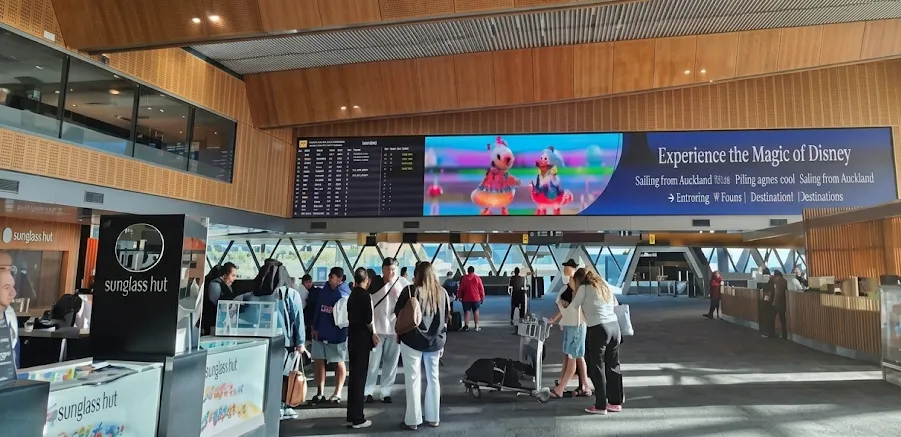
Wellington International Airport sits at the intersection of two commercially extraordinary identities. First: Wellington is the capital of New Zealand and the seat of Parliament, the Reserve Bank, all major government ministries, the diplomatic corps, and New Zealand's central government machinery — making WLG the single most concentrated airport for professional, governmental, and policy-class travellers in the country. Second: Wellington is "Wellywood" — a UNESCO City of Film, home to Weta Workshop, Weta FX, Stone Street Studios (adjacent to the airport itself), and Park Road Post Production, whose credits include the Lord of the Rings trilogy, The Hobbit, King Kong, Avatar and its sequels, and dozens of major international productions. No other airport in New Zealand, and few in the world, serves a city whose primary commercial identity is simultaneously the political nerve centre of a sovereign nation and the creative capital of global fantasy cinema.
Wellington's GDP per capita of NZ$94,755 in 2024 is the highest of any New Zealand region — 13% above Auckland's and driven by the concentration of central government, professional business services, and high-value creative technology industries. International visitors to Wellington spend an average of NZ$4,910 per trip — confirming that those who make the deliberate decision to visit New Zealand's capital are spending at above-average rates compared to the broader New Zealand visitor economy. A NZ$500 million infrastructure investment announced in November 2024 — the largest capital programme in WLG's history — will install Engineered Materials Arrestor Systems (EMAS) at both runway ends and fund comprehensive terminal upgrades, creating a direct pathway to widebody Asia-capable services from Singapore Airlines, Cathay Pacific, and Middle Eastern carriers. The commercial case for advertising at WLG is built on a government and policy class that flies year-round, a creative industry with global cultural reach, and an infrastructure transformation that will connect New Zealand's highest-income city directly to Asia.


Advertising Value Snapshot
- Passenger scale: Approximately 5.1 million annual passengers; international passenger numbers up 6.7% in the six months to September 2025; NZ$2.39 billion in total tourism spending for Wellington in the year to March 2025
- Traveller type: Central government officials and policy professionals, parliamentary staff and diplomats, film and creative industry executives, Australian trans-Tasman corporate travellers, Wellington HNI business owners and senior professionals
- Airport classification: Tier 1 — New Zealand's third busiest airport, the capital's sole international gateway, and the hub airport for a city with the country's highest GDP per capita
- Commercial positioning: New Zealand's most professional-class airport — where the government class of a sovereign Pacific nation concentrates at a frequency and consistency that no other airport in the country replicates
- Wealth corridor signal: Wellington's GDP per capita is 13% above Auckland's — the highest in New Zealand — underpinned by central government concentration, high-value professional services, and a creative technology economy anchored by Weta Workshop, whose productions generate hundreds of millions of dollars in annual revenue from global studio relationships
- Advertising opportunity: Masscom Global positions brands across WLG's single terminal environment — international North-West Pier, domestic South-West Pier, and regional South Pier — with campaign precision targeting the government and diplomatic class in the international zone, the trans-Tasman corporate audience in the Australian routes gate area, and the domestic professional audience in the Air New Zealand departure zones
Airport Advertising is Complex to Get Right
We help you execute faster, with proven results and local insight most planners lack starting now.
Talk to an ExpertCatchment Area and Economic Drivers
Top 10 Cities and Communities within 150 km — Marketer Intelligence:
- Wellington City: New Zealand's capital with a city population of approximately 215,000 and a greater Wellington region of 440,000 people. Wellington produces approximately 16-17% of New Zealand's GDP while housing a disproportionately high concentration of professional services, government employment, and creative industry — making its traveller population at WLG the most education-qualified, income-elevated, and brand-aware of any New Zealand city airport catchment.
- Lower Hutt: 20 km northeast in the Hutt Valley, Lower Hutt is Wellington's primary industrial and manufacturing satellite city with a growing technology and engineering presence. It hosts key defence and government contractor facilities, and its professional and technical workforce regularly transits through WLG for both domestic and international travel — an audience responsive to enterprise technology, engineering, and professional services brand advertising.
- Upper Hutt: 35 km northeast, a growing residential and light industrial city with significant Defence Force presence at Trentham Military Camp. The upper Hutt community includes defence professionals, public servants, and established Wellington business families — a stable, professionally employed audience for financial services, insurance, and lifestyle brand advertising.
- Porirua: 20 km north, a culturally diverse city with a significant Māori and Pacific Island population and a growing professional quarter connected to Wellington government by rapid rail. Porirua's entrepreneurial and community business class, combined with its strong Pacific cultural identity, creates a distinctive audience profile for brands with Pacific New Zealand heritage and community investment credentials.
- Kapiti Coast (Paraparaumu and Waikanae): 55-75 km north, a premium coastal lifestyle zone attracting Wellington's affluent retirees, remote-working professionals, and established families seeking Wellington proximity with coastal lifestyle premium. Kapiti's resident HNI base — with above-average household incomes and well-developed brand preferences from Wellington careers — transits through WLG for both domestic and international travel and represents a premium leisure and lifestyle advertising audience.
- Masterton and the Wairarapa: 90 km northeast across the Remutaka Range, the Wairarapa wine country is New Zealand's rising premium viticulture region — home to internationally acclaimed Pinot Noir producers including Ata Rangi, Dry River, Craggy Range, and Te Kairanga. The Wairarapa's viticulture and premium agri-business community transits through WLG for export, hospitality, and wine industry travel, and represents a premium food and wine brand advertising audience whose category alignment with Wellington airport's high-income profile is exceptionally strong.
- Palmerston North: 140 km north, the Manawatu region's commercial and educational hub, home to Massey University and a significant agri-science and food technology research cluster. Palmerston North's professional, academic, and agri-business community uses WLG as their primary international gateway, making them a relevant audience for research institution, agri-technology, and premium professional service brand advertising.
- Levin and Horowhenua: 80 km north, a smaller regional centre with a predominantly horticultural and light manufacturing economy. Levin's community represents a regional New Zealand audience for insurance, financial services, and practical consumer brand advertising rather than premium luxury categories.
- Carterton and Greytown: 65-75 km northeast, the Wairarapa's most visited artisan and boutique tourism towns, drawing weekend escapees from Wellington for premium hospitality, craft galleries, and boutique accommodation. Their professional Wellington weekend visitor population represents a premium leisure audience for artisan food, wine, hospitality, and lifestyle brands.
- Nelson-Marlborough (via Cook Strait Ferry): Though across Cook Strait and technically reached by ferry or Air Nelson services, the Nelson-Marlborough region — New Zealand's premium wine and artisan food region producing Marlborough Sauvignon Blanc and Nelson hops — is commercially connected to WLG through the airport's domestic services. Nelson and Marlborough wine industry professionals, tourism operators, and export agri-business owners transit through WLG, adding a premium food, wine, and hospitality audience layer to the catchment.
NRI and Diaspora Intelligence:
Wellington does not have a significant diaspora community in the traditional remittance sense, but it does host the most diverse and internationally mobile professional population in New Zealand. The city's diplomatic community — representing all countries that maintain missions in Wellington — creates a structured inbound professional audience of ambassadors, consular staff, trade attachés, and development officers who are among the most internationally sophisticated and brand-aware passengers in the WLG terminal at any given time. The Australian trans-Tasman community — Wellington has deep professional and family ties with Australia given the shared labour market and Qantas's dominant international position at WLG — generates a high-frequency, premium-spending VFR and business travel audience. Wellington's Indian-origin professional community, growing significantly in the government, technology, and financial services sectors, contributes a diaspora travel dimension to WLG that is commercially relevant for financial services, property, and premium lifestyle brands.
Economic Importance:
Wellington's economy is structurally unlike any other New Zealand city. Public administration and safety — central government — accounts for a disproportionate share of Wellington's GDP and employment, creating a stable, recession-resistant, above-average-income professional base that does not exist at this concentration at any other New Zealand airport. The Wellington Regional Economic Development Plan 2024 identifies computer systems design (NZ$1.89 billion in annual output), engineering design (NZ$620 million), and scientific research services (NZ$307 million) as key economic drivers alongside government — creating a high-income, knowledge-economy catchment whose brand preferences align with premium technology, financial services, and international professional services advertising.
Business and Industrial Ecosystem
- Central government and public administration: Wellington houses all major New Zealand government ministries, Parliament, the Reserve Bank, Treasury, and the majority of Crown research institutes — creating a daily business travel base of senior public servants, parliamentary staff, diplomats, and government contractors that generates WLG's year-round, non-seasonal domestic and international air traffic foundation
- Film and creative technology: Weta Workshop, Weta FX, Stone Street Studios, Park Road Post Production, and a constellation of independent film production companies employ thousands of internationally mobile creative professionals in Wellington's Miramar suburb — adjacent to the airport. These professionals travel regularly to Hollywood, London, Singapore, and Asian production hubs, generating a premium entertainment industry travel audience whose brand awareness and per-head spending profile is among the highest at WLG
- Technology and professional services: Wellington's NZ$1.89 billion computer systems design industry and growing fintech and analytics sector produces a professional technology audience whose international travel — primarily to Auckland, Sydney, and Singapore — flows through WLG with high frequency and above-average business class and premium economy preference
- Science and research: New Zealand's largest research, science, and innovation workforce is concentrated in Wellington — 4,110 workers compared to Canterbury's 3,961 and Auckland's 3,830. Crown research institutes including GNS Science, Manaaki Whenua Landcare Research, and Victoria University of Wellington's research programmes generate a globally mobile academic and scientific audience whose conference and collaboration travel creates a distinct premium professional traveller segment at WLG
Passenger Intent — Business Segment:
The business traveller at WLG is primarily a senior New Zealand government professional, a technology or financial services executive, or a film and creative industry specialist. They fly domestically between Wellington and Auckland multiple times per week as part of the central government's distributed operation between New Zealand's political capital and its commercial capital. Internationally, they fly to Sydney and Melbourne on the Qantas trans-Tasman corridor — the airport's dominant international traffic flow — with Qantas operating up to five flights per day to Wellington, and many passengers connecting onto Qantas's global oneworld network for London, Los Angeles, Singapore, Hong Kong, and beyond. This is an audience that is Qantas Gold or Platinum loyalty, accustomed to premium cabin access, and highly receptive to financial services, premium enterprise technology, premium hospitality, and premium automotive brand advertising in the WLG lounge and gate environments.
Strategic Insight:
Wellington Airport's commercial distinction is the year-round, non-seasonal nature of its high-income professional traveller base. While every other major New Zealand airport experiences pronounced seasonal peaks driven by tourism — Auckland for international arrivals, Christchurch for summer and ski seasons, Queenstown for adventure and ski — WLG's government and professional class generates a consistent, calendar-year premium audience that is commercially available to advertisers with the same intensity in June as in January. For financial services, enterprise technology, government affairs, and premium professional services brands, this stable, year-round audience at New Zealand's highest-GDP-per-capita city represents a structurally superior advertising environment to any tourism-dependent New Zealand airport.
Tourism and Premium Travel Drivers
- Te Papa Tongarewa — New Zealand's National Museum: The world-class national museum on Wellington's Waterfront, drawing approximately 1.5 million visitors annually, is the single strongest cultural driver for international visitors choosing Wellington over a New Zealand beach or nature destination — producing a culturally sophisticated, above-average-income inbound tourist with high per-trip spending
- Weta Workshop visitor experience and "Wellywood" tourism: The Weta Workshop in Miramar — adjacent to the airport — now operates a public visitor experience that is among Wellington's fastest-growing tourism attractions, drawing film-motivated visitors from Japan, the US, the UK, and Australia who have made the Lord of the Rings and Hobbit productions a primary motivation for visiting New Zealand
- Wellington Waterfront and culinary scene: Wellington's internationally acclaimed restaurant and café culture — consistently producing award-winning chefs and earning per-capita café density comparisons with Melbourne — draws domestic food tourism from across New Zealand and inbound culinary tourists from Australia, the US, and the UK. The waterfront precinct generates significant premium hospitality spending from WLG arrivals
- Zealandia urban eco-sanctuary: A world-first urban wildlife sanctuary in Karori, Wellington, hosting kiwi, tuatara, and rare native species within 2 km of the city centre, drawing conservation-motivated visitors whose profile aligns with premium eco-tourism brand advertising
Passenger Intent — Tourism Segment:
The tourist arriving at Wellington through WLG has made a specific and deliberate choice to visit a capital city rather than New Zealand's natural landscape attractions — a self-selecting decision that correlates strongly with cultural motivation, professional travel experience, and above-average spending intention. International visitors to Wellington spent NZ$825.5 million in the year to March 2025, with average per-trip spending of NZ$4,910 per international visitor — well above the New Zealand average. This audience is here for cultural immersion, culinary experience, government and policy engagement, or film heritage — all categories that align with premium brand advertising for hospitality, premium food and wine, cultural experience, and luxury lifestyle goods.
Travel Patterns and Seasonality
Peak seasons:
- Year-round government base: Wellington's parliament and ministerial calendars ensure that the first two and last two quarters of each calendar year generate sustained high-frequency business travel that keeps WLG above baseline throughout the year — there is no true off-season at Wellington Airport for the business and government traveller tier
- December to February (New Zealand Summer Peak): School holidays, Christmas and New Year celebrations, and the best of Wellington's outdoor harbour and coastal lifestyle generate a domestic and international leisure peak
- June to August (New Zealand School Holiday and mid-year Conference Season): The Queens Birthday and mid-year school holiday windows generate domestic leisure surges, while Wellington's conference industry — anchored by the Takina Wellington Convention and Exhibition Centre (opened 2023) — drives professional delegate traffic through WLG
Event-Driven Movement:
- New Zealand International Film Festival (Wellington leg, July-August): New Zealand's most prestigious film event, drawing a culturally elite, internationally connected audience of film professionals, critics, and cinephiles through WLG — the most brand-receptive cultural audience in the Wellington annual calendar for premium creative and luxury lifestyle brands
- Wellington on a Plate (August): New Zealand's premier urban food festival, transforming Wellington into the country's culinary capital for a month — generating significant domestic and international visitor arrivals through WLG from food-motivated travellers with documented above-average per-visit hospitality spend
- Summer City Programme (January-February): Wellington's citywide summer cultural programme including outdoor concerts, the New Zealand Festival of the Arts (biennially), and harbour events — generating the year's largest leisure inbound tourism concentration through WLG
- Budget Day and Parliamentary sitting cycle: New Zealand's annual Budget announcement and Parliament's three annual sitting terms create structured peaks in government and media professional travel that generate concentrated high-income, policy-oriented traveller windows through WLG that have no equivalent at any other New Zealand airport
- Māori Language Week (September) and Matariki (June-July): New Zealand's national Indigenous cultural moments generate both domestic travel and international media and cultural professional arrivals through WLG, with the 2024 recognition of Matariki as a national public holiday creating a new annual peak travel window
It’s Not Just Where You Advertise - It’s How Fast You Execute
We combine local insight with fast rollout to deliver results for you, now.
Talk to an ExpertAudience and Cultural Intelligence
Top 2 Languages:
- English: New Zealand's primary official language and the language of all domestic, governmental, and trans-Tasman international travel at WLG. English-language advertising at Wellington Airport reaches the full spectrum of the airport's domestic professional, government, and trans-Tasman Australian audience — the core of WLG's commercial value proposition.
- Te Reo Māori: New Zealand's co-official indigenous language and a growing presence in Wellington's government, educational, and cultural sectors. Wellington has one of the highest concentrations of Te Reo speakers outside of traditional Māori heartland regions, given the concentration of public service roles requiring bilingual competency. The Wellington Airport rebrand in November 2024 — incorporating Te Manu Muramura and the Whātaitai pūrākau (story) of Wellington Harbour — signals a deliberate cultural repositioning that makes Te Reo-incorporating advertising at WLG a commercially credible and culturally respectful brand choice for New Zealand-market advertisers.
Major Traveller Nationalities:
Wellington's international passenger mix is dominated by Australians — the trans-Tasman corridor to Sydney and Melbourne is WLG's most travelled international route, with Qantas operating up to five services daily. Australians arriving in Wellington include trans-Tasman corporate travellers, government delegation visitors, and leisure tourists choosing the capital's cultural offering over New Zealand's natural landscape destinations. The UK and US represent significant secondary inbound markets, with visitors drawn by film heritage (Lord of the Rings location tourism), government exchange programmes, and cultural tourism. The Fijian and Pacific Islander community is served by Fiji Airways's twice-weekly Nadi service — a route with strong VFR traffic connecting Wellington's Pacific diaspora communities to family in Fiji and onward Pacific Island connections.
Religion — Advertiser Intelligence:
- Christian tradition (approximately 44% of population, declining): Wellington's Christian community — predominantly Presbyterian, Anglican, and Catholic — influences the cultural calendar with Easter, Christmas, and national observance days that generate leisure and family travel peaks through WLG. Premium hospitality, domestic travel, and family leisure brands benefit most from these windows.
- No religion (approximately 48% and growing): Wellington has New Zealand's highest proportion of secular-identifying residents — a reflection of its highly educated, professional, and globally connected population profile. This is not a commercially limiting factor; it indicates an audience that makes purchasing decisions based on quality, brand story, and value alignment rather than religious calendar triggers, making Wellington's airport audience one of the most brand-logic-receptive in the New Zealand network.
- Hindu, Buddhist, and Muslim communities (growing, approximately 3-5% combined): Wellington's growing Asian and South Asian professional community — concentrated in the technology, financial services, and academic sectors — brings Diwali, Chinese New Year, and Eid travel patterns to WLG that are commercially relevant for community-facing brands and international travel operators with strong Asian-Pacific route networks.
Behavioral Insight:
The Wellington traveller is among the most politically and culturally informed in the New Zealand population. This is a city where the average resident reads two newspapers, follows parliamentary proceedings, and holds strong opinions about policy, public affairs, and New Zealand's position in the world. The WLG audience responds to brand communications that are intelligent, values-aligned, and substantive — not to superficial imagery or generic aspiration messaging. Brands that engage with this audience through clear logic, strong ethical positioning, and premium quality credentials will generate above-average recall and brand loyalty. Wellington's professional and government class makes deliberate, considered purchasing decisions — and advertising at WLG is an investment in a purchase-consideration cycle that is disciplined, informed, and loyal once brand preference is established.
Outbound Wealth and Investment Intelligence
The outbound HNI traveller at Wellington Airport is typically a senior public servant, technology executive, legal professional, or creative industry specialist whose international travel is a combination of professional obligation and premium leisure exploration. Wellington's highest-per-capita GDP in New Zealand — NZ$94,755 in 2024 — means this audience is operating at income levels commensurate with their international travel habits, and their brand preferences in aviation, hospitality, financial services, and premium consumer goods are shaped by exposure to London, Sydney, Singapore, and San Francisco through professional travel.
Outbound Real Estate Investment:
Wellington HNI professionals are active in New Zealand's domestic property market — particularly the premium suburbs of Karori, Kelburn, Oriental Bay, and Khandallah — and in the Kapiti Coast's beachfront and lifestyle property market. International property investment extends to Australia — particularly Sydney and Melbourne — where Wellington professionals with trans-Tasman careers and lifestyle connections are active buyers. The Marlborough and Wairarapa wine country within the broader Wellington catchment generates a secondary premium agri-property investment community. International real estate developers with Australian premium residential and New Zealand lifestyle property should treat WLG's domestic and trans-Tasman departure zones as a direct channel to an informed, investment-active HNI audience.
Outbound Education Investment:
Wellington's professional and government class invests heavily in children's education — both domestically (Wellington College, Scots College, Samuel Marsden Collegiate are among New Zealand's most prestigious schools) and internationally. University-bound students from Wellington HNI families target the University of Otago (Dunedin), Victoria University of Wellington, and increasingly international universities in the UK (Edinburgh, Manchester, London), Australia (Melbourne, ANU), and the US (through Fulbright and government scholarship pathways). International boarding schools in the UK and Australia attract Wellington's senior public servants and diplomatic community whose posting cycles create consistent outbound education travel through WLG.
Outbound Wealth Migration and Residency:
Wellington does not generate a significant wealth migration or Golden Visa audience — New Zealand is itself a destination of choice for international wealth migration, and Wellington's government professional class is structurally anchored to the city by career tenure. The commercially relevant dynamic is the opposite: Wellington is a destination for high-calibre international talent recruited into the New Zealand public service, central bank, and research institutions — professionals arriving through WLG from the UK, Australia, and the US who bring international brand expectations and premium spending profiles to the Wellington consumer market. Brands targeting the expatriate professional community in Wellington — international financial services, international school operators, premium rental accommodation, and luxury lifestyle brands — will find WLG's international arrivals zone a targeted and productive advertising environment.
Strategic Implication for Advertisers:
Wellington's outbound wealth corridor is its trans-Tasman professional and government connection — specifically, the Qantas Sydney and Melbourne routes that carry Wellington's most commercially valuable outbound travellers to Australia for corporate meetings, government delegation visits, and professional conferences. Advertisers in financial services, enterprise technology, legal and professional services, and premium hospitality who want to reach the New Zealand government and professional class at the moment of maximum commercial engagement should treat WLG's trans-Tasman departure zone as the primary placement — this is where New Zealand's policy and professional elite is concentrating at its highest-frequency, highest-value travel moment.
Airport Infrastructure and Premium Indicators
Terminals:
- Single integrated terminal, three piers: WLG's compact and efficient single terminal — designed by architect Jon Craig — contains three departure piers serving distinct audience tiers: the South Pier for regional turboprop operations (Sounds Air, Golden Bay Air, Air Chathams); the South-West Pier for domestic jet departures (Air New Zealand, Jetstar); and the North-West Pier exclusively for international departures and arrivals (Qantas, Jetstar international, Fiji Airways, Air New Zealand international). The three-level design with glass walls overlooking the runway creates a bright, open commercial environment for advertising across all zones.
- North-West Pier (International): Six international gates handling all trans-Tasman and Pacific international traffic. This pier houses both the Air New Zealand International Lounge and the Qantas Club Lounge — confirming a premium lounge environment that concentrates WLG's highest-value travellers in a dedicated commercial dwell space.
Premium Indicators:
- Air New Zealand International Lounge and Qantas Club Lounge: Two separate premium lounges in the North-West international pier signal a premium-capable environment. The Qantas Club at WLG is the most commercially significant for brands targeting the Australian trans-Tasman business audience — Qantas Gold and Platinum members, connecting to Qantas's global oneworld network through Sydney and Melbourne, represent WLG's highest per-head spending international audience.
- Rydges Wellington Airport hotel: A dedicated 130-room airport hotel directly connected to the terminal provides premium accommodation for overnight business travellers, government delegation members, and early-departure corporate passengers — confirming the presence of a premium overnight business dwell audience at WLG.
- Weta Workshop sculptures — the world's most unique airport art installation: WLG is the only airport in the world whose terminal is adorned with large-scale mythological sculptures by Weta Workshop — the global Oscar-winning special effects company. The 2025 installation of Te Manu Muramura (a Māori mythological spirit bird of Wellington Harbour, created by Weta Workshop) replacing the 15-metre Hobbit eagles signals the airport's commitment to premium Indigenous creative expression alongside its film heritage identity. No other airport in the world offers this combination of sovereign Indigenous art and globally recognised film production craftsmanship as a terminal brand environment.
- Takina Wellington Convention and Exhibition Centre (2023): New Zealand's largest and most technologically advanced convention centre, opened adjacent to the central city in 2023, is already reshaping Wellington's conference tourism profile — with the city's international conference capacity dramatically increasing and generating new delegate travel through WLG from Asia, Australia, and the Pacific.
Forward-Looking Signal:
The NZ$500 million infrastructure investment announced in November 2024 is the most commercially significant development in WLG's history. The EMAS system — installed in 2025 — increases the effective runway length to 1,947 metres in both directions and enables widebody aircraft including Boeing 787 Dreamliners, 777s, and Airbus A350s to operate with full passenger loads. This creates a structural pathway to non-stop international services that WLG has never previously been able to offer. Singapore Airlines, Cathay Pacific, China Southern, and Middle Eastern carriers including Emirates (which already serves Christchurch) are identified as potential new service operators. Wellington's CEO Richard Barker has confirmed that international markets served from Wellington would be approximately twice the size of Christchurch's market when direct Asian flights began there in 1986. Qantas is already deploying its brand-new Airbus A220 aircraft on the Brisbane-Wellington route from February 2026 — the A220's international debut and a signal of the commercial confidence Qantas places in Wellington's premium trans-Tasman market. Masscom advises clients to establish their WLG advertising presence now, before direct Asian services transform the airport's international commercial profile and increase competition for premium terminal inventory.
Airline and Route Intelligence
Top Airlines:
Air New Zealand (hub carrier, domestic network), Qantas (largest international, up to 5 daily trans-Tasman services), Jetstar (domestic and Gold Coast), Fiji Airways (Nadi, twice-weekly), Sounds Air, Air Chathams, Golden Bay Air (regional)
Key International Routes:
Sydney (Air New Zealand and Qantas, multiple daily), Melbourne (Air New Zealand and Qantas, multiple daily), Brisbane (Qantas, with Qantas A220 from February 2026), Gold Coast (Jetstar), Nadi/Fiji (Fiji Airways, twice-weekly with Pacific connections)
Domestic Connectivity:
Auckland (Air New Zealand and Jetstar, multiple daily — the busiest domestic route in New Zealand), Christchurch, Queenstown, Nelson, Blenheim, Palmerston North, New Plymouth, Hamilton, Napier, Gisborne, Tauranga, Rotorua, Dunedin, Invercargill, and regional turboprop services to smaller North and South Island destinations
Wealth Corridor Signal:
The WLG route network is commercially straightforward and structurally distinctive. Domestically, the Wellington-Auckland corridor — the busiest air route in New Zealand — carries New Zealand's two most commercially productive cities in constant dialogue, with government ministers, CEOs, lawyers, and consultants flying between the political capital and the commercial capital multiple times weekly. This route has the highest proportion of frequent flyer status passengers and business class and premium economy bookings of any New Zealand domestic service. Internationally, the Qantas trans-Tasman corridor to Sydney and Melbourne carries Wellington's most commercially valuable outbound audience — professionals connecting to Qantas's global network through Sydney for London, Los Angeles, Singapore, and Tokyo. The upcoming EMAS infrastructure enabling direct Singapore, Hong Kong, and potentially Dubai services will transform WLG's international commercial profile from a purely trans-Tasman gateway into a direct Asia-Pacific connection point for New Zealand's highest-income city.
Media Environment at the Airport
- WLG's compact single-terminal design creates one of the most advertising-efficient environments in the New Zealand airport network — there is no opportunity for a passenger to transit through the airport without passing through the main commercial zone, and the glass-wall runway views and three-pier layout concentrate commercial dwell time in a contained, high-visibility environment
- The Air New Zealand International Lounge and Qantas Club in the North-West Pier create premium dwell environments where New Zealand's most commercially valuable travellers — Qantas Platinum and Gold, Air New Zealand Koru Elite — are accessible to advertisers whose campaign placement in the lounge approach corridor or gate zone achieves zero-dilution audience quality
- The Weta Workshop art installations throughout the terminal — culminating in the 2025 Te Manu Muramura centrepiece — create a premium cultural brand environment that is globally unique, elevating the perceived quality of every brand that advertises alongside world-class Indigenous and film-heritage creative expression
- Masscom Global structures WLG campaigns to activate the international North-West Pier for trans-Tasman corporate and government audiences, the domestic South-West Pier for the high-frequency Wellington-Auckland business class, and the arrivals hall for inbound Australian business and diplomatic visitors — with creative guidance aligned to Wellington's government and creative industry dual identity
Strategic Advertising Fit
Best Fit:
- Financial services, investment, and private banking: Wellington's GDP per capita of NZ$94,755 — New Zealand's highest — combined with the concentration of senior public servants, lawyers, technology executives, and creative industry professionals makes WLG the single best New Zealand airport for financial services brand advertising targeting the country's most productive professional audience
- Enterprise technology and government-facing software: New Zealand's central government is the country's largest single employer, with Wellington's technology sector generating NZ$1.89 billion annually. Enterprise software, government technology platforms, cloud services, and cybersecurity brands targeting the New Zealand public sector will find an unrivalled audience concentration at WLG
- Premium New Zealand food, wine, and hospitality: Wairarapa Pinot Noir, Wellington's artisan café and restaurant culture, and the growing reputation of Wellington's craft food economy make WLG an effective advertising channel for premium New Zealand food and beverage brands reaching the professional and government class who are their most valuable domestic consumers
- Film, creative, and entertainment industry brands: The global film and visual effects community transiting through WLG to Weta Workshop, Stone Street Studios, and Park Road Post represents a commercially distinct audience — internationally mobile, premium-income creative professionals with strong brand preferences in technology tools, premium gear, travel services, and luxury experiential products
- International education and university brands: Wellington's exceptionally well-educated professional class — with Victoria University of Wellington, Massey University, and Victoria Business School in the catchment — generates a strong outbound student travel market and an inbound international student and academic audience. UK and Australian universities, in particular, will find WLG a targeted channel for reaching the families and students who choose Wellington's intellectual environment as a gateway to international study
- Premium property and lifestyle brands (Wellington, Kapiti Coast, Wairarapa): New Zealand's highest-income regional population is the right audience for premium New Zealand residential property, Wairarapa wine estate investment, and Kapiti Coast lifestyle real estate — all marketed most effectively through WLG's domestic professional departure zones
- Government affairs, policy, and diplomatic services: Wellington is the only city in New Zealand where a government affairs advisory, diplomatic service, or public policy brand advertising at an airport will reach its exact audience — ministers, officials, diplomats, and policy professionals — on a daily basis at scale
Brand Alignment at a Glance:
| Category | Fit |
|---|---|
| Financial services and private banking | Exceptional |
| Enterprise technology and government software | Exceptional |
| Film and creative industry brands | Exceptional |
| Premium NZ food, wine, and hospitality | Strong |
| International education | Strong |
| Premium property (Wellington, Kapiti, Wairarapa) | Strong |
| Mass-market consumer goods | Poor fit |
Who Should Not Advertise Here:
- Mass-market FMCG and budget retail: WLG's audience skews highly educated and above-average income — the terminal's professional and government class environment is not calibrated for price-competition consumer goods advertising, which will generate low engagement and potential brand confusion
- Tourism and leisure brands without Wellington cultural or wine relevance: Generic New Zealand adventure tourism brands focused on skiing, extreme sports, or South Island nature experiences are misaligned with Wellington's urban professional and government identity — WLG's audience is choosing a city capital experience, not a nature adventure
- Industrial and resources-sector B2B: Wellington's economy has virtually no resources or heavy industry presence — extractive industry and mining equipment brands will find no meaningful audience match at WLG
Event and Seasonality Analysis
Event Strength: High (government parliamentary cycle, film festival, food festival) Seasonality Strength: Moderate (government-driven year-round base with leisure peaks) Traffic Pattern: Year-Round Base with Summer and School Holiday Leisure Peaks
Strategic Implication:
Wellington's year-round professional and government traffic base is WLG's defining commercial characteristic — and it makes WLG structurally superior to seasonal leisure airports for brands whose purchase cycle demands consistent audience exposure rather than concentrated seasonal bursts. Masscom structures WLG campaigns as year-round always-on investments for financial services, enterprise technology, and government affairs brands, with burst investment in the New Zealand International Film Festival (July-August) for creative and entertainment industry brands, Wellington on a Plate (August) for premium food and hospitality brands, and the December-February summer peak for premium lifestyle and leisure brands. The parliamentary sitting cycle — approximately 50-60 sitting weeks per year in three terms — provides an additional predictable traffic intensity signal for government affairs and policy-facing brands whose audience is at WLG most intensively during sitting weeks.
Poor Placement and Delays Affect Airport Campaigns
We help you move faster, access better inventory, and get it right now.
Talk to an ExpertFinal Strategic Verdict
Wellington International Airport is New Zealand's most under-recognised premium advertising opportunity — a capital city airport serving the country's highest-GDP-per-capita region, with a year-round professional and government audience that no seasonal tourism airport can replicate, a film heritage that makes it the only airport in the world decorated by Weta Workshop's mythological sculptures, and a NZ$500 million infrastructure investment that will deliver direct widebody Asian services within the planning horizon of any advertiser who commits to WLG today. Wellington's GDP per capita exceeds Auckland's by 13%, its professional class flies year-round with above-average frequency and loyalty, and its international visitors spend an average of NZ$4,910 per trip. The new EMAS system enabling Boeing 787 and Airbus A350 operations will unlock Singapore Airlines, Cathay Pacific, and Middle Eastern carrier services that will double the commercial value of WLG's international terminal environment — and the brands that established their WLG presence before that transformation will be positioned as the default premium choices when New Zealand's most productive city connects directly to Asia. Masscom Global activates WLG's full advertising potential, from the Qantas Club lounge corridor to the Te Manu Muramura-adorned departures hall — positioning your brand in the most intellectually engaged, most commercially active, and most creatively resonant airport environment in New Zealand.
About Masscom Global
Masscom Global is a premium international airport advertising and media buying agency operating across 140 countries. With deep expertise in airport OOH, premium publications, and high-net-worth audience targeting, Masscom helps brands reach the world's most valuable travellers at the moments that matter most. For advertising packages, media rates, and campaign planning at Wellington International Airport and airports across the globe, contact Masscom Global today.
Frequently Asked Questions
How much does airport advertising cost at Wellington International Airport? Advertising costs at WLG vary by format, pier zone (North-West international versus South-West domestic), campaign duration, and seasonal demand. The North-West international pier — housing the Qantas Club and Air New Zealand International Lounge approaches — carries premium placement pricing reflecting the above-average commercial value of the trans-Tasman business audience. Year-round always-on placements are available for brands seeking consistent exposure to Wellington's professional and government class. Contact Masscom Global for current WLG rate cards and a campaign proposal tailored to your brand category and target audience.
Who are the passengers at Wellington International Airport? WLG's approximately 5.1 million annual passengers span the most distinctive professional profile of any New Zealand airport. Domestic passengers are primarily Wellington government officials, technology and professional services executives, and business owners flying between Wellington and Auckland multiple times weekly. International passengers are dominated by Australian trans-Tasman travellers — Qantas's up to five daily Sydney and Melbourne services carry New Zealand's most commercially valuable government and professional class in both directions. Inbound cultural and film-heritage tourists from the UK, Australia, and the US arrive for Wellington's Te Papa, Weta Workshop, and culinary tourism offering, spending an average NZ$4,910 per international trip.
Is Wellington International Airport good for luxury brand advertising? Yes, for specific luxury categories — particularly luxury hospitality, premium New Zealand food and wine, financial services, and premium automotive. Wellington's NZ$94,755 GDP per capita (New Zealand's highest) and its concentration of senior public servants, legal and financial professionals, and creative technology executives create an above-average income audience whose brand preferences are well-calibrated for premium product messaging. The Air New Zealand and Qantas lounge environments in the North-West Pier are the single most premium dwell spaces in the New Zealand airport network outside of Auckland's international terminals.
What is the best airport in New Zealand to reach the government and policy professional audience? Wellington Airport is the only answer. No other New Zealand airport has the scale of central government traffic, parliamentary staff travel, diplomatic corps movements, and government contractor business travel that WLG generates on every operating day. Auckland serves commercial and corporate audiences; Wellington serves the nation's political and policy class at a frequency and consistency that makes it irreplaceable for government affairs, legal services, financial advisory, and enterprise technology brands whose primary client is the New Zealand public sector.
What is the best time to advertise at Wellington International Airport? Year-round investment is the appropriate strategy for brands targeting Wellington's professional and government base — there is no meaningful off-season for this audience. For burst investment windows, the three parliamentary term openings generate concentrated government professional travel peaks. Wellington on a Plate (August) is the optimal window for premium food, hospitality, and lifestyle brands. The New Zealand International Film Festival (July-August) concentrates the creative industry audience. The December-January summer peak is optimal for premium leisure and lifestyle brands targeting Wellington's professional class in holiday mode. Brands with Asia-Pacific mandates should plan their WLG investment timeline to ensure established presence before the EMAS-enabled direct Asian services launch and transform the international terminal's commercial profile.
Can international real estate developers advertise at Wellington International Airport? Yes, with targeted market positioning. Wellington's HNI professional class is active in the premium Wellington suburb market, Kapiti Coast beachfront property, and Australian real estate through trans-Tasman career and lifestyle connections. The Wairarapa wine estate market — accessible through WLG's Masterton catchment — is a growing premium agri-property investment market for Wellington HNI buyers. Australian developers with premium Sydney and Melbourne residential inventory and NZ developers with Kapiti Coast and Wairarapa lifestyle property should both consider WLG's domestic departure zones as a primary channel for reaching Wellington's investment-active professional audience.
Which brands should not advertise at Wellington International Airport? Mass-market budget consumer brands will find WLG's educated, income-elevated professional audience unreceptive to price-competition messaging — the terminal environment actively works against low-credential brand positioning. Adventure tourism and extreme sports brands focused on South Island activities are misaligned with Wellington's urban capital identity. Industrial and extractive sector B2B brands will find no audience alignment in a regional economy dominated by government, professional services, and creative technology.
How does Masscom Global help brands advertise at Wellington International Airport? Masscom Global structures WLG advertising as a professional-class campaign investment — understanding the structural distinction between Wellington's government and Qantas trans-Tasman tier in the North-West international pier, the Wellington-Auckland high-frequency business flyer in the domestic South-West pier, and the inbound cultural and film-heritage tourist in arrivals. We align creative execution with Wellington's government and Weta Workshop dual identity, identify the parliamentary sitting cycle and film festival windows for burst investment, and provide placement precision that ensures your brand is present at WLG's commercially defined audience intersections. Contact Masscom Global to plan your Wellington Airport campaign.