

Airport at a Glance
| Field | Detail |
|---|---|
| Airport | Vilnius Čiurlionis International Airport |
| IATA Code | VNO |
| Country | Lithuania |
| City | Vilnius |
| Annual Passengers | 4,395,632 (2023, +12.4% YOY); 4,800,000 (2024, +9% YOY); Lithuanian Airports network hit 7M total in 2025 with Vilnius dominant share |
| Primary Audience | Fintech and technology professionals, Lithuanian diaspora returning from Western Europe, international business investors, startup founders and VCs, government and defence officials |
| Peak Advertising Season | May to September (peak travel season); November to December (diaspora holiday return) |
| Audience Tier | Tier 2 |
| Best Fit Categories | Financial services and fintech, premium lifestyle brands, international real estate, cybersecurity and technology B2B, luxury automotive, education |
Vilnius Airport is the commercial and symbolic gateway to one of the most commercially dynamic small-nation capitals in Europe. Vilnius is home to over 280 licensed fintech companies — the highest concentration in the EU — alongside three unicorns, a startup ecosystem valued at €16 billion after 39-fold growth in a decade, and multinationals including Revolut's EU headquarters. The traveller passing through VNO is not a generic leisure tourist. They are a fintech executive connecting to Frankfurt for a board meeting, a Lithuanian-born software engineer returning from London, a VC from Amsterdam arriving for a seed round, or a NATO delegate flying in for security consultations. The audience profile at Vilnius Airport is richer, younger, and more internationally connected than any passenger count statistic alone suggests.
The airport's growth trajectory reinforces the commercial case. Passenger numbers rose 12% in 2023, a further 9% in 2024 to 4.8 million, and the Lithuanian Airports network hit a historic 7 million total passengers in 2025 with Vilnius Airport carrying the dominant share. A €50 million new departures terminal opened on 4 February 2025, doubling hourly processing capacity from 1,200 to 2,400 passengers. A new arrivals terminal is planned for completion by 2028. The route network has been completely reoriented westward since 2022 — flying today to 60 destinations across 31 countries — with Warsaw, Helsinki, Frankfurt, London, Copenhagen, and Dubai among the most popular corridors. VNO is ranked among Europe's top 100 airports and is the second busiest in the Baltic states. For brands seeking concentrated access to the emerging wealth class of Northern Europe's fastest-growing tech economy, the case for advertising at Vilnius Airport is as strong as it has ever been.


Advertising Value Snapshot
- Passenger scale: 4,395,632 (2023); 4,800,000 (2024, +9% YOY); double-digit growth in early 2025; 7M network milestone confirmed for full year 2025 with Vilnius as the dominant contributor
- Traveller type: Fintech and technology professionals, Lithuanian diaspora returning from the UK, Germany and Ireland, international business visitors and VCs, government and NATO defence officials, premium tourism visitors
- Airport classification: Tier 2 — national capital gateway, second busiest airport in the Baltic states, 96th busiest in Europe; commercially disproportionate value due to audience quality exceeding regional scale
- Commercial positioning: Lithuania's primary aviation gateway and Europe's access point to the Baltics' most concentrated fintech and startup economy
- Wealth corridor signal: The Vilnius-Frankfurt, Vilnius-London, and Vilnius-Amsterdam corridors are the primary capital and talent transfer routes of Europe's fastest-growing tech investment ecosystem
- Advertising opportunity: Masscom Global's presence at VNO enables brands to reach the full spectrum of Lithuania's emerging HNWI class, its returning diaspora, and the international investor and executive community that is actively deploying capital into the Baltic corridor
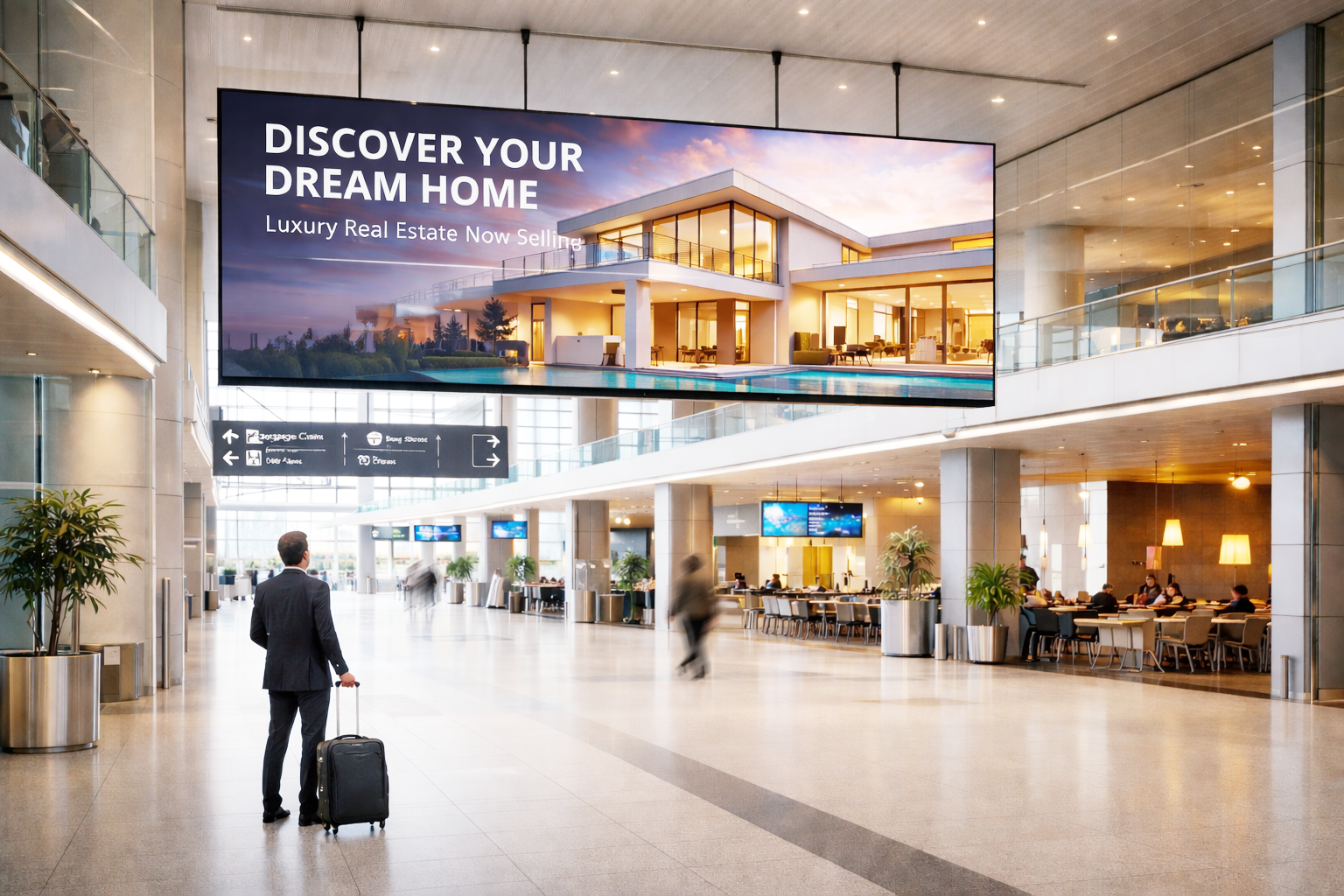
Airport Advertising is Complex to Get Right
We help you execute faster, with proven results and local insight most planners lack starting now.
Talk to an ExpertCatchment Area and Economic Drivers
Top 10 Cities within 150 km — Marketer Intelligence:
- Kaunas (~100 km west): Lithuania's second-largest city and a strong startup hub in its own right — home to 180+ startups in gaming, healthtech, and logistics with over 180,000 residents and a young, technically educated workforce that uses VNO for international travel to Western European business and academic centres
- Trakai (~28 km west): Lithuania's medieval castle capital and a premium heritage tourism destination drawing international visitors as part of the Vilnius leisure circuit — culturally engaged, above-average-spend tourists who arrive through VNO and extend their itinerary toward this iconic lakeside fortress
- Elektrėnai (~38 km west): Lithuania's energy production hub, housing the country's largest power plant complex and associated engineering talent — a technically skilled professional class whose travel connects the energy sector to Western European industrial and energy partners
- Panevėžys (~130 km north): Lithuania's fourth-largest city and a significant manufacturing and logistics hub, with companies including Achema and a growing industrial base that generates executive travel through VNO for procurement, supply chain, and corporate management connections to Germany, Poland, and Scandinavia
- Utena (~90 km northeast): A northeastern regional centre with a growing small business community and entrepreneurial base that uses Vilnius Airport as its primary international air gateway — a commercially mobile regional audience whose outbound travel connects to Western European family and business networks
- Alytus (~100 km south): Southern Lithuania's industrial capital, positioned near the Polish and Belarusian borders, producing cross-border commerce professionals and manufacturing management who travel for international supply chain and logistics connections
- Marijampolė (~110 km southwest): A growing commercial town on the Via Baltica corridor near the Polish border, generating a business class of cross-border traders and agri-business owners whose travel connects Lithuanian commerce to the Polish and European markets
- Šalčininkai district (~38 km southeast): Home to Lithuania's largest Polish-speaking community, generating family and cultural travel to Poland and connecting the Polish minority business and professional class to Vilnius Airport's Warsaw and Kraków routes
- Molėtai (~60 km north): Lithuania's lake country and a premium rural tourism and second-home corridor for Vilnius' wealthy residents — the professionals who own lakeside retreats in this region represent an affluent domestic audience whose leisure travel departs from VNO
- Lazdijai (~140 km south): A border region community with significant cross-border commerce activity between Lithuania and Poland, producing business travellers who use VNO as their closest major international airport for European commercial connections
NRI and Diaspora Intelligence:
Lithuania's diaspora dynamic is commercially exceptional in the European context. An estimated 600,000 to 800,000 Lithuanians live abroad — the equivalent of roughly 20-25% of Lithuania's resident population — concentrated most heavily in the United Kingdom (estimated 200,000-300,000), Germany, Ireland, and Norway. These diaspora Lithuanians are not low-wage migrant workers; increasingly, they are software engineers, fintech professionals, healthcare workers, and entrepreneurs who have built substantial wealth in Western European labour markets and maintain strong family and investment ties to Lithuania. The Vilnius-London, Vilnius-Dublin, Vilnius-Frankfurt, and Vilnius-Oslo routes are the primary diaspora return corridors at VNO, and the travellers on these routes carry purchasing power built in Western European salary structures. For advertisers targeting Baltic Europeans with accumulated Western European wealth, VNO's diaspora corridors are among the most commercially concentrated in the region.
Economic Importance:
Vilnius generates approximately 72% of all FDI entering Lithuania and produces a regional GDP that has grown from €17.2 billion in 2017 to well over €22 billion by the early 2020s. The city's economic identity has undergone a structural transformation: from post-Soviet manufacturing and transit hub to Europe's most prominent fintech licensing jurisdiction and one of the top 20 global startup ecosystems by commercial valuation. The Bank of Lithuania's EU financial licence — valid across all 27 EU member states and obtainable in under six months — has attracted over 280 fintech companies to establish EU-licensed operations in Vilnius, with Revolut, PaySera, and Bankera among the most prominent. This institutional financial infrastructure has in turn attracted cybersecurity firms, GBS/BPO operations, and advanced technology companies whose executive class travels regularly through VNO to London, Frankfurt, Amsterdam, and Helsinki — the four cities that anchor the Baltic-Western Europe investment corridor.
Business and Industrial Ecosystem
- Fintech and financial services (Revolut EU HQ, 280+ licensed fintechs): The largest fintech concentration in the EU generates a class of financial technology executives, compliance professionals, and regulatory specialists whose travel connects Vilnius to London, Frankfurt, Amsterdam, and Brussels at high frequency — a commercially active, high-income audience for premium financial services, business travel products, and technology advertising
- Cybersecurity (Nord Security, NRD Cyber Security, Surfshark, CyberAnt): Lithuania ranked second in the world for cybersecurity among mid-sized nations, and Vilnius hosts the country's leading cybersecurity cluster with multiple globally operating companies — a high-income, technically elite professional audience whose business travel to international security conferences and client meetings makes them consistent VNO users
- Technology startups and unicorns (Vinted, Baltic Classifieds Group, Kilo Health, Hostinger, Omnisend):Lithuania's €16 billion startup ecosystem, anchored by three confirmed unicorns and nearly 30 companies generating over €20 million in annual revenue, has created a class of technically educated founders and executives with rapidly accumulating personal wealth — emerging HNWIs who travel frequently and are at peak receptivity for premium financial services, lifestyle, and investment brand advertising
- NATO defence and government sector: Vilnius hosted the NATO Summit in 2023, cementing Lithuania's position as a frontline NATO ally and driving substantial defence-related government and corporate travel through VNO — senior military officers, defence contractors, government ministers, and NATO liaison officials represent a consistently travelling institutional audience
- Global Business Services and BPO: Western European and US multinationals have established shared services centres in Vilnius, employing thousands of multilingual professionals and generating consistent management travel between Vilnius and Western European parent company locations — a corporate management class with above-average salaries and strong international brand awareness
Passenger Intent — Business Segment:
Business travellers at VNO are predominantly connecting westward — to Frankfurt for finance and German corporate engagement, to London and Dublin for tech and financial services meetings, to Copenhagen and Helsinki for Scandinavian business connections, and to Warsaw for Polish corridor trade and logistics. The advertiser categories most effective at intercepting this audience are premium business banking and financial services, executive travel products and loyalty programmes, cybersecurity and enterprise software, and premium lifestyle brands positioned for the European tech professional class. This is a young, high-income, internationally mobile professional audience whose consumer preferences are shaped by Western European market exposure and whose purchasing decisions reflect accumulating personal wealth.
Strategic Insight:
The VNO business audience is exceptional in the Baltic context for one reason: it is not primarily a government capital bureaucracy audience. It is a private sector technology and finance audience whose wealth has been created in the last decade and whose per-capita earning capacity exceeds traditional Baltic business travel profiles. The startup founder landing in Vilnius from London or the Revolut executive departing for Frankfurt is operating at a wealth tier that small Baltic airports historically have not produced in meaningful concentration. For premium brands seeking Central and Eastern European market entry, VNO is the most commercially advanced audience in the Baltic region.
Tourism and Premium Travel Drivers
- Vilnius Old Town — UNESCO World Heritage Site: One of the largest and best-preserved medieval old towns in Northern Europe, drawing international cultural and heritage tourism visitors from Germany, France, Scandinavia, and Israel — a high-education, above-average-spend tourism audience whose Vilnius visit generates multi-day, multi-category consumer spending
- Gates of Dawn and Catholic pilgrimage heritage: Vilnius is one of Central Europe's most significant Catholic pilgrimage sites, with the Gates of Dawn housing the revered Icon of Our Lady of Vilnius — drawing devotional travellers from Poland, Germany, Italy, and the Lithuanian diaspora in significant religious tourism volumes
- Baltic amber and craft market tourism: Lithuania's distinctive amber industry and artisan culture generate a premium souvenir and craft tourism audience — particularly among German, Scandinavian, and Israeli visitors — whose spending on high-value cultural goods reflects premium consumer positioning
- Trakai Castle and lake tourism: The medieval island castle just 28 km from Vilnius is one of the most photographed and visited heritage sites in the Baltics, drawing day-trip tourists and weekend visitors who arrive through VNO and extend their itinerary into the lake country
- Jewish heritage and cultural tourism: Vilnius — historically known as the "Jerusalem of Lithuania" — draws a significant Jewish diaspora and international cultural heritage audience from Israel, the United States, and Western Europe, generating a culturally engaged, premium-spending tourism segment
Passenger Intent — Tourism Segment:
The international tourist arriving at VNO has typically selected Vilnius as part of a deliberate Baltic or Northern European itinerary rather than a last-minute booking. These are culturally engaged travellers from Germany, Israel, Finland, Poland, and the UK whose decision to visit Lithuania reflects historical awareness, design and architecture appreciation, and interest in an authentic European capital that remains less commercialised than the continent's major tourist cities. Their per-trip spend is above the Baltic regional average, and their receptivity to premium lifestyle, craft, and cultural experience advertising at the airport arrival point is high.
Travel Patterns and Seasonality
Peak seasons:
- May to September (Primary summer peak): Lithuania's warm continental summer and the long daylight hours of the Baltic region drive the strongest commercial travel volumes at VNO. Tourism arrivals concentrate in this window, diaspora summer visits surge, and the tech conference calendar peaks. The airport CEO has explicitly noted that VNO experiences unusually strong shoulder seasons, with traffic levels remaining relatively consistent from May through October — a commercial advantage for advertisers seeking extended peak-season reach.
- November to January (Diaspora holiday return): The Christmas and New Year holiday window drives the highest single-period diaspora return volume of the year, as Lithuanian families based in the UK, Ireland, Germany, and Norway return home for extended Christmas holidays. This is the highest-value family and diaspora advertising window.
- March to April (Easter travel): Easter is a significant Catholic holiday in Lithuania that generates family reunion travel, diaspora returns, and leisure tourism from Polish and German Catholic communities visiting Vilnius's pilgrimage sites.
Event-Driven Movement:
- Kaziukas Folk Art Fair (March): Vilnius's most beloved annual cultural tradition — a medieval craft market dating to the 17th century — draws visitors from across Lithuania and neighbouring countries for a 3-day celebration of Lithuanian folk art, amber crafts, and traditional food. This is VNO's strongest spring-season tourism event and generates above-average craft and premium cultural product advertising receptivity.
- Vilnius Music Festival and summer cultural calendar (June-August): An internationally recognised classical music festival alongside jazz, electronic music, and arts events draws a culturally affluent European audience to Vilnius throughout the summer — a premium cultural tourism segment whose in-airport advertising receptivity is high.
- NATO and EU institutional events (year-round, peaks spring and autumn): Vilnius's role as a NATO frontline capital and EU member state drives consistent institutional travel through VNO — ministerial delegations, NATO exercises, EU working group meetings, and security policy conferences generate high-frequency government and defence audience concentrations at the airport.
- Tech and startup events — TechFusion, LOGIN Festival (spring): Lithuania's major technology and innovation conference calendar, anchored by events that regularly draw international investors, founders, and media, concentrates the tech professional audience at VNO in predictable spring windows — the highest-quality B2B and investor advertising opportunity of the year.
- Christmas Markets and New Year (December): Vilnius's Baroque old town Christmas market is one of the most atmospheric in Northern Europe and has become an international draw — generating inbound tourism from Scandinavia, Germany, and the UK and concentrating a premium cultural leisure audience at VNO's arrival zone in December.

It’s Not Just Where You Advertise - It’s How Fast You Execute
We combine local insight with fast rollout to deliver results for you, now.
Talk to an ExpertAudience and Cultural Intelligence
Top 2 Languages:
- Lithuanian: The official and culturally dominant language of virtually the entire resident passenger population. Lithuanian-language advertising generates the highest brand trust and community resonance with the local professional, student, and family audience — particularly critical for brands seeking authentic market entry into Lithuania rather than treating VNO purely as a transit hub for regional campaigns.
- English: The working language of Vilnius's tech and fintech ecosystem, used daily by thousands of professionals in companies whose operations span 30+ countries. English-language advertising at VNO reaches the international business community, the returning diaspora, inbound investors, and Lithuania's highly educated young professional class with full comprehension. Lithuania has one of the highest English proficiency rates in the EU among the 18-35 age group, making English-language premium brand campaigns highly effective for this dominant travel demographic.
Major Traveller Nationalities:
The commercial passenger base at VNO is approximately 60-65% Lithuanian — residents departing for business, diaspora visits, and leisure travel. The inbound international segment is led by German, Finnish, Polish, British, and Israeli visitors, with growing representation from Scandinavian and Benelux business and leisure travellers drawn by Vilnius's improving direct connections to Copenhagen, Oslo, Amsterdam, and Brussels. The Turkish Airlines and Flydubai connections generate transit and business traffic from the broader Middle East and South Asian business community. The absence of direct transatlantic routes means that the North American audience at VNO is currently limited to stopover connections, though the airport authority has explicitly stated a transatlantic route ambition by the end of the decade.
Religion — Advertiser Intelligence:
- Roman Catholic (~77%): The overwhelmingly dominant faith tradition in Lithuania produces the most commercially significant religious calendar events for advertisers. Easter, Christmas, and the Feast of St. Casimir (March 4, patron saint of Lithuania) drive the three most concentrated Catholic travel windows at VNO. The Kaziukas fair around St. Casimir's Day is a national cultural and commercial moment that concentrates premium craft and cultural consumer spending. Diaspora Lithuanians returning for Catholic holidays carry Western European spending capacity into a Lithuanian consumer market — a purchasing power injection that is commercially significant for luxury, lifestyle, and consumer brand advertisers.
- Russian Orthodox (~5-6%): A minority Orthodox community, concentrated among Vilnius's Russian-speaking population, maintains a distinct religious travel calendar around Orthodox Christmas (January 7) and Easter. This community has contracted in influence since 2022 but remains commercially present within the Vilnius professional demographic.
- Other faiths and secular (~17%): Vilnius's young tech professional class and international business community skews significantly more secular than the national demographic average. This segment is the primary audience for aspirational lifestyle, premium technology, and values-driven brand advertising at VNO — responding strongly to innovation-led, sustainability-conscious, and internationally oriented brand messaging.
Behavioral Insight:
The Lithuanian professional traveller, particularly the tech and fintech cohort that has emerged in Vilnius over the past decade, combines the fiscal discipline of Baltic cultural heritage with the aspirational consumption patterns of Western European educated professionals. They are brand-literate — aware of what London, Amsterdam, and Berlin offer — and increasingly willing to align their personal purchasing decisions with global premium standards as their income rises. The startup founder who bootstrapped a company, sold it for €20 million, and now travels through VNO monthly to London investors is acutely aware of premium brand hierarchies and is at a life stage where first-time luxury purchases — watches, premium automotive, premium financial products, and property investment — are active considerations. Brands whose narrative is anchored in quality, innovation, and the earned reward of genuine achievement will find this audience exceptionally responsive.
Outbound Wealth and Investment Intelligence
The outbound passenger from Vilnius Airport is operating in one of the most commercially interesting wealth-in-transition environments in Europe. Lithuania's three unicorns and thirty-plus €20M-revenue startups have created a generation of founders and early employees with liquid wealth that is, in many cases, the first generation of significant inherited or built capital in their families. These are not legacy wealth holders following generational investment patterns — they are first-generation European tech millionaires whose capital deployment decisions are active, internationally oriented, and shaped by the financial products and lifestyle brands they encounter in the Western European markets where they spend significant time.
Outbound Real Estate Investment:
Lithuania's HNWI tech class is actively deploying real estate capital in multiple directions simultaneously. Within Lithuania, Vilnius premium residential real estate — particularly in Žvėrynas, Antakalnis, and the new Paupys waterfront development — is a primary asset class for founders and executives building first-generation family wealth. Internationally, Portugal's Golden Visa (while changing), Spain's investment routes, and German real estate command consistent interest as EU residency-linked investment vehicles. UAE property, particularly Dubai, is growing in appeal among Lithuanian tech founders managing globally distributed teams and seeking tax-efficient personal structures. Israeli and Georgian real estate represent smaller but consistent segments driven by the direct flight connections VNO maintains to Tel Aviv and Kutaisi. International real estate developers advertising at VNO will find a financially ready, EU passport-holding audience with specific geographic investment interests that align with VNO's route network.
Outbound Education Investment:
Lithuania's educational culture places extraordinary value on tertiary education — the country ranks fourth among EU nations for the proportion of 25-34 year olds with completed tertiary education. Outbound education investment targets UK universities (Oxford, Imperial, LSE, and the broader Russell Group), Dutch and Scandinavian universities, and German technical institutions. The VNO-London, VNO-Amsterdam, and VNO-Frankfurt routes are the primary student travel corridors. As Lithuanian startup success has generated family wealth, the demand for international boarding school and premium university preparatory education is growing — a market where premium education advisory and international school advertising finds a financially capable and aspiration-driven audience at VNO.
Outbound Wealth Migration and Residency:
Lithuania's stable EU membership, its fifth-place EU tax competitiveness ranking, and its one-day company registration process have paradoxically both attracted international talent inward and generated Lithuanian entrepreneurs who maintain operations across multiple EU jurisdictions simultaneously. Golden Visa programmes in Portugal, Spain, and Greece attract the Lithuanian HNW audience seeking property-linked residency options in warmer climates. The UAE's Golden Visa has growing appeal for founders seeking operational flexibility outside EU regulatory constraints. Second-residency advisory services, offshore wealth structuring, and EU residency-by-investment programmes will find a financially sophisticated and actively considering audience among VNO's business class passengers.
Strategic Implication for Advertisers:
Vilnius Airport sits at the intersection of two commercially compelling wealth dynamics: first-generation tech founders and fintech executives accumulating wealth faster than traditional CEE markets produce, and a highly educated diaspora returning with Western European spending patterns and capital. International brands serving both the inbound investor audience and the outbound Lithuanian wealth holder — real estate developers, wealth management platforms, premium lifestyle brands, and education services — should treat VNO as a Baltic corridor priority buy. Masscom Global's ability to coordinate VNO campaigns with London, Frankfurt, and Dublin airport placements simultaneously enables brands to intercept the same Lithuanian professional audience at both ends of their most important business and personal travel corridors.
Airport Infrastructure and Premium Indicators
Terminals:
- VNO's new €50.2 million departures terminal, opened on February 4, 2025, doubled the airport's hourly processing capacity from 1,200 to 2,400 passengers per hour and increased overall terminal area by one-third to approximately 14,400 square meters. The terminal features self-service check-in kiosks, automated baggage drop stations, dedicated Schengen security lanes on the upper level, multiple dining and retail concessions on the ground floor, and integrated boarding bridges — a modern facility that has elevated VNO's passenger experience to a level consistent with Western European regional capitals.
- A new arrivals terminal is planned for completion by 2028, which will further expand processing capacity and complete VNO's full terminal modernisation programme. Lithuanian Airports has allocated €58 million for 2025 infrastructure investments alone, signalling the most intensive airport development period in VNO's history.
Premium Indicators:
- VNO was renamed Vilnius Čiurlionis International Airport from January 2025 in honour of Mikalojus Konstantinas Čiurlionis — Lithuania's most celebrated artist, composer, and polymath. This institutional gesture elevates the airport's cultural identity and signals a national ambition to position Vilnius's primary gateway as a premium expression of Lithuanian civilisational heritage rather than a utilitarian transit facility.
- The airport holds Level II accreditation for passenger experience management — a formal quality certification confirming that VNO meets structured international benchmarks for terminal services, passenger handling, and operational excellence.
- Duty-free retail covers approximately 1,900 square meters at VNO, offering premium international brands and Lithuanian specialty products to a dwell audience whose tax-free purchasing capacity has been validated by the airport's consistent luxury retail performance in the Baltic context.
- Direct rail connection to Vilnius Central Station with an 8-minute journey time places VNO at unique connectivity advantage among Baltic airports — passengers arrive relaxed, with a known and reliable ground transfer, creating an extended and settled dwell environment at both departure and arrival that is commercially advantageous for advertising engagement.
Forward-Looking Signal:
VNO's stated ambition is to establish a transatlantic route by the end of the decade — a commercially transformational milestone that would elevate the airport's HNWI and business audience profile further by connecting Vilnius directly to New York or other US East Coast hubs. Meanwhile, 2026 route additions including Gdańsk, Podgorica, and Chișinău are expanding VNO's regional network southward into new corridors. Air Baltic has committed to launching Prague and Tirana routes, extending the Baltics' connectivity into Central and Southeast Europe. With 41% of Baltic states passenger market share now held by Lithuanian Airports — ahead of Riga and Tallinn — and every day of 2026 setting a new passenger record at VNO, Masscom Global advises brands to establish advertising presence now before the airport's growing institutional profile drives competitive pressure on premium inventory positions.
Airline and Route Intelligence
Top Airlines:
Ryanair, Wizz Air, airBaltic, LOT Polish Airlines, Finnair, Lufthansa, SAS, Norwegian, Austrian Airlines, Brussels Airlines, Turkish Airlines, SWISS, Aegean Airlines, Flydubai, Arkia, UTair
Key International Routes:
- Vilnius to Warsaw (WAW) — LOT Polish Airlines, daily multiple; most popular route
- Vilnius to Riga (RIX) — airBaltic, multiple daily; Baltic intra-regional hub connector
- Vilnius to Helsinki (HEL) — Finnair, multiple daily; Nordic corridor
- Vilnius to Frankfurt (FRA) — Lufthansa, multiple daily; primary German business corridor
- Vilnius to Copenhagen (CPH) — SAS, multiple daily; Scandinavian business corridor
- Vilnius to London (STN, LTN) — Ryanair, multiple daily; primary diaspora return route
- Vilnius to Düsseldorf (DUS) — airBaltic; German business corridor
- Vilnius to Oslo (TRF, OSL) — Norwegian; Norwegian diaspora corridor
- Vilnius to Dubai (DXB) — airBaltic seasonal, Flydubai year-round; Gulf corridor
- Vilnius to Tel Aviv (TLV) — Wizz Air, Arkia, Israir; Jewish heritage and Israel business corridor
- Vilnius to Tenerife (TFS) — airBaltic; leisure sun destination
- Vilnius to Istanbul (IST) — Turkish Airlines; connecting hub to the broader world
Wealth Corridor Signal:
VNO's route network is a precise map of the two economic forces defining Vilnius's growth: the Western European capital corridor (Frankfurt-London-Amsterdam-Copenhagen) that finances and connects Lithuania's tech ecosystem, and the leisure and diaspora corridor (London-Oslo-Dublin-Tenerife) that channels the spending power of the returning Lithuanian diaspora back into the domestic consumer economy. The absence of Ukraine, Belarus, and Russia routes — replaced entirely by Western connections since 2022 — confirms a route network now fully reoriented toward Europe's most commercially active markets, producing a passenger flow whose purchasing power, brand awareness, and consumption patterns are calibrated against Western European consumer standards. For advertisers, this is a Baltic audience that no longer requires adjustment for Eastern European consumer behaviour patterns.
Media Environment at the Airport
- VNO's recently completed new departures terminal has transformed the pre-flight commercial environment. The two-level layout — ground floor check-in and commercial zone, upper floor security and gates — creates distinct advertising touchpoints at multiple stages of the passenger journey, from arrival through check-in to security and gate dwell. Brands can sequence messaging across the entire pre-flight experience.
- The 8-minute train connection means passengers typically arrive at VNO in a settled, efficient mindset rather than frantic traffic-survivor mode. This positive entry psychology — combined with the airport's compact size and notably faster processing than major European hubs — creates an above-average advertising engagement environment where passengers dwell calmly rather than rushing through.
- Duty-free retail at 1,900 square meters is substantial relative to VNO's passenger volumes, confirming that the airport's audience has demonstrated premium purchasing behaviour in the tax-free environment — a commercially validated signal that the passenger base is both willing and financially able to make premium in-airport purchases.
- Masscom Global's presence at VNO enables coordinated campaigns across the terminal's commercial zones, targeting VNO's tech, diaspora, business, and tourism audience segments with creative executions that reflect the specific wealth-building narrative of Vilnius's knowledge economy moment.
Strategic Advertising Fit
Best Fit:
- Fintech and premium financial services: With 280+ fintech companies and the EU's most active financial licence jurisdiction, the VNO professional audience is the most fintech-literate in the Baltics — a pre-qualified audience for premium banking, investment platforms, wealth management services, and financial technology advertising whose sector knowledge makes them ideal targets for sophisticated financial product messaging
- Cybersecurity and enterprise technology: Nord Security, Surfshark, and the broader Vilnius cybersecurity cluster confirm an audience with deep sector literacy in technology product categories — B2B cybersecurity, enterprise software, and advanced technology advertising finds a technically sophisticated audience at VNO that is globally unusual for a city of Vilnius's size
- Premium lifestyle and accessible luxury brands: Lithuania's emerging startup millionaire class is at first-generation wealth accumulation stage — purchasing premium watches, upgrading to luxury vehicles, buying first investment properties, and engaging with premium lifestyle brands for the first time. This is the optimal moment for premium brands to establish brand loyalty before aspirations fully crystallise around competitor positioning
- International real estate — Portugal, Spain, UAE, Germany: The Lithuanian HNWI audience's international real estate appetite is active, EU-passport-enabled, and well-served by VNO's route network to the primary investment destination cities — a commercially productive channel for international real estate developers and investment residency programmes
- Premium automotive: Lithuania's growing HNWI and professional class represents the primary growth demographic for premium European and Japanese automotive brands in the Baltic region — an audience whose brand awareness of premium automotive is fully formed from Western European market exposure
- Higher education and professional development: Lithuania's cultural emphasis on tertiary education and the tech sector's demand for continuous professional development creates an audience at VNO whose receptivity to international university, MBA, and professional certification advertising is consistently above European averages
- Sun destination and leisure hospitality: The diaspora return audience at VNO is simultaneously a leisure traveller — connecting through Western European hubs to Mediterranean, Caribbean, and Gulf leisure destinations — making resort hospitality, travel packages, and sun destination advertising commercially relevant for this outbound-oriented passenger segment
Brand Alignment at a Glance:
| Category | Fit |
|---|---|
| Fintech and premium financial services | Exceptional |
| Cybersecurity and enterprise technology | Exceptional |
| Premium lifestyle and first-generation luxury | Strong |
| International real estate and residency | Strong |
| Premium automotive | Strong |
| Higher education and professional development | Strong |
| Sun destination and leisure hospitality | Strong |
| Mass-market value retail | Poor fit |
Who Should Not Advertise Here:
- Mass-market value retail and budget consumer brands: The VNO audience is characterised by high educational attainment, above-average income, and brand awareness built through Western European market exposure — budget-led, value-framed advertising will find minimal resonance with an audience whose consumer aspirations are oriented toward quality and premium positioning rather than price optimisation
- Industries with limited Baltic market relevance: Agricultural commodity brands, heavy industrial goods with no consumer dimension, and highly domestic-market-specific services with no pan-European applicability will find VNO's internationally oriented audience poorly matched to their commercial objectives
- Brands without EU/EEA market presence: VNO's primarily EU-passport-holding audience travels within an EU-integrated consumer environment — brands that cannot distribute, service, or legally operate within the EU will create advertising exposure without a viable conversion pathway
Event and Seasonality Analysis
- Event Strength: High
- Seasonality Strength: Medium (notable for uniquely strong shoulder seasons relative to comparable European airports)
- Traffic Pattern: Extended Summer Peak (May-October consistently strong) with secondary December-January diaspora return
Strategic Implication:
VNO's unusually strong shoulder seasons — explicitly confirmed by airport leadership as a distinguishing feature — mean that advertisers can deploy campaigns from May through October without the extreme peak-trough volatility that characterises many comparable European airports. The Lithuanian Airports CEO's confirmation that traffic levels remain remarkably consistent across this six-month window is a commercial advantage for brands seeking sustained audience exposure rather than a single-month burst. Within this framework, the Kaziukas fair in March, the tech conference calendar in spring, the diaspora July-August summer return, and the December holiday window represent the highest-quality specific event peaks. Masscom structures VNO campaigns to capitalise on the extended shoulder season stability while front-loading investment around the Kaziukas, summer diaspora, and December windows for maximum audience value concentration.

Poor Placement and Delays Affect Airport Campaigns
We help you move faster, access better inventory, and get it right now.
Talk to an ExpertFinal Strategic Verdict
Vilnius Airport is the most commercially underpriced gateway in the Baltic states for premium and B2B brands. It serves the only EU capital where the dominant economic story is first-generation tech wealth creation at scale — 280+ fintech companies, three unicorns, a €16 billion startup ecosystem — rather than commodities, transit, or legacy industrial advantage. The audience at VNO is younger, more internationally exposed, and higher-earning per capita than any comparable Baltic airport, and it is growing at 9% annually with a brand-new terminal that doubles throughput and confirms institutional commitment to sustained expansion. The Lithuanian diaspora corridors to London, Frankfurt, and Oslo add a returning-wealth dimension that intensifies the commercial case: these are EU nationals who have earned in Western European salary structures and return with Western European consumer standards. For fintech brands, cybersecurity companies, premium financial services, international real estate developers, and luxury lifestyle brands whose target is the emerging European tech HNWI class rather than established old-money wealth, Vilnius Airport offers a precisely defined, commercially concentrated, and significantly under-competitive advertising environment. Masscom Global's ability to activate the full Vilnius-to-Western Europe corridor — coordinating VNO campaigns with placements at London, Frankfurt, and Dublin airports simultaneously — means that the Lithuanian professional audience can be intercepted at both ends of their most commercially productive journeys. The window to establish presence before this market reaches full commercial maturity is open, but it will not remain open for long.
About Masscom Global
Masscom Global is a premium international airport advertising and media buying agency operating across 140 countries. With deep expertise in airport OOH, premium publications, and high-net-worth audience targeting, Masscom helps brands reach the world's most valuable travellers at the moments that matter most. For advertising packages, media rates, and campaign planning at Vilnius Čiurlionis International Airport and airports across the globe, contact Masscom Global today.
Frequently Asked Questions
How much does airport advertising cost at Vilnius Airport? Advertising costs at Vilnius Airport vary based on format type, placement position within the terminal complex, campaign duration, and seasonal demand. The May-to-October extended summer peak and the December diaspora return window command premium positioning rates. Masscom Global provides current rate cards, format availability, and campaign cost modelling aligned with VNO's specific audience calendar — contact our team directly for tailored pricing and a media plan structured around your brand's target audience.
Who are the passengers at Vilnius Airport? VNO's passenger base divides across three commercially distinct profiles: Lithuanian tech and fintech professionals — the founders, engineers, and executives of Vilnius's €16 billion startup ecosystem — connecting to London, Frankfurt, and Amsterdam for business; Lithuanian diaspora travellers based in the UK, Germany, Ireland, and Norway returning home for family visits, holidays, and cultural events; and international business visitors and investors arriving to engage with Vilnius's fintech and startup community. A growing international tourism segment, led by German, Israeli, Finnish, and Polish visitors, adds a culturally engaged leisure dimension to an otherwise primarily professional passenger base.
Is Vilnius Airport good for luxury brand advertising? VNO is an increasingly strong environment for accessible and aspirational luxury brand advertising, particularly for the first-generation wealth class generated by Lithuania's startup ecosystem. The fintech founders, cybersecurity executives, and tech entrepreneurs using VNO are at early-stage luxury brand adoption — purchasing premium automotive, premium watches, and first investment properties for the first time. Traditional ultra-luxury advertising designed for third-generation inherited wealth will find a smaller addressable audience; luxury brands positioned as the intelligent choice for earned, merit-based success will find the VNO professional audience highly receptive.
What is the best airport in the Baltic states to reach the fintech and technology professional audience? Vilnius Airport is the definitive choice. Vilnius hosts Europe's largest concentration of licensed fintech companies — 280+ as of 2024, including Revolut's EU headquarters — and Lithuania's startup ecosystem, valued at €16 billion, is the Baltics' largest and fastest-growing. While Tallinn and Riga airports serve smaller but also active tech ecosystems, Vilnius's fintech licensing infrastructure and unicorn concentration create a professional traveller profile at VNO that has no direct Baltic equivalent for technology and financial services brand advertising.
What is the best time to advertise at Vilnius Airport? The May-to-October extended window is VNO's primary sustained advertising period, with notably strong and consistent traffic across the full six months — a structural advantage over comparable European airports where summer traffic collapses outside July and August. Within this window, the spring tech conference season (April-May) delivers the highest B2B and investor audience concentration. December is the premier diaspora and family return window, with Lithuanian-background travellers arriving from London, Oslo, and Frankfurt in peak seasonal volume, carrying Western European spending capacity and maximum gift and lifestyle purchasing intent.
Can international real estate developers advertise at Vilnius Airport? Yes, and VNO is among the most commercially effective Baltic channels for this purpose. Lithuania's HNWI tech class holds EU passports, travels regularly to Western Europe, and is actively seeking international real estate as a capital diversification and residency strategy. Portuguese, Spanish, German, and UAE real estate developers targeting EU-passport-holding buyers with €250,000-plus investment capacity will find a financially qualified, geographically mobile, and actively considering audience at VNO. Masscom Global can structure these campaigns to align with VNO's investor and business travel audience and coordinate simultaneous placements at destination city airports for maximum corridor coverage.
Which brands should not advertise at Vilnius Airport? Mass-market value retail, heavy industrial B2B with no consumer dimension, and brands with no EU/EEA distribution infrastructure will find limited return at VNO. The airport's predominantly professional, internationally educated, and high-income audience responds to premium quality, innovation narrative, and earned-success brand positioning — advertising campaigns built around price leadership, value convenience, or domestic-market-specific product offers will achieve minimal resonance against an audience whose consumer standards have been calibrated by regular exposure to Western European market offerings.
How does Masscom Global help brands advertise at Vilnius Airport? Masscom Global provides complete end-to-end campaign execution at Vilnius Čiurlionis International Airport, including strategic media planning aligned with VNO's extended summer season and diaspora return calendar, inventory access across the full terminal suite including the new 2025 departures terminal, bilingual Lithuanian-English creative adaptation guidance, and coordinated Baltic corridor campaigns that extend VNO messaging to the London, Frankfurt, Copenhagen, and Helsinki airports where the same Lithuanian professional audience connects. Our expertise in emerging European tech economy airport markets and premium B2B advertising positions us as the ideal partner for brands seeking to enter or deepen their presence in the Baltic region's most commercially dynamic market. Contact Masscom Global today to begin building your Baltic corridor strategy.