

Airport at a Glance
| Field | Detail |
|---|---|
| Airport | Varanasi Lal Bahadur Shastri International Airport |
| IATA Code | VNS |
| Country | India |
| City | Varanasi (Kashi/Benares), Uttar Pradesh |
| Annual Passengers | Approx. 2.4 million (2023–24) |
| Primary Audience | Affluent Hindu pilgrims, international spiritual and heritage tourists, Banarasi silk traders, Buddhist circuit visitors |
| Peak Advertising Season | October–March (peak pilgrimage and tourism season), Kartik Maas (October–November), Maha Shivaratri (February–March) |
| Audience Tier | Medium-High |
| Best Fit Categories | Heritage luxury, spiritual wellness, gold and jewellery, FMCG, insurance, NRI banking, international tourism |
Varanasi Lal Bahadur Shastri Airport is not simply a regional Indian airport. It is the air gateway to Kashi — the city that anchors the spiritual imagination of over a billion Hindus, draws Buddhist pilgrims from across Asia to the site of the Buddha's first sermon at Sarnath, and receives a growing stream of international heritage tourists whose encounter with the Ganga ghats and Kashi Vishwanath Corridor has become one of Asia's most anticipated transformative travel experiences. With 2.4 million annual passengers and a global ranking of 116, VNS handles volumes that place it firmly in India's second tier of commercially significant airports — yet the audience quality, emotional intensity, and purchase intent concentration at this airport consistently exceed what passenger volume statistics convey.
The Kashi Vishwanath Corridor — inaugurated in December 2021 under the direct attention of PM Narendra Modi, who represents Varanasi in Parliament — has transformed the city's infrastructure and international profile simultaneously. The corridor's development, the Ganga aarti's growing global recognition, and the Indian government's systematic promotion of Varanasi as the centrepiece of its spiritual tourism narrative have brought a new category of affluent domestic and international visitor to VNS — one whose per-trip spending on luxury hospitality, heritage experiences, and devotional retail is substantially above the historical pilgrimage tourist average. For advertisers, this is an airport where the emotional intensity of the passenger experience — arriving to perform ancestral rites, fulfil lifelong spiritual aspirations, or witness one of the world's most ancient living civilisations — creates a state of profound receptivity that amplifies brand messaging in ways that secular airports structurally cannot replicate.
Advertising Value Snapshot
- Passenger scale: Approximately 2.4 million annual passengers; serving a primary catchment of over 12 million across Varanasi, Chandauli, Bhadohi, Jaunpur, Ghazipur, and Mirzapur districts with extended reach into Prayagraj, Sonebhadra, and the wider Purvanchal corridor — one of India's most religiously significant and internationally recognised catchments
- Traveller type: Affluent Hindu pilgrims from across India and the global diaspora, international Buddhist circuit tourists, Banarasi silk and carpet export business owners, BHU and IIT-linked institutional professionals, government and political principals
- Airport classification: Tier 2 with Tier 1 spiritual tourism intensity — a high-volume, high-emotional-intensity airport whose pilgrimage and international heritage tourism audience delivers purchase intent levels that match or exceed metro airports in specific categories
- Commercial positioning: India's foremost spiritual tourism gateway — the only airport in the country that simultaneously serves a Jyotirlinga pilgrimage city, a UNESCO Buddhist World Heritage site, the holiest bathing ghats in Hinduism, and India's most internationally recognised spiritual destination
- Wealth corridor signal: The Varanasi–Delhi–Mumbai corridor concentrates North India's most pilgrimage-motivated, heritage-invested, and spiritually committed high-net-worth travellers — a wealth corridor defined not by corporate employment but by devotional commitment and cultural aspiration
- Advertising opportunity: Masscom Global's access to VNS's advertising inventory — combined with deep intelligence on the city's layered pilgrimage calendar, international tourist arrival cycles, Buddhist circuit tourism patterns, and festival-linked commercial peaks — positions brands to intercept one of India's most emotionally engaged and commercially receptive airport audiences at the precise moments of their highest purchase intent.

Airport Advertising is Complex to Get Right
We help you execute faster, with proven results and local insight most planners lack starting now.
Talk to an ExpertCatchment Area and Economic Drivers
Top 10 Cities within 150 km — Marketer Intelligence
- Ramnagar (15 km): The seat of the Kashi Naresh — the traditional guardian of Kashi's ritual life — and home to the world-famous Ramnagar Ramleela, one of the oldest and most elaborately staged Ramayana productions in India; the aristocratic and cultural elite audience at Ramnagar represents a heritage-oriented, above-average-income community with strong devotional product and FMCG purchasing behaviour.
- Sarnath (5 km): The site of the Buddha's Dhammachakka — his first sermon after enlightenment — and one of the four most sacred Buddhist pilgrimage sites in the world; the international Buddhist tourist arriving at Sarnath from Japan, South Korea, Thailand, Sri Lanka, and Southeast Asia carries premium hospitality and heritage craft spending intent that elevates the arrivals environment at VNS with a high-quality international tourism audience present year-round.
- Bhadohi (65 km): Asia's undisputed carpet capital — the Bhadohi-Mirzapur carpet cluster produces hand-knotted carpets exported to the USA, Germany, and the Gulf worth billions of rupees annually; the carpet exporter business community here carries international revenue exposure, above-average financial sophistication, and active investment intent that is commercially significant for banking, real estate, and wealth management brands.
- Jaunpur (60 km): A historically significant Sharqi Sultanate heritage city and a major agricultural trade hub; the education and trading community here contributes to the broader VNS catchment with institutional professional and agri-business purchasing behaviour relevant for banking, insurance, and FMCG brands.
- Chandauli (60 km): A paddy and agri-commodity district with growing industrial activity; the farming and trading community here has structured seasonal capital deployment behaviour relevant for gold, banking, and agri-insurance brands targeting the broader eastern UP agricultural wealth base.
- Mirzapur (80 km): A major carpet and power loom manufacturing hub and an important Vindhyavasini Devi pilgrimage gateway; the combination of carpet export business wealth and the Vindhyavasini pilgrimage economy makes Mirzapur one of the most commercially layered secondary cities in the VNS catchment.
- Vindhyachal (90 km): The location of Vindhyavasini Devi Temple — one of the Shakti Peethas, drawing millions of pilgrims annually from North and central India; the pilgrimage movement between Vindhyachal and Varanasi through the VNS gateway creates a sustained devotional travel corridor with strong FMCG, gold, and protection product spend triggers.
- Ghazipur (80 km): An agricultural and trading district with a significant Gulf NRI diaspora and the historical Opium Factory — the trading and farming community here carries seasonal capital and Gulf-remittance-sustained household economies that are commercially relevant for banking, gold, and FMCG brands.
- Sonebhadra/Robertsganj (100 km): Uttar Pradesh's most mineral-rich district — coal, bauxite, limestone, and power generation anchor a district whose industrial and government professional community carries institutional income and active financial product purchasing behaviour accessible through VNS.
- Prayagraj (120 km): India's Kumbh Mela capital and the site of the Triveni Sangam — home to Allahabad High Court, Prayagraj University, and one of the largest concentrations of judicial and administrative professionals in North India; the Prayagraj professional class uses VNS as their primary air gateway for routes not served by Bamrauli Airport, extending the VNS catchment's institutional and educational audience substantially.
NRI and Diaspora Intelligence
Varanasi and the broader Purvanchal belt generate a substantial Gulf and UK NRI diaspora — Varanasi-origin families are present in significant numbers in the UAE, Saudi Arabia, Oman, and the United Kingdom, where the Bhojpuri cultural community in cities like Birmingham and Wolverhampton maintains strong ancestral connections to the Ganga corridor. The Pravasi Bharatiya Divas — India's premier NRI convention — was held in Varanasi in 2019, a deliberate statement of the city's significance as a diasporic cultural anchor for the global Hindu and Bhojpuri community. Returning NRI families at VNS carry Gulf and sterling purchasing power into a local economy primed to receive it through gold purchases, real estate transactions, and devotional retail spending. The global Hindu diaspora's emotional connection to Kashi additionally generates a distinct category of high-value NRI pilgrimage tourist — US, UK, Singapore, and Gulf-based families undertaking sacred journeys to the Ganga ghats for ancestral rites, weddings, and spiritual milestones — whose per-trip spending on accommodation, devotional services, and heritage retail is above any standard domestic pilgrim profile.
Economic Importance
Varanasi's catchment economy is driven by four commercially distinct pillars. The spiritual and religious tourism economy — drawing over 7 to 8 million domestic pilgrims annually and a rapidly growing international visitor base following the Kashi Vishwanath Corridor transformation — sustains a hospitality, devotional retail, heritage craft, and experiential services sector whose revenue scale is among the highest of any Indian heritage city. The Banarasi silk and brassware handicraft export economy generates an artisan and trader class with direct international market connections and above-average commercial sophistication. The educational economy — BHU and IIT-BHU together constitute one of India's largest university campuses, with a faculty, research, and student base of over 30,000 — creates a large professional and institutional community whose income and aspirations align with metro equivalents. And the carpet and textile manufacturing corridor of Bhadohi and Mirzapur provides an export-oriented industrial wealth base whose principals carry the financial sophistication of internationally active traders.
Business and Industrial Ecosystem
- Banarasi silk and handicraft industry: Varanasi's GI-tagged silk weaving tradition employs hundreds of thousands of weavers and produces one of India's most internationally recognised luxury fabric exports; the silk trader and export business community carries direct international buyer relationships — particularly with USA, Europe, and Gulf luxury retail markets — and has above-average financial sophistication and premium lifestyle purchasing behaviour.
- Bhadohi-Mirzapur carpet export cluster: Asia's largest hand-knotted carpet manufacturing region produces multi-billion rupee annual export revenues through hundreds of business owners and exporters with direct USA and European buyer relationships; this community's financial profile matches Tier 1 city exporters in terms of investment intent and product receptivity, despite their Tier 2 city location.
- BHU and IIT-BHU institutional economy: Benares Hindu University — one of Asia's largest residential universities — and IIT BHU together sustain a large academic, research, and administrative professional community whose structured institutional income, above-average education levels, and cosmopolitan cultural orientation produce a consumer profile that is distinctly more premium-aspirational than the regional average.
- Spiritual tourism services economy: Pandits, astrologers, heritage hospitality operators, luxury ghat-view hotels, yoga and wellness retreat operators, and devotional retail businesses together form a services economy whose revenues are directly driven by the quality and volume of the pilgrimage and tourism audience — making VNS one of India's few airports where the hospitality and experience economy is itself a major commercial driver.
Passenger Intent — Business Segment
The business traveller at VNS is most commonly a Banarasi silk or carpet exporter travelling to Mumbai or Delhi for trade and financial engagements, a BHU or IIT-BHU administrator or faculty member on institutional duty, a Bhadohi carpet trader managing buyer relationships, or a government principal operating within PM Modi's politically significant constituency with above-average central government attention and infrastructure investment. These individuals carry commercial export wealth, institutional income security, or politically adjacent commercial connections — and are active purchasers of banking, insurance, real estate, and premium consumer goods. The carpet exporter community specifically travels with international commercial mandates and USD-denominated revenue management needs that make them unusually receptive to financial advisory, investment, and wealth management product advertising.
Strategic Insight
Varanasi's commercial uniqueness in the Indian airport advertising landscape comes from the intersection of three commercially distinct audiences in a single terminal: the affluent domestic and diaspora pilgrim whose spiritual journey is accompanied by substantial devotional and luxury retail spending, the international heritage tourist whose per-trip spending profile exceeds most domestic audience benchmarks, and the export-business-owning community whose carpet and silk trade revenues give them financial sophistication disproportionate to their Tier 2 city classification. No other Indian airport at this tier level combines international tourist arrivals, Jyotirlinga pilgrimage intensity, and export-sector commercial wealth in proportions that VNS delivers. Masscom designs campaigns at VNS that distinguish between these three audience modes and calibrate messaging to the distinct commercial moment that each segment represents at the airport's arrival and departure environments.
Tourism and Premium Travel Drivers
- Kashi Vishwanath Temple and Corridor: One of India's 12 Jyotirlingas — the most sacred Shiva temple in Hinduism — and the centrepiece of the Kashi Vishwanath Corridor development whose expanded ghats, promenades, and temple complex has been visited by tens of millions since its 2021 inauguration; the devotional family audience here is the highest-volume, highest-spend pilgrimage segment at VNS, present year-round with intensity peaks in Kartik Maas, Maha Shivaratri, Navratri, and Sawan.
- Ganga Ghats and Ganga Aarti: The 84 ghats of Varanasi — particularly Dashashwamedh and Assi — and the nightly Ganga Aarti ceremony have become one of Asia's most internationally recognised cultural experiences, drawing over 1 million international visitors annually and a domestic heritage tourism audience whose per-trip spending on premium accommodation and experiential services is growing rapidly.
- Sarnath — Buddha's First Sermon Site (5 km): A UNESCO World Heritage-listed Buddhist site where Siddhartha Gautama gave his first teaching after enlightenment — drawing hundreds of thousands of international Buddhist pilgrims from Japan, South Korea, Thailand, Sri Lanka, Myanmar, Taiwan, and Southeast Asian nations annually; the international Buddhist tourist spends at premium levels on hospitality, heritage retail, and cultural experiences.
- Ramnagar Ramleela and Fort: The month-long Ramleela performance — one of UNESCO's Intangible Cultural Heritages of Humanity — staged annually in Ramnagar attracts a nationally significant audience of heritage tourism, cultural scholars, and devoted Ram bhaktas from across India and the diaspora; this is a distinctively Varanasi cultural experience that positions the city among the world's great living heritage destinations.
Passenger Intent — Tourism Segment
The tourist arriving at VNS exists at the highest emotional intensity of any traveller category at any Indian airport — they are fulfilling a lifetime spiritual aspiration, performing an ancestral rite for a departed family member, completing a pilgrimage commitment made years earlier, or experiencing a living civilisation that has no equal on Earth. This emotional state creates a commercial receptivity for brands that align with aspiration, protection, prosperity, and family — that is extraordinary in its depth. Gold brands that speak to life milestone significance, insurance brands that frame their product as a gift to the family, wellness and luxury hospitality brands that position Varanasi as a premium experience, and FMCG brands that understand the family togetherness dimension of the pilgrimage journey all find at VNS an advertising environment whose audience motivation is unlike any other Indian airport in the network.
Travel Patterns and Seasonality
Peak seasons:
- October to March (primary pilgrimage and tourism season): The comfortable winter and early spring period draws the highest combined volume of domestic pilgrims, international tourists, and heritage visitors to Varanasi — the entire October to March window is commercially elevated above the summer and monsoon periods, with specific intensity peaks at Kartik Maas, Dev Deepawali, Maha Shivaratri, and Basant Panchami.
- Kartik Maas (October–November) and Dev Deepawali: The sacred month of Kartik is Varanasi's most religiously intense period — Dev Deepawali, when the ghats are illuminated by hundreds of thousands of earthen lamps, has become one of India's most photographed and internationally attended festivals, concentrating a premium domestic and international visitor audience in a single spectacular event window.
- Maha Shivaratri (February–March): The most sacred night in the Shaiva calendar — drawing millions of Shiva devotees to the Kashi Vishwanath Temple in a concentrated overnight pilgrimage event that generates the year's single highest devotional intensity peak at VNS.
- Sawan (Shravan) month (July–August): The sacred month of Sawan drives a sustained pilgrimage surge to the Kashi Vishwanath Temple — India's Kanwar Yatra pilgrims include Varanasi as a critical destination, generating substantial July–August traffic that is commercially significant for FMCG and devotional product brands.
Event-Driven Movement
- Dev Deepawali (November): Varanasi's most internationally recognised festival — the illumination of the Ganga ghats on the 15th day after Diwali draws a premium domestic and international heritage tourist audience of exceptional commercial quality; luxury hospitality brands, heritage retail, and premium experience advertisers achieve their peak VNS ROI in this window.
- Maha Shivaratri (February–March): The Kashi Vishwanath Temple's most attended single night — millions of Shiva devotees from across India and the global Hindu diaspora concentrate in Varanasi in a 48-hour spiritual intensity window; FMCG, devotional products, gold, and insurance brands reach their highest devotional audience density of the year.
- Kumbh Mela, Prayagraj (every 3 years, Maha Kumbh every 12 years): Varanasi Airport serves as the secondary gateway for pilgrims attending the Kumbh Mela at Prayagraj — the world's largest human gathering; in Kumbh years, VNS traffic surges substantially, creating an extraordinary advertising window for brands willing to plan ahead; the 2025 Maha Kumbh drew over 400 million visitors to Prayagraj.
- Buddha Jayanti at Sarnath (May): The most internationally attended Buddhist festival at Sarnath — drawing delegations, monks, and pilgrims from Buddhist-majority nations in Asia; a premium international audience window for heritage, hospitality, and cultural tourism brands.
- Ganga Mahotsav (November): The five-day state-sponsored cultural festival on the Ganga ghats — classical dance, music, and boat processions — concentrating a nationally significant cultural tourism audience with above-average hospitality and premium experience spending intent.

It’s Not Just Where You Advertise - It’s How Fast You Execute
We combine local insight with fast rollout to deliver results for you, now.
Talk to an ExpertAudience and Cultural Intelligence
Top 2 Languages
- Hindi: The primary language of the Varanasi catchment and the lingua franca of the pan-India pilgrim audience — pilgrims arriving at VNS from Tamil Nadu, Maharashtra, Rajasthan, and Bengal all navigate Varanasi in Hindi; Hindi-language creative with Kashi-cultural resonance is the non-negotiable baseline for every brand seeking authentic connection with the airport's core pilgrimage audience.
- English: Commercially essential for reaching the international Buddhist tourist, the global Hindu diaspora pilgrim, the NRI family performing ancestral rites, and the premium international heritage tourist whose Varanasi experience is increasingly shaped by luxury hospitality and curated cultural engagement; English-language creative with spiritual and cultural contextualisation reaches this high-value international and diaspora audience at its most commercially receptive moment.
Major Traveller Nationalities
The passenger base at VNS is one of the most nationally and internationally diverse of any Indian Tier 2 airport — reflecting Varanasi's singular status as a destination that transcends regional and national boundaries in its spiritual significance. Domestic travellers arrive from every Indian state — the Kashi Vishwanath pilgrimage draws Tamil, Gujarati, Rajasthani, Bengali, and Maharashtrian devotees in equal measure, making VNS's domestic catchment effectively pan-Indian in scope. International travellers include Japanese, South Korean, Thai, Sri Lankan, Taiwanese, Burmese, and Southeast Asian Buddhist pilgrims to Sarnath; Western European, American, and Australian heritage tourists seeking the Ganga ghat experience; and global Hindu diaspora families from the USA, UK, Canada, Singapore, and Gulf countries performing ancestral and devotional rites. This international diversity gives VNS a unique advertising value — brands reaching the airport's audience are simultaneously communicating with India's most geographically representative domestic pilgrim population and a globally distributed international visitor community whose cultural engagement with Varanasi is deep and lasting.
Religion — Advertiser Intelligence
- Hinduism (approx. 75% domestic audience, dominant pilgrimage driver): Varanasi is the supreme sacred city of Hinduism — every Hindu aspires to visit Kashi at least once in their lifetime, and the Kashi Vishwanath Temple's status as a Jyotirlinga makes every darshan a spiritually singular event; the full Hindu festival calendar is commercially relevant at VNS — Navratri, Diwali, Kartik Maas, Maha Shivaratri, Sawan, Holi, and Ram Navami each create distinct pilgrim surge windows with defined FMCG, gold, insurance, and devotional product advertising opportunities; the emotional intensity of the devotional state at Kashi makes this the most brand-resonant Hindu pilgrimage advertising environment in India.
- Buddhism (international dominant, domestic growing): Sarnath's status as the site of the Buddha's first teaching makes Varanasi simultaneously India's most sacred Hindu city and one of the four most sacred Buddhist sites globally — the Buddhist international tourist community arriving at VNS is a premium-spending, culturally engaged audience from Japan, South Korea, Thailand, and Southeast Asia whose hospitality and heritage craft purchasing behaviour elevates the airport's commercial profile for brands targeting international visitors; the growing domestic neo-Buddhist and Buddhist-sympathiser audience adds a secondary layer with strong educational and wellness product receptivity.
- Islam (approx. 22%): A historically significant and commercially active Muslim community in Varanasi — particularly the silk-weaving Ansari community whose craftsmanship is inseparable from the Banarasi silk heritage — whose Eid celebrations create concentrated retail and gifting spend windows; the Eid-ul-Fitr and Eid-ul-Adha windows are commercially significant for apparel, FMCG, and banking brands seeking comprehensive Varanasi catchment reach.
Behavioral Insight
The Varanasi airport audience is defined by a spiritual intentionality that has no equivalent in secular-travel-dominated airports — and this intentionality is commercially transformative in its implications. The pilgrim at VNS has not arrived in a casual or exploratory frame of mind; they have arrived in a state of purposeful commitment — to perform a rite, fulfil a vow, mark a life transition, or experience a city that their entire cultural formation has positioned as the most significant place on Earth. In this state of heightened spiritual engagement, brands that speak to protection, prosperity, family continuity, and life milestone significance achieve a depth of resonance that the same creative cannot produce in a routine commercial travel environment. Insurance brands that frame their product as a gift to the family one loves, gold brands that connect to ancestral continuity and sacred occasion, wellness brands that align with Varanasi's centuries-old tradition of spiritual self-renewal, and luxury hospitality brands that offer to make the sacred journey also a premium experience — all of these find at VNS an audience whose emotional readiness for meaningful brand engagement is structurally above any other Indian airport at this passenger volume level.
Outbound Wealth and Investment Intelligence
The outbound passenger at Varanasi Lal Bahadur Shastri Airport presents a commercially diverse wealth profile whose distinct segments reward advertisers who engage with precision rather than generality. The Bhadohi carpet exporter departing for a USA trade fair carries USD-denominated export revenues and active international investment awareness. The BHU professor flying to Delhi manages a career and institutional portfolio that mirrors metro academic professionals in financial product sophistication. The Banarasi silk trader attending a Mumbai buyer meeting has multi-generational commercial wealth and strong gold, property, and banking product purchasing intent. The global Hindu diaspora pilgrim — having completed their Kashi journey — departs with a deepened cultural and familial commitment to India that manifests in real estate purchases, NRI account activation, and family insurance upgrades at a rate that exceeds their casual tourist counterpart at every comparable Indian airport.
Outbound Real Estate Investment
Varanasi's business and professional class deploys real estate capital primarily in three directions. Delhi NCR — for investment apartments and education-linked residential purchasing by BHU-connected academic families and carpet export business professionals whose career and market connections bring them into the national capital orbit. Lucknow — the state capital's expanding real estate market attracting Varanasi's government-connected and institutional professional class. And Varanasi city itself — where the Kashi Vishwanath Corridor's transformation has dramatically increased both the prestige and the commercial value of Varanasi property, making the city's real estate market one of UP's most active investment destinations for returning NRI families and urban professionals who want to be part of the city's renaissance. The global Hindu diaspora additionally generates international real estate enquiries at premium scales — NRI families whose Varanasi visit triggers a desire to own property in the sacred city as a permanent ancestral investment.
Outbound Education Investment
Varanasi's academic and professional families — shaped by BHU and IIT-BHU's intellectual culture and connected to India's national educational establishment — invest in higher education with above-average ambition and financial commitment. Children are channelled into Delhi's competitive academic institutions, IIT and IIM programmes nationally, and — for the most commercially successful carpet and silk exporter families — international programmes in the UK, USA, Canada, and Australia. The growing international academic connectivity of BHU and IIT-BHU is progressively introducing global education pathways as aspirational benchmarks for Varanasi's professional class, creating an education investment audience at VNS that is receptive to international university recruitment, study-abroad consultancy, and education finance products.
Outbound Wealth Migration and Residency
The global Hindu diaspora's emotional connection to Varanasi creates a distinct residency and financial planning dynamic at VNS — not primarily a desire to leave India, but a desire to maintain meaningful financial and cultural connection to the sacred city while building international portfolios. NRI families from the USA, UK, and Gulf completing Kashi pilgrimages at VNS are active researchers of NRE and NRO account products, cross-border investment platforms, and property purchasing mechanisms that allow them to own Varanasi real estate from abroad. For Gulf-origin NRIs, UAE Golden Visa and long-term residency products are additionally relevant. Immigration advisory brands and international wealth management platforms with India-diaspora specific products find a uniquely motivated and emotionally engaged audience at VNS that is structurally unavailable at secular airports.
Strategic Implication for Advertisers
International banks with NRI product offerings, gold and jewellery brands, insurance platforms with family protection messaging, luxury hospitality operators along the Varanasi–Ayodhya–Prayagraj pilgrimage corridor, international real estate developers, and education consultancies should all treat Varanasi Airport as a priority buy in their North India and spiritual tourism advertising strategy. VNS delivers a quality of audience emotional engagement that amplifies every category of advertising messaging — brands that understand the Varanasi audience's spiritual and family-centred identity will consistently achieve returns at VNS that rational audience metrics alone do not predict. Masscom Global is positioned to activate at VNS with the cultural intelligence, inventory access, and campaign execution precision to help brands capture this distinctive audience at its moments of deepest commercial and emotional receptivity.
Airport Infrastructure and Premium Indicators
Terminals
Varanasi Lal Bahadur Shastri International Airport operates a modern integrated terminal managed by the Airports Authority of India at Babatpur, approximately 25 km from Varanasi city centre. The terminal has undergone significant capacity enhancement in recent years — driven by the accelerating passenger growth triggered by the Kashi Vishwanath Corridor's inauguration and the Indian government's active promotion of Varanasi as a global spiritual and cultural tourism destination. The international wing handles an increasing volume of direct international arrivals on Colombo, Kathmandu, Bangkok, and Gulf routes, with the AAI's expansion programme targeting additional international route development to serve the Buddhist circuit's Asian visitor base and the Hindu diaspora's increasing direct-flight demand.
Premium Indicators
- Kashi Vishwanath Corridor transformation: The December 2021 corridor inauguration — a project of national political significance representing India's largest single sacred heritage investment — has fundamentally repositioned Varanasi as a premium spiritual destination rather than a characterful but logistically challenging pilgrimage city; the quality and spending capacity of the inbound tourist has shifted upward accordingly, with luxury hotel occupancy rates and premium experience bookings growing substantially since the corridor's opening.
- International Buddhist circuit gateway: The year-round presence of international Buddhist tourists — from Japan, South Korea, Thailand, Sri Lanka, and Southeast Asia — provides VNS with a premium international visitor baseline that elevates the airport's commercial audience quality above domestic-only Tier 2 facilities; brands advertising at VNS are consistently seen by high-income international visitors whose purchasing profiles are premium by Indian regional standards.
- PM Modi's parliamentary constituency: Varanasi's status as the Prime Minister's constituency ensures a continuous and disproportionate flow of central government infrastructure investment, political and diplomatic movement, and institutional attention through VNS — a political gravity that concentrates decision-maker movement and elevates the terminal's institutional prestige.
- Luxury hospitality infrastructure: The growing presence of premium heritage hotels — Taj Nadesar Palace, Brijrama Palace, Radisson, and multiple boutique ghat-view properties — signals the accelerating premium hospitality market that is repositioning Varanasi from a budget pilgrimage circuit to a genuine luxury spiritual tourism destination of international standing.
Forward-Looking Signal
Varanasi's commercial trajectory is one of the most clearly ascending in Indian aviation — and the signals are structural, not cyclical. The Kashi Vishwanath Corridor's impact is compounding year-on-year as international media coverage, travel platform recommendations, and word-of-mouth among the global Hindu diaspora draws progressively higher-quality visitors to the city. The Varanasi–Vindhyachal–Prayagraj–Ayodhya spiritual tourism corridor — now backed by massive central government infrastructure investment, including the Ram Temple inauguration in Ayodhya in January 2024 — is creating a pan-UP sacred circuit whose combined pilgrimage and heritage tourism volume will grow the VNS audience substantially over the next five years. Nonstop international route additions on the Buddhist circuit — direct connections to Bangkok, Colombo, and Korean and Japanese cities — are anticipated as part of the AAI's route development programme for this airport. Masscom advises clients to secure premium advertising positions at VNS now, at current rate structures, before the intensifying international profile of the city and the growing luxury hospitality market transform the competitive advertising landscape at this airport within the next two to three years.
Airline and Route Intelligence
Top Airlines
- IndiGo
- Air India
- SpiceJet
- Alliance Air (ATR regional operations)
Key International Routes
- Colombo (CMB) — Sri Lankan Buddhist pilgrimage corridor
- Kathmandu (KTM) — Nepalese Hindu and Buddhist pilgrimage corridor
- Bangkok (BKK) — Southeast Asian Buddhist circuit and diaspora connection (seasonal and charter)
- Gulf destinations (Dubai, Sharjah — seasonal and charter operations for NRI community)
Domestic Connectivity
- Delhi (DEL) — the primary commercial, institutional, and diaspora transit corridor; the single highest-frequency route carrying pilgrim-transit connections, political movement, carpet and silk business travel, and the diaspora's onward international connections through IGI
- Mumbai (BOM) — the financial, textile trade, and film industry corridor; Banarasi silk and Bhadohi carpet exporters, BHU alumni networks, and the Maharashtrian pilgrimage community all use this route
- Bengaluru (BLR) — technology and educational sector connections and South Indian pilgrim transit for Kashi-bound Tamil and Kannada devotees routing through Bengaluru
- Chennai (MAA) — South Indian pilgrimage corridor; Tamil Nadu has one of India's highest per-capita Kashi pilgrimage rates among all Indian states — the Chennai–Varanasi route carries a high-value, devout, above-average-income pilgrim audience
- Kolkata (CCU) — Bengali pilgrim and cultural tourism corridor; the Bengali community's deep relationship with Kashi makes the Kolkata–Varanasi route one of India's most devotionally charged domestic pilgrimage air connections
- Hyderabad (HYD) — Telugu pilgrimage and professional connectivity corridor
- Ahmedabad (AMD) — Gujarati pilgrimage corridor; Gujarat produces one of India's highest per-capita Kashi pilgrimage rates and the Gujarati pilgrim's average per-trip spending is among the highest of any domestic state community
Wealth Corridor Signal
The Varanasi route network is a map of India's devotional geography — each route carries the pilgrimage intensity of a specific state's Hindu community alongside its commercial travel layer. The Chennai route carries the Tamil devotee whose commitment to Kashi spans generations of family pilgrimage tradition. The Ahmedabad route carries the Gujarati trader whose devotional and commercial identities are inseparable. The Kolkata route carries the Bengali intellectual and cultural pilgrim whose relationship with Kashi is as much literary and artistic as it is devotional. For advertisers, this route diversity means that a single well-placed campaign at VNS reaches the devotional core of every major Indian state's Hindu community in a single media buy — a pan-India devotional reach that no other regional Indian airport delivers.
Media Environment at the Airport
- Varanasi Airport's terminal environment carries a spiritual and cultural gravity that is unique in Indian aviation — the advertising context is emotionally charged rather than commercially neutral; brands placed here benefit from the audience's heightened receptivity to messaging about protection, family, aspiration, and life milestones in ways that secular airports structurally cannot produce.
- The international Buddhist circuit and Hindu diaspora arrivals at VNS create a premium international audience layer that is present year-round — the terminal's arrivals environment regularly hosts Japanese, Korean, Thai, and Sri Lankan visitors whose per-trip spending profiles exceed domestic passenger averages and whose brand engagement at the airport's first-encounter point is particularly acute.
- Dwell time at VNS is above the regional airport average — driven by the 25 km city distance, the pilgrimage audience's unhurried, ceremony-oriented travel behaviour, and the absence of competing entertainment and retail distractions that fragment attention at larger facilities; extended brand contact windows reward both awareness and response-format advertising investments.
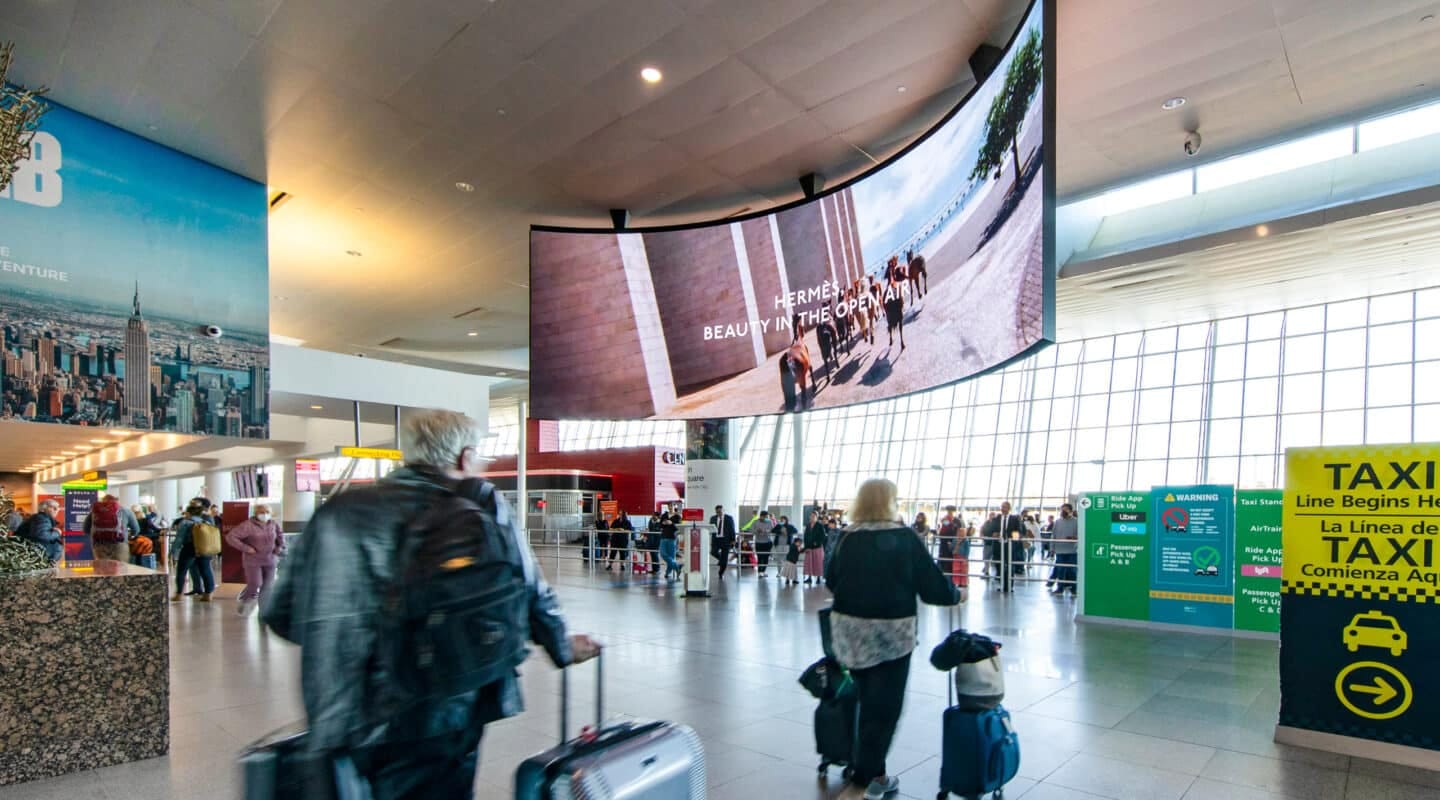
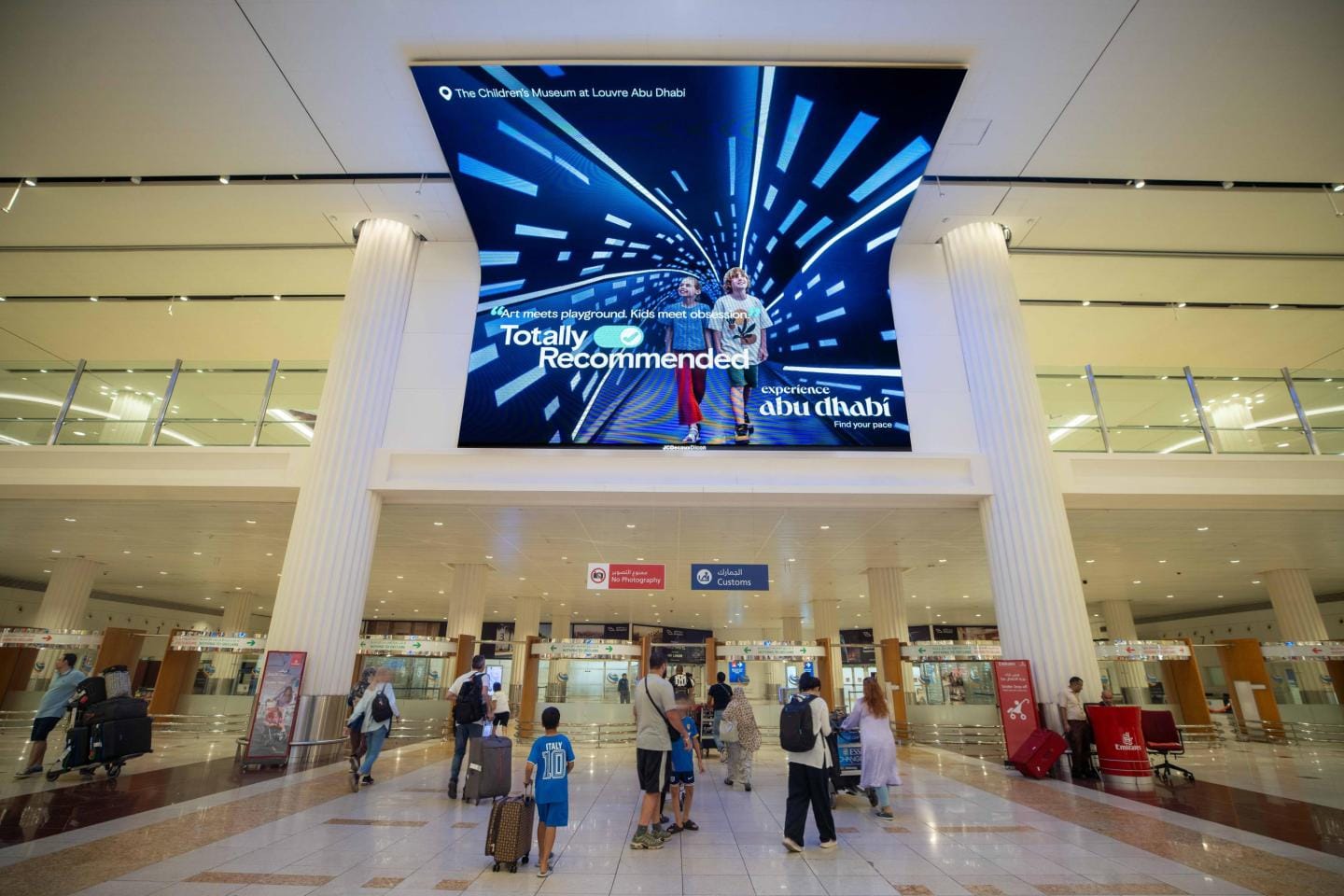
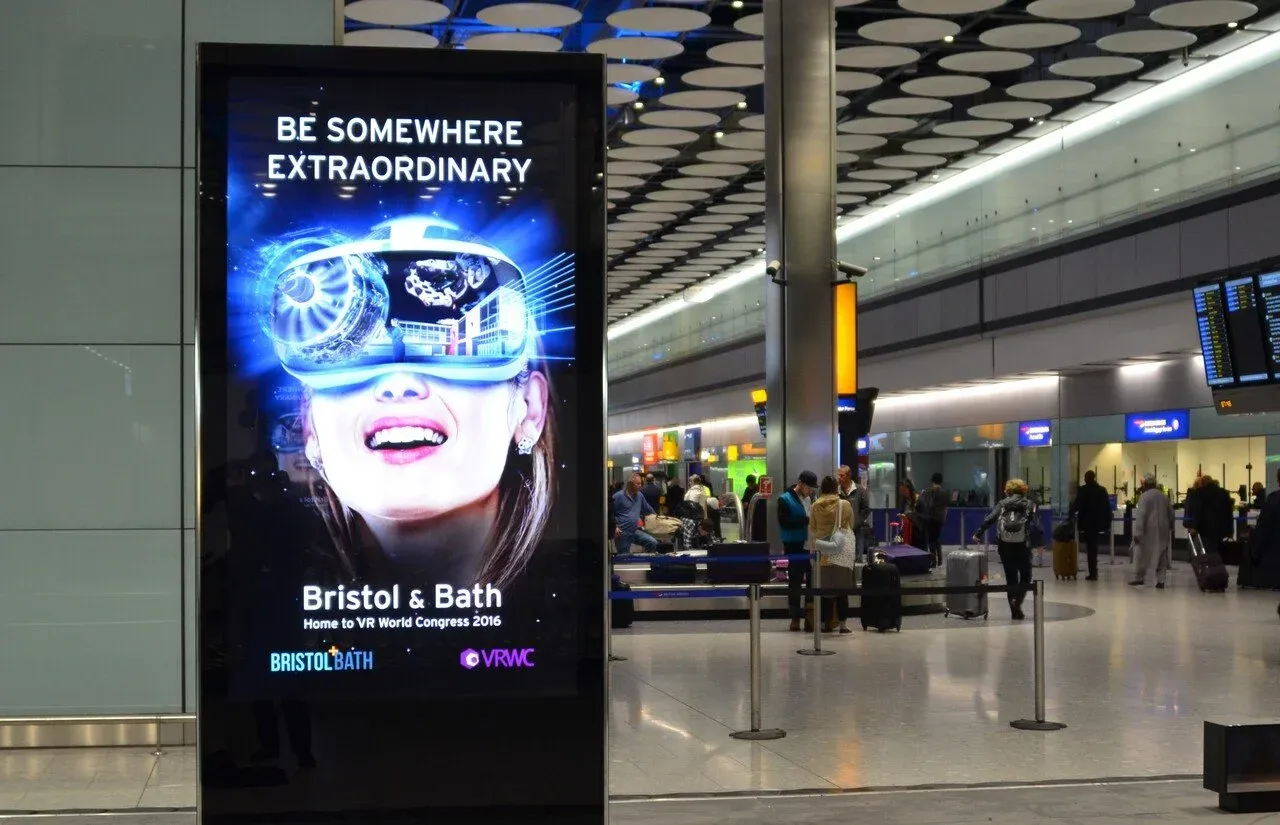
- Masscom Global's inventory access at Varanasi Lal Bahadur Shastri Airport covers the terminal's primary high-contact advertising positions — check-in hall, international and domestic departures zones, security hold areas, arrivals corridors, and international arrivals — managed through Masscom's India-wide airport OOH network with full campaign execution, multilingual creative support, and performance monitoring infrastructure.
Strategic Advertising Fit
Best Fit
- Heritage luxury hospitality: Luxury hotels, boutique heritage properties, premium ghat-view accommodations, and curated Varanasi experience operators find the most relevant domestic and international high-net-worth audience at VNS that any Indian airport in this passenger tier delivers — the premium pilgrim's willingness to invest in a transformative Kashi experience is growing rapidly as the city's infrastructure and narrative evolve.
- Gold and jewellery: The combination of Kartik Maas, Maha Shivaratri, Navratri, Diwali, and the constant festival intensity of a Jyotirlinga city creates one of India's most sustained multi-peak gold advertising environments at VNS — gold brands with Kashi-cultural messaging and life milestone positioning achieve exceptional resonance across the year's devotional calendar.
- Insurance and family protection: The pilgrimage journey context makes VNS one of India's most naturally receptive airports for insurance advertising — families travelling to Kashi to perform ancestral rites, seek blessings for life milestones, and pray for the wellbeing of their loved ones are in the exact emotional state where family protection product messaging lands with its greatest possible depth and sincerity.
- NRI banking and remittance products: The global Hindu diaspora pilgrim at VNS is a premium NRI banking audience — returning from a Kashi journey in a state of heightened cultural and familial commitment, active in NRE account management, property purchasing intent, and investment product engagement; this is among India's most emotionally primed and financially motivated NRI banking audiences at any regional airport.
- Spiritual wellness, yoga, and Ayurveda brands: No other Indian airport serves an audience whose primary journey purpose is spiritual transformation and wellness — yoga retreat operators, Ayurveda product brands, meditation technology, and spiritual wellness platforms find at VNS a uniquely pre-motivated audience whose travel intent is already aligned with their product category.
- Silk, handicraft, and heritage retail: Banarasi silk brands, heritage craft retailers, and artisan product platforms find a captive audience at VNS whose most natural purchasing impulse is the acquisition of a sacred-city memento or a luxury textile whose geographical origin is part of its cultural meaning.
- FMCG and consumer staples: The year-round high volume and festival intensity of VNS's pilgrim audience creates outstanding FMCG brand recall conditions — personal care, packaged food, and household brands targeting North India's aspirational family audience find a receptive, high-frequency, and emotionally engaged consumer at this airport.
- International Buddhist circuit tourism: Hospitality operators, heritage travel agencies, and cultural tourism brands servicing the Japanese, Korean, Thai, and Southeast Asian Buddhist pilgrim community find a naturally concentrated arrival audience at VNS that is premium-spending, culturally motivated, and commercially accessible nowhere else in North India at this efficiency.
Brand Alignment at a Glance
| Category | Fit |
|---|---|
| Heritage luxury hospitality | Exceptional |
| Gold and jewellery | Exceptional |
| Insurance and family protection | Exceptional |
| Spiritual wellness and Ayurveda | Exceptional |
| NRI banking and remittance | Strong |
| Silk and heritage retail | Strong |
| FMCG and consumer staples | Strong |
| International Buddhist tourism | Strong |
| Real estate (Varanasi and Delhi NCR) | Strong |
Who Should Not Advertise Here
- Mass commercial retail and fast fashion: Varanasi's audience arrives in a state of spiritual purposefulness that is fundamentally misaligned with the trivial consumption triggers of fast fashion and transactional retail advertising — these categories find the audience's attention directed inward, not toward commercial novelty.
- Purely secular entertainment and gaming brands: Online gaming, streaming entertainment, and secular youth lifestyle brands targeting recreational consumers find their messaging at structural odds with the devotional and heritage orientation that defines VNS's primary audience identity — the mismatch between brand register and audience state reduces impact to near-zero.
- Industrial B2B brands without North India pilgrimage economy relevance: Sponge iron, coal equipment, and purely industrial B2B categories find no structural audience alignment at VNS — the commercial audience at this airport is defined by the sacred and the cultural, not the industrial.
Event and Seasonality Analysis
- Event Strength: Exceptional
- Seasonality Strength: High
- Traffic Pattern: Sacred Calendar Driven with International Tourism Overlay (continuous October–March pilgrimage peak with individual festival intensity spikes at Dev Deepawali, Maha Shivaratri, Sawan, and Kumbh Mela cycle years)
Strategic Implication
Varanasi Airport's commercial calendar is the most event-dense of any regional Indian airport in this passenger tier — the sacred calendar of a Jyotirlinga city generates pilgrimage intensity peaks across every month of the year, with particular concentration in the October to March winter and spring season when the combination of comfortable climate, festival calendar, and international tourist arrival peak creates the year's most commercially potent sustained advertising window. Masscom structures VNS campaigns around two complementary strategies simultaneously: sustained year-round presence that captures the continuous pilgrim flow across all festival occasions, and festival-specific high-intensity placements in the Dev Deepawali, Maha Shivaratri, Kartik Maas, and Navratri windows when audience commercial receptivity is at its peak. For Kumbh Mela years — when Prayagraj draws hundreds of millions of pilgrims whose Varanasi extension visits surge through VNS — planning must begin 12 to 18 months ahead to secure premium inventory at pre-event rate structures. Brands that maintain year-round presence at VNS while intensifying at festival peaks consistently outperform those that treat the airport as a seasonal buy.

Poor Placement and Delays Affect Airport Campaigns
We help you move faster, access better inventory, and get it right now.
Talk to an ExpertFinal Strategic Verdict
Varanasi Lal Bahadur Shastri Airport is India's most emotionally powerful advertising environment at its passenger volume level — an airport where 2.4 million annual travellers arrive and depart in states of spiritual intentionality, devotional commitment, and cultural reverence that amplify brand messaging beyond what secular-travel audiences can produce. The Kashi Vishwanath Corridor has transformed Varanasi from a compelling but logistically demanding pilgrimage destination into a premium spiritual tourism city of international standing — one that now draws luxury-spending domestic pilgrims, heritage tourists from Europe and the Americas, and Buddhist circuit visitors from across Asia whose per-trip spending profiles are reshaping the airport's commercial audience upward with every passing season. The Banarasi silk and Bhadohi carpet exporter communities add a commercially sophisticated export-wealth layer. The BHU and IIT-BHU institutional economy contributes structured professional income. The global Hindu diaspora's deepening pilgrimage engagement channels NRI capital into Varanasi real estate, gold, and devotional retail at an accelerating rate. For gold and jewellery brands, heritage luxury hospitality operators, insurance companies with family protection products, spiritual wellness platforms, NRI banking providers, and silk and craft retailers, VNS is not a supplementary North India buy — it is the singular access channel to India's most devotionally motivated and commercially receptive audience at the precise moment of their highest brand engagement. Masscom Global is the partner with the cultural intelligence, inventory access, and campaign execution capability to ensure that brands capture the Varanasi audience's extraordinary commercial potential before the city's accelerating international profile transforms this channel into India's most sought-after spiritual tourism advertising environment.
About Masscom Global
Masscom Global is a premium international airport advertising and media buying agency operating across 140 countries. With deep expertise in airport OOH, premium publications, and high-net-worth audience targeting, Masscom helps brands reach the world's most valuable travellers at the moments that matter most. For advertising packages, media rates, and campaign planning at Varanasi Lal Bahadur Shastri Airport and airports across the globe, contact Masscom Global today.
Frequently Asked Questions
How much does airport advertising cost at Varanasi Airport? Advertising costs at Varanasi Lal Bahadur Shastri Airport vary based on format type, terminal placement position, campaign duration, and seasonal demand — the October to March pilgrimage peak season, Dev Deepawali in November, Maha Shivaratri in February to March, Sawan in July to August, and Kumbh Mela cycle years carry the highest demand and corresponding rate premiums. No fixed public rate card applies; inventory is allocated based on campaign objectives, category fit, and timing priorities. Contact Masscom Global for current rates, available formats including international arrivals positions, and campaign packages calibrated to your brand's spiritual tourism and pilgrimage audience objectives at VNS.
Who are the passengers at Varanasi Airport? The passenger base at Varanasi Lal Bahadur Shastri Airport (VNS) is defined by four commercially distinct and complementary segments: affluent domestic pilgrims from across India — Gujarati, Tamil, Bengali, Maharashtrian, and North Indian Hindu families fulfilling Kashi darshan aspirations — international Buddhist circuit tourists from Japan, South Korea, Thailand, and Southeast Asia visiting Sarnath, global Hindu diaspora families from the USA, UK, Gulf, and Singapore performing ancestral rites, and a Banarasi silk, carpet export, and institutional professional community connecting Varanasi to India's commercial economy. The audience is pan-Indian in domestic origin, genuinely international in visitor composition, and uniquely defined by the spiritual intentionality that makes Varanasi the world's most commercially receptive pilgrimage airport environment.
Is Varanasi Airport good for luxury brand advertising? Varanasi Airport is well-positioned for heritage luxury and spiritual premium brand advertising — a category that is distinct from cosmopolitan international luxury. The premium pilgrim arriving at VNS in 2024 and beyond is increasingly willing to invest substantially in a luxury Varanasi experience — ghat-view heritage hotels, curated aarti ceremonies, premium silk shopping, and Ayurvedic wellness retreats — in ways that the pre-Corridor pilgrimage tourist was not. Heritage luxury hospitality brands, premium spiritual wellness platforms, and authentic luxury silk and craft retailers find genuinely qualified buyers at VNS. Ultra-premium watch and fashion couture brands targeting the cosmopolitan jet-set find limited audience alignment — but culturally rooted Indian luxury in any form has its most receptive national audience at this airport.
What is the best airport in North India to reach the Hindu pilgrimage HNWI audience? Varanasi Lal Bahadur Shastri Airport (VNS) is the singular facility in North India that concentrates the Hindu pilgrimage audience at its highest spiritual intensity and its broadest pan-Indian geographic representation. Every major Indian state's Hindu devotional community sends pilgrims to Kashi — making VNS the only North Indian regional airport where Gujarati, Tamil, Bengali, Maharashtrian, and Rajasthani pilgrims are simultaneously present in commercially significant numbers. Prayagraj Airport accesses the Kumbh Mela audience cyclically. Ayodhya Airport serves Ram bhaktas specifically. VNS serves all of these communities continuously across the full sacred calendar of Hinduism's holiest city — making it the most comprehensive and sustained pilgrimage advertising environment in Indian aviation.
What is the best time to advertise at Varanasi Airport? The sustained October to March season is the highest-ROI extended advertising window at VNS — covering Dev Deepawali in November, Maha Shivaratri in February to March, and the year's peak international tourist season. Within this window, Dev Deepawali and Maha Shivaratri are the two specific event peaks where audience commercial intensity is highest. Sawan in July to August is the best window for FMCG and devotional product brands during the summer calendar. For Kumbh Mela years at Prayagraj — the next Maha Kumbh was in 2025 — advertising planning at VNS should begin 12 to 18 months ahead to secure premium inventory. Masscom Global structures VNS campaigns around both sustained seasonal presence and event-specific intensification strategies.
Can international real estate developers advertise at Varanasi Airport? Yes — Varanasi Airport is a meaningful channel for international real estate developers targeting the global Hindu diaspora audience whose Kashi pilgrimage triggers renewed engagement with Indian cultural and property assets. UAE and Dubai property developers find a receptive NRI audience — families completing ancestral rites at VNS whose cultural reconnection to India translates into active NRE account usage and Indian property purchasing intent. Domestic developers with Varanasi city projects benefit most directly — the Kashi Vishwanath Corridor's transformation has created a Varanasi real estate market that NRI families and Delhi-NCR investors are actively entering for the first time. Lucknow and Delhi NCR residential developers also find motivated secondary buyers among VNS's institutional and professional traveller base.
Which brands should not advertise at Varanasi Airport? Mass commercial retail, fast fashion, secular entertainment, and purely industrial B2B brands find structural audience misalignment at VNS. The primary audience at Varanasi Airport is in a state of spiritual purposefulness and devotional commitment that is fundamentally oriented away from casual consumption, entertainment, and transactional retail messaging. Online gaming, streaming entertainment platforms, fast fashion, and secular youth lifestyle brands find their core purchase triggers at odds with the emotional state of VNS's dominant audience identity. Industrial B2B categories — sponge iron, coal, and mining sector products — find no structural audience concentration at VNS, which is defined by the sacred and the cultural rather than the industrial.
How does Masscom Global help brands advertise at Varanasi Airport? Masscom Global provides complete end-to-end airport advertising capability at Varanasi Lal Bahadur Shastri Airport — from audience intelligence and campaign strategy through inventory access, multilingual creative placement, and performance reporting. Our deep understanding of VNS's sacred calendar, international Buddhist tourist arrival patterns, Hindu diaspora pilgrimage cycles, Kumbh Mela spillover dynamics, and terminal advertising environment allows us to design campaigns that intercept India's most devotionally engaged and commercially receptive travellers at the precise moments of their highest brand receptivity. We manage all complexities of booking, multilingual production, regulatory compliance, and monitoring — ensuring your brand launches faster and achieves the cultural resonance that this extraordinary audience deserves. To begin planning your campaign at Varanasi Lal Bahadur Shastri Airport, speak to a Masscom expert today.