

Airport at a Glance
| Field | Detail |
|---|---|
| Airport | Tianjin Binhai International Airport |
| IATA Code | TSN |
| Country | China |
| City | Tianjin Municipality |
| Annual Passengers | 9.1 million (2023) |
| Primary Audience | North China manufacturing and industrial HNWIs, Binhai New Area corporate executives, Jing-Jin-Ji corridor business professionals, Korean and Japanese automotive and electronics industry community |
| Peak Advertising Season | January to February (Spring Festival), May, October (Golden Week), year-round B2B industrial baseline |
| Audience Tier | Tier 1 |
| Best Fit Categories | B2B manufacturing technology, aerospace and aviation, premium automotive, industrial financial services, energy sector |
Tianjin Binhai International Airport is the commercial aviation gateway to China's third directly controlled municipality, a city of fourteen million whose industrial depth, manufacturing heritage, and strategic position within the Beijing-Tianjin-Hebei integration zone create one of the most commercially distinctive B2B advertising environments in North China. At 9.1 million passengers and a HNWI Score of High, TSN serves the Tianjin Binhai New Area's extraordinary concentration of global manufacturing operations, the oil and gas executive class of CNOOC's national headquarters, the aerospace professionals of the only Airbus Final Assembly Line on Chinese soil, and the senior management of the multinational automotive and electronics manufacturers whose North China operations make Tianjin one of the country's most internationally embedded industrial economies. For B2B industrial brands, premium automotive advertisers, and financial services companies serving North China's manufacturing HNWI class, TSN delivers a commercially concentrated and internationally connected audience that Beijing's mega-airports dilute across a far more diverse passenger base.
Tianjin's commercial identity is defined by a convergence of industrial excellence and cosmopolitan heritage unmatched by any comparable Chinese city. The city's decades as China's most internationally significant treaty port left a physical and cultural legacy of European architecture, foreign commercial networks, and cross-cultural business sophistication that still shapes Tianjin's professional class today. The Italian Quarter, French Quarter, and British concession zones are among China's most distinctive urban commercial heritage districts. Layered onto this historical foundation is the Tianjin Binhai New Area, one of China's most strategically endorsed economic development zones, whose Airbus assembly line, CNOOC headquarters, Samsung Electronics facilities, and the Sino-Singapore Tianjin Eco-City represent the cutting edge of China's industrial and sustainable development ambition. The Jing-Jin-Ji national integration strategy is progressively consolidating the commercial wealth of the broader 100-million-person Beijing-Tianjin-Hebei economic zone, and TSN is the industrial corridor's primary aviation gateway.
Advertising Value Snapshot
- Passenger scale: 9.1 million passengers (2023), representing TSN's current recovery trajectory within the Jing-Jin-Ji aviation market, with the airport's industrial catchment depth and Binhai New Area commercial expansion providing structural demand drivers that underpin its forward growth case
- Traveller type: Binhai New Area industrial and aerospace executives, CNOOC and petroleum sector professionals, automotive and electronics manufacturing management, Jing-Jin-Ji corridor business professionals, and the Korean and Japanese corporate community anchored by Samsung, FAW-Toyota, and their supplier networks
- Airport classification: Tier 1 within North China's industrial corridor — Tianjin municipality's primary international gateway and the commercial aviation hub for the Jing-Jin-Ji economic zone's eastern manufacturing anchor
- Commercial positioning: North China's most concentrated B2B industrial HNWI airport, serving the executive management of China's most internationally embedded manufacturing cluster in a commercial environment whose per-passenger corporate purchasing authority is among the highest of any Chinese regional aviation hub
- Wealth corridor signal: TSN sits at the industrial heart of a 100-million-person economic integration zone whose manufacturing, petroleum, aerospace, and port logistics wealth represents the deepest concentration of North China corporate HNWI capital accessible through a single regional airport
- Advertising opportunity: Masscom Global provides inventory access and campaign execution capability at Tianjin Binhai International Airport, enabling B2B industrial, premium automotive, financial services, and aerospace brands to reach North China's most commercially concentrated manufacturing executive audience with the precision that TSN's focused business traveller profile uniquely enables.
Airport Advertising is Complex to Get Right
We help you execute faster, with proven results and local insight most planners lack starting now.
Talk to an ExpertCatchment Area and Economic Drivers
Top 10 Cities within 150 km — Marketer Intelligence
- Tianjin City Centre (Heping, Nankai, Hedong Districts): Tianjin's commercial and cultural core, whose historical foreign concession districts — the Italian Quarter, French Quarter, and British Quarter — represent China's most architecturally distinctive European-influenced commercial heritage zone; the professional class based here combines the port city's century-long cosmopolitan commercial heritage with the Binhai New Area's modern industrial management culture, creating a premium consumer audience whose international brand familiarity and architectural sensitivity to quality significantly exceeds typical Chinese tier-two city levels.
- Tianjin Binhai New Area: Adjacent to the airport and the single most commercially significant economic zone in the TSN catchment; home of CNOOC's national headquarters, the Airbus A320 Final Assembly Line (the only Airbus production facility outside Europe in operation), Samsung Electronics' major manufacturing complex, and dozens of multinational industrial facilities in the Tianjin Economic-Technological Development Area; the Binhai New Area's professional management class represents the airport's highest-concentration B2B decision-maker audience with global supply chain purchasing authority across aerospace, petroleum, electronics, and advanced manufacturing categories.
- Langfang (Hebei): Approximately 65 km west, positioned on the Beijing-Tianjin high-speed rail and expressway corridor as the primary commercial development zone between China's two most commercially powerful northern cities; home to Huawei's significant research campus and a growing cluster of technology, logistics, and financial services companies relocating from Beijing under the Jing-Jin-Ji integration strategy; the professional class benefits commercially from both megacity anchors and increasingly uses TSN as their most convenient eastern gateway for international and domestic business travel.
- Tangshan (Hebei): Approximately 100 km northeast; China's largest steel production city and the dominant coal, ceramics, and heavy manufacturing economy of the Bohai Rim corridor; the corporate executive and engineering management class of Tangshan's steel, coal, and industrial base carries significant B2B procurement authority for industrial technology, logistics, and engineering services; Tangshan's manufacturing wealth has created a growing HNWI consumer class whose premium vehicle, luxury goods, and financial services purchasing is concentrated at TSN as the nearest international air gateway.
- Cangzhou (Hebei): Approximately 100 km south; historically significant as China's most important salt-producing region and now a major industrial corridor producing approximately 20 percent of China's steel pipe output alongside chemicals, rubber, and pipeline manufacturing; the corporate management class of Cangzhou's industrial complex represents a significant B2B procurement audience for engineering services, materials, and logistics brands; the city's proximity to Huanghua Port adds a maritime logistics commercial dimension.
- Baoding (Hebei): Approximately 140 km southwest; home of Great Wall Motor, China's largest private automotive manufacturer and a major international vehicle exporter to Europe, Australia, and Southeast Asia; the Great Wall Motor executive class, alongside Baoding's military industrial and transformer manufacturing economy, creates a significant premium automotive and B2B industrial audience whose international commercial relationships include European, Australian, and Southeast Asian market partnerships; Great Wall Motor's export ambitions generate regular international business travel through TSN.
- Wuqing District (Tianjin): Approximately 40 km northwest, positioned directly on the Beijing-Tianjin high-speed rail corridor as the fastest-growing corporate relocation zone in Tianjin municipality; the district is receiving business headquarters, financial services companies, and technology operations relocating from central Beijing under the Jing-Jin-Ji integration programme, progressively elevating its professional class from a satellite commuter residential zone to a commercial destination in its own right with above-average per-capita income growth.
- Jinghai District (Tianjin): Approximately 50 km south; a significant agricultural processing, chemical, and light manufacturing zone within Tianjin municipality; the Tianjin Economic Development Zone's southward expansion into Jinghai is creating new logistics park and industrial cluster commercial activity; the growing residential and commercial development serves Tianjin's southward metropolitan expansion with a professional class whose consumption standards are rising in proportion to the district's infrastructure investment.
- Ninghe District (Tianjin): Approximately 60 km northeast; the transitional zone between Tianjin municipality and Hebei's Tangshan-Qinhuangdao corridor; a growing logistics, cold chain, and food processing hub whose position between Tianjin and Tangshan creates B2B supply chain commercial activity for both markets; the growing professional and technical workforce creates aspirational consumer demand for mid-premium and premium FMCG categories whose brand presence at TSN reaches this audience through the airport's natural geographic catchment.
- Huanghua City (Cangzhou): Approximately 130 km south; the coastal deep-water port city anchoring the southern Bohai Rim logistics corridor; Huanghua Port is one of North China's most strategically positioned bulk cargo facilities, and its development as a coal and iron ore throughput hub has created a port logistics and maritime professional community whose commercial relationships with international shipping, commodities trading, and logistics companies generate significant business travel through TSN.
International Industrial Community Intelligence
Tianjin's most commercially distinctive diaspora characteristic is not an overseas Chinese community but a resident international industrial professional network of a scale and commercial significance unmatched by any comparable Chinese city outside the Yangtze and Pearl River Deltas. The Korean corporate community, centred on Samsung Electronics' major Tianjin manufacturing operations and its extensive supply chain network, represents one of the largest Korean corporate expatriate communities in mainland China, with regular bilateral travel between Tianjin and Seoul generating a consistent high-value international corridor through TSN. The Japanese corporate community, anchored by FAW-Toyota's Tianjin manufacturing base and its Japanese management and engineering staff, adds a second major international industrial professional community whose purchasing behaviour reflects Japanese premium standards and whose travel patterns connect TSN to Osaka and Tokyo with commercial regularity. The French and European engineering community associated with the Airbus A320 Final Assembly Line creates a European aerospace professional layer whose monthly rotation between Tianjin and Toulouse, Hamburg, and Paris maintains a high-quality international B2B audience at TSN with above-average premium brand spending. These three industrial communities collectively create an international commercial environment at TSN that is unique among North China airports and positions the terminal as a genuine bilateral B2B commercial meeting point between China's industrial economy and its most important manufacturing partnerships.
Economic Importance
Tianjin's economy is structured around five commercially interconnected pillars. The petrochemical and energy sector, led by CNOOC's national headquarters and the Dagang Oilfield operations, creates North China's most concentrated petroleum industry HNWI executive audience. The advanced manufacturing sector, spanning aerospace, automotive, electronics, and steel, generates the deepest B2B procurement authority pool in the Jing-Jin-Ji industrial corridor. The port and logistics economy, anchored by Tianjin Port — China's largest northern port by throughput — creates a commercial trading and freight management audience whose international supply chain relationships span global commodity markets. The Binhai New Area's financial services experiment, positioned as China's northern offshore finance zone, is progressively attracting banking, insurance, and capital management operations whose professional class supplements the manufacturing executive audience with financial sector sophistication. The Jing-Jin-Ji integration strategy's systematic relocation of Beijing government functions, corporate headquarters, and educational institutions to Tianjin is creating a growing influx of capital-city commercial standards that are elevating the entire airport catchment's consumer and B2B purchasing expectations.
Business and Industrial Ecosystem
- Aerospace and Airbus ecosystem: The Airbus A320 Family Final Assembly Line in Tianjin, a joint venture with AVIC, delivers approximately 50-plus aircraft per year and anchors an entire aerospace supply chain of components manufacturers, maintenance services, logistics operators, and engineering support companies whose professional management creates TSN's most internationally connected B2B audience; French, German, Spanish, and Chinese aerospace professionals traveling between Tianjin and Toulouse, Hamburg, and Madrid form a uniquely European-facing professional corridor at this North China airport
- Petroleum and energy sector: CNOOC's national headquarters concentration in Tianjin Binhai New Area creates the most significant petroleum industry executive audience of any Chinese city outside Beijing; the CNOOC executive class, supplemented by the Dagang Oilfield management and South China Sea operations coordinators, represents a high-income B2B and premium consumer audience with global energy industry commercial connections
- Automotive manufacturing: FAW-Toyota's production facilities and their extensive Japanese Tier 1 supplier network create a Japanese-standard automotive quality professional class in Tianjin whose consumer behaviour reflects the precision engineering culture of global automotive manufacturing; Great Wall Motor's Tianjin connections add a domestic premium vehicle manufacturing commercial dimension
- Electronics and technology: Samsung Electronics' major Tianjin manufacturing complex and its Korean management and engineering community represent one of North China's most concentrated technology manufacturing B2B audiences; the electronics supply chain ecosystem surrounding Samsung creates dozens of component manufacturer, logistics, and services companies whose professional workforce adds commercial depth to TSN's technology sector audience
- Port logistics and trade: Tianjin Port's role as North China's dominant container and bulk cargo gateway creates a commercial trading, freight forwarding, and maritime services professional community whose international commodity trade relationships connect TSN's audience to markets across Asia, Europe, and the Americas; port logistics executives and commodity trading professionals represent a specialised but commercially significant B2B audience at the airport
Passenger Intent — Business Segment
The business traveller at TSN is flying with the specific commercial intent of the North China industrial economy's most globally connected professional tier. The CNOOC executive is managing offshore energy assets and international technology procurement relationships that span South China Sea operations, deepwater drilling platforms, and energy transition investment mandates covering multiple continents. The Airbus assembly line engineer is coordinating supply chain deliveries, quality certification processes, and production planning with European counterparts in a bilateral relationship that requires quarterly international travel. The FAW-Toyota executive is managing production targets, supplier relationships, and Japanese headquarters reporting in a commercial structure whose operational requirements generate some of the most regular Japan-China business travel through any North China airport. Each of these passengers carries active B2B purchasing decisions in progress and arrives at TSN in the specific professional mindset that makes industrial technology, financial services, and precision engineering brand advertising most commercially effective.
Strategic Insight
TSN's business audience is commercially valuable in a way that complements rather than competes with what Beijing's airports offer. Where PEK and PKX serve the government, finance, and consumer economy professional class of China's capital, TSN concentrates the industrial, manufacturing, and energy sector executive class of North China's most globally embedded production economy. A B2B engineering brand advertising at TSN is speaking to procurement directors whose authority spans capital equipment, precision components, industrial software, and engineering services procurement at scale. An aerospace brand advertising at TSN is reaching the management community of the most internationally credentialed aerospace industrial cluster in North China. A financial services brand is intercepting the CFOs and treasury managers of companies whose annual turnover spans billions of RMB in industrial revenues. Masscom's intelligence on this audience's specific commercial profiles and international partnership patterns is structured to give B2B brands and premium consumer categories the placement precision that TSN's focused industrial audience rewards.
Tourism and Premium Travel Drivers
- Tianjin Historical Foreign Concession Architecture: Tianjin's remarkable inventory of European-era concession buildings — Italian Baroque, French Art Nouveau, British Victorian, and German Wilhelmine — represents China's most architecturally distinctive urban heritage tourism asset outside Beijing's imperial core; the premium domestic tourist visiting Tianjin's concession districts is drawn from China's culturally engaged architectural and heritage tourism market whose per-visit spending on boutique accommodation, premium dining, and specialty craft products is among the highest of any comparable domestic heritage itinerary
- Haihe River Cultural and Commercial Corridor: The dramatically redeveloped Haihe River waterfront, stretching through central Tianjin with illuminated bridges, heritage architecture, and a premium F&B and entertainment economy, is driving a night tourism and urban leisure market that increasingly attracts weekend premium domestic tourists from Beijing; the riverfront's commercial quality signals a leisure infrastructure investment that premium hospitality and lifestyle brands can effectively position within at TSN
- Tianjin Porcelain House and Contemporary Arts Scene: The Porcelain House, one of China's most remarkable private art installations entirely encrusted with antique porcelain fragments, exemplifies the luxury art and collector tourism economy that is growing within Tianjin's culturally sophisticated professional class; the city's contemporary gallery district and international arts events attract a premium arts-oriented domestic tourist audience
- Binhai New Area Modern Architectural Attractions: The Binhai Eye (Tianjin Eye), the distinctive binhai waterfront architecture, and the Sino-Singapore Eco-City's sustainability showcase attract domestic tourism from China's growing green economy and urban planning professional audience; the Binhai New Area's modern commercial infrastructure is progressively developing leisure and hospitality amenities that serve its resident HNWI professional community and their visiting business partners
Passenger Intent — Tourism Segment
The premium domestic tourist using TSN is most commonly a culturally sophisticated traveller from Beijing or other northern Chinese cities whose specific motivation is Tianjin's unique European heritage districts and riverside gastronomy scene. This audience is well-educated, internationally brand-aware, and purchasing-motivated at the airport's retail environment, with strong specialty food, premium FMCG, and heritage craft purchasing intent. The inbound foreign tourism audience, historically drawn by Tianjin's historical significance and its role as a complement to Beijing's imperial tourism circuit, contributes a secondary premium international traveller profile with above-average daily expenditure and strong hotel and fine dining brand engagement.
Travel Patterns and Seasonality
Peak seasons:
- Spring Festival and Chinese New Year (January to February): China's most commercially intense travel period generates TSN's highest consumer spending peak; Tianjin's significance as a family destination for Spring Festival family reunions and for domestic tourists from Northeast China attracted by its milder weather and heritage cultural programme creates an above-average Spring Festival traffic intensity relative to comparable northern Chinese airports
- Labour Day Golden Week (May 1 to 5): The spring holiday peak aligns with Tianjin's most pleasant weather and the opening of outdoor cultural events in the concession districts and along the Haihe River; the tourism inflow from Beijing and other northern cities is strong during this period given TSN's geographic convenience for visitors to Tianjin's heritage circuit
- National Day Golden Week (October 1 to 7): The autumn peak creates TSN's second-largest concentrated holiday traffic surge; the combination of domestic tourism inflows for Tianjin's autumn heritage season and the outbound leisure travel of the Tianjin HNWI professional class creates the year's most commercially diverse single-week passenger mix outside Spring Festival
- Year-round B2B industrial baseline: TSN's industrial and corporate professional audience generates a consistent year-round business travel baseline that is less seasonal than leisure-dominated airports; the CNOOC, Airbus, FAW-Toyota, and Samsung executive communities travel domestically and internationally throughout the calendar year, providing advertisers with continuous access to a commercially motivated B2B audience independent of holiday cycles
Event-Driven Movement
- Spring Festival (January to February): The year's maximum consumer spending event; North China's manufacturing HNWI class, enriched by year-end bonuses and profit distributions, makes its most concentrated luxury goods, premium automotive, and family gift purchases in the six-week window surrounding Chinese New Year; TSN's proximity to Beijing means the airport also benefits from overflow premium travel demand during the Lunar New Year period
- Korea National Holidays (Chuseok and Seollal): Tianjin's large Samsung and Korean corporate community generates a distinctively Korean travel pattern around Korean national holidays that creates concentrated bilateral TSN-Seoul traffic; the Korean executive departing TSN for Seoul during Chuseok is a commercially active premium consumer whose purchasing behaviour reflects Korean-calibrated luxury standards and strong duty-free purchasing intent
- Japanese Golden Week (late April to early May) and Year-End (December): The FAW-Toyota and Japanese automotive supply chain community in Tianjin creates a Japanese national holiday travel pattern at TSN that reflects Japanese premium consumer standards and strong gift-giving culture; the Japanese executive returning to Tokyo and Osaka for national holidays via TSN carries professionally calibrated premium brand familiarity and high per-trip gift purchasing commitment
- Aviation and Aerospace Industry Events: International aerospace exhibitions, Airbus supplier meetings, and AVIC-related industry conferences generate concentrated professional surges at TSN whose B2B decision-making authority in aerospace procurement, engineering technology, and aviation finance is the most concentrated of any event-driven audience at the airport
- Tianjin International Economic and Trade Fair: An annual major trade exhibition drawing domestic and international companies across industrial manufacturing, consumer goods, and services categories; the fair generates a concentrated B2B commercial audience at TSN whose procurement mandates and partnership mandates create peak advertising value for industrial technology and professional services brands
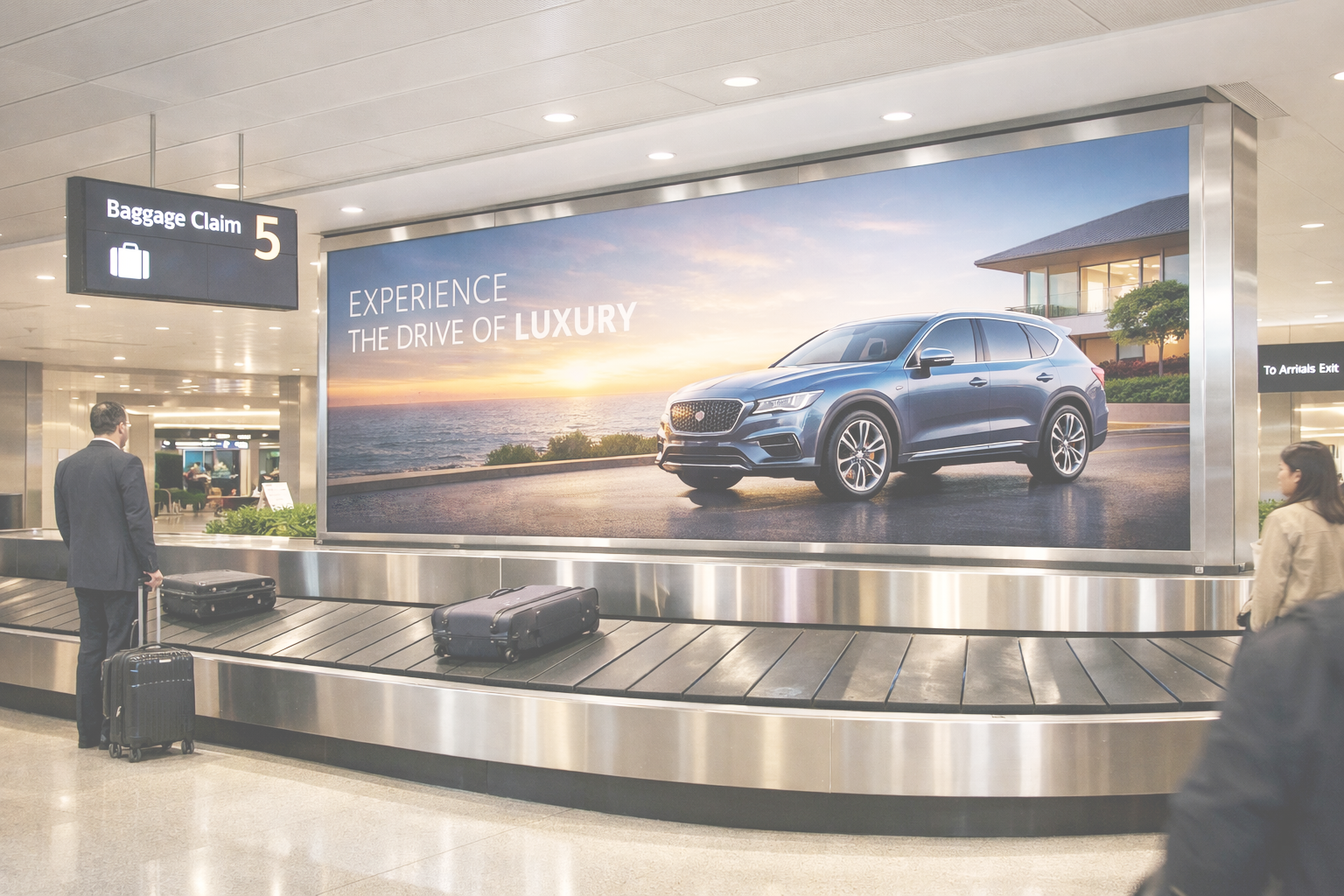
It’s Not Just Where You Advertise - It’s How Fast You Execute
We combine local insight with fast rollout to deliver results for you, now.
Talk to an ExpertAudience and Cultural Intelligence
Top 2 Languages
- Mandarin Chinese (Putonghua): The standard commercial and administrative language of TSN's entire domestic passenger base; while Tianjin has its own distinctive local dialect, standard Putonghua is the effective commercial language for all advertising at the airport; campaign creative that incorporates Tianjin's specific cultural identity markers — the concession architecture heritage, the port city cosmopolitan character, and the Binhai New Area's modern industrial ambition — achieves a local resonance that generic North China campaign templates cannot replicate; Tianjin's population responds particularly positively to brand messaging that acknowledges the city's distinctiveness within North China rather than positioning it as a secondary Beijing satellite
- English: More commercially significant at TSN than at most comparable Chinese regional airports, owing to the extraordinary concentration of international industrial professionals from France, Germany, Japan, South Korea, and Singapore whose corporate operations in the Binhai New Area require English as the daily working language of their international supply chain management; English-language brand messaging for B2B industrial, aerospace, and premium consumer categories reaches the Airbus, Samsung, and FAW-Toyota international management community with full communicative effectiveness, and signals international operational credibility to the Chinese industrial professionals who work alongside them
Major Traveller Nationalities
Domestic Chinese nationals from Tianjin municipality and the broader Jing-Jin-Ji catchment form the primary passenger base. The international passenger profile is defined by Tianjin's specific industrial partnerships: Korean nationals representing the Samsung Electronics community and its Tianjin supply chain network form the largest single international segment, with multiple weekly TSN-Seoul flights reflecting the bilateral commercial relationship's operational scale. Japanese nationals from the FAW-Toyota management and Tier 1 supplier community maintain regular Tianjin-Tokyo and Tianjin-Osaka travel that makes Japan TSN's second most significant bilateral international corridor. French, German, and other European engineers and managers associated with the Airbus Final Assembly Line create a European professional segment whose travel pattern connects TSN to Toulouse, Hamburg, and Madrid with regularity. Singaporean professionals from the Sino-Singapore Tianjin Eco-City project and the Tianjin-Singapore bilateral commercial relationship add a Southeast Asian financial and urban development professional dimension.
Religion — Advertiser Intelligence
- Buddhism and Taoism (approximately 40 to 50%, cultural practice): The Chinese folk religious tradition defines TSN's domestic commercial calendar peaks; Spring Festival, Qingming, Dragon Boat Festival, and Mid-Autumn Festival create the predictable consumer purchasing windows that domestic brand campaigns should align with; Tianjin's significant historical Buddhist temple complex at Dule Temple (approximately 90 km northeast in Jixian) draws temple cultural tourism that generates modest domestic inbound flows through the airport
- Christianity (approximately 3 to 5%, higher than Chinese national average): Tianjin's historical foreign mission and concession heritage left a more substantial Christian community than comparable Chinese cities; the concession-era churches — including the significant Catholic Wanghailou Church and the Protestant churches of the British and French quarters — represent active congregations whose globally connected membership includes internationally educated professionals with strong foreign brand familiarity; the Christian professional community's commercial calendar alignment with Western holidays creates a secondary consumer spending peak in the November to December period
- Islam (small but historically present): Tianjin has a historical Hui Muslim community whose commercial networks along the ancient Salt Road trade corridors maintained halal business relationships across North China; while commercially marginal in current scale, the Hui community's presence adds a layer of Islamic trade heritage to Tianjin's identity as a historically open port city whose commercial culture was shaped by diverse religious and ethnic commercial interactions
Behavioral Insight
Tianjin's professional and HNWI class carries a commercial identity shaped by three centuries of port city cosmopolitanism layered onto a post-1949 industrial manufacturing culture, creating a consumer whose brand evaluation combines the pragmatic performance standards of China's engineering culture with the European aesthetic literacy absorbed from the concession era's physical and cultural legacy. The Tianjin professional is commercially direct, values demonstrated quality over aspirational positioning, and responds to international brand credibility signals that reflect genuine industrial or commercial excellence rather than lifestyle aspiration alone. The city's status as a slightly underappreciated giant — larger and economically more significant than most Chinese cities but consistently overshadowed by its proximity to Beijing — has created a local commercial identity with strong pride in Tianjin's distinctiveness and a preference for brands that recognise the city's own commercial credentials rather than positioning Tianjin as a secondary market within Beijing's orbit. Brands that address TSN's audience as the primary audience of a major northern Chinese economic powerhouse, rather than as a peripheral extension of the capital, consistently earn stronger commercial traction.
Outbound Wealth and Investment Intelligence
The outbound HNWI passenger at Tianjin Binhai International Airport is deploying capital shaped by three distinct commercial vectors. The industrial manufacturing executive class, enriched by the Binhai New Area's decades of extraordinary commercial growth, is diversifying wealth into international real estate, offshore private banking, and premium education investment as the natural extension of businesses whose international partnerships have calibrated their financial expectations to global market standards. The Korean and Japanese international corporate professionals are making bilateral wealth decisions across both their home and Chinese markets. The Jing-Jin-Ji integration beneficiary class, whose property and business values have been elevated by the national strategy's investment in Tianjin, is deploying appreciation gains into diversified international asset portfolios whose specific targets reflect Tianjin's unique set of international commercial relationships.
Outbound Real Estate Investment
South Korea represents the most Tianjin-specific international real estate market, where Samsung and Korean corporate community members maintain property positions in Seoul, Busan, and Jeju that reflect the bilateral commercial relationship's residential dimension; Korean developers targeting the Chinese corporate professional market find a pre-qualified and culturally familiar audience at TSN whose existing Korean market knowledge reduces the sales cycle significantly. Japan's Tokyo and Osaka real estate markets attract the FAW-Toyota and Japanese automotive community's investment, with cultural familiarity and geographic proximity making Japanese property a natural asset class for Tianjin's Japanese-facing industrial professional audience. Australia, particularly Melbourne and Sydney, represents the dominant English-speaking education-linked property market for Tianjin HNWI families investing in concurrent residential purchases alongside their children's university enrolment. Singapore's prime residential market attracts the Binhai New Area's financial services and technology executive HNWI class whose FTZ-connected commercial relationships with Singapore's financial ecosystem make SGD-denominated property a commercially logical portfolio addition.
Outbound Education Investment
The United Kingdom remains the prestige international education destination for Tianjin's HNWI and industrial professional families, with Russell Group universities' engineering, business, and law programmes receiving the most significant Tianjin graduate investment. Australia's Group of Eight universities, particularly Melbourne and Sydney, are the highest-volume English-medium education destinations, driven by geographic accessibility, safety reputation, and the strong employer recognition of Australian credentials in Tianjin's international manufacturing sector. The United States, particularly engineering-focused institutions in the Northeast and California, attracts Tianjin's most internationally ambitious academic families whose children are targeted at careers in aerospace, petroleum engineering, and advanced manufacturing aligned with the parent's professional backgrounds. Korea and Japan represent growing near-shore education alternatives for Tianjin's Korean and Japanese corporate community's children who maintain educational connections to their parents' home countries while growing up in China's industrial North.
Outbound Wealth Migration and Residency
Singapore's long-term residency and global investor programme attracts Tianjin's FTZ-connected financial and technology executive HNWI class whose Binhai commercial operations create natural bilateral Singapore-Tianjin financial service relationships. Australia's significant investor and business innovation visa categories are relevant for Tianjin's manufacturing entrepreneurs seeking to establish international operational bases whose supply chain or distribution relationships require Australian market residency. South Korea's investor and corporate residency visa programmes are increasingly utilised by the Chinese management professionals whose Samsung and Korean automotive supply chain careers have created permanent bilateral professional relationships requiring formalised South Korean residential status. The broader residency interest among Tianjin's HNWI class is primarily operationally motivated by the international commercial partnerships that define North China's most globally embedded industrial economy rather than by capital diversification concerns alone.
Strategic Implication for Advertisers
International brands operating in industrial B2B supply chains, Korean and Japanese premium consumer markets, Southeast Asian trade finance, and education investment should treat TSN as North China's most commercially specific single-airport channel for reaching the industrial HNWI and international corporate professional audience that the Tianjin Binhai New Area concentrates. The Korean, Japanese, and European corporate professional communities at TSN represent bilateral audiences whose purchasing behaviour spans both their home market standards and China's premium consumer upgrade, creating a rare combination of internationally calibrated spending capacity and domestic market engagement within a single terminal. Masscom Global structures TSN campaigns to exploit this international industrial bilateral commercial architecture, placing clients in front of both the Chinese industrial HNWI outbound investor and the international corporate professional inbound traveller within the same media investment.
Airport Infrastructure and Premium Indicators
Terminals
- Tianjin Binhai International Airport operates a primary Terminal 2, opened in 2008 as a major capacity expansion and the airport's principal modern facility, designed for annual capacity substantially above current passenger volumes and offering a well-appointed terminal environment with airside retail, F&B, and business services infrastructure calibrated to a corporate professional audience
- The terminal's design reflects the Binhai New Area's institutional quality ambitions, with a commercial environment that signals the premium B2B and HNWI passenger standard that the airport management has consistently positioned TSN to serve
Premium Indicators
- Airline lounge infrastructure, including Air China's premium passenger facilities and partner carrier VIP lounges, confirms a consistent business class passenger concentration supported by CNOOC, Airbus, Samsung, and FAW-Toyota executive travel demand that maintains premium cabin loads on the airport's primary international routes
- The Korean Air and Japan Airlines presence at TSN reflects the bilateral commercial relationships that define the airport's most commercially valuable international corridors; both carriers operate premium business class cabins on their TSN routes, confirming the corporate executive travel demand that justifies the sustained international connectivity despite the airport's current passenger volumes
- The Binhai New Area's Sino-Singapore Eco-City project, physically adjacent to the airport's operational catchment, represents a government-level quality signal for the commercial environment surrounding TSN; Singapore's endorsement of the Eco-City as a joint national project communicates the premium institutional standards that both governments are committing to the Tianjin Binhai development zone
- The Airbus Final Assembly Line's physical presence within TSN's catchment represents an unmatched aerospace quality credential for any Chinese regional airport; the FAL's standards of precision manufacturing and international operational protocol elevate the commercial environment's quality perception in ways that no advertising investment alone can achieve
Forward-Looking Signal
The Jing-Jin-Ji integration strategy's progressive relocation of Beijing government functions, corporate headquarters, and financial institutions to Tianjin is creating a sustained capital and talent inflow whose commercial effect on TSN's passenger quality and volume will compound across the current decade. The Tianjin Free Trade Zone's continued regulatory liberalisation is attracting new financial services and technology company registrations that are deepening the Binhai New Area's HNWI professional class. New international route development, particularly on the Korea, Japan, and Southeast Asian corridors reflecting the Binhai New Area's bilateral trade growth, is progressively expanding TSN's international commercial connectivity beyond its current network. Great Wall Motor's growing international export operations through Tianjin's port are creating new European, Australian, and Southeast Asian automotive trade corridors that will generate return business travel through TSN as the company's export market relationships mature. Masscom advises clients to establish advertising positions at TSN now, capturing premium inventory at current rates ahead of the competitive intensification that Jing-Jin-Ji integration and Binhai New Area expansion will drive into the terminal's most strategically valuable placements.
Airline and Route Intelligence
Top Airlines
Air China, China Eastern Airlines, China Southern Airlines, Hainan Airlines, Shenzhen Airlines, Shandong Airlines, Korean Air, Japan Airlines, All Nippon Airways, Singapore Airlines (historical and seasonal), Thai Airways, Vietnam Airlines, Lucky Air
Key International Routes
- Seoul (ICN): The airport's highest-frequency and commercially most significant international corridor, reflecting the Samsung-anchored Korean corporate community's regular bilateral travel and the broader China-Korea commercial relationship; the TSN-Seoul route carries a consistently premium business cabin load from the Korean corporate executive community resident in Tianjin
- Tokyo (NRT/HND) and Osaka (KIX/ITM): Regular services on Japan Airlines and ANA connecting TSN to the FAW-Toyota management and Japanese automotive supplier community whose quarterly rotation between Tianjin and Japan maintains bilateral commercial relationships; the Japan corridor also serves the Airbus supply chain's coordination with Japanese aerospace component manufacturers
- Singapore (SIN): Regular services reflecting the Sino-Singapore Tianjin Eco-City project's bilateral institutional relationship and the growing financial and technology professional community associated with the FTZ's Singapore commercial partnerships
- Bangkok (BKK): Multiple weekly services serving the growing China-Thailand commercial relationship and the leisure travel of Tianjin's HNWI professional class accessing Southeast Asian resort destinations
- Hong Kong (HKG): Multiple daily services connecting TSN to China's primary offshore financial services gateway and the Binhai New Area's private banking and capital management connections
Domestic Connectivity
TSN operates extensive domestic routes connecting Tianjin to Beijing (PEK/PKX), Shanghai (PVG/SHA), Guangzhou (CAN), Shenzhen (SZX), Hainan (HAK/SYX), Chengdu (CTU), and major secondary Chinese cities. The Beijing route, despite the 30-minute high-speed rail connection between the two cities, maintains commercial aviation viability for passengers connecting to international services through TSN or traveling from the airport's direct Binhai New Area catchment who find the train connection to Beijing airports logistically cumbersome. Domestic connectivity to Northeast China cities including Shenyang, Dalian, and Harbin serves the industrial supply chain relationships between Tianjin's manufacturing economy and the Northeast's steel and heavy industrial base.
Wealth Corridor Signal
TSN's international route map precisely encodes the bilateral industrial commercial relationships that define Tianjin's most important external economic partnerships. The Korea corridor carries the Samsung manufacturing economy's operational management requirements and the bilateral commercial investment of the Korean corporate community resident in Tianjin. The Japan corridor carries the FAW-Toyota management structure's reporting and coordination requirements and the Japanese automotive supply chain's technical management travel. The Singapore corridor carries the institutional bilateral relationship of the Eco-City project and the FTZ's financial services development partnerships. For B2B industrial advertisers, these corridors are not passenger volume statistics but audience intent maps: each route's travelers are engaged in active commercial relationships whose procurement, investment, and partnership decisions are accessible to precisely positioned brand advertising at TSN.
Media Environment at the Airport
- TSN's Terminal 2 creates a focused media environment whose relative compactness compared to China's mega-hub terminals enables brand campaigns to achieve strong visual dominance without the competitive dilution of a fifty-gate international facility; the terminal's current passenger density creates an uncrowded media environment with above-average per-passenger brand contact time for well-positioned placements
- The airport's industrial and corporate professional passenger base is characterised by a higher-than-average proportion of frequent business travellers whose repeat terminal exposure across multiple monthly visits generates cumulative brand recall that is structurally impossible for leisure-dominant airports to replicate; a B2B brand consistently positioned at TSN builds brand familiarity with the same corporate decision-maker audience across dozens of airport visits per year
- The international terminal's concentration of Korean, Japanese, and European industrial professionals creates a specific premium media micro-environment within TSN whose per-passenger commercial authority and internationally calibrated brand standards justify premium placement investments whose returns are measured in B2B procurement relationship development rather than consumer conversion alone
- Masscom Global has established inventory access and campaign execution capability at Tianjin Binhai International Airport, with local knowledge of the terminal's commercial flow patterns, the bilateral Korean and Japanese corporate travel rhythms that define the international corridor's audience profile, and the specific creative standards that resonate with Tianjin's pragmatic, performance-oriented industrial professional audience
Strategic Advertising Fit
Best Fit
- B2B industrial technology, precision engineering, and manufacturing services: The concentration of Airbus, CNOOC, Samsung, and FAW-Toyota executive management at TSN creates the most commercially dense B2B procurement authority audience of any Chinese regional airport outside the coastal tier-one hubs; industrial equipment, precision components, engineering software, and manufacturing services brands intercept decision-makers at TSN whose annual purchasing mandates span billions of RMB across global supply chains
- Aerospace and aviation services: The Airbus Final Assembly Line's anchoring of North China's most internationally credentialed aerospace industrial cluster creates a uniquely qualified audience for aerospace components, MRO services, aviation finance, and flight operations technology at TSN; no other North China airport has equivalent access to an aerospace professional community of this calibre
- Energy sector B2B services and technology: CNOOC's national headquarters concentration and the Dagang Oilfield operations create a petroleum industry executive audience at TSN with procurement authority across deepwater drilling technology, offshore energy infrastructure, energy transition investment, and petroleum services categories; energy sector B2B brands find their most concentrated North China executive audience at this airport
- Premium automotive brands: Great Wall Motor's manufacturing base in Baoding, FAW-Toyota's Tianjin operations, and the broader North China automotive industry create a consumer audience with precision engineering quality standards embedded in their personal vehicle preferences; luxury German, Japanese, and premium British automotive brands find a naturally receptive and commercially capable consumer class at TSN whose automotive quality standards are professionally calibrated
- Korea and Japan-facing premium consumer brands: The Korean and Japanese corporate communities at TSN represent bilateral consumer audiences whose purchasing behaviour reflects home-market premium standards; Korean luxury and lifestyle brands targeting the Chinese corporate community and Japanese precision craftsmanship brands targeting the professional automotive and aerospace class find a pre-qualified and culturally aligned audience in TSN's international terminal
- Financial services, private banking, and FTZ advisory: The Binhai New Area's offshore financial experiment and the CNOOC-anchored petroleum HNWI class create significant demand for sophisticated financial products including international wealth management, FTZ tax advisory, cross-border investment planning, and corporate treasury services whose brands find concentrated decision-making authority at TSN
- International education in Australia, the UK, and Korea: Tianjin's industrial HNWI professional families are making international education investment at an increasing rate, with engineering and technology career pathways driving specific UK, Australian, and Korean university preferences aligned with the parent's professional background in the industries that dominate Tianjin's economy
- Premium FMCG and luxury lifestyle brands: The Tianjin HNWI professional class, whose consumption standards are being elevated by Jing-Jin-Ji integration and the Binhai New Area's international exposure, represents a growing premium consumer audience whose brand upgrading trajectory is creating commercial opportunities for luxury goods, fine wines, premium hospitality, and lifestyle brands at TSN
Brand Alignment at a Glance
| Category | Fit |
|---|---|
| B2B Industrial Technology | Exceptional |
| Aerospace and Aviation Services | Exceptional |
| Energy Sector B2B | Exceptional |
| Premium Automotive | Strong |
| Korea and Japan Consumer Brands | Strong |
| Financial Services | Strong |
| International Education | Strong |
| Luxury Goods and Lifestyle | Strong |
| Budget Consumer Retail | Poor fit |
Who Should Not Advertise Here
- Mass market and price-led consumer brands: TSN's industrial HNWI and corporate professional audience evaluates brands through performance evidence and quality credibility rather than price accessibility; budget positioning is not only commercially ineffective at this airport but actively undermines brand quality perception with a professional class whose purchasing decisions are shaped by engineering standards and corporate quality culture
- Products with no North China or industrial economy commercial relevance: Consumer goods and services with no distribution, partner network, or commercial relationship in the Tianjin, Hebei, or North China industrial ecosystem will find zero viable conversion among an audience entirely oriented toward the commercial relationships that define the Jing-Jin-Ji corridor's economic identity
- Brands conflicting with Chinese advertising regulatory standards: All campaigns at Chinese airports must meet domestic advertising regulatory requirements; Masscom handles compliance verification for all placements as a standard operational baseline
Event and Seasonality Analysis
| Factor | Rating |
|---|---|
| Event Strength | High |
| Seasonality Strength | Moderate |
| Traffic Pattern | Year-Round B2B Industrial Baseline with Seasonal Consumer Peaks |
Strategic Implication
Advertisers at TSN should structure campaigns around a year-round B2B industrial baseline supplemented by three consumer-facing seasonal activations. The year-round industrial baseline, driven by CNOOC, Airbus, Samsung, FAW-Toyota, and their supply chain management communities, justifies continuous B2B brand presence at TSN across all twelve months; the industrial professional's travel is calendar-consistent rather than seasonally concentrated, and a brand present at TSN year-round accumulates the frequency-driven corporate recall that B2B trust relationships require. Consumer-facing campaigns should intensify around the Spring Festival six-week window for luxury goods and premium lifestyle brands, the Korean and Japanese national holiday travel peaks for brands targeting the bilateral corporate community, and the October Golden Week for broader domestic leisure consumer categories. Masscom structures TSN campaigns to maintain a continuous B2B industrial presence across the year with tactical consumer activations at the three seasonal peaks, delivering both the sustained executive brand recall that industrial purchasing decisions require and the conversion-ready seasonal consumer spending capture that Tianjin's HNWI class provides at each major holiday window.

Poor Placement and Delays Affect Airport Campaigns
We help you move faster, access better inventory, and get it right now.
Talk to an ExpertFinal Strategic Verdict
Tianjin Binhai International Airport is the most commercially concentrated B2B industrial advertising environment in North China and the only Chinese airport serving a municipality whose international corporate partnerships span Airbus aerospace, Korean electronics, Japanese automotive, and Chinese petroleum industries simultaneously within a single catchment. With 9.1 million passengers, a HNWI Score of High, and a Jing-Jin-Ji integration strategy that is systematically elevating the commercial quality of its catchment by relocating Beijing-standard wealth and corporate sophistication into the Tianjin-Hebei corridor, TSN offers B2B industrial, energy, aerospace, automotive, and financial services brands access to a procurement authority audience that Beijing's mega-airports dilute and that no other North China airport concentrates at equivalent depth. The Korean and Japanese corporate communities at TSN represent bilateral premium consumer audiences that no other Chinese regional airport hosts at equivalent commercial scale. The Binhai New Area's CNOOC-anchored petroleum HNWI class represents the deepest single-sector industrial executive wealth concentration accessible through any airport between Beijing and Shenyang. Brands that establish advertising presence at TSN now are claiming the most commercially specific and least competitively saturated B2B positioning in North China's most globally embedded industrial economy. Masscom Global provides the local intelligence, bilateral corporate community expertise, and campaign execution precision to make that positioning commercially productive for your brand, starting immediately.
About Masscom Global
Masscom Global is a premium international airport advertising and media buying agency operating across 140 countries. With deep expertise in airport OOH, premium publications, and high-net-worth audience targeting, Masscom helps brands reach the world's most valuable travellers at the moments that matter most. For advertising packages, media rates, and campaign planning at Tianjin Binhai International Airport and airports across the globe, contact Masscom Global today.
Frequently Asked Questions
How much does airport advertising cost at Tianjin Binhai International Airport?
Advertising costs at Tianjin Binhai International Airport vary based on format type, placement zone within the terminal, campaign duration, and seasonal demand. Large-format digital placements in the international departures corridor, domestic check-in zone formats, and business lounge adjacent positions each carry distinct rate structures. TSN's current passenger volume creates a lower competitive saturation of premium inventory than China's major hub airports, providing brands with the opportunity to secure high-impact placements at rates that reflect the market's current development stage rather than its commercial audience quality. Contact Masscom Global for current rate cards, available inventory, and campaign packages calibrated to your budget and target audience objectives.
Who are the passengers at Tianjin Binhai International Airport?
TSN's 9.1 million annual passengers include a higher proportion of corporate B2B professionals than almost any comparable Chinese regional airport, reflecting the Binhai New Area's extraordinary concentration of industrial management, petroleum, aerospace, and electronics manufacturing executives. The Korean corporate community from Samsung's manufacturing operations and the Japanese community from FAW-Toyota create significant and commercially valuable international bilateral passenger segments. Domestic Chinese passengers from Tianjin municipality and the broader Jing-Jin-Ji catchment including Langfang, Tangshan, and Cangzhou represent the majority base, with the manufacturing and petroleum HNWI professional class representing the most commercially productive segment.
Is Tianjin Binhai International Airport good for luxury brand advertising?
Yes, within the specific context of Tianjin's industrial HNWI consumer character. The Tianjin professional class whose petroleum, aerospace, and manufacturing incomes have created HNWI wealth is actively upgrading premium consumption as the Jing-Jin-Ji integration elevates commercial standards in the region. The Korean and Japanese corporate community at TSN represents bilateral premium consumer audiences with internationally calibrated luxury brand standards. The historical European concession heritage creates a consumer base with aesthetic appreciation for craft quality and brand heritage that exceeds typical Chinese industrial city norms. Luxury automotive, premium watches, and high-end lifestyle brands that communicate engineering excellence and international heritage resonate most effectively with this audience.
What is the best airport in North China to reach B2B manufacturing and industrial HNWIs?
Tianjin Binhai International Airport is the most commercially specific answer for the B2B manufacturing, aerospace, and petroleum HNWI audience. Beijing Capital Airport and Daxing serve larger combined volumes but across a much more diverse passenger base that dilutes the industrial executive concentration; TSN's focused catchment of Airbus assembly, CNOOC headquarters, Samsung manufacturing, and FAW-Toyota operations creates the most commercially dense B2B procurement authority audience accessible through any single North China airport. For brands specifically targeting the industrial management and petroleum HNWI class of North China's most globally integrated production economy, TSN delivers superior audience concentration per campaign investment.
What is the best time to advertise at Tianjin Binhai International Airport?
For B2B industrial and financial services brands, year-round presence is recommended given the consistent business travel baseline maintained by the CNOOC, Airbus, Samsung, and FAW-Toyota corporate communities. The Spring Festival window from January through mid-February delivers the year's maximum consumer luxury purchasing intent and should receive the highest premium consumer brand investment. The Korean national holidays of Chuseok and Seollal create concentrated bilateral TSN-Seoul traffic windows whose Korean corporate community audience is at peak gift and premium goods purchasing intent. The October Golden Week delivers the year's second-largest concentrated holiday consumer traffic. Masscom recommends a year-round B2B industrial strategy with consumer-facing intensifications at these three seasonal windows.
Can international real estate developers advertise at Tianjin Binhai International Airport?
International real estate advertising at TSN performs most effectively for markets with direct commercial alignment with Tianjin's bilateral industrial partnerships. South Korean developers targeting the Samsung and Korean corporate community find pre-qualified buyers whose Korean market familiarity reduces educational barriers. Australian university-adjacent residential developers find the Tianjin HNWI education investment audience receptive during the August-September academic departure season. Singapore prime residential developers find the Binhai FTZ financial professional community commercially motivated by bilateral Singapore-Tianjin institutional relationships. Contact Masscom Global for creative strategy guidance and optimal campaign timing for real estate advertising at TSN.
Which brands should not advertise at Tianjin Binhai International Airport?
Budget and price-led consumer brands face fundamental misalignment with an industrial HNWI and corporate professional audience whose purchasing decisions are driven by demonstrated quality and commercial reliability rather than price sensitivity. Products with no North China, Jing-Jin-Ji corridor, or bilateral Korean-Japanese-European market commercial relevance will find no viable conversion among TSN's industrially oriented passenger base. Advertising content conflicting with Chinese regulatory standards requires compliance resolution before deployment; Masscom handles regulatory verification for all campaigns as standard practice.
How does Masscom Global help brands advertise at Tianjin Binhai International Airport?
Masscom Global provides the Chinese market intelligence, bilateral Korean, Japanese, and European industrial community commercial expertise, inventory access, and campaign execution capability that brands need to perform at North China's most commercially concentrated B2B manufacturing and industrial HNWI airport environment. We understand the specific commercial profiles of TSN's Airbus, CNOOC, Samsung, and FAW-Toyota audience segments, the Korean and Japanese national holiday travel patterns that define the international terminal's bilateral commercial rhythms, and the creative and cultural calibration standards that distinguish effective North China industrial market advertising from generic campaign templates. We execute with the speed and local precision that China's competitive advertising market demands and deliver the commercial audience precision that TSN's focused industrial passenger base uniquely enables. Contact Masscom Global today to begin planning your campaign at Tianjin Binhai International Airport.