

Airport at a Glance
| Field | Detail |
|---|---|
| Airport | Sydney Kingsford Smith Airport |
| IATA Code | SYD |
| Country | Australia |
| City | Sydney, New South Wales |
| Annual Passengers | 42.54 million (2025, all-time record); 41.4 million (2024) |
| International Passengers | 17.17 million (2025, all-time record); 16.3 million (2024) |
| Primary Audience | Australian HNWIs and Business Leaders, Inbound Asian Affluent Travellers, Chinese and Indian Diaspora, Business and Premium Leisure Travellers |
| Peak Advertising Season | October to April (Australian summer and school holiday peak season) |
| Audience Tier | Tier 1 — Major International Gateway |
| Best Fit Categories | Premium Lifestyle, International Real Estate, Financial Services, Education, Luxury Consumer Goods, Premium Automotive |
Sydney Kingsford Smith Airport is not simply Australia's busiest airport. It is the front door to one of the world's most commercially significant cities — a metropolis that ranks 8th globally for resident millionaire concentration with 147,000 HNWIs, where prime real estate trades at USD 22,700 per square metre, where ultra-HNWI assets grew 11.6% in 2024, and where the national economy has produced approximately 1.9 million millionaires representing around 10% of the adult population. In 2025, SYD delivered its best year ever for international travel — 17.17 million international passengers, a record that surpassed every previous quarter on record — while recording 42.54 million total passengers, a 2.7% increase on 2024. The airport contributes almost A$40 billion annually to the national economy and directly connects Australia's financial, professional, and commercial leadership to 43 international destinations across 25-plus countries.
What makes SYD commercially extraordinary for advertisers is the intersection of two audiences it uniquely serves. The outbound audience is Sydney's own HNWI and professional base — business leaders, corporate executives, and wealthy families whose international travel exposes them to global luxury brands, investment opportunities, and lifestyle experiences in their most aspirational travel mindset. The inbound audience includes the world's fastest-growing middle and upper classes from China, South Korea, India, Japan, and the United Kingdom, whose immigration to Australia, education investment, property purchasing, and tourism spending make SYD the primary commercial entry point for one of the world's largest cross-border wealth transfer corridors. For brands in premium lifestyle, international real estate, financial services, education, and luxury consumer categories, SYD presents an audience of confirmed commercial consequence that no other Australian airport can replicate.
Advertising Value Snapshot
- Passenger scale: 42.54 million total passengers in 2025 (all-time record); 17.17 million international (all-time record); 25.09 million domestic and regional; 7.1% total growth in 2024 and a further 2.7% in 2025 — Australia's busiest and most commercially significant airport by every measure
- Traveller type: Australian HNWIs and corporate business travellers, inbound Chinese and Asian affluent visitors, British and Irish diaspora, Indian professionals and investors, New Zealand premium leisure travellers, international education families, South Korean and Japanese leisure and business visitors
- Airport classification: Tier 1 Major International Gateway — Australia's primary international airport; the 8th wealthiest city's sole major aviation hub; the commercial convergence point for Australia's entire international travel economy
- Commercial positioning: The gateway airport of a city projected to enter the world's top five wealthiest by 2040, currently ranking 8th globally with 147,000 resident millionaires, 184 centi-millionaires, and 15 billionaires
- Wealth corridor signal: SYD sits at the apex of the Australia-Asia wealth corridor — the principal commercial pathway through which Chinese, Korean, Indian, and Southeast Asian capital flows into Australian real estate, education, and financial markets, and through which Australian HNWI capital flows outbound to global investment opportunities
- Advertising opportunity: Masscom Global positions premium and luxury brands at SYD's T1 International terminal to intercept both Australia's outbound HNWI professional base in their peak aspiration mindset and the growing inbound affluent Asian audience whose purchasing decisions have enormous long-term commercial value for brands that engage them at the point of arrival
Airport Advertising is Complex to Get Right
We help you execute faster, with proven results and local insight most planners lack starting now.
Talk to an ExpertCatchment Area and Economic Drivers
Top 10 Cities within 150 km — Marketer Intelligence:
- Sydney CBD and Inner Ring (Surry Hills, Pyrmont, Darlinghurst): The commercial heart of Australia — home to the headquarters of the ASX's largest listed companies, the major four banks (Commonwealth Bank, ANZ, NAB, Westpac), global professional services firms, legal and consulting partnerships, and the leadership of Australia's most commercially significant corporations. SYD's outbound corporate business travel is dominated by this inner-city professional class, making the T1 International terminal their primary international aviation entry and exit point.
- Eastern Suburbs (Bellevue Hill, Point Piper, Vaucluse, Darling Point, Woollahra): Australia's wealthiest residential corridor and the geographic home of Sydney's billionaire and centimillionaire residential community. Point Piper's harbour-front mansions regularly trade above A$50 million. Bellevue Hill's prestigious residential addresses house private equity partners, media proprietors, and senior financial executives. These residents use SYD's international terminal for their twice-yearly European and North American luxury travel, generating the airport's highest per-trip spending outbound passengers.
- Lower North Shore (Mosman, Neutral Bay, Cremorne, North Sydney): Sydney's most densely concentrated community of senior executives, investment bankers, and family business principals. The North Sydney CBD is the second most commercially significant office district in Australia and its residential surroundings include some of the nation's highest household income postcodes. North Shore residents are among SYD's most frequent international business travellers.
- Upper North Shore (Killara, Gordon, Pymble, Turramurra): A large, affluent suburban corridor of established family wealth — professionals, business owners, and senior managers whose household investment portfolios and superannuation balances generate significant financial services purchasing intent. This segment's international travel through SYD is primarily premium leisure and family travel with above-average per-trip spending.
- Northern Beaches (Manly, Dee Why, Avalon, Palm Beach): An aspirational, lifestyle-focused coastal corridor whose residents include creative industry professionals, tech founders, senior executives, and established family wealth seeking the combination of ocean lifestyle and Sydney access. The Northern Beaches demographic is growing in HNWI concentration and generates a significant premium leisure travel audience at SYD.
- Parramatta and Greater Western Sydney: Australia's third-largest economy in its own right and the fastest-growing urban corridor in New South Wales. The emergence of Western Sydney International Airport (WSI, opening late 2026) will eventually redistribute some domestic traffic, but SYD retains all international aviation from this catchment for the foreseeable future, capturing the growing Indian and South Asian diaspora concentrated in Parramatta, Blacktown, and surrounding suburbs — a commercially significant inbound and outbound travel market whose education, real estate, and financial services purchasing intent is substantial.
- Wollongong and Illawarra: A coastal industrial and university city 80 kilometres south of Sydney, generating a secondary professional and academic travel market that uses SYD for all international connections. Wollongong's University of Wollongong generates significant international student and parent travel through SYD.
- Newcastle and Hunter Valley: 160 kilometres north of Sydney and within plausible SYD catchment for international premium travel. The Hunter Valley's wine and agricultural wealth, combined with Newcastle's growing professional class, produces a segment of business and leisure travellers who prefer SYD's international connectivity over regional alternatives.
- Blue Mountains resort corridor: An affluent domestic tourism and residential hinterland immediately west of Sydney, housing a community of established professionals and retirees with superannuation wealth and international travel capacity who rely entirely on SYD for international departures.
- Canberra (ACT): Australia's federal capital, 280 kilometres south-west of Sydney, uses SYD as a primary international gateway alongside Canberra Airport's limited international services. Canberra's government, diplomatic, and professional community generates a significant political, regulatory, and public sector international travel flow through SYD — a commercially specific audience for financial services, international education, and premium business products.
NRI and Diaspora Intelligence: Sydney's international passenger growth story is fundamentally a diaspora story. Chinese passport holders grew 11.4% in Q2 2025 and 12.2% in Q4 2025 — a sustained double-digit expansion reflecting Australia's deep integration with Chinese migration, education investment, and real estate purchasing. Chinese investors are the dominant foreign presence in Sydney's property market, motivated by asset diversification, children's education at Australian universities, and returns in a stable political environment. The Inner West, Eastern Suburbs, and North Shore suburbs have seen the most sustained price growth from this demand. South Korean passport holders grew 15.3% in Q4 2025, remaining 22% above pre-pandemic levels even after moderating in mid-year. Indian passport holders have grown consistently above 2019 levels for every quarter since pandemic recovery, reflecting Australia's deepening India relationship across migration, professional services, and education. British and Irish passport holders surged 26.1% in Q3 2025, reflecting the British and Irish Lions rugby tour alongside sustained post-Brexit lifestyle migration. Philippine passport holders consistently exceed 2019 levels, driven by Australia's large and economically active Filipino community whose family visit, remittance, and business travel generates significant SYD volume. Each of these diaspora groups carries commercially distinct purchasing profiles — the Chinese community's education and property investment mandate, the Indian professional's financial services and career development orientation, the British immigrant's lifestyle brand loyalty and premium consumer spending — that make SYD the most commercially diverse diaspora gateway airport in the Southern Hemisphere.
Economic Importance: Sydney's economy is both the foundation and the product of SYD's traffic. The airport contributes approximately A$40 billion annually to the national economy — making it not merely a transport facility but a piece of critical economic infrastructure whose commercial impact reaches every sector of the New South Wales economy. Sydney is the financial services capital of Australia, home to the ASX, the Reserve Bank of Australia, the major four banks, and the local and regional offices of virtually every significant global financial institution operating in the Asia-Pacific. It is Australia's technology and innovation hub, hosting the regional headquarters of Google, Amazon, Microsoft, Salesforce, Atlassian, and a growing constellation of local fintech and technology companies. It is the principal entry point for Australia's international education economy — one of the country's largest export industries — whose student flow through SYD generates not just education fees but years of ancillary consumption, graduation, and often permanent residency. The combination of these economic anchors creates a catchment population whose international travel through SYD is commercially motivated to a degree that few airports in the Asia-Pacific region can match.
Business and Industrial Ecosystem
- Financial services and banking: Sydney is the uncontested financial capital of Australia and the regional headquarters for Asia-Pacific operations of the world's major investment banks, private equity firms, asset managers, and insurance companies. The outbound SYD business traveller is disproportionately a senior financial services professional making client calls in Singapore, Hong Kong, London, or New York. This audience's purchasing profiles for private banking, premium financial products, and professional lifestyle brands are among the strongest in Australian aviation.
- Technology and innovation: The city's growing technology sector — anchored by global majors and home-grown unicorns like Canva, Atlassian (founded in Sydney), Afterpay, and a maturing startup ecosystem — generates a younger, higher-earning, internationally mobile professional cohort whose travel through SYD is growing as their companies globalise. Tech executives and founders travelling through SYD carry high average salaries, strong brand literacy, and premium lifestyle aspirations.
- Resources and mining: Australia's resources sector — though headquartered primarily in Perth for Western Australian operations — maintains significant Sydney corporate presence through ASX-listed mining companies whose CEO and CFO populations travel extensively through SYD to investor meetings in London, New York, and Hong Kong. This audience carries one of Australia's highest average executive compensation profiles.
- International education: Australia is among the world's top five international education destinations, and Sydney hosts several of the country's most sought-after universities — UNSW, University of Sydney, UTS, Macquarie University, and Western Sydney University. The international student parent audience travelling through SYD — primarily from China, India, South Korea, Hong Kong, and Southeast Asia — carries significant purchasing intent for international real estate, financial migration products, and premium lifestyle brands that signal success within their community.
- Professional services: Sydney's legal, accounting, consulting, and advisory sectors generate one of Australia's largest concentrations of upper-professional-tier earners. Partners and senior professionals at Deloitte, PwC, KPMG, EY, Allens, Herbert Smith Freehills, and their international peer firms travel through SYD routinely for client engagements in Asia and the United Kingdom.
Passenger Intent — Business Segment: The SYD business traveller is operating across the full spectrum of corporate seniority — from first-time international business class travellers in their early career to ASX-100 CEOs conducting quarterly investor roadshows. The commercially most relevant segment is the senior executive and partner-level professional whose annual income exceeds A$500,000 and whose investment portfolio includes superannuation, direct property, and equities positions that make them genuinely HNWI. This audience is purchasing premium products across every category — financial services, premium automotive, international real estate — and responds to brand communication that acknowledges their professional achievements without condescension. The international business travel moment at SYD is a commercially activated state: executives arriving from London or Singapore are simultaneously decompressing from high-stakes meetings and evaluating the lifestyle rewards their professional success has earned them.
Strategic Insight: SYD's commercial distinctiveness within Australian aviation is structural. Melbourne Airport (MEL) handles comparable domestic volumes but serves a different mix of industries — more manufacturing, retail, and food and beverage sector exposure — while Sydney's economy is disproportionately weighted toward financial services, professional services, and technology, producing a higher average earning profile per international passenger. Brisbane Airport (BNE) has grown strongly but its business class passenger volume remains well below SYD's. Perth Airport (PER) serves the resources and mining sector with its own specific premium audience. For advertisers seeking the broadest cross-section of Australian premium commercial intent in a single airport environment, SYD is the unambiguous first choice. Its combination of the nation's highest HNWI residential catchment, its dominant position as Australia's international gateway, and its sustained international passenger growth — record after record in 2024 and 2025 — makes the commercial case for SYD advertising self-evident.
Tourism and Premium Travel Drivers
- Sydney Harbour and iconic city experience: Sydney's harbour — the Opera House, the Harbour Bridge, Circular Quay, and the ferry network connecting Manly, Mosman, and the inner harbour suburbs — is one of the world's most recognisable urban landscapes and the primary reason international visitors include Sydney in their Australian itineraries. The harbour experience generates significant premium leisure travel and luxury hospitality spending in the Rocks, the CBD, and waterfront neighbourhoods that anchor the inbound tourism premium.
- Bondi Beach and coastal lifestyle corridor: Bondi is not merely a beach — it is a global lifestyle brand that attracts aspirational visitors from across Europe, North America, and Asia who want to experience one of the world's most photographed coastal environments. The Bondi Beach corridor, extending through Coogee, Tamarama, and Bronte, generates premium residential and lifestyle spending from both residents and visitors.
- Hunter Valley and Blue Mountains tourism: Two of Australia's most established premium domestic and international tourism corridors within two hours of SYD — the Hunter Valley for wine tourism and premium culinary experiences, and the Blue Mountains for heritage, nature, and boutique luxury hospitality. Both generate significant inbound international premium tourism through SYD.
- Great Barrier Reef and Australian nature gateway: For many international visitors, Sydney is the arrival point before continuing to the Great Barrier Reef, the Whitsundays, Uluru, or Tasmania. SYD's role as the connecting hub for domestic premium nature tourism means that international premium arrivals pass through its T1 terminal en route to some of the world's most exclusive eco-tourism experiences.
- Major events: Sydney hosts Australia's New Year's Eve fireworks — the global television event that generates the year's single highest international arrival surge — as well as the Sydney Royal Easter Show, Vivid Sydney (the world's largest light festival by attendance), Sydney WorldPride, the ARIA Music Awards, and a growing international sporting event calendar that includes Bledisloe Cup rugby, international cricket at the SCG, and Formula E.
Passenger Intent — Tourism Segment: The inbound leisure visitor at SYD is typically arriving with multi-week Australian itinerary plans and above-average per-trip spending. International visitors to Australia average among the highest trip expenditures of any tourism destination in the Asia-Pacific region, driven by long-haul flight costs that filter out budget travellers and the aspiration to experience a full cross-country itinerary. The outbound Australian leisure traveller — particularly the premium segment departing for Europe, the United States, Japan, or Southeast Asia — is the world's most prolific per-capita international traveller, generating departure-terminal spending that is among the highest in Asia-Pacific aviation.
Travel Patterns and Seasonality
Peak seasons:
- October to April (Australian summer and school holiday season): SYD's peak international passenger season aligns with the Australian summer, when school holidays in December-January generate the highest volume of outbound family premium leisure travel and when inbound tourism from the Northern Hemisphere is at its peak. The December-January window is the most commercially intensive for outbound Australian premium family travel, with families departing for Europe, Japan, Bali, and the Pacific Islands generating above-average per-trip spending.
- March-April (Easter school holidays): Australia's second peak school holiday window generating concentrated family premium leisure travel both inbound and outbound.
- July (Australian winter school holidays): A mid-year peak for outbound Australian family travel to warmer Northern Hemisphere destinations — Japan, Thailand, Bali, and Europe — generating a sustained winter volume boost.
- Year-round international business travel: Sydney's position as Australia's financial and corporate capital generates consistent year-round business travel with minimal seasonal variation, providing a stable premium business audience through every month of the year.
Traffic volume data: SYD's 2025 record is built on sustained quarterly momentum. Q1 2025 delivered the highest quarterly international traffic in airport history at 4.32 million. Q2 2025 saw 3.94 million international passengers with Chinese arrivals growing 11.4%. Q3 2025 delivered 4.28 million international passengers with 6.6% year-on-year growth and British arrivals surging 26.1%. Q4 2025 closed with the strongest quarter on record at 4.62 million international passengers, a 5.9% increase on the same period in 2024. Domestic passengers reached 25.09 million for the full year, a 2.1% increase. The structural momentum — driven by new airline routes, expanded bilateral air services agreements, and strengthening inbound demand from China, South Korea, Japan, and the UK — confirms that SYD's record performance trajectory is a directional trend rather than an anomaly.
Event-Driven Movement:
- Sydney New Year's Eve (31 December annually): The global television audience of hundreds of millions makes Sydney's New Year's Eve fireworks one of the most internationally recognisable events in the world. December is SYD's single highest-volume international arrival month, and the premium inbound audience arriving for New Year festivities — predominantly from New Zealand, the United Kingdom, Japan, and Southeast Asia — is among the most commercially active in the airport's calendar year.
- Vivid Sydney (May-June annually): The world's largest light, music, and ideas festival, attracting 3.2 million attendees annually, with significant inbound tourism from Asia and New Zealand. The festival generates sustained above-baseline international arrivals through the shoulder season.
- Rugby and cricket international calendar: The Bledisloe Cup (Australia v New Zealand rugby, August-September), international cricket at the Sydney Cricket Ground, and the NRL State of Origin series generate event-specific travel surges primarily from New Zealand and the United Kingdom.
- British and Irish Lions tours (periodic): The 2025 Lions tour to Australia drove a 26.1% surge in British passport holder arrivals in Q3 2025 — a once-per-generation sporting tourism wave that dramatically elevated UK passenger volumes and premium spending during the tour period.
- Chinese Golden Week and Spring Festival: The Chinese national holiday windows in October and January-February generate concentrated peaks in Chinese passport holder arrivals, driving the tourism and family visit segments that produce SYD's highest per-trip average spend among Asian inbound markets.
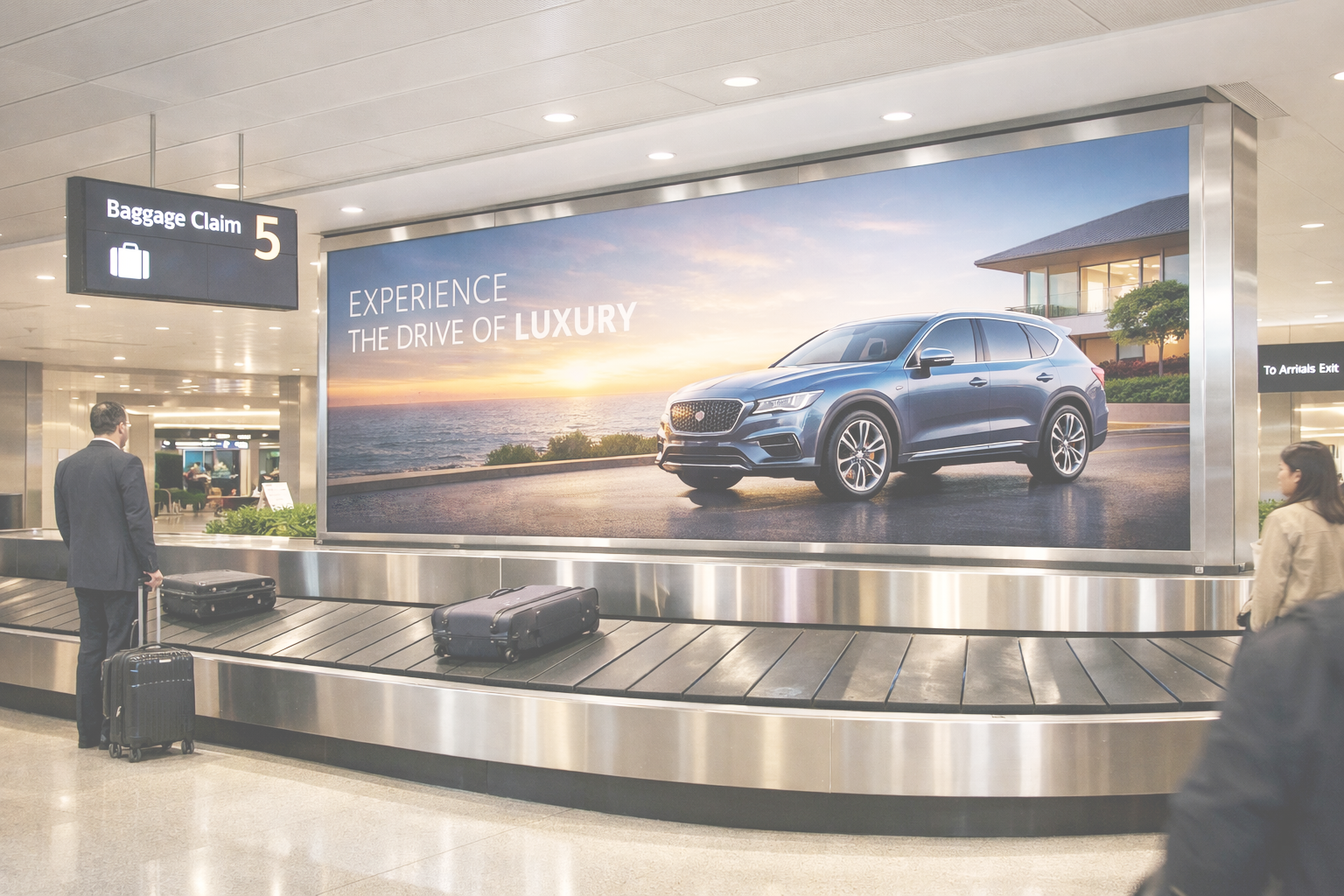
It’s Not Just Where You Advertise - It’s How Fast You Execute
We combine local insight with fast rollout to deliver results for you, now.
Talk to an ExpertAudience and Cultural Intelligence
Top 2 Languages:
- English: The national language of Australia and the travel language of SYD's dominant outbound and inbound passenger groups — Australian, British, New Zealand, and American travellers. English-language campaigns at SYD reach the full domestic professional and premium leisure audience and the three largest source markets for inbound premium tourism without exception. Australia's own Chinese, Indian, and Korean communities are predominantly bilingual with strong English literacy, making English the commercially widest-reach language at SYD by a significant margin.
- Mandarin Chinese: Reflecting the structural dominance of Chinese passport holders as SYD's largest non-English-speaking international market — consistently the highest-growth nationality group across 2024 and 2025, and the dominant force in Sydney's international education and real estate investment ecosystem — Mandarin-language creative at SYD achieves disproportionate brand resonance with both the inbound Chinese tourist and student parent audience and the resident Chinese-Australian HNWI community whose outbound travel generates significant premium leisure spending.
Major Traveller Nationalities: New Zealand is the dominant inbound nationality given the trans-Tasman relationship — the world's most highly integrated bilateral aviation market. Chinese passport holders represent the fastest-growing and highest-spending inbound nationality across education, tourism, and property investment categories. British and Irish travellers surged 26.1% in Q3 2025, anchored by long-term lifestyle migration and strong cultural and family ties. South Korean passport holders remain 22% above pre-pandemic levels and represent a fast-growing premium tourism and student market. Indian professionals and families are growing consistently above 2019 levels, reflecting the strengthening Australia-India relationship and the emergence of skilled Indian migration as a priority pathway. Japanese visitors are recovering well, with a record-breaking 855,000 Japan-Australia passenger movements in the year to March 2025. Filipino travellers are a significant and growing community segment generating family visit, remittance, and business travel.
Religion — Advertiser Intelligence:
- Christianity (dominant among Australian, New Zealand, British, Irish, Filipino, and South Korean communities): The Christian majority of SYD's domestic and several major inbound markets shapes both the seasonal leisure travel pattern — Christmas and Easter school holidays generate the highest-volume leisure travel windows — and the community event calendar that drives domestic premium spending. The December-January Christmas window at SYD is the airport's single highest-commercial-intensity domestic leisure period.
- Buddhism and secular traditions (dominant among Chinese, Vietnamese, and Japanese communities):Chinese Spring Festival (January-February) and Golden Week (October) generate the two most concentrated inbound Chinese travel surges at SYD. These windows are commercially critical for luxury retail, international education, and property investment brands targeting the Chinese-Australian and inbound Chinese market. Chinese-Australian families celebrating Spring Festival with relatives visiting from China generate some of the highest hospitality and retail spending of any single cultural event in Sydney's annual calendar.
- Hinduism and Sikhism (growing among Indian community): Diwali (October-November) and related Hindu festival periods generate incremental Indian-Australian family travel through SYD, with inbound family visits from India generating significant premium hospitality and retail spending that Indian-origin premium brands can target effectively.
Behavioral Insight: The SYD passenger base is perhaps the most commercially heterogeneous of any major airport in the Asia-Pacific — spanning Australian corporate executives whose purchasing behaviour mirrors that of senior British or American professionals, Chinese-Australian families whose education and property investment decisions are shaped by both Australian and Chinese cultural purchasing logics, South Korean millennials whose travel is defined by K-beauty, technology, and premium lifestyle consumption, and Indian professionals whose financial services and career development priorities make them among Australia's fastest-growing premium financial services audience. This diversity demands campaign intelligence that goes beyond single-message creative — Masscom Global structures SYD campaigns that identify the highest-return audience windows for each advertiser category and calibrates creative, placement, and timing to the specific commercial intent each major nationality group brings to the terminal.
Outbound Wealth and Investment Intelligence
SYD's outbound passenger is one of the world's most commercially valuable aviation audiences for international brands. Australia's 1.9 million millionaires — approximately 10% of adults — are predominantly concentrated in Sydney and Melbourne, and their international travel generates purchasing decisions across financial services, real estate, luxury goods, education, and lifestyle categories whose combined value is among the highest of any national outbound travel market.
Outbound Real Estate Investment: Australian HNWIs invest internationally across a range of markets — London and southern England for the significant Anglo-Australian community seeking UK property assets; Bali and Lombok for lifestyle real estate at accessible price points; Southeast Asia (Thailand, Vietnam, Malaysia) for growth-oriented investment; and New Zealand for cross-Tasman asset diversification. The outbound SYD premium traveller departing for a European holiday or an Asian business trip frequently combines leisure with active property investment research, and the departure terminal at SYD is one of the most commercially productive environments in Asia-Pacific aviation for international real estate developers marketing to Australian buyers.
Outbound Financial Services and Investment: Australia's HNWI financial behaviour is distinctive globally. The compulsory superannuation system — which has accumulated over A$3.9 trillion in assets — creates a nation where virtually every adult has meaningful investment exposure and where HNWI individuals manage Self-Managed Superannuation Funds (SMSFs) with investable assets regularly exceeding A$2 million. The SYD outbound business traveller frequently includes in their portfolio a mix of direct shares, property trusts, SMSFs, and alternative investments. Premium financial technology platforms, private banking services, and wealth management offerings that understand this distinctly Australian financial architecture find at SYD's premium business traveller audience a uniquely pre-qualified and financially literate prospect base.
Inbound Asian Capital Flows: The commercially most significant inbound wealth signal at SYD is the Chinese investor and student parent whose decisions around Sydney property, Australian education, and permanent residency represent multi-year, multi-hundred-thousand-dollar commitments. Chinese investors remain the dominant foreign presence in Sydney's property market, with Inner West, Eastern Suburbs, and North Shore suburbs all showing sustained demand from Chinese capital. South Korean and Indian professionals arriving at SYD are increasingly active in similar segments — education-led property purchasing, business visa pathways, and skilled migration — and brands that engage these audiences at the arrival terminal intercept commercially consequential purchasing decisions at their most emotionally charged moment: the arrival in Australia.
Strategic Implication for Advertisers: SYD's dual commercial strength — simultaneously the gateway for Australia's outbound HNWI wealth and the primary channel for inbound Asian affluent capital flows — means that the airport's most commercially productive advertising strategy operates on two distinct tracks. Outbound-facing campaigns targeting Australian HNWIs in the departure and check-in environment should be calibrated to premium lifestyle, financial services, and international real estate categories whose purchase intent is activated by the aspiration of international travel. Inbound-facing campaigns in the arrivals and immigration zones should be calibrated to Australian property, education, financial migration, and premium lifestyle categories whose purchase intent is activated by the aspiration of Australian arrival. Masscom Global structures SYD campaigns to activate both tracks simultaneously, ensuring that each advertising placement captures the full commercial arc of the airport's bilateral passenger flow.
Airport Infrastructure and Premium Indicators
Terminals:
- T1 International Terminal: The sole international terminal handling all 43 international destinations and all 17.17 million international passengers in 2025. T1's two piers — Pier B serving Qantas, Oneworld, and SkyTeam; Pier C serving Virgin Australia and Star Alliance — and its 25 boarding gates create a concentrated international passenger environment with the full arc of international premium airline lounges operating at a world-class level. T1 hosts eight premium airline lounges including two Qantas lounges (First and Business), Singapore Airlines SilverKris, Emirates, Air New Zealand, SkyTeam, American Express, and The House — a lounge density that confirms the commercial premium orientation of the terminal's international passenger base. T1 also hosts a dedicated duty-free zone, high-end retail concessions, and a diverse food and beverage offer calibrated to its international audience.
- T2 Domestic Terminal: Australia's most active general domestic terminal, hosting Virgin Australia, Jetstar, Rex, and regional carriers, currently undergoing a major transformation with significant upgrades to retail, F&B, and passenger experience. The T2 transformation announced in 2025 will significantly elevate the terminal's commercial environment for the domestic premium leisure and business audience.
- T3 Domestic Terminal (Qantas): The primary Qantas domestic terminal and the most commercially premium domestic aviation environment in Australia. The Qantas Business Lounge and Qantas Club at T3 host Australia's most concentrated domestic corporate traveller audience — the backbone of Qantas's Platinum and Gold frequent flyer programme, representing Australian corporate and professional leadership whose brand loyalty and premium purchasing intent is among the strongest in domestic aviation.
Premium Indicators:
- Fifteen new CT scanner security lanes at T1 International are being progressively installed, with eleven operational by Q3 2025, increasing screening capacity by nearly 30% and allowing passengers to keep laptops, liquids, and aerosols in carry-on bags — a world-leading security experience innovation that elevates T1's passenger satisfaction ratings and creates a more positive pre-departure mindset for advertising engagement.
- The Sydney Gateway motorway — completed in mid-2024 — provides a direct motorway link from SYD's terminals to Sydney's CBD, Parramatta, and the south-western suburbs, dramatically improving access from the western catchment and reducing journey time uncertainty for all SYD passengers.
- The Airport Link train — 13 minutes from T1 to Sydney Central Station — provides one of the fastest major airport rail connections in the Asia-Pacific region, connecting the airport directly to Sydney's CBD, North Shore, and Inner West in a seamless public transport journey that is uniquely convenient for a city of Sydney's scale.
- SYD Transfer — opened in November 2025 — is a new consolidated domestic transfer facility that reduces connection times between T1 International and domestic flights, eliminating the previous inefficiency of international-to-domestic transfers and creating a more seamless passenger experience for the growing international transit audience.
- Nine airline lounges at T1 International — the highest lounge density of any Australian airport terminal — confirm the premium commercial intent of the international departure population and signal that the terminal's departing passengers are disproportionately frequent flyers, corporate travellers, and leisure premium consumers whose brand receptivity and purchasing intent are elevated above the general public.
Forward-Looking Signal: Western Sydney International Airport (WSI) — opening in late 2026, 44 kilometres from the CBD — will begin with domestic flights from Qantas and Jetstar and a curfew-free operation that may attract some Gulf and night-time international departures. However, the structural advantages that preserve SYD's primacy are durable: its proximity to the Sydney CBD (8 km), its established international airline network (43 international destinations, all major global carriers), its premium lounge infrastructure built over decades, and the inertia of corporate travel arrangements that will not shift rapidly. Brands investing in SYD advertising now are investing in an airport whose premium international audience will be reinforced, not reduced, by the opening of a secondary curfew-free facility serving a geographically distinct western catchment. Masscom Global advises clients that SYD's premium commercial window is not diminishing — it is the window that WSI will not capture, because the global premium brand audience that uses Qantas First, Emirates Business, Singapore Airlines Business, and Cathay Pacific First will arrive at and depart from T1 at Mascot for the foreseeable future.
Airline and Route Intelligence
Top Airlines at SYD: Qantas (primary hub, 4,500+ monthly flights, T3 domestic, T1 international), Virgin Australia (hub, T2 domestic, T1 international), Jetstar (base, T2 domestic), Emirates (T1, daily A380 to Dubai), Singapore Airlines (T1, multiple daily to Singapore), Cathay Pacific (T1, multiple daily to Hong Kong), Air New Zealand (T1, multiple daily to Auckland and Christchurch), British Airways (T1, daily to London Heathrow), United Airlines (T1, daily to Los Angeles and San Francisco), Delta Air Lines (T1, Los Angeles), Turkish Airlines (T1, launched November 2024, expanded to 5x weekly by mid-2025, then daily from December 2025), Qatar Airways with Virgin Australia (T1, launched Sydney-Doha June 2025, up to 70 weekly flights between Australia and Doha), China Southern Airlines (T1, expanding to 3 daily Guangzhou flights), Malaysia Airlines (T1, new A330neo on Sydney-Kuala Lumpur), Etihad Airways (T1, expanded to 10x weekly from July 2025), Japan Airlines, ANA, Korean Air, Asiana, Philippine Airlines, Fiji Airways, Air Canada, Hawaiian Airlines, Air Tahiti Nui, Air Vanuatu
Key New and Expanded Routes (2024-2025):
- Turkish Airlines (Istanbul via Kuala Lumpur, launched November 2024): SYD's most significant new long-haul route in years, directly connecting Sydney to Istanbul and onward to Europe, Middle East, and Africa. Turkish Airlines expanded to 5x weekly by mid-2025 and daily from December 2025 — a major new connectivity channel bringing European and Middle Eastern premium passengers to Sydney.
- Virgin Australia and Qatar Airways (Sydney-Doha, launched June 2025): Up to 70 weekly flights between Australia and Doha, delivering expanded one-stop connectivity to the United Kingdom and Europe through Qatar's Hamad International Hub. This partnership dramatically increases premium cabin capacity on the Sydney-Europe corridor.
- Hong Kong Airlines (announced June 2025): A new carrier entering the Sydney-Hong Kong market, expanding seat capacity and competitive pricing on one of Australia's most commercially significant Asian aviation corridors.
- China Southern Airlines expansion (3 daily Guangzhou flights): The highest frequency ever operated on this route — confirming the structural depth of Chinese demand for Sydney and creating the most comprehensive China-Sydney seat capacity in airport history.
- Etihad Airways (expanded to 10x weekly, July 2025): A 20% lift in premium cabin capacity on the Sydney-Abu Dhabi route, reflecting Etihad's conviction in the premium Sydney-Middle East travel market.
Wealth Corridor Signal: SYD's evolving airline map is a commercial intelligence document for advertisers. The Turkish Airlines launch confirms that Istanbul — and the wider Middle East-Africa-Europe transit corridor it unlocks — is now a viable inbound source for Sydney-bound premium travellers who were previously routing via Dubai or Singapore. The Qatar Airways partnership with Virgin Australia opens one of the most commercially significant new premium cabin corridors in Australian aviation, potentially reorienting the Sydney-London business class market. China Southern's three-daily expansion is the clearest single signal of the structural depth of Chinese premium travel demand for Sydney. The Etihad premium cabin expansion confirms the Middle East-to-Australia corridor's premium commercial importance. Every new route at SYD is a commercial statement about the nationalities, income levels, and purchasing profiles that are being drawn toward Sydney — and each one is an audience intelligence signal that Masscom Global translates into campaign targeting precision.
Media Environment at the Airport
- T1 International's single-terminal design for all 17.17 million annual international passengers creates a high-concentration advertising environment where no international passenger avoids the terminal's commercial zones. Check-in, security, immigration, duty-free, gate lounge, and arrivals are all contained within a contiguous terminal building whose commercial media placements achieve universal international passenger exposure.
- The T1 departure hall's duty-free and retail zone is among the most commercially productive in Asia-Pacific airport retailing — a purpose-built premium shopping environment where international departing passengers make pre-flight purchases in a category span from fragrances and cosmetics to luxury watches, jewellery, spirits, and electronics. Brand presence in the retail adjacency zone at T1 captures passengers at the moment of maximum pre-flight purchasing activation.
- The premium lounge cluster — nine airline lounges including Qantas First, Qantas Business, Singapore Airlines SilverKris, Emirates, Air New Zealand, SkyTeam, and American Express — concentrates SYD's highest-value passengers in defined pre-departure environments that are adjacent to specific gate zones and accessible to advertisers through lounge sponsorship and premium digital display opportunities within the lounge precincts.
- The arrivals hall at T1 captures inbound international passengers from all 43 international destinations at the moment of Australian arrival — a commercially and emotionally charged state where brand impressions around Australian real estate, education, tourism, and premium lifestyle categories are processed with maximum openness. Arrivals zone advertising at SYD captures the inbound Chinese, South Korean, Indian, and British travellers whose purchasing decisions around Australia-specific categories are most primed at the moment they physically arrive.
- Masscom Global's access to SYD's terminal media environment spans the full passenger journey — check-in zone, security pre-boarding, airside retail, gate lounges, and arrivals hall — enabling campaign placements that track the passenger through their complete terminal experience rather than intercepting them at a single touchpoint.
Strategic Advertising Fit
Best Fit:
- Premium financial services and private banking: Sydney's 147,000 resident HNWIs, its A$3.9 trillion superannuation system, and its dominance as Australia's financial services capital make the SYD business traveller one of the most financially sophisticated and commercially receptive audiences in Asia-Pacific aviation for premium banking, wealth management, and investment product brands.
- International real estate: Chinese, South Korean, and Indian inbound passengers whose property investment interest in Australia is structurally motivated by education, migration, and asset diversification; and outbound Australian HNWIs whose international property aspirations span Bali, Southeast Asia, Europe, and the Pacific. SYD is the single most productive Australian airport for international real estate advertising across both inbound and outbound orientations.
- Premium automotive: Brands including Mercedes-Benz, BMW, Audi, Porsche, Lexus, and Land Rover find at SYD their largest single Australian captive audience of corporate executives and senior professionals whose next vehicle purchase is in the premium or ultra-premium segment. Australia's premium automotive market is concentrated in Sydney and its airport captures the purchasing decision segment at peak aspiration.
- International education and student services: The inbound Chinese, Indian, South Korean, and Southeast Asian parent audience whose children are enrolling in Australian universities — generating multi-year education fee commitments and associated accommodation, financial migration, and lifestyle spending — is commercially accessible through SYD's arrivals and immigration zones. Premium education-adjacent services including student accommodation, education finance, and migration advisory services find at SYD arrivals a uniquely pre-qualified inbound decision-making audience.
- Luxury goods and premium retail: Qantas's international departure passengers are among Australia's most confirmed premium consumers. The duty-free and retail zone at T1 captures outbound Australians and inbound international visitors at the moment of maximum retail activation — a commercial environment where premium fragrances, spirits, watches, and accessories achieve conversion rates well above non-airport retail benchmarks.
- Premium travel and luxury hospitality: International hotel groups, premium cruise lines, luxury tour operators, and aspirational destination brands find at SYD a departure audience whose next international experience is being mentally built during the dwell time between check-in and boarding. The T1 departure lounge is a high-quality brand environment where luxury travel advertising is contextually appropriate and well-received.
- Health, wellness, and premium lifestyle: Australia's HNWI community is among the world's most health-conscious affluent demographics — superannuation conversations, life insurance, premium health insurance, and allied health and wellness services generate strong brand recall among SYD's domestic business travel audience whose professional lifestyle demands premium self-care solutions.
Brand Alignment at a Glance:
| Category | Fit |
|---|---|
| Premium financial services and private banking | Exceptional |
| International real estate (inbound and outbound) | Exceptional |
| Premium automotive | Exceptional |
| International education and student services | Exceptional |
| Luxury goods and premium retail | Strong |
| Premium travel and luxury hospitality | Strong |
| Health, wellness, and premium lifestyle | Strong |
| Budget consumer products and discount services | Poor fit |
| Domestically restricted services (non-NSW) | Moderate fit |
Who Should Not Advertise Here:
- Budget and discount consumer brands: SYD's international terminal is disproportionately weighted toward premium and business class passengers whose purchasing behaviour is defined by quality and brand recognition rather than price sensitivity. Budget brand campaigns create dissonance within a terminal environment whose overall commercial positioning is premium.
- Single-market domestic services: Brands whose service area is restricted to specific Australian states or cities will find limited commercial return in a terminal serving 43 international destinations and a national domestic network. Services available across Australia and internationally achieve the strongest conversion from SYD's nationally and internationally diverse passenger base.
Event and Seasonality Analysis
- Event Strength: High (major events including New Year's Eve, Vivid Sydney, international rugby and cricket, Lions tours, and Chinese Golden Week generate discrete commercial traffic spikes throughout the year)
- Seasonality Strength: High (December-January Australian summer and school holiday season drives the year's highest volume; July winter school holidays create a mid-year secondary peak; year-round international business travel provides consistent premium base traffic)
- Traffic Pattern: Year-Round Premium with Dual Summer-Winter Peaks (Australian summer October-April dominant; July winter school holiday secondary peak; sustained year-round international business base)
Strategic Implication: SYD's commercial calendar rewards advertisers who invest year-round while concentrating premium creative investment in the December-January summer departure window — Australia's single most commercially intensive leisure travel period — and the winter July school holiday window. The Chinese community's Spring Festival (January-February) and Golden Week (October) create two additional commercially significant spikes within the already-elevated primary season that luxury retail, property, and premium lifestyle brands should specifically activate. The school holiday windows — December-January, April, July, and September — represent the most predictable premium family leisure travel surges and are the most commercially productive windows for international real estate, premium travel, and luxury goods advertisers targeting the outbound Australian HNWI family segment. Masscom Global builds SYD campaign architectures that capture the full-year premium business base while amplifying investment during the school holiday peaks and cultural event windows that produce the airport's highest per-passenger commercial intensity.
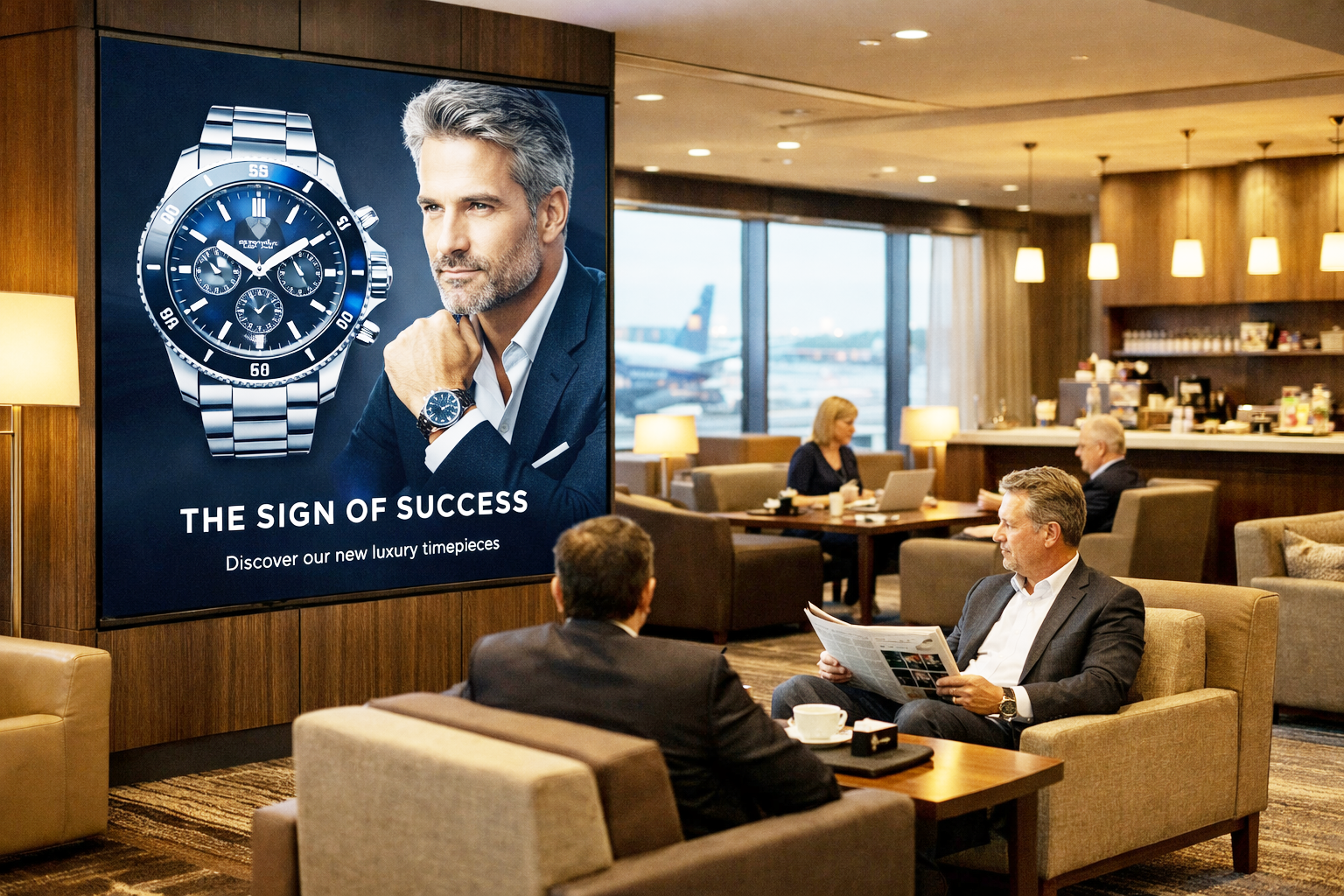
Poor Placement and Delays Affect Airport Campaigns
We help you move faster, access better inventory, and get it right now.
Talk to an ExpertFinal Strategic Verdict
Sydney Kingsford Smith Airport is Australia's most commercially significant advertising environment — the sole major international gateway for a city of 147,000 millionaires projected to enter the world's top five wealthiest by 2040, handling a record 17.17 million international passengers in 2025 and contributing almost A$40 billion annually to the national economy. SYD's commercial strength is not defined by any single audience characteristic. It is defined by the extraordinary convergence of three commercially distinct and equally valuable audiences that share one terminal: Australia's outbound HNWI professional class whose premium financial, real estate, and lifestyle purchasing intent is activated by international travel; the inbound Asian affluent visitor and diaspora family whose multi-year investment decisions around Australian education, property, and migration are processed in their most emotionally open state on arrival at T1; and the vast premium domestic business community whose Qantas and Virgin frequent flyer loyalty, corporate travel mandates, and professional aspiration make T3 and T2 commercially productive even without international context. For brands in premium financial services, international real estate, luxury goods, premium automotive, international education, and premium travel and hospitality, SYD is the unavoidable first Australian airport investment — the one gateway through which the greatest number of Australia's most commercially consequential passengers unavoidably pass. Masscom Global brings to this extraordinary environment the audience intelligence, inventory access, and campaign execution precision that ensures every placement performs at the level Australia's premier international gateway demands.
About Masscom Global
Masscom Global is a premium international airport advertising and media buying agency operating across 140 countries. With deep expertise in airport OOH, premium publications, and high-net-worth audience targeting, Masscom helps brands reach the world's most valuable travellers at the moments that matter most. For advertising packages, media rates, and campaign planning at Sydney Kingsford Smith Airport and airports across the globe, contact Masscom Global today.
Frequently Asked Questions
How much does advertising cost at Sydney Kingsford Smith Airport?
Advertising costs at SYD vary based on format, placement zone — T1 International, T2 Domestic, or T3 Qantas Domestic — campaign duration, and seasonal timing. T1 International placements command premium rates reflecting the terminal's 17.17 million annual international passengers and its premium-weighted airline and lounge environment. The December-January summer peak and July winter school holiday window attract the strongest competition for premium inventory. Masscom Global provides current rate cards, format recommendations calibrated to campaign objectives, and negotiated placements designed to maximise ROI across SYD's full terminal portfolio. Contact Masscom for a tailored investment proposal.
Who are the passengers at Sydney Kingsford Smith Airport?
SYD's passenger base is the most commercially diverse and economically significant of any Australian airport. International passengers — 17.17 million in 2025 — include Chinese tourists and student families (fastest-growing nationality, 12.2% growth in Q4 2025), New Zealanders (largest inbound nationality by volume), British and Irish travellers (26.1% surge in Q3 2025), South Koreans (15.3% growth in Q4 2025), Indians, Japanese, Filipinos, and Americans. The domestic base of 25 million includes Australia's corporate leadership, senior professional class, and the premium leisure families of Sydney's 147,000 HNWI resident community.
Is Sydney Airport good for luxury brand advertising?
SYD is the premier luxury brand advertising environment in Australia. The T1 International terminal's nine premium airline lounges, its comprehensive duty-free retail zone, and its premium-airline-weighted passenger base — including Qantas First and Business, Emirates Business, Singapore Airlines Business, and Cathay Pacific First passengers — create a brand environment calibrated to Australia's most commercially sophisticated luxury consumers. Premium international brands consistently achieve strong recall and conversion among SYD's international departure audience.
What are the best advertising periods at Sydney Kingsford Smith Airport?
The December-January Australian summer school holiday window is the year's peak commercial period for outbound Australian premium family leisure travel. July winter school holidays provide a mid-year peak. The Chinese Spring Festival (January-February) and Golden Week (October) create concentrated high-spending inbound Chinese audience windows for real estate, luxury retail, and education brands. Year-round international business travel from Australia's financial and corporate sector provides consistent premium base traffic without seasonal variation.
Can international real estate developers advertise at Sydney Airport?
SYD is one of the most commercially productive international real estate advertising environments in Asia-Pacific aviation. The inbound Chinese, South Korean, and Indian audiences whose property investment intent in Australia is structurally motivated by education migration and asset diversification are accessible through the T1 arrivals zone. The outbound Australian HNWI audience whose international property aspirations span Europe, Southeast Asia, and the Pacific is accessible through the T1 departure zone. Masscom Global structures real estate campaigns at SYD to capture both flows simultaneously, maximising conversion across the bilateral property investment audience.
How does Western Sydney International Airport affect advertising at SYD?
WSI's planned opening in late 2026 will add domestic aviation capacity and potentially some night-time international services for curfew-sensitive routes. However, SYD's structural advantages — its 8km proximity to the Sydney CBD, its 43 established international destinations, its nine premium airline lounges, and its Qantas hub status — are not replicated by WSI. The premium international business and leisure audience that advertisers target at SYD will remain concentrated at T1 at Mascot for the foreseeable future. Masscom Global advises clients to maintain SYD as their primary Australian airport investment while monitoring WSI's route development for future supplementary opportunities.
How does Masscom Global help brands advertise at Sydney Kingsford Smith Airport?
Masscom Global manages the full campaign lifecycle at SYD — from strategic audience segmentation and seasonal timing planning through to inventory negotiation across T1, T2, and T3, creative format compliance with terminal specifications, placement execution across arrivals, departures, and retail zones, and campaign performance monitoring by terminal zone and passenger nationality segment. With deep knowledge of SYD's bilateral commercial dynamics, its event-driven traffic spikes, and the specific purchasing psychology of both outbound Australian HNWIs and inbound Asian affluent visitors, Masscom delivers the audience precision and execution quality that advertising at Australia's premier international gateway demands. Contact Masscom Global today to begin planning your SYD campaign.