

Airport at a Glance
| Field | Detail |
|---|---|
| Airport | Riga International Airport (RIX Rīgas lidosta) |
| IATA Code | RIX |
| Country | Latvia |
| City | Riga (capital) |
| Annual Passengers | 7.12 million (2024); +7.3% year-on-year; record November and December 2024 (+17% and +20% vs prior year) |
| Primary Audience | Latvian diaspora returnees (UK, Ireland, Germany), business travellers, European leisure tourists, fintech and tech professionals |
| Peak Advertising Season | June to August (summer, Jāņi); December (Christmas diaspora return) |
| Audience Tier | Tier 1 |
| Best Fit Categories | Financial services and fintech, Real estate, Consumer retail and fashion, Airlines and travel, Technology and SaaS, Defence and NATO B2B, Education, Premium hospitality |
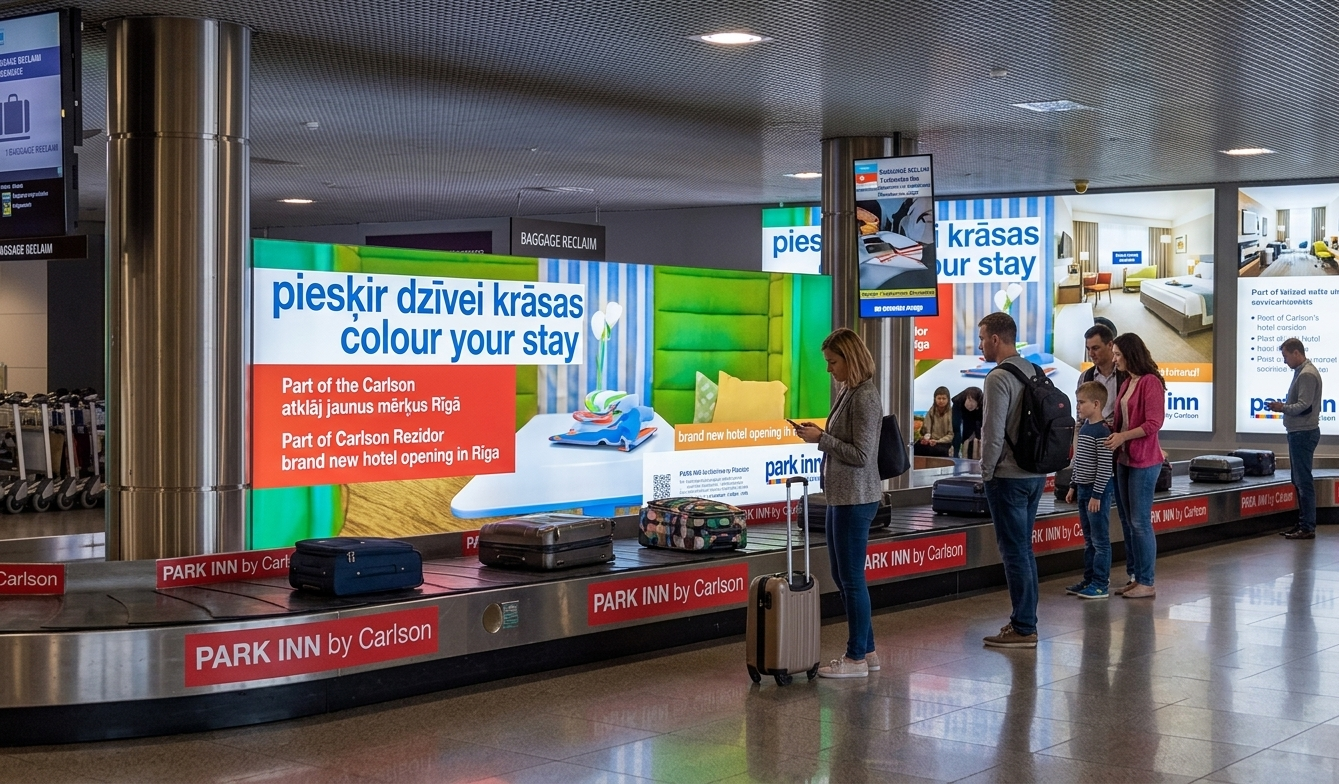
Riga International Airport is the largest and most connected airport in the Baltic states, handling 7.12 million passengers in 2024 — a 7.3% increase on an already strong prior year — and serving 107 direct destinations across Europe, the Middle East, and Central Asia. RIX is the hub for airBaltic, the dominant Baltic carrier commanding 62% of the airport's scheduled seat capacity, and the base for Ryanair's Baltic operations with a 23% capacity share. A Norwegian Air Shuttle base opened in 2024. The terminal operated in November and December 2024 at 17% and 20% above 2023 levels respectively, confirming not a seasonal recovery but a structural demand acceleration. Construction of a new terminal begins in 2025, designed to handle 12 million passengers annually by 2036, accompanied by Rail Baltica integration and the RIX Airport City development. For advertisers seeking access to a high-mobility, commercially sophisticated Northern European audience, RIX is the Baltic's most precisely positioned gateway at the exact inflection point between its current scale and an imminent step change in capacity.
What makes RIX commercially distinctive is the extraordinary convergence of audiences it serves simultaneously. The airport is the primary return corridor for an estimated 255,000 Latvian citizens living abroad — over 39% in the United Kingdom, nearly 10% in Ireland, and nearly 11% in Germany — whose return visits generate the most commercially engaged travel segment in the Baltic region: diaspora returnees carrying UK and Irish salaries, European savings, and strong purchasing intent for property, financial products, and consumer goods in their home market. The same terminal handles the business travel of Latvia's rapidly growing fintech and tech sectors — 149 fintech firms generating €508 million in revenue, over 600 active tech startups, and 35,000 skilled IT professionals — whose international reach connects Riga to London, Amsterdam, Berlin, and beyond. Add the European leisure tourist arriving at a UNESCO World Heritage Old Town and one of Northern Europe's most architecturally distinctive capitals, and RIX assembles a commercial audience with few equivalents in an airport of comparable size.


Advertising Value Snapshot
- Passenger scale: 7.12 million passengers in 2024; +7.3% year-on-year; 107 direct destinations (September 2024); 11 airlines in winter season offering 85+ destinations; new terminal construction commencing 2025 for 12 million passenger capacity by 2036
- Traveller type: Latvian diaspora returnees from UK/Ireland/Germany, European business travellers, fintech and tech professionals, Eastern European transit passengers, leisure tourists visiting Riga and the Baltic states
- Airport classification: Tier 1 — Baltic states' dominant aviation hub; 12th-busiest airport in post-Soviet states; 77th-busiest in Europe; hub for airBaltic, Ryanair base, Norwegian base
- Commercial positioning: RIX functions as the primary air gateway for Latvia's 1.86 million residents, the transit hub for Baltic regional traffic, and the connecting node for Central Asian passengers routing through Riga via Uzbekistan Airways and Turkish Airlines
- Wealth corridor signal: The dominant RIX route destinations — London, Helsinki, Oslo, Stockholm, Tallinn, Amsterdam, and Dublin — map precisely to the cities where Latvia's most economically productive diaspora and its international business partners are concentrated; these are not leisure routes but wealth-transfer corridors that determine the commercial behaviour of the returning audience at RIX
- Advertising opportunity: Masscom Global provides complete access to RIX's advertising inventory at the moment the airport is preparing for its most significant physical expansion in decades; brands that establish presence now benefit from current regional pricing while reaching an audience whose scale and purchasing sophistication will increase substantially as the new terminal opens and Rail Baltica delivers rail connectivity from city centre to airport within the concession period
Airport Advertising is Complex to Get Right
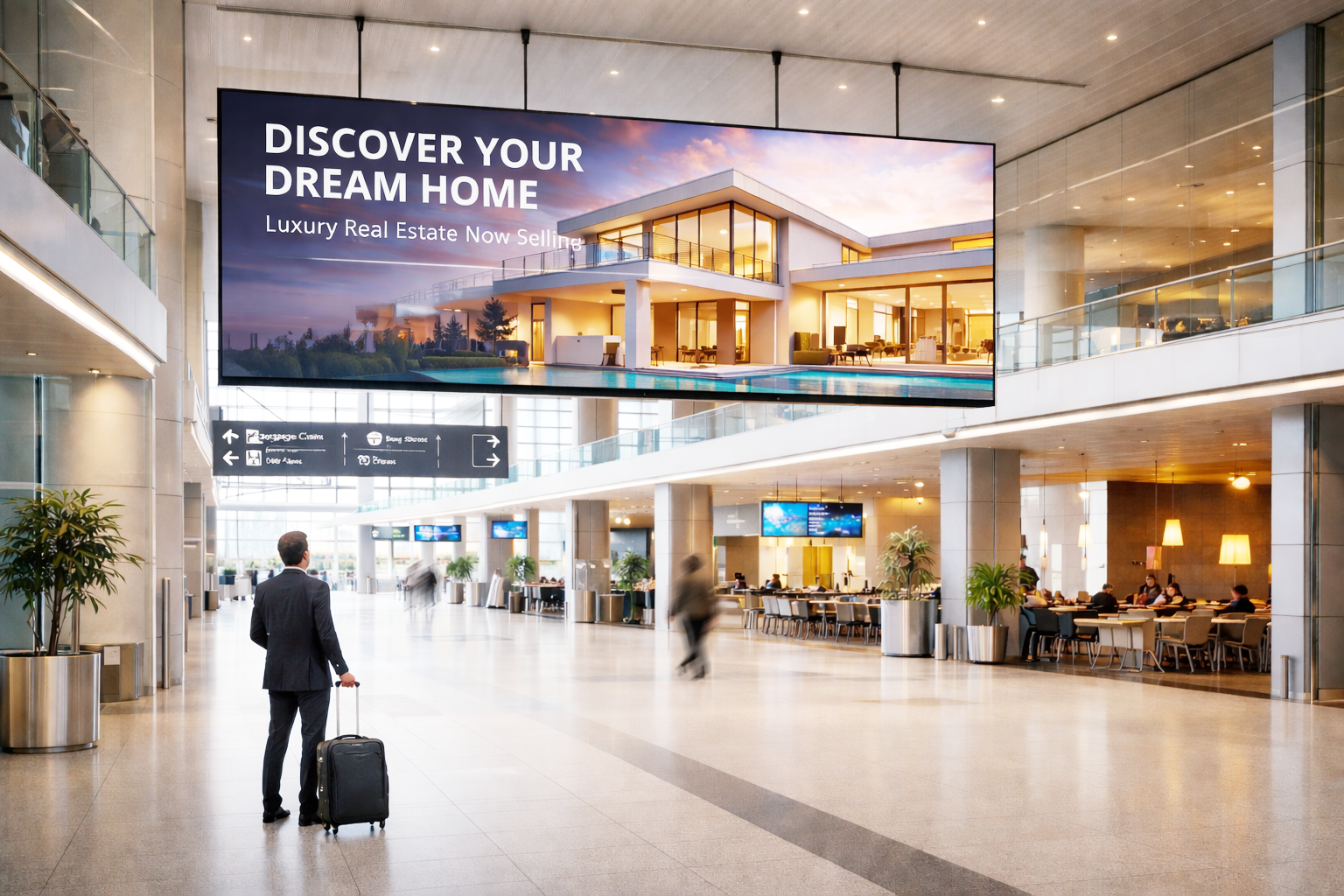
We help you execute faster, with proven results and local insight most planners lack starting now.
Talk to an ExpertCatchment Area and Economic Drivers
Top 10 Cities and Communities within 150 km — Marketer Intelligence
- Riga (capital, adjacent): Latvia's capital and economic engine, home to 605,000 people and generating the dominant share of the national economy through finance, technology, logistics, and trade; the city's professional class — IT workers, bankers, lawyers, and government officials — constitutes RIX's primary domestic business travel audience, and its growing population of returning diaspora and incoming international tech talent is reshaping the city's consumer profile toward Western European spending expectations
- Jūrmala (~30 km west): The Baltic's premier beach resort city, population approximately 47,000, historically associated with Soviet-era elites and now firmly reoriented toward Latvian and international affluence; Jūrmala's luxury villa market, premium wellness tourism, and exclusive resort economy generate an HNW residential and visitor audience whose access to RIX defines the resort's international connectivity; real estate, hospitality, and luxury lifestyle brands should treat Jūrmala as a direct extension of the RIX catchment's wealthiest segment
- Jelgava (~40 km south): Zemgale's capital and a significant industrial and agricultural city, home to Latvia University of Life Sciences and Technology and a manufacturing base including metal processing and food production; its business owners and university professionals travel regularly through RIX for European business and educational connections
- Ogre (~35 km east): A rapidly growing commuter municipality in the Riga metropolitan zone, recording the fourth-largest population growth rate in Latvia in 2023; Ogre's expanding residential base of Riga professionals who have relocated to the suburban corridor represents a mid-to-upper-income audience using RIX for both business and leisure travel
- Sigulda (~50 km northeast): Latvia's "Switzerland" — a scenic castle town in the Gauja National Park whose dramatic sandstone cliffs, medieval ruins, and adventure sports infrastructure draw domestic and international tourists; its proximity to RIX makes it a primary day-trip and short-break destination for Riga's urban professional class and inbound European visitors; outdoor and adventure lifestyle brands find their most receptive domestic audience here
- Valmiera (~90 km north): Vidzeme's primary commercial city and a growing manufacturing hub with significant food and drink production; home to Valmiermuiža Brewery, one of Latvia's most celebrated craft beer brands, and an increasingly active business community; Valmiera professionals travel through RIX for Nordic and European business connections on routes to Helsinki, Stockholm, and Oslo
- Cēsis (~90 km northeast): A historically significant medieval town, home to Latvia's most visited castle ruins, with a rapidly growing reputation as a premium lifestyle destination; Cēsis attracts returning diaspora, European urban escapees, and Riga's creative professional class who are purchasing properties and establishing businesses in its growing boutique economy; real estate and premium hospitality brands find a culturally sophisticated and commercially active audience here
- Pärnu, Estonia (~130 km north): Estonia's summer capital and a major Baltic resort destination; Estonian business travellers and leisure visitors from Pärnu and southern Estonia regularly use RIX as their international gateway given RIX's superior route network compared to Tallinn; this cross-border audience adds an Estonian commercial dimension to RIX's catchment that is commercially significant for brands seeking pan-Baltic market reach
- Tukums (~60 km west): A Kurzeme gateway city with agricultural and light industrial economy; its commercial community uses RIX for both business and seasonal leisure travel; the road corridor connecting Jūrmala and Tukums generates a stream of high-value residential and business travellers through the airport's catchment zone
- Saulkrasti (~50 km north): A Rīga district coastal resort community on the Gulf of Riga that registered population growth in 2023 — rare in Latvia's demographic context; its expanding weekend villa and wellness tourism economy draws affluent Riga residents and inbound European visitors who access the destination through RIX
NRI and Diaspora Intelligence
Latvia's diaspora is commercially one of the most significant in all of Northern Europe relative to the size of the origin country. As of mid-2025, approximately 255,620 Latvian citizens were registered as living abroad — representing approximately 14% of the country's total population — with 39.5% in the United Kingdom, 10.9% in Germany, 9.5% in Ireland, and 7.1% in the United States. The UK alone hosts over 100,000 Latvian citizens, many of whom came as labour migrants in the years following EU accession in 2004. These diaspora members are not economically passive — they are working professionals in the UK's healthcare system, construction industry, IT sector, and service economy who earn in sterling and euros, maintain active family and property connections in Latvia, and return through RIX multiple times per year carrying purchasing intent that is shaped by UK and Irish consumption standards. The commercial implications are profound: a Latvian NHS worker in London or a construction professional in Dublin arriving at RIX is carrying Western European income into a Latvian cost environment, creating a spending differential that makes them one of the highest-value consumer audiences in the Baltic states. For international brands in real estate, financial products, vehicles, consumer electronics, and retail, RIX's diaspora return passenger is a uniquely concentrated target who needs no audience development — they arrive pre-qualified and pre-motivated.
Economic Importance
Latvia's economy is a study in contrasts: geographically small, demographically declining, but intellectually and commercially punching well above its weight. The ICT sector accounts for 4% of GDP, employing over 35,000 skilled professionals across 6,200 companies. The fintech sector alone generated €508 million in revenue in 2024, up 25% from 2022, with net profit more than doubling to €106 million. Active investment projects jumped from just over €4 billion in 2023 to approximately €11 billion in 2024, driven substantially by Latvia's five Special Economic Zones offering corporate income tax rebates of up to 80%. The Riga Free Port remains a major logistics node. EU funds from the NextGenerationEU programme are flowing into digital infrastructure and green energy. Defence spending is accelerating as NATO's eastern flank commitment deepens — Latvia hosts NATO Enhanced Forward Presence multinational battlegroup forces and the NATO Strategic Communications Centre of Excellence is headquartered in Riga. This defence investment is creating a new layer of high-income institutional professional traffic at RIX whose significance for B2B advertisers will grow with every expansion of the NATO presence.
Business and Industrial Ecosystem
- Fintech and financial technology: Latvia's fintech sector hosts 149 companies with €508 million in annual revenue; Riga is positioning itself as a competitive fintech hub within the EU, supported by the Bank of Latvia's direct SEPA access provision and the government's Fintech Strategy 2025-2027; the fintech executive class is an internationally mobile, high-income professional audience at RIX whose routes to London, Amsterdam, and Frankfurt reflect their primary commercial relationships
- ICT, software development, and startups: Over 600 active startups and 35,000 IT professionals make Riga one of Central and Eastern Europe's most concentrated tech talent markets; the ecosystem is valued at €2.3 billion and includes global success stories such as Printful (print-on-demand, global leader) and Mintos (European investment platform); tech executives and founders at RIX are primarily routing to London, Berlin, Stockholm, and Amsterdam for investor and client meetings
- Logistics, ports, and transit trade: The Riga Free Port is among the largest in the Baltic Sea and handles significant volumes of container, bulk, and Ro-Ro cargo; logistics executives, shipping managers, and freight forwarding professionals form a year-round business travel base at RIX routing primarily to Northern Europe and the Netherlands
- Defence technology and NATO-aligned industry: Latvia's growing defence industry — Origin Robotics raised €8.5 million in 2024 for NATO-aligned drone systems — and its status as an active NATO front-line member generate a significant flow of defence professionals, government officials, and allied military personnel through RIX; this audience is commercially active in premium technology, professional services, and institutional categories
Passenger Intent — Business Segment
Business travellers at RIX are predominantly technology and finance professionals routing to London, Amsterdam, and the Nordic capitals; government officials and military personnel routing to Brussels, Berlin, and Washington DC connections; and logistics executives routing to Hamburg, Rotterdam, and Helsinki. Advertiser categories that intercept this audience most effectively include B2B technology and SaaS platforms, premium financial services and private banking, professional business tools, conference and meeting services, and high-end business travel platforms.
Strategic Insight
The business audience at RIX is distinguished by its international experience and commercial sophistication. Latvia's integration into the EU, NATO, and the eurozone means its professional class operates with expectations shaped by British, German, and Nordic business standards — they are not a provincial Eastern European market but a Baltic hub audience whose benchmarks are set by the cities their routes connect. Brands that present themselves at RIX with the quality, internationalism, and credibility they would deploy in London or Amsterdam will find an audience fully equipped to recognise and respond to that positioning.
Tourism and Premium Travel Drivers
- Riga Old Town (UNESCO World Heritage Site): One of Europe's finest preserved medieval and Baroque city centres, designated UNESCO in 1997; Riga's Old Town draws several hundred thousand international tourists annually, anchoring a premium city-break tourism economy that competes directly with Tallinn, Vilnius, Prague, and Kraków for the discerning Northern European short-break traveller; the inbound tourist at RIX has typically pre-committed to premium accommodation, restaurant dining, and cultural activity spend before landing
- Art Nouveau capital of Europe: Riga possesses the world's highest concentration of Art Nouveau architecture — over 700 buildings — creating a unique cultural tourism draw for architecture enthusiasts, design professionals, and culturally motivated European visitors; this audience self-selects into premium experiences and carries above-average leisure spend
- Jūrmala beach and wellness resort economy: The resort city of Jūrmala, 30 km west of RIX, offers Baltic Sea beaches, pine forest spa hotels, and a premium wellness tourism infrastructure that draws visitors from across Latvia, Germany, Sweden, and the Nordic states; high-end wellness brands, luxury hospitality, and premium lifestyle products find a pre-qualified audience in the Riga-Jūrmala leisure tourism circuit
- Gauja National Park and medieval heritage (Sigulda, Cēsis, ~50-90 km): Latvia's premier natural landscape, encompassing sandstone canyons, medieval castles, bobsled tracks, and adventure sports infrastructure; draws an active, premium outdoor leisure audience from Riga, the Baltic states, and Northern Europe whose profile aligns with outdoor lifestyle, premium camping and travel gear, and active wellness brands
Passenger Intent — Tourism Segment
Tourism passengers arriving at RIX have made a considered destination choice among competitive Northern European city-break options; they arrive with cultural and culinary curiosity, carry above-average European leisure spend, and are receptive to brand messaging that connects to Riga's authenticity, architectural heritage, and Baltic character. Departing tourists are in a post-experience, nostalgia state with high recall receptivity and strong social sharing motivation — ideal for aspirational lifestyle and destination-affiliated brands.
Travel Patterns and Seasonality
Peak seasons:
- June to August: The dominant leisure and diaspora summer peak; Baltic summer weather, Jāņi celebrations on June 23-24, and the school holiday return of UK and Irish diaspora families generate the highest combined passenger volumes of the year; all consumer and retail categories are highly active in this window
- November to December: The airport's strongest growth period in 2024, with November and December exceeding prior year by 17% and 20% respectively; Christmas market tourism, diaspora Christmas return travel, and winter sun connections to Dubai, Sharm El-Sheikh, and Hurghada all contribute; RIX's deliberate strategy of balanced year-round routes is clearly succeeding in reducing the winter dip
- Year-round (business): The fintech, logistics, defence, and government professional audience sustains a remarkably even monthly business travel base that does not contract significantly in any month; London, Amsterdam, Frankfurt, and Helsinki see consistent year-round frequencies
Event-Driven Movement
- Jāņi — Latvian Midsummer (June 23-24): Latvia's most significant cultural celebration, a pagan-rooted midsummer festival with bonfires, folk songs, and countryside gatherings; generates the single largest return-travel spike of the year as the Latvian diaspora in the UK, Ireland, and Germany returns for family celebrations; brands positioning at RIX in mid-June intercept a diaspora audience in its highest emotional connection state to Latvian identity
- Latvian Song and Dance Festival (every 5 years, next 2028): The world's largest folk singing event and a UNESCO Intangible Cultural Heritage; when active, it draws the global Latvian diaspora to Riga in the largest single national reunion event in the country's calendar; the commercial scale of diaspora return travel and consumer spend during Festival years is exceptional
- Riga Christmas Market (December): One of Northern Europe's most acclaimed Christmas markets in the Old Town; draws hundreds of thousands of Baltic, Nordic, and wider European winter tourism visitors through December; retail, gifting, and hospitality brands benefit significantly from the Christmas tourism window
- TechChill Conference (annual, February/March): The Baltic states' largest technology and startup conference held in Riga; draws thousands of tech founders, investors, and professionals from across Europe; B2B technology, SaaS, and professional services brands should be present at RIX in the weeks surrounding this event
- NATO-related institutional events (year-round): Latvia's status as an active NATO front-line state and host of the StratCom Centre of Excellence generates a sustained stream of allied military, diplomatic, and government delegations through RIX that collectively represent one of the most institutionally significant recurring audiences in any Baltic airport
- Riga City Festival (August): A summer-long series of cultural events culminating in a major August city festival; sustains the summer leisure tourism peak into late August and generates a final pre-autumn audience concentration relevant to consumer and lifestyle brands
It’s Not Just Where You Advertise - It’s How Fast You Execute
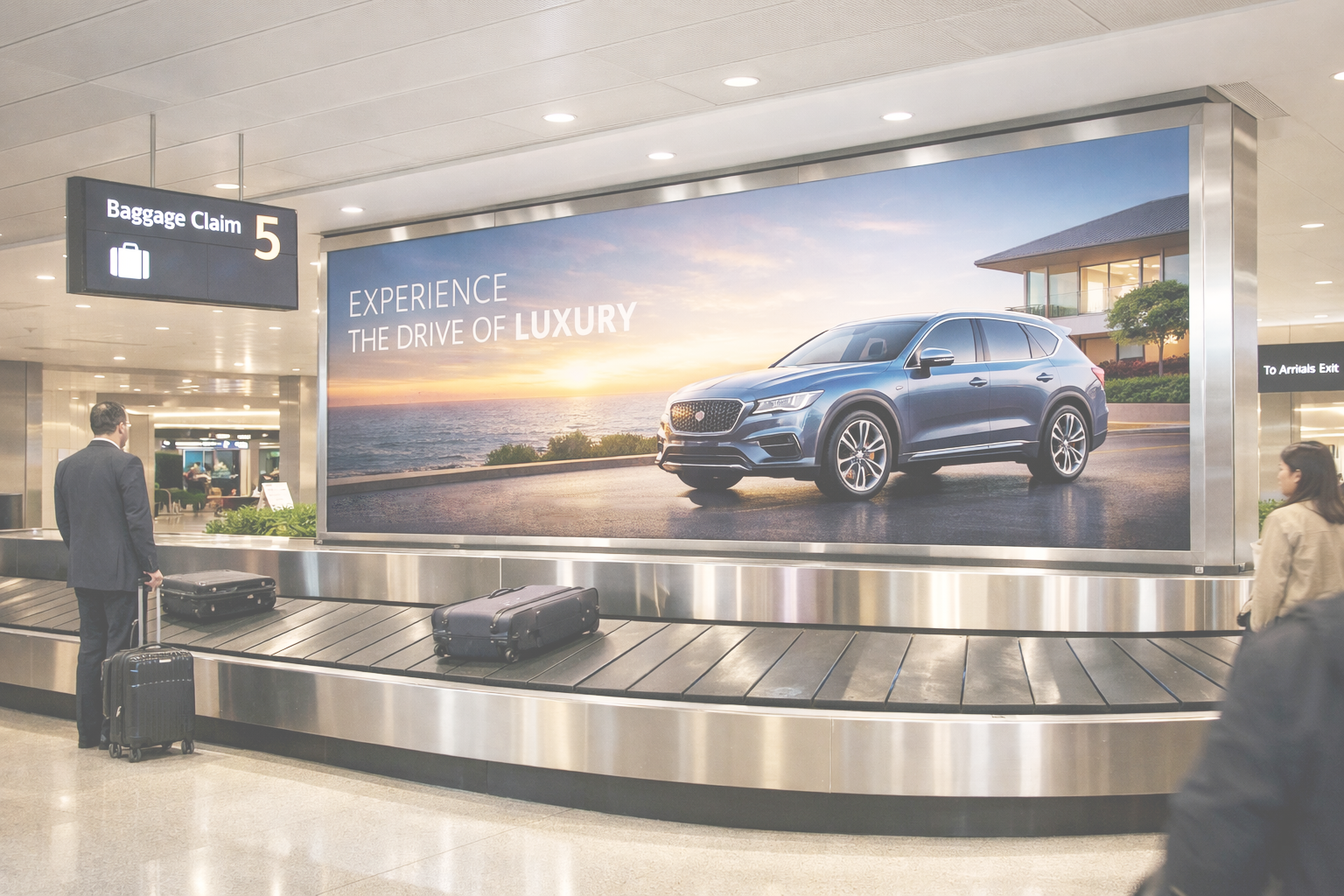
We combine local insight with fast rollout to deliver results for you, now.
Talk to an ExpertAudience and Cultural Intelligence
Top 2 Languages
- Latvian: The official state language of Latvia and the mother tongue of approximately 62.6% of the country's population; Latvian is the primary language of commerce, government, and national identity; advertising at RIX should default to Latvian as its cultural baseline — not merely as a translation layer but as a signal of genuine market commitment that Latvians, particularly the diaspora returning home, notice and respond to with elevated brand trust
- Russian: Spoken as a first language by approximately 24% of Latvia's population and widely understood as a second language; the Russian-speaking community in Latvia encompasses both long-established Soviet-era arrivals and their descendants, who form a substantial and commercially active urban audience in Riga; campaigns that incorporate Russian alongside Latvian reach a meaningful additional segment without cultural dissonance, particularly for B2B, financial services, and consumer retail categories
Major Traveller Nationalities
The dominant nationality at RIX is Latvian, with the returning diaspora from the UK, Ireland, Germany, and Sweden representing the commercially most active inbound segment. The secondary international audience includes German, British, Finnish, Swedish, and Norwegian tourists on leisure routes, Ukrainian business and humanitarian travellers whose numbers increased significantly from 2022, Central Asian passengers transiting through Riga via Uzbekistan Airways, and a growing Indian student population. For advertisers, campaign creative should address three distinct audience registers simultaneously: the Latvian diaspora returnee (emotionally driven, culturally connected, carrying Western purchasing standards), the European business traveller (professionally focused, quality-oriented, time-sensitive), and the European tourist (experience-hungry, culturally curious, free-spending on short-break itineraries).
Religion — Advertiser Intelligence
- Lutheranism (historically dominant, approximately 34%): The historical faith of ethnic Latvians, particularly in rural and traditional communities; Christmas, Easter, and the national calendar of Christian observances are relevant to consumer timing, but Lutheranism in Latvia is culturally rather than religiously intensive for the majority; the secular-majority professional Riga audience responds more strongly to quality and values messaging than explicitly faith-based content
- Roman Catholicism (approximately 25%): Dominant in Latgale and the southern regions; the Catholic community celebrates a fuller calendar of feast days and patron saint observances; regionally targeted campaigns for eastern Latvia should acknowledge Catholic cultural identity
- Russian Orthodox (approximately 20%): The faith community of Latvia's Russian-speaking minority; Christmas on January 7, Orthodox Easter, and major saint days are commercially relevant for brands specifically targeting this segment; the Russian Orthodox audience tends to maintain stronger traditional community and cultural identity ties than Latvia's Protestant majority
- Non-religious (approximately 21%): Latvia's highly educated, urban, and internationally oriented professional class skews significantly toward secular identity; brands that position on values — environmental responsibility, innovation, quality craftsmanship, social equity — rather than faith resonances will achieve the broadest reach in Riga's city audience
Behavioral Insight
Latvia's RIX audience is shaped by a fundamental tension between deep Baltic cultural identity and an internationally calibrated standard of quality expectation. The returning diaspora member who has worked in the UK National Health Service for a decade and the Riga fintech executive who presents at London conferences in the same week both share an unwillingness to accept second-rate brand experiences merely because they are in a smaller market. They know what London, Dublin, and Oslo offer; they expect Riga to match or exceed it on the dimensions that matter to them. Brands that treat RIX as a premium European market channel rather than a peripheral Eastern European afterthought will find an audience that rewards that positioning with loyalty and advocacy. The cost of doing so is a fraction of comparable campaigns in London or Frankfurt, but the credibility dividend accrues at near-equivalent rates.
Outbound Wealth and Investment Intelligence
The outbound passenger at RIX is one of the most commercially distinctive in Northern Europe. The departing Latvian professional or entrepreneur is not simply travelling to London or Stockholm — they are moving between two identities: the Baltic European with Latvian roots and the internationally integrated professional who has built a career, savings base, and commercial network in the West. The financial intelligence that matters for advertisers targeting this audience is not their Latvian income (modest by Western standards) but their combined purchasing power: the sterling or euro savings they bring home, the property investment decisions they evaluate on every return visit, and the lifestyle consumption choices they make when their Western income meets Latvian prices.
Outbound Real Estate Investment
Latvia's outbound professional class invests heavily in Latvian real estate as their primary wealth-building vehicle — Riga property specifically represents both a cultural anchor and a financially rational asset in a eurozone, EU-member market whose property values remain significantly below Western European comparables. The returning diaspora's first and second property purchases in Riga, Jūrmala, or the emerging luxury rural market of Sigulda and Cēsis are the dominant outbound real estate dynamic at RIX. A secondary stream of Latvian HNIs with UK and German commercial success invests in European resort and lifestyle property — Spain's Mediterranean coast, Portugal, and the broader South European market — making international resort property developers an appropriate advertising category at RIX on departing summer flights.
Outbound Education Investment
Latvia's educational investment profile reflects its EU integration and internationally connected professional class. The UK, Germany, the Netherlands, and the Nordic countries are the primary destinations for Latvian students seeking higher education abroad — a flow that has been active since EU accession in 2004 and has only grown as wage differentials maintained the attractiveness of working abroad after graduation. As of the 2024/2025 academic year, Riga was itself drawing 11,542 foreign students to Latvian higher education institutions, with India (3,158 students), Uzbekistan (1,118), and Sweden (976) among the leading origins — signalling that Riga's universities are also positioned as international education destinations that benefit from RIX's connectivity. International universities and education consultancies operating in the UK, Germany, and the Netherlands should treat RIX as a direct channel to their Latvian applicant audience.
Outbound Wealth Migration and Residency
Latvia's wealthiest citizens show measured but growing interest in EU residency flexibility options and offshore financial planning, driven primarily by geopolitical caution given Latvia's proximity to Russia and its status as a NATO frontline state. The Portuguese Golden Visa programme, Spanish residency-by-investment, and UAE residency structures are the most actively discussed formal options among Latvia's HNI business community. For brands and services in international residency advisory, offshore banking, and EU wealth management, RIX is a relevant channel to an audience whose geopolitical awareness makes cross-border financial planning a genuinely felt commercial need rather than an abstract aspiration.
Strategic Implication for Advertisers
International brands in real estate, financial services, premium consumer goods, and education that are building presence in the Baltic-Nordic corridor should treat RIX as a Tier 1 channel with Tier 2 pricing — a combination that is exceptionally rare in European aviation. The airport's route network connects to the cities where this audience's money is earned; RIX is where that commercial power arrives back home, ready to be deployed. Masscom Global's access to RIX's advertising inventory and strategic intelligence in the Baltic market gives brands the placement precision and local market knowledge to intercept this audience at the exact commercial decision moment.
Airport Infrastructure and Premium Indicators
Terminals
- RIX operates a modern single terminal complex divided into three areas: Terminal A handling Schengen departures and arrivals, and Terminals B and C accommodating non-Schengen and international operations; this structure creates differentiated audience zones that allow advertisers to target Schengen-only European travel and wider international travellers with distinct creative executions if required
- Construction of a new passenger terminal begins in 2025, designed to accommodate 12 million annual passengers by 2036; this is the most significant infrastructure expansion in RIX's history and will significantly expand the available premium advertising environment; brands that establish presence now do so at current rates while building recognition in a terminal whose audience scale will nearly double within a decade
Premium Indicators
- The Primeclass Lounge provides a premium waiting environment for business class and lounge-eligible passengers; its presence confirms the airport serves a commercially active higher-spending traveller segment that travels on premium tickets and holds frequent flyer status with airBaltic and Star Alliance partners
- The Hampton by Hilton Riga Airport and Sky High Hotel provide direct-access accommodation infrastructure reflecting the airport's status as a transit and transfer hub for Baltic regional and onward international routing
- airBaltic's 62% seat capacity dominance at RIX is a commercially significant signal: the Latvian national carrier actively markets premium travel products, maintains a premium loyalty club, and positions RIX as a connection hub for Scandinavian, British, and Central European passengers transiting through Riga — generating a connecting audience at RIX beyond the purely originating Latvian travel market
- Rail Baltica integration is planned for the RIX development, linking the airport directly to the high-speed rail network connecting Tallinn, Riga, Vilnius, and Warsaw; when operational, this will transform RIX from a Latvian airport into a true Baltic rail-air interchange, dramatically expanding its catchment and passenger potential beyond the current road-access model
Forward-Looking Signal
RIX's trajectory from 7.12 million passengers in 2024 toward the 12 million capacity of the new terminal is backed by airline capacity growth and route development that confirms market confidence in the trajectory. airBaltic expanded Amsterdam to triple-daily service. Norwegian opened a new base in 2024. flydubai launched a direct Dubai service in December 2025. New routes to Faro, Portugal, and expanded frequencies to the Middle East signal deliberate year-round route balancing that is demonstrably working — November and December 2024 grew 17% and 20% respectively, precisely the months that historically saw RIX traffic contract. The Rail Baltica project, while delayed in its broader programme, will when complete make RIX the centre of a rail network connecting three countries and create the airport's most transformative single piece of infrastructure since the current terminal was built. Masscom Global advises brands entering the Baltic market, or scaling existing Baltic campaigns, to prioritise RIX now and secure premium placement positions before the new terminal opens and competition for inventory intensifies.
Airline and Route Intelligence
Top Airlines
airBaltic (hub carrier, 62% seat capacity), Ryanair (base, 23% capacity), Norwegian Air Shuttle (base, from 2024), Lufthansa, British Airways, Turkish Airlines, Finnair, LOT Polish Airlines, Aegean Airlines, Uzbekistan Airways, flydubai (from December 2025)
Key International Routes
- London (LHR/STN/LGW): The airport's busiest international corridor; the primary diaspora connection to the UK's 100,000+ Latvian community; multiple daily services
- Helsinki (HEL): Daily high-frequency service; business and government traffic on the Finland-Latvia axis
- Oslo (OSL): Regular service; connecting the Norwegian diaspora Latvian community and strong business ties between Nordic and Baltic business communities
- Stockholm (ARN): Regular service; the Sweden-Latvia corridor carries both Latvian labour migration returnees and Swedish business visitors
- Amsterdam (AMS): Triple-daily airBaltic service; reflecting the strong Netherlands-Baltic business relationship and the Latvian logistics and financial services corridor to Amsterdam
- Dubai (DXB): airBaltic year-round daily service (winter) plus flydubai 3x weekly from December 2025; the growing Middle East-Baltic commercial corridor and winter sun leisure connection
- Sharm El-Sheikh (SSH) and Hurghada (HRG): 3x weekly each; winter leisure connections to Egypt driving the year-round traffic balancing strategy
- Tashkent (TAS) via Uzbekistan Airways: Connecting RIX to Central Asia and serving Uzbek students and professionals in Latvia; 119,000 passengers flew between RIX and North America via connections in 2024
Domestic Connectivity
No domestic scheduled air services within Latvia; Riga's central position within Latvia's geography makes domestic air travel non-commercial.
Wealth Corridor Signal
RIX's route network divides into three commercially distinct corridor types. The diaspora-return corridors (London, Dublin, Oslo, Stockholm, Berlin) carry the highest commercial potential for consumer, real estate, and financial brands targeting the returning Latvian with Western purchasing power. The business corridors (Amsterdam, Frankfurt, Helsinki, Brussels) carry Latvia's professional and entrepreneurial class making commercial and institutional connections across Northern Europe. The leisure corridors (Dubai, Egyptian Red Sea, Southern European leisure routes) carry the affluent Latvian consumer taking European-standard holidays with above-average per-trip spend. Each corridor calls for a distinct advertising strategy and different creative approaches, and the terminal architecture at RIX creates natural separation between Schengen and international passenger flows that enables precise targeting.
Media Environment at the Airport
- RIX's three-zone terminal structure concentrates specific traveller types in defined areas: the Schengen zone carries the high-frequency European business and diaspora corridor traffic; the international zone serves the Middle East, Central Asian, and wider international traffic; advertisers can select placement zones that align with their target corridor rather than paying for undifferentiated whole-terminal reach
- Dwell time at RIX is above average for a European regional airport because of the hub-and-spoke transfer function — connecting passengers waiting for onward connections add to the base of originating travellers and extend the average passenger terminal time, increasing total brand exposure per placement
- The Primeclass Lounge environment and airBaltic's premium cabin presence elevate the overall commercial quality of the terminal by anchoring a visible premium tier that raises brand association standards for advertisers present in the terminal
- Masscom Global provides full access to RIX's advertising inventory with end-to-end campaign management in the Latvian market, including Latvian and Russian creative adaptation, placement execution across terminal zones, and campaign performance monitoring tied to seasonal and corridor-specific audience peaks
Strategic Advertising Fit
Best Fit
- Financial services — retail banking, wealth management, fintech: Latvia's rapidly growing fintech ecosystem, the returning diaspora with Western European savings, and the professional IT class all represent a commercially active financial services audience at RIX; both local Latvian financial brands expanding their premium offering and international wealth management brands targeting the Baltic HNI market find exceptional audience alignment
- Real estate — Riga, Jūrmala, and Baltic property: The diaspora return audience is the most concentrated and motivated real estate buyer segment in the Baltic market; Riga city properties, Jūrmala luxury villas, rural lifestyle retreats in Sigulda and Cēsis, and European resort properties targeting Latvian buyers with accumulated Western savings all find their primary decision-making audience at RIX
- Premium consumer retail and fashion: The combination of a diaspora audience calibrated to UK and Irish retail standards, a growing fintech professional class, and European leisure tourists creates a strong consumer retail audience for international fashion, electronics, and lifestyle brands whose products are available in the Riga market
- Technology and B2B SaaS: Latvia's 600+ startups, 149 fintech firms, and 35,000 IT professionals generate a concentrated B2B technology audience whose international travel pattern on London, Amsterdam, and Nordic routes makes RIX their primary departure and arrival point; enterprise software, cybersecurity, cloud infrastructure, and professional tools brands find their most relevant Baltic audience here
- Defence and NATO-aligned B2B: Latvia's front-line NATO status, its active defence industry, and the presence of allied military and government personnel at RIX creates a genuine B2B defence technology advertising opportunity at this airport that is absent at most European regional airports
- Airlines and international travel: RIX is the primary platform for awareness campaigns from new route launches, competing carriers, and international tourism destinations; with 11 airlines operating and new routes to Dubai, Egypt, and Portugal recently added, the appetite for destination advertising is actively demonstrated by the airline community itself
- Education — international universities and study abroad: With a 2024/2025 cohort of 11,542 international students in Latvian higher education and a large outbound flow of Latvian students to the UK, Germany, and the Netherlands, RIX is the primary channel for both inbound university recruitment and outbound student recruitment advertising
Brand Alignment at a Glance
| Category | Fit |
|---|---|
| Financial services and fintech | Exceptional |
| Real estate — Riga, Jūrmala, European | Exceptional |
| Premium consumer retail and fashion | Strong |
| Technology and B2B SaaS | Strong |
| Defence and NATO B2B | Strong |
| Airlines and travel | Strong |
| International education | Strong |
| Luxury hospitality | Strong |
| FMCG and mass-market consumer | Moderate |
Who Should Not Advertise Here
- Non-EU and non-European regulatory jurisdiction financial products: Latvia's EU membership means its financial services market operates under full EU consumer protection and MIFID II frameworks; offshore financial products that are not EU-regulated will find both legal barriers and audience scepticism that makes RIX an inappropriate channel
- Budget discount consumer brands without premium proposition: RIX's audience is calibrated to European quality standards by both diaspora experience and local professional aspirations; brands whose entire value proposition is price leadership without quality differentiation will find the audience poorly aligned and conversion rates low
- Mass-market political or ideologically divisive advertising: Latvia's complex internal ethnic and political landscape — with significant Latvian-Russian community dynamics, active NATO integration politics, and recent migration shifts — makes politically charged brand messaging particularly high-risk at RIX; brands should ensure creative is culturally neutral and commercially focused
Event and Seasonality Analysis
- Event Strength: High
- Seasonality Strength: Medium-High (reducing, per airBaltic's year-round balancing strategy)
- Traffic Pattern: Dual-peak (summer June-August, Christmas/winter December) with deliberately strengthened shoulder and winter frequencies
Strategic Implication
RIX's unusual strength is that it is actively managing its own seasonality through deliberate route diversification — adding Middle East and Mediterranean winter sun connections specifically to maintain traffic volume in December and January. The airport's record November and December 2024 growth (17% and 20%) confirms this strategy is working. For advertisers, this means the traditional logic of concentrating entirely on summer peaks applies less forcefully at RIX than at comparable regional airports. A year-round presence strategy with intensified budget during Jāņi (June), the pre-Christmas diaspora return (November/December), and the TechChill conference window (February/March) delivers better full-year reach economics than a summer-only placement. Masscom Global structures RIX campaigns to capitalise on this deliberate year-round architecture rather than defaulting to seasonal-only thinking, ensuring brands are present across the full commercial cycle that RIX's route strategy is actively sustaining.

Poor Placement and Delays Affect Airport Campaigns
We help you move faster, access better inventory, and get it right now.
Talk to an ExpertFinal Strategic Verdict
Riga International Airport is the Baltic states' commanding Tier 1 aviation hub, delivering 7.12 million passengers across 107 destinations from a terminal that is about to begin the most significant expansion in its history — designed for 12 million passengers annually by 2036, integrated with Rail Baltica, and backed by airBaltic's dominant 62% seat capacity and a base strategy that now includes Ryanair and Norwegian. The commercial case for advertising at RIX rests on three exceptional pillars: the world's most commercially concentrated diaspora return corridor, with over 100,000 UK-based Latvians returning home through this single terminal carrying sterling income and Western purchasing standards; a booming fintech and tech ecosystem generating 35,000 IT professionals and 600+ startups whose international B2B travel flows through this airport; and a growing European leisure tourism audience arriving at a UNESCO World Heritage city whose hospitality, cultural, and retail economy is being rebuilt to meet Western European premium expectations. These three audiences share one terminal, and they arrive with purchasing intent — for real estate, financial products, technology, premium retail, and investment services — that is among the highest per-capita in Northern Europe. For brands entering the Baltic market, scaling within it, or building pan-European campaigns that include Northern Europe's fastest-growing aviation gateway, Riga International Airport is not an optional regional add-on. It is the essential starting point. Masscom Global provides the inventory access, cultural precision, and strategic intelligence to activate RIX at the scale and timing this market demands.
About Masscom Global
Masscom Global is a premium international airport advertising and media buying agency operating across 140 countries. With deep expertise in airport OOH, premium publications, and high-net-worth audience targeting, Masscom helps brands reach the world's most valuable travellers at the moments that matter most. For advertising packages, media rates, and campaign planning at Riga International Airport and airports across the globe, contact Masscom Global today.
Frequently Asked Questions
How much does airport advertising cost at Riga International Airport? Advertising costs at RIX vary by format, placement zone (Schengen vs. international terminal areas), campaign duration, and seasonal demand peaks around the Jāņi summer window and Christmas diaspora return. Digital screens, static large-format placements, branded experiential zones, and lounge-adjacent premium placements each carry distinct pricing structures. RIX's Tier 1 Baltic classification means rates reflect the airport's dominant Baltic hub status and growing 7-million-plus passenger scale, while remaining significantly more competitive than comparable campaigns at Frankfurt, Amsterdam, or Heathrow. Masscom Global provides current rate cards and tailored proposals specific to your campaign objectives and target corridor.
Who are the passengers at Riga International Airport? RIX served 7.12 million passengers in 2024 across 107 direct destinations. The core audience is Latvian nationals travelling on the diaspora return corridors from the UK (London), Ireland (Dublin), Germany, Norway, and Sweden, where over 255,000 Latvian citizens reside. The secondary audience includes European business travellers from Germany, Finland, the Netherlands, and the UK visiting Riga for fintech, logistics, and commercial meetings. Leisure tourists from across Northern and Central Europe visiting Riga's Old Town and Jūrmala resort, Central Asian transit passengers via Uzbekistan Airways, and growing Middle Eastern leisure visitors on the Dubai route complete the passenger mix.
Is Riga International Airport good for luxury brand advertising? RIX is well-suited for premium and aspirational luxury brands with European or Northern European cultural positioning. The airport's diaspora return audience carries Western European income and consumption expectations into a Latvian market where their purchasing power is disproportionate; they respond strongly to premium brand messaging that matches the quality standards of their UK or German everyday commercial environments. International luxury fashion, premium automotive, and lifestyle brands find a receptive and pre-qualified audience. Ultra-high-end luxury brands with price points calibrated exclusively to London's Knightsbridge or Paris's 8th arrondissement will find narrower but still meaningful alignment with Latvia's growing HNI fintech and entrepreneurial class.
What is the best airport in the Baltic states to reach HNWI and professional audiences? Riga International Airport (RIX) is the Baltic states' dominant Tier 1 hub with 7.12 million passengers and 107 direct destinations, making it the primary channel for reaching the professionally active and commercially sophisticated Baltic audience. Tallinn Airport (TLL) in Estonia serves a comparably digitally advanced economy with strong fintech credentials and a slightly higher GDP per capita but at significantly lower passenger volume. Vilnius Airport (VNO) in Lithuania serves a larger national economy with strong GDP growth but historically less developed route network. For pan-Baltic market campaigns, Masscom Global recommends a coordinated RIX-TLL-VNO strategy; for single-airport Baltic market prioritisation, RIX is unambiguously the first choice.
What is the best time to advertise at Riga International Airport? The Jāņi window in mid-to-late June — the two weeks before and during Latvia's midsummer national celebration on June 23-24 — delivers the single highest diaspora return concentration of the year and is the optimal window for consumer, real estate, and financial brands targeting returning Latvians with Western purchasing power. The Christmas and pre-New Year window (late November to December) is the second major peak, confirmed by RIX's exceptional 17-20% growth in November and December 2024. For B2B technology brands, the TechChill conference period in February or March and the year-round London-Amsterdam-Helsinki business corridor deliver strong professional audiences independent of seasonal patterns.
Can international real estate developers advertise at Riga International Airport? RIX is among the most commercially precise real estate advertising channels in Northern Europe for both inbound and outbound real estate investment. The Latvian diaspora returning from the UK and Ireland represents a motivated, financially capable buyer audience for Riga city apartments, Jūrmala luxury properties, and Baltic countryside lifestyle estates whose Western European savings create a pronounced price-to-purchasing-power advantage in the Latvian market. For international real estate developers marketing Spanish, Portuguese, or UAE properties to Latvian buyers with European mobility ambitions, the departing audience on the summer leisure and Middle East corridors represents the relevant outbound target.
Which brands should not advertise at Riga International Airport? Non-EU financial products that are not regulated within the European regulatory framework will face both legal limitations and audience scepticism at RIX, where passengers are EU citizens accustomed to European consumer protection standards. Mass-market discount brands positioned primarily on price will find the audience's quality expectations — calibrated by the UK, Irish, and German markets — a structural barrier to resonance. Brands whose messaging is politically charged on the EU-Russia dimension or the Baltic-Russian ethnic community dynamic should treat the RIX environment with particular care given Latvia's complex internal political landscape.
How does Masscom Global help brands advertise at Riga International Airport? Masscom Global provides full-service airport advertising capability at RIX, covering audience intelligence on the diaspora return corridor dynamics, the fintech and tech professional travel pattern, and the leisure tourist seasonal cycle; complete inventory access across terminal zones; Latvian and Russian-language creative adaptation; placement execution timed to the Jāņi, Christmas, and year-round business peaks; and campaign performance monitoring. Our strategic understanding of the Baltic market, the commercial significance of the UK-Latvia diaspora corridor, and the positioning of RIX within the broader Northern European aviation landscape gives brands the market precision to activate campaigns that genuinely resonate with this audience at the right moment, in the right zone, and in the right language. Contact us today to begin planning.