

Airport at a glance
| Field | Detail |
|---|---|
| Airport | Qingdao Jiaodong International Airport |
| IATA Code | TAO |
| Country | China |
| City | Qingdao, Shandong Province |
| Annual Passengers | ~15.3 million |
| Primary Audience | Shandong manufacturing and export industry HNWI, Korean-Chinese business community, coastal luxury tourism visitors, Haier-Hisense-COSCO executive class |
| Peak Advertising Season | May to October (coastal tourism peak), Chinese New Year, National Day Golden Week |
| Audience Tier | Tier 1 (Shandong HNWI manufacturing-export wealth and Korean bilateral business combined) |
| Best Fit Categories | Premium manufacturing B2B, real estate, luxury lifestyle, Korean-Chinese bilateral brands, maritime and logistics services, international education |
Qingdao Jiaodong International Airport is China's newest major aviation gateway, opened in August 2021 to replace the city's ageing Liuting Airport and immediately establishing itself as one of the most architecturally striking and commercially sophisticated terminal environments in Chinese regional aviation. The airport serves Qingdao — a city of 10 million on the Yellow Sea coast whose commercial identity is simultaneously the birthplace of China's most internationally recognised consumer brand, the headquarters of the world's largest home appliance manufacturer, the home of China's most significant container port outside Shanghai, and the site of a German colonial heritage that left behind a red-roofed European city centre unlike anywhere else in China. That combination of industrial dynasty, global brand headquarters, maritime wealth, and European cultural character makes Qingdao's commercial identity unlike any other Chinese coastal city — and it makes TAO an advertising environment whose audience profile carries a commercial distinctiveness that rewards brands willing to look beyond the generic Chinese tier-two airport narrative and engage with what this city actually produces in terms of wealth, purchasing power, and business decision-making authority.
Shandong Province — home to 100 million people, the third-largest provincial economy in China by GDP, and the birthplace of Confucius — provides the broader catchment whose commercial depth amplifies every metric at TAO beyond what Qingdao's own 10 million population would suggest. The passengers moving through this terminal include the executives and entrepreneurs of China's most productive manufacturing province, the South Korean business community that has built one of the largest Korean investment corridors in the world in the Qingdao area, the shipping and logistics magnates of China's busiest northern port city, and the coastal luxury tourism audience whose summers in Qingdao represent one of China's most aspirational domestic leisure experiences. For brands whose Chinese market strategy needs to reach the industrial, export, and manufacturing wealth of the world's largest goods-producing economy at the precise moment its decision-makers are in transit, Qingdao Jiaodong Airport is the most commercially underexplored major terminal in coastal China.
Advertising Value Snapshot
- Passenger scale: Approximately 15.3 million annual passengers at the new Jiaodong terminal, representing the early-years performance of an airport that opened in August 2021 and is designed for Phase 1 capacity of 35 million passengers annually, with the pre-pandemic capacity of the former Liuting Airport having reached approximately 35 million — confirming a long-term passenger trajectory that will more than double current volumes as Chinese aviation completes its recovery cycle and the new terminal reaches operational maturity
- Traveller type: Shandong manufacturing and export industry executives and entrepreneurs, South Korean business community managing bilateral manufacturing and trade investments, Qingdao port and shipping industry professionals, domestic Chinese coastal leisure tourists, Haier-Hisense-COSCO corporate travel, international business visitors accessing China's most productive export province
- Airport classification: Tier 1 — one of China's nationally designated key hub airports, serving the primary international and domestic aviation gateway for a province of 100 million people and for a city whose combined Haier, Hisense, COSCO, and port economy generates one of China's largest industrial wealth concentrations outside the Yangtze River Delta and Pearl River Delta
- Commercial positioning: China's premier coastal manufacturing and export gateway — the primary air access point for Shandong Province's extraordinary industrial economy and for the Korean-Chinese bilateral business corridor that has made Qingdao the largest Korean business community hub in mainland China
- Wealth corridor signal: TAO sits at the convergence of Shandong's indigenous manufacturing export wealth — one of China's most concentrated industrial HNWI bases — and the Korean-Chinese bilateral investment corridor whose combined capital flows through the Qingdao business community represent one of the most commercially significant bilateral manufacturing relationships in Northeast Asian economics
- Advertising opportunity: Masscom Global activates the full advertising environment at Qingdao Jiaodong International Airport in a brand-new, architecturally premium terminal where inventory competition remains well below the commercial value of the audience it serves — a structural first-mover opportunity for brands prepared to invest in China's coastal manufacturing wealth market before the terminal reaches its 35-million-passenger design capacity
Airport Advertising is Complex to Get Right
We help you execute faster, with proven results and local insight most planners lack starting now.
Talk to an ExpertCatchment Area and Economic Drivers
Top 10 Cities within 150 km — Marketer Intelligence:
- Jiaozhou: The airport's immediate host city, 15 kilometres from the terminal and 50 kilometres northwest of Qingdao's coastal city centre. Jiaozhou is one of Shandong's fastest-growing commercial and logistics centres, positioned directly within the airport's ground transport corridor and generating a logistics, warehousing, and light manufacturing professional class that is among the most airport-proximate business audiences in any Chinese city's airport catchment. Jiaozhou's commercial growth trajectory makes it highly relevant for financial services, automotive, and B2B logistics technology brands targeting the airport's immediate commercial ecosystem.
- Jimo District: Located 25 kilometres east of Qingdao city, Jimo is home to the Jimo ancient city heritage site, one of Shandong's most rapidly growing automotive manufacturing zones anchored by FAW-Volkswagen's major Jimo production facility, and a significant clothing and textile wholesale market that services regional consumer supply chains. Its automotive industry management class and manufacturing entrepreneur base represent a premium B2B and consumer audience relevant for automotive, financial services, and premium FMCG brands.
- Pingdu: A 40-kilometre north agricultural and light industrial city within Qingdao's administrative territory, Pingdu generates a commercially active farming entrepreneur and light manufacturing professional class whose growing income from Shandong's premium fruit, vegetable, and food production economy is driving above-average premium consumer brand uptake in the region.
- Laixi: A 50-kilometre northeast Qingdao municipal district city with a diversified manufacturing and agricultural economy including automotive components, rubber products, and Shandong's famous premium pear and apple production. Its manufacturing business community uses TAO as its primary air gateway and represents a consistent B2B and premium consumer travel audience.
- Huangdao District (West Coast New Area): Qingdao's most strategically designated development zone, 50 kilometres southwest across Jiaozhou Bay, Huangdao is home to Qingdao Port's main container terminal complex — one of the world's top-ten busiest container ports — alongside China National Offshore Oil Corporation (CNOOC) Qingdao operations and a significant petrochemical industrial cluster. Its port executive, energy sector, and industrial management class generates a high-income, internationally connected business travel audience with strong demand for financial services, premium automotive, and international real estate brands.
- Gaomi: An 80-kilometre northwest Weifang-administered city best known internationally as the birthplace of Nobel Prize-winning author Mo Yan and domestically for its significant textile and paper machinery manufacturing sector. Gaomi's light industrial entrepreneur class uses TAO for domestic business travel, and its literary and cultural heritage gives it an unusual creative class dimension that amplifies its commercial relevance for premium cultural and lifestyle brand communications.
- Weifang: Located 130 kilometres northwest at the edge of the catchment, Weifang is globally famous as the birthplace of Chinese kite culture and as the host of the International Kite Festival — one of China's most internationally attended cultural events. Its economy spans significant power generation equipment manufacturing, chemical production, and agricultural inputs, generating an industrial and cultural tourism commercial audience relevant for B2B and lifestyle brand advertisers in the Shandong regional market.
- Rizhao: A coastal city 130 kilometres south whose economy is anchored by Rizhao Port — one of China's largest bulk commodity ports — alongside growing beach tourism development that mirrors Qingdao's coastal leisure premium on a smaller scale. Rizhao's port and industrial management class uses TAO as its primary international gateway, adding a significant secondary port economy professional audience to the terminal's commercial base.
- Laoshan District: The urban district 20 kilometres east of Qingdao city whose defining landmark is Laoshan Mountain — one of China's most sacred Taoist peaks and the source spring of Laoshan mineral water, one of China's most premium bottled water brands and a Taoist cultural tourism destination of national significance. Laoshan's technology park, upscale residential developments, and premium tourism economy make it the most affluent residential district in the broader Qingdao metropolitan area, generating a high-income professional and property-owning audience directly relevant for luxury real estate, premium lifestyle, and financial services brands.
- Zoucheng and Qufu (southern Shandong): While at the outer boundary of the catchment, the Jining area cities of Zoucheng and Qufu — including Qufu, the birthplace and temple city of Confucius — contribute a culturally significant heritage tourism and educational pilgrimage audience to TAO's inbound domestic leisure flow. The Confucius Temple, Cemetery, and Mansion (Kong Temple, Kong Cemetery, Kong Mansion) UNESCO World Heritage complex in Qufu is one of China's most profound cultural sites, drawing domestic and international cultural heritage tourists whose premium accommodation and cultural experience spend passes through TAO.
NRI and Diaspora Intelligence:
The most commercially significant diaspora dynamic at Qingdao Jiaodong Airport is not an outbound Chinese diaspora but the extraordinary inbound Korean business community that has made Qingdao the largest Korean commercial hub in mainland China. Estimates of the permanent Korean resident population in the Qingdao area range from 80,000 to over 100,000 — making Qingdao's Koreatowns in Chengyang District and the Licang area among the largest Korean overseas communities in Asia outside the traditional Korean American and Korean Japanese concentrations. This Korean community is overwhelmingly business-driven: manufacturing joint venture managers, electronics component supply chain executives, consumer goods brand representatives, and SME trading company principals whose companies source, manufacture, or distribute across the Korean-Chinese bilateral supply chain. Their commercial profile is precisely the bilateral manufacturing and trade wealth class whose spending on premium business services, high-end hospitality, premium automotive, and outbound real estate is among the highest of any foreign national business community in any Chinese coastal city. The Korean community's travel pattern through TAO — regular Seoul connections multiple times per month for business and family visits — makes the Korean-language advertising environment at Qingdao Airport one of the most commercially productive bilateral audience placements available in Chinese airport advertising.
Economic Importance:
Qingdao and Shandong's economy is built on a manufacturing, logistics, and export base of national strategic significance combined with the commercial gravitas of hosting China's most globally successful consumer brand headquarters. Haier Group — the world's largest home appliance manufacturer by revenue, with global brands including Haier, GE Appliances, Fisher and Paykel, Candy, and Hoover — is headquartered in Qingdao and generates a corporate executive and innovation management class whose global commercial exposure creates internationally calibrated consumption standards. Hisense Group — a globally expanding consumer electronics giant whose television, air conditioning, and home appliance brands have achieved significant market share in Europe, the United States, and Southeast Asia — adds a second global brand headquarters premium to Qingdao's corporate wealth base. COSCO Shipping Lines, one of the world's largest container shipping companies, maintains major operational management in Qingdao, generating a maritime industry executive class whose international commercial exposure is among the broadest of any corporate community in Chinese coastal cities. Qingdao Port's position as China's most significant northern Yellow Sea container terminal — handling over 23 million twenty-foot equivalent units annually — generates a port management, shipping agency, and logistics entrepreneurial wealth class whose combined commercial profile is extraordinary in scale and diversity.
Business and Industrial Ecosystem
- Haier Group's Qingdao headquarters complex — the operational heart of a global consumer electronics and home appliance empire with revenues exceeding USD 30 billion and operations across 160 countries — generates a corporate executive, innovation management, and global supply chain professional class whose travel through TAO connects Qingdao to research, manufacturing, and commercial partnership centres across Europe, North America, Southeast Asia, and Japan, creating a sustained premium international business travel audience with globally benchmarked consumption standards
- The Korean-Chinese manufacturing joint venture ecosystem — encompassing hundreds of Korean companies in electronics components, automotive parts, textiles, chemicals, and consumer goods who have established Qingdao operations specifically for Korean-Chinese bilateral production — generates a business travel audience of bilateral commercial depth unmatched at any other Chinese airport, with Korean executives commuting regularly between Seoul and Qingdao on routes whose frequency rivals domestic Korean aviation corridors
- Qingdao Port's container terminal operations and the broader port ecosystem — including shipping agencies, freight forwarders, commodity traders, ship chandlers, and the logistics management infrastructure of China's most significant northern Yellow Sea trade gateway — produces a maritime and logistics entrepreneurial class whose accumulated trade wealth is substantial and whose international commercial exposure generates a globally-informed premium consumer purchasing profile
- Shandong's pharmaceutical, biotech, and marine science research sector — anchored by Ocean University of China (one of the world's leading marine science universities), the Qingdao National Laboratory for Marine Science and Technology, and a growing cluster of marine biotechnology and pharmaceutical companies — generates a scientifically elite, internationally networked, and above-average-income research and commercialisation professional audience with strong demand for premium healthcare, technology, and international education brands
Passenger Intent — Business Segment:
The business travellers at Qingdao Jiaodong Airport are overwhelmingly operating at the intersection of China's manufacturing export economy and its bilateral Korean-Chinese industrial relationship — a combination that produces a professional class whose daily commercial reality spans two of the world's most productive economies simultaneously. The Haier global sourcing director flying to Frankfurt, the Korean electronics components executive commuting to Seoul, the COSCO shipping operations manager travelling to Singapore, and the Qingdao Port authority executive connecting to Rotterdam are all moving through TAO with a commercial sophistication and international exposure that makes them among the most globally calibrated business audiences in Chinese coastal city aviation. Their brand consumption reflects global rather than provincial standards, and their purchasing decisions — particularly in automotive, financial services, and premium lifestyle categories — are made against a benchmark of international experience that rewards quality and penalises any hint of regional-market condescension.
Strategic Insight:
The commercial environment at TAO is defined by a structural opportunity that distinguishes it from both the tier-one coastal Chinese airports and from the generic tier-two Chinese regional airports: Qingdao is the only major Chinese city whose commercial identity is simultaneously defined by two globally significant headquarters brands (Haier and Hisense), a world-class port economy, a deep Korean bilateral business relationship, and a German colonial heritage that gives the city a European architectural character without precedent in Chinese aviation. That combination creates an advertising environment whose audience profile is more commercially sophisticated, more internationally connected, and more exposed to global brand standards than its passenger volume would suggest to an advertiser relying on scale metrics alone.
Tourism and Premium Travel Drivers
- Qingdao's German colonial heritage district — the Tsingtao Historic Area with its distinctive Bavarian and Art Nouveau red-roofed architecture, including the Governor's Residence (now the Qingdao Yingbin Hotel), St. Michael's Cathedral, the former German Governor's Office, and the original 1903 Tsingtao Brewery building — is one of China's most architecturally unique tourism districts and the physical source of Tsingtao Beer's origin story, drawing domestic and international cultural and heritage tourists whose premium accommodation and dining spend reflects the European lifestyle aspiration the district embodies
- Badaguan Scenic Area — a residential quarter of extraordinary beauty where eight tree-lined avenues named after the Great Wall passes are lined with over two hundred historic European-style villas representing thirteen national architectural styles built during the colonial and early Republic period — is China's most internationally celebrated historic villa residential landscape, comparable in cultural tourism prestige to Shanghai's French Concession and Gulangyu Island, and draws premium domestic Chinese tourists from across the country whose architectural and lifestyle curiosity generates substantial accommodation and experience investment
- Laoshan Mountain — one of China's most revered Taoist sacred peaks, rising dramatically from the Yellow Sea coastline 30 kilometres east of the city and home to ancient Taoist temples, the famous Laoshan Spring whose water feeds China's most premium branded mineral water, and panoramic sea and mountain landscape scenery — anchors Qingdao's nature and spiritual tourism identity as a distinctively dual city where European coffee culture and ancient Taoist mountain practice coexist within an hour's drive
- The Qingdao Olympic Sailing Centre — the purpose-built venue for the 2008 Beijing Olympics sailing events, now permanently converted to a premium public marina, yacht club, sailing school, and waterfront leisure precinct that is one of China's finest sailing infrastructure developments — generates a high-income, internationally travelled sailing and marine leisure audience whose per-visit spend reflects the premium lifestyle positioning of China's most active domestic sailing and yacht ownership community
Passenger Intent — Tourism Segment:
The tourists arriving at Qingdao Airport are among the most aspirationally motivated of any Chinese coastal city's domestic leisure audience. Qingdao occupies a unique position in Chinese domestic tourism as the city that represents European lifestyle quality within a Chinese cultural framework — a promise of elegant architecture, cold Tsingtao Beer on a beach terrace, fresh Yellow Sea seafood, and Laoshan Mountain spirituality that no other Chinese coastal city can replicate. The domestic premium Chinese tourist arriving at TAO has planned their Qingdao trip around this specific aspirational identity — they want the German villa photography for Xiaohongshu, the Tsingtao Museum experience, the Badaguan architectural walk, and the premium seafood dinner at a harbour restaurant. This aesthetic and experiential specificity creates an advertising environment at arrival that is unusually rich in brand association opportunity for premium food, beverage, lifestyle, and hospitality brands whose identity aligns with the Qingdao experience narrative.
Travel Patterns and Seasonality
Peak seasons:
- Summer coastal tourism peak (May to September): Qingdao's defining commercial season, driven by its status as China's most celebrated domestic beach destination. Qingdao's summer climate — cool and breezy by Yellow Sea winds, significantly more comfortable than the scorching summers of Beijing, Shanghai, and inland Chinese cities — makes it the preferred summer escape for domestic Chinese professionals from across the country. July and August generate WUH's highest inbound domestic leisure tourist concentration, with premium coastal hotels and restaurants at full occupancy and the harbour promenade at its most commercially intense.
- Tsingtao Beer Festival (August): One of Asia's largest beer festivals and China's most internationally recognised food and beverage cultural event, the Qingdao International Beer Festival draws millions of domestic and international visitors across its 16-day run in August, generating TAO's most concentrated inbound tourism surge of the year and a festival audience of extraordinary scale and commercial diversity whose premium food, beverage, and hospitality brand receptivity is at annual peak.
- National Day Golden Week (October): China's most commercially intense holiday week generates a peak domestic tourism inbound and outbound surge at TAO, with the onset of Qingdao's dramatic autumn weather — crisp Yellow Sea breezes, golden light, and the gradual quieting of the summer crowds — making October one of the most premium quality domestic leisure tourism periods of the year.
- Cherry blossom and spring (late March to April): Qingdao's substantial Japanese cherry blossom plantings in Zhongshan Park and the university campuses — a legacy of the Japanese occupation period — create a secondary spring tourism season whose Chinese domestic social media documentation profile is growing annually, drawing premium leisure tourists from Beijing and Shanghai seeking a coastal cherry blossom experience as an alternative to Wuhan or Hangzhou.
- Chinese New Year (January to February): The Lunar New Year family homecoming generates the year's most emotionally charged travel surge at TAO, with Shandong's dispersed professional class returning from Beijing, Shanghai, and Shenzhen and the Korean business community making holiday visits to Seoul or hosting family visits in Qingdao.
Event-Driven Movement:
- Qingdao International Beer Festival (August): China's largest and most internationally attended beer festival and one of Asia's most commercially significant food and beverage events, drawing millions of visitors — domestic Chinese, Korean, Japanese, and international — in a 16-day window that generates TAO's single highest inbound tourism passenger surge of the year. Brands in premium beer and spirits, food, lifestyle, tourism, and entertainment categories should treat the pre-Beer Festival advertising window as their highest-priority annual TAO campaign placement.
- National Day Golden Week (October 1 to 7): The single highest-volume travel week in TAO's annual calendar, combining domestic inbound tourism with outbound Korean business community holiday travel and generating peak across all commercial audience categories. Premium hospitality, real estate, automotive, and consumer goods brands achieve their maximum annual audience concentration simultaneously in this window.
- SCO and Major International Events Legacy: Qingdao's successful hosting of the 2018 Shanghai Cooperation Organisation Summit — attended by Xi Jinping, Vladimir Putin, and leaders of eight member states — established the city's international diplomatic hosting credentials and generates a sustained diplomatic and government professional inbound travel audience whose premium hospitality and protocol-standard service spending is commercially relevant for five-star hotel, premium catering, and luxury transport brands.
- China Maritime Day (July 11): Qingdao's designation as China's premier maritime city and the annual hosting of major maritime industry conferences, shipping company forums, and port technology exhibitions generates a concentrated international shipping and logistics executive audience through TAO in July — an audience highly relevant for maritime insurance, logistics technology, financial services, and premium business hospitality brands.
- Weifang International Kite Festival (April): The world's largest kite festival, 130 kilometres northwest of Qingdao, draws international competitors, cultural tourists, and media from across the world and generates a concentrated inbound international tourism surge through TAO in April — a niche but commercially distinctive international audience whose cultural engagement and premium travel spend is relevant for outdoor lifestyle, cultural tourism, and premium hospitality brands.
It’s Not Just Where You Advertise - It’s How Fast You Execute
We combine local insight with fast rollout to deliver results for you, now.
Talk to an ExpertAudience and Cultural Intelligence
Top 2 Languages:
- Mandarin Chinese (Putonghua): The universal primary language of the entire domestic Chinese passenger base at TAO. Mandarin creative at Qingdao must reflect the specific cultural character of Shandong's commercial identity — shaped by Confucian values of hierarchy, loyalty, and substantive achievement, by the maritime directness of a port city culture, and by the pride of hosting China's most internationally recognised consumer brands. The Shandong business professional is culturally distinct from coastal Guangdong or Shanghai commercial cultures — more conservative in personal expression, more relationship-oriented in commercial decision-making, and more responsive to brand communications that demonstrate genuine quality and long-term value rather than lifestyle aspiration and status performance.
- Korean: The single most commercially significant non-Chinese language at TAO, serving a Korean business and resident community whose estimated 80,000 to 100,000 members in the Qingdao area represent the most concentrated Korean overseas business community in mainland China. Korean-language creative at TAO is not a secondary consideration — it is a commercial necessity for any brand whose Korean-Chinese bilateral business, Korean consumer goods, Korean-Chinese real estate, or Korean diaspora communication objectives require access to the most commercially active Korean overseas community in China.
Major Traveller Nationalities:
The dominant nationality at Qingdao Jiaodong Airport is Chinese domestic, with inbound tourism flows from Beijing, Shanghai, Guangzhou, Shenzhen, and Jinan representing the commercial core of TAO's leisure passenger base. South Korean nationals represent by far the largest international nationality at TAO — a function of the extraordinary depth of Korean business investment in Qingdao and the high-frequency bilateral travel that sustains the Korean-Chinese manufacturing supply chain. The Korean passenger at TAO is not primarily a leisure tourist — they are a business professional whose commercial relationship with Qingdao is built on decades of manufacturing partnership and whose travel frequency through TAO may be monthly or more. Japanese business and cultural tourists form the second significant international nationality, drawn by Qingdao's significant Japanese business community (many Japanese automotive and electronics companies have Qingdao operations), the German-architecture European tourism appeal, and the Yellow Sea seafood culture that resonates strongly with Japanese food tourism sensibilities. European — particularly German — cultural heritage tourists arrive in modest but commercially notable numbers, drawn specifically by Qingdao's extraordinary status as a German-built city whose colonial architectural legacy is now a UNESCO candidate and a source of genuine German cultural pride in the city's history.
Religion — Advertiser Intelligence:
- Buddhism and Confucianism (culturally practised — majority): Shandong Province's most distinctive religious character is its Confucian heritage — Qingdao's provincial context is defined by the birthplace and spirit of Confucius, whose values of hierarchy, education, family loyalty, and social harmony are more visibly present in Shandong's commercial culture than in any other Chinese province. This Confucian cultural foundation creates specific brand communication implications: messages that emphasise craftsmanship continuity, multi-generational quality, family heritage, and substantive achievement over novelty and trend will resonate most deeply with the Shandong commercial audience at TAO. Buddhist temple visits — particularly Qingdao's Zhanshan Temple and Laoshan Mountain's Taiqing Temple — create religious cultural tourism spending that is commercially relevant for premium cultural experience and artisan craft brands.
- Taoism (~significant local practice): Laoshan Mountain's status as one of China's most significant Taoist sacred sites creates a distinctive local religious culture that is commercially expressed through Laoshan Spring water — one of China's most premium branded mineral waters whose Taoist mountain origin is central to its premium positioning — and through a growing eco-spiritual tourism market whose premium wellness and nature experience spending profile is highly relevant for premium health, wellness, and natural lifestyle brands advertising at TAO.
- Christianity (~5% — above national average): Qingdao's German Protestant and Catholic missionary legacy from the colonial period left a significantly above-average Christian population whose church attendance culture and Christmas and Easter commercial calendar generate a premium gifting and hospitality spend window relevant for luxury retail, premium food, and experiential brands whose Christmas season campaigns align with this unusually active Chinese city Christmas consumer market.
Behavioral Insight:
The Qingdao commercial professional carries a behavioural profile shaped by three converging cultural influences that are unique in Chinese coastal city advertising. Shandong's Confucian heritage instils a conservative, relationship-first, quality-over-novelty commercial decision-making style whose brand loyalty, once earned through demonstrated quality and consistent presence, is among the most durable in Chinese consumer culture. The city's global brand headquarters identity — living daily in the shadow of Haier and Hisense's world-class commercial reputations — has calibrated Qingdao's professional class to international brand quality standards that are above average for a Chinese city of its size. The Korean business community's daily presence has introduced a Korean consumer culture of rigorous brand consciousness, premium beauty and technology appreciation, and bilateral commercial trust-building that has osmotically shaped the consumption standards of the broader Qingdao professional market. The result is a commercial audience that combines Shandong's Confucian loyalty and substantive quality demand with global brand literacy and Korean-influenced premium category awareness — a combination that rewards brands willing to invest in genuine cultural calibration rather than generic regional Chinese market creative.
Outbound Wealth and Investment Intelligence
The outbound passenger at Qingdao Jiaodong Airport is a Shandong manufacturing and export economy wealth holder whose investment priorities reflect the specific commercial character of China's most productive industrial province — conservative in style, relationship-driven in deal structure, and oriented toward family security and generational wealth preservation rather than speculative trophy investment. The Korean business community's outbound investment adds a bilateral dimension that connects the Qingdao wealth corridor to Seoul's financial markets, Gangnam's real estate, and South Korea's premium education system simultaneously.
Outbound Real Estate Investment:
Qingdao HNWI outbound real estate investment flows follow the established Chinese coastal city corridor with Shandong-specific characteristics. Australia — particularly Queensland's Gold Coast and Brisbane corridor and New South Wales coastal markets — is the dominant international property destination for Qingdao's manufacturing and port wealth class, driven by proximity, Pacific lifestyle alignment, and the strong established Chinese community infrastructure in Australian coastal cities. Canada's British Columbia market is the second most active international corridor, driven by education pathway property investment and the perception of political stability. The United States — particularly California and the Pacific Northwest — attracts the most internationally credentialed segment of Qingdao's technology and corporate executive class. South Korea itself is an increasingly significant outbound real estate market for Qingdao's Chinese businesspeople who have built personal relationships with Korean partners over decades of bilateral commercial activity — Seoul's Gangnam district and Jeju Island resort properties attract a growing Chinese investment flow from the Qingdao bilateral business community. Domestically, Shandong's own coastal property market — particularly Qingdao's premium coastal districts — has been among China's most actively appreciated residential real estate, and domestic investment within and adjacent to Qingdao competes actively with international outbound investment for HNWI allocation decisions.
Outbound Education Investment:
Shandong Province is one of China's most academically demanding provinces — Shandong students face among the most competitive college entrance examination (Gaokao) environments of any Chinese province, a pressure that drives extremely high per-student international education investment from families seeking overseas pathways that circumvent domestic examination intensity. The United States attracts the largest Shandong student outbound flow for both undergraduate and graduate study, with strong representation at Ivy League, Big Ten, and Pacific Coast universities. The United Kingdom's Russell Group — particularly London, Edinburgh, and Manchester — attracts the premium education investment track. Australia's Group of Eight universities are strongly preferred for their Pacific proximity and established Chinese student communities. Canada's University of British Columbia and University of Toronto are growing alternatives. Korean universities — particularly Seoul National University, KAIST, and POSTECH — are pursued by the Qingdao student segment with Korean language capability and bilateral family ties, creating a Qingdao-specific Korea education corridor that no other Chinese city generates at comparable scale. International boarding schools in the UK, Switzerland, and the United States attract the ultra-HNWI manufacturing and port wealth family segment whose per-student investment commitment is among the highest in Shandong.
Outbound Wealth Migration and Residency:
Shandong HNWI interest in international residency is active and growing, shaped by the manufacturing entrepreneur's desire for geopolitical risk diversification, the port and shipping industry executive's need for international business mobility, and the education-driven family planning of a province whose academic competition culture makes international educational pathway securing a high priority. Canada's investor immigration and Express Entry programmes are the most actively pursued primary residency pathways. Australia's significant investor and business innovation visas attract the manufacturing sector HNWI whose business scalability credentials align with Australia's investment visa requirements. Portugal's Golden Visa fund investment route is gaining traction among Qingdao's most internationally sophisticated manufacturing wealth holders. The UAE's zero-tax residency is growing in relevance for the COSCO shipping executive and international trading company principal whose business relationships already connect Qingdao to Dubai's trade infrastructure. Residency advisory firms and immigration legal specialists serving China's industrial HNWI will find at TAO a commercially motivated, financially qualified, and educationally focused audience whose residency planning priorities are both well-defined and actionable.
Strategic Implication for Advertisers:
International real estate developers in Australia, Canada, and South Korea, private banking institutions managing Chinese manufacturing and port wealth, international education providers targeting Shandong's extraordinarily education-investment-driven family demographic, and residency advisory firms serving China's industrial HNWI should treat Qingdao Jiaodong Airport as their primary Shandong Province acquisition channel — a commercially active and growing market whose 100-million-person provincial catchment is underrepresented in the coastal city-focused China marketing investment of most international brands. Masscom Global coordinates Korean-Chinese bilateral campaigns and domestic Chinese industrial wealth campaigns simultaneously at TAO, ensuring that both directions of this uniquely bilateral commercial corridor are commercially activated at the terminal level.
Airport Infrastructure and Premium Indicators
Terminals:
Qingdao Jiaodong International Airport's Phase 1 terminal — a single integrated building of 478,000 square metres opened in August 2021 — is one of the most architecturally ambitious and technically sophisticated new airport terminal buildings in China, designed by the internationally acclaimed architecture firm with a terminal form inspired by the starfish and sea creature forms of the Yellow Sea coastal landscape. The terminal integrates a direct high-speed rail station at its base, connecting passengers by express rail to Qingdao city centre in under 30 minutes — making TAO the second Chinese major airport after Beijing Daxing to offer fully integrated high-speed rail access from its initial opening. This rail connection fundamentally expands the terminal's commercial catchment and reduces the friction of airport access for the Shandong province business traveller, whose ease of TAO engagement drives both higher passenger volumes and longer pre-departure terminal dwell than airports served only by road. The terminal's premium retail, duty-free, and food and beverage infrastructure is calibrated for a brand-new facility whose commercial fit-out reflects 2021 Chinese airport retail standards — among the most sophisticated in the world.
Premium Indicators:
- Haier Group's global headquarters campus, 30 kilometres from the airport in Qingdao's Laoshan District, is one of the most visited corporate campus tourism destinations in Chinese business culture, drawing domestic and international business delegations, management study groups, and corporate tourism visitors through TAO whose business-class travel profiles confirm the airport's executive commercial audience positioning
- Qingdao's five-star hotel ecosystem — including the InterContinental Qingdao, Hyatt Regency Qingdao, Shangri-La Hotel Qingdao, Sofitel Qingdao, and Sheraton Qingdao — establishes a luxury accommodation tier competitive with China's tier-two coastal peers in Xiamen and Ningbo, and signals the presence of premium hospitality guests cycling through TAO whose accommodation investment confirms substantial discretionary spending across all premium consumer categories
- The new terminal's integrated high-speed rail station — a piece of aviation infrastructure that only the most strategically significant Chinese airports receive — confirms the Chinese government's designated national hub status for TAO and signals the premium connectivity investment that will drive the terminal toward its 35-million-passenger Phase 1 capacity, with corresponding escalation in commercial audience quality and advertising inventory competition
- The presence of Fortune 500 headquarters brands Haier and Hisense in the immediate catchment, alongside COSCO Shipping's major Qingdao operation, creates a corporate executive airport audience whose daily commercial exposure to global brand standards generates an internationally calibrated consumer behaviour that is commercially more sophisticated than the airport's passenger volume and tier-two city designation would suggest
Forward-Looking Signal:
Qingdao Jiaodong Airport's Phase 2 expansion — already planned and approved to add a second terminal building and additional runways, targeting a total capacity of 55 million passengers annually — signals a long-term aviation infrastructure trajectory that will make TAO one of China's five to eight largest airports by passenger volume upon full completion. The terminal's integrated high-speed rail connection is expected to drive Shandong Province-wide catchment expansion as the provincial rail network connects more cities to the airport via high-speed rail in coming years. Haier Group's continued global expansion — particularly in North America through GE Appliances and in Europe through Fisher and Paykel and Candy — is generating increasing international corporate travel through TAO as global supply chain, R&D, and commercial partnership management demands grow proportionally with Haier's international revenue. Qingdao's growing fintech and marine technology sectors, backed by Ocean University of China's research commercialisation infrastructure, are adding new layers of innovative professional workforce to the airport's business travel base. Masscom advises clients to establish TAO presence now — the terminal is in its early commercial operating years, inventory competition is well below what the audience quality and long-term growth trajectory justify, and the brands that establish strategic presence before Phase 2 expansion activates will benefit from the most commercially advantageous TAO advertising conditions that will ever be available.
Airline and Route Intelligence
Top Airlines:
- Air China — domestic trunk routes and international long-haul
- China Eastern — primary domestic and select international operator
- China Southern — domestic hub connectivity and international routes
- Hainan Airlines — domestic trunk routes and international long-haul
- Korean Air — highest-frequency Seoul connection, primary Korean bilateral corridor
- Asiana Airlines — Seoul and Korean domestic hub connections
- Air Busan — Busan hub LCC serving the Korean bilateral corridor at cost-efficient price points
- Jeju Air — Korean LCC serving the high-frequency Korea inbound business community
- ANA and JAL — Tokyo connections serving Japanese cultural tourism and bilateral business
- Singapore Airlines — Southeast Asian and global onward connectivity hub
Key International Routes:
- Qingdao (TAO) to Seoul Incheon (ICN): The commercially defining international route at TAO — the highest-frequency Korean bilateral business corridor in Chinese coastal aviation, serving a Korean business community whose manufacturing investment in Qingdao sustains year-round, multiple-times-monthly executive travel between the two cities
- Qingdao (TAO) to Seoul Gimpo (GMP): Secondary Seoul connection serving the Korean business community's domestic Korean connectivity beyond Incheon
- Qingdao (TAO) to Tokyo Narita (NRT) and Haneda (HND): Japanese business and cultural tourism connections
- Qingdao (TAO) to Osaka Kansai (KIX): Secondary Japanese connection serving the Osaka-based Japanese electronics and manufacturing companies with Qingdao supply chain relationships
- Qingdao (TAO) to Bangkok (BKK): Southeast Asian leisure and business corridor
- Qingdao (TAO) to Singapore (SIN): Southeast Asian financial hub connection and global onward gateway
- Qingdao (TAO) to Frankfurt (FRA): European business corridor connecting Qingdao to the German automotive, engineering, and consumer goods partners of Haier, Hisense, and the Korean-German automotive supply chain
- Qingdao (TAO) to Los Angeles (LAX): North American connection serving the GE Appliances and Pacific Coast Chinese-American community travel
Domestic Connectivity:
TAO operates as Shandong Province's primary aviation hub, with high-frequency services to Beijing Capital and Beijing Daxing, Shanghai Pudong and Hongqiao, Guangzhou Baiyun, Shenzhen Bao'an, Chengdu Tianfu, Chongqing Jiangbei, Hangzhou Xiaoshan, Xi'an Xianyang, Wuhan Tianhe, Nanjing Lukou, and all major Chinese provincial capitals. The integrated high-speed rail connection at the terminal directly expands TAO's effective domestic catchment to encompass the full Shandong high-speed rail network, enabling passengers from Jinan, Zibo, Weifang, Yantai, and other Shandong cities to access TAO by rail without requiring an additional driving connection.
Wealth Corridor Signal:
The TAO route network tells the commercial story of Shandong's industrial dynasty and its bilateral trade relationships with precision. The Seoul routes — operating at near-daily frequency with multiple daily departures — are not leisure tourism routes. They are the commercial arteries of the most significant bilateral manufacturing investment relationship in Chinese aviation outside the Pearl River Delta Taiwanese corridor. Every Korean Air and Asiana departure from TAO carries the decision-makers of the Korean-Chinese industrial economy — a commercial signal of bilateral wealth intensity that the advertising brand at TAO can intercept at maximum engagement. The Frankfurt route signals Haier's European partnership relationships and the German-origin historical thread that connects Qingdao's European architecture to its contemporary global brand headquarters identity. The Los Angeles connection confirms GE Appliances' North American operational management through Qingdao. The Singapore and Bangkok routes confirm the Southeast Asian trade and logistics relationships of Qingdao Port's import-export economy.
Media Environment at the Airport
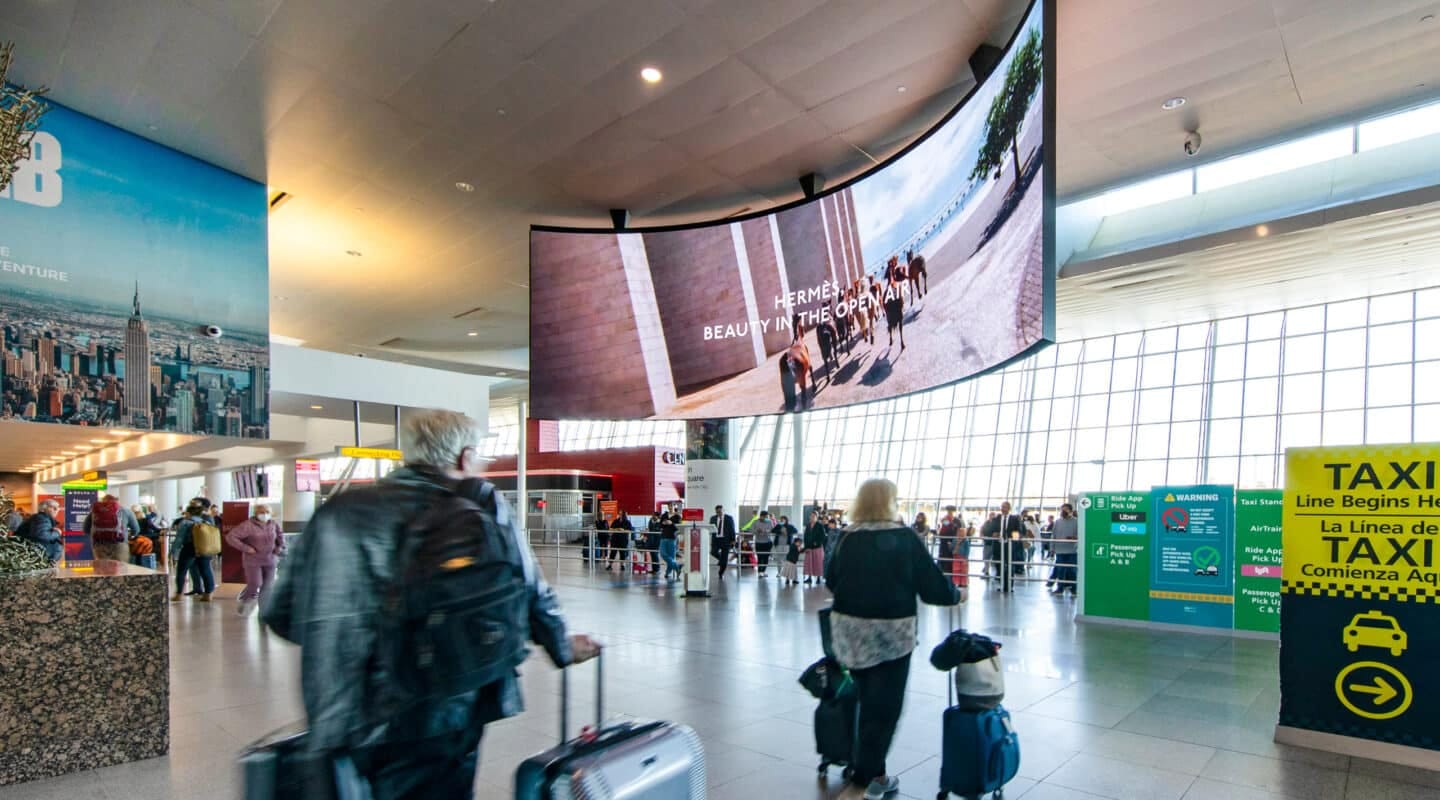
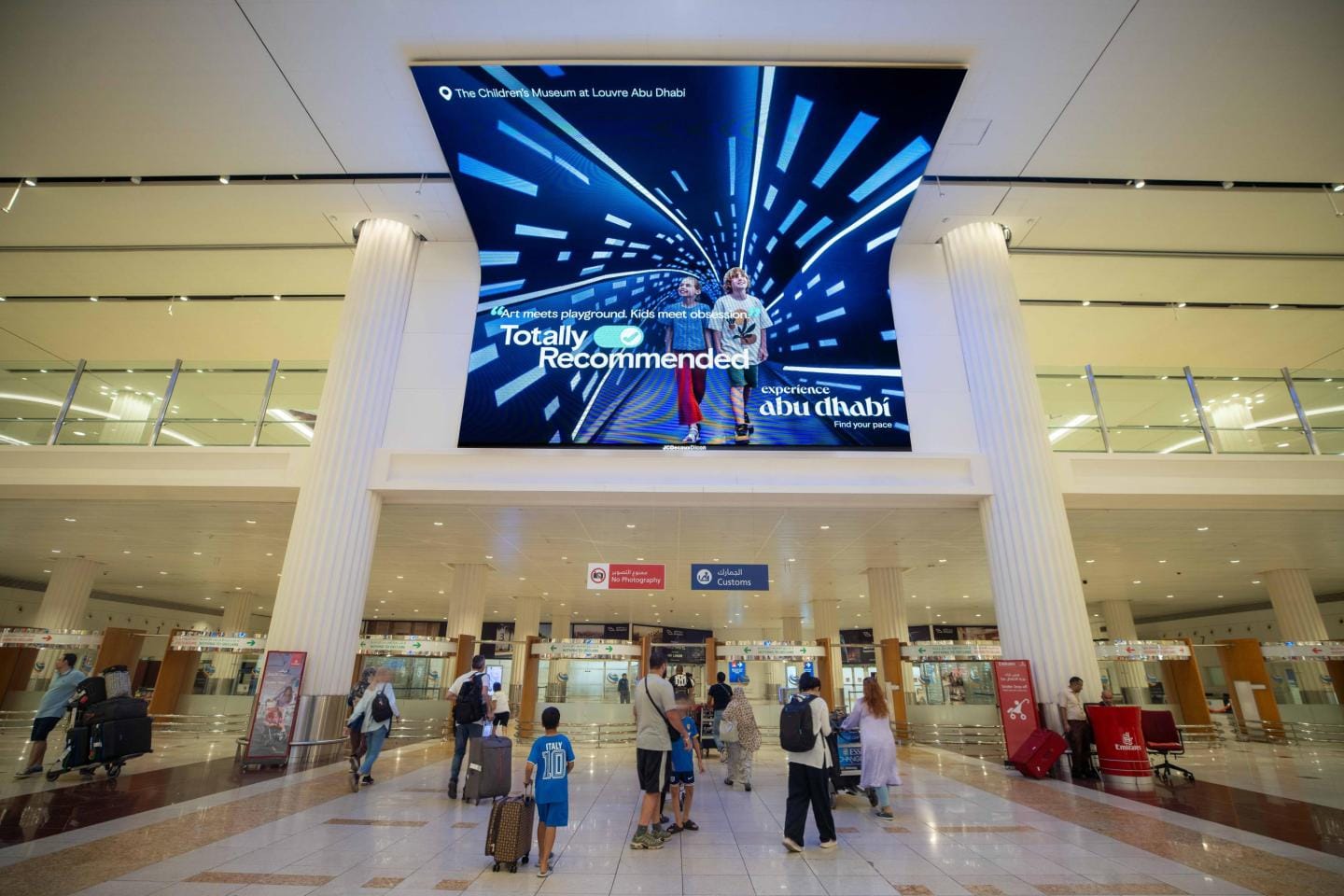
- Qingdao Jiaodong Airport's brand-new single terminal — opened in August 2021 and designed to international architectural standards with a premium commercial fit-out — provides an advertising environment of physical quality and brand association value that is among the highest in Chinese coastal city regional airports, with a terminal aesthetic that reflects the ambition and global commercial identity of a city whose two most famous exports are Tsingtao Beer and Haier appliances
- Dwell time at TAO is elevated by the terminal's integrated high-speed rail station — passengers arriving by rail from across Shandong Province typically arrive with more transit time than road-based travellers, creating extended pre-departure dwell windows in the terminal's commercial zones that reward premium, content-rich creative executions across both the domestic Chinese tourism audience and the Korean business community's regular commuter pattern
- The terminal's Korean-language advertising environment is one of the most commercially underdeveloped opportunities in Chinese coastal aviation — with a Korean business community of 80,000 to 100,000 residents commuting through TAO monthly, and Korean-language brand communications dramatically underrepresented relative to the commercial value of this audience, brands willing to invest in Korean creative at TAO will achieve near-market-exclusive positioning with the terminal's highest-frequency bilateral business travellers
- Masscom Global delivers full-service inventory access across Qingdao Jiaodong Airport's international and domestic terminal zones, with Mandarin and Korean bilingual creative capability, Shandong manufacturing and export industry market intelligence, and the Korean-Chinese bilateral commercial knowledge to ensure that every campaign captures both the domestic Chinese industrial tourism and business audience and the Korean business community simultaneously — the two-language, two-audience commercial activation that defines TAO's unique advertising opportunity
Strategic Advertising Fit
Best Fit:
- Korean-Chinese bilateral brands and Korean consumer goods: The TAO Korean business community is the most commercially concentrated bilateral audience in Chinese coastal aviation. Korean consumer electronics brands, Korean beauty and cosmetics companies, Korean food and beverage brands, and Korean-Chinese joint venture manufacturers whose brand recognition spans both sides of the Yellow Sea will find at TAO a commercial environment where their Korean-language brand investment reaches its highest per-impression return of any Chinese airport placement.
- Premium manufacturing B2B and enterprise technology: The Haier-Hisense-COSCO executive class and the Shandong manufacturing entrepreneur community represent a commercially qualified B2B technology buyer audience whose enterprise software, industrial automation, logistics technology, and professional services purchasing authority is consistently underestimated by international B2B advertisers focused on Beijing and Shanghai. Enterprise technology companies, industrial equipment manufacturers, and professional services firms targeting Chinese manufacturing sector decision-makers should treat TAO as their primary Shandong acquisition channel.
- International real estate — Australia, Canada, South Korea: Qingdao's active outbound property investment in Australian coastal markets, Canadian university cities, and Korean premium real estate creates a pre-qualified international property buyer audience whose investment intent is formed before they reach the terminal. Developers in Brisbane, Vancouver, Seoul, and Jeju will find at TAO a commercially motivated Shandong HNWI buyer pipeline that their coastal city-focused China marketing investment consistently misses.
- Premium automotive: Qingdao's globally exposed manufacturing executive class — shaped by daily contact with Haier's German engineering partnerships, Hisense's Japanese technology relationships, and the Korean automotive supply chain — carries automotive brand consciousness calibrated to global rather than provincial Chinese standards. German premium marques, South Korean automotive brands with Shandong manufacturing history, and Chinese new energy vehicle champions will all find strong audience alignment at TAO.
- Beer, spirits, and premium food and beverage: Tsingtao Beer's origin in Qingdao makes the city the most naturally receptive Chinese airport environment for premium beer, craft beverage, and food brand communications of any Chinese airport. The Beer Festival season in August concentrates this receptivity to a commercially extraordinary peak. Premium European beer brands, international spirits companies, and artisan food producers will find at TAO a domestic Chinese audience primed by the city's beer heritage identity for premium beverage brand engagement.
- International education — STEM and globally oriented: Shandong's fiercely competitive Gaokao culture and the manufacturing HNWI family's strong international education investment create a parent audience whose per-student investment commitment and international academic ambition are among the highest in Chinese coastal city aviation. STEM universities, business schools, and boarding schools from the UK, US, Australia, and Canada should treat TAO as a primary Shandong Province enrolment acquisition channel.
- Luxury hospitality and coastal tourism experiences: Qingdao's domestic Chinese tourism audience arrives pre-committed to a premium coastal experience whose brand discovery window begins at the arrivals terminal. Five-star hotels, premium restaurant groups, luxury yacht and sailing experiences, and premium coastal lifestyle brands will find at TAO an arriving domestic leisure audience in a state of maximum aspiration activation.
- Maritime, shipping, and port industry services: The Qingdao Port and COSCO shipping industry professional class represents a niche but commercially valuable B2B audience for maritime insurance, ship management technology, port logistics services, and trade finance brands whose category relevance to this audience is direct and whose contact efficiency at TAO is higher than at any other Chinese airport.
Brand Alignment at a Glance:
| Category | Fit |
|---|---|
| Korean-Chinese bilateral brands | Exceptional |
| Premium manufacturing B2B and enterprise tech | Exceptional |
| International real estate — Australia, Canada, Korea | Exceptional |
| Beer, spirits, and premium food | Exceptional |
| Premium automotive | Strong |
| International education — STEM focus | Strong |
| Luxury coastal hospitality and tourism | Strong |
| Maritime and shipping industry services | Strong |
| Mass-market budget consumer goods | Poor fit |
Who Should Not Advertise Here:
- Brands without China distribution or Korean market bridge capability: International brands without established Chinese market access or without the ability to communicate credibly in both Mandarin and Korean will achieve only a fraction of TAO's commercial potential. The terminal's most commercially distinctive audience — the Korean business community — is inaccessible to English-only creative, and the domestic Chinese manufacturing audience will not engage with brands that have no Chinese retail or digital commerce presence to support the airport brand encounter.
- Luxury brands without manufacturing quality narrative: Ultra-luxury brands whose positioning is purely lifestyle-aspirational without a genuine craft quality, engineering precision, or heritage manufacturing story will find the Shandong manufacturing professional audience resistant. This is an audience whose daily work requires the highest standards of production quality and who judges brand authenticity through the lens of manufacturing credibility — brands that can connect their luxury positioning to genuine quality production values will resonate; those that rely purely on aesthetic aspiration will not.
- Politically sensitive content referencing Korea-China relations: While the Korean-Chinese bilateral relationship at Qingdao is overwhelmingly commercial and positive, any advertising content that touches on bilateral political sensitivities — THAAD deployment history, intellectual property disputes, or trade regulatory friction — will create immediate commercial risk in an environment where both Chinese domestic and Korean expatriate audiences are politically aware and commercially relationship-dependent on bilateral harmony.
Event and Seasonality Analysis
- Event Strength: High (Beer Festival — nationally singular)
- Seasonality Strength: Very High
- Traffic Pattern: Summer-dominant with Beer Festival peak and Golden Week secondary
Strategic Implication:
Advertisers at Qingdao Jiaodong Airport should anchor their primary investment around three commercially distinct windows. The summer coastal tourism season from May through September delivers the highest-volume domestic leisure tourist concentration, with the August Beer Festival week representing the single most commercially intensive inbound tourism moment of the year — a period when TAO's terminal processes the highest concentration of beer, food, and premium lifestyle brand consumers of any week in its annual calendar. National Day Golden Week in October generates the second-highest-quality domestic tourism concentration alongside peak Korean bilateral business travel. The Korean business community's year-round high-frequency commuting pattern means that Korean-language advertising investment should be maintained consistently across all twelve months, with intensification during Korean Chuseok (autumn harvest holiday) and Seollal (Korean New Year) windows when Korean community travel through TAO reaches its emotional and commercial peak. Masscom Global structures TAO campaigns to capture both the Chinese domestic seasonal rhythm and the Korean business community's year-round bilateral commercial cadence simultaneously.
Poor Placement and Delays Affect Airport Campaigns
We help you move faster, access better inventory, and get it right now.
Talk to an ExpertFinal Strategic Verdict
Qingdao Jiaodong International Airport is China's most commercially underactivated coastal gateway — a brand-new, architecturally premium terminal serving 15.3 million passengers at the convergence of China's most celebrated consumer brand headquarters city, the country's most significant bilateral Korean-Chinese manufacturing investment corridor, a world-class port and maritime wealth economy, and the domestic Chinese coastal leisure destination whose Beer Festival is the most internationally attended food and beverage cultural event in Asia. The Haier global executive flying to Frankfurt, the Korean electronics manufacturer commuting monthly to Seoul, the COSCO shipping director managing China's northern container port, the Shandong manufacturing entrepreneur inspecting Brisbane property, and the Beijing professional arriving for a summer week in Qingdao's German-architecture beach city — all move through a terminal where the world's most prominent international brands have invested far less than the commercial quality of this audience justifies. That gap between audience sophistication and advertising investment is the TAO opportunity, and it exists in a facility that opened in 2021 at the beginning of what will be a decades-long trajectory toward 55 million passengers. The brands that move now — establishing Korean-Chinese bilingual, manufacturing-credible, Shandong-authentic presence in this terminal before its Phase 2 expansion intensifies inventory competition — will access the Shandong HNWI market and the Korean-Chinese bilateral business community with a commercial efficiency that will be increasingly difficult to replicate as TAO grows toward its design capacity. Masscom Global provides the Mandarin and Korean bilingual intelligence, the Shandong industrial market expertise, and the TAO inventory access to make that first-mover positioning your competitive advantage.
About Masscom Global
Masscom Global is a premium international airport advertising and media buying agency operating across 140 countries. With deep expertise in airport OOH, premium publications, and high-net-worth audience targeting, Masscom helps brands reach the world's most valuable travellers at the moments that matter most. For advertising packages, media rates, and campaign planning at Qingdao Jiaodong International Airport and airports across the globe, contact Masscom Global today.
Frequently Asked Questions
How much does airport advertising cost at Qingdao Jiaodong International Airport?
Advertising costs at Qingdao Jiaodong Airport vary based on terminal zone, format type, Mandarin and Korean language creative specifications, campaign duration, and seasonal demand. The August Beer Festival window, National Day Golden Week in October, and the summer coastal tourism season from June through August attract the highest inventory demand and should be planned well in advance. Masscom Global provides current rate cards for the new Jiaodong terminal zones, bilingual format specifications, and bespoke media packages tailored to both domestic Chinese industrial and tourism brand objectives and Korean-Chinese bilateral commercial campaigns. Contact Masscom Global directly for current pricing and a tailored proposal.
Who are the passengers at Qingdao Jiaodong International Airport?
TAO serves a commercially layered passenger profile across three primary segments. The Shandong manufacturing and export industry professional class — encompassing Haier and Hisense corporate executives, Qingdao Port and shipping management, manufacturing entrepreneurs, and the broader Shandong industrial business community — represents the most commercially qualified year-round business audience. South Korean business community members — an estimated 80,000 to 100,000 Korean residents in the Qingdao area whose manufacturing and trade investment sustains one of the most active bilateral business travel corridors in Chinese aviation — represent the dominant international nationality with the highest travel frequency and commercial value per traveller. Domestic Chinese coastal leisure tourists — arriving from Beijing, Shanghai, and Guangzhou for the Beer Festival, summer beach season, and German heritage architecture experience — represent the highest-volume seasonal audience.
Is Qingdao Jiaodong Airport good for luxury brand advertising?
Qingdao Airport performs strongly for luxury and premium brand advertising in categories aligned with the city's manufacturing dynasty identity, Korean-Chinese bilateral commercial culture, and coastal premium leisure tourism character. Premium automotive, Korean-Chinese bilateral consumer brands, beer and premium spirits, luxury coastal hospitality, international real estate, and enterprise technology brands will all find genuine audience alignment at TAO. The new terminal's premium architectural and commercial environment elevates every brand present within it — being in the Jiaodong terminal associates a brand with the same global commercial ambition that Haier and Hisense have brought to Chinese manufacturing, and that is a brand association environment of genuine commercial value.
What is the best airport in Shandong to reach HNWI audiences?
Qingdao Jiaodong International Airport is Shandong Province's primary HNWI access point, serving the province's largest city and most dynamic commercial economy. Jinan Yaoqiang International Airport serves the provincial capital and provides secondary access to Shandong's government, education, and financial services wealth. For brands targeting Shandong's manufacturing and export HNWI, the Korean-Chinese bilateral business community, Qingdao's global brand headquarters executive class, or the domestic Chinese premium coastal tourism audience, TAO is the sole viable primary channel and its commercial distinctiveness is both its strategic differentiator and its irreplaceable competitive advantage.
What is the best time to advertise at Qingdao Airport?
The August Beer Festival is TAO's most nationally distinctive and commercially concentrated advertising window — China's largest food and beverage cultural event generates an extraordinary domestic and international inbound tourism surge whose brand receptivity for premium beer, spirits, food, and hospitality categories peaks simultaneously in this two-week period. The summer coastal tourism season from May through September delivers the highest sustained domestic luxury leisure audience concentration. National Day Golden Week in October generates the single highest-volume travel week with peak across all commercial categories. The Korean business community's year-round bilateral travel sustains commercial performance across the full twelve months, with Korean holiday windows of Chuseok and Seollal providing secondary Korean-audience concentration peaks.
Can international real estate developers advertise at Qingdao Airport?
Qingdao Airport is a strong and underutilised acquisition channel for international real estate developers targeting Shandong HNWI buyers. The Qingdao manufacturing and port wealth class is an active outbound property buyer in Australia (Gold Coast and Brisbane), Canada (Vancouver and Toronto), and South Korea (Seoul and Jeju). Developers in these markets will find at TAO a motivated, financially qualified, and commercially experienced buyer audience from China's most productive manufacturing province — a segment that is dramatically underrepresented in the Shanghai and Beijing-focused China marketing investment of most international property developers. The Korean business community at TAO additionally creates a bilateral real estate investment dimension — Chinese investors in Korean property and Korean investors in Chinese coastal property — that no other Chinese coastal airport can generate at comparable scale.
Which brands should not advertise at Qingdao Airport?
Brands without Chinese market distribution or Korean-language communication capability, content touching on Korea-China bilateral political sensitivities, pure aspirational luxury brands without manufacturing quality or craft heritage narratives relevant to a Shandong industrial professional audience, and mass-market budget consumer goods requiring metropolitan scale for ROI viability are all structurally misaligned with the TAO advertising environment. Brands that treat Qingdao as a generic second-tier Chinese coastal city without acknowledging its Haier-Hisense-Tsingtao global brand heritage, its German architectural character, or its Korean bilateral business depth will significantly underperform relative to brands that engage authentically with the city's specific commercial and cultural identity.
How does Masscom Global help brands advertise at Qingdao Jiaodong International Airport?
Masscom Global provides complete end-to-end advertising capability at Qingdao Jiaodong Airport — from Shandong manufacturing HNWI and Korean-Chinese bilateral audience intelligence through Mandarin and Korean bilingual campaign strategy, inventory access across the new Jiaodong terminal zones, creative specification, placement execution, and campaign performance reporting. Our team brings deep knowledge of Shandong's manufacturing and export commercial culture, the Korean business community's specific bilateral travel patterns and brand priorities, the Beer Festival and coastal tourism seasonal windows, and the culturally specific communication standards that earn genuine engagement from both Qingdao's Confucian-shaped industrial professional audience and its internationally calibrated Korean business community. We execute faster, with deeper bilateral market calibration and more precise placement strategy than any planning team approaching TAO without dedicated Shandong and Korean-Chinese bilateral airport advertising expertise. Contact Masscom Global today to build your brand's presence in China's most commercially distinctive and most rapidly growing new coastal gateway.