


Airport at a Glance
| Field | Detail |
|---|---|
| Airport | Tocumen International Airport |
| IATA Code | PTY |
| Country | Panama |
| City | Panama City |
| Annual Passengers | Approximately 15.5 million (2023) |
| Primary Audience | Latin American HNWI transit travellers, Panama resident financial and commercial elite, international business executives |
| Peak Advertising Season | Year-round, with peaks in December to January and June to August |
| Audience Tier | Tier 1 |
| Best Fit Categories | International real estate, luxury travel and hospitality, wealth management and private banking, premium consumer goods, international education |
Tocumen International Airport is the most commercially significant aviation gateway in Latin America and the Caribbean. As the primary hub of Copa Airlines and the connecting node through which the majority of air traffic between South America, North America, the Caribbean, and Europe flows, PTY does not simply serve a city — it serves a continent. The airport's passenger base is defined not by a single national demographic but by the aggregate wealth profile of Latin America's most mobile, most internationally active, and most financially capable travelling class. For advertisers seeking access to the region's HNWI audience at scale, there is no single airport environment in the hemisphere that delivers comparable reach, concentration, and commercial quality in one terminal.
What makes PTY structurally unique for advertisers is the layering of its audience. At one level, it serves Panama City itself — a dollarised economy with over eighty international banks, the world's second-largest free trade zone, and a permanent resident class of financial executives, canal operators, legal professionals, and international entrepreneurs that rivals any Central American capital in per-capita wealth. At another level, it functions as the primary transit and connection hub for Colombian, Venezuelan, Peruvian, Ecuadorian, Brazilian, Argentine, and Chilean HNI travellers whose journeys to Miami, New York, Madrid, and Amsterdam route through PTY by design. These two audience layers — the Panama resident elite and the Latin American transit HNWI — share the same terminal and the same dwell time, creating an advertising environment of exceptional commercial density.
The opening of Terminal 2 in 2019 added a modern, premium-grade facility to the airport's infrastructure, elevating the brand association environment across the entire complex and increasing the commercial real estate available to advertisers in airside, premium lounge-adjacent, and high-dwell zone positions. PTY now operates at a scale, quality, and audience composition that positions it alongside São Paulo GRU, Bogotá BOG, and Mexico City MEX as one of the four indispensable airport advertising buys in Latin America — and as the only one of that group that functions primarily as a transit hub rather than a domestic origin market.
Advertising Value Snapshot
- Passenger scale: Approximately 15.5 million annual passengers (2023), recovering toward the pre-pandemic peak of 17.5 million (2019), with Copa Airlines consistently reporting record load factors and route network expansion driving volume growth
- Traveller type: Latin American HNWI transit passengers connecting between South America and North America or Europe, Panama resident financial and commercial elite, international business executives and diplomatic travellers
- Airport classification: Tier 1 — the dominant aviation hub of Central America and the Caribbean, and the primary transit gateway for Latin America's most commercially valuable air corridors
- Commercial positioning: The Hub of the Americas — the highest-frequency connecting point between South America and the world, with an audience profile shaped by the aggregate wealth of the region's most internationally mobile travellers
- Wealth corridor signal: PTY sits at the intersection of the two most commercially active aviation corridors in the Western Hemisphere — the South America to North America corridor and the Latin America to Europe corridor — making every advertising impression at this airport a wealth corridor interception by definition
- Advertising opportunity: Masscom Global provides brands with precision access to PTY's unparalleled Latin American HNWI transit audience and Panama City's resident financial elite, across Terminal 1 and Terminal 2 environments structured to maximise dwell-time engagement at the hemisphere's most commercially powerful hub

Airport Advertising is Complex to Get Right
We help you execute faster, with proven results and local insight most planners lack starting now.
Talk to an ExpertCatchment Area and Economic Drivers
Top 10 Cities within 150 km — Marketer Intelligence:
- Panama City (capital, ~15 km from airport): The financial capital of Latin America's most dollarised economy, home to over eighty international banks, a thriving legal and advisory services sector, the Panama Canal Authority, and a growing luxury real estate and hospitality industry. The resident professional class here is among the wealthiest in Central America and includes a significant population of internationally relocated executives from Colombia, Venezuela, the United States, and Europe whose spending habits reflect global rather than regional income benchmarks.
- San Miguelito (~10 km): Panama's second-most populous urban district, adjacent to the capital, where a large middle-to-upper professional class in government, services, and commerce generates consistent domestic and regional travel demand. Aspirational consumer brands, financial products, and telecommunications brands targeting Panama's growing professional middle class find a commercially active audience here.
- Arraiján (~30 km west): A rapidly urbanising residential corridor on the western bank of the Panama Canal, where upper-middle-class professionals and families from Panama City's service economy have established the country's most active new residential development zone. International real estate developers, automotive brands, and financial services brands targeting Panama's upwardly mobile professional class find strong commercial alignment in this audience.
- La Chorrera (~45 km west): Coclé Province's gateway city and a commercial and logistics hub for Panama's western interior. The business operator class here is active in trade, retail, and agribusiness, generating domestic travel frequency and purchasing behaviour that aligns with financial services, automotive, and consumer brand advertising.
- Colón (~75 km north): Home to the Colón Free Trade Zone — the second-largest free trade zone in the world by transaction volume, after Hong Kong — this Atlantic-facing port city generates one of the most commercially sophisticated merchant audiences in the Americas. The wholesale and retail trade operators here manage billions of dollars in annual merchandise flows, travel internationally for sourcing and commercial purposes, and represent a high-capital business class whose exposure to international brands is structurally high. For premium B2B services, financial institutions, and luxury goods brands, the Colón commercial class is a commercially underestimated airport audience.
- Capira (~55 km west): A small western corridor town whose growing residential population contributes to Panama's expanding commuter and logistics workforce. Consumer brands and financial service providers targeting Panama's emerging provincial middle class find a progressively active audience here as urban sprawl extends westward from the capital.
- Chepo (~50 km east): A frontier commercial town at the eastern edge of the Panama City catchment, where cattle, agriculture, and logistics intersect with the Darién road network. The operator class here travels domestically for commercial purposes, generating a modest but consistent business travel contribution to the airport's base passenger volumes.
- Portobelo (~110 km northeast): A UNESCO World Heritage Caribbean port town whose growing eco-tourism and sailing tourism economy is attracting international visitors and second-home investors. The premium tourism infrastructure developing around Portobelo and the Costa Arriba corridor is producing a new class of international real estate buyer and experience tourism operator that contributes to the airport's premium leisure and investment travel segment.
- Balboa and Ancon (~20 km southwest): The former US Canal Zone administrative districts, now integrated into Panama City's western metropolitan area. These communities retain a significant English-speaking, US-connected professional population whose travel patterns, financial habits, and brand preferences are shaped by American cultural and commercial benchmarks, making them a natural audience for US-origin premium brands and international financial service providers.
- Penonomé (~150 km west): The capital of Coclé Province and a growing commercial hub for Panama's agricultural heartland, where sugar, cattle, and mixed farming generate a productive sector business class. The commercial operators here travel to Panama City regularly for financial dealings, making them part of the airport's domestic business travel base and receptive to financial advisory, agricultural insurance, and premium consumer brand advertising.
NRI and Diaspora Intelligence:
Panama City's diaspora and expatriate landscape is one of the most commercially layered in the Americas, and it flows directly through PTY. The Colombian community is the largest foreign-origin resident group, numbering in the hundreds of thousands and concentrated in the professional, medical, legal, and commercial sectors of Panama City's economy. Venezuelan professionals and HNI migrants — many of whom arrived with significant capital and high professional credentials — have established themselves as a commercially active and financially mobile segment of the airport's resident passenger base. The Chinese-Panamanian community, one of the oldest and most established in Latin America, maintains strong commercial connections to China, Hong Kong, and Chinese-origin trade networks globally, generating consistent international travel through PTY with a purchasing profile shaped by decades of retail and wholesale commercial activity. The Arab-Lebanese community, concentrated in the retail, textile, and wholesale sectors of both Panama City and the Colón Free Zone, is commercially sophisticated, internationally mobile, and maintains investment connections to Lebanon, the UAE, and increasingly to Europe through residency and citizenship pathways. For international brands targeting diaspora-connected wealth corridors, PTY provides simultaneous access to multiple high-value expatriate communities within a single terminal environment.
Economic Importance:
Panama's economy is architecturally unique in Latin America, built on a foundation of canal revenues, international banking, free trade zone logistics, and service exports rather than the commodity extraction or manufacturing base that defines most regional economies. This structural distinction produces an airport catchment whose professional class is disproportionately concentrated in high-value financial, legal, logistics, and commercial services — sectors that generate above-average income, high international mobility, and strong responsiveness to premium brand advertising. The US dollar as Panama's operational currency eliminates the currency risk and purchasing power uncertainty that affects consumer behaviour at airports in peso or real-denominated economies, meaning the PTY audience's spending power is both significant and stable — a commercially important distinction for luxury and premium brand advertisers planning Latin American campaigns.
Business and Industrial Ecosystem
- International banking and financial services: Over eighty international banks operate in Panama City, generating a professional class of financial executives, legal advisors, compliance specialists, and wealth managers whose domestic and international travel frequency is among the highest of any professional sector in Latin America
- Panama Canal Authority and maritime logistics: The Canal's expansion and modernisation programmes have sustained a large community of engineering, logistics, and maritime trade executives whose international travel connects Panama to port cities, shipping headquarters, and maritime finance centres across Europe, Asia, and North America
- Colón Free Trade Zone: The world's second-largest free trade zone by transaction volume generates a merchant and logistics operator class whose commercial travel extends to Miami, New York, Hong Kong, Shanghai, and Dubai for sourcing, trade, and financial purposes — producing one of the most internationally mobile commercial audiences in Central America
- Real estate and luxury development: Panama City's skyline — one of the most dramatically developed in Latin America — is supported by an active developer, architect, and investment community whose international connections run to New York, Miami, Madrid, and Singapore, generating consistent premium business travel through PTY
Passenger Intent — Business Segment:
The business traveller at PTY operates across two distinct categories. The first is the Panama-based executive — a banker, canal administrator, free zone operator, or real estate developer whose international travel connects Panama to the financial capitals of the Americas and Europe. The second, and commercially larger category, is the Latin American business executive in transit — a Colombian industrialist connecting to New York, a Peruvian mining executive routing through Panama to Madrid, or a Venezuelan banker travelling to Miami — for whom PTY is the engineered connection point of choice because Copa Airlines' hub design makes it faster and more reliable than any alternative routing. Both categories represent above-average income, above-average brand literacy, and strong purchasing readiness in financial services, technology, luxury goods, and premium travel categories.
Strategic Insight:
PTY is the only airport in the Americas where advertisers can intercept the combined Latin American business executive class in meaningful concentration without committing to multiple country-specific campaigns. The Copa Airlines hub model aggregates the business travel of fifteen or more Latin American countries into a single connecting terminal, creating a cross-market audience density that is impossible to replicate at any individual country's home airport. For international brands — particularly in financial services, premium technology, luxury automotive, and international real estate — PTY's business transit audience is the most commercially efficient access point to the Latin American HNI professional class available through any single airport advertising investment.
Tourism and Premium Travel Drivers
- Casco Viejo and Panama City luxury tourism: Panama City's UNESCO-listed colonial district, combined with a rapidly expanding luxury hotel portfolio including the Waldorf Astoria, JW Marriott, and Trump Ocean Club, positions the city as Central America's foremost luxury urban destination, drawing international leisure travellers whose per-trip spend reflects the premium positioning of the accommodation they have pre-booked
- Panama Canal experience tourism: The Canal's Miraflores Locks visitor centre and the expanded Agua Clara Locks on the Atlantic side attract a globally curious, high-education international audience whose visit to Panama combines natural wonder with industrial achievement — a combination that draws premium travellers from Europe, North America, and East Asia who arrive with significant discretionary budgets
- Bocas del Toro and Caribbean island tourism: Panama's Caribbean archipelago, accessible via domestic connection or road from PTY, draws an international eco-tourism and adventure travel community of American, European, and Canadian visitors with high per-trip expenditure and strong appetite for premium nature experience products
- Biomuseo and convention tourism: Frank Gehry's Biomuseo and Panama City's growing convention and congress infrastructure attract international MICE travel — conference delegates, corporate incentive groups, and international academic visitors — whose combined accommodation and experience spending contributes a consistent premium tourism layer to the airport's passenger profile
Passenger Intent — Tourism Segment:
The leisure tourist arriving at PTY falls into two commercially distinct sub-categories. The first is the Panama City destination visitor — arriving specifically for the Canal experience, luxury hotel stay, Casco Viejo exploration, or convention attendance — whose discretionary spend is pre-committed and whose brand receptivity in the airport is driven by supplementary purchasing rather than primary decision-making. The second, and far larger category at PTY, is the transit tourist — the South American or North American traveller pausing at PTY for one to four hours between connections on a multi-country itinerary. This transit tourist has committed to a premium journey and is already in the high-spending, brand-engaged state of mind that characterises long-haul international leisure travel. The multi-hour layover at PTY creates a structurally enforced dwell window that is commercially exceptional — passengers have nowhere to go and nothing to do except engage with the retail, food, and advertising environment the terminal provides.
Travel Patterns and Seasonality
Peak seasons:
- December to January (Christmas and New Year transit peak): The highest-volume period for both the Latin American leisure transit audience and Panama City's domestic holiday market. South American families routing to Miami, Orlando, and New York for Christmas shopping and holiday experiences converge on PTY, creating a concentrated window of HNWI transit traffic with strong consumer spending intent. This is the premium window for luxury goods, retail, and travel brand advertisers.
- June to August (Northern Hemisphere summer peak): North American and European leisure travellers routing south through PTY to the Caribbean and South America generate a significant inbound premium tourism flow, while Latin American students and families travel north for summer programmes, shopping trips, and holiday experiences. This period produces PTY's second-highest passenger volumes and the strongest international tourist concentration of any non-December window.
- Dry season (January to April): Panama's own dry season draws the highest concentration of domestic tourism and Canal-oriented visitor traffic. International tourists who time their Panama visit for optimal weather arrive in this window, and the airport's domestic leisure and hospitality industry reach their annual service peak.
Event-Driven Movement:
- Panama City convention and congress calendar (year-round, with peaks in March, October, and November): PTY serves as the primary gateway for Latin America's most active international convention market. Panama City hosts major medical, legal, financial, and tech conferences throughout the year, drawing an internationally mobile professional and academic audience whose per-trip expenditure and brand profile align directly with premium advertiser categories.
- Copa Airlines seat sale and route launch events (rolling): Copa's frequent new route launches and seat sale campaigns generate structured traffic spikes on specific corridors, creating predictable windows of elevated passenger volume that Masscom Global maps to campaign scheduling to maximise impression frequency during commercially productive traffic surges.
- Christmas and New Year shopping season (December): South American consumers — particularly Colombians, Venezuelans, Ecuadorians, and Peruvians — historically route their Christmas shopping trips through Panama and Miami, with PTY serving as both a connection and a retail environment. The purchasing mindset of this audience during December makes it the single most commercially productive month of the year for luxury retail, premium consumer goods, and lifestyle brand advertisers.
- Carnaval and Semana Santa (February to April): Panama's own Carnaval celebrations drive domestic leisure movement, while Semana Santa generates a concentrated short-break travel surge as Panamanian and Colombian Catholic families travel for the Easter holiday period. Premium travel, hospitality, and consumer lifestyle brands benefit from a festive spending mindset during both windows.
- Panama Canal anniversary and national events (November): Panama's separation from Colombia anniversary (November 3) and associated national holidays generate a domestic celebration and travel window that concentrates Panamanian families at the airport in both inbound and outbound leisure travel postures.

It’s Not Just Where You Advertise - It’s How Fast You Execute
We combine local insight with fast rollout to deliver results for you, now.
Talk to an ExpertAudience and Cultural Intelligence
Top 2 Languages:
- Spanish: The official and operational language of Panama and the dominant language of the Latin American transit audience that constitutes the majority of PTY's passenger base. Spanish-language creative at PTY intercepts the full regional audience simultaneously — Colombian, Venezuelan, Peruvian, Ecuadorian, Argentine, and Chilean transit passengers all receive Spanish creative as their primary language — making PTY one of the most efficient single-airport Spanish-language advertising placements in the hemisphere.
- English: The second operational language of Panama's financial and canal sectors, widely spoken by Panama's professional class and the primary language of the significant North American expatriate and tourist audience flowing through PTY. English-language creative signals premium international positioning and directly addresses the North American, European, and Caribbean transit passenger whose per-trip expenditure frequently exceeds that of the Latin American domestic traveller.
Major Traveller Nationalities:
The nationality composition at PTY is the most diverse of any airport in Central America and rivals the international complexity of Miami and São Paulo. Colombian passengers are consistently the largest single foreign nationality, reflecting the proximity, commercial intensity, and frequency of the Panama-Colombia corridor. Venezuelan travellers — both the established professional diaspora and more recent HNI migrants — form the second most commercially significant foreign nationality group, with a purchasing profile shaped by the extraordinary wealth preserved by those who exited Venezuela with capital intact. Peruvian, Ecuadorian, and Bolivian travellers route through PTY on their way to North America and Europe, adding South America's Andean wealth tier to the transit audience pool. American, Canadian, and European passengers — both leisure tourists heading further into South America and business travellers with Panama itself as their destination — round out an international audience whose diversity is not a complexity challenge but a commercial advantage for brands with multi-market strategies who can reach multiple Latin American target audiences through a single airport buy.
Religion — Advertiser Intelligence:
- Roman Catholic (approximately 70 to 75%): The dominant religious identity across both the Panamanian resident audience and the majority of the Latin American transit passenger base. Semana Santa generates PTY's most concentrated domestic travel surge of the first half of the year, with Panamanian and Colombian Catholic families creating a predictable Easter week traffic peak. Christmas remains the single most commercially powerful window across all Catholic-majority passenger segments, driving the December passenger surge that represents the airport's highest-revenue advertising period.
- Evangelical and Protestant Christian (approximately 15 to 20%): One of the fastest-growing religious communities in Panama and across Central America, with significant representation in Panama's urban professional class and growing influence in the Colombian and Venezuelan diaspora communities. This segment shares the Christmas and school holiday travel peaks of the Catholic majority and is commercially responsive to family lifestyle, travel, and aspirational consumer brand advertising.
- Islam (approximately 4 to 5% of the catchment): The Arab-Lebanese Muslim and Christian community in Panama City and the Colón Free Zone represents a commercially sophisticated and internationally mobile religious group whose Ramadan and Eid travel generates meaningful traffic on Middle Eastern routes. Eid al-Fitr and Eid al-Adha create celebratory spending windows with strong brand responsiveness in luxury goods, premium fashion, jewellery, and hospitality categories. Brands from the UAE, Saudi Arabia, and wider Middle East addressing this community through PTY find a geographically concentrated and culturally aligned target audience that extends to the broader Latin American transit base through the airport's connecting network.
Behavioral Insight:
The PTY traveller is commercially distinct from the passenger at any single-country airport because their behaviour is shaped not by one national economic context but by the aggregate confidence and aspiration of Latin America's most internationally mobile class. These are people who have already demonstrated the financial capacity and logistical sophistication to execute multi-country international journeys — their presence at PTY is itself evidence of above-average income, international connectivity, and purchasing power. The transit environment creates a specific psychological condition that advertisers should understand: passengers in a connecting hub have surrendered control of their immediate schedule, have confirmed blocks of free time, and are in a heightened state of international awareness — which makes them more receptive to premium brand advertising than they are at home, at work, or in familiar domestic environments. Brands that communicate international aspiration, global quality, and world-class prestige capture this psychological state far more effectively than those deploying domestically-oriented creative in a transit hub context.
Outbound Wealth and Investment Intelligence
The outbound passenger profile at PTY is one of the most commercially compelling in the Americas for international real estate developers, wealth managers, and residency advisors. The airport simultaneously handles Panama's own outbound HNI investor class — whose capital is channelled through the country's sophisticated banking infrastructure into international real estate, financial products, and residency programmes — and the Latin American transit HNWI whose journey through PTY to Miami, New York, Madrid, or Amsterdam frequently includes investment decision-making activity that has been accelerated by professional advice received in Panama City's banking district before their departure. PTY is not just where the wealthy travel — it is where they make the calls, sign the documents, and confirm the deals.
Outbound Real Estate Investment:
Panama's resident HNI class deploys real estate capital internationally with a sophistication that reflects the country's financial centre status. Miami and South Florida are the dominant international property markets for Panama City's professional class, with Brickell, Aventura, and Miami Beach accounting for the majority of Panamanian-origin real estate acquisitions in the United States. New York City — particularly Manhattan and Brooklyn — attracts the most financially ambitious tier of Panama's banking and legal executive class. Madrid and Barcelona draw Panama's Spanish-connected professional community and the Colombian and Venezuelan diaspora whose European ancestry reinforces property acquisition appetite in the Iberian Peninsula. Portugal's NHR regime and the Golden Visa era (now restructured) attracted significant Latin American capital, and Panama's financial advisors continue to direct clients toward Portuguese property as a Portugal-EU foothold strategy. The transit audience adds a further layer: Colombian industrialists routing through PTY to purchase Miami real estate, Venezuelan HNI families connecting to Madrid to finalise Spanish property acquisitions, and Peruvian professionals stopping in Panama on their way to European residency consultations. For international real estate developers operating in any of these markets, PTY represents the single most efficient Latin American airport advertising buy for reaching active international property buyers at the exact moment of their investment travel.
Outbound Education Investment:
Panama's professional families invest heavily in international education, with the United States commanding the dominant share of university enrolment — particularly in Florida, Texas, and New York state, which have established Panamanian student communities. The Colombian and Venezuelan professional diaspora resident in Panama City — itself a highly educated class — maintains strong international education investment habits directed toward the United States, Spain, and Canada. Panama's own English-bilingual school system and the presence of major international schools in Panama City create a foundation of English-ready students for whom US and UK university applications are structurally accessible. For international universities, language schools, and education finance providers, PTY is the optimal Latin American airport advertising channel for reaching the education-spending parent class of multiple countries simultaneously — Colombian, Venezuelan, Panamanian, Peruvian, and Ecuadorian families all pass through this terminal on their way to international education destination visits.
Outbound Wealth Migration and Residency:
Panama itself is a destination for wealth migration from across Latin America, attracting HNI Colombians, Venezuelans, Peruvians, and Ecuadorians through its Friendly Nations Visa programme, its Pensionado retirement programme attracting American and Canadian retirees, and its structural tax advantages — no tax on foreign-source income — that make it one of the most attractive residency destinations in the hemisphere. However, Panama's own HNI class also seeks international residency anchors, primarily in Spain, Portugal, and the United States, to secure EU mobility and US access for their children and family members. The Venezuelan diaspora in Panama has among the most acute international residency planning needs in the entire Latin American market, with US permanent residency, Spanish citizenship, and Portuguese NHR residency all attracting active interest and advisory spend. For residency advisory firms operating European and North American programmes, PTY delivers simultaneous access to the outbound Panamanian investor and the transit Venezuelan, Colombian, and Peruvian HNI who are actively executing on residency strategy at precisely the moment they pass through this airport.
Strategic Implication for Advertisers:
PTY is the only airport in the Americas where a single advertising investment simultaneously intercepts the Latin American HNI transit passenger on their way to complete an international real estate purchase, the Panama City resident banker structuring their client's offshore portfolio, and the Venezuelan or Colombian diaspora professional finalising a European residency application. Masscom Global activates campaigns across this multi-layered wealth corridor — at PTY for the outbound investor and at international destination airports for the incoming buyer — creating a cross-market brand footprint that captures the full decision-making journey of Latin America's most valuable outbound investor class.
Airport Infrastructure and Premium Indicators
Terminals:
- Terminal 1 handles the majority of Copa Airlines domestic and regional operations, with a mature commercial zone and an established dwell-time environment shaped by decades of hub traffic. The terminal's scale and passenger flow concentration create high-frequency impression opportunities at key checkpoints throughout the departure and connecting passenger journey.
- Terminal 2, opened in 2019, is a premium-grade international facility with twenty new gates, modern architecture, elevated retail and food and beverage quality, and infrastructure specifically designed to serve the long-haul and premium international passenger segments. Terminal 2 represents the highest-quality brand environment at PTY and is the preferred zone for luxury, financial, and international real estate advertisers seeking premium brand association.
Premium Indicators:
- Copa Airlines' Business Class lounge and multiple Priority Pass-accessible lounges serve a significant proportion of PTY's premium fare passengers — business and first-class travellers from across Latin America whose dwell time in lounge-adjacent environments creates highly concentrated premium audience interception opportunities
- American Airlines Admirals Club and Delta Air Lines branded lounge access at PTY signals the volume of premium North American carrier passengers connecting through the hub, adding a North American executive and business travel audience layer to the terminal's existing Latin American premium passenger base
- Panama City's luxury hotel infrastructure — Waldorf Astoria Panama, JW Marriott, Bristol, and Trump Ocean Club — generates a constant flow of high-income guests whose arrival and departure through PTY signals the calibre of the city's top-spending visitor and resident class
- PTY's designation as the Hub of the Americas by Copa Airlines is not a marketing claim but an operational reality verified by route maps, connection volumes, and load factors — the airport handles more inter-American connection traffic than any other single hub in Central America, which for advertisers translates into the highest reach, highest frequency, and highest wealth concentration available in the region
Forward-Looking Signal:
PTY's expansion programme is ongoing, with additional gate capacity, retail development, and lounge infrastructure investment planned to accommodate Copa Airlines' continued network growth and the recovery of international traffic toward and beyond the 2019 peak of 17.5 million passengers. Copa Airlines has consistently announced new routes, fleet additions, and frequency increases that signal continued passenger volume growth at PTY through the medium term. Panama's broader economic trajectory — driven by Canal expansion revenues, financial services growth, and an increasingly ambitious luxury real estate and hospitality development programme — reinforces the airport's commercial value as both a transit hub and a destination gateway. Masscom Global advises clients to establish advertising presence at PTY now, ahead of the passenger volume growth that will increase both impression scale and inventory competition in the coming years.
Airline and Route Intelligence
Top Airlines:
- Copa Airlines (dominant hub carrier)
- American Airlines
- Delta Air Lines
- United Airlines
- Air Canada
- Avianca
- LATAM Airlines
- Iberia
- Air Europa
- KLM
- Lufthansa
- Turkish Airlines
- Aeromexico
- Air France
- Sky Airline
Key International Routes:
- Panama City (PTY) to Miami (MIA) — one of the highest-frequency routes in the Americas, serving the dominant South Florida wealth corridor
- Panama City (PTY) to New York (JFK and EWR) — premium North American corridor serving the financial and professional executive market
- Panama City (PTY) to Bogotá (BOG) — the highest-frequency bilateral route in Central and South America, reflecting the intensity of the Panama-Colombia commercial corridor
- Panama City (PTY) to Lima (LIM) — a major Andean wealth corridor serving Peru's growing HNI outbound investor class
- Panama City (PTY) to São Paulo (GRU) — connecting Panama to South America's largest economy and most active outbound investor market
- Panama City (PTY) to Buenos Aires (EZE) — serving the Southern Cone premium travel corridor
- Panama City (PTY) to Madrid (MAD) — the primary Europe connection for Latin American travellers routing through PTY
- Panama City (PTY) to Amsterdam (AMS) — European connectivity serving both leisure and business travellers connecting to wider European destinations
- Panama City (PTY) to Santiago (SCL), Quito (UIO), Guayaquil (GYE), Caracas (CCS), Montevideo (MVD), Asunción (ASU) — comprehensive South American network coverage
Domestic Connectivity:
- David (DAV) — Panama's second city in Chiriquí Province
- Bocas del Toro (BOC) — Caribbean island tourist destination
- Changuinola (CHX) — Bocas del Toro Province
- Colón — served by road rather than scheduled air
- Multiple provincial and airstrip destinations via regional carriers
Wealth Corridor Signal:
The PTY route network is not a reflection of Panama's national economy — it is a map of Latin American wealth mobility. Every major South American city with a significant HNWI class connects to the world through PTY, meaning the airport's advertising audience at any given hour is a composite of the most commercially valuable travellers from Colombia, Venezuela, Peru, Ecuador, Argentina, Chile, and Brazil simultaneously. The Miami and New York routes carry the densest concentration of Latin American outbound real estate buyers, wealth managers, and investment executives. The Madrid and Amsterdam routes serve the European-bound investor and education travel market. The Bogotá and Lima routes deliver the highest-frequency bilateral commercial audiences. For brands with a pan-Latin American strategy, PTY is the single airport where that strategy can be executed with genuine cross-market reach — a commercial advantage that no individual country's home airport can replicate.
Media Environment at the Airport
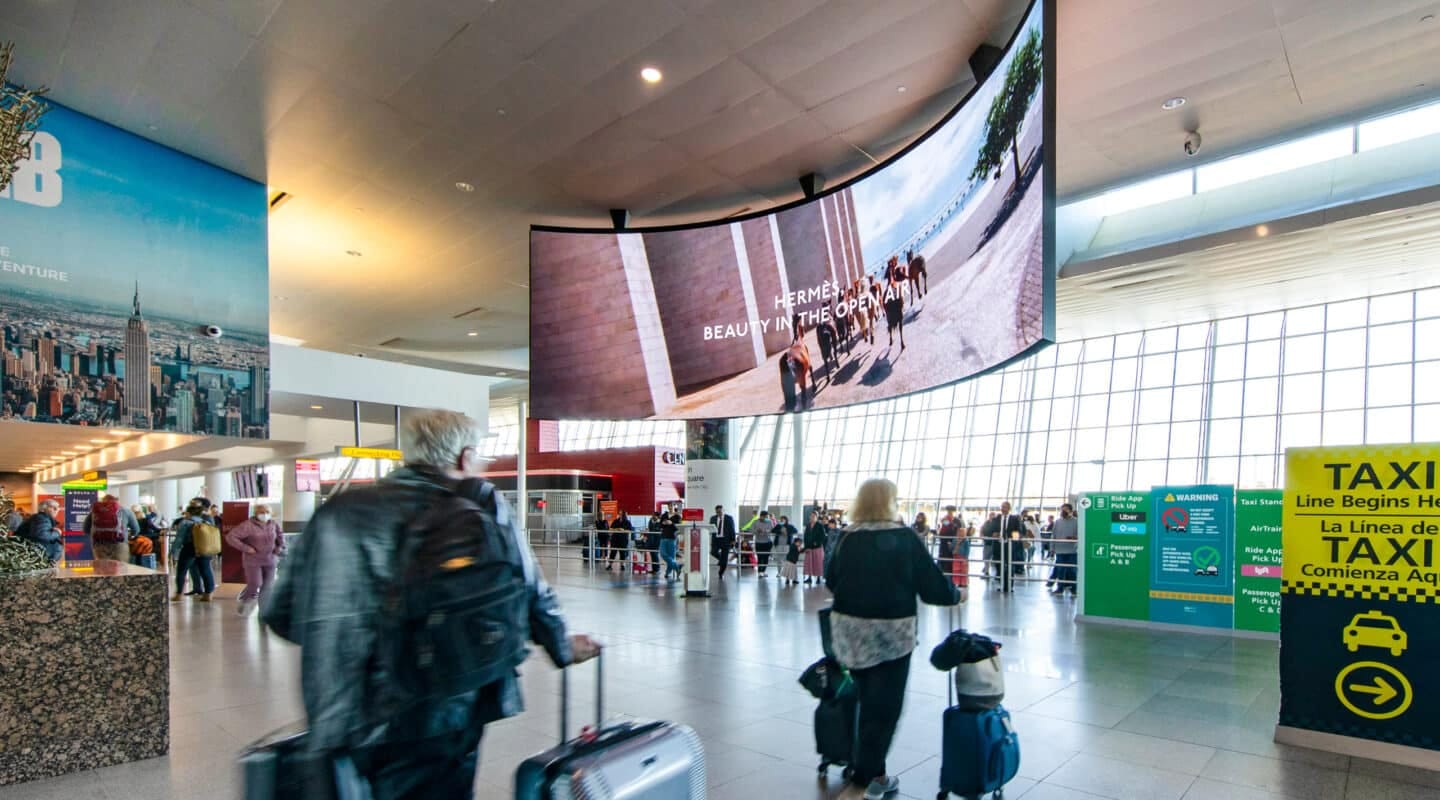
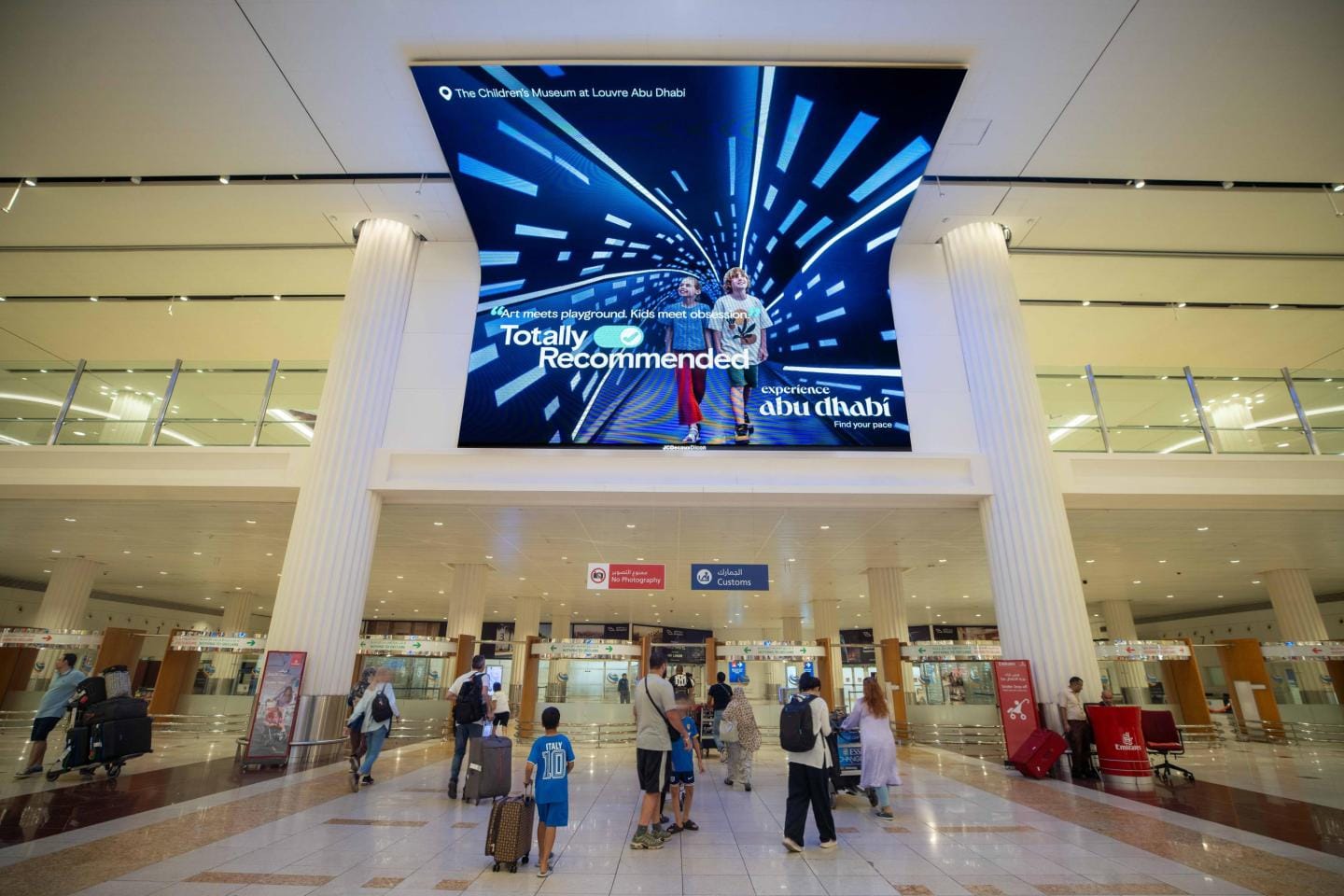
- PTY's dual-terminal structure creates advertising environments that span the full spectrum of audience engagement — from the high-traffic, high-dwell Terminal 1 connecting corridors where frequency and reach are maximised, to the premium Terminal 2 airside zones where audience quality and brand association environment are the dominant commercial variables. Masscom Global selects across both environments based on each client's campaign objective.
- Dwell time at PTY is structurally long by design. Copa Airlines' hub model creates connection windows of ninety minutes to four hours for the majority of its transit passengers — enforced, guaranteed dwell time that no other airport environment in Latin America delivers at this scale. This is not incidental dwell; it is the foundational operational reality of hub travel, and it creates an advertising environment where repeat exposure within a single passenger journey is both possible and commercially productive.
- The premium terminal environment of Terminal 2 — with its modern architecture, elevated retail quality, and international airline lounge infrastructure — provides a brand association context that matches or exceeds the environmental quality available at comparable Tier 1 airports in Miami, Bogotá, and São Paulo. Luxury and premium brands appearing in Terminal 2 are contextually aligned with an environment that their target audience already associates with quality and international mobility.
- Masscom Global provides brands with full-service campaign execution at PTY — from inventory selection across Terminal 1 and Terminal 2 environments to seasonal scheduling, creative format guidance, and in-market performance monitoring. Our regional intelligence on Copa Airlines' traffic patterns, connection window dwell time data, and the nationality composition of specific flight banks enables a precision of campaign timing and placement that generic airport advertising plans cannot achieve.
Strategic Advertising Fit
Best Fit:
- International real estate developers (Miami, New York, Madrid, Lisbon, Dubai, Barcelona): PTY delivers the largest concentration of active Latin American outbound real estate buyers available at any single airport in the Americas. Developers targeting Colombian, Venezuelan, Panamanian, Peruvian, and Argentine buyers simultaneously find no more efficient advertising channel in the region.
- Wealth management, private banking, and offshore financial services: The aggregate Latin American HNI transit audience at PTY is one of the most commercially valuable financial services target markets on the planet, concentrated in a terminal environment where their international investment mobility is already on display. Firms offering portfolio management, offshore structuring, and wealth protection services reach their ideal audience here.
- Residency advisory and international immigration legal services: The demand for second residency and citizenship-by-investment among PTY's Latin American transit audience is structurally driven by the economic conditions of their home countries — it is not aspirational but urgent, making the audience highly motivated and commercially responsive to clear, credible residency programme messaging.
- Luxury travel and ultra-premium hospitality brands: The transit audience at PTY includes a significant proportion of passengers already travelling in premium or business class whose next destination includes luxury accommodation bookings. Advertising exclusive lodge properties, luxury cruise lines, and five-star hotel brands reaches these travellers at the exact moment of their journey when further premium travel commitments are most likely to be considered.
- Premium consumer goods and luxury retail: The Christmas December window concentrates Latin American luxury shoppers — who route their retail trips through Panama and Miami specifically for the purpose of premium brand purchasing — in the PTY terminal at their highest annual spend readiness. Duty-free and premium retail advertisers at PTY reach a captive buyer audience with pre-allocated luxury shopping budgets.
- International education and premium universities: PTY's cross-market reach allows international universities and education consultancies to address parent audiences from Colombia, Venezuela, Panama, Peru, and Ecuador simultaneously — a multi-country education advertising campaign executed through a single airport placement.
- Premium technology and business services: The Latin American business executive transit audience at PTY represents the region's most sophisticated corporate technology buyer class. Enterprise software, premium telecommunications, and business travel service brands find a concentration of senior decision-makers here that no individual country's domestic airport can match.
- Luxury automotive brands: The Panama resident upper class and the Latin American transit audience share a common aspiration for premium automotive brands. The airport's year-round premium passenger concentration makes it a viable channel for vehicle brand advertising targeting the region's HNI car-buying class.
Brand Alignment at a Glance:
| Category | Fit |
|---|---|
| International real estate | Exceptional |
| Wealth management and private banking | Exceptional |
| Residency advisory and immigration legal services | Exceptional |
| Luxury travel and premium hospitality | Exceptional |
| Premium consumer goods and luxury retail | Strong |
| International education | Strong |
| Premium technology and business services | Strong |
| Luxury automotive | Strong |
Who Should Not Advertise Here:
- Hyperlocal Panamanian retail and services: Brands whose commercial relevance is exclusively domestic to Panama will waste significant reach on the transit passenger majority who have no actionable relationship with Panama City's local retail and service economy. PTY's advertising value is its international reach — locally-focused brands should direct budget toward Panama City's domestic media channels instead.
- Mass market FMCG and budget consumer products: Value-tier household brands targeting price-sensitive consumers are structurally misaligned with a terminal that serves the aggregate HNI transit audience of fifteen Latin American countries. The cost of PTY airport advertising is justified only by the commercial premium of the audience it delivers.
- Single-country campaigns with no pan-Latin American relevance: Brands advertising exclusively country-specific products, offers, or regulatory environments will find limited return at PTY, where the terminal audience spans a dozen nationalities simultaneously. The airport's commercial advantage is its multi-market reach — campaigns that do not leverage this cross-market quality are underusing the environment.
Event and Seasonality Analysis
- Event Strength: High
- Seasonality Strength: Moderate (with strong year-round base)
- Traffic Pattern: Year-Round with Dual Peak
Strategic Implication:
PTY is structurally the most consistent year-round advertising environment in Latin American aviation — Copa Airlines' hub model means that passenger volumes never fall to the seasonal lows that characterise leisure-dependent airports like BRC or IGR. However, two commercially superior windows exist within this year-round base: December through January, when South American Christmas travel and shopping trips concentrate the highest-spending leisure audience in the terminal; and June through August, when Northern Hemisphere summer travel pushes North American and European tourist volumes through the hub simultaneously with Latin American student and leisure travel. Masscom Global structures PTY campaigns with year-round presence for financial, real estate, and wealth management advertisers, supplemented by elevated spend commitments during the December-January and June-August peaks for luxury goods, consumer, and premium travel brands seeking maximum impression volume at peak audience quality.

Poor Placement and Delays Affect Airport Campaigns
We help you move faster, access better inventory, and get it right now.
Talk to an ExpertFinal Strategic Verdict
Tocumen International Airport is the most commercially powerful airport advertising environment in Central America and the Caribbean, and among the top five in the entire Latin American region. Its structural identity as the Hub of the Americas transforms a single airport advertising placement into a pan-Latin American media buy — simultaneously reaching Colombian industrialists, Venezuelan HNI migrants, Peruvian mining executives, Argentine real estate investors, and Panamanian banking professionals under one roof, in one terminal, during one enforced and extended dwell window. The depth of Panama City's own financial ecosystem adds a permanent resident HNWI audience of exceptional quality that makes PTY commercially valuable even on days when transit volumes are at their seasonal floor. No other airport in Central America comes close to replicating this combination of transit scale, audience diversity, dwell time depth, and resident wealth concentration. For brands targeting the Latin American HNI class — whether in international real estate, wealth management, luxury travel, premium consumer goods, or residency advisory — PTY is not one option among several. It is the defining airport buy in the region, and Masscom Global is the partner with the intelligence, the inventory relationships, and the execution capability to activate it at the level this opportunity demands.
About Masscom Global
Masscom Global is a premium international airport advertising and media buying agency operating across 140 countries. With deep expertise in airport OOH, premium publications, and high-net-worth audience targeting, Masscom helps brands reach the world's most valuable travellers at the moments that matter most. For advertising packages, media rates, and campaign planning at Tocumen International Airport and airports across the globe, contact Masscom Global today.
Frequently Asked Questions
How much does airport advertising cost at Tocumen International Airport? Advertising investment at PTY varies based on format type, terminal selection between Terminal 1 and Terminal 2, campaign duration, seasonal demand windows, and audience targeting objectives. December through January and June through August command premium pricing due to elevated passenger volumes and exceptional audience quality during these windows. PTY's Tier 1 status and the scale of its transit audience place it in a different cost bracket from regional airports — an investment level that is consistently justified by the reach and audience quality it delivers. For current media rates, format options, and campaign packages tailored to your brand and objectives, contact Masscom Global directly for a bespoke proposal.
Who are the passengers at Tocumen International Airport? PTY serves four commercially distinct passenger profiles: Latin American HNI transit travellers — Colombians, Venezuelans, Peruvians, Ecuadorians, Argentines, and Chileans — connecting between South America and North America or Europe through Copa Airlines' hub; Panama City's resident financial and professional elite, drawn from the banking, canal, legal, and real estate sectors; an internationally diverse tourist audience visiting Panama City for the Canal experience, luxury hospitality, and Caribbean connections; and the Colón Free Zone commercial class whose international trade connections generate high-frequency air travel. All four segments index significantly above average in household income and per-trip expenditure.
Is Tocumen International Airport good for luxury brand advertising? Yes, and PTY is one of the highest-quality luxury brand environments in Latin American aviation. The combination of Copa Airlines' business class transit audience, Panama City's resident banking and professional elite, and the premium Terminal 2 environment creates an advertising context where luxury brands appear alongside the region's most internationally mobile consumers. The multi-hour connection windows create enforced and extended dwell time that luxury goods, premium hospitality, and high-value financial service brands can use to build frequency and recall at a level unavailable at origin or destination airports where passenger dwell is shorter and more functional.
What is the best airport in Latin America to reach HNWI audiences across multiple countries? Tocumen International Airport is the definitive answer. No other airport in Latin America aggregates the HNI traveller base of fifteen or more countries in a single terminal environment the way PTY does through Copa Airlines' hub model. São Paulo GRU delivers Brazil's domestic HNWI audience at greater scale, and Bogotá BOG delivers Colombia's. But PTY delivers both simultaneously, alongside Venezuelan, Peruvian, Ecuadorian, Argentine, and Chilean premium passengers in the same connecting windows. For pan-Latin American campaigns targeting the region's wealthiest travellers through a single airport investment, PTY has no equivalent.
What is the best time to advertise at Tocumen International Airport? PTY maintains commercially viable passenger volumes year-round, making it a viable year-round advertising channel for brands with sustained Latin American HNWI targeting objectives. The two peak windows — December through January and June through August — deliver the highest passenger volumes and the strongest leisure and luxury spending mindsets. For financial services, real estate, and residency advisory brands, year-round presence is recommended because purchase decision cycles for these categories are not seasonally bounded. For luxury goods, premium retail, and consumer lifestyle brands, concentrated investment in the December and July windows delivers maximum return against the highest audience quality.
Can international real estate developers advertise at Tocumen International Airport? Yes, and PTY is the single highest-value airport advertising channel in Latin America for international real estate brands targeting the region's HNI buyer class. The airport simultaneously delivers active outbound real estate buyers from Colombia, Venezuela, Panama, Peru, Ecuador, Argentina, and Chile — countries whose HNI classes are among the most internationally property-active in the world — in a single terminal environment where dwell time, purchase mindset, and financial decision-making context all align. Developers offering residential and investment properties in Miami, New York, Madrid, Lisbon, Dubai, and the broader US market will find a motivated, financially capable, and advertising-underserved buyer audience at PTY. Masscom Global structures campaigns across PTY and international destination airports to capture both the outbound buyer at departure and the inbound property visitor upon arrival.
Which brands should not advertise at Tocumen International Airport? Hyperlocal Panamanian retail and service brands whose commercial relevance is confined to the domestic market will waste significant reach on the transit passenger majority who have no actionable relationship with Panama City's local commercial economy. Mass market FMCG and value-tier consumer products are misaligned with a terminal audience that represents the aggregate upper-income class of fifteen Latin American countries. Single-country brands whose offer is not relevant to a multi-national transit audience underutilise the cross-market reach that makes PTY commercially exceptional and should instead direct budget toward domestic Panamanian media channels.
How does Masscom Global help brands advertise at Tocumen International Airport? Masscom Global delivers end-to-end airport advertising capability at PTY — from audience intelligence across the airport's multi-national transit profile through to Terminal 1 and Terminal 2 inventory selection, seasonal campaign scheduling, creative format guidance, and in-market execution. Our regional intelligence on Copa Airlines' traffic patterns, connection window dwell time distribution, and the nationality composition of specific flight banks enables a precision of campaign timing and placement that no generic airport media plan can achieve. Whether you are targeting the Latin American HNI transit audience, the Panama City resident financial elite, or the international tourist passing through the Hub of the Americas, Masscom Global gives you the intelligence and access to reach them at the right moment, in the right environment, with the right message. Contact us today to discuss your campaign at Tocumen International Airport.