




Airport at a Glance
| Field | Detail |
|---|---|
| Airport | Osaka Kansai International Airport |
| IATA Code | KIX |
| Country | Japan |
| City | Osaka |
| Annual Passengers | 18.6 million (2023–24) |
| Primary Audience | Very High HNWI inbound cultural and luxury tourism elite, Kansai pharmaceutical and technology executive community, Japanese luxury consumer and fashion-aware professional class, Chinese and Korean outbound luxury cultural tourism |
| Peak Advertising Season | March to May, September to December |
| Audience Tier | Tier 1 — Very High |
| Best Fit Categories | Luxury fashion and Japanese heritage craft brands, premium travel and hospitality, international real estate, pharmaceutical and medical technology B2B |
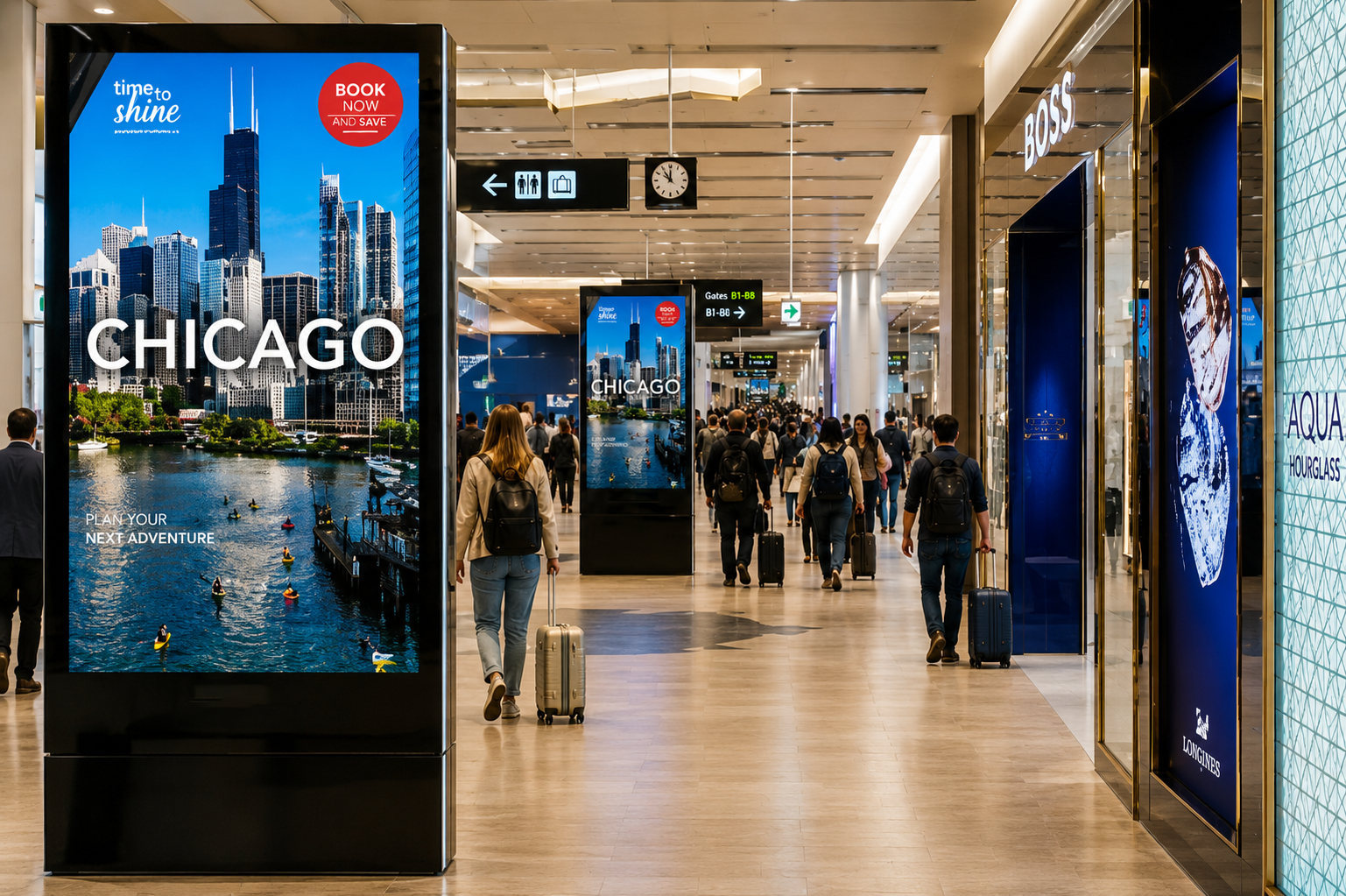
Kansai International Airport was built on an artificial island in Osaka Bay, designed by Renzo Piano in a structural achievement whose engineering ambition and architectural elegance match the cultural ambitions of the region it was designed to serve. KIX is not Tokyo's airport — it is the airport of the region that Japanese culture itself has historically regarded as the deeper, richer, more authentically Japanese alternative to the capital's institutional modernity. Kyoto has been the object of international luxury cultural tourism for two centuries — its ryokan, its kaiseki restaurants, its Nishiki Market's premium food culture, its bamboo groves, its zen garden circuit, and the specific combination of Buddhist and Shinto heritage whose UNESCO World Heritage designations collectively make Kyoto the most concentrated single urban luxury cultural tourism destination in Asia. Osaka has been Japan's merchant capital and gastronomic nerve centre for four centuries — the city that invented the concept of eating well as a civic obligation, whose Dotonbori food culture and Shinsekai culinary heritage have made it the most commercially compelling food destination in a country that has defined the global standard for culinary precision. Kobe has been Japan's most internationally conscious city since the Meiji era opened its port to foreign trade — producing a premium lifestyle, beef culture, and contemporary fashion sensibility that is specifically Japanese and specifically globally calibrated simultaneously.
For an advertiser, KIX is the gateway to three simultaneous premium audience types that no other Japanese airport concentrates in a single facility — the culturally serious international luxury tourism visitor arriving for Japan's most historically distinguished cultural geography, the Japanese Kansai HNWI professional community whose Osaka pharmaceutical, technology, and manufacturing wealth is among Japan's most commercially consequential non-Tokyo corporate ecosystem, and the Northeast Asian luxury travel community whose cultural pilgrimage to Kyoto and commercial engagement with Osaka's shopping and hospitality circuit produces some of the highest per-visit international tourist spending at any Japanese regional gateway airport.


Advertising Value Snapshot
- Passenger scale: 18.6 million international passengers annually, with a robust recovery and growth trajectory driven by Japan's reopened borders, the surging inbound tourism wave driven by the yen's extended depreciation period that has made Japan's luxury experiences among the most commercially accessible of any comparable destination globally, and the progressive expansion of KIX's direct route network connecting the Kansai region to Chinese, Korean, Southeast Asian, and Western source markets
- Traveller type: Very High HNWI culturally motivated international luxury tourism visitors whose Kyoto, Osaka, and Kobe itineraries reflect confirmed premium accommodation and authentic Japanese cultural experience spending, Kansai pharmaceutical and precision technology executive community from Osaka, Takeda, and Daiichi Sankyo corporate headquarters, Chinese and Korean luxury cultural tourism elite whose Japan engagement combines cultural aspiration with luxury retail and premium F&B consumption, Japanese HNWI outbound travellers whose international leisure travel reflects the Kansai professional community's accumulated corporate and entrepreneurial wealth
- Airport classification: Tier 1 — Very High. KIX's Very High HNWI classification reflects the specific premium audience profile of Japan's most culturally distinguished regional gateway — an airport whose inbound luxury tourism audience has been self-selected by the specific premium of choosing Kyoto, Osaka, and Kobe over Tokyo's more internationally familiar commercial modernity
- Commercial positioning: Japan's most culturally distinguished luxury gateway, serving the most premium-concentrated cultural tourism circuit in Asia alongside one of Japan's most commercially active pharmaceutical, technology, and manufacturing corporate ecosystems
- Wealth corridor signal: KIX sits at the convergence of the Northeast Asian luxury cultural tourism corridor — Chinese, Korean, and Southeast Asian premium visitors whose cultural aspiration for authentic Japanese heritage experience creates the world's most commercially premium inbound cultural tourism flow — and the outbound Japanese Kansai HNWI professional community whose international leisure and investment travel connects Japan's second-most commercially significant corporate economy to global luxury and real estate markets
- Advertising opportunity: Masscom Global provides direct access to KIX's premium terminal inventory, enabling luxury fashion and Japanese heritage craft brands, premium hospitality, pharmaceutical B2B, international real estate, and premium travel brands to reach Japan's most culturally sophisticated inbound international luxury tourism audience and the Kansai HNWI professional community at their primary international transit gateway
It’s Not Just Where You Advertise - It’s How Fast You Execute
We combine local insight with fast rollout to deliver results for you, now.
Talk to an ExpertCatchment Area and Economic Drivers
Top 10 Cities within 150 km — Marketer Intelligence
- Osaka: Japan's second city and the commercial engine of the Kansai region — housing the headquarters of Panasonic, Sharp, Kubota, Sumitomo Group, Osaka Gas, and dozens of the region's most commercially significant manufacturing and technology conglomerates alongside Japan's most celebrated food culture and the Namba-Shinsaibashi luxury retail corridor whose premium shopping experience attracts domestic and international luxury consumers at levels that rank Osaka among Japan's most commercially productive per-square-metre luxury retail environments. The Osaka HNWI community combines the traditional merchant wealth of the Kansai trading tradition with the new economy equity of the technology and pharmaceutical sector that the city's industrial heritage has progressively evolved toward.
- Kyoto: The most commercially and culturally significant single city in Japanese cultural heritage tourism — a city whose 17 UNESCO World Heritage Sites, 1,600 temples, 400 shrines, and the specific ryokan, kaiseki, and geisha cultural infrastructure whose premium accommodation and dining rates rank Kyoto as Asia's highest per-night luxury cultural tourism destination, create an inbound luxury tourism economy whose per-visitor daily expenditure is among the highest of any cultural tourism destination in the world. The Kyoto HNWI community combines generational cultural preservation wealth — the families of the major cultural preservation trusts and traditional craft workshops — with the Kyoto University and Doshisha research community whose academic and pharmaceutical research connections generate active international professional travel.
- Kobe: Japan's most internationally flavoured city — whose 19th-century Meiji port opening created a cosmopolitan commercial culture uniquely blending Japanese quality consciousness with Western lifestyle sensibility. Kobe is the home of Japan's most commercially celebrated premium beef brand (Kobe beef), the Nada sake brewing district, a luxury fashion and contemporary design culture anchored in the Kitano-cho foreign settlement district's European architectural heritage, and the headquarters of Kawasaki Heavy Industries, Mitsubishi Electric's Kobe operations, and the Hyogo pharmaceutical sector's commercial infrastructure. The Kobe HNWI community is specifically internationally oriented — the product of a commercial culture that has been engaging with the world since the 1860s.
- Nara: The ancient first capital of Japan and the home of Tōdai-ji Temple's Great Buddha — one of Japan's most commercially visited heritage sites — alongside the free-roaming sacred deer of Nara Park whose combination of accessible natural spectacle and profound Buddhist cultural heritage creates a premium cultural tourism experience that complements Kyoto's more intensely curated heritage circuit. Nara generates international cultural tourism whose premium cultural spending behaviour reflects the specific quality of the culturally motivated premium traveller.
- Takatsuki and the Osaka pharmaceutical corridor: The Osaka pharmaceutical corridor — housing the Japanese operations of Takeda Pharmaceutical (Japan's largest pharmaceutical company), Daiichi Sankyo, Shionogi, and dozens of pharmaceutical and medical device companies whose combined R&D output makes the Kansai region Japan's most commercially productive single pharmaceutical geography — generates a sustained community of pharmaceutical and medical technology executives with active international travel for regulatory engagement, licensing negotiations, and investor relations whose compensation and institutional authority place them firmly in the Very High HNWI tier.
- Namba and Shinsaibashi luxury retail district: The commercial heart of Osaka's most commercially active luxury retail and entertainment economy — whose combination of international luxury brand flagships, premium Japanese department stores (Isetan, Takashimaya, Daimaru), and the premium food market culture of Kuromon Ichiba and the Tsuruhashi Korean market creates a luxury retail and gastronomy spending environment of extraordinary commercial density. The departing tourist who has spent three days shopping in Shinsaibashi and eating through Dotonbori is in a confirmed premium spending mode of extraordinary commercial receptivity.
- Himeji: The home of Himeji Castle — Japan's most perfectly preserved feudal castle and a UNESCO World Heritage Site — generating premium cultural heritage tourism whose castle visit circuit creates a commercially active premium leisure tourism audience at KIX whose confirmed heritage cultural spending reflects the high per-visit expenditure profile of the serious cultural tourism market.
- Wakayama and the Kii Peninsula: The home of Koyasan's Buddhist mountain complex — one of Japan's most spiritually significant sites and an increasingly sought-after luxury spiritual retreat destination — alongside the Kumano Kodo UNESCO pilgrimage trail whose growing international cultural tourism interest creates a premium adventure and spiritual tourism audience at KIX whose artisan craft, traditional accommodation, and premium natural heritage spending reflects the specific quality of authentic Japanese cultural experience that Kansai's hinterland uniquely provides.
- Otsu and Lake Biwa: The gateway to Japan's largest freshwater lake and the Biwako Visitors Bureau's premium resort and cultural tourism circuit, generating inbound domestic tourism whose premium lakeside resort spending and traditional Japanese hot spring culture creates a secondary premium leisure audience at KIX whose spending profiles reflect the Osaka and Kyoto professional community's most commercially active domestic leisure spending.
- Amagasaki: The urban manufacturing corridor connecting Osaka and Kobe whose heavy industrial and technology manufacturing heritage has evolved toward a mixed economy of advanced manufacturing, technology services, and urban renewal whose progressive economic transformation is generating a commercially active professional community with rising premium consumer aspirations benchmarked against the Osaka and Kobe HNWI communities.
NRI and Diaspora Intelligence
KIX's diaspora profile is shaped by the Kansai region's specific bilateral community relationships — rooted in Osaka's historical role as Japan's most commercially internationally engaged city and Kobe's century and a half as Japan's most cosmopolitan port. The Korean community in Osaka — one of the largest Korean diaspora communities in Japan, concentrated in the Ikuno district and maintaining deep bilateral commercial and cultural ties with Korea's Kansai-connected community — generates a sustained domestic bilateral travel flow whose Korean-Japanese cultural commercial relationship creates commercial synergies for K-beauty, Korean premium consumer, and Japanese-Korean bilateral food and fashion brands. The Chinese community in Kansai — including significant Cantonese and Mandarin communities whose commercial engagement with Osaka's wholesale and retail economy dates to the pre-war era — generates bilateral China-Kansai travel whose commercial significance for Chinese luxury tourism, real estate investment, and the bilateral bilateral trade relationships of Japan's most internationally commercially oriented regional economy is commercially active across every relevant brand category. The Western expatriate community — the English and European professionals whose Kobe cosmopolitan heritage created the region's most internationally oriented resident population — generates sustained bilateral professional and family connection travel whose premium lifestyle spending profiles reflect the Kobe commercial culture's internationally calibrated quality standards.
Economic Importance
The Kansai economy — spanning Osaka, Hyogo (Kobe), Kyoto, Nara, Wakayama, and Shiga prefectures — generates an annual GDP of approximately USD 900 billion to USD 1 trillion, making it one of the world's ten largest metropolitan economies if measured independently. The pharmaceutical sector's contribution is disproportionately significant — Japan's pharmaceutical industry is the world's third-largest by revenue, and the Kansai region's pharmaceutical cluster around Osaka and Kyoto generates a pharmaceutical sector commercial output whose R&D intensity and clinical trial activity connects the region to every major pharmaceutical regulatory and commercial relationship in the world. The manufacturing sector — anchored by Panasonic, Sharp, Kubota, Kawasaki, and the broader Kansai precision manufacturing ecosystem — generates an industrial commercial output of extraordinary technical quality whose international trade relationships sustain active bilateral business travel through KIX across every major global industrial economy. The cultural and tourism economy — whose Kyoto heritage, Osaka gastronomy, and Kobe cosmopolitan lifestyle create the most commercially distinctive regional tourism product of any Japanese non-Tokyo geography — generates an inbound tourism revenue that is progressively making KIX's inbound tourism advertising value among the most commercially significant in Japanese regional aviation.
Business and Industrial Ecosystem
- Pharmaceutical and biotech sector — Japan's largest pharmaceutical geography: Takeda Pharmaceutical, Daiichi Sankyo's Osaka operations, Shionogi, Otsuka Holdings, and the broader Kansai pharmaceutical and medical technology ecosystem generate a professional community of pharmaceutical executives, clinical researchers, and regulatory affairs professionals whose international travel for drug approvals, licensing negotiations, and global partnership development makes KIX one of Japan's most commercially active pharmaceutical sector B2B business travel airports. The commercial authority of Japan's pharmaceutical sector's most commercially senior Kansai-based professionals over global licensing and regulatory relationships that shape the commercial output of some of the world's most commercially consequential pharmaceutical products creates a B2B advertising audience of extraordinary institutional authority.
- Precision manufacturing and industrial technology: The Kansai region's industrial technology heritage — Panasonic's consumer electronics evolution to B2B enterprise technology, Sharp's display technology innovation, Kubota's agricultural and construction machinery global leadership, and the Kawasaki Heavy Industries aerospace and defence technology output — generates a community of industrial technology executives whose international travel for product development partnerships, procurement management, and investor relations creates a sustained Very High HNWI B2B technology advertising audience at KIX.
- Cultural preservation and traditional craft industry: Kyoto's unique concentration of traditional craft industries — Nishijin textile weaving, Kiyomizuyaki ceramics, Kyo-yuzen dyeing, Kyo-lacquerware, and Kyoto's 1,600 traditional temple and shrine management organisations — generates a community of traditional craft principals, cultural preservation trustees, and premium artisan economy executives whose institutional authority over Japan's most commercially consequential traditional craft exports creates a commercially distinctive premium craft and cultural heritage B2B audience at KIX.
- Tourism and hospitality industry leadership: The Kansai region's premium hospitality and tourism industry — anchored by Kyoto's legendary ryokan circuit (Tawaraya, Hiiragiya, and the ryokan whose imperial household guest ledgers date to the Edo era), Osaka's internationally celebrated restaurant ecosystem, and Kobe's luxury hotel and cosmopolitan dining circuit — generates a hospitality industry leadership community whose institutional authority over Japan's most commercially premium domestic hospitality products creates a commercially active tourism industry B2B audience at KIX.
Passenger Intent — Business Segment
The KIX business traveller carries the institutional commercial authority of Japan's most technically precise and most culturally sophisticated regional corporate ecosystem. They are the Takeda Pharmaceutical clinical development director flying to Basel for a regulatory advisory meeting, the Panasonic enterprise technology managing director flying to Singapore for a B2B technology partnership review, the Kyoto traditional craft export company president flying to Paris for a luxury brand licensing negotiation, or the Kubota construction technology export manager flying to Jakarta for a Southeast Asian distribution partnership meeting. They carry the specific commercial seriousness that the Kansai corporate culture's manufacturing and pharmaceutical heritage has embedded in its most commercially experienced professionals — a combination of technical precision, relationship management patience, and the specific Japanese business culture's commitment to product quality whose commercial values define the region's international commercial reputation.
Strategic Insight
The B2B advertising environment at KIX is the most technically industrially sophisticated in Japanese regional aviation — the combination of pharmaceutical sector institutional authority, precision manufacturing commercial leadership, traditional craft export expertise, and the specific Kansai corporate culture's international commercial engagement history creates a B2B advertising audience whose commercial decision-making framework combines genuine technical evaluation with the specific Japanese emphasis on long-term relationship building, institutional credibility, and the patient quality demonstration that characterises Japan's most successful bilateral commercial relationships. For B2B brands whose product serves this community's specific pharmaceutical, industrial technology, cultural export, or tourism industry needs, KIX provides the most institutionally qualified and the most culturally commercially specific B2B advertising audience in western Japanese aviation.
Tourism and Premium Travel Drivers
- Kyoto's world-class cultural tourism circuit: The most commercially significant single regional tourism asset in Japanese aviation — 17 UNESCO World Heritage Sites, the geisha culture of Gion, the zen garden circuit of Daitoku-ji and Ryoan-ji, the Fushimi Inari Taisha shrine's spectacular torii gate corridor, the Arashiyama bamboo grove, and the specific combination of authentic Japanese cultural heritage whose premium ryokan and kaiseki restaurant offering creates per-night accommodation rates that rank among Asia's highest for cultural destination hotels. Every international visitor to Kyoto transits KIX — and those visitors have self-selected into Asia's most culturally demanding and most luxury-premium Japanese cultural experience.
- Osaka's gastronomic and cultural tourism circuit: The Dotonbori food culture, the Kuromon Ichiba market experience, the Shinsekai traditional entertainment district, and the Osaka Castle heritage circuit collectively attract a culturally and gastronomically motivated international tourism audience whose confirmed premium dining, premium hospitality, and luxury retail spending in Osaka's Shinsaibashi and Namba corridors makes the departing Osaka tourist among the most commercially active luxury retail and premium F&B consumers at any Japanese regional gateway airport.
- Kobe's premium lifestyle and beef tourism circuit: Kobe's cosmopolitan European-Japanese architectural heritage, the Kobe beef authentic dining experience whose per-person tasting menu pricing starts at JPY 30,000 to JPY 50,000 at premium Kobe beef restaurants, the sake brewery tour circuit of the Nada district, and the Kitano-cho foreign settlement's premium craft and lifestyle retail experience collectively create a premium leisure tourism product whose internationally conscious cultural positioning attracts a specifically cosmopolitan and culturally educated inbound tourism audience.
- Nara's Buddhist heritage and ancient Japanese capital circuit: The UNESCO World Heritage temples and the free-roaming deer of Nara Park create a culturally profound and visually extraordinary Japanese heritage experience that complements Kyoto and Osaka's more intensely developed tourism infrastructure with an authentically ancient, less commercialised cultural experience whose emotional resonance with culturally sophisticated international visitors creates deep and commercially sustained engagement.
- Japan's Expo 2025 Osaka: The World Exposition hosted in Osaka in 2025 — the first World Expo in Japan since 1970 — generates extraordinary additional international visitor volumes through KIX in 2025 and creates a sustained legacy tourism and commercial engagement infrastructure whose premium hospitality, cultural exhibition, and technology showcase components attract a specifically international HNWI and culturally motivated audience of commercial significance for premium brands in every relevant category.
Passenger Intent — Tourism Segment
The KIX arriving international luxury tourist has made one of the most culturally committed travel decisions in global premium tourism — choosing the Kansai region over Tokyo signals a specific preference for depth over accessibility, for cultural authenticity over international commercial modernity, and for the specific Japanese aesthetic precision that Kyoto's cultural heritage, Osaka's culinary tradition, and Kobe's cosmopolitan craft quality represent at their most commercially distinguished level. The arriving KIX guest has typically pre-booked the most sought-after ryokan accommodation months in advance, has confirmed private kaiseki dining reservations at Kyoto's most commercially prestigious restaurants, and has researched the specific temple, garden, and craft workshop circuit that their cultural education has prepared them to fully appreciate. They depart in a state of profound cultural immersion whose brand receptivity for Japanese craft heritage, premium lifestyle, luxury fashion, and authentic cultural experience brands is at its maximum sustainable level.
Travel Patterns and Seasonality
Peak seasons:
- March to May (cherry blossom season — Japan's most commercially intense tourism window): The sakura season that transforms the Kansai region's most spectacular natural and cultural landscapes — Maruyama Park in Kyoto, the Philosopher's Path, Osaka Castle Park, Nara Park's 1,500 cherry trees — into one of the world's most commercially photographed and most internationally desired natural cultural events. The cherry blossom season creates KIX's most concentrated single-season international luxury tourism arrival window, whose accommodation rates, per-visitor daily spending, and premium cultural experience booking values reach their annual maximum in the two-week peak sakura window.
- September to December (autumn foliage season and year-end travel): Japan's autumn foliage season — whose fiery red and gold transformation of Kyoto's temple gardens and Osaka's urban parks creates a premium cultural spectacle comparable in commercial tourism intensity to the cherry blossom season — combined with the December year-end holiday travel cycle whose international luxury tourism and Japanese HNWI outbound leisure travel create the year's second-highest commercial concentration window at KIX.
Event-Driven Movement
- Sakura Season (late March to mid-April): Japan's most commercially consequential single natural event for international tourism — generating the year's single most concentrated inbound luxury cultural tourism arrival at KIX, with confirmed premium accommodation bookings at Kyoto's most prestigious ryokan and premium hotel properties whose sakura-season rates represent the year's absolute pricing peak. The two-week sakura window is KIX's most commercially intensive single advertising moment for luxury travel, premium hospitality, and Japanese cultural heritage brand advertising.
- Gion Matsuri Festival — Kyoto (July): Japan's most commercially significant traditional festival — one of the UNESCO Intangible Cultural Heritage of Humanity designations for Japan's traditional performing arts — drawing domestic and international premium cultural tourism to Kyoto's historic centre for the month-long festival programme whose parade floats, evening yoi-yama street ceremonies, and traditional performing arts create Japan's most culturally authentic single-month premium tourism experience.
- Japan's Expo 2025 Osaka (April to October 2025): A transformative commercial event for KIX's inbound tourism volume — the World Exposition's six-month duration, its international pavilion architecture, and its commercial technology and cultural showcase attract an internationally diverse HNWI visitor community whose Expo 2025 attendance combined with Kansai cultural tourism creates the most commercially significant single-year inbound tourism concentration in KIX's recent history.
- Autumn foliage season at Kyoto and Nara (mid-November to early December): The maple and ginkgo autumn foliage transformation of Kyoto's temple gardens — Tofuku-ji, Arashiyama, Kinkaku-ji — creates a premium cultural tourism concentration comparable in commercial intensity to the cherry blossom season, generating KIX's second-highest annual inbound luxury cultural tourism peak.
- Osaka and Kyoto luxury retail seasons — Golden Week (April/May) and New Year: Japan's major domestic holiday travel periods — Golden Week and the New Year Oshōgatsu — generate both domestic HNWI leisure travel through KIX's domestic network and significant inbound international tourism whose premium retail and hospitality spending during these culturally intense Japanese holiday periods is commercially relevant for luxury goods, premium food, and cultural experience brands.
Airport Advertising is Complex to Get Right
We help you execute faster, with proven results and local insight most planners lack starting now.
Talk to an ExpertAudience and Cultural Intelligence
Top 2 Languages
- Japanese: The national language of Japan and the exclusive commercial and cultural language of KIX's Japanese passenger community — including the Kansai pharmaceutical, manufacturing, and traditional craft professional community, the Japanese HNWI outbound leisure traveller, and the domestic Japanese corporate community whose Kansai commercial heritage is embedded in the specific Kansai dialect's commercial directness and warm pragmatism that distinguishes Osaka's commercial culture from Tokyo's more formal institutional register. Japanese-language advertising at KIX must reflect both the national commercial language standard and the specific Kansai dialect cultural warmth that the Osaka commercial community regards as its most commercially authentic cultural identity signal.
- English: The international commercial language of KIX's inbound luxury tourism community — the American, European, and Australian visitors whose culturally motivated Japan tourism creates the most commercially sophisticated international audience at any Japanese regional gateway airport — and the operational language of the pharmaceutical and precision technology communities' international professional engagement. English-language advertising at KIX reaches the full inbound international audience whose cultural tourism, premium hospitality spending, and luxury goods purchasing make them the most commercially active inbound consumer audience at any Japanese regional airport.
Major Traveller Nationalities
KIX's terminal reflects the specific bilateral tourism and commercial relationships of the Kansai region's most commercially active international source markets. Korean nationals — the largest single international source market, reflecting the cultural and commercial proximity of Korea's most commercially Japan-engaged communities and the specific appeal of Kyoto's cultural heritage for Korean cultural tourism — form the most commercially active bilateral tourism community at KIX. Chinese nationals — particularly from Shanghai, Guangzhou, and Beijing — form the second-largest international source market whose luxury cultural tourism spending, premium retail engagement in Osaka's Shinsaibashi, and pharmaceutical and technology bilateral commercial engagement create KIX's most commercially consequential single-nationality inbound tourism revenue generator. American and European visitors — whose culturally sophisticated cultural tourism to Kyoto and whose premium F&B and artisan craft spending reflect the specific quality of the internationally educated HNWI cultural tourism audience — form the most per-head commercially active Western source market. Southeast Asian visitors — from Singapore, Thailand, and Malaysia — form a rapidly growing premium cultural tourism community whose Kansai itineraries increasingly include the premium ryokan and kaiseki experiences whose price points reflect confirmed HNWI leisure spending.
Religion — Advertiser Intelligence
- Buddhism and Shinto (dominant Japanese cultural religious practice): Japan's religious cultural tradition — whose syncretic combination of Shinto animist practice and Buddhist philosophical heritage has produced the temple, shrine, and craft heritage that defines the Kansai cultural tourism appeal — creates a commercially important cultural framework for advertising at KIX. The Buddhist festival calendar — Obon in August, whose ancestral commemoration generates domestic travel surges, and the New Year Oshōgatsu whose Hatsumode first shrine visit creates Japan's most commercially concentrated domestic leisure travel event — creates the most culturally embedded commercial advertising windows in Japanese regional aviation. Advertising that reflects genuine respect for Japan's Buddhist and Shinto cultural heritage — whose aesthetic values of wabi-sabi simplicity, mono no aware transient beauty, and the specific Japanese appreciation for craft excellence whose philosophical roots lie in Buddhist teachings about mindful making — achieves cultural resonance at KIX that generic luxury advertising entirely fails to reach.
- Christianity and Islam (significant inbound tourism communities): The international inbound tourism community at KIX includes significant Christian and Muslim travellers whose cultural and dietary requirements the Kansai hospitality sector has progressively adapted to accommodate — particularly in Kyoto's premium ryokan sector whose international market development has created halal-certified kaiseki offerings and Western-format hybrid room options whose combination of Japanese cultural experience and international lifestyle accommodation creates a commercially distinctive premium cultural tourism offering. Both Christmas and Eid periods generate specific inbound tourism windows whose brand advertising opportunities for premium cultural experience and luxury hospitality brands are commercially relevant.
Behavioral Insight
The KIX audience's commercial decision-making framework is shaped by two distinct and commercially complementary cultural registers — the Japanese HNWI professional's deeply internalized quality consciousness and the inbound international cultural tourist's specific motivational state of profound cultural aspiration. The Japanese pharmaceutical executive makes brand decisions through the precision evaluation framework of a professional whose commercial success has been built on the quality standards of an industry that tolerates no compromise between specification and delivery. The international cultural tourist makes brand decisions through the elevated emotional register of someone who has arrived in Asia's most culturally refined destination specifically to experience quality that their home culture cannot produce. Both of these commercial decision-making frameworks reward brands that demonstrate genuine excellence, authentic craft heritage, and the specific Japanese aesthetic values — material honesty, functional perfection, and the particular beauty of things made with the patient attention that both Buddhism and the Japanese master-craftsman tradition demand. Advertising at KIX that speaks this language — honestly, aesthetically, and with genuine product authority — will find the Kansai community among the most commercially loyal brand relationships in Japanese regional aviation.
Outbound Wealth and Investment Intelligence
KIX's outbound wealth intelligence reflects the specific investment behaviours of the Kansai region's most commercially established pharmaceutical, manufacturing, and traditional economy HNWI class — a community whose capital deployment combines the conservative institutional investment tradition of Japan's corporate wealth management culture with the growing international diversification ambitions of a professional class whose pharmaceutical and technology sector compensation has created a new generation of Kansai HNWI wealth.
Outbound Real Estate Investment
The Japanese HNWI community's outbound real estate investment has historically been more conservative than comparable Asian wealth communities — reflecting Japan's specific institutional investment culture and the domestic real estate market's own premium quality investment opportunities. However, the Kansai pharmaceutical and technology sector's growing international commercial engagement is progressively creating outbound real estate investment flows in specific corridors. Australia — particularly Sydney's premium residential market — attracts Japanese HNWI buyers through the combination of lifestyle quality alignment, educational infrastructure, and the Japanese community's established Australian presence. Hawaii is Japan's most historically established international real estate destination — the long-standing cultural and leisure alignment between Japanese premium tourism and Hawaii's resort lifestyle creates a domestic investment logic for the most internationally engaged Japanese HNWI. Singapore attracts Kansai pharmaceutical and technology executives whose Southeast Asian commercial engagement creates a business-anchored residential investment rationale. UK prime residential — particularly in London — attracts the most internationally mobile tier of Japanese pharmaceutical and finance executives whose European commercial engagement creates educational and lifestyle investment logic.
Outbound Education Investment
The Kansai region's HNWI community's education investment in international institutions reflects the specific values of Japan's most academically competitive regional educational culture — Kyoto University and Osaka University are two of Japan's five most academically prestigious institutions, creating a local educational reference standard whose HNWI family expectation for international credentials is calibrated against genuinely world-class domestic benchmarks. The United States — MIT, Caltech, Harvard, and the Ivy League — attracts Japan's most academically ambitious pharmaceutical and engineering families whose STEM credential aspirations reflect the Kansai region's specific industrial and scientific research heritage. The United Kingdom — Oxford, Cambridge, and Imperial College — attracts Japanese HNWI families whose European institutional credential preference reflects the Kansai corporate community's growing European pharmaceutical and technology partnerships. For international universities, particularly those with strong pharmaceutical, engineering, and cultural studies programmes that align with the Kansai regional commercial and academic identity, KIX provides access to one of Japan's most academically invested and most commercially well-supported international student family communities.
Outbound Wealth Migration and Residency
The Japanese HNWI community's residency diversification behaviour is the most conservative of any comparable Asian HNWI community — reflecting Japan's specific cultural attachment to domestic residence and the institutional constraints on international capital mobility that characterise the Japanese financial regulatory environment. However, the pharmaceutical and technology sector's growing international engagement is progressively creating modest but commercially active residency advisory demand among the most internationally mobile tier of Kansai's HNWI professional community. Singapore's Global Investor Programme attracts the most internationally commercially active Kansai executives. Australia's Significant Investor Visa attracts Japanese HNWI families whose Australian lifestyle investment creates genuine residential intent. Portugal's Golden Visa attracts the small but growing community of Japanese HNWI families seeking EU mobility as their European commercial engagement deepens.
Strategic Implication for Advertisers
KIX's most commercially distinctive outbound wealth intelligence is the inbound dimension — the international luxury tourism community arriving at KIX has already demonstrated the most commercially consequential luxury spending commitment available at any Japanese regional airport by choosing the Kansai region as their Japan destination. For brands targeting the premium cultural tourism market — luxury ryokan, kaiseki restaurants, traditional craft, and premium Japanese experience brands — the arriving KIX tourist is the world's most commercially pre-qualified cultural luxury consumer. For international brands targeting the Japanese HNWI outbound community, the pharmaceutical and technology sector's growing international engagement creates modest but commercially growing demand in real estate, education, and professional advisory categories.
Airport Infrastructure and Premium Indicators
Terminals
- Terminal 1 (International operations): KIX's primary international terminal — housed within Renzo Piano's landmark terminal building whose structural engineering achievement (built on piled foundations on an artificial island in Osaka Bay, designed to accommodate gradual settlement without structural compromise) and architectural quality create one of the most visually distinctive airport interior environments in Japanese aviation. T1's international passenger flow — handling the full inbound cultural tourism and outbound Japanese international travel community — provides advertising positions whose structural architectural distinction and premium brand adjacency create an advertising environment of genuine aesthetic quality.
- Terminal 2 (Domestic and low-cost carrier operations): Handles domestic and low-cost carrier operations, providing a commercially active secondary consumer audience whose premium aspirations and domestic travel patterns are commercially relevant for Japanese consumer and lifestyle brand advertising with broader domestic market reach objectives.
Premium Indicators
- Renzo Piano architectural distinction: KIX's Terminal 1 is a globally recognised work of architectural and structural engineering excellence — its barrel-vaulted roof structure, whose aerodynamic design manages the pressure differentials of Osaka Bay's weather conditions while creating the most visually distinctive single-nave terminal interior in Japanese aviation, provides an advertising adjacency context of genuine architectural prestige that positions premium brands within an environment of authentic excellence. For brands whose own commercial identity is built on material quality and structural precision — Japanese craft heritage brands, precision technology brands, premium pharmaceutical companies — KIX's architectural context provides a culturally resonant brand association.
- Artificial island engineering heritage: KIX's location on an artificial island in Osaka Bay — whose construction required some of the most technically ambitious marine engineering in Japanese civil construction history — is a premium indicator of the institutional ambition and engineering precision that characterises the Kansai region's commercial and industrial identity, creating a brand association benefit for precision technology, engineering excellence, and quality-commitment brands.
- Japan's Expo 2025 Osaka legacy infrastructure: The infrastructure investments associated with Japan's Expo 2025 have progressively improved the transportation and hospitality infrastructure connecting KIX to the Osaka and Kansai cultural tourism circuit — creating a legacy commercial quality enhancement for the airport's broader commercial estate whose benefits extend throughout the post-Expo visitor accommodation and tourism infrastructure.
Forward-Looking Signal
KIX is implementing a series of passenger experience quality improvements and commercial estate enhancements whose combined effect will progressively elevate the airport's advertising environment quality toward the standard that the Kansai region's premium cultural tourism audience warrants. The progressive expansion of direct long-haul routes from new European and North American source markets — reflecting the growing international luxury cultural tourism demand for Kyoto and Kansai — will progressively deepen the Western HNWI inbound tourism community's KIX transit volume. Japan's Expo 2025 legacy infrastructure improvements, the progressive normalisation of Japan's tourism capacity management post-pandemic, and the Japanese yen's commercial travel accessibility enhancement for international visitors are all forward-looking indicators of sustained and growing KIX inbound tourism commercial audience quality. Masscom advises brands to establish KIX advertising positions that capture both the established Northeast Asian cultural tourism corridor's commercial intensity and the growing Western HNWI inbound cultural tourism community whose discovery of the Kansai luxury cultural experience is creating the most commercially exciting new premium inbound tourism growth trajectory in Japanese regional aviation.
Airline and Route Intelligence
Top Airlines
Japan Airlines, ANA (All Nippon Airways), Peach Aviation, Jetstar Japan, Korean Air, Asiana Airlines, Jin Air, T'way Air, Air China, China Eastern, China Southern, China Airlines, Eva Air, Cathay Pacific, Singapore Airlines, Thai Airways, Scoot, Philippine Airlines, Cebu Pacific, Vietnam Airlines, Malaysia Airlines, Air Asia, Emirates, Qatar Airways, Finnair, KLM, Lufthansa, Air France, FinnAir, Delta Air Lines, United Airlines, American Airlines (seasonal)
Key International Routes
- Seoul Incheon (ICN): Multiple daily Korean Air, Asiana, Jin Air, and T'way services — the single most commercially significant bilateral route at KIX, reflecting Korea's position as the largest single international source market for Kansai cultural tourism and the deep bilateral Korea-Kansai commercial and cultural relationship
- Shanghai Pudong (PVG) and Beijing Capital (PEK): Daily China Eastern, Air China, and JAL/ANA services — the primary China bilateral corridors serving the Chinese luxury cultural tourism community and the pharmaceutical and technology bilateral corporate engagement
- Taipei (TPE): China Airlines and Eva Air daily services — the Taiwan bilateral corridor serving a culturally sophisticated East Asian luxury tourism community with confirmed premium Kyoto and Osaka cultural experience spending
- Hong Kong (HKG): Cathay Pacific and ANA services — the Greater Bay Area luxury cultural tourism corridor
- Singapore (SIN): Singapore Airlines and Scoot services — the Southeast Asian hub connection and growing Southeast Asian HNWI luxury tourism corridor
- Bangkok (BKK): Thai Airways and ANA services — the growing Southeast Asian premium cultural tourism corridor
- Dubai (DXB): Emirates daily service — the GCC bilateral corridor and growing Middle Eastern halal tourism community
- London (LHR): KLM/Lufthansa connections and seasonal direct services — the UK bilateral corridor for the growing European luxury cultural tourism community
- Paris (CDG): Air France connections — the European cultural tourism gateway
- New York (JFK/LAX via connections): Delta and American seasonal services — the North American luxury cultural tourism corridor
- Frankfurt (FRA): Lufthansa connections — the European pharmaceutical and industrial bilateral corridor
Wealth Corridor Signal
KIX's route network maps the global luxury cultural tourism community's engagement with Japan's most culturally distinguished regional destination with commercial precision. The Korean routes — whose volume reflects the deep cultural and commercial proximity of Korea's most Japan-engaged communities and whose passenger profile ranges from budget cultural tourists to the most premium Korean HNWI cultural experiences — collectively represent the Kansai region's single most commercially consequential bilateral tourism relationship. The Chinese routes carry the luxury cultural tourism and bilateral commercial engagement of China's most commercially Japan-interested cities. The European and American routes carry the most per-head commercially active Western cultural tourists whose Kyoto cultural tourism aspiration creates the world's most confirmed premium cultural experience spending at any Japanese regional gateway. The GCC routes carry the growing Middle Eastern Islamic cultural tourism community whose growing Japan engagement is creating a new and commercially active halal luxury tourism market for the Kansai region's most culturally adaptable premium hospitality providers.
Media Environment at the Airport
- KIX's Renzo Piano terminal interior — whose barrel-vaulted structural roof creates a visual environment of genuine architectural distinction — provides advertising positions whose aesthetic quality actively elevates the perceived prestige of premium brand communications through the most commercially effective ambient brand enhancement mechanism available in Japanese regional aviation: association with a landmark of genuine architectural and engineering excellence
- The specific emotional register of KIX's inbound luxury cultural tourism audience — arriving in a state of profound cultural anticipation for the Kansai region's most celebrated cultural experiences, departing in a state of culturally elevated completion whose brand receptivity for Japanese craft heritage, luxury fashion, and premium cultural experience brands is at maximum — creates advertising conditions whose psychological depth for authentic Japanese brand communications is among the most commercially productive of any regional Japanese airport
- KIX's Expo 2025 passenger volume surge creates a specific commercial concentration window in 2025 whose advertising audience quality — internationally diverse, HNWI-concentrated, and culturally sophisticated — is the most commercially exceptional single-year advertising opportunity in KIX's recent commercial history
- Masscom Global provides comprehensive inventory access across KIX's T1 international commercial estate, with full campaign management covering Japanese-language and English-language creative execution developed with genuine Kansai cultural market expertise, compliance with Japan's Fair Trade Commission and Consumer Affairs Agency advertising standards, optimal zone positioning for luxury tourism, pharmaceutical B2B, Japanese heritage craft, and premium travel brand audiences, sakura season and autumn foliage peak window campaign planning, and campaign performance reporting calibrated to KIX's specific inbound tourism and outbound professional travel commercial windows
Strategic Advertising Fit
Best Fit
- Luxury fashion and Japanese heritage craft brands: KIX is the most culturally contextually appropriate Japanese airport advertising environment for luxury fashion and Japanese heritage craft brands — the inbound cultural tourist audience has chosen the Kansai region specifically for its authentic Japanese craft heritage and cultural depth, creating a brand receptivity for Nishijin silk weaving, Kyoto ceramics, Japanese sake, and the broader artisan craft and luxury fashion categories that is more culturally pre-qualified than at any other Japanese regional gateway. International luxury fashion brands whose Japan market campaign includes KIX advertising benefit from the specific cultural premium of being seen in the gateway airport for Japan's most culturally sophisticated luxury heritage geography.
- Premium ryokan and luxury hospitality — Kyoto and Kansai circuit: The arriving KIX cultural tourist who has not yet confirmed their Kyoto accommodation is the most commercially motivated hospitality brand advertising audience in Japanese regional aviation. Tawaraya, Hiiragiya, AMAN Kyoto, Four Seasons Kyoto, and the broader premium Kyoto and Osaka luxury hospitality circuit all have their most commercially concentrated potential guest audience in the arrivals hall of KIX. Competing premium destinations — the Maldives, the Seychelles, and other ultra-luxury leisure alternatives — have a specifically primed departing cultural tourism audience whose KIX completion of the Kansai experience creates maximum aspirational receptivity for the next ultra-luxury destination.
- Pharmaceutical and medical technology B2B: The Kansai pharmaceutical corridor's institutional commercial authority — whose Takeda, Shionogi, and Daiichi Sankyo executive community represents Japan's most commercially active pharmaceutical sector bilateral engagement community — creates a specific and commercially concentrated B2B pharmaceutical services, clinical research, regulatory advisory, and medical technology advertising audience at KIX whose institutional authority over some of the world's most commercially significant drug development programmes is commercially irreplaceable in Japanese regional aviation B2B advertising.
- International real estate — Hawaii, Australia, Singapore, and UK: The Kansai pharmaceutical and technology HNWI community's modest but growing outbound real estate investment in Hawaii, Australian, Singapore, and UK markets creates a commercially active international property advertising audience at KIX whose Japanese institutional quality standards and cultural lifestyle alignment filters create specific and commercially addressable property investment preferences. Japanese-language creative with culturally adapted investment logic is commercially essential.
- Premium Japanese food and beverage — sake, wagyu, and Kyoto cuisine culture: KIX is the world's most contextually appropriate airport for premium Japanese food and beverage brand advertising — the departing tourist who has spent a week consuming the finest sake, the most precisely prepared kaiseki cuisine, and the most authentic traditional Japanese confectionery is in the most brand-receptive state available to any premium Japanese food and beverage consumer anywhere in the world. Brands in these categories whose advertising at KIX captures the departing tourist's peak cultural gastronomy immersion moment will achieve brand associations of extraordinary commercial durability.
- Cultural tourism and premium travel to Japan: International luxury travel and cultural experience brands targeting the growing Western and Asian HNWI cultural tourism market for Japan find KIX's international departure hall — whose departing tourist community represents the world's most commercially pre-qualified Japanese cultural experience consumers — the most commercially productive airport advertising environment for next-visit booking, premium Japan travel planning, and cultural tourism brand advocacy cultivation.
- K-beauty and Korean premium consumer brands (Korean source market): The large Korean cultural tourism community at KIX — whose bilateral Korean-Japanese cultural consumption includes significant K-beauty and Korean premium lifestyle brand engagement alongside their Japanese cultural experience — creates a commercially active Korean premium consumer brand advertising audience whose bilateral cultural consumption reflects the deep mutual cultural influence between the two most commercially aesthetically sophisticated societies in Northeast Asia.
Brand Alignment at a Glance
| Category | Fit |
|---|---|
| Luxury fashion and Japanese heritage craft | Exceptional |
| Premium ryokan and luxury hospitality | Exceptional |
| Premium Japanese food and beverage | Exceptional |
| Pharmaceutical and medical technology B2B | Exceptional |
| Cultural tourism and premium Japan travel | Strong |
| International real estate | Strong |
| K-beauty and Korean premium consumer | Strong |
| Mass-market consumer brands | Poor fit |
Who Should Not Advertise Here
- Brands without genuine Japanese cultural quality alignment or aesthetic respect: The KIX audience — both the Japanese HNWI professional community and the inbound cultural luxury tourism community — applies the world's most exacting aesthetic quality standard to brand advertising. The Japanese commercial tradition of monozukuri (the art of making things with soul and skill) creates a brand evaluation framework that immediately identifies advertising whose visual and creative quality falls below the level of genuine excellence. At KIX, aesthetic quality is the admission credential — brands whose advertising creative does not meet the Japanese standard of visual and conceptual precision will find both the domestic Japanese and the culturally motivated international audience among the most commercially indifferent in Japanese regional aviation.
- Brands or content that conflict with Japanese advertising regulatory standards: Japan's Fair Trade Commission and Consumer Affairs Agency have specific and rigorously enforced advertising standards whose compliance requires genuine Japanese regulatory expertise. Masscom Global's Japan market regulatory knowledge provides the advisory necessary for successful KIX campaign execution.
- Mass-market consumer brands without genuine premium differentiation: KIX's Very High HNWI inbound cultural tourism audience and Japanese pharmaceutical and technology sector community have both calibrated their quality standards against the world's most demanding benchmarks — the former against the authentic Japanese cultural heritage experience itself, the latter against the precision standards of pharmaceutical and engineering excellence. Mass-market brand positioning will find neither audience commercially engaged.
Event and Seasonality Analysis
- Event Strength: Exceptional — particularly sakura season, autumn foliage, Expo 2025, and Gion Matsuri
- Seasonality Strength: Exceptional — strong March to May and September to December dual-season peaks with summer cultural event concentration
- Traffic Pattern: Dual-season peak with cultural event amplification and year-round pharmaceutical and technology B2B baseline
Strategic Implication
KIX's commercial calendar is more precisely structured around Japan's natural and cultural event calendar than any other airport in Japanese regional aviation — the sakura season and autumn foliage season represent two commercially intense cultural tourism concentration windows whose brand advertising relevance for luxury tourism, Japanese heritage craft, and premium food and beverage is the highest per-impression of any Japanese regional commercial airport calendar. The sakura season window — approximately ten days in late March and early April — should anchor luxury hospitality, premium Japanese cultural experience, and premium food and beverage advertising investment as the year's most commercially intense cultural luxury tourism concentration. The autumn foliage window in mid-November to early December should anchor the complementary luxury hospitality and heritage craft brand advertising investment. Japan's Expo 2025 creates an exceptional additional commercial window throughout the April to October 2025 period. The pharmaceutical and technology B2B baseline should maintain year-round presence with amplified investment during the spring and autumn Japanese fiscal calendar's most commercially active corporate bilateral engagement periods. Masscom structures KIX campaigns around these distinct cultural and commercial windows — ensuring that the creative register for the sakura season captures the profound Japanese natural beauty aesthetic, the autumn foliage window reflects the wabi-sabi mono no aware transient quality consciousness, and the B2B pharmaceutical window speaks with the institutional precision and relationship-building patience that Japan's most commercially sophisticated corporate culture demands.
Poor Placement and Delays Affect Airport Campaigns
We help you move faster, access better inventory, and get it right now.
Talk to an ExpertFinal Strategic Verdict
Osaka Kansai International Airport is Japan's second luxury gateway and the Kansai region's most commercially and culturally consequential commercial facility — an airport whose architectural excellence, cultural geographic authority, and the extraordinary quality of the audience it concentrates make it the most commercially productive Japanese regional airport for brands whose commercial proposition aligns with Japan's most authentic luxury cultural values. The 18.6 million passengers who transit KIX annually include the culturally motivated international HNWI visitors whose choice of the Kansai region over Tokyo signals the most commercially precise luxury cultural aspiration in Asian inbound tourism, the pharmaceutical and precision technology executives whose institutional commercial authority over Japan's most commercially significant non-Tokyo industrial ecosystem is concentrated in a single Renzo Piano terminal, the Korean and Chinese luxury cultural tourism communities whose combined per-visit premium accommodation and luxury retail spending makes KIX the most commercially active per-head inbound tourism airport in western Japan, and the Japanese HNWI outbound professional community whose quality consciousness and international commercial engagement are progressively deepening the airport's outbound commercial dimension. For luxury fashion and Japanese heritage craft brands whose cultural authority at KIX is reinforced by the destination itself, for premium ryokan and luxury hospitality brands whose pre-qualified inbound cultural tourist audience is the most commercially confirmation-rich in Japanese regional aviation, for pharmaceutical B2B brands targeting Japan's most institutionally authoritative single-region pharmaceutical commercial community, and for premium food, sake, and Japanese cultural experience brands whose product's most commercially receptive audience is the departing KIX tourist in the full elevation of Kansai cultural immersion — KIX is the most culturally commercially consequential advertising environment in Japanese regional aviation. Masscom Global delivers the Japanese cultural authority, the Kansai regional commercial intelligence, and the full-service execution capability to ensure that every brand investing at KIX speaks the visual and cultural language of Japan's most beautiful regional gateway with the aesthetic precision and cultural authenticity that the most quality-conscious audience in East Asian aviation demands.
About Masscom Global
Masscom Global is a premium international airport advertising and media buying agency operating across 140 countries. With deep expertise in airport OOH, premium publications, and high-net-worth audience targeting, Masscom helps brands reach the world's most valuable travellers at the moments that matter most. For advertising packages, media rates, and campaign planning at Osaka Kansai International Airport and airports across the globe, contact Masscom Global today.
Frequently Asked Questions
How much does airport advertising cost at Osaka Kansai International Airport?
Advertising costs at KIX vary by terminal zone, format type, position within passenger flow, campaign duration, and seasonal demand. T1 international zone positions serving the inbound luxury cultural tourism community and the outbound Japanese HNWI professional community command the highest rates in the KIX estate. The sakura season in late March and early April commands the year's most commercially intense single-window rate premium for luxury cultural tourism, premium hospitality, and Japanese heritage brand advertising. The autumn foliage window in November commands the complementary premium seasonal uplift. Japan's Expo 2025 creates exceptional commercial concentration throughout April to October 2025. Masscom Global provides current rate structures, sakura and foliage season guidance, Expo 2025 planning support, and full campaign proposals. Contact Masscom for a tailored KIX proposal.
Who are the passengers at Osaka Kansai International Airport?
KIX serves a Very High HNWI-rated audience combining the world's most culturally motivated luxury inbound tourism community — Korean, Chinese, Southeast Asian, Western, and GCC visitors whose Kyoto, Osaka, and Kobe cultural itineraries represent confirmed premium accommodation and authentic Japanese cultural experience spending — with the Kansai pharmaceutical and precision technology executive community from Takeda, Panasonic, Kubota, and Sharp, the K-beauty and luxury cultural tourism bilateral Korean community, and the Japanese HNWI outbound professional traveller whose international leisure reflects the Kansai corporate community's accumulated pharmaceutical and technology sector wealth.
Is Osaka Kansai International Airport good for luxury brand advertising?
KIX is Japan's most culturally contextually appropriate airport for luxury brands whose commercial authority is aligned with authentic Japanese craft heritage, premium cultural experience, or the specific cosmopolitan luxury lifestyle of the Kansai region. The inbound cultural luxury tourist community is the world's most commercially pre-qualified Japanese cultural experience consumer — their choice of the Kansai region signals confirmed premium hospitality and authentic cultural experience spending intent. Japanese heritage craft, luxury ryokan and hospitality, premium sake and wagyu, and premium fashion brands with genuine cultural authority all achieve exceptional commercial resonance at KIX. International luxury brands without genuine Japanese cultural alignment will find the quality-conscious Kansai audience among the most aesthetically discriminating in Japanese regional aviation.
What is the best airport in Japan outside Tokyo for HNWI advertising?
KIX is Japan's most commercially consequential regional HNWI advertising environment outside the Tokyo aviation system — serving the Kansai region's pharmaceutical, precision manufacturing, and traditional economy HNWI community alongside the most culturally premium inbound tourism circuit in Japanese regional aviation. For brands targeting Japan's most culturally sophisticated regional luxury market and the world's most quality-conscious inbound cultural tourism audience, KIX's combination of Renzo Piano architectural distinction, Kyoto cultural authority, and Osaka commercial dynamism makes it the most commercially compelling non-Tokyo Japanese airport advertising environment.
What is the best time to advertise at Osaka Kansai International Airport?
The sakura season — approximately ten days in late March and early April — is KIX's most commercially intense single-window cultural tourism advertising moment and should anchor luxury hospitality, Japanese heritage craft, and premium travel brand investment. The autumn foliage season in mid-November to early December delivers the complementary cultural tourism concentration. Japan's Expo 2025 throughout April to October 2025 creates exceptional commercial audience concentration for all brand categories. The pharmaceutical and technology B2B baseline warrants year-round presence with spring and autumn Japanese corporate calendar amplification. The Gion Matsuri in July creates a specific cultural tourism concentration. A campaign structure combining sakura season, autumn foliage, and Expo 2025 windows with year-round pharmaceutical B2B presence delivers the full commercial breadth of KIX's extraordinary dual-audience cultural and corporate ecosystem.
Can international real estate developers advertise at Osaka Kansai International Airport?
KIX is commercially productive for international real estate developers targeting specific bilateral investment corridors with genuine Japanese cultural quality alignment. Hawaii residential developers whose Pacific lifestyle and Japanese community infrastructure create genuine residential interest have a commercially active Japanese HNWI audience at KIX. Australian premium residential developers whose lifestyle quality and Japanese community infrastructure create a combined education and lifestyle investment argument have a growing Kansai HNWI buyer community. Singapore Global Investor Programme advisors whose Southeast Asian commercial hub rationale creates a business-anchored residential logic for Kansai pharmaceutical and technology executives have a specific and commercially motivated target audience. Japanese-language creative with culturally adapted investment logic and genuine Japanese quality standards acknowledgement is commercially essential.
Which brands should not advertise at Osaka Kansai International Airport?
Brands without genuine Japanese cultural quality alignment, brands whose aesthetic creative quality falls below the Japanese standard of visual and conceptual precision, and mass-market consumer brands without premium differentiation are commercially misaligned with KIX's Very High HNWI cultural tourism and pharmaceutical corporate audience. The Japanese commercial tradition's monozukuri quality consciousness — applied equally by the Kansai pharmaceutical executive and the culturally motivated international luxury tourist — makes KIX among the most aesthetically demanding commercial advertising environments in Asian regional aviation.
How does Masscom Global help brands advertise at Osaka Kansai International Airport?
Masscom Global provides full-service airport advertising execution at KIX — covering Kansai luxury cultural tourism and pharmaceutical sector audience intelligence, Japanese-language and English-language creative strategy developed with genuine Kansai cultural and aesthetic expertise, Japan Fair Trade Commission and Consumer Affairs Agency compliance management, optimal T1 zone positioning for luxury tourism, heritage craft, pharmaceutical B2B, and premium food and beverage brand audiences, sakura season, autumn foliage, and Expo 2025 event window campaign planning, and live campaign performance reporting. With operations across 140 countries, Masscom provides both the Kansai cultural commercial intelligence and the global network capability to activate KIX as part of a coordinated Japan luxury cultural tourism corridor strategy — running concurrent campaigns across KIX, Tokyo Narita, and source market airports in Seoul, Shanghai, Singapore, and London to intercept the global luxury cultural tourism community at every stage of their Japan discovery and cultural immersion journey.







