

Airport at a Glance
| Field | Detail |
|---|---|
| Airport | Narita International Airport |
| IATA Code | NRT |
| Country | Japan |
| City | Narita, Chiba Prefecture (serving Greater Tokyo) |
| Annual Passengers | Approximately 32 million (2023, recovering toward pre-pandemic peak exceeding 40 million annually) |
| Primary Audience | Japanese HNWI and corporate elite, inbound ultra-luxury international tourists, Asia-Pacific business travellers, outbound Japanese investment families |
| Peak Advertising Season | March to May (cherry blossom and Golden Week), July to August, October to November (autumn foliage), December to January |
| Audience Tier | Tier 1 Ultra-Premium |
| Best Fit Categories | International luxury real estate, ultra-luxury fashion and accessories, private banking and wealth management, premium automotive, international education, premium hospitality and experiential travel |
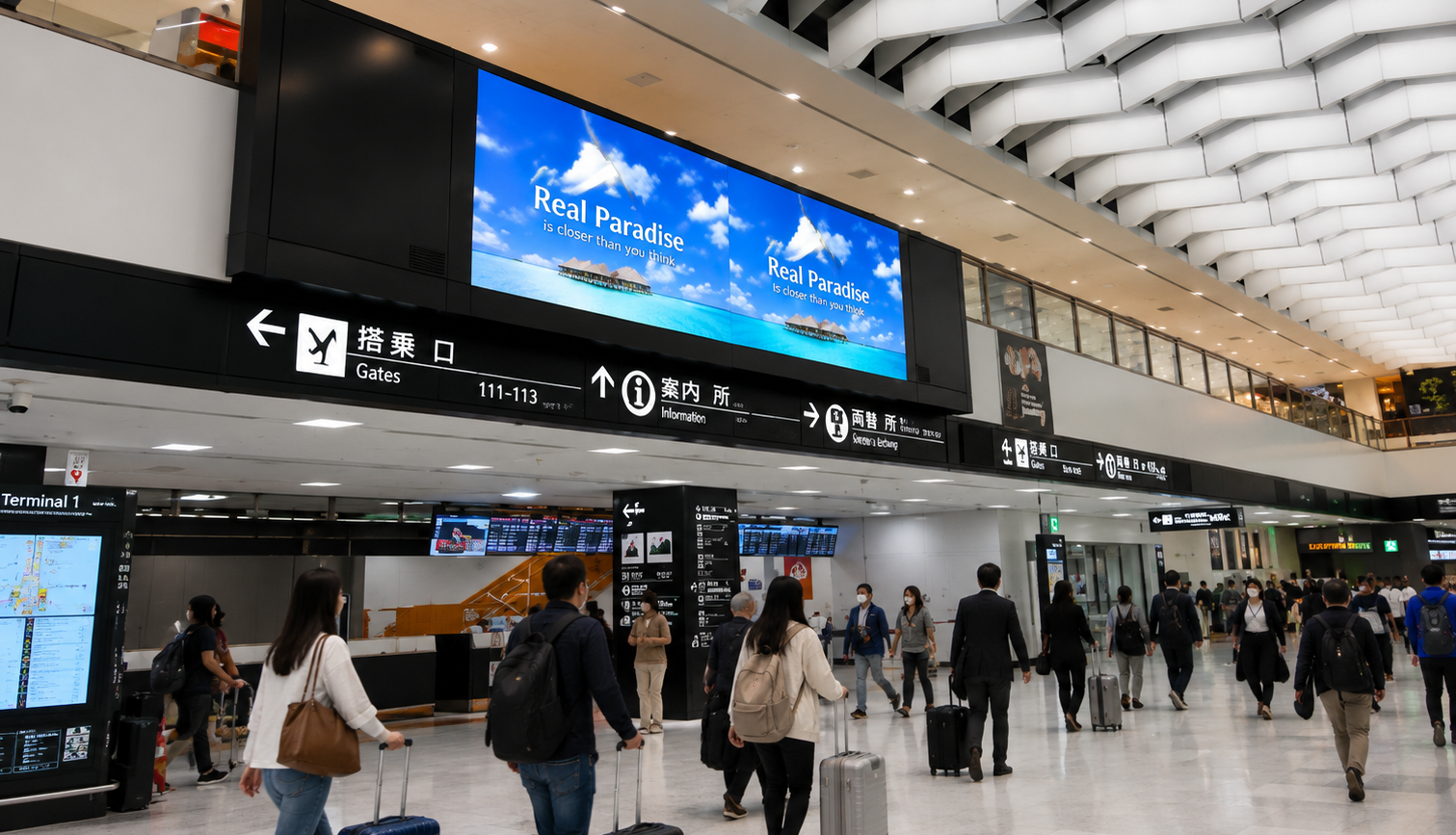
Narita International Airport is the defining access point to a premium consumer market whose scale, sophistication, and commercial depth the global advertising industry has consistently underestimated relative to its actual value. Japan is the third-largest economy in the world by nominal GDP, Tokyo is consistently ranked among the top three cities globally by HNWI population, and the Japanese luxury consumer is recognised across every premium brand category as the most educated, the most brand-loyal, and the most quality-conscious buyer in the Asia-Pacific region. NRT is the point at which that audience enters and exits the global travel economy in its most concentrated and commercially accessible form, handling the overwhelming majority of Japan's long-haul international passenger flow across three terminals and a route network that spans every major wealth corridor from New York to London to Singapore to Sydney.
The airport operates as a purpose-built international gateway with minimal domestic traffic, meaning every single passenger transiting NRT is either a Japanese national moving outbound into the global economy with confirmed investment and leisure intent, or an international visitor arriving into one of the world's most premium consumer and hospitality environments with confirmed spending capacity. There is no domestic commuter dilution, no budget transit noise, and no mid-market audience contamination. The structural purity of NRT's all-international passenger base is the commercial foundation of its advertising value, and it is a foundation that no other airport in Japan, and very few in Asia, can match for audience quality concentration.


Advertising Value Snapshot
- Passenger scale: Approximately 32 million annual passengers in 2023, recovering strongly toward a pre-pandemic peak exceeding 40 million, with inbound tourism growth driven by Japan's record visitor arrivals and outbound growth driven by the resumption of Japanese corporate and leisure travel
- Traveller type: Japanese HNWI and corporate elite, inbound ultra-luxury international tourists from across North America, Europe, and Asia-Pacific, multinational corporate business travellers on Tokyo's major financial and technology corridors, and outbound Japanese families making confirmed international real estate, education, and lifestyle investment decisions
- Airport classification: Tier 1 Ultra-Premium international gateway, with an audience quality index anchored by the world's third-largest national economy and the Asia-Pacific region's highest concentration of legacy and institutional HNWI wealth
- Commercial positioning: Japan's primary long-haul international aviation gateway and the single most commercially significant access point to the Japanese premium consumer market for international brands seeking direct, sustained engagement with the country's most valuable outbound audience
- Wealth corridor signal: NRT sits at the convergence of three of the world's most commercially significant wealth corridors: the Japan-United States technology and financial services axis, the Japan-Europe luxury goods and investment corridor, and the intra-Asia premium tourism and business travel network connecting Tokyo to Singapore, Hong Kong, Seoul, and Shanghai
- Advertising opportunity: Masscom Global provides structured access to the NRT media environment, delivering campaigns calibrated to the cultural intelligence requirements of the Japanese premium audience, the outbound investment behaviour of Japan's HNWI community, and the inbound luxury tourism spending patterns of the international visitor base that makes Tokyo one of the world's most valuable destination markets for premium brand engagement.
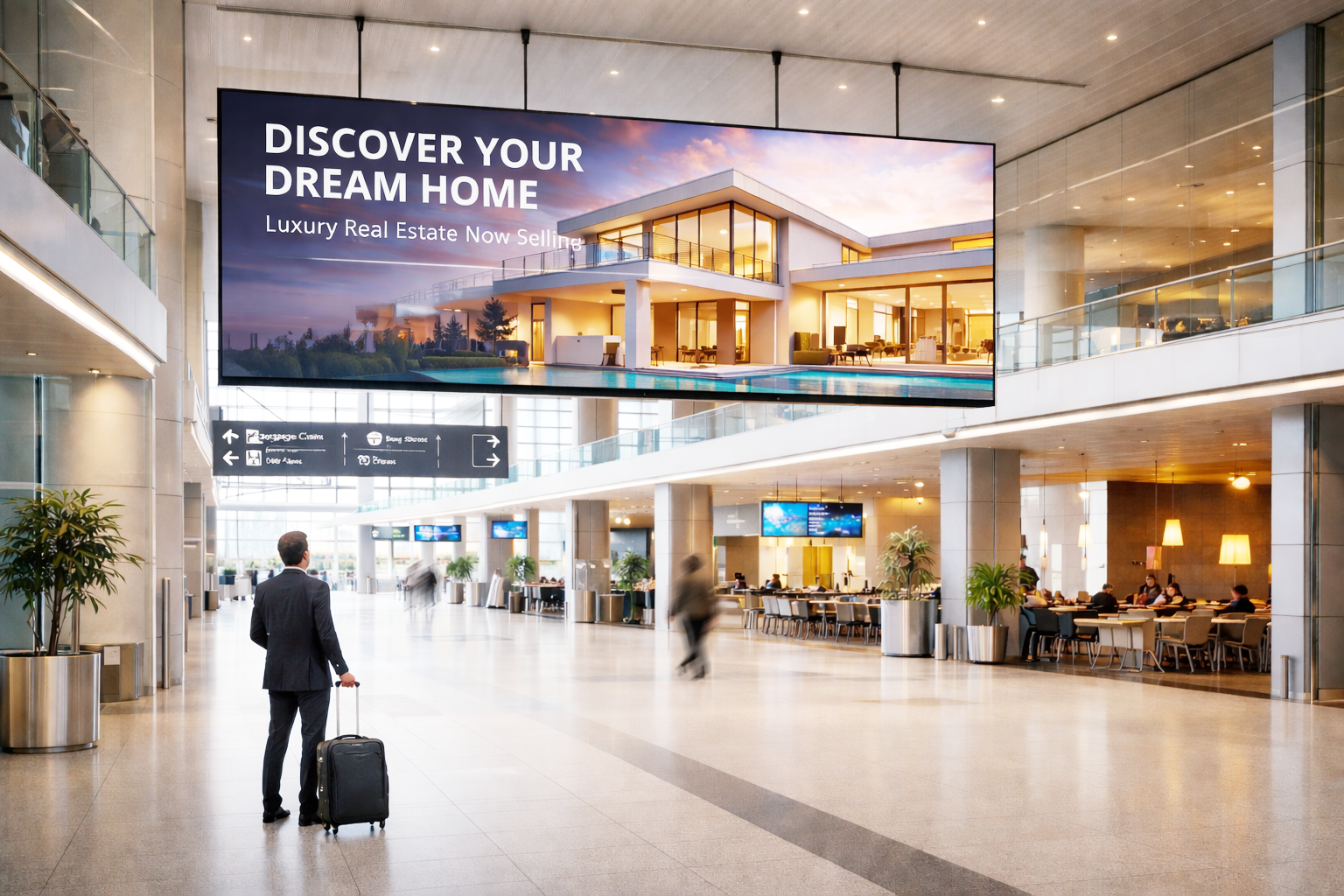
Airport Advertising is Complex to Get Right
We help you execute faster, with proven results and local insight most planners lack starting now.
Talk to an ExpertCatchment Area and Economic Drivers
Top 10 Cities within 150 km — Marketer Intelligence:
- Tokyo (Minato, Shinjuku, Shibuya, Chiyoda wards): The primary and overwhelmingly dominant feeder market for NRT, Tokyo's core business wards house the headquarters of more Fortune Global 500 companies than any city outside of Beijing, the operational centres of Japan's six major city banks, the primary offices of every major global investment bank's Japan operations, and the residential addresses of the country's most senior corporate executives, established business families, and financial industry principals. The corporate and investment elite commuting from Tokyo's premium residential districts of Minato, Shibuya, and Setagaya to NRT represent the most commercially valuable business and leisure travel audience in Asia.
- Yokohama: Japan's second-largest city at approximately 80 km from NRT, Yokohama is a major commercial port, a significant financial services centre, and the location of Nissan Motor's global headquarters alongside a dense concentration of international corporate offices, trading company regional hubs, and a substantial Western and Asian expatriate professional community. Yokohama's executive class and established business families are consistent premium consumers whose outbound travel frequency and investment behaviour are directly aligned with international real estate, premium automotive, and private banking advertising categories.
- Kawasaki: A major industrial and technology city between Tokyo and Yokohama, Kawasaki is home to the headquarters or major R&D centres of Fujitsu, NEC, Sony, and a significant cluster of precision engineering and electronics manufacturers. Its senior technical and executive workforce is a consistent premium business traveller audience with strong receptivity to technology, financial services, and executive lifestyle brand advertising.
- Saitama: The largest city in Saitama Prefecture and a major northern Tokyo commuter hub, Saitama houses a substantial upper-income professional residential population whose travel to NRT is frequent and whose purchasing behaviour spans premium automotive, financial planning, international real estate, and family education investment categories. Its proximity to the Tokyo corporate core makes it a feeder for NRT's most consistent business and leisure travel audience.
- Chiba City: The capital of Chiba Prefecture and the nearest major city to NRT at approximately 40 km, Chiba City houses a significant professional, financial services, and commercial population whose above-average income, high travel frequency through the airport, and confirmed premium consumption patterns make them a high-contact-frequency audience for sustained airport advertising campaigns. Its residents transit NRT more frequently than any other feeder city, creating a compounding brand recall dynamic for premium categories.
- Tsukuba: Japan's purpose-built science and technology city approximately 50 km northwest of NRT, Tsukuba is home to the University of Tsukuba, the National Aeronautics Research Institute, over 150 government research institutions, and a dense community of PhD-level scientists, researchers, and technology entrepreneurs whose income level, international travel frequency, and intellectual engagement with premium brand quality place them among the most commercially sophisticated audience segments in the NRT catchment. This community is particularly receptive to technology innovation, international education, and premium lifestyle advertising.
- Mito: The capital of Ibaraki Prefecture at approximately 90 km north of NRT, Mito is a regional administrative and commercial centre whose established business families, agricultural industry leaders, and prefectural government officials contribute a consistent mid-to-upper-premium audience to NRT's travel base. The Ibaraki Prefecture agricultural and manufacturing business community is a productive target for financial planning, premium automotive, and business services advertising with strong regional business owner alignment.
- Utsunomiya: The capital of Tochigi Prefecture at approximately 120 km north, Utsunomiya is a major manufacturing and business centre housing Honda and Fujitsu regional operations alongside a growing residential professional community. Known as the gateway to Nikko's UNESCO heritage sites, its residents are culturally engaged premium consumers with above-average travel frequency and strong receptivity to luxury hospitality, international tourism, and premium automotive advertising.
- Funabashi: A major commercial and residential hub in Chiba Prefecture at approximately 50 km from NRT, Funabashi houses one of the largest retail and commercial concentrations in the greater Tokyo metropolitan area and a substantial upper-income professional residential base. Its consistent travel volume through NRT and its above-average household income make it a reliable high-frequency audience for premium lifestyle, family education, and financial services brand advertising.
- Kashiwa: An affluent northeastern Tokyo suburb at approximately 35 km from NRT, Kashiwa is home to a significant concentration of senior corporate professionals, established business families, and upper-income academic community members affiliated with the University of Tokyo's Kashiwa campus and the National Institute for Environmental Studies. This community is intellectually sophisticated, brand-discerning, and consistently premium in its consumption behaviour across real estate, financial planning, automotive, and international education categories.
NRI and Diaspora Intelligence:
Narita International Airport's diaspora intelligence is structured around two commercially distinct flows that together create one of the most valuable bilateral audience environments in Asian airport advertising. The Japanese diaspora community, concentrated across the United States, Australia, Canada, Brazil, and Southeast Asia, generates consistent return visit traffic through NRT from an audience whose international experience compounds the sophistication of their Japanese consumer behaviour and whose outbound investment activity links Japan's domestic HNWI market to property and financial markets across the Pacific. The inbound diaspora dimension is equally significant: the overseas Japanese community returning home for New Year, Golden Week, and Obon carries international purchasing power and lifestyle expectations that make them a premium target for both domestic Japanese brand engagement and international category advertising. The Chinese, Korean, and Southeast Asian communities living and working in Japan contribute a secondary diaspora layer whose remittance flows, family visit travel, and premium consumer behaviour add commercial depth to the NRT audience beyond the Japanese national base. For advertisers in international real estate, premium financial services, and luxury lifestyle, the NRT diaspora flow is a bilateral wealth channel that delivers audience engagement on both the outbound Japanese investment side and the inbound international visitor spending side simultaneously.
Economic Importance:
The NRT catchment economy is the most economically complex and commercially diverse of any airport in Asia. Greater Tokyo's GDP alone exceeds that of most G20 nations, encompassing Japan's entire financial services industry, the headquarters of its global technology and automotive manufacturers, the operational core of its sogo shosha trading companies, and the creative and cultural industries whose global output shapes premium consumer taste from fashion to architecture to food. The Chiba-Ibaraki-Tochigi corridor adds a significant manufacturing, agricultural, and technology research economy that contributes a professional class of engineers, scientists, and business operators whose above-average income and consistent international travel engagement make them a durable secondary premium audience. For advertisers, the NRT catchment is not one audience type but a layered portfolio of premium consumer segments unified by their access to Japan's most significant international gateway and their position within the world's third-largest economy.
Business and Industrial Ecosystem
- Financial services, banking, and asset management: Japan's six major city banks, the regional operations of every major global investment bank, the headquarters of Nomura Holdings, Daiwa Securities, and SMBC Nikko, and a dense network of insurance company and asset management institutional headquarters in Tokyo's Marunouchi and Otemachi districts generate the most senior and highest-value corporate travel audience in Asia. These professionals travel primarily on the Tokyo-New York, Tokyo-London, Tokyo-Frankfurt, and Tokyo-Hong Kong corridors for capital market, M&A, and institutional investment activities.
- Automotive, manufacturing, and technology: Toyota, Honda, Sony, Panasonic, Fujitsu, NEC, Hitachi, and their supplier ecosystems collectively generate the largest concentration of senior technical and commercial executive travel in the manufacturing world. Engineers, product development leaders, procurement directors, and supply chain executives whose cross-border travel anchors Japan's export economy constitute a consistent and high-volume premium business audience at NRT with strong receptivity to executive services, premium automotive, and business technology advertising.
- Sogo shosha trading companies: Mitsubishi Corporation, Mitsui and Co., Sumitomo Corporation, Itochu, Marubeni, and Toyota Tsusho are among the most globally active corporate entities in the world, with investment and trading operations spanning resources, infrastructure, consumer goods, and financial services across every inhabited continent. The senior executives of these organisations are among the world's most frequent international business travellers, and their compensation structures and professional cultures make them a confirmed ultra-HNWI audience whose purchasing behaviour across private banking, international real estate, and premium lifestyle categories is among the most commercially valuable at any Asian hub airport.
- Technology startups, venture capital, and innovation economy: Tokyo's emerging startup ecosystem, anchored by SoftBank's global investment activity, Recruit Holdings, and a growing network of technology venture firms, is producing a new generation of HNWI founders and investors whose international travel frequency, English-language business fluency, and premium consumption behaviour mirror the established corporate elite while adding a risk-tolerance and brand-innovation orientation that makes them particularly receptive to new category entries in financial services, international real estate, and premium technology lifestyle advertising.
Passenger Intent — Business Segment:
The business travellers transiting NRT are operating at the apex of global corporate activity. They are the executives who approve the M&A transactions that reshape industries, the fund managers who allocate the capital flows that move markets, the technology leaders whose product decisions influence consumer behaviour globally, and the trading company principals whose investment decisions are measured in bilateral trade volume between nations. Advertiser categories that intercept this audience most effectively include private banking and family office services, international commercial real estate, ultra-luxury automotive, executive health and longevity programmes, and premium technology. The combination of Japan's cultural value of professional excellence with the individual wealth scale of this community creates a business audience whose brand loyalty, once earned through quality and consistency, is sustained over decades rather than purchase cycles.
Strategic Insight:
The corporate audience at NRT carries a defining characteristic that distinguishes it from every other Asian hub airport's business community: a cultural orientation toward considered, research-driven purchasing decisions that produces the deepest brand loyalty in the premium consumer world once a relationship is established on terms of genuine quality. Japanese corporate executives do not make rapid purchase decisions under peer pressure. They make deliberate ones informed by thorough evaluation, and once a brand has passed that evaluation, the relationship is maintained with a consistency and an advocacy intensity that most other consumer cultures cannot match. For premium brands building Asia-Pacific market depth rather than short-cycle conversion, the Japanese corporate audience at NRT represents the highest-lifetime-value business advertising investment available in the region.
Tourism and Premium Travel Drivers
- Tokyo's luxury retail and fashion ecosystem: Ginza, Omotesando, Harajuku, and Shinjuku's luxury retail districts collectively form the world's largest concentration of premium flagship stores, with every major global luxury house maintaining a Japan presence at the highest retail standard. Inbound tourists arriving at NRT specifically for luxury retail access find an ecosystem of global brand flagships and Japan-exclusive limited editions that creates among the highest per-visitor retail spending rates of any destination in Asia-Pacific.
- Cherry blossom season and the Hanami experience: Japan's spring cherry blossom season is one of the most powerful inbound tourism drivers of any single natural event in the world, drawing millions of premium international visitors who plan trips twelve to eighteen months in advance and commit to confirmed premium accommodation, private tour, and experiential dining bookings before they depart their home country. This audience arrives at NRT with the highest pre-committed per-trip spending of any seasonal leisure tourism segment in Asia.
- Japanese culinary tourism and Michelin culture: Japan holds more Michelin-starred restaurants than any country in the world, and culinary tourism anchored by Tokyo, Kyoto, Osaka, and the broader kaiseki and ramen cultural landscape draws an internationally sophisticated food tourism audience whose per-trip spending on dining, hospitality, and artisan food product purchasing places them among the most commercially productive inbound visitor segments globally. Chefs, food industry professionals, and premium gastronomy enthusiasts arrive at NRT representing a lifestyle-oriented, quality-obsessed audience directly aligned with premium food, beverage, and hospitality advertising.
- Traditional arts, anime, and cultural tourism: Japan's unique combination of UNESCO-heritage traditional arts, contemporary pop culture represented by anime, manga, and gaming, and its distinctive design and craft traditions creates a premium cultural tourism segment drawing visitors from North America, Europe, Australia, and across Asia whose engagement depth, repeat visit rate, and per-visit spending place them at the upper tier of the inbound tourism audience hierarchy. This audience's brand sophistication and category awareness make them highly receptive to premium cultural, lifestyle, and experiential brand advertising.
- Autumn foliage and year-round seasonal tourism: Japan's distinctive four-season landscape calendar, including the autumn momiji foliage season from October to November and the winter snow landscape of Hokkaido and the Japanese Alps, creates a year-round premium inbound tourism rhythm that maintains consistent NRT audience quality outside the spring cherry blossom peak. Each seasonal window draws a distinct premium leisure audience whose confirmed travel commitment signals above-average spending capacity and lifestyle orientation.
Passenger Intent — Tourism Segment:
The premium inbound tourists arriving at NRT have made one of the most informed travel decisions in the global tourism market. Japan requires significant advance planning, meaningful budget commitment, and a genuine engagement with the destination's cultural specificity that filters out the casual or budget-oriented visitor at the booking stage. The tourist arriving at Narita has read extensively about the destination, committed to a premium accommodation strategy, and allocated a per-trip budget that consistently ranks among the highest in Asian tourism destination spending surveys. They are receptive to advertising that extends and deepens their Japan experience, introduces them to premium Japanese brand categories they have not yet engaged with, and positions international brands within the cultural vocabulary of quality and craftsmanship that Japan's consumer environment rewards. For international luxury brands, artisan producers, and premium hospitality operators, the NRT inbound audience is the most knowledgeable and most purchase-ready inbound tourism audience in Asia.
Travel Patterns and Seasonality
Peak seasons:
- Cherry blossom season (late March to early May): The single most powerful inbound tourism surge of the year, overlapping with Japan's Golden Week national holiday period from late April to early May. This window delivers both the highest inbound international tourist volume and the highest outbound Japanese leisure and family travel volume simultaneously, creating a dual-direction premium audience peak of extraordinary density. Premium advertising placements during this window reach the year's most concentrated and most spending-motivated audience at NRT.
- Summer season (July to August): Japan's school summer holiday period drives significant outbound family travel among Japanese nationals heading to Hawaii, Europe, Southeast Asia, and Australia, while simultaneous inbound tourism from North America and Europe maintains strong arrival volume. The summer window delivers consistent premium audience density across both the outbound Japanese investment family profile and the inbound Western and Asian leisure tourism segment.
- Autumn foliage season (October to November): One of Japan's most celebrated natural calendar events, the autumn momiji season draws a significant premium international visitor surge alongside Japanese domestic travel, creating an elevated NRT audience quality window that is often underutilised by international advertisers focused exclusively on the spring cherry blossom peak.
- New Year and December holiday season (December to January): Japanese New Year is the most significant cultural and consumer spending moment in the country's annual calendar, generating both outbound luxury travel by HNWI families visiting Hawaii, European ski resorts, and Southeast Asian destinations and significant inbound tourism from Asian markets whose New Year calendars do not align with Japan's. December is one of the highest retail and gifting spending months in Japan, and NRT's audience during this window is at its most gift-purchasing and lifestyle-investment receptive.
Event-Driven Movement:
- Golden Week (late April to early May): Japan's most concentrated national holiday period, combining four public holidays into a week-long travel and leisure surge that is the single highest departure volume moment at NRT for Japanese nationals. Outbound destinations include Hawaii, Southeast Asia, Europe, and Australia, with confirmed premium hotel and luxury experience bookings made months in advance. Premium advertising during the Golden Week departure window reaches the Japanese leisure traveller at peak spending motivation.
- Obon festival travel (mid-August): Japan's traditional ancestral celebration drives a significant domestic and some international travel surge among Japanese nationals returning to family homes or taking summer leisure breaks. The NRT audience during Obon is concentrated with upper-income urban professional families whose summer travel spending is confirmed and substantial.
- Tokyo International Film Festival (October to November): One of the most significant film industry events in Asia, drawing international film professionals, talent, and cultural industry leaders to Tokyo and generating a concentrated window of high-profile entertainment industry audience at NRT. For premium lifestyle, fashion, and experiential brands, this event window delivers an audience whose cultural influence extends well beyond its numerical scale.
- Cherry Blossom season inbound surge (late March to mid-April): International arrivals for cherry blossom viewing represent the year's highest single-purpose inbound tourism concentration, with visitors from China, South Korea, the United States, Australia, and Europe arriving simultaneously at NRT. The confirmed advance planning, premium accommodation commitment, and high per-trip spending of this audience makes the pre-hanami arrival window one of the most commercially productive advertising moments of the year for luxury retail, premium hospitality, and experiential brand categories.
- Tokyo Fashion Week and luxury brand events (March and October): Japan's position as the world's most sophisticated luxury retail market generates consistent premium audience concentration around fashion season events and luxury brand local launch activities, with international buyers, media, and brand executives transiting NRT in concentrated volumes that create highly targeted advertising moments for luxury fashion, accessories, and lifestyle brands.
- Christmas commercial season (December): While not a religious holiday in Japan, Christmas has become one of the country's most commercially significant consumption events, driving premium gifting, luxury restaurant bookings, and hotel experiences at a scale that makes December one of the highest per-capita luxury spending months in the Japanese calendar. NRT's December audience is at its most luxury-purchase-receptive, and brands positioned appropriately for the season consistently outperform their annual average engagement rate during this window.

It’s Not Just Where You Advertise - It’s How Fast You Execute
We combine local insight with fast rollout to deliver results for you, now.
Talk to an ExpertAudience and Cultural Intelligence
Top 2 Languages:
- Japanese: The official language of Japan and the primary communication register for all Japanese national audiences at NRT, Japanese campaign creative must operate at the cultural intelligence standard of an audience that is among the most visually sophisticated and linguistically precise consumer communities in the world. Japanese advertising communication rewards understatement, precision, and the indirect expression of quality through craft and detail rather than explicit promotional claims. Creative that demonstrates genuine knowledge of Japanese cultural vocabulary, seasonal references, and aesthetic sensibilities consistently outperforms adapted Western advertising creative by a margin that makes native Japanese campaign development not optional but commercially essential. Brands that invest in authentic Japanese creative register at NRT establish a relationship quality with the Japanese HNWI audience that translates into the most sustained brand loyalty in the premium consumer market.
- English: The dominant language of international business communication at NRT and the primary language for campaigns targeting the inbound Western and Asia-Pacific international tourism audience, English-speaking multinational corporate travellers, and the internationally educated tier of the Japanese corporate community whose global business fluency makes them accessible through both Japanese and English creative. NRT's inbound audience from the United States, United Kingdom, Australia, and Canada is overwhelmingly English-speaking and represents a premium tourist segment whose spending capacity and cultural engagement with Japan make them a directly valuable secondary audience for international brand campaigns running alongside Japanese-language creative.
Major Traveller Nationalities:
The NRT passenger mix reflects Japan's position as both the dominant outbound tourism origin market in East Asia and one of the world's most popular inbound premium tourism destinations. Japanese nationals form the primary commercial audience and the dominant premium leisure and business travel segment. South Korean nationals, representing the largest single international arrival nationality, contribute a significant inbound tourism flow particularly concentrated in the younger and premium cultural tourism segments. Chinese nationals, whose return to Japan following COVID-related restrictions has been one of the most commercially significant tourism recovery stories in Asia, represent the inbound segment with the highest confirmed per-visitor retail spending and the strongest luxury brand purchasing orientation. American and British nationals form the primary Western inbound tourism segments, with confirmed premium hospitality, culinary tourism, and cultural experience spending that places them at the top of the inbound non-Asian visitor spending hierarchy. Australian, French, German, and Canadian nationals add further Western tourism depth. Taiwanese nationals contribute a consistent and high-spending premium inbound segment with deep cultural affinity for Japanese consumer brands and lifestyle aesthetics.
Religion — Advertiser Intelligence:
- Shinto and Buddhism (practiced by approximately 80 to 90% of the Japanese population in overlapping cultural observance): Japan's unique religious landscape is defined by the simultaneous practice of Shinto and Buddhism across the majority of the population, creating a cultural calendar that is shaped by religious festivals without the strict theological boundaries that characterise single-religion consumer communities. New Year celebrations anchored in Shinto shrine visits generate the country's most intense consumer spending event, with premium gifting, oseibo and ochugen gift-giving seasons in December and June creating two distinct structured luxury gifting windows annually. Obon in August and the spring and autumn equinox periods create secondary travel and family spending moments. For advertisers, the practical implication is a calendar of culturally embedded spending events that reward brands with genuine knowledge of their seasonal significance and creative calibration to their cultural context.
- Christmas, commercial observance (approximately 80% of population participates commercially): Japan's commercial adoption of Christmas as a premium gifting, dining, and lifestyle celebration event is one of the most commercially significant examples of cultural adaptation in the global consumer calendar. Despite minimal Christian population, December in Japan generates luxury gift purchasing, premium hotel and dining experiences, and couple and family-oriented leisure spending that makes it one of the highest per-capita premium spending months in the country. International luxury brands, premium food and beverage, and ultra-luxury hospitality operators find their most commercially productive Japanese calendar window in December.
- Christianity (approximately 1 to 2%): A small but concentrated Christian community among Japanese nationals with international educational backgrounds and a larger Western expatriate Christian community contributes a secondary faith calendar audience. The community's above-average international exposure and professional premium income level make it receptive to international lifestyle, education, and financial services brand advertising.
Behavioral Insight:
The Japanese HNWI consumer is defined by the deepest commitment to product quality in the global premium consumer market, operating from a cultural value system that places craftsmanship, attention to detail, and the integrity of materials at the centre of purchasing evaluation. This is not an audience that buys premium for status signalling in the obvious sense. They buy premium because they understand the difference between genuine quality and its imitation at a technical and sensory level that most other consumer cultures cannot access. Advertising that demonstrates specific, verifiable quality credentials, that shows the craftsmanship behind the product rather than the social context around it, and that respects the intelligence and cultural sophistication of the person being addressed consistently outperforms advertising that relies on aspirational lifestyle imagery or social endorsement. The Japanese consumer's loyalty to brands that have earned their trust through demonstrated quality is among the most commercially valuable in the world: once established, it persists across decades and extends across product categories and generations within the same family.
Outbound Wealth and Investment Intelligence
The outbound Japanese passenger at Narita International Airport represents one of the most commercially significant and most systematically underserved outbound capital and lifestyle investment audiences in global airport advertising. Japan's 3.4 million HNWIs hold the most conservative and most internationally underallocated private wealth portfolio of any major economy, and the direction of that wealth toward international real estate, education, and diversified investment is one of the most significant capital allocation stories in Asia over the next decade. The Japanese HNWI who transits NRT is not deploying capital impulsively. They are making considered, research-supported decisions that represent long-term commitment rather than speculative positioning, and they are doing so in a market where their wealth scale is enormous, their international investment culture is growing, and their exposure to quality international brand communication at their primary departure gateway has historically been far below what their commercial value justifies. For international brands seeking outbound Japanese capital, NRT is the single most productive access point available.
Outbound Real Estate Investment:
Japanese HNWI nationals are among the most active outbound real estate investors in the Asia-Pacific region, with a portfolio approach shaped by lifestyle familiarity, capital protection, education access, and currency diversification priorities that make specific destination markets predictably and consistently popular. Hawaii is the most historically established and commercially significant destination, with decades of Japanese investment in Honolulu, Maui, and Kauai residential properties creating one of the most active bilateral real estate investment relationships in the Pacific. Japanese buyers in Hawaii are not exploring the market. They are returning to it generation after generation, and the NRT departure gate is the most direct advertising channel for international Hawaii property developers and agents in the world. Australia, specifically Sydney's eastern suburbs, Melbourne's inner city, the Gold Coast, and the Sunshine Coast, is the second most active destination, with the established Japanese community and strong lifestyle alignment between coastal Japanese and Australian leisure cultures sustaining consistent investment demand. Southeast Asia, particularly Bangkok's luxury condominium market, Bali's private villa market, and Singapore's prime residential sector, draws a growing segment of younger Japanese HNWI buyers seeking accessible luxury second-home markets with direct flight connectivity from Tokyo. The United Kingdom, particularly London's prime central residential market and the English Home Counties, attracts the segment seeking European capital security and proximity to British educational institutions for children in boarding school programmes. Canada, specifically Vancouver and British Columbia's coastal real estate market, draws significant Japanese investment from families valuing Pacific Rim lifestyle alignment with common law asset protection and a deeply established Japanese community.
Outbound Education Investment:
Japan's cultural commitment to educational excellence drives one of the most structured and highest-spending outbound education investment flows in Asia. The United States is the primary destination, with American universities in business, law, technology, and medicine drawing Japanese students whose family investment per academic year in tuition, accommodation, travel, and preparation costs is among the highest in the Asian student community. The Ivy League, MIT, Stanford, and the University of California system all maintain active recruitment relationships with Japan's premium secondary schools, and NRT is the gateway through which the resulting student and parent travel flows are concentrated. The United Kingdom follows as the second-strongest destination, with British boarding schools receiving students from Japan's most established business and government families, and postgraduate programmes at Oxford, Cambridge, the London School of Economics, and Imperial College drawing the Japanese MBA and research cohort. Australia, particularly the University of Melbourne, the Australian National University, and the University of Sydney, attracts a growing Pacific-oriented Japanese student segment valuing research-intensive programmes with accessible lifestyle context. International boarding schools and university recruitment programmes advertising at NRT reach a parent and family audience whose education investment planning cycle runs eighteen to thirty-six months and whose total per-student family spending commitment is among the highest in the Asian international student market.
Outbound Wealth Migration and Residency:
Second residency and international asset diversification interest among Japan's HNWI community is growing steadily from a historically low base, driven by Japan's unique combination of an ageing domestic economy, prolonged low-interest environment, and a generational shift among younger HNWI individuals whose global business exposure has normalised international diversification as a standard wealth management practice. Singapore attracts the most active Japanese HNWI interest as a second residency and family office base, offering a zero-capital-gains tax environment, English-language legal framework, direct flight connectivity to Tokyo, and the combination of Asian cultural familiarity with global financial infrastructure that Japanese family offices require. Australia's Significant Investor Visa programme draws interest from Japanese families seeking Pacific Rim lifestyle diversification with strong education infrastructure for children. Portugal's Golden Visa programme, particularly its investment fund pathway, has attracted growing Japanese institutional and private investor interest as a European diversification vehicle with Atlantic lifestyle access. The United States EB-5 investor visa pathway is actively considered by Japanese families seeking permanent US residency for education and real estate investment purposes, particularly those with children enrolled or planning enrolment in American universities.
Strategic Implication for Advertisers:
International brands at the intersection of luxury real estate, private wealth management, education investment, and residency planning should treat Narita International Airport as a high-priority Asia-Pacific advertising channel whose commercial return per investment currently exceeds every comparable Asian hub airport for outbound Japanese capital targeting. The Japanese HNWI audience's wealth scale is enormous, their investment decision quality is exceptional, and their brand loyalty once earned is among the most commercially durable in the world. Masscom Global positions international advertisers at NRT and simultaneously at the destination airports where Japanese capital is being deployed, creating compounding brand exposure across the full wealth journey from Tokyo to Hawaii, London, Sydney, and Singapore.
Airport Infrastructure and Premium Indicators
Terminals:
- Terminal 1 at NRT is the primary facility for international carriers operating Star Alliance and unaligned international routes, including United Airlines, Lufthansa, Air France, KLM, Scandinavian Airlines, Swiss, and a significant portion of Asian international carrier operations. Its scale, retail density, and premium lounge infrastructure serve the Western and international business travel audience at the highest standard, creating an advertising environment that reaches international premium visitors and Japanese outbound travellers simultaneously within the same physical flow.
- Terminal 2 serves Japan Airlines and SkyTeam alliance members including Delta Air Lines, Korean Air, and Air France in a second operational flow, housing JAL's premium lounge facilities alongside a significant luxury retail and dining environment whose physical standard reflects the expectations of JAL's premium cabin and executive traveller clientele. The T2 advertising environment delivers the Japanese corporate elite and confirmed upper-class traveller audience in the highest concentration available within the NRT facility.
- Terminal 3 serves low-cost carrier operations and provides a distinct secondary audience layer of younger, aspirational, and growing-income travellers whose brand awareness and purchasing trajectory make them a productive audience for aspirational premium and entry-luxury category advertising targeting the next generation of Japanese HNWI consumers.
Premium Indicators:
- Japan Airlines and ANA both maintain premium lounge facilities at NRT whose luxury standard, including private dining rooms, sake bars, and spa treatment areas, rivals the best airport lounge infrastructure in the world. The confirmed first class and business class traveller communities served by these facilities represent the highest-income tier of the NRT passenger base, and format placements accessible to premium lounge areas deliver the most commercially valuable audience concentration within the airport.
- NRT's duty-free and luxury retail ecosystem is one of the largest and most premium in Asia, encompassing all major global luxury maisons alongside Japan-exclusive limited edition products and artisan food and beverage brands whose international rarity creates a confirmed luxury retail purchasing environment where brand advertising is contextually positioned within active purchasing behaviour rather than passive awareness.
- The presence of Japan's most prestigious domestic retail brands alongside global luxury houses in the NRT commercial environment creates a brand association context of exceptional quality, elevating every advertising impression through the standard of the surrounding commercial environment.
- The airport's direct connectivity to central Tokyo via the Narita Express and Keisei Skyliner rapid rail services, combined with luxury hotel partners in both the airport campus and the Tokyo city centre served by this route, creates a confirmed premium hospitality ecosystem whose guests and travellers are among the most commercially valuable captive audiences in the terminal environment.
Forward-Looking Signal:
Narita International Airport is positioned for significant capacity and quality expansion over the coming decade, with the Japanese government's commitment to restoring and exceeding pre-pandemic inbound tourism targets driving investment in new terminal facilities, expanded runway capacity, and premium retail and hospitality infrastructure upgrades designed to establish NRT as a leading premium hub in Asia alongside Haneda. Japan's record inbound tourism figures in 2023 and 2024, driven by the weak yen's attraction for foreign visitors and the post-COVID pent-up demand for Japanese travel experiences, are accelerating this investment programme on a timeline that will create significant new premium advertising inventory within the next three years. Simultaneously, the Japanese government's active promotion of inbound tourism as an economic policy priority ensures continued route expansion, new airline partnerships, and growing direct connectivity from emerging Asian source markets including India, Vietnam, and Indonesia. Masscom Global advises brands to establish premium advertising positions at NRT now, ahead of the inventory demand growth that the airport's expanding passenger base and premium facility upgrades will drive in the near term.
Airline and Route Intelligence
Top Airlines:
- Japan Airlines (JAL) (national carrier, full-service global network)
- All Nippon Airways (ANA) (second national carrier, full-service global network)
- United Airlines
- Delta Air Lines
- American Airlines
- British Airways
- Lufthansa
- Air France
- KLM Royal Dutch Airlines
- Swiss International Air Lines
- Finnair
- Scandinavian Airlines
- Cathay Pacific
- Singapore Airlines
- Korean Air
- Asiana Airlines
- Air China
- China Eastern Airlines
- China Southern Airlines
- Thai Airways International
- Philippine Airlines
- Air India
- Turkish Airlines
- Emirates
- Vietnam Airlines
- Jeju Air
- Peach Aviation (T3, low-cost)
- Jetstar Japan (T3, low-cost)
Key International Routes:
- New York JFK and Newark EWR: Multiple daily frequencies, primary Japan-US financial and corporate corridor
- Los Angeles LAX: Major Japan-US cultural, entertainment, and Japanese community corridor
- London Heathrow LHR: JAL, ANA, and British Airways, key premium investment and education corridor
- Paris CDG: Air France and JAL, luxury fashion and cultural tourism corridor
- Frankfurt FRA: Lufthansa and ANA, Germany-Japan automotive and manufacturing business corridor
- Hong Kong HKG: Multiple carriers, Asia-Pacific financial hub connection
- Singapore SIN: Singapore Airlines and JAL, Southeast Asian wealth management and business corridor
- Sydney SYD: Qantas and JAL, Japan-Australia investment and lifestyle corridor
- Seoul Incheon ICN: Multiple carriers, highest single-route passenger volume by international nationality
- Beijing PEK and Shanghai PVG: Multiple carriers, China-Japan business and recovering tourism corridors
- Bangkok BKK: Thai Airways and ANA, premium tourism and Japanese expat community corridor
- Honolulu HNL: JAL and ANA, the most emotionally significant outbound leisure route for the Japanese HNWI community
Domestic Connectivity:
NRT operates minimal domestic services, with the overwhelming majority of domestic Japanese air travel handled through Haneda Airport. The structural decision to keep NRT focused on international routes means that the domestic audience dilution that affects advertising value at most major hub airports is effectively absent at NRT. Every passenger at NRT is an international traveller, either inbound or outbound, producing the highest possible commercial advertising audience purity of any major Japanese airport.
Wealth Corridor Signal:
The NRT route network is the most commercially comprehensive map of Japanese outbound wealth geography in global aviation. The New York and Los Angeles corridors carry Japan's financial services and entertainment industry investment flows toward America's most significant capital markets. The London and European corridors carry the education investment, luxury retail, and European property acquisition audience. The Honolulu corridor carries the most emotionally committed and highest-frequency Japanese leisure travel audience, representing decades of bilateral HNWI lifestyle investment between Japan and Hawaii. The Singapore and Hong Kong corridors carry Japan's most internationally sophisticated financial and technology executive community toward Asia's premier offshore wealth management centres. The Australian corridor carries the property investment, education, and Pacific lifestyle diversification audience. The Korean and Chinese routes carry the region's highest-volume inbound premium tourism flows. For advertisers, each corridor in the NRT network is a distinct wealth movement requiring a different advertising calibration, and Masscom Global manages that calibration as a precision campaign architecture across the full route portfolio.
Media Environment at the Airport
- NRT's multi-terminal structure creates a defined audience segmentation opportunity that most Asian airports cannot replicate: Terminal 1 delivers the Western carrier and international business travel audience, Terminal 2 delivers the Japanese premium carrier and corporate elite audience, and Terminal 3 delivers the aspirational younger traveller audience. A coordinated multi-terminal campaign architecture structured by Masscom Global captures the full NRT wealth spectrum across its most commercially relevant audience tiers without format wastage on audience segments outside the campaign's target profile.
- Dwell time at NRT is elevated by the airport's distance from central Tokyo, which requires a minimum two-hour pre-journey commitment from most passengers and produces among the longest average pre-departure terminal dwell periods of any major Asian international airport. Japanese cultural preferences for punctual and well-prepared departure behaviour compound this effect, with Japanese national passengers typically arriving at the airport earlier than the already generous dwell time their journey requires.
- The premium retail and duty-free environment at NRT is one of the most commercially active luxury purchasing environments in Asian aviation, with confirmed luxury goods purchasing behaviour among outbound Japanese travellers and confirmed Japan-exclusive product purchasing among inbound international tourists creating a dual-directional luxury retail engagement context in which premium brand advertising is received as commercial information rather than interruption.
- Masscom Global approaches NRT placements with cultural intelligence as the operational foundation, ensuring that all Japanese-language creative meets the aesthetic and linguistic standards of Japan's most demanding consumer audience, that English-language creative is calibrated for the premium international visitor rather than defaulting to generic tourism creative, and that campaign timing is structured around Japan's culturally embedded spending calendar to maximise both the audience density and the purchasing intent relevance of every impression delivered within the terminal environment.
Strategic Advertising Fit
Best Fit:
- International luxury real estate: Developers offering Hawaiian, Australian, Southeast Asian, British, and Canadian properties to Japanese HNWI buyers find a directly validated and financially active audience at NRT whose outbound real estate investment behaviour in these exact markets is confirmed, structured, and growing with Japan's accelerating international wealth diversification. The combination of confirmed destination familiarity, established investment culture, and growing private sector HNWI wealth generation makes this the single most commercially productive international real estate advertising channel in Japan.
- Ultra-luxury fashion, accessories, and Japanese heritage brands: Both inbound international luxury consumers arriving specifically for Tokyo's unparalleled luxury retail environment and outbound Japanese HNWI travellers making pre-departure luxury purchase decisions find NRT a directly relevant engagement point. Japan's position as the world's most sophisticated luxury retail market makes this airport a primary channel for both brand reinforcement with domestic consumers and brand introduction to the high-spending inbound tourism audience.
- Private banking, family office, and wealth management: Private banks and wealth management platforms seeking Japanese HNWI client relationships find at NRT an audience whose wealth scale is extraordinary, whose international investment appetite is growing, and whose cultural preference for sustained trust-based financial relationships makes the quality of first contact advertising investment disproportionately valuable relative to the conversion value it initiates. The Japanese HNWI's lifetime value to a private banking relationship is among the highest in the world once the trust threshold is crossed.
- Premium and ultra-luxury automotive: Japan's domestic automotive culture at the HNWI level combines patriotic loyalty to domestic brands with a deep appreciation for European ultra-luxury engineering, and the NRT departure audience includes the purchase-authorising tier of every premium automotive category. New model launches, limited edition campaigns, and brand heritage storytelling in Japanese cultural register find a directly engaged and purchase-ready audience.
- International education: American universities, British boarding schools, Australian institutions, and premium international education consultancies find at NRT a parent and family decision-making audience whose education investment commitment per child is among the most financially substantial in Asia and whose decision cycle length rewards brands with consistent advertising presence across the full school and university selection planning window.
- Ultra-luxury hospitality and experiential travel: Japanese HNWI travellers to Hawaii, Europe, and Southeast Asia are among the world's highest per-night accommodation spenders, and the inbound premium tourist audience at NRT has committed to the same standard of hospitality from the other direction. Five-star resort brands, private villa operators, ultra-luxury cruise lines, and exclusive experiential travel platforms find a dual-audience opportunity at NRT that no other Asian hub airport delivers with the same directional balance between outbound and inbound premium spending.
- Premium food, beverage, and Japanese artisan brands: Japan's extraordinary culinary culture creates a confirmed premium food and beverage purchasing audience among both departing Japanese nationals who purchase Japan-exclusive artisan products as travel gifts and arriving international food tourists who have come specifically to engage with Japanese culinary excellence. This category performs strongly in the NRT retail adjacency environment throughout the year.
- Premium healthcare, longevity, and executive wellness: Japan's sophisticated approach to health, longevity, and wellness, combined with a growing executive wellness culture among the Tokyo corporate elite, creates a productive audience for premium healthcare brands, executive wellness programmes, and luxury longevity services. The ageing but wealthy Japanese HNWI community and the health-conscious corporate executive audience are both accessible within the NRT passenger flow.
Brand Alignment at a Glance:
| Category | Fit |
|---|---|
| International luxury real estate | Exceptional |
| Private banking and wealth management | Exceptional |
| Ultra-luxury fashion and accessories | Exceptional |
| International education | Exceptional |
| Premium automotive | Strong |
| Ultra-luxury hospitality and experiential travel | Strong |
| Premium food, beverage, and artisan brands | Strong |
| Executive wellness and premium healthcare | Strong |
| Mass-market retail | Poor fit |
Who Should Not Advertise Here:
- Mass-market consumer goods and commodity retail: Brands whose commercial proposition depends on price competitiveness, broad demographic reach, or promotional urgency will generate no meaningful engagement from an audience that evaluates purchasing decisions on quality, craftsmanship, and brand integrity rather than price or promotional incentive.
- Budget and low-cost travel brands: Price-led travel messaging is structurally misaligned with a Japanese HNWI and corporate elite audience whose travel decisions are made entirely on the basis of service standard, route directness, and premium cabin quality. Low-cost carrier promotion and discount travel advertising produces no commercial return at this airport at any season or format level.
- Generic financial products and retail banking: The Japanese HNWI audience's financial needs are served by the most sophisticated private banking, family office, and institutional wealth management structures in Asia. Standardised retail banking, basic insurance products, and commodity financial services find no relevant primary audience among NRT's confirmed premium traveller base.
Event and Seasonality Analysis
- Event Strength: High (culturally driven, globally recognised, and commercially structured)
- Seasonality Strength: Very High
- Traffic Pattern: Multi-Peak (Spring cherry blossom and Golden Week, Summer outbound, Autumn foliage, and Winter/New Year) with consistent baseline premium audience year-round
Strategic Implication:
The NRT advertising calendar is one of the most multi-layered and commercially structured of any airport in Asia, offering four distinct premium audience peak windows across the year rather than the dual-peak or single-peak patterns of most Gulf and regional airports. Masscom Global structures NRT campaign schedules around the spring cherry blossom and Golden Week peak as the primary investment window for maximum inbound tourism and outbound Japanese leisure audience density, the summer outbound peak for outbound real estate, education, and international lifestyle brand campaigns, the autumn foliage window as a secondary premium inbound tourism moment, and the December to January New Year period for luxury gifting, premium hospitality, and international property brand activations. The multi-peak structure means that brands with sustained year-round presence at NRT compound audience contact frequency and brand recall across a continuous cycle of high-quality engagement moments, producing a market-building effect that single-window campaign activations cannot replicate. The Japanese consumer's extended brand evaluation cycle makes sustained presence not just strategically preferable but commercially necessary for brands seeking genuine market penetration rather than awareness alone.

Poor Placement and Delays Affect Airport Campaigns
We help you move faster, access better inventory, and get it right now.
Talk to an ExpertFinal Strategic Verdict
Narita International Airport is one of the most commercially significant and most commercially underutilised airport advertising opportunities in global aviation, and that combination is the most precise commercial signal an advertiser could receive. The Japanese HNWI audience accessible at NRT is defined by the deepest brand loyalty in the premium consumer world, the most quality-driven purchasing evaluation process in Asia, and a wealth scale anchored by the world's third-largest national economy that has historically been underrepresented in international advertisers' Asia-Pacific budget allocations relative to its actual commercial weight. The 3.4 million HNWIs who form the apex of NRT's outbound audience are deploying capital internationally in real estate, education, and alternative assets at an accelerating pace driven by Japan's evolving investment culture and the generational shift in HNWI wealth management away from domestic conservatism. The inbound tourism audience arriving at NRT from North America, Europe, China, and Korea includes some of the world's most premium-spending international travellers who have self-selected into a destination that rewards quality at every level of the experience. And the multi-terminal infrastructure, the premium lounge ecosystem, the world's most culturally sophisticated luxury retail environment, and Japan's uniquely structured seasonal consumer calendar combine to create an airport advertising context of exceptional depth and commercial precision that no other Asian hub airport currently matches for the combination of audience quality, brand association premium, and cultural specificity that defines genuine market leadership. International luxury real estate developers targeting the Japanese outbound buyer, private banks seeking Japan's underserved HNWI wealth management relationships, luxury fashion and artisan brands whose global strategy requires genuine Japanese market depth, and international universities whose Asia-Pacific student recruitment strategy depends on reaching Japanese families at their most informed and most committed all find at NRT the access point to an audience whose commercial value, once properly engaged through cultural intelligence and sustained brand presence, delivers returns that no alternative Japan market channel can match. Masscom Global brings the cultural expertise, the regional network, and the campaign execution precision to convert this exceptional opportunity into the sustained brand performance that the Japanese market rewards and the global premium advertising industry has not yet fully claimed.
About Masscom Global
Masscom Global is a premium international airport advertising and media buying agency operating across 140 countries. With deep expertise in airport OOH, premium publications, and high-net-worth audience targeting, Masscom helps brands reach the world's most valuable travellers at the moments that matter most. For advertising packages, media rates, and campaign planning at Narita International Airport and airports across the globe, contact Masscom Global today.
Frequently Asked Questions
How much does airport advertising cost at Narita International Airport?
Advertising costs at Narita International Airport vary by terminal, format type, placement zone within the passenger flow, campaign duration, and seasonal demand. The spring cherry blossom and Golden Week window from late March to early May, the summer outbound season from July to August, and the December to January New Year period command premium rates reflecting elevated audience density and confirmed outbound spending motivation. Autumn foliage season placements in October and November offer access to a high-quality inbound premium tourism audience at competitive rates relative to the spring peak. Multi-terminal campaign packages spanning Terminals 1 and 2 deliver comprehensive coverage of both the international carrier and Japanese premium carrier passenger flows. For current media rates, format availability, and tailored campaign packages at NRT, contact Masscom Global directly for a proposal aligned to your brand category, target audience, and Japan market objectives.
Who are the passengers at Narita International Airport?
Passengers at Narita International Airport are almost entirely international travellers, either Japanese nationals travelling outbound or foreign nationals arriving into Japan, with minimal domestic traffic creating an unusually high audience quality concentration. Japanese nationals form the primary premium audience, with the HNWI and corporate elite tier concentrated in Japan Airlines and ANA premium cabin travellers commuting between Tokyo and the world's major financial, business, and leisure destinations. The inbound international audience encompasses Chinese, Korean, American, Australian, British, and Southeast Asian premium tourists whose confirmed advance planning and above-average per-visit spending place Japan among the world's highest-spending inbound tourism destinations. South Korean nationals represent the largest single international arrival nationality by volume. The combined Japanese outbound investment and inbound premium tourism flow creates a bilateral premium audience structure unique among Asian hub airports.
Is Narita International Airport good for luxury brand advertising?
Narita International Airport is among the strongest luxury brand advertising environments in Asia for brands targeting the Japanese HNWI audience and premium international inbound tourists. Japan's position as the world's most sophisticated luxury retail market, combined with the confirmed luxury purchasing behaviour of Japanese nationals during international travel and the premium shopping orientation of inbound tourists arriving specifically for Tokyo's retail landscape, creates a luxury brand engagement context at NRT that is unmatched by any other Asian gateway airport for the combination of audience purchasing authority and cultural luxury literacy. The Japanese consumer's reputation as the world's most quality-conscious luxury buyer makes every brand impression at NRT a communication with an audience that will evaluate it at the highest available standard, and brands that meet that standard consistently report Japan among their most commercially productive premium markets globally.
What is the best airport in Japan to reach HNWI audiences?
Narita International Airport is Japan's primary gateway for long-haul international routes and the most commercially significant access point to the Japanese HNWI outbound travel and investment audience. Haneda Airport serves a complementary role for shorter-haul Asian routes and a growing number of international services, with a Tokyo-city proximity advantage that delivers strong business traveller frequency. A coordinated dual-airport strategy combining NRT and Haneda, structured by Masscom Global, creates a comprehensive Tokyo premium audience platform that captures the full Japanese HNWI travel movement across both long-haul outbound investment and short-haul regional business corridors simultaneously.
What is the best time to advertise at Narita International Airport?
The highest-value advertising windows at NRT are the spring cherry blossom and Golden Week season from late March through early May, which delivers both the year's highest inbound international tourism concentration and the outbound Japanese leisure travel peak; the summer outbound season from July through August for brands targeting Japanese HNWI families on international investment and leisure trips; the autumn foliage season in October and November for premium inbound tourism brand engagement; and the December to January period for luxury gifting, New Year travel, and international property brand activations. Masscom Global recommends campaign timing aligned to the specific audience direction and purchasing intent category of the brand, with international real estate and education campaigns structured around the summer outbound peak and luxury retail and inbound hospitality brands anchored in the spring and autumn tourism windows.
Can international real estate developers advertise at Narita International Airport?
International real estate developers targeting Japanese HNWI buyers should consider Narita International Airport a mandatory channel in any Asia-Pacific advertising strategy. Japanese investment in Hawaiian, Australian, Southeast Asian, British, and Canadian residential real estate is confirmed, structured, and growing with Japan's accelerating international wealth diversification culture. Developers offering properties in Hawaii, Sydney, Melbourne, the Gold Coast, Bangkok, Singapore, London, and Vancouver's prime markets find the most directly validated Japanese purchasing intent audience at NRT, whose outbound investment behaviour in these exact markets is documented across decades of bilateral property transaction history. Masscom Global can structure campaigns that reach this audience at NRT during the summer outbound peak and simultaneously at destination airports in Honolulu, Sydney, London, and Singapore where Japanese buyers are arriving to view properties, creating compounding brand exposure across the complete acquisition decision cycle.
Which brands should not advertise at Narita International Airport?
Brands whose value proposition is built on price competitiveness, promotional urgency, or mass demographic reach will find NRT a categorically misaligned environment. The Japanese HNWI audience evaluates brands on quality, craftsmanship, and long-term integrity, and advertising that communicates urgency, discounting, or broad mass-market positioning produces active disengagement rather than consideration. Budget airlines, retail banking and commodity financial products, mass-market consumer goods, and any brand whose creative register does not meet the aesthetic and cultural standards of the Japanese premium consumer will not generate meaningful commercial return at NRT regardless of format size or placement position. For category alignment guidance and Japanese cultural creative standards review, Masscom Global provides strategic assessment as a standard component of every NRT campaign briefing.
How does Masscom Global help brands advertise at Narita International Airport?
Masscom Global provides complete airport advertising services at Narita International Airport, from initial audience intelligence and Japanese cultural strategy development through to inventory access across all three terminals, Japanese and English creative adaptation calibrated to the NRT audience's specific cultural and linguistic standards, Japan consumer calendar planning, campaign deployment, and performance review. Our cultural intelligence capability ensures that every campaign placed at NRT meets the aesthetic, linguistic, and contextual standards that the Japanese premium audience requires for genuine brand engagement, rather than the surface-level cultural adaptation that most internationally developed creative delivers. With a global network spanning 140 countries and established relationships across the Asia-Pacific airport advertising ecosystem, Masscom Global delivers campaigns that perform at NRT and coordinate seamlessly with brand activity at the international destination airports where Japanese outbound capital, education, and leisure investment is most actively concentrated.