

Airport at a Glance
| Field | Detail |
|---|---|
| Airport | Moscow Domodedovo International Airport |
| IATA Code | DME |
| Country | Russia |
| City | Moscow |
| Annual Passengers | Approximately 20 million (2023) |
| Primary Audience | Russian HNWI and business travellers, outbound professionals, CIS corridor investors, Turkey and UAE route audience |
| Peak Advertising Season | January to March, June to August, October to December |
| Audience Tier | Tier 1 |
| Best Fit Categories | Financial services, international real estate, luxury consumer goods, premium travel and hospitality, international education |
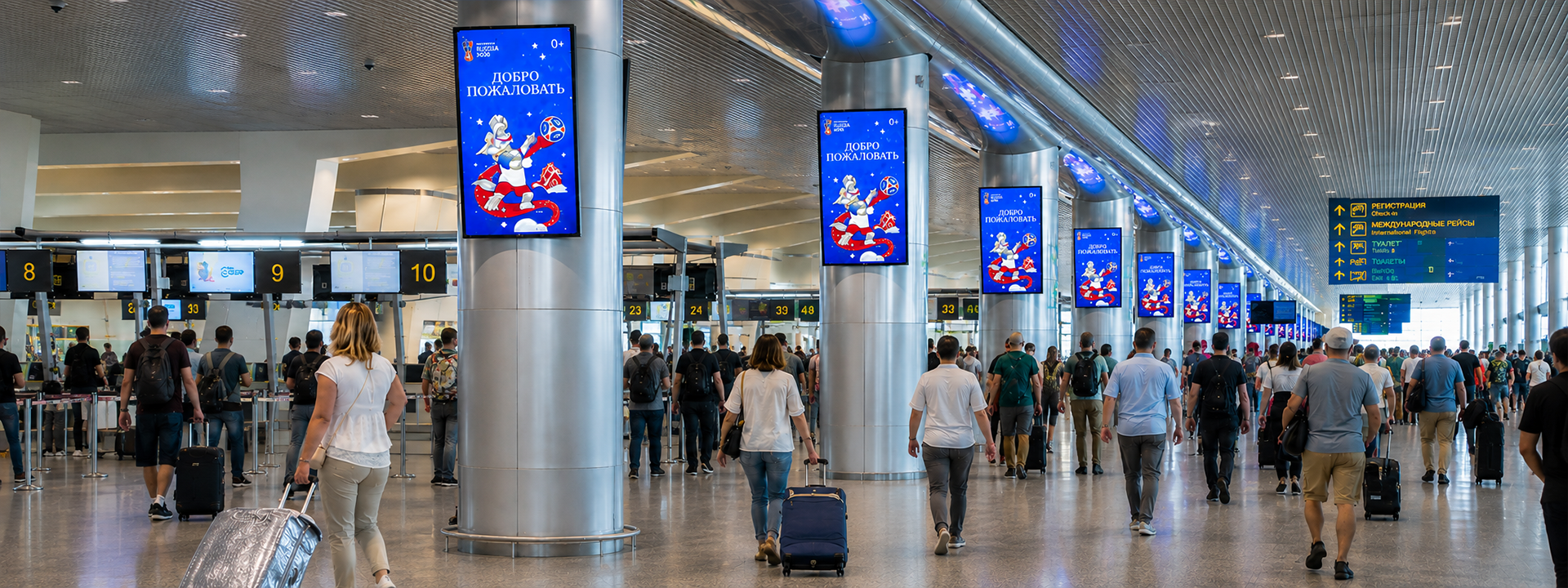
Moscow Domodedovo International Airport is one of Russia's three major Moscow gateways and the primary hub for S7 Airlines — Russia's largest private carrier — channelling approximately 20 million passengers annually through a modern, extensively developed terminal complex that has served as one of Europe's busiest airports for over a decade. Domodedovo's commercial profile has evolved significantly in recent years, with its international route network now concentrated on Turkey, the United Arab Emirates, the CIS states, China, India, and the wider Middle East and South Asian corridor — a route composition that precisely maps Russia's most commercially active outbound wealth and diaspora flows and creates an advertising audience defined by high financial intent, active cross-border investment behaviour, and the specific outbound capital deployment patterns that define Russia's HNWI and professional class in the current period. For advertisers in international real estate, luxury goods, financial services, and premium consumer categories serving markets accessible to Russian outbound travellers, Domodedovo offers an audience of exceptional purchasing power and outbound investment intent in an advertising environment whose scale and reach within Moscow's southern commercial corridor is unmatched by any single alternative.
Russia retains one of the world's largest concentrations of high-net-worth individuals, with Moscow accounting for a disproportionate share of the country's wealthiest residents, highest-earning professionals, and most commercially active business community. The passengers at Domodedovo are defined not merely by volume but by the specific commercial orientation of the routes they travel — Istanbul, Dubai, Yerevan, Tashkent, Almaty, Delhi, and Beijing represent not leisure channels but active wealth corridors through which Russian capital, Russian businesses, and Russian professional families are navigating a global financial landscape with decisive intent. A Turkish or UAE-bound Russian HNWI departing Domodedovo is making financial decisions — real estate acquisitions, banking arrangements, business incorporation, education placements — that represent some of the most commercially actionable airport advertising intercepts of any European or Eurasian airport serving an outbound wealth audience. Brands positioned in the categories that serve this decision-making are accessing an audience at the precise moment of maximum commercial readiness.
Advertising Value Snapshot
- Passenger scale: Approximately 20 million annual passengers (2023), with a route composition concentrated in domestic Russia, Turkey, UAE, CIS, China, India, and the Middle East following the restructuring of the international network — a volume that represents sustained commercial mass with a significantly reconfigured international audience profile whose outbound wealth orientation is commercially distinctive
- Traveller type: Russian HNWI and business professionals outbound to Turkey, UAE, and CIS destinations; domestic Russian business and leisure travellers on S7 and Pobeda services; CIS-origin professionals and workers returning via Moscow; international business travellers from Turkey, UAE, India, and China arriving on the remaining bilateral corridors
- Airport classification: Tier 1 - one of Russia's three major Moscow gateways with national hub status, dominant southern Moscow catchment, and a route network whose current international composition maps precisely to Russia's most active outbound wealth and investment corridors
- Commercial positioning: Russia's most commercially relevant airport for brands targeting the outbound Russian HNWI audience deploying capital into Turkey, UAE, and international real estate and financial products accessible through the current international route network
- Wealth corridor signal: Domodedovo sits at the hub of Russia's Istanbul-Dubai wealth axis — the two primary financial and real estate destinations for Russian HNWI capital deployment — alongside the CIS investment corridor that connects Moscow's business community to commercial opportunities across Kazakhstan, Uzbekistan, Azerbaijan, and Armenia
- Advertising opportunity: Masscom Global provides direct inventory access at Moscow Domodedovo Airport, enabling brands to reach Russia's outbound HNWI and professional class, the domestic Russian business traveller, and the Moscow catchment's most commercially active households with the placement precision and audience intelligence that this strategically complex but commercially significant market demands
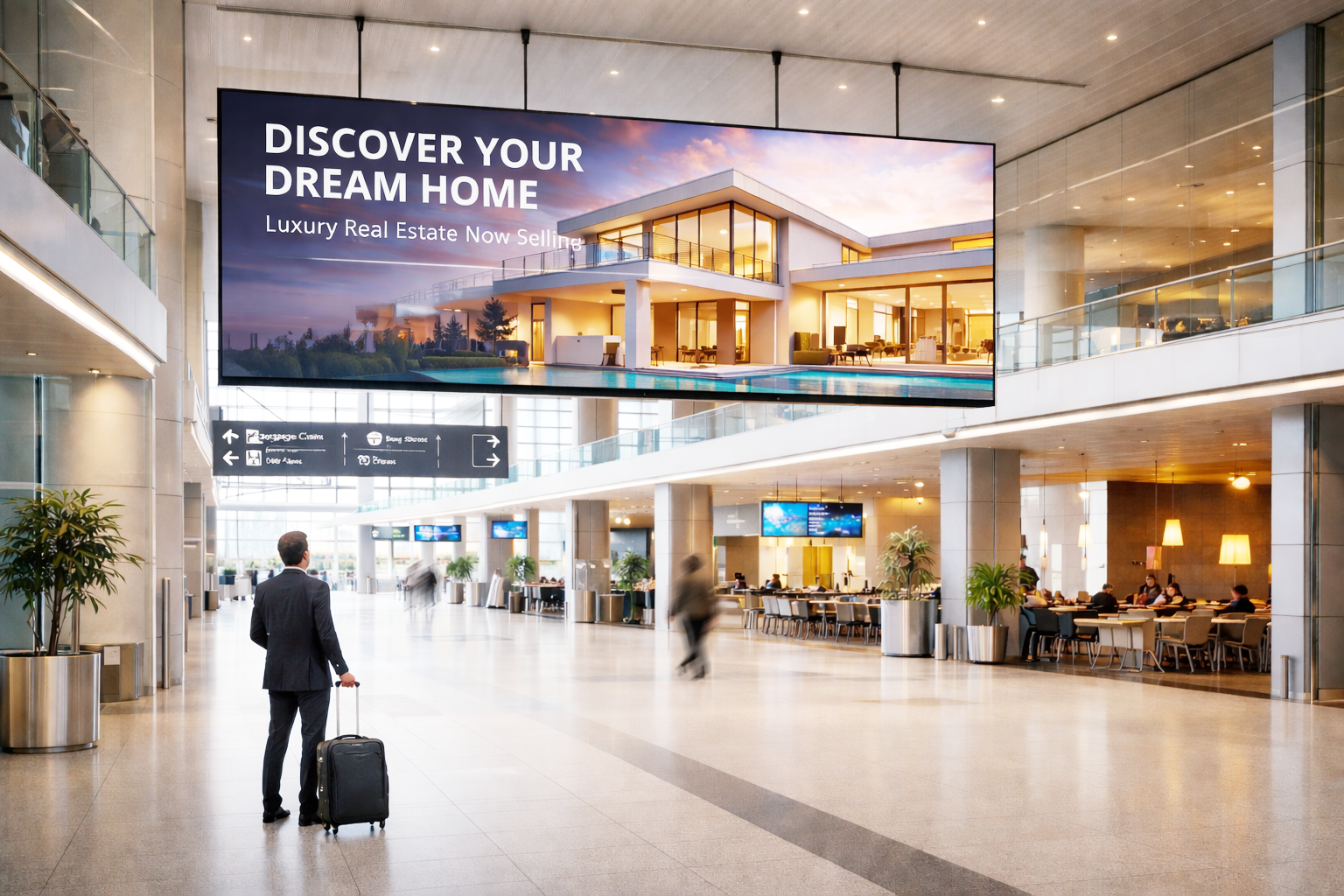
Airport Advertising is Complex to Get Right
We help you execute faster, with proven results and local insight most planners lack starting now.
Talk to an ExpertCatchment Area and Economic Drivers
Top 10 Cities within 150 km - Marketer Intelligence
- Moscow (42 km northwest): Russia's capital and the world's largest city by urban area in Europe, generating the country's highest concentration of billionaires, corporate executives, technology entrepreneurs, and senior government professionals — the airport's dominant commercial catchment and the primary source of every high-value audience segment at DME, with a resident HNWI and professional class whose purchasing power and outbound investment intent represents the full commercial rationale for advertising at Domodedovo
- Podolsk (25 km west): Moscow's largest and most commercially developed satellite city, home to a significant manufacturing, technology services, and professional residential population whose dual-income household income levels and proximity to Domodedovo make them one of the catchment's most consistently active leisure and business travel audiences — particularly for domestic S7 routes and Turkey and UAE short-haul leisure travel
- Lyubertsy (18 km northwest): A rapidly developing commercial and residential suburb on Moscow's southeastern edge, generating a densely populated middle-to-professional class of Muscovites whose growing incomes, aspirational brand orientation, and increasing international travel frequency through DME create an emerging premium consumer and financial services advertising audience of significant scale
- Zhukovsky (32 km northeast): Home to the Zhukovsky International Airport and Russia's premier aviation research and aerospace industry cluster, producing a high concentration of aerospace engineers, defence technology professionals, and industrial research executives whose above-average professional incomes, regular Moscow connections, and international technical travel create a commercially sophisticated and financially active business audience
- Ramenskoye (40 km east): An established industrial and logistics hub in the Moscow Oblast serving manufacturing, chemical processing, and supply chain industries, generating a commercial audience of factory principals, logistics executives, and SME industrial operators with regular domestic travel and growing cross-border commercial connections to CIS and Chinese business partners
- Chekhov (60 km south): A prosperous satellite town on the Moscow-Tula highway corridor, home to pharmaceutical, printing, and professional services industries generating a middle-to-upper professional class whose rising disposable income, growing international travel frequency, and aspiration-oriented consumer behaviour make them a commercially relevant audience for premium consumer goods, financial products, and lifestyle brand advertising at Domodedovo
- Serpukhov (75 km south): A significant industrial and commercial city anchoring the southern Moscow Oblast, with engineering, electronics, and healthcare industry operations generating a regional business class of SME principals and industry executives whose Moscow connections through Domodedovo and growing leisure and business travel create a consistent B2B and premium consumer advertising audience
- Kolomna (100 km east): A historic commercial city on the Oka River with engineering, food processing, and cultural tourism industries, producing a regional professional and business owner audience whose regular Moscow Oblast and national travel through DME creates a commercially active secondary catchment audience with growing financial services and premium consumer receptivity
- Kashira (80 km southeast): An industrial satellite city on the Moscow-Voronezh corridor, home to chemical and building materials industries generating a manufacturing and trade executive audience with regular Moscow business travel whose commercial connections to southern Russian and CIS markets create active B2B financial services and procurement advertising needs
- Stupino (75 km south): A significant aerospace and metallurgical industrial hub producing aviation components and specialty metals, generating a technically sophisticated engineering and industrial executive audience whose professional international travel — primarily to CIS and Asian business partners — creates a commercially active outbound business audience at Domodedovo with strong receptivity to financial services, business technology, and professional services advertising
NRI and Diaspora Intelligence:
Moscow Domodedovo's most commercially defining diaspora dynamic is the outbound Russian professional and HNWI community that has established secondary residences, business registrations, and family relocation bases in Istanbul, Dubai, Yerevan, Tashkent, and Almaty. This is not a traditional diaspora return pattern but an active capital migration movement — a professionally mobile, financially sophisticated Russian middle and upper class maintaining dual-country lives that require continuous transit through Domodedovo on schedules defined by business cycles, family management, and financial administration. An estimated 500,000 to one million Russian professionals have established significant secondary lives in Turkey, the UAE, and CIS states since 2022, and the majority of their travel between Russia and these secondary bases passes through Moscow's airports — with Domodedovo's dominant S7 and Turkish Airlines and flydubai capacity making it the primary gateway for this commercially distinctive mobile HNWI audience. For advertisers in international real estate, private banking, international education, and cross-border financial products, this audience represents one of the most commercially purposeful transit populations of any European or Eurasian airport — passengers whose reason for every journey is directly tied to a financial decision.
Economic Importance:
Moscow's economy is Russia's most diversified and by a significant margin its highest-value, generating approximately 25 percent of Russia's GDP from a base that spans financial services, technology, retail, energy sector headquarters, professional services, and a domestic consumer market of exceptional scale. The city's professional class — bankers, technology entrepreneurs, lawyers, consultants, and senior corporate executives — represents Russia's highest income concentration, with Moscow generating the majority of the country's declared HNWI population. The domestic Russian consumer market, despite geopolitical context, remains one of the world's largest by population and purchasing power parity, and the Domodedovo catchment encompasses the southern half of Europe's most populous and economically productive metropolitan area. For brands operating in markets accessible to Russian outbound travellers, Domodedovo provides access to this spending power at the precise moment it is being deployed across international borders.
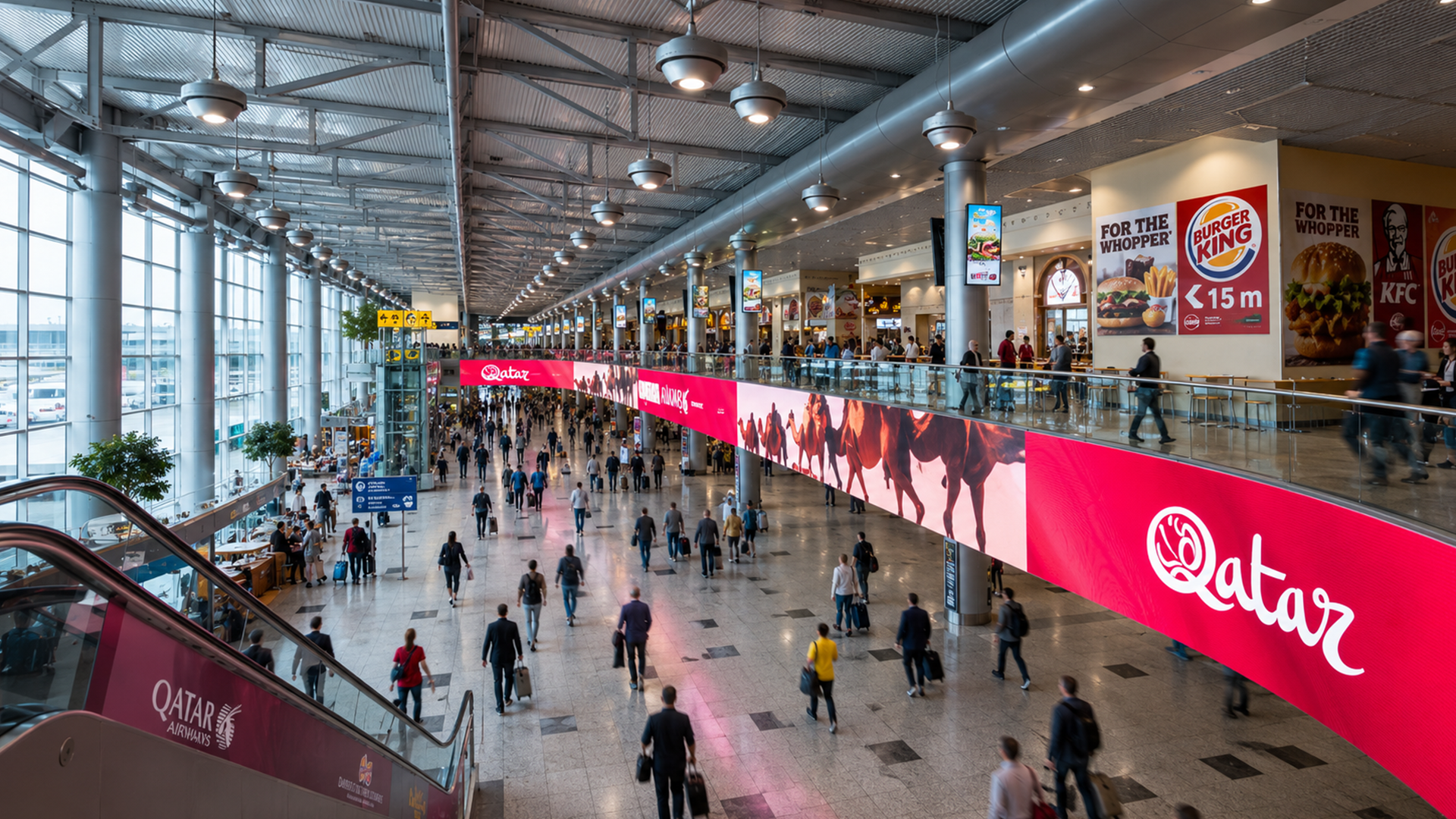
Business and Industrial Ecosystem
- Technology and Digital Economy: Moscow's world-class technology sector — generating globally recognised companies in software development, fintech, cybersecurity, and e-commerce — produces a frequent-flying professional class of entrepreneurs, developers, and technology executives who travel regularly to CIS technology markets, Turkish and UAE business hubs, and Asian commercial partners via Domodedovo, creating a commercially sophisticated, internationally oriented business audience with above-average income and strong premium brand receptivity
- Financial Services and Investment: Russia's banking, asset management, and corporate finance sector concentrated in Moscow generates a consistent outbound professional audience at DME whose travel to Istanbul, Dubai, and Almaty for financial services operations, investment management, and capital market activities creates the airport's single most commercially valuable B2B and HNWI audience segment — professionals managing significant cross-border financial positions with active demand for premium financial products, wealth management, and international real estate advertising
- Energy Sector and Resources: Moscow's function as the administrative and headquarters capital of Russia's dominant energy sector — oil, gas, and minerals — generates a consistently senior corporate travel audience of energy executives, project professionals, and resource sector principals whose above-average compensation, corporate spending authority, and regular CIS and Asian travel create a premium B2B and personal wealth audience at Domodedovo with financial profiles that significantly exceed the Moscow professional average
- Retail, Consumer Goods, and E-Commerce: Moscow's dominant position in Russia's retail and consumer economy generates a commercial audience of brand executives, retail industry professionals, and e-commerce entrepreneurs whose regular travel to Turkish wholesale markets, UAE commercial hubs, and CIS retail expansion targets through Domodedovo creates a commercially active SME and corporate audience with strong consumer brand, financial services, and luxury goods advertising receptivity
Passenger Intent - Business Segment:
The business traveller at Moscow Domodedovo Airport operates across a commercially distinctive spectrum anchored by the specific route composition of the airport's current international network. The Istanbul-bound business traveller may be managing a Turkish bank account, overseeing a real estate acquisition, reviewing a business incorporation, or visiting family relocated to Istanbul — in every case arriving at the airport with a financial transaction in progress or pending. The Dubai-bound executive carries investment intent for UAE property, corporate banking arrangements, or business registration at one of the Gulf's free zone facilities. The CIS-bound professional is managing regional business operations across Kazakhstan, Uzbekistan, or Armenia. All three profiles share a defining commercial characteristic: they are not travelling casually — they are executing financial and business strategies whose airport moment is the preparation window immediately before consequential decisions are made.
Strategic Insight:
The commercial intelligence gap at Moscow Domodedovo Airport is the tendency of international advertising planners to assess Russia's airport advertising environment through the lens of pre-2022 route networks rather than the commercially relevant audience that the current network actually delivers. The routes that remain active at Domodedovo are not residual — they are the most commercially loaded routes in the airport's entire history, because they are the routes being used by Russia's most financially active and outbound-oriented population segment. Every Turkish Airlines, flydubai, Air Arabia, and S7 flight to Istanbul, Dubai, or Almaty departing from Domodedovo carries a concentration of commercial intent per seat that surpasses many comparable European airports at their pre-pandemic peak. Masscom's planning intelligence at Domodedovo is built around this per-passenger commercial intensity, not around legacy route map comparisons.
Tourism and Premium Travel Drivers
- Turkey and the Turkish Riviera: Istanbul, Antalya, and the Aegean coast represent Russia's most significant outbound leisure and lifestyle destination, drawing not merely holiday tourists but a mixed audience of property investors, business account holders, relocated family visitors, and genuine resort leisure travellers whose combined spending profile and financial intent makes the Turkey-bound Domodedovo passenger one of the most commercially valuable tourism-segment audiences at any European hub airport
- UAE Leisure and Lifestyle Tourism: Dubai and Abu Dhabi attract Russian premium leisure travellers alongside the investor and business community, with the UAE's luxury resort, retail, and experiential tourism economy drawing Russian HNWIs in a celebratory, high-spending leisure mode alongside their investment and business objectives — creating a dual intent audience at Domodedovo whose commercial receptivity spans luxury goods, hospitality, real estate, and financial services simultaneously
- CIS Heritage and Cultural Tourism: Armenia, Georgia, Kazakhstan, and Uzbekistan attract significant Russian tourism anchored in cultural heritage, family connections, and the increasingly premium wellness and cultural travel market that Moscow's professional class accesses through Domodedovo's CIS route network — generating a premium leisure audience with above-average cultural consumer spending and strong receptivity to heritage tourism, premium hospitality, and lifestyle brand advertising
- Domestic Russian Leisure Destinations: Sochi, Krasnodar, Caucasus mountain resorts, and the Russian Black Sea coast serve as the primary domestic leisure destinations for Moscow's holiday traveller population, generating a consistent domestic tourism audience through Domodedovo's S7 and Pobeda network whose premium resort and lifestyle spending in Russian domestic destinations creates strong receptivity to consumer goods, financial services, and premium experience brand advertising in the departures environment
Passenger Intent - Tourism Segment:
Leisure travellers departing Domodedovo for Turkey and the UAE have committed to above-average holiday budgets anchored by a ruble-denominated savings capacity that the Russian consumer class has developed and maintained through domestic economic cycles. Istanbul-bound leisure travellers arrive with shopping lists — the Grand Bazaar, premium Turkish retail, and the electronics markets of Istanbul's commercial centre attract Russian consumers whose purchasing behaviour in destination is well-documented and commercially significant. UAE-bound leisure travellers carry one of the highest per-capita tourism spending profiles of any nationality at Dubai Airport. Domestically bound Russian leisure travellers to Sochi and Krasnodar are in a celebratory pre-holiday mindset that creates peak receptivity for consumer goods, premium food and beverage, and lifestyle brand advertising in the departure terminal.
Travel Patterns and Seasonality
Peak Seasons:
- New Year and Winter Holiday (December to January): Russia's most commercially significant holiday period, generating the year's highest domestic leisure travel surge to southern Russian and CIS destinations alongside premium outbound travel to Turkey and the UAE — the December to January window concentrating Russia's highest annual consumer retail spending intent, gifting purchases, and luxury goods acquisition in a single airport peak that is Domodedovo's most commercially valuable advertising window of the year
- Summer Season (June to August): The primary domestic leisure travel peak combining school summer holidays, the Sochi and Black Sea resort season, and outbound summer travel to Turkey, the UAE, and Mediterranean destinations, delivering the year's highest raw passenger volumes with a family leisure and premium resort audience in peak discretionary spending mode
- Autumn Business Season (October to November): The annual return to business cycles following the summer break generates the year's most concentrated B2B and professional outbound travel window, with Moscow's executive class resuming international business operations in CIS markets, Turkey, and the UAE at a pace that creates Domodedovo's highest-quality business audience concentration outside the January corporate season
Event-Driven Movement:
- New Year Golden Week (December 30 to January 10): Russia's most sacrosanct holiday period, when Moscow's professional class departs for Turkey, UAE, CIS, and domestic resort destinations simultaneously — generating one of Europe's most concentrated annual holiday departure surges at Domodedovo and creating the year's single highest-value consumer goods, luxury, and financial services advertising window as Moscow's most prosperous households execute end-of-year spending, gifting, and financial planning decisions
- Victory Day and Spring Holiday (Early May): Russia's most significant patriotic holiday combined with the May school break generates a pronounced domestic and CIS leisure travel spike with strong family reunion and cultural spending patterns, creating a concentrated family travel audience with elevated emotional investment and strong consumer goods and premium hospitality advertising receptivity
- February Business and Financial Calendar (February): The January reset of Russian corporate and financial year planning generates concentrated outbound business travel in February, with Moscow executives travelling to Istanbul, Dubai, Almaty, and Tashkent for annual business reviews, financial account management, and strategic planning meetings — creating one of the year's best B2B financial services and real estate advertising windows at the airport
- Orthodox Christmas (January 7): Russia's religious calendar adds a secondary Christmas travel peak in early January that extends the New Year holiday departure season, generating diaspora family visits, domestic leisure travel, and cross-border CIS family reunions whose emotional elevation and gifting intent create sustained consumer and premium brand advertising receptivity through the first two weeks of January
- Summer School Finale and University Departure (Late June to Early July): The end of the Russian academic year generates a concentrated student and young professional departure wave for summer travel, language programmes, international internships, and pre-university orientation visits to Turkey, UAE, and European destinations accessible via Domodedovo's current route network — creating a targeted education services, technology, and youth consumer brand advertising opportunity at the June transition window

It’s Not Just Where You Advertise - It’s How Fast You Execute
We combine local insight with fast rollout to deliver results for you, now.
Talk to an ExpertAudience and Cultural Intelligence
Top 2 Languages:
- Russian: The primary and overwhelmingly dominant language of the entire catchment, used across all commercial, cultural, and professional communications at Domodedovo — campaigns that speak to Russian audiences in Russian, with creative that demonstrates genuine market understanding and cultural specificity rather than translated generic messaging, achieve engagement levels that significantly exceed multilingual or English-default campaigns; the Russian audience at DME responds to directness, quality signals, and clear financial benefit communication that honours their sophistication rather than simplifying for a perceived developing market context
- English: The commercial language of Moscow's international business community, technology sector, and internationally educated professional class — English-language campaigns targeting corporate professionals, technology executives, and the international business traveller audience at Domodedovo reach a commercially sophisticated, bilingual cohort whose purchasing decisions and brand preferences are shaped by both Russian-market context and international brand exposure acquired through years of pre-2022 global connectivity
Major Traveller Nationalities:
Russian nationals constitute the overwhelming majority of both departing and arriving passengers at Domodedovo, spanning the full commercial spectrum from Moscow's billionaire class and senior corporate executives to the professional middle class and increasingly mobile younger generation. Turkish nationals represent the most significant non-Russian inbound group, reflecting the bilateral commercial and tourism relationship that makes Turkey Russia's most active international travel partner in the current period. Kazakhstani, Uzbekistani, Azerbaijani, and Armenian nationals add CIS community depth, with the Moscow-CIS bilateral relationship generating consistent business, family, and commercial audience flows through Domodedovo in both directions. Indian and Chinese nationals travelling on the bilateral business and cultural corridors add Asian audience diversity, with Indian IT professionals and Chinese business delegations representing the most commercially active non-CIS international audience segments at the airport.
Religion - Advertiser Intelligence:
- Eastern Orthodox Christianity (approx. 70-75%): The dominant faith tradition of Russia's Slavic majority population, with Orthodox Christmas on January 7 and Easter as the most commercially significant travel and spending holidays after the New Year period; the Russian Orthodox Christmas window creates a secondary gifting, consumer goods, and family travel advertising peak in early January that extends the New Year holiday commercial season and benefits luxury goods, premium consumer products, and financial services brands maintaining advertising presence through the first two weeks of January — a window that most advertisers treat as post-peak but that delivers exceptional quality audience concentration as the HNWI class returns from New Year destinations and transitions into the annual financial planning season
- Islam (approx. 10-12%): Russia's significant Muslim population — concentrated in Moscow's Tatar, Bashkir, Azerbaijani, Chechen, and Central Asian communities — observes Ramadan and Eid with a travel and spending pattern that creates commercially significant spikes at Domodedovo's Istanbul, Tashkent, Almaty, Baku, and Middle Eastern routes; Eid al-Fitr and Eid al-Adha generate concentrated family travel, gifting, and premium consumer spending windows that benefit fashion, luxury goods, and hospitality brand advertising timed to the Eid departure windows
- Non-Religious and Secular (approx. 15-18%): Moscow's highly educated, internationally exposed, and urban professional class includes a significant secular cohort whose consumer behaviour is defined by quality, brand credibility, and rational value rather than faith-driven spending triggers — this audience responds most strongly to financial services, premium technology, and lifestyle brand advertising that leads with substance and demonstrates international market parity rather than aspirational imagery
Behavioral Insight:
The Moscow professional and HNWI audience is among the most commercially sophisticated and brand-aware consumer groups in the Eurasian region, shaped by decades of exposure to international brands, premium retail experiences, and cross-cultural commercial interaction. Decision-making is research-intensive, quality-led, and resistant to superficial brand claims — the Russian professional consumer has seen enough international brands and enough premium products to distinguish genuine quality from aspirational marketing, and responds most strongly to advertising that communicates specific benefit, financial value, or product superiority with clarity and without condescension. The current period has not reduced purchasing intent — it has concentrated it into the channels and categories available through the current international route network, creating an unusually focused commercial intensity around the destinations and products accessible through Domodedovo that rewards advertisers with relevant propositions and directional clarity.
Outbound Wealth and Investment Intelligence
Moscow Domodedovo's outbound HNWI audience is one of the most commercially active outbound wealth populations at any major European or Eurasian airport, deploying capital across a concentrated set of international markets defined by accessibility, legal familiarity, and yield characteristics that the current geopolitical and financial context has specifically elevated. The routes operating from Domodedovo are not randomly distributed — they map precisely to the locations where Russian HNWI capital has been most actively deployed in recent years, creating an airport where the outbound passenger's destination and their financial intent are commercially inseparable. Advertisers who understand that Istanbul, Dubai, Yerevan, and Almaty are not merely travel destinations for this audience but active financial and real estate markets where significant Russian capital is being transacted understand the commercial opportunity that Domodedovo's outbound HNWI audience represents.
Outbound Real Estate Investment:
Moscow's HNWI and upper-professional class has been among the most active international real estate buyer cohorts globally over the past two years, with Turkey and the UAE representing the two most commercially dominant acquisition markets. Istanbul and the Turkish Riviera — particularly Antalya, Alanya, and Bodrum — have attracted Russian buyers at rates that have made Russians the largest foreign real estate buyer nationality in Turkey for multiple consecutive years, driven by accessible entry prices, no purchase restrictions for Russian buyers, strong short-term rental yields from Russian tourism, and Turkish citizenship-by-investment thresholds that convert property purchases into alternative passport options. Dubai has emerged as the dominant Gulf real estate market for Russian HNWI capital, with Palm Jumeirah, Downtown Dubai, and Dubai Marina recording substantial Russian buyer volumes driven by zero capital gains, zero income tax, strong rental yield, and a USD-denominated asset environment that provides currency diversification. Armenia — particularly Yerevan's rapidly appreciating residential market — attracts Russian investors seeking an accessible, Russian-speaking, friendly legal environment with strong EUR-adjacent pricing and growing international connectivity. Kazakhstan's Almaty and Astana markets draw Russian entrepreneurial capital seeking CIS market exposure with a politically neutral jurisdiction and growing real estate appreciation driven by Kazakhstan's own energy and technology economy expansion.
Outbound Education Investment:
Moscow's HNWI and professional families are investing in international education for children at rates that reflect both genuine aspirational commitment to international credentials and the practical consideration of educational quality in jurisdictions accessible through the current route network. Turkey — with its growing international university sector, European accreditation connectivity, and Russian-speaking community support infrastructure — has emerged as a primary destination for Russian student families whose Istanbul, Izmir, and Ankara university options deliver internationally recognised degrees in a culturally familiar environment. The UAE's international university campuses, particularly in Dubai and Abu Dhabi, attract Russian students whose families have established UAE residency and whose education investment reflects the full-spectrum lifestyle migration pattern that characterises Moscow's most internationally mobile professional households. Kazakhstan's Nazarbayev University and the growing international campus presence in Almaty draw Russian students seeking English-medium, internationally accredited Central Asian higher education with strong CIS career pathways. German, Hungarian, and Serbian universities — accessible via Domodedovo's limited European connectivity — attract the most academically ambitious Russian students whose international credential ambitions require European institution attendance.
Outbound Wealth Migration and Residency:
Turkish citizenship by investment — accessible through real estate purchases meeting the threshold requirement — represents the most actively pursued formal citizenship alternative among Moscow's mobile HNWI class, providing a NATO-member, EU candidate state passport with visa-free or visa-on-arrival access to a substantial global destination network. UAE Golden Visa and long-term residency options through property investment, professional qualification, or business incorporation attract the segment of Moscow's HNWI and professional class seeking a tax-free second residency base with full family sponsorship rights in a globally connected Gulf hub. Armenia and Kazakhstan offer relatively accessible residency through business registration and investment channels that appeal to Russian professionals seeking a CIS-jurisdictional alternative that provides formal residency status, banking access, and a legally distinct personal presence outside Russia. Caribbean citizenship-by-investment programmes — accessible through financial intermediaries in Dubai and Istanbul — attract Moscow's UHNWI tier seeking global passport portfolio diversification beyond the Turkish and UAE residency options that the mid-HNWI market has standardised around.
Strategic Implication for Advertisers:
International real estate developers with Turkish, UAE, Armenian, or Kazakhstani portfolios, private wealth managers operating in Istanbul or Dubai, citizenship-by-investment advisors, and international education providers with Turkish, UAE, or CIS campus options advertising at Moscow Domodedovo Airport are reaching an audience that is not merely receptive but actively transacting in the categories these brands represent. Masscom Global activates both directions of Russia's outbound wealth corridor — enabling destination-market brands to reach Moscow's most capital-active outbound audience at the moment of maximum investment intent, while enabling Russian-market-facing international brands to intercept the purchasing power that Domodedovo's departing passenger base represents across the full spectrum of premium consumer, financial, and lifestyle categories.
Airport Infrastructure and Premium Indicators
Terminals:
- Terminal 1 (Domestic and CIS): Domodedovo's primary domestic and CIS processing terminal, handling the full volume of S7 Airlines, Pobeda, Ural Airlines, and domestic carrier services across Russia's extensive internal route network, with a large-scale retail and food and beverage precinct, significant passenger dwell infrastructure, and the core domestic advertising environment that reaches the airport's highest-volume Russian domestic leisure and business audience
- Terminal 2 (International): The dedicated international processing terminal serving Turkish Airlines, flydubai, Air Arabia, Air India, China Southern, and the full roster of international carriers operating from Domodedovo, with customs, immigration, and international arrivals infrastructure serving an outbound HNWI and inbound international business audience whose financial decision-making weight per passenger is significantly above the domestic terminal average
Premium Indicators:
- S7 Airlines Business Class Lounge: The national carrier's premium lounge facility serving S7 Business, Star Alliance Gold, and lounge programme holders at Domodedovo creates a filtered, high-income domestic and international dwell environment where premium advertising placement adjacent to lounge access generates concentrated HNWI audience exposure in a low-clutter, high-attention setting
- International Carrier Lounges: Turkish Airlines CIP Lounge and other international carrier premium facilities at Domodedovo extend the premium dwell environment to the international departure audience, creating multiple premium audience access points across the terminal that benefit brand-conscious advertisers targeting Moscow's most commercially active outbound travellers
- Scale and Infrastructure Quality: Domodedovo's terminal infrastructure — including its distinctive canopy roof design and large-scale departures and arrivals halls — creates a physically imposing and commercially capable environment for large-format premium advertising that benefits luxury, financial, and real estate brands whose creative scale and production quality can leverage the architectural context
- Proximity to Moscow's Southern Commercial Districts: Domodedovo's location 42 kilometres southeast of central Moscow via the Aeroexpress direct rail connection places it within the effective catchment of Moscow's southern business districts, logistics zones, and the premium residential suburbs of the city's southeastern arc, reinforcing its position as the primary gateway for a substantial and commercially sophisticated portion of the Moscow metropolitan professional class
Forward-Looking Signal:
Moscow Domodedovo Airport is consolidating its position as the primary gateway for Russia's most commercially active bilateral corridors — Turkey, UAE, India, China, and the CIS — in an operational context that is concentrating premium audience traffic into a smaller number of routes with higher per-passenger commercial intensity than the pre-2022 dispersed international network delivered. S7 Airlines' continued hub development at Domodedovo, the expansion of Middle Eastern and Asian carrier capacity on the routes currently operating, and the progressive growth of CIS bilateral traffic driven by deepening economic integration between Russia and its near-abroad commercial partners are all pointing toward sustained and growing passenger volumes on the routes that carry Domodedovo's most commercially valuable audience. Infrastructure investment in terminal capacity, digital passenger processing, and retail environment quality reflects an airport management commitment to maintaining Domodedovo's commercial and operational leadership within Russia's three-airport Moscow gateway system. Brands that establish advertising presence at Domodedovo now are building audience access at current rates in a market environment whose commercial trajectory is defined by the expanding bilateral economic relationships that drive the airport's most valuable routes. Masscom advises clients with CIS, Turkish, UAE, and Asian market mandates seeking access to the Russian outbound HNWI audience to treat Moscow Domodedovo as an immediate strategic activation priority.
Airline and Route Intelligence
Top Airlines:
- S7 Airlines (Siberia Airlines) — primary hub carrier, dominant domestic and CIS network
- Pobeda — Russia's primary low-cost carrier, domestic leisure network
- Ural Airlines — domestic and CIS network
- Turkish Airlines — Istanbul hub, primary international gateway
- flydubai — Dubai direct services
- Air Arabia — Sharjah and UAE services
- Air India — Delhi and Mumbai connectivity
- China Southern — Guangzhou hub, Chinese mainland connectivity
- Azimuth Airlines — Southern Russia domestic services
- Nordwind Airlines — charter and domestic leisure services
- Red Wings Airlines — domestic and CIS services
Key International Routes:
- Istanbul Atatürk and Sabiha Gökçen (Turkish Airlines and S7 — multiple daily, primary international corridor)
- Dubai International (flydubai and S7 — regular direct services)
- Sharjah (Air Arabia — regular, UAE secondary market)
- Delhi and Mumbai (Air India — regular, South Asian bilateral)
- Guangzhou (China Southern — regular, Chinese bilateral)
- Yerevan (S7 and Armenian carriers — regular, CIS financial hub corridor)
- Tashkent (S7 and Uzbekistan Airways — regular, Central Asian commercial gateway)
- Almaty (S7 and Air Astana — regular, Kazakhstani investment corridor)
- Baku (S7 and AZAL — regular, Azerbaijani commercial corridor)
- Dushanbe and Bishkek (regional carriers — regular, Tajik and Kyrgyz labour and commercial corridor)
- Tehran (Iran Air — regular, Iranian bilateral)
- Cairo (EgyptAir — regular, North African connectivity)
Domestic Connectivity:
Domodedovo operates as S7 Airlines' primary Moscow hub, providing direct services to Sochi, Yekaterinburg, Novosibirsk, Krasnodar, Kazan, Samara, Ufa, Chelyabinsk, Rostov-on-Don, Vladivostok, Irkutsk, Krasnoyarsk, and over thirty additional Russian domestic destinations — creating one of the most extensive domestic air networks of any European or Eurasian airport and anchoring Domodedovo's dominant position as the gateway for Moscow's connection to Russia's vast regional geography.
Wealth Corridor Signal:
The route network at Moscow Domodedovo Airport in its current configuration is not a diminished version of a former network — it is a precise commercial map of where Russian HNWI and professional capital is actively deployed and where Russia's most outbound-oriented households are maintaining the bilateral lives that define the most commercially valuable audience segment at the airport. Istanbul is simultaneously Russia's largest outbound property market, its most active offshore banking jurisdiction, and its primary lifestyle migration destination. Dubai is Russia's leading alternative real estate acquisition market and the Gulf's primary Russian HNWI wealth management hub. Yerevan and Almaty are the CIS financial and business registration hubs where Russian entrepreneurs have established the alternative corporate structures that their international business operations require. Advertisers who read this route network as a commercial intelligence map rather than a reduced connectivity chart understand the extraordinary per-flight audience value that Domodedovo's international departures represent.
Media Environment at the Airport
- Terminal scale and format capability: Moscow Domodedovo's large-scale terminal infrastructure supports premium advertising formats of significant physical scale — large-format digital installations, branded terminal environments, and high-impact static formats that can command the attention of an airport processing 20 million annual passengers across its domestic and international facilities with the creative ambition that Russia's most commercially sophisticated audience expects
- Dwell time concentration: The combination of international check-in requirements, security processing, and the extended pre-departure routines of Russian leisure and business travellers creates sustained terminal dwell times that allow complex brand messages in financial services, real estate, and premium consumer categories to deliver complete narrative arcs before the passenger boards — a commercial advantage that benefits precisely the advertiser categories most aligned with Domodedovo's outbound HNWI audience
- Premium audience filtration in international departures: The international terminal at Domodedovo acts as a commercial filter — only passengers travelling on Turkey, UAE, CIS, and Asian routes pass through international departures, creating a naturally filtered, high-intent audience whose specific bilateral travel purpose aligns with financial services, real estate, and premium consumer advertising with a precision that domestic terminal placements cannot replicate
- Masscom access and execution: Masscom Global holds placement access across Moscow Domodedovo Airport's key advertising environments, enabling brands to execute campaigns across both the international and domestic terminal advertising environments with the audience intelligence, creative market expertise, and placement precision that this commercially complex and commercially significant Russian market gateway demands
Strategic Advertising Fit
Best Fit:
- Turkish, UAE, and CIS International Real Estate Developers: Domodedovo is the most direct channel in Russia to an outbound real estate investment audience that is actively acquiring property in Istanbul, Antalya, Dubai, Yerevan, and Almaty — developers with portfolios in these markets have a captive, high-intent, and financially pre-qualified audience at DME whose property purchasing decisions are being made in the days and weeks surrounding their airport transit
- Private Wealth Management and Offshore Banking: Moscow's HNWI and professional class managing cross-border financial positions across Turkey, UAE, Kazakhstan, and Armenia has active demand for private banking, wealth structuring, and investment advisory services that airport advertising at Domodedovo can introduce with the authority and context that premium financial brands require to generate meaningful engagement
- Turkish and UAE Citizenship and Residency Programmes: Moscow's outbound-mobile professional class is among the world's most actively engaged audiences for alternative residency and citizenship products, with Turkish citizenship by investment and UAE Golden Visa representing the two most commercially relevant programmes for the Domodedovo departure audience — advisors and programme operators in these categories have an exceptional intercept opportunity at DME's international departures
- Luxury Consumer Goods and Premium Retail: Moscow's HNWI consumer class maintains a premium brand orientation and a retail spending capacity that has been redirected toward Istanbul and Dubai as primary luxury shopping destinations — brands with retail presence in these markets can use Domodedovo advertising to prime purchasing intent before departure and reinforce brand preference at the moment of maximum travel-related retail spending
- International Education Providers: Turkish, UAE, and Kazakhstani university and international school operators targeting the Russian student market have a concentrated, high-intent family education decision-making audience at Domodedovo's international departure environment whose investment per student reflects full-spectrum lifestyle migration rather than merely academic placement
- Premium Airlines and Business Travel Services: Moscow's frequent-flying professional class managing regular CIS and bilateral travel schedules is highly receptive to business class upgrade propositions, airline loyalty programme advertising, and premium travel management services — with Domodedovo's S7 and international carrier network creating a captive frequent-flyer audience whose travel frequency and premium class ambition benefit airline and travel service brand advertising
- Technology and Software Products: Russia's world-class technology professional community — one of the most technically sophisticated domestic markets for software, fintech, and productivity technology — generates an airport audience with above-average digital literacy, strong receptivity to international technology brand advertising, and the purchasing power to act on premium software, hardware, and fintech product propositions encountered in the airport environment
Brand Alignment at a Glance:
| Category | Fit |
|---|---|
| Turkish and UAE Real Estate | Exceptional |
| Private Wealth and Offshore Banking | Exceptional |
| Residency and Citizenship Programmes | Exceptional |
| Luxury Consumer Goods | Strong |
| International Education (Turkey and UAE) | Strong |
| Premium Airlines and Travel Services | Strong |
| Technology and Software Products | Strong |
| Western-Sanctioned Brand Categories | Poor fit |
Who Should Not Advertise Here:
- Brands subject to Western sanctions restrictions on Russian market activity: Advertisers whose corporate policies, regulatory obligations, or sanctions compliance requirements restrict commercial activity in Russia should consult legal counsel before considering advertising at Domodedovo — this applies to specific Western financial institutions, technology platforms, and consumer brands whose Russian market presence is constrained by current sanctions frameworks
- Brands with no product or service availability on current Domodedovo routes: Advertisers whose proposition requires destination accessibility that Domodedovo's current route network does not deliver — Western European destination tourism, for example — will achieve limited conversion from a departure audience whose travel options do not include the advertised destination, creating creative and commercial misalignment that undermines campaign effectiveness regardless of placement quality
- Mass-market budget retail and price-led domestic FMCG: Moscow's HNWI and professional airport audience has consistently demonstrated premium orientation and quality-led purchasing behaviour that creates categorical misalignment for price-driven consumer messaging — budget retail and low-margin FMCG brands find poor audience fit in a premium terminal environment whose commercial character is defined by outbound investment intent and aspirational spending rather than domestic everyday consumption
Event and Seasonality Analysis
- Event Strength: Medium
- Seasonality Strength: High
- Traffic Pattern: Multi-Peak Domestic Seasonal with Outbound Bilateral Travel Stability (New Year, Summer, May, and Autumn Business Season)**
Strategic Implication:
Moscow Domodedovo Airport's advertising calendar is defined by Russia's dominant holiday rhythm — New Year and the January golden week representing the single most commercially valuable annual window — overlaid with the stable, year-round business travel cadence of the bilateral CIS, Turkey, and UAE corridors whose commercial activity does not fluctuate seasonally in the way leisure-driven airports do. The December to January New Year peak delivers the year's maximum consumer goods, luxury, and financial services audience concentration as Moscow's professional and HNWI class executes its annual spending, gifting, and financial planning cycle simultaneously. The summer June to August window delivers raw volume for domestic leisure and outbound resort tourism advertising. The October to November autumn business season delivers the year's most concentrated B2B professional and financial services audience as Moscow's executive class resumes international operational schedules. Masscom structures Domodedovo campaigns around this layered calendar, ensuring client inventory investments reach the outbound HNWI audience during the New Year financial planning window, the domestic leisure audience during the summer peak, and the B2B professional audience during the autumn business concentration that closes the commercial year.

Poor Placement and Delays Affect Airport Campaigns
We help you move faster, access better inventory, and get it right now.
Talk to an ExpertFinal Strategic Verdict
Moscow Domodedovo International Airport is a commercially significant advertising environment whose current strategic value lies precisely in the reconfigured route network that uninformed planners misread as limitation but commercially intelligent advertisers recognise as concentration. The routes that remain active at Domodedovo are not lesser substitutes for a former international network — they are the routes being used by Russia's most financially active, most outbound-oriented, and most commercially purposeful travellers, whose transit through the airport is directly tied to the financial decisions — property acquisition, banking arrangement, business incorporation, educational investment — that premium airport advertising exists to influence. With approximately 20 million annual passengers anchored in Russia's most financially sophisticated metropolitan catchment, S7 Airlines' dominant domestic network connecting every region of the world's largest country through a single Moscow hub, and an international departure environment that maps precisely to the most active outbound wealth corridors in Russian commercial life, Domodedovo delivers the combination of mass domestic reach and premium outbound intent that any advertiser seeking the Russian consumer market needs at a single airport. The categories that win here are those whose propositions connect to where Domodedovo's passengers are going and what they are going there to do — Turkish and UAE real estate developers, offshore wealth managers, residency programme advisors, luxury consumer brands with Istanbul and Dubai retail distribution, and international education providers with Turkish and UAE campus options whose audiences are departing through this terminal every day of the year. Masscom Global holds the inventory access, the market intelligence, and the execution capability to activate Moscow Domodedovo as a precision channel for brands with the commercial clarity to see past geopolitical headlines and invest in the audience quality that one of Europe's largest airports delivers with structural consistency.
About Masscom Global
Masscom Global is a premium international airport advertising and media buying agency operating across 140 countries. With deep expertise in airport OOH, premium publications, and high-net-worth audience targeting, Masscom helps brands reach the world's most valuable travellers at the moments that matter most. For advertising packages, media rates, and campaign planning at Moscow Domodedovo Airport and airports across the globe, contact Masscom Global today.
Frequently Asked Questions
How much does airport advertising cost at Moscow Domodedovo Airport?
Airport advertising costs at Moscow Domodedovo International Airport vary based on format type, terminal zone — international versus domestic — campaign duration, and seasonal demand. Premium large-format digital installations in the international departures hall and S7 business class departure zones command different rate structures to standard digital or static formats in domestic arrivals and general circulation areas. The December to January New Year peak and the summer June to August domestic leisure window represent the highest advertiser demand periods for premium inventory across both terminals. Costs are denominated in Russian rubles with pricing structures managed through Masscom Global's local market partnerships. Contact Masscom Global for current rate cards, format recommendations, and campaign packages tailored to your category, target audience, and preferred seasonal placement windows.
Who are the passengers at Moscow Domodedovo Airport?
The passenger base at Moscow Domodedovo is defined by three commercially distinct groups: the Russian domestic traveller on S7, Pobeda, and Ural Airlines services — spanning Moscow's full professional and consumer spectrum on domestic leisure, business, and family travel; the outbound Russian HNWI and professional traveller on international services to Turkey, UAE, CIS states, India, and China — carrying active investment intent, financial decision-making authority, and above-average purchasing power generated by Moscow's dominant position in Russia's professional economy; and the inbound international business and leisure traveller from Turkey, UAE, Central Asia, and South Asia whose commercial visit to Moscow reflects the bilateral economic relationships that define Domodedovo's current international network.
Is Moscow Domodedovo Airport good for luxury brand advertising?
Moscow Domodedovo Airport is a commercially strong environment for luxury brand advertising targeting the Russian consumer market, calibrated correctly to the terminal zone and seasonal window. Moscow's resident HNWI and professional class maintains a robust premium consumer orientation and a luxury goods spending profile that, while redirected through Istanbul and Dubai as primary acquisition markets, creates strong pre-departure receptivity for luxury brand advertising that primes purchasing intent before the destination retail experience. The airport's scale — 20 million annual passengers through a large-format capable terminal infrastructure — enables luxury brand campaigns of significant physical impact. Masscom recommends luxury brands focus placements in the international departures hall and S7 business class zone during the New Year peak and summer outbound windows for maximum premium audience concentration and brand impact.
What is the best airport in Russia to reach HNWI outbound investors?
Moscow Domodedovo Airport, alongside Sheremetyevo, represents Russia's primary HNWI outbound advertising environment, with Domodedovo's specific competitive advantage being S7 Airlines' dominant domestic hub position — connecting every region of Russia's professional economy through a single Moscow gateway — combined with the international route concentration on Turkey and the UAE that delivers the two most commercially active destinations for Russian HNWI real estate and financial investment. For brands targeting Russian outbound investors specifically deploying capital into Turkish and UAE property markets, Domodedovo's Istanbul and Dubai route dominance makes it the highest-precision single access point in the Russian airport system for this commercially specific audience segment.
What is the best time to advertise at Moscow Domodedovo Airport?
The highest-impact advertising windows at Moscow Domodedovo Airport are December to January for the New Year golden week — Russia's single most commercially loaded holiday period, combining the year's peak consumer spending, luxury goods gifting, and outbound HNWI financial planning intent in a single window; June to August for peak domestic leisure and outbound resort tourism volumes; and October to November for the autumn business season when Moscow's executive and professional class resumes international operational schedules at maximum frequency. Financial services, real estate, and luxury brands should anchor campaigns to the December to January window. Domestic consumer and lifestyle brands should prioritise the summer departure peak. B2B professional services and corporate banking brands should concentrate on the October to November business season return.
Can international real estate developers advertise at Moscow Domodedovo Airport?
Moscow Domodedovo Airport is one of the most commercially effective channels in Eurasia for international real estate developers whose portfolios are in Turkey, the UAE, Armenia, and Kazakhstan. The airport's outbound Russian HNWI audience is among the world's most active international property buyer communities in these specific markets, and DME is the highest-concentration access point for this audience in Russia. Developers with Istanbul, Antalya, Dubai, Yerevan, or Almaty property propositions have a captive, financially qualified, and intent-active audience at Domodedovo whose purchasing decisions are being made in direct relation to the bilateral travel the airport's routes enable. Masscom Global structures real estate advertising campaigns at DME with the audience segmentation, seasonal timing, and placement precision that this high-intent outbound investor audience demands.
Which brands should not advertise at Moscow Domodedovo Airport?
Brands subject to sanctions compliance restrictions on Russian market commercial activity, brands whose products or services are available only in destinations not served by Domodedovo's current route network, and mass-market budget consumer brands whose price-led positioning creates contextual misalignment with the premium HNWI and professional airport environment are the primary categories that find poor commercial fit at Domodedovo. Advertisers should independently verify their regulatory and compliance position regarding Russian market advertising before proceeding — Masscom Global recommends consulting legal counsel on any compliance questions before campaign activation. Within the categories that are commercially and regulatorily appropriate, the airport's audience quality and outbound investment intent create exceptional advertising value for brands with relevant propositions.
How does Masscom Global help brands advertise at Moscow Domodedovo Airport?
Masscom Global provides end-to-end airport advertising services at Moscow Domodedovo International Airport, covering strategic audience planning built on our intelligence of Russia's outbound HNWI travel patterns and bilateral corridor commercial dynamics, inventory access and procurement across both the international and domestic terminal environments, creative format recommendations calibrated to the Russian market's sophisticated consumer expectations, campaign execution across the full seasonal calendar — New Year peak, summer domestic volume, and autumn business season — and performance evaluation. Our understanding of Domodedovo's specific audience composition — the outbound investor audience on Turkey and UAE routes, the domestic HNWI class on S7 premium services, and the CIS business professional travelling the bilateral corridors — enables brands to enter this market with the commercial precision and cultural intelligence that generic media planning cannot deliver.