




Airport at a Glance
| Field | Detail |
|---|---|
| Airport | Martinique Aimé Césaire International Airport |
| IATA Code | FDF |
| Country | Martinique (French overseas department and EU territory) |
| City | Le Lamentin / Fort-de-France |
| Annual Passengers | 1.87 million (2024) |
| Primary Audience | French HNWI leisure traveller, Martiniquais diaspora returnee, Canadian winter escape, German premium tourism |
| Peak Advertising Season | December to April (dry season), February (Carnival), November (Toussaint) |
| Audience Tier | Tier 2 |
| Best Fit Categories | French luxury goods, premium rum and spirits, yacht and sailing, villa and luxury hospitality, international real estate, premium automotive, financial services |
FDF is commercially unique in the Caribbean for one reason above all others: Martinique is France. Not a former French territory, not a French-speaking island with French cultural influence, but an integral part of the French Republic, a full member of the European Union, a Eurozone territory where the Euro is the operating currency, and a destination governed under the same legal and regulatory framework as Paris. Every passenger arriving at FDF from Paris CDG or Paris Orly has not taken an international flight. They have travelled within France. The implications for advertisers are significant.
What this means in practice is that the primary audience at FDF is not a Caribbean tourism audience in the conventional sense. It is the French metropolitan HNWI and upper-middle class taking their premium annual or seasonal break within French territory, arriving with European consumer expectations, French luxury brand allegiances, and spending power shaped by mainland French income levels. The secondary audience is the Martiniquais diaspora, one of the most economically active return-migration communities in the French Caribbean, flowing in both directions between Paris and Fort-de-France on the island's dominant corridor. Both audiences are, by any Caribbean benchmark, exceptionally high-spending.
Advertising Value Snapshot
- Passenger scale: 1.87 million passengers in 2024. FDF is the second busiest airport in the French Antilles, the tenth busiest in the Caribbean by passenger traffic, and handles approximately 126 weekly flights to fifteen destinations.
- Traveller type: French metropolitan HNWI on premium Caribbean break, Martiniquais diaspora returnee from mainland France and Canada, German and Canadian premium seasonal tourist, Caribbean regional connector.
- Airport classification: Tier 2. A sub-two-million passenger destination airport with a Very High HNWI audience profile anchored by France's direct Caribbean wealth corridor and Martinique's EU-standard economic identity.
- Commercial positioning: The French Republic's Caribbean luxury gateway. Martinique is the only Caribbean destination that combines EU citizenship, Eurozone spending, French luxury consumption culture, and tropical island premium lifestyle in a single market.
- Wealth corridor signal: France is consistently ranked among the top five countries in the world by ultra-high-net-worth population, and the Paris-Martinique corridor is the direct channel through which French luxury consumer spending reaches the Caribbean.
- Advertising opportunity: FDF is where French luxury brands encounter their domestic audience at the precise moment of maximum leisure receptivity. For brands that want to speak to French HNWI travellers in a relaxed, premium, distraction-free environment rather than competing for attention in a crowded Paris terminal, FDF is the correct choice. Masscom Global activates this corridor with the French cultural intelligence and precise placement strategy it demands.
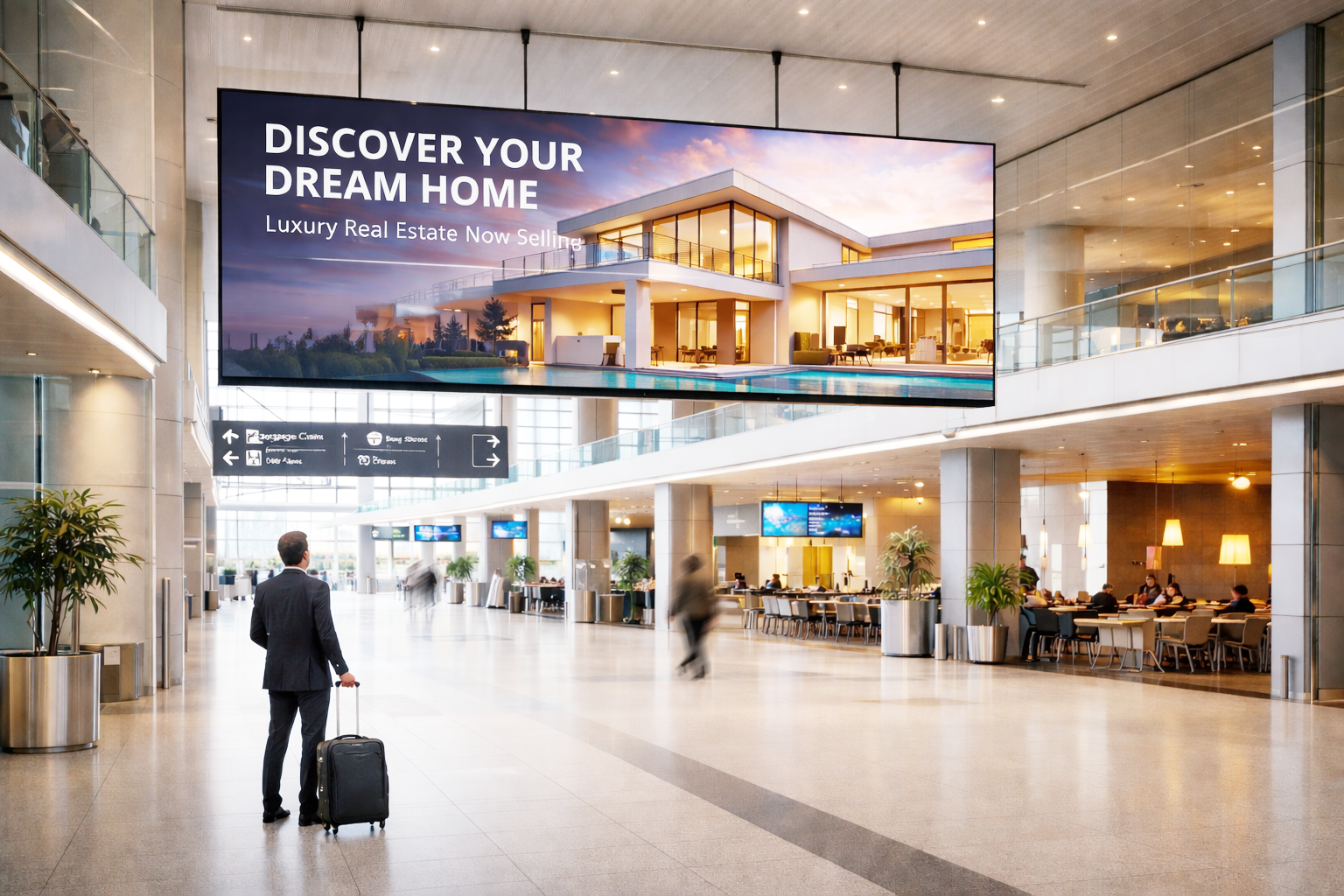
Airport Advertising is Complex to Get Right
We help you execute faster, with proven results and local insight most planners lack starting now.
Talk to an ExpertCatchment Area and Tourism Profile
Top 10 Municipalities and Tourism Zones — Marketer Intelligence
Because FDF is an island destination airport on a territory of 1,128 km², its commercial catchment is defined by the island's key residential and tourism communities rather than by a regional radius in the conventional sense. Each zone produces a distinct audience profile for advertisers.
- Fort-de-France (capital, adjacent to FDF): Martinique's capital city and commercial heart, home to historic architecture, markets, cultural institutions, and the island's primary retail and dining corridor. The professional, government, and business class of Martinique concentrates here and generates a consistent domestic travel audience departing from FDF.
- Le Lamentin (airport's home municipality): The industrial and commercial hub of the island, with significant agri-food processing, rum production, and logistics activity. Corporate executives and business owners from Le Lamentin use FDF for mainland France and regional connections.
- Schoelcher (northwest, adjacent to Fort-de-France): Home to the University of Martinique's main campus and a growing residential and professional community. Generates regular student, academic, and professional departures to metropolitan France.
- Trois-Îlets (southwest, across Fort-de-France Bay): Martinique's premier luxury tourism zone, home to La Suite Villa (5-star boutique), the Golf de l'Impératrice Joséphine, the Domaine de la Pagerie (birthplace of Empress Joséphine), and a dense concentration of premium villa rentals and boutique hotels. The highest per-night accommodation spend on the island is concentrated here.
- Le Diamant (south, with iconic Diamond Rock offshore): A premium coastal destination with some of Martinique's finest beaches, a distinctive volcanic rock landmark visible from the shore, and a growing luxury villa and boutique hotel cluster. A favoured second-home area for metropolitan French buyers.
- Le Marin (southeast): Martinique's yachting capital and one of the premier sailing marinas in the entire Caribbean. The Le Marin marina serves as a base for the region's largest charter yacht fleet, generating a distinct high-net-worth sailing audience that transits through FDF.
- Sainte-Anne (far south): The island's most celebrated southern beach destination, with white-sand coves, clear Caribbean waters, and a strong French metropolitan holiday villa culture. Arrivals to Sainte-Anne are among the highest per-capita spenders on the island.
- Saint-Pierre (northwest, below Mont Pelée): The former colonial capital, destroyed by the 1902 eruption of Mount Pelée and rebuilt as a heritage and dive tourism destination. The UNESCO-linked volcano heritage draw attracts premium adventure and cultural tourists.
- La Trinité (northeast, Atlantic coast): The Caravelle Peninsula nature reserve, known for unspoiled Atlantic coast landscapes and eco-premium tourism. Increasingly attracting French nature-travel enthusiasts seeking an alternative to the Caribbean coast resort experience.
- Sainte-Luce (south coast): A well-established resort and residential zone with a growing concentration of premium holiday apartments, boutique hotels, and French family villa rentals oriented toward the repeat metropolitan visitor market.
Diaspora and Return Migration Intelligence
The Martiniquais diaspora in metropolitan France is estimated at over 200,000 people, concentrated in Paris and the Île-de-France region. This diaspora is not economically marginal, it includes professionals, civil servants, academics, and business owners who have built careers in mainland France while maintaining deep family and property ties to Martinique. The return migration pattern at FDF is among the most commercially predictable in the Caribbean: sharp volume spikes at All Saints' Day in November, Christmas and New Year in December, Carnival in February to March, Easter, and the summer school break. Each of these windows concentrates a returnee audience with above-average disposable income, strong gifting and celebration spend, and active real estate investment intentions in their island of origin.
Economic Importance
Martinique's economy is driven by tourism, rum production, agriculture, construction, and public services, with France's national budget substantially supplementing local government revenue as an overseas department. The island holds the seventh-highest GDP per capita in the Caribbean. Its integration into the EU and the Eurozone means that Martinique operates at European wage and consumer standards that are substantially higher than any independent Caribbean nation neighbour. The audience that passes through FDF reflects this differential: they are spending in Euros, working under French employment law, and consuming at French metropolitan standards.
Business and Industrial Ecosystem
- Premium rum industry with AOC designation: Martinique is the only island in the Caribbean whose rum holds an Appellation d'Origine Contrôlée designation under French law, the same quality designation applied to Champagne, Cognac, and Bordeaux. The island's distilleries, including Rhum Clément, Rhum J.M, Habitation Clément, and La Mauny, generate a premium agri-food executive and export audience.
- Yachting and marine services: Le Marin's yacht charter industry employs thousands and generates a high-net-worth sailing community with regular airport transit.
- Tourism and hospitality services: A premium boutique hotel and luxury villa management ecosystem producing corporate and operational executive travel.
- Public sector and education: As a French department, Martinique hosts significant public administration, healthcare, and university infrastructure generating consistent professional travel to mainland France.
Passenger Intent — Business Segment: FDF's business traveller is primarily a professional or executive maintaining ties between Martinique and metropolitan France. They are travelling for corporate meetings, government coordination, educational purposes, or professional development. They represent a premium audience for financial services, technology, professional travel tools, and luxury business products positioned at point of departure back to Paris.
Strategic Insight: The business segment at FDF is modest relative to the leisure dominant. The airport's primary commercial value is not B2B but premium leisure. For brands seeking access to French HNWI at peak leisure receptivity, FDF is commercially superior to intercepting the same audience in a Paris terminal because it reaches them in a state of active holiday spending rather than commuter urgency.
Tourism and Premium Travel Drivers
- AOC Rhum Agricole and distillery tourism: Martinique's rum is globally certified as one of the finest agricultural spirits in the world, with distillery visits, aged rum experiences, and rum-centric luxury dining drawing premium spirit aficionados from France, North America, and Germany.
- Luxury villa and boutique hotel ecosystem: Martinique is deliberately positioned without large commercial all-inclusive resorts, instead offering a premium villa and boutique market aligned with French quality standards.
- Golf de l'Impératrice Joséphine (Trois-Îlets): The island's championship golf course with panoramic views of Fort-de-France Bay, attracting a high-net-worth golfing clientele from mainland France and Canada.
- Sailing and yacht charter (Le Marin marina): One of the Caribbean's largest charter yacht bases and a global centre for blue-water sailing, drawing premium sailing tourism and supporting the island's highest-value marine leisure economy.
- Pitons du Nord and Mount Pelée (UNESCO-associated): A UNESCO World Heritage Site designation covering volcanic peaks, heritage landscapes, and biodiversity zones of the northern island, attracting premium eco and heritage tourism.
- La Pagerie (Trois-Îlets) — Birthplace of Empress Joséphine: A heritage site of significant cultural interest to French visitors, drawing the historical tourism segment and embedding the island in Napoleon-era French cultural identity.
Passenger Intent — Tourism Segment: FDF's arriving tourist is, in the majority, a French national who has booked a premium Caribbean break within their own country. They arrive expecting French hospitality standards, French cuisine quality, and French legal protections. They depart with above-average spend on rum, gourmet food products, artisan goods, sailing experiences, and villa-based hospitality. The departing audience is emotionally elevated, gift-laden, and strongly receptive to premium lifestyle and repeat-visit messaging.
Travel Patterns and Seasonality
- Peak seasons: December to April is the dominant dry season peak, when French, Canadian, and German visitors arrive for the Caribbean winter escape. February sees a sharp Carnival spike, one of the Caribbean's most celebrated festivals, drawing both diaspora returnees and metropolitan visitors. November concentrates the diaspora return for All Saints' Day, one of the year's most significant cultural travel windows.
- Traffic volume data: FDF handled 1.87 million passengers in 2024 across 126 weekly flights, operating at or near terminal capacity during peak season months.
Event-Driven Movement
- Carnival de Martinique (February to March): One of the Caribbean's most authentic and celebrated carnivals, drawing significant French metropolitan and diaspora visitors. A major advertising window for fashion, spirits, music, and premium lifestyle brands.
- All Saints' Day / Toussaint (November 1): The year's most concentrated diaspora return window. Martiniquais living in metropolitan France, Canada, and the Caribbean return in large numbers to honour family graves, creating a predictable high-spend short-break spike.
- Christmas and Réveillon (December 24 to January): The year's largest combined diaspora return and metropolitan French tourist peak. Premium gifting, celebration dining, and villa bookings are at their highest.
- Easter and Pâques (March to April): A strong French school holiday travel window, with families from metropolitan France filling the island's villa and hotel stock.
- Martinique Yacht Show and sailing events (Le Marin, annual): Drawing international yachting professionals and wealthy sailing enthusiasts through FDF.
- Summer school holidays (July to August): The secondary leisure peak, dominated by French family tourism and driving the Condor seasonal routes from Frankfurt and Düsseldorf.
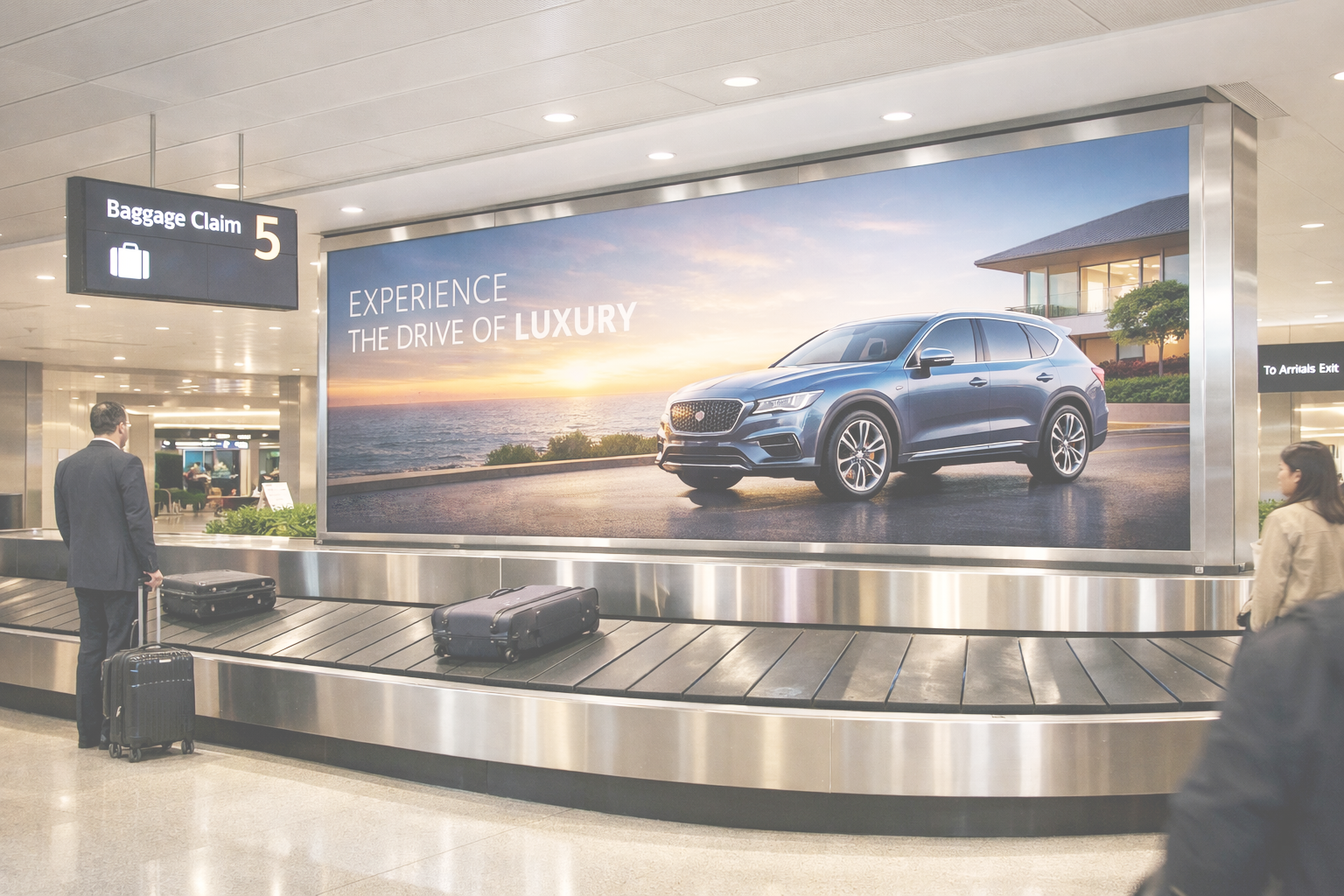
It’s Not Just Where You Advertise - It’s How Fast You Execute
We combine local insight with fast rollout to deliver results for you, now.
Talk to an ExpertAudience and Cultural Intelligence
Top 2 Languages
- French: The official language of Martinique, the primary operating language of the entire FDF passenger flow, and the language of every brand relationship at this airport. All campaign creative must lead in French to reach the full audience without friction. The French spoken in Martinique carries a Caribbean warmth and cadence that rewards creative which acknowledges the island's identity rather than simply replicating metropolitan French advertising.
- Antillean Creole (Martiniquais Creole): The widely spoken vernacular language of the island, used in community, family, and social contexts by the Martiniquais population. Campaigns that acknowledge Creole cultural identity achieve significantly stronger recall among the diaspora return segment.
Major Traveller Nationalities
French metropolitan nationals (from mainland France) are the dominant inbound traveller, primarily from Île-de-France (Paris region), and are the primary target for premium brand advertising at FDF. Canadian passengers, primarily Québécois, form a significant secondary segment concentrated in the December to April winter season. German visitors, arriving via Condor's seasonal Frankfurt and Düsseldorf routes, represent a premium leisure segment. Caribbean regional passengers from Guadeloupe, French Guiana, Barbados, and other Lesser Antilles destinations complete the passenger mix.
Religion — Advertiser Intelligence
- Roman Catholicism (approximately 80% of the Martiniquais population): The dominant faith tradition, deeply embedded in cultural festivals, holiday behaviour, and community identity. All Saints' Day, Christmas, and Easter are the three most commercially significant religious calendar windows, creating predictable high-travel and high-spend moments at FDF.
- Evangelical Christianity (growing minority): An expanding faith community, particularly active among younger Martiniquais, whose family and community celebrations generate incremental travel at key religious occasions.
- Vodou and syncretic Afro-Caribbean traditions (culturally present): A background cultural presence that shapes Carnival's ritual identity and connects Martinique's African heritage to its contemporary cultural expression, relevant for brands engaging with the island's cultural depth.
Behavioral Insight
The French traveller at FDF is shaped by France's distinctive relationship with luxury, quality, and leisure. They are not bargain-seeking tourists, they are standard-conscious consumers who expect French quality even in the tropics, and who actively seek premium versions of Caribbean experiences: aged rum rather than cocktails, sailing charters rather than package tours, and boutique haciendas rather than all-inclusive resorts. The Martiniquais diaspora returnee is emotionally generous, family-oriented, and spending freely in a context of belonging and celebration. Both audiences respond to messaging that positions quality, origin, and cultural credibility above convenience and price.
Outbound Wealth and Investment Intelligence
The FDF outbound passenger is, in the majority, a French national departing for metropolitan France. The wealth flow at this airport is primarily directional: French metropolitan capital arriving to spend in Martinique rather than Martiniquais capital departing for international investment. However, several commercially actionable outbound flows exist.
Outbound Real Estate Investment in Metropolitan France: Martiniquais professionals and business owners actively purchase property in mainland France, particularly in the Paris suburbs, Île-de-France, and regional cities like Bordeaux and Lyon, as investment assets and professional bases. French metropolitan real estate platforms, mortgage products, and property investment services find a defined audience in FDF's outbound business passenger segment.
Outbound Education Investment: Martiniquais students pursuing higher education in metropolitan France are a significant outbound segment, particularly departing after the summer for the September academic year start. French universities, grandes écoles, and professional training institutions find a directly relevant audience in FDF's September departure peak.
Inbound Real Estate Investment from Metropolitan France: The reverse direction is commercially larger. Metropolitan French buyers are actively acquiring secondary homes, villas, and investment properties in Martinique, attracted by the security of French legal property protection, Euro-denominated pricing, and lifestyle quality within the EU. French property developers, notaires, and real estate platforms advertising at FDF intercept this buyer at the exact moment they are either arriving to view properties or departing having just completed their inspection.
Strategic Implication for Advertisers: FDF's investment corridor is structurally bilateral. French metropolitan capital flows into Martinique real estate, and Martiniquais professional income flows toward mainland France property and education. Brands on both sides of this corridor benefit from FDF placement. Masscom Global positions campaigns to capture both the arriving metropolitan French property buyer and the departing Martiniquais professional investor in a single, precision-planned buy.
Airport Infrastructure and Premium Indicators
Terminals
- Single terminal building of 28,000 square metres, fully air-conditioned with a 2,500-square-metre check-in hall, separate international and regional departure areas, and landside and airside commercial facilities.
- Capacity of approximately 1,800 passengers per hour, operating above its original design capacity of 1.6 million annual passengers given 2024's 1.87 million throughput.
Premium Indicators
- Paris corridor served by three carriers on long-haul widebody aircraft: Air France (Boeing 777), Air Caraïbes (Boeing 777, Airbus A350), and Corsair (Boeing 777) all operate the Paris-FDF route on premium-configured widebody aircraft, signalling the quality of the primary audience.
- Full Duty-Free shopping in the international departure zone: A duty-free retail environment positioned for French premium brand purchases, reflecting the purchasing power of the departing audience.
- Business centre and VIP facilities within the terminal: Reflecting the professional and HNWI audience that uses FDF for both leisure and business travel.
- Named after Aimé Césaire: The airport is named after one of the French-speaking world's most significant intellectual and political figures, the poet, playwright, and politician who founded the Négritude movement. This naming is not incidental — it positions FDF within a premium intellectual and cultural identity that resonates deeply with France's educated HNWI class.
- Twice landed by Concorde from Paris: Historical footnote that reflects Martinique's status as a premium French destination that attracted supersonic travel service at the height of exclusive commercial aviation.
Forward-Looking Signal
The master file update notes that Air France's direct Paris routes are expanding, deepening the premium Paris-FDF corridor further. Martinique's deliberate refusal to permit large commercial resort development on the island protects its premium positioning and ensures that the FDF audience mix will continue to skew toward villa-based, boutique-hotel, and high-spend visitors rather than mass-market package tourists. The growing Canadian and German seasonal markets provide additional revenue diversification. Masscom Global advises clients to lock in FDF inventory ahead of the corridor's continued growth, which will drive increasing advertiser competition in what is currently a relatively uncrowded media environment relative to audience quality.
Airline and Route Intelligence
Top Airlines: Air Caraïbes is the dominant carrier at FDF, operating approximately 51 departures weekly and accounting for nearly half of all weekly departures. Air France operates year-round from Paris CDG, the most premium carrier on the primary corridor. Corsair operates Paris Orly year-round and Bordeaux seasonally. Air Canada serves Montreal year-round and Toronto and Quebec City seasonally. American Airlines operates year-round Miami service as the sole US direct carrier. Condor provides seasonal Frankfurt and Düsseldorf service for the German market. Caribbean Airlines connects to Barbados, Trinidad, and Saint Lucia.
Key International Routes: Paris Orly (Air Caraïbes, Corsair, Air France — dominant route with three carriers operating multiple weekly services on widebody aircraft), Paris CDG (Air France year-round), Montreal (Air Canada, Air Transat), Miami (American Airlines), Frankfurt and Düsseldorf (Condor seasonal), Bordeaux (Corsair seasonal), Cayenne French Guiana (Air France).
Caribbean Regional Routes: Pointe-à-Pitre Guadeloupe is the most frequent regional route by far (51 weekly flights, Air Caraïbes dominant), followed by Cayenne, Bridgetown, Saint Lucia, and Santo Domingo.
Wealth Corridor Signal: The route map confirms FDF's commercial identity with absolute clarity. The Paris corridor, served by three airlines on widebody aircraft at a combined frequency of thirty-plus weekly flights, is the dominant wealth channel. This is the Paris upper-middle class and HNWI seeking their French Caribbean luxury break. The Montreal and Quebec City routes serve the Québécois French-speaker leisure market. Miami connects to the North American premium Caribbean travel network. Frankfurt and Düsseldorf bring German premium leisure visitors. There is no budget travel logic at FDF. Every route connects the island to a market with above-average per-traveller spend capacity.
Media Environment at the Airport
- FDF's single-terminal layout concentrates the entire 1.87 million annual passenger flow through a unified departures and arrivals environment with no inter-terminal dilution, maximising impression frequency and placement standout for every campaign.
- Departing passenger dwell time at FDF is extended by the island-airport behaviour pattern, where passengers arrive well in advance, shop deliberately for rum, souvenirs, and last-minute gifts, and linger in the duty-free and café areas, delivering above-average exposure windows.
- The French consumer identity of the primary passenger creates a high brand-receptivity environment specifically for French luxury, premium food and beverage, high-quality travel, and lifestyle advertising.
- Masscom Global delivers access to FDF's media environment with the French market knowledge, Caribbean destination expertise, and campaign execution precision that this specific audience requires.
Strategic Advertising Fit
Best Fit
- French luxury goods brands: The primary FDF audience is French, HNWI, and in a peak leisure mood. Louis Vuitton, Hermès, Cartier, and equivalent French luxury houses are talking to their core domestic audience in their most receptive state.
- Premium and aged rum brands: Martinique's AOC Rhum Agricole is the world's most credentialled Caribbean rum. Premium rum brands, both Martiniquais and international, have a deeply engaged audience at FDF.
- Yacht charter and sailing lifestyle brands: Le Marin is the sailing capital of the Eastern Caribbean. The sailing audience at FDF is consistently affluent and actively spending on marine lifestyle products.
- Luxury villa and boutique hospitality brands: The FDF visitor is predominantly villa-based or boutique hotel-based. Luxury hospitality and villa management brands engage a directly relevant audience.
- Premium automotive: The French upper-middle class audience at FDF is an active premium automotive buyer, particularly for the SUV and premium estate categories.
- International real estate (French Caribbean and mainland France): Both metropolitan French buyers of Martinique property and Martiniquais buyers of mainland French property are active at FDF.
- Premium food, wine, and gastronomy brands: French gastronomy culture is deeply embedded in FDF's audience. Champagne, fine wine, artisan cheese, premium olive oil, and gourmet food products align perfectly.
- Premium travel and business class loyalty programmes: French frequent travellers with Paris hub connections are a defined target for Air France Flying Blue, travel insurance, and premium travel accessory brands.
Brand Alignment at a Glance
| Category | Fit |
|---|---|
| French Luxury Goods | Exceptional |
| Premium Rum and Spirits | Exceptional |
| Luxury Hospitality and Villas | Exceptional |
| Yacht and Sailing Lifestyle | Exceptional |
| Premium FMCG and Gastronomy | Strong |
| Premium Automotive | Strong |
| International Real Estate | Strong |
| Financial Services and Wealth Management | Strong |
| Mass-Market Retail | Poor fit |
| Industrial B2B | Poor fit |
Who Should Not Advertise Here
- Mass-market, price-led consumer brands: FDF's audience is defined by quality preference and above-average spending power. Discount positioning creates brand association misalignment with the terminal's premium identity.
- Industrial B2B and manufacturing categories: No commercial industrial audience transits FDF in any meaningful volume.
- Categories requiring high passenger volume for ROI justification: FDF's 1.87 million passengers is modest in absolute terms. Categories that depend on sheer reach scale rather than quality audience targeting will find the cost-per-thousand unsatisfactory. FDF's value is per-passenger quality, not total volume.
Event and Seasonality Analysis
- Event Strength: High
- Seasonality Strength: High
- Traffic Pattern: Dry season dominant with diaspora event spikes. December to April is the primary peak. November (Toussaint), February (Carnival), and July to August (summer holidays) are distinct secondary windows.
Strategic Implication: FDF campaigns produce maximum return when activated across the December to April dry season, the island's most commercially intense tourism period. Within this window, Carnival in February and the New Year peak in late December are the most concentrated advertiser opportunities. Premium lifestyle, rum, villa, and French luxury goods brands should weight budget heavily in December to January. Canadian market-oriented brands should activate November to April when Air Canada and Air Transat seats fill to maximum capacity. Masscom Global structures FDF campaigns around this Caribbean seasonal logic rather than a European retail calendar, ensuring every impression is delivered against the audience most likely to convert.
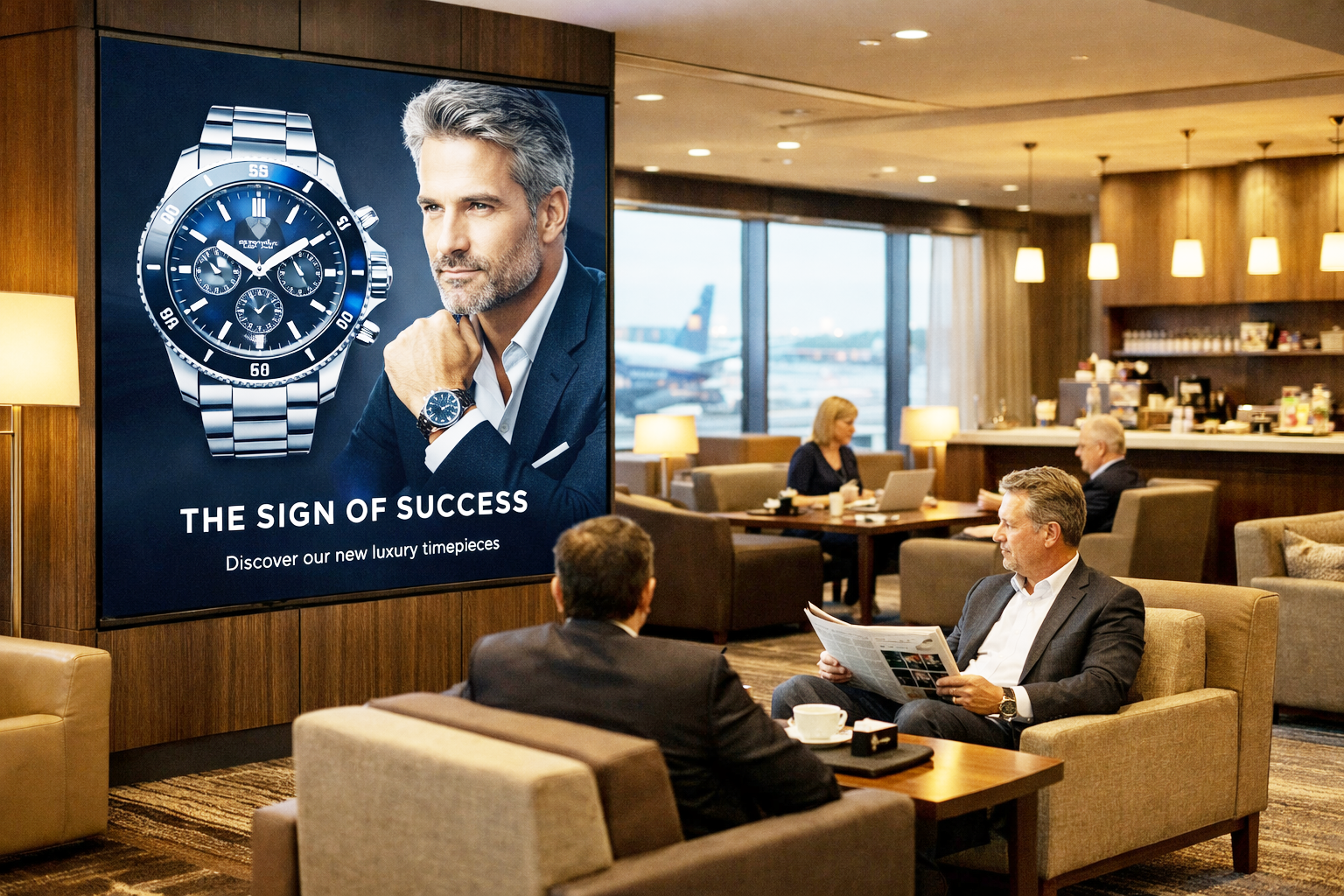
Poor Placement and Delays Affect Airport Campaigns
We help you move faster, access better inventory, and get it right now.
Talk to an ExpertFinal Strategic Verdict
Martinique Aimé Césaire International Airport is the only airport in the Caribbean where a brand encounters its French HNWI audience within France. The Paris corridor dominance, the EU legal and economic identity of the island, the deliberate exclusion of mass tourism resort development, and the premium AOC rum and luxury villa culture that defines Martinique's tourism proposition combine to create an audience environment of Very High HNWI density at a media investment level that bears no relationship to what accessing the same audience would cost in Paris. For French luxury brands, premium spirits houses, yacht lifestyle companies, luxury property developers, premium automotive brands, and high-end travel and hospitality groups, FDF is a precise and underutilised placement within the French premium consumer ecosystem. Masscom Global brings the French market expertise, Caribbean destination knowledge, and execution capability to activate it exactly as the audience and the island's identity demand.
About Masscom Global
Masscom Global is a premium international airport advertising and media buying agency operating across 140 countries. With deep expertise in airport OOH, premium publications, and high-net-worth audience targeting, Masscom helps brands reach the world's most valuable travellers at the moments that matter most. For advertising packages, media rates, and campaign planning at Martinique Aimé Césaire International Airport and airports across the globe, contact Masscom Global today.
Frequently Asked Questions
How much does airport advertising cost at Martinique Aimé Césaire International Airport? Rates at FDF vary by format, terminal zone, campaign duration, and seasonal demand. The December to April dry season and Carnival windows carry premium pricing reflecting the concentration of the French HNWI audience in these periods. FDF's current advertising environment offers competitive cost-per-impression against a Very High HNWI French audience, substantially below what equivalent audience quality costs at a Paris terminal. Masscom Global provides current rate cards and live inventory access on request.
Who are the passengers at Martinique Aimé Césaire International Airport? The primary audience is French metropolitan HNWI and upper-middle-class travellers on premium Caribbean holiday within French national territory, served by three carriers operating widebody aircraft from Paris Orly and CDG. The secondary segment is the Martiniquais diaspora in metropolitan France returning for Toussaint, Christmas, Carnival, and Easter. Canadian Québécois premium leisure visitors and German seasonal tourists complete the audience.
Is Martinique Aimé Césaire Airport good for luxury brand advertising? FDF is among the strongest airports in the Caribbean and the French Overseas territories for luxury brand advertising, specifically for French luxury categories. The primary audience is French, HNWI, at peak leisure receptivity, operating in Euros within EU legal protections. French luxury fashion, premium spirits, fine food, automotive, and premium travel brands are perfectly aligned with both the audience profile and the island's deliberate premium-without-mass-resort positioning.
What is the best airport in the French Caribbean to reach HNWI audiences? FDF serves the most premium island in the French Antilles. Martinique's deliberate exclusion of all-inclusive mega-resorts, combined with its AOC rum heritage, luxury villa culture, and yachting capital status, produces a consistently more affluent visitor mix than Guadeloupe's Pôle Caraïbes airport. For premium French luxury brands, FDF is the correct first buy in the French Caribbean.
What is the best time to advertise at Martinique Aimé Césaire International Airport? December to April captures the full dry season peak, with the highest concentration of French HNWI and Canadian premium visitors. Within this window, the New Year and Carnival periods deliver the highest emotional engagement. November concentrates the diaspora return for All Saints' Day. July to August captures the French summer school holiday secondary peak. Masscom Global plans FDF campaigns around this Caribbean seasonal rhythm.
Can international real estate developers advertise at Martinique Aimé Césaire International Airport? Yes. Martinique is an active real estate market for metropolitan French second-home buyers seeking EU-protected property within a Caribbean setting. The island's legal security, Eurozone pricing, and French property law make it uniquely attractive to mainland French HNWI buyers who are unwilling to invest in less regulated Caribbean markets. Real estate developers, notaires, and property platforms both in Martinique and in metropolitan France find an actively investing audience at FDF.
Which brands should not advertise at Martinique Aimé Césaire International Airport? Mass-market retail, discount consumer categories, industrial B2B, and brands requiring sheer volume scale rather than audience quality. FDF's 1.87 million annual passengers is modest in absolute terms. Its commercial value is entirely in the quality of those passengers, not their number, and categories that cannot extract premium value from a French HNWI audience will not find adequate ROI justification here.
How does Masscom Global help brands advertise at Martinique Aimé Césaire International Airport? Masscom Global provides the full campaign service for FDF: French Caribbean audience and cultural intelligence, access to the best available terminal inventory, French-language creative guidance calibrated to both metropolitan French and Martiniquais cultural identities, campaign timing built around the island's seasonal and diaspora calendar, and performance analysis. For brands in French luxury, premium spirits, yacht lifestyle, luxury hospitality, automotive, real estate, and premium FMCG, Masscom Global is the direct route to an FDF campaign that earns its premium positioning.







