

Airport at a Glance
| Field | Detail |
|---|---|
| Airport | Lucknow Chaudhary Charan Singh International Airport |
| IATA Code | LKO |
| Country | India |
| City | Lucknow, Uttar Pradesh |
| Annual Passengers | ~3.8 million |
| Primary Audience | Uttar Pradesh political and business HNWI, real estate and construction wealth, Gulf NRI diaspora returnees, Awadhi cultural tourism visitors, government and defence professionals |
| Peak Advertising Season | Diwali, summer holidays, Eid al-Fitr, year-end |
| Audience Tier | Tier 1 (UP political-business HNWI and real estate wealth profile-led) |
| Best Fit Categories | Real estate and construction, financial services, premium automotive, luxury lifestyle, international education, government and defence B2B services |
Lucknow Chaudhary Charan Singh International Airport is the gateway to India's most politically and demographically consequential state capital. Lucknow — the seat of the Uttar Pradesh state government and the administrative, commercial, and cultural capital of a state of 240 million people — exercises an economic and political influence on the Indian national story that its modest commercial profile relative to Mumbai and Delhi consistently understates. This is the city where India's political dynasties maintain their primary power base, where the UP government's development spending of hundreds of billions of rupees annually creates a government contractor and infrastructure developer wealth class whose commercial profile is among the most rapidly growing in North India, and where the revival of the Nawabi cultural heritage — the refined courtly civilisation of the Mughal successor Awadh kingdom whose chikan embroidery, lucknawi cuisine, and classical music traditions are among India's most globally recognised cultural exports — has created a premium cultural tourism and artisan economy whose commercial ambition is growing with India's national cultural confidence.
The passengers moving through LKO are shaped by the specific commercial ecosystem of Uttar Pradesh's capital — an ecosystem defined by the intersection of government, business, and cultural prestige that makes Lucknow unlike any other major Indian city. The UP government's infrastructure investment programme — whose expressways, metro rail, and industrial corridor development generate some of India's largest public procurement contracts — creates a contractor and developer HNWI class whose real estate and construction wealth accumulation is among the most rapid in North India. The Gulf UP diaspora — whose workers from Lucknow, Kanpur, and the broader UP hinterland remit billions of dollars annually from the UAE, Saudi Arabia, and Qatar — returns through LKO for Eid and Diwali with Gulf-accumulated purchasing power whose commercial impact on Lucknow's real estate and consumer goods markets is among the most commercially transformative of any Indian regional airport's diaspora return cycle. And the Awadhi cultural tourism visitor — arriving from across India and internationally for Lucknow's celebrated biryani, chikan embroidery workshops, Imambara architectural heritage, and classical music festivals — adds a premium cultural engagement dimension whose growing domestic and international recognition is transforming Lucknow's commercial identity from a politically significant city toward a genuinely premium destination.
Advertising Value Snapshot
- Passenger scale: Approximately 3.8 million annual passengers, growing above the North Indian regional average driven by expanding Gulf bilateral routes serving UP's diaspora corridor, the growing domestic business travel of Lucknow's infrastructure and real estate development community, and the recovery and growth of the Awadhi cultural tourism circuit
- Traveller type: Uttar Pradesh government contractor and infrastructure developer HNWI, real estate and construction dynasty families, Gulf UP NRI diaspora returnees, Lucknow professional and business class, defence and government officials, Awadhi cultural and food tourism visitors
- Airport classification: Tier 1 — the primary international and domestic aviation gateway for India's most populous state capital and the commercial hub of a state of 240 million people whose government spending, real estate development, and infrastructure investment generate some of North India's most rapidly growing private wealth concentrations
- Commercial positioning: UP's political and commercial capital gateway — the primary aviation access point for Uttar Pradesh's government contractor class, real estate development dynasty, and Gulf diaspora return capital, whose combined commercial weight makes Lucknow one of North India's most commercially underserved HNWI markets outside the Delhi NCR corridor
- Wealth corridor signal: LKO sits at the convergence of UP's government contract and infrastructure development wealth corridor — whose expressway, metro, and industrial zone construction generates contractor fortunes at rates that rival India's IT sector new wealth in pace if not visibility — and the Gulf UP diaspora's return capital corridor whose UAE and Saudi-accumulated earnings create the most significant foreign currency premium consumer spending surge of any North Indian state capital's aviation calendar
- Advertising opportunity: Masscom Global activates the full advertising environment at Lucknow Chaudhary Charan Singh International Airport, positioning brands at the gateway of Uttar Pradesh's most commercially consequential HNWI market — reaching the infrastructure developer, the Gulf returnee, and the Awadhi cultural consumer whose combined commercial profile creates an advertising environment whose per-passenger commercial potential is among the highest of any UP airport outside the Delhi NCR system
Airport Advertising is Complex to Get Right
We help you execute faster, with proven results and local insight most planners lack starting now.
Talk to an ExpertCatchment Area and Economic Drivers
Top 10 Cities within 150 km — Marketer Intelligence:
- Kanpur: Located 80 kilometres southwest, Kanpur is Uttar Pradesh's largest city by industrial output — historically India's leather and textile manufacturing capital and home to IIT Kanpur, one of India's premier engineering institutions. Its leather industry's export revenues, its defence ordnance factories, and its growing IT and services sector generate a commercially active industrial and professional management class whose travel through LKO for long-haul domestic and international connectivity represents the most commercially significant secondary city in the LKO catchment.
- Agra: Located 130 kilometres southwest and home to the Taj Mahal — the world's most visited UNESCO World Heritage monument — Agra generates the most internationally diverse premium tourism audience in North India, whose inbound visitors from Europe, the Americas, East Asia, and across India use LKO as one of their primary gateway airports. The Agra marble and handicraft trade also generates a commercial class whose export relationships span global luxury home décor markets, adding a manufacturing and export HNWI dimension to the catchment.
- Varanasi: Located 300 kilometres east (at the outer boundary of the effective catchment given its own airport), Varanasi is India's most sacred pilgrimage city and one of the world's oldest continuously inhabited urban settlements — whose religious tourism, silk weaving industry, and spiritual wellness economy generate a commercially distinctive pilgrimage and premium cultural tourism audience that transitions through LKO for its national and international connections.
- Allahabad (Prayagraj): Located 200 kilometres southeast, Prayagraj is the site of the Triveni Sangam — the confluence of the Ganga, Yamuna, and the mythological Saraswati — and the Kumbh Mela, the world's largest human gathering. Its growing university, legal, and administrative professional class uses LKO for connectivity, and its Kumbh Mela tourism generates periodic massive inbound tourism surges whose premium accommodation and experience spending creates secondary commercial peaks at LKO.
- Hardoi: Located 100 kilometres northwest, Hardoi is an agricultural and small industrial district whose rural HNWI and landowner class represents the traditional zamindar and agricultural wealth tier of the UP heartland — a commercial audience whose land asset wealth increasingly translates into urban consumer spending as UP's agricultural economy develops.
- Rae Bareli: Located 80 kilometres south, Rae Bareli is both an industrial city home to the Indian Railways Coach Factory — one of India's largest rail vehicle manufacturing plants — and the political heartland constituency of the Gandhi-Nehru political dynasty. Its industrial management and political community generates consistent professional travel through LKO whose commercial profile includes both government sector management and private sector professional services.
- Sitapur: Located 90 kilometres north, Sitapur is a major light manufacturing and agricultural district whose shawl and ophthalmic lens manufacturing — the latter making it one of India's most significant optical lens production centres globally — generates a manufacturing entrepreneur class whose export relationships and commercial sophistication exceed the regional designation.
- Barabanki: Located 25 kilometres east of Lucknow and now effectively part of the greater Lucknow metropolitan expansion, Barabanki's growing pharmaceutical manufacturing sector and expanding suburban residential development make it commercially relevant for real estate, financial services, and healthcare brand advertisers targeting the outer Lucknow metropolitan premium consumer market.
- Unnao: Located 60 kilometres south, Unnao is one of UP's most significant leather processing and tanning districts alongside a growing industrial corridor whose proximity to Lucknow's expanding industrial zone is attracting further manufacturing investment. Its industrial management and processing entrepreneur class generates consistent business travel through LKO.
- Faizabad (Ayodhya): Located 130 kilometres east, Ayodhya — whose Shri Ram Mandir inauguration in January 2024 elevated it to the most commercially and spiritually significant new pilgrimage development in contemporary India — is generating one of the most dramatic tourism and real estate development surges of any Indian city in recent memory. The spiritual, commercial, and political significance of Ayodhya's Ram Mandir creates a massive new premium cultural and religious tourism economy whose Lucknow gateway positioning through LKO is commercially transformative for the airport's inbound heritage tourism profile.
NRI and Diaspora Intelligence:
The UP diaspora and NRI community is one of India's largest and most commercially significant, and its relationship with Lucknow Airport is defined by the Gulf return corridor that generates LKO's most commercially charged seasonal peaks. An estimated 3 to 4 million UP-origin Indians live and work in the Gulf states — primarily the UAE, Saudi Arabia, Qatar, Kuwait, and Bahrain — whose combined annual remittances to Uttar Pradesh represent one of India's largest state-level remittance flows and one of the most commercially productive foreign currency-to-domestic spending conversion cycles of any Indian regional airport diaspora corridor. The Gulf UP NRI's return through LKO for Eid al-Fitr and the Diwali-Bakrid season creates a homecoming commercial intensity whose foreign currency purchasing power generates above-average per-passenger spending in real estate, gold, consumer goods, and family investment categories whose commercial amplification in the Lucknow market is commercially extraordinary. The UK-based UP diaspora — concentrated in Leicester and Birmingham whose South Asian communities include significant UP origin populations — adds a smaller but individually higher-income British NRI dimension whose professional income and international consumption standard creates above-average per-visit spending during holiday return visits. The Lucknow professional diaspora within India — the IIT Kanpur and BHU graduates who have built careers in Mumbai, Delhi, and Bengaluru and who return to Lucknow for Diwali, weddings, and family visits — adds a domestically-mobile professional returnee audience whose coastal city consumption standard creates premium brand demand during hometown visits.
Economic Importance:
Lucknow's economy is anchored by government administration, infrastructure development, real estate, financial services, and an emerging industrial corridor whose combined commercial significance reflects the UP state government's sustained development investment. The Uttar Pradesh Expressways Industrial Development Authority's expressway and industrial corridor programme — whose Agra-Lucknow, Lucknow-Agra, and Bundelkhand expressways have transformed regional connectivity and generated massive land appreciation and contractor wealth — creates an infrastructure and real estate developer HNWI class whose commercial profile is among the most rapidly growing in North India. The defence sector — whose Lucknow-based Central Command headquarters, Ordnance factories, and defence public sector establishments employ tens of thousands of senior officers and government officials — generates a government and defence professional class whose structured income and government service prestige creates consistent above-average premium consumer demand. The IT and services sector — whose growth in Lucknow's Vibhuti Khand and IT City corridors creates a new technology professional class supplementing the established government and construction wealth — adds the fastest-growing premium consumer income segment to an already commercially dynamic economy.
Business and Industrial Ecosystem
- The UP government contractor and infrastructure development ecosystem — whose expressway, metro rail, data centre, and industrial corridor construction generates some of India's largest state government procurement contracts — creates a contractor and developer HNWI class whose wealth accumulation pace, real estate investment behaviour, and premium consumer spending trajectory is among the most commercially dynamic of any North Indian state capital outside the Delhi NCR
- The defence and government sector — whose Lucknow Central Command headquarters, Central Ordnance Depot, Air Force Station, and dozens of central government offices generate a senior military officer and IAS/IPS officer professional class whose structured government compensation is supplemented by real estate appreciation in Lucknow's most sought-after cantonment and government residential areas, creating a conservative but commercially significant premium consumer audience
- The emerging IT and BPO sector — whose Lucknow-based operations of Infosys, TCS, and a growing roster of technology services companies are creating a new generation of software professional wealth in a city whose real estate prices remain substantially below equivalent Bengaluru or Hyderabad comparisons, creating an IT salary-to-purchasing-power premium that accelerates the technology professional's premium brand adoption
- The Chikan embroidery and traditional artisan industry — whose Lucknow's UNESCO-recognised chikankari textile tradition employs over 250,000 artisans and generates export revenues serving international luxury fashion brands — creates a fashion and luxury goods entrepreneur class whose export relationships with global fashion brands create internationally calibrated commercial standards and premium brand consumption aspirations above the UP regional average
Passenger Intent — Business Segment:
The business travellers at Lucknow Airport operate across a commercially distinctive range from UP government contractor management through defence procurement officials to IT sector professionals and traditional family business principals. The government contractor's commercial intent is defined by procurement relationship management, bank financing, and real estate investment — creating demand for premium business banking, financial advisory, and real estate investment brand communications. The IT professional's commercial intent is defined by career advancement, startup investment, and lifestyle aspiration — creating demand for premium consumer goods, travel, and financial planning brands. The Gulf NRI returning for Eid carries the most commercially specific intent of all: the homecoming investment conversation whose real estate, gold, and consumer goods spending is both financially supercharged by Gulf savings and socially obligated by the cultural norms of successful diaspora homecoming.
Strategic Insight:
The commercial environment at LKO is defined by a structural opportunity that most North Indian brand advertisers have underweighted: Lucknow's HNWI class is growing faster than its historical commercial profile suggests, driven by a combination of government infrastructure contract wealth, real estate appreciation in one of India's fastest-growing state capitals, Gulf diaspora return capital, and IT sector new income whose combined commercial amplitude is expanding the premium consumer market at rates that make LKO one of North India's most commercially compelling emerging airport advertising environments. The Ayodhya Ram Mandir development — whose scale of pilgrimage tourism, real estate development, and commercial investment is transforming the eastern UP economy — adds a specific commercial dimension to the LKO catchment that did not exist at this scale before 2024, and whose tourism, hospitality, and real estate commercial implications are still in their early stages of commercial realisation.
Tourism and Premium Travel Drivers
- The Bara Imambara and Chhota Imambara — Lucknow's most spectacular Nawabi architectural monuments, whose Bhool Bhulaiya labyrinth roof terrace and the Hussainabad Clock Tower create one of North India's most commercially underappreciated heritage tourism circuits — generate domestic and international cultural heritage tourism whose premium accommodation and cultural experience spending reflects the destination's growing international recognition as India's most refined provincial Nawabi culture experience
- The Residency — the ruins of the British Resident's compound whose 1857 Siege of Lucknow archaeological landscape is one of North India's most significant colonial heritage sites — creates a specific international heritage tourism draw for British, Australian, and Commonwealth visitors whose family connection to the Indian Rebellion history generates a premium heritage tourism audience whose per-visit spending reflects both the historical significance and the premium quality of Lucknow's growing boutique heritage hotel market
- Ayodhya and the Ram Mandir tourism circuit — whose inauguration in January 2024 triggered the most significant single pilgrimage tourism development in contemporary India, drawing tens of millions of devotees in its first year — generates the most commercially transformative inbound religious tourism development in the LKO catchment's recent history, whose scale of pilgrimage accommodation, religious retail, and cultural heritage spending is progressively repositioning Lucknow as the gateway to North India's most commercially dynamic new pilgrimage economy
- The Lucknow Mahotsav cultural festival — an annual celebration of Nawabi culture whose classical music, dance, poetry recitation (mushaira), and culinary festival draws domestic and international visitors for the most comprehensive experience of Awadhi cultural heritage available in any Indian city — generates a premium cultural tourism audience whose per-visit accommodation and dining investment reflects genuine engagement with India's most refined provincial cultural tradition
Passenger Intent — Tourism Segment:
The tourists arriving at Lucknow Airport are arriving for a city whose premium proposition is cultural depth rather than visual spectacle — the Nawabi refinement of Lucknow's tehzeeb (courtesy culture), its world-renowned biryani, its chikan embroidery workshops, and its heritage architecture create an experience whose cultural sophistication rewards genuinely curious visitors with one of India's most authentic premium cultural encounters. This tourist is not the mass-market heritage tourist of Agra or Varanasi — they are the culturally informed domestic Indian or international traveller whose appreciation of the Nawabi cultural tradition has led them to specifically seek the Lucknow experience, arriving with premium accommodation investment and cultural experience spending that reflects genuine destination commitment.
Travel Patterns and Seasonality
Peak seasons:
- Diwali (October to November): North India's most commercially intense festival season and LKO's highest annual commercial peak — whose domestic Indian gifting, fashion, gold, and consumer goods spending combines with the Gulf UP NRI's Diwali-Bakrid homecoming to create the terminal's maximum annual passenger concentration and most commercially generous consumer environment. The Diwali season's multi-week duration creates a sustained commercial window rather than a single-day peak.
- Eid al-Fitr (variable — post-Ramadan): Lucknow's significant Muslim population — whose Awadhi Muslim heritage is among India's most culturally distinguished — and the Gulf UP NRI's Eid homecoming create a commercially intense Islamic festival season whose gifting, halal FMCG, gold, and fashion spending generates LKO's most concentrated Muslim community commercial surge. The pre-Eid departures of Gulf workers returning for holiday and the post-Eid arrivals of families creating a dual-directional commercial peak.
- Summer holidays (April to June): School holiday domestic travel and the summer NRI return wave from the UK and Gulf generate LKO's highest sustained volume window of the year, whose combined leisure tourism, family reunion, and diaspora homecoming spending creates the most commercially diverse seasonal commercial peak.
- Ayodhya pilgrimage season (year-round with concentration around Ram Navami, April): The Ram Mandir's pilgrimage calendar — whose Ram Navami festival in March-April generates the largest single-event pilgrimage tourism surge of the year — creates a new permanent commercial seasonality dimension at LKO whose hospitality, retail, and religious experience spending is growing annually with the pilgrimage infrastructure's continued development.
Event-Driven Movement:
- Diwali homecoming (October to November): LKO's most commercially defining annual event — the convergence of the Gulf UP NRI Diwali-Bakrid return, domestic family reunion travel, and Lucknow's own elaborate Diwali celebration culture creates the terminal's highest annual concentration of foreign-currency spending and domestic premium consumer intent. Gold, real estate, premium automobiles, and consumer goods all achieve their annual peak commercial audience at CJB simultaneously in this window.
- Ram Mandir and Ayodhya major events (January inauguration anniversary and Ram Navami): The January 2024 inauguration anniversary and the annual Ram Navami festival in March-April create the most significant new pilgrimage commercial windows in the LKO catchment — generating concentrated inbound pilgrimage tourism whose accommodation, religious retail, and cultural experience spending creates a growing annual commercial opportunity for premium hospitality, transport, and retail brands targeting the Ayodhya pilgrimage economy.
- Lucknow Mahotsav (November to December): The annual Nawabi cultural festival whose classical music, poetry, and culinary programme draws domestic and international cultural tourists — generating LKO's most concentrated premium cultural tourism audience of the year and creating commercial alignment for premium lifestyle, artisan heritage, and luxury hospitality brand advertisers.
- Eid al-Fitr departures and arrivals (variable): The Eid season's dual-direction Gulf diaspora movement — outbound Gulf workers departing for Eid home visits and inbound returning workers — creates LKO's most concentrated Islamic calendar commercial window, whose halal FMCG, gold, and gifting brand commercial intensity mirrors the Langkawi and Makassar Eid commercial dynamics at a North Indian scale.
- UP State Budget and Government Policy Announcements (February): The annual UP state budget presentation generates a concentration of government contractor, developer, and financial professional travel through LKO whose commercial profile is relevant for commercial banking, real estate, and enterprise B2B service brands seeking the most concentrated single week of UP government and business community engagement in the annual calendar.
It’s Not Just Where You Advertise - It’s How Fast You Execute
We combine local insight with fast rollout to deliver results for you, now.
Talk to an ExpertAudience and Cultural Intelligence
Top 2 Languages:
- Hindi: The primary language of the overwhelming majority of LKO's domestic and diaspora passenger base — and not just standard Hindi but the distinctively refined Lucknawi Urdu-Hindi blend whose courtesy culture (tehzeeb) and poetic register (adab) create a commercial communication requirement that distinguishes Lucknow from generic North Indian advertising markets. Hindi-Urdu creative at Lucknow must reflect the city's specific cultural identity — the Nawabi refinement, the literary tradition of Urdu poetry (Mir, Ghalib, and Faiz's works are embedded in Lucknow's cultural consciousness), and the courteous, aesthetically aware consumer identity that the Awadhi culture has shaped over three centuries of Nawabi patronage. Brands that acknowledge this cultural register — whose advertising aesthetic reflects the refined Nawabi taste for quality, elegance, and cultural substance — will earn brand affinity from an audience whose cultural sophistication is consistently underestimated by Delhi-centric North Indian media planning.
- Urdu: The classical language of the Lucknow cultural tradition and the commercial language of the city's significant Muslim commercial and professional community whose Awadhi Islamic heritage is among India's most culturally distinguished. Urdu-script creative at LKO reaches the Muslim professional and business community whose cultural identity is defined by the Awadhi literary and artistic tradition — an audience whose brand engagement reflects the same cultural sophistication that the Bengali HNWI brings to CCU: premium substance over aspirational display, genuine quality over surface prestige.
Major Traveller Nationalities:
The dominant nationality at Lucknow Airport is Indian, with North Indian domestic travellers representing the commercial core of LKO's passenger base. Within the international spectrum, the Gulf UP NRI community — whose UAE, Saudi, Qatari, and Kuwaiti-accumulated earnings represent the most commercially consequential foreign currency return flow at any UP airport — creates the most commercially charged seasonal international audience. UK-based UP diaspora from Leicester and Birmingham add a smaller but individually higher-income British NRI dimension. International cultural heritage tourists — from the UK, Australia, the United States, and Europe — whose Nawabi cultural heritage, Taj Mahal circuit, and now Ayodhya Ram Mandir pilgrimage interest creates a growing international premium tourism audience. Gulf Arab tourists whose Lucknow chikan embroidery, halal cuisine, and Awadhi cultural heritage visit creates a specific Muslim cultural tourism bilateral connection add a niche but commercially growing international dimension.
Religion — Advertiser Intelligence:
- Islam (~30% — Lucknow Awadhi Muslim community): One of India's most historically distinguished Muslim communities — the Shia Nawabi culture of the Awadh court, whose architecture (Imambaras), music (thumri, dadra), and culinary tradition (biryani, kebabs) represents the apex of Indian Islamic cultural achievement — creates a specific Islamic cultural commercial register whose sophistication rewards brands that engage authentically with the Awadhi Muslim tradition rather than applying generic South Asian Muslim advertising templates. The Eid commercial windows, whose Awadhi Muslim gifting, clothing, and premium food spending reflects the cultural refinement of this specific community, create the most commercially distinctive Islamic festival commercial opportunity in North India outside Delhi.
- Hinduism (~70%): The dominant religious tradition in the broader UP catchment creates the full Hindu festival calendar's commercial windows — Diwali being the primary peak, supplemented by Holi, Navratri, and the now commercially transformed Diwali-adjacent Ram Navami and Ayodhya pilgrimage season. The Hindu commercial calendar's multi-festival rhythm creates a year-round premium gifting and consumer goods purchase pattern whose sustained commercial intensity rewards brand presence across multiple seasons rather than purely Diwali-focused investment.
Behavioral Insight:
The Lucknow consumer carries a commercial identity shaped by the Nawabi tehzeeb — a courtesy culture that prizes elegance over ostentation, substance over display, and the quality of experience over the quantity of possessions. This creates a specific commercial behaviour profile that distinguishes the Lucknow HNWI from the Delhi consumer's aggressive premium signalling: the Lucknawi buys less but buys better, invests in quality experiences whose cultural depth rewards the informed participant, and builds brand relationships based on demonstrated substance rather than advertising volume. The UP government contractor and developer HNWI adds a second commercial layer whose real estate and construction wealth is deployed with the same patient accumulation strategy as the traditional Marwari or Jat landowner — conservative in investment style, relationship-driven in commercial decision-making, and deeply loyal to brands and business relationships that demonstrate genuine quality and genuine respect for the North Indian commercial tradition. The Gulf NRI adds the third dimension: a commercially supercharged homecoming consumer whose Gulf savings create purchasing power that temporarily overrides the Lucknawi understated consumption norm, creating seasonal commercial generosity that mirrors the diaspora homecoming dynamics of the Lebanese and Vietnamese airports described earlier in this portfolio.
Outbound Wealth and Investment Intelligence
The outbound passenger at Lucknow Airport is a North Indian political economy wealth holder whose investment patterns reflect the specific characteristics of UP's government-contract and real estate-driven commercial ecosystem. The infrastructure contractor reviewing London property, the Gulf returnee purchasing a Lucknow apartment, the IT professional considering Singapore career options, and the defence officer managing his Gomti Nagar real estate portfolio — all carry outbound commercial intent whose investment implications span real estate, education, financial services, and automotive categories.
Outbound Real Estate Investment:
UP HNWI outbound real estate investment is relatively concentrated in the domestic Indian real estate market — particularly Delhi NCR, Mumbai, and Goa's premium coastal real estate — rather than international property markets. The most commercially significant real estate advertising at LKO is therefore domestic rather than international: premium Lucknow residential real estate in Gomti Nagar Extension, Shaheed Path corridor, and Raebareli Road premium developments, Delhi NCR real estate for the UP professional whose career requires Delhi connectivity, and Goa coastal properties for the UP HNWI's lifestyle diversification investment. Internationally, the Gulf NRI's UAE property investment — whose Dubai residential market experience has created familiarity with international property concepts — creates a growing UAE and international real estate engagement among LKO's most Gulf-connected HNWI families. UK property investment by the British UP diaspora's Leicester and Birmingham family connections adds a modest but commercially growing London and Midlands property market dimension.
Outbound Education Investment:
Uttar Pradesh's education-driven professional aspiration creates significant per-student international education investment from families above the middle-income threshold. The United Kingdom is the dominant international education destination — whose Leicester and Birmingham South Asian community infrastructure, combined with the Russell Group's academic prestige, makes UK universities the most culturally accessible premium international education option for the UP HNWI family. The United States attracts the engineering and technology-focused track — whose UP-origin IIT and NIT graduates' Silicon Valley and East Coast career networks create specific American university pathway familiarity for the next generation's educational investment. Canada's Express Entry-aligned university choices attract the immigration pathway-conscious segment. Australia's Pacific proximity and established South Asian student community attract the practically-minded middle-tier. Dubai-based international schools attract the Gulf NRI family whose children's education quality requires an international standard above what local Gulf schools provide without the disruption of sending children abroad alone.
Outbound Wealth Migration and Residency:
The UP HNWI community's interest in international residency is growing, driven by the IT sector's global mobility, the Gulf NRI's desire for a permanent international base to protect Gulf-accumulated savings, and the real estate and contractor community's interest in international asset diversification. The UAE's investor and business residency — accessible through Dubai real estate investment or company establishment — is the most practically pursued pathway for the Gulf-connected UP professional. The UK's skilled worker and investor visa routes attract the UK diaspora-connected professional. Canada's Express Entry attracts the technology sector professional. Australia's investor visa attracts the manufacturing and trading entrepreneur. Portugal's Golden Visa creates awareness among the most internationally sophisticated UP HNWI. Residency advisory firms with UAE, UK, and Canada pathway expertise will find at LKO an audience whose motivation is genuine and whose financial qualification is growing with UP's rapid economic development.
Strategic Implication for Advertisers:
International real estate developers targeting Gulf NRI and UP HNWI buyers in Dubai, UK, and Canada, private banking institutions entering the UP commercial dynasty wealth management market, international education providers targeting the North Indian Muslim and Hindu HNWI family's UK and US academic investment, Ayodhya and eastern UP hospitality and real estate developers, and premium automotive brands targeting the infrastructure contractor and government official's social status vehicle aspirations should treat LKO as their primary UP HNWI acquisition channel. The combination of UP government contract wealth's rapid accumulation, Gulf NRI diaspora return capital, and the Ayodhya Ram Mandir's new commercial economy creates at LKO a commercial trajectory whose premium audience growth is the most clearly positive of any North Indian regional airport outside the Delhi NCR.
Airport Infrastructure and Premium Indicators
Terminals:
Lucknow Chaudhary Charan Singh International Airport operates a modern integrated terminal building whose recent expansion and international terminal upgrade have significantly improved the commercial infrastructure and passenger experience. The terminal handles both domestic and international operations through a unified facility whose Gulf bilateral route network, international cultural tourism connectivity, and growing domestic IT and business sector travel reflect the multiple commercial dimensions of Lucknow's evolving economic identity. The terminal's Nawabi architectural motifs — whose chikan embroidery pattern integration and Mughal architectural reference create a destination-specific visual identity that positions the airport as the physical threshold of one of India's most culturally distinctive cities — create a brand association environment of understated elegance whose aesthetic character rewards premium brands whose visual sophistication matches the Lucknawi cultural standard.
Premium Indicators:
- Lucknow's growing luxury hotel ecosystem — including the Marriott, Hyatt, Novotel, Lebua, and the historically significant Carlton Hotel — establishes a premium hospitality tier that confirms the presence of government, diplomatic, and corporate HNWI guests cycling through LKO whose accommodation investment signals above-average discretionary spending capacity
- The defence and government cantonment residential areas — Cantonment, Hazratganj, and the Gomti Nagar premium residential corridor — establish Lucknow's most prestigious residential geography whose land values and premium residential development reflect the sustained wealth of the defence, IAS, and government commercial communities that define the city's HNWI social elite
- The Ayodhya Ram Mandir's inauguration and ongoing development — whose scale of government infrastructure investment, private commercial development, and pilgrimage tourism generation is creating one of North India's most rapidly developing new commercial economies — creates a forward-looking commercial growth signal that amplifies the LKO catchment's growth trajectory beyond what Lucknow city's own development alone would generate
- UP's expressway and industrial corridor programme's continued expansion — whose Ganga Expressway, Bundelkhand Expressway, and Defence Industrial Corridor investments represent tens of thousands of crores of government spending whose contractor and developer wealth generation continues to add new HNWI families to the LKO catchment on an annual basis
Forward-Looking Signal:
Lucknow's commercial trajectory is being shaped by three converging growth drivers whose combined implications for LKO are among the most clearly positive of any North Indian regional airport. The Ayodhya Ram Mandir pilgrimage economy — whose tourism, hospitality, and real estate development is in its earliest commercial phases and whose scale of potential is evidenced by the tens of millions of pilgrims who visited in the first year alone — will create one of India's largest new pilgrimage commercial economies in the LKO catchment over the next decade. UP's Defence Corridor and industrial investment programme — whose USD 20 billion investment target is attracting aerospace, defence electronics, and advanced manufacturing companies to Lucknow and Agra — will create a new category of defence and advanced manufacturing HNWI in the catchment. The continued expansion of Lucknow's IT and services sector — whose city government's SIDCUL and IT City development is progressively closing the premium consumer income gap between Lucknow and the tier-one Indian technology cities — will add a new technology professional class whose premium brand consumption trajectory is the steepest of any segment in the catchment. Masscom advises clients to establish LKO presence now — before the Ayodhya pilgrimage economy, Defence Corridor manufacturing wealth, and IT sector growth collectively transform the competitive landscape for this terminal's still-accessible premium inventory.
Airline and Route Intelligence
Top Airlines:
- IndiGo — dominant domestic LCC, primary volume carrier
- Air India — national flag carrier, domestic and international
- SpiceJet — domestic connections
- Vistara (now Air India) — premium domestic service
- AirAsia India — domestic LCC
- Emirates — Dubai hub, highest commercial value Gulf bilateral
- Air Arabia — Sharjah hub, Gulf LCC
- Fly Dubai — Dubai LCC connections
- Qatar Airways — Doha hub connection
- Air India Express — Gulf point-to-point LCC connections
Key International Routes:
- Lucknow (LKO) to Dubai (DXB): The most commercially valuable international route at LKO — the UP Gulf diaspora's primary return corridor whose Eid and Diwali seasonal homecoming waves generate the most concentrated foreign-currency premium consumer spending at any UP airport
- Lucknow (LKO) to Sharjah (SHJ) and Abu Dhabi (AUH): Secondary UAE connections serving the Gulf UP diaspora's broader UAE community return travel
- Lucknow (LKO) to Riyadh (RUH) and Jeddah (JED): Saudi Arabia connections serving the significant UP diaspora in the Kingdom — whose annual Hajj pilgrimage departure creates LKO's most spiritually significant and most community-defining international travel event of the year
- Lucknow (LKO) to Doha (DOH): Qatar connection serving the Qatari Gulf UP diaspora corridor
- Lucknow (LKO) to Muscat (MCT): Oman connection serving the Omani Gulf UP community
Domestic Connectivity:
LKO operates as Uttar Pradesh's primary domestic aviation hub, with regular connections to Delhi, Mumbai, Bengaluru, Chennai, Hyderabad, Kolkata, and all major Indian cities. The dense domestic route network serves both the professional and business community's national commercial connectivity and the growing outbound leisure tourism of Lucknow's expanding HNWI class whose domestic travel to Goa, Rajasthan, and hill station destinations reflects rising premium lifestyle aspirations.
Wealth Corridor Signal:
The LKO route network tells the commercial story of a state whose most commercially consequential aviation bilateral relationship is with the Gulf — the channel through which UP's largest foreign currency-generating community deploys its accumulated Gulf savings back into the state's real estate, consumer, and investment markets. The Dubai, Sharjah, Riyadh, and Doha routes collectively are the economic arteries of one of India's largest and most commercially consequential diaspora-homeland capital flow relationships, whose seasonal homecoming waves transform LKO's terminal commercial environment from a predominantly domestic-focused airport into a foreign-currency-denominated premium consumer market whose per-passenger spending intensity rivals far larger Indian airport Gulf terminals.
Media Environment at the Airport
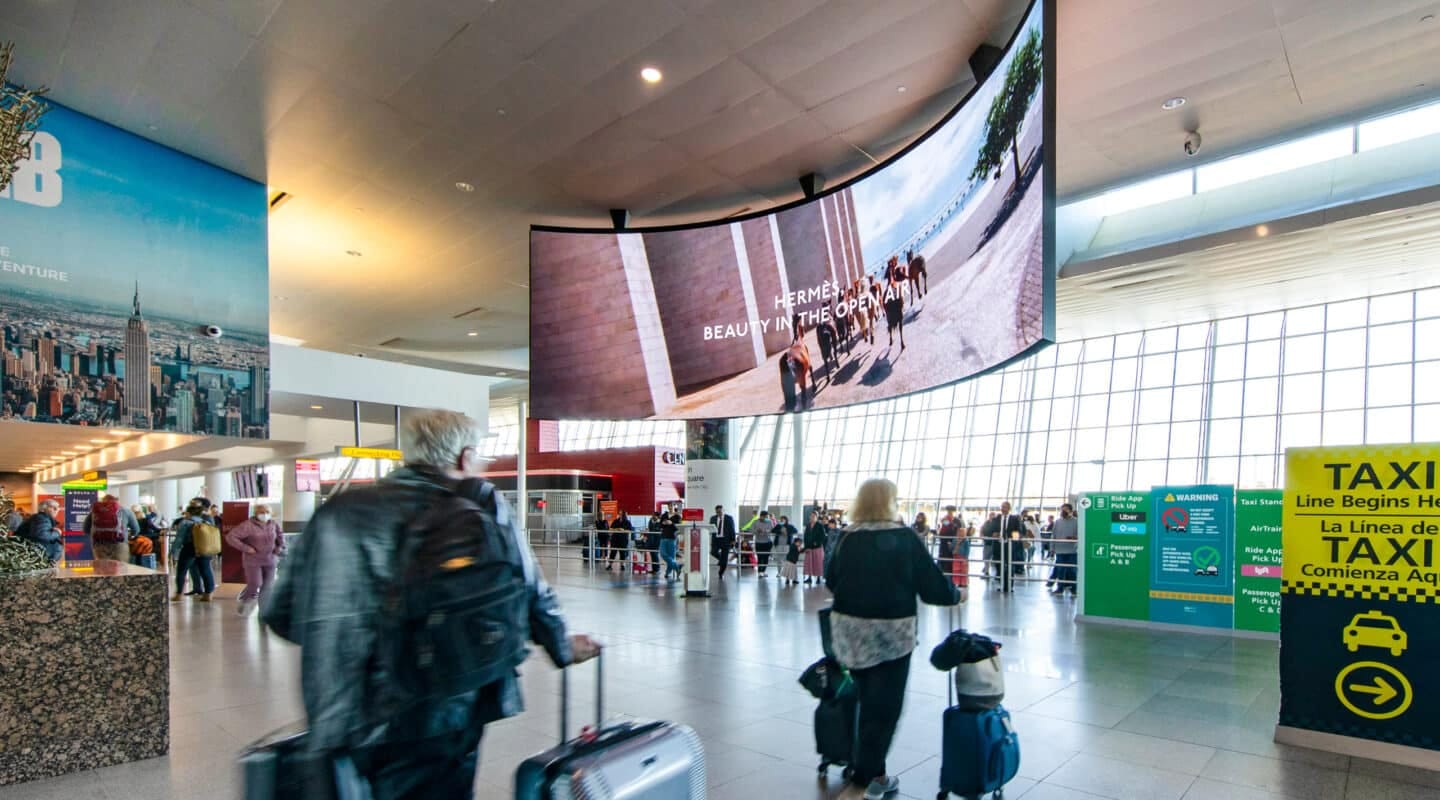
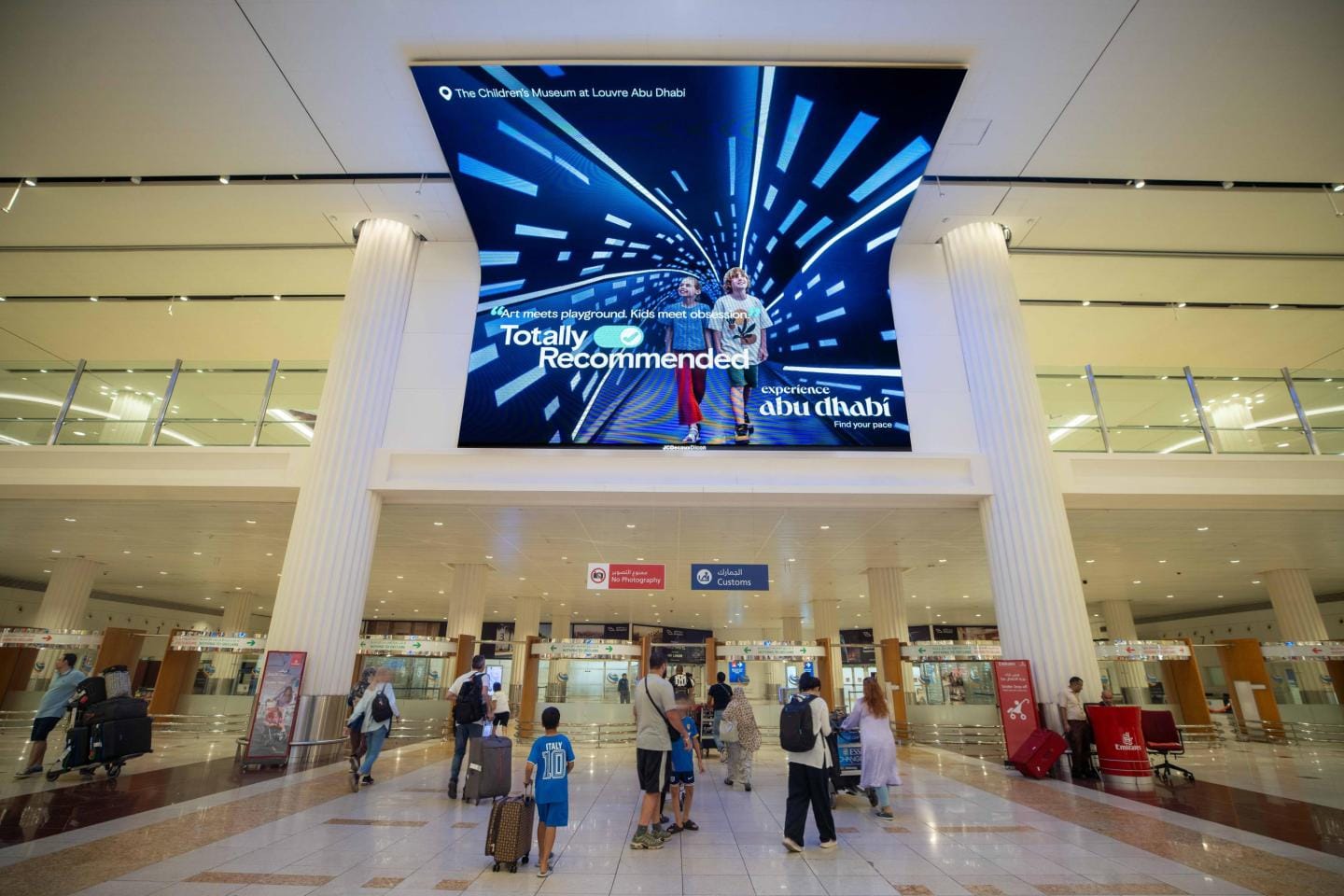
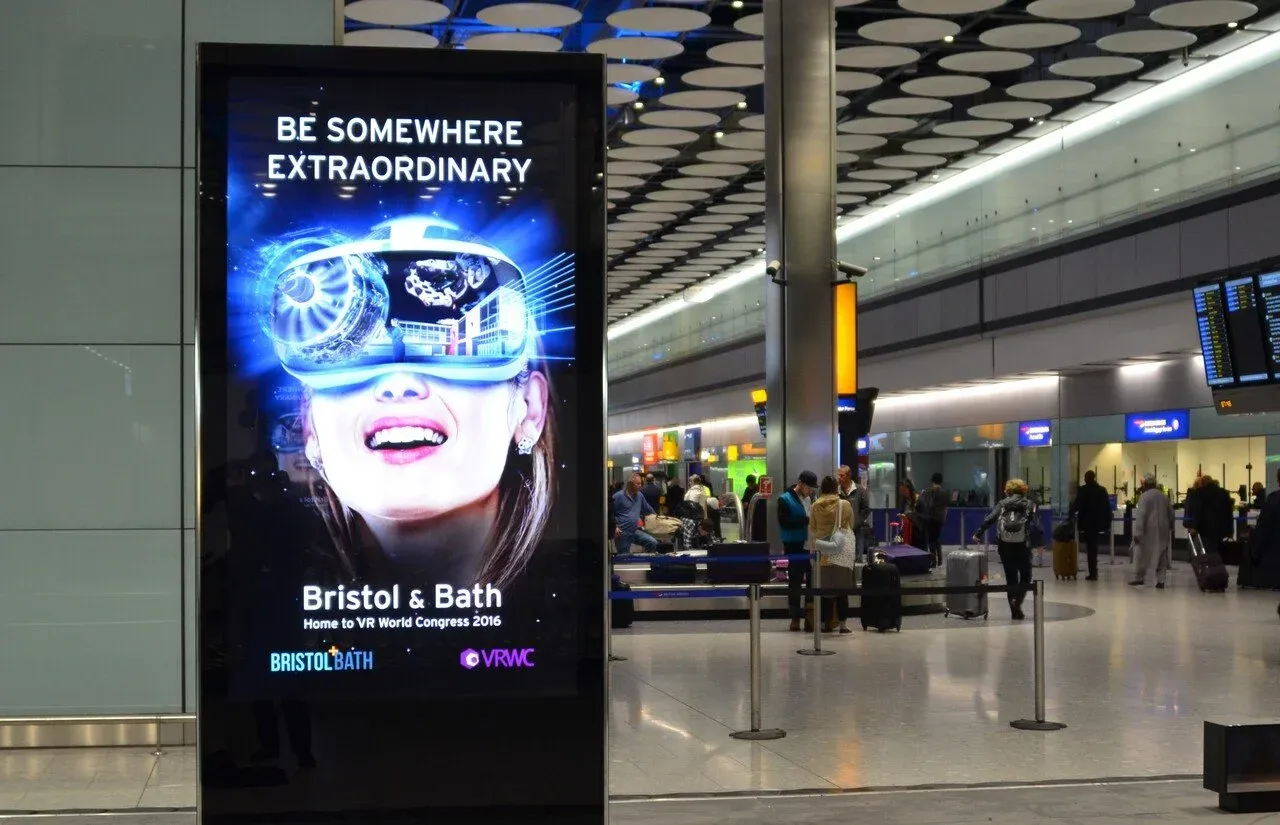
- Lucknow Airport's integrated terminal provides a focused, well-trafficked advertising environment whose domestic and international terminal zones offer comprehensive coverage of LKO's commercially diverse passenger base — from the infrastructure contractor departing for a Bombay Stock Exchange investment meeting through the Gulf NRI arriving for Eid homecoming to the Ayodhya pilgrimage tourist connecting to the Ram Mandir circuit from a Bengaluru departure — in a single terminal environment whose advertising reach is comprehensive and whose brand contact quality is amplified by the Nawabi cultural identity of the destination's specific commercial and cultural prestige
- Dwell time at LKO is elevated by the Indian domestic airport culture's pre-departure generosity and by the Gulf NRI's cultural tendency to arrive with full family groups who spend extended time in the terminal before departure and after arrival, creating 60 to 90-minute dwell windows in both the arrivals and departures zones whose brand exposure concentration is particularly intense during the Eid and Diwali peak seasons
- The terminal's Nawabi architectural character — whose chikan embroidery motifs and Mughal design references create a brand context of authentic cultural refinement — positions any premium brand present within the visual vocabulary of one of India's most culturally distinguished cities, an association whose commercial value is particularly significant for luxury lifestyle, premium fashion, and cultural heritage brands whose identity aligns with the Awadhi aesthetic tradition
- Masscom Global delivers full-service inventory access across Lucknow Airport's domestic and international terminal zones, with Hindi-Urdu bilingual creative capability, UP commercial and cultural market intelligence, and the cultural expertise to ensure every campaign reflects the authentic Nawabi refinement, Gulf NRI diaspora commercial dynamics, and Ayodhya pilgrimage economy growth that together define the commercial character of North India's most rapidly evolving state capital gateway
Strategic Advertising Fit
Best Fit:
- Real estate — Lucknow premium residential and Ayodhya development: The UP government contractor's real estate investment, the Gulf NRI's homeland property purchase, and the growing Ayodhya pilgrimage economy's accommodation and commercial property development create a multi-directional premium real estate buyer audience at LKO whose combined purchasing intent is among the most commercially active of any North Indian regional airport. Lucknow residential developers, Ayodhya hospitality and commercial real estate developers, and Delhi NCR property marketers targeting the UP HNWI migration market will all find at LKO their most precisely qualified North Indian buyer audiences.
- Gold and premium jewellery — Eid and Diwali windows: The dual-festival premium gold and jewellery buying culture of Lucknow's Hindu-Muslim mixed community creates two annually recurring commercial peaks — Eid's Muslim gold gifting tradition and Diwali's Hindu gold purchase culture — whose combined commercial concentration makes LKO one of North India's most productive gold and jewellery brand advertising environments outside Delhi's primary airports. Pre-Eid and pre-Diwali advertising at LKO intercepts the gold buying intent at maximum commercial activation.
- Premium automotive — SUVs and mid-size premium: The UP infrastructure contractor's and government official's social status vehicle aspiration — whose Toyota Fortuner, Mahindra Thar, and MG Gloster dominance reflects both practical utility and social display needs — creates strong premium vehicle brand alignment at LKO. European luxury marques find growing audience among the most internationally exposed UP HNWI whose London and Dubai commercial experience has elevated their automotive brand expectations.
- International education — UK and Canada: The UP HNWI's UK-oriented education aspiration — amplified by the Leicester and Birmingham diaspora connection and the UP NRI's awareness of British education quality — creates a commercially active parent audience at LKO whose per-student UK and Canada education investment is growing rapidly with rising UP incomes. UK boarding schools, Russell Group universities, and Canadian STEM programmes will find at LKO a North Indian Muslim and Hindu family parent audience whose educational ambition and investment capacity is growing faster than equivalent South Indian audiences' established international education patterns.
- Financial services and Gulf NRI banking: The Gulf UP NRI's NRI banking, remittance management, and India investment advisory needs create a commercially active but underserved financial services audience at LKO whose awareness of products that protect and deploy their Gulf savings is both financially motivated and commercially underdeveloped relative to Mumbai and Delhi's more financially sophisticated NRI service markets.
- Halal premium FMCG and Awadhi food culture brands: The Lucknow Muslim community's halal consumption culture — whose Awadhi cuisine tradition creates the most commercially distinctive food identity of any Indian Muslim community — creates premium halal food, premium Awadhi biryani and kebab brand, and halal lifestyle consumer product advertising alignment at LKO whose cultural specificity rewards brands that acknowledge the Awadhi culinary heritage rather than applying generic halal advertising templates.
- Ayodhya pilgrimage hospitality and spiritual tourism: The Ram Mandir's pilgrimage economy creates a new and rapidly growing commercial category at LKO — premium religious tourism accommodation, sacred souvenirs, pilgrimage service platforms, and devotional lifestyle brands whose Ayodhya-connected commercial opportunity is in its earliest stages of brand advertising development, offering first-mover positioning for brands willing to engage authentically with India's most commercially consequential new pilgrimage economy.
- IT and technology B2B — Lucknow tech corridor: The Salt Lake-equivalent IT City development in Lucknow's Shaheed Path corridor creates a growing technology management B2B audience at LKO whose enterprise software, cloud infrastructure, and digital services purchasing authority is expanding as Lucknow's IT sector attracts progressively larger technology company investments.
Brand Alignment at a Glance:
| Category | Fit |
|---|---|
| Real estate — Lucknow, Ayodhya, and Delhi NCR | Exceptional |
| Gold and jewellery — Eid and Diwali | Exceptional |
| International education — UK and Canada | Exceptional |
| Premium automotive | Strong |
| Financial services and Gulf NRI banking | Strong |
| Halal FMCG and Awadhi food culture brands | Strong |
| Ayodhya pilgrimage hospitality brands | Strong |
| Mass-market budget consumer brands | Moderate |
Who Should Not Advertise Here:
- Brands that apply Delhi or generic North Indian advertising without Lucknow cultural calibration: The Lucknawi consumer's Nawabi cultural identity creates a specific commercial register whose refinement and cultural depth distinguishes it from Delhi's commercially aggressive premium signalling or UP's generic rural consumer profile. Brands that treat Lucknow as interchangeable with Delhi or as a generic North Indian market will find their creative insufficiently attuned to the cultural sophistication that the Awadhi tradition has embedded in Lucknow's commercial consciousness.
- Brands requiring Delhi or Mumbai scale for ROI viability: LKO's 3.8 million annual passengers make it commercially unsuitable for brands whose campaign economics require the absolute impression volumes of India's tier-one airports. Brands should prioritise Delhi and Mumbai with LKO as a precision UP HNWI supplement for brands targeting the specific government contractor, Gulf NRI, and Nawabi cultural consumer audiences available at no other airport in the UP corridor.
- Brands without sensitivity to the Hindu-Muslim cultural balance at Lucknow: Lucknow's unique Hindu-Muslim cultural harmony — whose Nawabi Islamic heritage and Hindu devotional tradition coexist in the specific Awadhi cultural synthesis that makes the city unlike any other North Indian commercial market — creates specific creative requirements. Brands whose advertising inadvertently privileges one community over the other, or whose creative references Lucknow's religious communities without the cultural nuance that the Awadhi tradition of interfaith courtliness requires, risk creating commercial tension in a market whose communal harmony is both a cultural achievement and a commercial asset.
Event and Seasonality Analysis
- Event Strength: High (Diwali Gulf NRI homecoming and Eid combined — North India's most commercially intense dual-festival diaspora return)
- Seasonality Strength: High
- Traffic Pattern: Diwali-Eid dual peak with Ayodhya pilgrimage growing baseline and summer holiday secondary peak
Strategic Implication:
Advertisers at Lucknow Airport should structure their investment around three primary commercial windows. The Diwali-Bakrid window in October and November delivers LKO's highest-concentration Gulf UP NRI homecoming alongside the domestic Diwali gifting and consumer spending surge — creating the most commercially intense combined diaspora-domestic commercial event in the terminal's annual calendar. The Eid al-Fitr window — whose timing shifts annually with the lunar calendar — delivers the most concentrated Muslim community commercial peak and the first major Gulf NRI return wave of the year. The Ayodhya Ram Navami and pilgrimage season in March-April is becoming a commercially distinct third peak whose pilgrimage tourist inbound concentration creates growing hospitality, retail, and devotional lifestyle brand commercial opportunity. Masscom Global structures LKO campaigns to capture all three windows with creative calibrated to each season's specific cultural character — Nawabi refinement for the cultural autumn season, Islamic celebration for Eid, and devotional heritage for the Ayodhya spring season.
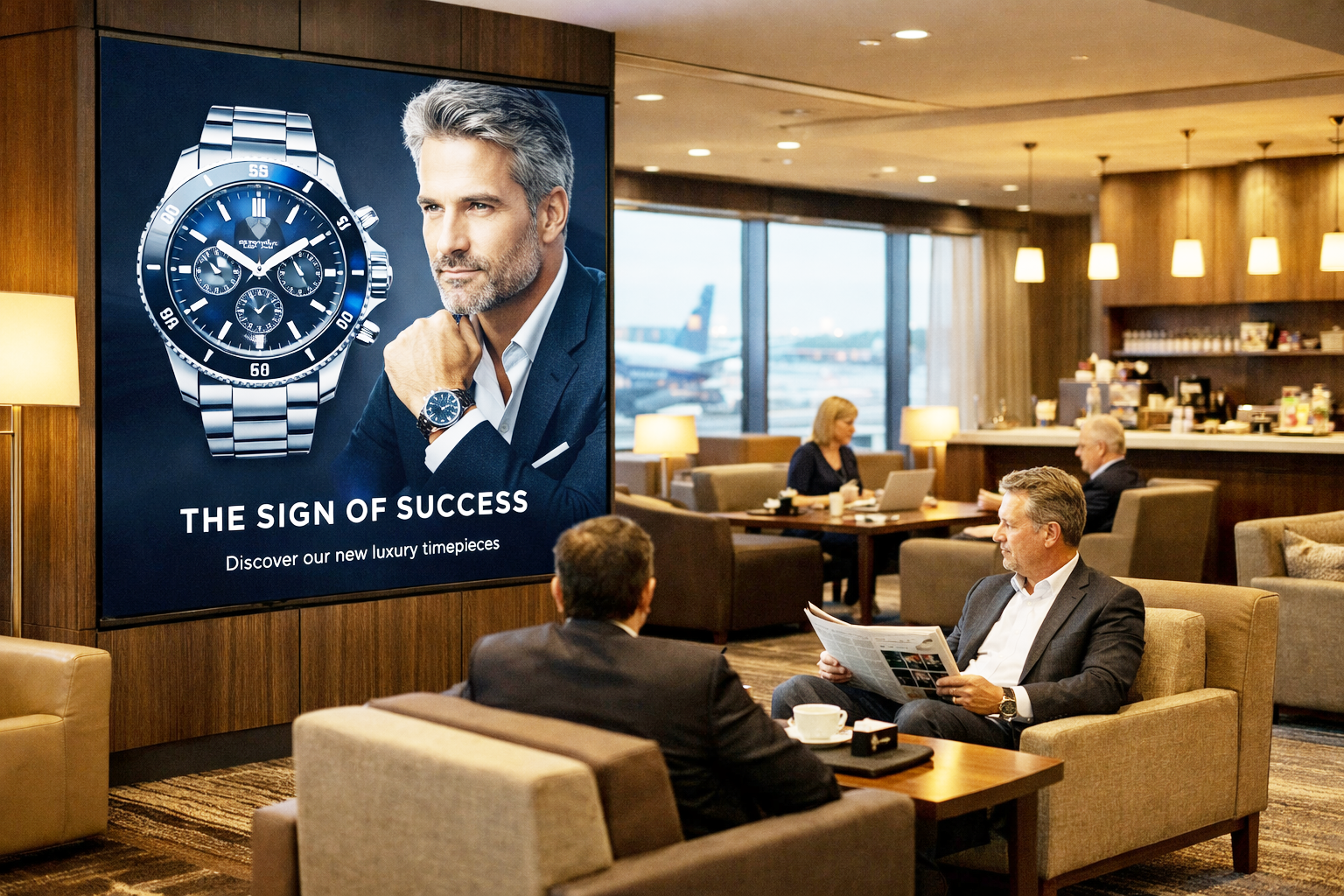
Poor Placement and Delays Affect Airport Campaigns
We help you move faster, access better inventory, and get it right now.
Talk to an ExpertFinal Strategic Verdict
Lucknow Chaudhary Charan Singh International Airport is North India's most commercially underestimated state capital gateway — a terminal serving 3.8 million passengers at the confluence of Uttar Pradesh's most rapidly growing government contractor and real estate dynasty wealth, one of India's most commercially consequential Gulf NRI diaspora return corridors, the newly transformed Ayodhya pilgrimage economy whose scale of commercial opportunity is in its earliest development stage, and the Nawabi cultural heritage of India's most refined provincial city whose aesthetic sophistication and cultural depth creates an HNWI audience whose brand engagement rewards genuine quality above every other commercial variable. The UP infrastructure developer whose Agra-Lucknow Expressway contract generated wealth that would make any Indian tier-one city HNWI list, the Gulf NRI engineer from Lucknow whose UAE savings are looking for a Gomti Nagar apartment investment, the Ayodhya devotee whose Ram Mandir pilgrimage has created a new category of devotional tourism spending in the eastern UP corridor, and the chikan kurta connoisseur from Mumbai whose Lucknow visit for the Mahotsav festival reflects the cultural sophistication of India's most educated domestic tourism audience — all pass through a terminal whose international brand advertising investment has been calibrated to a secondary North Indian regional airport rather than the gateway of India's most politically consequential, most rapidly developing, and most culturally distinctive state capital. Masscom Global provides the Hindi-Urdu bilingual intelligence, the UP commercial and cultural market expertise, and the LKO inventory access to ensure every campaign captures the full commercial potential of North India's most commercially undervalued HNWI gateway.
About Masscom Global
Masscom Global is a premium international airport advertising and media buying agency operating across 140 countries. With deep expertise in airport OOH, premium publications, and high-net-worth audience targeting, Masscom helps brands reach the world's most valuable travellers at the moments that matter most. For advertising packages, media rates, and campaign planning at Lucknow Chaudhary Charan Singh International Airport and airports across the globe, contact Masscom Global today.
Frequently Asked Questions
How much does airport advertising cost at Lucknow Chaudhary Charan Singh Airport?
Advertising costs at Lucknow Airport vary based on terminal zone, format type, Hindi-Urdu language specifications, campaign duration, and seasonal demand. The Diwali-Bakrid October-November window and the Eid al-Fitr variable window attract the highest inventory demand across gold, real estate, and premium consumer categories. The Ayodhya Ram Navami spring pilgrimage window is becoming a third peak demand period. Masscom Global provides current rate cards, bilingual Hindi and Urdu creative specifications, and bespoke media packages tailored to Gulf NRI diaspora, UP HNWI infrastructure wealth, and Awadhi cultural tourism campaign objectives. Contact Masscom Global directly for current pricing and a detailed proposal.
Who are the passengers at Lucknow Chaudhary Charan Singh Airport?
LKO serves a commercially rich passenger profile across four primary segments. The UP government contractor and real estate developer HNWI — whose Agra-Lucknow Expressway, metro rail, and Defence Corridor contract wealth represents some of North India's most rapidly growing private capital accumulation — represents the most commercially qualified domestic year-round business audience. The Gulf UP NRI diaspora — returning from the UAE, Saudi Arabia, Qatar, and Kuwait for Eid and Diwali homecoming — represents the most commercially charged seasonal inbound audience whose Gulf-accumulated foreign currency creates the highest per-passenger spending intensity of any UP airport's seasonal diaspora window. Domestic Indian cultural and pilgrimage tourists — arriving for the Nawabi cultural heritage, Ayodhya Ram Mandir, and Awadhi cuisine experience — represent the premium domestic tourism audience whose spending reflects genuine cultural and spiritual investment. The IT sector and defence professional community completes the profile.
Is Lucknow Airport good for luxury brand advertising?
Lucknow Airport performs strongly for premium and accessible luxury brand advertising whose positioning reflects genuine quality substance and cultural refinement rather than ostentatious status display. Gold and fine jewellery during Eid and Diwali, real estate in Lucknow premium residential and Ayodhya development zones, premium automotive in the mid-size SUV and European luxury tier, UK and Canadian international education, and Awadhi food culture premium brands all achieve strong audience alignment at LKO. The Lucknawi consumer's Nawabi cultural filter for quality substance creates specific advertising requirements — brands must demonstrate cultural respect for the Awadhi tradition and genuine product quality to earn engagement from an audience whose commercial sophistication exceeds what North Indian regional city designation implies.
What is the best airport in Uttar Pradesh to reach HNWI audiences?
Lucknow Chaudhary Charan Singh Airport is Uttar Pradesh's primary HNWI access point, serving the state capital's most commercially significant wealth concentrations across government contracting, real estate, Gulf diaspora, and cultural heritage tourism. Varanasi Lal Bahadur Shastri Airport serves the religious tourism economy. Agra's Pandit Deen Dayal Upadhyay Airport serves the Taj Mahal heritage circuit. For brands targeting UP's government contractor dynasty, Gulf UP NRI diaspora, Ayodhya pilgrimage economy, or Nawabi cultural HNWI — LKO is the primary and most commercially comprehensive UP access point.
What is the best time to advertise at Lucknow Airport?
The Diwali-Bakrid October-November window is LKO's most commercially defining advertising period, delivering the highest combined concentration of Gulf UP NRI homecoming, domestic Diwali gifting and gold purchase, and premium consumer spending of the annual calendar. The Eid al-Fitr window — variable by lunar calendar but typically April to May — delivers the most concentrated Muslim community commercial peak and the first Gulf NRI return wave. The Ayodhya Ram Navami spring pilgrimage season in March-April is becoming an annual commercial window whose pilgrimage tourist inbound concentration creates growing hospitality, devotional lifestyle, and real estate brand opportunity. Summer holidays in April through June generate the most sustained volume of leisure and NRI return travel.
Can international real estate developers advertise at Lucknow Airport?
Lucknow Airport is a commercially productive acquisition channel for both domestic Indian and international real estate developers targeting UP's HNWI buyer community. Domestic developers marketing Lucknow's premium residential zones, Ayodhya's pilgrimage hospitality real estate, and Delhi NCR's migration market for UP professionals will find their most precisely qualified North Indian buyer audience at LKO. International developers marketing Dubai, UK, and Canadian properties to the Gulf NRI and UK diaspora-connected UP HNWI family should treat LKO's pre-Eid and pre-Diwali windows as their highest-return annual North Indian acquisition opportunities — intercepting the Gulf NRI at the moment of maximum homeland investment consideration and the highest foreign currency purchasing power deployment intent.
Which brands should not advertise at Lucknow Airport?
Brands applying generic Delhi or North Indian advertising templates without Lucknow Nawabi cultural calibration, brands requiring tier-one Indian airport scale for ROI viability, and brands whose creative inadvertently privileges one of Lucknow's Hindu or Muslim communities over the other without the cultural nuance the Awadhi interfaith tradition requires are all structurally misaligned with LKO's most commercially valuable audience. The Lucknawi consumer's cultural sophistication and the specific dual Hindu-Muslim community commercial balance requires creative intelligence that generic North Indian advertising cannot provide — and the investment in Lucknow-specific cultural calibration will generate brand loyalty returns that reward the additional creative investment many times over.
How does Masscom Global help brands advertise at Lucknow Chaudhary Charan Singh Airport?
Masscom Global provides complete end-to-end advertising capability at Lucknow Airport — from UP HNWI and Gulf NRI diaspora audience intelligence through Hindi and Urdu bilingual campaign strategy, inventory access across domestic and international terminal zones, creative specification, placement execution, and performance reporting. Our team brings deep knowledge of the Lucknow Nawabi cultural register, the Diwali-Bakrid and Eid-al-Fitr commercial calendar dynamics, the Ayodhya pilgrimage economy's commercial growth trajectory, the Gulf UP NRI's homecoming investment behaviour, and the culturally specific brand communication standards that distinguish effective Lucknow advertising from generic North Indian campaigns. Contact Masscom Global today to build your brand's presence at North India's most culturally sophisticated and most commercially emerging state capital gateway.