

Airport at a Glance
| Field | Detail |
|---|---|
| Airport | Lombok International Airport (Bandara Internasional Lombok) |
| IATA Code | LOP |
| Country | Indonesia |
| City | Praya, Central Lombok, West Nusa Tenggara |
| Annual Passengers | Approximately 3 to 4 million (recovering and growing) |
| Primary Audience | Luxury and surf tourism visitors, Hajj and Umrah pilgrims, domestic Indonesian professionals, Sasak community travellers |
| Peak Advertising Season | June to September, Eid and Hajj windows |
| Audience Tier | Tier 2 — Premium Island and Islamic Travel Hub |
| Best Fit Categories | Luxury hospitality and resort, halal lifestyle, Islamic finance, real estate, tourism experience, education |
Lombok International Airport is the sole commercial aviation gateway for one of Southeast Asia's most commercially significant island destinations in transition — a island that has decisively moved beyond its historical positioning as Bali's quieter neighbour and is now establishing an independent premium tourism identity anchored in its UNESCO-listed Rinjani volcano, the Gili Islands' international surf and diving reputation, the Mandalika International Street Circuit, and a luxury resort corridor that is drawing international investment from Four Seasons, Novotel, and Pullman. What makes LOP commercially distinctive for advertisers is the structural depth of its multi-audience profile: a luxury tourism stream whose per-night accommodation spend rivals Bali's premium circuit, a Hajj and Umrah pilgrimage travel stream that is among the most concentrated in any single Indonesian provincial airport, and a domestic Indonesian professional and middle-class base whose aspirational spending is accelerating in tandem with West Nusa Tenggara's rapid economic development. These three streams do not simply share a terminal — they define three separate and commercially exploitable audience intercept opportunities within the same physical environment.
The Mandalika Special Economic Zone — Indonesia's government-backed premium tourism development anchored by the MotoGP-hosting Pertamina Mandalika International Street Circuit — has fundamentally repositioned Lombok in the international investment and tourism consciousness in ways that are still translating into advertising opportunity ahead of the broader market's recognition of LOP's commercial value. For brands in luxury hospitality, halal lifestyle, Islamic finance, premium real estate, international education, and experience-led consumer categories, LOP now represents one of Southeast Asia's most precisely targetable and commercially underinvested island airport environments.
Advertising Value Snapshot
- Passenger scale: Approximately 3 to 4 million annual passengers and recovering strongly; significant volume growth anticipated as Mandalika SEZ development, new international routes, and Indonesia's island tourism rebound accelerate LOP toward its structural passenger potential
- Traveller type: International and domestic luxury and surf tourism visitors, Hajj and Umrah pilgrims and their families, domestic Indonesian professionals and middle-class leisure travellers, Sasak community returnees, Mandalika SEZ executive and investor class
- Airport classification: Tier 2 — a premium island and Islamic travel hub with a structurally distinct multi-audience profile combining luxury tourism, Islamic pilgrimage, and domestic professional segments in proportions unique among Indonesian regional airports
- Commercial positioning: Indonesia's designated premium island tourism gateway and the primary aviation infrastructure for the government-backed Mandalika Special Economic Zone, one of the country's most strategically prioritised tourism investment destinations
- Wealth corridor signal: Sits at the intersection of Indonesia's Bali-Lombok premium tourism corridor — the most internationally recognised island tourism circuit in Southeast Asia — and the Java-NTB domestic professional mobility network, with a distinct Hajj and Umrah pilgrimage corridor connecting West Nusa Tenggara's devout Muslim majority to Mecca and Medina
- Advertising opportunity: Masscom Global activates targeted campaigns at LOP to intercept luxury resort guests, Islamic pilgrimage travellers, and domestic Indonesian professionals in a modern terminal environment where the premium destination context elevates brand association and national advertising investment remains significantly below the level warranted by the audience quality and the island's accelerating international profile
Airport Advertising is Complex to Get Right
We help you execute faster, with proven results and local insight most planners lack starting now.
Talk to an ExpertCatchment Area and Economic Drivers
Top 10 Cities within 150 km — Marketer Intelligence:
- Mataram (~25 km): The provincial capital of West Nusa Tenggara and the largest city in the LOP catchment — concentrating the province's institutional leadership, banking sector, government administration, university system, and the professional class generated by the region's expanding public and private sector economy; the dominant source of the airport's domestic business, government, and aspirational middle-class traveller base and the primary intercept point for brands targeting West Nusa Tenggara's urban professional audience
- Praya (~5 km — airport host city): The city immediately surrounding LOP and the commercial and administrative capital of Central Lombok Regency; experiencing rapid urbanisation and commercial development driven by airport-adjacent economic activity and Mandalika SEZ spillover investment — a growing middle-class residential and SME business community with active financial services, property, and consumer lifestyle spending intent
- Senggigi (~40 km northwest): Lombok's most established tourist resort strip, hosting a corridor of hotels, restaurants, dive operators, and leisure enterprises along the northwest coast; tourism business operators here travel through LOP for procurement, investor meetings, and partnership engagement, contributing a hospitality SME business travel segment relevant for commercial banking, tourism investment, and hospitality finance brands
- Tanjung (~50 km north): The gateway district for the Gili Islands — Gili Trawangan, Gili Meno, and Gili Air — whose combined international surf, diving, and boutique resort tourism economy generates significant inbound international tourist flow through LOP; the tourist operator and hospitality entrepreneur community here contributes a niche but commercially active business travel segment relevant for tourism finance and SME banking brands
- Selong (~60 km east): The administrative capital of East Lombok Regency and a growing commercial centre serving the tobacco and agricultural economy of Lombok's eastern plains; business operators and government officials here travel through LOP for provincial and national administrative engagement, contributing a secondary institutional and agri-business professional cohort relevant for commercial banking and agricultural finance brands
- Gerung (~30 km west): The administrative capital of West Lombok Regency, positioned on the coastal corridor between Mataram and the Gili access points of Bangsal; the growing SME, tourism, and agricultural business community here feeds LOP's domestic business travel base relevant for commercial banking, insurance, and professional services brands
- Narmada (~20 km northwest): A district within the Mataram metropolitan hinterland known historically for its royal water palace and as a crossroads community between Mataram's urban economy and the agricultural interior of Central Lombok; contributes to the provincial professional and SME catchment feeding LOP's domestic base
- Kopang (~35 km east): A district centre within the interior agricultural belt of Central Lombok, engaged in tobacco cultivation, rice production, and livestock farming; agri-business operators here form part of the rural professional catchment whose financial and procurement travel needs flow through LOP seasonally
- Mantang (~50 km east): An agricultural district within East Lombok's tobacco-producing zone; residents contribute to the rural agri-business and cooperative manager audience that uses LOP for domestic travel to Java for commodity trade and agricultural financing engagement
- Mataram-Mandalika corridor (~35 km south): The rapidly urbanising development corridor between Mataram city and the Mandalika Special Economic Zone in South Central Lombok; this corridor is attracting significant construction, hospitality, and infrastructure investment that is generating a growing executive, investor, and project management professional travel cohort highly relevant for premium real estate, construction finance, and enterprise services brands
NRI and Diaspora Intelligence:
Lombok's diaspora dynamic carries a commercially significant dimension that is shaped by two distinct and overlapping migratory traditions. The first is the Lombok Migrant Worker community — one of Indonesia's most active outbound labour migration populations, with West Nusa Tenggara consistently ranking among the country's highest per-capita sender provinces for migrant workers deployed in Malaysia, Saudi Arabia, the UAE, Qatar, Taiwan, South Korea, and Japan. These Tenaga Kerja Indonesia returnees arrive through LOP carrying accumulated foreign-currency income that is channelled into property construction, family household investment, consumer goods, and children's education in patterns structurally identical to the OFW remittance dynamic but within the Indonesian cultural and regulatory framework. Remittance platforms, cooperative banking products, property developers targeting returning migrant workers, and consumer finance brands will find a concentrated and financially purposeful returnee audience at LOP during Eid and year-end return windows. The second diaspora dimension is the inter-island Indonesian migration pattern — significant Sasak and West Nusa Tenggara communities have established themselves in Bali, Java, and Kalimantan, maintaining active return travel ties to Lombok for family occasions, ancestral obligations, and property investment that sustains a consistent domestic inter-island diaspora travel flow through LOP.
Economic Importance:
West Nusa Tenggara's economy is structured around five sectors whose commercial interplay defines the LOP audience profile with commercial precision. Tourism is the dominant and internationally facing sector — the Mandalika SEZ, the Gili Islands circuit, and Rinjani's trekking economy generate a sustained and growing inflow of international and domestic visitors whose per-trip expenditure anchors the provincial services economy and is accelerating as international airline connections expand. Agriculture — anchored in tobacco, rice, and pearl farming — sustains a substantial rural business owner and cooperative manager community whose financial services needs create a consistent commercial banking audience within LOP's professional catchment. Hajj and Umrah pilgrimage is the third and uniquely LOP-specific economic driver — West Nusa Tenggara has one of Indonesia's highest per-capita Hajj participation rates, generating an annual pilgrimage travel wave whose Islamic finance, pilgrimage preparation, and family spending dimensions are commercially significant during the Hajj season window. The Mandalika SEZ itself constitutes a fourth economic layer — attracting construction, hospitality, and project management investment that is generating a growing executive and investor professional travel cohort. Finally, migrant worker remittances from Malaysia, Saudi Arabia, and the Gulf constitute a structural income layer that sustains household consumption in the rural catchment and creates a returning-worker financial services audience at LOP during peak remittance return windows.
Business and Industrial Ecosystem
- Mandalika Special Economic Zone and MotoGP infrastructure: The Pertamina Mandalika International Street Circuit and the broader Mandalika SEZ development generate a sustained executive, investor, construction project management, and international sports business travel cohort whose corporate spending authority and institutional travel frequency produce a consistent premium business audience within the LOP terminal — relevant for enterprise finance, construction technology, premium hospitality, and B2B professional services brands
- Tourism and hospitality SME sector: Lombok's rapidly expanding tourism economy — spanning boutique resort development, dive operator businesses, surf camp operations, and cultural tour enterprises — generates a community of SME hospitality operators and tourism investors who travel domestically for financing, procurement, and partnership engagement; commercial banking, tourism investment platforms, and hospitality finance brands find a receptive business audience within this cohort
- Tobacco and agri-commodity production: West Nusa Tenggara's tobacco sector — one of Indonesia's significant tobacco-producing regions — generates a seasonal business travel cohort of tobacco growers, cooperative managers, and agri-commodity traders whose procurement and financing travel to Surabaya and Jakarta creates an agri-business professional audience relevant for commercial banking, commodity finance, and agricultural insurance brands
- Pearl farming and export industry: Lombok's South Sea pearl farming industry — producing some of the world's most prized golden and white South Sea pearls — generates a niche but high-value luxury goods trade audience of pearl farmer operators and export traders relevant for luxury product, trade finance, and export logistics brands
Passenger Intent — Business Segment:
Business travellers at LOP operate across four distinct intent profiles that shape terminal behaviour and brand receptivity differently. Mandalika SEZ executives and investors travel to Jakarta, Surabaya, and Singapore for regulatory, financing, and corporate partnership engagement — they are in active capital deployment and project management mode, receptive to enterprise finance, premium automotive, and professional services messaging. Tourism hospitality operators travel to Bali and Java for procurement and partnership meetings — an audience primed for commercial banking and tourism investment brands. Agri-business operators travel seasonally during tobacco harvest and commodity trading cycles — a financially purposeful but operationally focused audience for agri-finance and commercial insurance brands. Pearl industry operators travel internationally for trade fairs and export partnerships — a niche but high-value audience relevant for luxury goods and premium trade finance brands.
Strategic Insight:
LOP's business audience carries a structural commercial advantage that national Indonesian advertisers have been slow to recognise: the Mandalika SEZ is actively concentrating executive-level investment decision-makers in a regional airport environment where national brand presence is sparse and cost-per-engagement multiples are among the most favourable available in eastern Indonesia. These are the same executives who travel through Soekarno-Hatta in Jakarta and Ngurah Rai in Bali at premium media rates — but at LOP they are accessible in an uncrowded, attentive terminal environment at a fraction of the investment. Masscom Global identifies this gap as a core commercial opportunity for brands willing to follow their most important audience to where they actually make decisions rather than only where they are most visible.
Tourism and Premium Travel Drivers
- Mandalika and Kuta Lombok Premium Resort Corridor: The rapidly developing luxury resort strip along Lombok's south coast — anchored by international brands including Novotel Lombok, Club Med Lombok, and the emerging four and five-star resort pipeline enabled by the Mandalika SEZ — is establishing a premium beach tourism destination whose international profile is growing ahead of its media investment, creating an early-access advertising opportunity for premium hospitality, lifestyle, and luxury brand categories at LOP before the destination commands gateway airport media rates
- Gili Islands International Tourism Circuit: Gili Trawangan, Gili Meno, and Gili Air constitute one of Southeast Asia's most internationally celebrated small island tourism destinations, drawing a global community of divers, surfers, honeymooners, and boutique resort guests whose per-trip expenditure and international-income profile creates a premium tourism audience among LOP arrivals that significantly exceeds the Indonesian domestic tourism average
- Mount Rinjani National Park and Trekking Tourism: Rinjani — Indonesia's second highest volcano and a UNESCO Biosphere Reserve — draws a dedicated international and domestic trekking and adventure tourism audience whose cultural engagement and outdoor lifestyle spending profile positions them among the most experience-committed and quality-oriented visitors accessible through LOP
- Pertamina Mandalika International Street Circuit and MotoGP: The annual MotoGP Mandalika Grand Prix has transformed Lombok's international sports tourism profile, drawing motorcycle racing fans, international sports media, corporate hospitality guests, and motorsport industry professionals from across Southeast Asia and Europe in concentrated annual waves that represent one of the highest-density premium sports tourism audience windows available at any Indonesian regional airport
- Senggigi and Traditional Sasak Cultural Tourism: The northwest coast resort corridor and the traditional Sasak villages, craft markets, and weaving traditions of Lombok's interior draw domestic cultural tourism from across Indonesia and a growing international audience seeking authentic Indonesian island cultural experiences beyond the Bali circuit
Passenger Intent — Tourism Segment:
The tourism passenger at LOP arrives with a spending commitment that is pre-formed and emotionally amplified by the anticipation of an island experience they have deliberately chosen over Bali's more established and crowded alternatives. International resort guests arriving for the Mandalika corridor have pre-booked premium accommodation, water sports, and dining experiences whose combined itinerary value represents above-average per-trip spending for the Southeast Asian luxury tourism market. Gili Islands visitors — backpacker and boutique resort guest segments combined — have committed to dive courses, accommodation, and island-hopping experiences that represent multi-day discretionary leisure investment. MotoGP attendees arrive with corporate hospitality, race ticket, and sports lifestyle spending already committed. Domestic Indonesian tourists are aspirationally mobile middle-class travellers whose island holiday represents a significant annual discretionary expenditure event with high brand receptivity for consumer lifestyle, travel insurance, and premium experience messaging. Across all tourism segments, LOP passengers are in a positive, anticipatory state of leisure investment — a brand receptivity condition that rewards premium experience, lifestyle alignment, and quality messaging over functional or price-led advertising approaches.
Travel Patterns and Seasonality
Peak seasons:
- June to September (dry season peak): Lombok's primary international and domestic tourism peak coinciding with the island's optimal weather window — the Australian, European, and East Asian summer holiday season aligns precisely with Lombok's dry season to produce the highest-volume and highest-spending international tourist arrival period of the year; MotoGP Mandalika (typically October, occasionally September) creates a concentrated sports tourism spike within or immediately following this window
- Eid ul-Fitr and Eid ul-Adha (variable Islamic calendar): The two most commercially intense Islamic holiday travel windows generate the year's largest domestic Indonesian passenger surges at LOP — Eid ul-Fitr produces the mass return of inter-island Lombok diaspora from Bali and Java; Eid ul-Adha is the departure window for the Hajj pilgrimage cohort whose family farewell and preparation spending creates a distinct and highly commercially charged terminal atmosphere
- Hajj season (variable Islamic calendar — approximately June to August overlap): LOP's most distinctive and commercially unusual seasonal feature; West Nusa Tenggara's exceptionally high Hajj participation rate produces an annual pilgrimage departure wave whose scale relative to total airport passenger volume is among the highest of any Indonesian provincial airport — creating a uniquely concentrated Islamic finance, pilgrimage preparation, and family emotional spending audience during the departure window
- December to January (year-end domestic peak): The Indonesian year-end school holiday and Christmas-New Year period generates significant domestic leisure and family reunion travel, with Australian tourists supplementing the domestic base during Australia's summer school holiday season
Event-Driven Movement:
- MotoGP Mandalika Grand Prix (October — annual): The year's most distinctive and internationally visible event at LOP; draws motorcycle racing fans, corporate hospitality guests, international sports media, and motorsport industry executives from across Southeast Asia, Australia, Europe, and Japan in a concentrated multi-day wave that represents LOP's highest-density international premium sports audience of the year — premium hospitality, automotive, lifestyle, and sports brand categories achieve maximum impact during this window
- Hajj Pilgrimage Departure Season (variable Islamic calendar): The annual Hajj departure wave from LOP creates one of the most emotionally charged and commercially distinctive airport passenger moments in Indonesian aviation — families accompanying departing pilgrims, Hajj preparation product and service purchasing, and the collective spiritual intensity of the pilgrimage community create a terminal atmosphere that is unique to airports with high-density Muslim pilgrimage catchments and that rewards Islamic finance, halal lifestyle, and community banking brand presence with exceptional audience resonance
- Eid ul-Fitr Return Surge (variable Islamic calendar): The mass return of West Nusa Tenggara's inter-island and overseas diaspora during the Eid holiday generates LOP's highest single passenger volume window of the year — gifting, consumer goods, property, and financial services brands achieve maximum combined reach and emotional spending intent alignment during the Eid return peak
- Lombok Senggigi International Festival (annual — August): A cultural performance and arts festival that draws domestic and regional cultural tourism audiences to northwest Lombok; creates a secondary cultural tourism audience window supplementing the dry season peak with culturally engaged domestic visitors
- Traditional Bau Nyale Festival (February to March): Lombok's most significant indigenous cultural event — a Sasak community ceremony tied to the annual spawning of sea worms — draws domestic cultural tourism from across Indonesia and a growing international anthropological and cultural tourism audience; creates a pre-dry-season cultural tourism wave relevant for authentic Indonesian cultural experience brands
It’s Not Just Where You Advertise - It’s How Fast You Execute
We combine local insight with fast rollout to deliver results for you, now.
Talk to an ExpertAudience and Cultural Intelligence
Top 2 Languages:
- Indonesian (Bahasa Indonesia): The universal language of all passenger segments at LOP and the essential vehicle for brand authenticity across the domestic Indonesian traveller, migrant worker returnee, and professional class audience; Indonesian-language creative is non-negotiable for full domestic audience penetration — executions must be culturally attuned to the West Nusa Tenggara context, which carries a distinct Islamic cultural register that generic national Indonesian campaign language may not fully honour; brands whose Indonesian creative demonstrates understanding of the Sasak Muslim community's values and cultural identity will consistently outperform those applying generic national campaign templates without regional adaptation
- English: The primary international tourism language at LOP, essential for engaging the Australian, European, East Asian, and North American luxury tourism, surf, and dive visitor segments whose combined per-passenger commercial value significantly elevates the international traveller's brand intercept importance; bilingual Indonesian-English creative executions are the recommended standard at LOP, enabling brands to simultaneously address the domestic Indonesian and Sasak Muslim audience in Bahasa Indonesia while engaging international tourists in the language that governs their destination research, booking behaviour, and in-destination consumption decisions
Major Traveller Nationalities:
The domestic Indonesian traveller dominates LOP's passenger base by volume — overwhelmingly from West Nusa Tenggara, Java, Bali, and Kalimantan, with a significant proportion of the domestic base either actively migrant workers or from migrant-worker-supported households. The international traveller segment is led by Australians — who represent the largest single international tourist nationality at Lombok given geographic proximity, established travel corridor familiarity, and strong lifestyle alignment with Lombok's surf, dive, and resort offerings. Singaporeans and Malaysians form a significant secondary international segment, particularly strong during Eid holiday travel and short-break leisure windows. East Asian tourists — Japanese, South Koreans, and Chinese — constitute a growing third international segment driven by MotoGP attendance, Gili Islands diving, and Rinjani trekking experiences. European tourists from the Netherlands, Germany, France, and the United Kingdom form a premium cultural and adventure tourism segment with above-average per-trip expenditure. Creative strategy at LOP should lead with bilingual Indonesian-English primary executions with consideration for Australian-market-oriented creative during peak Australian summer travel windows — a strategic adaptation that maximises engagement with the highest-spending single international nationality at the airport.
Religion — Advertiser Intelligence:
- Islam (~96%): The defining faith of the Sasak people — Lombok's indigenous ethnic majority — and the universal cultural operating system of the airport's domestic passenger base; West Nusa Tenggara's Islamic identity is among the most devout in Indonesia, reflected in the province's exceptionally high Hajj participation rate, widespread pesantren Islamic boarding school education culture, and the halal economy's absolute dominance of local consumer behaviour; Ramadan and both Eid periods are the most commercially significant religious observance windows — Eid ul-Fitr produces the mass passenger surge, Eid ul-Adha produces the Hajj departure wave; all food and beverage brands at LOP must be halal-certified without exception; Islamic finance products, takaful insurance, Hajj preparation services, and halal lifestyle brands find an audience at LOP whose faith-commerce integration is complete and non-negotiable — this is not a market where Islamic values are a consumer segment, they are the universal consumer operating framework
- Hinduism (~3%): A small but culturally significant Hindu Balinese community present within the Mataram urban population, reflecting the historical Balinese kingdom presence in western Lombok; commercially modest as an independent segment at the airport level but relevant for brands with Bali-Lombok corridor positioning that seeks to acknowledge the cultural diversity of the western Indonesian island tourism circuit
- Other faiths and secular (~1%): The small international expatriate, tourism industry professional, and non-Muslim Indonesian minority present in Mataram's urban professional class; commercially relevant as part of the broader international tourism and professional audience rather than as a distinct faith segment
Behavioral Insight:
The Sasak Muslim consumer at LOP makes purchasing decisions through a framework where Islamic values, family obligation, and community standing converge as the primary motivators — a decision-making structure that is simultaneously deeply faith-grounded and pragmatically oriented toward family advancement and economic security. The Sasak cultural identity carries a particular pride in spiritual sincerity and community generosity that shapes brand relationships: brands that demonstrate genuine halal commitment, community investment, and respect for Islamic values earn a loyalty depth and word-of-mouth advocacy that transactional marketing cannot buy. The migrant worker returnee dimension adds a financially purposeful layer — returning workers have saved specifically to deploy income into family investment priorities at home, and their airport spending decisions are pre-planned rather than impulsive. International tourists at LOP operate from a complementary but distinct psychological position — they have chosen Lombok over Bali as a deliberate quality and authenticity preference, which signals a consumer profile that values genuine experience over tourist-trail convenience and is willing to invest in premium encounters with the authentic Indonesian island identity that Lombok's Sasak culture and natural landscapes represent. Brands that speak to both the values integrity of the Sasak Muslim audience and the authenticity aspiration of the international quality tourist will create the most commercially powerful messaging alignment available in the LOP terminal environment.
Outbound Wealth and Investment Intelligence
The outbound passenger at Lombok International Airport carries a wealth deployment profile that is defined by three concurrent and commercially distinct dynamics. The migrant worker returnee arriving from Saudi Arabia, Malaysia, or the UAE is making the most significant financial decisions of their annual cycle at the airport intercept point — property construction, family savings allocation, children's education investment, and Islamic finance product engagement are all active considerations in the hours and days surrounding the homecoming event. The domestic Indonesian professional from Mataram or the Mandalika SEZ executive is deploying career-generated income into asset accumulation — property, education, and insurance — consistent with Indonesia's rapidly expanding urban middle class. The Hajj-returning pilgrim arrives with the spiritual transformation of the pilgrimage experience and a renewed commitment to halal financial management, charitable giving, and community investment that creates a distinctive post-Hajj spending orientation uniquely accessible to Islamic financial services and takaful brands at LOP.
Outbound Real Estate Investment:
Real estate investment is the dominant wealth deployment priority for LOP's migrant worker returnee and domestic professional catchment. Property construction — the Sasak cultural practice of building or upgrading the family ancestral home using accumulated overseas income — is the primary use of migrant worker remittances in West Nusa Tenggara, creating a sustained demand for construction materials, home furnishings, and property finance products among the returning worker audience at LOP. Beyond family home construction, the Mandalika SEZ's development trajectory is generating speculative and investment-grade property interest from Mataram's professional class and from Javanese and Balinese investors who see Lombok's tourism economy appreciation as a real estate opportunity. Indonesian developers with inventory in the Mandalika resort zone, Mataram premium residential, and integrated tourism villa developments targeting both domestic Indonesian investors and international buyers will find a commercially engaged and property-intent audience among LOP's outbound professional and Viet Kieu equivalent Indonesian diaspora segments.
Outbound Education Investment:
Education investment carries the highest emotional weight of any spending category within the Sasak Muslim community's family financial planning — a cultural orientation consistent with the Islamic value placed on knowledge and the practical understanding that education is the primary vehicle for intergenerational economic advancement from a province that has historically been among Indonesia's lower GDP per-capita regions. The aspirational trajectory of West Nusa Tenggara's most educationally ambitious families runs from the provincial University of Mataram toward Universitas Indonesia, Universitas Gadjah Mada, and Institut Teknologi Bandung for undergraduate study, and increasingly toward Middle Eastern Islamic universities — Al-Azhar in Egypt and universities in Saudi Arabia and Jordan — for Islamic studies and religious education that carries spiritual prestige within the devout Sasak Muslim community. International universities with active Indonesian student recruitment, Middle Eastern Islamic academic institutions, and Indonesian private university brands with national accreditation credentials will find a deeply engaged and financially committed family education audience at LOP.
Outbound Wealth Migration and Residency:
Formal international residency diversification is not a dominant behaviour pattern within the LOP catchment in the structured HNI investment sense observable at Jakarta and Bali gateway airports. The migrant worker community's relationship with international residence is practically rather than investment-driven — their overseas presence is a temporary economic strategy rather than a permanent lifestyle choice. The most relevant international wealth deployment behaviour for advertisers at LOP is therefore not residency investment but rather the financial management of overseas earnings — remittance platform selection, Islamic savings account products in Malaysia and Saudi Arabia, and the management of foreign-currency income for domestic property and education investment. Brands operating in the remittance management, Islamic banking, and OFW financial services space will find a more commercially relevant LOP audience than conventional residency investment consultancies targeting HNI buyers.
Strategic Implication for Advertisers:
Indonesian Islamic financial services brands, halal consumer product companies, international and domestic education institutions, Lombok and Mandalika real estate developers, construction material brands, remittance platform providers, and premium hospitality and tourism experience brands should treat LOP as a high-precision, lower-competition activation channel that delivers audience quality — across both the Islamic domestic professional and the international premium tourism segments — that national campaign planning concentrated in Jakarta and Bali systematically misses. Masscom Global can structure campaigns combining LOP with Bali's Ngurah Rai Airport and Jakarta's Soekarno-Hatta to create a coherent Indonesian island tourism and Islamic professional corridor strategy, following the LOP audience at their home airport and intercepting the same travellers at their domestic destination airports.
Airport Infrastructure and Premium Indicators
Terminals:
- Lombok International Airport operates a single modern passenger terminal opened in 2011 as part of the Indonesian government's investment in eastern Indonesian aviation infrastructure — a purpose-built facility designed to international standards with air-conditioned terminal, dedicated domestic and international zones, and passenger experience infrastructure that represents a significant upgrade from the previous Selaparang Airport it replaced
- The terminal's single-building structure ensures that all passenger segments — international luxury resort guests, Hajj pilgrims, domestic professional travellers, and migrant worker returnees — share a common terminal environment, giving advertisers equal access to the full multi-audience spectrum without the premium zone segmentation or audience fragmentation that occurs in multi-terminal airport environments
Premium Indicators:
- The airport's direct operational relationship with the Mandalika SEZ — one of Indonesia's top-priority national strategic projects — gives the LOP brand environment an association with international investment confidence and premium tourism development that elevates brand positioning for advertisers seeking to align with Indonesia's most ambitious island economic development agenda
- The growing presence of international luxury resort brands — Four Seasons, Novotel, Pullman, and Club Med — in the Mandalika corridor immediately accessible via LOP elevates the inbound tourism audience's accommodation spending profile and signals the destination's trajectory toward international premium positioning
- Lombok's South Sea pearl industry — producing world-class golden and white pearls accessible through the pearl farms and craft markets of the LOP catchment — adds a genuine luxury artisanal credential to the airport's commercial environment that few Indonesian regional airports can claim
Forward-Looking Signal:
Two converging infrastructure signals are positioning LOP for sustained commercial growth that advertisers should incorporate into forward market planning. The first is the Indonesian government's continued investment in the Mandalika SEZ as a National Strategic Project, with infrastructure development, hotel licensing, and international event commitments that are systematically building Lombok's international tourism destination credibility ahead of route network expansion. The second is the airport expansion agenda — with LOP earmarked for capacity and facility upgrade investment as passenger volumes grow toward the structural requirement of a fully developed premium island destination. As new international airline routes are added, MotoGP attendance grows, and Mandalika's resort pipeline delivers completed properties, LOP's passenger volume and commercial value will accelerate significantly ahead of media rate adjustment. Masscom Global advises brands targeting Indonesia's premium island tourism corridor, the Islamic pilgrimage travel market, and the West Nusa Tenggara professional consumer to establish presence at LOP now — while the advertising environment still reflects a destination in transition rather than the premium gateway pricing that Lombok's long-term trajectory will ultimately command.
Airline and Route Intelligence
Top Airlines:
- Garuda Indonesia (primary national carrier, Jakarta and Denpasar routes)
- Lion Air (primary domestic low-cost carrier, Jakarta, Denpasar, and domestic network)
- Citilink (domestic low-cost network)
- AirAsia (international routes including Kuala Lumpur and Singapore)
- Batik Air (domestic premium routes)
- Australia-Indonesia charter and seasonal services (Lombok-Australian city connections)
Key International Routes:
- Kuala Lumpur (Malaysia): A significant international route serving both leisure tourism from Malaysia and Singapore and the migrant worker corridor connecting West Nusa Tenggara's Malaysia-based TKI community to their home province
- Singapore: A growing international connection serving Singapore-based leisure tourists, business travellers, and the Singaporean-Indonesian professional corridor
- Australian cities (seasonal and charter): Connections to Darwin, Perth, and Australian east coast cities serving the Australian tourism segment — Lombok's largest international visitor nationality by arrivals — particularly during Australian school holiday and summer peak seasons
- Middle East corridors (Hajj and Umrah charter and scheduled): Annual and seasonal services to Jeddah and Medina serving West Nusa Tenggara's high-volume Hajj and Umrah pilgrimage departure community
Domestic Connectivity:
- Jakarta (Soekarno-Hatta International Airport): The primary domestic corridor connecting LOP's professional, institutional, and business traveller cohort to the national capital for government engagement, corporate meetings, and financial institution access
- Denpasar Bali (Ngurah Rai International Airport): The most commercially significant short-haul domestic route at LOP — connecting Lombok's tourism circuit to Bali's international gateway and creating a bilateral Bali-Lombok tourism corridor that both airports share; many international tourists arrive via Bali and transfer to Lombok, making this route the most important feeder for LOP's international tourism audience
- Surabaya: A secondary domestic route connecting West Nusa Tenggara's business and professional community to East Java's commercial and industrial hub for procurement, trade, and corporate engagement
Wealth Corridor Signal:
The LOP route network maps three distinct wealth and value transfer corridors simultaneously. The Bali-Lombok domestic connection is the luxury tourism feeder corridor — channelling international resort guests from Bali's established gateway into Lombok's emerging premium destination. The Jakarta domestic route is the professional and institutional power corridor — connecting LOP's government officials, Mandalika SEZ executives, and business operators to the national capital's regulatory and financial infrastructure. The Malaysia and Middle East international routes are the migrant worker remittance corridors — carrying West Nusa Tenggara's most economically active overseas diaspora back to their home province with accumulated foreign-currency income. For advertisers, these three simultaneous corridor functions create a terminal environment where three distinct high-value audience streams — luxury tourists, institutional professionals, and remittance-economy returnees — are accessible within a single media environment at a cost structure that does not yet reflect the combined commercial weight of these three concurrent audience opportunities.
Media Environment at the Airport
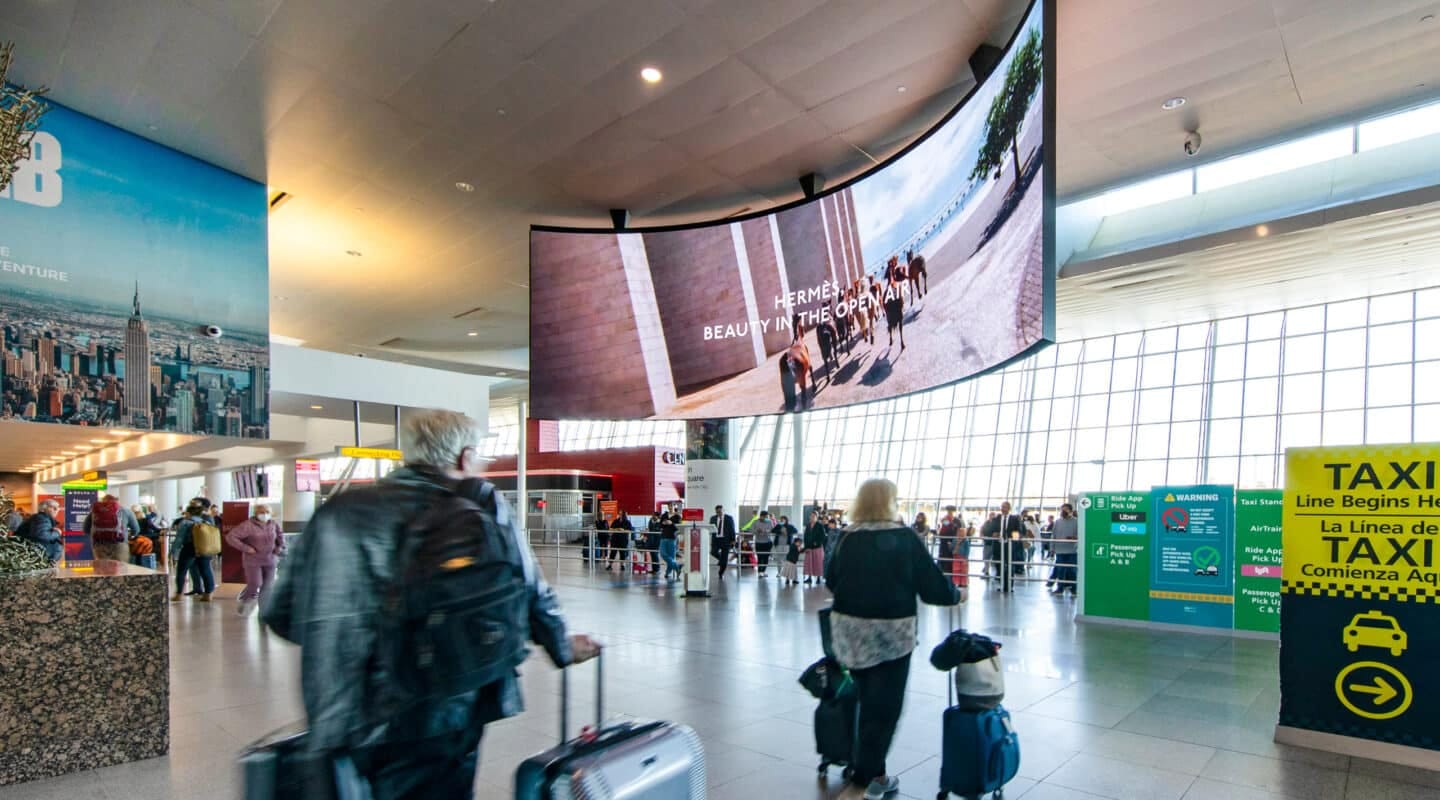
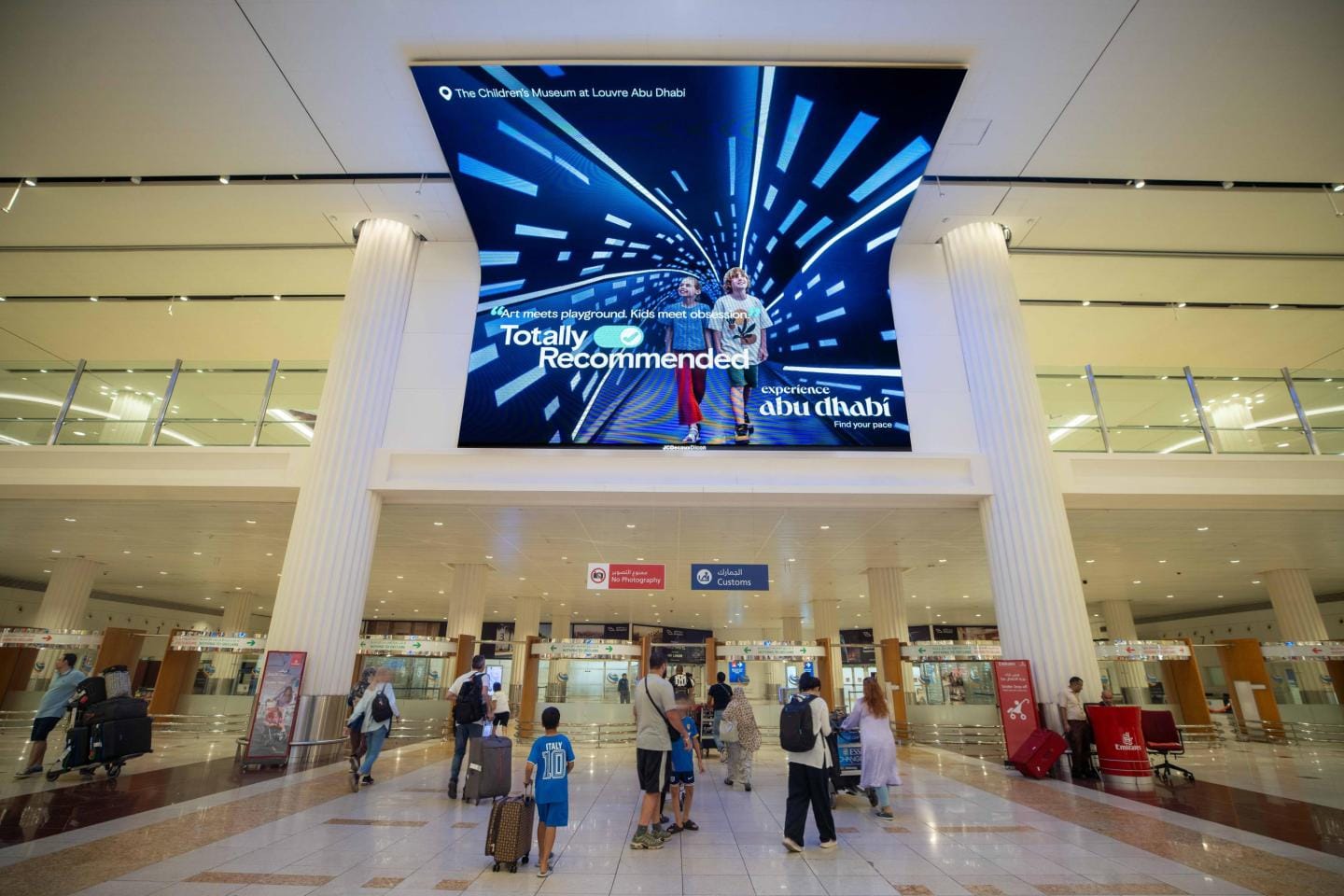
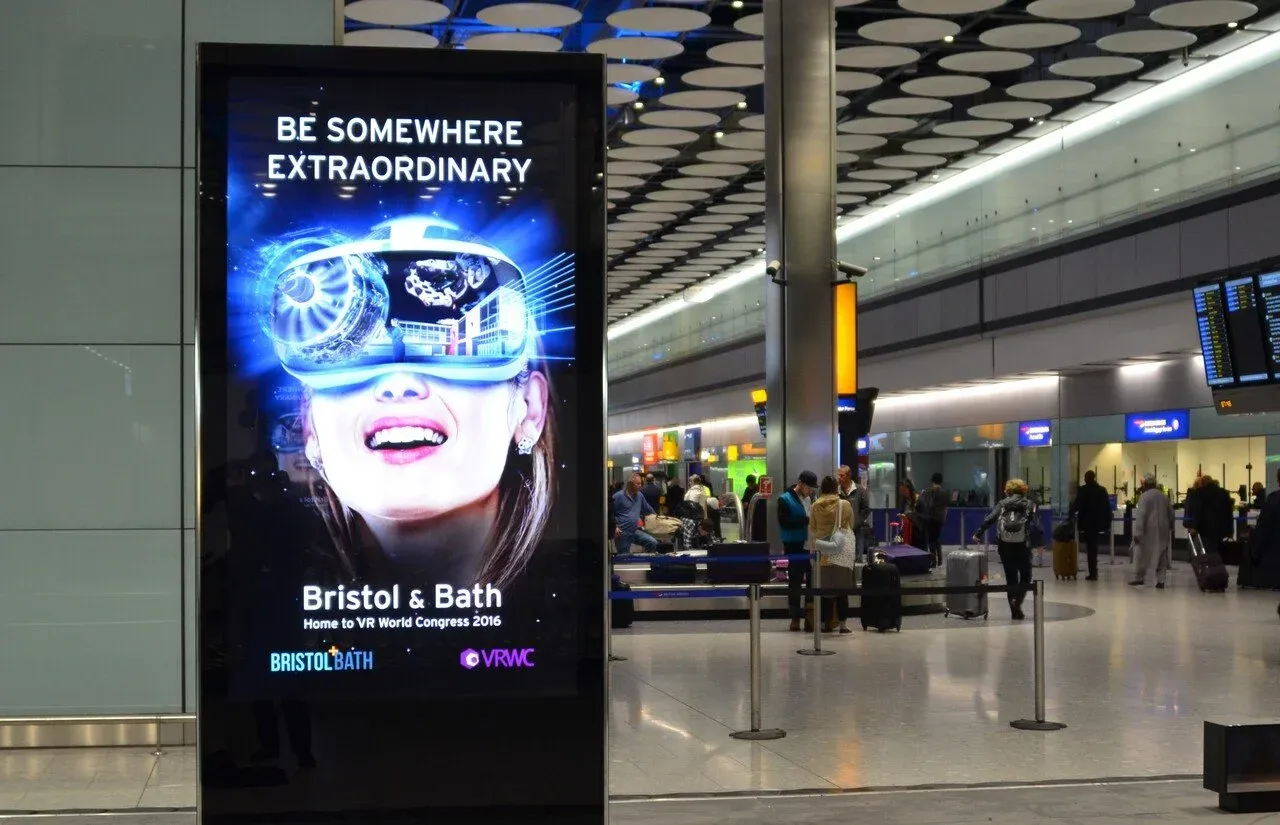
- LOP's single modern terminal creates a contained and fragmentation-free media environment where a strategically executed placement achieves near-complete passenger coverage across all three commercially significant audience streams — luxury tourists, domestic professionals, and migrant worker returnees — without the budget dilution required to maintain multi-terminal presence at major Indonesian gateway airports
- Dwell time at LOP is extended and purposeful — the airport serves no significant hub transfer traffic, meaning every passenger is present in the terminal for their own departure or arrival with full attention available; the physical separation from Mataram city and the island destination context creates an ambient sense of arrival or departure anticipation that amplifies brand receptivity and rewards quality creative over repetition-led frequency strategies
- The cultural diversity of the LOP passenger base — encompassing devout Sasak Muslim pilgrims, international Australian surf tourists, Mandalika MotoGP corporate hospitality guests, and domestic Indonesian professional travellers — creates a multi-audience terminal environment where bilingual and culturally layered creative executions achieve substantially higher combined reach than single-audience campaigns operating in more homogeneous airport environments
- Masscom Global provides full inventory access, bilingual Indonesian-English creative guidance culturally attuned to the Sasak Muslim and international tourism audience profiles, Hajj-season campaign timing expertise, placement strategy aligned to LOP's distinct multi-audience structure, and end-to-end campaign execution — combining deep knowledge of Indonesia's Islamic consumer market, the Mandalika SEZ investment ecosystem, and the Australian and international island tourism audience to ensure brands achieve maximum commercial impact across all three simultaneous audience streams
Strategic Advertising Fit
Best Fit:
- Halal lifestyle brands and Islamic finance products: The near-universal Muslim majority of LOP's domestic passenger base, combined with West Nusa Tenggara's exceptionally devout Islamic identity and high Hajj participation rate, creates an audience for whom halal compliance and Shariah-aligned financial products are non-negotiable consumer standards — Islamic banking, takaful insurance, halal food and beverage, and modest fashion brands find their most concentrated eastern Indonesian Muslim audience at LOP
- Premium resort and luxury hospitality brands: International and domestic luxury resort brands in the Mandalika-Kuta Lombok corridor, Gili Islands boutique operators, and premium villa and hotel brands find arriving international guests at LOP in a state of maximum leisure anticipation and experiential spending intent — the highest-receptivity moment in the guest journey for hospitality brand impression and upgrade messaging
- Indonesian residential real estate and OFW housing programmes: Property developers targeting returning migrant workers, domestic middle-class investors, and Mandalika-adjacent tourism property buyers will find a multi-layer property-intent audience at LOP whose investment decision horizons and financial capacity vary by segment but converge on property as the primary wealth deployment category
- International education institutions: The Sasak Muslim community's deep commitment to education investment — both Islamic academic credentials and internationally recognised professional qualifications — makes LOP a strong provincial Indonesian airport for university recruitment, Middle Eastern Islamic university promotion, and overseas study pathway advertising
- Hajj and Umrah preparation services: Pilgrimage preparation brands — Hajj savings products, travel health insurance, spiritual preparation programmes, and pilgrimage logistics services — find their most precisely targeted national audience at LOP during the annual Hajj departure window
- Australian consumer lifestyle and destination brands: The Australian tourist segment at LOP is the largest single international nationality by arrivals and among the highest per-night spenders in the Indonesian tourism market; Australian lifestyle, travel insurance, and premium consumer brands find a uniquely concentrated Australian leisure traveller audience at LOP during the June to September peak
- MotoGP and motorsport lifestyle brands: The annual MotoGP Mandalika event creates a concentrated international motorsport audience — racing fans, corporate hospitality guests, and motorsport industry professionals — with strong premium lifestyle, automotive, and sports brand receptivity during the race week window
Brand Alignment at a Glance
| Category | Fit |
|---|---|
| Islamic finance, takaful, and halal lifestyle | Exceptional |
| Premium resort and luxury hospitality | Exceptional |
| Hajj and Umrah preparation services | Exceptional |
| Indonesian real estate (Mandalika, Mataram, migrant-targeted) | Strong |
| International and Islamic education institutions | Strong |
| Australian and international consumer lifestyle brands | Strong |
| Alcohol, non-halal, and conventional interest-bearing finance | Not applicable |
Who Should Not Advertise Here:
- Alcohol, non-halal food and beverage, and pork-derived products: West Nusa Tenggara's near-universal Muslim majority and the Sasak community's devout Islamic identity make non-halal product categories categorically inappropriate for the LOP domestic audience — these categories will generate cultural distrust rather than commercial engagement and should not be activated at this airport under any circumstances
- Conventional interest-bearing financial products without Islamic alternatives: Advertising interest-bearing financial instruments to an audience operating within a halal finance framework will be rejected on values grounds before any product consideration occurs — brands in this category must offer Shariah-compliant variants or redirect to multicultural Indonesian gateway airports
- Mass-market national FMCG brands requiring Metro-level reach thresholds: Passenger volumes at LOP, while growing, do not yet support national mass-market awareness campaign KPIs that require the reach scale of Jakarta, Surabaya, or Medan airports; these brands should complement LOP with major Indonesian gateway placements managed through Masscom Global for national scale
Event and Seasonality Analysis
- Event Strength: High
- Seasonality Strength: High
- Traffic Pattern: Multi-Peak with Islamic calendar overlay — primary dry season luxury tourism peak from June to September, annual MotoGP sports tourism spike in October, dual Eid domestic passenger surges, and concentrated Hajj pilgrimage departure window in the Islamic pilgrimage season
Strategic Implication:
Advertisers at LOP must plan campaigns around three structural dimensions simultaneously — the annual seasonal tourism calendar, the annual Islamic calendar, and the annual MotoGP events calendar — a three-layer planning requirement that demands local market intelligence unavailable to generic Indonesian national media planning operations. The June to September dry season window is the primary activation period for luxury hospitality, international tourism experience, Australian market, and resort lifestyle brand campaigns — with the MotoGP window in October providing a concentrated extension of the premium international sports audience into the shoulder season. Both Eid windows require separate strategic activation: Eid ul-Fitr for domestic consumer, gifting, property, and financial services brands targeting the diaspora return surge; Eid ul-Adha for Islamic finance, Hajj preparation, and pilgrimage services brands targeting the departure pilgrimage community. The Bau Nyale festival in February to March provides a pre-dry-season cultural tourism window for authentic Indonesian cultural experience and lifestyle brands. Masscom Global builds all LOP campaigns around this three-calendar intelligence framework — ensuring client investment is deployed at the intersection of maximum audience density, highest spending intent, and lowest competitive advertising pressure for each specific brand category.
Poor Placement and Delays Affect Airport Campaigns
We help you move faster, access better inventory, and get it right now.
Talk to an ExpertFinal Strategic Verdict
Lombok International Airport is Indonesia's most commercially underinvested premium island gateway — a terminal that simultaneously serves one of Southeast Asia's fastest-rising luxury tourism destinations, one of Indonesia's most concentrated Hajj pilgrimage departure communities, and a returning migrant worker and domestic professional audience whose combined spending power significantly exceeds what the airport's current media investment level reflects. The international luxury resort guests arriving for the Mandalika corridor and the Gili Islands circuit are among Southeast Asia's most quality-oriented and per-night highest-spending island tourists — a cohort that has chosen Lombok's authentic island identity over Bali's established infrastructure precisely because they value genuine premium experience over tourist-trail convenience. The Hajj pilgrims departing through LOP carry a spiritual commitment and a community trust framework that creates the deepest brand loyalty of any Indonesian consumer segment for Islamic financial services and halal lifestyle brands willing to invest in genuine cultural alignment rather than generic Muslim consumer messaging. The migrant worker returnees flooding LOP during Eid are making the most significant financial decisions of their annual cycle at the exact moment of airport intercept — property, education, insurance, and savings decisions whose conversion value for the right financial and property brand is exceptional relative to the cost of media presence in this environment. For halal lifestyle and Islamic finance brands seeking eastern Indonesian Muslim market depth, for luxury hospitality and resort brands building awareness among international premium island tourists, for real estate developers targeting the Mandalika investment wave, for Australian and international consumer brands with a Lombok tourism audience strategy, and for education institutions with Indonesian Islamic family market ambitions — LOP is not a secondary Indonesian airport; it is the primary precision channel for audiences that Jakarta and Bali campaigns reach imprecisely and at significantly greater cost. The Mandalika SEZ's development momentum, the MotoGP's growing international profile, and LOP's planned infrastructure expansion make now the optimal moment to establish brand presence at Indonesia's imperial island of the future — before the gap between Lombok's accelerating destination premium and its current media cost structure closes permanently. Masscom Global brings the Islamic market cultural intelligence, the Australian tourism audience expertise, the Mandalika SEZ investment ecosystem knowledge, and the bilingual Indonesian-English creative capability to activate LOP with the precision, authenticity, and commercial effectiveness that this distinctive multi-audience environment demands and rewards.
About Masscom Global
Masscom Global is a premium international airport advertising and media buying agency operating across 140 countries. With deep expertise in airport OOH, premium publications, and high-net-worth audience targeting, Masscom helps brands reach the world's most valuable travellers at the moments that matter most. For advertising packages, media rates, and campaign planning at Lombok International Airport and airports across the globe, contact Masscom Global today.
Frequently Asked Questions
How much does airport advertising cost at Lombok International Airport? Advertising costs at Lombok International Airport vary depending on format type, terminal placement, campaign duration, and the seasonal window selected. The June to September dry season tourism peak, the MotoGP Mandalika race week window, and the Eid ul-Fitr domestic passenger surge command premium rates reflecting the significant uplift in audience volume, spending intent, and international tourist concentration during these periods. For current media rates, available formats, and campaign packages tailored to your specific audience objectives across LOP's luxury tourism, Islamic, and domestic professional segments, contact Masscom Global for a dedicated proposal.
Who are the passengers at Lombok International Airport? Lombok International Airport serves three commercially distinct and simultaneously present passenger segments. The first is the international and domestic luxury tourism audience — Australians, Singaporeans, Malaysians, Europeans, and domestic Indonesians arriving for the Mandalika resort corridor, Gili Islands diving and surf experiences, and Rinjani trekking — whose per-trip spending and quality orientation create a premium tourism audience profile. The second is West Nusa Tenggara's domestic Indonesian professional, government, and middle-class base — primarily from Mataram and the Mandalika SEZ professional class — whose aspirational spending behaviour and institutional travel patterns sustain the airport's year-round business travel base. The third is the migrant worker returnee and Hajj pilgrimage community — returning TKI workers from Malaysia, Saudi Arabia, and the Gulf, and the Hajj departure cohort representing one of the highest per-capita pilgrimage participation rates of any Indonesian provincial airport.
Is Lombok International Airport good for luxury brand advertising? Lombok International Airport is an excellent environment for luxury brands with authentic island lifestyle, halal premium, and premium Indonesian tourism positioning. International and domestic luxury resort brands in the Mandalika corridor, premium dive and surf experience operators, South Sea pearl jewellery brands, Lombok and Mandalika real estate developers, and halal premium lifestyle brands all find exceptional audience resonance at LOP. Traditional European ultra-luxury brands requiring extreme UHNWI concentration will find the primary LOP audience profile more aspirational than ultra-high-net-worth — though the Mandalika MotoGP corporate hospitality guest and the Gili Islands luxury villa visitor represent genuine premium spending segments that Masscom Global can advise on targeting with precision.
What is the best airport in eastern Indonesia to reach luxury tourism and Islamic audiences? Lombok International Airport (LOP) is the primary commercial aviation gateway for West Nusa Tenggara and the sole intercept point for the Mandalika SEZ luxury tourism corridor, the Gili Islands international tourism circuit, and one of Indonesia's highest per-capita Hajj departure communities. Bali's Ngurah Rai International Airport (DPS) is the region's primary international gateway by volume and the dominant arrival point for international tourists accessing the Bali-Lombok corridor. For brands seeking maximum eastern Indonesian luxury tourism and Islamic audience precision, Masscom Global recommends a combined LOP and Ngurah Rai strategy that delivers Lombok precision alongside Bali's broader international reach, following the international resort guest audience across both airports within the Bali-Lombok premium island circuit.
What is the best time to advertise at Lombok International Airport? The primary advertising window at LOP for luxury tourism and international lifestyle brands is June to September — Lombok's dry season peak delivering the highest international tourist volume and the most concentrated Australian, Singaporean, and European leisure traveller audience of the year. The MotoGP Mandalika race week in October immediately follows this peak and delivers the year's highest-density international motorsport and corporate hospitality audience. For Islamic finance, halal lifestyle, and domestic consumer brands, both Eid windows are the highest-priority activation periods — Eid ul-Fitr for the domestic diaspora return surge and Eid ul-Adha for the Hajj pilgrimage departure community. The Bau Nyale festival in February to March provides a pre-peak cultural tourism window for authentic Indonesian cultural experience brands.
Can international real estate developers advertise at Lombok International Airport? Yes — Lombok International Airport is one of Indonesia's most strategically viable regional airports for real estate advertising, particularly for developers with Mandalika SEZ resort property, Mataram premium residential, and migrant-worker-targeted housing programme inventory. The returning TKI migrant worker audience at LOP is actively deploying overseas earnings into property construction and investment — making LOP one of Indonesia's most concentrated property-intent airport audiences during Eid return windows. Mandalika corridor villa and resort property developments targeting both domestic Indonesian investors and international buyers will find a financially engaged and property-aware audience among LOP's inbound luxury tourism and outbound professional segments. Contact Masscom Global to determine the optimal campaign timing and creative strategy for your specific real estate product and target buyer profile at LOP.
Which brands should not advertise at Lombok International Airport? Alcohol, non-halal food and beverage brands, and pork-derived product categories are categorically inappropriate for the LOP domestic audience given West Nusa Tenggara's near-universal Muslim majority and the Sasak community's devout Islamic identity — these categories will generate cultural rejection rather than commercial engagement. Conventional interest-bearing financial products without Shariah-compliant alternatives will be similarly rejected on values grounds by the Islamic finance-committed domestic audience. Mass-market FMCG brands requiring Metro-level national reach thresholds will find LOP's current passenger volumes insufficient to support national campaign KPIs as a standalone airport buy — these brands should combine LOP with major Indonesian gateway airport placements managed through Masscom Global for national scale effectiveness.
How does Masscom Global help brands advertise at Lombok International Airport? Masscom Global provides comprehensive airport advertising services at Lombok International Airport covering Islamic market audience intelligence, luxury tourism and Australian market expertise, Mandalika SEZ investment ecosystem understanding, three-calendar seasonal timing strategy across the tourism, Islamic, and MotoGP event calendars, format selection, inventory access, bilingual Indonesian-English creative guidance culturally attuned to the Sasak Muslim and international tourism audience profiles, and full campaign execution. Our ability to structure bilateral campaigns that intercept the Lombok luxury tourism audience at LOP and follow the same travellers through the Bali gateway — and to connect Indonesian migrant worker audiences at LOP with their deployment country airports in Malaysia and the Gulf — gives clients cross-market brand presence that domestic-only Indonesian media buyers cannot replicate. Contact Masscom Global today to explore campaign options at LOP or integrated Bali-Lombok corridor and Indonesian Islamic audience strategies.