

Airport at a Glance
| Field | Detail |
|---|---|
| Airport | Kolhapur Airport |
| IATA Code | KLH |
| Country | India |
| City | Kolhapur, Maharashtra |
| Annual Passengers | Approx. 0.5 million (2023–24) |
| Primary Audience | Foundry and agri-business owners, sugar industry professionals, pilgrims, traders |
| Peak Advertising Season | October–November (Diwali), February–March, Navratri periods |
| Audience Tier | Medium-High |
| Best Fit Categories | Financial services, gold and jewellery, FMCG, agri-business banking, real estate |
Kolhapur Airport serves a catchment that is consistently underestimated by national media planners — and consistently overdelivers for the brands that understand it. Kolhapur city and its surrounding districts form one of Maharashtra's most concentrated clusters of privately held industrial wealth: foundry and casting businesses that supply auto components to global OEMs, sugar cooperatives and agro-processing enterprises whose owners hold generational land and capital wealth, and a textile manufacturing ecosystem in Ichalkaranji that is among India's largest powerloom centres. Alongside this industrial identity, the Mahalaxmi Ambabai Temple — one of the 18 Shakti Peethas — draws millions of pilgrims annually, anchoring a year-round devotional travel economy that is commercially distinct from any secular tourism base.
The traveller at KLH is not defined by corporate employment or salary structures — they are defined by ownership. Business owners, sugar cooperative shareholders, foundry proprietors, and agricultural entrepreneurs form the backbone of this airport's audience. These are individuals who make commercial decisions autonomously, hold substantial accumulated capital, and are actively seeking financial products, property opportunities, and premium lifestyle upgrades for their families. For advertisers, Kolhapur Airport represents a rare direct channel to Maharashtra's industrial interior business-owning class in a low-clutter environment where competitive advertising noise is near zero.
Advertising Value Snapshot
- Passenger scale: Approximately 0.5 million annual passengers; representing a commercially dense catchment spanning Kolhapur, Sangli, Miraj, Ichalkaranji, and cross-border Belagavi — a population base of over 5 million across southern Maharashtra and northern Karnataka
- Traveller type: Foundry and engineering business owners, sugar and agro-processing industry principals, Kolhapuri footwear and textile entrepreneurs, Mahalaxmi Temple pilgrims
- Airport classification: Tier 2 — a commercially dense regional airport where the audience is defined by business ownership and accumulated industrial wealth rather than institutional employment
- Commercial positioning: Maharashtra's foremost gateway to a privately held industrial wealth cluster with a secondary identity as a major Shakti Peetha pilgrimage corridor
- Wealth corridor signal: The Kolhapur–Pune–Mumbai axis concentrates foundry, automotive supply chain, and agri-processing wealth in a corridor where capital accumulation has consistently outpaced consumer advertising investment
- Advertising opportunity: Masscom Global provides access to KLH's advertising inventory with campaign intelligence tailored to the distinct commercial profile of Kolhapur's business-owning audience — a segment that most national media plans reach inefficiently, if at all, through broader Maharashtra buys.
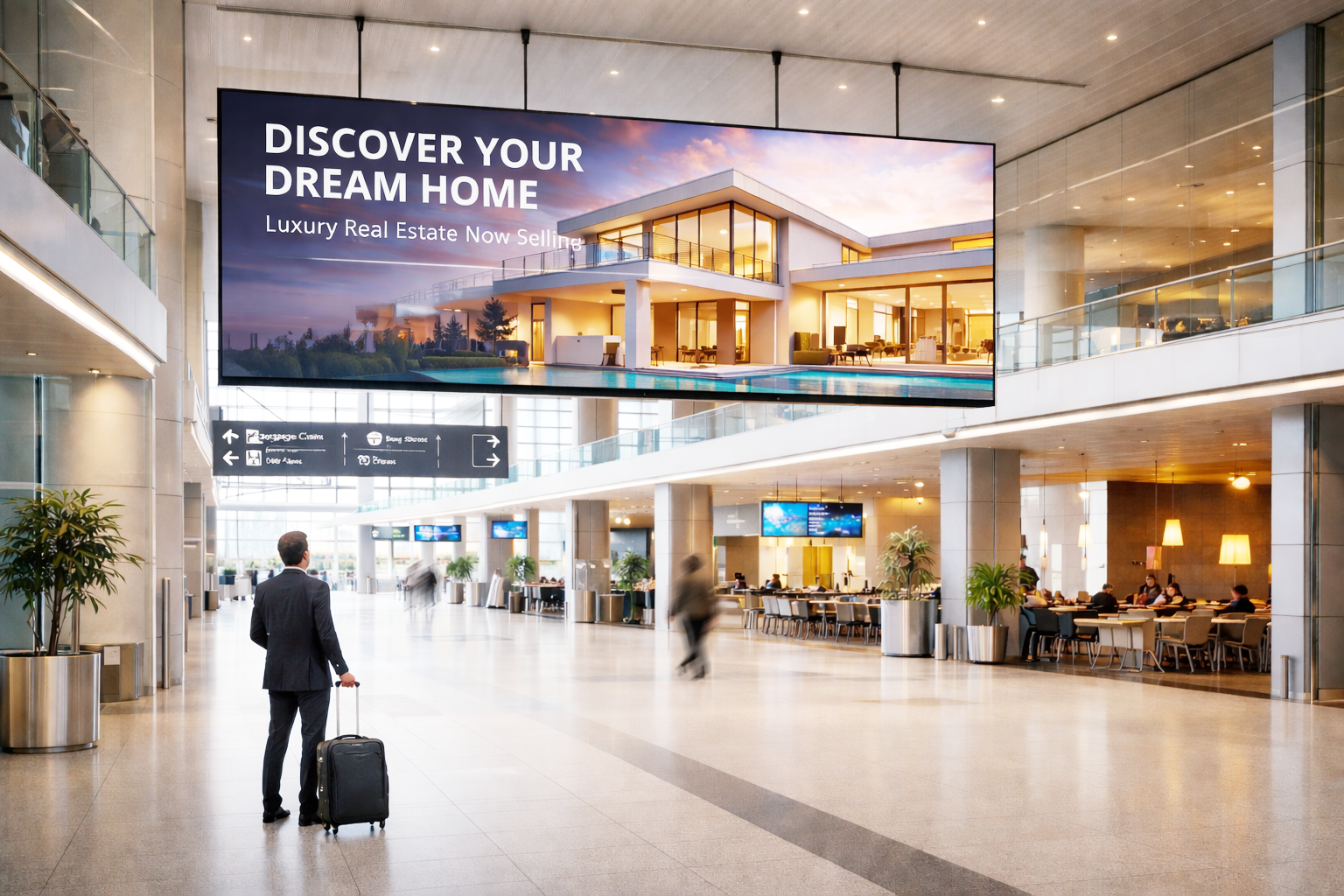
Airport Advertising is Complex to Get Right
We help you execute faster, with proven results and local insight most planners lack starting now.
Talk to an ExpertCatchment Area and Economic Drivers
Top 10 Cities within 150 km — Marketer Intelligence
- Ichalkaranji (25 km): One of India's largest powerloom textile centres, producing a business-owning audience of textile manufacturers and exporters whose commercial turnover and capital accumulation significantly exceed what the city's Tier 3 classification implies; banking, insurance, and real estate brands find a deeply underserved but highly receptive audience here.
- Gadhinglaj (50 km): A border trading town with strong cross-state commercial activity between Maharashtra and Karnataka; the trader audience here is entrepreneurial, cash-flow oriented, and active in FMCG and financial product purchasing — a reliable secondary catchment for banking and consumer goods advertising.
- Sangli (50 km): Maharashtra's grape and turmeric capital and a major agri-trade hub; the agricultural business owner here commands multi-crore seasonal revenue and has strong investment intent in real estate, gold, and financial products — one of the most commercially valuable agri-audience segments in peninsular India.
- Miraj (55 km): Nationally recognised for musical instrument craftsmanship and a significant healthcare hub with major hospitals serving the wider region; the professional medical and artisan-trade audience here has structured income, above-average education, and growing premium lifestyle purchasing behaviour.
- Nipani (70 km): A tobacco and agri-trade centre on the Karnataka border with a concentrated community of commodity traders whose seasonal cash surpluses create strong insurance, gold, and fixed deposit purchasing behaviour around harvest periods.
- Belgaum/Belagavi (105 km, Karnataka): A significant industrial, military cantonment, and educational city that feeds cross-border commercial traffic into Kolhapur's airport catchment; the audience includes Karnataka-side engineering business owners, army officials, and medical tourists using Kolhapur's healthcare facilities.
- Karad (80 km): A banking and cooperative finance stronghold in Satara district whose business community has deep historical roots in cooperative banking and gold trade; financial service brands find an engaged and product-literate audience in this catchment.
- Satara (110 km): A military cantonment and agricultural district headquarters with a structurally secure income base among army and government personnel and growing commercial real estate investment activity; relevant for banking, insurance, and automotive advertisers.
- Ratnagiri (130 km): The Konkan coast's commercial and administrative centre with a strong NRI Maharashtrian diaspora base — particularly Gulf-returned families who carry outbound investment capital and premium product purchasing power back into the catchment.
- Chikodi (70 km, Karnataka): A border district agri-trade centre on the Malaprabha corridor whose sugarcane and agro-processing business owners mirror the Kolhapur catchment's commercial profile — active accumulators with strong gold, banking, and property investment intent.
NRI and Diaspora Intelligence
Kolhapur's diaspora is concentrated in the Gulf — particularly UAE, Qatar, Kuwait, and Saudi Arabia — where blue-collar and skilled trade workers from Kolhapur and surrounding districts remit substantially to families in the catchment. The returning NRI audience at KLH carries Gulf savings into domestic real estate, gold, and FMCG spending, making arrival-side advertising at the airport commercially potent for brands targeting this remittance-fuelled consumption wave. Additionally, Kolhapur's growing engineering and pharmaceutical professional class increasingly sends children to Pune, Mumbai, and international destinations for higher education, creating an education-linked travel segment with strong financial product purchasing intent at KLH's departure environment.
Economic Importance
Kolhapur's catchment economy is structured around four commercially dominant pillars. Foundry and casting — with Kolhapur hosting one of Asia's most concentrated clusters of grey iron, ductile iron, and steel casting businesses supplying to Tata, Mahindra, Bosch, and international automotive OEMs — creates the most significant privately held manufacturing wealth in southern Maharashtra. Sugar cooperatives and agro-processing generate generational land and capital wealth among farming community business principals. The Ichalkaranji powerloom ecosystem produces textile entrepreneurs with substantial export revenues. And the Mahalaxmi pilgrimage economy sustains a hospitality, retail, and devotional services sector that enriches the broader catchment year-round. For advertisers, this means an audience where business ownership, not employment, is the dominant income structure — and where purchase decisions reflect commercial confidence rather than institutional salary constraints.
Business and Industrial Ecosystem
- Foundry and casting cluster: Kolhapur's foundry industry — with over 1,000 units producing automotive and industrial castings — generates a dense population of small-to-mid-size business owners with strong capital reinvestment behaviour, active insurance and banking needs, and growing premium lifestyle spending intent as export revenues grow.
- Sugar cooperative economy: Southern Maharashtra's sugarcane belt produces sugar barons and cooperative shareholders whose seasonal revenue cycles and land wealth create one of India's most capital-rich agri-business communities — a segment with strong gold, real estate, and financial product purchasing intent that is heavily underserved by premium advertising.
- Kolhapuri footwear and leather export: The globally recognised Kolhapuri chappal industry and its associated leather goods manufacturing sector produces an exporter and artisan-entrepreneur audience with growing brand aspiration and premium product receptivity.
- Ichalkaranji powerloom and textile: One of India's largest textile manufacturing centres, with export revenues and business owner density that rival much larger cities — a financially sophisticated audience with active investment, insurance, and premium FMCG purchasing behaviour.
Passenger Intent — Business Segment
The business traveller at KLH is almost exclusively a business owner rather than a corporate employee — a foundry proprietor travelling to an automotive OEM in Pune, a sugar cooperative chairman attending a Maharashtra government meeting in Mumbai, or a textile exporter visiting a trade fair in Delhi or Mumbai. These individuals carry autonomous commercial decision-making authority, above-average accumulated wealth, and strong intent to invest in financial products, real estate, and premium consumer categories. For B2B and wealth management advertisers, this is among the most commercially concentrated business-owner audiences accessible through any regional Maharashtra airport.
Strategic Insight
The structural dominance of business owners — rather than salaried professionals — at KLH creates an advertising environment that is qualitatively distinct from most regional Indian airports. At institutional-employer-dominated airports, advertising must work through the filter of salary-constrained purchase behaviour. At KLH, the audience operates with commercial autonomy, accumulated capital, and active deployment intent. Financial advisory, wealth management, premium real estate, and B2B brands that understand this distinction find KLH one of the most efficient access points to Maharashtra's privately held industrial wealth in any media channel. Masscom designs campaigns at KLH specifically to match this business-owner decision-making profile.
Tourism and Premium Travel Drivers
- Mahalaxmi Ambabai Temple: One of India's 18 Shakti Peethas and Kolhapur's primary identity — drawing millions of pilgrims annually from across Maharashtra, Karnataka, and Goa; the devotional family audience here carries strong gold, FMCG, and insurance spending behaviour and is at peak receptivity to aspirational brand messaging.
- Jyotiba Temple (20 km): A major pilgrimage site in its own right drawing devotees from across the Deccan region; the Jyotiba yatra season concentrates pilgrim movement in a defined window that rewards well-timed advertising investment.
- Panhala Fort and Heritage Tourism: A historically significant Maratha-era fort with strong cultural identity for the Kolhapuri audience and growing leisure tourism from Pune and Mumbai; the educated heritage tourist audience here has above-average income and premium travel spending behaviour.
- Dajipur Wildlife Sanctuary and Eco-Tourism: A growing eco-tourism destination adjacent to the Sahyadri range drawing affluent urban families from Pune and Mumbai — an emerging premium leisure tourism audience with strong hospitality and experience brand receptivity.
Passenger Intent — Tourism Segment
The pilgrimage tourist arriving at KLH — particularly the Mahalaxmi Ambabai devotee — travels in family groups, carries festival-linked discretionary spend already committed to offerings, gold, and devotional retail, and is in a heightened emotional state that makes them unusually receptive to brands communicating prosperity, protection, and family wellbeing. This is one of the most commercially valuable pilgrimage audience profiles in Maharashtra, comparable in per-capita spend intent to Shirdi and Tirupati visitors but with the additional layer of the Kolhapuri industrial catchment's above-average household income. Leisure tourists heading to Panhala and Dajipur represent a smaller but premium-spending secondary segment with strong hospitality and lifestyle brand receptivity.
Travel Patterns and Seasonality
Peak seasons:
- Navratri (March–April and September–October): The two Navratri periods drive the largest pilgrim surges to Mahalaxmi Ambabai Temple, directly generating the highest airport traffic peaks of the year; gold, FMCG, insurance, and hospitality advertisers achieve their maximum ROI in these windows.
- Diwali and post-monsoon (October–November): The combined Dussehra–Diwali–Navratri window in the autumn creates a sustained 6 to 8-week high-intensity period for retail, gold, and financial product advertising; business travel also peaks as year-end commercial activity accelerates.
- February–March (wedding and harvest season): Kolhapur's business community and farming families are at peak spending intensity during the sugarcane harvest settlement period and Maharashtra wedding season — strong windows for gold, jewellery, and financial services brands.
- Ashadhi and Kartiki Ekadashi (June–July and October–November): Warkari pilgrimage movement through the Kolhapur region generates additional festival-linked audience surges relevant for FMCG and devotional product advertising.
Event-Driven Movement
- Navratri at Mahalaxmi Temple (March–April and September–October): The nine-day festival generates the largest single pilgrimage surge at KLH's catchment — families travelling from across Maharashtra and Karnataka for darshan, offering, and associated retail spend; the highest-value advertising window of the annual calendar.
- Kolhapur Dussehra (October): One of Maharashtra's most celebrated Dussehra traditions, drawing significant inward tourism from across the state; the audience combines cultural festival-goers with Mahalaxmi pilgrims for a concentrated multi-week high-spend window.
- Jyotiba Yatra (April–May): The annual fair at Jyotiba Temple draws hundreds of thousands of devotees from across the Deccan; a secondary but commercially significant pilgrimage event that extends the pilgrimage advertising calendar beyond the Navratri peaks.
- Sugarcane Harvest and Settlement Season (December–February): The sugar cooperative payout season concentrates significant agri-business capital in the hands of Kolhapur's farming community — a key window for gold, banking, and real estate advertisers targeting seasonal cash surplus deployment.
- Foundation Day and Shahu Maharaj Jayanti (June): Kolhapur's strong civic identity around the progressive legacy of Chhatrapati Shahu Maharaj generates community cultural events and associated travel movement — a relevant window for brands with community development and educational positioning.

It’s Not Just Where You Advertise - It’s How Fast You Execute
We combine local insight with fast rollout to deliver results for you, now.
Talk to an ExpertAudience and Cultural Intelligence
Top 2 Languages
- Marathi: The unambiguous primary language of the Kolhapur catchment and the sole effective language for building commercial trust with the foundry business owner, sugar cooperative member, and Mahalaxmi Temple pilgrim — Marathi-language creative is not optional at KLH; it is the baseline for campaign credibility with the airport's dominant audience.
- Kannada: Commercially essential for reaching the cross-border Karnataka audience flowing into KLH from Belagavi, Chikodi, and the wider northern Karnataka catchment — particularly relevant for brands targeting the Belgaum-side industrial and agri-business community that uses Kolhapur Airport as their nearest operational gateway.
Major Traveller Nationalities
The passenger base at KLH is entirely domestic Indian, with the primary departure and origin communities drawn from Kolhapur, Sangli, Miraj, and Ichalkaranji in Maharashtra and Belagavi district in Karnataka. The dominant traveller identity is Maharashtrian — Maratha community business owners, Lingayat traders and agri-entrepreneurs from the Karnataka border corridor, and Jain community traders and diamond merchants from Kolhapur's established commercial class. Outbound travel concentrates on Mumbai, Pune, Delhi, and Bengaluru. No significant international traveller community uses KLH as a gateway, making the advertising environment entirely focused on domestic audience targeting with occasional NRI returnee intercepts on arrival.
Religion — Advertiser Intelligence
- Hinduism (approx. 83%): The overwhelming religious identity of the Kolhapur catchment, anchored in the Mahalaxmi Shakti Peetha and the broader Warkari and Shaiva pilgrimage traditions of Maharashtra; Navratri, Diwali, Ashadhi Ekadashi, Gudi Padwa, and Ram Navami are the primary festival spend windows for gold, FMCG, insurance, apparel, and hospitality brands — each creating a predictable, high-intensity commercial moment that advertisers can plan against precisely.
- Islam (approx. 10%): A commercially active Muslim community concentrated in Kolhapur city and Miraj, with strong engagement in trade, textiles, and small industry; Eid-ul-Fitr and Eid-ul-Adha are the key spend windows for apparel, FMCG, and banking brands; the Miraj Urs (annual Sufi festival) generates significant inward pilgrimage movement from across Maharashtra and Karnataka.
- Jainism (approx. 3%): A small but commercially disproportionate Jain community deeply embedded in Kolhapur's trading and diamond sub-economy; this segment holds above-average accumulated wealth, has strong gold and financial product purchasing behaviour, and is highly receptive to wealth management and investment product advertising around Paryushana and Diwali.
Behavioral Insight
The Kolhapur airport audience is defined by a commercial confidence that comes from ownership rather than employment — and a cultural identity rooted in Maratha pride, community solidarity, and a long tradition of social progressivism under Chhatrapati Shahu Maharaj's legacy. This audience responds to advertising that communicates substance, reliability, and community relevance rather than metropolitan aspiration or imported luxury signalling. Financial products that promise security for the family, real estate that validates generational success, gold that marks life milestones, and FMCG brands that are trusted by Maharashtra's mainstream commercial class all resonate deeply at KLH. Brands that understand the Kolhapuri audience's identity as producer and owner — not consumer-in-waiting — will consistently outperform brands that apply a generic aspirational creative approach.
Outbound Wealth and Investment Intelligence
The outbound passenger at Kolhapur Airport is one of the most commercially underappreciated wealth profiles in Indian regional aviation. Foundry business owners whose automotive export revenues fund multi-crore annual surpluses, sugar cooperative chairmen whose seasonal settlements concentrate land and cash wealth in a narrow window, textile exporter families from Ichalkaranji with growing international market exposure, and Sangli's grape-export agri-entrepreneurs represent a collectively substantial accumulation of private capital that is actively seeking deployment in real estate, financial products, education, and — increasingly — international diversification. This is an audience that major banks, real estate developers, and education platforms have not yet engaged efficiently through airport advertising at KLH — a gap that represents a direct opportunity for brands willing to act ahead of the market.
Outbound Real Estate Investment
The Kolhapur business-owning class deploys real estate capital primarily in Pune (for children's education relocation and investment property with strong capital appreciation expectations), Mumbai Metropolitan Region (for commercial property and investment apartments tied to business expansion), and Kolhapur city itself (where industrial and residential land values are rising on the back of improved Mumbai–Bengaluru highway connectivity). An emerging segment of Kolhapur's more commercially sophisticated business owners — particularly those with Gulf trade connections — is showing early interest in Dubai real estate for residency-linked investment and portfolio diversification. Domestic property developers with projects in Pune, Navi Mumbai, and Kolhapur city find a motivated and cash-capable buyer audience at KLH.
Outbound Education Investment
Kolhapur's aspirational business families channel education investment primarily into Pune's university corridor (Symbiosis, COEP, and Pune University's medical and engineering colleges), Mumbai's IIT and management institutions, and Bengaluru's engineering and technology campuses. A growing cohort of Kolhapur's wealthier industrial families is beginning to explore international education options in Canada (engineering and healthcare pathways), Australia (sciences and business), and the UK (MBA and professional postgraduate programmes). Education loan products, international student placement consultancies, and study-abroad brands find a financially capable and educationally aspirational audience at KLH that is currently underserved by advertising in this category.
Outbound Wealth Migration and Residency
Second-residency interest among Kolhapur's commercial class is nascent but growing, driven primarily by the desire to secure international education access for children and portfolio diversification beyond domestic assets. UAE Golden Visa and long-term residency programmes are the most actively discussed options in Kolhapur's business community, particularly among foundry exporters and textile manufacturers with existing Gulf trade relationships. Canada's Express Entry and provincial nominee programmes attract the technical professional and younger business generation. Immigration advisory brands and international wealth management platforms with residency product offerings will find an audience at KLH that is at early-stage research intent — and therefore particularly receptive to well-timed informational advertising.
Strategic Implication for Advertisers
Kolhapur Airport is one of Maharashtra's most underpenetrated advertising channels relative to the investable wealth in its catchment. International real estate developers, education consultancies, insurance and wealth management platforms, and immigration advisors targeting Maharashtra's industrial interior business class should treat KLH as a priority buy for reaching an audience that is commercially active, capital-capable, and almost entirely uncontested by sophisticated advertising from competing brands. Masscom Global is positioned to activate at KLH with the audience intelligence, inventory access, and execution capability to ensure that first-movers capture the Kolhapur business-owner audience before this channel's commercial value becomes widely recognised.
Airport Infrastructure and Premium Indicators
Terminals
Kolhapur Airport operates a single domestic passenger terminal managed by the Airports Authority of India at Ujlaiwadi, approximately 10 km from Kolhapur city centre. The terminal handles departures and arrivals across a compact, single-level layout that is operationally efficient and logistically accessible for the city's business and pilgrim traveller base. Proposals for terminal upgrades and connectivity expansion are part of the Airports Authority of India's regional airport development agenda — improvements that will accommodate growing commercial demand from the Kolhapur–Ichalkaranji–Sangli industrial corridor.
Premium Indicators
- Business-owner passenger base: The structural dominance of foundry, sugar, textile, and agri-business owners in KLH's passenger profile means that the airport's commercial audience quality is high relative to its volume — premium advertising placements benefit from association with a self-selected high-net-worth cohort.
- Pilgrimage prestige: Mahalaxmi Ambabai's status as one of 18 Shakti Peethas gives Kolhapur Airport a sacred identity that heritage brands, gold jewellers, and community-trust-oriented advertisers can associate with authentically and beneficially.
- Cross-border catchment: The Karnataka border proximity that brings Belagavi-side commercial and agricultural traffic into KLH's catchment extends the airport's effective audience reach well beyond Kolhapur district, enriching the commercial diversity of the traveller base.
Forward-Looking Signal
Kolhapur's infrastructure trajectory is being shaped by two developments with direct implications for KLH's commercial value. The Samruddhi Mahamarg and improved Pune–Kolhapur–Bengaluru highway corridor are reducing travel times and increasing commercial interconnection between Kolhapur and Maharashtra's major metro economies — accelerating business travel demand through KLH. The government's UDAN regional connectivity scheme has identified Kolhapur as a priority node for enhanced air connectivity, with new route additions planned that will deepen the airport's catchment reach and increase passenger volumes materially. Masscom advises clients to secure advertising positions at KLH now, at the pre-expansion rate structure, ahead of the audience volume and competitive advertiser activity that improved connectivity will bring.
Airline and Route Intelligence
Top Airlines
- IndiGo
- Air India
- SpiceJet (seasonal operations)
Key International Routes
Data not available — Kolhapur Airport currently operates exclusively on domestic routes. International route development is contingent on terminal capacity enhancement under the AAI regional development programme.
Domestic Connectivity
- Mumbai (BOM) — primary commercial and pilgrimage corridor connecting Kolhapur to Maharashtra's financial capital and its largest pool of inbound leisure and devotional tourists
- Delhi (DEL) — government, business, and institutional travel route serving Kolhapur's foundry exporters and agro-processing sector with national capital connections
- Bengaluru (BLR) — cross-state commercial corridor connecting Kolhapur's industrial base with Karnataka's technology and automotive manufacturing ecosystem
- Hyderabad (HYD) — pharmaceutical and technology sector connections linking Kolhapur's professional class with Telangana's commercial infrastructure
Wealth Corridor Signal
The Mumbai–Kolhapur route is the primary commercial axis at KLH — concentrating foundry supply chain movement, sugar cooperative administrative travel, textile export business, and inbound pilgrimage tourism from Mumbai's Maharashtrian community into a single high-frequency corridor. The Bengaluru route reveals the cross-state industrial interconnection of Kolhapur's manufacturing sector with Karnataka's automotive OEM supply chains — a route that carries genuine B2B commercial intent. For advertisers, the route network at KLH is a map of business purpose rather than leisure aspiration, making it an exceptionally efficient environment for financial services, B2B, and wealth management advertising.
Media Environment at the Airport
- Kolhapur Airport's single-terminal, compact configuration creates a total-contact advertising environment — every passenger moving through the terminal, without exception, passes through the same visual field, ensuring complete audience exposure to correctly positioned advertising formats with no leakage.
- The absence of large-format retail, F&B, and entertainment distractions in the terminal means that dwell time at KLH is spent in direct engagement with the airport's physical environment — creating above-average brand contact intensity compared to larger airports where attention is fragmented across retail and entertainment options.
- The business-owner and pilgrimage-audience composition of KLH's passenger base means that the advertising environment carries an implicit prestige signal — brands placed at this airport are seen by the Kolhapur catchment's most commercially significant decision-makers in a setting that commands attention.
- Masscom Global's inventory access at Kolhapur Airport covers the terminal's primary high-contact positions — check-in hall, departures zone, security hold area, and arrivals — with campaign planning, execution, and monitoring managed through Masscom's India-wide airport OOH infrastructure.
Strategic Advertising Fit
Best Fit
- Financial services and banking: Foundry business owners, sugar cooperative principals, textile exporters, and agri-entrepreneurs represent a commercially active, capital-accumulating audience with strong demand for SME banking, investment products, wealth management, and business insurance — a segment that most financial services brands reach inefficiently through broader Maharashtra media buys.
- Gold and jewellery: The Mahalaxmi pilgrimage economy and the Navratri festival calendar create one of the highest per-passenger gold purchase intent environments in Maharashtra's regional airport network — gold and jewellery brands achieve exceptional ROI in the pilgrimage peak windows at KLH.
- Insurance and protection products: The business-owner and farming community audiences at KLH share a strong orientation toward family protection and asset security products — crop insurance, business interruption insurance, life and health products all resonate with a catchment whose wealth is tied to seasonal and production cycles.
- Agricultural and cooperative banking: No other audience in the Indian airport network is as directly relevant for agri-business banking, Kisan credit products, cooperative finance, and rural insurance brands — Kolhapur's sugar and grape farming community represents a structurally underserved but highly valuable banking audience.
- Real estate (domestic): Pune and Mumbai property developers targeting Maharashtra's industrial interior find an active and cash-capable buyer base at KLH — business owners with reinvestment intent and families with education-linked relocation needs are both present in strong proportions.
- Automotive (commercial and mid-range): Foundry and agri-business owners with fleet and commercial vehicle purchasing needs represent a structurally strong automotive audience at KLH — tractor, commercial vehicle, and mid-range SUV brands find motivated, high-intent buyers.
- FMCG and consumer staples: The volume and festival intensity of KLH's pilgrimage and family travel audience creates strong brand recall conditions for FMCG brands targeting Maharashtra's aspirational mainstream — particularly in the Navratri and Diwali windows.
- Education and study abroad: Growing aspirational investment in higher education among Kolhapur's business families — both domestically and internationally — makes education loan products, international university recruiters, and study-abroad consultancies commercially relevant at KLH.
Brand Alignment at a Glance
| Category | Fit |
|---|---|
| Financial services and banking | Exceptional |
| Gold and jewellery | Exceptional |
| Agricultural and cooperative banking | Exceptional |
| Insurance and protection products | Strong |
| Real estate (domestic) | Strong |
| Automotive (commercial and mid-range) | Strong |
| FMCG and consumer staples | Strong |
| Education and study abroad | Moderate |
| Ultra-premium international luxury | Poor fit |
Who Should Not Advertise Here
- Ultra-premium international luxury goods: The cosmopolitan, globally mobile luxury consumer is not a structural presence at KLH; ultra-premium watch, fashion, and prestige lifestyle brands will find audience alignment insufficient relative to spend, with better returns available at Mumbai and Pune airports.
- International leisure tourism (non-pilgrimage): Long-haul leisure travel packages targeting European, Southeast Asian, or American destinations generate weak conversion from a catchment audience whose travel behaviour is overwhelmingly purpose-driven — pilgrimage, business, and family — rather than exploratory.
- Youth urban entertainment brands: Products targeting metropolitan trend-conscious youth consumers find negligible audience density at KLH; the dominant traveller profile is family-led, commercially established, and culturally rooted in a way that is misaligned with urban entertainment brand positioning.
Event and Seasonality Analysis
- Event Strength: High
- Seasonality Strength: High
- Traffic Pattern: Dual-Peak (Navratri-driven spring and autumn surges with a Diwali and harvest season commercial overlay)
Strategic Implication
Kolhapur Airport's commercial calendar is among the most predictable and plannable in Maharashtra's regional airport network — the Navratri double-peak structure creates two clearly defined high-ROI windows annually, and the Diwali and harvest settlement season adds a sustained commercial layer in October and November. Masscom structures KLH campaigns to front-load inventory booking 6 to 8 weeks ahead of Navratri and Diwali, securing premium positions before seasonal demand compresses availability. For agricultural banking and insurance brands, the December to February harvest settlement window is an additional priority period when the catchment's farming community is at maximum cash deployment intent. Advertisers who align with this rhythm — rather than buying on standard media calendar cycles — achieve disproportionate returns at Kolhapur Airport.

Poor Placement and Delays Affect Airport Campaigns
We help you move faster, access better inventory, and get it right now.
Talk to an ExpertFinal Strategic Verdict
Kolhapur Airport is Maharashtra's most commercially underpriced gateway to privately held industrial and agri-business wealth — an airport where the audience is defined not by the salary they receive but by the businesses they own, the capital they accumulate, and the families they are building generational security for. The foundry proprietor, the sugar cooperative chairman, the Ichalkaranji textile exporter, and the Sangli grape agri-entrepreneur passing through KLH represent a collectively substantial pool of investable wealth that most national advertising strategies reach only incidentally, through broad Maharashtra media buys that dilute targeting efficiency. Add the Mahalaxmi Ambabai pilgrimage economy — one of Maharashtra's most commercially potent devotional circuits — and Kolhapur Airport becomes a dual-mandate advertising channel that delivers both business-owner commercial intent and festival-linked family spending behaviour in a single, zero-clutter environment. For financial services, gold and jewellery, agri-banking, real estate, and insurance advertisers with genuine interest in Maharashtra's industrial interior, KLH is not a secondary buy — it is a primary access point to an audience that is ready to spend, structurally underserved, and available today at a cost structure that will not last once the airport's commercial value is more widely recognised. Masscom Global is the partner that brings the access, the intelligence, and the execution to capture it before that moment arrives.
About Masscom Global
Masscom Global is a premium international airport advertising and media buying agency operating across 140 countries. With deep expertise in airport OOH, premium publications, and high-net-worth audience targeting, Masscom helps brands reach the world's most valuable travellers at the moments that matter most. For advertising packages, media rates, and campaign planning at Kolhapur Airport and airports across the globe, contact Masscom Global today.
Frequently Asked Questions
How much does airport advertising cost at Kolhapur Airport? Advertising costs at Kolhapur Airport vary based on format type, placement position within the terminal, campaign duration, and seasonal demand — Navratri, Diwali, and the harvest settlement season carry premium demand windows. No fixed public rate card applies, and inventory is allocated based on campaign objectives, category fit, and timing priorities. Contact Masscom Global for current rates, available formats, and campaign packages tailored to your brand's commercial objectives and target audience at KLH.
Who are the passengers at Kolhapur Airport? The passenger base at Kolhapur Airport (KLH) is defined by three commercially distinct but complementary segments: foundry, sugar, and textile business owners who form the backbone of southern Maharashtra's industrial wealth, pilgrims visiting Mahalaxmi Ambabai Temple and the broader Kolhapur sacred circuit, and a growing professional class — doctors, engineers, and educators — connected to Kolhapur's significant healthcare and educational institutions. The audience is overwhelmingly Maharashtrian Marathi-speaking with a significant Karnataka-border Kannada-speaking segment, and is characterised by above-average household wealth anchored in business ownership rather than institutional employment.
Is Kolhapur Airport good for luxury brand advertising? Kolhapur Airport is well-suited for premium and aspirational brand advertising targeting Maharashtra's industrial and agri-business wealth class rather than cosmopolitan international luxury consumers. Gold jewellery, financial services, insurance, real estate, and automotive brands in the premium-to-aspirational range find exceptional audience alignment at KLH. Ultra-luxury brands requiring internationally mobile, cosmopolitan-lifestyle consumers will find stronger audience fit at Mumbai or Pune airports. The Kolhapur audience's commercial sophistication and accumulated capital make it highly receptive to premium products — but the cultural framing of that premium must be family aspiration and community success rather than global lifestyle signalling.
What is the best airport in southern Maharashtra to reach agri-business HNWIs? Kolhapur Airport (KLH) is the singular facility in southern Maharashtra that provides direct advertising access to the sugar cooperative, foundry, and agri-trade wealth corridor of Kolhapur, Sangli, and Ichalkaranji. Pune Airport reaches a larger passenger volume but dilutes agri-business audience concentration significantly with IT sector and corporate travellers. For brands specifically targeting Maharashtra's privately held agri-processing, foundry, and cooperative finance community, KLH offers an unmatched concentration of the right audience in the right commercial context.
What is the best time to advertise at Kolhapur Airport? The two highest-impact annual windows are the Chaitra Navratri period (March to April) and the Shardiya Navratri and Diwali combined window (October to November) — both drive the strongest convergence of pilgrimage and business travel at KLH with maximum spending intent. The December to February harvest settlement season is the critical period for agri-banking, gold, and financial product advertisers targeting the sugarcane and grape farming community's seasonal cash surplus. Masscom Global structures KLH campaigns around these peaks, booking inventory 6 to 8 weeks in advance to secure premium positions before seasonal demand tightens availability.
Can international real estate developers advertise at Kolhapur Airport? Yes — Kolhapur Airport is a viable channel for international real estate developers targeting Maharashtra's industrial and agri-business wealth class, particularly those marketing UAE and Dubai properties linked to Golden Visa and long-term residency programmes. The foundry exporter and textile manufacturer communities at KLH have active Gulf trade relationships that create natural Dubai investment interest. Domestic real estate developers with Pune and Mumbai projects find an even stronger buyer audience — Kolhapur's business families are actively acquiring investment and education-relocation properties in both cities. Masscom Global structures KLH placements to intercept this audience at the highest point of investment consideration.
Which brands should not advertise at Kolhapur Airport? Brands without structural alignment to the Kolhapur catchment's commercial and cultural identity will find advertising spend at KLH inefficient. Ultra-premium international luxury goods brands targeting cosmopolitan globally mobile consumers find insufficient audience density and behavioural alignment at KLH. International leisure tourism packages for long-haul destinations generate weak conversion from an audience whose travel is overwhelmingly purpose-driven. Digital-native urban youth lifestyle brands with metropolitan orientation also find limited audience resonance at an airport where the dominant traveller is family-centred, business-owning, and culturally rooted in Maharashtra's Maratha and trading community identity.
How does Masscom Global help brands advertise at Kolhapur Airport? Masscom Global provides complete end-to-end airport advertising capability at Kolhapur Airport — from audience intelligence and campaign strategy through inventory access, format recommendation, creative placement, and performance reporting. Our deep understanding of KLH's seasonal traffic patterns, business-owner audience profile, pilgrimage calendar, and terminal layout allows us to design campaigns that intercept the right traveller at the highest-value commercial moment. We manage all complexities of booking, production, compliance, and monitoring so that your brand launches faster and performs more precisely than self-managed or generalist media placements.