

Airport at a Glance
| Field | Detail |
|---|---|
| Airport | Istanbul Airport |
| IATA Code | IST |
| Country | Türkiye |
| City | Istanbul |
| Annual Passengers | 80.4 million (2024), up 5.3% on 2023; projected 85M+ in 2025 |
| Primary Audience | Transit HNWIs, Business Executives, Gulf and Middle Eastern Investors, African and Central Asian Professionals, International Leisure Travellers |
| Peak Advertising Season | April to October and December |
| Audience Tier | Tier 1 |
| Best Fit Categories | Luxury Goods, International Real Estate, Financial Services, Citizenship by Investment, Premium Automotive |
Istanbul Airport is not merely a major international hub. It is the definitive global crossroads — the airport where the highest concentration of globally diverse, commercially active, and financially mobile travellers converge under one roof. In 2024, IST handled 80.4 million passengers across 517,000 aircraft movements, serving 122 countries and 330-plus destinations, and earned the distinction of being ranked the world's most connected airport by ACI Europe for 2024 and 2025, surpassing Frankfurt, Paris CDG, and Amsterdam. As the second-busiest airport in the Middle East by total passenger volume — behind only Dubai International — and the hub for Turkish Airlines, the world's largest international airline by countries served, IST commands a passenger base that includes every profile of commercially valuable traveller that exists in global aviation simultaneously. For advertisers seeking a single placement that can intercept audiences from six continents in one terminal, no airport in the world replicates what Istanbul delivers.
What makes IST commercially unique is not just its volume — it is the extraordinary diversity of its paying audience. Within any given hour at IST, the terminal is simultaneously home to Gulf investors travelling to Europe, African business professionals connecting to North America, Central Asian executives transiting to the Gulf, South Asian families relocating to the United Kingdom, European leisure travellers departing for Istanbul's luxury hospitality scene, and Turkish HNWIs outbound to their international investment properties. This audience diversity, multiplied across 80 million annual passengers and concentrated within a single 1.4 million square metre terminal, creates a commercial advertising environment with no structural parallel in global aviation.
Advertising Value Snapshot
- Passenger scale: 80.4 million passengers in 2024, up 5.3% on 2023; projected to exceed 85 million in 2025; 63 million were international passengers representing 78% of total volume
- Traveller type: Transit HNWIs on long-haul connecting routes, Turkish and regional business executives, Gulf and Middle Eastern investors, African trade professionals, Central Asian commercial travellers, international premium leisure tourists
- Airport classification: Tier 1 — the world's number-one ranked hub for global connectivity; the second-busiest airport in the Middle East by total passenger volume; seventh-busiest in the world
- Commercial positioning: The only airport that simultaneously provides direct advertising access to audiences from the Middle East, Africa, Central Asia, Europe, the Americas, and Asia-Pacific within a single terminal environment
- Wealth corridor signal: IST sits at the intersection of the Turkey-Gulf real estate and investment corridor, the Africa-Europe business flow, the Central Asia-West trade route, and the Turkish domestic wealth accumulation and outbound investment movement
- Advertising opportunity: Masscom Global activates the IST media environment with placement precision calibrated to the terminal's multi-directional audience flows, ensuring brand campaigns reach the right nationality, corridor, and wealth segment within a terminal handling the most geographically diverse passenger base of any airport in the world
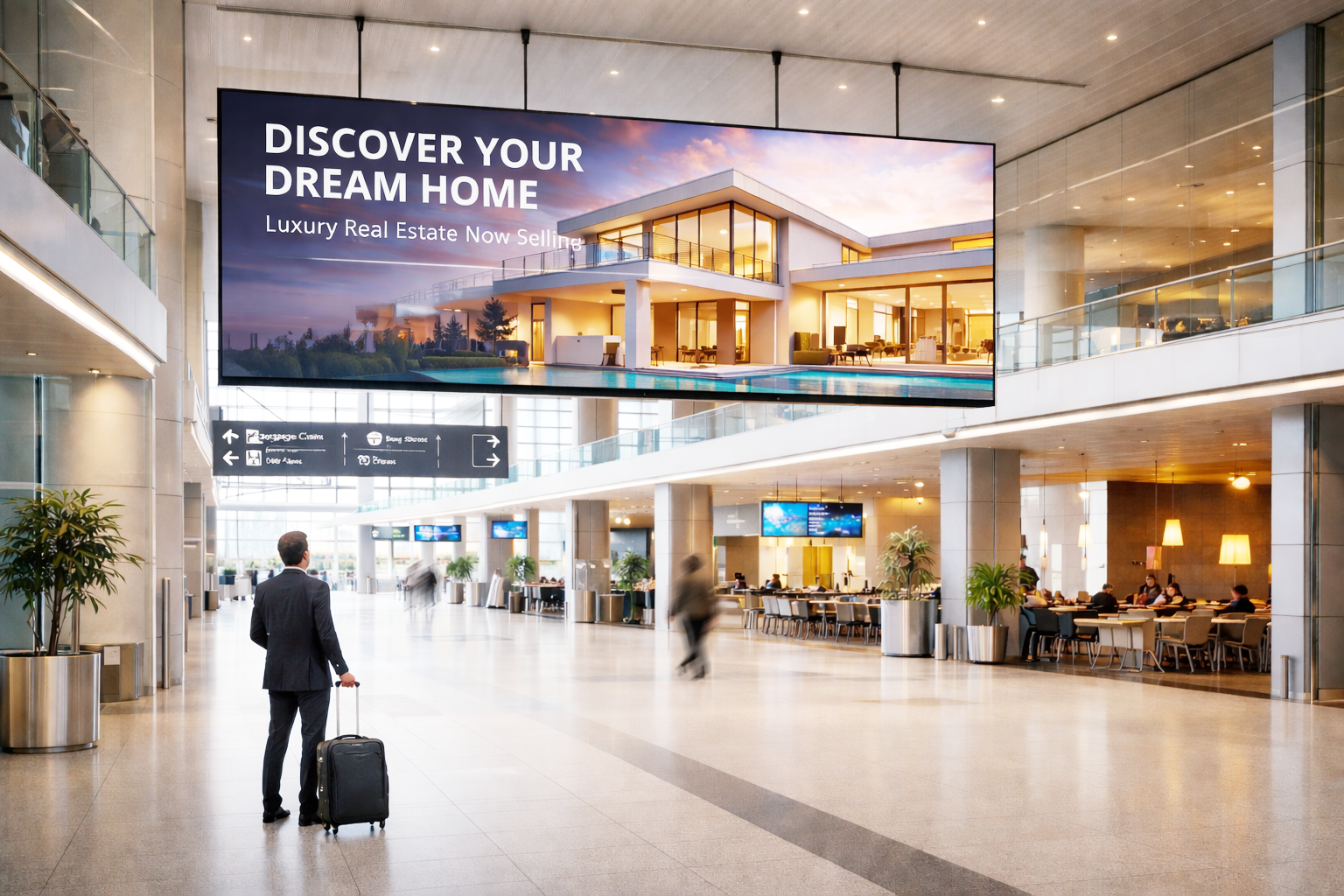
Airport Advertising is Complex to Get Right
We help you execute faster, with proven results and local insight most planners lack starting now.
Talk to an ExpertCatchment Area and Economic Drivers
Top 10 Cities within 150 km — Marketer Intelligence:
- Istanbul: Turkey's economic capital and one of the world's great commercial megacities. Home to 37,000-plus millionaires, 27 Forbes-listed billionaires — 23 of whom are based in Istanbul — and the headquarters of Turkey's largest conglomerates including Koç Holding, Sabancı Holding, and Ülker Group. Istanbul's HNWI class is actively deploying capital into international real estate, luxury lifestyle products, and emerging market investment vehicles, making the city's outbound travellers among the most commercially relevant in the region.
- Bursa: Turkey's fourth-largest city and one of its most significant industrial and automotive manufacturing centres. Home to major automotive plants and a dense professional business community, Bursa contributes upper-income industrial executives and entrepreneurs who use IST as their international gateway for European and Gulf business routes.
- Kocaeli (Izmit): A critical petrochemical and heavy industry hub on the eastern shore of the Marmara Sea, generating industrial executives and professionals from companies including Ford, Toyota, and TUPRAS who travel internationally through IST for trade, investment, and corporate meetings.
- Tekirdağ: An agricultural, wine-producing, and growing industrial region west of Istanbul. Tekirdağ's entrepreneurial and agricultural business community contributes professional travellers on intra-European and regional routes, with a growing real estate and hospitality investment profile.
- Edirne: Turkey's westernmost city and a major gateway between Turkey and Europe, generating traders, professionals, and business travellers who benefit directly from IST's connectivity to Balkan and Western European markets.
- Çorlu: A significant industrial and textile manufacturing centre in Thrace, home to one of Turkey's most active export-oriented business communities. Çorlu's export professionals travel regularly through IST to European buyers, suppliers, and trade shows.
- Gebze: An industrial powerhouse and science park corridor east of Istanbul, home to Turkey's leading technology and pharmaceutical research clusters and producing internationally mobile R&D professionals and technology executives.
- Adapazarı (Sakarya): A rapidly industrialising city with significant automotive and electronics manufacturing, generating a growing cohort of internationally mobile industrial professionals whose travel through IST connects them to German, Japanese, and Korean supply chain partners.
- Yalova: A premium residential and thermal tourism destination across the Gulf of Izmit from Istanbul, popular with upper-income Istanbul families as a weekend retreat. Yalova's affluent residential population contributes leisure and lifestyle-oriented travellers with strong premium consumer purchasing profiles.
- Çanakkale: A strategic Aegean coastal city with a growing tourism, logistics, and olive oil trade economy. Çanakkale professionals and tourism operators connect to international markets through IST, contributing Mediterranean trade and hospitality industry travellers to the airport's commercial audience.
NRI and Diaspora Intelligence: Istanbul Airport serves as the primary hub for one of the world's largest diaspora networks — the Turkish diaspora, estimated at over 6 million people in Germany alone, and significant communities across the Netherlands, France, Belgium, Austria, Switzerland, the United Kingdom, and the United States. These communities collectively generate billions of euros in annual remittances to Turkey and represent some of the most frequent and commercially valuable air travellers in the region, making regular return trips to family, investment properties, and business interests in Turkey. The Turkish-German, Turkish-Dutch, and Turkish-French traveller segments are particularly commercially significant — they are established second-generation professionals with European salaries, Turkish emotional and investment ties, and purchasing behaviour that spans both markets simultaneously. Beyond the Turkish diaspora, IST also serves as a critical hub for African diaspora communities travelling between Europe and Sub-Saharan Africa, and for Central Asian professional communities transiting between their home countries and international business destinations.
Economic Importance: Istanbul generates approximately 30% of Turkey's total GDP and is home to the Istanbul Stock Exchange (Borsa Istanbul), the headquarters of Turkey's three largest banks (Ziraat Bankası, İş Bankası, and Garanti BBVA), and the Turkish offices of virtually every major international financial institution. The economy that produces IST's domestic outbound audience is defined by conglomerate-driven manufacturing wealth, a rapidly growing technology and startup ecosystem, a significant real estate investment sector, and a financial services industry that has attracted increasing international attention as Turkey positions itself as a regional economic bridge between East and West. Turkey's HNWI population grew 145% between 2000 and 2015 according to New World Wealth, and the trajectory has continued, with Istanbul ranking 39th among the world's wealthiest cities in 2024 by resident millionaire population.
Business and Industrial Ecosystem
- Conglomerate-led manufacturing and trade: Koç Holding — Turkey's largest industrial conglomerate with interests in automotive, energy, finance, and retail — and Sabancı Holding generate a permanent flow of senior executives traveling to European partner companies, Gulf investment destinations, and North American financial markets through IST
- Financial services and banking: Istanbul hosts the regional headquarters of HSBC, Citibank, Deutsche Bank, and BNP Paribas alongside Turkey's own large banking sector, generating a well-travelled financial professional class that uses IST extensively for intra-European, Middle Eastern, and Asian banking and investment engagements
- Technology and digital economy: Istanbul's startup ecosystem has produced unicorns including Trendyol, Getir, and Hepsiburada, and the city's technology venture community travels intensively between Istanbul, London, Berlin, Dubai, and New York — creating a young, high-earning, internationally mobile HNWI cohort that is disproportionately represented in IST's business cabin
- Construction, real estate, and infrastructure: Turkish construction companies including ENKA, Limak, Kalyon, and Cengiz Group have built major infrastructure projects across the Middle East, Central Asia, and Africa, generating substantial executive travel to project destinations across dozens of countries — most of it transiting through IST
- Textile and fast fashion: Turkey is the world's third-largest textile exporter, and Istanbul's garment industry executives travel extensively to European buyers, Dubai trade shows, and Asian sourcing markets, producing a high-frequency business traveller profile aligned with fashion, luxury, and lifestyle advertising
Passenger Intent — Business Segment: IST's business travellers span an unusually wide commercial spectrum. Turkish domestic business executives are moving capital, closing deals, and managing international operations from a regional economic platform that increasingly bridges Western Europe and the Gulf. Transit business professionals from Central Asia and the Middle East are using IST as their most efficient routing through to North America or Europe. African executives are transiting IST for European business meetings, leveraging Turkish Airlines' unparalleled African connectivity. The categories that intercept this multi-directional business audience most effectively are international financial services, luxury real estate across multiple markets, premium corporate hospitality, private banking, and premium technology products. IST's uniqueness is that a single placement can reach all of these segments simultaneously.
Strategic Insight: The commercial opportunity at IST for B2B advertisers is unlike any other airport in the world because it offers simultaneous access to business audiences from every major emerging and developing market alongside the European and North American premium audience. A private bank advertising at IST does not merely reach Turkish HNWIs — it simultaneously reaches Gulf family office representatives, Nigerian oil sector executives, Kazakhstani energy company directors, and Indian tech founders, all within the same terminal on the same day. No other airport in the Middle East or globally replicates this multi-geography HNWI concentration in a single environment.
Tourism and Premium Travel Drivers
- Istanbul's luxury hospitality and cultural offer: Istanbul is one of the world's great cities for premium tourism — the Hagia Sophia, Topkapı Palace, the Grand Bazaar, the Bosphorus, and a world-class luxury hotel ecosystem including Four Seasons (two properties), Çırağan Palace Kempinski, Mandarin Oriental, and Raffles all generate high-spending international visitors who transit IST
- Turkish Riviera and Aegean Coast: Bodrum, Antalya, Fethiye, and the Turquoise Coast attract premium international visitors — particularly from the Gulf, Russia, the UK, and Germany — who transit IST on their way to Turkey's most sought-after coastal destinations, generating a concentrated luxury leisure audience through the terminal
- Medical tourism: Turkey is one of the world's top five medical tourism destinations, attracting over 1 million international medical tourists annually for procedures ranging from hair transplantation and aesthetic surgery to advanced orthopaedics and cardiology. This audience — concentrated from the Gulf, Central Asia, North Africa, and Eastern Europe — transits exclusively through IST and carries substantial healthcare and lifestyle spending capacity
- Cultural and heritage tourism: Istanbul's UNESCO World Heritage status and its position as a 2023 UNESCO Creative City attracts culturally affluent international tourists from Europe, North America, and Asia who are among the most receptive audiences for premium brand advertising in the terminal
Passenger Intent — Tourism Segment: The inbound tourist arriving through IST has chosen Istanbul as a deliberate premium cultural and lifestyle destination. Turkey's combination of world-class hospitality at prices below Western European comparables creates a particularly high-value premium leisure traveller — one who has committed to luxury accommodation and fine dining budgets while still perceiving the destination as offering exceptional value. This psychological positioning makes IST's inbound tourism audience highly receptive to aspirational brand messaging, international real estate propositions, and premium financial product advertising at the airport.
Travel Patterns and Seasonality
Peak seasons:
- April to October: IST's primary peak covers the Mediterranean tourism season, Turkey's business calendar peak, and the sustained outbound leisure travel surge from the Gulf to European summer destinations transiting IST. Summer months — June to August — deliver the highest absolute passenger volumes, with IST regularly processing over 7 million passengers per month during peak summer.
- Ramadan and both Eid periods: Among the most commercially significant windows in IST's annual calendar. Eid al-Fitr and Eid al-Adha generate two compressed but exceptionally high-density travel surges drawing Turkish, Arab, South Asian, and African Muslim travellers simultaneously. Gifting, luxury retail, and hospitality spending peak sharply during Eid, and IST's concentration of Muslim travellers from across 122 countries makes these windows among the most commercially powerful in global airport advertising for brands in jewellery, fashion, perfume, and premium consumer categories.
- December: The Christmas and New Year holiday window generates substantial European leisure and diaspora return travel through IST, with December consistently producing above-average per-passenger retail spending.
Traffic volume data: IST handled 80.4 million passengers in 2024, with 63 million being international. The airport broke its own daily passenger record in July 2025 with 272,000 passengers in a single day. Monthly peaks regularly exceed 7.5 million passengers in high summer. Turkish Airlines grew its passenger base to 85.2 million in 2024 and expanded capacity by 8.2%, adding routes to Santiago de Chile, Sydney, Melbourne, and Auckland.
Event-Driven Movement:
- Eid al-Fitr (variable — March to May): The single most commercially concentrated travel event in IST's calendar for brands targeting Muslim consumers. Eid generates the year's largest single-week traffic surge, with simultaneous movements of Turkish, Gulf Arab, South Asian, and African Muslim travellers producing exceptional gifting, luxury retail, and hospitality spending within the terminal.
- Eid al-Adha (variable — June to August): The second major Eid generates an overlapping summer peak with sustained elevated traffic across two weeks, reinforcing the commercial window for luxury consumer, jewellery, and premium hospitality advertisers.
- Istanbul Design Biennial (October, biennial): One of the world's most influential design events, attracting international architects, designers, developers, and creative industry professionals through IST from across Europe, the Americas, and Asia — a high-income, culturally engaged audience profile.
- Istanbul Finance Summit and regional business conferences (October to November): A growing cluster of international financial and trade conferences that concentrate private equity, family office, and institutional investment professionals at IST during the autumn window, generating a concentrated B2B financial audience receptive to private banking, fintech, and investment product advertising.
- FIFA World Cup, Olympics, and major sporting events: When international sporting events occur, IST's position as the world's most connected hub means it serves as a primary transit airport for sports tourists from Africa, Central Asia, and the Middle East who route through Istanbul to reach event destinations, generating commercially active leisure audiences with elevated hospitality and lifestyle spending.
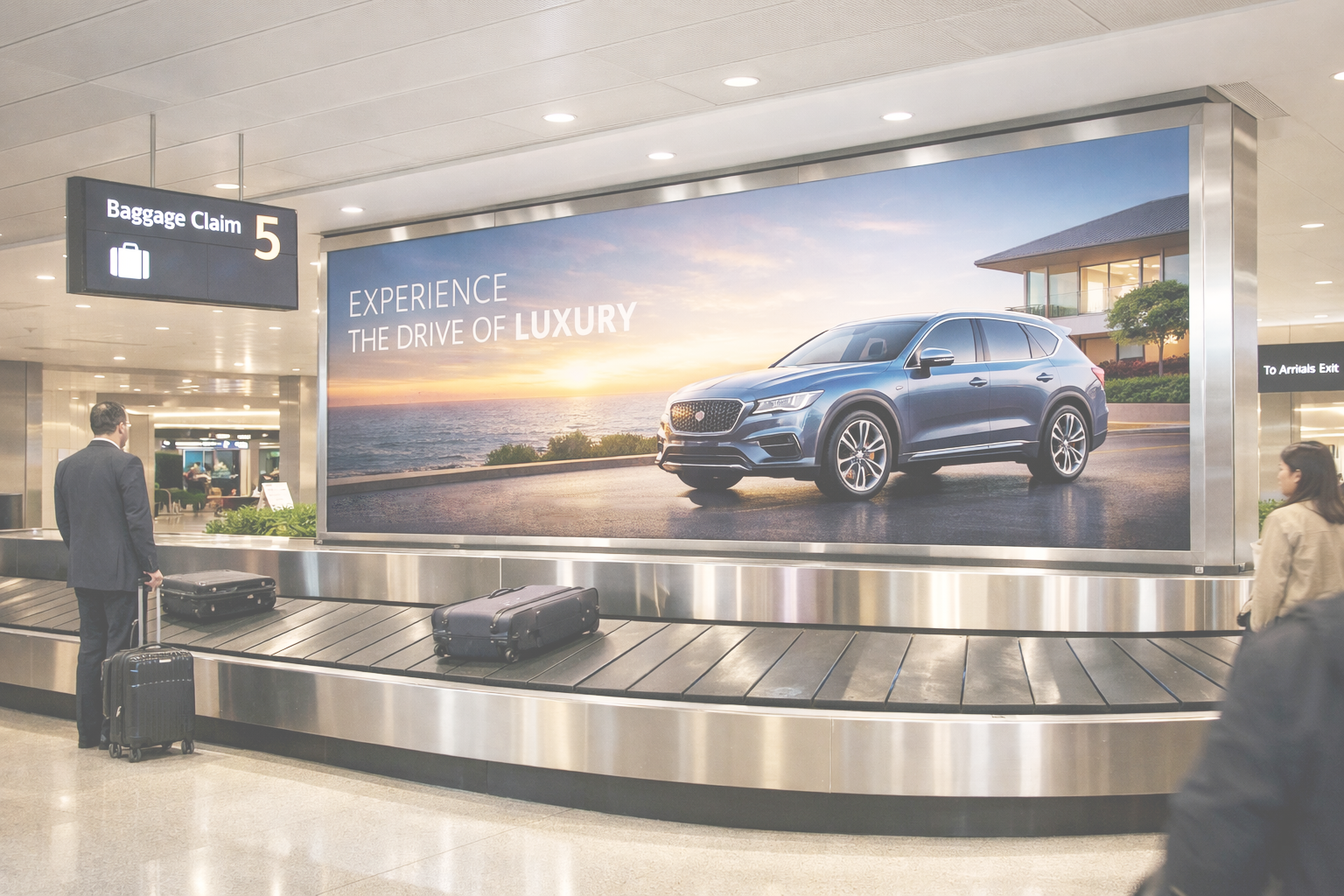
It’s Not Just Where You Advertise - It’s How Fast You Execute
We combine local insight with fast rollout to deliver results for you, now.
Talk to an ExpertAudience and Cultural Intelligence
Top 2 Languages:
- Turkish: The primary language of IST's largest single traveller cohort — Turkish nationals and the global Turkish diaspora. Turkish-language campaigns reach the domestic wealthy and the 6-plus million Turkish-German, Turkish-Dutch, and Turkish-French diaspora travellers who pass through IST on return journeys, making Turkish a commercial language that unlocks both domestic and diaspora purchasing intent simultaneously.
- English: The universal transit language at IST and the effective language of brand communication across the airport's entire international audience spectrum. English campaigns at IST reach Gulf investors, African executives, Central Asian professionals, South Asian diaspora travellers, European leisure visitors, and North American business travellers — collectively the majority of IST's 63 million annual international passengers — without audience loss across nationalities.
Major Traveller Nationalities: Turkish nationals constitute the largest single national group at IST, generating outbound travel to Germany, the United Kingdom, the Netherlands, Saudi Arabia, the United Arab Emirates, and the United States as primary corridors. German travellers of both German national and Turkish-German background represent the largest single inbound European nationality group, reflecting Turkey's deep demographic connection to Germany. Saudi Arabians, Emiratis, and Qataris represent the primary Gulf inbound and transit groups, routing through IST toward European destinations. Nigerians, Ethiopians, and Kenyans represent the most significant African transit nationalities, using IST as the most efficient Middle Eastern routing for Sub-Saharan Africa connections to Europe and North America. Kazakhstani, Uzbekistani, and Azerbaijani travellers are among the largest Central Asian groups, using IST extensively for European and North American connections.
Religion — Advertiser Intelligence:
- Islam (approximately 98% of Turkish nationals; and dominant among transit audiences from the Gulf, Central Asia, and Africa): The single most commercially significant religious community in IST's audience. Ramadan and both Eid periods create the most commercially dense windows in IST's calendar. During Eid, gifting, luxury retail, perfumery, jewellery, fashion, and premium hospitality spending spike simultaneously across Turkish, Gulf, Central Asian, and African traveller segments. Halal-certified food, Islamic finance products, and modest fashion brands find at IST one of the most concentrated Muslim consumer audiences in global aviation. Brands that structure campaigns around the Islamic calendar consistently outperform those that apply generic European seasonal patterns.
- Christianity (approximately 2% of Turkish nationals; significant among European, Ethiopian, Kenyan, and Western transit audiences): A smaller but commercially relevant segment of IST's traveller base, concentrated in the inbound European leisure audience and the African transit communities from predominantly Christian Sub-Saharan countries. Christmas and Easter generate identifiable commercial windows within the European segment transiting IST.
Behavioral Insight: The audience at IST does not behave as a single commercial unit — it behaves as a mosaic of high-value market segments whose common denominators are mobility, purchasing capacity, and openness to brand discovery during dwell time. Turkish HNWIs make decisions shaped by family-business culture, aspiration for international standards, and strong real estate investment instincts. Gulf travellers at IST are in a spend-oriented mindset, routing through a hub they associate with quality, Turkish hospitality, and connectivity to their destination markets. African professionals at IST are using the airport as a gateway to opportunity and carry commercial receptivity to financial products, education services, and premium lifestyle brands that are often unavailable or underrepresented in their home markets. Central Asian travellers bring commodity and energy sector wealth and a growing appetite for international luxury that IST is perfectly positioned to intercept. Campaigns that are designed for audience specificity — whether by language, cultural trigger, or departure corridor — dramatically outperform generic executions at IST.
Outbound Wealth and Investment Intelligence
The outbound passenger at Istanbul Airport is commercially distinct from any single-nation airport hub audience because IST generates multiple independent wealth flows simultaneously — Turkish domestic HNWI outbound investment, Gulf transit investor traffic, African professional outbound spending, and Central Asian wealth migration all converge within the same terminal. For international advertisers, IST is not one audience. It is four or five commercially significant audiences occupying the same terminal simultaneously, each with its own investment geography, spending trigger, and advertiser relevance.
Outbound Real Estate Investment: Turkish HNWIs are among the most active international real estate buyers in Europe, the Middle East, and North America. Istanbul's wealthy professional and entrepreneurial class has aggressively diversified into international property, driven by domestic inflationary pressures, the Turkish lira's long-term depreciation, and a cultural preference for hard asset investment. Primary destinations include the United Arab Emirates — particularly Dubai — where Turkish buyers rank among the most active non-Gulf purchasing nationalities for prime residential and commercial property. The United Kingdom, Germany, the United States, and Portugal have been consistent Turkish HNWI real estate markets. Concurrently, IST's Gulf transit audience — Saudi, Emirati, Kuwaiti, and Qatari investors — actively purchases prime residential property in London, Paris, Geneva, New York, and other Western capitals on routes that transit through IST. International real estate developers across multiple markets can, uniquely at IST, reach both Turkish and Gulf HNWI buyers within the same terminal campaign.
Turkish Citizenship by Investment: IST is simultaneously the world's leading departure airport for outbound citizenship-by-investment seekers and the world's leading arrival airport for inbound citizenship-by-investment applicants. Turkey's own citizenship-by-investment programme — offering full Turkish citizenship within approximately six months for a qualifying real estate investment of USD 400,000 — has attracted thousands of investors annually from the Gulf, Central Asia, Russia, Iran, and Africa. These inbound citizenship seekers transit through IST upon arrival and represent a commercially active HNWI audience with significant investable assets and active international real estate purchasing intent. Simultaneously, Turkish HNWIs and Middle Eastern transit passengers actively pursue Greek, Portuguese, Maltese, and Caribbean citizenship-by-investment programmes for EU access and international travel document diversification. Citizenship and investment migration programme advisors, real estate funds, and residency consultancies find at IST a concentration of both inbound and outbound citizenship investment demand that is unmatched at any other airport in the Middle East or globally.
Outbound Education Investment: Turkish upper-income families have among the highest international education investment rates in the Middle East and Mediterranean region, with strong preference for the United Kingdom — particularly Russell Group universities — the United States, and increasingly Canada and Australia. The Turkish-German diaspora additionally generates substantial university-level education mobility between Germany and Turkish family bases, making educational services advertising highly relevant across multiple IST passenger segments. IST also intercepts Gulf families routing through Istanbul on their way to place children in UK boarding schools and universities — a significant secondary education audience that uses IST's Turkish Airlines network to reach the UK more efficiently than direct Gulf routes for many secondary cities.
Strategic Implication for Advertisers: IST's unique value for international advertisers is that a single well-placed campaign simultaneously reaches multiple independent HNWI audiences from different geographies, each pursuing their own international investment agenda. A real estate developer marketing London apartments at IST reaches Turkish buyers, Gulf buyers, Central Asian buyers, and African diaspora buyers in the same placement. A wealth management platform advertising at IST reaches not just Turkish HNWIs but the Gulf institutional and family office professionals transiting through on their way to London and Geneva. No other airport in the Middle East or globally delivers this multi-geography HNWI access within a single media buy, and Masscom Global structures campaigns at IST to capture the full commercial breadth of this audience, activating the right messaging for each corridor through precision placement.
Airport Infrastructure and Premium Indicators
Terminals:
- Single integrated megaplex terminal: IST operates as a single roof structure of 1.44 million square metres — the world's third-largest airport terminal building — with clearly delineated domestic, Schengen international, and non-Schengen international zones, each supported by its own commercial retail and food and beverage offer. The single-roof design concentrates all 80 million annual passengers through a unified commercial environment, ensuring that any advertising placement achieves exposure across the full breadth of the airport's multi-nationality audience daily.
- Three operational runways (since April 2025): IST became the first airport in the Middle East region to operate three runways simultaneously in April 2025, boosting hourly movements from 120 to 148 — a capacity milestone that directly supports the projected growth to 85-plus million passengers in 2025 and beyond.
- Phase two and three expansion: IST's ongoing construction programme adds a second terminal building capable of handling 60 million additional annual passengers, additional runways, and satellite terminals — targeting an eventual 200 million annual capacity by the late 2030s. This infrastructure trajectory makes IST the most commercially valuable long-term airport advertising investment in the Middle East corridor.
Premium Indicators:
- The Turkish Airlines Business Lounge — one of the most acclaimed airport lounges globally, consistently rated among the world's top five by independent travel publications — spans over 25,000 square metres and accommodates more than 1,000 passengers simultaneously. It features private sleeping suites with individual thermostats and private TVs, a golf simulator, a flight simulator offering virtual flights over Istanbul, fine dining from an open kitchen with live cooking stations, dedicated conference rooms, and a fine art gallery showcasing Turkish artists. The lounge is open 24 hours and serves Turkish Airlines business class passengers and Star Alliance business class travellers on connections across 330-plus destinations.
- The Turkish Airlines Miles and Smiles Lounge — effectively the world's most generous Star Alliance Gold lounge — accommodates over 750 passengers simultaneously with dining, cinema facilities, gaming areas, a dedicated children's indoor playground, shower suites, and relaxation zones. The scale of this lounge relative to competitor hub offerings signals the extraordinary volume of elite-status frequent flyers transiting IST daily.
- The iGA Lounge provides a premium pay-access option for all travellers regardless of airline or cabin class, with complimentary massage service on selected days, a buffet bar, nap zones, and shower facilities — further evidence of a terminal designed to convert dwell time into commercial engagement across every traveller segment.
- Istanbul Airport has been named the World's Best Airport by Condé Nast Traveler readers for 2024 and 2025, and the World's Best Airport by Travel + Leisure in 2025. It holds a Skytrax 5-star rating and was awarded best airport for digital transformation by ACI Europe. These credentials reinforce the premium brand association available to any advertiser present in its commercial environment.
- The YOTEL Istanbul Airport Hotel, available in both landside and airside configurations, provides premium transit accommodation within the terminal — a facility that indicates the volume of long-haul transit passengers with multi-hour layovers who are captured within the commercial environment for extended dwell periods.
Forward-Looking Signal: IST's growth trajectory has no ceiling visible in the near-term. Turkish Airlines plans to nearly double its fleet to 800-plus aircraft within a decade, adding capacity and routes systematically to markets in Southeast Asia, South America, and North America. The three-runway operation launched in April 2025 has already boosted hourly movements by 23%, and Phase 3 construction of the second terminal is underway with a target completion year of 2028. ACI Europe's 2025 rankings confirmed IST as the world's number-one hub for global connectivity — a position it is structurally reinforcing rather than defending. New routes to Auckland, Minneapolis, and Phnom Penh launched in 2025, and Hainan Airlines' return adds Chinese premium leisure traffic to an already comprehensive Asian network. Brands that invest at IST now secure positioning within the Middle East's fastest-growing major international airport before the second terminal's opening intensifies competition for premium inventory. Masscom Global advises clients to plan multi-year commitments at IST at current rates to benefit from the sustained passenger growth that Turkish Airlines' and iGA's own projections confirm as inevitable.
Airline and Route Intelligence
Top Airlines: Turkish Airlines, Pegasus Airlines, SunExpress, Lufthansa, British Airways, Air France, KLM, Qatar Airways, Emirates, Etihad Airways, Saudi Arabian Airlines, flydubai, Flyadeal, Egyptian Air, Ethiopian Airlines, Kenya Airways, Air Arabia, Ryanair, easyJet, Wizz Air, Singapore Airlines, ANA, Delta Air Lines, United Airlines, Air Canada
Key International Routes:
- Istanbul to London Heathrow and Gatwick (multiple daily — the primary Western European wealth corridor from IST for Turkish diaspora and British business travel)
- Istanbul to Frankfurt, Amsterdam, and Paris CDG (multiple daily — the primary European financial hub connections and Turkish diaspora routes)
- Istanbul to New York JFK and Chicago O'Hare (multiple daily — key North American business and diaspora corridors)
- Istanbul to Dubai, Riyadh, Jeddah, Abu Dhabi, and Doha (multiple daily each — the primary Gulf HNWI and business corridors where IST captures bidirectional investment-class traffic within the Middle East)
- Istanbul to Lagos, Nairobi, Accra, Addis Ababa, and Johannesburg (multiple weekly — IST's unparalleled African connectivity that makes it the premier Middle Eastern transit hub for Sub-Saharan business travel to Europe and North America)
- Istanbul to Almaty, Tashkent, Baku, and Astana (multiple daily — the Central Asian wealth and trade corridor)
- Istanbul to Beijing, Shanghai, Tokyo Haneda, and Singapore (multiple daily — the Asian premium business and investment corridor)
- Istanbul to Sydney and Melbourne (launched 2024 — Turkish Airlines' first direct Australia services)
- Istanbul to Santiago de Chile (launched 2024 — Turkish Airlines' first South American direct service beyond Brazil)
Domestic Connectivity: Turkish Airlines and Pegasus connect IST to over 40 domestic Turkish cities, making IST the hub through which the entirety of Turkey's regional business and professional class accesses international routes — including Ankara, Izmir, Antalya, Adana, Gaziantep, Trabzon, and the Kurdish southeast. This domestic feeding function adds millions of regionally sourced Turkish business and leisure travellers to IST's commercial audience daily.
Wealth Corridor Signal: IST's route network is the most geographically diverse of any single airport in the Middle East or globally. The London, Frankfurt, Paris, and Amsterdam routes carry the Turkish diaspora wealth transfer flow alongside European HNWI transit. The Dubai, Riyadh, and Abu Dhabi routes carry bidirectional Gulf-Turkey investment capital within the Middle East corridor. The Lagos, Nairobi, Addis Ababa, and Johannesburg routes carry the African executive class whose international mobility routes through Istanbul as the most efficient Middle Eastern connection point. The Almaty, Tashkent, and Baku routes carry Central Asian commodity and energy wealth en route to European and North American financial centres. IST's route map is a diagram of global wealth in motion, and its advertising environment gives brands access to every one of those flows within a single placement.
Media Environment at the Airport
- IST's 1.44 million square metre single-terminal structure is the most commercially intensive airport advertising environment in the Middle East and globally by raw audience volume, processing over 80 million passengers annually through a unified commercial zone that includes the world's largest airport duty-free retail area at 53,000 square metres. The scale of commercial floor space relative to passenger volume creates extended dwell time with consistent brand exposure across every passenger category and nationality group simultaneously.
- Dwell time at IST is structurally elevated by the airport's design philosophy, which deliberately places retail and food and beverage outlets at every major passenger flow junction. Average post-security international dwell time exceeds 75 minutes for connecting passengers and 60 minutes for departing originating passengers, providing sustained advertising exposure windows that dwarf most comparable hubs.
- The premium environment at IST has been reinforced by its consistent recognition as the world's best airport across multiple independent ranking systems. Condé Nast Traveler readers voted it the World's Best Airport for 2024 and 2025. Travel + Leisure awarded it the same distinction in 2025. Skytrax awarded it a 5-star rating. These credentials create a brand association halo that benefits any advertiser present in the terminal — being present at the world's best-rated airport is itself a brand statement.
- Masscom Global's access to IST's media environment spans the full commercial infrastructure of the terminal — from check-in zone and pre-security brand presence through to the international departure concourses, duty-free retail adjacencies, transit corridors, gate-zone advertising, and premium lounge-adjacent placement. Campaign architecture at IST is built around corridor-specific audience segments, enabling brands to target Gulf-bound, Europe-bound, Africa-bound, or Asia-bound travellers with distinct creative executions within the same terminal environment.
Strategic Advertising Fit
Best Fit:
- Turkish citizenship by investment and international residency programmes: IST is the most important convergence point in the Middle East for both outbound Turkish HNWI citizenship seekers and inbound foreign investors acquiring Turkish citizenship. No other airport in the Middle East concentrates this bidirectional investment migration audience in comparable density. Citizenship advisors, real estate funds, and investment migration legal services find at IST the most commercially qualified prospective client concentration in the region.
- International real estate across multiple markets: IST's multi-nationality HNWI audience simultaneously represents active buyers for properties in Dubai, London, Paris, Lisbon, Athens, Istanbul, and New York. A single real estate developer with international inventory can, through one well-structured IST campaign, reach Turkish, Gulf, Central Asian, and African HNWI buyers simultaneously — an efficiency unavailable at any other Middle Eastern airport.
- Private banking and wealth management: The density of HNWI travellers from multiple geographies transiting IST — Gulf family offices, Turkish business conglomerate owners, Central Asian energy sector executives, and African trade professionals — makes IST one of the few airports in the Middle East where private banking advertising can achieve statistically significant reach across multiple independent HNWI nationality pools within a single placement.
- Luxury goods and premium fashion: IST's audience includes Gulf travellers whose per-trip luxury retail spending is consistently among the highest of any traveller segment globally, Turkish upper-income buyers with strong luxury brand affinity, and European visitors whose cultural orientation toward Italian, French, and Scandinavian luxury makes them receptive to high-end brand messaging.
- Premium automotive: Luxury automotive brands find at IST a combination of Turkish HNWI buyers, Gulf visitors already primed for premium automotive purchasing, and transit professionals from Central Asia and Africa whose exposure to premium automotive advertising at IST often predates their first access to official dealership networks in their home markets.
- Medical tourism and healthcare services: IST is the primary Middle Eastern hub for international medical tourism to Turkey, with over 1 million medical tourists transiting annually. Healthcare providers, premium medical centres, hair transplant specialists, aesthetic surgery clinics, and dental tourism operators find at IST one of the world's most concentrated populations of prospective medical tourism clients from the Gulf, Central Asia, North Africa, and Eastern Europe.
- Islamic finance products and Halal-certified financial services: The density of Muslim travellers at IST — across Turkish, Gulf, Central Asian, and African nationality groups — makes it one of the most productive environments in the Middle East for Shariah-compliant financial product advertising. The airport's multi-directional Islamic consumer base is effectively unreachable at this concentration through any other single media placement in the region.
- International education: Universities, boarding schools, and education consultancies targeting Turkish and Gulf upper-income families find at IST a concentrated catchment of families actively pursuing UK, US, Canadian, and Australian educational pathways for their children, with disposable income to support multi-year international education commitments.
Brand Alignment at a Glance:
| Category | Fit |
|---|---|
| Citizenship by investment and residency programmes | Exceptional |
| International real estate (multi-market) | Exceptional |
| Private banking and wealth management | Exceptional |
| Luxury goods and premium fashion | Exceptional |
| Medical tourism and healthcare services | Exceptional |
| Islamic finance and Halal financial services | Strong |
| Premium automotive | Strong |
| International education | Strong |
| Domestic-only consumer services | Poor fit |
| Budget FMCG brands | Poor fit |
Who Should Not Advertise Here:
- Services without international relevance or delivery capability: IST's audience is internationally mobile and geographically diverse. Products or platforms restricted to a single domestic market will fail to resonate with an audience whose commercial mindset is defined by cross-border movement and multi-jurisdictional decision-making.
- Budget and discount consumer brands: The scale of IST's audience should not obscure the commercial standard of its premium zone. Budget brand positioning is diluted in a terminal environment that carries the world's best airport designation and is home to one of the world's most celebrated premium airline lounges.
Event and Seasonality Analysis
- Event Strength: High
- Seasonality Strength: High
- Traffic Pattern: Dual-Peak (April to October primary summer and Islamic holiday peak; December secondary holiday and New Year peak) with additional concentrated windows during Ramadan and both Eid periods
Strategic Implication: IST's commercial calendar is unique among major Middle Eastern airports in that its peak windows are driven by both secular seasonality and Islamic calendar events simultaneously. Advertisers targeting Turkish and Muslim-majority transit audiences must programme campaigns around both the summer leisure peak and the Eid periods, which shift annually within the Islamic calendar. Brands in luxury consumer goods, jewellery, perfumery, real estate, and financial services should structure their heaviest IST investment to coincide with Eid windows, when gifting and premium purchase intent peaks simultaneously across Turkish, Gulf, Central Asian, and African audience segments. Masscom Global builds IST campaign calendars that integrate both the seasonal and Islamic calendar triggers, ensuring that inventory is secured in advance of the demand compression that both peak types create, and that creative executions are calibrated to the specific cultural moment they are addressing.

Poor Placement and Delays Affect Airport Campaigns
We help you move faster, access better inventory, and get it right now.
Talk to an ExpertFinal Strategic Verdict
Istanbul Airport is the most commercially complex and globally diverse airport advertising environment in the Middle East, and for brands operating across multiple international markets simultaneously, it is the most commercially efficient single media placement in the region. No other Middle Eastern airport concentrates audiences from 122 countries, routes to 330-plus destinations, and simultaneously-active HNWI travellers from the Gulf, Turkey, Central Asia, Africa, Europe, and the Americas within a single terminal. IST's designation as the world's most connected airport by ACI Europe, its five-star Skytrax rating, its recognition as the World's Best Airport by Condé Nast Traveler readers for two consecutive years, and its record-setting trajectory toward 100 million annual passengers create a commercial environment that is simultaneously the most ambitious and the most globally reaching airport advertising opportunity in the Middle East. Brands in citizenship investment, international real estate, private banking, luxury goods, medical tourism, premium automotive, and Islamic financial services have at IST a placement precision and audience concentration that no comparable Middle Eastern media buy replicates. Masscom Global provides the strategic intelligence, inventory access, and multi-nationality campaign architecture to activate IST's extraordinary audience with the precision, timing, and cultural sensitivity that this uniquely global Middle Eastern airport demands.
About Masscom Global
Masscom Global is a premium international airport advertising and media buying agency operating across 140 countries. With deep expertise in airport OOH, premium publications, and high-net-worth audience targeting, Masscom helps brands reach the world's most valuable travellers at the moments that matter most. For advertising packages, media rates, and campaign planning at Istanbul Airport and airports across the globe, contact Masscom Global today.
Frequently Asked Questions
How much does airport advertising cost at Istanbul Airport?
Advertising costs at Istanbul Airport vary significantly based on format, terminal zone placement — domestic, Schengen international, or non-Schengen international — campaign duration, creative format specifications, and seasonal demand. The non-Schengen international zone and transit corridor placements targeting long-haul and intercontinental audiences command the highest rates, reflecting the commercial value of the Gulf, African, and Central Asian HNWI traveller segments concentrated there. Masscom Global provides current rate cards, format recommendations, and negotiated placements calibrated to campaign objectives and target audience corridors. Contact Masscom for a tailored proposal.
Who are the passengers at Istanbul Airport?
IST's passenger base is the most geographically diverse of any single airport in the world. Turkish nationals and Turkish diaspora travellers from Germany, the Netherlands, and France constitute the largest nationality groups. Gulf Arab travellers from Saudi Arabia, the UAE, Qatar, and Kuwait represent the primary transit HNWI cohort. African professionals from Nigeria, Ethiopia, Kenya, Ghana, and South Africa use IST as their most efficient routing to Europe and North America. Central Asian business and trade professionals from Kazakhstan, Uzbekistan, and Azerbaijan transit IST extensively. European and North American leisure visitors arrive inbound for Istanbul tourism and Turkish Riviera holidays. The common characteristic across all groups is mobility — every passenger at IST is commercially active and internationally oriented.
Is Istanbul Airport good for luxury brand advertising?
IST is one of the world's premier luxury brand advertising environments. Its combination of Gulf transit passengers — among the highest per-trip luxury retail spenders in global aviation — Turkish HNWIs with strong premium brand affinity, and European and North American visitors in leisure spending mode creates a multi-layered luxury audience that is consistently commercially active. The airport's five-star Skytrax rating, its world's best airport recognition, and its association with Turkish Airlines' internationally acclaimed business class product collectively reinforce premium brand positioning for any advertiser present within its commercial environment.
What is the best airport in the Middle East and Europe to reach multi-nationality HNWI audiences?
Istanbul Airport is unique in that it is the only airport in the world that can be simultaneously described as a leading European hub, a leading Middle Eastern transit hub, and the primary gateway between Central Asia, Africa, and the Western world. No single airport in Europe or the Middle East alone replicates IST's combination of passenger volume, geographic diversity, and multi-directional HNWI concentration. For brands requiring simultaneous access to Turkish, Gulf, African, Central Asian, and European HNWI audiences within a single media buy, IST has no viable alternative.
What is the best time to advertise at Istanbul Airport?
The April to October summer window is the primary campaign period by absolute volume. Eid al-Fitr and Eid al-Adha — which shift annually within the Islamic calendar — are the highest-priority windows for luxury consumer, gifting, jewellery, hospitality, and financial services brands targeting Muslim travellers. December provides a secondary premium window for European-oriented leisure and gifting campaigns. October to November is the most valuable B2B window, coinciding with Istanbul's financial conference season and the post-summer corporate travel peak.
Can international real estate developers advertise at Istanbul Airport?
IST is one of the most commercially productive real estate advertising channels in the world, offering unique access to multiple independent HNWI buyer nationalities simultaneously. Turkish buyers actively seeking UAE, UK, EU, and US properties travel through IST on every investment trip. Gulf buyers transiting IST en route to London, Paris, and New York are active prime property purchasers in those markets. Turkish citizenship-by-investment applicants from the Gulf, Central Asia, and Africa arrive through IST. No other airport concentrates real estate investment intent across this breadth of nationalities within a single advertising environment.
Which brands should not advertise at Istanbul Airport?
Services restricted to a single domestic market, budget consumer brands without international scale, and advertising propositions that do not translate across culturally diverse audiences will find limited traction at IST. The airport's commercial value is rooted in the breadth and diversity of its audience, and campaigns designed for single-nationality or single-geography targeting will not capture the full commercial potential of the world's most connected hub. Brands at IST should be international in scope, credible across multiple cultural contexts, and capable of delivering on the premium expectations that the world's best-rated airport creates.
How does Masscom Global help brands advertise at Istanbul Airport?
Masscom Global manages the complete campaign lifecycle at IST — from strategic audience intelligence and corridor-specific placement planning through to inventory negotiation, multi-language creative compliance, execution across domestic, Schengen, and non-Schengen zones, and campaign performance monitoring against nationality-specific audience targets. With deep knowledge of IST's multi-directional passenger flows, Islamic calendar campaign windows, and the specific commercial characteristics of Turkish, Gulf, African, and Central Asian HNWI audiences, Masscom delivers the cultural precision and strategic intelligence that generic media buyers cannot replicate at the world's most complex international airport. To begin planning your campaign at Istanbul Airport, contact Masscom Global today.