




Airport at a Glance
| Field | Detail |
|---|---|
| Airport | Tulsa International Airport |
| IATA Code | TUL |
| Country | United States of America |
| City | Tulsa, Oklahoma |
| Annual Passengers | Approximately 2.5 million (2023) |
| Primary Audience | Oil and gas executive and energy sector leadership, aerospace MRO and defence technology professionals, Native American tribal enterprise leadership, premium cultural and outdoor leisure travellers |
| Peak Advertising Season | March to June, September to November |
| Audience Tier | Tier 3 |
| Best Fit Categories | Financial services, energy technology, premium automotive, aerospace and defence services, luxury real estate, cultural tourism and arts |
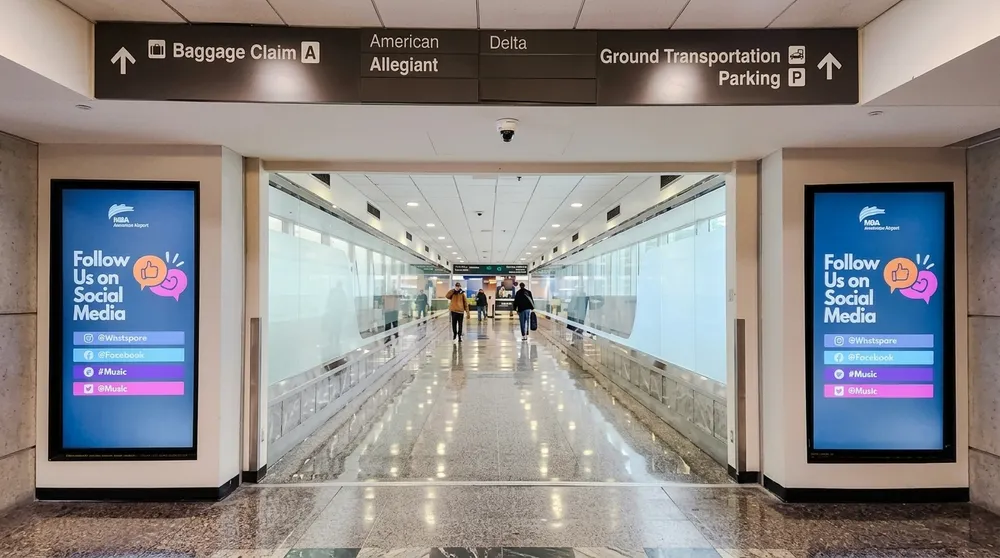
Tulsa International Airport is the most commercially distinctive energy and aerospace gateway in the American Mid-Continent — a compact regional facility whose passenger profile is defined not by volume but by the extraordinary concentration of oil and gas executive wealth, aerospace engineering leadership, and tribal enterprise institutional authority that routes through it as the primary commercial aviation gateway for the self-proclaimed Oil Capital of the World. TUL serves the Tulsa metropolitan area — a city whose identity was built on petroleum, whose economy has diversified into aerospace, healthcare, and technology without abandoning the structural wealth foundations that oil and gas royalties, land mineral rights, and energy company equity compensation have laid across several generations of Oklahoma professional families. The airport's 2.5 million annual passengers are not a cross-section of American travellers — they are disproportionately concentrated in the energy sector executive class, the MRO and defence aerospace engineering leadership, and the tribal enterprise professional community whose institutional authority and capital deployment behaviour place them among the most commercially underserved audiences of any Tier 3 airport in the South Central United States.
The commercial case for TUL requires understanding Oklahoma's structural wealth paradox — a state that ranks modestly in median household income nationally but whose energy sector royalty income, mineral rights valuations, agricultural land equity, and tribal gaming enterprise revenues collectively produce a per-capita wealth concentration in the Tulsa professional community that income statistics systematically understate. A Tulsa oil and gas executive whose family has held mineral rights in the Midcontinent petroleum basin for three generations carries asset wealth that no salary survey captures. A Cherokee Nation enterprise executive managing a billion-dollar tribal economy travels with institutional authority that no demographic analysis quantifies. And an American Airlines Technical Operations professional maintaining the world's largest commercial aviation MRO facility travels with engineering seniority and employer funding that no catchment income map reflects. Together these three audience segments — energy wealth, aerospace engineering, and tribal enterprise — make TUL one of the most commercially overlooked precision channels in the Mid-Continent airport landscape, and Masscom Global is positioned to activate it.


Advertising Value Snapshot
- Passenger scale: Approximately 2.5 million annual passengers (2023), with American Airlines and Southwest Airlines operating the dominant share of seat capacity and consistent growth driven by Tulsa's aerospace sector expansion, tribal enterprise economy development, and Oklahoma's growing recognition as a premium cultural and outdoor tourism destination
- Traveller type: Oil and gas executives and energy sector professionals, aerospace MRO and airline maintenance leadership, Cherokee Nation and Five Civilized Tribes enterprise executives, premium cultural arts and outdoor leisure travellers
- Airport classification: Tier 3 — a compact Mid-Continent regional gateway whose energy sector wealth concentration, world-class aerospace MRO corridor, and tribal enterprise institutional authority produce commercial value per passenger that standard Tier 3 volume metrics systematically understate
- Commercial positioning: The exclusive commercial aviation gateway for America's oil capital and the world's largest aerospace MRO facility — a terminal whose institutional professional audience carries energy sector equity, aerospace engineering seniority, and tribal enterprise authority that no comparably sized regional airport in the South Central United States replicates
- Wealth corridor signal: TUL sits at the intersection of the Midcontinent petroleum basin's executive and royalty wealth corridor, the American Airlines Technical Operations MRO complex's engineering and management leadership economy, and the Five Civilized Tribes' billion-dollar enterprise economy whose institutional capital and professional workforce are among Oklahoma's most commercially active
- Advertising opportunity: Masscom Global provides brands with placement precision, execution capability, and audience intelligence at TUL that converts a compact Oklahoma terminal into a high-efficiency channel for reaching America's most historically concentrated energy wealth, the world's most operationally significant MRO engineering leadership, and one of the most institutionally powerful tribal enterprise communities accessible through any Tier 3 US commercial airport
Airport Advertising is Complex to Get Right
We help you execute faster, with proven results and local insight most planners lack starting now.
Talk to an ExpertCatchment Area and Economic Drivers
Top 10 Cities within 150 km — Marketer Intelligence:
- Broken Arrow, OK: The fastest-growing city in Oklahoma and Tulsa's most affluent primary suburb — a dense concentration of energy technology, aerospace, and healthcare professional families whose above-average household income, strong real estate equity, and premium lifestyle orientation produce a consistently high-value secondary audience for TUL's most commercially relevant brand categories; Broken Arrow's technology park and medical corridor employment base is generating a rapidly growing upper-professional community whose income trajectory is elevating the airport's entire catchment commercial profile
- Owasso, OK: A premium north Tulsa suburb experiencing rapid population growth driven by energy sector professional families, healthcare executives, and technology workers relocating from higher-cost markets — contributing a high-income, homeownership-culture-oriented professional audience with strong financial services, premium automotive, and family consumer brand receptivity whose consistent airport usage reflects dual-geography professional and leisure travel patterns
- Bixby, OK: One of Oklahoma's fastest-growing and most affluent suburban communities, housing a concentrated base of energy company executives, aerospace management professionals, and regional healthcare leadership whose premium residential property investment, above-average household income, and strong financial services and automotive brand engagement make them a commercially significant secondary audience with consistent TUL airport usage
- Bartlesville, OK: The historic home of Phillips Petroleum and the contemporary home of Phillips 66's operational heritage — contributing a concentrated base of petroleum industry professionals, energy research scientists, and oil company management whose above-average energy sector compensation, institutional travel funding, and strong financial services and premium automotive brand engagement make them one of the most commercially precise energy executive audiences of any TUL catchment community
- Muskogee, OK: The seat of the Five Civilized Tribes' most concentrated institutional authority — home to the Cherokee Nation's headquarters in nearby Tahlequah and a major tribal enterprise and government professional community whose institutional authority, healthcare, and gaming industry management contribute a commercially significant and underserved audience layer with strong financial services, technology, and government services brand relevance
- Claremore, OK: A Rogers County commercial and healthcare hub and the gateway to eastern Oklahoma's Cherokee Nation cultural corridor — contributing a tribal enterprise management, healthcare professional, and regional business owner audience with consistent airport usage relevant for financial services, insurance, and automotive categories seeking geographic depth in the Cherokee Nation corridor
- Pryor, OK: A Mayes County industrial and manufacturing hub anchored by the Mid-America Industrial Park — one of the largest industrial parks in the United States, housing a dense concentration of manufacturing management, energy technology, and industrial services professionals whose employer-funded travel and above-average industrial sector income make them a reliable secondary business audience for financial services, automotive, and industrial technology brand categories
- Stillwater, OK: The home of Oklahoma State University and a major agricultural research and technology hub — contributing a university professional, agricultural science, and technology workforce audience whose OSU alumni network, above-average education level, and consistent airport usage make them relevant for financial services, education, automotive, and premium consumer brand categories targeting the Oklahoma professional and academic community
- Ponca City, OK: A historic Oklahoma oil and gas city and the historic headquarters of Conoco — contributing a concentrated energy sector professional, landowner, and refining industry management audience whose mineral rights exposure and petroleum industry equity produce genuine HNI wealth profiles that income statistics understate and whose consistent airport usage reflects both institutional energy industry travel and family and leisure mobility
- Tahlequah, OK: The capital of the Cherokee Nation and the seat of one of the largest and most economically powerful tribal governments in the United States — contributing a Cherokee Nation executive, tribal enterprise management, and government professional audience whose institutional authority, healthcare, and enterprise management roles produce a commercially significant and culturally distinctive traveller segment with strong financial services, healthcare, and government technology brand relevance
NRI and Diaspora Intelligence:
Tulsa's diaspora commercial signal is shaped by two structurally distinct communities whose commercial character is unique to the Oklahoma energy and tribal economy landscape. The Native American professional and enterprise leadership community — concentrated across the Five Civilized Tribes' territory that covers the eastern half of Oklahoma — is not a marginal cultural audience but an institutionally powerful and economically significant professional class whose collective tribal enterprise revenues exceed several billion dollars annually; the Cherokee Nation, Muscogee Creek Nation, Choctaw Nation, Chickasaw Nation, and Seminole Nation each operate sophisticated gaming, healthcare, manufacturing, and hospitality enterprises whose executive and management leadership travels through TUL with institutional funding and purchasing authority that demographic surveys entirely miss. The international energy industry professional community at TUL reflects Tulsa's global petroleum industry heritage — Norwegian, British, Saudi, and Australian energy executives whose company assignments to Tulsa's energy technology and consulting corridor route them through TUL on company-funded international schedules; this internationally connected professional audience contributes premium consumer, financial product, and cross-border investment behaviour that adds a globally oriented layer to TUL's predominantly domestic institutional professional base. A growing South Asian and East Asian engineering professional community in Tulsa's aerospace and energy technology sectors adds a high-income, high-travel-frequency diaspora layer with strong international real estate, financial product, and education brand receptivity whose presence is growing with the city's technology sector expansion.
Economic Importance:
The Tulsa metropolitan catchment economy is structured around three structural pillars whose interaction produces a commercial airport audience whose institutional depth, energy sector asset wealth, and aerospace engineering authority are among the most commercially distinctive of any Tier 3 airport in the American South Central region. Energy and petroleum is the defining heritage industry — Tulsa's identity as the Oil Capital of the World reflects not just historical significance but an ongoing structural reality; major energy companies including Williams Companies, ONEOK, and the regional operations of global petroleum giants maintain significant Tulsa presences, routing an executive, legal, and engineering professional community through TUL whose energy company equity compensation, mineral rights income, and institutional travel funding produce above-average commercial authority across every category relevant to premium consumer and financial services advertising. Aerospace and MRO is the diversification engine — American Airlines' Technical Operations facility at Tulsa International Airport is the single largest commercial aviation maintenance, repair, and overhaul facility in the world, employing thousands of mechanics, engineers, and aviation professionals on employer-funded schedules whose institutional seniority and technical credentialing produce a reliable, high-frequency, and above-average income professional audience at TUL. Tribal enterprise and healthcare round out the economy — the Five Civilized Tribes' combined enterprise operations and Tulsa's rapidly growing healthcare corridor anchored by Saint Francis Health System, Saint John Health System, and Hillcrest Healthcare collectively represent the catchment's two most institutionally funded and professionally stable employer bases outside of the energy and aerospace sectors.
Business and Industrial Ecosystem
- Oil and Gas and Energy Technology (Williams Companies, ONEOK, Unit Corporation, BOK Financial energy sector, international energy firm regional offices): Tulsa's energy sector routes a consistent flow of pipeline executives, petroleum engineers, energy technology product managers, and midstream operations directors through TUL on institutionally funded domestic and international travel schedules whose above-average energy sector compensation and equity exposure produce a premium B2B and professional consumer advertising audience whose asset wealth is structurally above what their Oklahoma address might suggest to national media planners
- Aerospace Maintenance, Repair, and Overhaul (American Airlines Technical Operations, NORDAM Group, Lufthansa Technik, Standard Aero): The Tulsa aerospace MRO corridor is the most operationally significant commercial aviation maintenance cluster in the world — routing a consistent base of FAA-certified airframe and powerplant mechanics, engineering directors, quality assurance managers, and MRO business executives through TUL whose institutional employer funding, technical seniority, and above-average aviation industry compensation produce a reliable, year-round professional audience for financial services, premium automotive, and technical brand categories
- Healthcare and Life Sciences (Saint Francis Health System, Saint John Health System, Hillcrest Healthcare, OSU Medical Center Tulsa): Tulsa's healthcare infrastructure is one of Oklahoma's largest institutional employer concentrations, routing a daily flow of physicians, health system executives, research professionals, and nursing leadership through TUL on institutionally funded travel schedules whose income stability, professional seniority, and financial planning engagement make them a reliable year-round business audience for financial services, premium automotive, and professional lifestyle brand categories
- Tribal Enterprise Economy (Cherokee Nation Businesses, Muscogee Creek Nation enterprises, Choctaw Nation of Oklahoma, Chickasaw Nation Industries): Oklahoma's tribal enterprise economy is one of the most economically significant indigenous commercial sectors in the United States — with the Five Civilized Tribes collectively operating hundreds of commercial enterprises across gaming, manufacturing, healthcare, and hospitality; the executive and management leadership of these enterprises travels through TUL with institutional funding and purchasing authority that represents one of the most commercially underserved professional audience segments at any Tier 3 US airport
Passenger Intent — Business Segment:
The business traveller at TUL operates across professional categories whose combined commercial profile is uniquely Mid-Continent in character — combining the energy sector's asset-wealth pragmatism with the aerospace engineer's technical precision culture and the tribal enterprise executive's community responsibility orientation. Energy professionals travel for commodity conferences, regulatory hearings in Washington D.C., and pipeline operations partner meetings — employer-funded, asset-wealth-backed, and receptive to financial services, premium automotive, and professional lifestyle brand messaging whose quality proposition connects to the petroleum industry's long-term value orientation. Aerospace MRO professionals travel for FAA regulatory compliance meetings, OEM technical training, and airline customer account management — institutionally funded, technically credentialed, and receptive to financial planning, premium automotive, and professional services brand advertising whose reliability narrative resonates with an industry where precision and reliability are literally matters of life and safety. Tribal enterprise executives travel for government affairs, congressional hearings, and enterprise partnership meetings — institutionally funded with tribal government resources and receptive to financial services, technology, and government contracting brand categories whose community benefit framing aligns with their fiduciary responsibility to tribal membership.
Strategic Insight:
The most commercially distinctive feature of TUL's business audience is the energy sector mineral rights and royalty income holder — a wealth category unique to Oklahoma's petroleum heritage and entirely absent from national airport advertising analysis frameworks. Oklahoma's system of severed mineral rights — in which subsurface mineral ownership has been separated from surface land ownership across decades of oil field development — has created a class of mineral rights holders in the Tulsa professional community whose royalty income from producing wells on their mineral acreage supplements their professional salary with passive income streams that are invisible to income surveys but functionally equivalent to significant investment portfolio distributions. A Tulsa attorney, physician, or business executive who also holds producing mineral rights in the Midcontinent basin carries a financial profile that combines their professional salary with royalty income and asset appreciation in a way that places them in the HNI category regardless of their professional income tier. For financial services, estate planning, wealth management, and premium consumer brands, this royalty income-augmented professional class at TUL represents a precision advertising opportunity with no equivalent at any other Tier 3 Mid-Continent airport.
Tourism and Premium Travel Drivers
- Philbrook Museum of Art and Gilcrease Museum: Tulsa hosts two of the most significant art museums in the American South Central region — the Philbrook, housed in an Italian Renaissance villa with world-class Italian and American paintings, and the Gilcrease, which holds the largest collection of art and artefacts of the American West and Native American cultures in the world; together these institutions draw a nationally sourced arts patron and cultural tourism audience whose per-visit museum experience, gallery dining, and premium Tulsa hospitality spending produces above-average cultural tourism revenue per visitor
- Woody Guthrie Center and Bob Dylan Center: Tulsa has emerged as an unexpected but nationally recognised music heritage destination — home to the Woody Guthrie Center and the Bob Dylan Center, whose combined archival and exhibition significance draws music historians, arts journalists, and culturally engaged tourists from across the country and internationally in a growing premium cultural tourism corridor that is establishing Tulsa alongside Nashville and Memphis in the national music heritage tourism conversation
- Gathering Place and Riverside Park Corridor: Tulsa's Gathering Place — the largest privately funded public park in United States history, developed with major philanthropic investment from the Kaiser family — has become a nationally recognised design destination and a premium outdoor recreation and family leisure attraction whose architectural and landscape quality draws architecture enthusiasts, design professionals, and premium family leisure visitors from across the region and nationally
- Eastern Oklahoma Outdoor Recreation Corridor (Grand Lake, Lake Keystone, Osage Hills): The lakes, hills, and waterways surrounding Tulsa provide a premium recreational boating, fishing, and outdoor lifestyle corridor whose cabin resort, marina hospitality, and lakeside real estate economy draws a consistently above-average income leisure and second-home audience from across Oklahoma and the Mid-Continent region through TUL's departures and arrivals terminals
Passenger Intent — Tourism Segment:
Inbound leisure travellers at TUL are distinguished by a higher proportion of culturally motivated and purpose-driven visitors than the standard Tier 3 Mid-Continent airport leisure profile delivers. The arts patron visiting Philbrook or Gilcrease has flown to Tulsa with a specific cultural commitment — the same educated, above-average income, and culturally sophisticated motivation that drives premium leisure travel at dedicated arts destination airports. The music heritage visitor attending the Dylan or Guthrie centres has made a deliberate cultural pilgrimage whose emotional and intellectual investment creates a heightened, receptive airport advertising engagement register. The family visiting the Gathering Place has pre-committed to a premium park experience that signals lifestyle quality and discretionary spending values above the budget leisure traveller average. These audiences enter TUL's terminal in a positive, experience-anticipating register that makes them structurally more receptive to premium brand messaging than the casual regional leisure traveller whose airport advertising engagement is driven by functional necessity rather than cultural purpose.
Travel Patterns and Seasonality
Peak seasons:
- March to June (Energy Industry Conference and Spring Arts Season): The Mid-Continent energy industry's spring conference calendar — including pipeline, midstream, and oil and gas operational conferences — concentrates the year's highest professional energy sector traveller density through TUL in a spring window that coincides with Tulsa's arts season opening, outdoor recreation corridor activation, and the tribal enterprise fiscal calendar's spring programme reviews; the combined professional and cultural audience during this window produces TUL's most commercially layered and highest per-passenger-value period
- September to November (Fall Energy and Aerospace Conference Season): The autumn energy industry conference calendar — coinciding with the aerospace MRO sector's fall technical events, the tribal nation government's fiscal year-end activities, and the eastern Oklahoma outdoor recreation corridor's fall peak — produces TUL's second major professional and leisure concentration with above-average business traveller density and strong institutional funding behind the travel
- June to August (Summer Outdoor and Family Leisure Peak): Oklahoma's summer season delivers TUL's highest absolute domestic leisure volume, driven by Grand Lake and Lake Keystone recreational boating, the Gathering Place's peak family tourism season, and the tribal enterprise casino resort corridor's summer entertainment programming — a family and outdoor leisure audience with strong hospitality, automotive, and family consumer brand receptivity
- December to January (Holiday Corporate and Family Travel Peak): The energy sector's year-end corporate travel and family reunion holiday patterns produce a compressed December volume surge through TUL whose institutional professional and family orientation rewards financial services, gifting, and family hospitality brand categories with consistent above-average audience density
Event-Driven Movement:
- Tulsa Oilers Hockey and BOK Center Events (October to April): Tulsa's BOK Center — one of the most acoustically regarded mid-sized arena venues in the United States — generates consistent entertainment and sports tourism inbound travel from across Oklahoma and the Mid-Continent whose professional sports fan, concert-goer, and corporate entertainment guest audience contributes a recurring premium leisure and corporate hospitality advertising window throughout the entertainment season
- Tulsa Arts Festival (May): One of the most significant outdoor art festivals in the American South Central region — drawing a nationally sourced arts community and premium cultural tourism audience from across Oklahoma and neighbouring states in a concentrated late-May window whose arts purchase, gallery engagement, and premium hospitality spending profile reflects a culturally sophisticated and above-average income audience window for arts philanthropy, cultural institution, and premium lifestyle brand categories
- National Indian Health Board Annual Consumer Conference (Variable): The tribal health and enterprise conference calendar generates concentrated professional travel windows whose tribal executive, healthcare administration, and government affairs attendees are among TUL's most institutionally funded and community-authority-bearing audience moments — a commercially significant but underserved window for healthcare technology, financial services, and government contracting brands targeting the tribal enterprise professional community
- Tulsa International Mayfest (May): One of the oldest and most commercially active arts and cultural street festivals in Oklahoma — drawing hundreds of thousands of visitors from across the Mid-Continent in a late-May window whose arts purchase, food and beverage, and family entertainment spending produces strong lifestyle, cultural tourism, and premium consumer brand receptivity among a large, regionally sourced, and above-average income outdoor festival audience
- Energy Industry Technical Conferences (Variable, Spring and Fall): The Mid-Continent energy sector's pipeline, midstream, and upstream conference calendar generates consistent concentrated professional travel windows whose petroleum engineer, operations director, and energy technology executive attendees are among TUL's most commercially valuable per-passenger professional audience moments — rewarding financial services, energy technology, premium automotive, and B2B professional services brand investment with a precisely qualified institutional audience
It’s Not Just Where You Advertise - It’s How Fast You Execute
We combine local insight with fast rollout to deliver results for you, now.
Talk to an ExpertAudience and Cultural Intelligence
Top 2 Languages:
- English: The dominant language across all TUL traveller segments — energy executives, aerospace MRO professionals, tribal enterprise leadership, healthcare professionals, and cultural tourism visitors are overwhelmingly English-speaking, and English-language creative calibrated to the Oklahoma professional's combination of energy sector pragmatism, tribal community responsibility, and Southern cultural identity is the correct primary register for all campaign executions at this airport
- Spanish: The most commercially relevant secondary language at TUL, reflecting Tulsa's growing Latino professional and service community — concentrated in construction, food processing, healthcare, and oil field services — whose bilingual airport usage is increasing as the community's professional and business class matures and whose engagement with financial services, insurance, remittance, and family consumer brand messaging in Spanish achieves above-average response rates relative to English-only execution, particularly for brands whose category alignment with Oklahoma's Latino professional and agricultural workforce is strong
Major Traveller Nationalities:
TUL is primarily a domestic airport whose passenger base reflects Tulsa's character as an energy, aerospace, and tribal enterprise destination primarily accessed by domestic professional and leisure travel. International travellers are concentrated in two commercially relevant segments: international energy industry executives whose European, Norwegian, British, and Middle Eastern petroleum company assignments to Tulsa's energy technology corridor route them through TUL on company-funded international schedules — a premium professional audience whose global energy industry connection and institutional funding produce above-average financial product and premium consumer brand receptivity; and international cultural heritage tourists — particularly from Europe and Japan — whose American West, Native American culture, and music heritage tourism motivation draws them through TUL to access the Gilcrease Museum, the Bob Dylan Center, and the eastern Oklahoma tribal cultural corridor. For campaign planning, the primary creative target is the American domestic energy professional, aerospace engineer, and tribal enterprise executive; the secondary is the internationally connected petroleum industry professional and the European cultural heritage tourism visitor whose Native American and American West cultural engagement is among the most committed international tourism motivations accessing TUL.
Religion — Advertiser Intelligence:
- Protestant and Evangelical Christian (approximately 55%): Oklahoma is one of the most consistently evangelical Protestant states in the United States — the Bible Belt's western anchor whose Southern Baptist, Assembly of God, and non-denominational evangelical traditions shape the cultural calendar and community identity of the Tulsa metropolitan area; Easter, Christmas, and Thanksgiving produce consistent family travel surges, and this community's strong family values orientation, homeownership culture, and community loyalty make it highly receptive to financial planning, insurance, premium automotive, and family consumer brand messaging calibrated to the values of a community that prioritises long-term household stability and generational wealth building over conspicuous consumption
- Native American Traditional and Christian Syncretism (approximately 12%): Oklahoma's Five Civilized Tribes maintain distinctive religious traditions that blend traditional spiritual practices with Baptist, Methodist, and Catholic Christian influences acquired through the mission school era — creating a culturally layered and community-centred faith identity whose ceremonial calendar produces identifiable travel patterns around tribal stomp dances, Green Corn ceremonies, and Christian feast day observances; brands that engage with Native American cultural and spiritual identity with genuine respect and community benefit orientation build the kind of authentic loyalty within this commercially significant audience that transactional advertising cannot approach
- Catholic and Other (approximately 33%): A significant Catholic minority concentrated in Tulsa's Irish-American, Italian-American, and growing Latino communities, alongside a growing Muslim and South Asian faith community in the aerospace and technology sectors — collectively producing a commercially diverse secondary audience whose institutional affiliation with Tulsa's healthcare, legal, and technology professional sectors makes them receptive to financial services, premium automotive, and professional lifestyle brand messaging calibrated to achievement and community contribution values
Behavioral Insight:
The TUL passenger operates with a behavioural profile shaped by Oklahoma's foundational commercial values — the oil field worker's boots-on-the-ground pragmatism, the aerospace engineer's zero-defect precision standard, and the tribal leader's long-term community stewardship orientation — layered over a Southern cultural warmth and hospitality that creates genuine brand loyalty once trust is established. This is not an aspirational audience that responds to lifestyle theatre or coastal luxury signalling — it is an audience that evaluates every brand claim against the same standard it applies to a pipeline weld or an aircraft maintenance log entry: does it work, is it reliable, and will it hold when it matters. The energy sector's asset-wealth pragmatism reinforces this orientation — Oklahoma's oil wealth was built on practical intelligence and long-term land stewardship, not speculative glamour, and the professional community whose wealth derives from this heritage brings the same measured, quality-first brand evaluation to their consumer decisions. Advertising that leads with proven performance, technical credibility, and genuine quality evidence consistently outperforms aspirational positioning at TUL — and for brands that earn that credibility, the loyalty of the Oklahoma professional community is among the most durable in any US regional airport catchment.
Outbound Wealth and Investment Intelligence
The outbound HNI and upper-professional passenger at TUL is a commercially distinctive blend of energy sector equity compensation and royalty income, aerospace MRO institutional salary and pension wealth, tribal enterprise institutional capital, and the Oklahoma professional class's accumulated agricultural land and residential real estate equity — each producing different outbound capital deployment behaviour that creates specific and targetable advertising opportunities at TUL's departures terminal. Oklahoma's unique mineral rights economy adds a structural outbound wealth signal that no other state replicates at comparable density — the royalty income holder's financial planning needs, estate transfer requirements, and investment diversification behaviour are active, complex, and commercially significant at TUL in ways that national wealth marketing strategies do not address because they have not recognised the mineral rights income class as a discrete advertising audience.
Outbound Real Estate Investment:
The primary outbound real estate destinations for TUL's HNI and upper-professional audience reflect Oklahoma's established lifestyle investment geography and the energy sector's specific professional mobility patterns. Within Oklahoma, the Grand Lake O' the Cherokees waterfront property market — one of Oklahoma's most consistently appreciating premium recreational real estate corridors — attracts energy executives, healthcare professionals, and tribal enterprise leadership as a domestic lifestyle investment and second-home destination whose boat dock, lakeside cabin, and premium marina community culture reflects Oklahoma's outdoor lifestyle premium standard. Domestically beyond Oklahoma, Texas dominates — Dallas, Austin, and the Texas Hill Country attract Tulsa's upper-professional energy executive community as an aspirational domestic real estate upgrade destination whose Texas tax efficiency and energy industry hub character make it the default outbound property market for the Oklahoma professional class approaching retirement or career transition. Colorado's mountain resort corridor — Vail, Beaver Creek, and Steamboat Springs — attracts the outdoor recreation-oriented upper-professional segment whose ski lifestyle investment extends naturally from Oklahoma into the accessible Rocky Mountain resort market. Internationally, Mexico's Pacific coast — specifically Los Cabos and Puerto Vallarta — attracts Tulsa's energy executive community as an accessible second-home and vacation property market whose Pacific luxury standard and US-accessible geography align with the Oklahoma professional community's lifestyle budget and travel behaviour. The Caribbean — Turks and Caicos and the Cayman Islands — attracts the wealthiest tier of TUL's oil and gas royalty and executive class whose estate planning and investment diversification behaviour extends naturally into offshore financial and property markets.
Outbound Education Investment:
Tulsa's professional class demonstrates a strong and growing education investment culture shaped by the energy sector's credential premium, the aerospace engineering community's STEM education orientation, and the tribal scholarship programme culture that has made higher education investment a defining institutional priority across the Five Civilized Tribes' membership. Domestic investment flows toward the University of Oklahoma and Oklahoma State University as flagship regional institutions, with above-average national private university representation at Washington University in St. Louis, Rice University, Southern Methodist University, and Vanderbilt among the energy and engineering professional family community whose institutional networks extend into the broader South Central university corridor. Internationally, the United Kingdom dominates — Oxford, Cambridge, Edinburgh, and Imperial College London attract the most aspirational and best-funded students from Tulsa's energy executive and tribal enterprise leadership families whose international professional networks and cultural aspirations extend naturally into British higher education. Australia's universities — particularly the University of Queensland and the University of Western Australia, whose petroleum engineering and geoscience programmes are globally respected — attract the energy professional family whose technical education investment aligns with Oklahoma's petroleum industry heritage. For international universities with strong energy engineering, petroleum geoscience, aerospace, and business programmes, TUL represents a small-volume but specifically motivated and well-funded family education investment audience.
Outbound Wealth Migration and Residency:
Oklahoma's relatively moderate state income tax rate reduces the acute domestic tax arbitrage residency planning signal that drives outbound wealth interest at high-tax state airports, but two specific outbound residency behaviours are commercially relevant at TUL. First, energy sector executives approaching retirement who have accumulated significant royalty income and equity compensation actively evaluate Texas primary residency for the zero-income-tax advantage — creating a consistent Dallas and Houston outbound real estate viewing and financial planning advisory travel demand from TUL's upper-income energy professional community. Second, the international energy executive community whose Oklahoma assignment follows Pacific, European, or Middle Eastern career history maintains active second-home and eventual residency interest in the UAE, Norway, and the United Kingdom — markets whose energy industry professional networks and lifestyle familiarity create natural property and residency investment pathways for the internationally mobile petroleum executive community. The tribal enterprise executive class's unique legal context — operating within the framework of tribal sovereignty, federal trust relationships, and tribal citizenship — creates specific and commercially underserved estate planning, trust, and financial structuring needs that financial services brands with genuine expertise in tribal law and federal Indian law can address with precision at TUL.
Strategic Implication for Advertisers:
International brands targeting South Central US outbound wealth should treat TUL as a commercially accessible precision channel for an energy executive, royalty income holder, and tribal enterprise leadership audience whose capital deployment behaviour is methodical, quality-driven, and currently receiving almost no targeted airport advertising engagement. Financial services firms with mineral rights estate planning, royalty income management, and executive compensation optimisation expertise will find TUL's energy professional audience one of the most precisely qualified and financially motivated targets of any Tier 3 South Central US airport. Texas real estate developers, Caribbean investment property marketers, and UK and Australian university recruiters will each find specific and growing audience alignment at TUL among clearly identifiable professional communities whose travel behaviour and financial planning needs create active outbound capital deployment demand. Masscom Global can activate campaigns at TUL targeting this audience on the outbound journey while simultaneously reaching them in their destination market airports — Dallas, London, Sydney, Los Cabos — across the 140 countries Masscom operates in globally.
Airport Infrastructure and Premium Indicators
Terminals:
- Tulsa International Airport operates a single terminal building with two concourses — Concourses A and B — arranged behind a unified security checkpoint, concentrating the entire passenger audience within a compact, navigable post-security environment where advertising placements achieve near-total audience coverage with a minimal number of well-positioned formats; the single-terminal structure eliminates audience fragmentation and competitive noise, enabling comprehensive brand coverage at investment levels that multi-terminal airports cannot approach at comparable efficiency
- The terminal underwent significant modernisation investment including updated digital signage infrastructure, refreshed food and beverage concessions featuring locally themed Oklahoma culinary concepts, and architectural improvements that have elevated the physical brand context above the baseline Tier 3 Mid-Continent standard and created an environment more aligned with the institutional professional and cultural arts audience the airport's diverse economy delivers
Premium Indicators:
- American Airlines' dominant carrier position at TUL creates an AAdvantage Executive Platinum and Platinum Pro concentration that signals a disproportionate share of frequent, institutionally funded, and premium class travellers — energy executives, aerospace management professionals, and tribal enterprise leadership whose employer-funded premium cabin utilisation and Admirals Club lounge dwell behaviour create defined premium audience zones where advertising placements achieve above-average attention quality per impression
- The American Airlines Technical Operations MRO facility — physically adjacent to the airport's main terminal complex and the largest commercial aviation MRO operation in the world — ensures a consistent, daily flow of aviation engineering professionals, quality assurance managers, and MRO operations executives through TUL's commercial terminal whose institutional identity, technical seniority, and above-average aviation industry compensation produce a reliably professional and brand-engaged departure audience
- Tulsa's Art Deco architectural heritage — the city contains the second-largest collection of Art Deco architecture in the United States after New York City — creates an ambient cultural brand context around the airport corridor that reinforces premium aesthetic positioning and creates natural alignment for arts philanthropy, cultural tourism, and premium lifestyle brand messaging throughout the terminal environment
- Hotel infrastructure adjacent to the airport includes the Renaissance Tulsa Hotel and Convention Center and multiple Marriott, Hilton, and IHG brand properties within the airport access corridor, supporting corporate energy, aerospace, and tribal enterprise conference and overnight transit audiences whose premium accommodation choice and institutional travel funding confirm the above-average income profile of TUL's non-leisure business traveller base
Forward-Looking Signal:
Tulsa International is positioned at the intersection of three converging investment signals that will materially increase its commercial passenger significance over the next five years. The energy industry's midstream infrastructure expansion cycle — driven by the natural gas and liquid natural gas export market's sustained growth and the Midcontinent basin's pipeline capacity investment programmes — is adding senior engineering and commercial management headcount to Tulsa's Williams Companies, ONEOK, and energy technology sector at consistent pace, directly increasing the frequency and compensation level of the energy professional audience routing through TUL. The Cherokee Nation's ongoing enterprise diversification — including its growing manufacturing, technology services, and healthcare divisions — is expanding the tribal enterprise professional workforce and travel volume at rates that will materially increase TUL's institutional tribal audience over the next decade. Tulsa's GKFF-funded economic development initiatives — including the George Kaiser Family Foundation's continued investment in entrepreneurship, arts, and civic infrastructure — are attracting technology startup investment and creative industry talent into the Tulsa corridor in ways that are steadily diversifying TUL's professional audience beyond its energy and aerospace foundation. Masscom Global advises brands considering TUL to establish campaign presence now — the window between current media rate structure and future competitive pressure recognition is open and represents a commercially significant first-mover opportunity for brands whose target audience is the Oklahoma energy, aerospace, and tribal enterprise professional community.
Airline and Route Intelligence
Top Airlines:
- American Airlines (dominant carrier, majority of total seat capacity)
- Southwest Airlines
- Delta Air Lines
- United Airlines
- Frontier Airlines
- Allegiant Air
Key International Routes:
- Cancun, Quintana Roo (Mexico) — seasonal leisure and resort connection serving TUL's energy executive and professional community's accessible Caribbean vacation and second-home market with consistent year-round demand from the Tulsa upper-professional class
- Los Cabos, Baja California Sur (Mexico) — a growing premium resort and Pacific coastal leisure corridor connecting Tulsa's energy executive and professional community to Mexico's most accessible Pacific luxury market
Domestic Connectivity:
TUL connects Tulsa to all major US hub cities including Dallas-Fort Worth, Chicago, Denver, Phoenix, Charlotte, Atlanta, Washington D.C. (DCA and IAD), New York (JFK and LaGuardia), Los Angeles, Houston, Las Vegas, and Miami — providing consistent access for both outbound Tulsa energy, aerospace, and tribal enterprise professionals and inbound business, cultural tourism, and leisure visitors routing into Oklahoma through American Airlines' Dallas hub and the broader domestic network.
Wealth Corridor Signal:
TUL's route network reveals its dual commercial identity with precision. The Dallas-Fort Worth hub connection is TUL's most commercially significant wealth corridor signal — routing Tulsa's energy executive class, aerospace management, and tribal enterprise leadership to the American Airlines primary hub and onward to every domestic and international corporate destination in the network at high frequency with above-average premium cabin utilisation reflecting institutional employer-funded travel behaviour. The Washington D.C. connections confirm the federal government and regulatory affairs travel that connects Tulsa's energy company government relations, tribal nation congressional liaison, and aerospace regulatory professional community to the federal authority corridor on institutionally funded schedules. The Houston connection routes the oil and gas industry's Tulsa-Houston bilateral energy economy — connecting Oklahoma's midstream and upstream executive community to the Gulf Coast's downstream and offshore energy hub at consistent institutional travel frequency. The Mexico leisure routes confirm the presence of a premium outbound second-home and vacation lifestyle audience whose lifestyle aspirations extend naturally into accessible Pacific and Caribbean markets. For advertisers, this network confirms that TUL delivers an institutionally funded energy and aerospace professional audience routing to operational partners and regulatory authority centres, a tribal enterprise leadership audience routing to federal government and congressional partners, and a premium leisure audience deploying capital in Texas, Colorado, and Mexican coastal markets simultaneously.
Media Environment at the Airport
- TUL's single-terminal, two-concourse architecture creates a structurally efficient advertising environment where the entire institutional professional and cultural tourism audience moves through a shared central hub whose compact, manageable scale enables comprehensive audience coverage with a carefully selected set of well-positioned formats at investment levels that would not access equivalent energy sector and aerospace professional audience quality in larger, more fragmented Mid-Continent hub airports
- The energy executive and aerospace MRO professional audience at TUL brings a precision-oriented and information-processing-ready advertising engagement profile to their terminal experience — these are professionals whose entire career identity is built on evaluating technical specifications and making quality-first decisions under operational pressure, and whose terminal behaviour reflects a structured, attentive, and analytically engaged orientation that makes them among the most receptive per-impression of any institutional professional traveller category in the South Central US airport landscape
- The terminal's compact scale and relatively low advertiser competition density create exceptional standout potential for brands that activate at TUL — in a terminal where premium advertising executions are sparse relative to the institutional quality of the audience moving through it, each well-positioned placement achieves a share of visual attention and audience engagement that over-commercialised hub airports where advertising density exceeds the architecture's capacity to support meaningful brand differentiation cannot replicate
- Masscom Global provides end-to-end placement access across TUL's full terminal environment — from check-in counters and security transition zones through the central post-security hub to gate hold areas in both concourses and American Airlines Admirals Club adjacency positions — enabling campaign structures that intercept the airport's energy, aerospace, tribal enterprise, healthcare, and cultural tourism audience at every high-attention moment of the departure and arrival experience
Strategic Advertising Fit
Best Fit:
- Financial Services, Mineral Rights Estate Planning, and Wealth Management: A passenger base combining oil and gas executives with equity compensation and royalty income, aerospace MRO professionals with institutional pension and career salary accumulation, tribal enterprise leadership with complex institutional and personal wealth management needs, and agricultural landowners with above-average asset exposure produces a consistently financially engaged and product-receptive audience for private banking, mineral rights estate planning, royalty income management, investment management, and retirement planning brand advertising — amplified by the unique Oklahoma mineral rights income class whose estate planning and financial structuring needs are commercially underserved at virtually every Tier 3 airport in the South Central United States
- Energy Technology, Pipeline Systems, and Industrial Services: TUL is the most precisely positioned advertising channel in the American Mid-Continent for brands in midstream pipeline technology, upstream petroleum engineering services, energy data analytics, and industrial automation whose primary customer is the Williams Companies, ONEOK, and Oklahoma energy technology corridor's professional and procurement leadership — a B2B advertising opportunity with no equivalent alternative in the South Central Tier 3 airport landscape
- Aerospace and MRO Technology Services: The American Airlines Technical Operations and NORDAM Group professional community at TUL creates a structurally receptive environment for aviation maintenance technology, MRO software, aerospace materials, and aviation regulatory compliance service brands whose professional audience alignment at TUL is unique among any Tier 3 airport outside of the major aviation manufacturing hubs
- Premium Automotive: Oklahoma's outdoor lifestyle culture, energy sector executive social environment, and the Tulsa professional community's established premium automotive purchase culture — shaped by long commute distances, oil field service vehicle requirements, and a social environment where vehicle brand choice is a meaningful professional status signal in the energy industry — produce a consistently motivated and financially capable premium truck, luxury SUV, and performance vehicle buyer audience at TUL across all peak commercial windows
- Cultural Tourism, Arts Philanthropy, and Luxury Hospitality: The Gilcrease Museum's Native American art collection, the Philbrook's Italian villa and fine art experience, the Bob Dylan and Woody Guthrie cultural heritage corridors, and Tulsa's extraordinary Art Deco architectural heritage collectively create a terminal environment with above-average receptivity for cultural institution, arts philanthropy, and premium hospitality brand advertising whose narrative connects to Tulsa's authentic and nationally significant cultural identity
- Tribal Enterprise and Government Technology Services: TUL is one of the very few US commercial airports where advertising for tribal government technology, healthcare IT, gaming operations management, and sovereign enterprise services achieves genuine audience alignment with the institutional decision-makers — the concentration of Five Civilized Tribes' enterprise executives routing through a single compact terminal creates a B2G advertising environment whose tribal enterprise audience precision is unique in the South Central airport landscape
- International Real Estate (Texas, Caribbean, Mexico, and Colorado Mountain Corridor): The outbound HNI and upper-professional audience at TUL is actively deploying capital in Texas luxury real estate, the Caribbean investment property market, Mexico's Pacific coastal corridor, and Colorado's mountain resort markets — international and domestic real estate developers with product in Dallas, Turks and Caicos, Los Cabos, and Vail will find a specifically motivated and financially prepared buyer audience at TUL whose outbound investment intent is activated by the mineral rights wealth, equity compensation, and institutional salary accumulation that the Oklahoma energy and aerospace professional community carries
Brand Alignment at a Glance:
| Category | Fit |
|---|---|
| Financial Services and Mineral Rights Planning | Exceptional |
| Energy Technology and Industrial Services | Exceptional |
| Aerospace and MRO Technology | Exceptional |
| Premium Automotive | Strong |
| Cultural Tourism and Arts Philanthropy | Strong |
| Tribal Enterprise Technology Services | Strong |
| International Real Estate | Strong |
| Mass Market Urban Consumer Brands | Poor fit |
Who Should Not Advertise Here:
- Mass market urban fashion and metropolitan lifestyle brands without a Southern or energy cultural anchor:TUL's energy professional, aerospace engineer, and tribal enterprise leadership audience does not produce the urban aspiration, fashion-consciousness, or metropolitan lifestyle identity that mass market fashion and urban consumer brands require — the cultural context of the Tulsa corridor is authentically Mid-Continent, energy-heritage-rooted, and community-loyalty-driven in ways that metropolitan aspirational messaging without an Oklahoma cultural connection will find actively working against its positioning
- Budget travel platforms and cost-first airline promotions: A terminal whose primary business audience is dominated by American Airlines AAdvantage Executive Platinum frequent fliers, institutionally funded energy company travel account holders, and tribally funded government affairs travellers produces minimal receptivity to price-first travel product messaging — the value proposition mismatch is acute among a traveller class whose ticket prices are institutionally reimbursed and whose airline loyalty is reinforced by employer and institutional travel policy
- High-volume FMCG brands requiring national impression scale: TUL's 2.5 million annual passengers means that advertiser categories requiring tens of millions of annual impressions for ROI efficiency will not achieve the scale at TUL necessary to justify investment against mass-market national campaign objectives — TUL is a precision institutional and energy sector audience channel rather than a volume reach instrument
Event and Seasonality Analysis
- Event Strength: High
- Seasonality Strength: Medium-High
- Traffic Pattern: Dual-Peak with year-round institutional baseline (spring energy and cultural arts peak March to June, fall energy and aerospace conference peak September to November, summer outdoor leisure volume June to August, year-round energy and aerospace professional travel baseline)
Strategic Implication:
Advertisers at TUL should structure their media investment around two sustained professional conference peaks and a year-round institutional baseline whose energy and aerospace professional travel frequency justifies sustained campaign presence independent of the cultural and leisure calendar. The March to June spring peak delivers TUL's most commercially layered audience window — combining the energy industry's spring conference concentration, the cultural arts season's opening, and the tribal enterprise government affairs travel calendar's spring activity; the correct window for financial services, energy technology, premium automotive, cultural arts, and tribal enterprise service brand categories to achieve maximum professional and cultural audience resonance simultaneously. The September to November fall peak delivers TUL's most institutionally senior energy and aerospace conference traveller concentration alongside the fall cultural season and outdoor recreation peak — the correct window for B2B energy technology, financial services, aerospace services, and premium automotive brands targeting the professional conference audience at its highest annual density. The June to August summer window rewards consumer financial, outdoor lifestyle, and family hospitality brands with the year's highest absolute leisure volume. Year-round sustained presence is justified for financial services, mineral rights estate planning, premium automotive, and energy technology brands whose target is the institutional professional baseline audience present throughout the calendar. Masscom Global structures TUL campaigns across all windows with tailored creative approaches for each commercially distinct audience moment.
Poor Placement and Delays Affect Airport Campaigns
We help you move faster, access better inventory, and get it right now.
Talk to an ExpertFinal Strategic Verdict
Tulsa International Airport is the most commercially distinctive energy sector and tribal enterprise gateway in the American Mid-Continent — a compact terminal whose 2.5 million annual passengers conceal an extraordinary concentration of oil and gas executive equity, mineral rights royalty income, world-class aerospace MRO engineering authority, and Five Civilized Tribes institutional power that no demographic survey captures and no competing Mid-Continent airport approaches at any comparable volume tier. The mineral rights income holder who supplements their professional salary with passive royalty distributions from producing Oklahoma oil wells, the American Airlines MRO director whose zero-defect engineering culture extends to every brand decision in their professional and personal life, and the Cherokee Nation enterprise executive managing a billion-dollar institutional economy on behalf of tribal membership — each of these audience segments is commercially active, financially sophisticated, and currently receiving almost no targeted advertising at their home airport because national media planners have not yet recognised TUL's audience quality beneath its Tier 3 volume classification. The energy midstream expansion cycle, the Cherokee Nation's enterprise diversification, and GKFF's sustained civic investment are collectively building toward a commercial audience profile at TUL whose current media rate structure represents one of the most actionable gaps between audience quality and advertiser recognition in the South Central US airport landscape. For brands in financial services, energy technology, aerospace services, premium automotive, tribal enterprise technology, and cultural arts, TUL is not a regional afterthought — it is the precision instrument for the Mid-Continent's most institutionally concentrated, most energy-wealth-rich, and most commercially underestimated airport audience. Masscom Global provides the placement access, institutional audience intelligence, and execution capability to activate it fully — from Tulsa to every destination this extraordinary audience travels to across the 140 countries Masscom operates in globally.
About Masscom Global
Masscom Global is a premium international airport advertising and media buying agency operating across 140 countries. With deep expertise in airport OOH, premium publications, and high-net-worth audience targeting, Masscom helps brands reach the world's most valuable travellers at the moments that matter most. For advertising packages, media rates, and campaign planning at Tulsa International Airport and airports across the globe, contact Masscom Global today.
Frequently Asked Questions
How much does airport advertising cost at Tulsa International Airport? Advertising costs at TUL vary based on media format, terminal placement, campaign duration, and the audience windows being targeted — the March to June spring energy conference and cultural arts season carries a premium rate structure reflecting the exceptional professional and institutional audience concentration that period delivers; the September to November fall conference and professional travel peak carries a distinct rate profile calibrated to its energy, aerospace, and tribal enterprise audience character. TUL's compact single-terminal layout means that a carefully selected set of well-positioned formats achieves comprehensive audience coverage at investment levels that would not access equivalent energy sector and aerospace professional audience quality in larger, more competitive Mid-Continent airports. Masscom Global provides detailed rate cards and tailored media packages calibrated to your category, budget, and commercial objectives. Contact Masscom for current pricing and availability.
Who are the passengers at Tulsa International Airport? TUL serves four commercially distinct and institutionally defined audience segments: oil and gas executives, petroleum engineers, and midstream pipeline professionals from Williams Companies, ONEOK, and the broader Tulsa energy technology corridor — including the mineral rights holders and royalty income recipients whose passive energy income supplements their professional salary to produce HNI wealth profiles that income surveys miss; aerospace MRO and maintenance technology professionals from American Airlines Technical Operations, NORDAM Group, and the Tulsa MRO corridor whose institutional seniority and technical credentialing produce a precision-oriented and above-average-income professional audience; Five Civilized Tribes enterprise executives and tribal government professionals whose institutional authority, healthcare management, and gaming industry leadership contribute a commercially significant and currently underserved audience layer; and premium cultural arts, outdoor recreation, and leisure visitors accessing Tulsa's Gilcrease and Philbrook museum complex, the Bob Dylan and Woody Guthrie cultural heritage corridors, and the eastern Oklahoma outdoor recreation corridor. Together these segments produce a passenger profile defined by energy wealth concentration, technical engineering precision, tribal enterprise authority, and cultural sophistication.
Is Tulsa International Airport good for luxury brand advertising? Yes, within a clearly defined cultural register. TUL is an excellent environment for luxury brands whose proposition connects to Oklahoma's distinctive synthesis of energy sector pragmatism, technical engineering excellence, and Southern cultural pride — premium automotive with reliability and performance engineering credentials, financial services whose quality proposition connects to the energy professional's long-term value orientation, fine wine and premium spirits brands whose quality narrative resonates with Tulsa's growing culinary sophistication, and cultural arts and heritage brands whose genuine engagement with Oklahoma's extraordinary Native American cultural legacy earn authentic audience loyalty. Metropolitan fashion luxury without an energy heritage, outdoor performance, or Oklahoma cultural anchor will find the audience's community-rooted and quality-first cultural identity working against purely aspirational coastal positioning.
What is the best airport in Oklahoma to reach energy and aerospace audiences? TUL is definitively the correct channel for reaching Tulsa's oil and gas executive class and the world's largest aerospace MRO professional community at the point of commercial air travel — Williams Companies, ONEOK, and the Tulsa energy technology corridor professional community have no alternative commercial aviation gateway, and the American Airlines Technical Operations MRO complex's professional workforce is physically adjacent to the terminal. For brands targeting the Oklahoma City energy sector — Devon Energy, Continental Resources, and the upstream drilling community — Will Rogers World Airport is the complementary channel, and Masscom Global can structure coordinated campaigns across both TUL and OKC for brands seeking comprehensive Oklahoma energy professional audience coverage.
What is the best time to advertise at Tulsa International Airport? The March to June spring window is the highest commercial quality period at TUL for brands targeting energy professionals, tribal enterprise leadership, and cultural arts patrons simultaneously — the season when all three of TUL's most commercially valuable professional audience segments are simultaneously present at above-average concentration. September through November delivers the second highest institutional professional density for energy technology, aerospace services, financial services, and premium automotive categories. June through August rewards outdoor lifestyle, family hospitality, and consumer financial brands with the year's highest absolute leisure volume. Year-round sustained presence is justified for financial services, mineral rights estate planning, energy technology, and premium automotive brands targeting the institutional baseline energy and aerospace audience present throughout the calendar. Masscom structures TUL campaigns to capture peak professional intensity while maintaining year-round frequency among the airport's recurring institutional traveller base.
Can international real estate developers advertise at Tulsa International Airport? Yes, and TUL represents a commercially accessible and underserved channel for real estate marketing targeting Oklahoma's energy wealth and tribal enterprise leadership community. Texas luxury real estate developers — particularly in Dallas, Austin, and the Texas Hill Country — will find TUL's energy executive community in active Texas second-home and eventual relocation evaluation mode, motivated by Texas's zero-income-tax advantage and energy industry hub proximity. Caribbean investment property developers in Turks and Caicos and the Cayman Islands will find TUL's oil and gas royalty income and executive equity compensation class a specifically motivated and financially capable audience for offshore luxury property and financial diversification. Mexico's Los Cabos and Puerto Vallarta developers will find growing demand from the Oklahoma energy professional community whose Pacific lifestyle orientation and accessible geography make Mexico's premier Pacific coastal market a natural second-home investment consideration. Masscom Global can structure campaigns targeting these audiences at TUL while simultaneously reaching them in their destination market airports across the 140 countries Masscom operates in globally.
Which brands should not advertise at Tulsa International Airport? Mass market urban fashion and metropolitan lifestyle brands without an energy heritage, outdoor performance, or Oklahoma cultural anchor are misaligned with TUL's energy professional, aerospace engineer, and tribal enterprise leadership audience — the metropolitan aspirational register finds no cultural resonance in a terminal whose identity is built on petroleum pragmatism, engineering precision, and community stewardship. Budget travel platforms will find negligible receptivity among an audience dominated by American Airlines AAdvantage Executive Platinum frequent fliers with employer-funded institutional travel accounts and established loyalty programme commitments. High-volume FMCG and national retail brands requiring tens of millions of annual impressions for ROI efficiency will not achieve the scale at TUL's 2.5 million annual passengers necessary to justify investment against mass-market national campaign objectives.
How does Masscom Global help brands advertise at Tulsa International Airport? Masscom Global delivers end-to-end airport advertising services at TUL, from audience intelligence and strategic planning through media placement, campaign execution, and performance measurement. Our team combines deep understanding of TUL's compact terminal architecture, dual-peak professional conference calendar, energy sector mineral rights wealth dynamics, world-class aerospace MRO audience profile, Five Civilized Tribes enterprise leadership commercial behaviour, and the specific financial planning and outbound capital deployment patterns of the Oklahoma energy and tribal enterprise professional community — with the global buying capability of an agency operating across 140 countries. For brands seeking to activate at Tulsa International as a precision energy, aerospace, tribal enterprise, and cultural arts channel — or as part of a coordinated Oklahoma dual-airport strategy combining TUL with Will Rogers World Airport in Oklahoma City — Masscom is the expert partner to make it happen.







