

Airport at a Glance
| Field | Detail |
|---|---|
| Airport | St. Louis Lambert International Airport |
| IATA Code | STL |
| Country | United States of America |
| City | St. Louis, Missouri |
| Annual Passengers | Approximately 15 million (2023) |
| Primary Audience | Aerospace and defense executives, healthcare and biotech HNWIs, financial services professionals, affluent Midwest corporate leadership |
| Peak Advertising Season | March to June, September to November |
| Audience Tier | Tier 2 |
| Best Fit Categories | Wealth management, luxury real estate, aerospace and defense technology, premium automotive, healthcare and biotech services |
St. Louis Lambert International Airport is the primary gateway to a metropolitan economy whose commercial depth is systematically undervalued by national media planning that associates the American Midwest with agricultural wealth alone. St. Louis is the global headquarters of Boeing Defense, Space and Security — the division that builds the aircraft that define American air power — and the home city of one of the world's largest brewing companies in Anheuser-Busch InBev's North American operations, one of the most significant agrochemical research institutions in the form of Bayer's North American CropScience headquarters, and a biomedical research corridor anchored by Washington University School of Medicine that is among the most productive per capita in the United States. The passenger at STL is not a generalist leisure traveller. They are an aerospace systems executive managing a multi-billion-dollar defense programme, a biomedical researcher whose lab at Washington University has attracted NIH funding that rivals many national research institutions, a financial services professional from Edward Jones or Stifel Financial, or a corporate leader from one of the seventeen Fortune 500 companies that have historically called the St. Louis metro home.
The commercial case for advertising at STL is anchored by a structural wealth story that media planning consistently misreads as decline rather than transformation. St. Louis's economy is not shrinking — it is recomposing, shedding legacy manufacturing employment while deepening its concentration in aerospace engineering, biomedical technology, financial services, and advanced agriculture science. Each of these replacement industries generates higher per-employee compensation, more extensive international travel, and greater premium consumer spending than the manufacturing jobs they succeed, meaning that STL's traveller quality per passenger is actively improving even as total volume reflects the metro's population trends. For advertisers who understand this transformation rather than reading it as stagnation, STL presents one of the most commercially mispriced HNWI advertising opportunities in the American interior.


Advertising Value Snapshot
- Passenger scale: Approximately 15 million annual passengers (2023), with a recovery and growth trajectory driven by Boeing Defense's sustained programme expansion, Washington University's growing international research profile, and new direct route additions responding to corporate travel demand
- Traveller type: Boeing Defense aerospace and systems executives, Washington University biomedical research leadership, Edward Jones and Stifel Financial investment professionals, Bayer CropScience agrochemical executives, Anheuser-Busch InBev corporate leadership
- Airport classification: Tier 2 by volume — the primary gateway for one of the most institutionally anchored and sectorally concentrated HNWI corridors in the American interior, whose commercial depth per passenger materially exceeds what aggregate volume metrics suggest
- Commercial positioning: Primary gateway for America's most significant aerospace defense manufacturing hub outside the Pacific Northwest, a biomedical research corridor of national NIH significance, and a financial services industry anchored by two of the most commercially respected independent investment firms in the United States
- Wealth corridor signal: STL sits at the intersection of the Midwest aerospace defense wealth corridor connecting St. Louis to Washington DC procurement authority and Boeing's Seattle engineering leadership, the Mississippi Valley agricultural science axis anchored by Bayer and Monsanto's legacy research infrastructure, and the financial services corridor connecting St. Louis's independent investment management culture to New York's institutional capital markets
- Advertising opportunity: Masscom Global activates premium inventory across STL's terminal network, targeting the specific dwell zones where aerospace defense executives, biomedical research leaders, and financial services HNWIs concentrate during peak commercial windows. Masscom's campaign architecture at STL is structured around the Gateway City's unique convergence of defense engineering authority, biomedical research capital, and institutional financial services expertise that makes this airport commercially singular among Midwest regional airports.
Airport Advertising is Complex to Get Right
We help you execute faster, with proven results and local insight most planners lack starting now.
Talk to an ExpertCatchment Area and Economic Drivers
Top 10 Cities within 150 km — Marketer Intelligence:
- Clayton: The commercial and legal capital of St. Louis County and one of the wealthiest small cities in the American Midwest, Clayton houses the executive headquarters of Edward Jones, Centene Corporation, and a dense concentration of St. Louis's most senior law firms, financial advisory practices, and private equity operations; the professional workforce here combines above-average compensation with institutionally sophisticated financial behaviour and premium consumer spending that places Clayton firmly in the priority HNWI catchment for every premium advertiser category from private banking to luxury automotive to international real estate
- Chesterfield: The primary corporate campus corridor of the St. Louis western suburbs, home to major operations from Bayer CropScience, Express Scripts, Mastercard's technology operations, and a dense cluster of financial services and healthcare technology firms; the well-paid engineering, commercial, and executive workforce here represents a high-income, internationally mobile professional audience with strong receptivity to wealth management, premium automotive, technology, and international real estate advertising
- Creve Coeur: A high-income western suburb housing major corporate operations from Centene Corporation and a significant concentration of healthcare management and pharmaceutical executives whose above-average compensation, extensive domestic and international conference travel, and premium consumer spending profiles align strongly with private banking, luxury real estate, premium travel, and healthcare brand advertising
- Edwardsville: The Illinois gateway to the greater St. Louis metro and home to Southern Illinois University Edwardsville, a growing technology and manufacturing corridor, and a rapidly expanding premium residential community whose upper-middle-income professional base creates consistent STL travel demand from a household-affluent audience with strong financial services, automotive, and lifestyle brand receptivity
- O'Fallon: One of the fastest-growing communities in Missouri and a rapidly developing corporate and technology corridor positioned along the Highway 40 expansion arc, attracting significant residential and commercial investment from St. Louis metro professionals relocating for larger premium residential footprints; this audience's household formation energy and above-average income profile create strong demand for financial services, premium automotive, home investment, and family lifestyle brand advertising
- St. Charles: The historic commercial centre of St. Charles County and a rapidly growing premium residential community absorbing high-income household relocations from the urban core; the professional workforce here, combined with a growing financial services and technology sector presence, creates a productive mid-to-upper-income professional audience with strong automotive, financial services, and real estate brand receptivity at the aspirational premium tier
- Florissant: A significant North St. Louis County community with strong historical ties to McDonnell Douglas and Boeing's aerospace manufacturing legacy, whose engineering and technical professional workforce — many in second and third career phases following aerospace industry restructuring — carries significant pension wealth, real estate equity, and financial services brand receptivity that is commercially underserved relative to its aggregate household asset value
- Belleville: The commercial hub of Illinois's St. Clair County and home to Scott Air Force Base, one of the most significant military logistics and transportation commands in the United States; the senior military officer, Department of Defense civilian professional, and defense contractor workforce here creates consistent STL travel demand from a security-cleared, above-average-income, institutionally employed audience with strong financial services, premium housing, and family education advertising receptivity that mirrors the defense professional audiences found at airports like BWI
- Columbia, Missouri: A major university city anchored by the University of Missouri's flagship campus and a growing healthcare corridor, positioned approximately 120 km west of St. Louis along the I-70 corridor; Columbia's academic, healthcare, and technology professional community generates consistent STL demand from a higher-education-affiliated audience with strong international travel frequency, financial services receptivity, and premium consumer brand orientation whose purchasing behaviour is shaped by above-average educational attainment and research sector professional values
- Decatur, Illinois: A major agribusiness processing and commodities hub anchored by Archer Daniels Midland's global headquarters and a dense cluster of grain processing, ethanol production, and agricultural logistics firms; the senior ADM executive and agricultural commodity professional workforce here creates a commercially significant HNWI traveller segment at STL whose institutional authority over global agricultural supply chains and commodity trading mirrors the agribusiness audience value found at MCI, making Decatur a commercially vital secondary catchment for the Gateway City's airport advertising proposition
NRI and Diaspora Intelligence:
St. Louis's most commercially significant diaspora and international community story is defined by several distinct population groups whose bilateral travel behaviour creates commercially active international corridors that supplement STL's predominantly domestic passenger base. The Bosnian community in St. Louis is the largest Bosnian diaspora population in the United States, concentrated primarily in the South City and Dutchtown neighbourhoods, and has evolved from a post-war refugee resettlement community in the 1990s into an economically active entrepreneurial class with active bilateral travel ties to Sarajevo and the broader Balkans region, creating a commercially relevant bilateral corridor for financial services, consumer brands, and real estate advertisers serving the Southeast European market. The Vietnamese community, one of the more established in the Midwest, maintains active bilateral travel ties to Ho Chi Minh City and Hanoi through a growing second-generation professional cohort in healthcare, technology, and business whose income levels and consumption patterns are increasingly aligned with premium consumer and financial services categories. The Indian-American professional community, substantially tied to Washington University's research faculty and the St. Louis technology and pharmaceutical sectors, creates a transpacific bilateral corridor with active international education, remittance, and real estate investment behaviour relevant for financial services and education advertisers. A historically significant German-heritage community, rooted in St. Louis's nineteenth-century German immigrant foundation and maintained through sustained commercial relationships between the St. Louis corporate sector and German industry — most visible in Bayer's CropScience headquarters and the Anheuser-Busch InBev transatlantic management relationships — creates a bilateral German business travel corridor at STL that is commercially relevant for luxury automotive, financial services, and premium consumer brands operating across the US-Germany corridor.
Economic Importance:
The St. Louis metropolitan economy is undergoing a structural transition whose commercial implications for advertisers are exactly the opposite of what a surface reading of population decline statistics suggests. The industries that are growing in St. Louis — aerospace defense, biomedical research, agricultural science, financial services, and technology — all generate measurably higher professional incomes, greater international travel frequency, and stronger premium consumer spending per employee than the manufacturing industries whose employment has contracted. Boeing Defense, Space and Security's St. Louis operations, which build the F/A-18 Super Hornet, the F-15EX Eagle, and a range of classified defense systems, employ thousands of aeronautical engineers, systems analysts, and program managers whose average compensation levels are among the highest of any manufacturing-adjacent workforce in the US interior. Washington University in St. Louis's medical school and research enterprise attracts over $600 million in NIH and external research funding annually, employing hundreds of principal investigators and research administrators whose compensation, international collaboration travel, and premium professional consumption establish them as a priority HNWI advertising audience. Edward Jones and Stifel Financial collectively manage hundreds of billions of dollars in client assets from their St. Louis headquarters, employing thousands of financial advisors and investment management professionals whose own household wealth levels reflect the success of firms that have built national financial services empires from the Midwest. For advertisers, this sectoral composition produces a traveller base at STL that is simultaneously aerospace-sophisticated, biomedically credentialed, financially expert, and agriculturally authoritative — a combination of professional authority that no other Midwest airport outside Chicago can replicate across this breadth of premium categories.
Business and Industrial Ecosystem
- Aerospace and defense manufacturing: Boeing Defense, Space and Security's St. Louis campus — the largest single private-sector employer in the St. Louis metro — generates thousands of aeronautical engineers, program directors, government liaison executives, and defense systems professionals who travel extensively to Pentagon procurement meetings, Air Force installation reviews, international defense exhibitions, and Boeing's Seattle and Washington DC engineering and policy operations, creating a B2B defense technology, financial services, and premium travel advertising audience with direct access to US defense procurement authority
- Biomedical research and life sciences: Washington University School of Medicine, Mallinckrodt Pharmaceuticals, Perrigo, and a growing biosciences corridor anchored by the Cortex Innovation Community in Midtown St. Louis generate a highly credentialed, above-average-income biomedical professional audience whose NIH-funded research travel, international scientific collaboration mobility, and premium professional consumption behaviour establish them as a priority target for financial services, premium travel, healthcare brand, and B2B technology advertising
- Agricultural science and chemistry: Bayer CropScience's North American headquarters and the legacy Monsanto research infrastructure — now operating as part of Bayer's global agricultural division — generate thousands of plant scientists, regulatory affairs executives, and agricultural technology commercial leaders whose international field trial travel, regulatory submission mobility, and premium professional spending behaviour create a commercially valuable niche B2B and lifestyle advertising audience that is unique to the STL market
- Financial services and investment management: Edward Jones, Stifel Financial, Centene Corporation's financial operations, and a substantial regional banking and insurance sector anchored by Commerce Bancshares produce a white-collar financial professional audience whose income levels, investment sophistication, and premium consumer spending behaviour rival those of significantly larger financial centre airports and whose institutional client management travel patterns generate consistent business class demand on STL's key domestic and international routes
Passenger Intent — Business Segment:
The business traveller at STL is overwhelmingly an aerospace defense professional, biomedical researcher, agricultural science executive, or financial services leader whose travel purpose is institutionally defined — managing the defence programmes that protect American air power, presenting NIH-funded research findings at international scientific conferences, overseeing global regulatory submissions for agricultural biotechnology products, or representing Edward Jones's client assets at institutional investment and financial planning conferences. The advertiser categories that intercept them most effectively are private banking and wealth management, premium business travel services, B2B defense and aerospace technology, luxury hotel and corporate hospitality brands, premium automotive, and professional services platforms whose client profiles include the aerospace, biomedical, and financial services sectors' most commercially significant procurement and investment authorities.
Strategic Insight:
What makes STL's business audience commercially exceptional is the combination of institutional authority depth and advertising market neglect that mirrors the dynamic Masscom has identified at other underestimated Midwest airports. The Boeing Defense program manager who travels through STL to the Pentagon manages procurement relationships whose contract values are measured in billions of dollars — yet encounters premium advertising at STL that is a fraction of the volume and quality they would encounter at DCA, IAD, or BOS serving comparable defense audiences. The Edward Jones regional vice president managing a $500 million client book travels through STL weekly and is exposed to significantly less premium financial brand advertising than their counterpart at Charlotte Douglas or Minneapolis-St. Paul, despite carrying comparable household wealth and investment sophistication. This advertising market neglect of STL's premium audience is not a reflection of the audience's commercial value — it is a reflection of the systematic underestimation of Midwest airport advertising potential that Masscom specifically exists to correct. Masscom structures B2B and HNWI campaigns at STL to capture this under-advertised premium professional community at the precise dwell moments and terminal positions where institutional authority and personal financial sophistication combine to create maximum brand receptivity.
Tourism and Premium Travel Drivers
- Gateway Arch National Park and national heritage tourism: The Gateway Arch, one of the most recognisable architectural monuments in the United States and a national park since 2018, draws over two million visitors annually through STL whose national heritage motivation and cultural investment orientation signal above-average travel expenditure and premium hospitality spending; the Arch's recent transformation into a fully realised national park experience with expanded museum and riverfront amenities has elevated its tourism audience quality toward the premium cultural tourism tier
- Anheuser-Busch Brewery and premium craft beer tourism: The Anheuser-Busch historic brewery complex in South St. Louis, combined with a rapidly expanding craft brewing scene that has established St. Louis as a nationally recognised beer tourism destination, draws premium food and beverage tourism visitors from across the United States whose culinary investment and premium consumer spending orientation creates a commercially relevant leisure audience layer at STL for spirits, hospitality, and premium consumables brands
- Busch Stadium and Cardinals baseball heritage: The St. Louis Cardinals are one of the most commercially powerful Major League Baseball franchises in the United States, generating the most densely loyal and travel-active regional baseball fan base of any MLB team outside New York and Boston; Cardinals home games and playoff appearances draw high-spending sports tourism visitors from across Missouri, Illinois, Iowa, and Kansas through STL whose premium sports entertainment spending profile aligns strongly with automotive, spirits, hospitality, and sports lifestyle brand advertising
- Washington University and academic tourism: Washington University's consistent ranking among the top fifteen universities in the United States generates a continuous flow of prospective students, visiting academics, conference attendees, and alumni visitors through STL whose educational investment intent, above-average household income, and premium hospitality spending behaviour create a commercially valuable academic tourism audience with strong receptivity to financial services, international education, and premium lifestyle brand advertising
Passenger Intent — Tourism Segment:
The leisure visitor arriving at STL has typically committed to a culturally motivated, sports-oriented, or culinary experiential investment whose cost and planning intensity signal above-average disposable income and premium spending willingness. The Cardinals fan arriving from Kansas City, Memphis, or Nashville for a playoff series has pre-committed to accommodation, dining, and entertainment spending that places them well above the mid-market leisure traveller average. The national heritage tourism visitor combining the Gateway Arch with Anheuser-Busch and the City Museum has invested in a uniquely St. Louis experience that signals cultural curiosity and above-average travel investment. At the airport, both arriving and departing leisure visitors are in a positive, aspirational mindset that is highly receptive to premium spirits, automotive, travel accessory, and financial product messaging whose narrative aligns with achievement, heritage, and American institutional confidence — the cultural values that define St. Louis's commercial identity.
Travel Patterns and Seasonality
Peak seasons:
- March to June (Spring Corporate and Cardinals Season Peak): St. Louis's spring season combines peak corporate travel intensity across the aerospace defense contract cycle and agricultural science regulatory calendar with the opening of the Cardinals' baseball season, whose home opener in March or April creates one of the highest-energy sports tourism launches of any MLB city; the spring defense procurement season at the Pentagon, which accelerates Boeing Defense's Washington DC travel in March and April, adds a concentrated institutional business traveller layer that elevates audience quality during this window
- September to November (Autumn Corporate and Playoff Peak): The autumn season delivers STL's cleanest and most professionally concentrated corporate travel window as Boeing Defense's programme review cycles intensify, the agricultural science regulatory submission calendar peaks, and the Cardinals' potential playoff run generates the highest-value sports tourism audience of the year; this window also aligns with Washington University's major research conference season and Edward Jones's annual financial advisor summit travel patterns
- June to August (Summer Leisure and Family Peak): The summer season drives STL's highest domestic leisure volume as affluent metro residents depart for Caribbean, European, and national park destinations, creating a consumer-oriented audience with strong receptivity to premium travel, lifestyle, and financial products, alongside the significant inbound youth travel and family tourism associated with the Gateway Arch, the Saint Louis Zoo, and the nationally recognised Forest Park cultural attractions
- November to January (Holiday and Year-End Corporate Peak): Thanksgiving, Christmas, and New Year generate STL's largest domestic volume surge, amplified by Boeing Defense's year-end programme milestone travel and the financial services sector's Q4 client review and conference activity that creates a consistent December premium traveller concentration
Event-Driven Movement:
- St. Louis Cardinals MLB Playoff and World Series Appearances (October, variable): When the Cardinals advance in the MLB playoffs — a historically frequent occurrence for one of baseball's most consistently competitive franchises — STL generates extraordinary concentrations of regional sports tourism HNWIs and corporate hospitality clients whose combined commercial value creates an exceptional advertising window for premium automotive, spirits, sports lifestyle, and corporate entertainment brands
- Boeing Defense Program Milestones and Congressional Visits (Variable, peaks March to May and September to November): The rhythm of Boeing Defense's program review cycle, congressional budget hearings, and Air Force acceptance ceremonies generates recurring concentrated bursts of defense industry executive, government procurement official, and congressional staff travel through STL that are commercially significant for B2B defense technology and premium professional services brands
- LouFest and St. Louis Music Festival Season (September): St. Louis's music festival season, anchored by major outdoor music events at Forest Park, draws a premium music and culture tourism audience from across the Midwest whose entertainment spending orientation and above-average disposable income create a commercially relevant leisure audience layer for premium spirits, lifestyle apparel, and experiential travel brand advertising
- St. Louis Invitational and Major Golf Events (Variable): The St. Louis area's premium golf infrastructure, anchored by the Bellerive Country Club which has hosted the US Open and PGA Championship, generates inbound ultra-HNWI golf tourism visitors during major championship hosting years whose commercial profile is among the highest-value sports audience windows available at any US Midwest airport
- Washington University Commencement and Academic Events (May): Washington University's commencement ceremonies and major academic events draw nationally distributed high-income alumni families through STL in a concentrated May window whose educational investment and premium consumer spending profiles are strongly aligned with financial services, luxury travel, and premium lifestyle brand advertising
It’s Not Just Where You Advertise - It’s How Fast You Execute
We combine local insight with fast rollout to deliver results for you, now.
Talk to an ExpertAudience and Cultural Intelligence
Top 2 Languages:
- English: The dominant language across all traveller segments and the exclusive medium required to reach STL's core aerospace defense, biomedical research, and financial services executive audience with precision; the English-speaking corporate and HNWI professional audience at STL is among the most institutionally credentialed and sectorally authoritative of any Midwest regional airport, combining above-average professional compensation with the Gateway City's unique cultural blend of Midwestern pragmatism and the institutional confidence of a city that has shaped American aerospace, brewing, and financial independence for over a century
- Spanish: Missouri's growing Hispanic community, combined with the significant agricultural and food processing workforce across the greater St. Louis catchment and the bilateral commercial relationships between St. Louis's agricultural science firms and Latin American crop technology markets, creates a commercially active bilateral corridor to Mexico and Central America; Spanish-language and bilingual campaign creative meaningfully expands reach into the US-Latin America corridor at STL for financial services, remittance, automotive, and consumer brands seeking household volume alongside the premium aerospace and biomedical executive audience
Major Traveller Nationalities:
Domestic US travellers dominate the STL passenger base, anchored by the St. Louis metro's corporate workforce and the broader Midwest and Upper South regional traveller catchment that uses St. Louis as its most accessible central hub. Within the international segment, German visitors form the most commercially significant European group, reflecting the deep and historically rooted German commercial heritage in St. Louis and the sustained bilateral management and technical relationships between Bayer's German parent and its St. Louis CropScience operations, and between Anheuser-Busch InBev's Belgian-Brazilian global management and its St. Louis operational heritage. Canadian visitors create a bilateral business and leisure corridor tied to agricultural commodity trade relationships and leisure tourism. British visitors, connected primarily through Boeing Defense's significant UK defense relationship and Washington University's transatlantic academic partnerships, form the most commercially significant bilateral English-speaking international segment. A growing Indian-American professional community tied to Washington University's research faculty and the Cortex technology corridor creates a transpacific bilateral corridor with active international education and investment behaviour, and the Bosnian diaspora community creates a unique Southeastern European bilateral corridor whose commercial relevance for brands operating in that market is unmatched at any other comparable US interior airport.
Religion — Advertiser Intelligence:
- Catholic Christianity (approximately 25-30%): St. Louis has one of the highest Catholic population concentrations of any major US Midwest city, reflecting the city's substantial Irish, German, Italian, and Eastern European Catholic heritage communities whose combined parish network, educational institution presence, and professional organisation density create a culturally cohesive and commercially active Catholic professional community; this community drives the single most commercially significant Christmas, Easter, and Catholic school graduation travel windows at STL, with premium gifting, family reunion, and holiday hospitality brands benefiting from the peak audience volumes these occasions generate among a historically above-average-income Catholic professional class
- Protestant and Evangelical Christianity (approximately 35-40%): Missouri's dominant Protestant tradition, spanning Baptist, Methodist, Lutheran, and non-denominational evangelical congregations, creates the largest consumer spending windows at STL during Christmas, Thanksgiving, and Easter, with the financial services professional community's strong Protestant heritage creating a culturally receptive audience for wealth management, family real estate, legacy financial planning, and premium lifestyle advertising whose messaging aligns with the community's emphasis on financial stewardship, family values, and community investment
- Judaism (approximately 2-3%): A small but financially accomplished Jewish community concentrated in the Clayton, University City, and Olivette communities of St. Louis County is disproportionately represented in the legal, medical, academic, and financial services sectors and participates in the national Jewish high holiday and Israel travel patterns; this audience's professional income levels, cultural sophistication, and national community network connections make them a commercially valuable advertising audience for wealth management, luxury real estate, international travel, and premium consumer brands whose cultural intelligence and community influence exceed their numeric representation at STL
Behavioral Insight:
The STL traveller is defined by a behavioral profile that combines the institutional confidence of a city that built American aerospace power with the conservative financial discipline of a Midwest commercial culture that has always prioritised substance over signalling. St. Louis's corporate elite — Boeing Defense program managers, Edward Jones regional leadership, Washington University research directors — make purchasing and investment decisions with the measured deliberation of professionals accustomed to managing high-stakes institutional commitments where error has consequences measured in billions of dollars or human health outcomes. They are not easily impressed by generic luxury messaging, but they are deeply responsive to brand propositions that demonstrate genuine engineering quality, institutional credibility, and long-term value — the same criteria they apply to every significant professional and personal decision. The Cardinals fan dimension of St. Louis culture adds an emotional warmth and community pride that makes the city's advertising environment more receptive to aspiration and celebration than the pure institutional reserve of cities like Minneapolis or Baltimore, creating a productive tension between analytical financial discipline and genuine civic enthusiasm that rewards brands smart enough to speak to both registers simultaneously. Masscom structures STL campaigns around this distinctive behavioral profile, combining institutional credibility signals with the emotional resonance of Gateway City pride that makes premium brand messaging land with genuine commercial effect in this uniquely positioned Midwest market.
Outbound Wealth and Investment Intelligence
The outbound passenger at STL represents an HNWI audience whose commercial value is defined by institutional sector authority, accumulated professional wealth, and a disciplined but globally aware investment orientation that mirrors the professional cultures of the aerospace, biomedical, and financial services industries that dominate the Gateway City's economy. Boeing Defense engineers managing multi-decade program careers accumulate substantial pension values, equity participation, and deferred compensation structures whose total household wealth materially exceeds what base salary comparisons suggest. Edward Jones financial advisors and Stifel investment bankers manage their own portfolios with the professional sophistication of their daily client advisory roles, creating a self-managed HNWI investment community whose capital deployment decisions are informed by institutional investment intelligence rather than retail financial product marketing. Washington University research faculty whose NIH grant portfolios, technology licensing revenues, and academic career compensation create a household wealth profile that is systematically underestimated in national media planning that does not account for academic equity and licensing income alongside base salary.
Outbound Real Estate Investment:
STL's HNWI audience pursues international real estate investment with the same combination of due diligence discipline and genuine lifestyle aspiration that defines their professional decision-making. Florida's Gulf Coast luxury market, particularly Naples, Sarasota, and Destin, represents the primary domestic near-abroad second-home destination for St. Louis HNWIs seeking winter climate relief and premium coastal lifestyle assets within a domestic legal and investment framework. Mexico's Pacific and Caribbean coastal corridors — Los Cabos, Puerto Vallarta, and the Riviera Maya — attract the mid-to-upper tier of STL's HNWI bracket seeking accessible luxury vacation real estate with strong rental yield profiles and direct flight connectivity from STL's growing leisure route network. The Caribbean, particularly the Turks and Caicos and Barbados, attracts the upper tier of Boeing Defense and financial services executive wealth seeking tax-advantaged Atlantic island vacation property with US-allied legal infrastructure. Portugal's Algarve and Lisbon markets are gaining meaningful traction among STL's more internationally experienced professional community — particularly Washington University faculty and Bayer executives whose European academic and corporate relationships have generated genuine familiarity with Western Europe's lifestyle and investment landscape. For international developers targeting US Midwest HNWI buyers, STL's outbound traveller is financially qualified, research-oriented in their purchase process, and strongly responsive to investment propositions that lead with credible yield data, transparent legal frameworks, and quality comparisons with domestic luxury real estate rather than aspirational lifestyle imagery alone.
Outbound Education Investment:
St. Louis's affluent professional families are active and growing investors in both domestic elite and international educational pathways for their children, driven by the extraordinary concentration of PhD-level parents in Washington University's research community and the Boeing Defense technical workforce whose own educational trajectories through MIT, Caltech, Purdue, and peer institutions create strong disposition toward academically rigorous international educational options. UK boarding schools with strong STEM, engineering, and academic debate programmes that align with the career aspirations of aerospace and biomedical professional families are actively evaluated by STL's most educationally ambitious parent cohort, particularly those in the Clayton and Chesterfield private school community whose secondary school investment culture mirrors that of comparable affluent suburban communities in Charlotte, Nashville, and Minneapolis. Canadian and Australian universities attract the children of Washington University's international research faculty who are seeking English-language international university options that maintain academic prestige while providing genuine geographic and cultural diversity. Swiss international schools attract the children of Bayer's senior management community, many of whom have experienced European corporate life through rotational assignments and whose children's multilingual and international profiles make European international school continuation a natural educational investment. International universities and boarding schools targeting US Midwest family audiences in the premium income bracket will find STL's departure lounges during the April-to-August enrollment window a commercially productive and financially qualified advertising environment.
Outbound Wealth Migration and Residency:
St. Louis's HNWI community is demonstrating growing and increasingly structured interest in second-residency and wealth diversification options, driven by the same combination of global professional awareness and financial planning discipline that characterises their institutional careers. Portugal's Golden Visa programme continues to attract interest from STL's financial services and biomedical research communities, both of whose professional networks maintain European engagement through Stifel's London operations and Washington University's transatlantic research partnerships. The Caribbean citizenship-by-investment programmes, particularly St Kitts and Nevis and Antigua and Barbuda, attract the entrepreneurial and Boeing Defense senior executive segment seeking visa-free global mobility and estate planning flexibility that complements existing domestic wealth structures. Panama's Friendly Nations Visa is gaining traction among STL's agricultural science and commodities sector executives with established Latin American commercial relationships through Bayer's crop technology markets. The UAE's Dubai Golden Visa programme is increasingly evaluated by younger STL technology and Cortex corridor entrepreneurs seeking zero-income-tax secondary structures aligned with growing Middle East market engagement through the region's agricultural technology and healthcare investment activity.
Strategic Implication for Advertisers:
International brands operating on both sides of STL's wealth corridors should treat this airport as a priority channel whose genuine HNWI commercial potential has been structurally invisible to national media planning dominated by coastal market assumptions. Masscom Global builds bilateral campaign architectures at STL that address both the inbound investment capital entering St. Louis's growing technology, biomedical, and defense research investment markets and the outbound capital deployment intent of its aerospace defense, financial services, and agricultural science elite. This dual-flow positioning makes STL one of the most commercially efficient HNWI advertising channels in the American interior for brands willing to look beyond volume metrics and engage with the genuine institutional authority and accumulated wealth depth that the Gateway City's professional communities represent. Masscom is the intelligence partner and execution capability equipped to activate both flows with the institutional credibility and strategic precision that STL's uniquely composed premium audience demands.
Airport Infrastructure and Premium Indicators
Terminals:
- St. Louis Lambert International Airport operates a two-terminal complex anchored by the landmark Minoru Yamasaki-designed Terminal 1, one of the most architecturally significant airport terminal buildings in the United States, whose dramatic concrete shell vaulting and award-winning modernist design create a premium aesthetic environment whose architectural prestige is unmatched at any comparable US regional airport; this architectural distinction is commercially significant because it creates a passive premium brand association for advertisers whose placements appear in a terminal environment that is internationally recognised for design excellence
- Terminal 2 serves Southwest Airlines as the dominant carrier at this facility and handles a significant proportion of STL's total domestic passenger volume, with gate infrastructure and commercial amenities whose modernisation has progressively improved the passenger experience and advertising environment for the high-frequency domestic traveller segment that Southwest Airlines carries
Premium Indicators:
- STL hosts multiple premium airline lounges including the American Airlines Admirals Club and the Delta Sky Club, with these lounge presences confirming a measurable density of premium cabin and frequent flyer cardholders in the terminal whose spending behaviour, investment activity, and professional compensation place them in the top commercial tier of STL's passenger base and create adjacent inventory value for advertisers seeking HNWI concentration
- Terminal 1's Minoru Yamasaki architectural heritage creates a genuinely exceptional premium brand environment that no other US Midwest regional airport can replicate; brands advertising in a terminal designed by the same architect who created the original World Trade Center towers and the Federal Reserve Bank of Richmond are benefiting from an ambient institutional prestige that elevates brand association in ways that are impossible to engineer in functional airport infrastructure
- The Cortex Innovation Community's proximity to the airport, combined with Washington University's expanding research and technology commercialisation campus, is generating increasing executive and investor travel through STL from the national venture capital and technology community that is progressively adding a younger, equity-wealthy technology entrepreneur layer to the airport's established institutional professional base
- Scott Air Force Base's proximity to the airport, with its Air Mobility Command headquarters representing one of the most significant US military logistics commands, sustains a consistent flow of senior military officers, defense contractor executives, and Department of Defense civilian professionals whose combined travel demand reinforces the institutional authority and security-cleared professional character of STL's premium business traveller segment
Forward-Looking Signal:
STL is positioned for sustained passenger growth and audience quality improvement driven by structural economic forces that are independent of the metro's population trend debates. Boeing Defense's sustained programme portfolio, including the F-15EX production run and classified next-generation defense system development, ensures decades of continued high-value business travel demand from the St. Louis aerospace workforce. Washington University's research enterprise continues to attract increasing NIH funding, international research partnerships, and technology commercialisation activity that is progressively deepening the airport's biomedical and technology travel base. The Cortex Innovation Community's expansion, now encompassing over five million square feet of innovation-focused real estate in Midtown St. Louis, is systematically attracting technology company relocations and startup formations that add younger equity-wealthy professionals to STL's traditional institutional HNWI base. New direct leisure routes to Caribbean, Mexican, and Florida destinations are expanding the premium leisure audience catchment in ways that materially improve the airport's commercial proposition for lifestyle and investment product advertisers. Masscom advises clients to secure premium STL inventory now at current market rates, as the combination of Boeing Defense's programme growth, Washington University's research expansion, and the Cortex community's technology momentum will drive both audience quality improvement and competitive advertiser demand that will make today's STL placements increasingly valuable as the market recognises what the Gateway City's institutional wealth depth has always represented.
Airline and Route Intelligence
Top Airlines:
- Southwest Airlines (dominant carrier, Terminal 2)
- American Airlines
- Delta Air Lines
- United Airlines
- Alaska Airlines
- Frontier Airlines
- Spirit Airlines
- Breeze Airways
- Air Canada (seasonal)
- WestJet (seasonal)
Key International Routes:
- Toronto Pearson (Air Canada, seasonal)
- Calgary (WestJet, seasonal)
- Cancun (multiple carriers, high seasonal frequency)
- Los Cabos (multiple carriers, seasonal)
- Various Caribbean leisure destinations (multiple carriers, seasonal)
Domestic Connectivity: STL operates extensive domestic routes with high-frequency service to Chicago, Dallas, Denver, Houston, Atlanta, Los Angeles, New York, Miami, Seattle, Phoenix, Las Vegas, Orlando, and all major US markets, reinforcing its role as the most accessible central hub from the Upper South and Midwest regional catchment and ensuring that Boeing Defense's Pentagon travel corridor, the biomedical conference circuit, and Edward Jones's national client management travel are all served at a frequency and schedule diversity that makes STL the practical first choice for St. Louis's frequent-flying corporate and HNWI professional community.
Wealth Corridor Signal:
STL's route network maps the commercial and institutional relationships of St. Louis's defining industries with commercial precision that rewards intelligent reading. The Washington DC routes, operated at high frequency by American, Delta, and United, are not primarily leisure routes — they are the Boeing Defense procurement corridor, carrying St. Louis aerospace engineers and program directors to the Pentagon, Capitol Hill, and Air Force headquarters for the programme reviews, congressional presentations, and contract negotiations that determine the future of American air power. The Chicago routes serve the dual purpose of connecting St. Louis's financial services professionals to institutional capital market relationships and its agricultural science executives to the commodity exchange infrastructure that benchmarks their products' global market value. The Houston routes serve Boeing Defense's NASA and space programme relationships alongside the bilateral energy and chemical industry connections between Bayer's St. Louis operations and Houston's petrochemical sector. The Canadian routes reflect bilateral agricultural commodity and research relationships. The Mexican and Caribbean leisure routes carry STL's HNWI community to their vacation and investment real estate destinations. Masscom reads STL's route network as an institutional authority intelligence tool and structures campaign placements to intercept the specific professional communities that each corridor's passenger composition reveals.
Media Environment at the Airport
- STL's two-terminal structure, while creating some audience distribution across facilities, is anchored by Terminal 1's architecturally landmark environment whose premium brand association value is unique in the US Midwest regional airport network; brands occupying premium placements in the Yamasaki terminal are benefiting from an ambient prestige environment that creates passive brand elevation unavailable in the functionally comparable terminal infrastructure of competing Midwest airports
- Average dwell time at STL is consistent with comparable US Midwest regional airports, driven by security processing volume and the early arrival culture of the frequent-flying Boeing Defense and financial services workforce whose institutional travel experience creates habitual pre-security buffer time that reliably extends advertising exposure duration; the airport's well-developed concourse dining and retail environment in Terminal 1 further encourages pre-departure engagement that benefits campaign frequency delivery
- The Delta Sky Club and American Airlines Admirals Club presences in Terminal 1 create premium audience concentration zones whose adjacent inventory commands meaningfully higher per-impression commercial value, reflecting the HNWI cardholder and business class traveller density these environments generate; for brands seeking ultra-HNWI audience intercept at STL, lounge-adjacent placements represent the highest per-impression commercial efficiency available in the terminal
- Masscom Global holds access to premium inventory across STL's terminal network, including high-visibility digital and static formats in Terminal 1's architecturally distinctive concourse dwell zones, lounge adjacencies, the Boeing Defense corridor's primary gate clusters, and the arrival and baggage claim zones where business visitors and returning HNWI residents experience their first brand exposure in the Gateway City; Masscom's local execution and performance reporting capability delivers campaign precision and accountability on the timetables that professional media planners demand
Strategic Advertising Fit
Best Fit:
- Aerospace and defense technology services: STL is the only US Midwest regional airport that serves direct access to Boeing Defense's largest single campus, whose program management and engineering workforce represents concentrated B2B purchasing authority over the most significant defense systems acquisition programmes in the US Air Force and Navy inventory; defense technology, aerospace components, and government technology services brands will find no more category-relevant audience at any US interior airport outside the DC corridor
- Private banking and wealth management: The convergence of Boeing Defense engineering career wealth, Edward Jones and Stifel financial services executive compensation, Washington University research faculty licensing income, and Bayer CropScience agricultural technology executive equity creates a diverse but consistently above-average HNWI audience at STL whose aggregate net worth and investment activity justify sustained wealth management advertising investment at meaningful scale
- Biomedical and life sciences technology: STL's Washington University and Mallinckrodt professional base creates a commercially valuable B2B life sciences advertising audience with direct institutional research purchasing authority and international scientific collaboration travel patterns that are productively intercepted during the pre-departure dwell periods that characterise academic and research professional travel behaviour
- Luxury real estate (domestic and international): The STL HNWI community is actively acquiring second homes in Florida, the Caribbean, Mexico, and Portugal; both domestic luxury developers and international real estate promoters targeting US Midwest buyers will find a financially qualified, research-oriented audience whose purchase behaviour is driven by yield credibility and legal transparency rather than lifestyle aspiration alone
- Premium automotive: Missouri and the greater St. Louis metro consistently over-index on luxury truck, premium SUV, and European sedan ownership among the engineering and financial services professional demographic; Boeing Defense engineers' well-documented preference for premium American trucks alongside Edward Jones executives' European luxury sedan orientation creates a dual-track luxury automotive audience at STL whose combined purchasing volume makes the airport one of the most commercially efficient premium automotive advertising environments in the American interior
- Agricultural science and chemistry brands: STL's Bayer CropScience executive and plant science professional community creates a commercially niche but institutionally authoritative audience for agrochemical, precision agriculture technology, and crop protection brands whose purchasing authority over global agricultural input procurement makes them extraordinarily valuable B2B advertising targets despite their relatively small numeric representation in total passenger volume
- International education: Washington University's faculty families and the Chesterfield and Clayton private school corridor's upper-income professional community create a consistent audience for UK boarding schools, European international schools, and elite international university programmes targeting US academic and engineering family audiences
- Premium spirits and culinary brands: St. Louis's deep brewing heritage, nationally recognised craft beer scene, and the aspirational premium food and beverage culture that has developed alongside the Cortex community's technology entrepreneur influx create strong alignment for premium American whiskey, craft spirits, premium beer brands, and culinary lifestyle products whose authentic connection to Gateway City heritage resonates with both resident and visiting audiences
Brand Alignment at a Glance:
| Category | Fit |
|---|---|
| Aerospace and Defense Technology | Exceptional |
| Private Banking and Wealth Management | Strong |
| Biomedical and Life Sciences Technology | Strong |
| Premium Automotive | Strong |
| Agricultural Science and Chemistry | Strong |
| Luxury Real Estate | Strong |
| International Education | Moderate |
| Premium Spirits and Culinary | Moderate |
| Mass Retail FMCG | Poor fit |
Who Should Not Advertise Here:
- Budget travel platforms and value accommodation: STL's core Boeing Defense, financial services, and biomedical research traveller base operates on institutional corporate travel programmes and government-reimbursed fare structures whose procurement frameworks insulate travel booking decisions from price comparison platforms; value travel advertising will find no commercial traction with a professional audience whose travel decisions are made within institutional rather than personal cost-optimisation frameworks
- Fast fashion and mass-market apparel: St. Louis's institutional professional culture values quality, durability, and authentic heritage over fashion cycle participation; coastal luxury fashion brands whose positioning depends on metropolitan trend cachet will find a resistant audience at STL whose premium spending is directed toward automotive, real estate, experiential travel, and financial products rather than seasonal fashion investment
- Entry-level financial products: Edward Jones financial advisors, Boeing Defense program directors, and Washington University principal investigators are among the most financially sophisticated professionals in their respective sectors; mass-market retail banking and entry-level credit products are structurally irrelevant to an audience whose own professional lives are defined by managing institutional-scale financial relationships
Event and Seasonality Analysis
- Event Strength: Medium-High
- Seasonality Strength: High
- Traffic Pattern: Dual-Peak (Spring Defense Procurement and Cardinals Season Peak plus Autumn Program Review and Playoff Peak)
Strategic Implication:
STL's commercial calendar is structured around the intersection of the aerospace defense program cycle and the St. Louis Cardinals baseball season in a way that creates two distinct and commercially complementary peak windows within a single annual campaign. The spring peak, from March through June, delivers the Boeing Defense procurement cycle's maximum Washington DC travel intensity alongside the Cardinals' season opening and the Washington University commencement and research conference season, creating a combined corporate and HNWI audience window that is simultaneously institutionally authoritative and culturally energised. The autumn peak, from September through November, delivers STL's cleanest and most professionally concentrated corporate audience as Boeing Defense's Q4 program reviews intensify and the Cardinals' potential playoff run generates concentrated sports tourism HNWI inflows that amplify the business traveller premium audience with a high-spending leisure layer. Masscom structures STL campaigns to capitalise on both peaks with format and creative strategies calibrated to the defense procurement calendar and Cardinals schedule simultaneously, ensuring that campaigns at STL intercept both the institutional professional base and the culturally motivated HNWI sports and heritage tourism audience at their respective moments of maximum commercial receptivity.
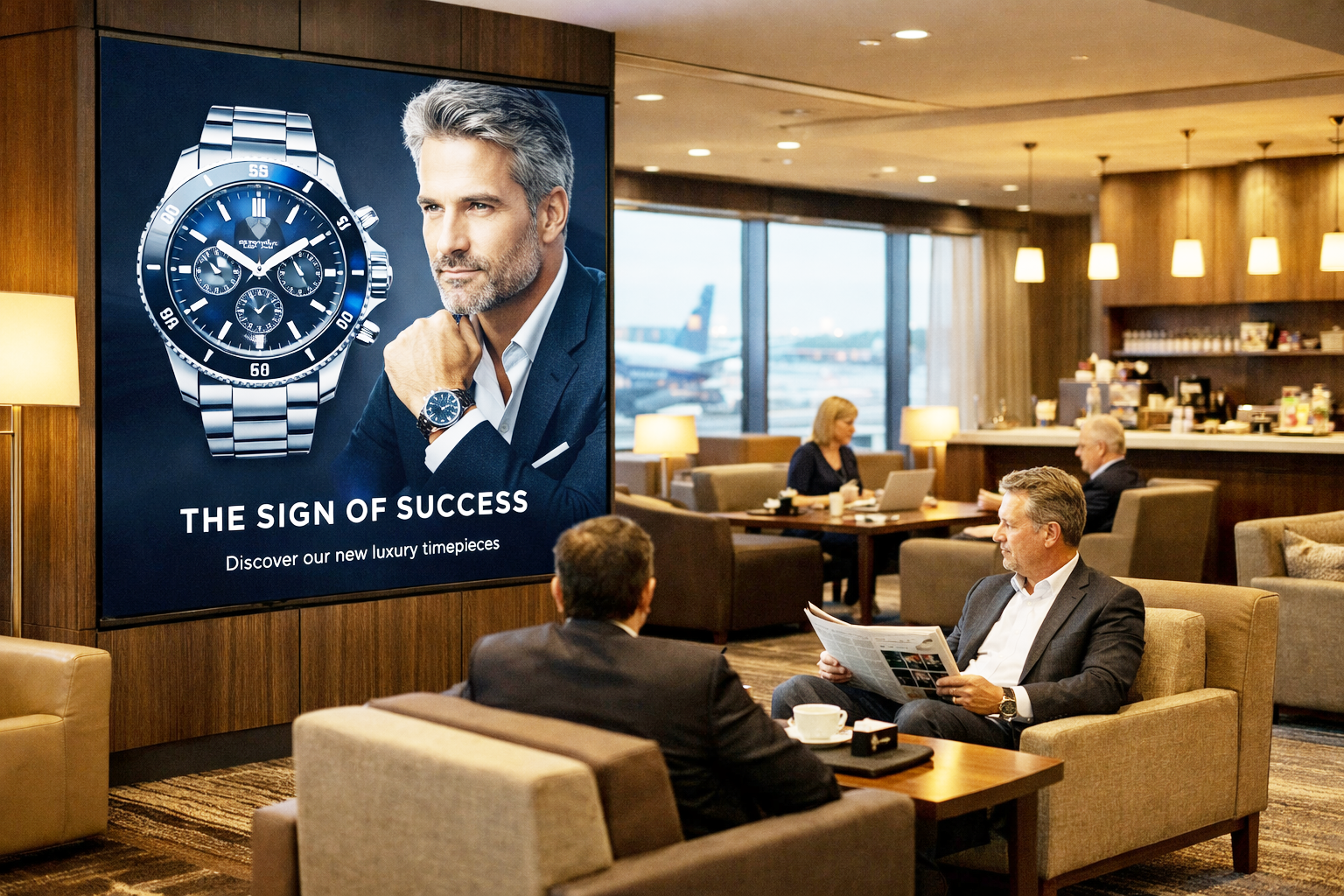
Poor Placement and Delays Affect Airport Campaigns
We help you move faster, access better inventory, and get it right now.
Talk to an ExpertFinal Strategic Verdict
St. Louis Lambert International Airport is the most institutionally distinguished and commercially underestimated aviation gateway in the American interior, and its competitive advertising market neglect represents a genuine arbitrage opportunity for brands with the intelligence to read the Gateway City's commercial identity correctly. This is an airport that serves the engineering teams who build America's front-line combat aircraft, the biomedical researchers whose Washington University laboratories produce Nobel laureate-level science funded by over $600 million in annual NIH investment, the financial advisors who collectively manage hundreds of billions of dollars in client assets from one of America's most respected independent investment management institutions, and the agricultural scientists whose plant biotechnology research shapes the global food supply. The Terminal 1 building in which these professionals dwell before departure is the work of the same architectural mind that produced the most iconic commercial tower complex of the twentieth century — a setting whose institutional prestige is unmatched at any comparable US regional airport. The Cardinals' century of baseball excellence, the Gateway Arch's national symbolic authority, and St. Louis's position at the geographic and commercial crossroads of America combine to create a cultural and institutional backdrop that elevates every premium brand appearing at STL above the ambient commercial noise of the generalist domestic hub. Brands and advertisers that partner with Masscom Global to establish premium presence at STL now are capturing a genuinely exceptional institutional HNWI audience in an architecturally distinguished environment at the most commercially advantageous moment in the airport's modern history — before the Cortex community's growth, Boeing Defense's programme expansion, and Washington University's research momentum fully close the gap between STL's audience quality and the competitive advertising attention it deserves.
About Masscom Global
Masscom Global is a premium international airport advertising and media buying agency operating across 140 countries. With deep expertise in airport OOH, premium publications, and high-net-worth audience targeting, Masscom helps brands reach the world's most valuable travellers at the moments that matter most. For advertising packages, media rates, and campaign planning at St. Louis Lambert International Airport and airports across the globe, contact Masscom Global today.
Frequently Asked Questions
How much does airport advertising cost at St. Louis Lambert International Airport? Advertising costs at STL vary based on format type, terminal location, campaign duration, placement zone, and seasonal demand. Premium digital formats in Terminal 1's architecturally distinctive high-traffic dwell zones and lounge adjacencies during the spring Boeing Defense procurement peak and the autumn program review and Cardinals playoff window command the highest rates, reflecting the exceptional institutional HNWI and corporate professional audience concentration these periods deliver. Terminal 1's Yamasaki architectural environment carries an inherent premium brand association value that justifies investment above generic equivalent formats at functionally comparable airports. Secondary zone static and digital formats across both terminals offer accessible entry points for brands with broader audience parameters. Masscom Global provides current market rate guidance, format recommendations, and full campaign cost modelling tailored to your commercial objectives and budget. Contact Masscom for a detailed rate consultation before committing to any placement.
Who are the passengers at St. Louis Lambert International Airport? STL serves a commercially distinctive and institutionally anchored passenger base whose professional composition reflects the Gateway City's defining industries. The year-round core audience consists of Boeing Defense aerospace engineers, systems analysts, and program directors from the world's most significant combat aircraft manufacturing campus, biomedical research faculty and administrators from Washington University School of Medicine's NIH-funded research enterprise, Edward Jones and Stifel Financial investment professionals managing hundreds of billions in client assets, and Bayer CropScience agricultural science executives overseeing the North American agricultural technology commercial portfolio. The leisure segment adds St. Louis Cardinals fans and sports tourism visitors during the baseball season, national heritage and cultural tourism visitors for the Gateway Arch and Anheuser-Busch experiences, and affluent St. Louis metro residents departing for Caribbean, Mexican, and Florida vacation destinations. The defense professional dimension, augmented by Scott Air Force Base's proximity, adds a consistent security-cleared military and Department of Defense civilian travel layer whose institutional authority and compensation structures parallel the defense contractor executive audience.
Is St. Louis Lambert International Airport good for luxury brand advertising? STL is a strong and commercially distinctive luxury brand advertising environment whose value is anchored by institutional prestige rather than the conspicuous consumption culture of entertainment or technology wealth markets. The Terminal 1 Yamasaki architectural setting creates an ambient premium brand environment that is genuinely exceptional in the US Midwest regional airport landscape. The Boeing Defense, financial services, and biomedical research professional audience is affluent in the institutional rather than lifestyle sense, meaning that luxury brands whose value proposition centres on engineering excellence, heritage craftsmanship, and institutional quality — watches, premium automotive, private banking, international real estate — will consistently outperform brands whose luxury positioning is primarily about social status signalling. For brands with genuine institutional quality credentials and a narrative that resonates with an audience accustomed to making billion-dollar engineering and investment decisions, STL delivers a financially capable and brand-loyal luxury audience at media costs that remain well below equivalent-quality coastal advertising markets.
What is the best airport in Missouri to reach aerospace and defense industry audiences through advertising? STL is unambiguously the top Missouri airport and one of the top two or three US interior airports for aerospace and defense industry executive advertising. The only US airports that serve comparably concentrated defense industry audiences are Washington Dulles and Ronald Reagan National, which serve the Pentagon and defense policy procurement community, and Seattle-Tacoma, which serves Boeing's commercial aviation engineering leadership. STL's Boeing Defense campus concentration — producing front-line Navy and Air Force combat aircraft — creates a category-specific aerospace defense manufacturing and program management audience depth that no other US Midwest airport approaches. For B2B defense technology, aerospace components, and government systems services brands seeking direct access to the procurement authority and engineering leadership of America's most commercially significant defense aerospace manufacturing hub, STL is the single correct airport choice in the American interior.
What is the best time to advertise at St. Louis Lambert International Airport? The two highest commercial value windows at STL are the spring Boeing Defense procurement and Cardinals season opening period from March through May, and the autumn program review and Cardinals playoff period from September through November. Within the spring window, the March-to-April Pentagon budget submission and program review season delivers STL's most concentrated defense executive travel, while the Cardinals' April home opener adds a cultural energy spike that elevates the overall commercial environment. The autumn window, particularly October when both Boeing Defense's year-end program milestones and the Cardinals' potential playoff run peak simultaneously, delivers STL's single highest combined institutional and sports HNWI audience concentration. Washington University's May commencement creates a specific high-quality academic and alumni audience window. Masscom structures STL campaign timing to align with the defense procurement calendar and Cardinals schedule and optimises format and creative rotation to match the specific audience composition of each commercial period.
Can international real estate developers advertise at St. Louis Lambert International Airport? STL is a productive and commercially efficient channel for international real estate advertising targeting US Midwest HNWI buyers. The St. Louis professional community of Boeing Defense executives, financial services professionals, and biomedical research faculty represents a financially qualified outbound buyer profile actively acquiring vacation and investment real estate in Florida, the Caribbean, Mexico, and Portugal. These are buyers who apply institutional due diligence discipline to their real estate decisions — they research yield data, examine legal frameworks, and compare quality benchmarks carefully before committing — which means that investment propositions leading with credible financial data, transparent legal structures, and genuine lifestyle quality comparisons will outperform aspirational imagery alone. Developers active in Los Cabos, the Turks and Caicos, the Algarve, and Florida luxury coastal markets will find STL's outbound HNWI traveller commercially well-qualified and genuinely motivated. Masscom Global builds specific campaign architectures for international real estate advertisers at STL, aligning placement, timing, and creative strategy with the departure patterns most productive for outbound investment property advertising to St. Louis's institutionally sophisticated HNWI audience.
Which brands should not advertise at St. Louis Lambert International Airport? STL is commercially unsuitable for budget travel platforms, urban fast fashion brands, entry-level financial products, and mass-market consumer goods whose commercial logic depends on price competitiveness or trend participation. The airport's core professional audience of aerospace engineers, investment management professionals, and biomedical researchers makes purchasing decisions with an institutional discipline that renders price-sensitive travel booking and impulse fashion purchasing essentially irrelevant to their consumer behaviour. Consumer entertainment and gaming brands will find limited commercial resonance in a terminal environment defined by the institutional seriousness of a city that builds combat aircraft and manages federal investment portfolios. Budget accommodation platforms are structurally misaligned with a frequent-flying professional workforce whose travel expectations and institutional travel programme standards make premium hotel selection a professional default rather than a discretionary lifestyle choice.
How does Masscom Global help brands advertise at St. Louis Lambert International Airport? Masscom Global provides complete end-to-end airport advertising services at STL covering aerospace defense, biomedical research, and financial services audience intelligence, premium inventory access across both terminals with specific expertise in Terminal 1's architecturally distinctive commercial environment, format and placement strategy calibrated to STL's institutional professional audience flow patterns, campaign execution, and performance reporting. Masscom's specific knowledge of STL's commercial calendar — the Boeing Defense procurement cycle peaks, the Cardinals season and playoff windows, the Washington University research conference season, and the agricultural science regulatory submission patterns that drive Bayer CropScience's travel intensity — gives clients a decisive planning advantage over generalist airport advertising approaches that treat STL as a standard domestic Midwest hub rather than the institutionally distinguished, architecturally exceptional, and commercially underestimated gateway to America's aerospace defense and biomedical research leadership. For international and national brands seeking to reach the institutional professional elite of the Gateway City in the most prestige-charged airport environment in the American interior, Masscom Global is the intelligence partner and execution capability that converts STL's unique commercial environment into measurable, credibility-aligned brand performance. Contact Masscom Global today to begin your STL campaign planning.