


Airport at a Glance
| Field | Detail |
|---|---|
| Airport | Siem Reap Angkor International Airport |
| IATA Code | SAI |
| Country | Cambodia |
| City | Siem Reap, Siem Reap Province |
| Annual Passengers | Operational from November 2023; designed capacity of 7 million annually, expandable to 10 million |
| Primary Audience | International heritage tourists, luxury resort guests, ASEAN leisure travellers, cultural and spiritual tourism visitors |
| Peak Advertising Season | November to April (dry season tourism peak), Chinese New Year, Khmer New Year |
| Audience Tier | Tier 2 with a strong Tier 1 international luxury tourism concentration |
| Best Fit Categories | Luxury Hospitality, Premium Travel, International Real Estate, Wellness and Spa, Cultural Luxury Goods, Financial Services |
Siem Reap Angkor International Airport is one of the most strategically significant new airport openings in Southeast Asia in a generation. Inaugurated in November 2023 and purpose-built to replace a terminal that had reached the limits of its capacity, SAI was designed from the ground up to serve the tens of millions of global travellers for whom Angkor Wat is a once-in-a-lifetime destination and, increasingly, a repeat pilgrimage for the world's most culturally motivated luxury travellers. The airport that now greets these visitors is a state-of-the-art facility whose scale, design, and commercial infrastructure finally match the global prestige of the destination it serves. For advertisers targeting a concentrated, internationally diverse, premium-spending audience at the moment of peak experiential readiness, Siem Reap Angkor Airport is Southeast Asia's most compelling new advertising proposition.
What makes SAI commercially exceptional is the singular travel motivation of virtually every international passenger passing through its terminal. Unlike hub airports where audience intent is fragmented across business, transit, leisure, and family travel purposes, Siem Reap Angkor Airport serves an audience that has, in the overwhelming majority of cases, made a deliberate, high-commitment decision to travel specifically to experience one of the world's seven wonders. This is not accidental tourism. These are travellers who have researched, planned, and saved for an experience they regard as genuinely significant — and they have arrived with discretionary spending budgets calibrated to match that significance. For luxury hospitality brands, premium experience operators, cultural goods advertisers, and aspirational lifestyle categories, the audience at SAI is among the most pre-qualified and purchase-ready in all of Southeast Asian aviation.
Advertising Value Snapshot
- Passenger scale: Designed capacity of 7 million passengers annually at opening, expandable to 10 million; the new terminal positions Siem Reap for accelerated international visitor growth following the post-pandemic recovery of Cambodia's tourism sector
- Traveller type: International heritage tourists from China, South Korea, Japan, Europe, and North America; ASEAN leisure and premium resort travellers; luxury retreat and wellness guests; cultural and spiritual tourism visitors
- Airport classification: Tier 2 with a strong Tier 1 international luxury tourism concentration — audience quality per passenger is among the highest of any heritage destination airport in Southeast Asia
- Commercial positioning: The world's primary gateway to Angkor Wat and Cambodia's ancient Khmer civilisation heritage, serving an audience whose travel purpose is cultural aspiration at the highest level of global tourism motivation
- Wealth corridor signal: SAI sits at the intersection of the global heritage tourism premium market, China's outbound luxury travel corridor, South Korea and Japan's premium cultural tourism flows, and the growing Southeast Asian upper-middle-class leisure circuit
- Advertising opportunity: Masscom Global activates targeted campaigns at Siem Reap Angkor Airport timed to the dry season tourism peak and major Asian holiday windows, reaching an audience whose experiential spending intent is at its highest point across the entire Southeast Asian tourism corridor
Airport Advertising is Complex to Get Right
We help you execute faster, with proven results and local insight most planners lack starting now.
Talk to an ExpertCatchment Area and Economic Drivers
Top 10 Cities within 150 km — Marketer Intelligence
- Siem Reap City: The primary tourism and hospitality hub of Cambodia, home to the country's densest concentration of five-star hotels, boutique resorts, luxury spas, and premium dining; its established hospitality infrastructure produces a year-round audience of resort executives, tourism operators, and NGO professionals whose travel through SAI is consistent and commercially relevant to B2B services, financial products, and enterprise hospitality brands
- Angkor Archaeological Park: The 400-square-kilometre UNESCO World Heritage Site that is the reason the airport exists; the park's visitor economy generates employment and business travel for thousands of tourism professionals, heritage management specialists, and international conservation organisation staff whose presence at SAI is year-round and commercially active
- Battambang: Located approximately 160 kilometres southwest of Siem Reap, Battambang is Cambodia's second city and a growing destination for cultural tourism and creative economy visitors; its emerging art scene and French colonial heritage attract a culturally engaged upper-middle-class audience that increasingly connects through SAI to international routes
- Banteay Meanchey Province: The northwestern province bordering Thailand approximately 130 kilometres from Siem Reap; its commercial economy, dominated by border trade with Thailand, produces a consistent cross-border business traveller audience connecting to international routes through SAI
- Preah Vihear Province: Located to the northeast, Preah Vihear hosts the spectacular cliff-top temple of the same name — a UNESCO World Heritage Site increasingly integrated into multi-destination Cambodian heritage tourism itineraries that begin and end at SAI
- Kampong Thom: A provincial capital approximately 150 kilometres southeast of Siem Reap with Sambor Prei Kuk, a pre-Angkorian UNESCO World Heritage Site; its heritage tourism and government administrative functions generate a modest but growing traveller audience using SAI for regional connectivity
- Oddar Meanchey Province: A northwestern province adjacent to Banteay Meanchey with a growing cross-border trade economy connecting Cambodia to Thailand; relevant for telecommunications, financial services, and logistics brands targeting the Cambodia-Thailand commercial corridor
- Tonle Sap Lake Basin Communities: The communities surrounding Southeast Asia's largest freshwater lake within the Siem Reap catchment are home to fishing, agriculture, and eco-tourism operators whose economic contribution to the regional tourism ecosystem makes their professional population a consistent SAI user for domestic and regional connectivity
- Sisophon: The commercial hub of Banteay Meanchey Province approximately 100 kilometres west of Siem Reap, positioned on the main road and rail corridor connecting Cambodia to Thailand; its trading community uses SAI for international and Phnom Penh business connectivity and represents a cross-border commerce audience relevant to financial services and logistics advertising
- Koulen Mountain Region: The Phnom Kulen plateau approximately 50 kilometres from Siem Reap, a sacred Khmer pilgrimage site and national park of profound cultural significance; its growing eco-tourism and spiritual tourism visitor flow adds a domestically motivated, culturally engaged Cambodian and regional Buddhist pilgrimage audience layer to the SAI catchment
NRI and Diaspora Intelligence:
The Cambodian diaspora, with significant communities in France, the United States, Australia, and increasingly South Korea and Japan, generates a consistent return travel flow through SAI for family visits, property investment, and cultural reconnection. Cambodian-Americans and Cambodian-French community members returning for family and business purposes carry Western purchasing power and brand familiarity that makes them an ideal target for international financial services, real estate, and premium consumer goods advertising. Beyond the diaspora dimension, Siem Reap's international resident community — comprising hospitality executives, NGO directors, UNESCO heritage professionals, and real estate investors — generates a year-round high-income traveller segment at SAI whose spending profile mirrors that of the international premium tourism audience. This resident international community, estimated at several thousand professionals, uses SAI as their primary gateway and is demonstrably receptive to premium financial, property, and lifestyle brand advertising.
Economic Importance:
Siem Reap's economy is almost entirely structured around the tourism and hospitality sector, which makes the commercial character of SAI's audience unusually consistent and predictable for advertising planning. The hotel and resort sector — which includes properties from every major international luxury brand in addition to Cambodia's most celebrated boutique properties — generates the province's largest private sector employment base and produces a consistent hospitality executive and operational management traveller audience. The international NGO and development sector, with organisations including UNESCO, the World Monuments Fund, and numerous bilateral development agencies operating heritage conservation and rural development programmes in the province, adds a senior international professional layer whose spending behaviour reflects their global institutional employment conditions. The emerging real estate and investment sector, driven by growing international and Cambodian-diaspora demand for Siem Reap property as both a lifestyle and investment asset, is increasingly generating commercial travel relevant to financial services and property investment advertisers.
Business and Industrial Ecosystem
- International Luxury Hospitality Sector: Siem Reap hosts the regional offices and general manager staff of virtually every major international luxury hotel brand operating in Southeast Asia, from Amansara and Belmond to Four Seasons and Rosewood; these hospitality executives travel regularly to Singapore, Bangkok, Hong Kong, and Phnom Penh for corporate management and procurement, making them a premium B2B audience at SAI for financial services, enterprise technology, and professional services brands
- UNESCO and International Heritage Conservation: The Angkor Conservation Office and the international organisations working across the archaeological park employ hundreds of internationally credentialed heritage professionals whose consistent travel connects Siem Reap to Paris, Tokyo, Beijing, and Washington; this audience carries academic and institutional authority aligned with cultural brand messaging
- Tourism and Experience Economy Operators: Siem Reap's helicopter tour operators, luxury river cruise companies, culinary experience providers, and private guide networks generate a professional tourism services business community whose travel for supplier, partner, and training purposes produces a consistent business traveller layer at SAI
- Real Estate and Investment Development: A growing sector of Cambodian and international real estate developers, property investment advisors, and construction management firms operating Siem Reap's expanding hospitality and residential development pipeline generates commercial travel relevant to financial services, construction, and enterprise technology advertising
Passenger Intent — Business Segment:
The business traveller at Siem Reap Angkor Airport is overwhelmingly connected to the tourism, hospitality, heritage, and development sectors that define Siem Reap's economic identity. These are regional directors of international hotel groups, senior UNESCO programme officers, investment development executives, and tourism operator founders who travel frequently to the ASEAN regional commercial centres of Singapore, Bangkok, and Hong Kong for corporate management, procurement, and financial services relationships. Their spending profile reflects their international institutional employers — premium business class preferences, global financial product usage, and brand awareness calibrated to Singapore and Hong Kong levels rather than local Cambodian market conventions. For financial services, premium hospitality loyalty programmes, enterprise technology, and professional services brands, these travellers represent a sophisticated, internationally benchmarked business audience in a terminal environment with no competing media clutter.
Strategic Insight:
The business community at Siem Reap Angkor Airport is defined by its connection to global institutional networks rather than local commercial enterprise. A UNESCO World Heritage Site manager travelling through SAI has the same professional brand exposure and purchasing standard as a colleague travelling through Charles de Gaulle or Changi. The hospitality general managers and luxury resort directors operating Siem Reap's five-star properties are making procurement and investment decisions that are evaluated against global benchmarks. For B2B brands in financial services, technology, and professional services seeking to reach internationally calibrated business decision-makers outside the prohibitive cost of Singapore or Hong Kong airport placements, Siem Reap Angkor Airport offers a precision environment at a fraction of the regional hub cost.
Tourism and Premium Travel Drivers
- Angkor Wat and the Angkor Archaeological Complex: The largest religious monument ever constructed and the single most powerful individual tourism magnet in Southeast Asia; the Angkor complex draws millions of visitors annually whose travel is motivated by a combination of cultural aspiration, spiritual engagement, and historical significance that produces some of the highest per-trip spending commitments of any heritage destination in the world
- Tonle Sap Lake and Floating Village Experiences: Southeast Asia's most biodiverse freshwater lake and its remarkable floating village communities offer a nature and cultural immersion experience increasingly packaged at the premium end of Siem Reap's tourism product; luxury sunset cruises, private boat charters, and eco-lodge stays attract the high-spending international nature tourism segment
- Siem Reap Luxury Resort and Wellness Circuit: The city's growing portfolio of ultra-luxury retreat properties, including destination spa resorts, wellness retreats, and private villa compounds, draws a distinct audience of wellness and transformation tourists from Asia, Europe, and North America whose primary purpose is restorative luxury rather than archaeological sightseeing
- Preah Vihear and Multi-Destination Khmer Heritage Circuits: The growing trend of multi-site Khmer heritage itineraries combining Angkor with outlying temples including Preah Vihear, Beng Mealea, and Koh Ker extends visitor stay duration and spending depth, making Siem Reap's tourism audience increasingly high-value by average daily expenditure as well as total trip commitment
Passenger Intent — Tourism Segment:
The tourist arriving at Siem Reap Angkor Airport has, in most cases, made one of the most deliberate and psychologically committed travel decisions of their lifetime. Angkor Wat is not an impulse destination; it is a pilgrimage — cultural, spiritual, or historical — that visitors have anticipated for years and for which they have allocated genuinely significant discretionary budgets. By the time they land at SAI, they have pre-committed to premium accommodation, private guided tours, helicopter experiences, and luxury dining in a way that makes their receptivity to brand discovery and aspirational lifestyle categories at the airport exceptionally high. Luxury hospitality, premium wellness, fine jewellery, artisan cultural goods, premium spirits, and aspirational travel brands are the highest-performing categories for this audience at the moment of arrival.
Travel Patterns and Seasonality
Peak seasons:
- November to April (Dry Season Tourism Peak): The dominant tourism season, when Angkor's temples are most accessible and the climate is at its most comfortable for outdoor exploration; international arrivals peak sharply in December to February, with the highest concentrations of European, North American, and long-haul Asian premium tourists whose per-trip spending is the highest of any visitor demographic
- Chinese New Year (January to February): A massive Asian inbound tourism surge as Chinese, Vietnamese, Cambodian, and broader ASEAN families travel for the Lunar New Year holiday period; generates the single highest weekly traffic volume of the year and the most concentrated opportunity for consumer goods, luxury gifting, and premium hospitality advertising
- Khmer New Year (April): Cambodia's most significant national festival, generating strong domestic and diaspora return travel as Cambodians living in Phnom Penh and abroad return to provincial families; a key window for consumer goods, financial services, and mobile money brands targeting the Cambodian domestic market
- October to November (Shoulder Season Entry): The transition from the wet season back into the dry season is increasingly popular with European visitors seeking lower crowds and green temple environments; boutique luxury tourism providers favour this window for their highest-value clients
Event-Driven Movement:
- Bon Om Touk Water Festival (October to November): Cambodia's most popular traditional festival, celebrated when the Tonle Sap River reverses its flow; draws hundreds of thousands of domestic and regional visitors to Siem Reap for boat races, fireworks, and cultural celebrations; a peak consumer spending and family travel window with strong relevance for consumer goods, hospitality, and mobile money advertisers
- Chinese New Year (January to February): The year's highest-volume single-event traffic surge at SAI; Chinese tour groups and independent high-spending Chinese travellers dominate the airport during this window; luxury goods, premium beauty, gold jewellery, and aspirational lifestyle brands have peak conversion opportunity in the two-week surrounding window
- Angkor Wat International Half Marathon (December): One of Asia's most internationally recognised charity running events, staged at sunrise within the Angkor complex; draws thousands of international runners from over 50 countries whose profile is health-conscious, internationally mobile, premium travel-oriented, and strongly receptive to sports, wellness, nutrition, and lifestyle advertising
- Khmer New Year (April): Generates the year's strongest domestic travel peak; Cambodian families, diaspora returnees, and regional ASEAN tourists create a concentrated consumer spending window with high relevance for F&B, mobile services, financial technology, and family consumer brands
- Pchum Ben Festival (September to October): Cambodia's significant Buddhist ancestor commemoration festival, generating strong domestic family travel and temple visitation; relevant for Buddhist heritage brands, food and gift advertisers, and financial services companies targeting the Cambodian domestic audience
It’s Not Just Where You Advertise - It’s How Fast You Execute
We combine local insight with fast rollout to deliver results for you, now.
Talk to an ExpertAudience and Cultural Intelligence
Top 2 Languages:
- English: The primary operational and tourism language of SAI's international audience; English is the default communication medium for the airport's dominant visitor nationalities including Europeans, North Americans, Australians, and internationally mobile ASEAN professionals; English-language campaigns at this airport reach the broadest and wealthiest cross-section of the international tourism audience simultaneously and are the absolute baseline for any international brand campaign at SAI
- Mandarin Chinese: The language of SAI's largest single source nationality market and the most commercially critical Asian visitor segment; Chinese tourists to Angkor consistently rank among the highest per-trip spenders at Southeast Asian heritage destinations; Mandarin-language campaigns specifically targeting the Chinese inbound tourism window around Chinese New Year and the Golden Week holiday deliver the highest single-language return on investment of any Asian-language campaign at this airport
Major Traveller Nationalities:
The international audience at Siem Reap Angkor Airport is among the most nationality-diverse of any heritage destination airport in Southeast Asia. Chinese nationals historically represent the largest single source market by volume, followed by South Korean, Japanese, Thai, Vietnamese, and European visitor segments. Among Western visitors, French nationals hold a culturally distinctive position given France's historical connection to Cambodia through the Indochina colonial period and the Ecole Française d'Extrême-Orient's foundational role in Angkor's modern rediscovery; French visitors often demonstrate deeper cultural engagement and longer average stays than comparable European source markets. American, British, German, and Australian tourists represent premium high-spending long-haul visitors. Cambodian domestic and diaspora travellers form the year-round base that sustains commercial traffic outside the peak international seasons.
Religion — Advertiser Intelligence:
- Buddhism — Theravada (approximately 95% of Cambodian population): Cambodia is one of the world's most deeply Buddhist nations and Angkor's temples are active sites of Buddhist veneration as well as archaeological wonder; the Buddhist festival calendar — Khmer New Year, Pchum Ben, Bon Om Touk, and Visak Bochea — defines the domestic travel and consumer spending rhythm of the Cambodian national audience; brands in food, gifting, gold jewellery, and merit-making products align directly with the festival spending cycle; for the international tourism audience, the Buddhist spiritual dimension of Angkor creates a cultural reverence mindset that makes visitors exceptionally receptive to artisan crafts, luxury cultural goods, and heritage brand messaging
- Buddhism — Mahayana (Chinese, Vietnamese, and Korean visitors): The large Mahayana Buddhist visitor communities from China, Vietnam, and South Korea bring their own festival calendars and temple visitation motivations to Siem Reap; Chinese New Year and the Buddhist pilgrimage dimension of Angkor visitation create strong gifting, gold, and cultural goods spending triggers for brands aware of these motivations
- Christianity and Other Faiths (Western tourist community and international NGO workers): The European and North American visitor community generates a Christmas and Easter season spending window that is commercially relevant for premium hospitality, travel retail, and lifestyle brands targeting long-haul Western tourists
Behavioral Insight:
The Siem Reap Angkor airport audience exhibits a behavioural profile shaped by elevated cultural aspiration and the psychology of a once-in-a-lifetime commitment. International visitors arrive in a state of genuine anticipatory excitement — they are psychologically open, aesthetically engaged, and financially pre-committed to spending generously on experiences, objects, and memories that match the significance of where they are. This is the opposite of the transactional mindset of the transit passenger or the fatigue of the frequent business traveller. Brands that speak to discovery, cultural meaning, heritage craftsmanship, and the reward of experiential investment consistently generate exceptional recall and purchase intent with this audience. The Asian tourist segment — particularly Chinese, Korean, and Japanese visitors — additionally brings strong group gifting behaviour, luxury brand sensitivity, and social media documentation motivation that make premium goods and Instagram-worthy experiential brand activations highly effective in this terminal.
Outbound Wealth and Investment Intelligence
The outbound passenger departing Siem Reap Angkor Airport is a more commercially interesting wealth profile than the heritage tourism narrative alone might suggest. Beyond the international visitor returning home, SAI's outbound flow includes Cambodia's growing upper-professional and entrepreneurial class, the international hospitality and development executives based in Siem Reap, the Cambodian diaspora professional returning to regional business centres, and an emerging class of Cambodian and international real estate investors whose capital is actively being deployed in Siem Reap's recovering property market and across the broader ASEAN investment landscape.
Outbound Real Estate Investment:
Siem Reap's property market is undergoing a significant recovery and repositioning phase following the post-pandemic reset of Cambodia's tourism economy. International buyers — predominantly from China, South Korea, Singapore, and Cambodia's diaspora communities — are acquiring resort-adjacent villas, boutique hotel properties, and commercial real estate in Siem Reap at prices that represent compelling yield opportunities relative to comparable ASEAN markets. Cambodia's liberal foreign ownership framework for certain property structures and its dollar-denominated economy make it particularly attractive to regional investors. The ASEAN-corridor investor passing through SAI is increasingly considering Siem Reap alongside Chiang Mai, Bali, and Da Nang as a Southeast Asian property diversification destination. International real estate developers with product in Singapore, Malaysia, Thailand, and Australia should additionally treat SAI as a channel to reach Cambodian HNWIs and diaspora investors actively seeking offshore property diversification.
Outbound Education Investment:
The Cambodian upper-professional and merchant class is investing significantly in overseas education, primarily in Australia, France, Japan, South Korea, and increasingly Singapore and Malaysia. Australian universities hold a particularly strong appeal for Cambodian families, driven by the large existing Cambodian diaspora community in Melbourne and Sydney, English-language instruction quality, and post-study work right frameworks. French academic institutions attract the Cambodian francophone educated elite, a legacy of the colonial intellectual tradition that remains commercially relevant among Phnom Penh and Siem Reap's established professional families. Education consultancies and international university recruitment campaigns targeting Southeast Asian families should consider the November to February window at SAI, when the international tourist crowd combines with Cambodian professional family travel at the start of the academic planning season.
Outbound Wealth Migration and Residency:
Second residency demand among Cambodia's HNWI class is actively growing, driven by the internationalisation of the country's professional elite and the post-pandemic recalibration of risk and mobility planning. Thailand's Long-Term Resident Visa, Malaysia's MM2H programme, and Portugal's Digital Nomad Visa are attracting interest from Cambodian HNWIs and international residents of Siem Reap seeking ASEAN and European mobility options. Singapore permanent residency is the aspirational target for Cambodia's most internationally ambitious entrepreneurial class, sought as both a business facilitation tool and a quality-of-life investment. Wealth management firms and immigration advisory services with ASEAN and European product portfolios have a commercially relevant audience among the outbound professional and investment class at SAI.
Strategic Implication for Advertisers:
International brands operating across Southeast Asia's ASEAN investment and lifestyle corridor should treat Siem Reap Angkor Airport as a dual-direction opportunity — reaching the inbound international premium tourist audience on arrival and the outbound Cambodian HNWI and regional professional audience on departure. The combination of these two audience directions in a single, non-competitive terminal environment makes SAI one of the most commercially efficient bilateral reach propositions in ASEAN aviation for brands whose customer base spans both the affluent international visitor market and the emerging Cambodian and regional investment class. Masscom Global is positioned to activate on both directions of this corridor simultaneously with placement intelligence and creative strategy calibrated to each audience's distinct intent state.
Airport Infrastructure and Premium Indicators
Terminals:
- Siem Reap Angkor International Airport is a purpose-built, state-of-the-art facility inaugurated in November 2023, designed to accommodate 7 million passengers annually with expansion capability to 10 million; the terminal's architecture incorporates traditional Khmer design motifs and contemporary international airport infrastructure standards, creating a premium brand environment that communicates cultural significance and international sophistication simultaneously
- The terminal's design as a greenfield development means every aspect of its commercial and passenger flow infrastructure was planned for the optimised processing of an international premium tourism audience, including dedicated international arrivals and departures halls, modern retail and F&B concourse design, and digital media infrastructure integrated from the ground up rather than retrofitted
Premium Indicators:
- The airport's purpose-built design includes premium lounge facilities and commercial zones positioned to serve the international tourism audience at the highest standard, creating an advertising environment appropriate for luxury hospitality, premium retail, and aspirational lifestyle brand campaigns
- SAI's terminal design incorporates Khmer cultural architecture and heritage motifs that immediately signal cultural and spiritual significance to arriving visitors, creating a brand association environment in which premium goods, artisan crafts, and heritage luxury brands achieve an elevated contextual resonance unavailable at generic international terminals
- The airport's position as the flagship infrastructure project of Cambodia's tourism recovery programme means it carries strong government and international institutional backing, ensuring operational standards and brand safety credentials appropriate for the full range of premium advertising categories
- Siem Reap's growing portfolio of ultra-luxury resort properties — including properties at the absolute top of the global luxury hospitality tier — reinforces the premium character of the inbound audience and sustains luxury brand association across the entire visitor journey from landing to resort arrival
Forward-Looking Signal:
Siem Reap Angkor International Airport was designed specifically to remove the capacity constraint that was limiting Cambodia's ability to realise its full potential as a global premium heritage tourism destination. With the previous airport's limitations removed, Cambodia's Tourism Ministry and the ASEAN aviation development community are projecting substantial inbound visitor growth through the decade as new direct international routes from China, South Korea, Japan, Europe, and the Middle East progressively come online. The Angkor Archaeological Park's ongoing UNESCO-supported conservation and visitor management programme is expanding the park's capacity to receive higher visitor volumes without compromising heritage integrity, removing another growth constraint. Chinese outbound tourism, whose recovery from pandemic-era restrictions is still in early stages, is expected to drive significant incremental volume through SAI as bilateral air services agreements expand. Masscom Global advises brands to plan campaigns at SAI now, while the airport is in its commercial growth phase and placement rates reflect an emerging-growth destination rather than the mature premium hub it will become within the next three to five years.
Airline and Route Intelligence
Top Airlines:
- Cambodia Angkor Air (national carrier)
- AirAsia
- Bangkok Airways
- China Southern Airlines
- Shenzhen Airlines
- Vietjet Air
- Vietnam Airlines
- Korean Air
- Asiana Airlines
- Lanmei Airlines
- JC International Airlines
Key International Routes:
- Bangkok (BKK / DMK) — The dominant ASEAN hub connection; serving transfer passengers from intercontinental routes and the direct Thailand-Cambodia leisure corridor; the highest frequency international route at SAI
- Ho Chi Minh City (SGN) and Hanoi (HAN) — The Vietnam corridor serving a high-volume ASEAN leisure and cultural tourism audience as well as Vietnamese diaspora travel
- Guangzhou (CAN), Shenzhen (SZX), Chengdu (CTU), and secondary Chinese cities — The China inbound corridor representing the highest per-trip-spending nationality at the airport during its seasonal peak windows
- Seoul Incheon (ICN) — The South Korean corridor serving one of Southeast Asia's most culturally engaged and premium-spending Asian tourism source markets
- Singapore (SIN) — The premium ASEAN hub connection serving high-value Singaporean leisure tourists and international business travellers transiting through Changi
- Kuala Lumpur (KUL) — The Malaysian corridor serving ASEAN leisure tourists and the substantial Muslim heritage tourism segment interested in Cambodia's pre-Islamic Khmer civilisation
Domestic Connectivity:
- Phnom Penh (PNH) — The primary domestic trunk route connecting Siem Reap to Cambodia's capital, commercial centre, and international gateway hub; a high-frequency route serving government, business, and tourism flows between the country's two most significant cities
Wealth Corridor Signal:
The SAI route network is architecturally defined by the convergence of Asia's two most powerful outbound tourism corridors — China and South Korea — with the premium long-haul European and North American visitor flow, all channelled toward a single destination whose heritage significance overrides the price sensitivity that otherwise governs budget airline route economics in Southeast Asia. The Bangkok and Singapore hub connections serve as force multipliers for the direct route network, bringing intercontinental visitors from London, Paris, New York, and Sydney who have connected specifically to reach Angkor. The Vietnam and regional ASEAN routes add a younger, culturally aspirational and increasingly premium Southeast Asian visitor layer. Together, these corridors reveal an audience whose route choices are motivated not by convenience or price but by a deliberate cultural commitment — the strongest possible signal of premium spending intent for advertisers.
Media Environment at the Airport
- Siem Reap Angkor International Airport's purpose-built terminal design integrates digital media infrastructure from the ground up, creating a contemporary, high-quality OOH advertising environment that matches international luxury brand standards and positions campaigns within a Khmer-heritage architectural context that elevates cultural and artisan brand associations in ways impossible to achieve at a generic terminal
- The airport's tourism-dominated audience profile means virtually every passenger in the terminal is in an active discovery and experience-seeking mindset rather than the transactional or fatigue mindset common at business hub airports; dwell time in the arrivals and departures zones is engaged, curious, and brand-receptive at a level rarely sustained in high-volume transit environments
- The terminal's international audience diversity — spanning Chinese, Korean, Japanese, European, North American, and ASEAN visitor nationalities — makes SAI one of the most genuinely multicultural single-terminal advertising environments in Southeast Asia, enabling international brand campaigns to achieve simultaneous reach across multiple high-value source markets within a single placement
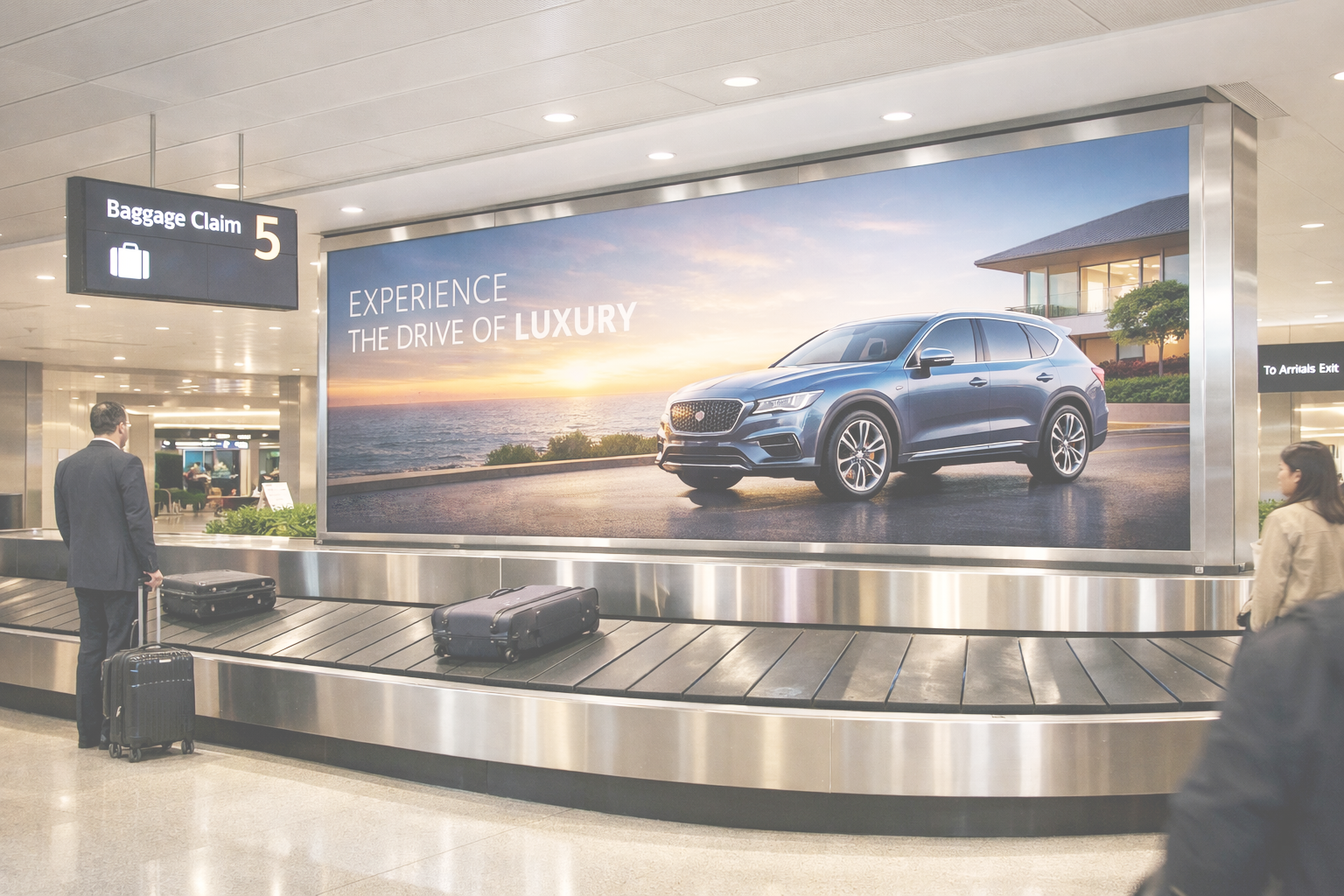
- Masscom Global holds placement intelligence across Siem Reap Angkor Airport's arrivals, departures, baggage claim, and landside commercial zones, enabling precision targeting of the international luxury tourist on arrival, the premium Asian visitor group in the retail concourse, and the outbound Cambodian professional and investment class in the departures hall
Strategic Advertising Fit
Best Fit:
- Luxury Hospitality and Resort Brands: International visitors arriving at SAI have made a deliberate premium destination commitment and are in active selection mode for premium accommodation upgrades, dining experiences, and wellness programmes; luxury hotel and resort advertising at the arrivals zone reaches guests at the moment of maximum brand consideration
- Premium Travel and Experience Operators: Helicopter tour companies, private Angkor guide services, luxury river cruise operators, and bespoke cultural experience providers have a captive, pre-qualified audience whose entire travel purpose is experiential investment; airport advertising is the first and most impactful touchpoint for experience brand discovery
- Artisan, Cultural, and Heritage Luxury Goods: The cultural elevation of the Angkor destination creates exceptional brand association conditions for premium artisan products, Cambodian silk and crafts, luxury cultural goods, and heritage jewellery brands whose narrative connects to the audience's motivation for being in Cambodia
- International Real Estate Developers: ASEAN-corridor investors passing through SAI from Singapore, Malaysia, South Korea, and China are actively building property portfolios across Southeast Asia; developers with product in Cambodia, Thailand, Malaysia, and Australia have a pre-qualified investor audience at the departures zone
- Premium Wellness and Spa Brands: Siem Reap's luxury wellness retreat positioning and the introspective, restorative mindset of cultural heritage travellers create natural alignment for premium spa, wellness technology, nutraceutical, and mindfulness brand advertising
- Financial Services and Wealth Management: The internationally mobile, high-net-worth ASEAN and Western visitor audience at SAI includes active users of premium financial products; private banking, travel insurance, premium credit, and cross-border investment advisory services align well with the purchasing profile of both the inbound international tourist and the outbound Cambodian professional
- Premium Spirits, Gourmet Food, and Beverage: The premium F&B dimension of the Siem Reap luxury hospitality offer creates strong airport advertising alignment for Champagne, whisky, premium wine, gourmet ingredient, and luxury F&B brands targeting the celebration and indulgence mindset of arriving heritage tourists
Brand Alignment at a Glance:
| Category | Fit |
|---|---|
| Luxury Hospitality and Resorts | Exceptional |
| Premium Travel and Experience Operators | Exceptional |
| Artisan and Cultural Luxury Goods | Exceptional |
| Premium Wellness and Spa | Strong |
| International Real Estate | Strong |
| Financial Services and Wealth Management | Strong |
| Premium Spirits and Gourmet F&B | Strong |
| Mass FMCG and Everyday Consumer Goods | Poor fit |
Who Should Not Advertise Here:
- Mass FMCG and everyday consumer goods brands: The premium tourism character of the terminal, the international diversity of the audience, and the experiential mindset of the arriving visitor create a brand environment in which everyday consumer goods advertising is tonally misaligned and commercially inefficient relative to digital and supermarket channels in the visitors' home markets
- Budget airline and low-cost travel promotions: The Siem Reap audience has made a destination-first, experience-first travel decision for which price was not the primary variable; low-cost travel brand advertising is misaligned with the cultural commitment and premium spending intent that defines virtually every visitor at this terminal
- Domestic-only Cambodian service providers without international distribution: The international majority of SAI's audience is unreachable by brands whose services are only accessible within Cambodia; domestic-only brands would generate strong awareness among an audience with no mechanism to convert into customers once they return home
Event and Seasonality Analysis
| Metric | Rating |
|---|---|
| Event Strength | High |
| Seasonality Strength | High |
| Traffic Pattern | Dual-Peak (Dry Season International Tourism + Asian Holiday Calendar) |
Strategic Implication:
The November to April dry season window is the primary advertising investment period at SAI, delivering the highest concentration of premium international tourism volume and the longest average visitor stays with the highest average daily spend profiles. Within this window, December to February represents the absolute premium sub-period, combining peak European and North American long-haul arrivals with the Chinese New Year surge that delivers the highest single-nationality spending concentration of the year. The Angkor Wat International Half Marathon in December creates a precision sports and wellness audience spike that rewards health, outdoor, and lifestyle brands with a secondary campaign layer. Masscom Global structures SAI campaigns to front-load the dry season window for luxury and experiential brand building while deploying tactical campaign bursts around Chinese New Year, Khmer New Year, and Bon Om Touk to capture the Asian holiday audience at its peak spending readiness.

Poor Placement and Delays Affect Airport Campaigns
We help you move faster, access better inventory, and get it right now.
Talk to an ExpertFinal Strategic Verdict
Siem Reap Angkor International Airport is one of the most commercially distinctive advertising environments in all of Southeast Asian aviation for a reason that no other regional airport can replicate: it is the sole gateway to a destination whose tourism motivation is cultural pilgrimage at the highest level of global aspiration. The passengers arriving at SAI have not chosen Cambodia casually — they have chosen Angkor deliberately, with a level of emotional and financial commitment that produces the most purchase-ready, brand-receptive, experience-oriented audience in the ASEAN tourism corridor. Paired with a state-of-the-art purpose-built terminal whose Khmer heritage architecture creates an advertising environment of unmatched cultural resonance, a route network that channels China, South Korea, Japan, Europe, and North America's premium tourism flows into a single point of access, and a commercial growth trajectory that will only accelerate as Chinese outbound tourism recovery matures and new direct international routes come online, SAI represents a compounding advertising value proposition whose current placement rates do not yet reflect its destination potential. For luxury hospitality brands, premium experience operators, international real estate developers, cultural luxury goods advertisers, and financial services firms seeking to reach the world's most motivated and high-spending heritage tourism audience, there is no more precise or more powerful single terminal in Southeast Asia — and Masscom Global has the regional intelligence, ASEAN network, and placement expertise to activate it at full commercial efficiency, now.
About Masscom Global
Masscom Global is a premium international airport advertising and media buying agency operating across 140 countries. With deep expertise in airport OOH, premium publications, and high-net-worth audience targeting, Masscom helps brands reach the world's most valuable travellers at the moments that matter most. For advertising packages, media rates, and campaign planning at Siem Reap Angkor International Airport and airports across Southeast Asia and the globe, contact Masscom Global today.
Frequently Asked Questions
How much does airport advertising cost at Siem Reap Angkor International Airport?
Advertising costs at Siem Reap Angkor International Airport vary based on format type, placement zone, campaign duration, and seasonal demand. The November to April dry season peak commands premium rates and inventory fills quickly, particularly for arrivals hall and departures concourse placements aligned with the international luxury tourism audience. The Chinese New Year window, which delivers the highest-spending single-nationality surge of the year, is the most time-sensitive booking window and should be secured well in advance. As a newly opened, purpose-built international terminal in its commercial growth phase, SAI offers placement rates that represent strong value relative to the premium quality and international diversity of its audience. Masscom Global provides current rate intelligence, format options, and complete campaign planning support. Contact Masscom for a detailed proposal tailored to your brand objectives and budget.
Who are the passengers at Siem Reap Angkor International Airport?
SAI serves one of the most internationally diverse and culturally motivated audiences of any airport in Southeast Asia. Chinese nationals represent the largest single source market by volume, followed by South Korean, Japanese, Vietnamese, Thai, European, and North American visitors. The dominant travel motivation across all nationalities is the cultural and spiritual significance of the Angkor Archaeological Complex, producing an audience characterised by deliberate destination commitment and premium spending intent rather than transit convenience or price-driven leisure travel. The year-round base includes Cambodian domestic and diaspora travellers, Siem Reap's international hospitality and development professional community, and heritage tourism operators whose consistent travel connects the destination to regional commercial centres.
Is Siem Reap Angkor International Airport good for luxury brand advertising?
Siem Reap Angkor Airport is highly effective for luxury brand advertising, with a cultural and architectural context that elevates luxury brand associations in ways most Asian airports cannot achieve. The terminal's Khmer heritage design creates an environment of cultural prestige and aesthetic significance in which luxury hospitality, artisan goods, premium wellness, and aspirational lifestyle brands achieve heightened contextual resonance. The audience's combination of cultural aspiration, premium spending commitment, and experiential investment mindset produces purchase intent levels for relevant luxury categories that consistently outperform comparable placements at higher-volume regional hub airports.
What is the best airport in Southeast Asia to reach international heritage tourists?
Siem Reap Angkor International Airport is the unambiguous answer for brands targeting international cultural and heritage tourism audiences in Southeast Asia. No other airport in the region channels a comparable concentration of globally motivated, premium-spending heritage visitors through a single terminal with this level of destination commitment. Bali's Ngurah Rai Airport serves a larger annual volume but with a more fragmented audience mix of beach tourism, surfing, and wellness visitors alongside cultural travellers. Siem Reap's audience is defined by a singular purpose — Angkor — that produces a travel commitment intensity and brand receptivity found at virtually no other heritage destination airport in the world.
What is the best time to advertise at Siem Reap Angkor International Airport?
The November to April dry season is the primary recommended advertising window, with December to February representing the absolute premium sub-period combining peak European and North American long-haul arrivals with the Chinese New Year surge. The Angkor Wat International Half Marathon in December creates a precision sports and wellness audience spike worth activating specifically for outdoor, health, and lifestyle brands. The Khmer New Year window in April is the recommended period for consumer goods, financial services, and mobile technology brands targeting the Cambodian domestic and diaspora audience. Masscom Global structures SAI campaigns to maximise the dry season window while deploying targeted tactical bursts around the Asian holiday calendar peaks.
Can international real estate developers advertise at Siem Reap Angkor International Airport?
Siem Reap Angkor Airport is a growing and commercially relevant channel for international real estate developers targeting ASEAN corridor investors. The airport's outbound Chinese, South Korean, Singaporean, and Cambodian-diaspora passenger flow includes active ASEAN property investors whose portfolio diversification behaviour extends across Cambodia, Thailand, Malaysia, and Australia. Cambodian upper-professional families departing SAI are additionally a growing target audience for Australian and Malaysian property campaigns given their education investment motivation and offshore asset diversification interest. Masscom Global can structure departure-zone placements specifically timed to the post-peak-season outbound window when investment consideration mindset is highest.
Which brands should not advertise at Siem Reap Angkor International Airport?
Mass FMCG and everyday consumer goods brands are misaligned with the premium tourism character of the terminal and the high-aspiration mindset of the dominant international visitor audience. Budget travel and low-cost airline promotions conflict with an audience whose destination selection was entirely motivation-driven rather than price-driven. Domestic-only Cambodian service providers without international distribution capability will generate awareness among an audience the majority of whom will return to home countries where the advertised service is inaccessible, creating awareness expenditure without viable conversion pathways.
How does Masscom Global help brands advertise at Siem Reap Angkor International Airport?
Masscom Global provides comprehensive airport advertising services at Siem Reap Angkor International Airport, from audience intelligence and strategic campaign design through to format selection, placement booking, creative compliance, and performance reporting calibrated to the international tourism and ASEAN investment audience dynamics of this unique terminal. With active operations across 140 countries and deep Southeast Asian airport market expertise, Masscom brings both global reach and regional precision to every campaign it activates at SAI. Whether your objective is to reach the international heritage tourist at the moment of arrival with a luxury hospitality campaign, intercept the ASEAN investor in the departures zone with a real estate or financial services message, or build brand authority with the Chinese New Year premium visitor surge, Masscom structures campaigns that deliver measurable commercial results at this airport. Contact Masscom Global today to begin your Siem Reap Angkor Airport campaign.