

Airport at a Glance
| Field | Detail |
|---|---|
| Airport | Shymkent International Airport |
| IATA Code | CIT |
| Country | Kazakhstan |
| City | Shymkent |
| Annual Passengers | 2.1 million international (2023–24) |
| Primary Audience | South Kazakhstan industrial and trade executives, cross-border Kazakh-Uzbek business elite, petroleum and pharmaceutical sector leadership, Turkish and Gulf corridor business travellers |
| Peak Advertising Season | March–May, September–November, Eid windows |
| Audience Tier | Tier 1 |
| Best Fit Categories | Cross-border trade and B2B services, international real estate (UAE, Turkey), petroleum and industrial sector B2B, Islamic financial products, premium consumer lifestyle |
Shymkent International Airport serves a catchment area that defies the boundaries suggested by its physical address. Located in Kazakhstan's fastest-growing city and just 120 kilometres from Tashkent — Uzbekistan's capital and Central Asia's most populous city — CIT functions as the aviation gateway not merely for South Kazakhstan's 3 million residents but as a practical international access point for a cross-border commercial corridor whose combined population and economic activity make it one of the most commercially dense bilateral trade zones in the Eurasian interior. The advertiser who understands CIT's dual-country commercial catchment will reach an audience that its passenger statistics alone significantly underrepresent.
Shymkent itself is Kazakhstan's third-largest city and one of the country's most industrially significant — home to one of three major national oil refineries, a pharmaceutical manufacturing cluster of national importance, and a cross-border trade economy whose volume reflects the city's position at the intersection of the Silk Road commercial routes that have connected Central Asian markets for millennia. The HNWI traveller at CIT is not a single profile — they are the refinery executive flying to Almaty for board meetings, the pharmaceutical entrepreneur connecting to Istanbul for distribution partnerships, and the Uzbek trading family whose business scale justifies the 120-kilometre drive to Shymkent for better international connectivity. All three audiences are present simultaneously, and all three carry commercial intent that is specific, activated, and ready for the right brand message.
Advertising Value Snapshot
- Passenger scale: 2.1 million international passengers annually, with total passenger volume significantly higher when domestic traffic is included — reflecting CIT's role as the primary aviation gateway for Kazakhstan's most densely populated southern region and a functionally significant international access point for the northern Uzbekistan commercial catchment
- Traveller type: South Kazakhstan oil, pharmaceutical, and industrial executives; cross-border Kazakh-Uzbek trade entrepreneurs; Turkish and Gulf corridor business professionals; regional government and institutional leadership; and a growing premium leisure segment using CIT for UAE and Turkish lifestyle and investment travel
- Airport classification: Tier 1 — the sole international gateway for a cross-border commercial corridor of exceptional strategic importance, whose combined Kazakh and Uzbek catchment encompasses more HNWI business and trade activity than CIT's Kazakhstan-only classification would suggest
- Commercial positioning: The operational hub of Central Asia's most active cross-border trade corridor, the aviation gateway for South Kazakhstan's petroleum and pharmaceutical industrial wealth, and the access point for a bilateral Kazakh-Uzbek business elite whose Dubai and Istanbul connectivity defines the most commercially active outbound investment corridors in the region
- Wealth corridor signal: CIT sits at the convergence of the Central Asia–Turkey bilateral trade and investment corridor — one of the most rapidly growing commercial relationships in Eurasia — and the Central Asia–Gulf corridor whose Dubai real estate, Islamic banking, and investment product flows represent the primary outbound capital deployment routes of the region's HNWI class
- Advertising opportunity: Masscom Global provides placement access at CIT's international terminal, with campaign strategy calibrated to the cross-border trade cycle, the Islamic calendar's Eid travel peaks, the Turkish and Dubai investment corridor business travel windows, and the Silk Road heritage tourism season that adds a premium cultural dimension to this airport's commercial calendar
Airport Advertising is Complex to Get Right
We help you execute faster, with proven results and local insight most planners lack starting now.
Talk to an ExpertCatchment Area and Economic Drivers
Top 10 Cities and Economic Zones within 150 km — Marketer Intelligence
- Shymkent city: Kazakhstan's third-largest city and the commercial capital of the country's south — home to the management headquarters of South Kazakhstan's three primary industrial pillars of oil refining, pharmaceutical manufacturing, and lead and chemical processing, alongside a professional services, banking, and real estate sector whose scale reflects the city's position as the economic anchor of a region of 3 million people and the gateway to the Uzbek market beyond its southern border
- Tashkent, Uzbekistan (~120 km south): Central Asia's largest city and Uzbekistan's capital — with a population of 3 million and a national economy of 36 million people behind it — Tashkent's business elite, manufacturing executives, and trading families who use Shymkent as a more accessible or better-connected international gateway than Tashkent's own airport for specific routes represent one of CIT's most commercially significant and structurally underrecognised audience segments; the Kazakh-Uzbek border crossing at Jibek Joly is among the busiest in Central Asia, and the Tashkent-to-CIT commercial catchment adds a cross-border audience whose economic weight is comparable to the Kazakh catchment itself
- Kentau (~60 km northwest): A mining and metallurgical city whose lead, zinc, and phosphate processing industries generate a specialised industrial executive community — mine owners, plant managers, and commodity trading professionals whose international trade relationships with Chinese buyers and Turkish partners route through CIT for Almaty, Istanbul, and Dubai connections
- Arys (~90 km northwest): A major railway junction and logistics hub on the Central Asian rail network whose position at the intersection of Almaty-bound and Tashkent-bound rail lines makes it a commercial logistics node — its freight operators, transport entrepreneurs, and cross-border logistics company owners represent a B2B audience with strong appetite for trade finance, logistics technology, and cross-border banking products
- Saryagash (~50 km south): A border-adjacent resort town known for its mineral spring spa economy and its position as a primary crossing point into Uzbekistan — its health tourism operators, resort owners, and border trade entrepreneurs represent a commercially active catchment audience for premium wellness, financial services, and consumer goods brand advertising at CIT
- Lenger (~50 km north): A peri-urban industrial and agricultural processing town north of Shymkent whose food processing plants, agricultural equipment distributors, and small manufacturing enterprises represent a first-generation business wealth segment increasingly integrating into Shymkent's formal commercial ecosystem and accessing international markets through CIT
- Tashkent oblast border towns (Chinaz, Yangiyul, ~100–130 km): The densely populated agricultural and industrial districts of northern Uzbekistan — whose cotton processing, textile manufacturing, and food industry entrepreneurs represent a commercially active Uzbek business audience whose periodic CIT use for international travel creates an advertising opportunity for cross-border financial services, real estate investment, and premium consumer brands targeting both Kazakh and Uzbek business wealth simultaneously
- Shardara (~130 km southwest): A South Kazakhstan city on the Syr Darya River near the major Shardara Reservoir — its agricultural agribusiness community, cotton processing operations, and rural commodity trading families represent a landed agricultural wealth segment whose international trade connections route through CIT for commodity export and import relationships in Turkey and the Gulf
- Sozak district (phosphate and uranium mining corridor): The mining and mineral extraction corridor south and east of Shymkent — home to phosphate deposits, uranium processing, and chemical manufacturing whose industrial owners and technical directors represent a specialised extraction industry HNWI audience at CIT whose international travel connects to Russian, Chinese, and Turkish industrial partners
- Turkestan (heritage and administrative corridor, ~165 km northwest): The Kazakh spiritual capital and site of the Mausoleum of Khoja Ahmed Yasawi — a UNESCO World Heritage Site and one of Central Asia's most significant Islamic pilgrimage destinations — whose growing tourism economy, regional administrative function, and Silk Road heritage brand are generating increasing international visitor flows through CIT that add a premium cultural tourism dimension to the airport's commercial catchment
NRI and Diaspora Intelligence
Shymkent's diaspora and international community profile is shaped by its position at the intersection of Kazakh national identity and Central Asian regional commercial culture. The Uzbek community within Shymkent — estimated at 15 to 20 percent of the city's population — creates a permanent bilateral cultural and commercial bridge whose cross-border family, business, and cultural relationships generate sustained travel through CIT in both directions. The Turkish community in Shymkent — representing Turkish construction, retail, and manufacturing investment in Kazakhstan — is commercially significant both as a resident business traveller and as the human infrastructure of the Turkey-Kazakhstan bilateral economic relationship. Remittances from Kazakh nationals working in Russia, Turkey, and South Korea flow back through Shymkent's banking system, and the returnees from these overseas work periods transit CIT with accumulated foreign earnings and international brand exposure that elevates their commercial profile above the purely domestic average.
Economic Importance
The economy of South Kazakhstan is anchored by three industrial sectors whose combined output makes the Shymkent region one of Kazakhstan's most economically consequential outside the former capital Almaty. The Shymkent Oil Refinery — operated under KazMunayGas, Kazakhstan's national oil company — is one of the country's three primary petroleum processing facilities, refining crude oil from the Kazakh-Chinese pipeline infrastructure and producing petroleum products for domestic consumption and export.
The pharmaceutical sector — led by JSC Himfarm and a cluster of generic drug manufacturers — has made Shymkent Kazakhstan's pharmaceutical capital, supplying a significant share of the domestic drug market and increasingly pursuing export relationships in Russia, Central Asia, and beyond. The cross-border trade economy with Uzbekistan — spanning consumer goods, agricultural products, construction materials, and manufactured items — generates a commercial class of traders and entrepreneurs whose annual transaction volumes are substantial and whose financial services, logistics technology, and cross-border banking needs are active and underserved.
Business and Industrial Ecosystem
- Oil refining and petroleum sector: The Shymkent Oil Refinery's management community — including KazMunayGas regional executives, engineering contractors, and downstream distribution business owners — represents a high-frequency, high-income business travel audience at CIT whose connections to Almaty corporate headquarters, Moscow industry engagements, and international energy sector partnerships route regularly through the terminal
- Pharmaceutical manufacturing: Kazakhstan's pharmaceutical capital has produced a generation of drug manufacturing entrepreneurs and export-oriented business owners whose international trade relationships with Russian distributors, Turkish API suppliers, and Gulf market development partners generate sustained business travel through CIT — a commercially sophisticated HNWI audience with strong financial product, technology, and premium lifestyle brand appetite
- Cross-border trade and wholesale commerce: Shymkent's position as the primary trading hub for the Kazakhstan-Uzbekistan border generates a commercial class of wholesale entrepreneurs, commodity traders, and distribution business owners whose daily commercial operations span two countries and whose financial services needs — cross-border banking, trade finance, currency management — are among the most actively underserved in the Central Asian market
- Construction and real estate development: Shymkent is one of Kazakhstan's fastest-growing cities by construction activity — driven by both domestic urbanisation and Uzbek capital inflows seeking a stable, higher-income economy adjacent to the Uzbek border — generating a real estate development and construction materials industry whose business owners and investors represent a commercially active HNWI audience at CIT with strong appetite for UAE real estate, Turkish construction materials, and cross-border investment products
Passenger Intent — Business Segment
The business traveller at CIT is operating across a uniquely complex multi-country commercial environment — managing oil logistics between Shymkent and Almaty, negotiating pharmaceutical distribution agreements with Turkish partners in Istanbul, exploring Dubai real estate investment as a corporate treasury asset, or managing cross-border wholesale trading relationships with Uzbek counterparties whose scale justifies the 120-kilometre drive to Shymkent's international terminal. The complexity and ambition of their commercial activity means they travel with activated financial intent and above-average receptivity to brand messaging that addresses the specific challenges of cross-border business in the Central Asian context — trade finance, cross-border banking, international real estate, and premium business services that simplify the operational complexity of their dual or multi-country commercial life.
Strategic Insight
CIT's most commercially underappreciated characteristic is its Uzbekistan catchment. Uzbekistan — with 36 million people, one of Central Asia's fastest-growing economies, and a rapidly expanding private business sector following the country's post-2016 economic liberalisation — generates a growing HNWI class whose international aviation needs are partly met by Tashkent airport and partly by CIT's more convenient international connectivity for specific routes. The Uzbek business owner who drives 120 kilometres to use CIT for a Dubai or Istanbul flight is, by that commitment alone, demonstrating a commercial purposefulness that pre-qualifies them as a high-value advertising audience. Brands that understand CIT's Uzbek dimension are reaching the Central Asian region's most dynamically wealth-creating economy at one of its most accessible aviation touchpoints — at a cost efficiency that advertising in Tashkent itself cannot match.
Tourism and Premium Travel Drivers
- Mausoleum of Khoja Ahmed Yasawi, Turkestan — UNESCO World Heritage Site: One of Central Asia's most significant Islamic pilgrimage destinations and the finest example of Timurid architecture in existence — the Yasawi mausoleum draws pilgrims and cultural tourists from across the Muslim world, particularly Turkey, Iran, Afghanistan, and the Arab states, whose transit through CIT creates a faith-motivated international inbound audience of above-average cultural and educational sophistication
- Aksu-Zhabagly Nature Reserve (~120 km northeast): One of Central Asia's oldest nature reserves, home to snow leopards, tulips whose wild species are Shymkent-region originals, and a growing premium eco-tourism product — its international conservation tourists from Europe, North America, and China represent an inbound wildlife tourism audience whose premium environmental commitment and above-average income profile add a small but commercially refined eco-tourism dimension to CIT's predominantly business and trade audience
- Shardara Reservoir recreational economy: The large Shardara Reservoir's fishing, water sports, and recreational infrastructure serves a growing domestic premium leisure market — attracting Kazakh and Uzbek affluent families whose weekend and holiday travel contributes a leisure tourism layer to CIT's commercial catchment
- Silk Road heritage circuit: The broader Silk Road tourism corridor — connecting Shymkent to Samarkand and Bukhara in Uzbekistan, Turkestan in Kazakhstan, and the ancient cities of the Fergana Valley — generates a premium heritage tourism audience whose regional circuit begins or ends at CIT, representing an internationally engaged cultural traveller with strong premium accommodation, food, and artisan craft spending behaviour
Passenger Intent — Tourism Segment
The inbound cultural and heritage tourist arriving at CIT for the Turkestan Yasawi mausoleum or the Silk Road circuit has made a deliberate and intellectually motivated travel decision — choosing Central Asia's historic heartland over more convenient destinations — whose values orientation correlates strongly with above-average education, above-average income, and a premium approach to cultural experience that makes them receptive to artisan craft, premium accommodation, and cultural heritage brand advertising at arrivals. The domestic premium leisure traveller departing CIT for Dubai, Istanbul, or Almaty carries spending intent shaped by access to Kazakhstan's oil-era consumer economy and the aspirational brand exposure that Gulf and Turkish travel has historically provided to Central Asia's emerging middle and upper class.
Travel Patterns and Seasonality
Peak seasons:
- March–May (Nauryz and spring travel season): Nauryz — the Kazakh and Central Asian spring equinox celebration and the most culturally significant public holiday across the region — drives the year's first major travel and consumer spending peak, with family reunion travel, gifting, and hospitality spending concentrated in the two weeks around March 21 and extending through the spring into the April–May cross-border trade activation season
- Ramadan and Eid ul Fitr (variable, March–April in coming years): South Kazakhstan's devout Muslim population makes the Ramadan and Eid al Fitr period the most commercially intense faith-motivated consumer spending window of the year — pre-Eid fashion, food, and gift purchasing surges, and Eid travel reunion peaks combine to make this CIT's highest HNWI consumer audience concentration window
- June–August (summer trade and tourism peak): The warmest months activate both the cross-border trade peak — when Kazakh-Uzbek commercial movement is highest by volume — and the domestic premium tourism season, with UAE and Turkish destination travel peaking for Kazakh HNWI families taking summer holidays
- September–November (autumn trade and investment season): The autumn commercial cycle — when agricultural commodity harvests drive cross-border trade in cotton, grain, and fresh produce, and when the Dubai and Istanbul property investment season activates after the summer — makes September–November one of CIT's most commercially concentrated B2B and investment-intent audience windows
Event-Driven Movement
- Nauryz Meyramy — Spring Festival (March 21–23): The most significant cultural and commercial event in the Kazakh calendar — a public holiday that drives the year's largest domestic family travel peak and a consumer spending surge in food, fashion, and household goods whose intensity exceeds all other calendar events in the South Kazakhstan commercial cycle
- Eid ul Fitr — Oraza Ait (variable, Islamic lunar calendar): South Kazakhstan's primary faith-motivated consumer event — the end of Ramadan triggers a mass consumer spending surge in clothing, food, gifts, and household goods, followed by family travel that concentrates the terminal's highest emotional and commercial receptivity audience in a single festive window
- Eid ul Adha — Kurban Ait (variable, Islamic lunar calendar): The second and in many respects more economically significant Eid — the Feast of Sacrifice is accompanied by major livestock purchasing, feast preparation spending, and pilgrimage travel (Hajj departures from CIT to Jeddah and Makkah) that concentrates a community-influential, faith-motivated spending audience at the terminal
- Hajj pilgrimage season (May–June, variable): Kazakhstan's Hajj pilgrims — allocated annual quotas by the Saudi authorities — depart through CIT as one of their primary gateways, creating a faith-motivated, community-respected travel segment whose departure and return windows concentrate an audience of significant moral authority within South Kazakhstan's social fabric
- Shymkent City Day (May 1 and surrounding dates): Kazakhstan's annual celebration of Shymkent — combining national Labour Day with city-specific cultural events — drives a domestic return travel peak and consumer spending window that activates the terminal's resident catchment audience in concentrated form

It’s Not Just Where You Advertise - It’s How Fast You Execute
We combine local insight with fast rollout to deliver results for you, now.
Talk to an ExpertAudience and Cultural Intelligence
Top 2 Languages
- Kazakh: The national language of Kazakhstan and the primary language of South Kazakhstan's majority Kazakh population — advertising creative in Kazakh signals national identity respect and cultural authenticity that resonates deeply with the domestic HNWI and professional audience at CIT, particularly in a region whose Kazakh cultural identity is among the most strongly maintained in the country; financial services, real estate, and consumer goods brands that localise to Kazakh will achieve a community trust and recall level that Russian-only creative cannot match in this specific regional market
- Russian: The operational language of Kazakhstan's formal business sector, intergovernmental communications, and professional services — all corporate transactions, regulatory filings, and institutional communications in Kazakhstan's commercial ecosystem run in Russian, making it the default language for reaching the cross-border business executive, the industrial sector professional, and the Uzbek business owner who operates within the Russian-language commercial framework common to the former Soviet space
Major Traveller Nationalities
Kazakh nationals are the dominant nationality at CIT, representing both the South Kazakhstan resident business and professional class and the Kazakh domestic leisure traveller. Uzbek nationals are the most commercially significant foreign group — a cross-border business and travel community whose proximity and economic motivation create a consistent international audience at CIT that substantially expands the terminal's effective commercial catchment beyond Kazakhstan's borders. Turkish nationals — representing Turkey's significant commercial investment community in Kazakhstan and the outbound travel of Turkish construction and manufacturing executives — are a consistent and commercially sophisticated secondary audience. Russian nationals, Chinese professionals connected to oil and infrastructure projects, and Gulf-based Kazakh expatriates returning home add further international layers to a terminal whose audience diversity exceeds what its geographical location might suggest.
Religion — Advertiser Intelligence
- Islam (approximately 95–98%, predominantly Sunni Hanafi): South Kazakhstan is one of Kazakhstan's most devoutly Muslim regions — the Islamic calendar defines the primary commercial rhythm of the catchment's consumer spending and travel cycles in a way that is more determinative here than at northern Kazakh airports. Ramadan's pre-Eid consumer spending surge is among the most commercially intense periods in the region's retail and hospitality economy. Eid ul Adha's livestock, feast, and gifting spending creates the year's second major commercial peak. The Hajj pilgrimage season generates a faith-motivated travel window of exceptional emotional intensity and community significance. Brands that align to Islamic values, halal standards, and the spiritual calendar's commercial rhythms will achieve levels of recall and community endorsement at CIT that generic international brand positioning cannot replicate in this specific cultural context.
- Traditional Kazakh spiritual culture (integrated with Islamic practice): South Kazakhstan's unique synthesis of Islamic faith and Kazakh nomadic spiritual heritage — expressed through Nauryz celebrations, ancestral veneration practices, and a deep connection to the region's landscape and ancestry — creates a values framework that rewards brands demonstrating genuine respect for both Islamic identity and Kazakh cultural heritage simultaneously.
Behavioral Insight
The South Kazakhstan HNWI traveller is defined by a commercial culture that combines the entrepreneurial boldness of a frontier trade economy with the community accountability of a deeply Muslim and tribally structured society. Business decisions in this environment are relationship-validated — the endorsement of trusted community members carries more conversion weight than any advertising format alone. Brands that establish credibility through consistent presence, community-appropriate creative, and demonstrated understanding of the Kazakh-Uzbek cross-border commercial context will earn a depth of loyalty that transactional advertising cannot build. The returning traveller from Dubai or Istanbul arrives with brand experiences and purchase decisions shaped by Gulf and Turkish premium market exposure — making them a receptive audience for brands that bridge the quality standards of those markets with the accessibility of the local commercial environment.
Outbound Wealth and Investment Intelligence
The outbound HNWI traveller at CIT is deploying capital in a pattern shaped by the practical realities of a Central Asian economy at an earlier stage of financial market development — seeking stable, tax-efficient asset holding in Dubai and Istanbul, sending children to quality universities in Russia, Turkey, or Kazakhstan's own premium institutions, and exploring residency pathways that provide global mobility for families whose business activity increasingly spans multiple countries. Their investment decisions are informed by the Gulf and Turkish market exposure they have accumulated through regular business travel and are shaped by the community networks of the cross-border Kazakh-Uzbek commercial elite.
Outbound Real Estate Investment
Dubai is the dominant outbound real estate market for CIT's HNWI class — driven by the UAE's neutral international position, zero-tax structuring, Sharia-compliant property transaction structures, and the established Central Asian community in Dubai whose peer validation accelerates Kazakh and Uzbek buyer activity. Dubai Marina, JVC, and Jumeirah Village Triangle are the active purchase zones for Central Asian buyers whose entry price points, rental yield calculations, and Golden Visa thresholds make Dubai the most practically accessible premium offshore real estate market available.
Istanbul is the second significant destination — Turkey's longstanding cultural and commercial relationship with Kazakhstan, the Turkish language's proximity to Kazakh, and Istanbul's accessible property prices make it a natural second market for CIT's outbound property investors. The Turkish citizenship-by-investment threshold through property purchase has driven additional buyer motivation among the HNWI tier of CIT's catchment whose passport mobility requirements make a Turkish passport strategically valuable. Almaty's premium residential market draws South Kazakhstan business owners who want a Kazakhstan-internal investment asset in the country's most internationally connected city alongside their Shymkent primary residence.
Outbound Education Investment
Russia — particularly Moscow State University, St. Petersburg State University, and specialist technical institutions — remains the primary international higher education destination for South Kazakhstan's HNWI families, reflecting the Russian-language educational heritage and the practical career advantages of Russian credentials in the Kazakhstan-Russia bilateral labour and professional market. Turkey has grown strongly as a second destination — Turkish universities, particularly in Istanbul, Ankara, and Izmir, offer Kazakh students a combination of language accessibility, Islamic cultural familiarity, and internationally recognised credentials that make Turkey an increasingly preferred choice for families whose children are educated in Turkish-curriculum schools.
China — particularly in border-proximate cities like Urumqi and leading universities in Beijing and Shanghai — draws a growing Kazakh student segment whose China-facing career orientation reflects the economic weight of the Sino-Kazakh relationship. UAE universities and international branch campuses in Dubai are attracting the most internationally ambitious tier of CIT's student families, combining education with early establishment of the Dubai network whose career and investment value compounds over time.
Outbound Wealth Migration and Residency
The UAE Golden Visa — accessible through property investment at thresholds that are within reach of South Kazakhstan's upper HNWI tier — is the most actively pursued international residency programme among CIT's outbound HNWI class. The practical operational benefits of UAE residency for a Central Asian business owner whose trade relationships span Kazakhstan, Uzbekistan, Russia, Turkey, and China make Dubai residency a genuine commercial tool rather than merely a lifestyle asset.
Turkish citizenship-by-investment, accessible through the property purchase programme, is the second most pursued pathway — particularly valued for the Turkish passport's broader international travel access compared to Kazakh and Uzbek documents. Kazakh citizens already benefit from a relatively strong Central Asian passport, but the growing complexity of cross-border financial management is driving demand for additional residency options that provide banking access, legal structuring flexibility, and educational opportunities for children in international educational systems.
Strategic Implication for Advertisers
CIT's outbound HNWI traveller is simultaneously a South Kazakhstan industrial capital deployer, a cross-border Kazakh-Uzbek trade entrepreneur, and an emerging international real estate and residency investor — which means brands positioned at the UAE and Turkish ends of their investment corridor can reach the same individual at departure from Shymkent and at arrival in Dubai or Istanbul. Masscom Global's ability to activate CIT campaigns in coordination with placements in Dubai and Istanbul creates a corridor synchronisation that intercepts Central Asian wealth at both its point of origin and its primary international deployment destination — meeting the same HNWI traveller at both ends of the most commercially active outbound investment route from this region.
Airport Infrastructure and Premium Indicators
Terminals
Shymkent International Airport operates a modernised terminal complex whose most recent upgrade has improved international terminal facilities, expanded check-in capacity, and enhanced the airport's ability to handle the growing passenger volumes driven by Shymkent's rapid urban expansion and its growing role as a cross-border aviation gateway. A major terminal expansion and modernisation project has been under development as part of Kazakhstan's broader aviation infrastructure investment programme, recognising Shymkent's strategic importance as the country's southern gateway. The terminal currently handles domestic and international traffic across a manageable-scale facility whose compact design creates a lower-clutter advertising environment than Kazakhstan's larger Almaty and Astana airports, with category exclusivity achievable at competitive rates.
Premium Indicators
- Air Astana's premium cabin service and Nomad Club lounge programme serves the business executive segment at CIT — the oil sector management, pharmaceutical executives, and senior government officials who represent the resident HNWI class of South Kazakhstan and whose lounge access creates a defined high-dwell, high-receptivity advertising window in the terminal's premium zone
- Shymkent's growing luxury hotel corridor — anchored by the Rixos Khadisha Shymkent, Hampton by Hilton, and Ramada — provides a pre- and post-airport brand environment whose guest profile includes visiting corporate delegations, government officials, and international business partners whose stay in the city's premium hospitality is directly linked to CIT's international connectivity
- The airport's position as the primary gateway for Turkestan's UNESCO heritage site — whose designation and ongoing investment in the Yasawi Mausoleum complex and adjacent cultural infrastructure is attracting increasing international cultural tourism — creates a forward-looking premium cultural tourism audience dimension that will grow as Turkestan's international profile develops
- CIT's growing Turkish Airlines and UAE carrier connectivity signals the increasing alignment of the airport's route network with the primary investment and lifestyle corridors of the South Kazakhstan and northern Uzbekistan HNWI class — carrier brand presence in the terminal itself elevating the premium signal of the advertising environment
Forward-Looking Signal
Kazakhstan's government has designated Shymkent as one of the country's three primary urban development centres — alongside Almaty and Astana — under the national strategic plan, with committed investment in transport infrastructure, industrial expansion, and the Special Economic Zone adjacent to the Uzbekistan border. The Shymkent–Tashkent corridor is one of Central Asia's most watched economic integrations — as Uzbekistan's economic liberalisation deepens and Kazakhstan-Uzbekistan bilateral trade grows, CIT's role as the aviation hub for this corridor will increase in both volume and commercial value.
The Silk Road Economic Belt — China's Belt and Road initiative whose Central Asian route passes through the Shymkent corridor — is generating ongoing infrastructure investment and Chinese business executive travel that adds a China-corridor dimension to CIT's future commercial profile. Masscom Global is advising clients to establish CIT presence now, ahead of the terminal expansion that will increase both inventory volume and competitive placement demand as the airport's strategic role in Central Asia's most commercially active bilateral corridor becomes more widely recognised.
Airline and Route Intelligence
Top Airlines
Air Astana (primary Kazakh carrier), FlyArystan (Air Astana low-cost subsidiary), SCAT Airlines, Turkish Airlines, Uzbekistan Airways, S7 Airlines, Ural Airlines, Pegasus Airlines, flydubai
Key International Routes
- Istanbul (Turkish Airlines and Pegasus, multiple weekly — the most commercially significant international corridor and primary Turkey-Kazakhstan business and diaspora route)
- Dubai (flydubai and Air Astana connections, multiple weekly — Gulf investment and premium lifestyle corridor)
- Moscow Sheremetyevo and Domodedovo (Russian carriers, multiple weekly — Russia corridor for professional travel, education, and supply chain)
- Tashkent (Uzbekistan Airways and Air Astana, multiple weekly — cross-border business and family corridor)
- Novosibirsk (S7 Airlines, multiple weekly — Western Siberia connection)
- Bishkek (Kyrgyzstan connections — Central Asian regional corridor)
Domestic Connectivity
Almaty (multiple daily — primary domestic route and Kazakhstan's financial capital connection), Astana/Nur-Sultan (multiple daily — capital city governmental and corporate connection), and a network of secondary Kazakh cities form the domestic backbone — with the Almaty route by far the most commercially important, carrying the executive travel between Shymkent's industrial management class and Kazakhstan's financial, regulatory, and corporate headquarters ecosystem.
Wealth Corridor Signal
CIT's route network is a compressed but precise encoding of South Kazakhstan's bilateral commercial relationships. The Istanbul corridor is the most commercially consequential international route — carrying the Turkey-Kazakhstan bilateral business relationship that spans construction, food retail, education, and manufacturing, and transporting the HNWI consumer and real estate buyer whose Istanbul exposure shapes premium brand preferences across the South Kazakhstan market. The Dubai corridor carries the Gulf investment and lifestyle travel that is reshaping how Central Asia's HNWI class holds and deploys its wealth internationally.
The Tashkent corridor carries the cross-border commercial relationship that gives CIT its strategic uniqueness — Uzbek business owners transiting to international destinations through the Kazakh gateway, and Kazakh executives managing Uzbek market relationships through the most direct bilateral aviation connection available. Every route from CIT is a wealth corridor — and the advertiser who maps those corridors correctly will position their brand at both ends of the most commercially active bilateral wealth flows in Central Asia.
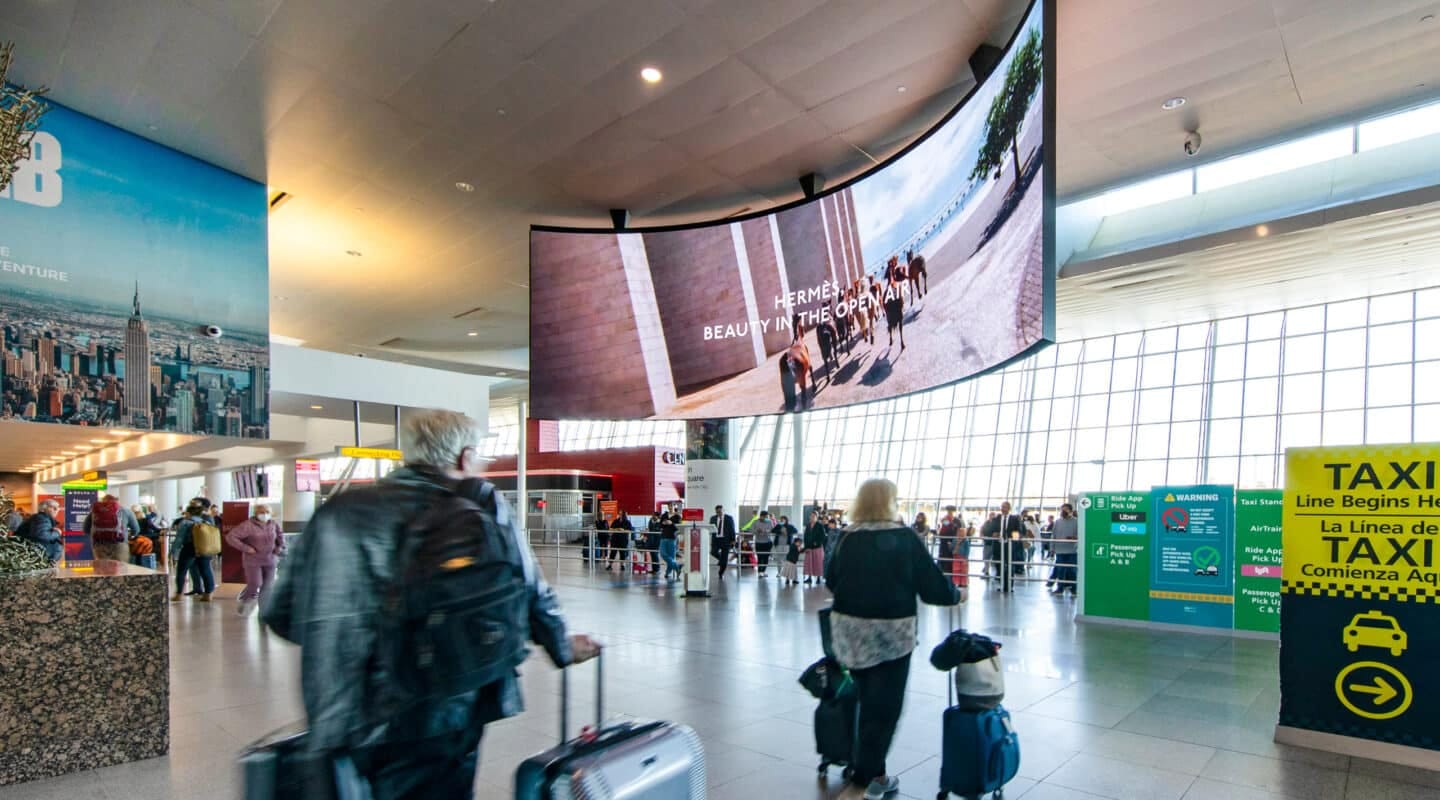
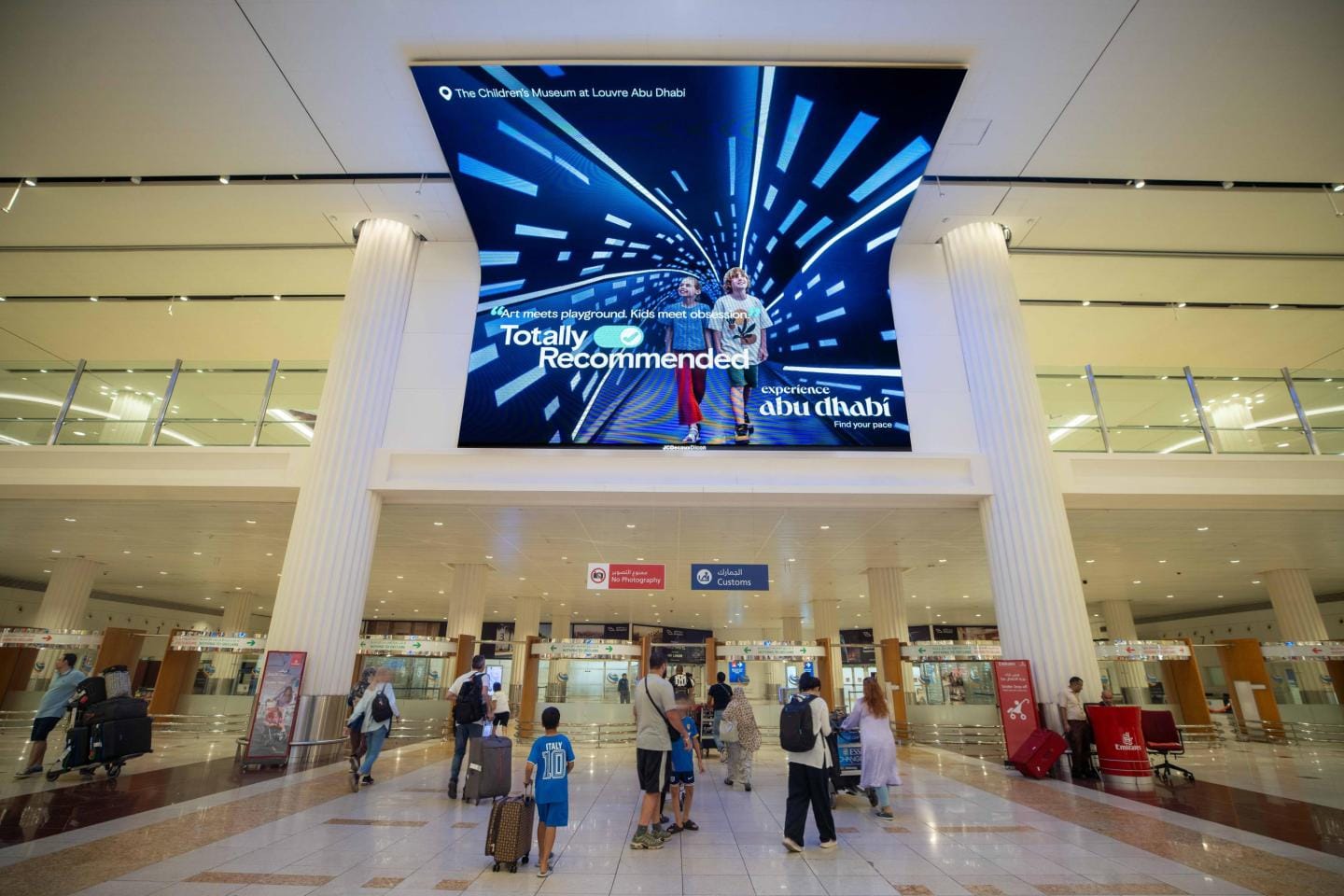
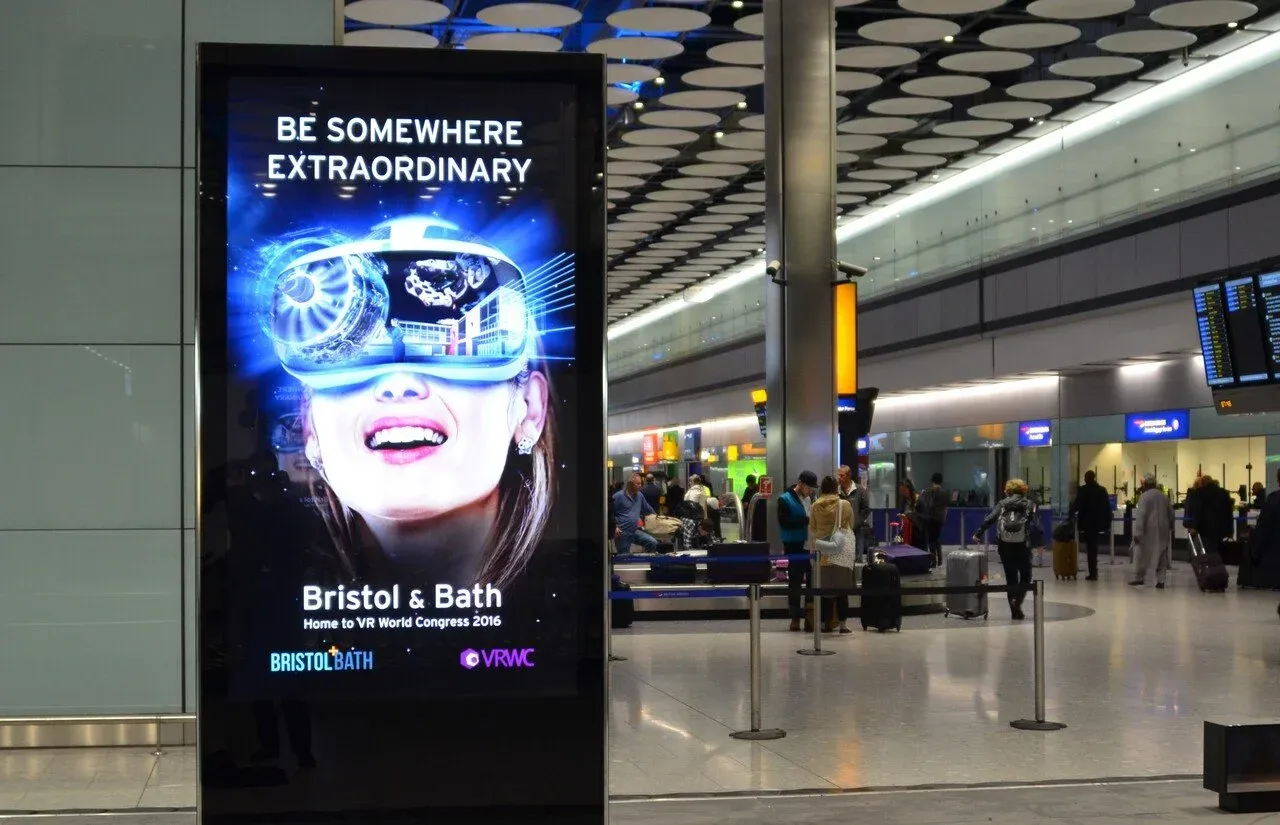
Media Environment at the Airport
- CIT's terminal delivers the lowest advertising clutter environment of any international airport in Kazakhstan outside Almaty and Astana — category exclusivity is achievable across multiple format types simultaneously, and the compact terminal footprint ensures that every placement achieves near-total audience exposure across the international departure flow
- Average international departure dwell time at CIT is 1.5 to 2 hours — the terminal's manageable scale creates a concentrated dwell environment whose limited number of food, beverage, and retail options means passengers spend proportionally more time in advertising-exposed transit zones than at airports with extensive retail distractions
- The cross-border nature of CIT's audience — Kazakh residents, Uzbek business visitors, Turkish professionals, and Gulf-corridor travellers — creates a multi-language, multi-cultural advertising environment that rewards bilingual Kazakh-Russian and Russian-Uzbek creative alongside Turkish and Arabic-language formats for the specific corridors where those languages reach their most commercially relevant audiences
- Masscom Global holds access to CIT's placement inventory with campaign planning capability aligned to the Islamic calendar peaks, the cross-border trade cycle, the Turkish and Dubai investment corridor business travel windows, and the spring and autumn professional travel seasons that define CIT's premium audience concentration moments
Strategic Advertising Fit
Best Fit
- Dubai and UAE real estate developers: CIT is one of Central Asia's most direct access points for the HNWI class actively investing in Dubai property — Kazakh and Uzbek buyers whose cross-border commercial sophistication and above-average liquid assets make them a priority acquisition audience for developers across Dubai's premium and mid-premium residential market
- Islamic banking and halal financial products: South Kazakhstan's devoutly Muslim HNWI audience is among the most structurally aligned populations in the CIS for Islamic finance — sukuk, Sharia-compliant mortgages for UAE property, Islamic trade finance for cross-border commerce, and halal investment platforms will find an audience at CIT whose faith identity and commercial sophistication create natural product-market fit
- Turkish real estate and citizenship advisory firms: The Istanbul corridor makes CIT one of the most efficiently targeted access points for Turkish property developers and citizenship advisory firms reaching the Central Asian buyer — the Kazakh and Uzbek HNWI traveller departing CIT for Istanbul frequently does so with property viewing appointments already scheduled
- Cross-border trade finance and B2B banking services: The Kazakh-Uzbek cross-border commercial community at CIT is among the most structurally underserved B2B financial service audiences in Central Asia — trade finance platforms, cross-border banking, and multi-currency treasury management brands will find a motivated and commercially sophisticated audience whose daily operational complexity creates genuine demand for their products
- Premium pharmaceutical and healthcare brands: Kazakhstan's pharmaceutical capital generates both a professional medical audience and a consumer healthcare market whose above-average medical literacy and income create strong receptivity to premium healthcare product and private health insurance advertising
- International education (Russia, Turkey, UAE, Chinese universities): South Kazakhstan's HNWI families are active international education investors — advertising at CIT reaches the family decision-maker at the airport whose September and January departures carry education investment spending commitments of substantial scale
- Premium automotive brands (accessible via Turkish and UAE distribution): The South Kazakhstan HNWI consumer has developed premium vehicle brand preferences through Istanbul and Dubai showroom exposure — automotive advertising at CIT bridges that aspiration to the local market purchase decision
- Hajj and Umrah travel services: South Kazakhstan's devout Muslim community makes faith travel a priority commercial category at CIT — Hajj facilitation services, premium Umrah packages, and Islamic travel brands will find a spiritually motivated, community-respected audience whose word-of-mouth endorsement extends well beyond the terminal
Brand Alignment at a Glance
| Category | Fit |
|---|---|
| UAE and Dubai Real Estate | Exceptional |
| Islamic Banking and Halal Finance | Exceptional |
| Turkish Real Estate and Citizenship Advisory | Exceptional |
| Cross-Border Trade Finance and B2B Banking | Exceptional |
| Premium Healthcare and Pharmaceutical Brands | Strong |
| International Education (Russia, Turkey, UAE) | Strong |
| Hajj and Umrah Travel Services | Strong |
| Premium Automotive (Turkish and Gulf distribution) | Strong |
| Western Luxury Brands without Central Asian distribution | Moderate |
| Mass FMCG with no halal alignment | Poor fit |
Who Should Not Advertise Here
- Western luxury brands without Central Asian distribution or accessibility: Premium brands whose product is genuinely inaccessible to CIT's catchment audience — due to distribution limitations, payment infrastructure constraints, or geographic service restrictions — will generate awareness without conversion regardless of creative quality; the CIT audience is commercially motivated and will not engage with brands they cannot access
- Alcohol and non-halal food brands: South Kazakhstan's devoutly Muslim consumer base means advertising for alcohol, pork-derived products, or non-halal food categories will achieve near-zero conversion and may generate community disapproval that damages brand perception beyond the advertising impression — these categories are categorically misaligned with the cultural values of the dominant audience
- Secular lifestyle brands targeting urban youth demographics: CIT's commercial context is defined by established business wealth, family investment decisions, and faith-consistent consumer values — brands whose primary target is a young, secular, urban lifestyle demographic will find a limited and misaligned audience in a terminal whose dominant consumer motivations are grounded in family, community, and commercial rather than individual lifestyle identity
Event and Seasonality Analysis
| Metric | Rating |
|---|---|
| Event Strength | Medium |
| Seasonality Strength | High |
| Traffic Pattern | Faith-calendar driven with spring and autumn trade peaks |
Strategic Implication
CIT operates on an Islamic faith-calendar cycle that is more commercially determinative at this airport than at most Central Asian airports — Ramadan, Eid ul Fitr, Eid ul Adha, and the Hajj season collectively define four of the year's most commercially concentrated audience windows, each with specific spending triggers, emotional contexts, and brand category alignments. Masscom Global structures CIT campaigns to activate in the four to six weeks before Eid ul Fitr — when pre-holiday consumer spending peaks and family travel planning is most active — and in the September–October autumn trade activation window when the cross-border commercial cycle reaches its annual peak alongside the Islamic calendar's Eid ul Adha period. Advertisers in real estate, Islamic finance, and cross-border trade services should treat the autumn window as CIT's highest per-impression commercial value period — when the Kazakh-Uzbek business elite is simultaneously planning Dubai property investments, activating cross-border trade for the fourth quarter, and deploying the financial decisions that have been building since the summer.

Poor Placement and Delays Affect Airport Campaigns
We help you move faster, access better inventory, and get it right now.
Talk to an ExpertFinal Strategic Verdict
Shymkent International Airport is the most commercially undervalued gateway in the Central Asian airport advertising landscape — a terminal whose dual-country commercial catchment, cross-border trade intensity, and deep alignment with the most commercially active corridors in Eurasia have not yet been priced into its advertising inventory at the level that its strategic position deserves. The Kazakh-Uzbek border trade community, the South Kazakhstan oil and pharmaceutical HNWI class, and the Istanbul and Dubai investment corridor travellers who pass through this terminal represent a concentration of cross-border commercial intent and financial capacity that is genuinely rare at an airport of CIT's current scale.
For UAE real estate developers, Islamic financial institutions, Turkish citizenship advisory firms, cross-border trade finance platforms, and premium brands entering the Central Asian market through its most strategically positioned southern gateway, CIT is the first buy to make in Kazakhstan's south — and the relationship formation opportunity with a wealth class whose commercial trajectory is pointing sharply upward as Kazakhstan's southern corridor and Uzbekistan's economic liberalisation simultaneously accelerate. Masscom Global's access, Islamic calendar campaign architecture, and cross-border corridor intelligence make this the moment to establish CIT presence before the terminal expansion, route growth, and competitive recognition of this airport's strategic value align to raise the cost of what is currently the most accessible premium audience in Central Asian airport advertising.
About Masscom Global
Masscom Global is a premium international airport advertising and media buying agency operating across 140 countries. With deep expertise in airport OOH, premium publications, and high-net-worth audience targeting, Masscom helps brands reach the world's most valuable travellers at the moments that matter most. For advertising packages, media rates, and campaign planning at Shymkent International Airport and airports across the globe, contact Masscom Global today.
Frequently Asked Questions
How much does airport advertising cost at Shymkent International Airport? Advertising costs at Shymkent CIT vary by format type, placement zone, campaign duration, and seasonal demand — with the pre-Eid consumer spending window, the spring Nauryz travel peak, and the autumn trade activation season commanding premium rates. The terminal's relatively underdeveloped advertising market creates category exclusivity at cost efficiencies not available at Kazakhstan's larger Almaty and Astana airports. Contact Masscom Global for current rate cards and available inventory across all formats at CIT.
Who are the passengers at Shymkent International Airport? CIT's passenger base spans four commercially distinct segments: South Kazakhstan's resident industrial and trade executive class — oil sector management, pharmaceutical business owners, and cross-border wholesale entrepreneurs — whose domestic and international travel routes through CIT year-round; Uzbek nationals from northern Uzbekistan and the Tashkent catchment who use CIT for international routes offering better connectivity or pricing than Tashkent's own airport; Turkish and Gulf-based professionals managing bilateral business relationships in South Kazakhstan; and the faith-motivated Hajj and Umrah travel segment whose community authority and household spending influence extend well beyond their individual passenger count.
Is Shymkent International Airport good for Islamic finance brand advertising? CIT is one of the most precisely aligned airports in the CIS for Islamic financial product advertising. South Kazakhstan's near-universally Muslim population, its devoutly observant cultural practice, and its growing HNWI class with active cross-border investment needs create a structurally ideal audience for sukuk, Sharia-compliant mortgages, halal investment platforms, and Islamic trade finance products. No other airport in Kazakhstan concentrates a Muslim HNWI commercial audience with this level of faith-consistent purchasing motivation in a market where halal-aligned financial products are both culturally preferred and genuinely underserved.
What is the best airport in Kazakhstan to reach cross-border trade audiences? CIT is the only Kazakh airport whose commercial catchment structurally includes the Uzbekistan market — the Kazakh-Uzbek border at Jibek Joly is one of Central Asia's busiest commercial crossings, and the Uzbek business community's use of CIT for international travel makes this terminal uniquely positioned for cross-border trade finance, B2B logistics, and bilateral commercial service brands. Almaty and Astana serve larger domestic and international volumes but without the Uzbek cross-border dimension that makes CIT commercially distinctive. Masscom Global can build multi-airport Central Asian strategies combining CIT, Almaty, and Astana for brands requiring pan-Kazakhstan and regional reach.
What is the best time to advertise at Shymkent International Airport? CIT offers four high-value advertising windows aligned to the Islamic calendar and commercial cycle: the four to six weeks before Eid ul Fitr (highest pre-holiday consumer spending peak), the Eid ul Adha and Hajj season (highest faith-motivated travel and community-influenced spending concentration), the spring Nauryz period (March — cultural and family travel peak), and the September–October autumn trade activation season (cross-border commercial cycle peak combined with Dubai and Istanbul investment travel). The pre-Eid ul Fitr window delivers CIT's highest per-impression consumer brand conversion potential; the autumn window delivers the highest B2B and investment category audience concentration.
Can international real estate developers advertise at Shymkent International Airport? CIT is a commercially viable real estate advertising channel for developers in Dubai and Istanbul whose property markets are the primary investment destinations of CIT's HNWI class. Kazakh and Uzbek buyers at CIT are among Central Asia's most active Dubai property purchasers, and the Istanbul corridor's Turkish citizenship-by-investment programme aligns the Turkish property market with a highly motivated buyer segment at this airport. Masscom Global can structure corridor campaigns combining CIT placements with receiving-end advertising in Dubai and Istanbul for developers targeting Central Asian buyers at both ends of their investment journey.
Which brands should not advertise at Shymkent International Airport? Alcohol brands, non-halal food products, and secular lifestyle brands targeting an individualistic urban demographic are categorically misaligned with CIT's devoutly Muslim, family-and-community-oriented audience. Western luxury brands whose products are not accessible through Central Asian distribution will generate awareness without conversion. Budget price-led retail brands face audience misalignment against a HNWI industrial and trade executive class whose purchasing decisions are driven by quality, reliability, and community endorsement rather than price.
How does Masscom Global help brands advertise at Shymkent International Airport? Masscom Global provides airport advertising execution at CIT — from cross-border audience intelligence and Islamic calendar campaign planning through to inventory access across the terminal's key placement zones, creative localisation for Kazakh, Russian, and Uzbek-speaking audiences, and performance reporting calibrated to CIT's faith-calendar and trade-cycle traffic patterns. Masscom's ability to activate CIT campaigns in coordination with placements in Dubai and Istanbul allows brands to intercept the same Central Asian HNWI traveller at departure from Shymkent and at arrival in their primary investment destination. Contact Masscom Global to discuss media rates, format availability, and campaign strategy at Shymkent International Airport.