

Airport at a Glance
| Field | Detail |
|---|---|
| Airport | Shanghai Pudong International Airport |
| IATA Code | PVG |
| Country | China (People's Republic of China) |
| City | Shanghai (Pudong, 30 km east of city centre) |
| Annual Passengers | 76.8 million (2024); +41% YoY; China's busiest airport |
| Primary Audience | Multinational corporate executives, Chinese private enterprise leaders and HNWI, outbound Chinese luxury consumers, inbound international business and premium leisure visitors |
| Peak Advertising Season | Spring (March — F1 Chinese GP), Golden Week (October), November (CIIE), Chinese New Year (January/February) |
| Audience Tier | Tier 1 |
| Best Fit Categories | Luxury goods and duty-free, international real estate, B2B professional services, premium automotive, technology, international education, luxury hospitality |
Shanghai Pudong International Airport entered the world's top 10 busiest airports in 2024 for the first time since the pandemic — a jump from 21st in 2023 to 10th globally, handling 76.8 million passengers in a single year. That number is not a recovery story alone: it is 0.8% above the airport's own 2019 pre-pandemic peak, meaning PVG has fully restored its historic volume and is now growing from a new high base. What makes this commercially remarkable is that no other airport in the world sits in the top 10 simultaneously for passenger traffic and cargo throughput. PVG ranked second globally in cargo in 2024 — 3.78 million metric tonnes, behind only Hong Kong — making it the only airport in the world's top 10 by passengers that is also the second-busiest cargo hub on the planet. For advertisers, this dual classification means a single terminal environment that intercepts both the global business and premium consumer audience that moves the world's luxury goods, technology, and investment capital, and the supply chain executives who move every physical product China exports to the world.
Shanghai's economic credentials are specific and extraordinary. The city crossed ¥5 trillion ($760 billion) in GDP in 2024 — the first Chinese city to reach this threshold — growing at approximately 5% year-on-year. Its port is the world's busiest for the 15th consecutive year, handling 51.5 million TEUs in 2024. The city hosts 998 multinational regional headquarters — the highest concentration outside the established Western world — and its financial transaction volume reached ¥3,650 trillion in 2024, placing Shanghai in the top tier of global financial centres. Shanghai is China's most international city: foreign companies contribute 60% of total trade, 40% of industrial output, and 25% of GDP. The 123,400 millionaires who call Shanghai home have seen their ranks grow 84% over the past decade, making the city Asia's fastest-growing major wealth hub after Shenzhen. PVG is the single airport that serves all of them.
Advertising Value Snapshot
- Passenger scale: 76.8 million in 2024, up 41% year-on-year; China's busiest airport and world's 10th overall; 35.25 million international passengers — the most of any mainland Chinese airport; busiest single day of 2024 was 11 August at 254,000 passengers; transfer rate reached a record 15.7% in 2024; by 2030, PVG targets 130 million annual passengers with Terminal 3 under construction
- Traveller type: Chinese private enterprise founders and HNWI, multinational corporate executives based in or visiting Shanghai's 998 MNC headquarters, outbound Chinese luxury consumers whose overseas spending now accounts for 40% of their total luxury expenditure, inbound international business and premium leisure visitors boosted by China's 240-hour visa-free transit policy
- Airport classification: Tier 1 — China's busiest airport; world's 10th busiest by passengers; world's 2nd busiest by cargo; sole airport in global top 10 for both simultaneously; primary hub for China Eastern, SkyTeam alliance, and three major international express cargo operators (FedEx, UPS, DHL — DHL's largest express hub in Asia based here)
- Commercial positioning: Shanghai is China's financial capital, international trade hub, and most multinational city; GDP ¥5.39 trillion in 2024; 998 MNC regional headquarters; world's busiest port for 15 consecutive years; host of the annual China International Import Expo (CIIE) and the Formula 1 Chinese Grand Prix
- Wealth corridor signal: PVG anchors Shanghai's most commercially active outbound corridors to London, New York, Los Angeles, Singapore, Tokyo, Paris, Frankfurt, and Sydney — the routes through which China's most internationally engaged business community and HNWI travellers deploy capital and conduct commerce
- Advertising opportunity: Masscom Global provides brands with the intelligence and placement access to reach PVG's extraordinary dual audience — China's private enterprise elite and outbound luxury consumers, and the international multinational executives who travel to and from Shanghai as China's most internationally open city
Airport Advertising is Complex to Get Right
We help you execute faster, with proven results and local insight most planners lack starting now.
Talk to an ExpertCatchment Area and Economic Drivers
Top 10 Cities within 150 km — Marketer Intelligence
- Shanghai (Lujiazui, Jing'an, Pudong): China's commercial capital, home to 998 multinational regional headquarters, 123,400 millionaires, the Shanghai Stock Exchange (largest in Asia-Pacific by market capitalisation), the Shanghai Free Trade Zone, and the city's three signature industries — integrated circuits, biomedicine, and artificial intelligence — which together reached ¥1.8 trillion in scale in 2024; PVG serves the senior executives of every major Chinese private enterprise and international MNC in the city, making it the most commercially dense corporate airport catchment in mainland China
- Suzhou (Jiangsu Province): One of China's most economically productive cities per capita, approximately 80 km west of PVG, housing the Suzhou Industrial Park — the most successful Sino-foreign industrial development zone in China and home to 30,000+ foreign enterprises including Samsung, Bosch, Siemens, and Philips; Suzhou's international manufacturing executive community accesses global connections through PVG regularly; Suzhou was recently connected to PVG's remote check-in system, allowing passengers to check in at Suzhou before travelling to the airport
- Hangzhou (Zhejiang Province): Approximately 180 km south of Shanghai but within the core Yangtze River Delta economic zone, home to Alibaba Group, Ant Group, NetEase, and China's most productive private digital economy cluster; the Alibaba founder community and Hangzhou's technology billionaire ecosystem represent one of China's fastest-growing UHNWI travel audiences at PVG; Hangzhou is also connected to Shanghai by the 45-minute high-speed rail
- Nanjing (Jiangsu Province): The capital of Jiangsu province and a major financial, manufacturing, and education city approximately 300 km northwest of Shanghai but within the Yangtze River Delta economic zone; Nanjing's auto industry (SAIC-Volkswagen), pharmaceutical sector, and government principals access international travel through PVG
- Nantong (Jiangsu Province): Connected to Shanghai via the Sutong Yangtze River Bridge, Nantong is a major port, construction, and textile manufacturing city whose business leadership accesses international travel through PVG; the city's growing financial sector generates regular premium business travel
- Kunshan (Jiangsu Province): Directly between Shanghai and Suzhou on the high-speed rail line, Kunshan's technology and electronics manufacturing ecosystem — home to numerous Taiwanese-funded enterprises — generates consistent cross-strait and international business travel through PVG; the Taiwanese business community in Kunshan is one of the most commercially distinct HNWI segments at the airport
- Ningbo (Zhejiang Province): China's second-largest port city and a major manufacturing hub approximately 150 km south of Shanghai; Ningbo's shipping, manufacturing, and private business community — including the families behind China's most productive export manufacturing base — accesses international travel and banking connections through PVG
- Wuxi (Jiangsu Province): A major Yangtze River Delta city with significant semiconductor, biotech, and IoT industry development; Wuxi's technology and industrial leadership travel through PVG for international business, and the city's growing premium residential community contributes HNWI outbound leisure travel
- Jiaxing (Zhejiang Province): Strategically positioned between Shanghai and Hangzhou, Jiaxing is a growing industrial and logistics city whose business community accesses Shanghai's international connections through PVG; the city's textile and manufacturing sector generates regular B2B international trade travel
- Zhangjiangzhen (Pudong, Shanghai): The Zhangjiang Hi-Tech Park is China's most significant life science and semiconductor research cluster, located in Pudong's eastern technology corridor directly adjacent to PVG's catchment; the senior scientists, venture capitalists, and commercial executives of Zhangjiang's pharmaceutical, biotech, and integrated circuit companies represent a concentrated, internationally mobile, premium B2B audience that travels through PVG on a daily basis
NRI and Diaspora Intelligence
Shanghai's diaspora dynamic at PVG is more commercially multidimensional than at any other Chinese airport. The most commercially significant inbound diaspora audience is the overseas Chinese professional community from the US, UK, Australia, Singapore, and Japan — the Chinese-American entrepreneur returning from Silicon Valley, the Shanghai-born Goldman Sachs banker connecting from New York, the Taiwanese manufacturing executive whose Kunshan factory maintains a Shanghai banking relationship. The international resident community in Shanghai — the largest expatriate community in mainland China, concentrated in Jing'an, Changning, and Xuhui — generates the highest per-person spending among any residential expatriate group in China, with premium consumption profiles in hospitality, luxury goods, international education, and premium housing. The 240-hour visa-free transit policy, which drove a 240% year-on-year surge in foreign arrivals at PVG in the first half of 2024, is further diversifying this inbound audience.
Economic Importance
Shanghai's economy operates at a scale and international integration that makes PVG commercially unique in mainland China. The city's total financial transaction volume of ¥3,650 trillion in 2024 — encompassing 15 national-level markets in Lujiazui including the Shanghai Stock Exchange, Shanghai Futures Exchange, China Foreign Exchange Trade Centre, and the new Shanghai Star Market — is the physical infrastructure of China's capital market integration with the global financial system. The combined GDP of the Yangtze River Delta — Shanghai plus Jiangsu, Zhejiang, and Anhui provinces — exceeded ¥33 trillion in 2024, equivalent to the GDP of Germany or Japan, and represents approximately one quarter of China's total national output. For advertisers, this means that the economic activity surrounding PVG is not limited to Shanghai's city boundary: the 163 million people and dozens of economically significant cities within the Yangtze River Delta's 225,000 square kilometre footprint all have Shanghai as their primary international gateway, and PVG as their primary international airport.
Business and Industrial Ecosystem
- Multinational regional headquarters — 998 companies: Shanghai hosts 998 multinational regional headquarters — including the Asia-Pacific centres of Goldman Sachs, JPMorgan, Morgan Stanley, Tesla, ABInBev, Pfizer, Roche, BASF, Volkswagen, Nestlé, and hundreds of others — the highest concentration outside Europe and North America; the senior executives of these companies travel through PVG on routes to New York, London, Singapore, Tokyo, and Frankfurt for investor relations, board meetings, and global business development; this MNC hub audience is PVG's most commercially productive daily B2B advertising segment
- Private technology champions — Yangtze River Delta ecosystem: The Yangtze River Delta's digital economy includes Alibaba (Hangzhou), Ant Group (Hangzhou), ByteDance's Shanghai operations, Pinduoduo (Shanghai), SHEIN's global operations, and the founders and investors of China's most globally relevant technology companies; this community accesses PVG for San Francisco, New York, and Singapore connections that support their international fundraising, IPO preparation, and global expansion activities; the tech founder and venture investor community is one of China's fastest-growing UHNWI travel segments
- Financial and capital market institutions: Shanghai's Lujiazui financial district houses the Chinese headquarters of every major global investment bank, the Shanghai Stock Exchange, the China Securities Regulatory Commission's Shanghai bureau, and China's primary capital market infrastructure; the fund managers, analysts, and investment bankers of this community travel through PVG on London, New York, and Singapore connections regularly; B2B financial services, professional services, and enterprise technology advertising will find a technically sophisticated, commercially active audience
- Pharmaceutical and life sciences — Zhangjiang cluster: Zhangjiang Science City in Pudong is China's most productive pharmaceutical and biotech R&D hub, housing the China operations of Roche, Pfizer, AstraZeneca, Johnson & Johnson, along with domestic champions Zai Lab, BeiGene, and Hengrui Medicine; the senior medical and commercial executives of this cluster travel through PVG to the US, Switzerland, and the UK for regulatory interactions, clinical trial management, and international licensing partnerships
- E-commerce and logistics ecosystem: PVG's status as the world's second-busiest cargo airport is structurally linked to China's dominance of global cross-border e-commerce; the senior supply chain, logistics, and platform executives of Alibaba, JD.com, Cainiao, Shein, and their international logistics partners generate consistent B2B executive travel through PVG and represent a commercially relevant audience for professional services, enterprise software, and premium business products
Passenger Intent — Business Segment
The PVG business traveller is China's most internationally integrated executive cohort. Unlike Beijing's institutional SOE audience, whose travel is driven by bilateral government and energy relationships, Shanghai's business traveller community is driven by private enterprise and multinational commerce — the venture capitalist raising a fund in San Francisco, the China Eastern vice president managing European route strategy, the Alibaba principal attending a board meeting in Tokyo, the Goldman Sachs managing director presenting results to a New York investment committee. This audience is highly commercially active at the airport, with purchase decisions — whether for luxury goods, financial services, or international property — already in progress before they reach the departure gate.
Strategic Insight
PVG's strategic advantage over Beijing Capital Airport for commercial advertisers is its private enterprise and multinational orientation. Beijing's audience is the most institutionally powerful in China; Shanghai's is the most commercially productive. The Chinese private sector billionaire, the international MNC managing director, the Yangtze River Delta entrepreneur who has built a global supply chain from Suzhou — these individuals make their most significant commercial decisions at the intersection of Chinese growth and international capital that Shanghai alone represents. For international brands seeking the Chinese market's most commercially sophisticated HNWI audience, PVG delivers more transactions per impression than any other mainland Chinese airport.
Tourism and Premium Travel Drivers
- The Bund and Lujiazui — Shanghai's iconic financial and cultural waterfront: The Bund's art deco colonial architecture facing Lujiazui's modern skyscrapers creates one of the world's most recognisable urban vistas; the international premium tourist arriving at PVG to experience Shanghai's unique layering of historical and contemporary luxury has a per-night accommodation budget — at the Waldorf Astoria Bund, The Peninsula Shanghai, Park Hyatt, or The Ritz-Carlton — among the highest of any mainland China gateway city
- Formula 1 Chinese Grand Prix (March — annual): Shanghai International Circuit, 30 km northwest of the city centre, has hosted the Chinese Grand Prix since 2004; after a five-year COVID hiatus, the race returned in 2024 to a crowd of 200,000 and F1 has committed to Shanghai through 2030; the Grand Prix creates a concentrated inbound premium international audience at PVG every March — corporate hospitality executives, premium sports tourism visitors from Europe, Singapore, Japan, and Australia, and an ultra-premium Chinese consumer who treats F1 weekend as the year's highest-profile lifestyle event
- China International Import Expo (CIIE) — November, annual: The world's first import-themed national-level expo, held every November at the National Exhibition and Convention Centre adjacent to Hongqiao Airport; the 2024 edition drew 3,500 exhibitors from 129 countries including 297 Fortune 500 companies, generating $80 billion in intended deals; every CIIE draws a concentrated wave of senior international trade and commercial executives through PVG in late October and early November — one of the year's most commercially productive B2B inbound audience windows at the airport
- Shanghai's premium cultural calendar: Art Basel Hong Kong's regional cousin, West Bund Art & Design (November, Pudong), draws international art collectors, gallery owners, and HNWI cultural investors to Shanghai's rapidly growing contemporary art scene; the city's 57,000 commercial performances in 2024 — attracting 25 million attendees — include international concerts, theatrical productions, and entertainment events that generate consistent premium leisure inbound traffic
- Disneyland Shanghai and premium leisure ecosystem: Shanghai Disneyland, one of the most visited theme parks in Asia, combined with the city's premium dining scene (Shanghai has more Michelin-starred restaurants than any city in mainland China), luxury retail in Nanjing Road West and Xintiandi, and vibrant nightlife in the Former French Concession, creates a comprehensive premium inbound tourism proposition that is fully accessible through PVG
Passenger Intent — Tourism Segment
The inbound premium tourist arriving at PVG is entering the Chinese city that most naturally accommodates an international lifestyle — English is widely spoken in Shanghai's Lujiazui and Jing'an districts, international credit cards are broadly accepted, and the city's infrastructure for premium foreign visitors is more developed than anywhere else in mainland China. The corporate hospitality guest arriving for the F1 Grand Prix has a clearly defined weekend budget that encompasses team dinners, luxury hotels, and high-end entertaining. The CIIE trade visitor has confirmed sourcing commitments and will remain in Shanghai for four to five nights, spending across premium hospitality, business entertainment, and luxury retail. The international art collector at West Bund arrives with acquisition intent. PVG's inbound premium tourist is in active, high-value commercial mode from the moment they land.
Travel Patterns and Seasonality
Peak seasons:
- Spring (March to April — F1 Grand Prix and pre-summer business peak): The F1 Chinese Grand Prix in March creates the year's most concentrated inbound premium motorsport and corporate hospitality audience; the spring business season in Shanghai coincides with MNC Q1 planning cycles and international investor roadshows, maintaining strong premium B2B traffic throughout the window
- Golden Week (October 1–7): The most concentrated outbound leisure travel window; Shanghai's HNWI and professional families travel internationally for Golden Week, with Europe, Japan, Southeast Asia, and the Maldives as dominant destinations; luxury goods, international property, and European hospitality advertising performs most efficiently in the Golden Week pre-departure window at PVG
- November (CIIE and West Bund Art season): The double-event window of the China International Import Expo (November 5–10) and West Bund Art & Design creates the year's most concentrated inbound international B2B and premium cultural tourism audience at PVG; the MNC executives from 129 countries attending CIIE alongside the art world's premium collector community create a uniquely diverse and commercially valuable inbound window
- Chinese New Year / Spring Festival (January to February): Shanghai's HNWI and professional community travels internationally for Chinese New Year; Europe, Maldives, Japan, and Southeast Asia are primary destinations; luxury gifting, premium food, and international hospitality advertising peaks simultaneously
- Year-round international and MNC corporate travel: Shanghai's 998 MNC headquarters generate year-round corporate travel on PVG's international routes that is structurally independent of seasonal patterns; B2B professional services and premium business product campaigns are viable year-round
Event-Driven Movement
- Formula 1 Chinese Grand Prix (March — annual): Shanghai's most commercially premium international event, confirmed through 2030; the corporate hospitality audience, international motorsport fans, and ultra-HNWI Chinese consumers treating F1 weekend as the year's prestige lifestyle event create a concentrated premium advertising window in the three weeks before and during the Grand Prix
- China International Import Expo — CIIE (November, annual): The most commercially productive single-event B2B inbound window at PVG; 3,500+ exhibitors from 129 countries, 297 Fortune 500 companies, $80 billion in 2024 deals; the MNC executives, government trade delegations, and procurement officers flowing through PVG during CIIE week represent the most commercially active single-week international B2B audience in mainland Chinese aviation
- Chinese New Year / Spring Festival (January to February): Shanghai's largest annual outbound leisure travel surge; HNWI families depart for Europe, Japan, and Southeast Asia; premium gifting, luxury retail, and international hospitality advertising benefits strongly from this pre-departure window
- Golden Week (October 1–7): The year's most concentrated HNWI outbound leisure window; Shanghai's professional and business-owner community travels internationally at maximum density; luxury goods, premium automotive, and international property advertising peak
- West Bund Art & Design and Shanghai Art Week (November): One of Asia's most significant art market events, drawing ultra-HNWI collectors, gallerists, and art investors from across the world; Art Basel's China relationship and Shanghai's growing global art market positioning make this an increasingly significant commercial audience window at PVG for luxury brand and wealth management advertising
It’s Not Just Where You Advertise - It’s How Fast You Execute
We combine local insight with fast rollout to deliver results for you, now.
Talk to an ExpertAudience and Cultural Intelligence
Top 2 Languages
- Mandarin (Putonghua): The operational language of every Chinese passenger, government engagement, and domestic corporate communication at PVG; Shanghai Mandarin carries the prestige associations of China's most internationally exposed city — cosmopolitan, commercially direct, and increasingly globally calibrated; advertising creative in Mandarin at PVG that speaks to Shanghai's sophisticated, internationally travelled consumer culture will consistently outperform generic national-market Mandarin creative
- English: The working language of Shanghai's 998 MNC headquarters community, the Zhangjiang international science city, the city's international schools, and the full breadth of PVG's inbound international visitor stream; Shanghai has the highest English language penetration of any mainland Chinese city and more Western expatriates than anywhere else in mainland China; bilingual Mandarin-English creative maximises reach across both the domestic premium audience and the inbound international corporate tier
Major Traveller Nationalities
PVG's international passenger profile is the most diverse of any mainland Chinese airport. Domestic Chinese nationals dominate volume, but among international passengers the profile reflects Shanghai's unique position as China's most globally engaged city. Japan, South Korea, the US, and European nations (particularly Germany, France, and the UK) generate the highest volumes of inbound international business travel. The US, Australia, Japan, and Singapore are the dominant markets for inbound premium leisure tourism, accelerated by China's 240-hour visa-free policy which drove a 240% year-on-year surge in foreign arrivals at PVG in 2024. Mainland Southeast Asian nationalities — Thai, Vietnamese, Malaysian, and Indonesian travellers — contribute growing volumes on China Eastern's expanding Southeast Asian network. Trans-Pacific passenger volumes are recovering strongly as US-China air service normalises.
Religion — Advertiser Intelligence
- No dominant organised religion (approximately 73% officially non-religious): China's cultural calendar is governed by Confucian-origin festivals rather than organised religious observance; advertising at PVG follows the rhythm of national cultural events rather than religious calendar triggers
- Buddhism and Taoism (approximately 18%): The spiritual traditions most visible in consumer behaviour at Chinese New Year, Mid-Autumn Festival, and Qingming; gifting, premium food, and family travel advertising peaks align with these festival windows
- Christianity (approximately 3%): Shanghai has a historically larger Catholic and Protestant community than most mainland Chinese cities due to its colonial history; the Christmas window and the international expatriate community's year-end celebrations create a modest but commercially relevant advertising opportunity for premium hospitality, gifting, and international travel brands
Behavioral Insight
The Shanghai HNWI is China's most globally calibrated luxury consumer. Unlike Beijing's institutionally oriented wealth, Shanghai's private enterprise millionaire is a market-made success story — the entrepreneur who built a supply chain, the tech co-founder who listed on NASDAQ, the finance professional who structured a cross-border deal. This consumer evaluates brands against global standards, travels internationally an average of two to three times per year, has children in international schools or overseas universities, and makes luxury purchases at both domestic and overseas prices with full knowledge of the price differential between markets. The 2024 data confirming that 40% of Chinese HNWI luxury spending occurs overseas — with Asia-Pacific exceeding pre-pandemic levels by 20% — tells the story of this audience precisely: they are shopping in Tokyo, Singapore, and Paris on their international trips, and the airport is the moment they transition between their domestic and international consumption identities. Advertising that acknowledges this transition — that positions international brands as accessible at both the departure and destination points of the journey — performs best at PVG.
Outbound Wealth and Investment Intelligence
Shanghai's outbound wealth profile is driven by China's most globally engaged private enterprise community. The city's HNWI population grew 84% over the past decade — faster than every major global city except Shenzhen — and the entrepreneurs, investors, and executives behind that growth are actively deploying capital internationally. China's total outbound direct investment reached $162.8 billion in 2024, growing 10% year-on-year; the Yangtze River Delta is the originating region for a disproportionate share of private enterprise outbound investment. Chinese HNWI offshore assets total approximately $1.8 trillion, projected to reach $3.4 trillion by 2025. The 2024 Hurun Chinese Luxury Consumer Survey confirms that Hong Kong (37%), Singapore (36%), the US (29%), the UAE (20%), and Europe (19%) are the priority outbound investment destinations for China's HNWI community — and the majority of that capital originates from or passes through Shanghai.
Outbound Real Estate Investment
Chinese HNWI international real estate investment from Shanghai follows a pattern of capital safety, education corridor alignment, and offshore wealth structuring. Singapore has emerged as the top priority — attracting 36% of HNWI investment intent — driven by proximity, freehold ownership rights, political stability, and the Global Investor Programme pathway to permanent residency. Hong Kong remains a structural market despite its proximity to the mainland, particularly for the Hong Kong-China financial corridor. The US (29% investment intent) draws HNWI buyers to New York, Boston, and Los Angeles for education corridor properties aligned with university placements. The UK (19% of European interest) continues to attract premium buyers in London, Oxford, and Surrey for university and boarding school corridor investment. Japan's combination of yen weakness and stable property yields drove Singapore to become Japan's largest foreign real estate investor in 2024 — a trend driven largely by Chinese and Singaporean capital channelled through Shanghai's financial community.
Outbound Education Investment
The Shanghai HNWI's education investment is among the most globally oriented in Asia. The average age at which Chinese HNWI children begin overseas schooling is 16, and over 80% of HNWI families surveyed in 2024 have active overseas education plans. The US has reclaimed the top study destination with a 13-percentage-point surge in the 2024 Hurun survey, followed by the UK (Oxford, Cambridge, LSE, and home county boarding schools), Singapore (increasingly favoured for proximity, safety, and quality), and Australia (Melbourne, Sydney). Shanghai's established international school community — with the British International School Shanghai, the French School, the American School of Shanghai, and Concordia among dozens of options — reflects the city's structural commitment to internationally educated children who then proceed to overseas universities. Education consultancies, boarding school networks, and university recruiters will find at PVG's departure environment one of the most commercially committed parent audiences in Asia.
Outbound Wealth Migration and Residency
China's largest HNWI outflow globally — an estimated 15,200 millionaires in 2024 — originates disproportionately from Shanghai and the Yangtze River Delta's private enterprise community. The primary motivations are capital diversification, education access, personal freedom, and geopolitical risk management. Singapore's Global Investor Programme (requiring S$200 million AUM), the UAE Golden Visa (available for real estate investment and business establishment), and the US EB-5 programme are the most commercially active residency pathways marketed to Shanghai's HNWI community. Portugal's Golden Visa, Greece's residency-by-investment, and the UK's Global Talent visa all serve as secondary residency tools. Investment migration consultancies, second-citizenship advisories, and premium residency service providers will find PVG one of the most commercially motivated global airports for their category.
Strategic Implication for Advertisers
PVG's outbound wealth dynamic is unique in mainland Chinese aviation because it is driven by private enterprise HNWI capital, not institutional SOE capital. The Alibaba co-founder buying a Singapore condominium, the Zhangjiang biotech entrepreneur sending her daughter to MIT, the Suzhou factory owner structuring an offshore trust in Jersey — these transactions originate from PVG's departure environment. For international brands on both sides of the capital corridor — UK boarding schools, Singapore developers, UAE Golden Visa specialists, US universities, European private banks — PVG is the single most commercially productive departure-side interception point for this audience in mainland China. Masscom structures PVG campaigns to reach both the outbound Chinese HNWI deploying capital internationally and the inbound MNC executive seeking access to China's most commercially dynamic city.
Airport Infrastructure and Premium Indicators
Terminals
PVG operates Terminal 1 (opened 1999, wave-shaped design) and Terminal 2 (opened 2008, similar wave form but larger), connected to Satellite Terminals S1 and S2 through high-capacity underground people movers — providing an additional 83 gates and 38 million annual passengers in H-shaped satellite structures opened in 2019. Terminal 3 construction commenced November 2024 as the flagship fourth-phase expansion project; the "Soaring" design covers over 1.7 million square metres with 90 contact stands (including 31 convertible domestic-international), targeting completion in 2028; upon opening, PVG will have three terminals, one satellite, and four runways with 130 million annual passenger capacity. The Airport Link Line commenced operations on 27 December 2024, providing direct rail access to Shanghai's suburban rail network with full integration to Shanghai East Railway Station planned for 2027. The Shanghai Oriental Hub International Business Cooperation Zone adjacent to the airport is expected to commence operations in 2025, creating a new premium commercial ecosystem directly connected to the terminal.
Premium Indicators
- World's sole top-10 airport in both passenger and cargo: The only airport in the world's passenger top 10 that is also the world's second-busiest cargo airport (3.78 million tonnes in 2024); for advertisers, this structural characteristic means that every day at PVG is simultaneously a premium consumer advertising environment and an industrial commercial hub — the executive managing a supply chain and the luxury goods purchaser share the same terminal
- DHL's largest express hub in Asia: Located at PVG since 2012, DHL's Asia hub is the largest express logistics operation of any global carrier on the continent; for B2B technology, logistics software, and supply chain service advertisers, the daily presence of DHL's operations team and their global commercial partners creates a consistent enterprise audience
- China Eastern and SkyTeam hub: China Eastern — the Chinese carrier with the most international destinations and the largest Chinese carrier to Australia, Japan, Malaysia, New Zealand, Singapore, South Korea, and Thailand — bases its entire global operations at PVG; the first and business class cabins of China Eastern's wide-body international fleet carry a premium B2B and HNWI audience on the airport's most commercially productive routes daily
- FedEx, UPS Asia-Pacific hubs: PVG houses both the FedEx and UPS Asia-Pacific operations hubs; the senior supply chain executives of their global client networks — the Amazon logistics team, the Apple supply chain manager, the luxury goods group's global distribution director — travel through PVG regularly on both inbound and outbound journeys
Forward-Looking Signal
PVG's forward trajectory is defined by a single overarching ambition: Shanghai targets 220 million annual passengers and 7.4 million tonnes of cargo by 2035, positioning the city as the world's leading shipping and air transport centre. Terminal 3's 2028 completion will add 50 million annual capacity. The fifth runway has completed environmental verification and will further expand operational throughput. The Shanghai Oriental Hub International Business Cooperation Zone adjacent to PVG — described by the airport as "a new hub for high-level opening-up and systemic reform" — will create a premium commercial district that extends PVG's commercial canvas beyond the terminals into an integrated aviation-commerce ecosystem. China Eastern has committed to maintaining the highest number of international destinations among all Chinese carriers and is specifically expanding medium- and long-haul routes and Belt and Road connections as a strategic priority. Masscom advises brands to establish PVG advertising presence now — before Terminal 3's completion transforms the inventory landscape and before the Shanghai Oriental Hub creates new premium commercial zones that will command the first-mover rate premium.
Airline and Route Intelligence
Top Airlines
China Eastern Airlines (primary hub carrier — SkyTeam), Shanghai Airlines (China Eastern subsidiary), Juneyao Air, Spring Airlines, Air China (secondary hub); major international carriers: Japan Airlines, Singapore Airlines, Emirates, Cathay Pacific, United Airlines, American Airlines, Delta Air Lines, British Airways, Air France, KLM, Lufthansa, Qantas, Korean Air, Asiana, ANA, Turkish Airlines, Vietnam Airlines, Thai Airways, Malaysia Airlines, Finnair, Air Canada
Key International Routes
- New York JFK and Los Angeles (China Eastern, United Airlines, American Airlines, Delta — primary trans-Pacific corridors)
- London Heathrow and Gatwick (China Eastern, British Airways)
- Paris Charles de Gaulle (China Eastern, Air France)
- Frankfurt (China Eastern, Lufthansa)
- Amsterdam Schiphol (China Eastern, KLM)
- Marseille (China Eastern — new route launched 2024)
- Singapore (China Eastern, Singapore Airlines — daily high-frequency)
- Tokyo Narita and Haneda (China Eastern, JAL, ANA — high frequency)
- Seoul Incheon (China Eastern, Korean Air, Asiana)
- Sydney and Melbourne (China Eastern, Qantas)
- Dubai (Emirates)
- Istanbul (Turkish Airlines)
- Vancouver (Air Canada)
- Kuala Lumpur, Bangkok, Ho Chi Minh, Hanoi, Taipei (China Eastern's Southeast Asia flagship routes)
Domestic Connectivity
PVG's domestic network connects Shanghai to Beijing, Guangzhou, Shenzhen, Chengdu, Chongqing, Kunming, Sanya, Xi'an, Xiamen, and 80+ domestic destinations. Critically, the Suzhou and Kunshan remote check-in facility allows Yangtze River Delta passengers to clear check-in before arriving at PVG — extending the airport's effective domestic catchment into the core cities of China's most economically productive region without additional transit burden.
Wealth Corridor Signal
China Eastern's route network reflects Shanghai's commercial identity — internationally oriented, commercially driven, and Asia-Pacific centred. The Singapore route is the primary corridor for Chinese HNWI capital deployment and family office investment activity in Southeast Asia. The Japanese routes carry the highest per-passenger luxury goods spending of any PVG international route, as Chinese HNWI travellers specifically travel to Japan to purchase luxury goods at the favourable yen-denominated price points. The New York and Los Angeles routes carry the technology investment relationships and university education corridors that define the Yangtze River Delta's most globalised private enterprise community. The London route carries both financial sector relationships and the UK education corridor investment that is among the most active outbound capital flows from Shanghai's HNWI community.
Media Environment at the Airport
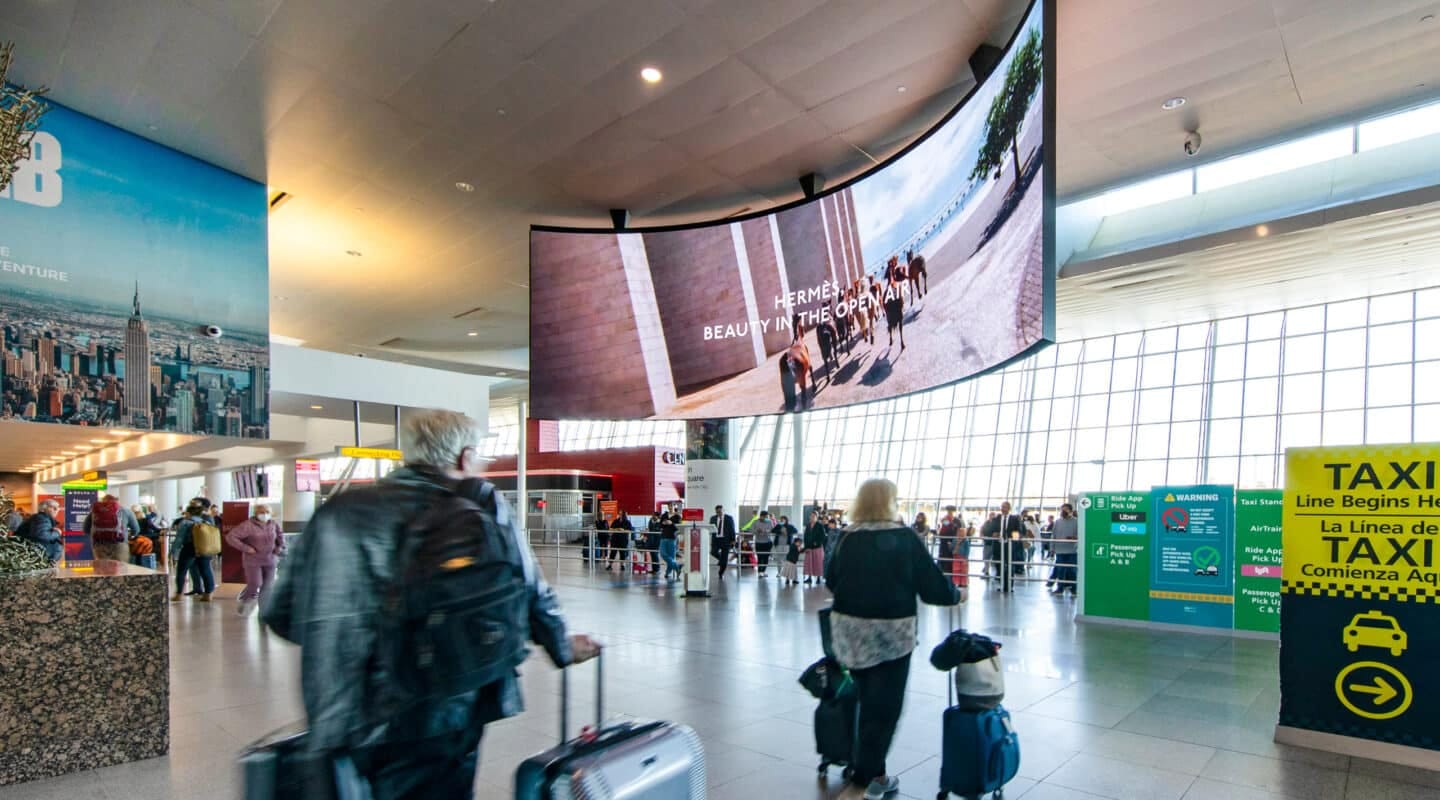
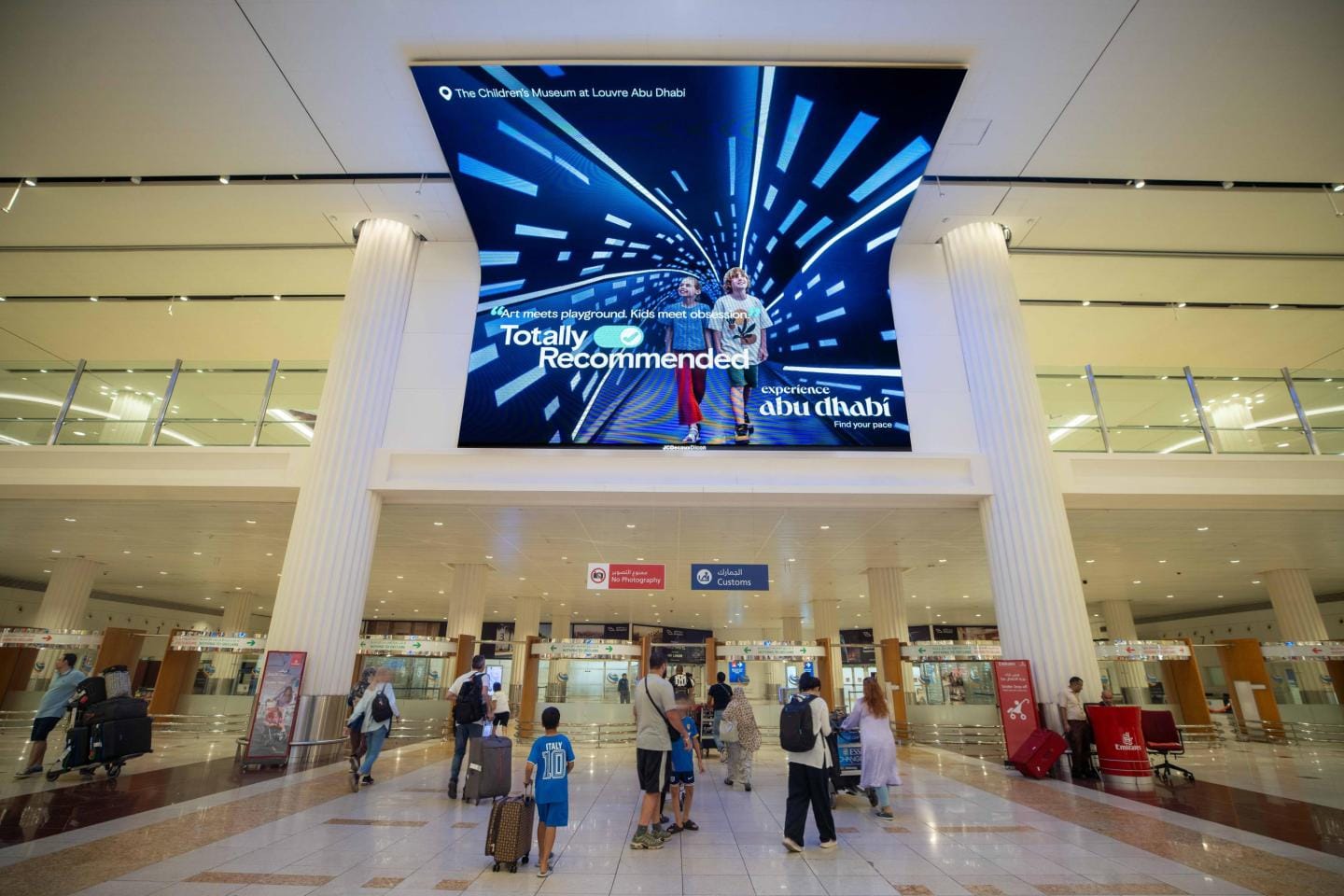
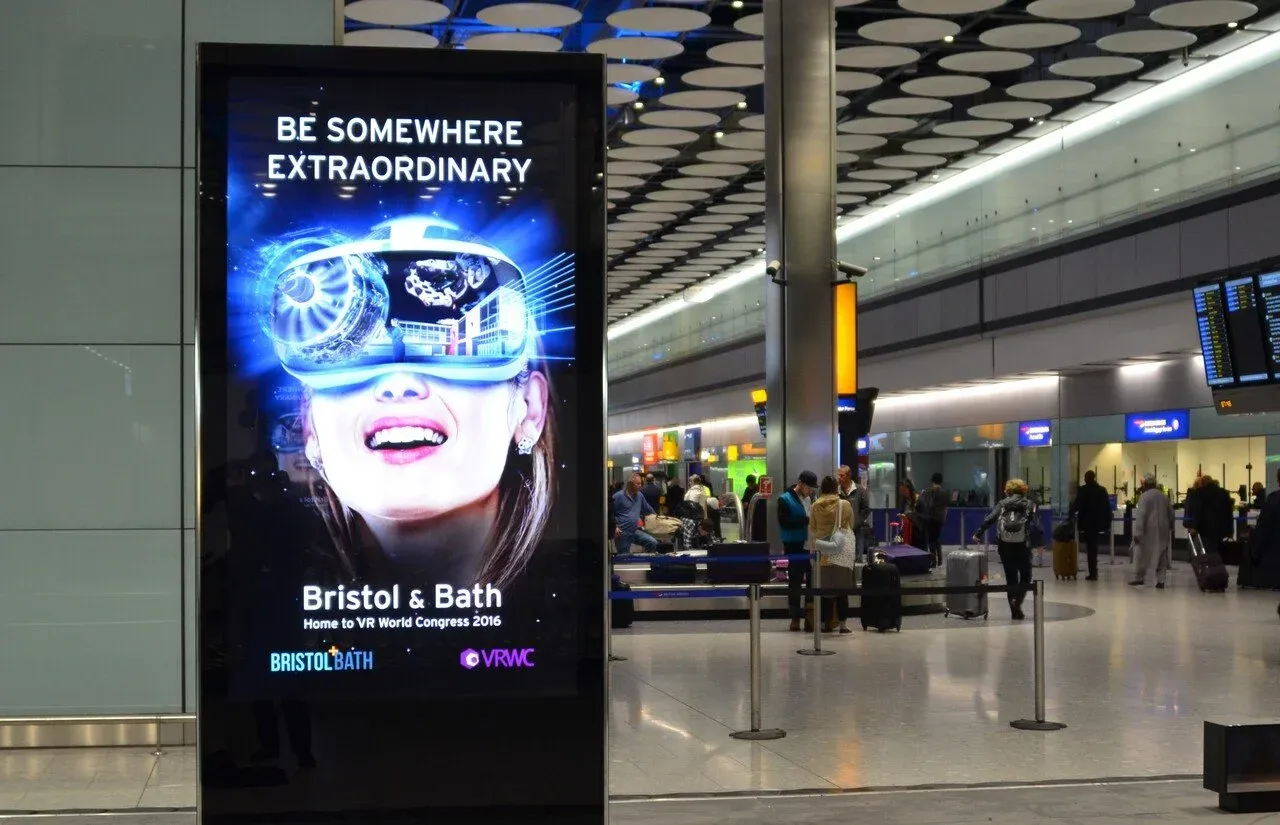
- PVG's dual-terminal system, combined with the S1 and S2 satellite structures, creates four distinct advertising environments across a campus covering 40 square kilometres — with the international departure zones of T1 and T2 (and the connected satellite terminals) offering the most commercially productive placement zones for premium brand advertising targeting PVG's international audience
- China Eastern's consolidated position as PVG's primary international hub carrier means that the airport's most commercially active departure periods — the early morning long-haul banks to North America and Europe, and the midday departures to Japan, Korea, and Southeast Asia — concentrate premium travellers in specific terminal zones and time windows that Masscom identifies with placement precision
- The December 2024 opening of the Airport Link Line, connecting PVG to Shanghai's suburban rail network for the first time, is expanding the airport's daily commercial catchment by integrating it with Shanghai's broader urban transit ecosystem — creating new advertising reach opportunities in the ground transportation centre and rail interface zones that extend beyond the traditional terminal advertising canvas
- Masscom Global structures PVG campaigns with Chinese advertising regulatory compliance expertise, Mandarin-language creative advisory, terminal-specific placement strategy, and seasonal campaign timing — delivering campaigns that meet China's commercial content standards while performing at the level PVG's extraordinary audience demands
Strategic Advertising Fit
Best Fit
- Luxury goods and premium duty-free: Shanghai's 123,400 millionaires, combined with the structural shift in Chinese HNWI luxury spending toward overseas purchase, makes PVG one of the most productive luxury brand environments in mainland China; Chinese consumers now spend 40% of their total luxury budget overseas, and PVG's departure environment — particularly the Japan, Singapore, and European route queues — is the pre-purchase advertising moment for travellers who will execute luxury transactions at their destinations
- International real estate: Per the 2024 Hurun survey, Shanghai's HNWI community favours Singapore (36%), Hong Kong (37%), the US (29%), and Europe (19%) for international property investment; developers in these markets will find PVG one of the most commercially motivated Chinese HNWI audiences in aviation — buyers who are actively deploying capital internationally and who are financially capable of transacting on the information they encounter at departure
- B2B professional services — consulting, legal, audit, technology: PVG's 998 MNC headquarters community generates constant demand for McKinsey, Bain, PwC, KPMG, Freshfields, and enterprise technology platforms; the senior corporate professionals and management consultants travelling through PVG represent one of the most commercially productive B2B advertising audiences in Asia
- International education: Shanghai's HNWI families are among China's most active international education investors; the US has reclaimed the top study destination; UK, Singapore, and Australian university and boarding school advertisers will find at PVG a parent audience of exceptional financial commitment, with strong Mandarin-English bilingual media receptivity
- Premium automotive: Shanghai's private enterprise HNWI community and the MNC executive community are both active premium automotive consumers; European luxury brands (BMW, Mercedes-Benz, Porsche, Audi) alongside premium Chinese EV brands (NIO, Li Auto, Huawei-Aito) are all commercially relevant at PVG's corporate audience
- Luxury hospitality and destination travel: The outbound Chinese HNWI travelling from PVG to the Maldives, France, Switzerland, or Singapore is one of the highest-spending international leisure travellers in global aviation; ultra-luxury resort groups, private island destinations, super-premium cruise operators, and luxury tour operators targeting Chinese HNWI will find PVG one of the top three global airports for their category
- Financial services and wealth management: Shanghai's financial transaction volume of ¥3,650 trillion, its growing private wealth management sector, and the international private banking expansion into the Yangtze River Delta create a concentrated financial services advertising audience at PVG; Singapore, Swiss, and UK private banks competing for Chinese HNWI mandates should treat PVG as a tier-one marketing channel
Brand Alignment at a Glance
| Category | Fit |
|---|---|
| Luxury goods and premium duty-free | Exceptional |
| International real estate | Exceptional |
| Luxury hospitality and destination travel | Exceptional |
| B2B professional services and technology | Strong |
| International education | Strong |
| Premium automotive | Strong |
| Financial services and wealth management | Strong |
| Mass-market consumer goods | Poor fit |
Who Should Not Advertise Here
- Brands without meaningful China market presence: PVG's sophisticated domestic audience evaluates brands against their China market investment and service infrastructure; brands with no local presence that rely solely on airport advertising as a China market entry strategy will consistently underperform in an environment where the audience's evaluation standard is institutional
- Mass-market FMCG and value retail: PVG's HNWI-concentrated domestic audience and MNC executive inbound audience make mass-market consumer goods advertising commercially inefficient at premium placement rates
- Brands without Mandarin-language cultural intelligence: Chinese consumer culture evaluates advertising quality against a domestic standard that is sophisticated, culturally specific, and immediately aware of foreign brands that attempt to speak Mandarin without genuine market fluency; generic translations of Western campaign concepts consistently underperform original Mandarin creative
Event and Seasonality Analysis
- Event Strength: Very High (F1 Grand Prix, CIIE, West Bund Art, Golden Week, Chinese New Year)
- Seasonality Strength: High (March spring peak, October Golden Week, November event window, Chinese New Year January/February)
- Traffic Pattern: Multi-Peak (March F1 spring peak, October Golden Week, November CIIE event window, January/February Chinese New Year) with Very Strong Year-Round MNC Corporate Base
Strategic Implication
PVG's commercial calendar combines China's cultural rhythm with Shanghai's unique international event architecture. The F1 Grand Prix in March opens the premium event season and creates the year's most concentrated inbound motorsport and corporate hospitality audience. CIIE in November closes the event calendar with the year's most commercially valuable inbound B2B window. Golden Week in October and Chinese New Year in January to February bookend the year's two largest outbound HNWI leisure surges. Between these events, the MNC headquarters community and China Eastern's hub operations create a year-round premium corporate travel base that sustains advertising investment across all months. Masscom structures PVG campaigns to maximise each event window with dedicated creative while maintaining continuous brand authority for the year-round MNC and HNWI audience that the airport's 76 million annual passengers reliably deliver.
Poor Placement and Delays Affect Airport Campaigns
We help you move faster, access better inventory, and get it right now.
Talk to an ExpertFinal Strategic Verdict
Shanghai Pudong International Airport is the most commercially dynamic airport in mainland China, and one of the most commercially productive in the world. It is the only airport on earth that simultaneously ranks in the global top 10 for passengers and the top 2 for cargo — a structural fact that signals an audience combining the world's most internationally engaged private enterprise HNWI community with the global supply chain leadership of the world's largest manufacturing and export economy. Shanghai's ¥5 trillion GDP milestone in 2024, its 998 multinational headquarters, its 123,400 millionaires with 84% decade growth, and the China International Import Expo's annual mobilisation of 3,500 global exhibitors and $80 billion in deals all flow through PVG's terminals. Terminal 3 is under construction and will add 50 million annual passengers by 2028, transforming the airport's physical scale and advertising canvas. China's 240-hour visa-free transit policy is bringing international visitors to Shanghai at unprecedented volumes. The brands that invest at PVG today — in luxury goods, international real estate, education abroad, premium automotive, and B2B professional services — are reaching China's most globally calibrated HNWI audience at the most commercially productive airport in the country, at rates that will never be more accessible than in the window before Terminal 3 opens and the Shanghai Oriental Hub creates a premium commercial district that redefines the airport's commercial ecosystem entirely. Masscom Global provides the cultural intelligence, placement precision, and China-market expertise to ensure that investment converts into commercial outcomes at the level this extraordinary airport demands.
About Masscom Global
Masscom Global is a premium international airport advertising and media buying agency operating across 140 countries. With deep expertise in airport OOH, premium publications, and high-net-worth audience targeting, Masscom helps brands reach the world's most valuable travellers at the moments that matter most. For advertising packages, media rates, and campaign planning at Shanghai Pudong International Airport and airports across the globe, contact Masscom Global today.
Frequently Asked Questions
How much does airport advertising cost at Shanghai Pudong International Airport?
Advertising costs at PVG vary by terminal zone, placement location, format, campaign duration, and seasonal demand. The international departure zones of Terminal 1 and Terminal 2 — serving China Eastern, Singapore Airlines, Japan Airlines, Emirates, and all major long-haul carriers — command premium pricing for their concentration of Chinese HNWI outbound travellers and inbound MNC executives. The CIIE window in November and Golden Week in October reflect peak demand premiums. China's advertising market requires specific content compliance approval processes that differ from other markets. Masscom Global provides current rate intelligence, regulatory compliance guidance, and placement recommendations. Contact Masscom for a tailored rate card and campaign proposal.
Who are the passengers at Shanghai Pudong International Airport?
PVG's passenger profile combines three commercially significant tiers. The domestic Chinese HNWI and private enterprise tier — Shanghai's 123,400 millionaires, the founders and executives of the Yangtze River Delta's private technology and manufacturing companies, and the professionals of China's most internationally engaged city — represents the most commercially productive domestic Chinese audience at any airport. The international MNC executive tier — the senior personnel of 998 multinational regional headquarters based in Shanghai, travelling on PVG's routes to New York, London, Singapore, Tokyo, and Frankfurt — provides a consistent year-round premium B2B audience. The growing inbound international tier, boosted by China's 240-hour visa-free policy, delivers an increasingly diverse premium leisure and cultural tourism audience whose spending patterns align strongly with luxury hospitality and retail.
Is Shanghai Pudong International Airport good for luxury brand advertising?
PVG is the most productive mainland Chinese airport for luxury brand advertising, reflecting Shanghai's unique combination of HNWI wealth density, international travel frequency, and the structural shift in Chinese luxury spending toward overseas purchase. The 40% of Chinese HNWI luxury expenditure that now occurs outside mainland China is overwhelmingly purchased by travellers departing through PVG — primarily on Japan, Singapore, and European routes where luxury goods price differentials are most commercially significant. Advertising at PVG's international departure environment pre-conditions purchase intent for transactions that will be executed at the destination. For luxury brands with Asian retail presence, PVG is a non-negotiable media buy.
What is the best airport in China to reach the private enterprise HNWI and multinational executive audience?
PVG is the primary choice for the private enterprise HNWI and MNC executive audience. Shanghai's 998 multinational headquarters, China's most internationally integrated private technology ecosystem centred on Alibaba and ByteDance, and the Yangtze River Delta's private manufacturing billionaire community are all served exclusively by PVG among China's major airports. For the institutional SOE and government principal audience, Beijing Capital Airport (PEK) complements PVG's private sector orientation.
What is the best time to advertise at Shanghai Pudong International Airport?
The F1 Chinese Grand Prix in March creates the year's most concentrated premium inbound motorsport and corporate hospitality audience. The CIIE window in November creates the year's most concentrated inbound international B2B audience — 3,500 exhibitors from 129 countries over six days. Golden Week (October) delivers the highest-volume outbound HNWI leisure window. Chinese New Year (January to February) is the most important cultural gifting and outbound leisure period. Year-round B2B campaigns for professional services, premium technology, and financial services are viable given the structural consistency of PVG's MNC headquarters travel base.
Can international real estate developers advertise at Shanghai Pudong International Airport?
PVG is one of the most commercially productive airports in the world for international real estate advertising. Shanghai's HNWI community shows 37% investment intent for Hong Kong, 36% for Singapore, 29% for the US, and 19% for Europe per the 2024 Hurun survey. These are not aspirational statistics — they reflect a community that is actively deploying offshore capital, structuring international residency arrangements, and purchasing properties aligned with their children's education pathways. International developers in Singapore, the UK, the US, Japan, and Australia targeting Chinese HNWI capital should treat PVG as their most commercially motivated Chinese airport channel.
Which brands should not advertise at Shanghai Pudong International Airport?
Mass-market consumer goods brands, budget travel brands, and advertisers without China market presence or Mandarin-language cultural intelligence will find PVG's premium placement rates commercially inefficient relative to their campaign objectives. The airport's audience quality demands that advertising creative meet a standard of Mandarin fluency and Chinese cultural calibration that generic translated Western content cannot achieve. Masscom provides both category suitability assessment and China-specific cultural advisory before recommending PVG campaigns.
How does Masscom Global help brands advertise at Shanghai Pudong International Airport?
Masscom Global provides complete campaign capability at PVG: China-specific cultural intelligence and Mandarin-language creative advisory; audience segmentation between the domestic HNWI and private enterprise tier, the international MNC executive community, and the inbound premium tourist; terminal-specific placement strategy focusing on the international departure zones of T1 and T2; seasonal campaign timing calibrated to the F1 Grand Prix, CIIE, Golden Week, and Chinese New Year windows; regulatory compliance support for China's advertising approval processes; and performance reporting connecting media investment to commercial outcomes. For international brands seeking access to China's most commercially dynamic city and its most globally engaged HNWI audience, Masscom removes complexity and ensures campaigns perform at the level this extraordinary airport demands. Contact Masscom today to discuss a campaign at Shanghai Pudong International Airport or across its global network spanning 140 countries.