




Airport at a Glance
| Field | Detail |
|---|---|
| Airport | San Diego International Airport |
| IATA Code | SAN |
| Country | USA |
| City | San Diego, California |
| Annual Passengers | 25.24 million (2024, all-time record) |
| Primary Audience | Defence and tech executives, biotech professionals, premium leisure travellers |
| Peak Advertising Season | June to September, November to January |
| Audience Tier | Tier 1 |
| Best Fit Categories | Luxury lifestyle, financial services, international real estate, defence-adjacent tech, premium automotive |
San Diego International Airport sits at the intersection of two powerful commercial realities. It is the entry and exit point for a metropolitan economy generating over $258 billion in GDP, anchored by the world's highest concentration of military and defence assets, a $54 billion life sciences sector, and one of America's most productive wireless communications clusters. This is not a leisure-dominant, seasonal airport. SAN handles a consistently high-value business traveller mix that includes defence contractors, biotech executives, and tech company officers — audiences defined by institutional spending authority, not just personal affluence.
The airport's HNWI profile is structurally embedded in the catchment economy. Over 71,000 life sciences workers earning average salaries exceeding $171,000 annually form the baseline of a professionally wealthy resident audience. Defence contracting adds another layer of salaried senior officers, engineers, and programme directors who fly regularly to Washington D.C., Seattle, and international procurement hubs. Add to this the coastal luxury property market — where La Jolla and Rancho Santa Fe consistently rank among America's most expensive residential zip codes — and the advertising environment at SAN is one of the most commercially concentrated in the American West.
Advertising Value Snapshot
- Passenger scale: 25.24 million in 2024, all-time record, surpassing 2019's pre-pandemic high; international traffic grew over 10% year-on-year in 2024
- Traveller type: Defence and biotech professionals, premium coastal leisure travellers, outbound HNWI business executives
- Airport classification: Tier 1 — one of the world's busiest single-runway commercial airports; third-busiest airport in California
- Commercial positioning: Primary gateway for Southern California's innovation economy, dual-use by high-earning professionals and premium leisure travellers
- Wealth corridor signal: San Diego-Los Angeles-Mexico City corridor, with emerging direct connections to Tokyo, London, Amsterdam, and Munich anchoring outbound HNWI flows
- Advertising opportunity: Masscom Global provides brands with precision access to one of the United States' most consistently wealthy captive airport audiences — an audience that is spending, investing, and travelling year-round, not seasonally
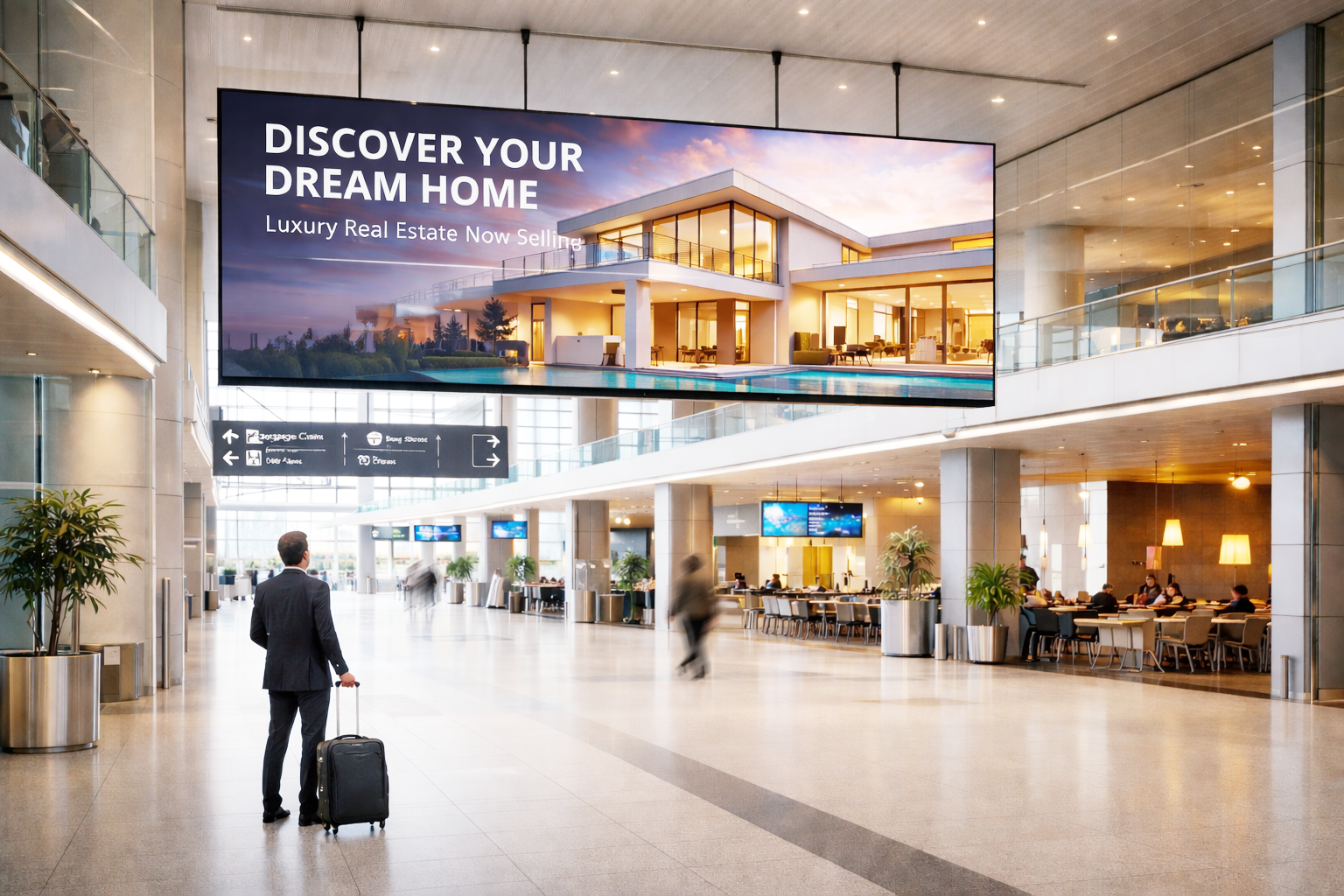
Airport Advertising is Complex to Get Right
We help you execute faster, with proven results and local insight most planners lack starting now.
Talk to an ExpertCatchment Area and Economic Drivers
Top 10 Cities within 150 km — Marketer Intelligence:
- Tijuana, Mexico: A binational commercial hub of over 2 million people directly integrated with San Diego's economy; cross-border professionals, nearshoring executives from 450+ multinational manufacturing firms, and an expanding upper-middle-class consumer audience who routinely fly through SAN make Tijuana a unique secondary market for international brands
- Chula Vista, CA: San Diego County's second-largest city with a rapidly growing professional population; a significant share of defence-sector employees and biotech support workers commute from here, producing a qualified mid-to-senior income audience with consistent travel behaviour
- Escondido, CA: An established inland community with a growing wine and lifestyle economy; attracts premium domestic leisure travellers and a high concentration of equity-rich homeowners who index strongly for wealth management, luxury automotive, and home investment advertising
- Oceanside, CA: A coastal military-adjacent city hosting Camp Pendleton — the largest USMC base on the West Coast; defence families and transitioning officers with strong brand loyalty in financial planning, automotive, and real estate are the commercially relevant audience here
- Carlsbad, CA: A high-income coastal city hosting the headquarters of Callaway Golf, TaylorMade, and multiple life sciences companies; travellers from Carlsbad skew premium leisure and premium business, making it an ideal catchment audience for luxury travel, golf brands, and B2B tech
- Temecula, CA: A wine country destination drawing high-spending domestic visitors and permanent residents with disposable incomes invested in lifestyle experiences; the audience here is leisure-affluent and highly receptive to financial products, premium vehicles, and international real estate
- El Cajon, CA: A large residential community east of San Diego with a high proportion of military families, government contractors, and a sizable Middle Eastern diaspora community — particularly Iraqi and Lebanese — creating a dual audience of defence professionals and culturally connected outbound travellers
- Ensenada, Mexico: A growing Pacific coastline city increasingly popular with San Diego HNWI buyers as a second-home and investment destination; its proximity to SAN means a consistent flow of cross-border lifestyle investors who represent a valuable audience for real estate, financial planning, and luxury hospitality brands
- Murrieta, CA: A fast-growing inland city drawing relocating professionals from San Diego and Los Angeles counties seeking affordable luxury; the audience here tends toward equity-rich homeowners, dual-income families with investment capacity, and suburban professionals who fly regularly for work
- Riverside, CA: At the eastern edge of the 150km radius, Riverside anchors the Inland Empire, one of America's fastest-growing logistics and light industrial regions; executives commuting through SAN from Riverside represent a B2B-adjacent audience with strong relevance for business services, technology, and financial product advertisers
NRI and Diaspora Intelligence: San Diego does not carry a single dominant diaspora profile in the conventional sense, but it hosts one of America's most commercially significant cross-border and international-origin professional communities. The Filipino community — among the largest in the United States — is deeply embedded in San Diego's military and healthcare sectors, with strong remittance flows to the Philippines and a high propensity for international travel and financial product engagement. The Japanese community, reinforced by Japan Airlines' direct Tokyo route, creates consistent premium two-way traffic of business executives and affluent leisure travellers. The Indian professional community is concentrated in biotech, IT, and research institutions, representing a high-income outbound audience with strong investment intent toward real estate in India, Canada, and the UAE. Chinese investors remain a major force in San Diego's luxury property market, with targeted marketing through Chinese-language platforms long established by local real estate firms. This multicultural professional base gives advertisers at SAN the rare ability to run culturally differentiated campaigns within a single premium airport environment.
Economic Importance: San Diego's economy is the fourth-largest in California and produces more economic output annually than 25 individual US states. Its structural diversification — with no single industry exceeding 17% of employment — creates an unusually stable advertising environment where multiple high-income audience segments travel through SAN simultaneously. Defence contracting and life sciences are the twin engines, but wireless technology, international trade, tourism, and a booming real estate market create layered audience types for advertisers. The absence of a single dominant employer concentration means premium audience traffic is not cyclical — it is a permanent condition of SAN's catchment economy.
Business and Industrial Ecosystem
- Defence and aerospace engineering: General Atomics, Northrop Grumman, BAE Systems, and Cubic Corporation generate a senior engineer and programme director audience with institutional budgets and frequent travel to Washington D.C., London, and Middle East procurement markets
- Life sciences and biotech: Illumina, Neurocrine Biosciences, Pfizer, Merck, and over 1,900 life sciences companies produce a research executive and commercial director audience earning average salaries exceeding $171,000 — premium targets for financial services, luxury automotive, and high-end travel advertisers
- Wireless and semiconductor technology: Qualcomm's $38 billion revenue base and hundreds of downstream tech vendors create a consistent stream of senior technology executives who travel internationally for business and have high discretionary spending capacity
- International trade and port logistics: San Diego's port and the world's busiest land crossing at San Ysidro generate a senior logistics and cross-border commerce executive audience with strong relevance for B2B financial products, global insurance, and premium business travel brands
Passenger Intent — Business Segment: San Diego's business travellers are defined by the specific industries that dominate the catchment — defence contracting, life sciences research, and wireless technology — and they fly with regularity, authority, and purchasing power. A biotech VP flying to Boston for a pharmaceutical conference, a defence programme director en route to the Pentagon, or a Qualcomm executive flying to Munich or Tokyo for supplier meetings — these are not transactional travellers. They are high-frequency, high-exposure audiences with extended dwell times and demonstrated receptivity to B2B financial services, premium insurance, luxury automotive, and executive lifestyle brands.
Strategic Insight: What separates SAN's business audience from comparable mid-sized US airports is the intellectual and financial density of its professional base. San Diego has the highest concentration of biotech research employment in the western United States and the single largest concentration of military defence assets anywhere in the world. This convergence of institutional knowledge and salaried executive wealth creates a B2B advertising environment that is arguably more concentrated per square foot than airports serving significantly higher passenger volumes. Brands that need to reach decision-makers with capital authority, not just income profiles, should treat SAN as a primary placement, not a secondary market.
Tourism and Premium Travel Drivers
- Balboa Park and the San Diego Zoo: Attract over four million visitors annually and establish San Diego as a family-premium destination; inbound travellers planning multi-day itineraries have significant pre-committed spend and are highly receptive to dining, hospitality, and lifestyle brand advertising at the airport
- La Jolla coastal community: One of the most affluent zip codes in the United States, drawing HNWI domestic and international visitors for its concentration of luxury hotels, Michelin-acknowledged dining, boutique shopping, and world-class diving; advertising at SAN intercepts both inbound and outbound La Jolla visitors at their highest-intent travel moment
- Wine country and inland leisure: Temecula Valley wine country and San Diego's coastal hospitality corridor draw affluent domestic travellers seeking premium lifestyle experiences; this segment is highly engaged by luxury automotive, financial planning, and premium packaged goods advertising
- Comic-Con International and major conventions: San Diego Convention Center draws over 130,000 attendees annually for Comic-Con alone, with additional large-scale events including the Society for Neuroscience and the American Society of Hematology adding professional conference traffic across the year
Passenger Intent — Tourism Segment: San Diego's premium leisure travellers have already committed to high spend before they reach the airport. Visitors to La Jolla and coastal resorts are arriving on planned discretionary travel budgets, while families visiting Balboa Park and the Zoo are travelling with scheduled leisure expenditure. What they have in common is meaningful dwell time at SAN and an open receptivity to lifestyle, hospitality, and luxury brand messaging at the point of departure. The highest value advertising categories for this segment are premium automotive, luxury travel, watch and jewellery brands, financial services, and international real estate — particularly among the outbound HNWI leisure travellers leaving San Diego for international destinations.
Travel Patterns and Seasonality
Peak seasons:
- June to September (peak summer): The dominant travel period driven by beach tourism, family leisure, and the strong convention calendar; highest passenger volumes of the year with international traffic particularly elevated
- November to January (holiday and corporate): Thanksgiving and Christmas create a strong domestic travel spike, while corporate year-end travel and defence procurement cycles sustain business traveller volumes through December
- March to May (spring): Convention season accelerates, biotech conference circuits bring inbound professional traffic, and spring break adds a secondary leisure peak
Event-Driven Movement:
- Comic-Con International (July): 130,000+ attendees from across the United States and international markets; while the audience skews younger and entertainment-focused, the event generates significant hotel, retail, and ancillary economic activity and brings inbound brand-aware consumers who are receptive to lifestyle and entertainment advertising
- Biotech Conference Calendar (Multiple Months): San Diego hosts the JP Morgan Healthcare Conference feeder traffic in January, BIO International Convention, and multiple UCSD and Salk Institute research gatherings; these events deliver concentrated streams of biotech executives, venture capitalists, and pharmaceutical decision-makers — among the highest-value audiences any airport can deliver to advertisers
- Society for Neuroscience and Medical Conventions (Autumn): San Diego's convention centre regularly hosts America's largest medical and scientific gatherings, bringing tens of thousands of clinicians, research executives, and pharmaceutical industry professionals through SAN
- US Navy Fleet Week and Military Events (Spring): Fleet Week activations, naval graduation ceremonies, and annual military functions bring a consistent flow of senior officers, government officials, and defence industry representatives whose travel patterns create a reliable premium business audience window
- San Diego Restaurant Week and Lifestyle Events (January and June): These events drive short-haul domestic travel from Los Angeles and the broader Southern California region, adding premium leisure travellers to the catchment and creating high engagement moments for dining, lifestyle, and premium brand advertisers
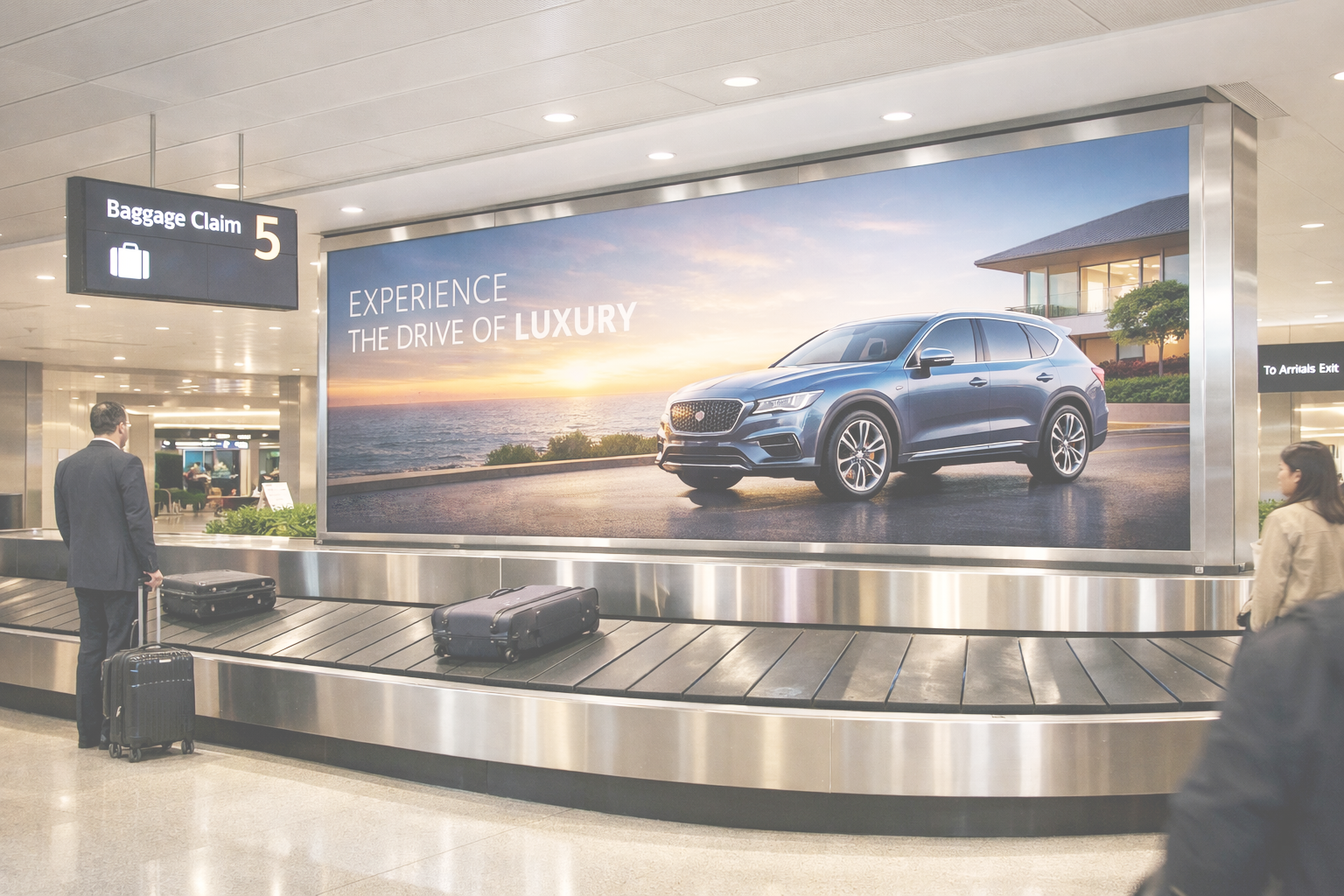
It’s Not Just Where You Advertise - It’s How Fast You Execute
We combine local insight with fast rollout to deliver results for you, now.
Talk to an ExpertAudience and Cultural Intelligence
Top 2 Languages:
- English: The dominant language across all audience segments — defence contractors, biotech professionals, tech executives, and premium leisure travellers are overwhelmingly English-speaking; campaigns in English reach the broadest and most commercially engaged audience at SAN with maximum efficiency
- Spanish: San Diego's binational identity with Tijuana and Baja California creates a substantial bilingual audience; Spanish-language campaigns effectively reach cross-border business professionals, Latin American executives transiting through SAN, and the significant Mexican-American professional community in the catchment — a demographic with strong real estate investment intent, financial services engagement, and growing luxury consumption
Major Traveller Nationalities: The dominant traveller profile at SAN is American — 96% of 2024 passenger traffic was domestic, reflecting the airport's role as a major hub for internal US business and leisure travel. International passengers include a significant number of British travellers using the twice-daily British Airways London service, Japanese business executives and tourists on Japan Airlines' daily Tokyo route, and a growing European professional audience following the launch of KLM to Amsterdam and Lufthansa to Munich. Canadian travellers represent a meaningful leisure segment across Air Canada and WestJet routes. Latin American executives and affluent travellers are increasingly served by Copa Airlines' Panama route, which provides connectivity to South America's business capitals.
Religion — Advertiser Intelligence:
- Christian (approximately 60%): San Diego's large Catholic community — shaped by its Hispanic heritage and significant Filipino-American population — creates major travel surges around Christmas, Easter, and Thanksgiving; these are precisely timed windows for luxury gifting, travel, and lifestyle brand campaigns that Masscom structures specifically around the calendar
- No Religious Affiliation / Secular (approximately 25%): San Diego's large millennial and Gen-Z professional population in biotech and tech skews highly secular; this audience responds to values-driven, innovation-forward brand messaging and is a primary target for financial technology, sustainable luxury, and experiential travel advertising
- Judaism (approximately 3-4%): A concentrated community in La Jolla and Rancho Santa Fe representing some of the highest-net-worth households in the catchment; Jewish holiday travel windows including Rosh Hashanah, Yom Kippur, and Passover create specific high-value campaign moments for international real estate developers, wealth managers, and luxury travel brands
Behavioral Insight: San Diego's professional audience is analytically literate, research-driven, and sceptical of generic brand claims. A biotech executive or defence programme director does not respond to aspirational lifestyle messaging alone — they respond to specificity, credibility, and professional resonance. The most effective advertising formats at SAN will feature expert-positioning, data-informed copy, and premium production values. The coastal lifestyle identity of San Diego also creates a secondary behavioural layer: even technically oriented professionals in this market have strong personal affinity for outdoor luxury, premium automotive, and high-end travel experiences. Campaigns that bridge professional credibility with lifestyle aspiration consistently outperform single-dimensional messaging in this environment.
Outbound Wealth and Investment Intelligence
The outbound passenger at San Diego International is among the most commercially complex in the United States. They are not simply wealthy individuals making leisure travel decisions — they are capital-deploying professionals whose outbound travel patterns map directly to active investment and business development activity. A life sciences executive flying Tokyo on Japan Airlines is likely in active research partnership discussions with Japanese pharmaceutical firms. A biotech venture capitalist on the twice-daily London Heathrow service is likely managing a cross-Atlantic portfolio. A defence technology director flying to Amsterdam or Munich is engaging with European procurement and technology transfer markets. Understanding this intent layer transforms SAN from a domestic travel hub into an outbound HNWI intelligence platform.
Outbound Real Estate Investment: San Diego HNWIs are active buyers in a range of international markets, driven by yield optimisation, currency advantages, and lifestyle diversification. Mexico — particularly Baja California, Los Cabos, and Ensenada — is the most immediately accessible foreign real estate market, with San Diego HNWI buyers acquiring second homes and investment properties at prices substantially below comparable California coastal assets. Los Cabos in particular represents a high-growth luxury resort market that actively markets to the San Diego catchment. In Europe, Portugal's Golden Visa programme, Spain's coastal real estate market, and the United Kingdom's London luxury property market all attract San Diego HNWIs looking for residency optionality and currency-diversified investment. Japan's newly liberalised property acquisition environment is attracting early-mover interest from San Diego's Japanese-connected professional community following the launch of direct JAL service to Tokyo.
Outbound Education Investment: San Diego's biotech and defence professional families are among the most educationally ambitious in the United States. The children of Salk Institute researchers, Qualcomm engineers, and General Atomics programme directors are applying to and enrolling in top-tier universities in the United Kingdom — particularly Oxbridge, Imperial College, and UCL — as well as leading institutions in Canada and Australia. International school placement agencies, undergraduate and postgraduate UK and Canadian university programmes, and test preparation services have a demonstrated, data-backed audience at SAN's outbound gates. The combination of high household incomes, research culture, and bilateral connectivity to London, Amsterdam, and Toronto makes SAN a highly productive channel for international education advertisers.
Outbound Wealth Migration and Residency: While San Diego's HNWI audience does not display the same outbound wealth migration intensity as comparable global gateway airports, a meaningful segment of the population engages with residency diversification programmes. Portugal's NHR tax framework, Spain's non-habitual resident programme, and Mexico's relatively straightforward permanent residency for property investors are the most relevant pathways for San Diego HNWIs seeking tax efficiency and lifestyle optionality. The UAE's Golden Visa attracts a subset of San Diego's high-earning tech and defence executives, particularly those with significant equity events from biotech IPOs or defence technology company exits. Citizenship-by-investment programmes in the Caribbean — St Kitts, Grenada, and Antigua — also register interest among San Diego's wealthier entrepreneurial community.
Strategic Implication for Advertisers: International brands operating on both sides of San Diego's wealth corridor — from Los Cabos luxury developers to London private banks, from Japanese technology partners to Amsterdam life sciences investors — have a concentrated, captive audience at SAN every day of the year. The airport operates as a physical intersection of the Pacific Rim business corridor and the transatlantic professional network, with direct routes to the world's three most commercially significant European hubs now in operation. Masscom Global activates advertising on both the inbound and outbound sides of this corridor simultaneously, ensuring international brands are present at every point of high-intent audience contact.
Airport Infrastructure and Premium Indicators
Terminals:
- New Terminal 1 (Phase 1A, opened September 2025): 19 gates, 1.2 million square feet, 69 check-in kiosks, 13-lane security checkpoint, 17 restaurants and retail stores, 90,000+ square feet of concession space, outdoor dining with views of San Diego Bay and downtown — a world-class passenger environment positioning the airport as a premium advertising canvas
- Terminal 2 (East and West Concourses): 31 operational gates including the internationally focused West concourse with the airport's dedicated international arrivals facility; Terminal 2 West handles all international processing, concentrating the highest-value audience segments in one premium environment
Premium Indicators:
- Lounge infrastructure: The Admiral's Club (American Airlines), Alaska Lounge, and multiple premium contract lounges are operational at SAN; Phase 1B of the New Terminal 1, expected to complete in early 2028, will deliver purpose-built passenger lounges integrated into the new terminal design — further elevating the premium advertising environment
- New Terminal 1 sustainability and design credentials: Targeting LEED Gold certification; designed by Gensler with five major commissioned public art installations; positions SAN as a cultural and architectural statement airport, not merely a transit facility
- Adjacent luxury hospitality: The Manchester Grand Hyatt and multiple luxury hotel properties in downtown San Diego are minutes from the airport; inbound HNWI travellers arrive pre-disposed to premium engagement, having committed to high-value accommodation and dining before they leave the terminal
- Investment scale signal: The $3.8 billion Terminal 1 replacement programme is the single largest infrastructure project in San Diego airport history; it signals a long-term institutional commitment to premium passenger experience and commercial environment quality
Forward-Looking Signal: San Diego International is in the middle of its most transformative infrastructure decade in history. Phase 1B of the New Terminal 1 will add 11 gates and purpose-built lounge facilities by early 2028, bringing total capacity to a projected 39 million annual passengers by 2035. New international routes to Tokyo, Amsterdam, and Copa's Panama gateway have already accelerated the airport's HNWI international connectivity. A proposed transit connection between the airport and downtown San Diego is under study, which would add a new layer of urban professional audience access. Masscom advises clients to secure advertising positions now, while the new terminal environment is being established and rates reflect current market conditions — before expanded capacity and increased international route competition drive both audience volumes and placement costs higher.
Airline and Route Intelligence
Top Airlines: Southwest Airlines, Alaska Airlines, American Airlines, United Airlines, Delta Air Lines, British Airways, Japan Airlines, KLM Royal Dutch Airlines, Lufthansa, Air Canada, WestJet, Copa Airlines, Hawaiian Airlines, Porter Airlines, Breeze Airways, Spirit Airlines, Frontier Airlines, Allegiant Air
Key International Routes:
- London Heathrow (British Airways, twice daily)
- Tokyo Narita (Japan Airlines, daily)
- Amsterdam (KLM, 3x weekly)
- Munich (Lufthansa, regular service)
- Toronto (Air Canada, daily)
- Vancouver (Air Canada, daily)
- Calgary (WestJet, regular service)
- Montreal (Air Canada, seasonal)
- Panama City (Copa Airlines, 4x weekly)
- Puerto Vallarta (Alaska/Southwest, seasonal)
- San José del Cabo (Alaska/Southwest, regular)
Domestic Connectivity: San Diego is one of Southwest Airlines' top 12 most-served airports nationally, with 30+ routes including Las Vegas, Denver, Phoenix, Chicago, and all major California metro markets. Alaska Airlines serves 39 domestic routes including Seattle, Portland, and Washington D.C. Total domestic connectivity spans 72 US destinations, producing a high-frequency domestic business traveller profile that layers onto SAN's premium international audience.
Wealth Corridor Signal: SAN's route network is a commercial intelligence document. The twice-daily British Airways London service signals a sustained, institutionally supported wealth corridor between the San Diego biotech-defence complex and the United Kingdom's financial and pharmaceutical investment markets. Japan Airlines' daily Tokyo service creates a direct Pacific Rim business channel between San Diego's research and technology community and Japan's pharmaceutical and defence sectors. The addition of KLM Amsterdam and Lufthansa Munich in the same 24-month period as the record passenger year reveals a structural shift: SAN is transitioning from a primarily domestic US airport to an internationally connected innovation gateway. For advertisers, this means the HNWI outbound audience is no longer constrained by the route network — it is being actively expanded by it.
Media Environment at the Airport
- SAN operates one of the most physically concentrated premium media environments in American aviation: a single-runway airport with two terminal buildings, a newly opened 1.2 million square foot Terminal 1, and one of the world's highest passenger volumes per available gate — creating extremely low media clutter relative to comparable US airports
- Dwell time at SAN is structurally elevated by the airport's single-runway configuration, which requires extended taxiing and occasionally produces gate hold times; combined with a premium concession environment featuring 30+ dining and retail options in the new terminal, passengers have both time and incentive to engage with advertising across all formats and positions
- The new Terminal 1's LEED Gold-targeted design, Gensler architecture, and integrated public art commissions create a premium ambient environment in which brand advertising is perceived as contextually appropriate rather than intrusive — a measurable advantage for luxury, financial, and lifestyle advertisers
- Masscom Global provides clients with access to SAN's full commercial advertising inventory, from large-format digital displays and departure lounge placements to international arrivals corridor positioning — the most strategically valuable real estate in the terminal for brands targeting inbound HNWI international travellers
Strategic Advertising Fit
Best Fit:
- Luxury automotive brands: San Diego is one of the top luxury vehicle markets in the United States by household penetration; an audience of defence executives, biotech VPs, and coastal HNWI professionals provides near-perfect targeting alignment for Mercedes-Benz, BMW, Porsche, Audi, and Lexus
- International real estate developers: San Diego HNWIs are active buyers in Los Cabos, Baja California, Portugal, Spain, Japan, and the UK; SAN is a direct channel to buyers who are actively deploying capital into foreign property markets and are making outbound flights to view or acquire properties
- Wealth management and private banking: With life sciences workers earning average salaries above $171,000 and a metro GDP exceeding $258 billion, the captive audience at SAN includes a high proportion of individuals at equity event inflection points — biotech IPOs, defence company exits, stock option maturity — who are actively engaging with wealth management decisions
- Premium B2B technology and cybersecurity: San Diego's defence technology and wireless communications sectors generate consistent demand for advanced enterprise solutions; decision-makers at Northrop Grumman, General Atomics, Qualcomm, and Cubic Corporation pass through SAN regularly and are receptive to premium B2B technology advertising in a relevant professional context
- International education institutions: UK, Canadian, and Australian universities recruiting from San Diego's biotech and defence professional families have a high-return, low-competition advertising window at SAN, particularly in the international concourse and departure lounges
- Premium travel and luxury hospitality: San Diego's outbound HNWI leisure travellers flying to Tokyo, London, and Amsterdam represent a pre-qualified premium travel audience; luxury hotel groups, private villa operators, and ultra-premium cruise lines targeting this audience segment should treat SAN as a primary channel
- Luxury lifestyle and jewellery brands: The combination of coastal HNWI lifestyle culture, high-earning professional women in biotech and healthcare, and premium leisure travellers creates consistent demand for high-ticket personal luxury purchases
- Health, wellness and longevity brands: San Diego is a global hub for genomics, personalised medicine, and wellness research; the audience is scientifically literate and highly engaged with premium health brands — supplements, diagnostics, regenerative medicine, and luxury wellness retreats
Brand Alignment at a Glance:
| Category | Fit |
|---|---|
| Luxury Automotive | Exceptional |
| International Real Estate | Exceptional |
| Private Banking and Wealth Management | Exceptional |
| Premium B2B Technology | Strong |
| International Education | Strong |
| Luxury Travel and Hospitality | Strong |
| Luxury Lifestyle and Jewellery | Strong |
| FMCG (mass market) | Poor fit |
Who Should Not Advertise Here:
- Mass-market fast food and budget food delivery brands: The audience composition at SAN does not support volume-driven FMCG advertising; cost-per-contact economics are unfavourable relative to mass media channels for brands targeting price-sensitive consumers
- Budget travel and low-cost airline brands: San Diego's outbound travellers are not primarily price-driven; budget travel messaging creates brand misalignment in a premium airport environment and risks negative brand association through context disconnect
- Entry-level consumer electronics: The SAN audience is sufficiently technically literate that entry-level consumer devices will not generate meaningful conversion; premium, professional-grade, or luxury consumer technology is appropriate; budget-positioned electronics are not
Event and Seasonality Analysis
- Event Strength: High
- Seasonality Strength: High
- Traffic Pattern: Dual-Peak (summer leisure and year-round professional)
Strategic Implication: Advertisers at SAN benefit from two distinct peak windows that require different campaign strategies. The summer peak from June to September delivers maximum consumer-facing audience for luxury lifestyle, travel, real estate, and leisure brands. The year-round professional conference and convention calendar — anchored by biotech and defence industry events — delivers consistent B2B audience for financial services, technology, and enterprise brands regardless of season. Masscom structures SAN campaigns around this dual rhythm, ensuring clients are activated at both peaks and throughout the baseline, maximising annual ROI rather than relying on a single seasonal burst.

Poor Placement and Delays Affect Airport Campaigns
We help you move faster, access better inventory, and get it right now.
Talk to an ExpertFinal Strategic Verdict
San Diego International Airport is the United States' most commercially undervalued premium airport advertising environment, and that undervaluation is closing fast. A record 25.24 million passengers in 2024, a $3.8 billion terminal transformation that opened in 2025, new direct routes to Tokyo, Amsterdam, and Munich, and a catchment economy producing $258 billion in GDP annually have combined to create a platform that delivers defence technology executives, biotech professionals, and coastal HNWI leisure travellers at volumes and concentrations no comparable US airport of this passenger scale can match. The audience is not aspirationally wealthy — it is institutionally and professionally wealthy, with salaries, equity positions, and capital deployment behaviours that make SAN one of the most efficient advertising environments per dollar spent in American airport media. Brands in luxury automotive, international real estate, private banking, premium technology, and high-end travel have a concentrated, captive, year-round audience at SAN that is under-served by current advertising investment relative to market potential. Masscom Global has the inventory access, local intelligence, and execution infrastructure to activate campaigns at SAN immediately — before the airport's expanding capacity, rising international profile, and accelerating HNWI traffic drive rates and competition to the level this airport genuinely deserves.
About Masscom Global
Masscom Global is a premium international airport advertising and media buying agency operating across 140 countries. With deep expertise in airport OOH, premium publications, and high-net-worth audience targeting, Masscom helps brands reach the world's most valuable travellers at the moments that matter most. For advertising packages, media rates, and campaign planning at San Diego International Airport and airports across the globe, contact Masscom Global today.
Frequently Asked Questions
How much does airport advertising cost at San Diego International Airport? Advertising costs at SAN vary significantly based on format — digital large-format displays, static posters, departure lounge placements, and international arrivals corridor positions all carry different rate structures — as well as placement duration, position within the terminal, and seasonal demand. The newly opened Terminal 1 and expanding international concourse are introducing new premium inventory that commands rates reflecting their audience quality and reach. Contact Masscom Global for a current rate card and placement strategy tailored to your campaign objectives and budget.
Who are the passengers at San Diego International Airport? SAN serves a uniquely layered audience. The dominant domestic profile includes defence and aerospace executives commuting to Washington D.C., Seattle, and East Coast hubs; biotech and life sciences professionals travelling to pharmaceutical and research conference circuits; and Qualcomm and wireless technology executives flying to European and Pacific Rim business destinations. The premium leisure audience includes coastal HNWI residents departing for luxury domestic and international travel, and an inbound international audience arriving from London, Tokyo, Amsterdam, Munich, and Canada. At 25.24 million passengers in 2024, SAN represents both scale and audience quality — a combination that is rare in American airport advertising.
Is San Diego International Airport good for luxury brand advertising? Yes, and demonstrably so. San Diego's catchment economy produces one of the highest concentrations of HNWI professionals in the United States. Life sciences workers earning an average of $171,000 annually, defence programme directors with institutional purchasing authority, Qualcomm and tech executives with significant equity compensation, and La Jolla and Rancho Santa Fe residents representing some of California's most valuable residential real estate — this audience profile is consistently strong for luxury automotive, high jewellery, wealth management, premium hospitality, and international real estate advertising.
What is the best airport in the USA to reach HNWI audiences in Southern California? For direct access to the specific HNWI audience produced by the San Diego-Tijuana binational region — which includes defence tech, biotech, wireless communications, and coastal luxury wealth — SAN is the only gateway. Los Angeles International serves a broader and more dispersed catchment; SAN serves a more concentrated and professionally defined HNWI audience in a far less cluttered media environment. For brands targeting the Pacific-Southwest HNWI corridor between Southern California and Pacific Rim markets, SAN's new Tokyo and Amsterdam routes make it an increasingly essential platform.
What is the best time to advertise at San Diego International Airport? The June-to-September summer window delivers the highest passenger volumes and the peak leisure HNWI audience. November through January captures the holiday travel surge and year-end corporate travel, with Thanksgiving and Christmas producing strong consumer-facing audience moments. For B2B advertisers targeting biotech and defence professionals, January's JP Morgan Healthcare Conference season and spring convention cycles are the highest-value windows, when professional conference traffic adds a concentrated layer of executive decision-makers to SAN's baseline audience.
Can international real estate developers advertise at San Diego International Airport? SAN is one of the most productive channels in the United States for international real estate developers. San Diego HNWIs are documented buyers in Los Cabos and Baja California for accessible luxury investment, Portugal and Spain for Golden Visa residency and lifestyle diversification, the United Kingdom for capital preservation in a familiar legal framework, and Japan for emerging Pacific Rim real estate access — particularly following the launch of direct JAL service to Tokyo. The combination of high household incomes, active foreign investment behaviour, and an outbound route network that connects directly to the world's major real estate destination markets makes SAN a high-return channel for international developers reaching buyers at their highest-intent travel moment.
Which brands should not advertise at San Diego International Airport? Budget travel operators, mass-market FMCG brands, and entry-level consumer electronics are poorly aligned with SAN's audience. The airport's passenger profile is defined by professional affluence, technical literacy, and premium lifestyle orientation; advertising that is price-led, volume-oriented, or positioned below the mid-premium tier will not generate meaningful return on investment and risks brand dilution through context misalignment. Masscom Global provides category-specific audience analysis to confirm fit before any campaign investment is committed.
How does Masscom Global help brands advertise at San Diego International Airport? Masscom Global delivers end-to-end airport advertising capability at SAN: audience intelligence, inventory access across all terminal formats, creative alignment for the specific San Diego professional and HNWI audience profile, campaign execution, and performance measurement. With operations across 140 countries, Masscom brings global campaign frameworks to local market execution — meaning an international real estate developer, private bank, or luxury automotive brand can activate simultaneously at SAN and airports across their full target audience journey. To discuss advertising packages, rates, and campaign planning at San Diego International Airport, contact the Masscom team today.







