

Airport at a Glance
| Field | Detail |
|---|---|
| Airport | Pune International Airport |
| IATA Code | PNQ |
| Country | India |
| City | Pune, Maharashtra |
| Annual Passengers | 8.9 million international |
| Primary Audience | IT and technology executives, automotive industry HNWIs, defence sector professionals, premium consumer class, NRI returnees |
| Peak Advertising Season | October to January, April to June |
| Audience Tier | Tier 2 |
| Best Fit Categories | Premium real estate, financial services, luxury consumer brands, international education, automotive, IT and enterprise technology |
Pune International Airport is one of India's most commercially consequential Tier 2 airports — a gateway to a city whose economic identity is defined not by one dominant sector but by the extraordinary convergence of four distinct wealth-generating industries that have made Pune one of the fastest-growing HNWI-producing urban economies in the country. The IT and technology sector — anchored by the Rajiv Gandhi Infotech Park in Hinjewadi and the Magarpatta and Kharadi tech corridors — employs over half a million technology professionals and has created a young, internationally educated, high-income professional class whose consumer aspirations and brand engagement are calibrated to global rather than Indian provincial standards. The automotive industry — with Tata Motors, Mercedes-Benz India, Volkswagen, Fiat, and Bajaj Auto all operating major manufacturing facilities in the Pune-Pimpri-Chinchwad corridor — generates a senior executive and business owner class whose purchasing authority and personal wealth represents some of Maharashtra's most commercially valuable individual travellers. The defence establishment — with the Southern Command headquarters, the College of Military Engineering, and the Armed Forces Medical College all located in Pune — produces a disciplined, education-oriented, pension-wealthy military professional community whose consumer behaviour and financial product adoption patterns are commercially distinctive and systematically underestimated by civilian brand planners. And Pune's education economy — 800-plus educational institutions including Savitribai Phule Pune University, Symbiosis International, and a dense cluster of engineering and management colleges — makes it India's education capital, generating the country's highest concentration of student population per city and the largest annual outflow of Indian students to overseas universities of any city after Mumbai and Delhi.
The commercial argument for advertising at Pune Airport is the argument for India's emerging HNWI geography. The old assumption that India's premium consumer market is concentrated in Mumbai, Delhi, and Bangalore is being structurally dismantled by Pune's decade of compounding IT and automotive wealth creation. Pune's HNWI population has been growing at over 10 percent per year — faster than any other Indian city of comparable size — producing a consumer class whose international real estate investment, overseas education spending, luxury brand adoption, and financial product sophistication rivals the mature metros while remaining significantly underserved by the international brand and advertising community that has not yet recalibrated its India strategy to account for this shift. Masscom Global's presence at PNQ positions clients at the front of that recalibration.
Advertising Value Snapshot
- Passenger scale: 8.9 million international passengers annually, with total throughput exceeding 12 million — serving a metropolitan catchment of over 7 million people and a commuter catchment extending across Pune's IT and automotive satellite zones that adds several million more commercially active travellers to the airport's effective audience
- Traveller type: IT and software engineering executives, automotive industry senior management, defence and military establishment professionals, Pune's established Marathi and Gujarati business community, NRI returnees from the US, UK, and Gulf, student and education-motivated family travellers
- Airport classification: Tier 2 — a fast-growing metro gateway whose HNWI formation rate, NRI connection depth, and education economy scale give it a commercial audience quality trajectory that is outpacing its current volume ranking
- Commercial positioning: India's IT and automotive capital airport — the primary gateway to Maharashtra's second-largest city and the country's most rapidly HNWI-producing technology and manufacturing economy outside Bangalore and Hyderabad
- Wealth corridor signal: PNQ sits at the intersection of Maharashtra's IT wealth corridor — connecting Pune's Hinjewadi and Kharadi tech zones to Silicon Valley, London's technology sector, and Singapore's regional tech hub — and India's automotive manufacturing belt, generating a dual professional-executive audience whose capital deployment and consumer purchasing patterns are among India's most internationally oriented
- Advertising opportunity: Masscom Global's inventory access at Pune International Airport positions brands at the convergence of India's most educated professional workforce, its fastest-growing HNWI tier, and one of the country's highest-concentration NRI returnee audiences — within a compact terminal environment where advertising clutter is lower than at Mumbai's CSIA and where each impression reaches a commercially qualified audience that is systematically underserved by international premium brand advertising.
Airport Advertising is Complex to Get Right
We help you execute faster, with proven results and local insight most planners lack starting now.
Talk to an ExpertCatchment Area and Economic Drivers
Top 10 Cities within 150 km — Marketer Intelligence:
- Pimpri-Chinchwad: Pune's industrial twin city immediately to the northwest, Pimpri-Chinchwad is one of India's largest industrial estates — housing the manufacturing facilities of Tata Motors, Mercedes-Benz India, Volkswagen India, Fiat Chrysler, Bajaj Auto, and hundreds of auto component suppliers; the executive and business owner community from this manufacturing cluster represents a commercially authoritative, high-income B2B and premium consumer audience whose purchasing decisions span industrial procurement, luxury automotive ownership, premium financial services, and international real estate investment
- Hinjewadi (Rajiv Gandhi Infotech Park): India's third-largest IT hub approximately 20 km northwest of Pune city centre — home to the Indian offices of Infosys, Wipro, Cognizant, Capgemini, Accenture, and over 300 technology companies; the 150,000-plus IT professionals employed here represent the core of Pune's internationally educated, dollar-calibrated, premium consumer class whose spending behaviour, NRI aspirations, and brand engagement sophistication make them among India's most commercially valuable Tier 2 city audiences
- Nashik: Approximately 210 km north of Pune — slightly outside the 150 km radius but commercially connected — Nashik is Maharashtra's wine capital and a significant automotive and pharmaceutical manufacturing hub; its business community of winery owners, pharmaceutical executives, and auto component manufacturers contributes to CEB's extended catchment with a commercially sophisticated, brand-aspirational audience; within the 150 km radius, Nashik's commuter belt contributes a smaller but commercially relevant audience
- Satara: Approximately 110 km south of Pune, Satara is a significant agricultural and industrial town in the Deccan plateau corridor — its business community of sugar mill owners, traders, and industrial operators contributes a commercially active, moderately affluent domestic audience with strong awareness of financial services and consumer brand categories
- Kolhapur: Approximately 140 km south of Pune, Kolhapur is one of Maharashtra's most commercially significant secondary cities — home to India's largest foundry and casting industry cluster, a thriving agri-processing economy, and the historic Kolhapuri leather and handicraft industry; its business owner and industrial executive community represents a commercially sophisticated, above-average income audience with consistent domestic flight demand through PNQ
- Solapur: Approximately 110 km southeast of Pune, Solapur is Maharashtra's textile manufacturing capital — a major hub for cotton textile production and the trading families who control one of India's oldest commodity textile economies; its business community contributes a trading-class, high-transaction-frequency domestic traveller audience with strong financial services and B2B brand relevance
- Aurangabad (Chhatrapati Sambhajinagar): Approximately 150 km northeast of Pune, Aurangabad is Maharashtra's industrial growth corridor — home to Auric City's smart industrial estate development, significant automotive component manufacturing, and proximity to the Ajanta and Ellora UNESCO heritage tourism circuit; its business and tourism community adds an industrial executive and premium heritage tourism audience dimension to PNQ's extended catchment
- Khed-Rajgurunagar: Approximately 40 km north of Pune, Khed is one of the fastest-growing industrial zones in the Pune Metropolitan Region — hosting Bajaj Auto's primary manufacturing campus and a rapidly expanding cluster of automotive component and engineering firms; its factory management and business owner community contributes a consistent, commercially active B2B traveller flow to PNQ
- Talegaon Dabhade: Approximately 35 km northwest of Pune on the Mumbai expressway, Talegaon hosts General Motors India's manufacturing facility and a growing pharmaceutical and food processing industrial estate — generating a foreign corporate executive and Indian business management traveller audience with above-average income and international brand awareness
- Lavasa: India's first planned hill city approximately 60 km southwest of Pune, Lavasa's premium residential development and hospitality infrastructure has attracted a wealthy Mumbai and Pune professional class seeking premium lifestyle real estate in the Western Ghats — its resident and investor community represents a commercially affluent, real estate-active, premium lifestyle audience with strong connections to PNQ as their nearest international aviation gateway
NRI and Diaspora Intelligence:
Pune's NRI community is one of India's most commercially significant — defined by the extraordinary volume of Pune-origin technology professionals who have migrated to the United States, United Kingdom, Canada, Australia, and the Gulf over the past three decades of the IT industry's global expansion. The Pune-to-Silicon Valley corridor is one of the most heavily trafficked India-US technology professional migration routes in the country — producing an NRI community in the Bay Area, Seattle, and New York that is consistently estimated at over 200,000 Pune-origin or Pune-educated technology professionals. Total NRI remittances flowing into Pune exceed USD 3 billion annually, concentrated in real estate purchases, family business investment, educational support, and premium consumer spending that defines the consumption patterns of Pune's upper-middle and HNWI class. NRI returnees at PNQ — arriving for family visits, property inspections, festival homecomings, and investment trips — are among the most commercially active inbound audiences at this airport: they carry internationally calibrated spending standards, premium product expectations shaped by US and European market exposure, and investment intent in Pune's rapidly appreciating real estate market that makes them a structurally high-conversion audience for property, financial, and luxury brand advertisers.
Economic Importance:
Pune's economy generates approximately USD 70 billion in annual metropolitan GDP — making it India's seventh-largest city economy and one of the country's fastest-growing major urban economies over the past decade. The IT and ITES sector contributes over 40 percent of formal employment in Pune's organised economy and has been the primary driver of the city's HNWI formation — creating a class of senior technology executives, mid-career professionals with substantial savings rates, and technology entrepreneur founders whose aggregate wealth accumulation has materially transformed Pune's consumer market profile over the past fifteen years. The automotive manufacturing sector — contributing over 35 percent of India's two-wheeler and passenger vehicle production from the Pune-Pimpri-Chinchwad cluster — generates a senior industrial executive and business owner class whose compensation and net worth levels are consistently in the HNWI range. The education economy — with over 800 institutions and approximately 500,000 students at any time — creates consistent demand for international education pathways, student accommodation investment, and education-linked financial products that generate a steady commercial audience for relevant brand categories. The defence economy — with Pune's cantonment area housing one of India's largest permanent military establishments — adds a government salary-backed, financially disciplined, pension-wealthy professional community whose consumer behaviour is commercially distinctive and loyally brand-engaged once trust is established.
Business and Industrial Ecosystem
- IT and software services sector: Pune's Hinjewadi, Kharadi, Magarpatta, and Viman Nagar tech corridors collectively employ over half a million IT professionals for companies including Infosys, Wipro, Cognizant, TCS, Accenture, KPMG technology, and hundreds of global technology product and services firms — generating a corporate traveller class of project managers, solution architects, and client-facing technology executives whose domestic and international flight frequency, salary levels, and brand sophistication make them a premium B2B and B2C advertising audience whose per-passenger commercial value is among the highest of any Indian Tier 2 city airport
- Automotive manufacturing and R&D sector: The Pune-Pimpri-Chinchwad automotive cluster — producing approximately 3 million vehicles annually and housing the R&D centres of Tata Motors, Mercedes-Benz India, Volkswagen, Bajaj, and dozens of Tier 1 automotive component suppliers — generates a senior engineering and management executive class with consistent international travel demand for supplier visits, technology partnerships, and industry conferences in Germany, Japan, South Korea, and the United States
- Pharmaceutical and biotechnology sector: Pune's emerging pharmaceutical corridor — anchored by Serum Institute of India, Bajaj Healthcare, and a growing cluster of biotech and CRO firms in the Hinjewadi and Ranjangaon industrial zones — generates an internationally connected scientific and business management traveller class with above-average income and strong international conference and partnership travel demand
- Defence and government sector: Pune's defence establishment — Southern Command, College of Military Engineering, Armed Forces Medical College, and the Ordnance Factories Board — generates a high-discipline, pension-backed, institutionally connected traveller class whose financial product adoption, insurance purchasing, and consumer brand loyalty patterns are commercially distinctive and represent an underserved advertising audience for brands that engage with military community values authentically
Passenger Intent — Business Segment:
Business travellers at Pune International Airport are disproportionately from the technology sector and carry a professional profile that is calibrated to international standards — these are not domestic Indian executives operating in a local reference frame; they are engineers, project leaders, and product managers who travel regularly to the US, UK, Singapore, and Europe for client engagement, and whose consumer behaviour at the airport reflects the premium brand expectations of a globally mobile, internationally compensated professional class. The automotive executive layer adds a manufacturing industry seniority — typically older, higher-compensated, and more institutionally connected than the IT professional tier — whose purchasing decisions in luxury automotive, wealth management, and premium real estate carry higher individual ticket values. For B2B technology, financial services, luxury automotive, international real estate, and premium travel brands, Pune's business traveller composition represents an exceptionally aligned target audience whose brand sophistication and purchasing capacity consistently surprise advertisers who have not yet looked beyond Mumbai and Bangalore for India's premium corporate traveller.
Strategic Insight:
The IT professional audience at Pune International Airport carries a commercially distinctive characteristic that separates it from the equivalent audience at Bangalore's Kempegowda International Airport — the Pune IT workforce is more deeply integrated into Pune's physical city economy, more likely to own residential property, more family-oriented in consumer behaviour, and more engaged in financial product planning than the more transient, rental-market technology workforce of Bangalore. This translates into a higher per-passenger conversion rate for real estate, insurance, mutual fund, and premium consumer brand categories at PNQ relative to comparable technology audiences at competing Indian Tier 2 airports. Masscom Global's placement intelligence at PNQ specifically captures this behavioural distinction in inventory allocation and campaign timing strategy.
Tourism and Premium Travel Drivers
- Western Ghats hill stations and nature tourism: Pune is the gateway to Maharashtra's Western Ghats tourism corridor — including Mahabaleshwar, Lonavala, Khandala, Panchgani, and the Sahyadri range's trekking and adventure circuit; these destinations attract a domestic and growing international premium nature tourism audience that uses PNQ for access to Maharashtra's most visited leisure destinations
- Ajanta and Ellora UNESCO World Heritage Site circuit: One of India's most internationally recognised heritage tourism experiences — the Ajanta and Ellora cave complex approximately 150 km northeast of Pune draws European, East Asian, and North American cultural tourism audiences for whom Pune serves as the nearest major international airport gateway; this heritage tourism circuit generates a culturally motivated, premium-spending international visitor audience at PNQ
- Pune's own cultural and festival tourism: The city's Ganesh Chaturthi festival — one of India's largest public celebrations with the Pune Ganesh festival considered the most culturally significant in Maharashtra — generates extraordinary domestic travel volumes through PNQ in August to September and draws international visitors of Indian origin from across the globe, producing a culturally motivated, family-driven, high-spending NRI and domestic tourist audience
- Lavasa and premium hill resort circuit: Maharashtra's premium hill resort belt — accessible within 60 to 90 minutes from PNQ — attracts Mumbai and Pune's HNWI leisure tourism audience for weekend and extended stay premium hospitality, generating a consistent high-value domestic leisure travel audience through the airport
Passenger Intent — Tourism Segment:
Tourism travellers at Pune International Airport are defined by a combination of domestic leisure motivation and NRI return travel that creates commercially distinct purchase windows at the terminal. The NRI returnee arriving for Ganesh Chaturthi or Diwali has made a highly emotionally motivated, pre-planned travel decision involving significant expenditure on family gifting, festival consumption, and real estate investment evaluation — their airport arrival marks the beginning of a concentrated consumption event whose brand engagement window is limited but commercially intense. International heritage tourists arriving for the Ajanta-Ellora circuit are typically upper-income, culturally sophisticated European and Japanese visitors with premium accommodation expectations and strong receptivity to Indian luxury craft, textile, and food product advertising at the departure terminal. Domestic leisure tourists using PNQ for Western Ghats access are predominantly Mumbai and Pune HNWI families whose weekend and festival travel spending in premium resort and dining categories makes them a commercially relevant audience for hospitality and lifestyle brands.
Travel Patterns and Seasonality
Peak seasons:
- Diwali and festive season (October to November): India's most commercially significant festival season generates the highest consumer gifting, luxury purchase, and NRI return travel concentration of the year — the Diwali window at PNQ combines peak domestic travel, maximum NRI homecoming arrivals, and the highest retail and financial product conversion moment in the Indian consumer calendar
- Winter season and year-end (November to January): Pune's most comfortable travel season — combined with Christmas and New Year international tourism and NRI holiday return flows — sustains the highest-quality leisure and premium consumer audience window of the year at PNQ
- Ganesh Chaturthi (August to September): Pune's most culturally distinctive and emotionally significant festival — generating extraordinary domestic travel volumes and a significant NRI homecoming wave that is specific to Pune's Marathi cultural identity and commercially unlike any other Indian city festival
- Summer outbound peak (April to June): The Indian school holiday and summer travel season generates peak outbound leisure and education travel — families flying to Europe, the US, UK, and Southeast Asia for summer holidays and university visits, and students departing for overseas university enrolments; the highest international passenger volume window for outbound premium consumer brand advertising at PNQ
Event-Driven Movement:
- Diwali and Dhanteras (October to November): The festival of lights generates India's highest jewellery, electronics, luxury goods, and premium gifting purchase concentration — the two weeks around Dhanteras and Diwali are the highest-ROI short windows for luxury, premium consumer, and financial services brand advertising at PNQ, as the airport processes a combination of NRI returnees with international spending standards and domestic HNWI travellers with festival gifting commitments
- Ganesh Chaturthi (August to September): Pune's own version of this Maharashtra-wide festival is the most culturally significant local celebration at PNQ — generating the highest NRI return wave specifically motivated by Pune's Ganesh festival reputation and producing a family reunion, cultural gifting, and premium consumer spending window that is commercially significant for brands with Maharashtra market relevance
- Pune International Film Festival (January): India's most internationally respected film festival after MIFF generates an inbound wave of international film industry delegates, cultural tourism audiences, and urban professional cinema enthusiasts through PNQ — a creatively oriented, internationally connected, above-average income premium audience window for arts, lifestyle, and technology brand advertising
- Aero India (Bangalore, biennial, with Pune defence sector linkage): India's premier aerospace and defence exhibition — while hosted in Bangalore — generates concentrated outbound travel from Pune's defence establishment community and attracts international defence industry visitors who connect through major Indian hubs; for defence technology, aerospace engineering, and B2B industrial brands, this biennial event period creates a specific premium B2B audience concentration at PNQ
- IIT and engineering college graduation season (April to May): The graduation and placement season at Pune's engineering institutions — producing thousands of newly employed, internationally connected technology and engineering graduates — generates a concentrated first-time professional traveller wave at PNQ whose brand adoption decisions made in this life-stage have long-term commercial loyalty implications for financial services, technology, and lifestyle brands
It’s Not Just Where You Advertise - It’s How Fast You Execute
We combine local insight with fast rollout to deliver results for you, now.
Talk to an ExpertAudience and Cultural Intelligence
Top 2 Languages:
- Marathi: The mother tongue of Pune's dominant Marathi community — the language of Maharashtra's cultural identity, political authority, and the Marathi business and professional class that has built the city's foundational institutions in education, defence, and government administration; Marathi-language creative that acknowledges Pune's distinct Marathi cultural identity — Ganesh festival pride, Peshwa heritage, Maharashtra business tradition — achieves significantly stronger brand resonance with the domestic Marathi professional and HNWI traveller audience than Hindi or English alternatives; brands that invest in Marathi-language airport creative signal a Maharashtra market commitment that the local business community recognises and rewards with brand loyalty
- English: The primary professional and commercial language of Pune's IT and technology sector workforce — the language in which half a million technology professionals think, work, and consume brand content daily; English-language creative that acknowledges the international professional identity of Pune's tech community achieves the highest engagement and brand recall among the city's most commercially valuable young professional audience; for brands targeting Pune's NRI travellers and internationally mobile technology executive class, English-language creative with culturally specific Pune technology community references is both linguistically and commercially the right choice
Major Traveller Nationalities:
Indian nationals constitute the overwhelming passenger majority at PNQ — defined at this airport by the specific professional and cultural character of Pune's dual IT and automotive economy. NRI returnees — particularly from the United States, United Kingdom, Canada, Australia, and the Gulf — represent the highest-value individual traveller segment among Indian-origin passengers, carrying internationally calibrated spending standards and significant investment intent in Pune's real estate and financial markets. International business travellers — predominantly German, Japanese, South Korean, and American executives connected to Pune's automotive and technology sector partnerships — represent the largest foreign corporate traveller group, with German nationals from Volkswagen and Mercedes-Benz operations and Japanese nationals from Honda and other automotive partnerships being consistently present. British nationals — combining NRI family connection travel and technology sector business travel — are a significant and commercially valuable international audience. Singaporean and Malaysian technology sector professionals represent a growing ASEAN business travel dimension connected to Pune's IT sector's regional partnership network.
Religion — Advertiser Intelligence:
- Hinduism (approximately 80 percent of Pune's population, dominant across all domestic traveller segments):Pune is one of India's most important Hindu pilgrimage and festival cities — home to the Dagdusheth Halwai Ganesh Temple, one of India's wealthiest and most visited Hindu temples, and the cultural capital of Maharashtra's Ganesh Chaturthi celebration; Diwali and Dhanteras generate the highest consumer spending concentration of the year — jewellery, electronics, luxury goods, and premium gifting purchases reach annual peaks during the festival fortnight, and the airport's NRI returnee wave during this window creates a concentrated, internationally calibrated, premium-spending consumer audience; Ganesh Chaturthi specifically at Pune generates an emotional NRI return intensity that produces extraordinary consumer and real estate purchase commitment among returning diaspora; the Hindu cultural calendar's emphasis on auspicious timing for financial decisions — property purchases on Dhanteras, vehicle purchases during Navratri, investment decisions timed to Akshaya Tritiya — creates commercially predictable purchase windows that brands aligned to these occasions can activate with precision
- Islam (approximately 15 percent of Pune's population, significant Urdu-speaking Muslim community concentrated in old Pune and the Camp area): Pune has one of Maharashtra's largest and most commercially established Muslim communities — concentrated in the Shivajinagar, Bhavani Peth, and Camp areas; Eid al-Fitr and Eid al-Adha generate peak consumer gifting, premium food, and gold purchasing behaviour among this community; the Muslim business community of Pune — active in textiles, food processing, real estate, and trading — contributes a commercially significant, high-transaction-frequency domestic traveller audience whose financial services and consumer brand engagement is commercially relevant for brands building comprehensive Pune market presence
- Christianity (approximately 3 to 5 percent, concentrated among Anglo-Indian, Goan Catholic, and South Indian Christian communities in Pune's cantonment and educational zones): Christmas generates a secondary consumer and travel spending peak among Pune's Christian community — commercially relevant for premium food, lifestyle, and electronics brands; Pune's Catholic educational institutions — St. Vincent's, St. Mary's, and Bishops School — contribute to the city's Anglo-Indian professional class, an educated, English-speaking, internationally connected audience with strong premium brand awareness
Behavioral Insight:
The Pune International Airport traveller is defined by a purchasing psychology that combines the intellectual rigour of an engineering-educated professional class with the cultural pride of Maharashtra's historically significant city identity. Pune's IT professionals make brand decisions with the same research intensity they apply to technical problems — they are highly informed, comparison-oriented, and resistant to superficial brand messaging; but once convinced of genuine value and quality, they are among India's most loyal and advocacy-prone consumers. The automotive and defence community adds a manufacturing precision and institutional discipline to the purchasing psychology — these travellers value reliability, consistency, and brand heritage over novelty. The NRI returnee brings an internationally calibrated quality expectation that creates a conversion pathway for premium brands whose Indian airport presence demonstrates the same quality commitment the NRI has experienced in their overseas market. For advertisers at PNQ, the creative insight is that this audience rewards evidence-based, quality-led brand communication — they will not be persuaded by aspiration alone, but they are prepared to spend significantly when convinced of genuine premium value.
Outbound Wealth and Investment Intelligence
The outbound passenger at Pune International Airport represents one of India's most commercially significant technology sector HNWI audiences — a professional class whose accumulated savings rates, international market exposure, and capital deployment sophistication is reshaping the outbound Indian investment landscape in ways that are not yet fully captured in most international brand strategies for the Indian market. Pune's technology executives, automotive industry directors, and pharmaceutical sector founders are deploying capital into international real estate, overseas education, global financial markets, and second residency programmes at an accelerating pace that reflects both their wealth growth trajectory and the maturation of India's outbound investment regulatory environment following liberalisation of the Liberalised Remittance Scheme limits.
Outbound Real Estate Investment:
Pune's HNWI and upper-professional class is directing outbound real estate capital into four primary markets. The United States — particularly the Bay Area, Seattle, and New York City — leads as the most actively targeted international real estate market, driven by the extraordinary depth of the Pune-to-Silicon Valley technology professional corridor and the practical investment motivation of supporting children studying at US universities with nearby residential property. The United Kingdom — London, Manchester, and Birmingham — attracts Pune's NRI community that has established UK connections through technology sector employment with British firms and through the substantial Pune-educated student population at British universities. Dubai and the UAE have emerged as a rapidly growing outbound real estate market for Pune's HNWI community — driven by zero capital gains tax, the UAE's India-friendly investment environment, and the growing direct flight connectivity between PNQ and Dubai that has made the UAE a proximate and accessible property investment destination. Canada — particularly Toronto and Vancouver — is an education-linked real estate market that is growing with Pune's rapidly increasing outbound student flows to Canadian universities. International real estate developers advertising at PNQ intercept a buyer community whose financial sophistication, online research depth, and international purchasing experience make them among India's most commercially efficient real estate advertising audiences.
Outbound Education Investment:
Pune's education culture is among the most investment-intensive in India — a city that already hosts 500,000 students in its own institutions and whose families simultaneously direct extraordinary resources toward overseas higher education for children. The United States leads as the aspirational destination — IIT Pune graduates and Symbiosis international students targeting US graduate programmes in engineering, computer science, and MBA are among India's most academically competitive overseas education applicants. The United Kingdom is the second priority — with strong Russell Group applications from Pune's engineering and commerce families; the one-year UK MBA is a particularly popular pathway for Pune's mid-career IT professionals seeking career transitions. Canada has become the most rapidly growing outbound education market from Pune — driven by post-study work permit pathways, affordable tuition relative to the US and UK, and the growing Marathi community in Toronto that provides social infrastructure for new students. Australia and Germany — the latter specifically relevant for Pune's automotive engineering community given the German language preference of Mercedes-Benz and Volkswagen's Pune-based engineering teams — complete the international education landscape for Pune's outbound student and family traveller audience.
Outbound Wealth Migration and Residency:
Pune's HNWI and upper-professional community is showing the fastest-growing interest in international residency programmes of any Indian Tier 2 city — driven by a combination of travel freedom aspirations, asset diversification motivations, and the specific international orientation of a technology professional class that has often lived and worked overseas before returning to Pune. The UAE Golden Visa — accessible through property investment at AED 2 million — is the most actively pursued second residency pathway among Pune's technology executive class for its combination of Dubai's India-proximity, tax efficiency, and business operating environment. Portugal's Golden Visa retains appeal among Pune's European-connected automotive and pharmaceutical executive community despite programme modifications. Canada's permanent residency pathways — through the Express Entry system for technology professionals — are the most actively pursued migration pathway among Pune's younger IT professional community. Greece and Malta's citizenship-by-investment programmes attract Pune's most internationally oriented HNWI tier seeking European passport access.
Strategic Implication for Advertisers:
International brands operating across the real estate, education, financial services, and residency advisory categories should treat Pune International Airport as a Tier 1 priority within the Indian Tier 2 airport network — a gateway to an outbound HNWI and upper-professional audience whose capital deployment sophistication, international market familiarity, and investment intent rivals the equivalent audiences at Mumbai and Bangalore airports while carrying significantly lower competitive advertising pressure from international brands. The Pune IT professional's internationally calibrated financial behaviour — regular LRS remittances, systematic overseas property research, and structured education saving — creates a commercially structured purchasing timeline that airport advertising can intercept at multiple points throughout the year. Masscom Global's PNQ intelligence maps these timing windows to specific category investment recommendations that maximise advertiser ROI across Pune's outbound wealth corridors.
Airport Infrastructure and Premium Indicators
Terminals:
- Pune International Airport currently operates from a single integrated terminal building that handles both international and domestic operations — the existing terminal, while functional and progressively modernised, operates under capacity constraints that have been created by Pune's rapid passenger growth, which has consistently outpaced infrastructure expansion over the past decade; the current terminal's compact footprint creates an exceptionally low advertising clutter environment where premium placements achieve near-universal audience coverage across the daily passenger flow
- A new Greenfield airport — the Purandar Airport — has been approved for development approximately 35 km southeast of Pune city centre, with a proposed initial capacity of 10 million passengers expanding to 50 million at full build-out; this development, combined with ongoing expansion plans for the existing Lohegaon terminal, signals the Maharashtra government's commitment to positioning Pune's aviation infrastructure in line with the city's growing commercial significance
Premium Indicators:
- The existing terminal's international departure zone hosts a curated duty-free and retail environment that, while compact, generates structured pre-departure spending behaviour among Pune's HNWI and NRI traveller base — the limited retail depth at PNQ's current terminal actually elevates the commercial value of advertising placements by concentrating audience attention on brand messaging rather than distributing it across an extensive retail environment
- Air India and IndiGo operate dedicated business class and premium traveller check-in counters at PNQ — confirming the above-average proportion of premium-fare travellers among Pune's business class and NRI traveller segments; the frequency of Air India and IndiGo business class travel on the Mumbai-Pune-Delhi triangle and on international routes to London, the US, and the Gulf reflects a premium upgrade adoption rate that is above the Indian regional airport average
- PNQ's proximity to Pune's premium hotel corridor — the JW Marriott, Conrad, Hyatt, and Novotel all located within 25 to 40 minutes of the terminal — ensures that the international business traveller community maintains premium consumption standards across their full Pune stay, reinforcing the terminal environment's commercial premium character
- Pune International Airport's colocation with the Indian Air Force's Lohegaon air base — while creating operational constraints on expansion — simultaneously ensures the highest security and operational standards of any civil-military shared airport in India, creating an institutional seriousness to the terminal environment that premium brand advertisers benefit from through association
Forward-Looking Signal:
The Purandar Greenfield Airport project — approved by the Maharashtra state government with an initial development budget of approximately INR 3,500 crore — represents the single most significant infrastructure catalyst for Pune's aviation market in the airport's history. The new airport's capacity, planned direct international connectivity to major US, European, Gulf, and Southeast Asian destinations, and its proximity to the expanding Pune Metropolitan Region's southern development corridors will transform PNQ's commercial and passenger geography substantially within the next decade. In the immediate term, the existing terminal's ongoing modernisation — with expanded international gates, upgraded digital advertising infrastructure, and improved airside commercial facilities — is progressively enhancing the quality and value of advertising placements available at PNQ today. Masscom Global advises clients to establish PNQ media presence at current pre-new-airport rates — when audience quality is already at a premium but competitive advertising intensity has not yet caught up with the commercial reality of Pune's HNWI and NRI market.
Airline and Route Intelligence
Top Airlines:
Air India, IndiGo, SpiceJet, Vistara (now merged with Air India), GoFirst, Akasa Air, Emirates, Qatar Airways, Etihad Airways, Air Arabia, flydubai, Singapore Airlines, Malaysia Airlines, Thai Airways, Oman Air, Kuwait Airways, Sri Lankan Airlines, British Airways (codeshare), Lufthansa (codeshare)
Key International Routes:
- Dubai International (UAE): Highest-frequency international route at PNQ, multiple daily services — connecting Pune's large Gulf-based NRI and OFW community to their Maharashtra home, and serving the growing Dubai real estate and business investment corridor
- Muscat, Doha, Abu Dhabi, Kuwait City, and Riyadh: Gulf hub and direct Gulf city connections serving the Maharashtra-Gulf NRI worker and business community — collectively the largest single international traveller group at PNQ
- Singapore Changi: ASEAN technology and business corridor, significant IT sector and investment-linked travel
- Kuala Lumpur KLIA2: Southeast Asian LCC connection serving the broader ASEAN business and leisure corridor
- Sharjah: Air Arabia hub connection enabling affordable international connectivity for Pune's mid-income NRI and OFW community
- Colombo: South Asian regional connection with VFR and business travel dimensions
- Bangkok: Leisure tourism and ASEAN regional connectivity
- London Heathrow (via codeshare/connection): Long-haul UK corridor serving Pune's large UK-based NRI community and technology sector business travel
Domestic Connectivity:
Delhi Indira Gandhi (highest frequency domestic route), Mumbai Chhatrapati Shivaji (shuttle frequency), Bangalore Kempegowda, Hyderabad Rajiv Gandhi, Chennai, Kolkata, Goa, Ahmedabad, Jaipur, Bhubaneswar, Nagpur
Wealth Corridor Signal:
PNQ's route network maps the two defining commercial axes of Pune's wealth economy precisely. The Gulf corridor — accounting for the majority of international passenger volume and connecting PNQ to Dubai, Doha, Muscat, Abu Dhabi, Riyadh, and Kuwait — traces the primary NRI remittance and homecoming route for Maharashtra's largest overseas worker community, whose combined economic contribution to Pune's real estate, retail, and family consumption economy is the single largest external capital injection into the city's consumer economy. The domestic triangle — connecting PNQ to Delhi, Mumbai, and Bangalore — traces Pune's corporate and government relationship network, mapping the business travel routes through which the IT sector's client relationships, the automotive industry's supply chain, and the defence establishment's institutional connections are maintained. For advertisers, the Gulf corridor is the primary OFW financial services and remittance brand advertising axis, while the domestic triangle carries the B2B technology, corporate luxury, and professional lifestyle brand relevance.
Media Environment at the Airport
- Pune International Airport's compact single-terminal environment creates the lowest advertising clutter ratio of any comparable commercial value airport in India — a structural advantage over Mumbai CSIA and Delhi IGI where inventory density limits individual placement standout; brands achieve brand visibility at PNQ that is structurally more difficult to replicate at India's largest airports, and the concentrated passenger flow through a single building ensures that premium placements reach near-universal audience coverage across the daily passenger mix
- Dwell time at PNQ is structurally elevated by the airport's operational context — international check-in requirements on Gulf routes typically demand three-hour advance arrival, NRI returnees with accompanying family groups extend social dwell periods beyond standard check-in timelines, and the terminal's relatively limited retail depth means that passengers in the airside zone maintain active attention on the surrounding brand environment for the duration of their dwell period
- The terminal environment's colocation with the Air Force base creates an unusually disciplined and ordered passenger flow that generates longer per-passenger advertiser-brand engagement windows than more chaotic terminal environments — the structured movement of PNQ's passenger mix through a well-organised terminal produces a dwell quality rather than just dwell quantity that premium brands consistently find converts to higher recall
- Masscom Global's inventory access at Pune International Airport covers international departure zone placements, domestic premium check-in corridors, and arrivals brand introduction positions — the three environments that combine highest audience authority with longest dwell time at this airport, and where consistent brand presence builds the institutional familiarity within Pune's tightly networked IT and automotive professional community that converts to purchase preference over sustained campaign periods
Strategic Advertising Fit
Best Fit:
- Premium real estate — domestic Pune development and international investment: Pune's rapidly appreciating real estate market and the outbound HNWI community's active Dubai, US, UK, and Canada property acquisition make PNQ a dual-direction real estate advertising platform — reaching both domestic property buyers investing in Pune's IT corridor development zones and outbound investors acquiring international assets simultaneously
- Financial services, wealth management, and mutual funds: Pune's high-savings-rate IT professional class, its systematic investment plan adoption rates — among India's highest in any Tier 2 city — and the NRI community's LRS remittance and international investment activity make PNQ one of India's most commercially efficient airports for financial services brand advertising across the full product spectrum from retail banking to private wealth management
- International education: India's highest concentration of engineering and management education institutions within a single city, combined with one of the country's highest outbound student flows to the US, UK, Canada, and Australia, makes PNQ a structurally compelling intercept for international university, student accommodation, and education consultancy brands targeting India's most academically competitive student and family audience
- Luxury and premium consumer brands: Pune's HNWI formation rate, its NRI returnee community's internationally calibrated spending standards, and the Diwali and festive season gifting culture collectively create a luxury brand conversion environment that is among India's most commercially productive Tier 2 city airport opportunities — significantly less competed for by international luxury advertising than Mumbai and Delhi
- IT and enterprise technology brands: The concentration of technology sector professionals at PNQ — from Hinjewadi's IT park community to the corporate technology buyer class of Pune's manufacturing and services sectors — creates a B2B technology advertising environment of genuine commercial scale for enterprise software, cloud services, cybersecurity, and digital transformation brands
- Premium automotive brands: Pune's status as India's automotive capital — combined with the purchasing authority of its automotive industry executive community and the aspirational premium vehicle demand of its high-income IT professional class — makes PNQ one of India's most commercially aligned airports for luxury and premium automotive brand advertising
- Gulf-corridor financial and lifestyle brands: The volume and commercial significance of Pune's Gulf NRI corridor — connecting Maharashtra's largest overseas worker community to their home city — creates a specific advertising opportunity for UAE and Gulf-market financial services, real estate, and lifestyle brands targeting the Indian professional community in the Gulf and their Pune-based families simultaneously
Brand Alignment at a Glance:
| Category | Fit |
|---|---|
| Premium real estate | Exceptional |
| Financial services and wealth management | Exceptional |
| International education | Exceptional |
| Luxury and premium consumer brands | Strong |
| IT and enterprise technology | Strong |
| Premium automotive | Strong |
| Gulf-corridor financial brands | Strong |
| Mass-market FMCG | Poor fit |
Who Should Not Advertise Here:
- Mass-market FMCG and value consumer brands: PNQ's audience quality skews strongly toward premium professionals, NRI returnees with international spending standards, and HNWI business owners whose airport purchasing mindset is entirely oriented toward quality and brand prestige — price-driven, promotional, and mass-market advertising generates low recall and poor conversion against an audience whose brand expectations have been calibrated by international professional experience
- Budget travel and discount service brands: Pune's dominant traveller class — IT executives, automotive industry management, NRI returnees, and HNWI business owners — does not self-identify as a price-sensitive travel audience; discount service brand messaging creates brand dissonance in an environment where the ambient audience expectation is set by internationally mobile, premium-earning professionals
- Heavily regional language brands without Maharashtra market relevance: Brands with no Maharashtra distribution, retail, or service infrastructure who advertise at PNQ will find conversion limited by the absence of accessible market presence — airport advertising at PNQ converts most effectively for brands that are genuinely available in and committed to the Pune market
Event and Seasonality Analysis
| Factor | Rating |
|---|---|
| Event Strength | High |
| Seasonality Strength | High |
| Traffic Pattern | Festival Peak Dominant with NRI Homecoming Overlay |
Strategic Implication:
Pune International Airport's traffic calendar is structured around India's Hindu festival calendar in a way that creates commercially predictable and highly valuable short-window investment opportunities. The Diwali-Dhanteras fortnight from October to November and the Ganesh Chaturthi period in August to September are the two highest-ROI advertising windows of the year — combining peak NRI return arrivals, maximum consumer gifting intent, and the highest luxury and financial product purchase motivation in the Indian consumer calendar. Masscom structures PNQ campaigns to front-load brand exposure in the four to six weeks before each festival peak — when NRI return travel is being planned and festival gifting decisions are forming — and maintains sustained presence through the post-festival business travel resumption that follows. The summer outbound peak from April to June represents a distinct investment window for international education, real estate, and travel brand categories targeting Pune's outbound HNWI and professional family audience. Clients who differentiate their PNQ creative and budget allocation between the festival homecoming windows and the summer outbound window consistently achieve higher return on investment than those running undifferentiated annual campaigns at this airport.
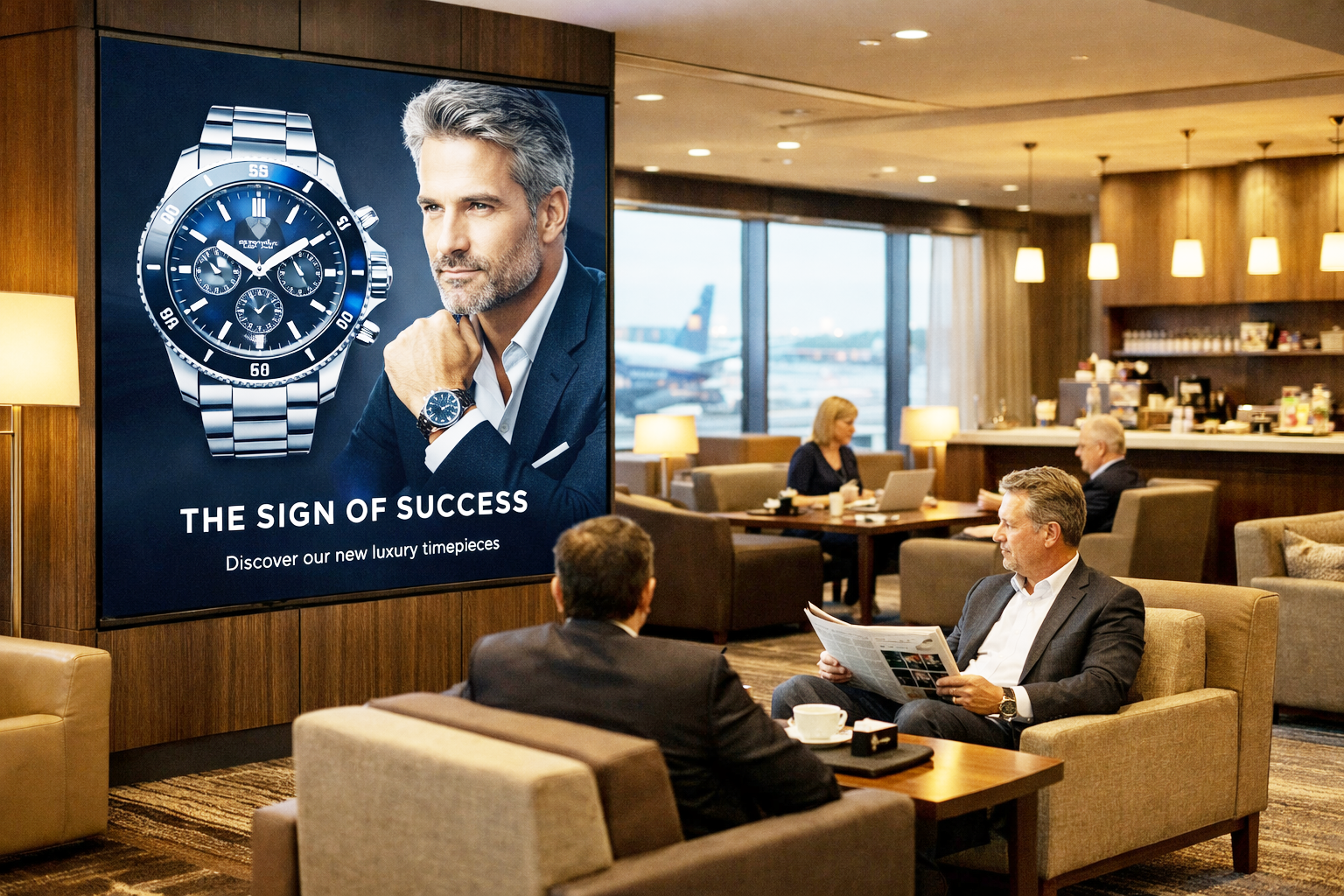
Poor Placement and Delays Affect Airport Campaigns
We help you move faster, access better inventory, and get it right now.
Talk to an ExpertFinal Strategic Verdict
Pune International Airport is India's most commercially compelling underinvested Tier 2 airport advertising environment — a gateway to a city whose HNWI formation rate, NRI connection depth, education economy scale, and technology professional consumer sophistication places it in a genuinely exceptional category among India's regional airports. The IT executive from Hinjewadi flying to San Jose for a client meeting, the automotive industry director heading to Stuttgart for a technology partnership review, the NRI returnee arriving from Dubai with accumulated savings and a real estate purchase planned for Dhanteras, the engineering college graduate departing for a UK master's programme — all four move through the same compact, low-clutter terminal where a well-positioned premium brand encounters virtually no competitive advertising noise and builds a commercial relationship with Maharashtra's most consequential professional and HNWI class with a consistency and efficiency that no other Pune media channel can replicate. The new Purandar Greenfield Airport project, when completed, will transform PNQ's international connectivity and passenger profile in ways that will make current media costs look like a structural bargain in retrospect. Masscom Global's intelligence, inventory access, and India market expertise position clients to establish that strategic presence now — before the new airport, before the competitive escalation, and before the international advertising community fully prices in the commercial reality of India's most rapidly HNWI-producing technology and manufacturing city.
About Masscom Global
Masscom Global is a premium international airport advertising and media buying agency operating across 140 countries. With deep expertise in airport OOH, premium publications, and high-net-worth audience targeting, Masscom helps brands reach the world's most valuable travellers at the moments that matter most. For advertising packages, media rates, and campaign planning at Pune International Airport and airports across the globe, contact Masscom Global today.
Frequently Asked Questions
How much does airport advertising cost at Pune International Airport?
Advertising costs at Pune International Airport vary based on format — digital versus static placements — placement zone within the integrated terminal, proximity to international departure and domestic premium check-in areas, campaign duration, and seasonal demand. The Diwali-Dhanteras fortnight in October to November, the Ganesh Chaturthi NRI return window in August to September, and the summer outbound peak from April to June all command above-average rates reflecting concentrated audience volume and maximum consumer spending intent. PNQ generally offers significantly more competitive cost-per-HNWI-impression than Mumbai CSIA or Delhi IGI while delivering comparable audience quality for IT professional, NRI returnee, and Maharashtra HNWI targeting categories. Masscom Global provides current PNQ rate cards and audience-matched placement strategy tailored to your brand objectives. Contact our team for a comprehensive media plan.
Who are the passengers at Pune International Airport?
Pune International Airport serves a commercially sophisticated, professionally concentrated passenger base defined by the city's dual IT and automotive economic identity. The dominant domestic traveller group is Pune's technology and engineering professional community — half a million IT sector employees whose salary levels, international exposure, and brand sophistication make them among India's most commercially valuable Tier 2 city audiences. NRI returnees from the Gulf, United States, United Kingdom, and Canada represent the highest-value individual traveller segment — carrying internationally calibrated spending standards and concentrated investment intent in Pune's real estate and financial markets. Automotive industry executives, defence sector professionals, and the established Marathi and Gujarati business community add depth and authority to the business traveller profile. International business visitors — predominantly German, Japanese, and American executives connected to Pune's automotive and technology partnerships — complete the picture with a premium corporate audience whose Maharashtra market engagement authority is commercially significant.
Is Pune International Airport good for luxury brand advertising?
Pune International Airport is one of India's strongest Tier 2 city airports for luxury brand advertising, particularly for categories aligned to the IT professional aspirational consumer, the NRI returnee's internationally calibrated spending standard, and the Diwali-Dhanteras gifting economy. Pune's HNWI formation rate — growing over 10 percent annually — is producing a luxury goods consumer class whose purchasing frequency and brand sophistication is increasing faster than the international luxury advertising community has adjusted for. The NRI returnee audience at PNQ brings spending standards formed in US, UK, and UAE markets and converts at above-average rates for luxury watches, premium jewellery, designer accessories, and fine spirits brands present at the terminal during festival homecoming windows. The structural commercial advantage is the near-absence of competing international luxury brand advertising at PNQ relative to the audience's growing purchasing capacity — a window that is open today but will narrow as Pune's HNWI profile receives broader international recognition.
What is the best airport in Maharashtra to reach HNWI audiences?
Mumbai CSIA is Maharashtra's largest airport and serves the state's highest absolute HNWI volume. However, for brands specifically targeting Pune's technology and automotive HNWI class, the NRI returnee community with Gulf and US wealth corridor connections, and the Maharashtra IT professional's outbound investment and education spending, Pune International Airport delivers a more concentrated and less competitively contested access point than Mumbai. A coordinated Maharashtra airport strategy — combining Mumbai CSIA for the ultra-HNWI financial and entertainment industry audience and Pune PNQ for the technology and automotive HNWI professional class — captures the full Maharashtra premium consumer spectrum more efficiently than either airport alone. Masscom Global's dual-city Maharashtra capability enables exactly this integrated approach.
What is the best time to advertise at Pune International Airport?
The highest-value advertising windows at Pune International Airport are structured around two distinct seasonal peaks. The Diwali-Dhanteras fortnight from mid-October to early November — when NRI returnee arrivals, domestic festival travel, and consumer gifting intent combine to produce India's highest per-passenger luxury and financial product purchase motivation — is the single most commercially valuable short window of the year at PNQ. The Ganesh Chaturthi period in late August to early September is Pune-specific in its NRI return motivation and produces the highest emotional brand engagement window unique to this airport. The summer outbound peak from April to June is the primary advertising window for international education, real estate, and outbound travel brands targeting Pune's departing HNWI and professional family audience. Masscom Global provides seasonal planning intelligence that maps each of these windows to specific category investment and creative strategy recommendations.
Can international real estate developers advertise at Pune International Airport?
Pune International Airport is one of India's most commercially productive Tier 2 city airports for international real estate advertising. The outbound HNWI community at PNQ is actively acquiring property in Dubai, the United States, the United Kingdom, and Canada — all accessible via PNQ's direct and one-stop international route network — and the airport transit environment is a documented research and decision-influencing touchpoint for international property investment. Dubai real estate developers find an especially receptive audience at PNQ given the direct daily Emirates, Qatar, and flydubai connections that place Dubai property within a three-hour flight of Pune's HNWI community. UK and US property developers targeting Pune's NRI community — whose children at British and American universities create education-linked property purchase motivations — find PNQ a highly qualified intercept environment. For domestic Pune real estate developers, the arrival of NRI returnees during Diwali and Ganesh Chaturthi creates the highest-conversion residential property advertising window in the Maharashtra market.
Which brands should not advertise at Pune International Airport?
Mass-market FMCG brands, value retail services, budget travel brands, and categories with no Maharashtra market presence will find structural misalignment at PNQ. The airport's audience is defined by premium professionals, NRI returnees with international spending standards, and HNWI business owners whose airport experience expectations are calibrated to international premium quality — price-driven and promotional advertising generates active brand dissonance rather than positive recall. Brands with no Pune distribution, retail, or service infrastructure will find conversion limited from airport advertising, as awareness generated at the terminal must connect to an accessible purchase pathway to deliver commercial returns. Heavily regional language brands targeting only non-Marathi or non-English speaking audiences will also find audience alignment challenges given Pune's dominant professional community's bilingual English-Marathi commercial identity.
How does Masscom Global help brands advertise at Pune International Airport?
Masscom Global brings three capabilities to airport advertising at Pune International Airport that independent media planners approaching India through Mumbai or Delhi cannot replicate. First, Masscom's PNQ audience intelligence maps the Diwali NRI homecoming peak, the Ganesh Chaturthi return wave, and the summer outbound professional travel season to specific category investment windows — allowing clients to deploy budget in the moments when their precise target audience is most concentrated and most commercially receptive at this airport. Second, Masscom's inventory access at PNQ covers premium placements in the international departure zone, domestic premium check-in corridors, and arrivals brand introduction positions — the three environments that combine highest audience authority with longest dwell time and create the consistent brand exposure that builds institutional familiarity within Pune's tightly networked IT and automotive professional community. Third, for brands targeting the Pune-to-Gulf wealth corridor, Masscom can coordinate PNQ campaigns with airport advertising at Dubai, Abu Dhabi, and Doha — creating a full-corridor strategy that reaches Pune's Gulf-based NRI community on both ends of their most frequently travelled remittance and investment route. Contact Masscom Global to begin your Pune campaign strategy today.