

Airport at a Glance
| Field | Detail |
|---|---|
| Airport | Oslo Airport, Gardermoen |
| IATA Code | OSL |
| Country | Norway |
| City | Oslo |
| Annual Passengers | 26.4 million (2024), up 5% on 2023 |
| Primary Audience | Oil and Energy HNWIs, Corporate Executives, Sovereign Wealth Professionals, Premium Leisure Travellers |
| Peak Advertising Season | June to August and November to January |
| Audience Tier | Tier 1 |
| Best Fit Categories | Luxury Goods, International Real Estate, Private Banking, Premium Automotive, Wealth Management |
Oslo Airport, Gardermoen is not simply Scandinavia's second-busiest airport. It is the only international departure point for the citizens of Norway, a nation that has accumulated more national wealth per capita than any country in the world through its Government Pension Fund Global — currently valued at over USD 2.2 trillion, equivalent to USD 340,000 per Norwegian citizen. Every Norwegian HNWI, petroleum executive, fund manager, and senior government official in the country must pass through this single terminal when they travel internationally. For advertisers seeking concentrated access to one of the world's wealthiest per-capita audiences, no other Scandinavian airport offers the structural exclusivity that OSL delivers.
The airport handled 26.4 million passengers in 2024 — representing approximately half of all aviation traffic in Norway — and holds the distinction of being named Europe's best airport in its passenger category by Airports Council International Europe in 2024, as well as the world's most punctual major international airport that year. Its single-terminal design concentrates passenger flows through clearly defined commercial zones, giving advertisers consistent and high-frequency brand exposure to a professionally affluent, internationally mobile audience that travels with purpose and purchases with conviction.
Advertising Value Snapshot
- Passenger scale: 26.4 million passengers in 2024, up 5% on 2023; international travel growing 4% year-on-year; 164 international destinations served
- Traveller type: Norwegian and Nordic HNWIs, oil and energy executives, sovereign wealth fund professionals, government and institutional leaders, premium leisure travellers departing with among the highest per-capita travel budgets in Europe
- Airport classification: Tier 1 — Norway's exclusive international gateway, consolidating every segment of Norwegian outbound travel through a single terminal environment
- Commercial positioning: The access point to one of the world's highest-income, most internationally mobile populations, defined by energy sector wealth, institutional investment expertise, and a spending profile that consistently outperforms European averages
- Wealth corridor signal: OSL sits at the intersection of the Norway-UK North Sea energy corridor, the Norway-North America institutional investment route, and the growing Norway-Middle East and Asia trade and energy transition flow
- Advertising opportunity: Masscom Global positions brands within OSL's terminal environment to intercept Norwegian HNWIs, energy executives, and fund professionals at the precise moment of pre-departure receptivity — when aspiration is highest and commercial intent is most actionable
Airport Advertising is Complex to Get Right
We help you execute faster, with proven results and local insight most planners lack starting now.
Talk to an ExpertCatchment Area and Economic Drivers
Top 10 Cities within 150 km — Marketer Intelligence:
- Oslo: The capital and commercial nerve centre of Norway, home to the headquarters of Equinor, DNB, Telenor, Yara International, and the Norges Bank Investment Management office that manages the world's largest sovereign wealth fund. Oslo's professional class is defined by energy sector earnings, institutional investment expertise, and a domestic cost-of-living premium that has acclimatised its residents to premium spending across every consumer category.
- Drammen: An industrial and commercial hub 40 kilometres south-west of Oslo and one of Norway's fastest-growing cities. Drammen's manufacturing and logistics professional base contributes a reliable upper-income business traveller segment, particularly on European and domestic routes.
- Lillestrøm: Immediately adjacent to Gardermoen Airport and a major logistics and convention city in its own right. Lillestrøm hosts significant conference infrastructure that generates concentrated business traveller surges around major national and international events, funnelling delegates directly into OSL's commercial zones.
- Fredrikstad: A historic industrial city at the mouth of the Glomma river, with a growing cluster of technology, maritime, and advanced manufacturing businesses. Fredrikstad's business community travels regularly through OSL for European and intercontinental connections.
- Sarpsborg: A significant chemicals and paper industry centre in the southeastern corridor, producing industrial professionals and senior technical managers with above-average salaries and regular international travel mandates.
- Hamar: The administrative and commercial centre of the Inland Norway region, producing public sector, agricultural, and technology professionals who depend on OSL for all international connectivity. Hamar contributes a consistent professional travel stream with strong engagement in Scandinavian and European business routes.
- Kongsberg: One of Norway's most strategically significant industrial cities, home to Kongsberg Gruppen — a world-leading maritime, defence, and offshore technology company. Kongsberg's senior technical and executive class are among Norway's most internationally mobile professional travellers, generating high-frequency business class travel on routes to Europe, North America, and Asia.
- Tønsberg: One of Norway's oldest and most prosperous cities, with a significant maritime industry heritage and a growing financial services and wealth management presence. Tønsberg's affluent professional community contributes high-income leisure and business travellers with above-average retail spending at OSL.
- Moss: A growing residential and commercial city south of Oslo, home to a significant concentration of commuter professionals employed across Oslo's corporate sector who travel internationally for both business and premium leisure.
- Gjøvik: A university and manufacturing centre northwest of Oslo, contributing engineering and technology professionals from Gjøvik University College and the regional industrial cluster who travel through OSL on European academic and professional routes.
NRI and Diaspora Intelligence: Oslo does not carry a traditional large-scale remittance diaspora, but its international resident community is commercially significant in a different way. Norway's oil sector has drawn senior energy professionals from across the United Kingdom, the United States, India, and the Middle East, many of whom have spent years in the Oslo region and travel with the spending profile of established upper-income professionals maintaining financial ties across multiple jurisdictions. The Pakistani-Norwegian community, one of the oldest and most established immigrant groups in Norway, has produced a second-generation professional class that is now represented in Oslo's legal, medical, and business sectors and travels regularly to family and investment destinations across South Asia and the Middle East. This audience is commercially underserved by most advertisers operating in Norway but represents a high-spending, aspirationally oriented traveller segment particularly receptive to financial services, luxury consumer, and real estate advertising.
Economic Importance: Norway's catchment economy is built on a foundation that no other Nordic nation can replicate: the disciplined conversion of petroleum wealth into the world's largest sovereign wealth fund. The sectors that drive the Oslo economy — oil and gas extraction, maritime technology, financial services, public administration, and a growing technology startup ecosystem — each produce distinct advertiser audience profiles. The Equinor executive is en route to Houston or Aberdeen. The NBIM portfolio manager is flying to New York or London to review equity positions. The maritime technology director from Kongsberg is connecting to Singapore or Dubai for offshore project meetings. The affluence at OSL is institutional in origin and personal in expression, creating an airport audience that is both financially substantial and professionally oriented.
Business and Industrial Ecosystem
- Oil and energy: Equinor, Norway's state-majority-owned energy giant, operates across 30 countries and generates a constant movement of senior technical, commercial, and executive professionals through OSL on routes to the United Kingdom, the United States, Angola, Brazil, and the United Arab Emirates. The wider Norwegian oil services sector — including Aker Solutions, TechnipFMC's Norwegian operations, and Baker Hughes Norway — adds hundreds of additional high-earning professionals to OSL's daily departures.
- Sovereign wealth and institutional investment: Norges Bank Investment Management, which manages the USD 2.2 trillion Government Pension Fund Global from its Oslo headquarters, employs nearly 600 investment professionals who travel internationally to manage positions in over 8,700 companies across 71 countries. This cohort represents one of the most commercially valuable professional audiences in European aviation — highly educated, globally mobile, and managing capital at a scale that places them in the top tier of any private banking or wealth management advertiser's target universe.
- Maritime and offshore technology: Norway is one of the world's most significant maritime nations, with a cluster of globally recognised technology companies including Kongsberg Gruppen, Wilhelmsen, and Stolt-Nielsen operating from the Oslo and Vestfold regions. Their executives travel extensively to project sites, client meetings, and trade events across Asia, the Middle East, and the Americas.
- Telecommunications: Telenor, headquartered in Bærum just west of Oslo, generates a senior management and technology executive class that travels across Asia — where Telenor has major operations in Bangladesh, Pakistan, and Myanmar — and across Europe and North America on management, investor, and regulatory engagements.
- Pharmaceuticals and chemicals: Yara International, the world's largest fertiliser company, and Nycomed-Takeda's Norwegian operations generate internationally mobile pharmaceutical and chemicals professionals who travel through OSL on routes to their global production and market geographies.
Passenger Intent — Business Segment: OSL's business travellers are predominantly engaged in the highest-stakes categories of global commerce — energy contracts, institutional investment decisions, maritime technology deployments, and sovereign-level financial management. The advertiser categories that most effectively intercept this audience are private banking and wealth management, premium financial technology, luxury automotive, international real estate, and high-end professional services. These travellers are not first-time business class passengers experimenting with premium spending. They are established HNWI professionals who have already integrated premium products and services into their lifestyle and are receptive to brand communications that speak to their level of achievement and international sophistication.
Strategic Insight: What makes OSL's business audience structurally unique among Scandinavian airports is the oil-to-wealth conversion effect. Norway's petroleum sector has not merely created corporate wealth that remains within institutions — it has transferred substantial personal wealth into the hands of tens of thousands of senior professionals through above-market salaries, equity participation, and a high-wage oil sector ecosystem that has permeated the Oslo professional class. The average Norwegian oil and gas worker earns approximately twice the European median professional salary, and senior technical and executive staff earn multiples above that. This personal wealth concentration, layered onto Norway's already high general income levels, produces an airport audience whose investable asset base significantly exceeds what passenger volume figures alone would suggest.
Tourism and Premium Travel Drivers
- Oslo city centre: Oslo's combination of world-class museums — including the National Museum of Norway housing Munch's The Scream, the Viking Ship Museum, and the newly opened Munch Museum — alongside a Michelin-starred restaurant ecosystem, Aker Brygge waterfront, and a compact, walkable luxury retail district generates a high-spending inbound premium tourist who has committed to above-average accommodation and cultural spending
- Norwegian fjords and natural heritage: The Oslofjord, combined with gateway access to Hardangerfjord, Sognefjord, and the Norwegian Scenic Routes, attracts premium international tourists specifically seeking high-quality natural experiences. This inbound market — primarily German, British, American, and increasingly Asian — has high per-trip spending and strong receptivity to premium brand advertising in the terminal
- Winter sports and northern lights tourism: OSL serves as the primary gateway for international visitors travelling to Norwegian ski resorts including Geilo, Norefjell, and the Hafjell area near Lillehammer, as well as the increasingly sought-after northern lights destinations in Tromsø, Svalbard, and the Lofoten Islands — premium adventure tourism segments with exceptional pre-trip spending capacity and awareness
- Cruise and expedition tourism: Oslo is one of Northern Europe's most significant cruise departure ports, and the cruise passenger flow generates a tourism-adjacent audience of affluent international visitors who transit through OSL before and after Arctic, Norwegian coastal, and Nordic itineraries
Passenger Intent — Tourism Segment: The inbound tourist arriving through OSL has made a deliberate and considered decision to spend significantly on a Norwegian experience. Norway is not a budget destination — its hotel prices, restaurant costs, and activity fees are consistently among Europe's highest. The international visitor who chooses Norway over France, Spain, or Italy has already self-selected as a premium spender willing to pay for exclusivity, natural authenticity, and quality. At the airport, they arrive in an experientially oriented, quality-conscious mindset that is highly receptive to Nordic luxury brands, premium outdoor lifestyle products, and aspirational financial products marketed to internationally mobile, high-spending travellers.
Travel Patterns and Seasonality
Peak seasons:
- June to August: Norway's summer window drives OSL's highest passenger volumes. Norwegians are among the most travel-intensive populations in Europe, consistently ranking in the top three for annual overseas trips per capita. The summer departure surge concentrates outbound premium leisure travel to Southern Europe, the Mediterranean, the United States, and long-haul destinations on routes with strong business class occupancy. Inbound summer tourism from Germany, the UK, the United States, and Asia is simultaneously at its annual peak.
- November to January: The secondary peak, driven by Christmas travel, New Year's leisure departures, and the winter sports and northern lights tourism surge. December and January generate elevated per-passenger retail spending at OSL as gift-purchasing and premium hospitality bookings overlap with peak footfall.
- February to April: The winter sports window, generating a secondary but commercially relevant traffic surge on Alpine and Nordic ski destination routes. This window produces a premium outdoor and active lifestyle audience with strong relevance for premium watchmakers, automotive brands, and luxury travel advertisers.
Traffic volume data: OSL handled 26.4 million passengers in 2024, accounting for approximately half of all Norwegian aviation traffic. The airport was named the world's most punctual major international airport in 2024 with 81.91% on-time departures across nearly 200,000 flights — a commercial efficiency signal that reflects the consistently professional orientation of its operating environment.
Event-Driven Movement:
- Nobel Peace Prize Ceremony (December): The Nobel Peace Prize, awarded in Oslo's City Hall each December, is the world's most internationally prominent annual award ceremony. It draws world leaders, diplomats, laureates, NGO executives, and international media from every major country, generating the highest single-event HNWI density at OSL of any occasion in the calendar. Advertisers in luxury hospitality, premium fashion, and financial services should treat the first and second weeks of December as a priority campaign window.
- ONS Offshore Norway (August, biennial): The world's leading oil and gas trade conference, held in Stavanger but generating significant transit traffic through OSL. ONS attracts senior energy executives, government officials, and institutional investors from over 100 countries, concentrating an exceptionally valuable B2B energy and finance audience at Norwegian airports in alternating years.
- Oslo Innovation Week and StartupDay (October): A growing cluster of technology and startup events that has made Oslo an increasingly relevant tech investment destination. These conferences generate an influx of international venture capital professionals and technology entrepreneurs who produce a younger HNWI audience particularly receptive to fintech, digital investment platforms, and premium consumer advertising.
- Norwegian National Day / Constitution Day (May 17): Norway's most culturally significant national celebration. The days immediately following May 17 generate one of the year's heaviest outbound travel surges as Norwegians depart for international summer destinations, producing peak outbound leisure footfall at OSL.
- Christmas and New Year (December to January): The most commercially concentrated retail spending period at OSL. Gift-purchasing, luxury hospitality bookings, and premium leisure travel departures peak simultaneously, creating OSL's highest per-passenger commercial opportunity of the year.
It’s Not Just Where You Advertise - It’s How Fast You Execute
We combine local insight with fast rollout to deliver results for you, now.
Talk to an ExpertAudience and Cultural Intelligence
Top 2 Languages:
- Norwegian: The primary language of OSL's core traveller base and the language through which Norwegian HNWIs engage most naturally with brand communication. Norwegian speakers are a culturally cohesive, quality-oriented audience who respond to advertising that communicates authenticity, substance, and long-term value. Norwegian-language campaigns reach the airport's largest and most affluent traveller cohort with the directness and cultural specificity that generic European creative cannot replicate.
- English: The universal professional language of OSL's substantial international energy, financial, and diplomatic workforce, as well as the language of choice for all non-Schengen premium cabin passengers. Norwegian English fluency rates exceed 90% among adults, making English-language campaigns effectively universal across OSL's full passenger base. For international brands, English performs without audience loss at OSL and reaches the crucial international professional segment — oil sector expats, institutional investors, and diplomatic personnel — with full commercial impact.
Major Traveller Nationalities: Norwegians constitute the dominant passenger group at OSL, consistent with the airport's role as Norway's exclusive international gateway. British travellers represent the largest inbound non-Nordic nationality group, reflecting the deep economic ties between Norway and the United Kingdom through the North Sea energy sector, financial services, and cultural exchange. Germans, Americans, Swedes, and Danes follow as the next largest traveller nationalities. North American volumes have grown with SAS's restoration of the direct Oslo-New York JFK daily service in 2025. Asian travellers — particularly from China and Japan — represent a growing inbound premium leisure segment as Norway's natural tourism credentials reach deeper into East Asian markets through targeted destination marketing.
Religion — Advertiser Intelligence:
- Christianity, primarily Lutheran (approximately 63%): Norway's cultural calendar and consumer spending patterns are shaped by Lutheran heritage operating primarily through secular cultural inheritance. Christmas remains the most commercially powerful spending period of the year, generating the highest retail and premium gifting peak. The Advent through New Year window is OSL's most commercially intense period for luxury consumer, hospitality, and financial services advertising, with premium gift purchasing and experiential spending decisions made within the terminal environment.
- Islam (approximately 4%): Primarily within Oslo's established Pakistani-Norwegian, Somali-Norwegian, and Iraqi-Norwegian communities, which represent some of Norway's most established immigrant populations. Ramadan and Eid create concentrated travel and gifting spending windows. Financial services, jewellery, and fashion advertisers can access this commercially growing but systematically underserved audience through well-timed OSL campaigns.
- Non-religious and secular (approximately 30%): A substantial portion of Norway's professionally employed, upper-income class identifies as secular, making purchasing decisions driven entirely by quality, functionality, and brand values. This audience is particularly receptive to premium products with sustainability credentials, craftsmanship provenance, and innovation positioning — characteristics that align naturally with Norway's own national identity and values.
Behavioral Insight: The Norwegian HNWI traveller at OSL is shaped by a national character that is simultaneously deeply egalitarian in social values and extraordinarily wealthy in personal financial position. This creates a distinct commercial psychology: Norwegians do not purchase premium products to establish social hierarchy over others — they purchase them because they genuinely value quality, durability, and authenticity. This means that advertising at OSL that leads with engineering excellence, material quality, environmental responsibility, and long-term value will consistently outperform messaging built around status display or exclusivity signalling. The Norwegian wealthy buyer is also exceptionally well-informed. They have access to global financial markets through the oil fund's influence on their institutional culture, and they apply the same analytical rigour to personal purchase decisions that they apply to professional investment decisions.
Outbound Wealth and Investment Intelligence
The outbound passenger at Oslo Airport, Gardermoen is operating in a financial context unlike any other airport audience in Northern Europe. Norway's sovereign wealth fund has created a national wealth consciousness — an awareness that the country collectively owns a stake in the world's listed companies equal to nearly 1.5% of all shares globally. This awareness permeates the personal financial behaviour of Norway's professional class, producing an outbound passenger who thinks in terms of international asset allocation, cross-border investment diversification, and long-term capital preservation rather than short-term consumption. For advertisers with sophisticated international financial and real estate products, this is the most commercially qualified HNWI airport audience in Scandinavia.
Outbound Real Estate Investment: Norwegian HNWIs are among Northern Europe's most active international property buyers, driven by a combination of Norway's exceptionally high domestic property prices, its limited domestic investment diversification options, and a cultural tradition of second home ownership that extends naturally beyond Norway's borders. Spain represents the single most active outbound real estate destination for Norwegian buyers, with the Costa del Sol, the Canary Islands — particularly Tenerife and Gran Canaria — and the Costa Blanca ranking as the most consistently sought Norwegian purchase markets. The Canary Islands hold a special commercial significance: they receive more Norwegian tourists per capita than virtually any other international destination and have become a near-permanent second-home and retirement destination for upper-income Norwegians who transition from regular winter holidays to property ownership. Portugal's Algarve and Lisbon attract Norwegian buyers seeking both lifestyle quality and investment yield. Italy, particularly the Lake District and Tuscany, draws the Oslo cultural and creative professional class. Florida and the United States represent an active outbound real estate market among Oslo's energy and business elite, particularly for investment-grade properties in Miami and New York.
Outbound Education Investment: Norwegian upper-income families increasingly pursue international university education for their children, reflecting a cultural premium on global professional preparation. The United Kingdom — particularly the Russell Group universities including UCL, LSE, King's College London, Edinburgh, and Manchester — is the dominant destination for Norwegian students from higher-income families. The United States follows, with Ivy League and liberal arts colleges attracting students whose families have the financial capacity to absorb transatlantic tuition and living costs without strain. The Netherlands, Denmark, and Sweden represent closer alternatives within the Nordic and European study-abroad market. International universities, education consultancies, and student accommodation developers marketing to Norwegian families should treat OSL as a primary acquisition channel, particularly in the February to May application window when family travel decisions around university visits are being finalised.
Outbound Wealth Migration and Residency: Second-residency and citizenship-by-investment demand among Oslo's HNWI base is growing, shaped primarily by Norway's high personal income tax regime and a growing awareness of international residency options that provide lifestyle diversification alongside tax planning advantages. Greece's Golden Visa programme has become one of the most actively considered options among Oslo's energy and professional class, offering Mediterranean lifestyle property alongside EU residency at investment thresholds within reach of Norway's senior professional population. Portugal's fund-based Golden Visa route — following the closure of its direct real estate pathway — continues to attract Norwegian investors seeking EU residency combined with private equity diversification. Malta's residency and citizenship programme is relevant to the Oslo financial and legal professional community seeking EU residency flexibility with favourable personal tax treatment. Caribbean citizenship-by-investment programmes — particularly Saint Kitts and Nevis, Grenada, and Dominica — are used by internationally mobile Norwegian entrepreneurs and energy professionals as supplementary travel document tools.
Strategic Implication for Advertisers: International brands operating on both sides of Norway's outbound wealth corridor — from Spanish and Canary Islands real estate developers to UK and US university admissions teams, international private banking institutions, and investment migration advisors — should identify OSL as one of the highest-qualifying HNWI acquisition channels in Northern Europe. The Norwegian outbound investor is financially sophisticated, internationally oriented, and accustomed to premium investment standards. They require substantive information and credible brand authority rather than aspirational imagery alone. Masscom Global structures campaigns at OSL that match this audience's information needs at the pre-departure decision window, positioning brands as trusted and credible partners for Norwegian capital deployed internationally.
Airport Infrastructure and Premium Indicators
Terminals:
- Single integrated terminal: OSL operates as a single terminal with clearly delineated domestic (A-gates), Schengen international (C, D, and E gates), and non-Schengen international (E gates beyond passport control) zones. The terminal's 265,000 square metre footprint provides extensive commercial floor space across all three zones, with post-security retail concentrated in the international departure areas where premium cabin and long-haul passengers dwell for 60 to 90 minutes before departure. The compact single-terminal design concentrates all passenger flows through shared commercial corridors, ensuring high-frequency brand exposure for any advertising placement.
- North Pier: The 2017 terminal expansion, completed at a cost of approximately USD 1.7 billion, added a 300-metre long North Pier with 17 new aircraft gates, doubled baggage handling capacity, and received the world's first BREEAM Excellent sustainability rating for an airport terminal. The expansion established OSL's current capacity of 32 million annual passengers and created the non-Schengen gate environment that serves OSL's growing intercontinental premium cabin audience.
Premium Indicators:
- OSL's lounge infrastructure is anchored by the SAS Gold Lounge — one of the most highly regarded business aviation lounges in Scandinavia — offering panoramic runway views, barista-made coffee, shower facilities, private work areas, showers, and a curated food and beverage offer reflecting Norwegian culinary standards. The SAS Business Lounge and Domestic SAS Lounge complement this with additional capacity for business cabin and elite frequent flyer passengers across both international and domestic zones. As of October 2025, SAS merged its Gold and Business lounges into a single larger combined lounge, increasing capacity and premium dwell-time environment at OSL.
- The OSL Lounge by SSP provides a premium pay-access option for non-airline-affiliated travellers across both domestic and international zones, reflecting the airport's recognition that a significant portion of its passenger base will pay for premium pre-departure experience regardless of cabin class.
- Oslo's Gardermoen area offers multiple directly connected premium hotel properties including the Radisson Blu Airport Hotel — accessible via a covered walkway directly from the terminal — reinforcing the extended dwell-time premium environment for layover, delayed, and early-arrival passengers.
- OSL holds a 4-star Skytrax rating for facilities, cleanliness, and staff service, and was recognised as Europe's best airport in the 25 to 40 million passenger category by Airports Council International Europe in 2024 — credentials that position it as one of the most commercially credible advertising environments in the Nordic region.
Forward-Looking Signal: Avinor's development plan for OSL extends to 2040 and includes a new Pier G at Terminal 5 adding 14 additional gates, modernised baggage facilities, an expanded transfer centre, and improved non-Schengen processing. SAS restored daily service between Oslo and New York JFK in 2025 — a route that had not operated from Oslo for 37 years — adding significant long-haul premium cabin capacity to OSL's intercontinental offer. Swedavia is actively developing new routes to India, Saudi Arabia, and Southeast Asia from Scandinavian hubs, with OSL positioned to benefit from expanded Asian and Middle Eastern connectivity as demand grows. The Norway government's removal of its airline ticket tax in Sweden has created a regional precedent that Norway may follow, and any comparable Norwegian policy shift would materially accelerate OSL's passenger volume trajectory. Brands that invest at OSL now secure positioning within a structurally growing, infrastructure-strengthened gateway airport ahead of the route network expansion and passenger growth that Avinor's own forecasts project through 2030. Masscom Global advises clients to plan multi-year commitments at OSL at current rates before expanded intercontinental capacity intensifies advertiser competition for premium inventory.
Airline and Route Intelligence
Top Airlines: Norwegian Air Shuttle, SAS (Scandinavian Airlines), Widerøe, Ryanair, British Airways, Lufthansa, KLM, Air France, United Airlines, Delta Air Lines, Air Canada, Emirates, Turkish Airlines, Finnair, easyJet, Transavia, ANA (All Nippon Airways)
Key International Routes:
- Oslo Gardermoen to London Heathrow and Gatwick (multiple daily — the most commercially active international corridor from OSL, driven by North Sea energy sector business travel and leisure flows)
- Oslo Gardermoen to New York JFK (daily, restored by SAS in 2025 — a critical transatlantic premium route for energy finance and institutional investment professionals)
- Oslo Gardermoen to Copenhagen (multiple daily — the most frequent single international route by flight count from OSL, reflecting deep Nordic business and cultural integration)
- Oslo Gardermoen to Dubai (Norwegian, launched 2024 — connecting Oslo directly to the Gulf's energy investment and real estate market)
- Oslo Gardermoen to Amsterdam, Frankfurt, Paris CDG, and Zurich (multiple daily each — European financial hub connections for Oslo's institutional and corporate travel base)
- Oslo Gardermoen to Toronto and Montreal (Air Canada — key North American corridors for energy sector and education-linked travel)
- Oslo Gardermoen to Tokyo Haneda (ANA, launched early 2025 — Norway's first direct Japan service, opening the Japanese premium leisure and trade market)
- Oslo Gardermoen to Bangkok (SAS, seasonal — the primary Southeast Asian premium leisure route for Norwegian outbound holidaymakers)
- Oslo Gardermoen to Tromsø, Bergen, Stavanger, and Trondheim (multiple daily each — domestic routes connecting Norway's oil industry capitals and major regional cities to the international network)
Domestic Connectivity: Domestic routes represent a commercially significant component of OSL's traffic base, with Trondheim, Bergen, Stavanger, Tromsø, and over 30 additional Norwegian regional airports all connected through OSL. The consolidation of all Oslo domestic traffic following the effective closure of Oslo Bromma Airport creates a domestic feeding function that ensures Norwegian regional professionals — including oil workers rotating to and from North Sea platforms via Stavanger — pass through OSL's commercial environment on every journey.
Wealth Corridor Signal: OSL's route network reveals the economic architecture of Norwegian wealth in motion. The London route is the primary North Sea energy business corridor. The New York and Toronto routes carry the NBIM investment management class managing the sovereign fund's North American equity and real estate positions. The Dubai route connects Oslo's energy elite to the Gulf's co-investment and real estate market. The Copenhagen route carries the daily business class flow of Nordic institutional and corporate professionals. The Bangkok and leisure routes carry Norway's most travel-intensive, premium-spending demographic to their preferred Asian and Southeast Asian destinations. Every major route from OSL is a wealth corridor, and every premium cabin seat within it is a qualified advertiser target.
Media Environment at the Airport
- OSL's single-terminal architecture creates an unusually efficient media environment for advertisers. Unlike multi-terminal hubs where audience fragmentation dilutes brand reach, OSL concentrates every category of passenger — domestic, Schengen, and non-Schengen — through shared commercial corridors before they diverge to departure zones. This structural feature guarantees that premium advertising placements achieve full audience exposure across the terminal's complete daily passenger flow without the wastage inherent in multi-terminal environments.
- The airport's generous post-security commercial zone — featuring one of the largest duty-free retail areas in Europe — creates a sustained dwell-time environment where passengers spend an average of 60 to 90 minutes browsing, dining, and engaging with brand communications before departure. This extended engagement window is particularly valuable for complex brand propositions — financial products, real estate investments, and premium automotive — that benefit from sustained message exposure rather than fleeting transit impressions.
- OSL's Nordic design aesthetic reinforces brand association quality across the terminal. The airport's award-winning architecture — clean Scandinavian lines, natural wood finishes, high ceilings, and generous natural light from its distinctive glass facades — creates an ambient premium environment that elevates any brand present within it. An advertising campaign at OSL benefits from the perceptual halo of one of Europe's most admired airport designs, with brand presence reading as thoughtful and quality-aligned rather than intrusive.
- Masscom Global's access to OSL's media environment spans domestic, Schengen, and non-Schengen zones, enabling campaign placement calibrated to route corridor, audience segment, and commercial objective. Whether a brand requires pre-security mass-market reach, post-security premium dwell engagement, non-Schengen intercontinental targeting, or lounge-adjacent ultra-HNWI positioning, Masscom structures the placement to match the audience moment with the precision that OSL's commercially concentrated layout makes possible.
Strategic Advertising Fit
Best Fit:
- International real estate developers: Particularly those marketing properties in Spain, the Canary Islands, Portugal, Italy, and the United States. Norwegian HNWIs are among Northern Europe's most active foreign property buyers, and the Canary Islands represent a near-unique market where Norwegian buyers have already demonstrated a multi-decade willingness to transition from regular holidays to permanent property ownership. OSL is the departure point for every investment viewing trip they take.
- Private banking and wealth management: Norway's oil-to-personal-wealth conversion has created a rapidly growing cohort of energy sector HNWIs with significant liquid assets who are actively seeking sophisticated international wealth management solutions beyond domestic Norwegian banking. International private banks, family office platforms, and multi-currency investment services find at OSL one of the most commercially qualified populations in Scandinavian aviation.
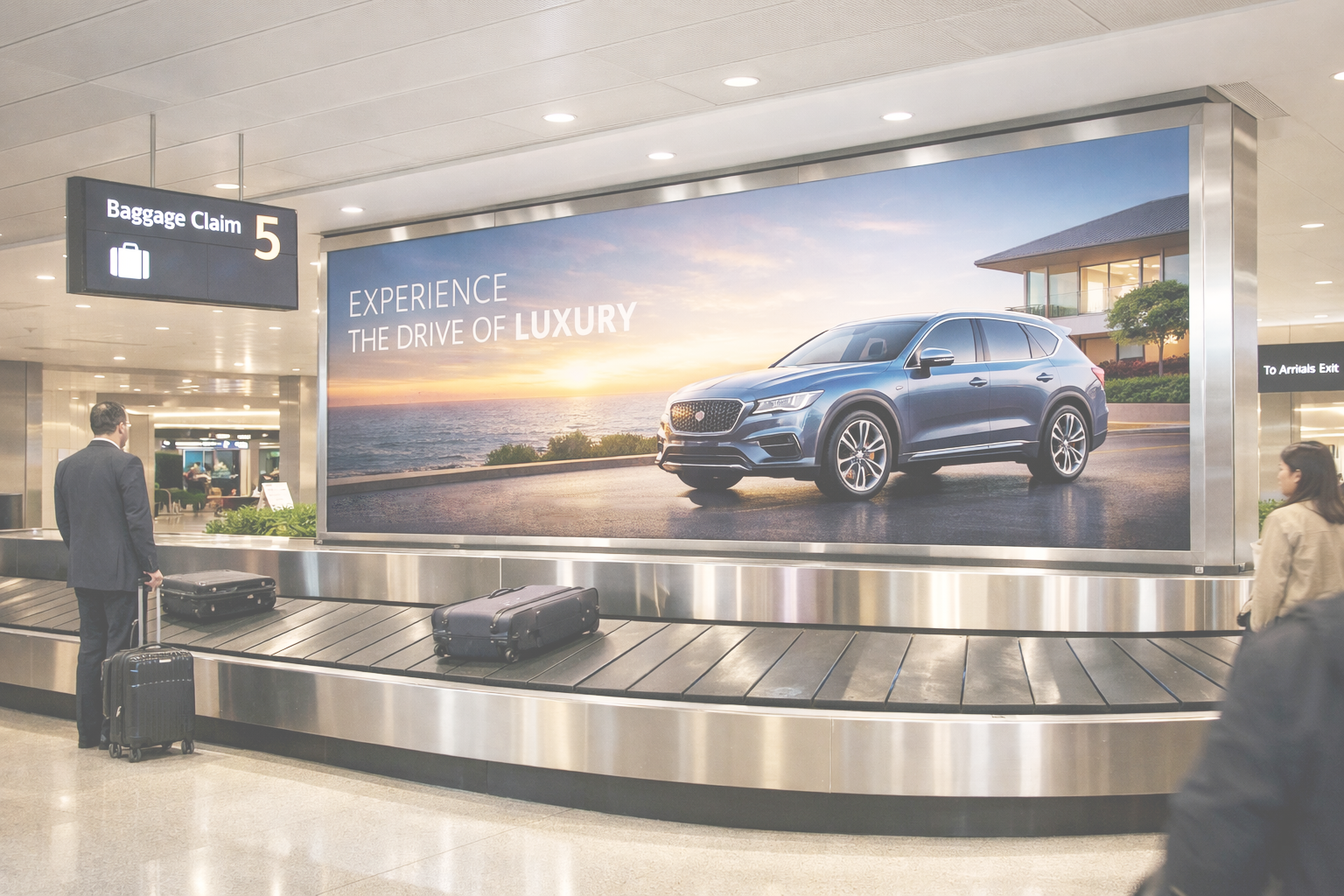
- Premium automotive: Porsche, BMW, Audi, Mercedes-Benz, and Volvo all have their Norwegian premium audience concentrated at OSL. Norway leads Europe in electric vehicle adoption, making it a particularly relevant market for premium EV brands — Tesla, Polestar, Lucid, and the electric ranges of traditional luxury manufacturers — which can communicate with a technically informed, environmentally motivated, and financially capable buyer.
- Luxury goods and Nordic lifestyle brands: OSL's Norwegian audience is a quality-first buyer who values craftsmanship, durability, and authenticity above status display. International luxury brands that can communicate genuine quality credentials — whether Swiss watchmaking, Italian leather goods, or Scandinavian outdoor equipment — perform well with an audience whose purchasing framework is built on value rather than visibility.
- ESG and sustainable investment platforms: Norway is the world's most advanced clean energy transition economy. Its professional class is not merely sympathetic to sustainability — they are professionally engaged with it through the sovereign fund's ESG mandates, Equinor's energy transition commitments, and the nation's global leadership in renewable energy policy. ESG-linked financial products, green bond platforms, and impact investment vehicles find at OSL the most commercially aligned national audience in European aviation.
- International education: UK, US, and Dutch university admissions teams and education consultancies reach at OSL a Norwegian upper-income family market that places enormous value on international educational experience and has the financial capacity to fund it without compromise. The OSL audience is one of the most qualified international education prospect pools in Northern Europe.
- Premium outdoor and adventure travel brands: Norway's cultural identity is inseparable from outdoor life, and its wealthy professional class invests significantly in premium outdoor equipment, adventure travel experiences, and expedition-grade products. Brands in premium skiing, sailing, hiking, and expedition outdoor categories find at OSL an audience whose lifestyle spending on outdoor pursuits is genuinely substantial.
Brand Alignment at a Glance:
| Category | Fit |
|---|---|
| International real estate (Spain, Canaries, Portugal, Italy) | Exceptional |
| Private banking and wealth management | Exceptional |
| ESG and sustainable investment platforms | Exceptional |
| Premium automotive (including premium EV) | Exceptional |
| Luxury goods and Nordic lifestyle brands | Strong |
| International education | Strong |
| Premium outdoor and adventure travel brands | Strong |
| Mass-market FMCG and value retail | Poor fit |
| Geographically restricted domestic services | Poor fit |
Who Should Not Advertise Here:
- Budget consumer and discount retail brands: Norway is the most expensive consumer market in Europe by most measures, and OSL's audience has been habituated to premium pricing across every category of consumption. Budget and discount brand propositions are structurally misaligned with a terminal audience whose spending behaviour is defined by quality expectation rather than price sensitivity.
- Pure status luxury without substance: As with all Scandinavian HNWI audiences, the Norwegian premium buyer applies rigorous quality standards to purchasing decisions. Luxury brands whose positioning rests entirely on logo visibility or heritage claim rather than demonstrable quality and craftsmanship will find the Norwegian audience resistant to persuasion.
- Regionally restricted services without international relevance: Products or platforms that serve only a domestic Norwegian market and lack international applicability will find minimal traction with an audience defined by global mobility, cross-border investment, and internationally connected professional lives.
Event and Seasonality Analysis
- Event Strength: High
- Seasonality Strength: High
- Traffic Pattern: Dual-Peak (June to August primary summer leisure peak; November to January secondary Nobel, Christmas, and winter sports peak)
Strategic Implication: OSL's commercial calendar divides naturally into two high-value advertising windows with distinct audience characteristics. The June to August summer peak is the highest absolute volume window and the primary opportunity for outbound real estate, international lifestyle, and premium leisure advertisers reaching Norway's HNWI class at the moment of maximum leisure orientation. The November to January Nobel-anchored window is the premium opportunity for luxury consumer goods, wealth management, and financial services advertisers, with December Nobel Prize week delivering the year's single most concentrated HNWI audience event. October's Oslo Innovation Week creates a third, more concentrated B2B technology and fintech window that is disproportionately valuable relative to its duration. Masscom Global structures OSL campaign calendars to capture each peak with inventory secured in advance, ensuring clients benefit from the full commercial value of each audience window rather than competing for residual availability after peak-period demand has been met.

Poor Placement and Delays Affect Airport Campaigns
We help you move faster, access better inventory, and get it right now.
Talk to an ExpertFinal Strategic Verdict
Oslo Airport, Gardermoen is the exclusive gateway to the world's wealthiest nation on a per-capita sovereign wealth basis, and the single terminal through which every Norwegian HNWI, energy executive, institutional investment professional, and government official must pass when they travel internationally. The structural exclusivity of OSL — no competing airport serves international departures from the Norwegian capital — combined with an audience defined by oil-sector personal wealth, sovereign fund institutional sophistication, and among the highest per-capita travel intensities in Europe, creates a commercial advertising environment with no direct parallel in the Nordic region. The airport's recognition as Europe's best in its passenger category and the world's most punctual major international airport in 2024 signals an operational standard that matches the expectations of the premium audience it serves. Brands in international real estate, private banking, premium ESG investment, luxury automotive, and sophisticated consumer categories will find at OSL an audience that is financially qualified, commercially receptive, and impossible to access at equivalent concentration through any other Norwegian media channel. Masscom Global provides the inventory access, Norwegian market intelligence, and campaign execution capability to activate this uniquely wealthy airport environment with the precision and authority the Oslo HNWI audience demands.
About Masscom Global
Masscom Global is a premium international airport advertising and media buying agency operating across 140 countries. With deep expertise in airport OOH, premium publications, and high-net-worth audience targeting, Masscom helps brands reach the world's most valuable travellers at the moments that matter most. For advertising packages, media rates, and campaign planning at Oslo Airport, Gardermoen and airports across the globe, contact Masscom Global today.
Frequently Asked Questions
How much does airport advertising cost at Oslo Airport, Gardermoen?
Advertising costs at Oslo Gardermoen Airport vary based on format, placement zone within the terminal, campaign duration, and seasonal demand. Non-Schengen intercontinental zones and lounge-adjacent placements command premium rates relative to domestic and Schengen areas, reflecting the higher commercial value of the long-haul premium cabin audience concentrated in those environments. Masscom Global provides current rate cards, format recommendations calibrated to campaign objectives, and negotiated placements designed to maximise return within your budget. Contact Masscom for a tailored proposal.
Who are the passengers at Oslo Airport, Gardermoen?
OSL's core passenger base is Norwegian — citizens of the world's wealthiest nation by sovereign wealth per capita, with a professional class disproportionately shaped by oil sector earnings, institutional investment expertise, and a national spending culture calibrated to premium consumption across every category. The international traveller base includes a significant British North Sea energy professional community, German and American leisure visitors, Nordic business executives, and a growing Asian tourism and business segment. Across all nationalities, OSL's passenger base skews consistently toward above-median income, international investment activity, and premium product orientation.
Is Oslo Airport, Gardermoen good for luxury brand advertising?
OSL is an exceptional luxury brand advertising environment and ranks among the top five airports in Northern Europe for this purpose. Norway's combination of sovereign wealth fund prosperity, oil-sector personal wealth, and a premium consumer culture built on quality rather than status makes the OSL audience arguably the most financially qualified per-capita luxury target in Scandinavian aviation. Luxury brands that communicate craft, authenticity, and genuine quality will find at OSL an audience that is both capable of purchasing and culturally predisposed to value what they are being offered.
What is the best airport in Norway to reach HNWI audiences?
Oslo Airport, Gardermoen is the only answer. As Norway's sole international gateway, OSL processes every HNWI departure in the country. There is no competing airport that serves international routes from the capital, and the concentration of Norway's energy-wealthy, institutionally sophisticated professional class in the Oslo region means that OSL's HNWI audience density is structurally higher than any regional Norwegian alternative.
What is the best time to advertise at Oslo Airport, Gardermoen?
The June to August summer window is the primary campaign period, capturing peak outbound leisure travel and the highest absolute passenger volumes. The November to January window — anchored by Nobel Prize week in December — is the optimal period for luxury gifting, premium consumer, and financial services campaigns. October's Oslo Innovation Week creates a concentrated fintech and technology investor window. For real estate and education advertisers, the February to May period captures family travel decision periods around university application windows and spring property viewing trips.
Can international real estate developers advertise at Oslo Airport, Gardermoen?
OSL is one of the most productive channels in Northern Europe for international real estate developers. Norwegian HNWIs are among the most active foreign property buyers in the Canary Islands, Spain, Portugal, Italy, and the United States — destinations where Norwegian purchase volumes are consistently among the highest of any non-domestic nationality. The airport captures the outbound Norwegian property investor at every stage of the purchase journey — from first consideration through to finalisation — and Masscom Global has structured real estate campaigns at OSL with measurable lead generation outcomes across multiple markets.
Which brands should not advertise at Oslo Airport, Gardermoen?
Budget consumer brands, discount services, and geographically restricted domestic offerings are structurally misaligned with OSL's premium audience profile. Norway's domestic consumer market is among the most expensive in Europe, which means its airport audience does not contain a meaningful price-sensitive consumer segment. Luxury brands without substantive quality credentials — those relying on status display rather than demonstrable product excellence — will also underperform with the Norwegian buyer, whose quality-first purchasing framework is resistant to purely aspirational positioning.
How does Masscom Global help brands advertise at Oslo Airport, Gardermoen?
Masscom Global manages the complete campaign lifecycle at OSL — from strategic audience intelligence and format selection through to inventory negotiation, creative compliance, placement execution across domestic, Schengen, and non-Schengen zones, and campaign performance monitoring. With established access to OSL's full terminal media environment and a deep understanding of the airport's dual-peak audience rhythm and Norwegian HNWI commercial psychology, Masscom delivers placement precision and campaign timing that generic media planners cannot provide. To begin planning your campaign at Oslo Airport, Gardermoen, contact Masscom Global today.