

Airport at a Glance
| Field | Detail |
|---|---|
| Airport | Melbourne Airport (Tullamarine Airport) |
| IATA Code | MEL |
| Country | Australia |
| City | Melbourne, Victoria (Tullamarine suburb, 18 km from CBD) |
| Annual Passengers | 36,150,000 (FY2024–25) — all-time record; up from 35.13M in FY2023–24; 24M domestic + 11.95M international; international seat capacity at 113% of pre-pandemic levels |
| Primary Audience | Indian and Chinese diaspora (Victoria's largest foreign-born communities); Asian business and premium leisure travellers; American tourists (fastest-growing premium inbound); New Zealand VFR and leisure; Southeast Asian premium market; Australian HNWI outbound to US, UK, Europe, and Asia |
| Peak Advertising Season | November to February (Australian summer / international peak); July school holiday peak; year-round for domestic |
| Audience Tier | Tier 1 |
| Best Fit Categories | International real estate and Melbourne property, premium Asian travel brands, international elite education, luxury automotive, premium financial services, premium lifestyle and fashion, luxury hospitality and tourism, premium Australian produce and wine |
Melbourne Airport is the most commercially compelling advertising environment in the Southern Hemisphere outside of Sydney — and for several commercially critical audience segments, it surpasses Sydney in targeting precision and contextual alignment. The airport handled 36.15 million passengers in FY2024–25, including a record 11.95 million international passengers — up 8.3% year-on-year on the international component alone. December 2024 became the busiest ever single month for international travel at MEL, with over 1.1 million international passengers. International seat capacity has surpassed 113% of pre-pandemic levels. And the trajectory is confirmed: a $3 billion third runway approved in September 2024 with construction commencing 2025 and completion by 2031, a $500 million international baggage system replacement underway, an international terminal expansion with up to five new widebody gates in planning, and a target of 76 million passengers by 2042.
What distinguishes MEL commercially from other Australian and Asia-Pacific airports is not simply its scale, but the specific composition of its audience. Victoria is home to Australia's largest Indian-born population (approximately 370,000 people), and India has become one of the fastest-growing aviation markets connecting to Melbourne across multiple carriers including Air India's new direct service. Melbourne also hosts one of the largest Chinese-Australian communities in the country. These two diaspora communities alone create a bilateral premium audience for India, China, Southeast Asia, and the Middle East that is denser, more commercially engaged, and more financially capable than at any comparable Southern Hemisphere gateway. Combined with the American market's rapid growth — Delta launched its first ever Los Angeles-Melbourne nonstop service in December 2025 using an Airbus A350 — and Melbourne's position as Australia's most attended sporting, cultural, and culinary destination, MEL is an airport whose premium audience complexity matches London, Singapore, and Dubai more than most assume.


Advertising Value Snapshot
- Passenger scale: 36,150,000 (FY2024–25, all-time record; +3% year-on-year; +4% H1 FY2025–26 year-on-year); 24M domestic + 11.95M international (+8.3% year-on-year); December 2024 record 3.24 million passengers in one month; December 2024 international record 1.15 million; international seat capacity at 113% of pre-pandemic levels; December 2025 all-time monthly record with 3.42 million passengers; 70 million target by 2050 per airport master plan
- Traveller type: Indian diaspora returnees and VFR travellers (Victoria has Australia's largest Indian-born population at ~370,000; ~59,000 Indian students currently enrolled in Victorian universities); Chinese-Australian community (large diaspora; multiple daily China services); American premium tourists (Delta LAX launched Dec 2025; Qantas daily LAX; United daily LAX and seasonal SFO); Southeast Asian premium business and leisure (Singapore Airlines, Cathay Pacific, Malaysia Airlines, AirAsia X, Thai); New Zealand leisure and VFR (most frequent bilateral); Gulf connecting traffic via Emirates, Qatar (Virgin Australia Doha from Dec 2025)
- Airport classification: Tier 1 — Australia's second-busiest airport; only 24-hour curfew-free international airport in Australia; operating 24/7 every day of the year; $114 billion city economy; Melbourne's Gross State Product supports one of the Asia-Pacific's most economically dynamic metro areas; third runway approved and under construction ($3 billion; completion 2031) to enable simultaneous operations
- Commercial positioning: Australia's curfew-free 24-hour international hub — the only major Australian airport able to handle international arrivals and departures around the clock; the primary international gateway for Victoria, Australia's most culturally diverse state, and the entry point for the US, Indian, Southeast Asian, and Middle Eastern inbound markets that are driving Australian aviation growth fastest
- Wealth corridor signal: MEL connects the premium wealth corridors of Asia, India, the United States, and the Middle East to one of the world's most liveable and property-appreciating cities; Melbourne's residential real estate market attracts Indian, Chinese, and Southeast Asian HNWI buyers; Australia attracted the highest net inflow of HNWIs of any country in 2023 at 5,200 (Henley Private Wealth Migration Report), with Melbourne the primary destination city
- Advertising opportunity: Masscom Global provides access to MEL's multi-terminal advertising environment across Terminal 2 (international), Terminal 3 (Virgin Australia), and Terminal 4 (budget), and cross-corridor coordination at Singapore Changi, Dubai International, Los Angeles, Hong Kong, Delhi, and Mumbai — enabling brands to intercept MEL's most commercially valuable inbound audiences throughout their complete journey to Australia
Airport Advertising is Complex to Get Right
We help you execute faster, with proven results and local insight most planners lack starting now.
Talk to an ExpertCatchment Area and Economic Drivers
Top 10 Cities within 150 km — Marketer Intelligence
- Melbourne CBD and inner suburbs (Toorak, Fitzroy, South Yarra, Carlton): Melbourne's city economy is valued at $114 billion — the most commercially dense urban economy in Australia outside Sydney — with the CBD as Australia's number-one shopping destination for both domestic and international overnight visitors; Toorak and South Yarra represent the apex of the domestic Australian HNWI residential market, with houses regularly transacting above $5 million; the inner-city's premium restaurant and hospitality scene — consistently placing Melbourne among the world's top food cities — attracts international tourists who specifically chose Melbourne over other Australian cities for its cultural and gastronomic depth
- Geelong (75 km south): Victoria's second-largest city and the state's most significant industrial and higher education centre outside Melbourne; home to major manufacturing operations, Deakin University, and a growing premium residential and boutique hotel market along the Bellarine Peninsula coastline; generates a consistent professional and regional educational audience at MEL
- Yarra Valley wine region (65 km east): One of Australia's most prestigious cool-climate wine regions — home to Yering Station, De Bortoli, Giant Steps, and over 80 premium wineries — generating an international wine tourism audience from Asia, the US, and Europe whose premium wine and gastronomy brand engagement is among the highest of any Australian regional tourism audience; increasingly targeted by Asian premium wine tourists specifically motivated by cool-climate Pinot Noir and Chardonnay
- Mornington Peninsula (80 km south): Australia's most concentrated premium coastal and winery lifestyle corridor — home to the Mornington Peninsula wine appellation (some of Australia's finest Pinot Noir), premium coastal restaurants, and a luxury holiday home market that is one of Melbourne's most active HNWI residential investment markets; international visitors extending Melbourne itineraries to Mornington are specifically premium lifestyle motivated
- Dandenong Ranges and Healesville (60 km east): The premium rainforest and wildlife tourism corridor immediately east of Melbourne — home to Healesville Sanctuary (one of Australia's most significant native wildlife experiences), premium rainforest treehouse accommodations, and a growing eco-luxury tourism product drawing international visitors specifically motivated by uniquely Australian natural experiences; the Chinese, American, and European inbound tourists who visit the Dandenong Ranges represent a premium eco-tourism audience whose brand engagement in sustainable luxury and natural beauty categories is strong
- Ballarat (110 km west): Victoria's largest regional city inland and the heart of the Australian gold rush heritage corridor — home to Sovereign Hill (one of Australia's most acclaimed living history experiences) and a growing regional food, wine, and artisan crafts economy; generates an international cultural heritage tourism audience relevant for premium Australian artisan product advertising
- Bendigo (150 km north): Regional Victoria's second major inland city and home to one of Australia's most acclaimed regional art galleries (Bendigo Art Gallery), a growing luxury boutique hotel market, and a ceramics and craft arts industry of national significance; the Bendigo Arts Festival draws international cultural tourism audiences whose premium lifestyle and craft brand engagement is above the regional average
- Phillip Island (140 km southeast): Australia's most visited single natural attraction for international visitors — the Penguin Parade draws approximately 500,000 visitors annually including a high proportion of Asian tourists on Melbourne day-tours; the Phillip Island Grand Prix circuit hosts the Australian Motorcycle Grand Prix; generates the most concentrated single-attraction international visitor audience in Victoria accessible from MEL
- Great Ocean Road start (Torquay, 105 km): The gateway to Australia's most photographed coastal drive — the Twelve Apostles, Loch Ard Gorge, and Cape Otway lighthouse — draws a substantial international touring audience from the US, UK, and Asia whose commitment to a Great Ocean Road itinerary is itself a premium brand alignment signal; generates a premium adventure and natural beauty tourism audience
- Macedon Ranges (65 km north): Victoria's most conveniently located boutique wine, artisan food, and premium accommodation region from Melbourne — home to the Hanging Rock vineyard, premium cool-climate Chardonnay production, and the Mount Macedon luxury retreat market; attracts an HNWI domestic leisure audience and increasingly international wine tourists whose premium wine brand engagement complements the Yarra Valley wine tourism audience
NRI and Diaspora Intelligence:
Victoria hosts the largest Indian-born population in Australia at approximately 370,000 people, and Melbourne is home to approximately 59,000 Indian international students — also the largest concentration in Australia. This community's economic contribution to Victoria is extraordinary: Indian-born Melburnians are disproportionately represented in medicine, information technology, engineering, and finance — industries whose average income levels create an HNWI-adjacent consumer base of substantial commercial value. The Indian community's property investment behaviour in Melbourne is structurally significant — Indian families' preference for landed residential property (rather than apartments) in specific premium suburban corridors including Box Hill, Doncaster, and Point Cook has made them one of the most commercially important buyer segments in Melbourne's premium land market. The Chinese-Australian community — similarly concentrated in Box Hill, Glen Waverley, and the eastern suburbs — generates consistent bilateral aviation demand to China, Hong Kong, and Taiwan, and represents one of Australia's most economically active diaspora investment communities. The Greek Cypriot, Italian, and South-East Asian communities further enrich MEL's diaspora audience with specific commercial relevance for Mediterranean and Southeast Asian bilateral brand advertising.
Economic Importance:
Melbourne's economy reached $114 billion in 2024 — up nearly 5% year-on-year — with the city ranked by Oxford Economics among Asia-Pacific's highest GDP growth cities through 2024–28, driven by business services, healthcare, and population growth. Victoria's GDP is the second-largest of any Australian state. Melbourne is consistently ranked among the world's most liveable cities, a brand attribute that drives both HNWI migration and premium tourism. Tourism's contribution to Victoria's Gross State Product was estimated at $31.5 billion in 2021 data, with the sector continuing to grow toward the government's $35 billion annual target. Australia attracted the highest net inflow of HNWIs globally in 2023, with Melbourne as the most cited destination city, reflecting the city's combination of world-class education, medical services, legal stability, and quality of life at a relative value benchmark that draws wealth migration from China, India, Hong Kong, the UK, and Southeast Asia.
Business and Industrial Ecosystem
- Financial services, funds management, and professional services: Melbourne is Australia's financial services capital — home to major fund managers, the ASX's largest listed institutional investors, and a professional services sector (Big Four accounting, major law firms) that generates consistent premium business class travel through MEL to London, New York, Hong Kong, Singapore, and Zurich
- Healthcare and medical technology: Victoria leads Australia in medical research and biosciences, anchored by the Melbourne Biomedical Precinct (the world's largest concentration of medical research institutions) and a globally recognised cluster of pharmaceutical and med-tech companies; the healthcare professional community generates consistent international conference and partnership travel through MEL
- Higher education and international student economy: Melbourne is home to the University of Melbourne, Monash University, RMIT, and Deakin — collectively attracting over 150,000 international students and generating one of the world's most commercially significant student-VFR-family travel bilateral at MEL; the Indian and Chinese student communities' families generate substantial premium inbound travel from Tier 1 cities
- Technology and professional services: Melbourne's technology sector is growing rapidly — Oracle, IBM, AWS, and Salesforce all maintain significant Victorian operations, generating consistent international business travel through MEL to US West Coast, Singapore, and London hubs
Passenger Intent — Business Segment:
MEL's business travellers cover the full spectrum of Australian commercial activity — from fund managers departing for New York roadshows on Qantas Business Class to Indian IT consultants connecting to client sites via Singapore, from Chinese property developers conducting Melbourne residential market visits to US pharmaceutical executives attending medical research conferences at the Melbourne Biomedical Precinct. The common thread across this diverse B2B audience is a high average revenue per passenger on the international routes they use, creating premium cabin concentration in MEL's international terminal that is commercially valuable for financial services, premium technology, and luxury lifestyle brand advertising.
Strategic Insight:
MEL's 24-hour curfew-free status is commercially significant for B2B advertising in ways that are not obvious from passenger volume alone. Late-night and early-morning international departures — not available at Sydney's curfew-restricted airport — concentrate premium business class passengers at MEL during hours when dwell time is extended, commercial distraction is lower, and advertising engagement is structurally higher. For financial services, premium technology, and luxury travel brands whose target audience is the Australian business class executive on a long-haul international route, MEL's curfew-free operating schedule creates advertising windows that simply do not exist at Sydney.
Tourism and Premium Travel Drivers
- Melbourne cultural and gastronomic premium tourism: Melbourne is consistently ranked among the world's top food cities — with more restaurant seats per capita than any other Australian city and a restaurant culture that places it alongside London, New York, and Tokyo in international food media; the international tourist who chose Melbourne over the Gold Coast or Cairns has specifically prioritised cultural depth, gastronomic excellence, and urban sophistication; this self-selected premium cultural audience is among the most brand-engaged leisure tourism demographics at any Australian airport
- Major sports events — Australian Open, Formula 1 Grand Prix, AFL, Melbourne Cup: Melbourne is Australia's sporting capital, hosting the Australian Open (first Grand Slam of the year, drawing the world's highest-ranking tennis professionals and an affluent international audience), the Formula 1 Australian Grand Prix at Albert Park (typically the first race of the season, drawing premium motorsports audiences from Europe, Asia, and North America), and the Melbourne Cup (Australia's most significant thoroughbred race, drawing an HNWI horse-racing and hospitality audience from across Asia, the Middle East, and Europe); each of these events generates a concentrated premium inbound audience at MEL whose per-trip spending benchmarks at the highest end of the Australian inbound tourism market
- Yarra Valley and premium wine tourism: Victoria's wine regions — Yarra Valley, Mornington Peninsula, Macedon Ranges — have achieved international recognition for cool-climate Pinot Noir, Chardonnay, and Shiraz at quality levels that draw premium wine tourists from Asia, the US, and Europe specifically motivated by the vineyard experience; the Yarra Valley day tour from Melbourne is now standard in the Asian premium inbound tourist itinerary
- Great Ocean Road and Victoria's natural heritage: The 12 Apostles and the Great Ocean Road represent Australia's most internationally recognised coastal landscape after the Harbour Bridge and Uluru; the inbound American, Chinese, and European tourist completing a Great Ocean Road itinerary has committed to a premium touring experience whose brand alignment with outdoor adventure, premium automotive, and luxury Victoria accommodation advertising is strong
Passenger Intent — Tourism Segment:
The international tourist at MEL has chosen Melbourne in a deliberate trade toward culture, food, sport, and urban sophistication over the beach-and-sun product available at Gold Coast or tropical Queensland. This choice is itself a brand-alignment signal: a visitor who came to Melbourne for the Australian Open, the food scene, the AFL experience, or a Yarra Valley winery itinerary is specifically motivated by quality and experience in ways that respond to premium brand advertising more predictably than a sun-and-relaxation beach tourist. The Chinese and Indian premium tourist choosing Melbourne is often on a combined cultural-VFR itinerary whose per-trip spending on accommodation, dining, and retail exceeds the average inbound Australian tourist by a substantial margin.
Travel Patterns and Seasonality
Peak seasons:
- November to February (Australian Summer International Peak): MEL's highest international volume window — the Australian Open (January), the summer festival season, the peak of US and European visitor arrivals taking advantage of Northern Hemisphere winter escape timing, and the Southern Hemisphere school holiday period that generates the year's highest combined domestic-international volume; December 2024 broke monthly records with 3.24 million total passengers including 1.15 million international
- July (School Holiday Domestic and International Peak): Australia's winter school holidays in July generate MEL's second highest passenger peak — a particularly important window for Southeast Asian and Japanese inbound leisure audiences who combine Australian winter travel with ski tourism in the Victorian Alps (Falls Creek, Mount Hotham, Mount Buller)
- March-April (Formula 1 and Major Events): The Australian Formula 1 Grand Prix at Melbourne's Albert Park generates the most concentrated single-event premium international arrival at MEL of any annual event — drawing HNWI motorsports audiences from Europe, Asia, and the Middle East; the Easter period further amplifies the March-April window with domestic and New Zealand VFR travel peaks
- Year-round for domestic: MEL's domestic network — Australia's most connected hub for Melbourne with 33 domestic destinations — operates 24/7 with consistent year-round volume; Melbourne-Sydney is Australia's busiest domestic air route pair, generating consistent premium business class volume throughout the year
Event-Driven Movement:
- Australian Open (January): The first Grand Slam of the tennis calendar — drawing approximately 900,000 visitors over two weeks including 120,000-plus international visitors; generates MEL's most concentrated single-event international premium leisure and corporate hospitality audience; brands in premium sports, luxury hospitality, fashion, and premium financial services find a maximally engaged HNWI sports tourism audience during this window
- Formula 1 Australian Grand Prix (March): One of the most commercially significant single-event premium inbound audiences at any Australian airport; the F1 audience draws ultra-HNWI motorsport enthusiasts from Europe, the Middle East, and Asia whose per-trip hospitality, fashion, and premium automotive spending is among the highest of any sporting event audience globally
- Melbourne Cup (November): Australia's most famous horse race and one of the world's most valuable annual thoroughbred races; draws an HNWI racing, fashion, and hospitality audience from across Asia, the Gulf, and the UK; November becomes the single most concentrated premium fashion and luxury hospitality brand window at MEL
- Melbourne International Comedy Festival, Melbourne Food and Wine Festival, AFL Grand Final (various):Melbourne's year-round major events calendar generates consistent premium tourism demand that sustains the airport's commercial environment outside the summer peak and major sporting windows; the AFL Grand Final in September is the most watched sporting event in Australia, generating a peak domestic audience window
- Diwali and Indian festivals (October-November): Melbourne's large Indian community generates specific diaspora return travel peaks around Diwali and other major Indian festivals — a concentrated window for Indian market consumer brands whose Indian-Australian community audience is among the largest and most economically engaged of any comparable diaspora community in the Southern Hemisphere
It’s Not Just Where You Advertise - It’s How Fast You Execute
We combine local insight with fast rollout to deliver results for you, now.
Talk to an ExpertAudience and Cultural Intelligence
Top 2 Languages:
- English: The dominant language of MEL's entire operating environment — Australian English is the universal language of commerce, hospitality, and daily life across the airport's domestic and international audiences; all international airline operations at MEL use English as the primary communication language; campaign creative in English achieves full domestic and international audience coverage
- Mandarin: The second most commercially significant language at MEL, reflecting the concentration of Chinese-Australian passengers on the China, Hong Kong, and Taiwan corridors and the substantial Chinese international student and VFR community at Victoria's universities; Mandarin-language creative at MEL specifically reaches this audience in the cultural register that drives highest brand recall and loyalty among Chinese-origin premium consumers — a community whose property investment, premium retail, and educational service spending is structurally above the average inbound leisure audience
Major Traveller Nationalities:
New Zealand nationals are the highest-volume single-nationality bilateral, reflecting the trans-Tasman relationship's unique position in Australian aviation where New Zealand arrivals and departures are the most frequent single bilateral pair at MEL and represent Australia's most consistent leisure and VFR air corridor. Chinese nationals form the second most commercially significant nationality — with multiple daily services to mainland China plus Hong Kong, Singapore, and Taiwan connections — generating the most premium per-trip domestic tourism spending of any Asian inbound market. Indian nationals are the fastest-growing premium market, with Air India's direct Melbourne service, IndiGo connections via Singapore, and the substantial Victorian Indian community generating the most commercially dynamic bilateral growth at MEL in the current period. American tourists are the highest-profile premium growth market, now served by Delta LAX (from December 2025), Qantas LAX daily, United LAX daily, and United SFO seasonal, with Victoria specifically marketing itself as the US premium leisure audience's preferred Australian entry point. Southeast Asian visitors — from Singapore, Malaysia, Thailand, Indonesia, and the Philippines — form the largest aggregate inbound leisure audience from Asia by country of origin.
Religion — Advertiser Intelligence:
- Christianity (approximately 43% of Australian population, declining): The dominant nominal faith of Australia's domestic audience, generating specific travel peaks around Christmas and Easter that are MEL's two highest domestic volume windows and create concentrated premium hospitality, retail, and travel service advertising windows; the Christmas school holiday period in December-January is MEL's annual peak domestic volume window
- Hinduism (Indian-Australian community, approximately 2.7% and growing rapidly): Melbourne's large and growing Hindu community generates Diwali, Holi, Navratri, and other festival travel peaks that are among the most commercially significant diaspora religious travel windows at MEL; the Indian-Australian community's festival-driven diaspora return travel and inbound family visit travel creates predictable premium consumer windows for Indian market brands, premium food, fashion, and family-oriented service categories
- Buddhism (Chinese and Southeast Asian communities, approximately 2.4%): Melbourne's Buddhist communities — concentrated in the Chinese-Australian, Vietnamese, and Sri Lankan communities — generate Lunar New Year and Vesak travel peaks that are MEL's most significant Chinese and Southeast Asian diaspora travel windows; the Lunar New Year window in late January to February creates the most concentrated Chinese premium consumer travel peak at MEL
Behavioral Insight:
The MEL international traveller is defined by a specific quality-of-life motivation that distinguishes Melbourne's inbound premium audience from most comparable gateway cities. International visitors who chose Melbourne over Sydney specifically for its food, culture, and liveability credentials arrive with a brand openness to quality-led Australian products and experiences that exceeds that of visitors to any other Australian airport. The Chinese-Australian family visiting from Shanghai or Beijing — combining family VFR with luxury hotel stay and premium shopping — is buying the experience as much as the flight. The Indian professional arriving from Bengaluru or Mumbai on Air India's direct service — combining business meetings with property viewing and family connection — is simultaneously a B2B target and an HNWI premium real estate buyer. These layered commercial motivations create a purchasing psychology at MEL that rewards brands with genuine quality narratives and Australian cultural authenticity.
Outbound Wealth and Investment Intelligence
The outbound passenger at MEL includes some of the most commercially interesting wealth profiles in the Southern Hemisphere. Australian HNWI outbound travellers — concentrated in Melbourne's Toorak, South Yarra, and bayside suburbs — deploy capital internationally at rates that make them commercially significant buyers in London, New York, Singapore, and Dubai. The Chinese-Australian and Indian-Australian professional communities maintain dual property portfolios — Australian family home plus offshore investment — that generate consistent engagement with international real estate and financial services advertising. And Australia's position as an HNWI migration destination means that MEL's inbound passenger stream includes substantial numbers of HNWI families arriving specifically to evaluate Melbourne property.
Outbound Real Estate Investment:
Australian HNWI outbound travellers are active buyers in London, Manhattan, Singapore, and increasingly Dubai and Miami — markets where the Australian dollar's purchasing power relative to property quality creates compelling value for the Melbourne professional class. The Chinese-Australian community maintains active investment relationships with Hong Kong, Singapore, and Chinese coastal city real estate markets. Indian-Australian HNWI families are growing buyers in Bangalore, Mumbai, and Singapore. For international real estate developers in these markets, MEL's outbound HNWI audience represents a pre-qualified international buyer pool whose Australian financial capacity — in a country whose real estate prices have made domestic property investment highly accretive — creates substantial international property purchase intent.
Outbound Education Investment:
Australia is simultaneously a world-leading international education destination and a country whose wealthiest families send children to UK and US elite institutions. The Melbourne HNWI professional class targets UK boarding schools — Eton, Harrow, Cheltenham Ladies College — and Oxbridge, along with top US universities, as the aspirational international education benchmark. For UK and US elite education brands, MEL intercepts the highest-income Australian family audience using the airport's international terminal for education-motivated travel throughout the year.
Outbound Wealth Migration and Residency:
Australia's global HNWI attraction dominance — ranked first globally for HNWI net inflows in 2023 at 5,200 — means that MEL's inbound stream is simultaneously a tourism gateway and a wealth migration funnel. Inbound HNWIs from China, India, Southeast Asia, and the UK arrive to evaluate Melbourne property, enrol children in Victorian universities, and assess the quality-of-life case for permanent relocation. The outbound Australian HNWI community's growing interest in Singapore, Dubai, and the UAE as complementary residency platforms creates a secondary outbound wealth migration audience at MEL whose financial sophistication and international property awareness is above the Australian residential market average.
Strategic Implication for Advertisers:
International brands on both sides of MEL's wealth corridors — those seeking to attract Australian, Chinese-Australian, and Indian-Australian HNWI capital to international real estate and financial products, and those seeking to serve the premium lifestyle values of the American, Chinese, and Indian inbound tourists arriving at one of the world's most liveable cities — should treat MEL as a tier-one Asia-Pacific media buy. Masscom Global's cross-corridor access at MEL's primary feeder airports in Singapore, Hong Kong, Los Angeles, Dubai, Delhi, and Mumbai ensures brands intercept the most commercially valuable inbound audiences from their origin cities throughout their complete journey to Australia's curfew-free international hub.
Airport Infrastructure and Premium Indicators
Terminals:
- MEL operates a four-terminal complex: Terminal 2 (International) handles all international flights and is home to the Qantas First and Business lounges, Singapore Airlines' SilverKris lounge, Cathay Pacific lounge, and Emirates lounge — a concentration of premium carrier lounge facilities that creates a dedicated HNWI dwell environment of exceptional commercial quality; Terminal 3 (Virgin Australia domestic); Terminal 4 (budget domestic — Jetstar and Rex); all terminals connected via covered walkways
- The international terminal (T2) was last expanded in 2011–2012 with a $330 million programme; a major new expansion is in planning as of 2025, including expanded check-in and baggage claim halls enabled by the new elevated road network completing 2026, plus an expanded international satellite with up to five new widebody gates and additional airline lounge and retail capacity
Premium Indicators:
- The concentration of five premium airline lounges in Terminal 2 — Qantas First Class, Qantas Business/Club, Singapore Airlines SilverKris, Cathay Pacific, and Emirates — represents one of the most premium lounge environments of any Southern Hemisphere airport; advertising adjacent to and within the lounge zone intercepts the highest per-person commercial value audience at MEL with minimal mass-leisure dilution
- Delta Air Lines' launch of the first ever Los Angeles-Melbourne nonstop service in December 2025, using an Airbus A350-900 with 40 Delta One suites and fully flat business class beds, is the most commercially significant single new route at MEL since the pandemic; it confirms that the US market's premium leisure interest in Melbourne has reached a scale sufficient for a major US legacy carrier to commit its newest widebody aircraft to the route
- Melbourne Airport's 24/7 curfew-free status — unique among Australia's major capital city airports — creates advertising opportunities at hours that Sydney, Brisbane, and Perth cannot offer; the late-evening international departures concentration at MEL places premium business class passengers in the terminal at hours of extended dwell and reduced commercial distraction
- The $3 billion third runway approval and construction commencement in 2025 — the largest single infrastructure investment in MEL's history — signals committed public and private sector confidence in Melbourne's long-term aviation growth and locks in a commercial environment that will grow from 36 million to a confirmed 76 million passengers by 2042
Forward-Looking Signal:
MEL's infrastructure investment programme — third runway ($3 billion, completion 2031), $500 million baggage system replacement, new elevated road network (2026), international terminal expansion (planning stage) — collectively represents the most significant upgrade to Australian airport infrastructure in a generation. The combination of Delta's new LAX service, Air India's direct connectivity, Virgin Australia's Doha launch, Hong Kong Airlines' new Melbourne service, and the growing pipeline of new Asian routes positions MEL for continued international seat capacity growth well above pre-pandemic levels. Brands advertising at MEL now are establishing premium identity at a curfew-free international gateway that will handle more than double its current volume by 2042. Masscom Global advises brands to establish MEL presence now, when the premium advertising environment is expanding rapidly but the competition for the most sought-after premium placements remains at current-volume pricing levels.
Airline and Route Intelligence
Top Airlines:
Qantas (dominant domestic carrier; international routes including London via Singapore, Los Angeles daily A380, Dallas-Fort Worth, Singapore, Hong Kong, Tokyo, Bangkok), Virgin Australia (domestic network; Doha via Qatar Airways partnership from December 2025), Jetstar (domestic and Asia budget), Emirates (Dubai — daily A380 year-round), Singapore Airlines (Singapore — daily; SilverKris lounge), Cathay Pacific (Hong Kong — daily), Malaysia Airlines (Kuala Lumpur — 21 weekly), China Southern (Guangzhou), Air China (Beijing), China Eastern (Shanghai), Shenzhen Airlines (new from December 2024), Hong Kong Airlines (new 2025), Air India (Delhi — new direct 2025), IndiGo (connections via Singapore), Delta Air Lines (Los Angeles — 3x weekly from December 2025 A350-900), United Airlines (Los Angeles — daily 787-9; San Francisco — seasonal), Air New Zealand (Auckland — multiple daily), Fiji Airways, Finnair (Helsinki seasonal), Thai Airways (Bangkok), AirAsia X (Kuala Lumpur), Philippine Airlines, Vietnam Airlines, Scoot, Korean Air, Asiana, Japan Airlines, ANA, Sri Lankan Airlines, Etihad (Abu Dhabi), Qatar Airways (via Virgin Australia partnership from December 2025)
Key International Routes:
- Los Angeles (Qantas daily A380 and 787; United Airlines daily 787-9; Delta 3x weekly A350 from December 2025)
- Dallas-Fort Worth (Qantas — seasonal; connects via Qantas/American JV)
- San Francisco (United Airlines — seasonal)
- London Heathrow (Qantas via Singapore — daily)
- Singapore (Singapore Airlines daily; Qantas via Singapore; Scoot budget)
- Dubai (Emirates — daily A380 year-round)
- Doha (Qatar Airways via Virgin Australia — from December 2025)
- Hong Kong (Cathay Pacific daily; Hong Kong Airlines from 2025; Qantas)
- Auckland (Air New Zealand multiple daily; Qantas; Jetstar)
- Tokyo Narita (Japan Airlines; ANA)
- Kuala Lumpur (Malaysia Airlines 21 weekly; AirAsia X)
- Guangzhou / Beijing / Shanghai (China Southern; Air China; China Eastern; Shenzhen)
- Bangkok (Thai Airways; Qantas)
- Delhi and Mumbai (Air India direct; connections via Singapore)
- Abu Dhabi (Etihad)
Domestic Connectivity:
Sydney (most frequent bilateral in Australia — hourly at peak); Brisbane, Adelaide, Perth, Canberra, Hobart (Qantas, Virgin, Jetstar, Rex); 33 total domestic destinations
Wealth Corridor Signal:
MEL's route network confirms its position as the Asia-Pacific's premier gateway to one of the world's most sought-after HNWI migration destinations. The US corridor — three separate carriers operating daily to Los Angeles — reflects American premium tourism demand that has made Melbourne a first-stop Australian itinerary for the US market rather than a secondary destination. The Emirates and Qatar daily services anchor Gulf HNWI connectivity. The Singapore, Hong Kong, and Japanese corridors connect MEL to the Asia-Pacific's highest per-capita income aviation markets. Air India's new direct service — the first ever — reflects India's emergence as MEL's fastest-growing premium bilateral and the consequence of Victoria's 370,000-strong Indian-born community.
Media Environment at the Airport
- MEL's Terminal 2 (international) provides the primary premium advertising environment — the check-in concourse, security, retail, and departure gates are all within a single connected building where international passengers from Los Angeles, Dubai, Singapore, Hong Kong, Delhi, and all Asian origin markets concentrate; placement across T2's departure zones achieves complete international passenger coverage
- The five-lounge concentration in Terminal 2 — Qantas First, Qantas Business, Singapore Airlines SilverKris, Cathay Pacific, and Emirates — creates a defined premium dwell corridor where the airport's highest per-person commercial value audience spends extended time; advertising in and adjacent to this lounge zone delivers the most efficient HNWI premium reach of any position in the Southern Hemisphere airport advertising environment
- MEL's 24-hour curfew-free status creates late-night and early-morning advertising windows — specifically around the Emirates overnight departure to Dubai, Qantas overnight to London, and Asian carriers' late-evening departures — where dwell time is above the airport average and commercial distraction is lower than during peak daylight hours; these windows are commercially unavailable at Sydney and represent a unique placement advantage at MEL
- Masscom Global's cross-corridor intelligence at Singapore Changi, Dubai International, Los Angeles International, Hong Kong International, and Mumbai Chhatrapati Shivaji enables coordinated campaign deployment that reaches MEL's most commercially valuable inbound audiences — Chinese, Indian, American, and Gulf HNWI — from their origin cities through the complete outbound journey to Australia
Strategic Advertising Fit
Best Fit:
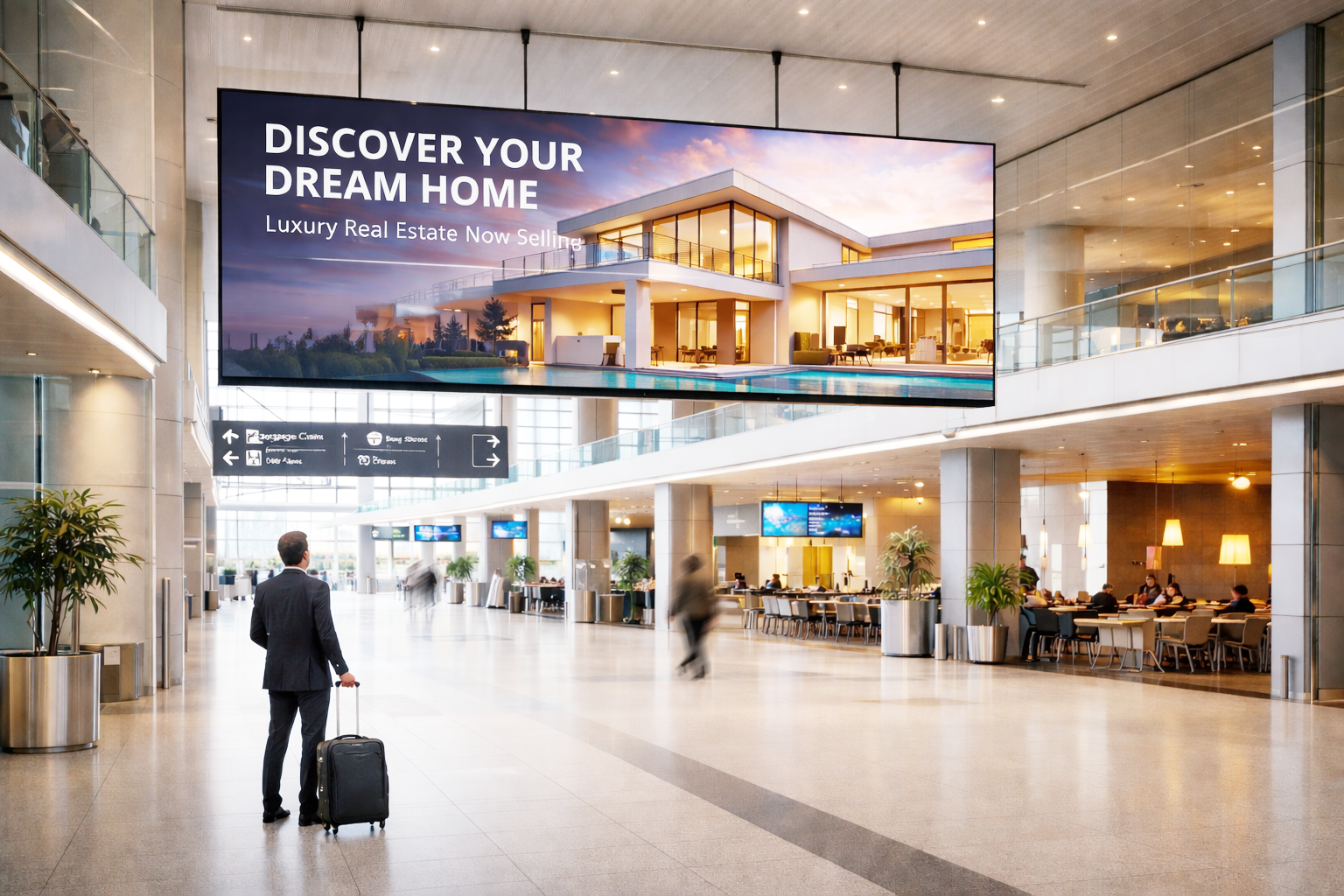
- Melbourne and Australian premium real estate: MEL intercepts the highest concentration of HNWI inbound buyers — Chinese, Indian, Southeast Asian, British, and American — at the single point of arrival in one of the world's most actively appreciated residential real estate markets; for Melbourne premium residential developers, international buyers using MEL are the most pre-qualified buyer audience available at any Australian airport
- International real estate in the US, Singapore, UK, and UAE: Australian HNWI outbound travellers using MEL for international travel are active buyers in London, New York, Singapore, and Dubai; for developers in these markets, MEL's departures environment intercepts the specific high-net-worth Australian buyer whose wealth and travel patterns are best aligned with premium international property investment
- International elite education — UK boarding schools, US universities, Australian Group of Eight: The Chinese-Australian, Indian-Australian, and Korean-Australian communities at MEL have some of the highest international education investment rates of any diaspora communities globally; the Australian HNWI class aspires to UK and US elite institutions; MEL is the singular Australian gateway for the complete spectrum of international education buyer profiles
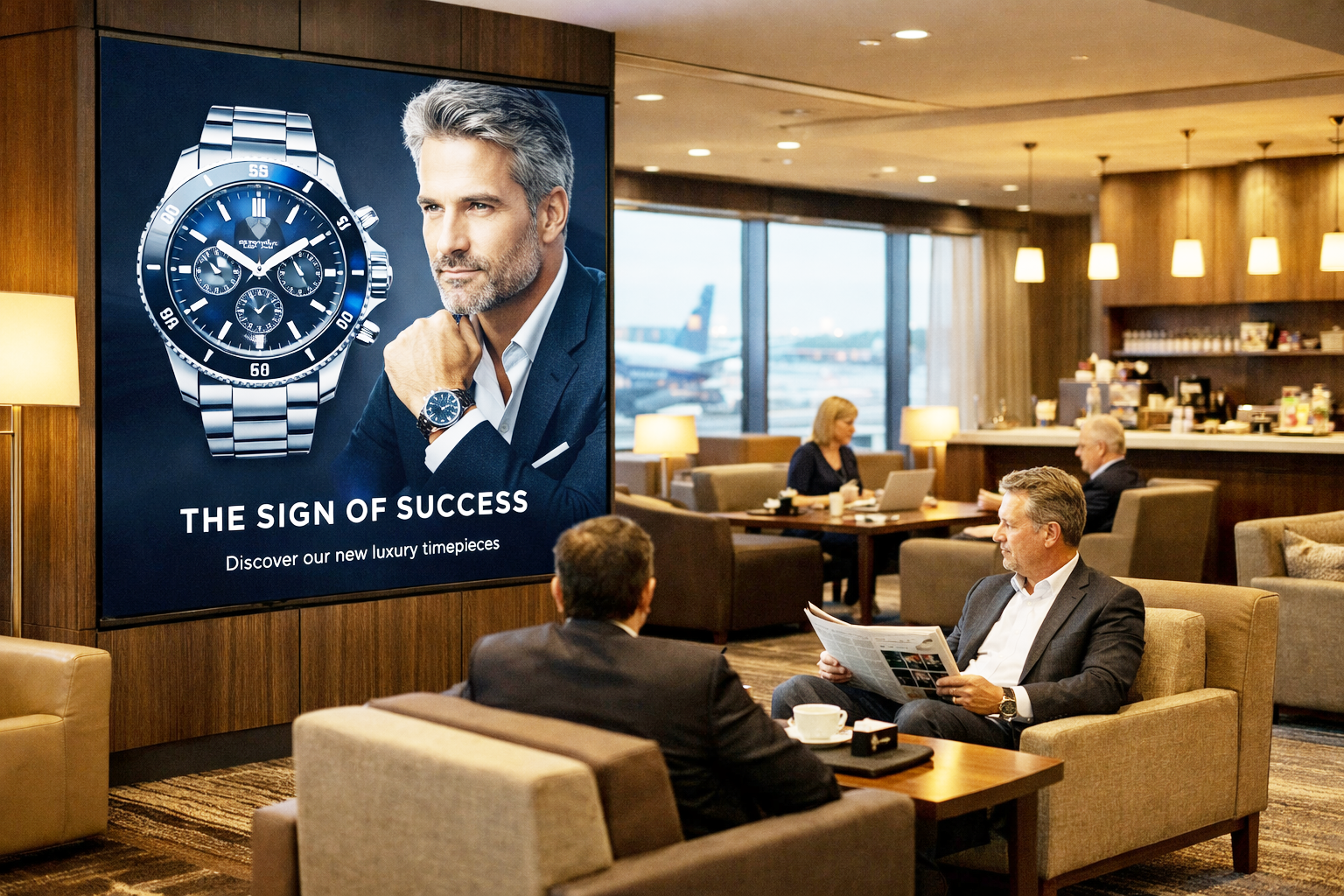
- Premium Asian travel brands — Chinese, Indian, Southeast Asian luxury products: The inbound Chinese, Indian, and Southeast Asian premium audience at MEL is the largest concentration of premium Asian consumers at any Australian airport; Asian luxury fashion, premium watches, and high-end hospitality brands find a captive premium audience at T2 whose brand recognition and spending on luxury categories is structurally above the Australian domestic leisure average
- Australian premium wine and food — Yarra Valley, Mornington Peninsula, premium produce: The departing international tourist at MEL has, in a substantial proportion of cases, visited a Victorian wine region or premium food experience; the peak departure intent for premium Australian wine, olive oil, Vegemite premium gifting, and artisan food products is at its maximum in MEL's international departures retail environment
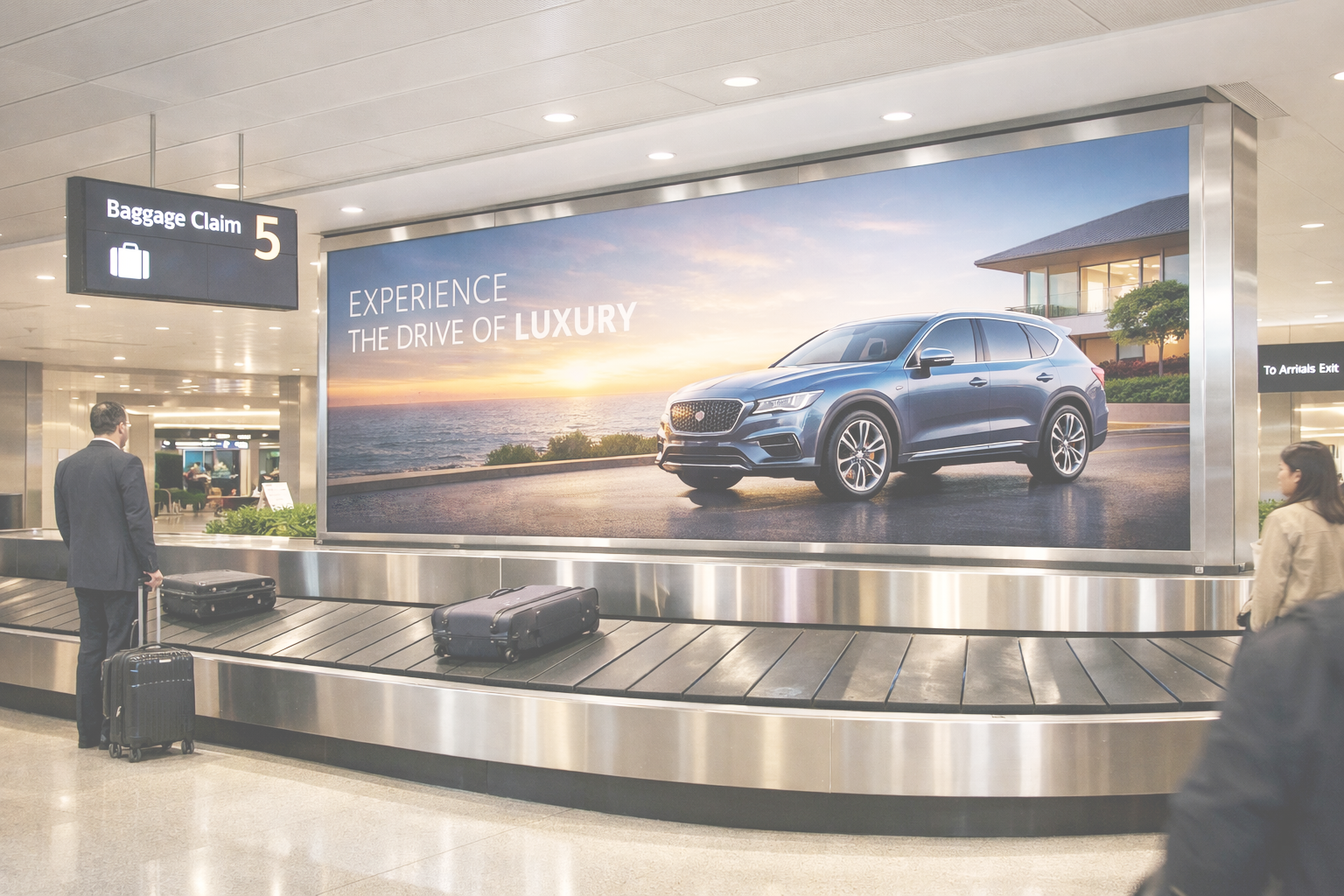
- Luxury automotive: Melbourne's HNWI domestic and international audiences are among Australia's most concentrated premium automotive buyer communities; German luxury automotive brands find a maximally aligned audience at MEL where both the departing Australian HNWI executive and the arriving Asian premium tourist carry above-average purchasing intent
- Premium sports and events brands (Australian Open, F1 Grand Prix, Melbourne Cup): The three major premium event audiences at MEL — tennis in January, Formula 1 in March, horse racing in November — each generate a concentrated HNWI sports entertainment audience whose brand engagement in premium hospitality, luxury goods, and lifestyle categories is among the highest of any sporting event globally
Brand Alignment at a Glance:
| Category | Fit |
|---|---|
| Melbourne and Australian premium real estate | Exceptional |
| International elite education | Exceptional |
| Premium Asian luxury goods and travel brands | Exceptional |
| International luxury real estate (US, UK, Singapore) | Exceptional |
| Premium Australian wine, food, and produce | Strong |
| Luxury automotive | Strong |
| Premium sports and events marketing | Strong |
| Private banking and wealth management | Strong |
| Mass-market budget categories | Poor fit |
Who Should Not Advertise Here:
- Budget travel and value-positioning categories: While MEL handles substantial Jetstar and budget domestic volume through Terminal 4, the international terminal's commercial identity — anchored by Qantas First, Emirates, and Singapore Airlines premium products — creates an ambient premium aspiration level that makes value-positioning messaging contextually incongruent for the most commercially valuable audience segments
- Categories with no connection to Australian lifestyle, Asia-Pacific travel, or premium urban culture: MEL's defining commercial context — Melbourne's food, culture, sport, and HNWI lifestyle; the Asia-Pacific's most important bilateral routes; the Indian and Chinese community's deep local roots — defines a specific contextual brand register; categories with no narrative relationship to any dimension of this register will find the airport's commercial environment unreliable
Event and Seasonality Analysis
| Indicator | Rating |
|---|---|
| Event Strength | High |
| Seasonality Strength | Medium-High |
| Traffic Pattern | Dual-Peak (Summer November-February + July school holidays) with strong year-round domestic base |
Strategic Implication:
MEL's advertising calendar is more commercially consistent year-round than most Southern Hemisphere airports because of its 24/7 curfew-free international operations, the year-round domestic trunk routes, and the Asian diaspora community's festival and VFR travel calendar that distributes premium bilateral travel throughout the year. The summer November-February peak is MEL's highest-volume window and is essential for premium tourism, hospitality, sports event, and retail categories. The January Australian Open window is the single most commercially concentrated HNWI sports tourism audience event at MEL. The March Formula 1 window is the most concentrated premium automotive and luxury hospitality audience moment. The November Melbourne Cup window creates the year's most aligned premium fashion and luxury brand audience. Masscom Global structures MEL campaigns around the full event calendar, coordinating with Singapore, Hong Kong, Los Angeles, and Delhi feeder airports to ensure brand presence throughout the complete journeys of MEL's most commercially valuable bilateral audiences.
Poor Placement and Delays Affect Airport Campaigns
We help you move faster, access better inventory, and get it right now.
Talk to an ExpertFinal Strategic Verdict
Melbourne Airport is the Southern Hemisphere's most commercially compelling HNWI and premium diaspora gateway — the only 24-hour curfew-free international airport in Australia, the entry point for Victoria's $114 billion economy, and the sole international terminal serving the city that Australia attracts more net HNWI migrants to than any other. Its 36 million-plus annual passengers include the highest concentration of Indian-Australian community members at any Australian airport, the most commercially significant Chinese-Australian diaspora bilateral, three daily US long-haul services including Delta's first ever Melbourne route, and an event calendar — Australian Open, Formula 1, Melbourne Cup — that delivers concentrated HNWI sports tourism audiences of global commercial significance three times per year. The third runway commencing construction in 2025 confirms that Melbourne is investing $3 billion in capacity certainty toward a 76 million passenger future by 2042 — a future that brands establishing MEL presence today will have first-mover positioning to benefit from. For brands in Australian premium real estate, international education, Asian luxury goods, premium wine and food, premium automotive, and luxury sports hospitality, Melbourne Airport delivers the most precisely targeted and commercially diverse premium audience available at any Southern Hemisphere airport — and Masscom Global is the partner to activate that audience with the intelligence, lounge-zone precision, and cross-corridor coordination that transforms the world's most liveable city's primary gateway into measurable brand outcomes.
About Masscom Global
Masscom Global is a premium international airport advertising and media buying agency operating across 140 countries. With deep expertise in airport OOH, premium publications, and high-net-worth audience targeting, Masscom helps brands reach the world's most valuable travellers at the moments that matter most. For advertising packages, media rates, and campaign planning at Melbourne Airport and airports across the globe, contact Masscom Global today.
Frequently Asked Questions
How much does airport advertising cost at Melbourne Airport? Advertising costs at MEL vary by terminal, placement zone, format, campaign duration, and seasonal demand. Terminal 2 (international) commands the highest rates, reflecting the concentration of premium long-haul passengers on US, Gulf, Asian, and Indian routes. The five-lounge corridor in Terminal 2 — Qantas First, Qantas Business, Singapore Airlines SilverKris, Cathay Pacific, and Emirates — offers the most commercially efficient HNWI targeting available at any Australian airport. The premium event windows — January Australian Open, March Formula 1, November Melbourne Cup — attract the highest competitive demand for prime terminal placements. The airport's 24-hour curfew-free schedule creates late-night and early-morning premium placement windows that do not exist at Sydney. Contact Masscom Global for current inventory availability, terminal-specific options, and cross-corridor campaign structures linking MEL to Singapore, Hong Kong, Los Angeles, Dubai, and Mumbai.
Who are the passengers at Melbourne Airport? MEL's 36 million annual passengers are dominated domestically by the Melbourne-Sydney shuttle audience — the busiest domestic air route in Australia by passenger numbers — and internationally by a diverse premium mix. New Zealanders are the most frequent international nationality by bilateral volume. Chinese nationals generate the highest premium per-trip domestic tourism spending of any Asian inbound market. Indian nationals are the fastest-growing premium nationality, with Air India's new direct service and the Victorian Indian community generating the most commercially dynamic bilateral growth at MEL currently. Americans are the most prominent new premium growth market, now served by three daily US services including Delta's new Los Angeles route. The Southeast Asian market provides a consistent large-volume base across Singapore Airlines, Malaysia Airlines, Cathay, and budget carriers.
Is Melbourne Airport good for luxury brand advertising? Yes — MEL is one of the most compelling airports in the Asia-Pacific for luxury brand advertising in categories aligned with its specific commercial character. The concentration of five premium airline lounges in Terminal 2, the three daily US long-haul services with premium cabin concentration, and the Qantas A380 and Delta A350 premium product on the Los Angeles route create a dedicated HNWI departure environment whose audience quality per impression is above most comparable Asia-Pacific hubs. The Australian Open, F1 Grand Prix, and Melbourne Cup each generate specific HNWI sports tourism audiences at MEL that are explicitly premium lifestyle consumers. For Australian premium wine, international real estate, luxury automotive, and premium Asian travel categories, MEL's audience alignment is exceptional.
What is the best airport in Australia to reach HNWI audiences? Sydney Kingsford Smith Airport handles greater total volume at approximately 46 million passengers but operates under a strict night curfew that eliminates the late-night and early-morning premium business class advertising windows available at MEL. Sydney is the stronger choice for absolute volume reach and for Sydney-specific residential real estate and financial services categories. MEL is the stronger choice for Indian-Australian diaspora targeting, the Victorian HNWI property market, the American premium tourism audience that Delta has now connected directly, the Melbourne-specific events audience (Australian Open, F1, Melbourne Cup), and any brand that benefits from 24-hour advertising exposure across all hours of international departures. Masscom Global advises major brands to run coordinated MEL-SYD campaigns to achieve full Australian premium market coverage.
What is the best time to advertise at Melbourne Airport? The November to February summer window is MEL's highest-volume international period and is essential for tourism, premium hospitality, and Asian luxury goods categories. January specifically — around the Australian Open — delivers the most concentrated single-event premium sports tourism audience at MEL. March delivers the Formula 1 and its ultra-HNWI motorsports audience. November is the Melbourne Cup month and the year's most aligned window for premium fashion, luxury hospitality, and horse-racing lifestyle brands. July delivers the school holiday domestic peak and the Southeast Asian and Japanese winter-leisure inbound peak. Year-round, the Diwali window in October-November is the most concentrated Indian market consumer audience moment at MEL. Masscom Global recommends multi-season strategies that combine the four major event windows with year-round diagonal corridor placements for the Indian and Chinese bilateral audiences.
Can international real estate developers advertise at Melbourne Airport? Yes — and the commercial case is exceptional in both inbound and outbound directions. Inbound Chinese, Indian, Southeast Asian, and British HNWI buyers arriving at MEL are the most active international buyers of Melbourne premium residential property at any Australian gateway; the airport intercepts this audience at the moment of physical arrival in the market. Outbound Australian HNWI travellers — particularly on the Qantas London, Delta Los Angeles, Emirates Dubai, and Singapore Airlines Singapore routes — are active international property buyers in London, New York, Singapore, and Dubai. For Melbourne residential developers, MEL's international terminal is the most precisely targeted advertising environment for their specific HNWI buyer nationalities. For international developers in Singapore, London, and New York targeting Australian HNWI buyers, MEL's premium departures environment intercepts these buyers at peak outbound intention.
Which brands should not advertise at Melbourne Airport? Budget travel and value-positioning retail categories are misaligned with MEL's international terminal commercial identity, which is anchored by Qantas First, Emirates, Singapore Airlines, and Delta One premium cabin products. Mass-market consumer categories requiring broad Australian household reach achieve better cost efficiency through domestic radio, television, and online channels than through the airport's premium international terminal environment. Categories with no narrative connection to Melbourne's cultural identity — food, sport, wine, Asian community, premium urban living — will find the airport's contextual frame an unreliable creative environment.
How does Masscom Global help brands advertise at Melbourne Airport? Masscom Global delivers end-to-end campaign capability at MEL — from terminal-specific audience intelligence and premium lounge-zone placement strategy in Terminal 2 to cross-corridor coordination at Singapore Changi, Dubai International, Los Angeles International, Hong Kong International, and Mumbai. Our team structures campaigns around MEL's multi-season commercial architecture: the Australian summer international peak, the major event windows (Australian Open, F1, Melbourne Cup), the Indian and Chinese diaspora festival calendars, and the 24-hour curfew-free late-night premium business class departure windows that Sydney cannot offer. For brands targeting Australian premium real estate buyers, the Indian-Australian community, the US premium tourist market, and the five-lounge HNWI departure audience at Terminal 2, Masscom Global converts MEL's extraordinary commercial complexity into campaigns that intercept the right audience at the right moment.