

Airport at a Glance
| Field | Detail |
|---|---|
| Airport | Malta International Airport |
| IATA Code | MLA |
| Country | Malta |
| City | Luqa, 5 km from Valletta |
| Annual Passengers | 8,968,286 (2024) — record year; +14.8% on 2023; third-highest annual growth rate in airport history; winter traffic +21%; annual seat occupancy all-time high of 86% |
| Primary Audience | British and Italian premium leisure tourists; iGaming, fintech, and tech industry professionals; HNWI residency and real estate investors; European winter sun escapees; Maltese diaspora returnees; Gulf and North African business community via Emirates, Qatar, and Turkish Airlines |
| Peak Advertising Season | Year-round with summer peak (June to September) and rapidly growing winter season |
| Audience Tier | Tier 1 (Premium Niche Hub) |
| Best Fit Categories | iGaming and fintech brands, international real estate and HNWI residency services, luxury tourism and boutique hospitality, premium Mediterranean lifestyle, financial services and private banking, technology and digital asset platforms, premium leisure and wellness brands |
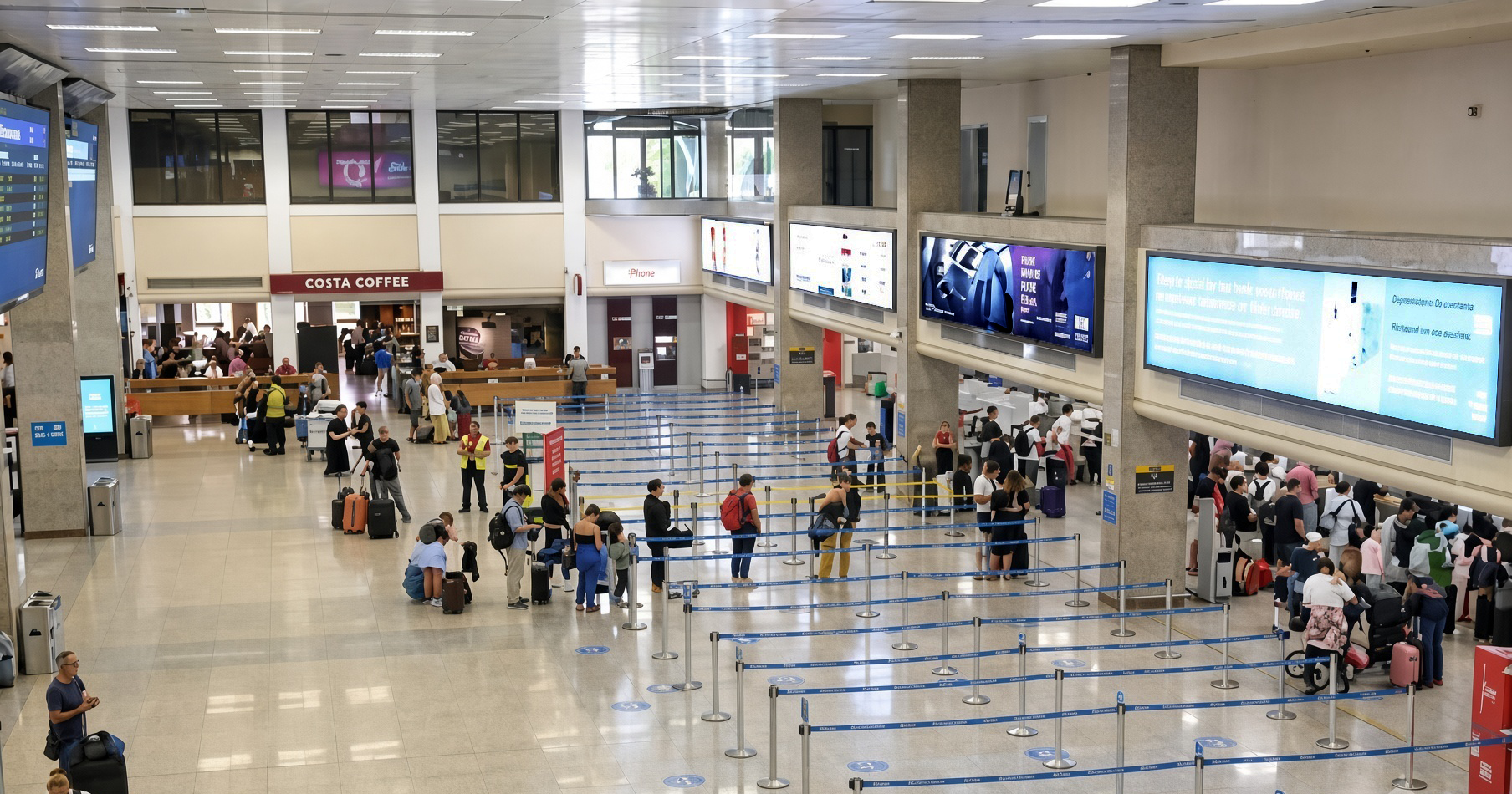
Malta International Airport is structurally unique among European gateways in one commercially decisive way: it is the only airport in the world's tenth-smallest country. Every human being who arrives or departs by air from the Maltese Islands — tourist, iGaming executive, financial services professional, Golden Visa investor, language school student, or government official — transits this single terminal. No secondary routing exists. No alternative gateway divides the audience. The monopoly on access that defines MLA's commercial character is absolute, permanent, and structurally irreplaceable.
The commercial case for advertising at MLA is built on the specific character of the audience that this monopoly concentrates. Malta is not simply a Mediterranean island. It is the European Union's only English-speaking member state outside Ireland, the jurisdiction that originated the world's first comprehensive cryptocurrency and iGaming regulatory framework, a country whose GDP per capita exceeds the eurozone average despite its tiny size, and an island whose combination of British colonial legal heritage, EU membership, a 15% flat tax on remitted foreign income, and year-round Mediterranean climate has made it one of the world's most actively sought-after HNWI residency and business relocation destinations. The passenger at MLA is overwhelmingly either coming to spend premium leisure money, or coming to live, work, invest, and build wealth in the EU's most commercially unconventional micro-state.


Advertising Value Snapshot
- Passenger scale: 8,968,286 in 2024 (record; +14.8% year-on-year; third-highest annual growth rate in airport history); winter traffic growth of 21% substantially outpacing summer's 12% growth — a structural shift indicating year-round premium audience development; annual seat occupancy at all-time high of 86%; terminal expansion underway (€70 million invested in 2025; new VIP terminal unveiled Q2 2025; capacity expansion to 68 check-in desks from 36 and 24 gates from 18 in progress)
- Traveller type: Italian leisure tourists (largest market; 2,048,407 passenger movements; 20% market share); British premium leisure visitors and resident expat community (1,742,321 movements; second market; 17 UK airports direct); iGaming, fintech, and technology professionals (Malta is the EU's iGaming capital with hundreds of licensed operators headquartered here); HNWI residency investors via Malta Permanent Residence Programme; European language school students (Malta is Europe's most popular English-language learning destination for adults); Gulf and Levantine business community via Emirates (daily Boeing 777-300), Qatar Airways, and Turkish Airlines
- Airport classification: Tier 1 (Premium Niche Hub) — the sole gateway to the EU's iGaming and fintech jurisdiction, a country of 563,000 people with real GDP growth of 4.6% in 2024 and a credit rating of A- (S&P), A2 (Moody's), and A+ (Fitch); Europe's most economically resilient micro-state and the Mediterranean's most commercially distinctive HNWI island
- Commercial positioning: The only air gateway to the EU's iGaming capital, a UNESCO World Heritage city, and a Mediterranean island whose fiscal competitiveness — 15% flat tax on remitted foreign income, 0% on offshore foreign income, 5% effective corporate rate — has attracted hundreds of international companies and thousands of HNWI residents from the US, UK, Asia, and the Middle East
- Wealth corridor signal: MLA sits at the intersection of the European premium leisure market, the global iGaming and crypto industry's EU compliance base, and the HNWI Mediterranean residency investment market that has made Malta the EU's most attractive English-speaking relocation destination for non-EU nationals seeking Schengen access, EU residency, and Mediterranean lifestyle simultaneously
- Advertising opportunity: Masscom Global provides access to MLA's single-terminal advertising environment and cross-corridor coordination at London, Rome, Frankfurt, Dubai, and Istanbul feeder airports, enabling brands to intercept the full spectrum of MLA's commercially diverse audience from their origin cities through arrival at the EU's most commercially unconventional island capital
Airport Advertising is Complex to Get Right
We help you execute faster, with proven results and local insight most planners lack starting now.
Talk to an ExpertCatchment Area and Economic Drivers
Top 10 Cities within 150 km — Marketer Intelligence
Given Malta's geographic reality as an island archipelago of 316 km², the catchment geography analysis is domestic and intra-island rather than radius-based. Every destination on MLA's catchment is accessible within 45 minutes of the terminal, and every visitor's complete Maltese experience begins and ends at this airport. The commercial intelligence below reflects each location's specific advertiser relevance:
- Valletta (5 km): Europe's smallest national capital and a UNESCO World Heritage City of extraordinary Baroque density — every church, palazzo, and fortification concentrated within 0.8 km² of honey-coloured limestone; the cultural tourist arriving at MLA for Valletta arrives for one of the most complete examples of a Renaissance planned city in the world; Valletta was European Capital of Culture in 2018 and maintains an arts, cultural festivals, and premium hospitality profile that generates a culturally engaged, above-average-spending audience whose receptivity to premium heritage brands is structurally high
- Sliema and St Julian's: Malta's premium commercial and residential hub — home to the island's most expensive real estate, the highest concentration of iGaming company offices, the best hotel portfolio, and the main waterfront restaurant and nightlife strip; Sliema-St Julian's is where Malta's iGaming executives, fintech founders, and HNWI residents live and work; its property market is among the most actively traded in the Mediterranean micro-state market, generating a consistent professional and investor audience at MLA with premium financial services and real estate category engagement
- Mdina (12 km): Malta's ancient walled capital — a perfectly preserved medieval city of fortified walls, Baroque palaces, and silent cobbled streets perched on the island's central ridge, known as the Silent City for its traffic-free tranquillity and unmatched views over the entire island; Mdina is a premium cultural heritage and photography destination that draws an educated, independently minded premium tourism audience whose per-day spending exceeds the mass beach tourist average
- Gozo (ferry from Ċirkewwa, 30 min): Malta's sister island — smaller, greener, more rural, and increasingly recognised as one of the Mediterranean's most authentic slow-travel destinations; home to the Azure Window arch site (collapsed 2017 but replaced in tourist imagination by Gozo's spectacular coastal scenery), world-class diving, and a growing luxury agriturismo and boutique hotel sector; the Gozo-bound audience at MLA represents Malta's most premium independent leisure segment — typically older, more culturally engaged, and higher-spending than the mainstream coastal resort visitor
- St Paul's Bay, Bugibba, and Qawra (15 km north): Malta's largest domestic resort zone — home to a mix of package holiday infrastructure and growing premium boutique developments; the audience here generates the island's largest proportion of repeat British and Italian visitors, whose long-established familiarity with Malta creates a loyal, above-average engagement audience for premium Maltese product and experience brands
- Marsaxlokk (10 km southeast): Malta's most authentic traditional fishing village — home to the island's most celebrated fresh seafood market and the most photogenic harbour of painted luzzu fishing boats in the Mediterranean; Marsaxlokk generates a specific premium gastronomy tourism audience whose spending on artisan Maltese food and wine categories is the highest of any domestic destination on the island
- Blue Lagoon and Comino (ferry): The Mediterranean's most photogenic natural swimming lagoon — a shallow turquoise channel between Malta and Gozo whose brilliant blue clarity has made it one of the most reproduced Mediterranean beach images in travel media globally; Comino generates a specific premium natural beauty tourism audience whose brand engagement in premium skincare, wellness, and luxury water-activity categories is structurally above average
- Cottonera (Three Cities — Vittoriosa, Senglea, Cospicua) (3 km): Malta's most historically atmospheric waterfront — three fortified cities across the Grand Harbour from Valletta whose Knights of Malta and Ottoman siege heritage generates a premium cultural history tourism audience; the Vittoriosa marina, home to some of the Mediterranean's largest superyachts, signals the area's growing premium HNWI leisure function alongside its cultural heritage profile
- Mosta (8 km): Home to the Rotunda of Mosta — one of the world's largest church domes by internal diameter — and a central position on the island that generates a consistent cultural and religious heritage tourism audience among both Italian and British visitors whose Catholic cultural engagement creates specific brand seasonality windows
- Mellieħa and Golden Bay (20 km north): Malta's largest beach resort destination and the island's most popular summer domestic tourism hub — generating the highest proportion of British package holiday visitors in a single geographic area; Golden Bay's premium beach club development mirrors the broader trend of Malta's beach tourism upgrading from pure package volume to premium lifestyle positioning
NRI and Diaspora Intelligence:
The Maltese diaspora — concentrated in Australia (the largest community, estimated at 140,000-plus), the United Kingdom, Canada, and the United States — maintains strong cultural and property ties to Malta and generates a consistent returning diaspora audience at MLA. Diaspora Maltese visitors are disproportionately represented in the winter season, returning for Christmas and Easter, and their per-visit spending on premium hospitality and cultural experience exceeds that of first-time leisure tourists. The UK's Maltese community generates the strongest year-round diaspora return corridor, consistent with the UK's position as MLA's second-largest bilateral market. Far more commercially significant for most advertisers at MLA is the inverse diaspora flow — the growing community of British, German, Scandinavian, and non-EU nationals who have relocated to Malta as permanent residents and whose frequent return to their origin countries generates a consistent premium outbound professional audience at MLA throughout the year.
Economic Importance:
Malta's GDP growth of 4.6% in 2024 dramatically outpaced the eurozone average, reflecting the structural strength of three simultaneous economic engines: iGaming and online gaming (Malta accounts for a significant share of globally licensed online gambling revenue and hosts over 200 licensed operators); financial services and fintech (Malta's EU membership, English-language legal system, and favorable tax regime have attracted major banks, fund administrators, insurance groups, and crypto exchanges); and tourism (generating approximately 25-30% of GDP directly and indirectly). The iGaming sector alone — whose executives, technology staff, and investor community transit MLA with high regularity — has transformed Malta from a tourism-dependent economy into one of the EU's most commercially diverse micro-states. For advertisers, this economy produces a uniquely blended audience: premium leisure tourist, tech industry professional, and HNWI resident investor all transiting the same terminal.
Business and Industrial Ecosystem
- iGaming, online gambling, and gaming technology: Malta hosts over 200 licensed iGaming operators — including household international brands — alongside hundreds of gaming technology, payments, and compliance companies that form the world's most concentrated iGaming ecosystem outside of Las Vegas; the professional community of executives, product managers, marketers, lawyers, and investors supporting this industry transits MLA for constant European and global business travel, generating a consistent, high-income, tech-savvy B2B audience whose receptivity to premium financial services, travel, and technology advertising is structurally above average
- Fintech, cryptocurrency, and digital assets: Malta was the first country in the world to establish comprehensive blockchain and virtual financial assets regulation, earning the Forbes-endorsed title "Blockchain Island"; the crypto and fintech professional community that has relocated to Malta — attracted by 0% capital gains tax on long-held digital assets and the 15% flat tax on remitted foreign income — generates a specific HNWI technology investor audience at MLA whose financial sophistication and brand engagement in premium financial and lifestyle categories is among the highest at any European regional airport
- Financial services and fund management: Malta's EU financial services passport combined with its competitive corporate tax structure (5% effective rate for qualifying companies) has attracted major international banks, fund managers, and insurance groups; their senior professionals use MLA's Emirates, Lufthansa, British Airways, and Turkish Airlines connections for constant European and global business travel
- Maritime and yacht management: Malta's deep-water port and commercial flag registry — one of the largest in the world — generate a maritime professional community whose international management and inspection travel produces a specific premium B2B audience with relevance for marine luxury, financial services, and premium travel advertising
Passenger Intent — Business Segment:
MLA's business travellers are disproportionately embedded in the iGaming, fintech, and technology sectors — a professional community that is younger, higher-earning, and more digitally engaged than the average European business traveller. An iGaming CEO travelling to London for a regulatory meeting, a crypto founder attending a DeFi conference in Amsterdam, or a fintech compliance officer flying to Frankfurt for a banking licence review represent an audience with above-average disposable income, strong brand engagement in premium lifestyle and technology categories, and a cultural alignment with innovation and quality that makes MLA's B2B advertising environment unusually relevant for premium technology, financial services, and lifestyle brands simultaneously.
Strategic Insight:
MLA's business audience is structurally unique in European airport advertising because of the iGaming concentration. The gaming industry — whose global revenue exceeds $500 billion annually — has deliberately chosen Malta as its EU compliance and operational base, creating an island population of senior gaming industry professionals whose average income and lifestyle spending significantly exceed comparable European business travel audiences at airports of similar total passenger volume. No other European airport of sub-10-million passengers concentrates an equivalent HNWI technology and gaming industry professional audience in a single terminal environment.
Tourism and Premium Travel Drivers
- Valletta UNESCO World Heritage Circuit: The Knights of St John's fortified capital — the most densely historic city in Europe by heritage per square metre — draws an internationally educated premium cultural tourism audience whose per-day spending on guided experiences, premium accommodation, and artisan Maltese craftsmanship is above the Mediterranean average; the Grand Harbour views from Valletta's bastions constitute one of the most spectacular waterfront panoramas in the world, generating editorial coverage that sustains premium tourism demand year-round
- Diving and marine tourism: Malta's crystal-clear Mediterranean waters — among the clearest in the European sea — and extraordinary underwater archaeology, including World War II wreck sites and natural caverns, have established Malta as one of Europe's premier scuba diving destinations; the dive tourism audience at MLA is independently motivated, above-average-spending, and specifically relevant for premium outdoor, water sports, and adventure lifestyle brands
- Malta's English-language education circuit: Malta is Europe's most popular adult English-language learning destination — attracting hundreds of thousands of students annually, primarily from Italy, Germany, France, and Eastern Europe, who combine language study with Mediterranean leisure; language school students represent a consistent, young-adult, aspirational audience whose brand engagement in premium lifestyle and fashion categories is distinctly high
- Gozo and the slow tourism circuit: The premium boutique hotel, farm-to-table gastronomy, and rural wellness economy of Gozo has positioned Malta's sister island as the Mediterranean's most genuine slow-tourism alternative to the mass-market Maltese coast — generating a specific HNWI and culturally sophisticated audience whose premium spending per night exceeds the national Maltese average
Passenger Intent — Tourism Segment:
The tourist at MLA has often chosen Malta specifically because of its year-round weather, English-language accessibility, and a combination of history and Mediterranean beauty that no other island in the EU replicates. The Italian visitor drives the highest volume; the British visitor spends more per trip and returns most often; the German and Scandinavian winter-escape audience arrives specifically because Malta's mild climate and UNESCO capital offer a quality winter break that eliminates the need for long-haul travel. Together, these motivations create a tourism audience that is specifically quality-led — the language student, the diver, the cultural heritage visitor, and the HNWI resident investor arrivals all transit the same terminal, creating an advertising environment of extraordinary commercial layering.
Travel Patterns and Seasonality
Peak seasons:
- June to September (Summer Peak): Malta's warmest months, when beach tourism, Valletta's cultural festival calendar, the SBC Summit iGaming industry event, and the peak of diving season create the airport's maximum leisure and industry event audience concentration; July and August see MLA at its highest weekly passenger throughput, dominated by Italian, British, and German sun-seekers
- October to May (Rapidly Growing Winter Season): Malta's most commercially distinctive growth story — winter passenger traffic grew 21% in 2024, substantially outpacing summer's 12% growth; Malta's mild winter climate (average 15°C in January), UNESCO Valletta's year-round cultural programme, the iGaming industry's conference calendar (SBC Summit in April, iGaming Super Show in June, SiGMA in November), and the growing permanent resident and HNWI community's travel patterns have collectively transformed MLA from a seasonal summer airport into a genuinely year-round premium hub
- November — SiGMA World (formerly Malta iGaming Summit): Malta's most commercially significant single annual event — SiGMA World draws up to 30,000 iGaming, fintech, crypto, and technology professionals to the island each November, creating MLA's most concentrated premium B2B audience of the year and the single most valuable advertising window for technology, financial services, and gaming industry brands
Event-Driven Movement:
- SiGMA World (November): The world's most significant iGaming and emerging technology summit — drawing 30,000 professionals from the global gaming, fintech, blockchain, and AI industries to Malta annually; the SiGMA arrival and departure window at MLA concentrates an extraordinarily high per-person commercial value audience in the terminal, making November one of the year's most commercially valuable B2B advertising windows at any Southern European airport
- SBC Summit Malta (April): The second major international iGaming and sports betting industry conference held on the island each spring — drawing 8,000-plus industry delegates from across Europe, the Americas, and Asia; creates an April B2B premium audience spike that supplements the year-round iGaming professional base
- Malta Carnival (February) and Mnajdra Equinox (March and September): Malta's Carnival — one of the Mediterranean's most vibrant and authentically festive celebrations — generates a specific February domestic and diaspora audience peak; the Mnajdra prehistoric temples' equinox alignment events draw a premium heritage archaeology audience from across Europe
- Notte Bianca and Valletta Cultural Season (October): Valletta's all-night cultural festival and the Mediterranean Film Festival (June to October) generate consistent premium cultural tourism audience peaks in the autumn shoulder season that complement the summer leisure peak with a culturally engaged, higher-spending visitor segment
- Grand Prix-adjacent events and Mediterranean sailing regattas (various): Malta's position at the centre of the Mediterranean makes it a regular participant in the sailing circuit and a popular yacht rally destination; the Middle Sea Race (October) is the Mediterranean's most prestigious offshore yacht race and generates a premium sailing community audience at MLA distinct from the mainstream leisure tourism flow
It’s Not Just Where You Advertise - It’s How Fast You Execute
We combine local insight with fast rollout to deliver results for you, now.
Talk to an ExpertAudience and Cultural Intelligence
Top 2 Languages:
- English: Malta's co-official language, the language of its legal system, its education system, and its entire iGaming and financial services professional community; uniquely among Southern European island destinations, English is not merely the tourist language at MLA — it is the domestic professional and governmental language that underlies Malta's entire commercial identity as the EU's English-speaking Mediterranean island; English-language campaign creative at MLA achieves complete audience penetration across both the international tourism audience and the domestic professional community without any adaptation requirement
- Italian: The dominant first language of MLA's highest-volume single inbound market — Italy accounts for 2.05 million passenger movements annually (20% market share), and Italian-speaking visitors from both mainland Italy and Sicily form the bedrock of Malta's mass-tourism economy; Maltese language itself is substantially derived from Sicilian Arabic with heavy Italian influence, reflecting centuries of physical and cultural proximity to Sicily; Italian-language creative at MLA reaches the airport's single largest audience segment with genuine cultural resonance
Major Traveller Nationalities:
Italian nationals are MLA's dominant inbound market, generating the highest absolute passenger movements from any single nationality and reflecting Malta's extraordinary geographic and cultural proximity to Sicily (90 kilometres at the closest point). British nationals are the second-largest market — a relationship rooted in Malta's 164-year period of British colonial rule (1800 to 1964) that left an English-speaking, British-legal-system island with deep structural ties to the UK market, the largest permanent British expat community of any Mediterranean island per capita, and a bilateral tourism relationship of unusual loyalty and depth. German visitors form the third-largest European leisure segment, attracted by Malta's year-round warmth, English-language accessibility, and UNESCO heritage density. Polish visitors have grown 56% in 2024, making Poland MLA's fastest-growing single market — driven by Wizz Air's Warsaw and Katowice connections and a rapidly expanding Polish interest in Malta's language school and budget leisure market. The Gulf and Middle Eastern professional community transits via Emirates (daily Boeing 777-300), Qatar Airways, and Turkish Airlines, representing a consistent premium outbound audience from Malta's financial services and iGaming sectors connecting to Gulf business partners.
Religion — Advertiser Intelligence:
- Roman Catholicism (approximately 90% — among Europe's most intensely Catholic populations):Catholicism is not merely the nominal faith of Malta's population — it is the living cultural identity of the island, expressed in 365 churches (more per square km than anywhere in the world), the baroque architectural language of every town and village, the Feast of the Parish Saints celebrated across the summer months with fireworks, brass bands, and decorated streets, and the profound community identity that Catholic observance provides in Europe's most densely settled country; the village festa season — running from June to September, with parishes across the island hosting weekly parades, fireworks, and celebrations — generates a specific domestic cultural tourism calendar that simultaneously deepens international visitors' engagement with Maltese identity; for brands connecting authentically to Maltese Catholic cultural heritage, the festa season creates the most commercially resonant advertising context of the year
- Eastern European Catholicism and emerging Orthodox (among Polish, Romanian, and Bulgarian communities): Poland's 56% growth at MLA in 2024 signals a new Eastern European Catholic market whose cultural calendar — Christmas, Easter, and patron saint celebrations — creates secondary seasonal audience windows; the growing Eastern European professional community working in Malta's hospitality and services sectors uses MLA for return flights home, generating a consistent secondary bilateral audience relevant for Eastern European brand communications
Behavioral Insight:
Malta's audience at MLA is defined by a paradox that is commercially distinctive: the island simultaneously attracts the mass-market Italian and British sun-seeker and the HNWI iGaming executive and fintech entrepreneur — audiences that in most Mediterranean destinations would occupy entirely separate terminals, islands, or resorts. At MLA, they share the same check-in queue and the same departures lounge. This co-presence creates an advertising environment where premium professional and aspirational lifestyle brands intercept both the HNWI industry professional who can afford them now and the younger leisure tourist who is deciding which brands they aspire to over the next decade. For brands that want to combine HNWI professional reach with aspirational mass-premium audience engagement simultaneously, Malta's single-terminal monopoly gateway provides a structural advertising efficiency unavailable at any other Mediterranean island airport.
Outbound Wealth and Investment Intelligence
The outbound passenger at MLA divides into commercially distinct profiles whose outbound investment behaviour is worth understanding separately. The iGaming executive departing for London is managing shareholder relationships and regulatory filings for a business that generates nine-figure revenue. The crypto founder travelling to Zurich is managing a family office portfolio structured across Malta, Switzerland, and Dubai. The British HNWI resident who purchased a Sliema penthouse under the Malta Permanent Residence Programme is departing to visit children in London before returning to their Mediterranean tax-efficient base. These are not casual leisure travellers — they are commercially sophisticated individuals whose investment and purchasing decisions are genuinely influenced by brand communications that reach them in the right context.
Outbound Real Estate Investment:
Malta's real estate market saw luxury property values grow 9% in 2024, with prime Sliema, St Julian's, and Valletta areas demonstrating the most consistent appreciation. The MPRP (Malta Permanent Residence Programme) requires a minimum real estate investment of €300,000 or a rental commitment of €10,000 annually, generating a consistent flow of non-EU investor arrivals whose real estate due diligence visits transit MLA. The outbound Maltese and Malta-resident professional community invests internationally with concentrations in London, Dubai, and New York — premium markets where Malta's tax advantages (no capital gains tax on property outside Malta, 15% flat tax on remitted foreign income) amplify the return on international real estate investment. For international real estate developers advertising at MLA, the resident HNWI community represents an active cross-border buyer pool with structurally advantaged purchasing power.
Outbound Education Investment:
Malta's HNWI resident community — including the large British expat base, the iGaming executives, and the financial services professionals — directs children to UK boarding schools and universities at above-average rates. The island's British educational heritage (English-medium instruction throughout the national system) combined with direct daily UK connections creates a seamless educational pipeline from Malta's premium residential community to British elite education. International schools in Malta — charging €6,000 to €15,000 per year with Cambridge and Edexcel curricula — serve as the feeder pathway to UK universities for the non-Maltese resident community. For British and international elite education institutions, MLA intercepts a concentrated, high-conversion family audience with established UK educational preferences and the financial capacity to pay premium fees.
Outbound Wealth Migration and Residency:
Malta's MPRP (Malta Permanent Residence Programme) requires a government contribution of €37,000 (flat, regardless of location), real estate purchase of €300,000 or more (in prime areas), plus a charitable donation of €2,000; it provides permanent EU residency with Schengen access and a pathway to Maltese citizenship through five-year naturalisation. The programme's 15% flat tax on remitted foreign income and 0% on income kept offshore has made Malta the EU's most competitive fiscal residency destination for digital entrepreneurs, crypto investors, and internationally mobile HNWI families. The fast-track citizenship-by-investment programme was discontinued following the July 2025 European Court of Justice ruling — but standard residency through the MPRP continues to attract strong demand. Malta remains the only EU member state offering English as a co-official language in a Mediterranean climate, making it structurally irreplaceable for non-EU HNWI families seeking EU residency in an English-language environment.
Strategic Implication for Advertisers:
International brands targeting the EU's most English-speaking Mediterranean HNWI residency market — financial services, real estate, private banking, luxury lifestyle, and international education — should treat MLA as a tier-one Southern European advertising investment. The concentration of iGaming, fintech, and crypto industry HNWI professionals in a single terminal, combined with the MPRP investor arrival community and the British and German premium leisure audience, creates an advertising environment whose commercial density per square metre of terminal is among the highest at any European airport of comparable total passenger volume. Masscom Global's cross-corridor access at London, Rome, Frankfurt, and Dubai feeders enables brands to intercept this audience before they arrive as well as when they depart.
Airport Infrastructure and Premium Indicators
Terminals:
- MLA operates a single terminal built in 1992 and progressively expanded since, now handling 8.96 million passengers annually. A €70 million infrastructure investment programme active in 2025 includes a new VIP terminal unveiled in Q2 2025, expansion of check-in capacity to 68 desks from 36, addition of six new aircraft parking stands through the Apron 8 South project, and gate expansion to 24 from 18. A new departures lounge expansion (6,000 m²) is part of the western terminal upgrade programme — the most substantial commercial environment improvement in the airport's history, creating new premium advertising placement inventory in freshly designed commercial zones
Premium Indicators:
- The new VIP Terminal unveiled Q2 2025 represents MLA's most commercially significant premium infrastructure addition in decades; this dedicated HNWI departure and arrival environment concentrates the airport's highest commercial value passengers — iGaming executives, MPRP investors, government officials, and premium leisure guests — in a purpose-designed premium space that creates a new tier of advertising placement opportunity above the standard departures environment
- Emirates' daily Boeing 777-300 service — the largest aircraft visiting MLA regularly — is the airport's most commercially significant single premium route, carrying Gulf HNWI business passengers, Maltese iGaming executives with UAE operations, and Dubai-connected financial services professionals in a year-round premium class product that distinguishes MLA from comparable volume airports without Gulf carrier presence
- The SkyParks Business Centre adjacent to the terminal — a multi-floor office complex housing aviation, technology, and services businesses — creates an immediate professional dwell environment adjacent to the airport's commercial zones, generating airport-adjacent B2B advertising receptivity that extends MLA's commercial reach beyond the standard terminal environment
- Malta's forthcoming €70 million terminal expansion will increase the commercial space available for advertising placements, create new premium retail zones, and establish the airport's physical footprint as commensurate with its commercial ambition; brands advertising at MLA during this investment cycle are establishing presence before the upgraded environment commands the higher placement rates that new premium terminal environments consistently generate
Forward-Looking Signal:
MLA's €70 million capital programme — combined with the new VIP terminal, the sustained 14.8% passenger growth in 2024, and Malta's structural position as the EU's English-speaking iGaming and fintech jurisdiction — signals an airport in deliberate premium repositioning. The airport CEO has publicly targeted further growth in both the summer season and the strategically prioritised winter market, where the 21% growth rate in 2024 confirms that Malta's year-round appeal is being effectively commercialised. The SiGMA World conference's continued growth, the expansion of crypto and fintech industry relocation activity to Malta, and the MPRP's attractiveness relative to post-exit Portugal and Spain Golden Visa programmes all point toward sustained premium audience growth at MLA over the coming three to five years. Masscom Global advises brands to establish MLA presence now, before the upgraded terminal environment and accelerating premium audience growth create the more competitive advertising inventory landscape that Malta's trajectory makes inevitable.
Airline and Route Intelligence
Top Airlines:
Ryanair (dominant; 47% of all scheduled flights; 376 weekly departures; 30+ European destinations), KM Malta Airlines (national carrier; 22% of seats; successor to Air Malta from March 2024; European network), easyJet (5% of flights), Wizz Air Malta (5%), Emirates (daily Boeing 777-300 to Dubai — year-round; 3% of total seat share), Lufthansa (Frankfurt and Munich — 3% of seats), British Airways (London Gatwick — year-round), Jet2 (eight UK destinations), ITA Airways, Turkish Airlines, Qatar Airways, Air France, Air Serbia, Norwegian, SAS, SWISS, LOT Polish Airlines, Volotea, Transavia France, Aer Lingus, Eurowings, Air Baltic, TUIfly
Key International Routes:
- London Heathrow (KM Malta Airlines — year-round)
- London Gatwick (British Airways, easyJet — year-round)
- 17 UK airports total (Ryanair, Jet2, easyJet, KM Malta — from Belfast, Birmingham, Bristol, Edinburgh, Glasgow, Leeds, Liverpool, Manchester, Newcastle, and more)
- Rome Fiumicino (Rome is the top single destination by seat capacity; 556,543 annual seats — ITA Airways, KM Malta, Ryanair, Wizz Air Malta)
- London Gatwick (second top destination; 539,612 annual seats)
- Catania (441,312 annual seats — closest major city; 90 km from Malta)
- Milan (multiple airports — KM Malta, easyJet, Ryanair)
- Frankfurt (Lufthansa, KM Malta — year-round)
- Munich (Lufthansa — year-round)
- Paris CDG (Air France, KM Malta — year-round) and Paris Orly (KM Malta, Transavia)
- Amsterdam (easyJet, KM Malta — year-round)
- Dubai (Emirates — daily Boeing 777-300; year-round)
- Doha (Qatar Airways — year-round)
- Istanbul (Turkish Airlines, KM Malta — year-round)
- New York JFK (Delta Air Lines — seasonal; the longest scheduled route from MLA)
- Warsaw (LOT — seasonal; Wizz Air — year-round)
- Luanda (TAP — seasonal connection via Lisbon)
- Tunis (TunisAir Express — seasonal)
Domestic Connectivity:
None — Malta has no domestic air routes; the island's entire air connectivity is international by definition.
Wealth Corridor Signal:
MLA's route network reflects the three commercial pillars of Malta's economy simultaneously. The Italy corridor — Rome and 17 Italian destinations — carries the leisure tourism volume that funds the island's mass hospitality economy. The UK corridor — 17 direct UK airports, year-round London services — carries both the premium leisure and permanent British expat community whose per-visit spending is the island's highest among recurring nationalities. The Gulf corridor — Emirates daily to Dubai, Qatar to Doha, Turkish to Istanbul — carries the iGaming executives, fintech entrepreneurs, and HNWI residents managing international business relationships and investment portfolios; this premium corridor carries a disproportionate share of MLA's per-passenger commercial value relative to its seat share. The Delta JFK seasonal service adds the American market's most commercially premium origin airport to MLA's transatlantic reach, delivering US HNWI leisure and investment travellers directly.
Media Environment at the Airport
- MLA's single terminal concentrates all 8.96 million annual passengers through a single commercial space — a structural attribute that makes any premium placement visible to the complete passenger population without fragmentation; the airport's compact layout means dwell time is concentrated, advertising frequency is maximised, and the audience for any given placement is consistently large relative to the terminal's total footprint
- The new €70 million terminal expansion — actively underway in 2025 — will create a substantially upgraded commercial environment with new retail zones, expanded departures lounge, and the purpose-designed VIP terminal that concentrates the airport's highest commercial value passengers; brands establishing placement relationships during this transition phase benefit from pre-expansion rates in an environment that will command premium valuations post-completion
- The SiGMA World November window creates MLA's single most commercially concentrated premium B2B advertising opportunity of the year; the 30,000 iGaming, fintech, and crypto professionals who transit the terminal during SiGMA week represent a per-person commercial value density that has no equivalent at any comparable Southern European regional airport during any other annual event window
- Masscom Global's cross-corridor capability at London, Rome, Frankfurt, Dubai, and Istanbul enables coordinated brand presence across MLA's most commercially valuable feeder airports, ensuring that the iGaming executive departing London, the Italian premium leisure visitor at Rome's Fiumicino, and the Gulf HNWI business traveller at Dubai all encounter consistent brand messaging before arriving at the EU's most commercially distinctive island gateway
Strategic Advertising Fit
Best Fit:
- iGaming, sports betting, and gaming technology brands: MLA is the only airport in the world where every arriving passenger potentially works in, invests in, or is directly adjacent to the global iGaming industry's EU compliance base; no other airport of comparable volume concentrates a gaming industry audience of this depth and per-person commercial significance in a single terminal
- Fintech, cryptocurrency, digital assets, and blockchain platforms: Malta's Blockchain Island identity and its 0% capital gains tax on long-held digital assets have attracted the EU's highest concentration of crypto-friendly HNWI individuals; MLA intercepts this audience at a moment of confirmed financial sophistication and above-average digital asset portfolio awareness
- International real estate — Maltese prime residential market, Dubai comparables, and European premium properties: The MPRP investor community, the British HNWI resident audience, and the iGaming executive real estate buyer cohort create three simultaneous property advertising audiences at MLA whose combined annual purchase intent is commercially exceptional for a single terminal of sub-10-million passengers
- Private banking, wealth management, and financial services: The concentration of iGaming revenue, fintech capital, and HNWI resident investment activity on a 316 km² island creates a per-capita financial services demand at MLA that substantially exceeds comparable European regional airports
- Premium lifestyle, luxury hospitality, and Mediterranean travel: Malta's reputation as the EU's quality-of-life leader among micro-states, combined with its growing premium boutique hotel pipeline, yacht-accessible anchorages, and UNESCO world heritage cultural programme, create a premium Mediterranean lifestyle brand environment of genuine aspiration
- International elite education: The resident HNWI community, the British expat community, and the Gulf professional families using Emirates connections all represent active UK and international elite education buyers whose children's education decisions are shaped by the direct UK corridor that Malta's route network provides
- Premium automotive: The HNWI iGaming executive and fintech entrepreneur community is one of the Mediterranean's most active premium and luxury car buyer demographics; MLA intercepts this audience both on arrival and departure in an environment where automotive aspirational messaging carries genuine financial conversion potential
Brand Alignment at a Glance:
| Category | Fit |
|---|---|
| iGaming and gaming technology | Exceptional |
| Fintech, crypto, and digital assets | Exceptional |
| International real estate | Exceptional |
| Private banking and wealth management | Exceptional |
| Premium lifestyle and luxury hospitality | Strong |
| International elite education | Strong |
| Luxury automotive | Strong |
| Mass-market budget categories | Poor fit |
Who Should Not Advertise Here:
- Non-digital mass-market FMCG requiring volume reach: While MLA's 8.96 million passengers include a substantial mass-leisure volume, the airport's defining commercial character — the iGaming ecosystem, the HNWI residency community, and the premium European leisure audience — creates an ambient context that does not support low-engagement mass-market category messaging; these categories achieve better return at higher-volume Northern European domestic airports
- Categories incompatible with Malta's Catholic cultural identity: Advertising that is explicitly anti-clerical, culturally provocative in ways that conflict with the island's dominant religious identity, or that trivialises Malta's heritage will find the local audience's cultural frame an actively resistant advertising environment
Event and Seasonality Analysis
| Indicator | Rating |
|---|---|
| Event Strength | High |
| Seasonality Strength | Medium (trending toward year-round) |
| Traffic Pattern | Dual-Peak (Summer leisure + November SiGMA) with rapidly growing year-round base |
Strategic Implication:
MLA's advertising calendar has undergone a fundamental structural shift. The airport was historically a strongly seasonal summer leisure gateway; it is now an increasingly year-round commercial hub whose winter traffic grew 21% in 2024. Advertisers should weight summer peak investment toward premium leisure, Italian market, and UK holiday categories, while allocating November specifically to iGaming, fintech, crypto, and B2B technology brands around the SiGMA World conference window. The April SBC Summit creates a secondary spring B2B technology window. The growing winter season — driven by Malta's year-round warmth, the MPRP resident community's travel patterns, and Valletta's cultural programme — creates a premium short-break and cultural tourism audience from October to May that warrants dedicated budget allocation for premium hospitality, real estate, and lifestyle brands. Masscom Global structures MLA campaigns around all four of these distinct commercial windows simultaneously, coordinating with London, Rome, and Dubai feeder airports for maximum brand presence across the complete journey.
Poor Placement and Delays Affect Airport Campaigns
We help you move faster, access better inventory, and get it right now.
Talk to an ExpertFinal Strategic Verdict
Malta International Airport is one of the most commercially distinctive sole-gateway airports in European aviation — not because of its passenger volume (which at 8.96 million is modest by continental standards) but because of the extraordinary concentration of premium commercial value that its audience represents per passenger. The EU's iGaming industry's compliance capital, the world's first blockchain regulatory jurisdiction, the Mediterranean's most English-speaking EU residency market, a UNESCO World Heritage capital, and a year-round Mediterranean island with the strongest winter growth rate of any comparable Southern European gateway in 2024: these are not accidental convergences. They are the outcome of a deliberate national strategy that has made Malta irreplaceable for specific global industries and specific HNWI buyer profiles that no comparable island in the EU can substitute. The SiGMA World November window alone delivers a per-passenger commercial value density at MLA that no other Southern European regional airport matches during any single annual event. The new VIP terminal opening in Q2 2025 and the €70 million expansion programme confirm that the airport is actively investing in premium commercial infrastructure commensurate with the quality of its audience. For brands in iGaming, fintech, cryptocurrency, private banking, Maltese and European premium real estate, international elite education, and premium Mediterranean lifestyle, MLA is not a secondary market choice — it is the primary EU gateway to the world's most commercially concentrated English-speaking Mediterranean island economy, and Masscom Global is the partner to activate it precisely, now.
About Masscom Global
Masscom Global is a premium international airport advertising and media buying agency operating across 140 countries. With deep expertise in airport OOH, premium publications, and high-net-worth audience targeting, Masscom helps brands reach the world's most valuable travellers at the moments that matter most. For advertising packages, media rates, and campaign planning at Malta International Airport and airports across the globe, contact Masscom Global today.
Frequently Asked Questions
How much does airport advertising cost at Malta International Airport? Advertising costs at MLA vary by format, placement zone, campaign duration, and seasonal demand. The July-August summer peak and the November SiGMA World conference window both command premium rates, reflecting the airport's maximum premium leisure and maximum B2B technology audience concentrations respectively. The new VIP terminal opening in Q2 2025 will introduce new premium inventory in a purpose-designed HNWI environment that will carry higher rates than the standard terminal departures zones. The €70 million terminal expansion will progressively create new commercial placement opportunities through 2025 to 2027. Contact Masscom Global for current inventory availability, format options, and cross-corridor campaign structures linking MLA to London, Rome, Dubai, and Frankfurt feeder airports.
Who are the passengers at Malta International Airport? MLA's 8.96 million annual passengers divide into three commercially distinct groups. Italian nationals are the largest single market (2.05 million movements; 20% share), followed by British nationals (1.74 million; 17% share) — together they represent nearly 40% of total passenger movements. The professional iGaming, fintech, and crypto industry community resident in Malta generates a consistent year-round premium B2B audience whose per-person commercial value substantially exceeds the leisure tourism average. HNWI investors, MPRP programme applicants, and permanent resident expat returnees from the UK, Germany, and Australia form the third significant segment. Emirates, Qatar, and Turkish Airlines carry a Gulf and Levantine business professional audience.
Is Malta International Airport good for luxury brand advertising? Yes — with important category qualification. MLA is among Europe's best airports for premium financial services, iGaming, fintech, cryptocurrency, and technology brand advertising due to the extraordinary concentration of industry professionals in a single terminal. It is also strong for premium Mediterranean lifestyle, international real estate, and elite education categories. For generic luxury fashion and accessories targeting mass-premium leisure audiences, MLA delivers below the commercial efficiency of larger Mediterranean gateways; its premium audience is more specifically concentrated in financial and technology sector HNWI than in the broader luxury consumption market.
What is the best airport in the Mediterranean to reach iGaming and fintech professionals? MLA is without parallel in the Mediterranean for iGaming and fintech professional advertising — no other airport in Europe handles the outbound and inbound professional traffic of a country that has deliberately structured its entire regulatory, tax, and corporate environment to attract the global iGaming industry. The SiGMA November window alone concentrates 30,000 global gaming and technology professionals at MLA, creating a unique B2B advertising density unavailable at any other Southern European airport during any annual event. For brands targeting this specific industry community, MLA is not merely the best choice — it is the only choice.
What is the best time to advertise at Malta International Airport? November is the year's most commercially valuable B2B technology window, driven by SiGMA World; this window is essential for iGaming, fintech, crypto, and financial services brands. July and August deliver maximum leisure volume for premium tourism, lifestyle, and Italian and British market brand advertising. April creates a secondary B2B window via SBC Summit. The growing October to May period delivers premium cultural tourism, British winter-escape, and HNWI resident audiences whose year-round Malta presence makes them available consistently outside the summer peak. Masscom Global recommends year-round Malta investment structured around all four distinct commercial windows rather than a single summer-only campaign.
Can international real estate developers advertise at Malta International Airport? Yes — and the case is commercially compelling from multiple audience directions simultaneously. Inbound MPRP applicants from the US, UK, and Gulf arriving for property viewing trips transit MLA as their first Maltese touchpoint; the airport is their first and last contact with the market they are investing in. The iGaming executive community — among the highest earners per capita of any single-industry professional group on any EU island — is an active Sliema and St Julian's premium residential buyer. The British HNWI expat resident community has established long-term property ownership patterns that generate consistent cross-border investment in UK and European prime markets. For developers in complementary Mediterranean, Dubai, and UK prime markets, MLA's outbound HNWI resident audience represents an active cross-border buyer pool with structurally advantaged purchasing power.
Which brands should not advertise at Malta International Airport? Mass-market budget consumer categories requiring volume reach are misaligned with MLA's commercial character. The airport's defining audience — iGaming professionals, HNWI investors, and premium European leisure visitors — creates an ambient aspiration level that does not support value-positioning brand messaging. Categories whose creative register has no connection to digital technology, financial services, premium Mediterranean lifestyle, or quality-led leisure will find MLA's professional and aspirational context an inefficient environment regardless of the passenger volume justification.
How does Masscom Global help brands advertise at Malta International Airport? Masscom Global provides end-to-end campaign capability at MLA — from audience intelligence and placement strategy in the single terminal commercial environment to the new VIP terminal's premium placements and cross-corridor coordination at London, Rome, Frankfurt, Dubai, and Istanbul feeders. Our team structures campaigns around MLA's four distinct commercial windows — summer leisure peak, November SiGMA B2B concentration, April SBC Summit secondary B2B window, and year-round HNWI resident and fintech corridor — coordinating creative and timing with the specific feeder airports that supply each target audience. For brands in iGaming, fintech, cryptocurrency, private banking, Mediterranean real estate, and premium lifestyle, Masscom Global converts Malta's extraordinary commercial concentration into measurable campaign outcomes.