




Airport at a Glance
| Field | Detail |
|---|---|
| Airport | Devi Ahilya Bai Holkar Airport |
| IATA Code | IDR |
| Country | India |
| City | Indore, Madhya Pradesh |
| Annual Passengers | 2.7 million international |
| Primary Audience | Marwari and Gujarati trading dynasty HNWIs, pharmaceutical and manufacturing executives, real estate investors, premium consumer class |
| Peak Advertising Season | October to January, April to June |
| Audience Tier | Tier 2 |
| Best Fit Categories | Real estate, financial services, luxury consumer brands, trade and industrial B2B, international education |
Devi Ahilya Bai Holkar Airport is the aviation gateway to a city that has consistently defied the expectations of planners who have underestimated Central India's commercial ambitions. Indore is not a heritage curiosity or a tourism stopover — it is the most commercially dynamic city in Madhya Pradesh and one of India's fastest-growing Tier 2 urban economies, ranked consistently as India's cleanest city for seven consecutive years, home to the country's largest soybean processing industry, one of India's most active pharmaceutical manufacturing clusters, a textile and garment export economy serving global brands, and — perhaps most commercially significant for airport advertising purposes — the resident city of one of India's densest concentrations of Marwari and Gujarati trading family wealth that has been accumulating through generations of commodity trading, money lending, and commercial empire building since the Holkar dynasty's eighteenth-century capital established the commercial architecture that Indore still operates within today.
The commercial intelligence at Indore's airport is built on an insight that most national media plans miss entirely: the Marwari and Baniya trading community that controls Indore's economy is among India's wealthiest per-capita commercial communities, but because their wealth is held in family business equity, agricultural land, gold, and commercial real estate rather than in publicly listed companies or technology equity, they are invisible to the analytical frameworks that equate HNWI concentration with IT sector salary data. The Indore seth — the established Marwari business family that has been trading grain, cotton, and commodities since their ancestors served the Holkar court — is not counted in any venture capital HNWI index, but they fly business class to Dubai for diamond purchases, send children to the UK for MBA programmes, and invest in branded housing colonies at a per-household capital commitment that rivals any technology executive in Bangalore or Pune. For brands that understand this commercial reality, Devi Ahilya Bai Holkar Airport is one of India's most commercially undervalued advertising environments — a gateway to a concentration of old-money trading wealth that has been largely overlooked by the international brand community and is still waiting to be served with the quality and cultural intelligence it has long merited.
Advertising Value Snapshot
- Passenger scale: 2.7 million international passengers annually, with total throughput approaching 5 million — serving the commercial capital of Madhya Pradesh, India's second-largest state by area, and the primary aviation gateway for a catchment generating approximately USD 25 billion in annual metropolitan GDP
- Traveller type: Marwari and Gujarati trading dynasty HNWIs, pharmaceutical and soybean processing industry executives, textile and garment export entrepreneurs, real estate developers and investors, NRI families with Gulf and UK connections
- Airport classification: Tier 2 — a trading economy hub whose HNWI concentration in traditional commercial wealth categories — commodity trading, gold, real estate, manufacturing — significantly outperforms its volume ranking for premium consumer, financial services, and luxury brand categories
- Commercial positioning: Madhya Pradesh's premier aviation gateway and the primary commercial hub for a state whose economic identity is being transformed by pharmaceutical industry growth, IT sector development, and the continued dominance of Indore's legendary Marwari and Baniya trading community
- Wealth corridor signal: IDR sits at the geographic centre of India's trading heartland — connecting Indore's commodity and manufacturing wealth corridor to Mumbai's financial markets, Dubai's gold and diamond trading ecosystem, and the UK and Gulf NRI corridors that carry Indore's business families to their international commercial relationships
- Advertising opportunity: Masscom Global's inventory access at Devi Ahilya Bai Holkar Airport positions brands at the convergence of India's most commercially underestimated trading HNWI community and a rapidly growing pharmaceutical, IT, and real estate professional class — within a compact, low-clutter terminal environment where the per-passenger commercial value in gold, real estate, financial services, and luxury categories is structurally exceptional relative to advertising costs that have not yet reflected the city's commercial ascent.
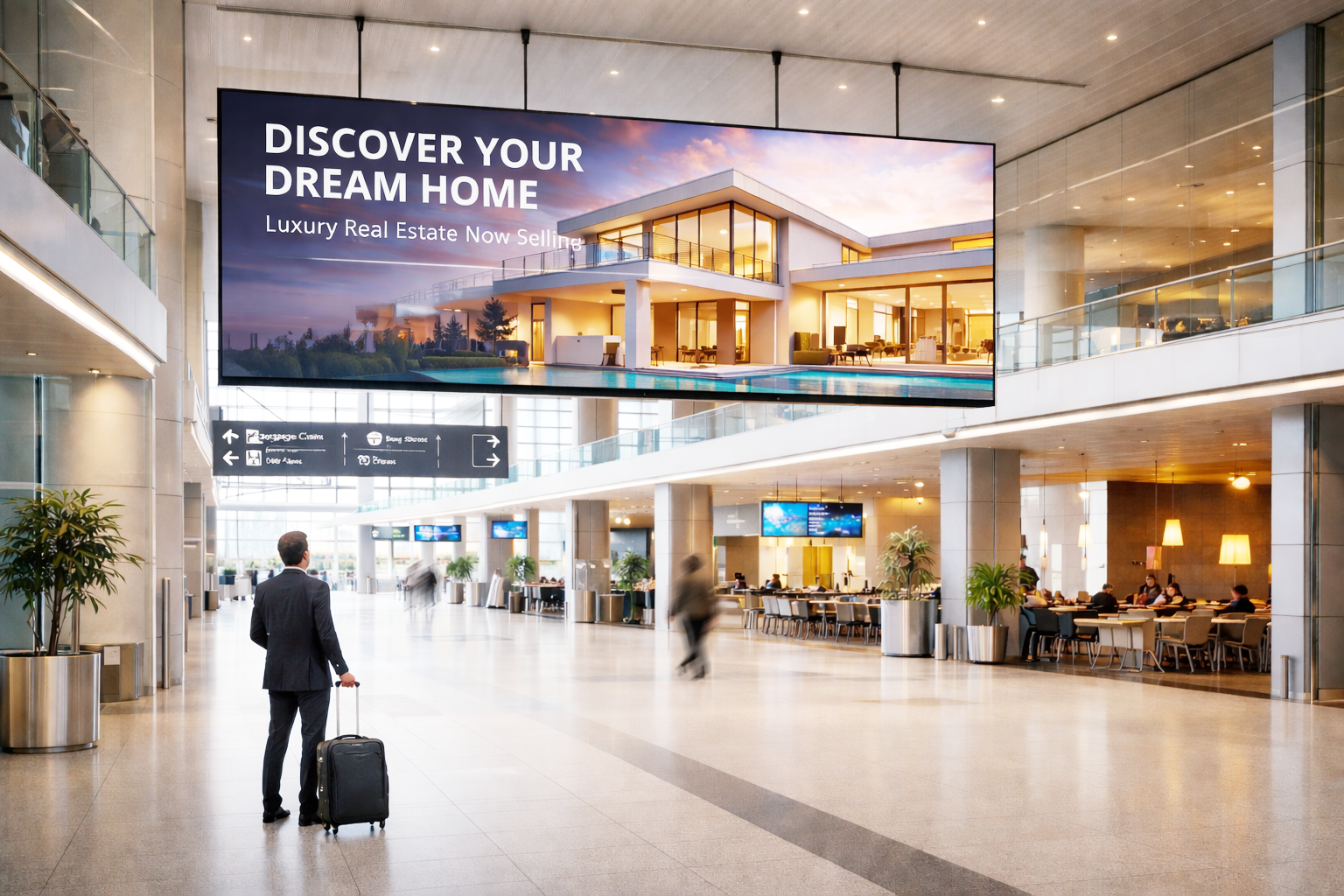
Airport Advertising is Complex to Get Right
We help you execute faster, with proven results and local insight most planners lack starting now.
Talk to an ExpertCatchment Area and Economic Drivers
Top 10 Cities within 150 km — Marketer Intelligence:
- Indore city (Vijay Nagar, Palasia, Scheme 54): Madhya Pradesh's largest city and its undisputed commercial capital — home to the Rajwada commercial district's centuries-old trading family businesses, the rapidly developing Super Corridor IT and pharmaceutical zone, and the Bombay Hospital and CHL Apollo medical tourism cluster; Indore's consumer market is calibrated to the standards of India's established trading community elite, and its jewellery showrooms, luxury car dealerships, and premium real estate developments serve a purchasing class whose net worth is often dramatically higher than their lifestyle choices suggest
- Ujjain: Approximately 55 km north of Indore, Ujjain is one of Hinduism's seven most sacred cities — home to the Mahakaleshwar Jyotirlinga, one of India's twelve most venerated Shiva temples — and generates an extraordinary pilgrimage and religious tourism audience that uses IDR as its primary aviation gateway; the Simhastha Kumbh Mela, held in Ujjain every twelve years, draws tens of millions of pilgrims in a compressed window that creates India's largest temporary consumer market; Ujjain's permanent population of diamond merchants, temple trust administrators, and pilgrim hospitality businesses contributes a commercially active, religiously motivated audience to IDR's traveller base
- Dewas: Approximately 35 km northeast of Indore, Dewas is one of India's most important pharmaceutical manufacturing hubs — home to a dense cluster of API and formulation manufacturers including major Indian pharmaceutical companies and their international joint ventures; its pharmaceutical executive and business owner class represents a commercially sophisticated, internationally connected traveller audience with above-average income and strong brand awareness in financial services, technology, and premium consumer categories
- Pithampur (Dhar district industrial corridor): Approximately 25 km southwest of Indore, Pithampur is Madhya Pradesh's premier industrial zone — home to over 1,500 manufacturing units across automotive components, pharmaceuticals, food processing, and engineering; its factory owner and senior management community generates a consistent industrial executive traveller flow through IDR with strong corporate procurement authority and above-average household income
- Mhow: Approximately 20 km south of Indore, Mhow is home to the Indian Army's Military College of Telecommunication Engineering and a significant military cantonment — generating a defence sector professional community with consistent domestic travel demand and the financially disciplined, institutionally connected purchasing behaviour characteristic of India's officer class
- Dhar: Approximately 60 km west of Indore, Dhar is a historically significant Malwa district town with agricultural trading and small-scale manufacturing — contributing a commercially active rural trading and agricultural commodity merchant audience to IDR's domestic traveller base with strong gold and real estate purchase patterns typical of Madhya Pradesh's landed trading families
- Ratlam: Approximately 120 km west of Indore, Ratlam is one of Madhya Pradesh's most important pharmaceutical and chemical manufacturing towns — second only to Dewas in pharma cluster significance — and contributes a pharmaceutical business owner and manufacturing executive traveller audience with above-average income and consistent domestic and regional flight demand through IDR
- Mandsaur: Approximately 140 km northwest of Indore, Mandsaur is India's largest opium and pharmaceutical intermediate production district — its business community of pharmaceutical raw material traders, opium licensed cultivators, and agri-commodity merchants represents a commercially distinctive, high-cash-turnover trading audience whose purchasing power is substantially higher than the district's infrastructure might suggest
- Khandwa: Approximately 110 km southeast of Indore, Khandwa is a significant cotton and soybean trading district whose agricultural commodity merchant community contributes to IDR's catchment a commercially active trading family audience with traditional Baniya and Marwari business wealth rooted in grain and cotton market operations
- Barwani and Narmada corridor: Approximately 130 km south of Indore along the Narmada river valley, Barwani's agricultural and tribal economy is undergoing transformation through Madhya Pradesh's irrigation and industrial development investment — its emerging business community and government official class uses IDR for all international travel, adding a government and agri-development professional audience to the airport's predominantly trading-community commercial mix
NRI and Diaspora Intelligence:
Indore's NRI community is smaller in absolute numbers than Punjab, Kerala, or Gujarat's diaspora populations but is commercially distinguished by the specific profile of those who have migrated — predominantly educated professionals from Indore's trading families who have built careers in the UK, the US, Canada, and the Gulf in medicine, finance, pharmaceutical sciences, and technology. The Marwari and Baniya diaspora from Madhya Pradesh is concentrated particularly in the UK's Leicester, Birmingham, and London communities and in the Gulf's Indian business community in Dubai, Bahrain, and Kuwait. These NRI families maintain strong family business connections to Indore's trading economy, return regularly for family celebrations and real estate investment decisions, and carry the dual purchasing power of UK or Gulf salaries applied to Indore's relatively accessible price levels — creating a per-trip spending profile that generates above-average commercial value relative to Indore's NRI volume. Total NRI remittances flowing into the Indore catchment, while modest by Kerala or Punjab standards, are concentrated among higher-income professional and business NRIs whose individual remittance value per transfer is above-average for Indian Tier 2 cities.
Economic Importance:
Indore's economy is structured around four distinct wealth-generating pillars that collectively define the airport's commercial audience character. The commodity trading and agri-processing economy — centred on Indore's soybean processing industry, which controls approximately 40 percent of India's soybean crushing capacity, and the historical grain and cotton trading networks of the Malwa plateau — has created a foundational layer of old-money trading family wealth concentrated in Indore's established Marwari and Baniya communities whose individual net worth, while rarely publicly disclosed, is among the highest per capita of any Central Indian city. The pharmaceutical manufacturing sector — anchored by the Dewas and Pithampur pharmaceutical clusters and growing API manufacturing operations — generates a technically sophisticated, internationally connected business owner and executive class whose corporate travel frequency and premium purchasing behaviour increasingly mirrors Hyderabad and Ahmedabad's pharmaceutical industry elite. The textiles and garment manufacturing sector — Indore and the Malwa region's historic strength — contributes a class of export entrepreneurs and fabric traders whose international connections to buyers in Europe, the US, and Southeast Asia add an export manufacturing business owner dimension to the airport's commercial mix. The rapidly growing IT and real estate development economy — anchored by Indore's Smart City designation, the Madhya Pradesh government's aggressive industrial promotion, and the Super Corridor's emerging technology cluster — is generating a new wave of entrepreneurial professionals whose consumer aspirations and financial product adoption are reshaping Indore's consumer market from within.
Business and Industrial Ecosystem
- Pharmaceutical and API manufacturing sector: The Dewas-Pithampur pharmaceutical corridor — one of India's five most important pharmaceutical production clusters — generates a business traveller class of pharma company owners, production directors, and regulatory affairs executives whose international travel for FDA inspections, European regulatory submissions, global buyer meetings, and pharmaceutical technology conferences is consistent and high-frequency; this audience carries above-average income, strong international brand awareness, and enterprise procurement authority for technology, financial, and professional services brands
- Commodity trading and soybean processing industry: Indore's soybean trading and processing conglomerates — controlling a significant share of India's edible oil supply chain — generate a class of commodity traders and agri-processing entrepreneurs whose personal wealth, while held in family business and commodity market positions rather than in public equity, is substantial and whose purchasing behaviour in gold, real estate, and premium consumer categories reflects the financial confidence of multi-generational trading success
- Textiles and garment export sector: Indore's textile mills, fabric traders, and garment export houses contribute a commercially active, export-economy-oriented business owner class whose international trade relationships with European buyers, US importers, and Southeast Asian sourcing agents generate consistent international travel and a strong awareness of global brand standards that elevates their premium consumer product expectations
- Real estate development and construction sector: Indore's nationally recognised real estate development market — driven by the city's Clean City awards, Smart City investment, and the Super Corridor's premium residential and commercial development pipeline — generates a business community of developers, construction material suppliers, and property investors whose corporate travel, financing relationships, and marketing activities produce a commercially active audience for financial services, construction technology, and premium interior brand categories at IDR
Passenger Intent — Business Segment:
Business travellers at Devi Ahilya Bai Holkar Airport are predominantly in the commodity trading, pharmaceutical, textile, and real estate sectors — a commercially pragmatic, high-transaction-frequency audience whose airport behaviour reflects the purposeful movement of India's trading class rather than the structured corporate travel patterns of a technology or finance hub. The Dewas pharma company owner flying to the US for an FDA audit, the soybean trading family patriarch heading to Dubai for a commodity conference, the textile export entrepreneur attending a Milan fabric fair — these business travellers carry the commercial authority and personal wealth of Indore's most consequential economic actors. For financial services, luxury travel, premium technology, and B2B trade finance brands, IDR's business traveller community is a structurally underserved and commercially qualified advertising audience whose purchasing capacity consistently surprises brands that have not previously engaged with Central India's trading wealth geography.
Strategic Insight:
The commercial environment at Devi Ahilya Bai Holkar Airport carries a wealth intelligence paradox that defines its advertising opportunity: the most commercially valuable audience here is the least visible to standard HNWI analytical frameworks. Indore's Marwari and Baniya trading families do not feature in IT sector salary surveys, startup unicorn founder lists, or real estate developer press releases — they exist in the register of commodity markets, temple trust donations, and generation-spanning family business ledgers. Their wealth is real, substantial, and commercially active, but it has been accumulated through the unglamorous compound interest of commodity trading margins, money lending, and land appreciation rather than through the equity-event windfalls that produce the HNWI profiles typically associated with premium airport advertising audiences. Brands that have the commercial intelligence to look past the glamour metrics and engage with this trading family wealth class will find an audience at IDR whose loyalty, once earned, is commercially durable across decades.
Tourism and Premium Travel Drivers
- Ujjain Mahakaleshwar pilgrimage circuit: One of India's twelve Jyotirlinga temples and a Shakti Peeth — the Mahakaleshwar temple in Ujjain draws millions of Hindu pilgrims annually and generates an extraordinary volume of domestic pilgrimage tourism through IDR; the Simhastha Kumbh Mela, held every twelve years in Ujjain, is the world's largest peacetime human gathering and creates an unparalleled domestic and NRI pilgrimage audience at IDR during its occurrence
- Mandu heritage and tourism: The Mandu fort complex — one of India's largest and most architecturally significant medieval fortresses, approximately 100 km from Indore — attracts domestic heritage tourism audiences and a growing international cultural tourism segment through IDR; the Madhya Pradesh Tourism Development Corporation's investment in premium Mandu hospitality has elevated the destination's appeal for premium domestic leisure travellers
- Omkareshwar and Narmada pilgrimage: The Omkareshwar Jyotirlinga — one of Hinduism's most sacred pilgrimage sites, approximately 80 km from Indore — generates consistent domestic pilgrimage tourism through IDR and contributes a religiously motivated, family-accompanied visitor audience whose festival-period travel creates commercial peaks aligned to Hindu calendar observances
- Indore's own culinary and food tourism: Indore has become nationally recognised as India's street food capital — its Sarafa Bazaar night food market and Chappan Dukan food street attracting domestic food tourism audiences from across India; this growing food tourism identity is generating a culturally motivated, urban professional leisure audience for whom Indore is a destination in its own right
Passenger Intent — Tourism Segment:
Tourism travellers at Devi Ahilya Bai Holkar Airport are predominantly domestic Indian pilgrimage and heritage tourism visitors for whom Ujjain, Omkareshwar, and Mandu are the primary destination motivations. The pilgrimage tourist at IDR — a family group travelling for darshan at Mahakaleshwar — is a religiously motivated, community-witnessed consumer whose festival-period arrival creates concentrated gold, food, and devotional product purchasing intent. The growing domestic food and cultural tourism audience — urban professionals from Mumbai, Delhi, and Bangalore arriving specifically for Indore's nationally acclaimed street food experience — adds a younger, brand-aware, discretionary spending leisure dimension. International tourists, while a smaller component of IDR's tourism audience, include NRI pilgrimage visitors from the UK and Gulf diaspora communities whose annual return visit to family combines temple pilgrimage with family investment and consumption activities.
Travel Patterns and Seasonality
Peak seasons:
- Diwali and festive season (October to November): India's most commercially intensive festival season — generating peak NRI return flows, maximum gold and jewellery purchase intent, family celebration spending, and the property investment decisions that Indore's trading families have deferred to the auspicious Dhanteras and Akshaya Tritiya purchasing windows; the highest per-passenger consumer transaction value period at IDR
- Winter wedding season (November to February): India's most commercially elaborate wedding season — generating consistent gold purchase, luxury consumer, premium hospitality, and celebration service brand spending among Indore's wedding-intensive Marwari and Baniya communities; destination weddings, multi-day celebrations, and the gold gifting that is culturally mandatory in Indore's trading family wedding culture create sustained premium consumer spending through the winter months
- Akshaya Tritiya and summer outbound peak (April to June): Akshaya Tritiya — the Hindu auspicious day for gold purchases, considered the most propitious day of the year for beginning new investments — generates India's single highest-volume gold transaction day annually; Indore's gold market reaches its annual volume peak on Akshaya Tritiya and the airport's outbound travellers in the days preceding the festival are in active gold purchase planning; the summer school holiday wave extends the peak through May and June as families travel for leisure and NRI return visits
- Simhastha Kumbh Mela (every twelve years, next occurrence 2028): Ujjain's Kumbh Mela generates the largest single passenger surge in IDR's history during its occurrence — drawing tens of millions of pilgrims from across India and the global diaspora through the airport in a concentrated two-month window that transforms Indore's entire hospitality, transport, and commercial infrastructure
Event-Driven Movement:
- Akshaya Tritiya (variable April to May): India's highest-volume single-day gold purchase event — Indore's Marwari and Baniya community's gold market reaches annual transaction peaks during Akshaya Tritiya, and the airport's pre-Akshaya Tritiya departures and post-festival arrivals both carry concentrated gold purchase intent that makes this the single highest-ROI short advertising window for gold and jewellery brands at IDR
- Diwali and Dhanteras (October to November): The second-highest gold and luxury consumer purchase event of the year — Dhanteras gold buying and Diwali electronics, home goods, and premium gifting spending creates the year's most commercially concentrated festival consumer window at IDR, amplified by the NRI homecoming wave from UK and Gulf diaspora communities
- Global Investors Summit Madhya Pradesh (variable, biennial): Madhya Pradesh's flagship investment promotion event — drawing national and international corporate investors, government officials, and industrial conglomerate leadership to Bhopal and Indore — generates a concentrated B2B and institutional audience wave through IDR that is the highest-value single-event business travel window for financial services, real estate, and industrial B2B brand advertising
- Indore Textile and Garment Expo (variable): The regional textile industry's primary trade event generates concentrated buyer and seller travel through IDR — an important B2B audience window for trade finance, logistics, and textile technology brands
- Indian Premier League season (March to May, with CSK and Mumbai linkage): Cricket season generates domestic leisure travel from Indore's young professional class to IPL venues — an entertainment and lifestyle audience window with above-average brand engagement among Indore's digitally connected urban consumer segment
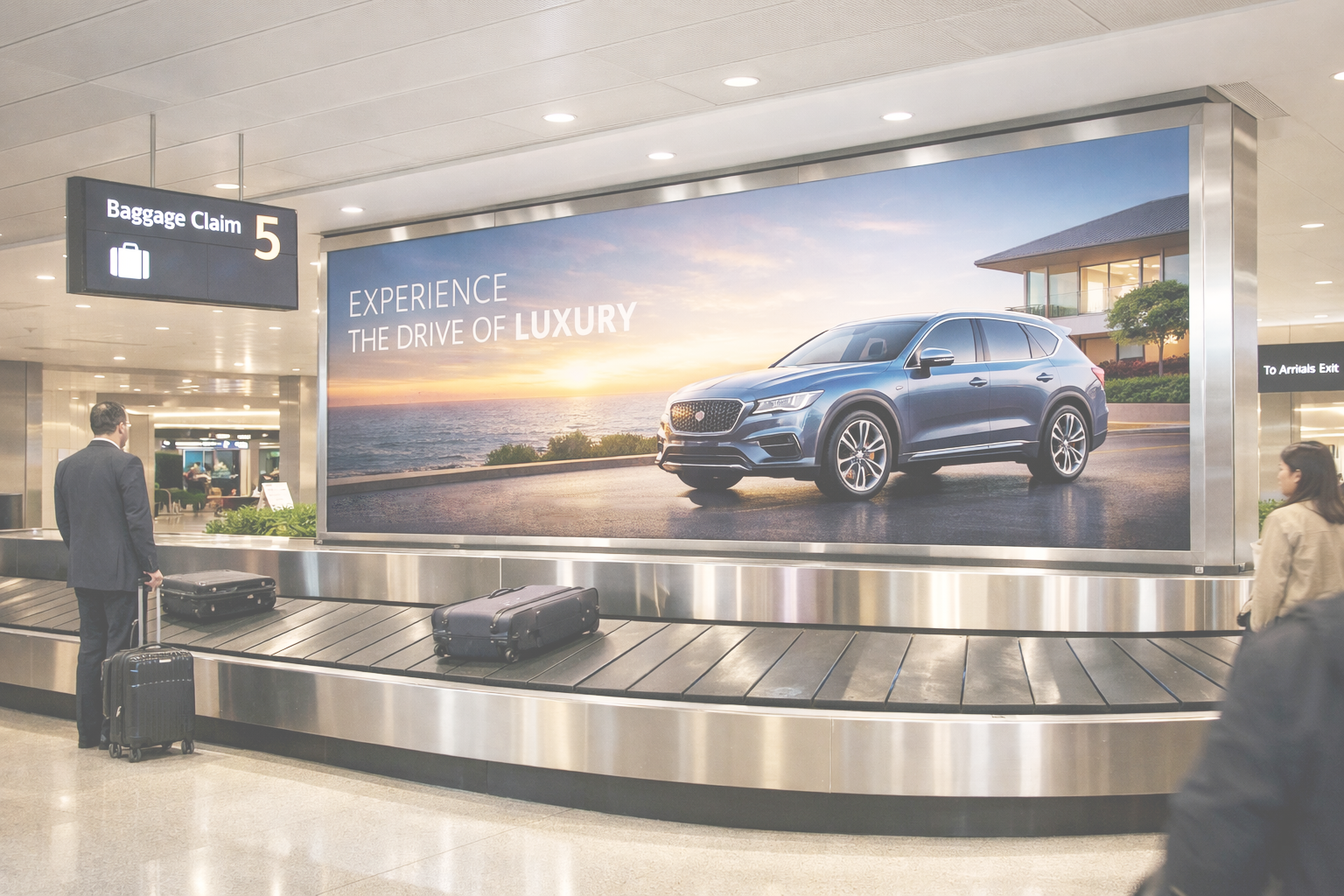
It’s Not Just Where You Advertise - It’s How Fast You Execute
We combine local insight with fast rollout to deliver results for you, now.
Talk to an ExpertAudience and Cultural Intelligence
Top 2 Languages:
- Hindi: The mother tongue and commercial language of Indore's entire domestic traveller base — the language in which Madhya Pradesh's trading families negotiate commodity prices, structure family business partnerships, and make the financial decisions that constitute Indore's commercial life; Hindi-language creative at IDR with Malwa cultural inflection and Indore-specific references achieves materially stronger brand resonance with the trading family and professional audience than English-language alternatives; brands that invest in authentic Indore Hindi creative signal a Central India market commitment that the Marwari and Baniya community rewards with brand loyalty rooted in regional respect
- Marwari and Gujarati (community languages): The mother tongue of Indore's dominant trading community — the Marwari and Gujarati business families whose commercial networks span Rajasthan, Gujarat, Maharashtra, and the global Marwari diaspora maintain community language usage in family and business contexts that creates a specific brand engagement opportunity for financial services, gold, and premium consumer brands that communicate authentic trading community cultural identity; brands that acknowledge the Marwari and Gujarati community's distinct cultural identity — rather than treating them as generic Hindi speakers — achieve community trust and brand advocacy within social networks of extraordinary commercial influence
Major Traveller Nationalities:
Indian nationals constitute the overwhelming passenger majority at Devi Ahilya Bai Holkar Airport — defined at IDR by the specific commercial character of Indore's Marwari and Baniya trading economy, its pharmaceutical manufacturing sector, and its rapidly growing professional class. The domestic traveller profile spans from the established trading family patriarch flying business class to Mumbai for a commodity market meeting to the young pharmaceutical executive taking a budget carrier to Hyderabad for an industry conference — a commercial spectrum that requires differentiated creative strategy but whose aggregate purchasing power is substantially above what IDR's volume metrics alone would suggest. British nationals of Indian origin — Gujarati and Marwari diaspora communities in Leicester, Birmingham, and London — represent the largest international traveller segment, returning for family visits, festival celebrations, and the real estate investments that connect diaspora families to their Madhya Pradesh roots. Gulf NRI travellers from the UAE, Kuwait, and Saudi Arabia represent the second international cohort. American and Canadian Indian diaspora members — growing in number as Indore's pharmaceutical and IT sectors generate new professional migration waves — add a North American dimension.
Religion — Advertiser Intelligence:
- Hinduism (approximately 80 percent of Indore's population, dominant across all traveller segments): Diwali and Dhanteras are the defining commercial events of Indore's Hindu consumer calendar — the gold, jewellery, electronics, and luxury goods purchasing intensity of the Diwali fortnight is among the highest per-capita of any Indian city, driven by the Marwari and Baniya community's specifically intense Diwali gifting culture rooted in Lakshmi puja tradition; Akshaya Tritiya is the most auspicious gold purchase day and creates Indore's single highest-volume gold market transaction event; Navratri generates a secondary festive consumer spending wave with strong textile, clothing, and jewellery purchase patterns; the Hindu cultural emphasis on auspicious timing for financial decisions — Dhanteras for gold, Akshaya Tritiya for new investments, Navratri for new clothing — creates commercially predictable purchase windows that brands aligned to these auspicious moments can activate with exceptional precision among Indore's trading community
- Jainism (approximately 15 to 20 percent of Indore's trading community, among India's highest Jain population density cities outside Gujarat and Rajasthan): Indore's Jain community — concentrated within the Marwari and Baniya trading families — is commercially significant beyond its numerical proportion because of the disproportionate share of Indore's private business wealth concentrated in Jain hands; Jain cultural values of ahimsa, aparigraha (non-possessiveness in principle though commercial practice reflects sophisticated wealth management), and community charitable giving create specific brand engagement requirements — brands that respect Jain dietary requirements, support Jain community causes, and communicate quality and ethical business practice align most effectively with this community's purchasing psychology; Paryushana — the Jain community's most important annual observance — generates a community behaviour shift toward merit-making, charitable giving, and spiritual reflection that creates specific timing considerations for consumer brand advertising
- Islam (approximately 8 to 10 percent of Indore's population, concentrated in the old city's Khajuri Bazaar and Chowk commercial areas): Indore's Muslim community — with a significant merchant and artisan class rooted in the old city's centuries-old commercial traditions — generates Eid seasonal travel and Islamic financial services brand relevance at IDR; the Bohra Muslim community's distinctive commercial and religious identity adds a commercially sophisticated dimension to Indore's Muslim traveller profile at the airport
Behavioral Insight:
The Indore airport traveller is defined by a purchasing psychology that combines the commercial sharpness of a multi-generational trading culture with the specific quality standards of a community that has been accumulating wealth for long enough to develop genuine luxury brand knowledge and discrimination. The Marwari and Baniya trader at IDR is not an aspirational consumer — they are a discriminating one. They have seen enough gold, worn enough diamonds, bought enough land, and made enough financial decisions to have formed clear preferences about which brands deliver genuine value and which are selling aspiration without substance. For premium brands at IDR, this means the creative approach must communicate genuine quality evidence rather than aspirational imagery — these consumers will not be moved by a luxury lifestyle photograph; they will be moved by a brand's purity certificate, its family legacy, its community endorsement, and the specific quality advantage it can demonstrate over the alternatives they have already considered. Brands that bring this quality-evidence approach to their IDR advertising will find a conversion efficiency that aspirational creative cannot approach with this audience.
Outbound Wealth and Investment Intelligence
The outbound passenger at Devi Ahilya Bai Holkar Airport is deploying the accumulated commercial intelligence of India's most commercially focused community in international markets. Indore's Marwari trading families have been internationalising their commercial relationships for generations — diamond trading connections to Antwerp and Dubai, textile buyer relationships with European importers, pharmaceutical distribution partnerships with US and European generic drug markets, and real estate investment diversification into the UAE, the UK, and Southeast Asia are all active outbound commercial activities of Indore's business elite. The outbound traveller at IDR is not a first-generation international investor discovering overseas markets — they are often continuing commercial relationships that were established by their fathers or grandfathers in the pre-liberalisation era, now expanded by the improved infrastructure of India's open economy and the Indore professional class's growing international education credentials.
Outbound Real Estate Investment:
Indore's HNWI trading community is directing outbound real estate capital into three primary markets. Dubai leads as the most actively pursued international real estate destination — driven by zero capital gains tax, the UAE's India-friendly regulatory environment, the proximity of the existing Indore-Dubai-UK trading relationship corridor, and the social proof of the established Marwari and Gujarati community's UAE property ownership that provides community trust validation for new investors. The United Kingdom — particularly Leicester, Birmingham, and London — attracts real estate investment from Indore's families with UK diaspora connections, combining property investment with children's education support and lifestyle diversification. Mauritius and Singapore attract the most sophisticated tier of Indore's HNWI community seeking structured offshore investment vehicles with tax efficiency and business operating environment advantages. International real estate developers advertising at IDR intercept a buyer community whose financial sophistication and international commercial experience make them demanding but high-value prospects who require quality-evidence-based rather than aspiration-based investment propositions.
Outbound Education Investment:
Indore's education investment culture is deeply rooted in the Marwari community's tradition of placing business succession planning above formal academic achievement — historically. But the current generation's parents are increasingly directing children toward structured international professional education as the route to expanding family business capabilities into pharmaceutical sciences, financial engineering, and technology sectors. The United Kingdom attracts Indore's most aspiring families — particularly for one-year MBA programmes at Manchester Business School, Warwick, and London Business School that are specifically valued for the UK's Indian business community network they provide access to. Canada has become a rapidly growing destination, particularly for pharmaceutical sciences and technology programmes aligned to the Dewas and Pithampur pharma sector's graduate employment pipeline. The United States attracts the highest-achieving children of Indore's trading dynasties targeting finance, pharmaceutical, and technology careers that will bring institutional international credibility back into family business leadership.
Outbound Wealth Migration and Residency:
Indore's HNWI trading community shows growing interest in second residency options — driven primarily by the UAE Golden Visa for its combination of business operating convenience, tax efficiency, and proximity to the Dubai diamond and commodity trading ecosystems that anchor Indore's international commercial relationships. The UAE Golden Visa's real estate investment pathway — accessible at AED 2 million — is the most actively considered among Indore's established Marwari business families. Portugal's Golden Visa and Greece's residency programme attract the community's more internationally mobile younger generation seeking European travel freedom and lifestyle diversification. Mauritius's Premium Visa and residency pathways attract sophisticated investors seeking a structured tax-efficient holding jurisdiction for their growing international business operations. Residency advisory firms and international tax planning services find IDR's trading family audience a commercially receptive and financially qualified market.
Strategic Implication for Advertisers:
International brands operating across the UAE real estate, UK education, and diamond and commodity trading corridors should treat Devi Ahilya Bai Holkar Airport as a priority Central India buy for reaching India's most commercially sophisticated but least-competed-for HNWI trading community. The Marwari and Baniya business families of Indore represent an outbound investment audience whose aggregate capital deployment and international commercial activity is substantially above what the city's relative obscurity in national media plans suggests. Masscom Global's intelligence positions clients to access this audience at a cost-per-HNWI-impression that reflects IDR's Tier 2 pricing rather than the audience's genuine Tier 1 commercial value — a structural arbitrage that is available today and will narrow as Indore's commercial profile receives the national and international recognition its economic performance has earned.
Airport Infrastructure and Premium Indicators
Terminals:
- Devi Ahilya Bai Holkar Airport operates from a single integrated terminal building that handles both international and domestic operations — the terminal underwent a significant upgrade and expansion as part of the Airport Authority of India's regional airport modernisation programme, with a new terminal building inaugurated in 2013 delivering significantly improved passenger handling capacity and a modern terminal environment commensurate with Indore's aspirations as India's Smart City model
- The terminal's integrated domestic-international structure creates a natural advertising canvas that spans the full commercial audience spectrum — from the pharmaceutical executive departing on a domestic business class ticket to the Marwari HNWI family checking in for a Dubai international flight — enabling brands to execute coordinated reach strategies across both domestic and international audience segments within a single airport investment
Premium Indicators:
- The terminal's modern design — completed to the AAI's new-generation regional airport standards — creates a clean, contemporary advertising environment that is significantly more premium than the legacy terminal it replaced; brands advertising at IDR benefit from an environment whose physical quality signals commitment to the Central India market and communicates brand seriousness to a trading community whose assessment of brand quality extends to the environment in which the brand chooses to present itself
- Air India and IndiGo operate dedicated premium check-in facilities at IDR for business class and frequent flyer travellers — confirming the above-average premium fare adoption rate among Indore's business class and trading family NRI travellers whose domestic and international travel patterns reflect the higher-than-average income profiles of a commercially prosperous city
- Indore's premium hotel corridor — the Marriott, Radisson Blu, and Fortune Landmark — has undergone significant quality investment driven by the corporate travel and wedding hospitality demand from Indore's HNWI community, reinforcing the premium commercial environment that IDR's advertising placements benefit from through association
- The airport's naming after Devi Ahilya Bai Holkar — the Holkar queen-administrator who made Indore a centre of scholarship, commerce, and religious philanthropy in the eighteenth century — creates a specific cultural gravitas to the terminal environment that resonates deeply with Indore's Hindu community and positions the airport within a tradition of administrative excellence, commercial prosperity, and civic pride that premium brands can align to authentically
Forward-Looking Signal:
The Madhya Pradesh government has approved a comprehensive Indore airport expansion masterplan — targeting a new terminal building, extended runway capacity, and improved international gate infrastructure that will accommodate projected passenger growth to 10 million annually within the next decade. New international route development to the UAE, UK, and Southeast Asian markets is in active planning with multiple carriers — each new route adding commercially distinct audience dimensions to an airport whose current international network is constrained by terminal capacity rather than demand. The Global Investors Summit, Madhya Pradesh's aggressive industrial promotion through the MPIDA, and the continued development of the Super Corridor technology and pharmaceutical zone are all driving consistent upward pressure on IDR's corporate and business traveller base quality. Masscom Global advises clients to establish IDR media presence at current pre-expansion rates — when the audience quality is already structurally above the advertising market's pricing of it, and before the infrastructure completion and new international routes bring competitive advertising intensity to Central India's most commercially dynamic gateway.
Airline and Route Intelligence
Top Airlines:
Air India, IndiGo, SpiceJet, Vistara (now Air India), GoAir/Go First, Akasa Air, Air Arabia, flydubai, Air India Express
Key International Routes:
- Dubai International (UAE): The most commercially important international route at IDR — connecting Indore's Marwari and Gujarati trading community to Dubai's gold and diamond trading ecosystem, the UAE's established Indian business community, and the Gulf's broader NRI corridor; this route processes Indore's highest-value individual business travellers and the city's HNWI families accessing Dubai's real estate and lifestyle economy
- Sharjah (UAE) via Air Arabia: The LCC Gulf connection serving Indore's middle-income Gulf NRI worker community and budget-conscious business travellers accessing the broader UAE network through Sharjah
- Muscat (Oman): Secondary Gulf connection serving Indore's Oman-deployed NRI community
- Kuala Lumpur (Malaysia, via connections): Southeast Asian connectivity for Indore's pharmaceutical industry's Southeast Asian distribution relationships and the growing Malaysian education corridor
Domestic Connectivity:
Delhi Indira Gandhi (highest frequency domestic route), Mumbai Chhatrapati Shivaji, Bangalore Kempegowda, Hyderabad Rajiv Gandhi, Chennai, Kolkata, Pune, Ahmedabad, Jaipur, Bhopal (commuter), Gwalior (commuter), Jabalpur
Wealth Corridor Signal:
IDR's route network maps Indore's commercial relationship architecture with the precision that a compact but commercially significant Tier 2 city's aviation network provides. The Dubai axis — the airport's highest-value international route — traces the primary commercial relationship corridor between Indore's diamond and commodity trading families and Dubai's global trading ecosystem; the Marwari merchant who flies to Dubai is not going for leisure — they are going for business relationships whose commercial significance to their family enterprise is fundamental. The Mumbai and Delhi axes trace the financial market and institutional relationship corridors through which Indore's commodity and pharmaceutical businesses manage their national financial operations. For advertisers, these axes confirm that IDR's most commercially valuable audience is a business traveller whose international orientation is toward trading relationships rather than corporate hierarchies — and whose advertising receptivity is highest for brands that communicate commercial intelligence rather than corporate prestige.
Media Environment at the Airport
- Devi Ahilya Bai Holkar Airport's compact single-terminal environment creates one of Central India's lowest advertising clutter environments — brands achieve standout at IDR that is structurally unavailable at Mumbai CSIA or Delhi IGI's multi-terminal complexity; the concentrated passenger flow through a single building ensures that premium placements receive near-universal audience exposure during the daily commercial peak periods driven by Indore's dominant business and trading class travellers
- Dwell time at IDR is structurally elevated by the airport's operational characteristics — international check-in windows for Dubai flights typically require two to three-hour advance arrival, the Marwari family group's cultural tendency toward extended farewell and arrival social rituals at the terminal, and the trading community's practical use of airport transit time for mobile business calls and deal management that extends their active dwell engagement beyond the standard check-in process
- The terminal environment's association with Devi Ahilya Bai Holkar — a figure of extraordinary reverence in Madhya Pradesh's cultural memory as the administrator who built temples, dharamshalas, and trading infrastructure across India — creates a brand association context of cultural depth and civic pride that premium advertisers in the space benefit from through environmental alignment with Indore's most venerated historical identity
- Masscom Global's inventory access at Devi Ahilya Bai Holkar Airport covers international departure zone placements targeting Indore's outbound trading and HNWI family audience, domestic premium check-in corridors targeting the pharmaceutical and manufacturing executive class, and arrivals hall positions targeting NRI returnees at the maximum homecoming consumption intent moment — a three-environment strategy that captures the full commercial audience arc at IDR
Strategic Advertising Fit
Best Fit:
- Gold and jewellery brands: IDR delivers one of India's highest per-passenger gold purchase intent environments — the Marwari and Baniya community's culturally embedded gold acquisition behaviour, amplified by Akshaya Tritiya and Diwali purchase windows, and the trading family's use of gold as both consumption and investment vehicle, creates a structurally committed gold buying audience whose conversion efficiency for gold brands with genuine quality credentials and community trust history is among India's highest at any Tier 2 airport
- Real estate — domestic Indore development and international investment: Indore's nationally recognised real estate development market and the outbound HNWI community's active Dubai and UK property acquisition make IDR a dual-direction real estate advertising platform of genuine commercial scale
- Financial services — private banking, wealth management, and trading finance: The Marwari trading community's sophisticated financial behaviour — commodity market participation, gold-backed lending, structured family wealth management, and international trade finance — creates a commercially qualified audience for private banking, wealth management, and trade finance brands whose product design acknowledges the specific financial management complexity of trading family wealth structures
- Pharmaceutical and B2B technology brands: The Dewas-Pithampur pharmaceutical cluster and the industrial manufacturing corridor of Pithampur generate a consistently present, commercially authoritative B2B audience for pharmaceutical equipment, enterprise technology, and industrial services brands seeking Central India market penetration
- Luxury consumer brands entering Central India: For international and domestic luxury brands building Central India market presence, IDR's Marwari and Baniya HNWI audience represents the purchasing class for premium watches, luxury jewellery, designer fashion, and premium home furnishings — a market that is chronically underserved by luxury brand advertising relative to its purchasing capacity
- International education — UK and Canada universities: Indore's growing pharmaceutical and technology professional class and the Marwari trading community's increasing investment in international professional education make IDR a productive intercept for UK and Canadian university brands targeting India's emerging Central India student and family audience
- UAE and Gulf-market brands: The Dubai route's commercial significance and the trading community's established UAE business relationships make Gulf-market financial, real estate, and lifestyle brands highly relevant at IDR's international departure zone
Brand Alignment at a Glance
| Category | Fit |
|---|---|
| Gold and jewellery | Exceptional |
| Real estate — domestic and international | Exceptional |
| Financial services and wealth management | Exceptional |
| Pharmaceutical and industrial B2B | Strong |
| Luxury consumer brands | Strong |
| International education | Strong |
| UAE and Gulf lifestyle brands | Strong |
| Mass-market FMCG | Poor fit |
Who Should Not Advertise Here:
- Mass-market FMCG and value consumer brands: IDR's audience skews strongly toward trading family HNWIs, pharmaceutical executives, and NRI returnees with internationally calibrated spending standards — price-driven and promotional advertising generates low recall and poor conversion against a traveller whose airport mindset is oriented toward quality, community status, and long-term value rather than bargain discovery
- Technology start-up and venture capital-adjacent brands: Indore's commercial identity is rooted in trading family wealth rather than technology equity creation — brands whose positioning is entirely defined by the Silicon Valley start-up culture reference frame will find limited cultural resonance with a trading community whose wealth paradigm is fundamentally different from the equity-event model that dominates India's technology city advertising
- Brands with no Madhya Pradesh or Gulf market presence: Airport advertising at IDR converts most efficiently for brands with genuine market presence in Indore, the broader Madhya Pradesh market, or in the UAE and UK diaspora destination markets — awareness generated without an accessible purchase pathway delivers limited commercial return from this audience
Event and Seasonality Analysis
| Factor | Rating |
|---|---|
| Event Strength | High |
| Seasonality Strength | Very High |
| Traffic Pattern | Hindu Festival Calendar Dominant with Trading Community Auspicious Timing Overlay |
Strategic Implication:
Devi Ahilya Bai Holkar Airport's traffic calendar is structured around India's Hindu festival calendar in a way that is specifically amplified by the Marwari and Baniya trading community's extraordinary emphasis on auspicious timing for commercial decisions. Akshaya Tritiya — the most gold-purchase-intensive single day in India's commercial calendar — creates IDR's highest short-window gold brand advertising opportunity and must be treated as a premium inventory booking priority four to six weeks in advance. The Diwali-Dhanteras window creates the year's highest NRI homecoming and luxury consumer conversion moment. The Global Investors Summit biennial generates the highest B2B institutional audience concentration at IDR outside routine business travel. Masscom structures IDR campaigns to front-load creative investment in the four to six weeks before each festival and investment event peak — when purchase planning is active among Indore's trading community — and maintains brand presence through the peak itself to capture the conversion moment at maximum commercial intensity. Clients who differentiate their IDR campaign calendar between the gold purchase auspicious timing windows and the broader luxury and real estate festival windows consistently achieve higher return than those running generic annual schedules.
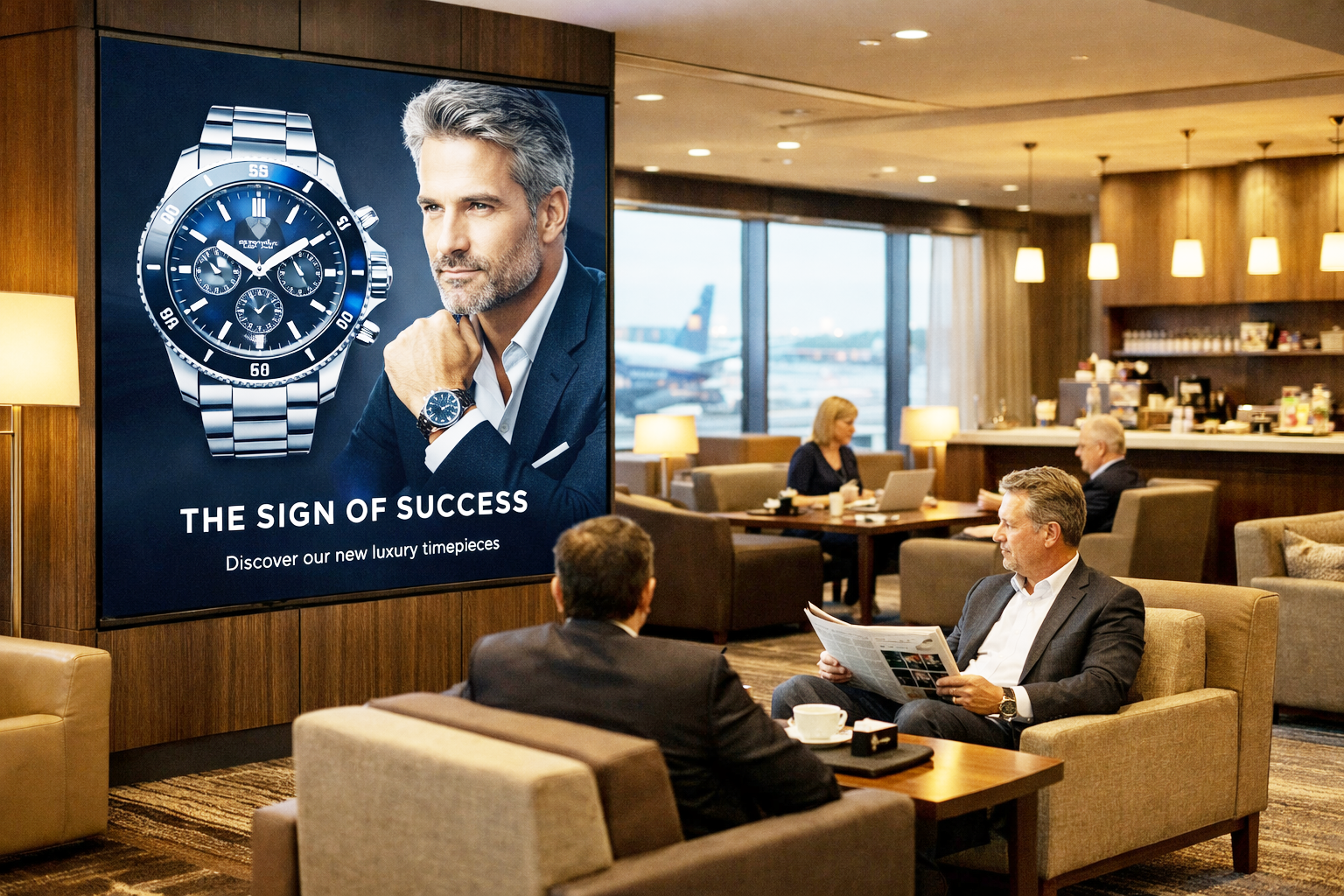
Poor Placement and Delays Affect Airport Campaigns
We help you move faster, access better inventory, and get it right now.
Talk to an ExpertFinal Strategic Verdict
Devi Ahilya Bai Holkar Airport is Central India's most commercially undervalued advertising environment and one of India's most compelling cases for trading-community wealth-informed airport media planning over volume-first analytics. Its 2.7 million international passengers include a concentration of Marwari and Baniya trading dynasty wealth, pharmaceutical industry capital, and a commercial culture that has been accumulating and deploying financial resources for longer than most of India's celebrated technology ecosystems have existed — yet they remain almost entirely outside the investment radius of the international brand community that has concentrated its Indian airport advertising in the technology and financial capitals of Bangalore, Pune, Hyderabad, and Mumbai. The Marwari seth arriving from Dubai with a diamond trading agreement concluded, the pharmaceutical company owner returning from an FDA-approved facility tour in New Jersey, the Jain business family arriving at the airport on Akshaya Tritiya morning with gold purchase plans finalised in a WhatsApp family group weeks earlier — all three move through the same compact, low-clutter terminal where a well-positioned premium brand encounters no competitive advertising noise and builds a commercial relationship with Central India's most commercially consequential audience class at a cost that bears no rational relationship to the purchasing power on the other side of the impression. Masscom Global's intelligence, inventory access, and Central India cultural understanding enable clients to establish this relationship now — before the terminal expansion, the new international routes, and the commercial recognition that Indore's seven consecutive Clean City awards, Smart City development, and pharmaceutical sector growth have been earning toward for the past decade.
About Masscom Global
Masscom Global is a premium international airport advertising and media buying agency operating across 140 countries. With deep expertise in airport OOH, premium publications, and high-net-worth audience targeting, Masscom helps brands reach the world's most valuable travellers at the moments that matter most. For advertising packages, media rates, and campaign planning at Devi Ahilya Bai Holkar Airport and airports across the globe, contact Masscom Global today.
Frequently Asked Questions
How much does airport advertising cost at Devi Ahilya Bai Holkar Airport?
Advertising costs at Devi Ahilya Bai Holkar Airport vary based on format — digital versus static placements — placement zone within the integrated terminal, international versus domestic corridor positioning, campaign duration, and seasonal demand. The Akshaya Tritiya gold purchase window, the Diwali-Dhanteras festival fortnight, and the Global Investors Summit biennial event period command premium rates reflecting maximum audience concentration and peak consumer and investment intent. IDR generally offers highly competitive cost-per-HNWI-impression relative to Mumbai CSIA or Delhi IGI for gold, trading family HNWI, pharmaceutical B2B, and premium real estate targeting categories — reflecting the lower competitive advertising saturation of a Central India airport whose audience quality has not yet been fully priced into its media market. Masscom Global provides current IDR rate cards and audience-matched placement strategy. Contact our team for a tailored media plan.
Who are the passengers at Devi Ahilya Bai Holkar Airport?
Devi Ahilya Bai Holkar Airport serves a commercially layered passenger base defined by Indore's dual character as a trading family HNWI city and a rapidly growing pharmaceutical and industrial economy. The dominant domestic traveller segment is Indore's Marwari and Baniya trading community — a multi-generational commercial elite whose individual and family net worth, concentrated in commodity trading businesses, gold holdings, and commercial real estate, places them firmly in India's HNWI bracket despite their relative invisibility in technology-focused wealth analyses. The pharmaceutical and manufacturing executive class from Dewas, Pithampur, and Ratlam adds a corporate professional dimension. NRI returnees from the UK, UAE, and North America — predominantly Gujarati and Marwari diaspora families — represent the highest-value international arrivals. Ujjain pilgrimage tourists and Mandu heritage visitors add domestic tourism dimensions.
Is Devi Ahilya Bai Holkar Airport good for luxury brand advertising?
Devi Ahilya Bai Holkar Airport is one of India's strongest Tier 2 city airports for luxury brand advertising calibrated to the trading community's specific luxury consumption psychology. Indore's Marwari and Baniya families are established luxury consumers — premium gold and diamond jewellery, luxury real estate, premium vehicles, and international travel are standard components of their commercial lifestyle — but they are discriminating purchasers who respond to quality evidence rather than aspirational imagery. Luxury brands that communicate purity, craftsmanship, heritage, and genuine value premium achieve higher conversion among IDR's trading family audience than those leading with lifestyle aspiration. The structural commercial advantage is the near-absence of competing international luxury brand advertising at IDR relative to the Marwari community's substantial and growing luxury purchasing capacity — a first-mover engagement window that remains genuinely open at this airport.
What is the best airport in Madhya Pradesh to reach HNWI audiences?
Devi Ahilya Bai Holkar Airport in Indore is unambiguously Madhya Pradesh's best airport for reaching HNWI audiences. Bhopal's Raja Bhoj Airport serves the state capital's government and administrative community — an institutionally connected audience but with lower private commercial wealth concentration than Indore's trading families. Jabalpur's Dumna Airport serves the industrial and defence community of Central MP at lower HNWI density. For brands targeting the Marwari and Gujarati trading dynasty wealth, the pharmaceutical manufacturing executive class, and the NRI returning investment audience that together define Madhya Pradesh's highest-value consumer and business traveller segments, IDR is the only airport in the state that concentrates all three simultaneously.
What is the best time to advertise at Devi Ahilya Bai Holkar Airport?
The highest-value advertising window at Devi Ahilya Bai Holkar Airport is the Akshaya Tritiya period in April to May — India's most auspicious gold purchase day, which generates Indore's highest single-day gold transaction volume and the highest pre-purchase advertising receptivity among the Marwari and Baniya community of any day in the annual calendar. The Diwali-Dhanteras fortnight in October to November is the second-highest gold and luxury consumer conversion window and the peak NRI homecoming period. The winter wedding season from November to February sustains elevated gold, premium consumer, and celebration service brand spending. The Global Investors Summit biennial creates the highest B2B institutional audience concentration event at IDR. Masscom Global provides festival-specific planning intelligence that maps each auspicious timing window to specific category investment and trading community-targeted creative strategy.
Can international real estate developers advertise at Devi Ahilya Bai Holkar Airport?
Devi Ahilya Bai Holkar Airport is commercially productive for international real estate advertising on two simultaneous fronts. For international developers targeting outbound Indian HNWI investors, IDR's Marwari and Gujarati trading family community is actively acquiring Dubai real estate as a primary international investment destination — the direct Indore-Dubai route makes the UAE property market directly accessible and community-validated for IDR's HNWI traveller base. UK property developers targeting the Indore diaspora in Leicester and Birmingham, and Mauritius and Singapore investment property platforms targeting sophisticated offshore investors, will find receptive and financially qualified audiences at IDR. For domestic Indore real estate developers — particularly those building branded residential colonies, plotted developments, and NRI-targeted premium housing schemes on the Super Corridor and Scheme 78 development axes — IDR's arriving NRI traveller is one of India's most commercially motivated domestic property investment audiences.
Which brands should not advertise at Devi Ahilya Bai Holkar Airport?
Mass-market FMCG brands, value retail services, alcohol brands, and categories with no Madhya Pradesh or Gulf market presence will find structural misalignment at IDR. The airport's Marwari and Jain community's cultural values — including a significant Jain non-violence ethic — create sensitivities around certain product categories. Alcohol brands face community reception barriers within IDR's dominant Marwari-Jain trading community audience. Technology start-up and venture capital brands positioned entirely within Silicon Valley cultural references will find limited resonance with a trading family audience whose wealth paradigm and commercial identity is rooted in commodity markets and generational business rather than equity events. Brands with no Indore market distribution or Gulf diaspora-destination presence will find conversion limited without accessible purchase pathways.
How does Masscom Global help brands advertise at Devi Ahilya Bai Holkar Airport?
Masscom Global brings three capabilities to airport advertising at Devi Ahilya Bai Holkar Airport that independent media planners approaching Central India from a Mumbai or Delhi perspective cannot replicate. First, Masscom's IDR audience intelligence maps the Marwari community's auspicious timing calendar — Akshaya Tritiya, Dhanteras, and Navratri gold purchase windows — to specific campaign investment recommendations with culturally resonant Hindi and Marwari community creative strategy. Second, Masscom's inventory access at IDR covers international departure zone placements targeting the outbound HNWI trading family, domestic premium corridors targeting the pharmaceutical and manufacturing executive, and arrivals positions targeting the NRI returnee's maximum homecoming purchase intent moment. Third, for brands targeting the Indore-Dubai trading corridor, Masscom can coordinate IDR campaigns with airport advertising at Dubai International and Sharjah — creating a full bilateral strategy that reaches Indore's Marwari trading community at both ends of their most commercially consequential international route. Contact Masscom Global to begin your Indore campaign strategy today.







