

Airport at a Glance
| Field | Detail |
|---|---|
| Airport | Dallas/Fort Worth International Airport |
| IATA Code | DFW |
| Country | United States of America |
| City | Dallas/Fort Worth, Texas |
| Annual Passengers | Approximately 75 million (2023, one of the world's top five busiest airports) |
| Primary Audience | Fortune 500 executives, energy sector HNWIs, Latin American investors, premium leisure travellers |
| Peak Advertising Season | March to May, September to November, December |
| Audience Tier | Tier 1 |
| Best Fit Categories | Luxury real estate, financial services, premium automotive, luxury goods, international education, energy sector B2B |
Dallas/Fort Worth International Airport is not merely one of the world's busiest airports — it is the primary air gateway for one of the most economically powerful metropolitan regions on the planet. The DFW Metroplex hosts the highest concentration of Fortune 500 corporate headquarters outside New York City, an energy sector generating wealth at a scale rivalled only by Houston, and a technology and financial services ecosystem that has made North Texas one of the fastest-growing premium consumer markets in the United States. The 75 million passengers who move through DFW annually represent an audience whose average income, corporate seniority, and global investment activity place this airport in an elite category of advertising environments where brand visibility translates directly into decision-maker access at the highest level.
The commercial case for DFW extends well beyond its domestic dominance. The airport serves as the primary international gateway for Latin American business and investment capital flowing into the United States — a role defined by its unmatched Mexico and South America route network — while simultaneously functioning as the departure point for a North Texas HNWI class that is deploying capital internationally with growing sophistication and scale. For brands seeking simultaneous access to America's corporate executive tier, a major Latin American investor audience, and a premium leisure traveller base with demonstrated luxury consumption capacity, DFW offers a targeting efficiency and audience concentration that no other airport in the American South and Midwest can approach.
Advertising Value Snapshot
- Passenger scale: Approximately 75 million annually, making DFW consistently one of the five busiest airports in the world by passenger volume and the dominant aviation hub for a 7-million-person metropolitan economy
- Traveller type: Fortune 500 C-suite and senior executives, energy sector entrepreneurs and executives, Latin American HNW investors and business travellers, premium leisure travellers, and returning US expatriates
- Airport classification: Tier 1 — a global mega-hub serving the world's largest corporate concentration outside New York and the primary international gateway for Latin American capital entering the United States
- Commercial positioning: America's corporate and energy wealth gateway, handling the full spectrum of the North Texas HNWI class alongside a Latin American investment audience of globally significant scale
- Wealth corridor signal: DFW sits at the intersection of America's domestic corporate wealth network and the United States-Mexico-Latin America capital transfer corridor — two of the world's highest-value commercial aviation flows operating within the same terminal complex
- Advertising opportunity: Masscom Global provides strategic inventory access and full campaign execution at Dallas/Fort Worth International Airport, enabling brands to reach one of the world's largest and commercially richest airport audiences with the precision and speed that a 75-million-passenger environment demands. Masscom's global network allows advertisers to coordinate DFW placements with campaigns at Mexico City, São Paulo, London, and Tokyo — the four origin corridors that define the airport's highest-value international audience flows.
Airport Advertising is Complex to Get Right
We help you execute faster, with proven results and local insight most planners lack starting now.
Talk to an ExpertCatchment Area and Economic Drivers
Top 10 Cities within 150 km — Marketer Intelligence
- Dallas: The corporate and financial capital of Texas, home to the highest concentration of Fortune 500 and Fortune 1000 headquarters in the American South; the Dallas executive and professional class represents one of the most financially sophisticated and brand-aware HNWI audiences in the United States, with particularly strong receptivity to luxury real estate, private banking, premium automotive, and international investment products
- Fort Worth: Texas's fifth-largest city and a distinct commercial economy anchored in energy, defence, aerospace, and ranching wealth; the Fort Worth HNWI class carries a dual profile of old-money landed wealth and new-money aerospace and defence executive income, creating a commercially valuable audience for luxury goods, wealth management, and premium lifestyle brands
- Plano: The North Texas technology and corporate corridor, housing major operations for Toyota North America, JPMorgan Chase, Liberty Mutual, and dozens of other Fortune 500 divisions; the Plano executive and professional class is among the highest-income suburban audiences in the United States and carries strong receptivity to premium financial products, international real estate, and luxury automotive
- Irving: Home to ExxonMobil's campus and a significant concentration of corporate regional headquarters; the Irving business traveller audience is dominated by energy sector executives and corporate operations managers with high travel frequency and above-average financial product engagement
- Frisco: One of the fastest-growing affluent cities in the United States, with a rapidly expanding professional and entrepreneur class drawn to North Texas by corporate relocations and technology sector growth; Frisco's demographic profile — young, high-income, family-oriented — creates strong receptivity for international education, premium real estate, luxury automotive, and premium consumer lifestyle brands
- Arlington: Home to the AT&T Stadium, Globe Life Field, and Texas Live entertainment complex; the Arlington audience combines sports entertainment executives, hospitality sector business owners, and a significant manufacturing base anchored by General Motors' Arlington Assembly plant, producing a commercially diverse high-income audience
- McKinney: A rapidly growing affluent suburb with one of the highest median household incomes in Texas; McKinney's expanding professional class — largely corporate relocatees from higher-cost US markets — carries elevated brand expectations and strong international real estate and investment product interest
- Denton: Home to the University of North Texas and Texas Woman's University, with a growing technology and creative economy; produces an educated professional and academic audience with strong lifestyle brand receptivity and a growing entrepreneurial tier connected to DFW's technology corridor
- Garland and Mesquite: Established East Dallas suburban commercial and manufacturing centres with a significant and growing Latin American business owner and professional class; commercially valuable for Spanish-language campaigns targeting the Texan Hispanic HNWI audience and for consumer brands seeking reach into North Texas's large and prosperous Mexican-American community
- Waxahachie: The gateway to North Texas's southern agricultural and agri-industrial economy; home to a significant entrepreneurial class built on agricultural processing, logistics, and small manufacturing whose income levels and brand awareness are rising rapidly with the southward expansion of the DFW metropolitan commercial economy
NRI and Diaspora Intelligence: The Latin American diaspora in North Texas is one of the most commercially significant in the United States, with the Mexican-American community alone representing over 1.2 million people in the DFW Metroplex — a population with a combined purchasing power exceeding $80 billion annually. This is not a low-income remittance community in the traditional sense: North Texas's Hispanic business owner and professional class includes significant concentrations of Mexican, Colombian, Venezuelan, and Brazilian entrepreneurs, executives, and investors whose income and wealth profiles place them firmly in the HNWI and mass-affluent categories. Many use DFW as their primary gateway for travel between the United States and Latin America, making them accessible to both English and Spanish-language campaigns at every point in the departures and arrivals cycle. The Indian and South Asian diaspora — concentrated in Plano, Irving, and Frisco through technology and healthcare sector employment — represents a second commercially exceptional diaspora segment, carrying high household income levels, strong international education investment behaviour, and above-average financial product engagement. DFW is where these two diaspora wealth pools converge with America's domestic corporate HNWI class in a single advertising environment of unmatched commercial diversity.
Economic Importance: The DFW Metroplex economy is the fourth-largest metropolitan economy in the United States, generating an annual GDP exceeding $630 billion — larger than the entire economies of most countries in which Masscom operates. The commercial engine of this economy runs on five high-horsepower sectors: a technology and telecommunications base anchored by AT&T, Nokia, Ericsson, and dozens of major tech firm operations; an energy sector producing oil and gas executives and entrepreneurs whose accumulated wealth rivals Houston's in per-capita terms; a financial services concentration anchored by JPMorgan Chase, Goldman Sachs, and Bank of America major operations; an aerospace and defence industry led by Lockheed Martin and Bell Helicopter whose executive and engineering class represents a senior professional audience of global exposure and income; and a healthcare and life sciences sector anchored by UT Southwestern Medical Center that produces a high-income medical professional audience of significant commercial value. For advertisers, this economic diversity means that virtually every premium brand category finds a qualified, prepared, and motivated audience at DFW.
Business and Industrial Ecosystem
- Fortune 500 and Fortune 1000 Corporate Headquarters: The DFW Metroplex hosts the headquarters or major operational campuses of American Airlines, AT&T, ExxonMobil, Toyota North America, JPMorgan Chase Texas operations, Southwest Airlines, Kimberly-Clark, and dozens of other global corporations; the senior executive and management class this generates is among the most commercially valuable B2B and premium consumer advertising audiences in the world
- Texas Energy Sector: North Texas's oil, gas, and increasingly renewable energy industry produces a class of independent producers, energy company executives, and energy finance professionals whose wealth profiles and international investment activity rival Houston's better-publicised energy HNWI audience
- Aerospace and Defence Manufacturing: Lockheed Martin's Fort Worth F-35 production facility, Bell Helicopter, and a network of defence-adjacent manufacturers produce a senior engineering and programme management class with strong international travel frequency and above-average financial product and premium lifestyle receptivity
- Technology and Financial Services Expansion: The ongoing corporate relocation wave bringing Goldman Sachs, Charles Schwab, McKesson, and other major financial and technology firms to North Texas is continuously adding high-income professional households to the DFW catchment — a population whose consumption standards are calibrated to New York and San Francisco brand environments and whose arrival in Texas consistently upgrades the commercial quality of the airport's domestic audience
Passenger Intent — Business Segment: Business travellers at DFW are concentrated in categories of exceptional commercial value: C-suite and senior management from Fortune 500 headquarters managing global operations, energy sector executives conducting deal-making and investor relations travel, technology and financial services professionals maintaining coastal and international client relationships, and Latin American business owners and investors managing US-based assets and partnerships. The combination of high travel frequency, high average deal size, and demonstrated brand loyalty that characterises the North Texas executive class makes DFW's business traveller segment one of the three or four most commercially valuable airport business audiences in the United States. Premium financial services, luxury automotive, international real estate, business class travel, and technology products all achieve above-average campaign performance in this environment.
Strategic Insight: The business audience at Dallas/Fort Worth International Airport carries a commercially distinctive mindset shaped by Texas's entrepreneurial culture — a combination of deal-making confidence, direct communication preference, and a strong orientation toward tangible value and demonstrated return on investment. This is an audience that respects bold, specific, and credibility-anchored messaging and responds poorly to abstract or overly stylised brand communication. Campaigns at DFW that lead with specific outcomes, demonstrated expertise, and peer-validated quality consistently outperform those that rely on aesthetic luxury positioning alone. Masscom-structured campaigns calibrated to this audience psychology achieve measurably stronger recall and response rates than generic premium formats deployed without DFW-specific audience intelligence.
Tourism and Premium Travel Drivers
- Dallas Arts District: The largest contiguous urban arts district in the United States, housing the AT&T Performing Arts Center, the Dallas Museum of Art, the Nasher Sculpture Center, and the Crow Museum of Asian Art; draws a culturally sophisticated, high-income arts patronage audience whose spending on accommodation, dining, and cultural experiences places them in the premium travel tier
- Fort Worth Stockyards National Historic District: One of the most visited heritage tourism destinations in Texas, drawing domestic and international visitors seeking an authentic Texas cultural experience; the Stockyards audience profile combines premium domestic leisure tourists with international visitors whose Texas itinerary includes the cultural heritage of the American West
- AT&T Stadium and Live Entertainment Complex: One of the world's most visited sports and entertainment venues, hosting NFL Dallas Cowboys games, major concerts, and international sporting events including boxing, soccer, and college football; the stadium audience drives premium sports tourism from across the US and internationally, with strong corporate entertainment and hospitality package spending
- Las Colinas Urban Center and Legacy West: North Texas's premium corporate and lifestyle districts, drawing a high-income professional and entertainment tourism audience whose per-visit spending on dining, retail, and hospitality consistently sits at the premium end of the Texas leisure economy
Passenger Intent — Tourism Segment: Leisure travellers departing from DFW have demonstrated the financial capacity to afford air travel from one of America's most premium-priced domestic hub airports — a self-selection filter that already removes the budget and mass-market traveller tiers from the audience pool. Outbound leisure travellers at DFW are planning premium holidays to Mexico, the Caribbean, Europe, and increasingly Asia, carrying vacation budgets calibrated to the high income levels of the North Texas professional class. Inbound leisure tourists arriving at DFW represent a commercially diverse audience combining international visitors drawn by Texas's unique cultural identity, sports event travellers, and family visitors whose hosts in North Texas are themselves high-income households with significant spending capacity. Both the inbound and outbound leisure audiences at DFW carry strong receptivity for luxury hospitality, premium travel accessories, international real estate, and lifestyle brand messaging.
Travel Patterns and Seasonality
Peak seasons:
- March to May: North Texas's optimal climate window and the primary spring business travel surge; coincides with spring break leisure travel peaks that drive the year's first major family outbound leisure departure wave, with Mexico and Caribbean destinations receiving the largest share of DFW's premium leisure outbound volume
- September to November: The primary fall business travel season when Fortune 500 annual planning cycles, investor relations roadshows, and year-end deal-making activity peak; the NFL season adds a significant sports tourism layer to the fall traffic profile
- December: The year's highest-intensity consumer spending and travel mobilisation month; combines corporate year-end travel, Latin American family visit traffic, holiday leisure departures, and the returning US expatriate and diaspora wave into a single commercially exceptional four-week window
Event-Driven Movement:
- Dallas Cowboys NFL Season (September to January): America's most commercially valuable sports franchise generates a consistent stream of premium sports tourism through DFW throughout the NFL season; corporate hospitality packages, private aviation arrivals, and visiting team fan travel combine to produce a recurring high-spend audience window that extends across eighteen weeks of the year
- South by Southwest — Austin spillover (March): Texas's most internationally attended cultural and technology festival drives significant overflow travel through DFW as the closest major international gateway to Austin; the SXSW audience — technology founders, venture capital investors, entertainment executives, and international media professionals — represents one of the year's most commercially concentrated premium technology and creative industry audience windows at this airport
- State Fair of Texas (October): The largest state fair in the United States by attendance, drawing over two million visitors annually to Dallas's Fair Park; creates a strong domestic leisure travel mobilisation and a culturally distinctive Texas tourism moment that reinforces the state's brand identity for international visitors and sponsors
- PGA Tour Events at Las Colinas (April): The AT&T Byron Nelson and related PGA Tour events draw a premium golf tourism audience of corporate sponsors, senior executives, and high-net-worth golf enthusiasts whose spending profile is among the highest of any sports tourism segment; luxury goods, premium automotive, financial services, and wealth management brands achieve exceptional receptivity with this audience
- Formula 1 United States Grand Prix — Austin Overflow (October): The COTA Formula 1 race in Austin drives significant international premium sports tourism through DFW as the primary international gateway to Texas; European, Middle Eastern, and Latin American F1 enthusiasts — disproportionately HNWI — arriving through DFW represent a short but commercially exceptional high-net-worth audience concentration
It’s Not Just Where You Advertise - It’s How Fast You Execute
We combine local insight with fast rollout to deliver results for you, now.
Talk to an ExpertAudience and Cultural Intelligence
Top 2 Languages:
- English: The dominant language of the airport's business, professional, and domestic leisure audience; English-language creative is the non-negotiable foundation of any DFW campaign strategy and must reflect the direct, confident, value-oriented communication style that characterises the North Texas executive and entrepreneurial class
- Spanish: The essential second language for reaching DFW's commercially critical Latin American and US Hispanic audience, which includes not only Mexican-American Metroplex residents but also the substantial Mexican, Colombian, Venezuelan, and Brazilian business traveller flow that makes DFW the most important Latin American gateway airport in the American interior; Spanish-language creative dramatically expands campaign relevance across an audience whose combined wealth and purchasing power rivals any comparable segment at a US Tier 1 airport
Major Traveller Nationalities: The international audience at DFW is led by Mexican nationals, who represent by far the largest inbound and outbound foreign segment — a function of both the direct cultural and family connections between Texas and Mexico and DFW's unrivalled Mexico route network. Colombian, Venezuelan, Brazilian, and Argentine travellers form the next tier of the Latin American international audience, combining business investment flows with premium leisure and family visit travel. British, German, and Western European nationals represent the primary transatlantic inbound segment, primarily corporate and premium leisure in orientation. Japanese and South Korean nationals are a growing corporate and technology sector segment connected to the DFW Metroplex through major manufacturing and technology investment presences. Indian nationals form a rapidly growing segment driven by the large and economically significant Indian technology and healthcare professional community concentrated in Plano, Irving, and Frisco.
Religion — Advertiser Intelligence:
- Protestant Christianity (approximately 45% of DFW Metroplex): The dominant religious tradition of North Texas, with Southern Baptist, Methodist, and nondenominational evangelical communities that are among the most economically active and philanthropically engaged in the United States; Easter and Christmas create two major travel and gifting mobilisation events, while the strong church-community culture of North Texas shapes consumer brand trust dynamics in ways that reward authenticity and community endorsement over abstract luxury positioning
- Roman Catholicism (approximately 30%, predominantly Hispanic community): The primary religious tradition of the DFW Metroplex's large and growing Hispanic population, whose Catholic observance creates major travel and spending mobilisation events at Christmas, Easter, Día de los Muertos, and Mexican national religious festivals; brands targeting the Hispanic HNWI and mass-affluent audience should treat the Christmas and Easter windows as the year's highest-priority campaign moments
- Judaism (approximately 3%, commercially disproportionate): North Texas's Jewish community — concentrated in the Preston Hollow, University Park, and Highland Park neighbourhoods of Dallas — is among the most economically significant of any US city's Jewish community relative to its size; the High Holy Days window in September and October, combined with strong philanthropic and arts patronage activity, creates specific high-value audience moments for premium financial services, luxury goods, and real estate advertisers
- Islam (approximately 2%, growing): A growing Muslim community in the DFW Metroplex — including both Arab-American and South Asian Muslim households — observes Ramadan and both Eid holidays with strong travel, gifting, and consumer spending behaviour; the Eid windows are commercially relevant for halal hospitality, fashion, and consumer lifestyle advertisers, and the Muslim business traveller segment from the Gulf route network adds an internationally mobile, high-income dimension to Islamic audience advertising at DFW
Behavioral Insight: The DFW airport audience is shaped by a Texan commercial psychology that combines American consumer ambition with a regional cultural directness and a strong orientation toward status, scale, and achievement. This is an audience that responds to confident, specific, outcome-oriented brand messaging and that places a premium on brand credibility backed by demonstrable performance rather than purely aesthetic luxury positioning. The Latin American business audience adds a relationship-oriented dimension — brands that communicate respect, cultural understanding, and long-term partnership intent consistently outperform transactional messaging approaches with this segment. The relocated coastal professional class — the New Yorkers and Californians who have moved their companies and households to North Texas — brings a third behavioural layer of urban sophistication and premium brand expectation that continuously upgrades the commercial quality ceiling of the DFW audience.
Outbound Wealth and Investment Intelligence
The outbound traveller at Dallas/Fort Worth International Airport represents one of the world's most commercially potent high-net-worth audiences for international brands. North Texas's HNWI class — built on energy, corporate compensation, technology entrepreneurship, and real estate — is deploying capital internationally at a scale and pace that has accelerated dramatically with the Metroplex's post-2020 economic expansion, and DFW is the single point through which every dollar of that outbound capital flow passes.
Outbound Real Estate Investment: North Texas HNWIs are the most active international real estate buyers from the American interior, with capital deployment concentrated in four primary markets. Mexico — particularly Los Cabos, Puerto Vallarta, and the Riviera Maya — is the dominant second-home acquisition corridor, driven by geographic proximity, direct flight accessibility from DFW, and the deep cultural and business ties between Texas and Mexico. Europe — particularly London, Portugal, Spain, and France — attracts the highest absolute purchase price tier of North Texas real estate outbound investment, primarily from the corporate executive class seeking trophy assets and lifestyle properties. The Caribbean — Turks and Caicos, the Bahamas, and Barbados — draws a premium leisure real estate buyer motivated by resort lifestyle and short-term rental yield. Central America — particularly Costa Rica and Panama — is a growing market for DFW's Latin American HNWI community seeking regional investment diversification outside their home countries.
Outbound Education Investment: Texas's strong cultural emphasis on educational achievement, combined with the DFW Metroplex's high household income levels, produces one of the United States' most active markets for international and premium private higher education investment. The primary international university destinations for North Texas families are United Kingdom institutions — Oxford, Cambridge, the London School of Economics, and Edinburgh — which attract the corporate executive tier's children who are targeting global careers in finance and professional services. European universities in the Netherlands, Germany, and Switzerland are growing destinations for the technology and engineering professional class. Canadian universities — particularly Toronto, McGill, and UBC — attract the broad professional class seeking international credentials at accessible cost points. The Latin American community at DFW generates an additional and commercially significant outbound student corridor to Spanish-speaking universities in Spain, and to elite US institutions whose proximity to the DFW hub makes airport advertising a viable education marketing channel.
Outbound Wealth Migration and Residency: North Texas HNWIs are active participants in international residency and second-citizenship programmes, though the motivations differ significantly from European or CIS market audiences. The primary driver for the DFW HNWI class is asset diversification and lifestyle optionality rather than tax efficiency — leading to strong interest in European Golden Visa programmes in Portugal, Greece, and Italy, which combine residency rights with premium real estate acquisition. Mexican and Latin American HNWIs resident in North Texas are simultaneously managing residency and investment interests in their home countries and in third markets — creating a triangular capital deployment pattern that makes them receptive to investment migration products across multiple jurisdictions simultaneously. Wealth management firms, international tax advisors, and global family office service providers will find DFW's HNWI audience one of the most financially qualified and structurally motivated audiences for cross-border financial planning services in any US airport.
Strategic Implication for Advertisers: International brands on both sides of the North Texas wealth corridor — real estate developers in Mexico, Portugal, and the Caribbean; UK and European universities; global private banking platforms; luxury automotive brands operating in European delivery programmes — should treat Dallas/Fort Worth International Airport as a tier-one priority buy, not a supplementary placement. Masscom Global can activate campaigns simultaneously at DFW and at the destination airports where North Texas's outbound HNWI audience arrives — Cancún, London Heathrow, Lisbon, Mexico City — creating a corridor-spanning sequential brand narrative that intercepts the investment decision at every stage of the journey.
Airport Infrastructure and Premium Indicators
Terminals:
- DFW operates five terminals — A, B, C, D, and E — connected by the Skylink automated people mover system, which circulates the entire passenger population through all terminals continuously and creates a multi-point advertising capture environment that allows campaigns placed across terminal nodes to achieve near-total audience penetration across the entire airport
- Terminal D serves as the dedicated international terminal and is the highest-commercial-density advertising environment at DFW, concentrating the Latin American business traveller, European premium leisure traveller, and outbound North Texas HNWI audience in a single premium-dwell zone; Terminal D placements represent the most targeted premium international audience access point in the American interior
- Terminals A and C serve the majority of American Airlines domestic operations and carry the highest domestic business traveller volume, making them the primary environments for campaigns targeting the Fortune 500 executive and US corporate professional audience at scale
Premium Indicators:
- DFW hosts one of the highest densities of premium airline lounges of any airport in the United States, including multiple American Airlines Admirals Club locations, the American Express Centurion Lounge, the Chase Sapphire Lounge, and international carrier business class lounges; this lounge ecosystem signals a traveller income floor that makes DFW's premium dwell environment among the most commercially qualified in North American aviation
- The airport hosts over 200 retail and food and beverage operators within the terminal complex, including luxury brand outlets, premium dining concepts, and a luxury goods presence that reflects the high-income composition of the passenger base and reinforces premium brand association for advertisers
- A Hyatt Regency hotel operates directly within the terminal complex — connected via internal walkway — creating a captive premium accommodation audience within the airport boundary whose dwell time and brand receptivity extend well beyond the typical departures window
- DFW consistently ranks among the top airports in the United States for passenger satisfaction, terminal quality, and operational efficiency — operational metrics that translate directly into the premium environmental context that elevates brand advertising value for campaigns placed within its terminals
Forward-Looking Signal: DFW is currently executing a multi-billion dollar Terminal C renovation and broader infrastructure expansion programme designed to increase capacity to 100 million annual passengers and add premium retail, dining, and lounge infrastructure calibrated to the airport's growing HNWI and international premium traveller base. New international routes to additional Latin American cities, expanded Gulf carrier services, and growing Asian route frequency are all adding commercial depth to the airport's already exceptional international audience. Masscom Global advises clients to act now to secure inventory positions within the existing terminal environment ahead of the premium rate adjustments that the Terminal C renovation completion and passenger volume growth will generate.
Airline and Route Intelligence
Top Airlines:
- American Airlines (primary hub carrier — dominant share of all operations)
- Southwest Airlines (significant domestic presence at adjacent Love Field and DFW)
- United Airlines
- Delta Air Lines
- Aeromexico
- Volaris and Viva Aerobus (Mexican leisure and VFR corridors)
- British Airways
- Lufthansa
- Japan Airlines
- Korean Air
- Emirates
- Qatar Airways
- Air France
- LATAM Airlines
Key International Routes:
- Mexico City, Guadalajara, Cancún, Monterrey (multiple daily frequencies — the dominant Latin American corridor)
- London Heathrow (multiple daily — the primary transatlantic business corridor)
- Frankfurt, Paris CDG, Amsterdam (major European corporate routes)
- Tokyo Narita and Haneda (Japan Airlines and American — the primary Asia-Pacific wealth corridor)
- Seoul Incheon (Korean Air — growing technology and corporate corridor)
- Dubai (Emirates — the Gulf wealth and connecting corridor)
- Doha (Qatar Airways — premium Gulf connecting route)
- São Paulo, Bogotá, Lima, Buenos Aires (South American business and HNW leisure corridors)
- Toronto and Vancouver (Canadian business and education corridors)
Domestic Connectivity: DFW operates as one of American Airlines' two primary hub airports, with connecting domestic service to every major US city and direct domestic routes to over 200 destinations; the domestic network is the largest by frequency of any interior US airport and ensures that DFW functions as the connecting hub through which the majority of the American South and Midwest's international passengers flow.
Wealth Corridor Signal: The route network at DFW communicates a precise and commercially actionable picture of where the airport's wealth flows. The Mexico corridor — the most heavily served international route network of any US interior airport — carries both the Latin American HNW investor class accessing US assets and the North Texas HNWI audience accessing Mexican resort real estate and second homes. The London and European transatlantic routes carry the Fortune 500 executive class conducting global business operations and the premium leisure traveller accessing European luxury experiences. The Japan and Korea corridors carry the North Texas technology and automotive sector executive class managing Pacific Rim corporate relationships. The Dubai and Doha routes carry both the outbound North Texas traveller accessing Gulf connections and the inbound Gulf HNWI investor travelling to evaluate US real estate and corporate investment. Advertisers who build campaign strategy around the specific commercial narrative of each corridor will achieve a targeting precision at DFW that volume-only media planning cannot replicate.
Media Environment at the Airport
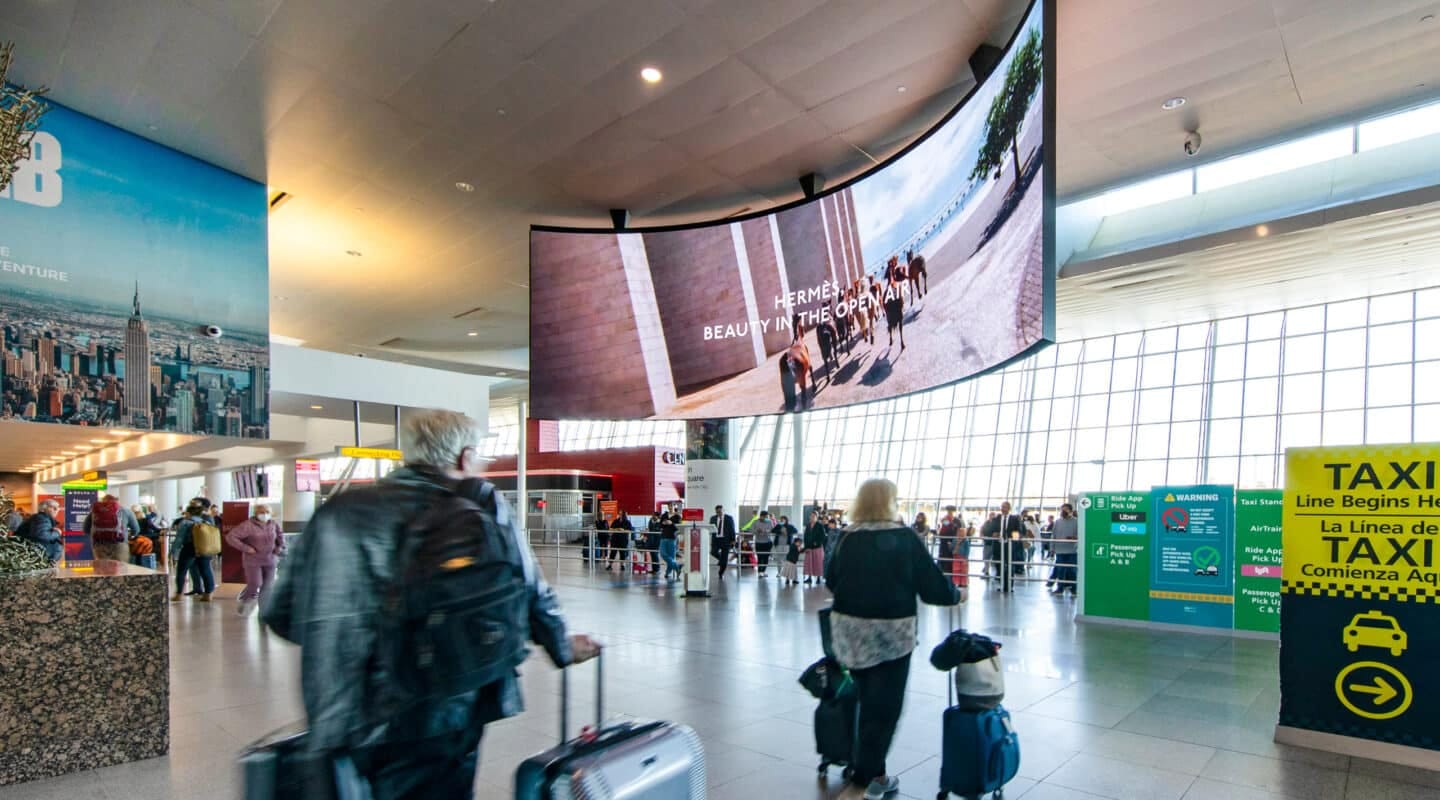
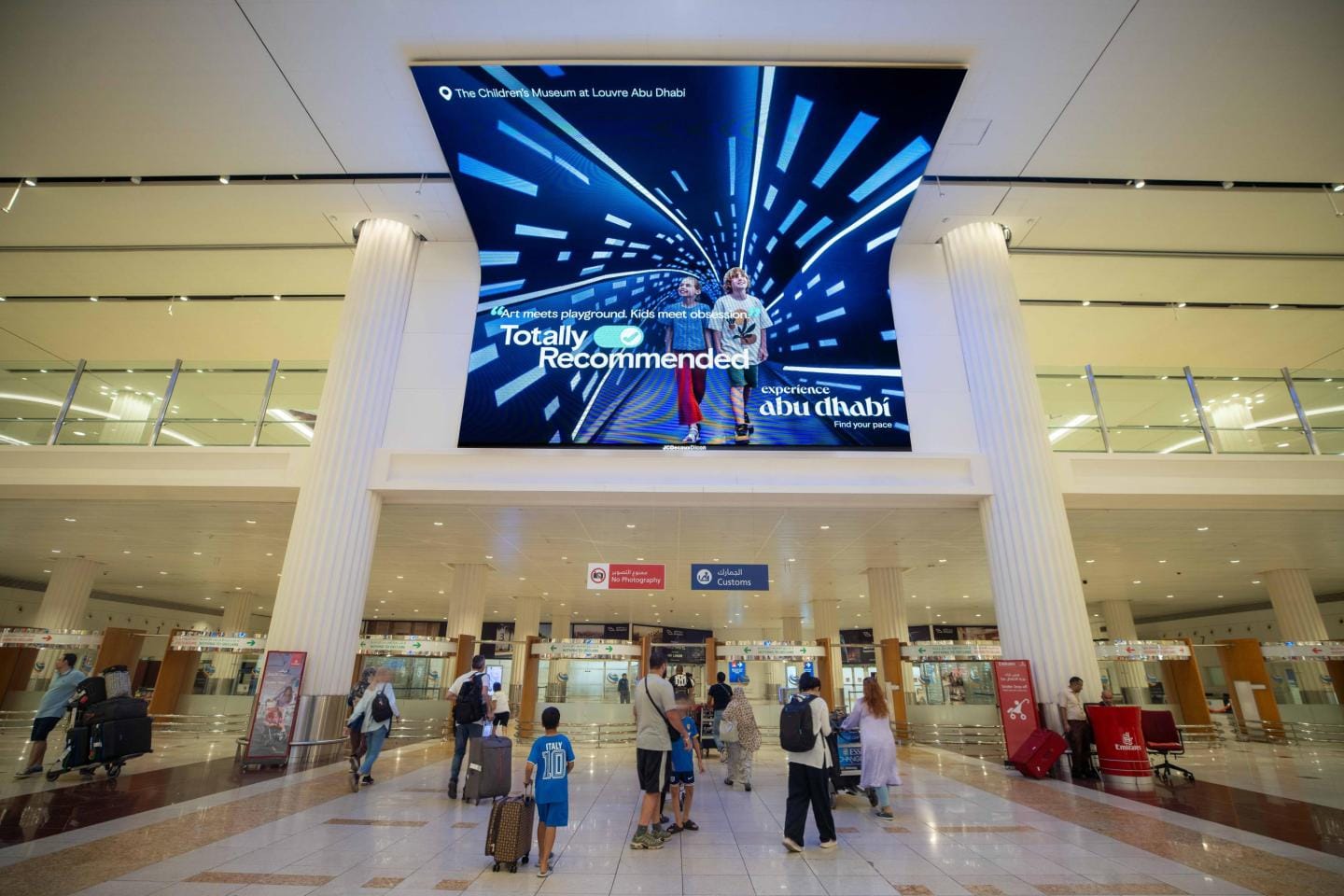
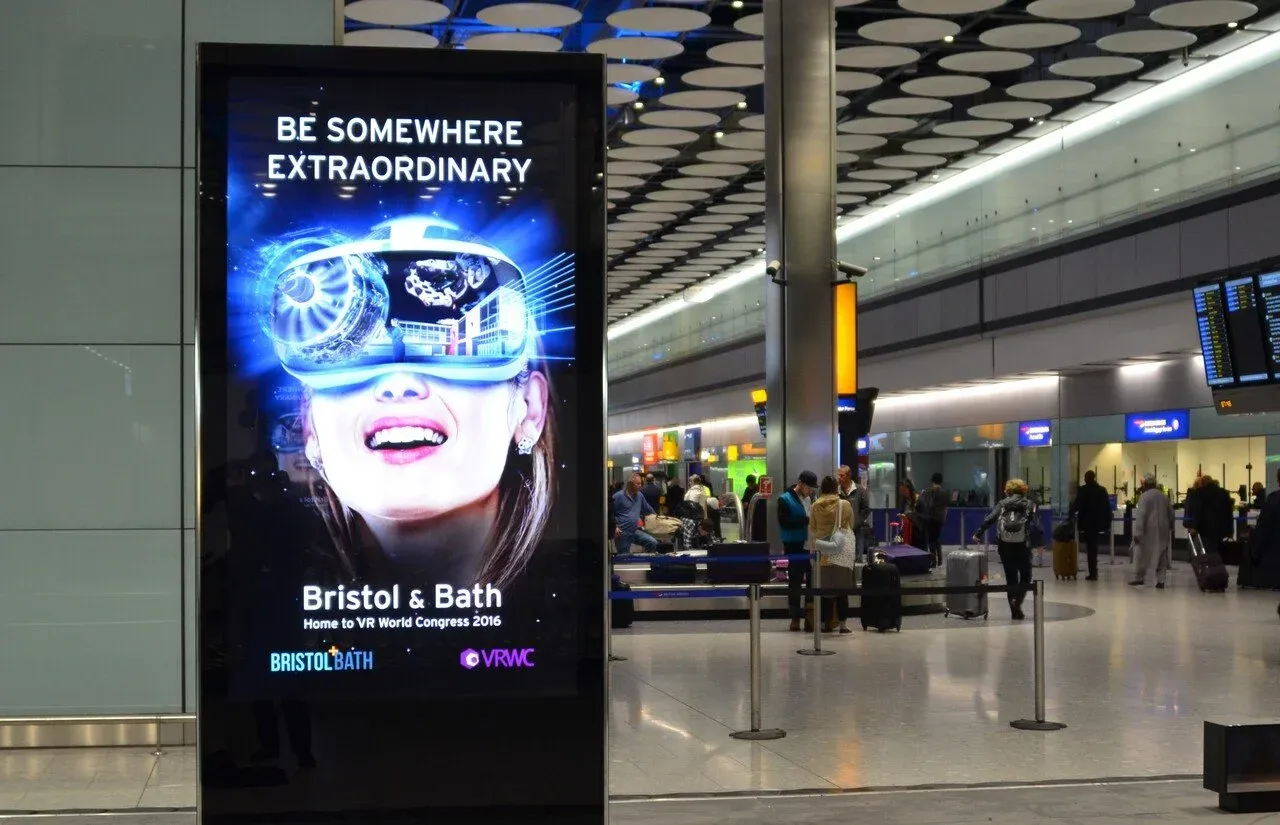
- DFW's five-terminal, Skylink-connected structure creates an advertising environment of exceptional scale and reach, where campaigns placed across strategic terminal nodes can achieve cumulative audience coverage equivalent to a market-wide out-of-home buy — making it one of the few airports in the world where a single airport advertising investment can deliver the reach metrics that would otherwise require a multi-channel urban campaign
- Dwell time at DFW is among the highest of any major US airport due to the airport's hub structure — connecting passengers spend an average of 90 minutes or more in the terminal between flights, while originating passengers consistently arrive early at a hub environment they have learned to navigate with time to spare; this extended dwell window generates three to four creative exposures per passenger across a typical terminal journey
- Terminal D's international zone creates a premium contained advertising environment where the Latin American, European, and Gulf HNWI audience is concentrated in a physical space calibrated to their travel needs, with dwell times extending to two hours or more for international departures; campaigns placed in Terminal D intercept the highest-value international audience at DFW at the moment of maximum pre-departure receptivity
- Masscom Global holds strategic inventory access across Dallas/Fort Worth International Airport and deploys campaigns with the scale management, creative coordination, and multi-terminal execution capability that a 75-million-passenger environment demands; Masscom's DFW campaigns are structured to achieve both the broad awareness reach of the domestic volume audience and the precision targeting of the international premium tier within a single coordinated media plan
Strategic Advertising Fit
Best Fit:
- International luxury real estate developers: The combined outbound North Texas HNWI audience and inbound Latin American investor flow at DFW create a buyer concentration for Mexican, Caribbean, European, and US coastal luxury real estate that is unmatched at any other American interior airport; Terminal D placements intercept both the departing buyer and the arriving investor in a single contained advertising environment
- Private banking, wealth management, and family office services: The Fortune 500 executive class, energy sector entrepreneurs, and Latin American HNW investors at DFW collectively represent a private banking and wealth management audience of global significance; campaigns leading with international portfolio diversification, trust and estate planning, and cross-border wealth structuring achieve exceptional relevance with this audience
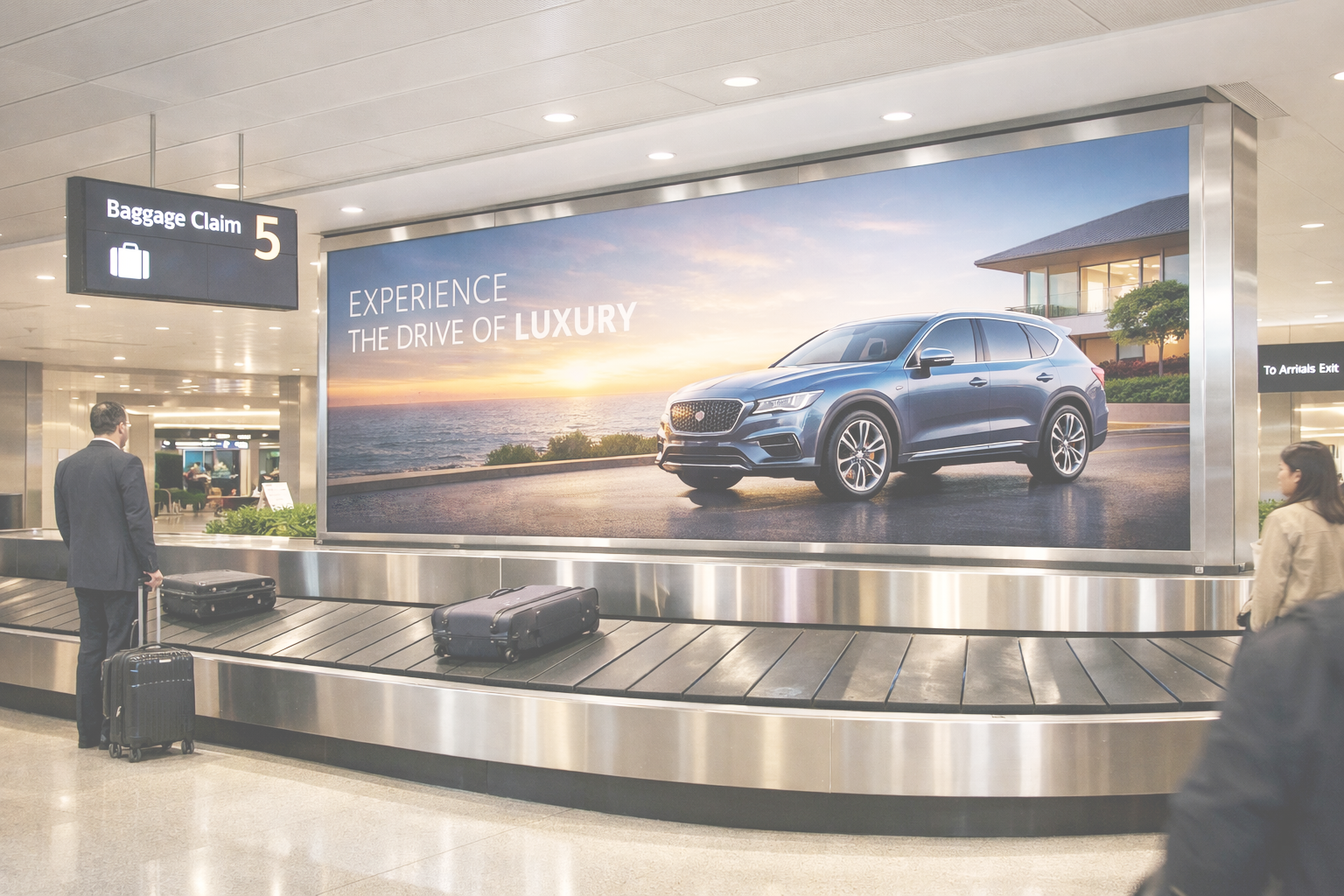
- Luxury automotive brands: North Texas is one of the United States' strongest markets for premium and ultra-premium vehicle purchases; the DFW airport audience represents the top tier of this already affluent market, with German, British, and Italian luxury marques all achieving above-average recall and purchase consideration with the business executive and energy sector audience
- Premium technology — enterprise and consumer: The concentration of Fortune 500 technology operations, the IT professional population in the Plano corridor, and the relocated coastal tech workforce all create exceptional B2B and premium consumer technology advertising receptivity at DFW; enterprise software, premium hardware, and cybersecurity product campaigns all find qualified decision-maker audiences at this airport
- International airlines and premium cabin upgrades: The North Texas executive class is one of the highest per-capita business class buyers in the United States; airline advertising for premium international routes and business class product upgrades achieves its strongest US interior performance at DFW, where the propensity to purchase long-haul premium cabin travel is demonstrated by the outbound route mix itself
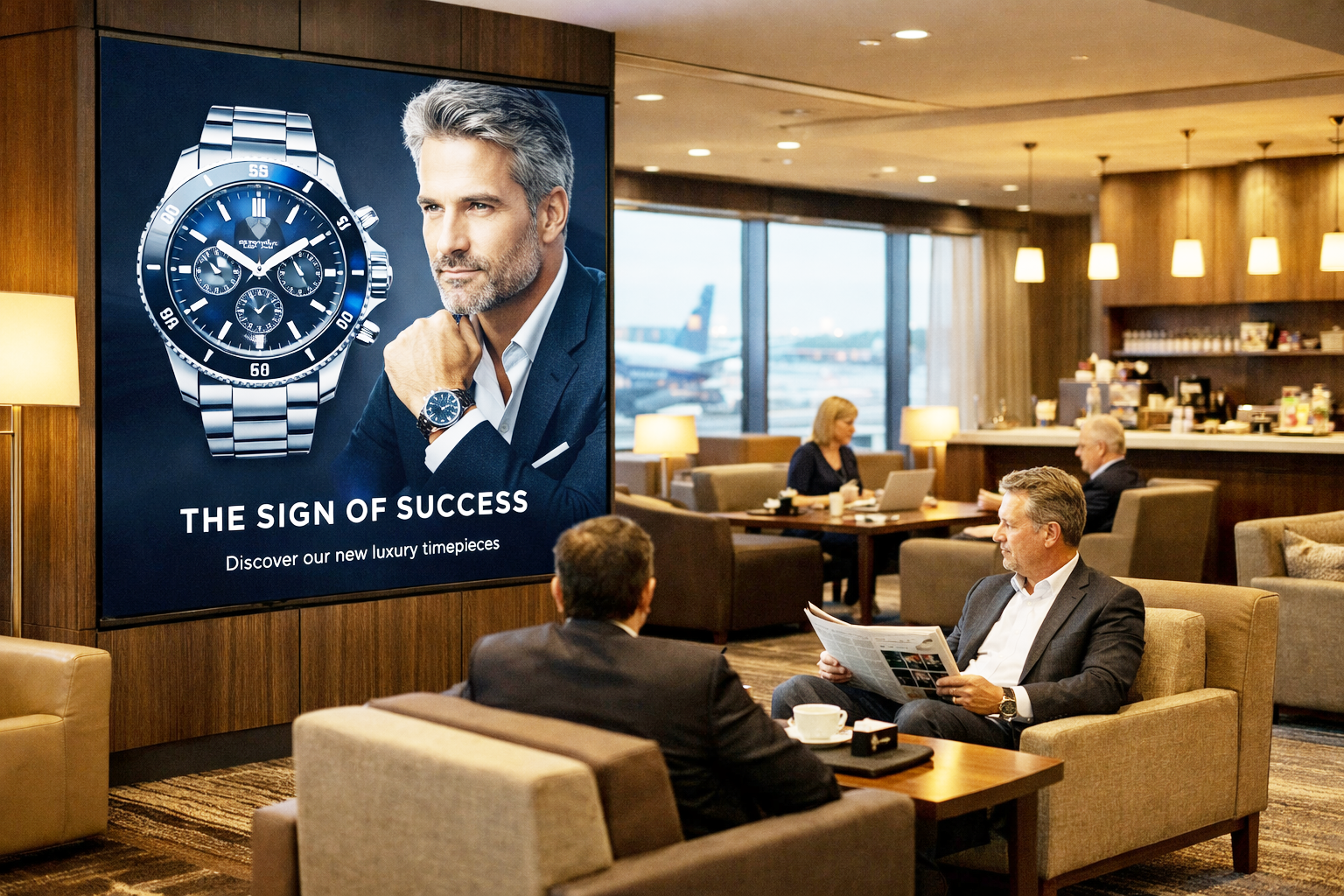
- Luxury goods, watches, and jewellery: The holiday gifting windows at DFW — Christmas, Valentine's Day, and the spring event season — deliver a luxury personal goods purchasing audience whose household income profile places them among the top-quintile US consumer audience for this category; in-terminal luxury brand campaigns at DFW achieve display-environment quality equivalent to Fifth Avenue or Rodeo Drive
- Premium spirits, wine, and hospitality brands: The entertainment culture of North Texas corporate life — business dinners, client events, sports hospitality — creates a strong and consistent premium spirits and luxury hospitality brand audience; campaigns aligned to the NFL season, PGA Tour events, and year-end corporate entertainment periods achieve peak relevance windows of genuine commercial impact
- International education and premium private schools: The DFW Metroplex's high-income family demographic — particularly in Plano, Frisco, McKinney, and Highland Park — creates one of the United States' strongest markets for international boarding school and university advertising; the airport's family travel windows in spring break and summer are the highest-priority deployment periods for education brand campaigns
Brand Alignment at a Glance:
| Category | Fit |
|---|---|
| International luxury real estate | Exceptional |
| Private banking and wealth management | Exceptional |
| Luxury automotive | Exceptional |
| Premium technology — enterprise and consumer | Exceptional |
| International airlines and premium travel | Strong |
| Luxury goods and jewellery | Strong |
| Premium spirits and hospitality | Strong |
| International education | Strong |
| Mass-market FMCG | Moderate — volume justifies consideration |
| Budget travel and economy accommodation | Poor fit |
Who Should Not Advertise Here:
- Budget travel and economy accommodation brands: The DFW airport audience's income profile and demonstrated premium travel spending behaviour makes price-minimisation and economy accommodation messaging fundamentally misaligned with the audience's consumption orientation; budget travel brands will achieve neither meaningful recall nor conversion at DFW
- Hyper-local or single-state domestic brands with no national or international reach proposition: DFW's passenger base is by definition geographically diverse — a significant proportion of passengers are connecting travellers with no DFW catchment consumer behaviour; brands whose proposition is geographically confined to a single state or local market will achieve poor conversion efficiency relative to the media investment required
- Products or services with strict regulatory limitations on US airport advertising: Certain financial, pharmaceutical, and legal service categories face US regulatory constraints on advertising claims in the airport environment; brands in these categories should seek Masscom Global's specific guidance on compliant creative approaches before committing to DFW inventory
Event and Seasonality Analysis
- Event Strength: High
- Seasonality Strength: High
- Traffic Pattern: Stable Multi-Peak (Spring business and leisure surge March to May; Summer leisure and Latin American VFR peak June to August; Fall business and sports season September to November; Holiday and year-end peak December)
Strategic Implication: Dallas/Fort Worth International Airport's traffic pattern is one of the most consistently distributed of any major US airport — there is no single dominant peak month and no significant off-season trough, meaning that advertising investment at DFW generates commercially valuable audience exposure year-round at a baseline that most Tier 1 airports cannot match. Within this stable multi-peak structure, three windows deliver maximum return on investment: the March to May spring business and leisure surge, when the Fortune 500 travel cycle peaks alongside spring break luxury departure volume; the September to November fall business season, when NFL-driven sports tourism adds premium audience layers to the year's most intense corporate travel period; and December, when the confluence of year-end corporate travel, holiday gift purchasing intent, returning diaspora, and Latin American family visit travel creates the year's single highest-value multi-audience concentration. Masscom Global structures DFW campaigns to maintain continuous baseline presence while concentrating creative investment and premium format bookings in these three priority windows.
Poor Placement and Delays Affect Airport Campaigns
We help you move faster, access better inventory, and get it right now.
Talk to an ExpertFinal Strategic Verdict
Dallas/Fort Worth International Airport is one of the five most commercially valuable airport advertising environments in the world — not because of any single audience segment, but because of the extraordinary convergence of high-value audiences it delivers simultaneously within a single terminal ecosystem. The Fortune 500 executive class, the energy sector HNWI audience, the Latin American investor and business traveller, the returning diaspora with foreign-earned capital, the premium leisure traveller accessing Mexico and Europe, and the technology professional class with European and New York income expectations all pass through DFW in volumes that make this airport a precision targeting instrument of global significance. Brands in luxury real estate, private banking, premium automotive, international education, and luxury consumer goods who partner with Masscom Global to activate at DFW are accessing the commercial heart of the American South — a $630-billion metropolitan economy whose HNWI class is deploying capital internationally at a scale and pace that no advertiser targeting this audience can afford to ignore at its primary air gateway. Masscom Global brings the inventory access, multi-terminal campaign architecture, and audience intelligence to ensure that every dollar invested at DFW reaches the right segment, in the right terminal, at the right moment in the journey.
About Masscom Global
Masscom Global is a premium international airport advertising and media buying agency operating across 140 countries. With deep expertise in airport OOH, premium publications, and high-net-worth audience targeting, Masscom helps brands reach the world's most valuable travellers at the moments that matter most. For advertising packages, media rates, and campaign planning at Dallas/Fort Worth International Airport and airports across the globe, contact Masscom Global today.
Frequently Asked Questions
How much does airport advertising cost at Dallas/Fort Worth International Airport? Advertising costs at Dallas/Fort Worth International Airport vary significantly based on terminal selection, format type — ranging from digital spectacular displays in Terminal D to static formats across the domestic terminals — placement zone, campaign duration, and seasonal demand period. December, the spring business surge, and the NFL season command premium inventory rates due to the concentration of high-value travellers in those windows. Given DFW's scale and the range of format options across five terminals, Masscom Global recommends a structured audience-first planning approach before format selection. Contact Masscom Global for a tailored rate card, terminal strategy recommendation, and media plan calibrated to your specific audience objectives and budget.
Who are the passengers at Dallas/Fort Worth International Airport? DFW's 75-million annual passengers span one of the most commercially diverse and financially qualified airport audiences in the world. The domestic audience is dominated by Fortune 500 executives and senior managers, energy sector professionals, technology company employees, and premium leisure travellers whose household incomes reflect the DFW Metroplex's position as one of the United States' wealthiest metropolitan economies. The international audience is led by Mexican nationals — both business investors and leisure travellers — followed by Latin American HNWIs from Colombia, Venezuela, Brazil, and Argentina, Western European business and premium leisure travellers, and growing East Asian corporate flows from Japan and South Korea.
Is Dallas/Fort Worth International Airport good for luxury brand advertising? DFW is among the top five airports in the United States for luxury brand advertising effectiveness. The combination of Fortune 500 executive concentration, energy sector HNWI wealth, a Latin American investor class with demonstrated luxury consumption capacity, and an ambient premium retail and lounge environment that primes the audience for premium brand engagement creates a luxury advertising context that rivals New York JFK or Los Angeles LAX for audience quality — at a significantly lower competitive advertising saturation level. Terminal D, in particular, delivers a luxury brand advertising environment comparable to any premium international terminal in the world for the Latin American and international HNWI audience.
What is the best airport in the American South to reach Fortune 500 executives and energy HNWIs? Dallas/Fort Worth International Airport is unambiguously the premier access point for Fortune 500 executives in the American South and one of the three or four most important executive audience airports in the entire United States. The DFW Metroplex's concentration of corporate headquarters, its energy sector wealth, and its technology corridor growth have created an executive audience density that Houston Bush, Atlanta Hartsfield, and Miami International — all larger by volume in some periods — cannot match in terms of C-suite and senior management concentration per passenger.
What is the best time to advertise at Dallas/Fort Worth International Airport? DFW's multi-peak traffic structure means that no single month delivers a poor advertising return, but three windows deliver the highest commercial yield. December combines the year's highest-volume business travel with holiday gifting intent, returning diaspora, and Latin American family visit peaks — making it the single most commercially intense four-week window of the year. The March to May spring period aligns the business travel surge with spring break luxury departure volume and the PGA Tour events that produce a premium sports audience. September to November captures the fall Fortune 500 travel peak alongside the NFL season's premium sports tourism. Masscom Global recommends a continuous presence strategy with amplified investment in these three priority windows.
Can international real estate developers advertise at Dallas/Fort Worth International Airport? Absolutely — and DFW represents one of the most commercially compelling access points for international real estate advertising in the entire United States. The outbound North Texas HNWI audience is actively acquiring second homes and investment properties in Mexico, the Caribbean, Portugal, and Spain, while the inbound Latin American business traveller audience includes a significant tier of investors evaluating US commercial and residential real estate. International developers who position campaigns at DFW intercept both buyer flows simultaneously — the departing North Texas buyer and the arriving Latin American investor — in the single airport that connects these two wealth corridors most directly.
Which brands should not advertise at Dallas/Fort Worth International Airport? Budget travel brands, economy accommodation platforms, and price-led retail concepts are fundamentally misaligned with DFW's income demographics and will achieve poor conversion efficiency relative to the investment required. Hyper-local single-market brands with no national or international proposition will struggle with DFW's predominantly connecting and outbound-originating passenger mix. Brands with strict HNWI-minimum audience requirements who are unwilling to invest in multi-terminal coverage should work with Masscom Global to identify Terminal D-focused strategies that deliver the concentrated international premium audience within a defined budget parameter.
How does Masscom Global help brands advertise at Dallas/Fort Worth International Airport? Masscom Global provides comprehensive campaign management at Dallas/Fort Worth International Airport, from strategic terminal selection and audience mapping through to inventory booking, creative placement optimisation across all five terminals, and performance measurement calibrated to the specific objectives of each campaign. With operational coverage across 140 countries and deep knowledge of the Latin American, Gulf, and European corridors that define DFW's international audience flows, Masscom ensures that DFW campaigns are coordinated with origin and destination airport placements for maximum corridor-wide impact. For current inventory availability, media packages, and a strategic audience plan for Dallas/Fort Worth International Airport, contact Masscom Global today.