

Airport at a Glance
| Field | Detail |
|---|---|
| Airport | Chicago Midway International Airport |
| IATA Code | MDW |
| Country | United States of America |
| City | Chicago, Illinois |
| Annual Passengers | Approximately 20 million (2023) |
| Primary Audience | Working-wealth and middle-professional class, Midwest manufacturing and logistics leadership, Latino professional and business community, domestic leisure and family travellers |
| Peak Advertising Season | May to August, November to January, March |
| Audience Tier | Tier 2 |
| Best Fit Categories | Financial services, automotive, quick service and casual dining, insurance, retail banking, home improvement, telecommunications, Latino-market consumer brands |
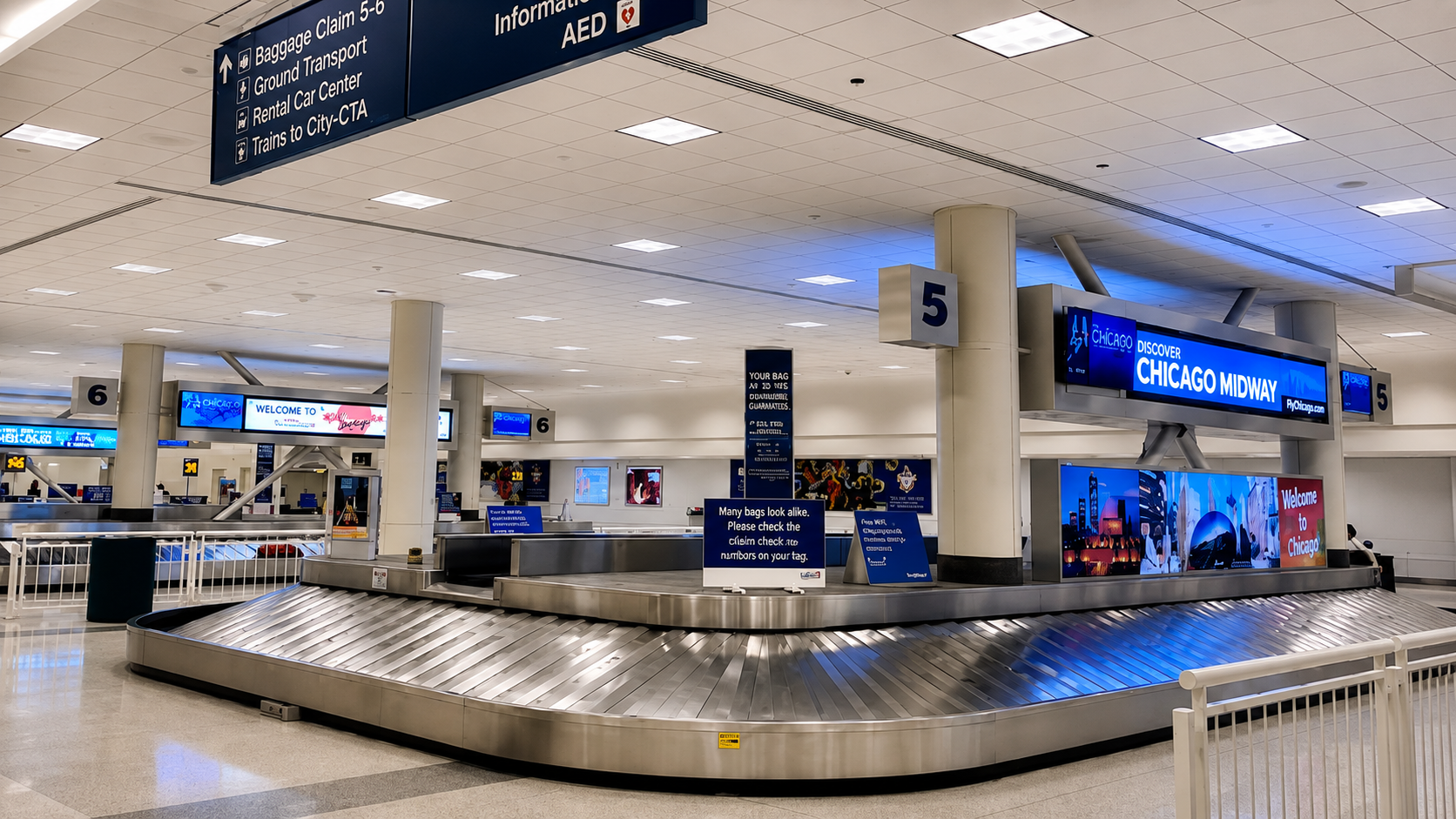
Chicago Midway International Airport is not Chicago's largest airport — it is Chicago's most commercially concentrated one. While O'Hare routes international business class and global transits, Midway delivers something fundamentally different and, for a specific class of advertiser, more valuable: twenty million domestic passengers per year drawn predominantly from the Midwest's working-wealth and middle-professional class, concentrated overwhelmingly on Southwest Airlines, and routed through a compact, high-dwell terminal environment where advertising placements achieve audience penetration rates that the fragmented multi-terminal infrastructure of comparable-volume airports cannot replicate. MDW is the airport of the Chicago that actually lives, works, manufactures, and builds things — and that audience spends at scale, travels frequently, and is systematically underserved by national media planners who look first at O'Hare and stop there.
The commercial case for MDW is anchored in three structural realities that distinguish it from every other major Midwest airport. First, Midway serves the densest urban Latino economy in the United States outside of Los Angeles — the Southwest Side of Chicago and its surrounding suburban corridor is home to more than 1.5 million Hispanic residents, and the airport sits geographically at the heart of this community, making it the primary aviation gateway for one of the most commercially active and brand-loyal consumer audiences in the American market. Second, the Midwest manufacturing, logistics, and distribution economy routes a consistent base of plant managers, operations directors, supply chain executives, and union leadership through MDW on employer-funded schedules — a B2B professional audience whose purchasing authority is significant and whose media exposure at their preferred airport is systematically under-activated by B2B advertisers. Third, MDW's Southwest Airlines dominance creates a passenger behavioural profile — frequent, domestic, schedule-focused, price-conscious but not brand-indifferent — that responds exceptionally well to high-frequency, high-familiarity brand messaging across a compact terminal environment where repeat exposure accumulates rapidly.


Advertising Value Snapshot
- Passenger scale: Approximately 20 million annual passengers (2023), with Southwest Airlines operating the dominant share of capacity and producing a high-frequency, domestically networked passenger base with strong repeat airport exposure
- Traveller type: Working-wealth and middle-professional domestic travellers, Midwest manufacturing and logistics executives, Southwest Side Chicago Latino professional and business community, Midwest family leisure and sports tourism audiences
- Airport classification: Tier 2 — a major US domestic gateway whose volume, audience density, and terminal compactness produce advertising impact metrics that rival Tier 1 airports in specific audience categories
- Commercial positioning: Chicago's domestic working-wealth terminal — the primary aviation gateway for the city's South and Southwest Side communities and the Midwest's industrial and logistics professional class
- Wealth corridor signal: MDW sits at the centre of Chicago's most economically active Latino corridor and the Midwest's manufacturing and distribution heartland — a dual-wealth-layer audience that mainstream airport advertising consistently overlooks
- Advertising opportunity: Masscom Global provides brands with the placement access, cultural intelligence, and execution capability to activate MDW's uniquely layered audience — reaching both the Midwest professional traveller and the Latino consumer economy at the moment of maximum commercial receptivity
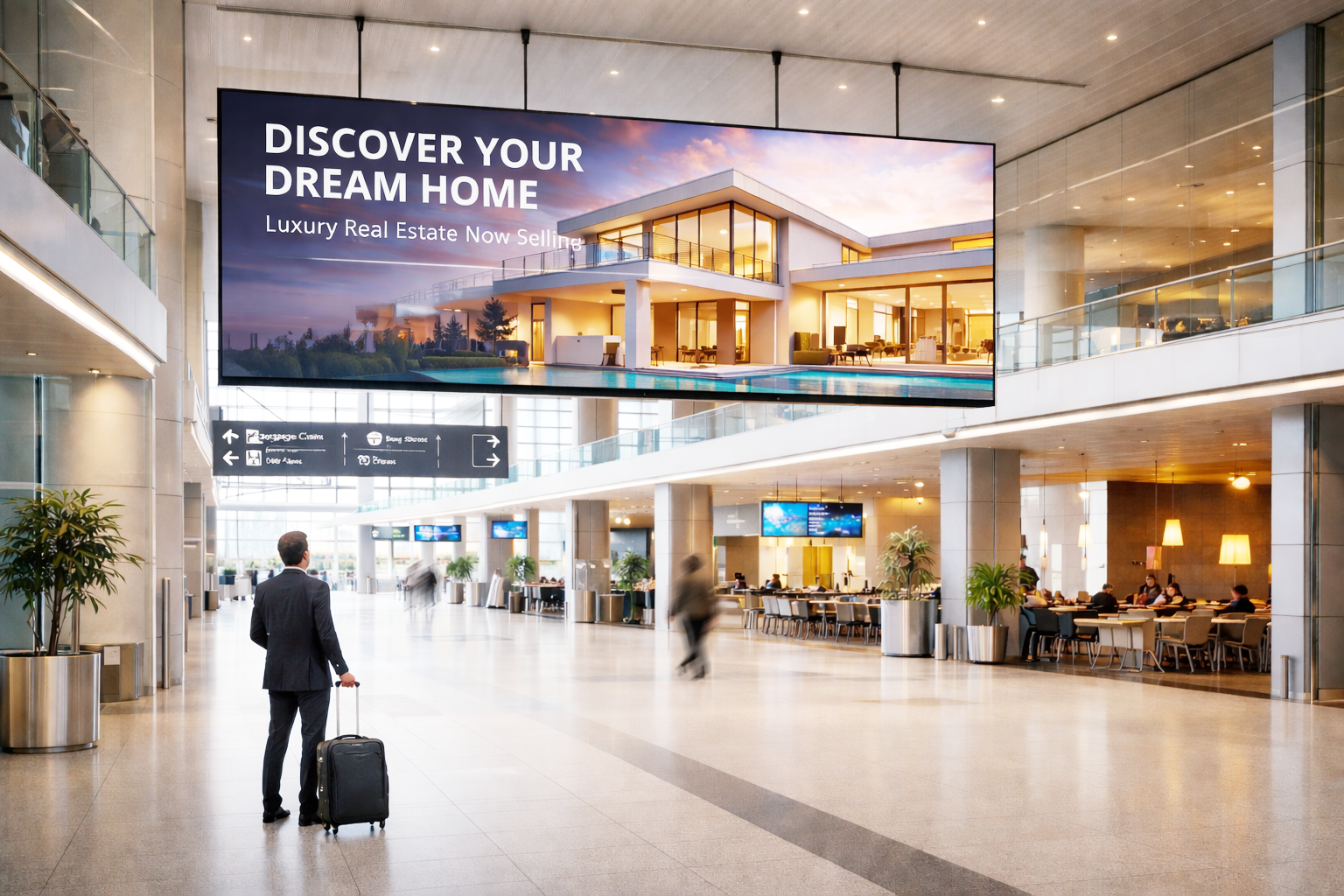
Airport Advertising is Complex to Get Right
We help you execute faster, with proven results and local insight most planners lack starting now.
Talk to an ExpertCatchment Area and Economic Drivers
Top 10 Cities within 150 km — Marketer Intelligence:
- Cicero, IL: The most densely Latino municipality in the Chicago metro, sitting immediately adjacent to MDW's catchment zone — a high-density working professional and small business owner community with strong brand loyalty, active remittance behaviour, and exceptional receptivity to financial services, telecommunications, and culturally relevant lifestyle advertising
- Oak Lawn, IL: A mature, predominantly working and middle-professional suburb immediately south of Chicago with above-average household stability, strong home ownership culture, and a traveller profile concentrated in family leisure, automotive, insurance, and financial services categories
- Joliet, IL: One of the fastest-growing cities in Illinois and the logistics capital of the Midwest, housing the largest concentration of distribution and fulfilment centres in North America along the I-55 and I-80 corridors — producing a consistent flow of logistics management, supply chain, and operations professional travellers whose employer-funded travel frequency is among the highest in the catchment
- Aurora, IL: Illinois' second-largest city and a major Midwest manufacturing and service hub with one of the most diverse demographic profiles in the state — a large and growing Latino professional community alongside a significant manufacturing management class produces a layered audience with strong automotive, financial services, and family consumer brand receptivity
- Naperville, IL: One of the wealthiest mid-sized cities in the United States by median household income, housing a dense concentration of corporate headquarters, financial services firms, and technology company regional offices — a premium suburban professional audience whose travel frequency and income profile exceed standard Tier 2 airport catchment assumptions significantly
- Elgin, IL: A diverse Fox River Valley city with a large Mexican-American community alongside a manufacturing and service sector professional class, contributing a bilingual, working-wealth audience with strong financial services, automotive, and culturally targeted consumer brand receptivity
- Waukegan, IL: A Lake County industrial and healthcare services hub contributing manufacturing leadership, healthcare professionals, and regional business owners — a moderate-income, high-employment-stability audience relevant for insurance, financial, and automotive categories seeking the Midwest professional market
- Gary, IN: Northwest Indiana's largest city and the anchor of the Chicago-Gary industrial corridor — a steel, manufacturing, and port logistics hub whose professional and management class produces a consistent, employer-funded business traveller segment with strong financial services and industrial brand receptivity
- Hammond, IN: A densely populated Northwest Indiana suburb at the Illinois border, contributing a working professional and manufacturing management audience whose proximity to MDW makes it one of the airport's most consistent secondary catchment contributors — relevant for financial services, retail banking, automotive, and insurance categories
- Kankakee, IL: A south suburban Illinois commercial and agricultural centre whose travellers are a mix of regional business owners, healthcare professionals, and agricultural commodity managers — a moderate but consistent secondary audience layer relevant for insurance, financial services, and automotive brands seeking geographic depth in the catchment
NRI and Diaspora Intelligence:
Midway's diaspora commercial signal is one of the most commercially significant and consistently under-activated of any major US airport. The Mexican-American community of Chicago's Southwest Side and adjacent suburbs is not merely large in population — it is economically mature, multigenerational, and commercially sophisticated in a way that first-generation immigrant community narratives routinely understate. Chicago's Hispanic community generates tens of billions in annual consumer expenditure, operates hundreds of thousands of small and medium businesses, and remits significant capital to Mexico, Central America, and South America through financial channels that are actively contested by banks, fintech platforms, and insurance providers. The airport sits at the geographic centre of this economy. Polish-American communities on Chicago's Northwest and Southwest sides — historically among the most economically rooted ethnic communities in the Midwest — contribute a consistent, homeownership-oriented, family-values-driven audience with strong insurance, financial, and automotive brand engagement. A growing South Asian and Filipino professional community in the western suburbs adds an internationally mobile, high-income layer to the airport's diaspora audience that is relevant for international real estate, financial services, and premium consumer brand advertising.
Economic Importance:
The MDW catchment economy operates on three structural pillars that directly shape its airport audience commercial profile. Manufacturing and logistics dominate the physical economy — the Joliet-Bolingbrook-Romeoville distribution corridor is the largest freight and fulfilment hub in North America by warehouse square footage, and the industrial management class that runs it routes through MDW consistently. The service economy of Chicago's South and Southwest Side — healthcare, retail, construction, financial services, and the public sector — contributes the largest single layer of working-wealth professional travellers whose income, while not at the HNI level, is consistent, stable, and concentrated in high-frequency purchase categories including automotive, insurance, financial products, and family consumer goods. The Latino small business economy, concentrated in Cicero, Pilsen, Little Village, and the broader Southwest Side, contributes a business owner and entrepreneur audience with above-average financial product engagement and strong brand loyalty once trust is established — a commercially valuable audience for any brand prepared to engage with cultural intelligence.
Business and Industrial Ecosystem
- Logistics, Distribution, and Supply Chain (Amazon, IKEA, Target, Home Depot distribution facilities in the Joliet-Bolingbrook corridor): The Midwest's freight capital routes its management and executive leadership through MDW at volume — operations directors, supply chain vice presidents, and distribution centre leadership whose employer-funded travel is consistent, schedule-driven, and highly receptive to business financial, automotive, and enterprise technology brand advertising
- Manufacturing and Heavy Industry (US Steel, ArcelorMittal, Caterpillar regional operations, Boeing Chicago): The Chicago-Gary industrial corridor remains one of the most productive manufacturing zones in the United States, contributing a plant management and engineering professional audience with strong automotive, financial, and industrial services brand engagement whose travel frequency tracks commodity and production cycles predictably
- Healthcare System (Rush University Medical Center, Advocate Health, Sinai Chicago, Stroger Hospital):Chicago's South and West Side healthcare infrastructure is anchored by nationally ranked academic medical centres, contributing a consistent physician, nursing leadership, and health executive audience with above-average income stability and strong professional insurance, financial, and automotive category receptivity
- Financial Services and Professional Services (Midwest regional banks, insurance companies, law firms with Chicago South Loop presence): A broad base of mid-market financial services, insurance, and legal professionals routed through MDW whose income profile and institutional affiliations make them consistently relevant for competing financial product, wealth management, and premium business services advertising
Passenger Intent — Business Segment:
The business traveller at MDW is operationally distinct from the O'Hare business traveller in commercially important ways. Where O'Hare routes international C-suite executives with premium class budgets, MDW routes Midwest industrial middle management, supply chain professionals, regional sales representatives, and healthcare and government sector professionals — a larger volume, lower-seniority-on-average but institutionally funded audience whose aggregate purchasing power is substantial and whose brand loyalty, once established, is significantly higher than the aspirational-elite traveller profile that concentrates at O'Hare. The Southwest Airlines loyalty programme effect is commercially relevant here: frequent MDW business travellers are demonstrably brand-loyal, schedule-organised, and repeat-exposure-responsive in ways that benefit high-frequency airport advertising campaigns built on familiarity accumulation rather than single-impression aspiration.
Strategic Insight:
The business audience at MDW is the most commercially underserved professional traveller segment in the Chicago metropolitan area. National media planners allocate the majority of Chicago airport budgets to O'Hare, where advertiser competition is highest and audience cost efficiency is lowest. MDW's business travellers — twenty million of them per year, concentrated in the Midwest's productive industrial and services economy, routing through a compact terminal where frequency of exposure is structurally built into the environment — represent a precision targeting opportunity for brands whose primary customer is the American working-wealth professional rather than the global corporate elite. For automotive, financial services, insurance, telecommunications, and retail banking brands, MDW's business audience delivers volume, frequency, and cost efficiency that O'Hare cannot match.
Tourism and Premium Travel Drivers
- Chicago Cultural and Sports Tourism: Midway's domestic network routes inbound leisure travellers to Chicago's world-class museum complex, professional sports ecosystem, and restaurant and entertainment district — a culturally engaged, discretionary-spending inbound audience whose airport advertising receptivity is activated by the city's reputation for premium urban experience
- Chicago White Sox and Chicago Bears Fan Tourism: Guaranteed Rate Field, home of the Chicago White Sox, is less than three miles from Midway Airport — closer than any other major league stadium to a commercial US airport — producing a concentrated sports tourism audience with strong spirits, beer, sports apparel, and food service brand receptivity that is unique in US airport geography
- Indiana Dunes and Great Lakes Leisure Corridor: The southern Lake Michigan leisure and outdoor recreation corridor drives consistent inbound domestic leisure traffic through MDW from Midwest states seeking accessible Great Lakes beach and outdoor experiences — a family and active lifestyle audience with moderate to above-average household income
- Route 66 Heritage and Midwest Road Trip Tourism: Chicago is the origin point of historic Route 66, and MDW serves as the fly-in gateway for domestic and select international heritage tourism visitors accessing the American Midwest's road trip and cultural history corridor — an educated, experience-oriented inbound audience with premium automotive, hospitality, and lifestyle brand receptivity
Passenger Intent — Tourism Segment:
Inbound leisure travellers at MDW are characterised by a family and community orientation that distinguishes them from the individual premium leisure profiles that concentrate at destination resort airports. Chicago's inbound tourism audience through Midway skews toward family reunions, sports tourism, cultural visits, and urban weekend breaks — audiences who travel in groups, share spending decisions, and respond strongly to family-oriented lifestyle, food service, hospitality, and entertainment brand messaging. The White Sox stadium proximity creates a reliably recurring sports tourism window that is unique to MDW and produces an audience with specific and predictable brand receptivity across beverages, casual dining, and sports apparel categories. Advertisers calibrating to family spending, group decision-making, and Midwest values-oriented brand narratives will find MDW's inbound leisure audience structurally receptive in ways that individual-luxury-focused brand messaging will not match.
Travel Patterns and Seasonality
Peak seasons:
- May to August (Summer Travel Peak): The sustained domestic leisure surge of the American summer produces MDW's highest absolute passenger volume, driven by family vacation travel, Chicago sports season, and inbound leisure from across the Southwest Airlines domestic network — twelve consecutive weeks of above-average traffic with a family and leisure audience orientation
- November to January (Holiday Travel and Bowl Season): Thanksgiving, Christmas, and New Year's combine with college football bowl travel and family reunion patterns to produce MDW's second-highest volume period — a concentrated family travel window with strong gifting, retail, and family lifestyle brand activation potential
- March (Spring Break and St. Patrick's Day): Chicago's globally recognised St. Patrick's Day celebration and the spring break family travel window combine to produce a significant mid-year traffic surge, routing a celebratory, leisure-oriented audience through MDW in a compressed but commercially dense window
Event-Driven Movement:
- Chicago White Sox Home Season (April to September): The stadium's three-mile proximity to MDW makes every home game a micro-surge event — inbound sports tourists from across the Southwest domestic network arrive specifically for White Sox games and depart immediately after, producing a recurring, predictable, and highly brand-receptive sports audience throughout the baseball season
- Chicago St. Patrick's Day (March): One of the most celebrated St. Patrick's Day events in the world, drawing inbound visitors from across North America to Chicago's parade, river dyeing, and neighbourhood celebrations — a celebratory, social, and spirits-brand-receptive inbound audience concentrated in a single weekend
- Lollapalooza (August): Grant Park's globally recognised music festival draws tens of thousands of domestic and international music tourism visitors through both Chicago airports, with MDW capturing a significant share of inbound Southwest network arrivals — a young, premium experience-oriented, and brand-culturally engaged audience window ideal for spirits, technology, and lifestyle brands
- Chicago Marathon (October): One of the six World Marathon Majors draws elite and amateur runners from across the United States and internationally, routing a health-conscious, premium active lifestyle audience through MDW in a concentrated October window with strong fitness, nutrition, travel, and premium wellness brand receptivity
- Thanksgiving and Christmas Holiday Travel (November to December): MDW's domestic network produces some of the highest single-day passenger volume in the Chicago metro during Thanksgiving and Christmas travel windows, concentrating a family-oriented, gifting-motivated, and retail-receptive audience through the terminal in the calendar's most commercially active consumer spending period
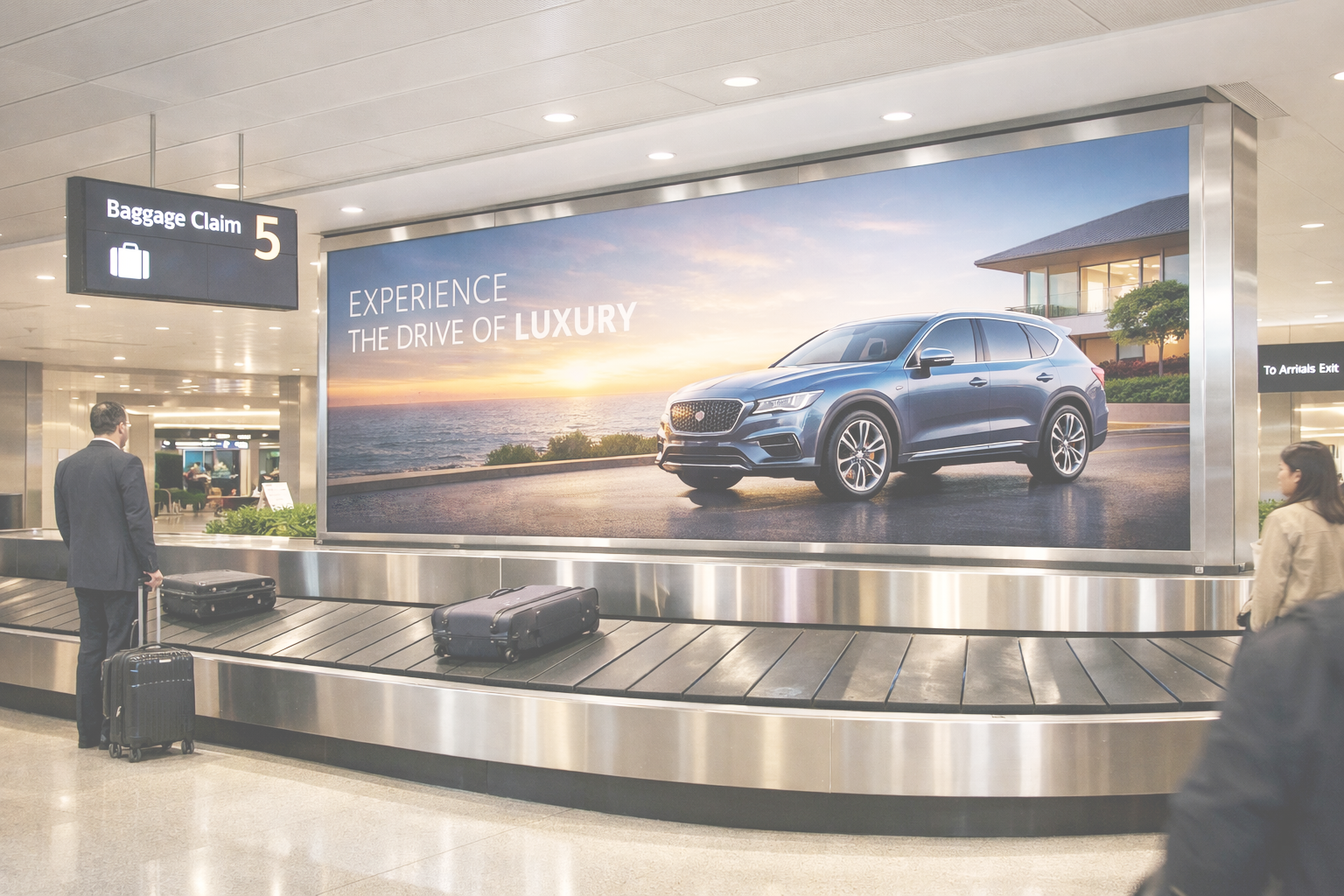
It’s Not Just Where You Advertise - It’s How Fast You Execute
We combine local insight with fast rollout to deliver results for you, now.
Talk to an ExpertAudience and Cultural Intelligence
Top 2 Languages:
- English: The dominant language across all MDW traveller segments — Midwest manufacturing and logistics professionals, domestic leisure families, and healthcare and government sector workers are all primarily English-speaking, making English-language creative calibrated to Midwest working-wealth values, family orientation, and brand-loyalty culture the correct primary register for all campaign executions at this airport
- Spanish: The single most commercially important secondary language of any major US Midwest airport — MDW's geographic positioning at the heart of Chicago's Southwest Side Latino community makes Spanish-language and bilingual campaign creative not a niche option but a mainstream strategic requirement for any brand seeking to reach the full passenger audience; financial services, insurance, telecommunications, automotive, and retail banking brands in particular that do not activate bilingual creative at MDW are leaving a significant and commercially active audience segment unreached
Major Traveller Nationalities:
MDW is a fundamentally domestic airport whose passenger base is almost entirely American, reflecting its character as Southwest Airlines' largest or co-largest hub and a primary domestic routing centre for the Midwest region. The small international passenger segment is dominated by Mexican nationals and Mexican-Americans travelling the Chicago-Mexico corridor — a commercially active transnational community moving family, remittance, and investment capital between Chicago's Southwest Side and Mexican home states including Jalisco, Michoacán, Guanajuato, and Puebla. For campaign planning purposes, the creative environment should be calibrated overwhelmingly to American domestic travellers across two distinct registers: English-language Midwest working-wealth professional and family, and Spanish-language or bilingual Latino professional and business owner — with the latter representing a disproportionate commercial opportunity relative to its share of terminal advertising currently activated by most national brands.
Religion — Advertiser Intelligence:
- Catholic (approximately 42%): Chicago's Southwest Side is one of the most heavily Catholic urban corridors in the United States, shaped by successive waves of Irish, Polish, Italian, and Mexican-American immigration whose shared Catholic identity has created an enduring community structure centred on parish networks — this community's travel behaviour tracks Catholic liturgical calendar precisely, with Easter, Christmas, and major feast days producing significant family travel surges, and its strong community loyalty makes it exceptionally receptive to brands that engage with authenticity rather than generic lifestyle aspiration
- Protestant and Evangelical (approximately 30%): A broad Christian majority across the South suburban and Midwest catchment, with significant Baptist and Pentecostal concentration in African American communities on Chicago's South Side — Thanksgiving, Christmas, and Easter produce major family travel peaks, and this audience's strong community, family, and homeownership values make it highly receptive to financial services, insurance, home improvement, and family consumer brand messaging
- Other and Non-Religious (approximately 28%): A diverse remainder including Chicago's growing Muslim community on the South Side, a significant Orthodox Christian population among Eastern European diaspora communities, and an expanding secular professional class in the younger demographic cohorts — collectively representing a commercially diverse audience that responds to inclusive, family-values-adjacent brand positioning rather than exclusively faith-specific messaging
Behavioral Insight:
The MDW passenger operates with a behavioural profile shaped by the Midwest's foundational commercial values: brand loyalty earned through consistency, price-value consciousness without sacrificing quality, and a strong community and family decision-making orientation that makes peer recommendation and cultural affiliation more powerful purchase triggers than individual aspiration alone. This is not an audience that responds to exclusivity signalling — it responds to reliability, familiarity, and respect. The Latino segment within this audience adds a specifically powerful brand loyalty dimension: Mexican-American and broader Latino consumers who feel authentically engaged by a brand — in their language, with cultural intelligence rather than tokenism — demonstrate significantly higher retention and referral rates than the general market average, making MDW one of the most high-leverage airports in the United States for brands serious about building the Latino market rather than simply advertising into it.
Outbound Wealth and Investment Intelligence
The outbound HNI and upper-professional passenger at MDW represents a different wealth profile from the coastal and energy-sector HNI audiences that dominate comparable blogs. Midway's wealthiest outbound passengers are not primarily old-money or tech-unicorn wealthy — they are industrial management wealthy, small business equity wealthy, and agricultural and real estate equity wealthy in the Midwest sense: accumulated, patient, community-rooted capital that is actively looking for preservation and modest growth rather than high-velocity deployment. This audience is commercially underserved by international wealth product advertisers precisely because it does not conform to the visual or behavioural cues that luxury brand campaigns typically target — but it is present, it is liquid in the asset-equity sense, and it is making real outbound investment decisions at consistent volume.
Outbound Real Estate Investment:
The primary outbound real estate destinations for MDW's upper-income audience are dominated by warm-weather domestic flight corridors that Southwest Airlines directly serves. Florida is the dominant outbound property market — Naples, Sarasota, Fort Lauderdale, and Orlando attract significant Chicago working-wealth and retiree capital in both vacation property and primary retirement relocation categories. Arizona (Scottsdale, Phoenix, and Tucson) represents the second major domestic corridor. Internationally, the Mexican-American community at MDW is an active outbound property buyer in Mexico — particularly in Jalisco (Guadalajara and Puerto Vallarta), Michoacán, and the Riviera Maya — with a property investment behaviour that is multigenerational, family-network-driven, and persistent across economic cycles. This is a commercially underserved international real estate audience whose property buying behaviour in Mexico is significant in aggregate volume even if individual transaction sizes are below the ultra-HNI threshold.
Outbound Education Investment:
The Chicago Southwest Side and suburban Midwest catchment demonstrates a strong and accelerating investment in education driven by the Latino community's multigenerational ambition for upward mobility and the broader Midwest professional class's recognition that credential premium is increasing in the post-industrial economy. Community college to four-year university transfer paths are dominant within the catchment, but the upper-income segment directs investment toward University of Illinois, Northwestern, Notre Dame, and Big Ten flagship institutions domestically. Internationally, the South Asian professional community in the western suburbs contributes outbound education investment in the UK, Canada, and Australia. Mexican-American families with returning-generation students are an emerging audience for Mexican university recruitment and dual-credential programmes — a segment that no international university is currently activating at MDW with cultural intelligence.
Outbound Wealth Migration and Residency:
MDW's outbound wealth migration signal is predominantly domestic — Illinois' income and property tax environment is a consistent driver of outbound residential relocation interest among upper-income Midwest professionals, with Florida, Texas, and Indiana capturing the majority of departing Illinois wealth. Internationally, the Mexican-American community's transnational economic life creates a specific and commercially relevant residency and retirement interest in Mexico that goes beyond vacation property into structured residency planning — Mexican temporary and permanent residency programmes, IMSS healthcare access, and cross-border estate planning are active considerations for a segment of MDW's outbound audience that immigration and financial services brands are not yet reaching with targeted airport media.
Strategic Implication for Advertisers:
Brands targeting the MDW outbound HNI and upper-professional audience must recalibrate their typical wealth marketing assumptions. This is not an audience that will respond to yacht imagery and Swiss watch associations — it is an audience that responds to demonstrated financial intelligence, family protection framing, and culturally resonant aspiration that reflects their own community identities rather than aspirational archetypes imported from coastal luxury marketing. Financial services firms, retirement and second-home real estate developers in Florida and Arizona, and immigration and residency consultancies serving the transnational Latino market will find MDW a commercially accessible and under-competed channel for reaching this audience with messages calibrated to their actual decision context. Masscom Global structures outbound wealth campaigns at MDW that account for both the English-language Midwest professional and the Spanish-language Latino business community — reaching both segments simultaneously across the full terminal environment.
Airport Infrastructure and Premium Indicators
Terminals:
- Chicago Midway operates a single terminal building with concourses A, B, and C arranged in a linear layout behind a shared security checkpoint — this structure concentrates the entire post-security passenger audience within a single, contiguous commercial environment, enabling advertising placements to achieve comprehensive coverage of the full passenger mix without the audience fragmentation that multi-terminal airports produce
- The terminal's compact design relative to its twenty-million-passenger volume creates a higher passenger density per square metre than most comparable US airports, meaning that advertising placements at MDW are exposed to a significantly greater number of passenger impressions per unit of terminal space than the raw volume numbers alone would suggest — a structural amplification effect that benefits all media formats
Premium Indicators:
- The Midway terminal houses a Marriott Chicago Midway Airport Hotel directly connected to the terminal building, providing a corporate and convention traveller infrastructure that adds an overnight and early-morning business audience layer to the standard departures and arrivals passenger mix
- Southwest Airlines' operational dominance at MDW creates a commercially distinctive premium signal through the Rapid Rewards frequent flier programme — a loyalty base of tens of millions of American travellers whose engagement scores and brand loyalty metrics consistently rank among the highest of any US airline loyalty programme, and whose MDW dwell behaviour reflects the routine familiarity of frequent domestic fliers rather than the anxiety of infrequent travellers
- The Chicago Department of Aviation has invested consistently in MDW's retail and food and beverage environment, elevating the terminal's commercial offer above older Tier 2 airport standards — the concession mix includes both local Chicago food brands and national premium operators, creating a commercial context that supports premium brand advertising positioning
- MDW's location within Chicago's city limits — unlike O'Hare, which sits at the metropolitan periphery — means the terminal is accessible by CTA Orange Line rapid transit directly from the Loop, producing a uniquely urban, transit-connected passenger profile that includes a higher proportion of car-free urban professionals than suburban-highway-dependent airports of comparable size
Forward-Looking Signal:
The Chicago Department of Aviation is advancing a long-term capital improvement programme for MDW that includes gate expansions, terminal modernisation, and digital infrastructure upgrades targeted at enhancing the airport's media environment and commercial capacity. Southwest Airlines' continued commitment to MDW as a primary hub — cemented by its fleet growth and route expansion programmes — ensures sustained and growing passenger volume through the medium term. The broader Chicago metropolitan area's economic growth trajectory, driven by technology sector expansion, healthcare investment, and logistics sector growth in the Joliet corridor, is steadily increasing the income profile of the catchment audience routing through MDW. Masscom Global advises brands considering MDW to establish campaign presence now, before terminal modernisation upgrades and growing advertiser recognition of the Latino market opportunity drive a material increase in media rate competition at this airport.
Airline and Route Intelligence
Top Airlines:
- Southwest Airlines (dominant carrier, approximately 90% of total seat capacity)
- American Airlines
- Delta Air Lines
- United Airlines (limited presence, primarily connecting)
Key International Routes:
- Cancun, Quintana Roo (Mexico) — high-volume leisure and second-home corridor with strong demand from Chicago's Latino community and broader leisure market
- Los Cabos, Baja California Sur (Mexico) — premium resort and international real estate corridor connecting MDW's upper-income leisure audience to Mexico's Pacific luxury market
- Puerto Vallarta, Jalisco (Mexico) — family visit and leisure corridor strongly aligned with Chicago's Southwest Side Mexican-American community's home state connections
- Punta Cana, Dominican Republic — resort and family leisure corridor serving Chicago's Caribbean-origin and broader leisure market
- Montego Bay, Jamaica — leisure corridor with consistent demand from Chicago's Caribbean community and the broader Midwest leisure market
Domestic Connectivity:
MDW is one of the most comprehensively connected domestic airports in the United States through Southwest's point-to-point network — connecting Chicago to Baltimore, Boston, Dallas (Love Field), Denver, Houston (Hobby), Las Vegas, Los Angeles, Miami, Nashville, New York (LaGuardia), Orlando, Phoenix, San Diego, San Francisco, Seattle, Tampa, and Washington D.C. (Reagan), among dozens of additional destinations. This domestic network breadth means MDW passengers travel across the full continental US leisure and business corridor with a frequency and network depth that rivals larger hub airports on a seat-availability basis.
Wealth Corridor Signal:
The MDW route network reveals its commercial identity precisely: a domestically dominant, Southwest-monopolised network with a Mexico-oriented international corridor that reflects the airport's geographic and demographic positioning. The absence of long-haul European or Asian routes confirms that MDW is not a global wealth channel — it is a domestic working-wealth and Latino transnational community channel, and that specificity is its commercial value. The Mexico routes are not leisure routes in the standard resort-aviation sense — they are community and investment corridors moving Chicago-Mexico transnational capital, family relationships, and property investment decisions. The domestic network to Florida, Las Vegas, and the Southwest confirms the outbound leisure and retirement property investment behaviour of MDW's upper-income professional segment. For advertisers, understanding this network identity means understanding that MDW delivers a concentrated, predictable, domestically active audience whose commercial behaviour is shaped by community loyalty, Midwest values, and transnational Latino economic engagement — not by global luxury aspiration.
Media Environment at the Airport
- MDW's single-terminal, three-concourse layout creates what is functionally a captive audience environment at scale — twenty million passengers per year moving through a compact post-security zone where advertising placements cannot be avoided and frequency of exposure for repeat travellers accumulates rapidly, producing brand familiarity effects that single-visit airport advertising environments do not generate
- Southwest Airlines' operational model — no assigned seating, boarding group management requiring passengers to be present at the gate significantly earlier than assigned-seat airlines — structurally elevates gate hold dwell time at MDW above the US airport average, extending the active exposure window for gate-area media placements and increasing the attention quality available to advertisers in those positions
- The terminal's passenger density — twenty million annual passengers through a footprint considerably smaller than O'Hare's multi-terminal complex — creates an impression frequency per placement that is among the highest of any comparably sized US airport, meaning that MDW media investments generate more passenger contacts per dollar of placement cost than less-dense terminal environments
- Masscom Global provides brands with end-to-end placement access across MDW's full terminal environment — from check-in counters and security transition zones through the central concourse retail corridor to gate hold areas and the Marriott hotel connector — enabling campaigns that intercept the airport's layered audience at every high-attention moment and build the frequency accumulation that MDW's repeat traveller base makes commercially available
Strategic Advertising Fit
Best Fit:
- Retail Banking and Financial Services: Twenty million domestic working-wealth passengers per year, a large and financially active Latino consumer base, and a high-frequency repeat traveller profile make MDW one of the most precisely targeted retail banking, credit card, personal loan, and investment account advertising environments in the Midwest — brands seeking to acquire and retain Midwest working-wealth financial customers will find MDW's passenger base a consistently available and structurally receptive audience
- Automotive (Mainstream to Mainstream-Premium Segment): The Midwest working-professional and manufacturing management audience at MDW is a core mainstream-premium automotive buyer — loyal to established brands, motivated by reliability and value, and making vehicle purchase decisions that are family-informed rather than purely individual — creating sustained demand for automotive advertising across the Ford, GM, Toyota, Honda, and entry-luxury segments
- Insurance (Auto, Home, Life, and Health): A catchment defined by working-wealth homeowners, small business owners, and manufacturing professionals produces one of the most structurally receptive insurance advertising environments in the US airport landscape — MDW passengers are disproportionately in the life stage where insurance product acquisition and review decisions are actively being made
- Latino-Market Consumer Brands (Financial, Telecommunications, Food Service, Retail): No major Midwest airport offers equivalent geographic and demographic alignment with Chicago's Latino consumer economy — brands with dedicated Hispanic market strategies will find MDW's terminal the most precisely positioned channel available for reaching this audience at the moment of heightened commercial receptivity during travel
- Quick Service and Casual Dining Brands: A high-frequency, family-oriented, domestically active passenger base with strong brand familiarity patterns makes MDW an exceptional environment for QSR and casual dining brand advertising — both for new customer acquisition among infrequent travellers and for loyalty reinforcement among the airport's large frequent flier base
- Home Improvement and Home Services Brands: The homeownership culture of Chicago's South and Southwest Side professional communities creates a strong structural receptivity to home improvement, renovation, and home services brand advertising — an audience that is actively investing in residential property and making home-related purchase decisions at consistent volume
- Telecommunications and Mobile Services: The Latino professional and transnational community at MDW produces one of the most commercially relevant telecommunications advertising audiences of any US Tier 2 airport — international calling, remittance-linked financial products, and family plan messaging find a structurally motivated and culturally engaged audience in this terminal
Brand Alignment at a Glance:
| Category | Fit |
|---|---|
| Retail Banking and Financial Services | Exceptional |
| Latino-Market Consumer Brands | Exceptional |
| Insurance (Auto, Home, Life) | Exceptional |
| Automotive (Mainstream to Mainstream-Premium) | Strong |
| Telecommunications and Mobile Services | Strong |
| Quick Service and Casual Dining | Strong |
| Home Improvement and Home Services | Strong |
| Ultra-Luxury and Ultra-HNI Categories | Poor fit |
Who Should Not Advertise Here:
- Ultra-luxury fashion, jewellery, and private banking brands: MDW's passenger base, while commercially active and income-positive, does not concentrate the ultra-HNI audience that validates investment in top-tier luxury category advertising at airport rates — O'Hare's international terminal is the correct Chicago channel for brands whose minimum effective audience threshold is the global corporate elite
- B2B enterprise software and global financial infrastructure brands: The senior C-suite international executive audience that responds to enterprise technology and institutional finance advertising concentrates at O'Hare's international and United hub environment — MDW's business traveller is mid-management and regionally focused, producing insufficient seniority density for enterprise-scale B2B investment
- International destination tourism marketing beyond the Mexico corridor: Inbound Chicago leisure travellers who have already committed to the city's hotel and entertainment bookings will not respond to outbound destination marketing for competing destinations — and international destinations beyond Mexico and the Caribbean have insufficient audience alignment with MDW's domestically concentrated passenger base
Event and Seasonality Analysis
- Event Strength: High
- Seasonality Strength: High
- Traffic Pattern: Dual-Peak with extended summer sustained volume (summer domestic leisure peak May to August, holiday family travel peak November to January, with event-driven micro-surges throughout the sports and entertainment calendar)
Strategic Implication:
Advertisers at MDW should structure their media investment around two anchor peaks and a year-round baseline that reflects the airport's high repeat-traveller frequency. The summer window from May through August delivers the year's highest sustained domestic leisure volume with a family and sports-tourism orientation ideal for automotive, financial services, insurance, and family consumer brand categories. The November to January holiday window delivers the year's highest family gifting and consumer retail receptivity in a concentrated travel surge. The year-round baseline — driven by Southwest's business traveller base and the consistent Latino community transnational travel calendar — justifies sustained campaign presence between peaks for brands seeking frequency accumulation among repeat travellers. Masscom Global structures MDW campaigns to capture peak volume intensity while maintaining the year-round frequency that the airport's repeat traveller base makes commercially efficient — a campaign architecture that builds brand familiarity rather than relying on single-impression impact alone.
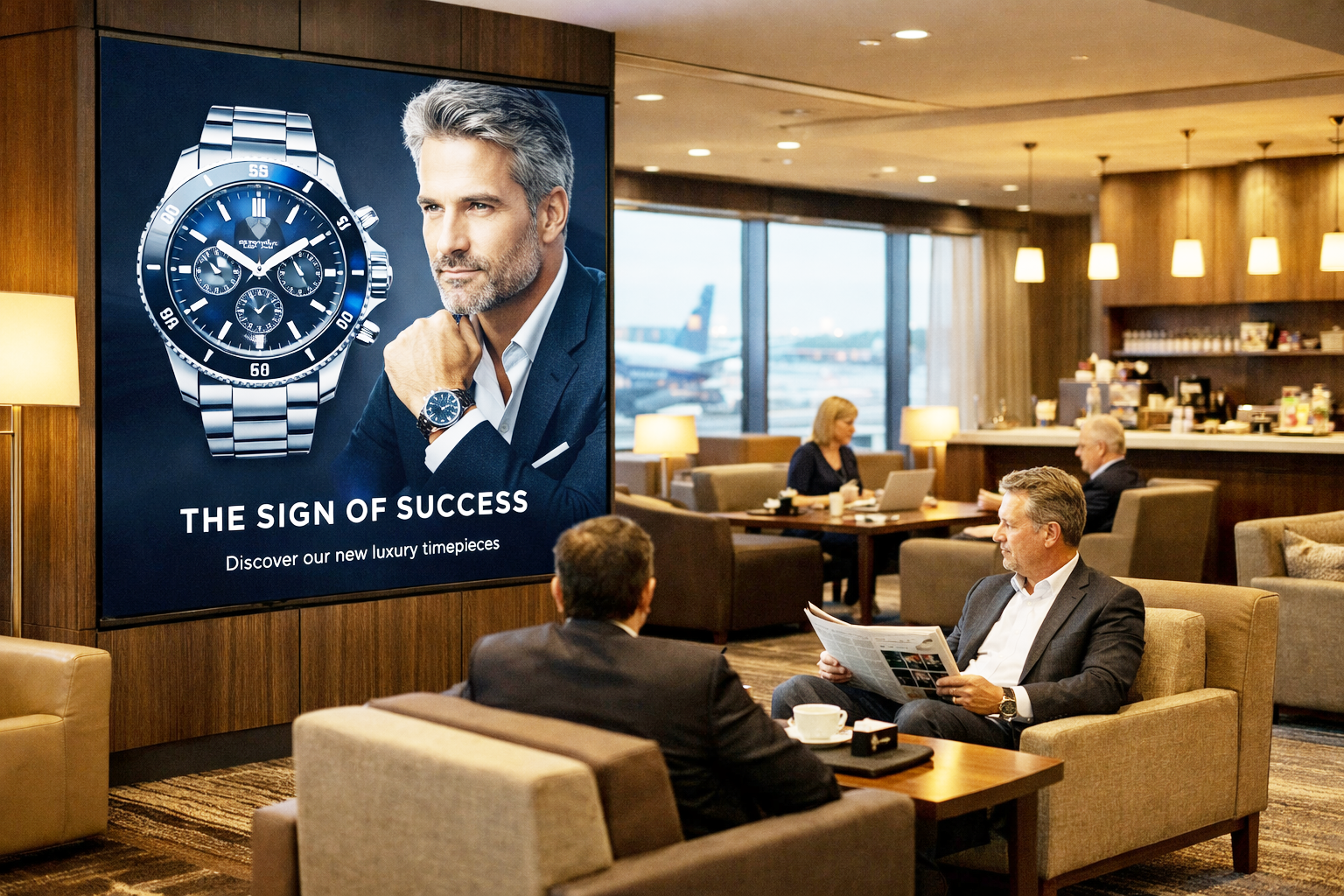
Poor Placement and Delays Affect Airport Campaigns
We help you move faster, access better inventory, and get it right now.
Talk to an ExpertFinal Strategic Verdict
Chicago Midway International Airport is the most commercially undervalued airport in the United States for a specific class of advertiser — and that class is larger and more strategically important than the national media planning consensus currently recognises. MDW delivers twenty million domestic passengers per year through a compact, high-density terminal that structurally amplifies advertising frequency, serving an audience defined by the Midwest's working-wealth professional class, the nation's most commercially active urban Latino economy, and a sports and family leisure culture that produces predictable, recurring, and brand-loyal consumer behaviour at consistent volume across the calendar year. The airport does not deliver private jet passengers or global investment bankers — it delivers the manufacturing managers who run America's logistics infrastructure, the Mexican-American small business owners who are building Chicago's economic future, the healthcare and government professionals who form the backbone of the Midwest's institutional economy, and twenty million families who travel with brand preferences formed and reinforced through frequency. For financial services, automotive, insurance, telecommunications, retail banking, and Latino-market consumer brands, MDW is not the alternative to O'Hare — it is the better channel, delivering the right audience at higher frequency, lower competitive pressure, and superior cost efficiency. Masscom Global provides the placement access, bilingual creative intelligence, and execution capability to activate this audience fully — reaching Chicago's working-wealth and Latino professional traveller from MDW's gates to every destination they fly to across the 140 countries Masscom operates in globally.
About Masscom Global
Masscom Global is a premium international airport advertising and media buying agency operating across 140 countries. With deep expertise in airport OOH, premium publications, and high-net-worth audience targeting, Masscom helps brands reach the world's most valuable travellers at the moments that matter most. For advertising packages, media rates, and campaign planning at Chicago Midway International Airport and airports across the globe, contact Masscom Global today.
Frequently Asked Questions
How much does airport advertising cost at Chicago Midway International Airport? Advertising costs at MDW vary based on media format, terminal placement, campaign duration, and the audience windows being targeted — summer domestic leisure peak, holiday travel concentration, and sports event micro-surge periods carry distinct rate structures reflecting the audience density those windows deliver. Masscom Global provides detailed rate cards and tailored media packages calibrated to your category, budget, commercial objectives, and whether you are activating English-language, Spanish-language, or bilingual creative strategies. Contact Masscom for current pricing and availability.
Who are the passengers at Chicago Midway International Airport? MDW serves a layered domestic audience concentrated in four commercially distinct segments: Midwest working-wealth and middle-professional travellers flying Southwest Airlines' domestic network; manufacturing, logistics, and supply chain management professionals from the Joliet-Bolingbrook industrial corridor and Chicago's South Side employment base; Latino professional, small business owner, and transnational community travellers from Chicago's Southwest Side — one of the most economically active Latino urban corridors in the United States; and family leisure and sports tourism travellers accessing Chicago's cultural, culinary, and sports entertainment ecosystem. Together these segments produce a passenger profile characterised by high frequency, strong brand loyalty, and significant aggregate consumer purchasing power across financial services, automotive, insurance, and family consumer categories.
Is Chicago Midway International Airport good for luxury brand advertising? MDW is the right Chicago airport for mainstream-premium and working-wealth luxury categories — automotive brands in the Ford, GM, Toyota, Honda, and entry-luxury tier; financial products oriented toward household wealth accumulation and protection; and premium consumer goods in the spirits, food, and lifestyle categories that resonate with Midwest working-wealth and Latino professional cultural identities. Ultra-luxury fashion, private banking, and global investment product brands will find MDW's audience profile insufficiently concentrated in the ultra-HNI segment to justify investment at airport media rates — for those categories, O'Hare's international terminal is the correct Chicago channel. For brands whose primary market is the American working-wealth professional rather than the global corporate elite, MDW consistently outperforms O'Hare on audience volume, frequency efficiency, and cost per targeted impression.
What is the best airport in Chicago to reach the Latino market? MDW is definitively the correct Chicago airport for brands with a Latino market strategy. The airport's geographic positioning at the heart of Chicago's Southwest Side — the densest Mexican-American and broader Latino urban corridor in the Midwest — combined with the transnational Mexico travel routes operating through the terminal, produces a concentration of Latino professional, small business owner, and community travellers that O'Hare's dispersed, international-hub character cannot replicate. For financial services, telecommunications, insurance, remittance products, automotive, and consumer brands seeking to build or deepen their Chicago Latino market presence, MDW is the primary airport media channel — and Masscom Global provides the bilingual creative capability and cultural intelligence to activate it effectively.
What is the best time to advertise at Chicago Midway International Airport? The two highest absolute-volume advertising windows at MDW are the summer domestic peak from May through August and the holiday travel concentration from late November through January. Within these windows, specific event-driven micro-surges — White Sox home games, Lollapalooza in August, the Chicago Marathon in October, and St. Patrick's Day in March — deliver concentrated, predictable, and audience-specific commercial opportunities for brands calibrated to those events. For financial services, insurance, and automotive brands seeking year-round frequency accumulation among MDW's repeat Southwest Airlines business traveller base, sustained campaign presence across the full calendar outperforms peak-only investment. Masscom structures MDW campaigns to capture both peak volume intensity and year-round frequency efficiency simultaneously.
Can international real estate developers advertise at Chicago Midway International Airport? Yes, with the right market alignment. International real estate developers with product in Mexico — particularly Jalisco, the Riviera Maya, and Los Cabos — will find MDW a highly relevant channel for reaching Chicago's large and economically active Mexican-American property buying community, whose outbound investment in Mexican real estate is multigenerational, family-network-driven, and persistent across economic cycles. Domestic real estate developers in Florida (Naples, Sarasota, Fort Lauderdale) and Arizona (Scottsdale, Phoenix) will find MDW's Midwest working-wealth professional audience actively seeking warm-weather second-home and retirement property options in markets their Southwest network directly serves. Developers whose product targets ultra-HNI buyers in European or Asian markets will find insufficient audience alignment at MDW and should direct their Chicago airport investment to O'Hare.
Which brands should not advertise at Chicago Midway International Airport? Ultra-luxury fashion, private banking, and global institutional investment brands are misaligned with MDW's working-wealth and Latino professional audience concentration — the ultra-HNI audience these categories require is primarily routed through O'Hare's international and United hub terminals. Enterprise software and global financial infrastructure brands seeking senior C-suite international executive audiences will find insufficient seniority density at MDW for the investment to generate commercial returns. International destination tourism marketing for non-Mexico, non-Caribbean destinations will find negligible conversion among an audience whose outbound leisure patterns are domestically concentrated through the Southwest network.
How does Masscom Global help brands advertise at Chicago Midway International Airport? Masscom Global delivers end-to-end airport advertising services at MDW, from audience intelligence and strategic planning through media placement, creative execution, and performance measurement — including bilingual English and Spanish campaign architecture for brands activating the Latino market opportunity that MDW uniquely concentrates. Our team combines deep knowledge of MDW's terminal structure, Southwest-dominated passenger behaviour, dual-peak seasonal calendar, and Latino audience commercial dynamics with the global buying capability of an agency operating across 140 countries. For brands seeking to activate at Chicago Midway as a standalone campaign or as part of a coordinated Chicago dual-airport or national strategy, Masscom is the expert partner to make it happen.