




Airport at a Glance
| Field | Detail |
|---|---|
| Airport | Suvarnabhumi International Airport |
| IATA Code | BKK |
| Country | Thailand |
| City | Bangkok (Samut Prakan Province, 30 km east of city centre) |
| Annual Passengers | 62.2 million (2024); +17.59% YoY; 23rd busiest globally |
| Primary Audience | Inbound premium leisure and cultural tourists, Thai HNWI and business executives, regional transit passengers, wellness and medical tourism visitors, outbound Thai travellers |
| Peak Advertising Season | High season (November to March), Songkran (April), summer European and Chinese Golden Week (October) |
| Audience Tier | Tier 1 |
| Best Fit Categories | Luxury hospitality and resort experiences, international real estate, wellness and medical tourism, premium automotive, luxury goods, financial services, international education |
Bangkok Suvarnabhumi Airport achieved three commercially significant distinctions in 2024 that no other airport in Southeast Asia can claim simultaneously. It is served by more airlines than any other airport in the world — 113 as of 2025, ranking first globally by Brilliant Maps. It ranked seventh globally for hub connectivity potential and ninth for overall air connectivity in a joint ACI Asia-Pacific and PwC assessment, ahead of airports three times its size in passenger volume. And it processed 62.2 million passengers in 2024 — up 17.59% year-on-year — through a newly commissioned third runway that expanded hourly flight capacity from 68 to 94 operations, positioning BKK for a decade of accelerating growth toward the 120 million passenger target in AOT's updated master plan.
Bangkok's commercial gravity as an advertising environment is best understood through two complementary lenses. Thailand's inbound tourism generated 1.8 trillion baht in revenue in 2024 from 35.55 million international arrivals — a figure that represents roughly 12 to 18% of national GDP when indirect contributions are included. Bangkok alone generated 940 billion baht in tourism revenue in 2024, the highest of any Thai city. Simultaneously, Thailand's luxury real estate market reached $71.27 billion in total residential value in 2024, with branded residences in Sukhumvit and Silom attracting Chinese, European, and Middle Eastern HNWI buyers whose average investment profile is expanding every year. The Thailand Privilege Card long-term residency programme surpassed 30,000 holders and continues to grow, signalling a structured global HNWI inflow into a country whose combination of climate, cuisine, culture, cost of living, and connectivity makes it uniquely attractive as an Asian lifestyle and investment base. For advertisers, every one of these audiences enters and exits Thailand through BKK's gates.
Advertising Value Snapshot
- Passenger scale: 62.2 million in 2024, up 17.59% year-on-year; 23rd busiest globally; 20th busiest in Asia; world's highest number of operating airlines (113 as of 2025); third runway operational from 1 November 2024, lifting hourly capacity from 68 to 94 flights; FY2026 target of 67.7 million passengers; East Expansion project underway targeting 80 million capacity by 2030; South Terminal and fourth runway planned to reach 120 million total capacity
- Traveller type: Inbound premium leisure tourists (35.55 million to Thailand in 2024); Thai HNWI and business executives; regional Southeast Asian transit passengers; wellness, medical, and cosmetic tourism visitors; Chinese, Indian, Russian, and European holidaymakers; Middle Eastern luxury travellers; long-term foreign residents and Thailand Privilege Card holders
- Airport classification: Tier 1 — Thailand's primary international gateway; 7th globally for hub connectivity potential (ACI/PwC 2024); highest number of airlines globally (113); SAT-1 satellite terminal (UNESCO Prix Versailles award for architecture 2024); ICAO Category 1 restored for US flight operations in 2025
- Commercial positioning: Bangkok was the world's most-visited city in 2023 with 22.78 million city visitors (Mastercard GDCI) and consistently ranks among the top 3 globally; tourism contributes 12–18% of Thai GDP; luxury property market $71.27 billion in 2024; Thailand Privilege Card holders exceed 30,000; luxury goods stores in Thailand and Southeast Asia grew 124% in 2024
- Wealth corridor signal: BKK anchors Bangkok's most commercially productive corridors to London, Frankfurt, Doha, Dubai, Singapore, Tokyo, Hong Kong, Mumbai, and Sydney — routes that carry both the world's most avid inbound leisure and cultural spenders and Thailand's outbound HNWI and corporate travellers
- Advertising opportunity: Masscom Global provides brands with the placement intelligence and local market expertise to intercept BKK's remarkable convergence of inbound luxury tourists, regional transit passengers, and Thailand's own growing HNWI class at the exact moment they engage with the leisure and investment decisions that Thailand uniquely inspires
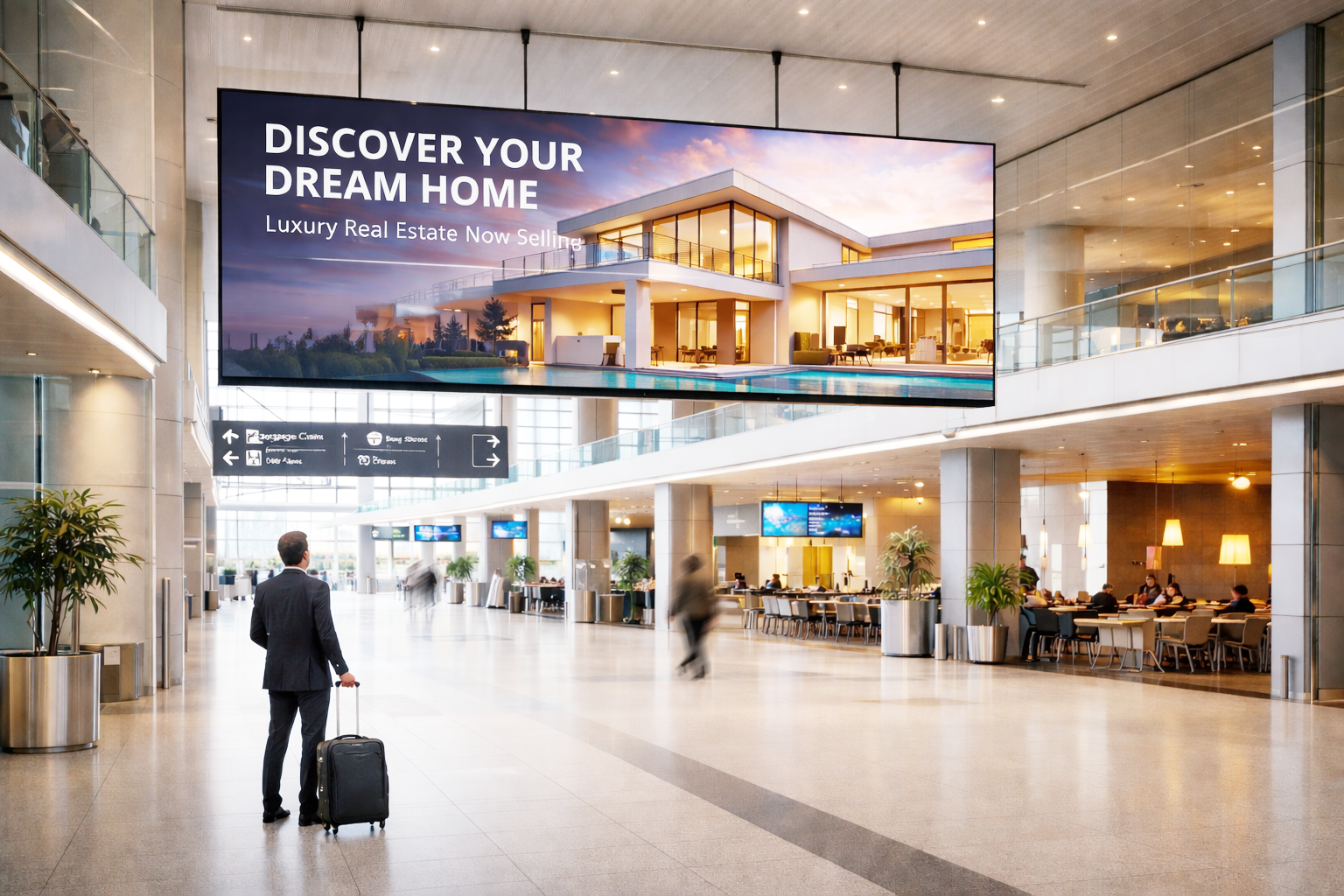
Airport Advertising is Complex to Get Right
We help you execute faster, with proven results and local insight most planners lack starting now.
Talk to an ExpertCatchment Area and Economic Drivers
Top 10 Cities within 150 km — Marketer Intelligence
- Bangkok (Silom, Sukhumvit, Sathorn, Ratchadamri): Thailand's capital and Southeast Asia's most visited city; home to the Bangkok Stock Exchange, 998+ companies with market listings, Thailand's major banking and insurance sector, and the luxury retail ecosystem of Siam Paragon, Central Embassy, ICONSIAM, and EmQuartier; Bangkok generated 940 billion baht in tourism revenue in 2024 alone and is undergoing a premium residential transformation with Aman Bangkok, Porsche Tower Residences, and Scope Langsuan redefining ultra-luxury urban living for the HNWI and branded-residence buyer community
- Samut Prakan (adjacent to BKK): The province directly surrounding the airport, home to significant industrial manufacturing including electronics, automotive components, and petrochemicals; its professional and executive community accesses domestic and international connections through BKK daily; the Bang Na district connecting Samut Prakan to Bangkok is the gateway corridor to the Eastern Economic Corridor
- Chonburi (Eastern Economic Corridor — 80 km): The industrial heart of Thailand's EEC — home to WHA industrial estates, automotive manufacturing (Toyota, Honda, Ford assembly and components), electronics (Hana Microelectronics, Western Digital), and growing EV battery production; Chonburi's international manufacturing executives are a consistent premium B2B travel audience at BKK, accessing Singapore, Japan, and South Korea on business travel
- Rayong (EEC — 120 km): Thailand's petrochemical and energy manufacturing centre, home to PTT Group's downstream operations and a growing EV and renewable energy cluster; Rayong's energy sector executives and industrial professionals access global connections through BKK for commodity trading, energy project financing, and international partnerships
- Pattaya (Chonburi Province — 100 km): A major international tourism destination in its own right, generating significant premium leisure and property investment traffic through BKK; Pattaya's growing high-rise condominium and luxury villa market attracts Russian, Chinese, and European investors who arrive through BKK for property viewings and lifestyle visits
- Nakhon Ratchasima (Korat — 250 km): Thailand's largest northeastern city and gateway to the Isan region; its growing commercial, agricultural, and logistics sector generates business travel through BKK; the planned high-speed rail connection from Bangkok to Korat will further integrate this catchment
- Samut Sakhon (45 km southwest): A major seafood processing and light industrial city whose trade-oriented business community connects through BKK; Thailand's largest shrimp and seafood export hub generates consistent cargo and executive business travel
- Pathum Thani (45 km north): A growing technology and industrial park city north of Bangkok, home to several science parks and technology manufacturing facilities serving Bangkok's northern industrial belt; its professional community accesses international connections through BKK
- Nonthaburi (20 km northwest): Part of the greater Bangkok metropolitan area, home to government offices, hospitals, and a growing middle-class and professional community; Nonthaburi's expanding BTS and MRT connections make BKK increasingly accessible for its professional travel audience
- Ayutthaya (80 km north): Thailand's ancient capital and a UNESCO World Heritage Site; Ayutthaya's premium cultural tourism and heritage hotel ecosystem — including the Sala Ayutthaya and the historic river lodge properties — draws premium inbound tourists who connect through BKK, representing an important luxury cultural tourism advertising audience
NRI and Diaspora Intelligence
BKK's diaspora and resident foreigner dynamic is commercially distinct from any other airport in Southeast Asia. Thailand hosts one of the region's largest and most commercially active expatriate communities — Chinese, Japanese, European, American, and Middle Eastern professionals, retirees, and digital nomads whose Bangkok residency spans everything from regional corporate postings to permanent lifestyle relocation. The Chinese investor community — which has dominated Thai condominium purchases for six consecutive years — continues to arrive through BKK, particularly from Tier 2 Chinese cities whose direct Bangkok connections via BKK form part of a property investment and lifestyle scouting agenda. The Russia-Ukraine conflict has made Thailand — and Bangkok specifically — one of the primary long-stay destinations for Russian nationals, with 1.72 million arrivals in 2024. The Indian professional and business community, contributing 2.12 million arrivals in 2024 and growing as the fastest-recovering major source market, reflects India's deepening business relationship with ASEAN through Bangkok as its regional hub. The global digital nomad and remote work community — which disproportionately selects Bangkok for its infrastructure, cost of living, and connectivity — generates a younger, digitally active HNWI-adjacent audience whose premium lifestyle spending within Thailand is commercially significant for luxury goods, premium dining, and real estate brands.
Economic Importance
Thailand's economy depends on tourism to a degree matched by very few countries in the G20 — the sector contributes between 12% and 18% of GDP when direct and indirect effects are included, a share that makes BKK's passenger performance directly correlated with national economic health. Bangkok alone generated 940 billion baht in 2024 tourism revenue — larger than the entire tourism economy of many comparable nations. The Eastern Economic Corridor, the Thai government's flagship industrial development zone connecting the three provinces of Chonburi, Rayong, and Chachoengsao, has attracted over $45 billion in committed investment and is developing a new industrial base in automotive EVs, aviation MRO, digital industry, and medical technology that complements BKK's passenger connectivity. Thailand's luxury property market reached $71.27 billion in total residential value in 2024 — projected to grow to $88 billion by 2030 — with Bangkok and Phuket as the two primary driver markets attracting global HNWI capital into branded residences, ultra-luxury condominiums, and premium resort villas.
Business and Industrial Ecosystem
- Eastern Economic Corridor (EEC) — automotive, petrochemical, and EV industrial hub: The EEC's $45+ billion investment pipeline spans automotive manufacturing (Toyota, Honda, Ford, and new EV entrants), petrochemicals (PTT, IRPC), electronics (Western Digital, Hana), aviation MRO (Thai Airways, BKK's cargo and technical services), and medical technology; the international executives managing these industrial relationships travel through BKK on Japan, South Korea, Singapore, and European routes for supplier management, financing, and technology partnership
- Financial sector and regional headquarters: Bangkok hosts the regional headquarters of numerous European and American financial institutions, consulting firms, and industrial groups managing their ASEAN exposure from a Thai base; Standard Chartered, HSBC, Citi, and dozens of European banks maintain Bangkok commercial operations; McKinsey, BCG, and the major audit firms serve their Thai and ASEAN corporate clients from Bangkok
- Tourism and hospitality industry: Thailand's tourism industry is itself one of Southeast Asia's largest commercial ecosystems — the Dusit Thani, Minor Hotels, Centara, and the global luxury operators (Four Seasons, Aman, Rosewood, Mandarin Oriental) who base their ASEAN leadership in Bangkok generate significant premium corporate travel through BKK; the industry's annual conventions (ITB Asia, World Travel Market connections) bring international tourism buyers through BKK annually
- Medical and wellness tourism industry: Thailand's medical tourism sector — centred on Bangkok hospitals including Bumrungrad International, Bangkok Hospital, and Samitivej — attracts international patients from the Middle East, Cambodia, Myanmar, Vietnam, and further afield; Bumrungrad International alone treats patients from over 190 countries annually; the growth of wellness tourism and longevity medicine in Bangkok is creating a new premium health-oriented inbound travel segment at BKK
Passenger Intent — Business Segment
The BKK business traveller is typically operating in one of three commercial contexts. The EEC industrial executive manages a manufacturing relationship connecting Bangkok's eastern seaboard to the global supply chains of Japan, South Korea, or Europe — their travel is regular, planned, and consistent through BKK's international terminal. The financial and consulting professional manages relationships across Thailand's emerging market corporate sector — their travel connects Bangkok to Singapore, Hong Kong, and London on regular working trips. The hospitality and tourism industry professional manages the commercial infrastructure of Thailand's most important economic sector — their travel connects Bangkok to the source markets in China, Japan, South Korea, Russia, and Europe from which 35 million annual visitors originate. All three audiences are present in BKK's departure and arrival halls daily.
Tourism and Premium Travel Drivers
- Bangkok as Asia's most-visited city: Bangkok ranked first globally in Mastercard's Global Destination Cities Index with 22.78 million visitors, ahead of Paris and London; the city's combination of Michelin-starred and hawker street food, traditional Buddhist temples alongside ultra-modern luxury malls, a world-class nightlife and entertainment ecosystem, and extraordinary value-for-money luxury hospitality makes it uniquely appealing to every premium traveller archetype — from the luxury spa retreat seeker to the cultural heritage explorer to the premium gastronomy enthusiast; visitors arrive through BKK with high spending intent and typically remain for five or more nights
- Thailand's premium resort and island circuit: The most commercially powerful premium tourism corridor in Southeast Asia runs through BKK as its primary gateway — the private villa visitor to Phuket, the luxury resort guest at Koh Samui, the luxury trekking tourist in Chiang Mai, and the wellness retreat guest at the Hua Hin resort cluster all arrive and depart through BKK; this inbound premium leisure audience travels with pre-committed accommodation spend at four and five-star resorts and generates high retail, duty-free, and experience spending within the airport
- Medical and wellness tourism: Bumrungrad International Hospital, Bangkok Hospital, and Samitivej attract high-net-worth patients from the Middle East, CLMV countries, and further afield who seek world-class medical treatment at pricing significantly below Western equivalents; Thailand's cosmetic surgery and dermatology reputation draws additional premium medical visitors who plan multi-week Bangkok stays combining treatment with luxury lifestyle; this audience has amongst the highest per-visit spend of any inbound segment at BKK
- Cultural heritage and experiential tourism: The Grand Palace, Wat Pho, Ayutthaya historical parks, and the premium river experience of the Chao Phraya corridor attract the educated, premium-spending heritage tourist who specifically selects Bangkok over regional alternatives because of the depth of Thailand's cultural richness; boutique heritage hotels, premium long-tail boat excursions, and temple-hopping itineraries characterise this audience's Bangkok experience
- Songkran — Thai New Year festival tourism (April): Thailand's most iconic festival generates one of the year's highest inbound international tourism concentration windows; international visitors who plan their travel specifically to experience Songkran arrive through BKK with premium experiential spending intent; the festival is rapidly growing as a global bucket-list event, attracting visitors from Europe, Australia, and the Americas who had previously never considered a Thailand trip
- MICE tourism — Bangkok as Southeast Asia's conventions capital: Bangkok consistently ranks among Asia's top MICE destinations; the Queen Sirikit National Convention Centre, IMPACT Arena, and the Bitec convention centre collectively host hundreds of international conventions, trade shows, and incentive programmes annually; these events generate concentrated inbound professional audiences with above-average income and spending profiles through BKK during their convention windows
Passenger Intent — Tourism Segment
The premium inbound tourist arriving at BKK is entering what is almost certainly the most diverse high-value tourism proposition in Southeast Asia. Unlike destinations that attract visitors for a single reason — a beach, a theme park, a heritage site — Bangkok functions as a total tourism ecosystem that delivers cultural enrichment, gastronomic excellence, luxury retail, world-class spa and wellness, and premium nightlife in a single metropolitan context. The tourist who books a five-star Bangkok hotel at $300 per night is also planning to spend at EmQuartier's luxury retail floor, at a Michelin-starred restaurant, at Bumrungrad for a medical check-up, and at the Grand Palace. Their total Bangkok spend per trip is consistently among the highest of any Asian destination. Advertising in BKK's arrivals and departure environment reaches this audience before and after their highest-spend moments of the trip.
Travel Patterns and Seasonality
Peak seasons:
- High season — November to March: Thailand's most commercially dominant tourism period; dry season weather drives European, Middle Eastern, Australian, and East Asian leisure tourism at peak intensity; Christmas and New Year create the year's highest single inbound spike; luxury resort occupancy in Bangkok and Phuket routinely exceeds 90%; premium duty-free, luxury goods, and destination hospitality advertising achieves its highest conversion rates in this window
- Songkran — Thai New Year (April): A growing international tourism phenomenon; the traditional water festival now attracts significant international tourist arrivals from China, Japan, and ASEAN; Thai nationals travel domestically and return visits from the Thai diaspora create peak outbound and inbound flows simultaneously; the festival window is commercially significant for premium experiential and lifestyle brands
- Chinese Golden Week (October 1–7): Thailand's single highest-volume Chinese tourism inbound window; Bangkok accommodation searches increased 137% during China's Golden Week 2024 per Agoda; charter flight volumes surge approximately 25% above normal; luxury hotel and retail advertising performs at its annual peak
- Summer (June to August — European and global leisure peak): Thailand's wet season is increasingly manageable with better forecasting and infrastructure; European and Australian outbound summer holiday travel has made BKK's summer season commercially stronger than a decade ago; the MICE season picks up as corporate conferences occupy Bangkok's convention venues through this period
- Year-round for transit and regional travel: BKK's 113-airline network generates year-round regional transit volume that is structurally independent of seasonal patterns; the transit passenger routing through Bangkok between Europe and Australia, or between the Middle East and Southeast Asia, is a consistent daily commercial audience
Event-Driven Movement
- Songkran Thai New Year (April 13–15 and extended): The year's most culturally specific inbound tourism event and the largest domestic travel window for Thai nationals; premium experiential and lifestyle brands should build BKK advertising campaigns around the two-week window preceding and following Songkran
- Chinese Golden Week (October 1–7): Thailand's highest-density Chinese tourist inbound window; luxury retail, hotel, and duty-free advertising performs at peak Chinese consumer conversion
- Christmas and New Year (December 24 to January 2): The year's highest-volume inbound premium European, Australian, and Middle Eastern leisure tourism concentration; luxury resort, spa, and premium hospitality advertising achieves the year's highest dwell-time engagement and purchase intent conversion
- Queen's Cup and King's Cup Polo (May and December): Bangkok's premium polo and equestrian events draw a concentrated HNWI domestic and regional audience through BKK; premium automotive, luxury watches, and private banking advertising performs well around these windows
- Bangkok International Motor Show (March to April): One of Southeast Asia's largest automotive events, drawing 1.5 million visitors over two weeks; premium automotive advertising reaches peak commercial attention in the BKK pre-event window
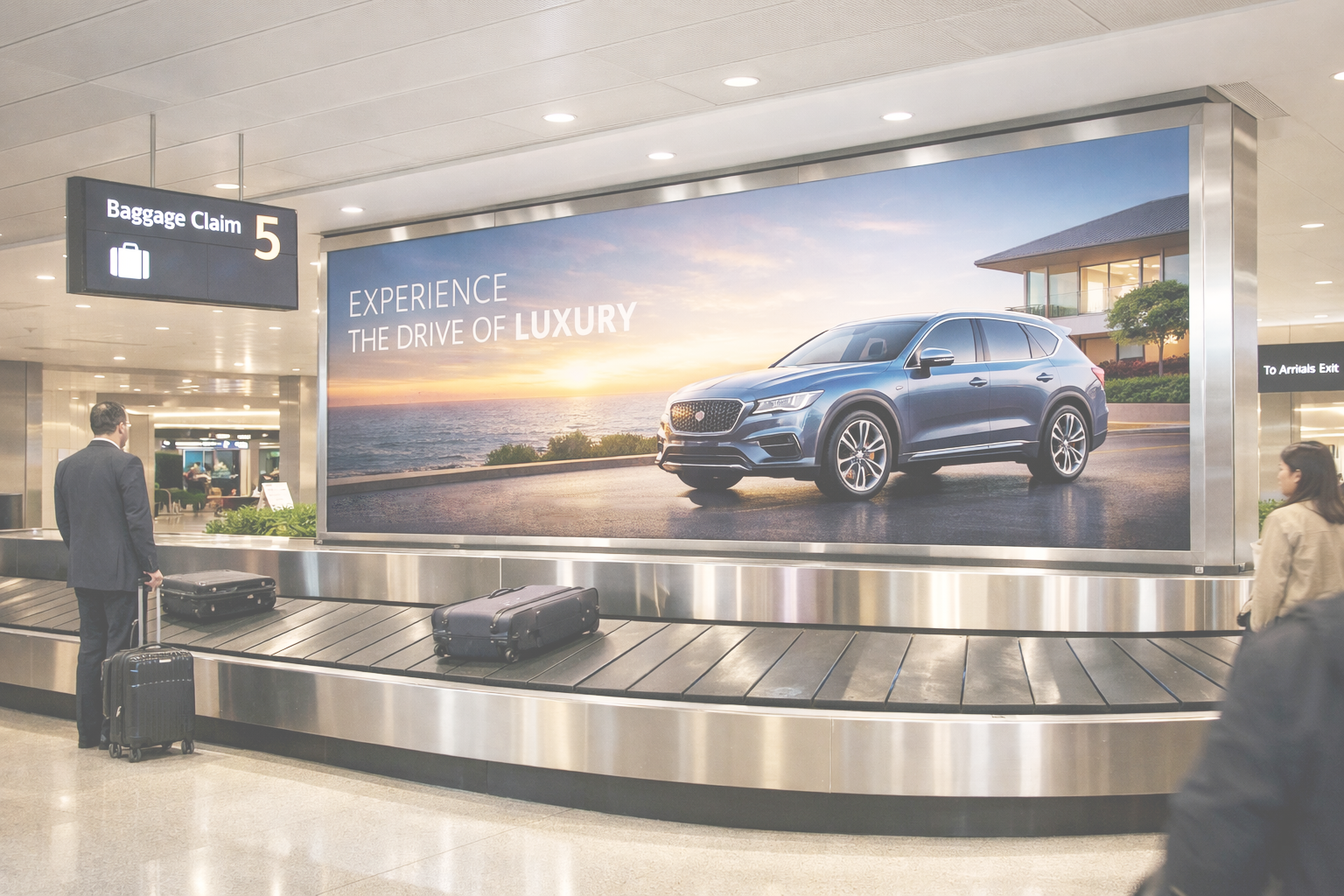
It’s Not Just Where You Advertise - It’s How Fast You Execute
We combine local insight with fast rollout to deliver results for you, now.
Talk to an ExpertAudience and Cultural Intelligence
Top 2 Languages
- Thai: The sole national language and the primary communication language of every Thai national at BKK — the 11 million Bangkok metropolitan residents, the outbound Thai professional and leisure traveller, and the domestic business executive; advertising in Thai at BKK is essential for the domestic audience; Thai consumer culture values personal relationships, aesthetic beauty, and face (saving dignity in social interactions) — advertising that is visually beautiful, personally respectful, and culturally appropriate to Thai social values consistently outperforms generic Southeast Asian creative adapted from other markets
- English: The universal business and tourism language at BKK, spoken across the Thai professional and business community, the full international inbound tourist audience, and every regional transit passenger; English-language advertising at BKK achieves comprehensive international reach across the airport's Chinese, Japanese, Indian, Russian, European, Middle Eastern, and Australasian passenger profile simultaneously; bilingual Thai-English creative maximises both domestic and international commercial reach
Major Traveller Nationalities
BKK's inbound international nationality profile in 2024 is led by China (6.7 million), Malaysia (4.93 million), India (2.12 million), South Korea (1.86 million), and Russia (1.72 million), followed by significant volumes from the UK, Germany, France, Japan, Taiwan, and Australia. The European market — contributing roughly 5–6 million visitors in 2024 — is particularly commercially relevant for luxury hospitality and retail given European travellers' higher average per-trip spend. The Indian market is the fastest-growing major source market globally for Thailand in 2024–2025, driven by direct route expansion, visa policy improvements, and Thailand's food, beach, and cultural appeal to Indian travellers; this audience is reaching Thailand predominantly through BKK and is emerging as a premium commercial segment with strong growth potential. The Middle Eastern market — UAE, Saudi Arabia, Kuwait, and Oman — sends premium leisure travellers to Thailand specifically for beach resort, wellness, and culinary experiences, with consistently high accommodation and experience spend profiles.
Religion — Advertiser Intelligence
- Buddhism (Theravada — approximately 93%): The dominant spiritual and cultural foundation of Thai life; the Buddhist calendar — with its major holidays of Visakha Bucha, Asanha Bucha, and Kathina — shapes the annual domestic travel and commercial calendar; Buddhist imagery, temple architecture, and spiritual symbolism are both culturally pervasive and commercially appropriate in Thai advertising contexts; brands that engage with Thai Buddhist cultural values authentically generate significantly stronger domestic audience resonance
- Islam (approximately 5%): A commercially significant minority concentrated in Thailand's five southernmost provinces and contributing to the growing halal tourism sector; BKK's connectivity to the Middle East and Malaysia means that Muslim travellers are a consistent segment; halal-certified hospitality, halal food, and modest fashion advertising finds a motivated audience in BKK's inbound Middle Eastern and Malaysian passenger flows
- Christianity and other faiths (approximately 2%): The expatriate Christian community, particularly concentrated in Bangkok's Sukhumvit and Sathorn districts, makes the Christmas and Easter windows commercially relevant for premium hospitality and gifting brands
Behavioral Insight
The inbound premium tourist at BKK arrives in a uniquely receptive commercial state. Thailand's combination of extraordinary value-for-money luxury — a Michelin-starred meal for less than the price of a casual restaurant in London, a five-star resort at 40% of the equivalent Singapore rate, world-class spa and wellness at a fraction of equivalent pricing in other major cities — creates an audience that is both aspirationally engaged and commercially active throughout their Thai journey. Research consistently shows that premium travellers to Thailand increase their actual spending beyond their pre-trip budget, because the experiential quality-to-price ratio exceeds their expectations. For advertisers, this "positive surprise effect" means that BKK's inbound audience is systematically more open to premium purchase decisions than their pre-departure mindset suggests — making the airport arrival environment one of the highest-conversion advertising moments in Southeast Asian aviation.
Outbound Wealth and Investment Intelligence
Thailand's outbound HNWI travel at BKK is driven by two distinct wealth communities. The Thai domestic HNWI — the executives of PTT Group, Central Group, Thai Beverage, Charoen Pokphand, and the major Thai banking conglomerates — travel internationally through BKK for business, education, and luxury leisure with increasing frequency and premium intent. Bangkok's 15 million metropolitan residents support a growing middle-class and HNWI tier whose international travel intensity has risen considerably since the pandemic. Simultaneously, the foreign HNWI base resident in Thailand — Chinese property investors, European digital nomads, Japanese retirees, and Middle Eastern lifestyle residents — increasingly uses BKK as their primary gateway for international capital deployment, European luxury goods purchasing, and education-related travel.
Outbound Real Estate and Investment Intelligence
Thailand's Thailand Privilege Card programme — surpassing 30,000 holders — is a direct proxy for the international HNWI base using BKK as their primary aviation gateway. Cardholders are predominantly high-income Europeans, Chinese, Japanese, Americans, and Gulf nationals who maintain Thai residency as a lifestyle and investment base. This community travels internationally from BKK for financial advisory meetings in Singapore and Hong Kong, luxury goods purchasing in Europe, and family visits to countries of origin. For financial services, real estate, and investment migration brands, BKK's premium departure environment represents access to this globally mobile HNWI community at its most commercially receptive — the moment of international departure when capital deployment and lifestyle decisions are actively in progress.
Medical Tourism and Wellness Investment
Thailand's medical tourism sector — particularly Bumrungrad International, which treats patients from 190+ countries annually — generates a unique inbound HNWI advertising opportunity at BKK. Medical travellers arriving for planned procedures at Bangkok's premium hospitals are typically in the upper-income quartile of Thailand's inbound visitors, planning multi-week stays combining treatment with luxury leisure, and arriving with specific product and service spending intent. Medical technology brands, pharmaceutical companies, wellness and longevity services, and premium insurance providers will find a concentrated, commercially motivated audience in BKK's arrivals environment that is specifically relevant for their category.
Outbound Education Investment
Thai HNWI families invest in international education in the UK, US, Australia, and Singapore at rates comparable to other affluent Southeast Asian markets. The Thai-British community — particularly strong given Thailand's long diplomatic and commercial relationship with the United Kingdom — generates consistent education corridor travel from BKK to London and Manchester. Australian universities draw significant Thai student enrolment. Singapore's proximity and top-ranked education system attract Thai families seeking international schooling without long-distance separation. For international education brands, BKK's outbound premium departure environment is a commercially relevant and underserved channel relative to its true Thai HNWI audience potential.
Airport Infrastructure and Premium Indicators
Terminals and Infrastructure
BKK operates from a single iconic terminal building designed by Helmut Jahn of Murphy/Jahn Architects — at 563,000 square metres, one of the world's most architecturally striking airports, recognisable by its glass and steel roof canopy spanning a main terminal divided into seven concourses (A through G). The SAT-1 Satellite Terminal opened fully in 2024 after partial opening in September 2023 — a 251,400 sqm midfield concourse with 28 gates (eight A380-capable), connected to the main terminal via a three-minute underground automated people mover; SAT-1 received the 2024 UNESCO Prix Versailles award for architectural excellence. The third runway, opened 1 November 2024, raised hourly flight capacity from 68 to 94 movements — a 38% operational capacity increase in a single month. The East Expansion project is underway, scheduled for 2030 completion, adding capacity to reach 80 million annual passengers. The South Terminal (55 million capacity) and fourth runway are in planning, targeting 120 million total capacity in the following decade.
Premium Indicators
- World's highest number of operating airlines (113 as of 2025): BKK's commercial distinction from every other airport in Asia and globally is not its passenger scale but its extraordinary airline diversity; 113 airlines serving 291 destinations in 48 countries means that virtually every inbound international premium tourist to Thailand — Chinese, Indian, Russian, European, Middle Eastern, Australasian — passes through a BKK terminal equipped with their home-language advertising and retail environment; no competitor in Southeast Asia approaches this airline breadth
- 7th globally for hub connectivity potential (ACI/PwC 2024): This institutional ranking — placing BKK ahead of airports with significantly higher passenger volumes — is commercially significant because it confirms that BKK's connection network is structured for global transit, not just point-to-point traffic; the transit passenger routing through Bangkok between Europe and Australia, or the Middle East and Southeast Asia, has extended commercial dwell time and specific purchase categories (premium food, electronics, beauty) that respond well to targeted advertising
- ICAO Category 1 (CAT1) safety restoration in 2025: Thailand's FAA safety rating upgraded to CAT1 for the first time in a decade, clearing the path for direct Thai carrier services to the United States; United Airlines' new Las Vegas–Hong Kong–Bangkok route signals new North American connectivity; direct US-Bangkok connectivity will materially increase the premium American leisure tourist and business traveller volume at BKK through 2025–2030
- SAT-1 — UNESCO Prix Versailles 2024 winner: The architectural recognition of BKK's satellite terminal as one of the world's most beautiful airport structures creates a premium brand association environment unique in Southeast Asia; advertising within and adjacent to SAT-1's architecturally distinctive spaces carries a quality signal that elevates campaign creative performance
Forward-Looking Signal
BKK's growth trajectory is the most structurally well-supported of any major Southeast Asian airport. The East Expansion's 2030 completion will add 15 million passenger capacity, resolving the persistent congestion that operated at approximately 138% of the original 45-million-passenger design during the 2023 recovery. The South Terminal and fourth runway planning — targeting 120 million total capacity — positions BKK alongside Singapore Changi and Kuala Lumpur as Southeast Asia's three dominant mega-hubs. Thailand's government has declared "Amazing Thailand Grand Tourism and Sports Year 2025," committing to 36–39 million international visitors and 1.98–2.23 trillion baht in tourism revenue — providing a structural tailwind for BKK passenger growth through the year. The EEC's $45+ billion investment pipeline and its aviation component — including the planned link between BKK, U-Tapao, and Don Mueang as a tri-airport Bangkok system — positions BKK at the centre of a Southeast Asian industrial and tourism ecosystem that is expanding on every dimension simultaneously.
Airline and Route Intelligence
Top Airlines
Thai Airways International (full-service hub carrier), Bangkok Airways, Thai AirAsia (limited BKK presence — primarily DMK), Emirates, Qatar Airways, Singapore Airlines, Cathay Pacific, Air France, British Airways, Lufthansa, KLM, Swiss, Austrian Airlines, Turkish Airlines, Japan Airlines, All Nippon Airways, China Southern, China Eastern, Air China, Hainan Airlines, Korean Air, Asiana, Etihad Airways, Air India, IndiGo, Malaysia Airlines, Vietnam Airlines, Garuda Indonesia, Saudi Arabian Airlines, flydubai, Air Arabia
Key International Routes
- London Heathrow (Thai Airways, British Airways — Bangkok's primary bilateral with the UK)
- Frankfurt (Thai Airways, Lufthansa, Condor)
- Paris Charles de Gaulle (Air France, Thai Airways — Bangkok's revival of European corridors)
- Zurich (Edelweiss, Swiss)
- Amsterdam (KLM)
- Rome (ITA Airways, Thai Airways)
- Vienna (Austrian Airlines)
- Copenhagen, Stockholm, Helsinki (charter and scheduled Scandinavian routes)
- Dubai (Emirates, flydubai — high frequency, premium leisure corridor)
- Doha (Qatar Airways — hub-to-hub transit gateway)
- Abu Dhabi (Etihad)
- Singapore (Singapore Airlines, Thai Airways, Scoot — highest frequency bilateral)
- Tokyo Narita and Haneda (Japan Airlines, ANA, Thai Airways)
- Seoul Incheon (Korean Air, Asiana)
- Hong Kong (Cathay Pacific — critical transit relay)
- Beijing, Shanghai, Guangzhou, and 30+ Chinese cities (multiple Chinese carriers)
- Mumbai, Delhi, and 15+ Indian cities (Air India, IndiGo, Thai Airways — fastest-growing corridor)
- Sydney and Melbourne (Qantas, Thai Airways)
- Las Vegas via Hong Kong (United Airlines — new route signalling US market recovery)
Domestic Connectivity
BKK serves as Thailand's primary domestic aviation hub for full-service carrier passengers. Thai Airways and Bangkok Airways operate domestic connections to Chiang Mai, Phuket, Koh Samui, Hat Yai, Krabi, Surat Thani, and Chiang Rai from BKK's domestic concourses (A and B). Low-cost domestic traffic is concentrated at Don Mueang Airport (DMK); BKK's domestic presence is specifically premium and full-service, meaning that the domestic passenger connecting through BKK is structurally weighted toward the higher-income professional and leisure traveller.
Wealth Corridor Signal
BKK's airline network mirrors Thailand's dual commercial identity — a leisure destination of extraordinary global appeal and a transit gateway of increasing strategic importance for Southeast Asian hub connectivity. The Emirates-Dubai route is BKK's highest-frequency premium corridor, carrying both inbound Middle Eastern luxury tourists and outbound Thai and regional passengers transiting through Dubai to Europe; the premium cabin passengers on this route are among the highest per-seat revenue contributors at BKK. The Qatar Airways-Doha connection anchors the Gulf carrier network's Bangkok position, reinforcing BKK's hub connectivity to the 4–6 billion passengers in the Qatar Airways global network. The recovering China routes — growing 93% year-on-year in 2024 — signal the return of the market that drove Thailand's pre-pandemic tourism peak of 11 million Chinese visitors annually; full China route recovery will be BKK's single largest traffic tailwind through 2026–2028. The Indian corridor expansion reflects India's emergence as Thailand's fastest-growing source market — a commercially significant signal for brands targeting the premium Indian outbound traveller.
Media Environment at the Airport
- BKK's single-terminal, multi-concourse structure creates a concentrated advertising canvas of exceptional scale — the main terminal's arrivals and departures halls, the seven concourses spanning international and domestic zones, and the newly opened SAT-1 satellite terminal collectively deliver one of Southeast Asia's largest physically continuous advertising environments
- The airport's record 113 airlines create an exceptionally diverse nationality and language mix in the terminal environment daily, making bilingual Thai-English creative the most commercially efficient format; international brand campaigns in English achieve genuine pan-global audience reach, while Thai-language creative maximises domestic HNWI and professional conversion
- The SAT-1 satellite terminal — winner of the 2024 UNESCO Prix Versailles architectural award — provides a premium brand association environment where advertising appears within one of the world's most architecturally celebrated airport structures; the three-minute underground APM connecting SAT-1 to the main terminal creates a captive, high-attention dwell moment that is commercially productive for both visual and digital media formats
- Masscom Global structures BKK campaigns with Thai-market cultural advisory, international creative translation, seasonal timing calibrated to Thailand's high season, Songkran, Golden Week, and MICE event calendar, and terminal-specific placement strategy across the main terminal, international concourses, and SAT-1
Strategic Advertising Fit
Best Fit
- Luxury hospitality, resort experiences, and destination travel: BKK is the pre-eminent advertising channel for luxury hospitality brands in Southeast Asia; every premium inbound tourist to Thailand passes through BKK's terminal, and their accommodation decisions for Phuket, Koh Samui, Chiang Mai, and Bangkok itself are either already made or actively being finalised at the time of arrival; post-stay departure advertising captures guests who are committed advocates and whose recommendations drive future bookings in their home markets
- International real estate: Bangkok and Phuket are Southeast Asia's most internationally active luxury real estate markets; China, Russia, Europe, the Middle East, and Japan all contribute active buyer flows through BKK; the Thailand Privilege Card residency pathway and branded residence development pipeline make BKK one of Asia's most commercially relevant international property advertising environments
- Wellness, medical, and premium healthcare brands: Thailand's medical tourism leadership — Bumrungrad treating patients from 190 countries — creates a structurally unique high-net-worth inbound audience at BKK for whom healthcare, wellness, longevity, and premium insurance brands are directly commercially relevant; this audience segment is among BKK's highest per-visit spenders
- Luxury goods and duty-free: BKK's 35 million inbound tourists, combined with Thailand's 124% luxury goods store growth in 2024, creates a premium retail conversion environment; the outbound Thai traveller departing for Europe and Japan carries a specific luxury goods shopping list that responds to pre-departure advertising; the inbound Chinese and Indian visitor arrives with established Thai shopping intent (duty-free cosmetics, jewellery, silk, premium food)
- Premium automotive: Thailand's automotive sector — both as a consumer market for premium brands and as the manufacturing heartland of Southeast Asian vehicle production — creates a dual premium automotive advertising opportunity at BKK; Thai HNWI consumers and EEC industrial executives are both commercially active automotive audiences
- International education: Thai HNWI families with children in UK, Australian, and US universities travel through BKK for parent visits and school planning; international education brands will find a motivated and financially committed parent audience in BKK's premium departure environment
- Financial services and wealth management: The Thailand Privilege Card HNWI community, the growing Thai corporate executive class, and the Chinese and European property investor resident base collectively create a commercially active private banking and financial advisory audience at BKK
Brand Alignment at a Glance
| Category | Fit |
|---|---|
| Luxury hospitality and resort experiences | Exceptional |
| International real estate — Thailand and global | Exceptional |
| Wellness, medical tourism, and premium healthcare | Exceptional |
| Luxury goods and premium duty-free | Strong |
| Premium automotive | Strong |
| International education | Strong |
| Financial services and wealth management | Strong |
| Mass-market consumer goods | Poor fit |
Who Should Not Advertise Here
- Value and budget travel brands: BKK's premium terminal environment and high-income international audience make value-positioning advertising commercially inefficient; budget travel messaging is better placed at Don Mueang Airport (DMK), which serves the LCC community
- Brands without Southeast Asia or Thai market presence: The Thai consumer and the inbound premium tourist who passes through BKK will evaluate any brand they encounter against its local availability, service quality, and cultural relevance; brands with no Thai or regional market investment will create awareness that cannot convert without supporting infrastructure
- Brands insensitive to Thai cultural values: Thai consumer culture's emphasis on aesthetic beauty, interpersonal respect, Buddhist cultural references, and "face" (social dignity) means that advertising creative that appears aggressive, disrespectful, or culturally generic relative to Thai sensibility consistently underperforms
Event and Seasonality Analysis
- Event Strength: Very High (high season, Songkran, Golden Week, MICE season, Christmas/New Year)
- Seasonality Strength: Very High (November–March high season peak, April Songkran, October Golden Week, December Christmas)
- Traffic Pattern: Pronounced Peak-Trough (November–March high season dominates; April–May shoulder; June–October lower but commercially viable with MICE and Golden Week concentrations) with Strong Year-Round Transit Base
Strategic Implication
BKK's commercial calendar is driven by Thailand's world-class tourism seasonality more than any other factor. The November to March high season window is the single most commercially productive period at any airport in Southeast Asia for luxury hospitality, resort, and premium leisure advertising — the concentrated inbound premium tourist traffic from China, Europe, the Middle East, and Australia creates a daily audience of exceptional commercial quality and spending intent. Songkran in April is the year's most Thai-specific commercial window, resonating most deeply with domestic and regional cultural tourism brands. October's Golden Week is the year's highest-density Chinese tourism spike and the most productive window for Chinese-language or cross-cultural advertising targeting the Chinese inbound consumer. Masscom structures BKK campaigns to capture each seasonal peak with dedicated creative while sustaining continuous brand presence for the year-round transit and regional travel audience that BKK's 113 airlines reliably deliver.

Poor Placement and Delays Affect Airport Campaigns
We help you move faster, access better inventory, and get it right now.
Talk to an ExpertFinal Strategic Verdict
Bangkok Suvarnabhumi Airport is the most commercially diverse advertising environment in Southeast Asia and one of the most commercially productive in the world for the categories that define premium lifestyle and investment decisions. No other airport operates 113 airlines. No other Southeast Asian city generates 940 billion baht in annual tourism revenue. No other Asian destination combines world-class medical tourism, a $71 billion luxury real estate market, 35 million annual inbound visitors, and the world's most-visited city ranking in a single gateway. The third runway opened in November 2024 has immediately expanded capacity and will unlock the route growth that pushes BKK toward 67.7 million passengers in FY2026. The East Expansion building to 80 million by 2030 and the South Terminal planning toward 120 million confirm that BKK's commercial expansion is a decade-long structural opportunity rather than a cyclical recovery. The ICAO CAT1 safety restoration that clears the path for new US direct services, the India market's extraordinary growth momentum, and the ongoing recovery of Chinese tourism toward its 11-million pre-pandemic peak all represent commercial tailwinds that will build BKK's audience quality and volume year by year through the remainder of this decade. Brands that invest in BKK advertising now — in luxury hospitality, international real estate, wellness, medical tourism, premium automotive, and financial services — are reaching Southeast Asia's most commercially engaged premium audience at a moment of structural growth that will not deliver lower-cost entry points in the future. Masscom Global provides the Thai cultural intelligence, placement precision, and local market expertise to ensure that investment at BKK converts into the commercial outcomes this extraordinary airport deserves.
About Masscom Global
Masscom Global is a premium international airport advertising and media buying agency operating across 140 countries. With deep expertise in airport OOH, premium publications, and high-net-worth audience targeting, Masscom helps brands reach the world's most valuable travellers at the moments that matter most. For advertising packages, media rates, and campaign planning at Bangkok Suvarnabhumi Airport and airports across the globe, contact Masscom Global today.
Frequently Asked Questions
How much does airport advertising cost at Bangkok Suvarnabhumi Airport?
Advertising costs at BKK vary by placement zone, format, campaign duration, terminal area, and seasonal demand. The international departure zones of the main terminal's C through G concourses and the SAT-1 satellite terminal command premium pricing for their concentration of inbound and outbound premium international passengers. The November to March high season and the October Golden Week window reflect peak demand premiums. Thailand's advertising regulatory environment requires specific content compliance review. Masscom Global provides current rate intelligence, Thai regulatory guidance, and placement recommendations. Contact Masscom for a tailored rate card and campaign proposal.
Who are the passengers at Bangkok Suvarnabhumi Airport?
BKK's passenger profile is among the most internationally diverse in Asia. The dominant inbound audiences are Chinese (6.7 million in 2024), Malaysian (4.93 million), Indian (2.12 million), South Korean (1.86 million), Russian (1.72 million), and European (approximately 5–6 million combined). Thai nationals outbound to international leisure and business destinations form the most commercially active domestic segment. The medical and wellness tourism community — arriving from the Middle East, CLMV countries, and further afield for treatment at Bumrungrad and Bangkok Hospital — represents one of BKK's highest per-visit spending segments. The global transit passenger routing between Europe and Australia, or the Middle East and Southeast Asia, adds a genuinely global tier whose dwell time and purchase receptivity are commercially significant.
Is Bangkok Suvarnabhumi Airport good for luxury brand advertising?
BKK is exceptional for luxury brand advertising, with an important market-specific consideration: Thailand's inbound tourist is uniquely quality-price sensitive — they arrive expecting extraordinary value relative to Western luxury pricing and respond most strongly to advertising that emphasises the quality, exclusivity, and unique Thai luxury proposition rather than global brand prestige alone. For international luxury goods brands, the inbound Chinese and Indian tourist is a motivated purchaser with pre-trip shopping lists; the departing Thai HNWI traveller to Europe is researching European luxury purchases; both audiences are commercially active at BKK.
What is the best airport in Southeast Asia for premium hospitality and resort advertising?
BKK is the unambiguous first choice for Southeast Asian premium hospitality and resort advertising. Every premium inbound tourist to Thailand — the region's most-visited destination — passes through BKK's terminals. The arrival environment intercepts guests whose resort bookings are already confirmed, creating a pre-arrival brand reinforcement moment that primes spending intent. The departure environment captures guests leaving as brand advocates for Phuket, Koh Samui, Chiang Mai, and Bangkok's luxury hotel ecosystem. No other Southeast Asian airport concentrates this hospitality-relevant premium audience at BKK's scale.
What is the best time to advertise at Bangkok Suvarnabhumi Airport?
The November to March high season is the year's most commercially productive window for luxury hospitality, resort, and premium leisure advertising. The October Golden Week Chinese tourism spike is the year's most concentrated Chinese consumer window. Songkran in April is the year's most domestically resonant cultural advertising window. The Christmas and New Year period (December 24 to January 2) represents the year's highest-density European and Middle Eastern premium inbound leisure concentration. MICE season (September to November) is the year's most productive B2B professional services advertising window.
Can international real estate developers advertise at Bangkok Suvarnabhumi Airport?
BKK is one of Asia's most commercially productive airports for international real estate advertising on both sides of the transaction. Thailand's luxury residential market reached $71.27 billion in 2024 and is projected to reach $88 billion by 2030; foreign buyers account for 60% of Phuket's high-end sales; the Thailand Privilege Card residency programme surpassing 30,000 holders signals a sustained global HNWI inflow. International developers in Singapore, the UK, Japan, and Australia targeting the Thai and resident-foreign HNWI community will also find a commercially motivated outbound investment audience at BKK.
Which brands should not advertise at Bangkok Suvarnabhumi Airport?
Value travel, budget airline, and mass-market FMCG brands are better placed at Don Mueang Airport (DMK), which serves the LCC-concentrated, lower-income domestic travel market. Brands without Thailand or Southeast Asia market presence will struggle to convert BKK awareness into commercial outcomes without local service infrastructure. Creative that does not respect Thai cultural values — aesthetic beauty, interpersonal respect, Buddhist references — consistently underperforms with BKK's domestic audience.
How does Masscom Global help brands advertise at Bangkok Suvarnabhumi Airport?
Masscom Global provides complete campaign capability at BKK: Thai cultural intelligence and Bilingual Thai-English creative advisory; audience segmentation between inbound premium tourist tiers (Chinese, European, Middle Eastern, Indian), domestic Thai HNWI and business travellers, and the global transit community; terminal-specific placement strategy including the SAT-1 satellite terminal and main international concourses; seasonal campaign timing calibrated to Thailand's high season, Songkran, Golden Week, and MICE calendar; regulatory compliance support for Thailand's advertising standards; and performance reporting connecting media investment to commercial outcomes. Contact Masscom today to discuss a campaign at Bangkok Suvarnabhumi Airport or across its global network spanning 140 countries.







