

Airport at a Glance
| Field | Detail |
|---|---|
| Airport | Bangkok Don Mueang International Airport |
| IATA Code | DMK |
| Country | Thailand |
| City | Bangkok |
| Annual Passengers | 26.1 million international |
| Primary Audience | Mass-affluent regional tourists, LCC business travellers, Southeast Asian lifestyle consumers |
| Peak Advertising Season | November to February, July to August |
| Audience Tier | Tier 2 |
| Best Fit Categories | Tourism and hospitality, lifestyle and fashion, financial services, telecommunications, food and beverage |
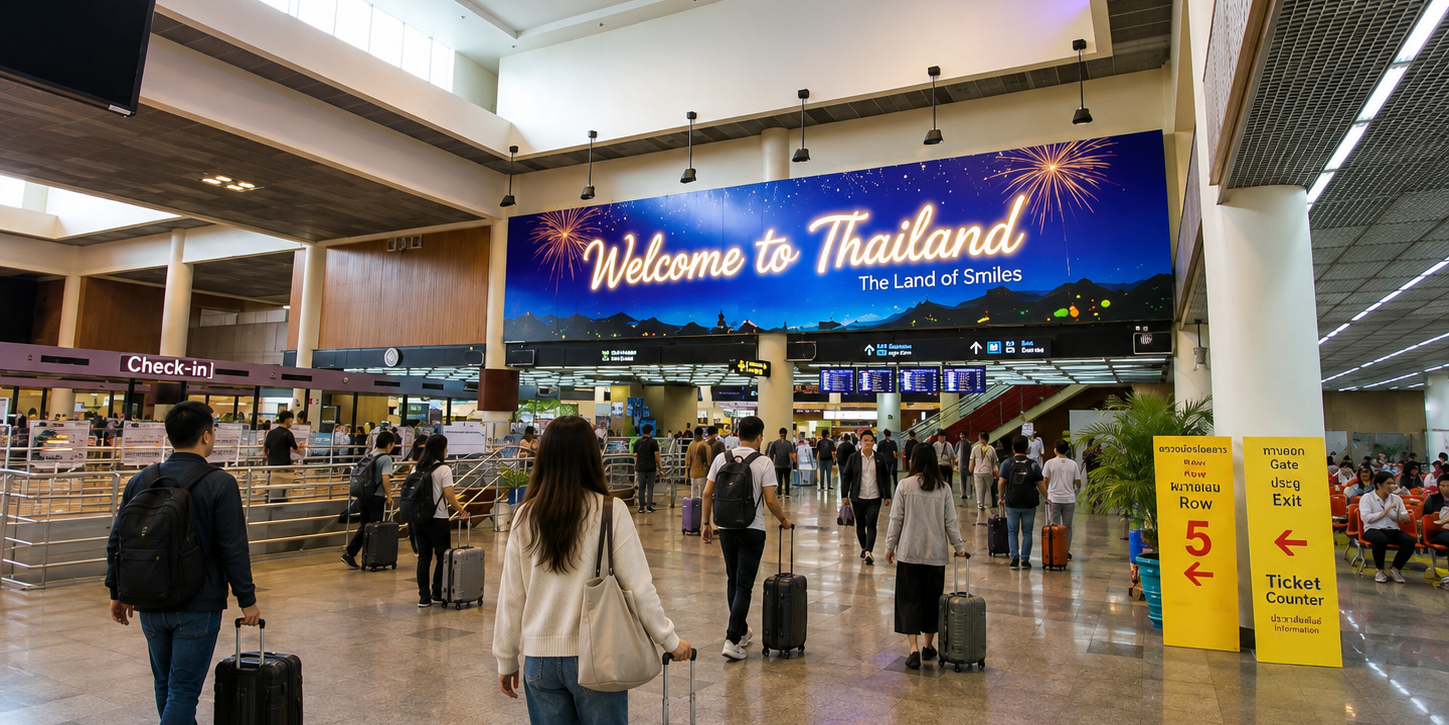
Bangkok Don Mueang International Airport is the engine room of Southeast Asian low-cost aviation. As the primary hub for AirAsia, Thai Lion Air, Nok Air, and a constellation of regional LCC carriers, DMK processes one of the largest concentrations of regionally mobile, aspirational, and digitally connected mass-affluent travellers of any single terminal in Asia. The audience here is not defined by ultra-high net worth — it is defined by volume, travel frequency, and an increasingly sophisticated consumer profile that has outgrown the LCC label. These are young professionals, entrepreneurial small business owners, first-generation middle-class consumers, and experienced regional travellers from Thailand, China, India, Myanmar, Laos, Cambodia, and beyond — all of them moving through Bangkok with purchasing intent and brand awareness that premium advertisers consistently underestimate. For lifestyle, consumer, financial, and technology brands seeking scale reach across Southeast Asia's most commercially dynamic audience segment, DMK is the single most important volume airport in the region.
The airport's commercial identity has evolved significantly from its origins as a secondary Bangkok hub. Today, Don Mueang is not a consolation prize for brands that cannot afford Suvarnabhumi — it is a deliberate strategic choice for advertisers who understand that Southeast Asia's mass-affluent consumer class is the fastest-growing and most commercially significant spending group on the planet, and that DMK is where the largest concentration of that audience moves through a single airport environment on a daily basis. A daily throughput that rivals some of Asia's Tier 1 airports, combined with a catchment that spans the entire ASEAN economic community, makes DMK one of the most underpriced high-volume advertising environments in the global airport media universe. Masscom Global's intelligence consistently identifies DMK as a structural opportunity for brands seeking scale reach at efficiency — and positions clients to activate that opportunity before the broader market catches up.
Advertising Value Snapshot
- Passenger scale: 26.1 million international passengers annually, with total throughput among the highest of any single airport terminal in Southeast Asia — generating consistent daily audience density across all day parts
- Traveller type: Mass-affluent regional tourists, LCC business and VFR travellers, Southeast Asian young professional consumers, domestic Thai leisure and business travellers
- Airport classification: Tier 2 — a volume-dominant LCC hub with mass-affluent audience quality that dramatically outperforms its price-per-impression position in the regional advertising market
- Commercial positioning: Southeast Asia's premier low-cost carrier hub, processing the highest volume of regionally mobile ASEAN consumers of any single airport in the sub-region
- Wealth corridor signal: DMK sits at the centre of the ASEAN intra-regional mobility corridor — connecting Bangkok to every major secondary city across Thailand, Myanmar, Cambodia, Laos, Vietnam, Malaysia, Indonesia, and China's southern tier — making it the primary hub for the commercial class that is driving Southeast Asia's consumer economy
- Advertising opportunity: Masscom Global's inventory access at DMK delivers brands into the daily flow of Southeast Asia's most commercially active mass-affluent consumer segment at a cost-per-impression that reflects LCC positioning but serves an audience whose purchasing power and brand receptivity is growing year on year. For advertisers seeking genuine scale reach across the ASEAN consumer market, no single airport placement delivers more efficiently than DMK.
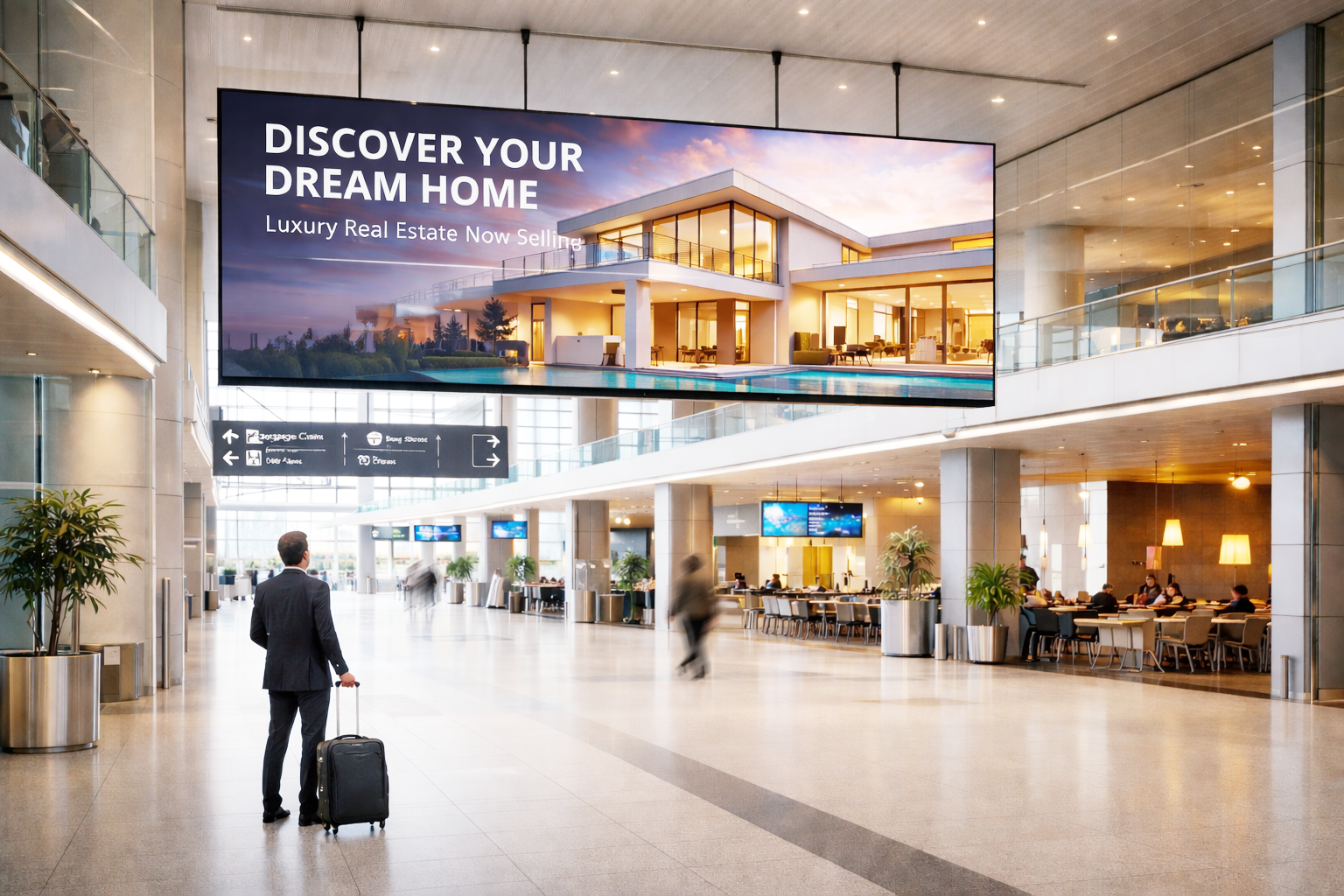
Airport Advertising is Complex to Get Right
We help you execute faster, with proven results and local insight most planners lack starting now.
Talk to an ExpertCatchment Area and Economic Drivers
Top 10 Cities within 150 km — Marketer Intelligence:
- Bangkok central districts (Sukhumvit, Silom, Sathorn): The commercial, financial, and luxury retail heart of Southeast Asia's largest urban economy — home to the regional headquarters of multinational corporations, a dense expatriate professional community, and Thailand's highest concentration of high-net-worth consumers — a dual domestic and international audience whose airport transit behaviour at DMK reflects both business and premium leisure motivations
- Nonthaburi: Bangkok's most populous suburban province immediately north of the capital, housing a rapidly growing middle-class residential population of over 1.5 million with strong brand aspirations and increasing discretionary spending capacity — a primary mass-affluent consumer audience for lifestyle, fashion, and financial services brands
- Pathum Thani: A northern Bangkok satellite province approximately 30 km from DMK, Pathum Thani is one of Thailand's most significant industrial and technology estate zones, hosting factories and logistics operations for global electronics, automotive, and consumer goods companies — its business community generates consistent corporate travel through DMK
- Samut Prakan: Bangkok's industrial southern fringe, home to over 2,500 factories in one of Thailand's densest industrial estate clusters — generating a substantial B2B and industrial management traveller flow that uses DMK for domestic and regional business routes
- Ayutthaya: Thailand's ancient capital approximately 80 km north of Bangkok and one of Southeast Asia's most visited UNESCO heritage sites, Ayutthaya contributes a culturally motivated, premium international tourism audience to DMK's catchment and is itself undergoing significant upscale resort and heritage tourism investment
- Chonburi and Pattaya corridor: Approximately 100 km southeast of Bangkok, the Eastern Economic Corridor's anchor zone generates a significant corporate and investment travel audience — executives from the automotive, petrochemical, and electronics manufacturing sectors who use DMK for both domestic and regional connectivity
- Saraburi: An industrial and agricultural province approximately 100 km north of Bangkok, Saraburi hosts Thailand's cement, petrochemical, and agri-processing industries — its business community produces a steady domestic B2B traveller flow with above-average corporate travel frequency
- Nakhon Pathom: A commercially active province approximately 60 km west of Bangkok with strong agricultural processing and growing industrial estate development, Nakhon Pathom contributes a trading and SME business community that uses DMK's extensive domestic network for regional commercial travel
- Chachoengsao: An emerging industrial and logistics hub approximately 80 km east of Bangkok, positioned within the Eastern Economic Corridor development zone — its growing corporate population includes executives from international manufacturing firms investing in EEC infrastructure, a commercially active B2B traveller segment
- Ang Thong: A traditional craft and agricultural province approximately 100 km north of Bangkok whose artisanal food production and cultural craft economy is increasingly connected to Thailand's premium tourism and export food sectors — contributing a trading and SME audience to DMK's catchment whose commercial sophistication is growing with Thailand's rural middle-class expansion
NRI and Diaspora Intelligence:
Don Mueang Airport serves one of Southeast Asia's most commercially significant diaspora travel corridors — the VFR (visiting friends and relatives) and remittance-linked travel flows connecting Thailand's migrant worker communities abroad with their home provinces, and the reverse flows of regional diaspora communities from Myanmar, Laos, Cambodia, and Vietnam who have established commercial lives in Bangkok and travel home through DMK regularly. Myanmar nationals in Bangkok — estimated at over 2 million — generate consistent air travel demand on the Bangkok-Yangon and Bangkok-Mandalay corridors operated by LCCs through DMK, producing a remittance and commercial travel audience with strong financial services and telecoms brand relevance. Chinese diaspora communities across Thailand's provincial cities generate inbound VFR and commercial travel through DMK on regional routes, adding a commercially sophisticated Chinese-Thai business audience with strong connections to China's southern provinces and trading cities.
Economic Importance:
Bangkok's economy is the most diversified and commercially complex in Southeast Asia, generating the airport's broad and commercially layered passenger base. Tourism — which contributes approximately 20 percent of Thailand's GDP — produces the dominant leisure traveller flow through DMK, connecting Bangkok to every major inbound source market across Asia. Manufacturing and export — centred on the Eastern Economic Corridor and Bangkok's industrial satellite zones — generates the B2B and corporate traveller segment. Retail, finance, and technology — Bangkok's growing service economy, anchored by the Sukhumvit and CBD commercial districts — produce the urban mass-affluent consumer who uses DMK as their primary regional aviation access point. For advertisers, this economic diversity means DMK's audience spans the full commercial consumer spectrum from aspirational first-time flyers to established regional business travellers — offering category reach breadth that few airports in Asia can match at this volume.
Business and Industrial Ecosystem
- Eastern Economic Corridor (EEC): Thailand's flagship industrial and technology investment zone, approximately 80 to 150 km from DMK, hosts global automotive, electronics, petrochemical, and aerospace manufacturing operations that generate a constant executive and management traveller flow through Bangkok's airports — DMK captures a significant share of this B2B traveller class on domestic and short-haul regional routes
- Regional trading and SME economy: Bangkok is the commercial capital for Thailand's enormous SME sector and for the broader ASEAN intra-regional trading community — importers, exporters, distributors, and retail entrepreneurs who travel frequently on LCC routes for buying trips, supplier meetings, and market visits represent one of DMK's most commercially active recurring audience segments
- Tourism and hospitality industry: Thailand's hospitality sector — employing millions and representing one of the country's largest formal employer categories — generates consistent corporate and management travel through DMK as hotel groups, resort operators, and travel trade businesses move staff and executives across the region on LCC routes
- Technology and digital economy: Bangkok's emerging technology start-up ecosystem and the presence of regional headquarters for digital commerce, fintech, and platform economy companies are generating a young, high-income professional traveller class that uses DMK's LCC network for regional business travel to Vietnam, Indonesia, Malaysia, and China
Passenger Intent — Business Segment:
Business travellers at Don Mueang span a wider commercial spectrum than at most airports in this volume class. The LCC platform makes DMK commercially accessible to Thailand's enormous SME trading class — factory owners, wholesale distributors, retail chain operators, and service business entrepreneurs who fly regularly on short-haul routes for commercial purposes and whose aggregate purchasing power is substantially higher than the LCC label implies. Above this layer, EEC-connected manufacturing executives, tourism industry management, and Bangkok's growing tech sector professional class add a corporate and senior-management traveller dimension. Advertiser categories that intercept this business spectrum most effectively include financial services — particularly SME banking and digital payments — telecoms and mobile data, professional productivity technology, and B2B SaaS platforms targeting Southeast Asia's rapidly digitising business community.
Strategic Insight:
The business audience at Don Mueang is commercially underestimated by the majority of media planners who classify DMK purely as a leisure LCC environment. Thailand's SME business community — which constitutes the backbone of the country's domestic economy and generates significant intra-ASEAN trade flows — is a high-frequency, commercially sophisticated traveller segment whose brand loyalty, financial product adoption, and technology purchasing behaviour make them a premium B2B advertising audience despite travelling on LCC tickets. Masscom Global's planning intelligence at DMK distinguishes between day-part and route-specific audience compositions, allowing B2B advertisers to target inventory windows where business traveller concentration is highest and campaign efficiency is strongest.
Tourism and Premium Travel Drivers
- Bangkok's global tourism infrastructure: The city's extraordinary concentration of tourism assets — from street food culture and night markets to luxury hotels, wellness spas, and world-class shopping — creates a tourism pull that makes Bangkok one of the world's top three most visited cities annually, generating the DMK inbound leisure flow that sustains the airport's commercial scale
- Chiang Mai and northern Thailand: One of Thailand's most popular domestic tourism destinations, Chiang Mai draws cultural tourism, wellness retreat, and digital nomad audiences through DMK's domestic network — a traveller segment with above-average education and income levels that represents a premium domestic leisure audience
- Phuket, Koh Samui, and Krabi: Thailand's premium island tourism corridor generates consistent high-value domestic traveller flows through DMK as Bangkok-based residents and transit international tourists fly onward to beach destinations — a leisure audience with pre-committed resort spend that makes them receptive to premium retail and lifestyle brand messaging at the airport
- ASEAN heritage and adventure tourism: DMK's regional route network connects Bangkok to Angkor Wat, Ha Long Bay, Bagan, and Luang Prabang — cultural tourism destinations that attract an experience-motivated, premium-spending regional tourist audience that transits through Don Mueang as their ASEAN adventure hub
Passenger Intent — Tourism Segment:
Tourism travellers at Don Mueang arrive in Bangkok with clear intent to spend — on accommodation, food, retail, wellness, and experiences — and depart having converted significant discretionary budgets into consumption. Inbound international tourists are primarily from China, India, South Korea, Malaysia, and the ASEAN region, carrying itinerary-driven spend that has been pre-committed weeks or months in advance. Departing tourists are in a final consumption window — shopping for last-purchase souvenirs, Thai food products, wellness goods, and fashion items — making the departure terminal a particularly high-conversion environment for retail and lifestyle brands. The breadth of this tourism audience — spanning budget-conscious first-timers to seasoned luxury travellers using LCC for convenience rather than economy — means that advertiser categories from mass consumer to premium lifestyle all find viable audience cohorts within DMK's daily passenger flow.
Travel Patterns and Seasonality
Peak seasons:
- High season (November to February): Thailand's premier tourist season driven by cool, dry weather — the highest volume window for international inbound tourism from China, India, South Korea, and ASEAN markets; this is also the Lunar New Year peak for Chinese travellers, generating the single highest-spend consumer window of the year
- Chinese New Year (January to February): The dominant HNWI and mass-affluent Chinese tourist surge — airports see significant spikes in Chinese travellers to Bangkok, both leisure and VFR, generating the highest luxury retail and premium food conversion window of the year
- Summer break (July to August): A strong secondary peak driven by Southeast Asian and South Asian families in school holiday travel mode; Indian tourist volumes are particularly strong in this window, generating a high-value family traveller segment
- Songkran (April): Thailand's New Year festival is one of the most travel-intensive domestic events in the calendar — generating peak domestic Thai traveller volumes and strong inbound interest from regional tourists, particularly from China and ASEAN, who travel to experience the festival
- Year-end festive season (December): A globally significant travel surge combining Christmas, New Year, and pre-Lunar New Year travel from Chinese and Southeast Asian markets — the highest average spend-per-passenger window of the year for retail and lifestyle categories
Event-Driven Movement:
- Chinese New Year (January to February): The largest single commercial travel event for DMK annually — Chinese tourist arrivals surge and spending intent peaks across retail, hospitality, and experiential categories; Masscom structures specific campaign activations around this window for brands targeting the Chinese consumer segment
- Songkran Festival (April): Thailand's most culturally distinctive holiday generates both a domestic travel surge and a significant inbound tourism spike from regional markets that travel to Bangkok specifically for the festival experience — a high-energy, digitally active, young and aspirational audience moment
- ASEAN Tourism Forum (January, annually in a rotating ASEAN city with strong Bangkok representation):A significant trade event for Thailand's tourism industry that brings regional hospitality executives, government tourism officials, and international trade buyers through Bangkok — a B2B premium audience window for hospitality and professional services brands
- Bangkok International Motor Show (March to April): One of Southeast Asia's largest automotive events, drawing over a million visitors to Bangkok and generating travel through DMK from regional automotive buyers, dealership executives, and automotive enthusiasts — a premium audience window for automotive, finance, and technology brands
- Thailand International Travel Fair (November): A consumer travel exhibition generating high-intent leisure consumer traffic through Bangkok, with strong DMK catchment relevance for travel, hospitality, and lifestyle brand advertisers targeting outbound Thai travellers
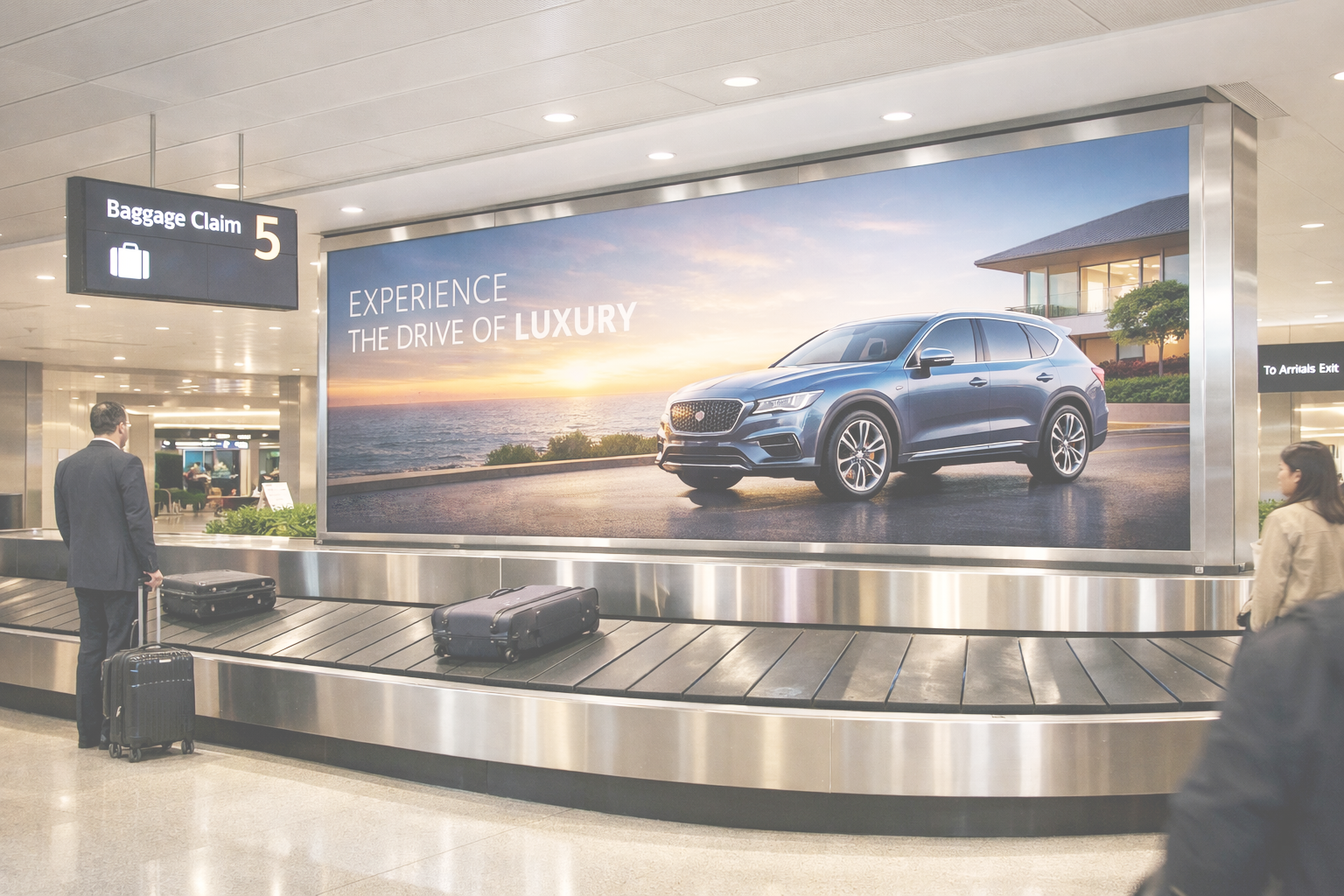
It’s Not Just Where You Advertise - It’s How Fast You Execute
We combine local insight with fast rollout to deliver results for you, now.
Talk to an ExpertAudience and Cultural Intelligence
Top 2 Languages:
- Thai: The primary language of the dominant domestic and regional Thai traveller base — essential for all campaigns targeting Thailand's mass-affluent consumer, SME business community, and domestic leisure traveller segments; Thai-language creative achieves significantly higher engagement and brand recall with local audiences than English-language alternatives across all consumer categories
- Mandarin Chinese: The dominant language of DMK's largest and most commercially significant international traveller group — Chinese tourists consistently rank as Thailand's highest-volume and highest-spending international visitors, and Mandarin-language campaign creative targeting peak Chinese travel windows including Lunar New Year and Golden Week delivers the highest international audience conversion at this airport
Major Traveller Nationalities:
Chinese nationals constitute the largest single international traveller group at DMK by a significant margin, driving the airport's peak season commercial intensity and representing the highest aggregate retail and lifestyle spend per travel window. Indian travellers — representing one of the fastest-growing inbound tourist sources for Thailand — are the second major international segment, concentrated in the summer family holiday window and in business travel on Bangkok's commercial corridors. South Korean travellers are a consistent year-round presence, motivated by Bangkok's food culture, wellness offerings, and medical tourism reputation. Malaysian and Singaporean travellers represent frequent cross-border leisure and VFR traffic with high travel frequency and brand familiarity. ASEAN intra-regional travellers from Myanmar, Cambodia, Laos, Vietnam, and Indonesia add volume across a diverse commercial and VFR spectrum. Domestic Thai travellers, who constitute the passenger majority, range from young urban professionals to provincial business owners and family leisure travellers — a commercially diverse domestic audience that spans multiple brand category targets simultaneously.
Religion — Advertiser Intelligence:
- Buddhism (approximately 95 percent of Thai population, dominant domestic traveller community): Buddhist festivals — particularly Makha Bucha, Visakha Bucha, and Asanha Bucha — generate domestic travel surges that, while culturally observant in character, produce peak airport volumes with strong merit-making gifting and premium food purchasing behaviour; Songkran as the Thai Buddhist New Year is the single highest domestic travel event in the calendar and creates peak airport volumes combined with strong consumer gift and premium food spending intent; the Buddhist cultural disposition toward generosity, merit, and gift-giving creates a structurally high gifting economy that benefits premium food, retail, and lifestyle brands year-round at DMK
- Islam (approximately 5 percent of Thai population, significant among ASEAN international travellers from Malaysia, Indonesia, and Brunei): Ramadan travel behaviour and Eid al-Fitr holiday travel create a concentrated inbound wave of Malaysian and Indonesian Muslim tourists through DMK — a high-spending family and leisure audience during the Eid holiday window; halal dining availability and Islamic lifestyle brand alignment are increasingly important at DMK as Southeast Asian Muslim tourism to Bangkok grows; the Hajj and Umrah departure season generates a concentrated Muslim traveller audience with strong Islamic financial services and halal product brand relevance
- Hinduism (significant among Indian traveller segment, approximately 15 to 20 percent of international passenger mix): Diwali travel from India generates a commercially significant inbound tourism surge through DMK — Indian families travelling to Bangkok for Diwali celebrations represent one of the highest per-trip retail spend segments at the airport; Indian wedding tourism to Thailand, which routes significant bridal and wedding party travel through DMK, creates a premium consumer spending window for jewellery, fashion, and luxury hospitality brands
Behavioral Insight:
The Don Mueang traveller is aspirational, digitally native, and commercially sophisticated in ways that consistently surprise advertisers who approach DMK as a discount audience. Southeast Asia's mass-affluent consumer class — which dominates DMK's passenger base — is the world's fastest-growing premium brand adoption segment. They research brands obsessively online before purchase, they respond strongly to social proof and peer recommendation, and they use airport transit as an active discovery environment for products and experiences they have seen on digital platforms but not yet encountered in physical retail. For brands building recognition across Southeast Asia's rising consumer class, DMK's scale — over 26 million international passengers annually — combined with the aspirational purchasing mindset of its audience creates a brand-building opportunity that compounds in commercial value as the region's middle class continues its structural expansion.
Outbound Wealth and Investment Intelligence
The outbound passenger at Bangkok Don Mueang represents a commercially distinct opportunity from the premium HNWI audience at Suvarnabhumi. DMK's outbound travellers are primarily regionally mobile mass-affluent consumers — Thai middle-class families, ASEAN business travellers, and Chinese tourists beginning or ending their Bangkok experience — whose outbound capital deployment is concentrated in travel experiences, real estate investment at accessible price points, and education pathways for their children. The outbound Thai professional and SME business owner is increasingly making financial decisions that extend beyond Thailand — evaluating property in Malaysia, Japan, the UK, and Australia; considering second residency options in Portugal and Greece; and directing children toward overseas higher education in the UK, Australia, and the United States.
Outbound Real Estate Investment:
Thailand's mass-affluent and HNI class — represented in the outbound passenger flow at DMK — is actively investing in overseas real estate at accessible price points. Japan has become the dominant destination for Thai outbound real estate investment, driven by favourable yen exchange rates, strong rental yield potential in Hokkaido and Tokyo, and Japan's quality-of-life appeal as a second-home destination. Malaysia's Johor Bahru market attracts Thai investors drawn by price accessibility and proximity. The UK and Australia remain aspirational destinations for upper-tier Thai investors with education-linked property purchase motivations. International real estate platforms advertising at DMK intercept a growing, financially active outbound investor audience that is earlier in its investment journey — and therefore more receptive to discovery marketing — than the HNWI audiences at Suvarnabhumi.
Outbound Education Investment:
Thailand's expanding middle class is directing an increasing share of household income toward international education for children, and the outbound traveller at DMK includes a growing cohort of parents accompanying children on university exploration visits and student travellers flying to the United Kingdom, Australia, the United States, and Singapore for higher education. Thai families in the SME business owner and professional class — which is heavily represented in DMK's outbound mix — allocate significant budget to international education as the primary aspirational investment for the next generation. International universities and education consultancies that advertise at DMK intercept families at the peak of their education investment decision-making process.
Outbound Wealth Migration and Residency:
Thailand's high-net-worth and upper-middle-class outbound traveller at DMK is showing growing interest in second residency pathways, driven by a combination of travel freedom aspirations and asset diversification motivations. Portugal's Golden Visa, Greece's residency programme, and the UAE Golden Visa are all actively researched by Bangkok's professional class — and the airport transit environment is a documented discovery touchpoint for residency advisory advertising. Thailand's own Long-Term Resident Visa programme has simultaneously attracted inbound HNWIs, creating a two-directional wealth migration audience at DMK that residency, legal, and financial advisory brands can engage on both inbound and outbound routes.
Strategic Implication for Advertisers:
International brands operating across the real estate, education, financial services, and residency advisory categories should treat Don Mueang as a high-volume entry point into Southeast Asia's most commercially active emerging wealth audience. The mass-affluent Thai and ASEAN consumer at DMK is not yet fully served by the international premium brand ecosystem that has concentrated its Bangkok airport activity at Suvarnabhumi — creating a genuine scale opportunity for brands willing to meet this audience where they travel. Masscom Global's dual presence at both Bangkok airports allows clients to execute coordinated strategies that capture the full Bangkok audience spectrum — ultra-HNI at Suvarnabhumi and high-volume mass-affluent at DMK — in a single integrated campaign.
Airport Infrastructure and Premium Indicators
Terminals:
- Bangkok Don Mueang International Airport operates two international passenger terminals — Terminal 1 and Terminal 2 — with a combined capacity that has been expanded multiple times to accommodate the LCC growth surge of the past decade. Terminal 1 handles the majority of international LCC operations, while Terminal 2, originally built for domestic operations, has been progressively repurposed to manage the overflow of both domestic and regional international traffic. The total terminal footprint creates an extended physical advertising canvas across multiple passenger journey touchpoints from check-in through to departure gates
- A domestic terminal building serves Thailand's extensive domestic network, processing a high volume of domestic leisure and business travellers whose commercial profiles complement the international terminal audience and extend the advertising reach across the full DMK passenger universe
Premium Indicators:
- Lounge access at DMK is provided through airline lounges and independent Priority Pass-affiliated lounges serving premium-fare and frequent-flyer travellers — a signal that despite the LCC dominant positioning, a significant minority of DMK's passengers are travelling on premium or upgraded tickets and represent an above-average audience quality tier accessible through strategic placement
- The airport's commercial zone includes a growing range of food and beverage brands, retail outlets, and Thai craft and souvenir retail — a structured pre-departure consumption environment that creates extended dwell time and active purchasing behaviour that benefits advertising placements across the terminal
- Don Mueang's geographic position in northern Bangkok — approximately 25 km from central Bangkok and well-connected by rail and expressway — gives it strong catchment access to Bangkok's northern and northeastern urban districts, which include a fast-growing upper-middle-class residential population that uses DMK as their preferred domestic and regional aviation access point
- The airport has been the subject of ongoing modernisation and capacity expansion investment by the Airports of Thailand public company, with infrastructure upgrade programmes that are progressively improving terminal quality, digital screen infrastructure, and passenger experience standards — increasing the commercial value of advertising placements relative to DMK's historical positioning
Forward-Looking Signal:
The Airports of Thailand Authority has advanced plans for a comprehensive Don Mueang masterplan expansion that includes new terminal facilities, increased international gate capacity, and enhanced landside commercial zones that will materially improve both passenger experience quality and advertising inventory value. In parallel, Thailand's ongoing aviation liberalisation policy is expected to drive further LCC route growth — particularly from India, China, and ASEAN secondary cities — that will increase both passenger volume and audience diversity at DMK over the medium term. The planned Airport Rail Link extension connecting Don Mueang more directly to Bangkok's central Skytrain network will accelerate catchment access and increase the proportion of Bangkok's urban mass-affluent population that uses DMK regularly. Masscom Global advises clients to establish DMK media presence ahead of the terminal infrastructure upgrade, when inventory competition will increase and current pricing will no longer reflect the improved physical environment.
Airline and Route Intelligence
Top Airlines:
AirAsia (Thailand and X), Thai Lion Air, Nok Air, Thai VietJet Air, Thai AirAsia X, Thai Smile, Scoot, Malindo Air/Batik Air, IndiGo, GoFirst, Air India Express, SpiceJet, China Southern Airlines, Shenzhen Airlines, Sichuan Airlines, Xiamen Air, Jeju Air, Jin Air, VietJet Air, Bamboo Airways
Key International Routes:
- Kuala Lumpur KLIA2 (Malaysia): Multiple daily frequencies, Southeast Asia's busiest LCC bilateral corridor
- Guangzhou, Shenzhen, Chengdu, Kunming, Chongqing (China): High-frequency southern China LCC corridors, dominant inbound Chinese tourist routes
- Jakarta and Bali (Indonesia): Growing bilateral leisure and VFR corridor with strong ASEAN family travel demand
- Ho Chi Minh City and Hanoi (Vietnam): High-frequency ASEAN trade and tourism corridor, significant VFR and commercial traffic
- Singapore Changi: High-frequency Southeast Asian business and leisure corridor
- Colombo (Sri Lanka): Growing South Asian corridor with VFR and business travel dimensions
- Mumbai, Delhi, Chennai, Kolkata (India): Expanding Indian LCC corridors reflecting India's rapidly growing outbound leisure tourism to Thailand
- Yangon and Mandalay (Myanmar): VFR and commercial trade corridors serving Bangkok's large Myanmar migrant worker community
- Phnom Penh and Siem Reap (Cambodia): ASEAN tourism and VFR corridors with growing frequency
- Vientiane (Laos): Border trade and VFR corridor
Domestic Connectivity:
Chiang Mai (highest frequency domestic route), Phuket, Hat Yai, Udon Thani, Ubon Ratchathani, Khon Kaen, Chiang Rai, Krabi, Surat Thani, Nakhon Si Thammarat, Buriram
Wealth Corridor Signal:
Don Mueang's route network is a precise map of ASEAN's intra-regional commercial and mobility economy. The dominant corridors to southern China, Malaysia, Indonesia, Vietnam, and India trace the trade and tourism arteries of the world's most economically dynamic regional bloc. Every major route represents a two-directional wealth transfer — inbound tourists bringing consumption capital into Bangkok, outbound Thai travellers and ASEAN business principals moving commercial capital across borders. For advertisers targeting the ASEAN mass-affluent consumer class at regional scale, DMK's route network delivers access to the source cities of that audience's most commercially active segments simultaneously.
Media Environment at the Airport
- Bangkok Don Mueang's multi-terminal footprint creates an advertising canvas that spans check-in halls, security queues, departure concourses, and gate areas across three terminal buildings — generating multiple sequential exposure opportunities for a single passenger's airport journey and enabling frequency-building campaign structures that are difficult to replicate in single-terminal environments
- Dwell time at DMK is structurally elevated by LCC check-in requirements — passengers on international LCC routes typically arrive 2 to 3 hours before departure, creating sustained pre-security and airside dwell windows that are among the longest average dwell periods in the Southeast Asian airport advertising universe
- The airport's ongoing infrastructure modernisation is progressively upgrading digital screen quality and expanding available inventory in high-traffic zones, creating a growing premium inventory layer within a traditionally mid-market media environment — early movers to premium placements are establishing position ahead of the competitive escalation that will follow the terminal expansion
- Masscom Global's inventory access at DMK covers both international and domestic terminal placements, check-in hall and airside zones, and strategic positions adjacent to the airport's highest-dwell food, beverage, and retail clusters — ensuring client brands are positioned where audience attention is most sustained and conversion intent is highest
Strategic Advertising Fit
Best Fit:
- Financial services and digital payments: Thailand's rapidly digitising SME and mass-affluent consumer base at DMK represents one of Southeast Asia's most commercially active audiences for digital banking, mobile payments, insurance, and investment platform brands — a high-frequency, digitally native audience with strong fintech adoption rates
- Telecommunications and mobile data: The regionally mobile, always-connected traveller at DMK is structurally in-market for roaming plans, regional SIM products, and mobile data services — a high-intent, category-relevant audience that converts at above-average rates for telecoms advertisers at point of departure
- Tourism and hospitality brands: Both inbound hotels and Thai tourism experiences targeting international arrivals and outbound hospitality brands targeting Thailand's growing outbound leisure traveller class find strong audience alignment and high conversion intent at DMK
- Consumer lifestyle and fashion: Southeast Asia's aspirational mass-affluent consumer is the world's most brand-receptive emerging market segment — lifestyle, fashion, beauty, and personal care brands building regional awareness find DMK's scale and audience profile a highly efficient platform
- Food and beverage brands: Thai food culture's global reputation and the airport's position as a food tourism gateway makes premium food, beverage, and restaurant brands — both domestic Thai and international — highly relevant and commercially effective advertisers at DMK
- E-commerce and platform economy brands: Southeast Asia's digital commerce adoption is fastest among the young professional and mass-affluent consumer segments that dominate DMK's passenger base — regional e-commerce, ride-sharing, hotel booking, and food delivery platforms find an ideal scale audience here
- Automotive brands: Bangkok's status as Southeast Asia's automotive capital, combined with the upper-middle-class Thai domestic traveller segment at DMK, creates a viable audience for mass-market premium automotive brands targeting aspirational buyers in Thailand's growing car ownership market
Brand Alignment at a Glance:
| Category | Fit |
|---|---|
| Financial services and digital payments | Exceptional |
| Telecommunications and mobile | Exceptional |
| Tourism and hospitality | Exceptional |
| Consumer lifestyle and fashion | Strong |
| Food and beverage | Strong |
| E-commerce and platform brands | Strong |
| Automotive | Moderate |
| Ultra-luxury goods | Poor fit |
Who Should Not Advertise Here:
- Ultra-luxury brands with strict HNWI targeting: Brands in the ultra-premium segment — haute couture, super-yacht, private jet, or ultra-luxury watch categories — that require a predominantly HNWI audience for campaign efficiency will find DMK structurally misaligned; Suvarnabhumi or Phuket airports provide a higher HNWI concentration for these categories
- B2B industrial and enterprise brands with senior executive targeting requirements: Heavy industrial, enterprise IT infrastructure, and senior C-suite targeted B2B brands requiring a predominantly business class or corporate executive audience will find DMK's mass-market LCC composition dilutes campaign efficiency against their targeting criteria
- Niche premium categories without regional ASEAN applicability: Highly specialised luxury or niche categories without broad Southeast Asian consumer market relevance will find DMK's volume does not translate to meaningful category audience concentration
Event and Seasonality Analysis
| Factor | Rating |
|---|---|
| Event Strength | High |
| Seasonality Strength | High |
| Traffic Pattern | Dual-Peak with Festival Spikes |
Strategic Implication:
Don Mueang's traffic calendar is defined by two structural peaks — the November to February cool season and the July to August summer school holiday window — overlaid with festival-driven spikes that create short, intense audience concentration moments of exceptional commercial value. The Chinese New Year window in January to February and the Songkran period in April are the two highest-ROI short windows in the DMK advertising calendar, combining peak passenger volume with peak consumer spending intent. Masscom structures DMK campaigns to front-load creative exposure in the two weeks before each peak window — when audience volumes are rising and competitive advertising saturation has not yet reached maximum — and maintains brand presence through the peak itself to capture the conversion moment. Clients who align budget allocation to this rhythm consistently outperform those running flat annual schedules at this airport.

Poor Placement and Delays Affect Airport Campaigns
We help you move faster, access better inventory, and get it right now.
Talk to an ExpertFinal Strategic Verdict
Bangkok Don Mueang International Airport is Southeast Asia's most commercially undervalued advertising environment at scale. At 26.1 million international passengers annually, processed through a multi-terminal LCC hub that sits at the centre of ASEAN's intra-regional mobility economy, DMK delivers a brand-building platform that reaches more regionally mobile, aspirational, and commercially active consumers per advertising dollar than any comparable airport in Southeast Asia. The mass-affluent ASEAN consumer passing through Don Mueang is not a discount audience — they are the demographic driving one of the fastest consumer spending growth cycles in the world, and they are increasingly receptive to the premium and aspirational brand categories that media planners have historically reserved for Suvarnabhumi. For financial services, telecoms, consumer lifestyle, e-commerce, food and beverage, and hospitality brands seeking genuine scale reach across the ASEAN consumer market, DMK is not a secondary Bangkok buy — it is a primary regional strategy. Masscom Global's dual-airport Bangkok capability, inventory access, and regional ASEAN network intelligence position clients to activate DMK's full commercial potential with the precision, speed, and creative strategy this airport's scale demands.
About Masscom Global
Masscom Global is a premium international airport advertising and media buying agency operating across 140 countries. With deep expertise in airport OOH, premium publications, and high-net-worth audience targeting, Masscom helps brands reach the world's most valuable travellers at the moments that matter most. For advertising packages, media rates, and campaign planning at Bangkok Don Mueang International Airport and airports across the globe, contact Masscom Global today.
Frequently Asked Questions
How much does airport advertising cost at Bangkok Don Mueang International Airport?
Advertising costs at Bangkok Don Mueang International Airport vary based on format — digital versus static placements — terminal zone selection between the international and domestic buildings, placement position within the passenger journey, campaign duration, and seasonal demand. Peak windows aligned to the November to February high season, Chinese New Year, and the Songkran period command above-average rates relative to the airport's mid-year off-peak windows. DMK generally offers more competitive cost-per-impression than Suvarnabhumi while delivering comparable or higher audience volume in specific consumer and lifestyle categories. Masscom Global provides current DMK rate cards and audience-matched placement strategy based on your brand objectives and campaign category. Contact our team for a tailored media plan.
Who are the passengers at Bangkok Don Mueang International Airport?
Bangkok Don Mueang's passenger base is one of the most commercially diverse of any airport in Southeast Asia. The largest international segment is Chinese tourists — predominantly from southern China — who represent the highest aggregate retail spend of any international group. Indian tourists, concentrated in the summer family holiday window, are the second-largest and fastest-growing international segment. South Korean, Malaysian, Singaporean, and broader ASEAN travellers represent consistent year-round LCC traffic with strong consumer brand engagement. Domestic Thai travellers — young professionals, SME business owners, and middle-class family leisure travellers — constitute the passenger majority and represent a commercially sophisticated mass-affluent audience with rapidly growing brand aspirations and spending capacity.
Is Bangkok Don Mueang International Airport good for luxury brand advertising?
Bangkok Don Mueang Airport is well suited for premium and accessible luxury brand advertising targeting Southeast Asia's mass-affluent consumer class, but is not the optimal environment for ultra-luxury brands with strict ultra-HNWI audience targeting requirements. The airport's strength is in premium aspirational categories — accessible luxury fashion, premium beauty, premium food and beverage, mid-tier luxury watches, and aspirational lifestyle brands — where the mass-affluent audience's brand adoption trajectory and spending appetite create strong conversion dynamics. For ultra-luxury categories requiring predominantly business class and first class travellers, Masscom Global would recommend a complementary placement strategy combining DMK with Suvarnabhumi to cover the full Bangkok audience premium spectrum.
What is the best airport in Bangkok to advertise at?
Bangkok's two airports — Don Mueang and Suvarnabhumi — serve fundamentally different and complementary audience profiles. Suvarnabhumi processes Bangkok's full-service, HNWI, and corporate traveller class on long-haul and premium regional routes, making it the priority choice for ultra-luxury, financial, and premium B2B categories. Don Mueang processes Southeast Asia's largest concentration of regionally mobile mass-affluent consumers on LCC routes, making it the priority choice for consumer lifestyle, financial services, telecoms, food and beverage, and e-commerce categories seeking genuine regional scale. The most commercially intelligent Bangkok airport strategy — which Masscom Global is uniquely positioned to execute — runs coordinated campaigns across both airports, capturing the full spectrum of Bangkok's commercially active traveller universe.
What is the best time to advertise at Bangkok Don Mueang International Airport?
The highest-value advertising windows at Bangkok Don Mueang are the cool season peak from November to February — which captures Thailand's highest international tourist arrival volumes — and the Chinese New Year period in January to February, which generates the highest per-passenger retail and lifestyle spend conversion of any two-week window in the year. Songkran in April is the strongest domestic Thai traveller peak and a significant inbound regional tourism window. The July to August summer school holiday period is the primary window for Indian family traveller and domestic Thai family leisure audiences. Masscom Global recommends planning DMK campaigns with creative and budget differentiated between the Chinese New Year consumer peak and the broader high season window, as the audience composition and spending triggers differ significantly between these two sub-periods.
Can international real estate developers advertise at Bangkok Don Mueang International Airport?
Bangkok Don Mueang is a viable channel for international real estate developers targeting the mass-affluent and emerging HNWI audience segments of Thailand and ASEAN. The outbound Thai professional and SME business owner community using DMK is increasingly active in overseas property acquisition at accessible entry points — particularly in Japan, Malaysia, and the UK — and represents a growing audience for real estate platforms positioned at accessible to mid-range price points. Developers of Japanese resort and residential properties find an especially receptive audience at DMK given the strong Thai-Japanese cultural affinity and the favourable yen exchange rate dynamic that has made Japanese real estate particularly attractive to Thai buyers. For ultra-premium real estate targeting Thailand's ultra-HNWI class, a combined DMK and Suvarnabhumi campaign strategy captures the broadest possible Bangkok audience.
Which brands should not advertise at Bangkok Don Mueang International Airport?
Brands requiring a predominantly ultra-HNWI, first class, or C-suite corporate executive audience will find DMK structurally misaligned for their targeting requirements — these audiences are concentrated at Suvarnabhumi. Ultra-luxury categories including super-premium jewellery, haute couture, private aviation, and ultra-premium financial products requiring audiences with liquid assets above USD 5 million should prioritise Suvarnabhumi over DMK. Highly specialised B2B industrial and enterprise brands targeting senior procurement and technical executives will also find DMK's predominantly leisure and SME business traveller composition limits campaign efficiency against these specific audience profiles.
How does Masscom Global help brands advertise at Bangkok Don Mueang International Airport?
Masscom Global brings three capabilities to airport advertising at Bangkok Don Mueang that most regional media planners cannot match independently. First, Masscom's audience intelligence for DMK distinguishes between terminal zones, day-part compositions, and route-specific audience profiles — allowing clients to invest in the inventory positions where their specific category audience is most concentrated rather than buying undifferentiated volume. Second, Masscom's inventory access at DMK covers premium placements across both international and domestic terminals, with specific expertise in airside high-dwell positions that generate maximum frequency and brand recall. Third, for brands targeting the ASEAN mass-affluent audience at regional scale, Masscom can extend DMK campaigns to corresponding LCC hub airports across the ASEAN network — Kuala Lumpur KLIA2, Jakarta Soekarno-Hatta, Singapore Changi's budget terminal — creating a coordinated multi-airport strategy that follows the ASEAN mass-affluent consumer across their full regional mobility arc. Contact Masscom Global to begin your Bangkok Don Mueang campaign strategy today.