




Airport at a Glance
| Field | Detail |
|---|---|
| Airport | Austin-Bergstrom International Airport |
| IATA Code | AUS |
| Country | USA |
| City | Austin, Texas |
| Annual Passengers | 21.76 million (2024, second-busiest year on record) |
| Primary Audience | Tech executives, startup founders, innovation-economy HNWIs, premium leisure travellers |
| Peak Advertising Season | March, June to August, October |
| Audience Tier | Tier 1 |
| Best Fit Categories | Luxury lifestyle, financial services, premium automotive, international real estate, executive education |
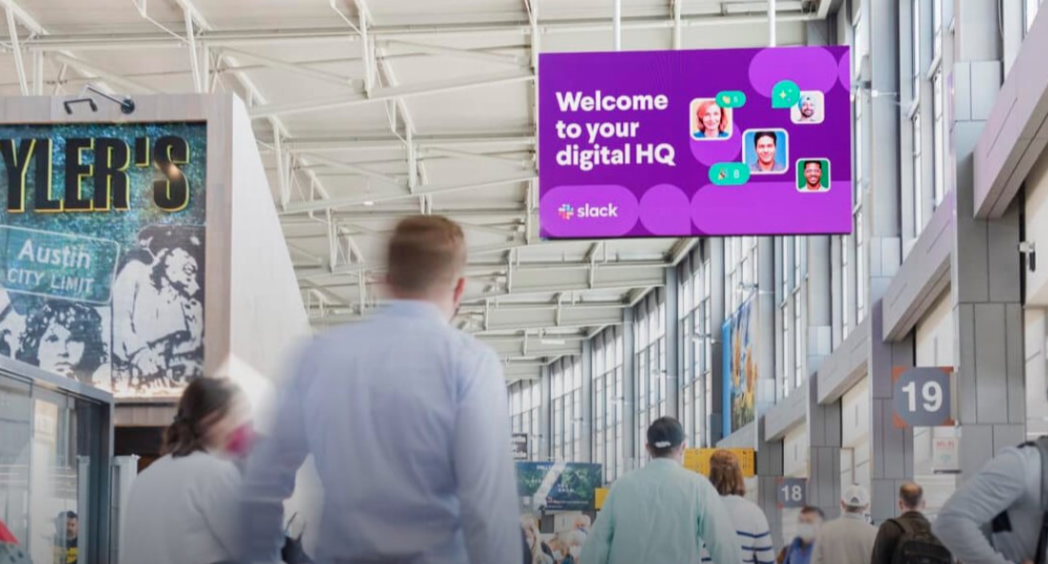
Austin-Bergstrom International Airport is the sole commercial gateway to a metropolitan economy that generated $248 billion in GDP in 2023 and ranked number one in GDP growth among all major US metros for 2023 to 2024. The catchment is not merely growing — it is compounding. Tesla, Dell, Apple, Amazon, Google, Samsung, Oracle, CrowdStrike, AMD, and over 900 other technology companies concentrate their Texas operations in a 50-kilometre radius of the Barbara Jordan Terminal. The professionals running, building, funding, and supplying those companies flow through AUS with regularity — and they have nowhere else to fly from.
What makes AUS commercially exceptional is the sheer density of new wealth concentrated in a geographically constrained market. The Austin metro produced 51% GDP growth between 2019 and 2023, the highest of any large US city. Tesla's Gigafactory Texas alone employs over 21,000 people within sight of the airport perimeter. The startup ecosystem is valued at over $89 billion, and Austin-based companies received $4 billion in venture funding in 2024. This is not legacy wealth passively accumulating — it is active, liquid, entrepreneurial capital being deployed by people who fly constantly, decide quickly, and respond to relevant advertising with conviction.


Advertising Value Snapshot
- Passenger scale: 21.76 million in 2024, second-busiest year on record; 2023 set the all-time record at over 22 million; airport hitting 2040 master plan forecasts five years ahead of schedule
- Traveller type: Tech executives, startup founders and equity holders, venture investors, premium event-driven leisure travellers
- Airport classification: Tier 1 — one of America's fastest-growing large-hub airports, single-terminal serving an audience of unusually concentrated wealth
- Commercial positioning: Primary gateway to Silicon Hills, the US tech economy's fastest-growing node outside San Francisco and Seattle
- Wealth corridor signal: Austin sits at the convergence of the Texas enterprise corridor, the US-Mexico commercial highway, and transatlantic tech investment routes to London, Amsterdam, and Frankfurt
- Advertising opportunity: Masscom Global provides brands with direct access to AUS's innovation-economy HNWI audience — an audience with high equity exposure, active investment behaviour, and proven receptivity to premium brand messaging in a captive terminal environment

Airport Advertising is Complex to Get Right
We help you execute faster, with proven results and local insight most planners lack starting now.
Talk to an ExpertCatchment Area and Economic Drivers
Top 10 Cities within 150 km — Marketer Intelligence:
- Round Rock, TX: Dell Technologies' global headquarters anchors an entire corporate corridor here; the senior engineering and management workforce commuting between Round Rock and AUS represents a concentrated B2B audience with institutional purchasing authority and premium personal spending capacity
- Cedar Park, TX: One of Texas's most affluent suburban communities, home to a rapidly expanding technology and healthcare professional population; residents here index exceptionally high for luxury automotive, financial planning, and premium home investment advertising
- Georgetown, TX: Consistently ranked the fastest-growing city in the United States across multiple census periods; the high-income relocating professional population — primarily from California, New York, and Illinois — carries premium spending habits and active investment intent into this catchment
- San Marcos, TX: Home to Texas State University and a growing population of young professionals and e-commerce entrepreneurs; a dual audience of emerging technology talent and premium outlet retail visitors — Round Rock Outlets draw over eight million annual visitors — makes San Marcos commercially relevant for lifestyle and direct-to-consumer premium brands
- Taylor, TX: Samsung is constructing a $17 billion semiconductor fabrication facility here, one of the largest foreign direct investment projects in US history; as the plant progresses, Taylor is generating a new class of semiconductor engineering and supply chain management executives whose travel behaviour will be concentrated through AUS
- Pflugerville, TX: A large residential community adjacent to Tesla's Gigafactory perimeter; the density of Tesla engineers, production managers, and supply chain professionals living here makes Pflugerville a significant feeder market for premium automotive, financial services, and tech lifestyle brands
- New Braunfels, TX: A fast-growing lifestyle city between Austin and San Antonio drawing equity-rich relocators from both metros; the premium outdoor recreation, craft beverage, and luxury real estate economy here produces an affluent audience with strong leisure travel intent and high brand engagement
- Bastrop, TX: Bordering the Tesla Gigafactory to the east and the Lost Pines resort corridor, Bastrop is emerging as a premium lifestyle and second-home destination for Austin HNWIs; the audience here skews toward established tech wealth deploying capital into quality-of-life investments
- Kyle/Buda, TX: Two of Texas's fastest-growing municipalities, absorbing the overflow of professional families from Austin's increasingly expensive core; dual-income tech households with significant equity exposure are the primary audience, making these cities highly relevant for wealth management, insurance, and premium vehicle advertising
- San Antonio, TX: Within 130km of AUS, San Antonio's 1.5 million population, USAA financial services headquarters, and growing tech sector generate regular business traveller traffic through AUS; the executive audience travelling between San Antonio's established corporate base and Austin's innovation economy creates a consistent premium B2B corridor
NRI and Diaspora Intelligence: Austin does not carry a traditional NRI diaspora profile in the same way as gateway cities, but it hosts one of the most commercially valuable Indian professional communities in the United States. Indian-born engineers, data scientists, and technology executives form a significant proportion of the professional workforce at Dell, Samsung, Apple, AMD, and the broader startup ecosystem — many holding US visas or citizenship while maintaining active financial ties to families in Bangalore, Hyderabad, Chennai, and Mumbai. This community travels regularly to India for business and family reasons, invests in Indian and US real estate simultaneously, and is deeply engaged with premium financial services, international education for their children, and outbound property markets including Dubai, Bangalore, and London. The Mexican professional and entrepreneurial community adds a second significant dimension: Austin's proximity to Mexico City via Aeromexico and Viva Aerobus creates a consistent flow of affluent Mexican executives and business families who represent a high-value inbound and outbound audience for luxury brands, financial products, and premium real estate.
Economic Importance: Austin's $248 billion GDP is powered by a technology cluster that is structurally distinct from older US tech markets. Silicon Hills is not dominated by a single company or a single sector — the Austin economy combines consumer hardware and vehicle manufacturing via Tesla and Dell, enterprise software and cloud infrastructure via Oracle and IBM, semiconductor and chip design via Samsung, AMD, NXP, and Applied Materials, and a startup ecosystem generating unicorn companies including CrowdStrike, Bumble, and Indeed. This diversity creates a permanent baseline of high-earning, high-travelling professionals who are simultaneously technology producers, equity holders, and capital deployers. Advertisers reach not one type of wealthy audience at AUS — they reach all of them at once.
Business and Industrial Ecosystem
- Consumer technology and electric vehicles: Tesla's 21,000-employee Gigafactory, Dell's 13,000-strong local workforce, and Apple's Austin campus producing a senior engineering and product management audience with equity compensation packages and strong premium brand affinity
- Enterprise software and cloud computing: Oracle, IBM, Adobe, Salesforce, and Accenture operations create a C-suite and senior director-level audience of frequent flyers with significant institutional and personal purchasing authority
- Semiconductor and advanced manufacturing: Samsung, AMD, NXP, Applied Materials, and Intel facilities generate a specialised engineering executive audience with deep cross-Pacific and cross-Atlantic business travel requirements — highly receptive to business travel services, financial products, and premium lifestyle brands
- Venture capital and startup ecosystem: An $89 billion startup ecosystem producing a dense concentration of founders, fund managers, and board directors who travel constantly between Austin, San Francisco, New York, and international investor markets — one of the highest-conversion premium audiences any US airport can deliver
Passenger Intent — Business Segment: Austin's business travellers are defined by the innovation economy's specific flight patterns. A semiconductor executive flying to Seoul for Samsung supplier meetings, a Dell product director heading to New York for a quarterly review, a startup founder flying British Airways to London to close a Series B round, a CrowdStrike engineer attending a cybersecurity conference in Munich — these are high-frequency, high-intent travellers with meaningful dwell time and demonstrated receptivity to premium brand messaging. They are making financial decisions, planning international investments, and managing equity portfolios from the departure lounge at AUS every single day.
Strategic Insight: The commercial case for advertising to Austin's business audience rests on a structural reality: this is the youngest major HNWI base in the United States. The median age of Austin's tech workforce is significantly lower than comparable audiences in New York, San Francisco, or Chicago. This means the advertising environment at AUS delivers not just wealthy individuals, but wealthy individuals at the most active stage of their capital accumulation and deployment lifecycle — buying first and second properties, initiating investment portfolios, selecting financial advisors, acquiring luxury vehicles, and building international lifestyle habits. Brands that reach this audience at AUS are intercepting them before they are fully committed to the incumbents who dominate older HNWI markets.
Tourism and Premium Travel Drivers
- South by Southwest (SXSW): The world's most commercially influential convergence of technology, music, and film, drawing over 300,000 registrants and visitors annually to Austin in March; SXSW attendees are disproportionately senior innovation economy professionals, venture investors, and brand decision-makers from across North America and Europe — the highest-concentration premium audience any US airport delivers during a single event window
- Formula 1 United States Grand Prix: October's F1 race at the Circuit of the Americas is the single busiest travel event at AUS, regularly producing the year's highest single-day passenger counts; the F1 audience is globally defined as the sport's fastest-growing ultra-premium demographic, with attendees drawn from the world's most affluent consumer segments
- Austin City Limits Music Festival: A 75,000-daily-attendance premium music event in October that draws an affluent millennial and Gen-X audience from across the United States; combined with F1 weekend in the same month, October is AUS's peak commercial advertising window for consumer-facing premium brands
- Lake Travis and Texas Hill Country: A permanent premium leisure corridor within 45 minutes of AUS drawing visitors to luxury lakeside resorts, private ranch estates, and Hill Country wine country; this inbound audience is consistently high-spending and has strong affinity for premium hospitality, automotive, and lifestyle advertising
Passenger Intent — Tourism Segment: Austin's inbound tourism audience arrives pre-committed to high-spend itineraries. SXSW attendees have paid significant registration fees, booked premium accommodation months in advance, and are in Austin to engage professionally and experientially. F1 and ACL ticket holders represent the highest tier of live event consumers in terms of average spend per trip. Hill Country wine tourists and lake resort visitors are on deliberate premium leisure travel. The airport advertising environment intercepts these travellers at both the arrival and departure moment — two of the highest-intent engagement windows in the entire visitor journey.
Travel Patterns and Seasonality
Peak seasons:
- March (SXSW): The most unique advertising event-window at any US airport; the passenger base is dominated by innovation economy professionals, brand strategists, and premium content consumers — arguably the single highest-value two-week audience concentration in American airport advertising
- June to August (summer peak): Family and leisure travel combined with sustained corporate conference activity; busiest sustained volume period with multiple months exceeding two million passengers
- October (F1 and ACL): The year's highest single-day and single-week passenger volumes; October 2025 set the all-time monthly record at AUS with over 2.1 million passengers in a single month, driven by F1 and ACL overlap
Event-Driven Movement:
- South by Southwest (March): 300,000+ attendees over two weeks including the world's most concentrated gathering of technology investors, startup founders, media executives, and premium brand decision-makers; the pre-SXSW and post-SXSW flight windows are among the highest-value advertising moments in US airport media
- Formula 1 United States Grand Prix (October): The year's single biggest passenger surge; October 20, 2025 was the busiest day in AUS history with over 45,000 passengers screened through TSA; the F1 audience is globally characterised by very high disposable income and premium brand alignment — luxury automotive, watches, financial services, and premium lifestyle brands are especially well-positioned in this window
- Austin City Limits Music Festival (October): A 75,000-daily capacity premium music event overlapping with F1 weekend to create an October super-peak of unmatched intensity for consumer-facing advertisers
- University of Texas Longhorns Football (September through November): Home games bring tens of thousands of alumni — many of them senior professionals and executives — into Austin from across the United States, with major games generating passenger volumes in the top ten historical single-day records at AUS
- New Year and Holiday Corporate Season (December): Year-end corporate travel, holiday leisure, and Q4 executive movement produce a secondary peak; December 2024 set a new monthly record for that month at AUS, confirming sustained demand through year-end

It’s Not Just Where You Advertise - It’s How Fast You Execute
We combine local insight with fast rollout to deliver results for you, now.
Talk to an ExpertAudience and Cultural Intelligence
Top 2 Languages:
- English: The primary language of AUS's dominant tech professional and premium leisure audience; campaigns in English reach the broadest commercially engaged audience at the airport with maximum efficiency; the distinctively Texan and Californian-transplant flavour of this English-speaking audience rewards messaging that is confident, innovation-forward, and anti-generic
- Spanish: Texas's largest minority language, spoken natively by approximately 30% of the state's population and commercially relevant at AUS through the Mexican business and leisure traveller segment, the Latin American executive corridor served by Aeromexico, Copa, and Viva Aerobus, and the large bilingual professional population in Austin's healthcare, construction, and service sectors; Spanish-language campaigns at AUS intercept a growing affluent bilingual audience that is often underserved by premium brand advertisers
Major Traveller Nationalities: AUS is a predominantly domestic US airport — the vast majority of its 21.76 million annual passengers are American. The international segment, while growing rapidly, is defined by three commercial corridors: British and European travellers using the British Airways London, KLM Amsterdam, and Lufthansa Frankfurt services — primarily technology executives and premium leisure visitors; Mexican business and family travellers on Aeromexico and Viva Aerobus connections to Mexico City; and Canadian professionals using Air Canada and WestJet routes. The international growth story at AUS is accelerating, with Copa Airlines adding South American connectivity via Panama City and multiple additional routes in planning for 2025 and 2026.
Religion — Advertiser Intelligence:
- Christianity (approximately 60%): Austin's historically Baptist and Methodist-influenced Texan culture coexists with a large Catholic community shaped by Hispanic heritage; Christmas, Thanksgiving, and Easter create significant domestic travel surges that are well-established advertising windows for gifting, travel, and lifestyle brands; the Baptist professional community in particular represents a conservative-leaning, equity-oriented financial planning audience that responds strongly to wealth preservation and legacy messaging
- No Religious Affiliation or Secular (approximately 30%): Austin's large, fast-growing population of California and Northeast transplants is heavily secular; this audience is values-driven, sustainability-aware, and innovation-aligned; premium brands that lead with purpose, innovation credentials, or quality-of-life outcomes outperform traditional aspirational messaging with this segment
- Hinduism and Sikhism (approximately 3-4%): The Indian professional community in Austin's technology sector produces a significant and growing Hindu traveller segment; Diwali creates a November travel and gifting window, and the Hindu calendar's auspicious dates for property acquisition and investment decisions create specific advertiser timing opportunities for real estate, financial services, and luxury goods brands targeting this community
Behavioral Insight: Austin's HNWI audience is structurally different from the inherited or institutional wealth profiles of legacy American financial centres. The defining characteristic of the AUS premium audience is earned, liquid, often equity-based wealth held by people who are still in the middle of their career — not winding down. They are making active decisions about how to invest their tech company equity, where to buy their second home, which financial advisor to trust, and what luxury vehicle to acquire. They are risk-tolerant, information-hungry, and sceptical of brand claims that are not backed by substance. The most effective advertising at AUS will be specific, credible, and premium — not aspirational in the traditional luxury sense, but aspirational in the innovation-and-intelligence sense that resonates with people who built their wealth by being smart.
Outbound Wealth and Investment Intelligence
The outbound HNWI at Austin-Bergstrom is among the most commercially dynamic in the United States, not because of traditional inherited wealth, but because of velocity. Austin's tech economy has produced more equity millionaires per capita in the past decade than almost any comparable US metro. A significant proportion of these wealth events — IPOs, company acquisitions, stock option maturity events — have occurred within the past five years, meaning the HNWI audience at AUS is at peak capital deployment stage. They are actively buying investment properties, establishing international portfolios, funding their children's overseas education, and in some cases exploring residency diversification as global uncertainty continues to shape strategic personal planning.
Outbound Real Estate Investment: Mexico is the most immediately accessible and commercially active outbound real estate market for the AUS HNWI audience. Los Cabos, in particular, has become a primary second-home and investment destination for Austin tech executives — direct flights to San Jose del Cabo operate year-round, and property values in Los Cabos continue to appreciate significantly. The Texas-Mexico relationship is commercial as well as geographical: Austin HNWIs invest in Cabo, Puerto Vallarta, and the Riviera Maya at documented rates that make Mexico the single most relevant foreign real estate market for this audience. In Europe, Portugal's NHR programme and Spain's coastal markets attract Austin's more internationally mobile wealth holders, while the London property market — served by daily British Airways flights from AUS — draws buyers seeking asset diversification in a familiar legal framework. Dubai is an emerging destination among Austin's Indian-origin tech executives, drawn by tax efficiency, strong yields, and the UAE's Golden Visa programme.
Outbound Education Investment: Austin's tech professional families are among the most educationally ambitious in the United States. The children of Dell and Apple executives, Samsung engineers, and startup founders are competing for places at top-tier institutions in the United Kingdom — Oxbridge, LSE, Imperial College, and Edinburgh are well-established destination choices for Austin's globally mobile professional class. Canadian universities, particularly McGill, Toronto, and UBC, attract a significant share, reinforced by Air Canada's direct service. Australian universities — ANU, Melbourne, and Sydney — are also active recruitment targets for Austin families, particularly in engineering and computer science. International school placement agencies and university admissions consultancies targeting Austin's Indian-American community — which culturally prioritises elite education — have a highly productive, underserved advertising window at AUS.
Outbound Wealth Migration and Residency: A meaningful segment of Austin's HNWI community is actively exploring residency diversification, driven by a combination of factors unique to the Texas innovation economy: large equity events creating sudden significant tax exposure, personal security considerations for high-profile technology executives, and lifestyle-driven exploration of international options. Portugal's Golden Visa programme — though recently restructured — remains relevant for European residency seekers. Spain's digital nomad visa and Beckham Law tax regime attract a subset of Austin's remote-work-capable professional elite. The UAE's investor visa is particularly relevant for Austin's Indian-American tech executives, who combine high earning power with familiarity with Dubai's lifestyle and commercial environment. Caribbean citizenship-by-investment programmes in St Kitts, Grenada, and Antigua are also generating increasing interest among Austin's post-IPO wealth holders seeking passport optionality.
Strategic Implication for Advertisers: Austin-Bergstrom is the entry point into one of the world's most concentrated pockets of newly created, actively deployed wealth — and the vast majority of that wealth is being managed by people who have not yet fully established their long-term brand relationships with private banks, international real estate firms, or premium financial service providers. This is a window of brand acquisition opportunity that a comparable audience in New York, San Francisco, or London will not offer — because those markets are saturated. Masscom Global helps international brands activate on both sides of AUS's wealth corridor simultaneously, reaching Austin HNWIs at the outbound departure moment and reaching their investment target markets at the inbound arrival moment.
Airport Infrastructure and Premium Indicators
Terminals:
- Barbara Jordan Terminal: The airport's sole commercial terminal, currently operating 33 gates with a phased expansion programme underway; a 1.5-mile outbound baggage handling system capable of processing 4,000 bags per hour was made operational in December 2025; new TSA Checkpoint 4 opened in February 2026 adding four lanes with expansion capacity to eight — every improvement signal points to a premium, modernising environment
- West Gate Expansion (opening 2026): Three additional gates beyond existing Gates 33 and 34, with 84,500 square feet of new concession space, restaurants, shops, public art, and an outdoor patio; this is the near-term expansion most immediately relevant to advertisers seeking new inventory in a freshly built environment
Premium Indicators:
- Lounge infrastructure: The United Club, American Airlines Admirals Club, and Delta Sky Club operate at AUS; Concourse B, anticipated to complete in 2030, will deliver purpose-built premium lounge facilities and live music venues integrated into the terminal design, elevating the premium passenger environment substantially
- Live music programme: AUS hosts 1,351 live performances annually from over 200 local bands and musicians, celebrating Austin's title as the Live Music Capital of the World; this cultural differentiation creates a premium ambient environment that is unmatched among US airports of comparable size — brands advertising in this environment benefit from cultural elevation by association
- Private aviation access: Austin Executive Airport (EDC) serves the private jet community adjacent to the metro; the HNWI audience moving between private and commercial aviation at AUS is an additional premium layer
- Sustainability credentials: The Journey with AUS expansion programme is committed to Austin Energy Green Building certifications across all new construction, signalling an audience environment aligned with the values of Austin's innovation-economy professional base
Forward-Looking Signal: The $4 billion Journey with AUS expansion programme is the single most consequential infrastructure investment in AUS's history, and it is progressing at pace. Concourse B — a 700,000 square-foot midfield concourse adding 20 new gates via an underground pedestrian tunnel — is the programme's centrepiece, with construction beginning in 2026 and completion anticipated in 2030. The new Arrivals and Departures Hall will expand the Barbara Jordan Terminal's footprint significantly, targeting completion in the early 2030s. Total gate capacity will increase from 33 to over 60, positioning AUS to accommodate projected passenger volumes well in excess of 30 million annually. The programme received $108 million in FAA federal funding in 2025, confirming institutional confidence in AUS's trajectory. Masscom advises advertisers to secure premium placements now — before expanded capacity, additional international routes, and intensified brand competition reset the pricing environment at one of America's most commercially underpriced premium airports.
Airline and Route Intelligence
Top Airlines: Southwest Airlines, American Airlines, Delta Air Lines, United Airlines, Alaska Airlines, British Airways, KLM Royal Dutch Airlines, Lufthansa, Aeromexico, Copa Airlines, Air Canada, WestJet, Frontier Airlines, Allegiant Air, Viva Aerobus, Breeze Airways, Sun Country Airlines
Key International Routes:
- London Heathrow (British Airways, daily — 10 years of continuous operation as of 2024)
- Amsterdam (KLM, regular service)
- Frankfurt (Lufthansa, regular service)
- Mexico City (Aeromexico and Viva Aerobus, multiple weekly frequencies)
- Panama City (Copa Airlines, gateway to South America)
- Toronto (Air Canada, regular service)
- Vancouver (Air Canada, seasonal)
- Calgary (WestJet, regular service)
Domestic Connectivity: Southwest is the dominant carrier at AUS with over 41% of total passenger share; American Airlines (19.6%), Delta (15.3%), and United (11.9%) cover all major US hub markets. Delta significantly expanded Austin operations in 2024 and 2025, growing by 19.5% year-on-year in 2024 and adding nearly 30 nonstop destinations. The domestic network covers all major US metros including New York, Los Angeles, Chicago, Washington D.C., Boston, Miami, Seattle, and Denver, producing a comprehensive business traveller feeder network that ensures the AUS premium audience represents national reach, not just Texas geography.
Wealth Corridor Signal: AUS's route network is a direct map of the Austin innovation economy's commercial relationships. The daily British Airways London service is a documented wealth corridor — British venture capital and private equity has invested heavily in Austin's tech ecosystem, and UK financial institutions are actively recruiting from the Austin talent base. KLM's Amsterdam service mirrors established semiconductor and technology hardware supply chain relationships between Dutch multinationals and Texas chip manufacturing. Lufthansa's Frankfurt route reflects Germany's strong commercial interest in Austin's advanced manufacturing sector, particularly in relation to Tesla's European-to-Texas technology transfer. Aeromexico and Copa's Mexico City and Panama corridors serve the growing Latin American executive community that treats Austin as both a technology investment hub and a premium real estate destination.
Media Environment at the Airport
- AUS operates as a single-terminal airport serving over 21 million annual passengers — this structural constraint creates one of the lowest clutter-to-audience ratios in American aviation; every premium brand advertising at AUS benefits from a focused environment where competitive messaging is far more limited than at multi-terminal US hub airports
- Dwell time at AUS is significantly elevated by the airport's live music programme, premium local food and beverage concessions — including Jugo, Komé Sushi, 24 Diner, and Austin-rooted restaurant brands — and the cultural identity of the terminal, which encourages engaged, unhurried passenger behaviour rather than transactional transit
- The Barbara Jordan Terminal's Austin-centric design, public art programme, and live music performances create a premium ambient environment in which advertising is contextually relevant rather than interruptive; brands that align with Austin's innovation, quality-of-life, and cultural identity values benefit from audience receptivity that generic terminal environments do not generate
- Masscom Global provides clients with access to AUS's full commercial inventory — digital displays, departure gate environments, concourse positioning, and international arrivals corridor placements — with campaign intelligence built around AUS's unique event-driven and dual-season audience rhythms
Strategic Advertising Fit
Best Fit:
- Luxury and premium automotive brands: Austin's tech HNWI audience has among the highest luxury vehicle ownership rates of any US metro; the combination of Tesla engineers who want something other than a Tesla and the broader tech executive community creates exceptional targeting conditions for Porsche, BMW, Mercedes-AMG, Audi, and Rivian
- Wealth management, private banking, and financial technology: Austin's newly wealthy tech professionals are actively seeking financial guidance following equity events, IPOs, and accelerating income growth; private banks, wealth managers, and financial technology platforms that speak the language of innovation-economy wealth will find a highly receptive, underserved audience at AUS
- International real estate developers: Mexico, Portugal, Spain, Dubai, and the United Kingdom are the primary outbound investment destinations of Austin's HNWI travellers; developers and agents operating in these markets have a direct-access channel to buyers who are physically departing for or returning from their investment markets through the international concourse at AUS
- Premium B2B technology and cybersecurity: Austin's dense concentration of CISOs, CTOs, and technology procurement officers at Dell, IBM, Applied Materials, and the broader startup ecosystem creates an institutional B2B advertising audience that is among the most technically literate and commercially influential in American aviation
- International universities and executive education: UK, Canadian, and Australian universities recruiting high-achieving students from Austin's Indian-American and broader professional community have a high-conversion, low-competition advertising window at AUS
- Luxury travel and ultra-premium hospitality: Austin's outbound HNWI travellers flying British Airways to London, KLM to Amsterdam, and Lufthansa to Frankfurt are pre-committed to premium travel experiences; luxury hotel groups, private villa platforms, and premium cruise operators have a receptive outbound audience at AUS year-round
- Premium lifestyle, watch, and jewellery brands: Austin's young, affluent tech wealth base is actively acquiring premium personal goods for the first time; this is a first-purchase audience for many luxury categories — one that established European luxury houses should prioritise before brand relationships are cemented by competitors
- Health, wellness, and longevity technology: Austin's innovation-focused, biologically literate professional class is deeply engaged with premium health technology, diagnostics, longevity medicine, and high-performance wellness brands — a category that is underrepresented in airport advertising relative to audience demand
Brand Alignment at a Glance:
| Category | Fit |
|---|---|
| Luxury Automotive | Exceptional |
| Wealth Management and Private Banking | Exceptional |
| International Real Estate | Exceptional |
| Premium B2B Technology | Strong |
| International Education | Strong |
| Luxury Travel and Hospitality | Strong |
| Premium Lifestyle and Watches | Strong |
| Mass-Market FMCG | Poor fit |
Who Should Not Advertise Here:
- Budget travel and discount airline brands: AUS's HNWI audience is price-indifferent for travel purchases; budget messaging creates brand misalignment in a premium innovation-economy environment and will not generate meaningful conversion against the audience that dominates the terminal
- Mass-market consumer packaged goods: The cost-per-contact economics of CPG advertising at a premium HNWI airport are fundamentally unfavourable; the audience density is too commercially specific for volume-oriented consumer brands
- Entry-level financial products: The AUS audience is not at the beginning of their financial journey — they are managing equity portfolios, property assets, and investable capital exceeding seven figures; entry-level savings or retail banking products will find no meaningful audience alignment in this environment
Event and Seasonality Analysis
- Event Strength: Exceptional
- Seasonality Strength: High
- Traffic Pattern: Event-Driven with strong dual-peak seasonal overlay
Strategic Implication: Austin-Bergstrom's event calendar is unlike any other US airport of comparable size — SXSW alone delivers a two-week concentration of innovation economy decision-makers that brands typically spend entire annual budgets attempting to reach through conference sponsorships, digital targeting, and direct sales. The October super-peak created by the overlap of Formula 1 and Austin City Limits delivers the year's highest passenger volumes in a single 10-day window. Masscom structures AUS campaigns to activate specifically within these event windows for consumer and lifestyle brands, while maintaining year-round placements for B2B and wealth management advertisers who benefit from the airport's consistent daily professional audience regardless of season. Advertisers who align budget allocation with these three primary windows — March, July, and October — achieve disproportionate return relative to campaigns spread evenly across the year.

Poor Placement and Delays Affect Airport Campaigns
We help you move faster, access better inventory, and get it right now.
Talk to an ExpertFinal Strategic Verdict
Austin-Bergstrom International Airport is the most compelling underpriced premium advertising environment in the United States, and the window to capitalise on that underpricing is closing. AUS is already hitting its 2040 master plan passenger forecasts five years early. A $4 billion expansion programme is adding 20-plus gates, a new midfield concourse, and a new arrivals and departures hall that will transform the terminal into a world-class advertising canvas by the early 2030s. The catchment economy is the number one GDP-growth metro in America, powered by a technology cluster that has created more new liquid HNWI wealth per capita in the past decade than almost any comparable US city. SXSW, Formula 1, and Austin City Limits deliver three premium event windows annually that are unmatched in quality-to-audience concentration at any US airport of this size. The entire premium audience of Silicon Hills flows through a single terminal with no alternative. Brands in luxury automotive, private banking, international real estate, premium technology, and high-end lifestyle that are not yet advertising at AUS are handing a competitive advantage to those who are. Masscom Global has the inventory access, the audience intelligence, and the execution capability to activate campaigns at AUS immediately — before the next wave of growth and infrastructure investment makes this the most contested premium airport media market in Texas.
About Masscom Global
Masscom Global is a premium international airport advertising and media buying agency operating across 140 countries. With deep expertise in airport OOH, premium publications, and high-net-worth audience targeting, Masscom helps brands reach the world's most valuable travellers at the moments that matter most. For advertising packages, media rates, and campaign planning at Austin-Bergstrom International Airport and airports across the globe, contact Masscom Global today.
Frequently Asked Questions
How much does airport advertising cost at Austin-Bergstrom International Airport? Advertising costs at AUS vary based on format, position, campaign duration, and seasonal demand. Digital large-format displays, static placements, departure gate environments, and international arrivals corridor positions carry different rate structures, and event windows including SXSW, Formula 1, and Austin City Limits command premium pricing reflecting their exceptional audience quality. The ongoing Journey with AUS expansion programme is also introducing new premium inventory as the terminal grows. Contact Masscom Global for a current rate card and placement strategy tailored to your campaign objectives, audience targets, and budget.
Who are the passengers at Austin-Bergstrom International Airport? AUS's audience is defined by the Austin innovation economy. The dominant business traveller profile includes technology executives from Tesla, Dell, Apple, Samsung, and the broader Silicon Hills ecosystem; startup founders and venture investors; and enterprise software and cybersecurity professionals. The premium leisure segment includes SXSW attendees, Formula 1 guests, Austin City Limits festival visitors, and outbound HNWIs travelling to Los Cabos, London, and Europe. At 21.76 million annual passengers and rising, AUS delivers volume with unusually concentrated commercial quality.
Is Austin-Bergstrom International Airport good for luxury brand advertising? Yes, and structurally so. Austin's tech economy has created one of America's densest concentrations of newly wealthy professionals in the 30-to-50 age bracket — people who are actively acquiring luxury brands, investment properties, and premium financial relationships for the first time. This is a brand acquisition audience, not a brand loyalty audience, which means luxury advertisers at AUS have the opportunity to establish relationships before competitors do. The combination of the HNWI audience profile, the premium event calendar, and the airport's single-terminal structure with limited advertising clutter makes AUS an exceptionally efficient platform for luxury brand investment.
What is the best airport in Texas to reach HNWI audiences? For access to the specific HNWI profile produced by the Texas innovation economy — technology executives, startup founders, and equity-rich professionals from Silicon Hills — AUS is unrivalled. Dallas/Fort Worth and Houston both serve larger total passenger volumes, but their audiences are more broadly distributed across commercial, industrial, and consumer segments. AUS's catchment is uniquely concentrated in innovation-economy wealth. For brands targeting the new Texas HNWI — tech-built, equity-driven, and actively deploying capital — AUS is the primary channel.
What is the best time to advertise at Austin-Bergstrom International Airport? Three primary windows deliver maximum commercial return. March during SXSW delivers a two-week concentration of technology investors, innovation economy decision-makers, and premium brand executives that is unique in US airport advertising. October during Formula 1 and Austin City Limits delivers the year's highest passenger volumes in an elite live-event audience context — the October monthly record of over 2.1 million passengers set in 2025 confirms the scale of this window. June to August delivers the peak summer volume for consumer-facing leisure advertisers. Year-round placements serve B2B and wealth management advertisers reaching AUS's consistent daily professional audience regardless of event calendar.
Can international real estate developers advertise at Austin-Bergstrom International Airport? AUS is one of the most productive US channels for international real estate developers. Austin HNWIs are documented active buyers in Los Cabos and Mexico, Portugal, Spain, Dubai, and London — with direct non-stop route connections to London and ongoing connectivity to Mexico through Aeromexico and Viva Aerobus. Austin's equity-event culture produces regular inflections of newly liquid capital seeking real estate deployment, and the absence of a state income tax in Texas means Austin's HNWI audience has additional disposable capital relative to comparable professionals in California or New York. Developers operating in these markets have a high-intent, high-frequency advertising audience at AUS that is actively making property investment decisions.
Which brands should not advertise at Austin-Bergstrom International Airport? Budget travel operators, mass-market FMCG brands, and entry-level consumer products are poorly matched to AUS's HNWI audience. The airport's commercial environment is defined by innovation-economy professionals and premium leisure travellers whose brand engagement is driven by quality, relevance, and aspiration — not price. Volume-oriented advertising strategies that depend on reaching large undifferentiated consumer audiences will not generate acceptable ROI in this context. Masscom Global provides detailed category audience analysis before any campaign commitment to ensure placement alignment.
How does Masscom Global help brands advertise at Austin-Bergstrom International Airport? Masscom Global delivers complete airport advertising capability at AUS: audience intelligence built around the airport's unique innovation-economy and event-driven passenger profile, access to all terminal advertising inventory including premium digital and static formats, campaign creative alignment for the specific AUS HNWI audience, execution management, and campaign performance measurement. With operations across 140 countries, Masscom activates campaigns across both sides of the wealth corridors AUS connects — reaching Austin's outbound investors at departure and their investment destination audiences at arrival simultaneously. To discuss advertising packages, rates, and campaign planning at Austin-Bergstrom International Airport, contact the Masscom team today.







